
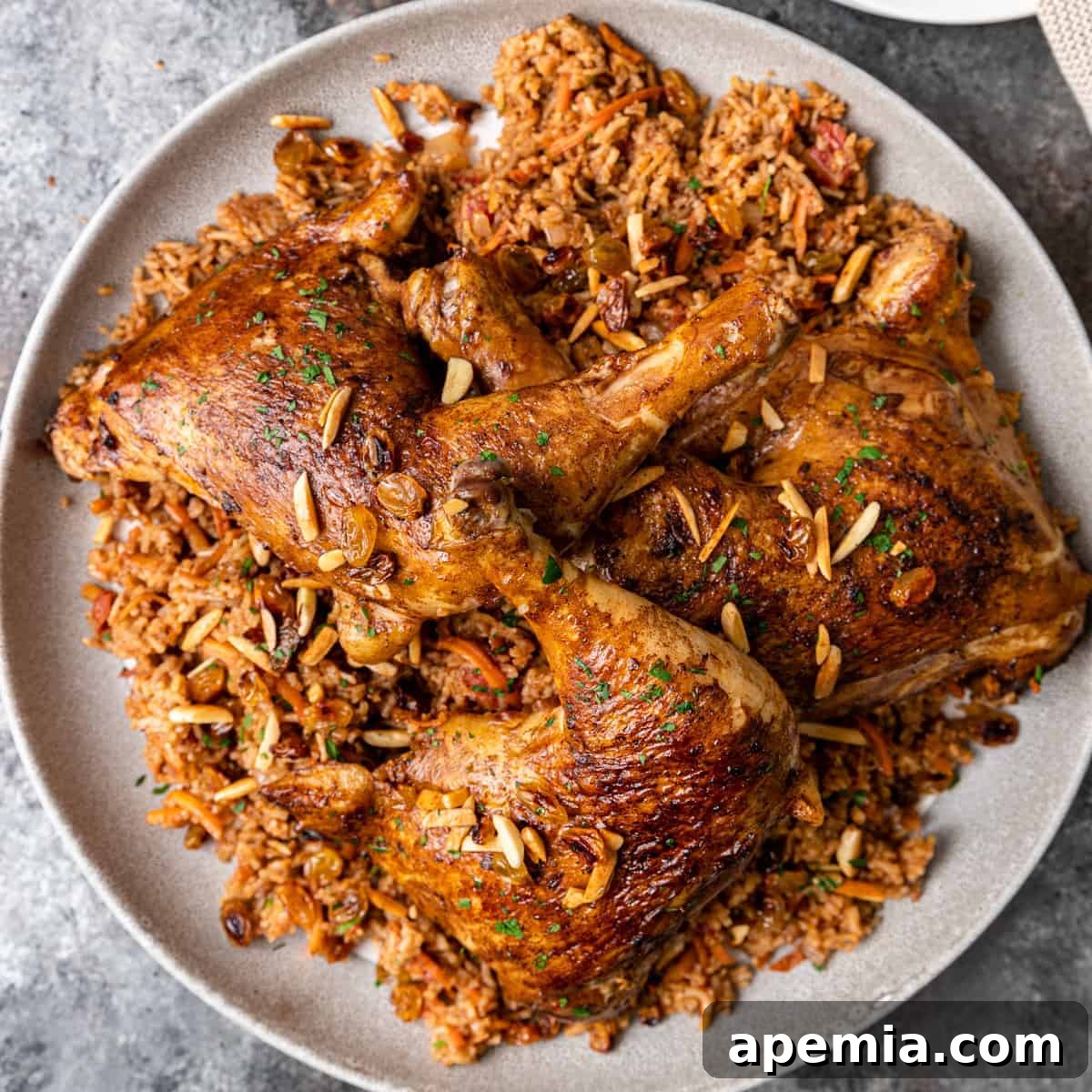
Kabsa: The Ultimate One-Pan Arabic Chicken and Rice Recipe
Prepare to be enchanted by Kabsa, Saudi Arabia’s fragrant national dish. This surprisingly easy, one-pan chicken and rice meal promises a culinary journey to the heart of the Middle East. With succulent bone-in chicken, fluffy rice, vibrant tomatoes, and an intoxicating blend of Middle Eastern spices, onions, and garlic, Kabsa is a masterpiece of flavor and convenience. It might take a little while to bake, but the results are always more than worth the anticipation!
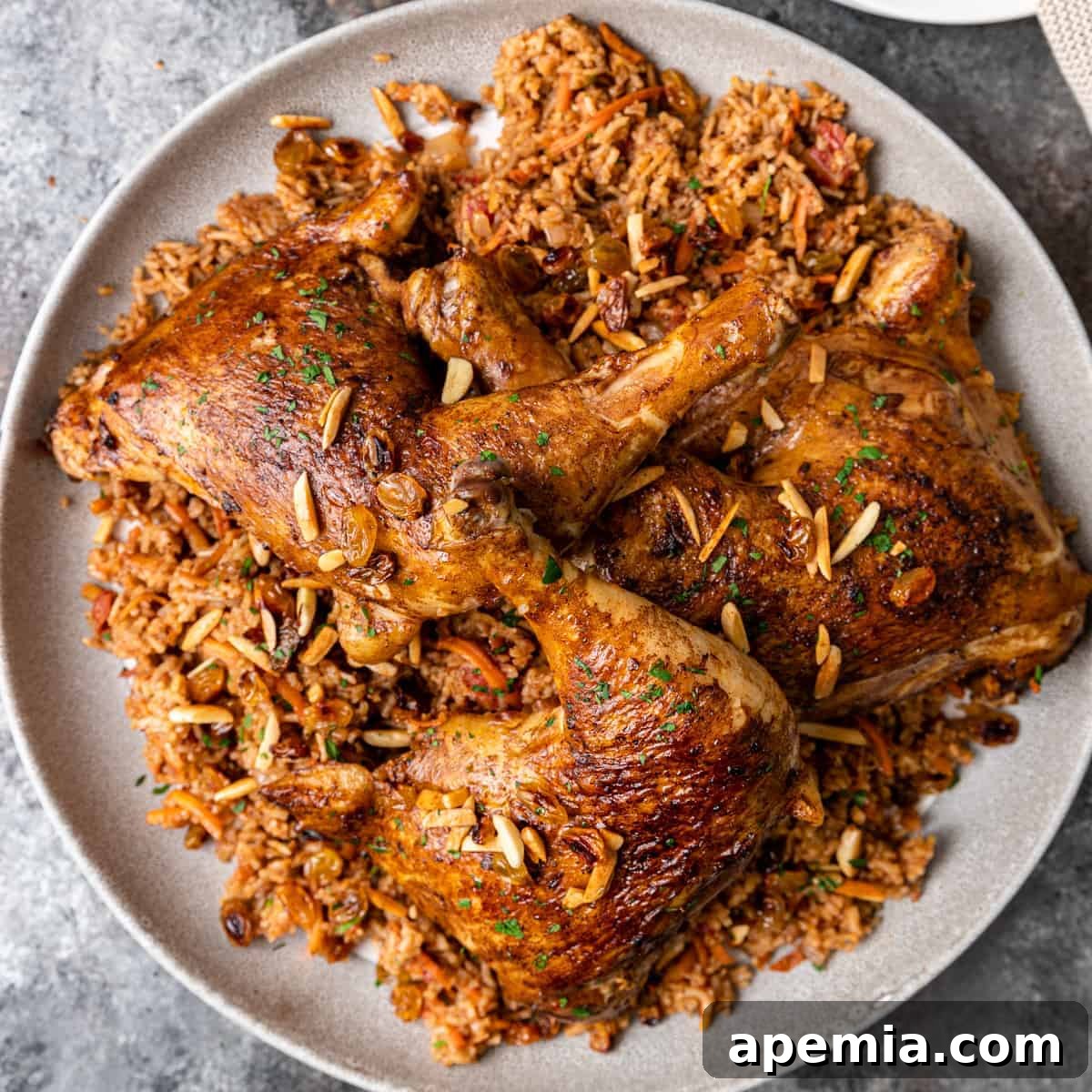
The Heart of Middle Eastern Hospitality: Kabsa
Kabsa is more than just a meal; it’s a cornerstone of Middle Eastern hospitality, particularly cherished in Saudi Arabia, where it holds the esteemed title of national dish. This celebrated dish is a vibrant tapestry woven from a rich array of ingredients and spices that are quintessential to the region’s culinary traditions. Traditionally a centerpiece at social gatherings and celebrations, its very essence speaks of welcoming warmth and generosity.
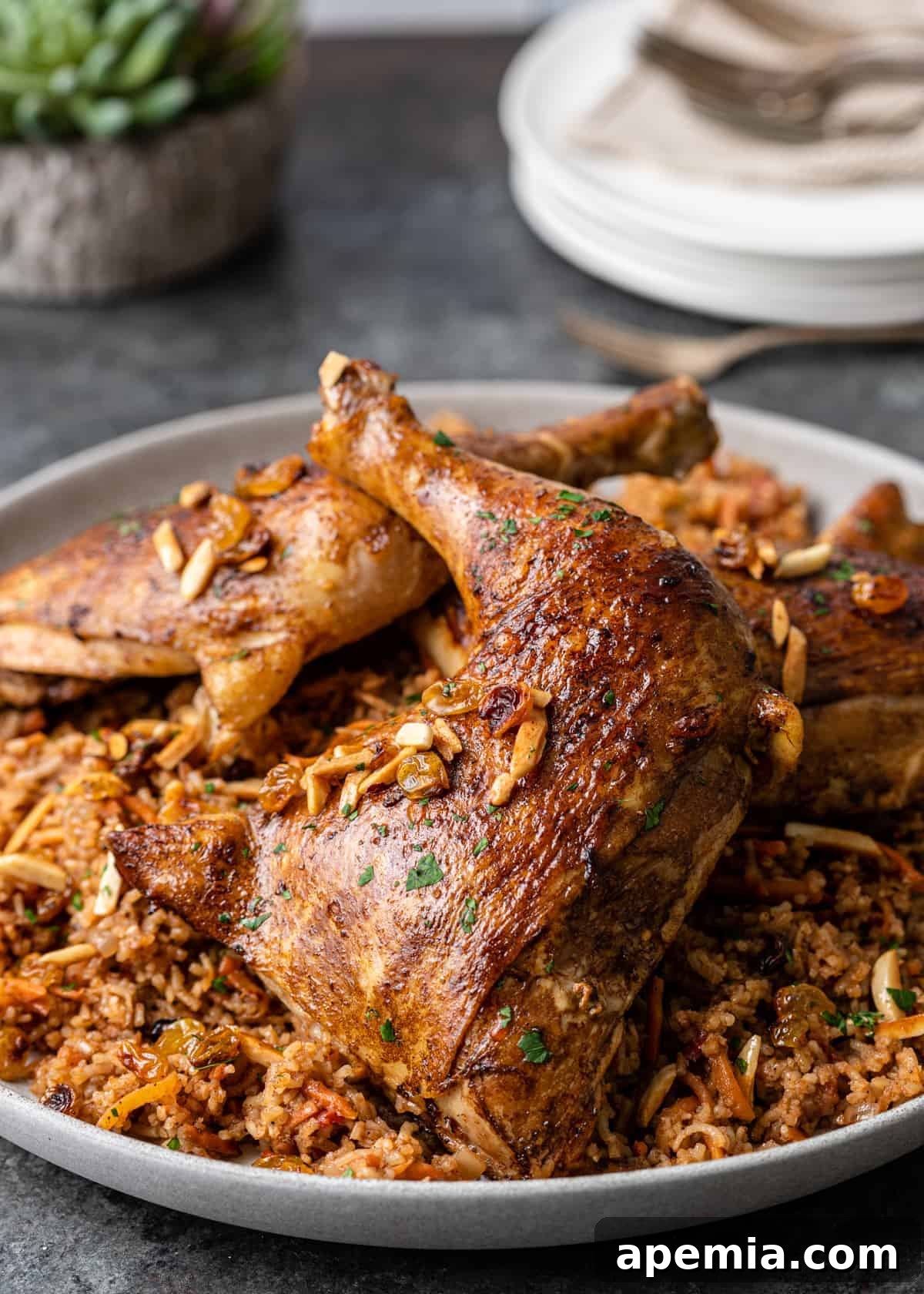
This comforting one-pan Arabic chicken and rice dish features tender, bone-in chicken that bakes to perfection, its dark meat remaining incredibly succulent and juicy. As it cooks, the chicken skin gradually absorbs the aromatic essences of tomatoes, garlic, onions, and a robust chicken broth, all infused with exotic saffron and the unique tang of dried lime, alongside a symphony of other carefully selected spices. The result is a harmonious blend of flavors that permeates every grain of tender rice, creating an unforgettable meal.
If the rich and aromatic flavors of Kabsa capture your palate, you might also enjoy exploring other delightful dishes from the region, such as Turkish bulgur pilaf. It shares a similar hearty, spice-infused charm that we think you’ll love!

Traditional Servings and Modern Twists
Kabsa is typically served alongside classic Middle Eastern condiments that elevate its already complex flavors. A must-have accompaniment is shatta, a fiery chili paste that adds a delightful kick, perfect for those who enjoy a bit of heat. Freshly baked pita bread is also a traditional side, ideal for scooping up the flavorful rice and chicken. For those seeking a slightly different kind of spice and aromatic depth, some enjoy serving Kabsa with harissa, a North African chili paste that offers its own unique profile.
Beyond these traditional pairings, you can personalize your Kabsa experience. A simple side salad with a lemon-tahini dressing, or a cooling cucumber and mint yogurt sauce, can provide a refreshing contrast to the rich and warm spices of the main dish. Fresh herbs like cilantro or parsley can also be scattered over the top for an added burst of freshness just before serving.
While the full recipe card below provides a comprehensive list of ingredients and detailed, step-by-step instructions, it’s worth noting that the generous use of Middle Eastern spices is what truly defines this dish. And don’t forget the final touch: a sprinkle of butter-sautéed raisins and almonds, which adds a delightful texture and hint of sweetness that elevates Kabsa to an extraordinary level!
Chef’s Tip
The Magic of Dried Lime (Loomi)
Dried lime, also known as black lime or loomi, is a distinctive ingredient that imbues Kabsa with its signature tangy, subtly bitter, and smoky flavor. This dehydrated citrus fruit doesn’t just add acidity; it introduces a remarkable depth and a delicate citrusy aroma that is essential to many Middle Eastern and Persian dishes. Loomi expertly balances rich and savory flavors, making it a star in stews, soups, and, of course, rice dishes like Kabsa. You can typically find dried limes in Middle Eastern markets or readily available online, and their unique contribution to this dish is irreplaceable.
Ingredient Essentials & Substitutions
(For exact quantities, please refer to the complete recipe card below)
- Bone-In Chicken: For this authentic Kabsa recipe, we recommend a 3lb bone-in fryer chicken, expertly cut into 8 pieces. Bone-in chicken adds unparalleled flavor and keeps the meat wonderfully moist. However, any bone-in cut, such as thighs, drumsticks, or quarters, will yield delicious results. Boneless chicken can be used, but adjust cooking times to prevent drying out and consider adding extra fat or broth for moisture.
- Ghee: Clarified butter, or ghee, is a staple in Middle Eastern and Indian cuisines. Its rich, nutty flavor and higher smoke point make it superior for sautéing, as it’s less prone to burning than regular butter. While ghee offers a unique depth, good quality butter can be used as a convenient substitute.
- Chicken Broth or Stock: Instead of a chicken broth cube and hot water, you can seamlessly substitute 4 cups of quality chicken broth or stock. This provides a robust flavor base and ensures your rice is cooked perfectly. For a richer flavor, homemade chicken stock is always a fantastic choice.
- Rice: The star of any Kabsa is its rice, and long-grain varieties like Basmati rice are ideal. Its slender grains cook up light and fluffy, absorbing the rich spices without becoming sticky. Remember to rinse the rice thoroughly until the water runs clear; this simple step removes excess starch and contributes to a perfectly separate, fluffy texture.
- Aromatic Seasonings: Kabsa’s soul lies in its intricate spice blend. All seasonings listed are ground for ease of use. If you prefer to work with whole spices, consult a conversion guide for Middle Eastern spices to ensure proper ratios.
- Crushed Saffron: The vibrant crimson threads of saffron impart a distinctive honey-like, floral aroma, and a beautiful golden hue. Its delicate yet potent flavor is truly unique, and there is no comparable substitute. A little goes a long way, making it a precious ingredient.
- Warm Spices (Allspice, Cinnamon, Nutmeg, Cardamom & Cloves): This family of warm, sweet spices forms the earthy backbone of Kabsa. They contribute a characteristic depth and exotic aroma. If one is unavailable, a slight increase in the others can help maintain the overall flavor profile, as they share similar aromatic qualities. Allspice, Cinnamon, Cloves are often available in most supermarkets.
- Earthy Spices (Coriander & Cumin): These two spices are almost inseparable in Middle Eastern cooking. Coriander offers a lemony, floral note, while cumin provides warmth and earthiness. Together, they create a beautifully balanced and foundational flavor.
- Fresh Vegetables: These contribute essential moisture, texture, and a fresh dimension to the dish.
- Garlic & Onion: The aromatic base of many dishes, these are sautéed to release their sweet and savory notes.
- Carrots: Grate your carrots finely so they melt into the rice and vegetable mixture, adding a subtle sweetness and beautiful color without overpowering the dish.
- Tomatoes: Both fresh and canned chopped tomatoes work wonderfully. If using canned, always include the liquid for extra flavor and moisture. We also incorporate tomato purée, which intensifies the savory, umami notes and acidity, rounding out the flavor profile beautifully.
How to Make Kabsa: A Detailed Guide
- Prepare Your Ingredients & Preheat Oven: Begin by preheating your oven to 350°F (175°C). Season your chicken pieces generously with kosher salt and freshly ground black pepper. This initial seasoning is crucial for building flavor from the start. For the rice, place the basmati rice in a fine-mesh sieve and rinse it under cold running water until the water runs completely clear. This optional but highly recommended step helps remove excess starch, ensuring your cooked rice is wonderfully fluffy and individual grains rather than sticky.
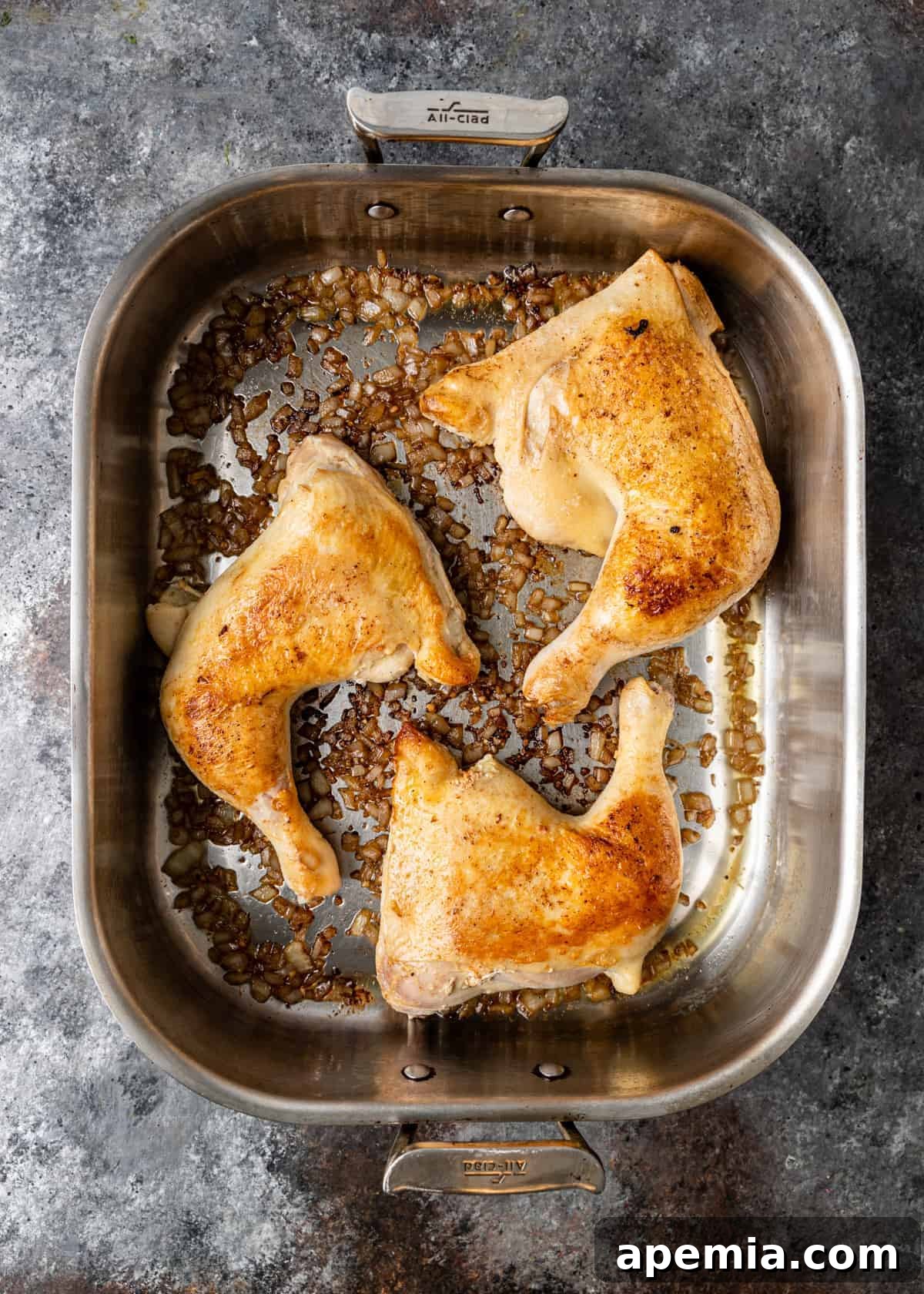
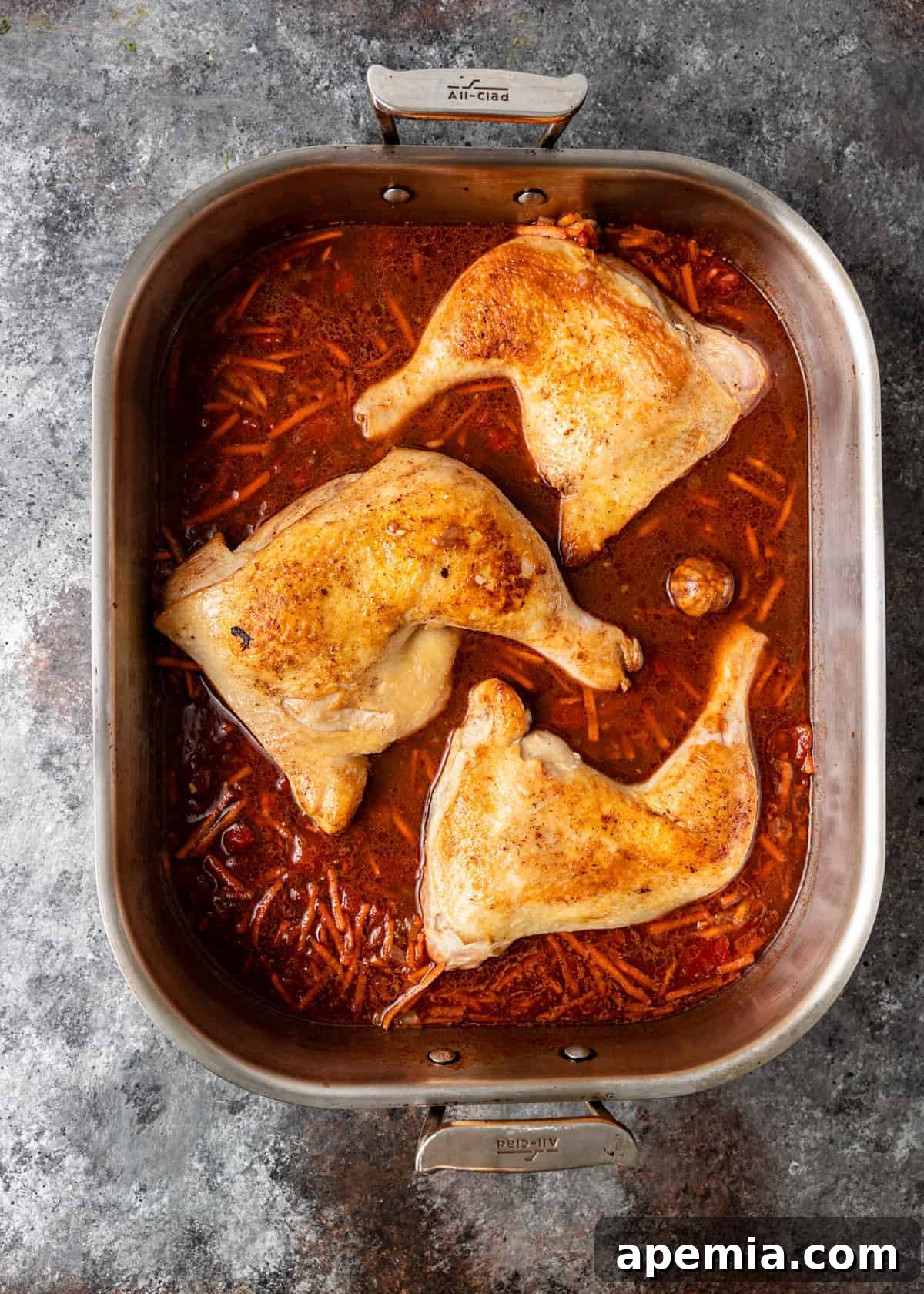
- Sauté Chicken, Garlic & Onion: In a large, heavy-bottomed, oven-safe pan (such as a Dutch oven or a substantial roasting pan), melt the butter or ghee over medium heat. Place the chicken pieces into the hot pan, skin-side down first, and allow them to brown beautifully for 3 to 4 minutes. This creates a crisp, flavorful skin. Flip the chicken pieces, then scatter the finely chopped onion and minced garlic around them. Sauté everything together, stirring occasionally, until the onion becomes tender and translucent, and the chicken is browned on all sides. Once sufficiently browned, carefully remove the chicken from the pan, cover it loosely with foil, and set aside to keep warm.
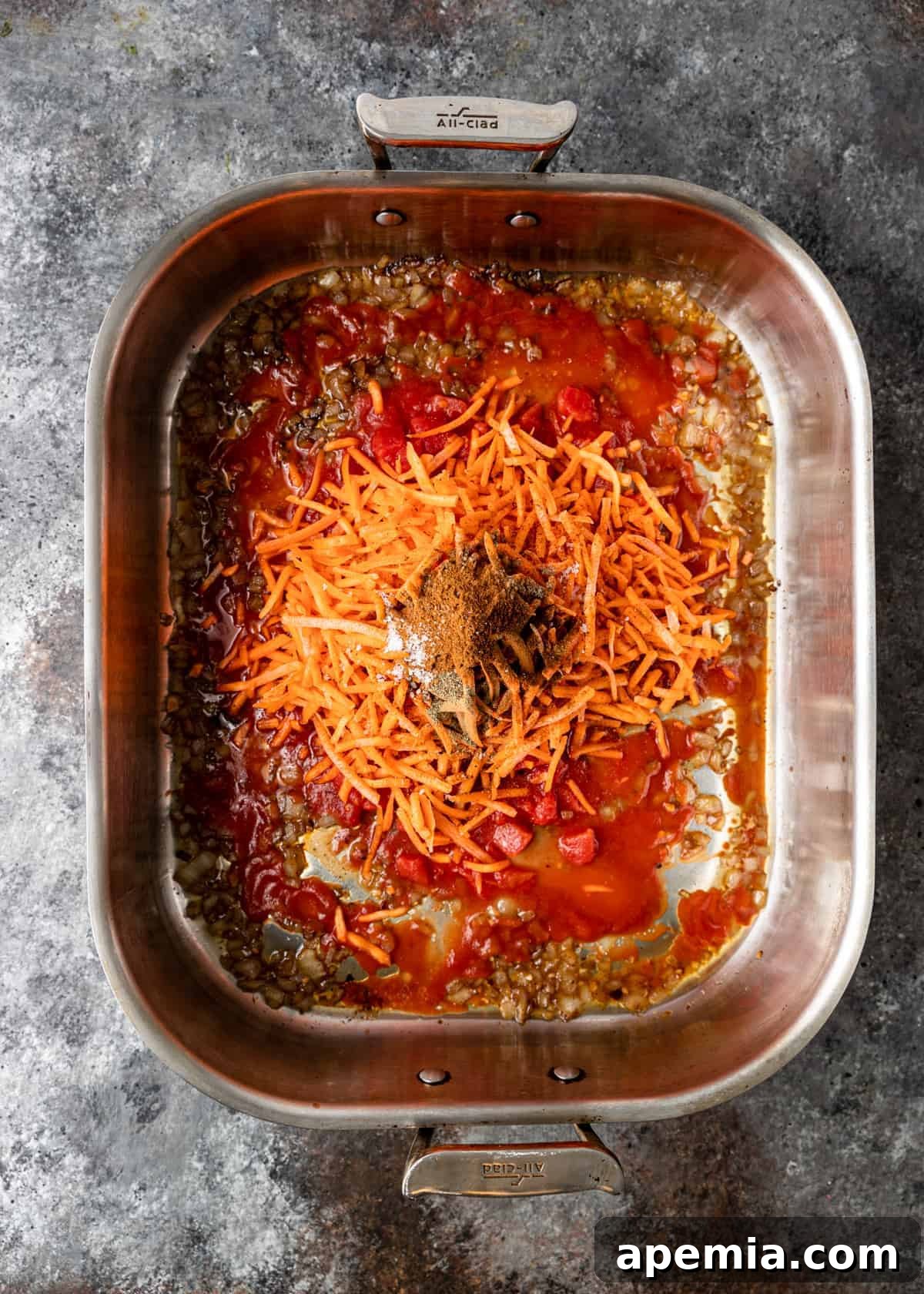
- Build the Flavorful Rice Base: To the same pan (no need to clean it – those browned bits are flavor!), add the tomato purée, chopped tomatoes (including their liquid if canned), and grated carrots. Sprinkle in all of the specified Middle Eastern spices: saffron, cumin, coriander, cinnamon, allspice, nutmeg, cardamom, and cloves. Pour in the hot water and add the chicken bouillon cube (if using water instead of broth). Finally, add the rinsed basmati rice. Stir all these ingredients thoroughly until everything is well combined and the spices are evenly distributed.
- First Bake – Covered: Carefully return the reserved browned chicken pieces to the pan, arranging them skin-side up on top of the rice mixture. Place the whole dried lime (after poking several holes in it) strategically among the chicken pieces. Cover the pan tightly with aluminum foil to trap the steam and ensure the rice cooks evenly and the chicken remains moist. Bake in the preheated oven for 45 minutes.
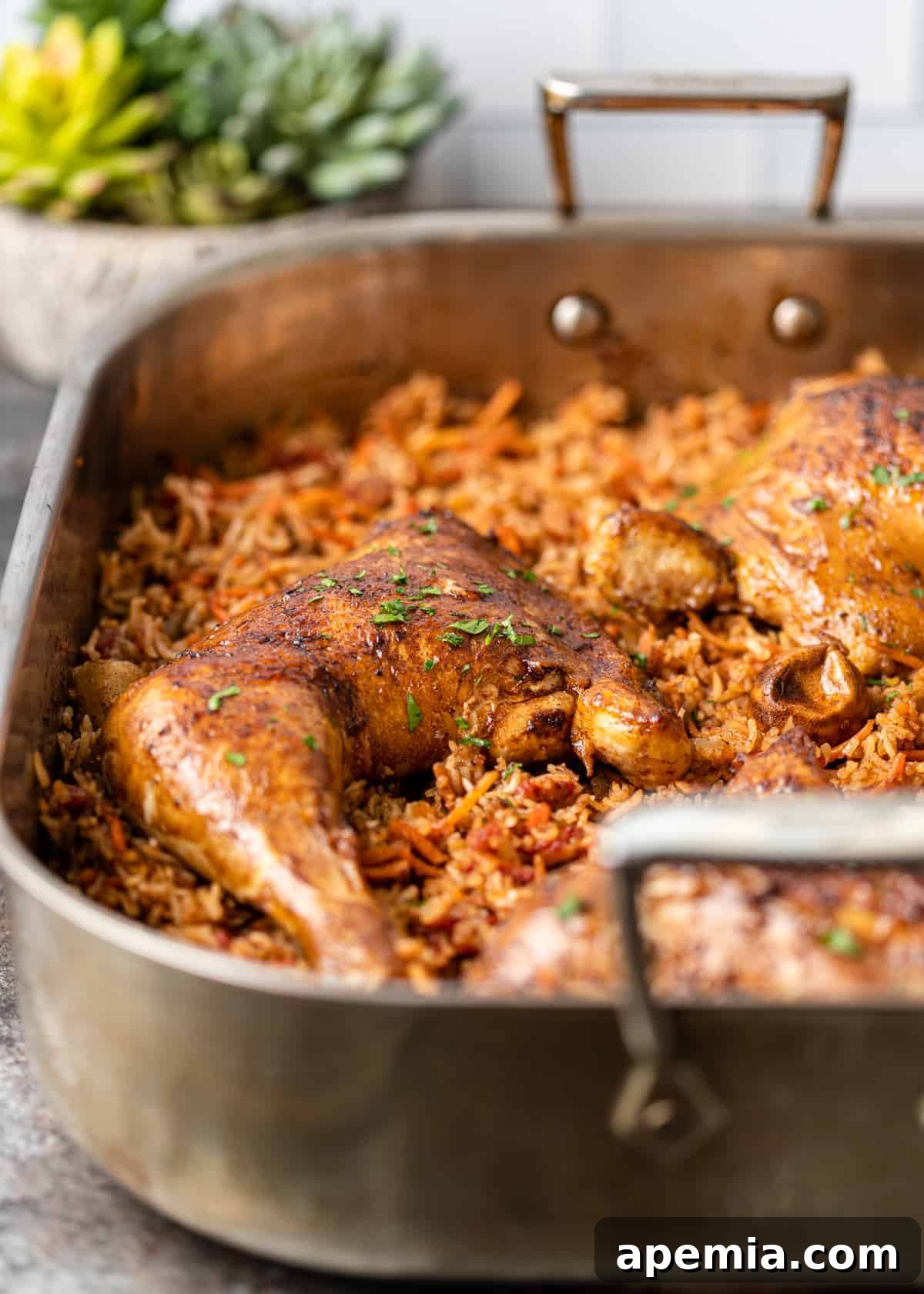
- Second Bake – Uncovered & Finishing Touches: After 45 minutes, remove the foil. Gently lift the chicken pieces out of the pan. Using a fork, carefully fluff the rice mixture to redistribute the flavors and check for tenderness. Return the chicken pieces to the top of the rice, skin-side up. Continue baking uncovered for approximately 15 minutes, or until the rice is perfectly tender, the chicken has developed an even deeper golden-brown color, and its internal temperature reaches a safe 165°F (74°C). This uncovered baking stage allows for evaporation, making the rice perfectly fluffy and the chicken skin deliciously crisp.
- Prepare Toasted Toppings: While the Kabsa finishes baking, prepare your garnish. In a separate, smaller sauté pan, melt 1 tablespoon of butter or ghee over medium-low heat. Add the slivered almonds and raisins to the pan. Cook, stirring frequently, for several minutes until the almonds are lightly golden brown and the raisins are plump and slightly caramelized. Be careful not to burn them. Remove from heat and set aside.
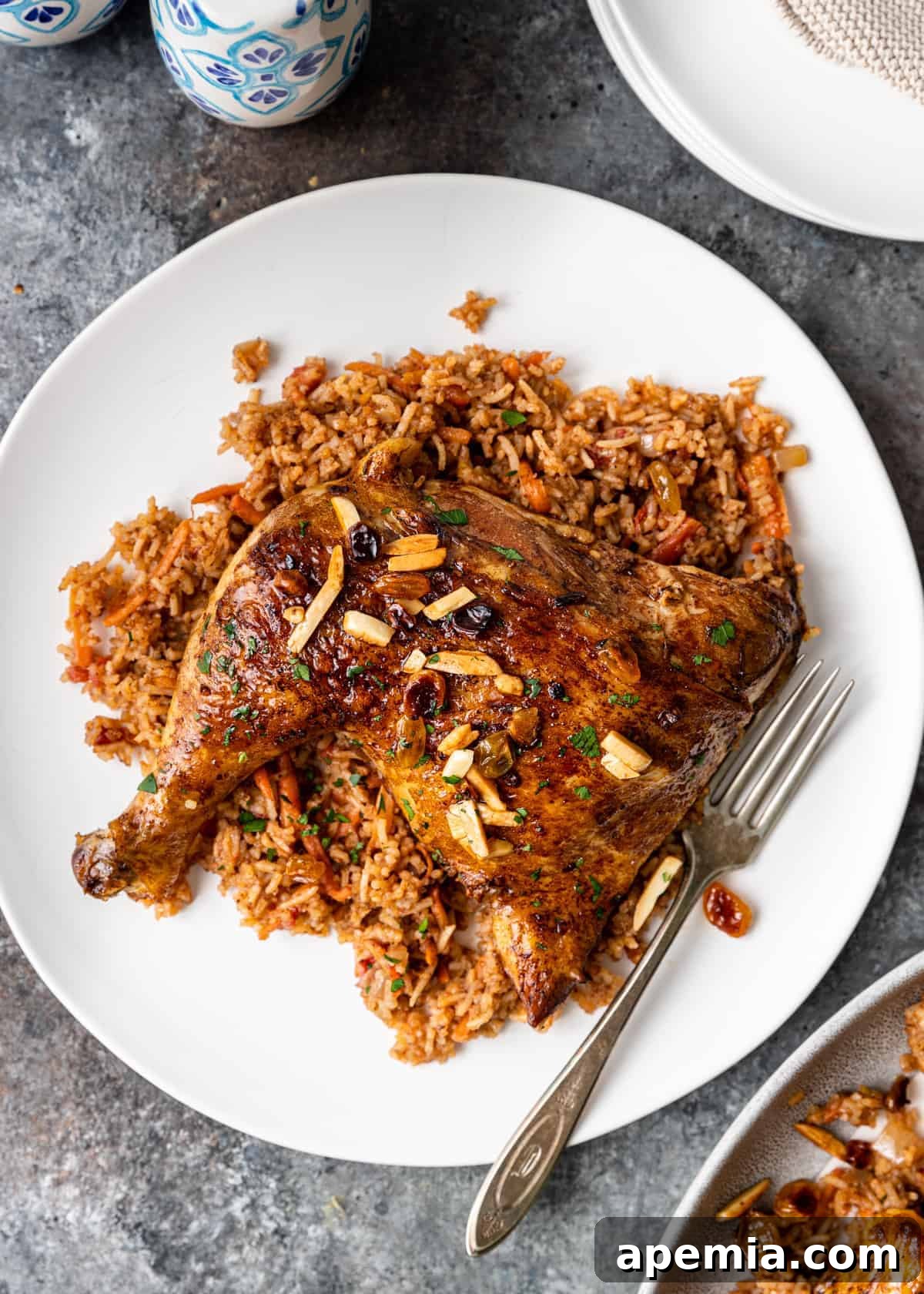
- Rest & Serve: Once removed from the oven, allow the Kabsa to rest in the pan for 5 to 10 minutes. This resting period is crucial as it allows the rice to absorb any remaining moisture and the flavors to fully meld. To serve, spoon the fragrant rice onto a large serving platter, then arrange the chicken pieces on top. Garnish generously with freshly chopped parsley and the toasted almonds and raisins. Serve your magnificent Kabsa with your preferred bread (like pita) and a side of red chili paste or shatta for an extra layer of flavor and heat. Enjoy this truly delicious and comforting meal!
Recommended Kitchen Tools
- Large, Oven-Safe Pan: A crucial tool for this one-pan dish. Opt for a heavy-bottomed pan to ensure even heat distribution and prevent the rice from scorching. Suitable options include a sturdy Dutch oven, a large roasting pan, or even a deep stock pot (provided it fits comfortably in your oven). Its size should be ample enough to accommodate all ingredients, including the chicken and rice, in a single layer or comfortably nested.
- Small Sauté Pan: Essential for preparing the delicious garnish. This smaller pan will be used to melt butter and toast the almonds and raisins until they achieve a perfect golden-brown hue, adding a delightful crunch and sweetness to the final dish.
- Fine-Mesh Sieve: For thoroughly rinsing your basmati rice, ensuring it cooks up light and fluffy.
- Meat Thermometer: To accurately check the internal temperature of the chicken, ensuring it is cooked safely to 165°F (74°C).
Storing and Reheating Kabsa
Proper storage is key to enjoying your delicious Kabsa leftovers. Cooked chicken will remain fresh for up to 4 days when stored in an airtight container in the refrigerator. We highly recommend storing the Arabic chicken and rice separately, as this allows for optimal reheating of each component.
To reheat the bone-in chicken, place it on a baking sheet and warm it in the oven at 350°F (175°C) until it is heated through. This method helps the chicken retain its juiciness and keeps the skin from becoming soggy. For the rice, it’s best to sprinkle a tablespoon or two of water (or a splash of chicken broth) over it, cover it tightly, and microwave until it’s warm, moist, and fluffy once more. Alternatively, you can gently reheat the rice on the stovetop in a covered pot with a little liquid, stirring occasionally.
Share this recipe on Pinterest!
Love this recipe? Share it with the world on Pinterest.
Frequently Asked Questions About Kabsa
While Kabsa, Biryani, and Mandi are all fragrant rice and meat dishes popular in the Middle East and Indian subcontinent, they each possess distinct characteristics. Kabsa, the national dish of Saudi Arabia, is typically less spicy and more focused on the aromatic warmth of whole and ground spices like dried lime, cardamom, and saffron. Biryani, originating from the Indian subcontinent, tends to feature bolder, spicier flavors with ingredients like green chilies, mint, and a wider array of whole spices, often cooked in layers. Mandi, on the other hand, is distinguished primarily by its unique cooking method: traditionally, it’s slow-cooked in a tandoor (a special oven, often a pit in the ground) with the meat suspended above the rice, allowing the meat juices to drip down and flavor the rice. Mandi also often uses a slightly different spice blend and can feature lamb, goat, or chicken. These subtle differences in spice profiles and cooking techniques create uniquely delicious experiences.
Absolutely! While chicken Kabsa is incredibly popular and traditional, the beauty of this dish lies in its versatility. The flavorful spice blend and cooking method can be adapted to various proteins. Historically, Kabsa was often prepared with red meat, most commonly lamb or goat, which are staples in Middle Eastern cuisine. While beef isn’t as prevalent, it can certainly be used. For a different twist, you could even experiment with seafood, though this is less common traditionally. It’s important to note that pork is never used in authentic Kabsa due to Muslim dietary laws.
Traditional Kabsa is generally considered aromatic and flavorful rather than overtly spicy. The spices used, such as cinnamon, cardamom, and allspice, contribute warmth and depth without significant heat. However, the level of spiciness can be adjusted to personal preference. If you enjoy heat, you can add a pinch of cayenne pepper or a fresh chili to the rice mixture, and always serve it with a side of shatta or harissa for an extra kick.
Several factors contribute to perfectly fluffy Kabsa rice. Firstly, using good quality Basmati rice is crucial. Secondly, always rinse your rice thoroughly under cold water until the water runs clear; this removes excess starch that can make rice sticky. Thirdly, ensure the correct water-to-rice ratio. For fluffier rice, you might opt for slightly more liquid (as noted in our recipe, 3 1/2 cups of water is sometimes preferred over 4 cups for a less dense texture). Finally, avoid disturbing the rice too much while it’s cooking in the oven, and allow it to rest for 5-10 minutes after baking before fluffing and serving.
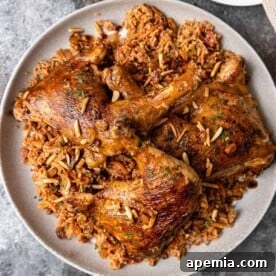
Arabic Chicken and Rice (Kabsa)
4.62 from 13 votes
Kabsa, Saudi Arabia’s national dish, is a fragrant one-pot chicken and rice meal with vegetables, garnished with raisins and roasted nuts, making it a truly exceptional and comforting meal.
Servings: 6
Prep Time: 20 mins
Cook Time: 1 hr 15 mins
Total Time: 1 hr 35 mins
Print Recipe
Video
Ingredients
Main Dish
- 4 tbsp butter or ghee
- 3 lbs bone-in chicken (See Note 1)
- 1 tsp kosher salt
- 1/2 tsp ground black pepper
- 1 large onion, finely chopped
- 6 cloves garlic, minced
- 1/4 cup tomato puree
- 14 oz chopped tomatoes (canned with liquid or fresh)
- 3 carrots, grated
- 1/2 tsp crushed saffron
- 1/2 tsp ground cumin
- 1/2 tsp ground coriander
- 1/2 tsp ground cinnamon
- 1/2 tsp ground allspice
- 1/4 tsp grated nutmeg
- 1/4 tsp ground cardamom
- 1/8 tsp ground cloves
- 4 cups hot water (See Note 2)
- 1 chicken broth cube (See Note 3)
- 2 1/4 cups basmati rice
- 1 dried lime (poke several holes in it with tip of knife)
Garnish
- 2 tbsp fresh parsley, chopped
- 1 tbsp butter or ghee
- 1/4 cup raisins
- 1/4 cup slivered almonds
Condiment (Optional)
- Shatta sauce (or any chile paste)
Unit Conversion: US Customary – Metric
Instructions
- Preheat oven to 350°F (175°C). Season the chicken pieces with salt and pepper. Rinse the basmati rice in a sieve under cold water until the water runs clear; this helps ensure fluffy rice.
- Melt butter or ghee in a large, heavy-bottomed, oven-safe pan (such as a roasting pan, stockpot, or Dutch oven) over medium heat.
- Brown the chicken, skin-side first, for 3 to 4 minutes. Turn the chicken over. Scatter the finely chopped onion and minced garlic around the chicken and sauté until the onion is tender and the chicken is browned on all sides. Remove the chicken from the pan, cover, and keep warm.
- Stir the tomato purée, chopped tomatoes, grated carrots, all the ground spices, hot water, and the chicken bouillon cube (if using) into the pan with the rice. Mix thoroughly to combine all ingredients.
- Place the browned chicken pieces (skin-side up) back on top of the rice mixture. Add the dried lime (after piercing it several times with a knife). Cover the pan tightly with aluminum foil. Bake for 45 minutes.
- Remove the foil. Gently lift the chicken pieces out and fluff the rice mixture with a fork. Place the chicken back on top. Continue to bake uncovered for another 15 minutes, or until the rice is tender, the chicken is further browned, and its internal temperature reaches 165°F (74°C).
- In a small sauté pan, melt the extra tablespoon of butter or ghee. Add the slivered almonds and raisins and cook, stirring, until golden brown (this typically takes several minutes). Set aside for garnish.
- Allow the dish to rest for 5-10 minutes after removing it from the oven. Then, transfer the rice to a large serving dish, top with the chicken pieces, and garnish generously with chopped fresh parsley, toasted raisins, and almonds.
- Serve warm with pita bread and shatta sauce (or your chili paste of choice) if desired. Enjoy!
Notes
- You can use any bone-in chicken pieces you prefer. A whole fryer chicken, cut into 8-10 pieces, half chicken pieces, or quarters all work well. The nutrition information provided in this recipe card is based on using a 3lb bone-in fryer chicken, cut into 8 pieces.
- Some prefer their rice even fluffier. For a less dense texture, we advise using 3 1/2 cups of hot water instead of 4 cups.
- If you prefer, 4 cups of chicken broth or stock can be substituted directly in place of the hot water and chicken broth cube for an even richer flavor base.
Nutrition
Serving: 5oz | Calories: 549kcal | Carbohydrates: 67g | Protein: 20g | Fat: 23g | Saturated Fat: 9g | Trans Fat: 1g | Cholesterol: 76mg | Sodium: 766mg | Potassium: 632mg | Fiber: 5g | Sugar: 5g | Vitamin A: 5738IU | Vitamin C: 18mg | Calcium: 102mg | Iron: 3mg
The information shown is an estimate provided by an online nutrition calculator. It should not be considered a substitute for a professional nutritionist’s advice.
Course: Main Dishes
Cuisine: Arabic, Middle Eastern
Author: Kevin
Have You Made This Recipe? Let Me Know on Instagram
Tag @keviniscooking or use the hashtag #keviniscooking!
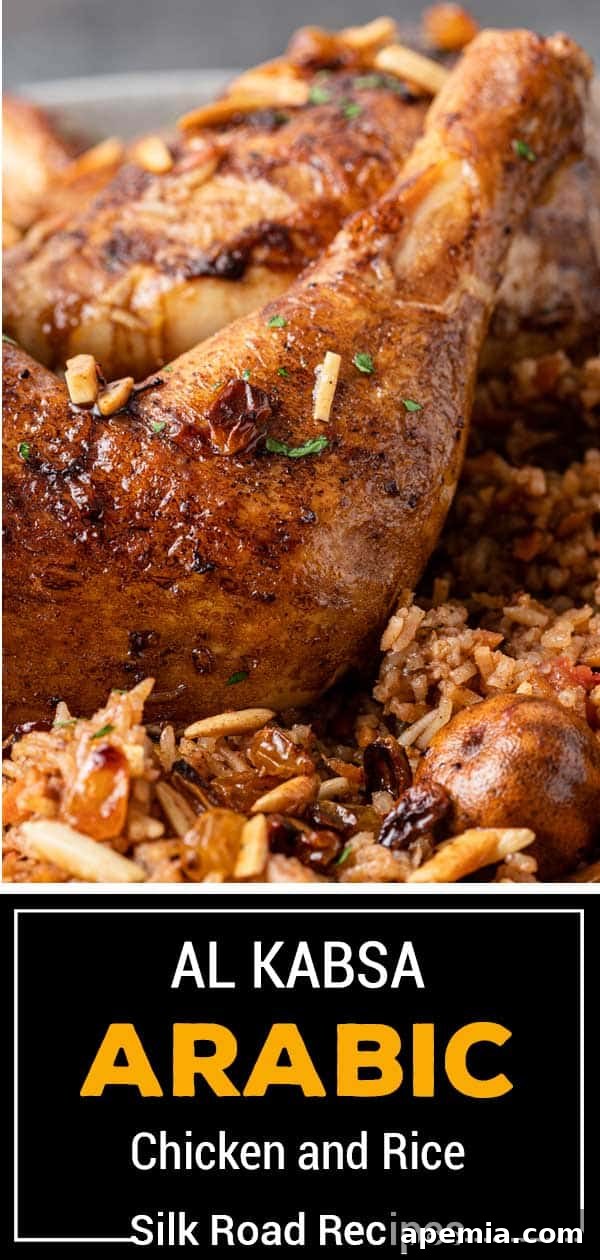
Conclusion: Your Next Culinary Adventure Awaits
Kabsa is more than just a recipe; it’s an invitation to experience the warmth and generosity of Middle Eastern culture through its flavors. This one-pan Arabic chicken and rice dish is a testament to how simple ingredients, combined with a thoughtful blend of aromatic spices, can create an incredibly rich, comforting, and deeply satisfying meal. From the perfectly tender chicken infused with saffron and dried lime to the fluffy, spice-laden basmati rice, every bite is a celebration.
Whether you’re hosting a special gathering or simply craving a flavorful, hearty meal, Kabsa delivers on all fronts. Its straightforward preparation belies its complex taste, making it accessible even for novice cooks. We encourage you to embark on this culinary adventure, fill your kitchen with its irresistible aromas, and savor the authentic taste of Saudi Arabia’s cherished national dish. Enjoy the process, and most importantly, enjoy the delicious rewards!