
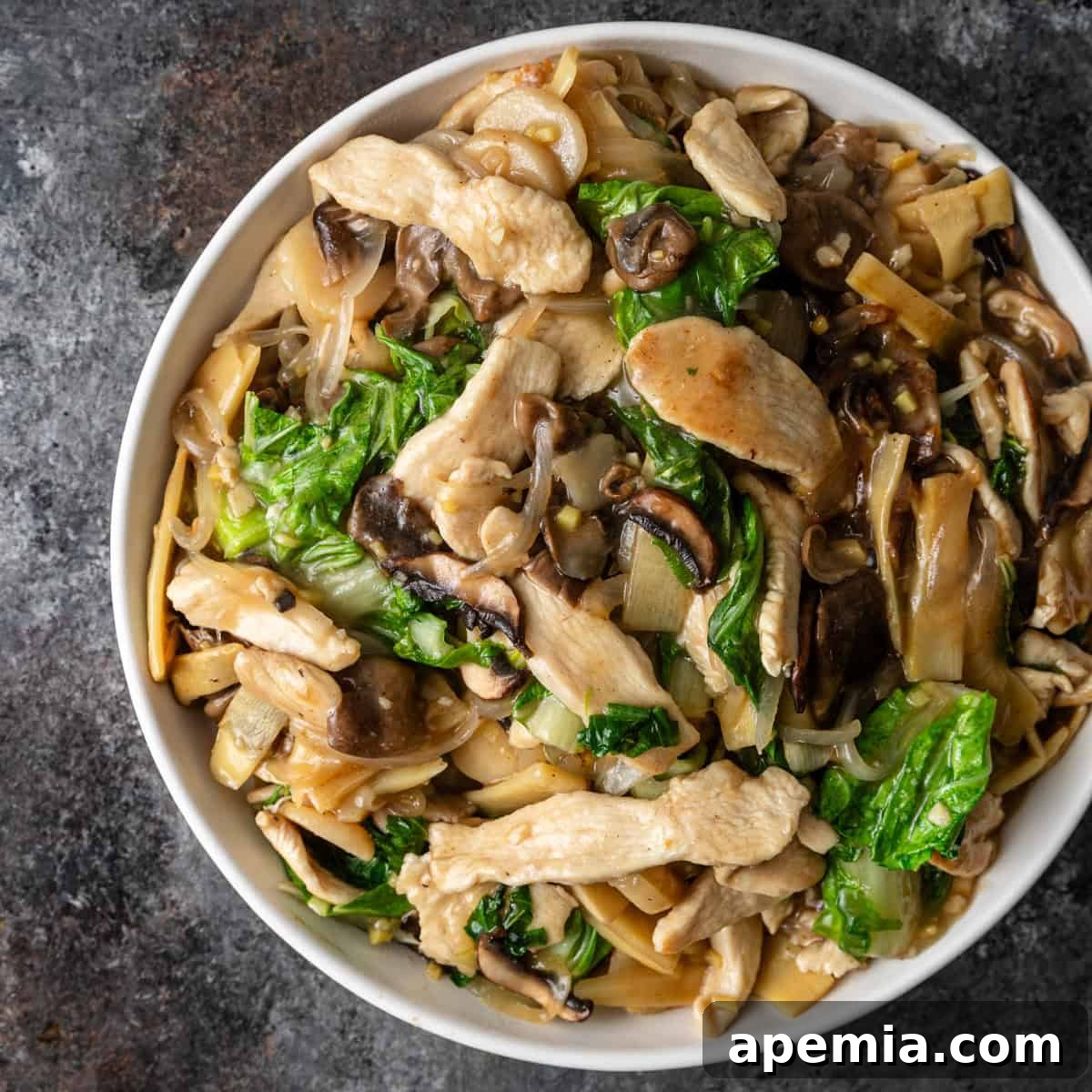
Unlock the secret to making restaurant-quality Chinese Moo Goo Gai Pan right in your own kitchen! This recipe guides you through creating a quick, flavorful chicken and mushroom stir-fry featuring tender chicken, crisp vegetables, and a light, aromatic sauce. The chicken is expertly marinated using a simple velveting technique, ensuring it stays wonderfully juicy as it’s stir-fried along with an array of fresh ingredients like water chestnuts, bamboo shoots, bok choy, garlic, ginger, onions, and two types of mushrooms.
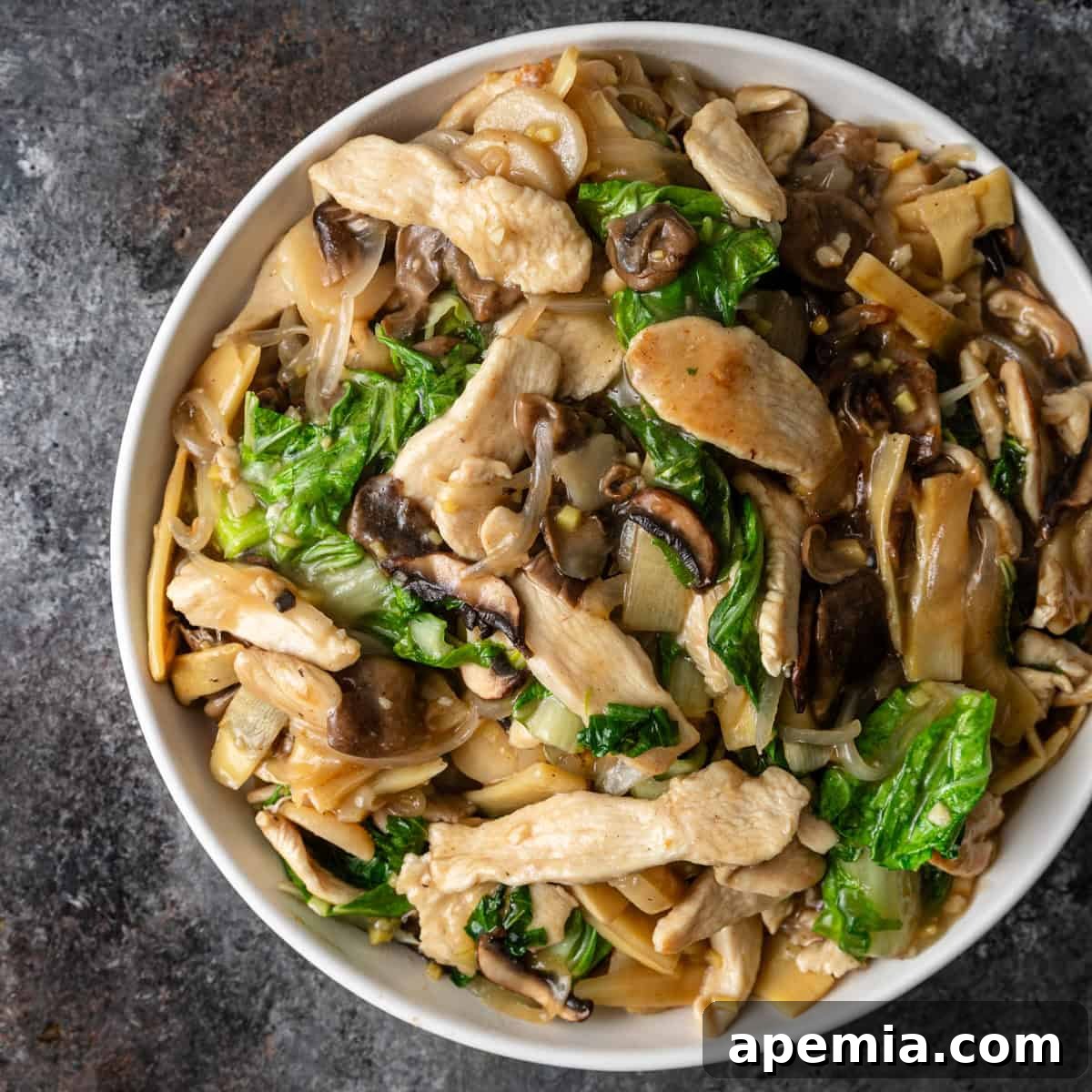
Mastering Moo Goo Gai Pan: Your Guide to a Quick & Flavorful Chinese Chicken Stir-Fry
There’s an undeniable comfort and satisfaction that comes from a perfectly executed one-pan meal, especially on a bustling weeknight. This Moo Goo Gai Pan recipe delivers precisely that, offering a harmonious blend of tender, succulent chicken and a vibrant assortment of fresh vegetables, all coated in an irresistibly savory sauce. It’s a dish that truly hits the spot, providing a complete and balanced meal that’s both quick to prepare and incredibly delicious, making it a household favorite.
Traditionally, I love serving this delightful stir-fry over a bed of fluffy jasmine rice, allowing the grains to soak up every drop of that exquisite sauce. However, its versatility shines through, as I’ve also thoroughly enjoyed it paired with chewy lo mein noodles for a heartier meal. Beyond these classics, consider serving it with cauliflower rice for a low-carb option, or a simple side of steamed greens to enhance its fresh appeal. Whichever way you choose to present it, rest assured, each bite will be an absolute treat!
The name Moo Goo Gai Pan itself offers a peek into the dish’s essence, loosely translating to “sliced mushrooms and chicken.” While this perfectly captures the primary components, it only hints at the depth of flavor and texture awaiting you. This beloved dish is more than just chicken and mushrooms; it’s a culinary experience that balances savory, sweet, and umami notes, creating a light yet profoundly satisfying meal that has earned its place in Chinese-American cuisine.
The Irresistible Sauce: A Symphony of Savory Flavors
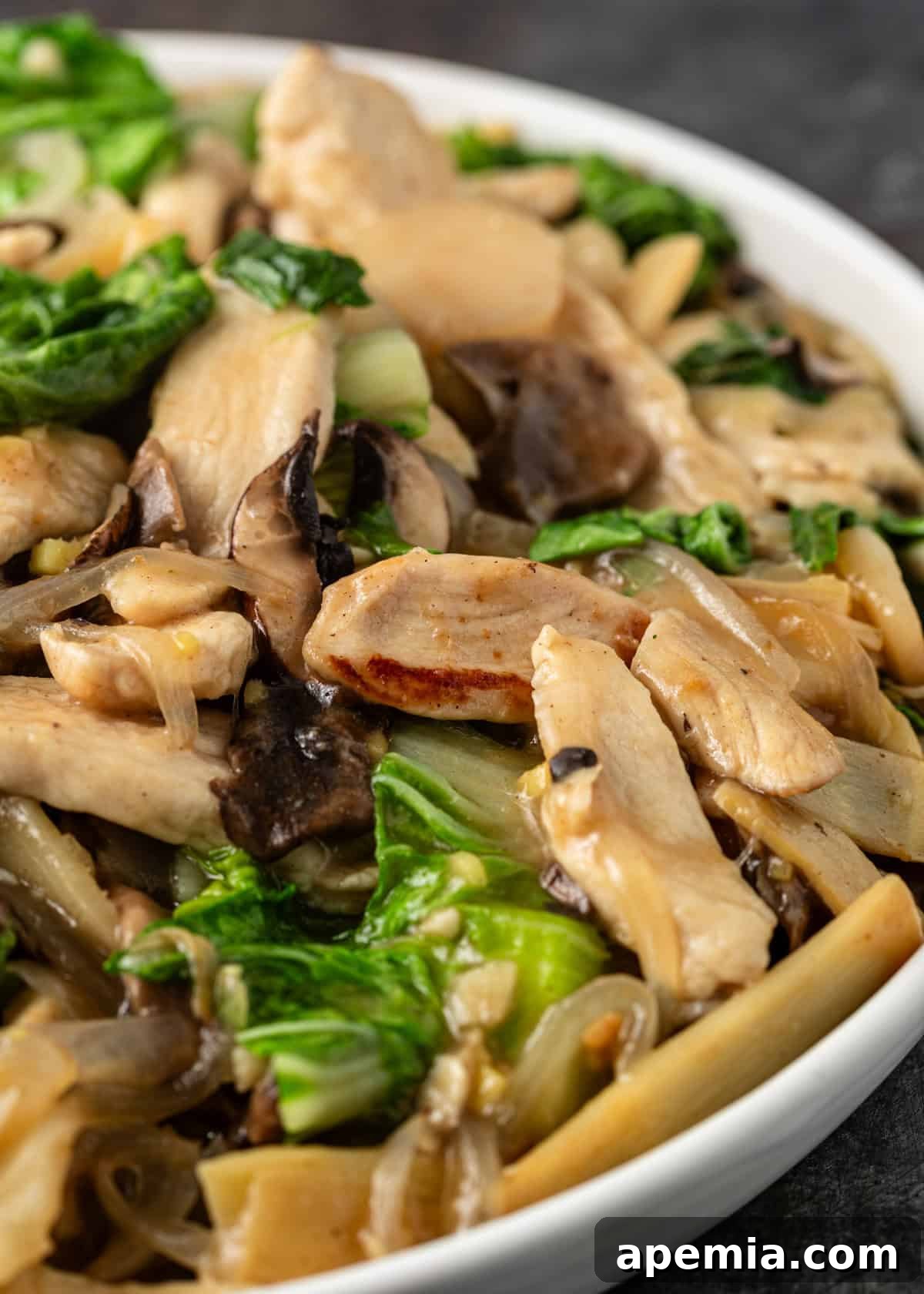
The magic of Moo Goo Gai Pan truly comes alive with its unique, silky-smooth sauce. Unlike many other Chinese stir-fries, this particular recipe brilliantly omits soy sauce, allowing other exquisite flavors to take center stage and shine. Crafted with aromatic Shaoxing wine, rich oyster sauce, a hint of sugar to balance the profile, and a dash of fragrant sesame oil, the sauce creates a complex profile that is simultaneously tangy, subtly sweet, and deeply savory. Its inviting aroma alone is enough to entice, and its perfectly balanced flavor will have you scraping your plate clean, savoring every last drop. This delicate balance ensures the fresh taste of the vegetables and tender chicken truly comes through.
Table of Contents
- Prep Everything Before Stir Frying: The Golden Rule of Wok Cooking
- Ingredient Notes and Smart Substitutions for Moo Goo Gai Pan
- How to Make Moo Goo Gai Pan: Step-by-Step Guide
- Recommended Tools for Perfect Stir-Fries
- Storing and Reheating Your Moo Goo Gai Pan Leftovers
- Frequently Asked Questions About Moo Goo Gai Pan
- Moo Goo Gai Pan (Mushroom and Chicken Stir Fry) Recipe Card
Explore More Tangy & Mouthwatering Chinese Stir-Fries
If you’ve enjoyed the vibrant flavors and quick preparation of this Moo Goo Gai Pan, you’re in for a treat with other exciting Chinese stir-fry creations. The art of stir-frying allows for endless possibilities, combining fresh, crisp ingredients with dynamic, flavorful sauces in a matter of minutes. For your next culinary adventure, why not explore the bold and spicy notes of my Szechuan Pork and Eggplant Stir-Fry, a dish celebrated for its complex heat and tender vegetables? Or perhaps delve into the rich and aromatic depths of my Chinese Curry Beef Stir-Fry, which offers a different yet equally captivating flavor profile. Each recipe promises a unique taste of authentic Asian cuisine, perfect for expanding your repertoire of quick, delicious, and satisfying weeknight meals.
Expert Tip: The Art of Mise en Place (Prep Before You Stir-Frying)
As with virtually all Chinese stir-fry recipes, the secret to success lies in thorough preparation before you even turn on the heat. “Mise en place,” a French culinary term meaning “everything in its place,” is absolutely critical here. Stir-frying is a high-speed cooking method; once your wok is hot, ingredients cook incredibly fast, often in mere seconds or a few minutes. Having all your chicken sliced and marinated, vegetables chopped into uniform pieces, and the sauce whisked and ready to go will ensure a smooth, stress-free cooking process. This methodical approach prevents anything from burning, overcooking, or losing its vibrant color and crisp texture, guaranteeing a fresh, perfectly cooked dish every single time. It’s the difference between a chaotic kitchen and a culinary triumph.
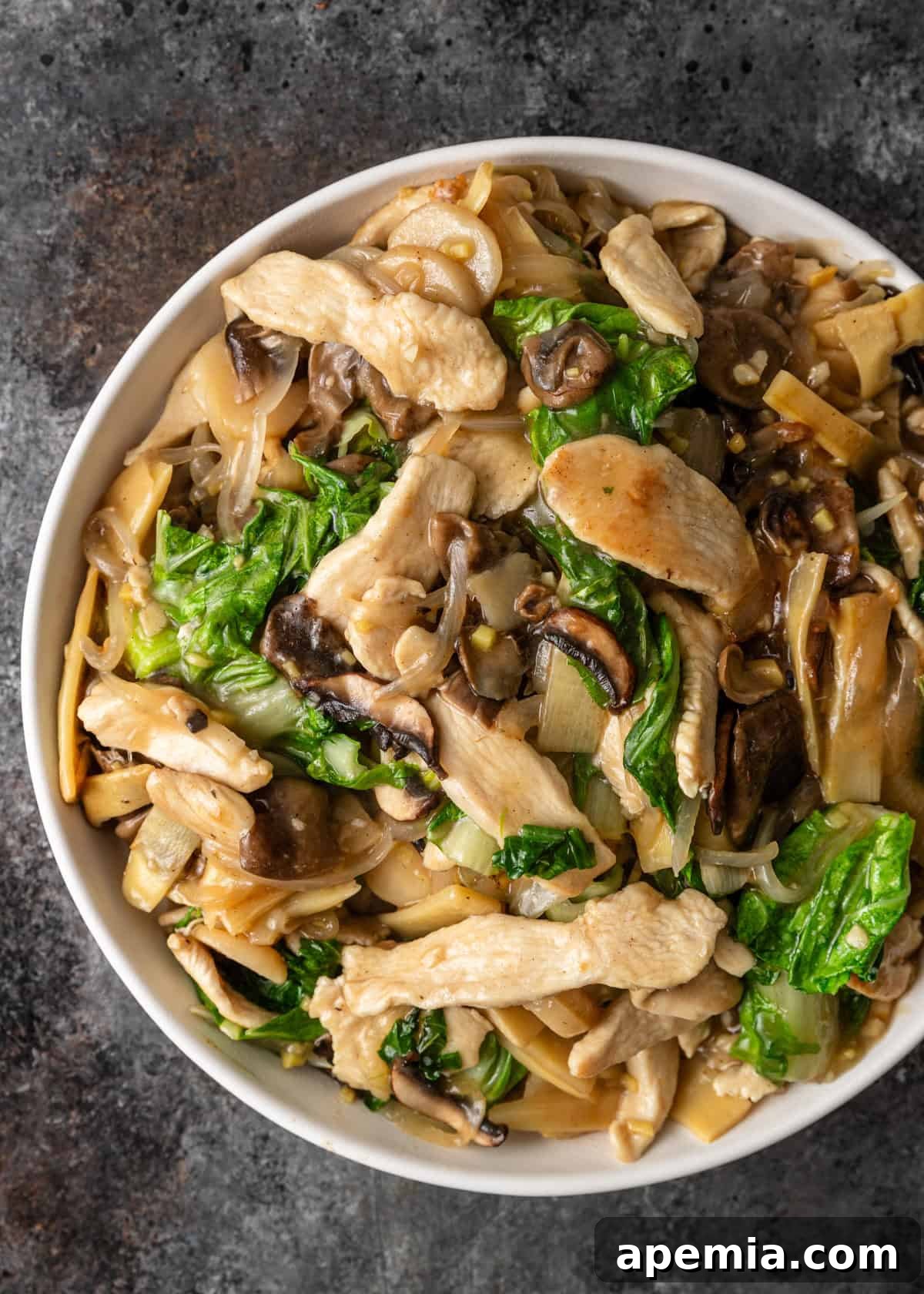
Deep Dive into Ingredients & Smart Substitutions for Moo Goo Gai Pan
(For a complete list of precise quantities, please refer to the comprehensive recipe card below)
-
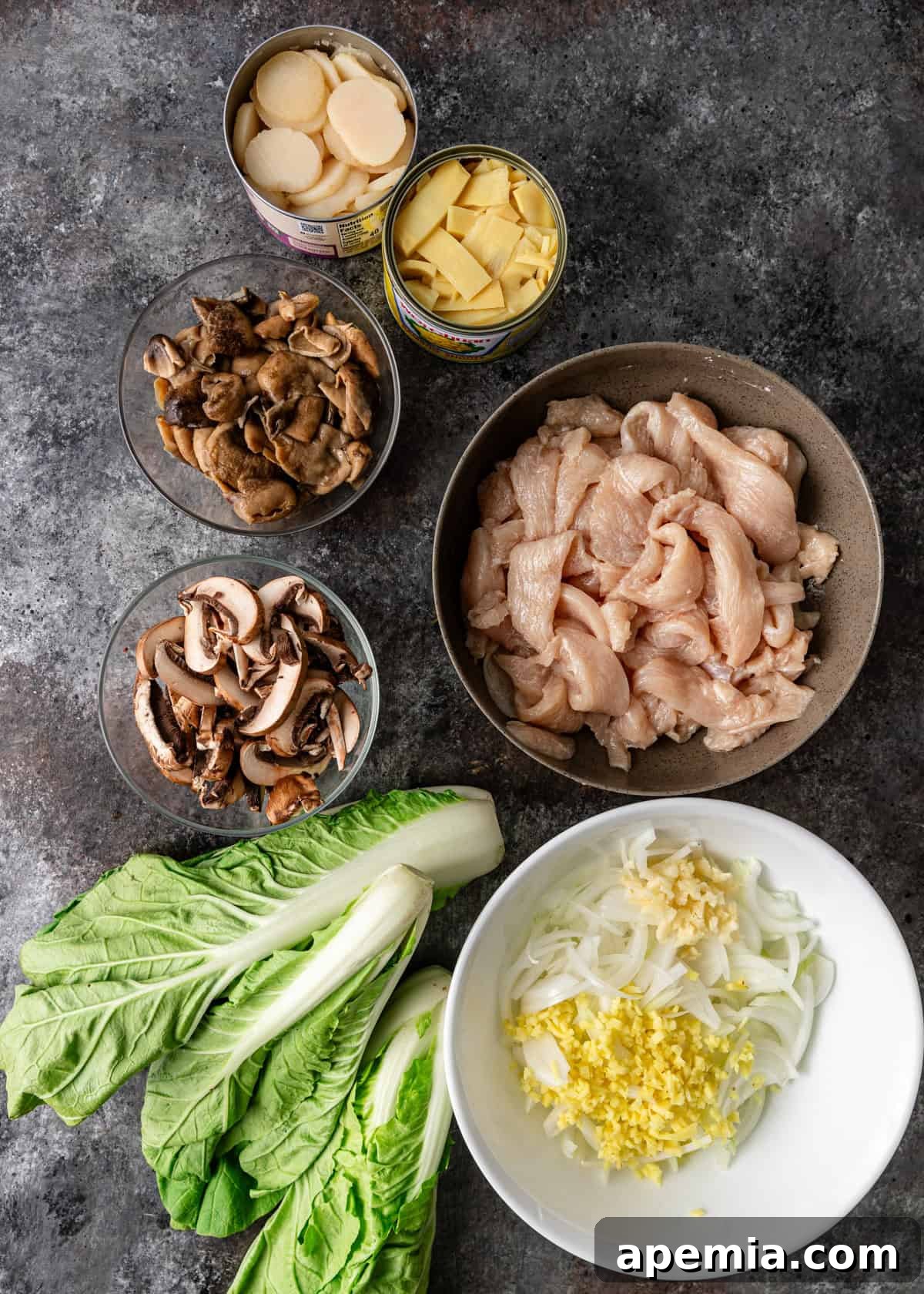
Chicken – For stir-frying, both chicken breast and thigh meat are excellent choices, offering distinct textures. Breast meat tends to be leaner and readily absorbs the marinade, while thigh meat provides a slightly richer flavor and remains incredibly tender due to its higher fat content. Chinese restaurants often opt for chicken tenderloin for its quick-cooking nature and uniform shape. The chicken is transformed through a velveting marinade, a crucial step for achieving that signature tender, silky texture:
- Cornstarch: This is the star of the velveting process, creating a thin, protective coating that locks in moisture, preventing the chicken from drying out during high-heat cooking and helping to achieve a tender exterior.
- Vegetable Oil: A small amount in the marinade helps distribute the cornstarch evenly and further aids in tenderness by coating the meat fibers.
- White Pepper: Offers a distinct, pungent warmth and earthy undertone often found in traditional Chinese cuisine. If unavailable, regular black pepper can be substituted, though the flavor profile will be slightly less authentic.
- Kosher Salt: Essential for seasoning and enhancing the natural flavors of the chicken, working in tandem with the velveting process.
-
A Medley of Vibrant Vegetables – This Moo Goo Gai Pan recipe embraces a wonderful variety of traditional Chinese vegetables, contributing both compelling flavor and delightful texture. We’re featuring staples like tender bok choy for its fresh, slightly bitter notes, crisp bamboo shoots for their unique, mild flavor and firm bite, tender and subtly earthy straw mushrooms, and crunchy water chestnuts for their distinctive crispness. To complement these, we’re also adding:
- White Onion: Provides a foundational sweetness and aromatic base when stir-fried, mellowing beautifully with cooking. Green onions (scallions) or spring onions make an excellent, milder substitute, adding a fresh, sharp finish.
- Cremini Mushrooms: Also known as crimini or baby bella mushrooms, these offer a rich, earthy umami flavor that deepens with cooking. White button mushrooms offer a milder alternative, while oyster mushrooms or even thinly sliced portobellos can be used for different textures and deeper mushroom flavor.
- Fresh Ginger: Adds a pungent, zesty, and slightly spicy kick that is quintessential in Asian cooking, providing warmth and depth. Always opt for fresh ginger if possible for the best flavor.
- Garlic: A fundamental aromatic that builds the robust flavor foundation of the stir-fry, complementing the ginger and onion.
-
The Flavorful Sauce – A Symphony of Tastes – The sauce for Moo Goo Gai Pan is a masterpiece of balance and aroma, starting with a robust chicken stock base (broth works just as well, opt for low-sodium). It’s thickened to a perfect, glossy consistency with cornstarch, ensuring it beautifully coats every ingredient. The sauce is then seasoned with several key ingredients that create its unique depth and complexity:
- Shaoxing Wine: This sweet, fragrant rice wine is a cornerstone of authentic Chinese cooking, imparting a distinctive umami, complexity, and a subtle sweetness that is hard to replicate. If you need a substitute, dry sherry or sake are good alcoholic alternatives, or for a non-alcoholic option, simply use extra chicken stock, though the flavor will be slightly less nuanced.
- Oyster Sauce: A rich, savory, and slightly sweet condiment that adds incredible depth and umami without being overly “fishy.” While unique, good substitutes include fish sauce (use sparingly due to its stronger flavor), hoisin sauce for sweetness and richness, or even Worcestershire sauce for a similar umami kick in a pinch.
- Sesame Oil: Extremely potent and aromatic, this oil is typically added at the end for its intense nutty fragrance rather than for cooking. A little goes a very long way; just ½ teaspoon is enough to infuse the entire dish with its characteristic, intoxicating aroma.
- Sugar: Balances the savory and tangy notes of the other ingredients, enhancing the overall flavor profile and adding a touch of sweetness that makes the sauce truly addictive.
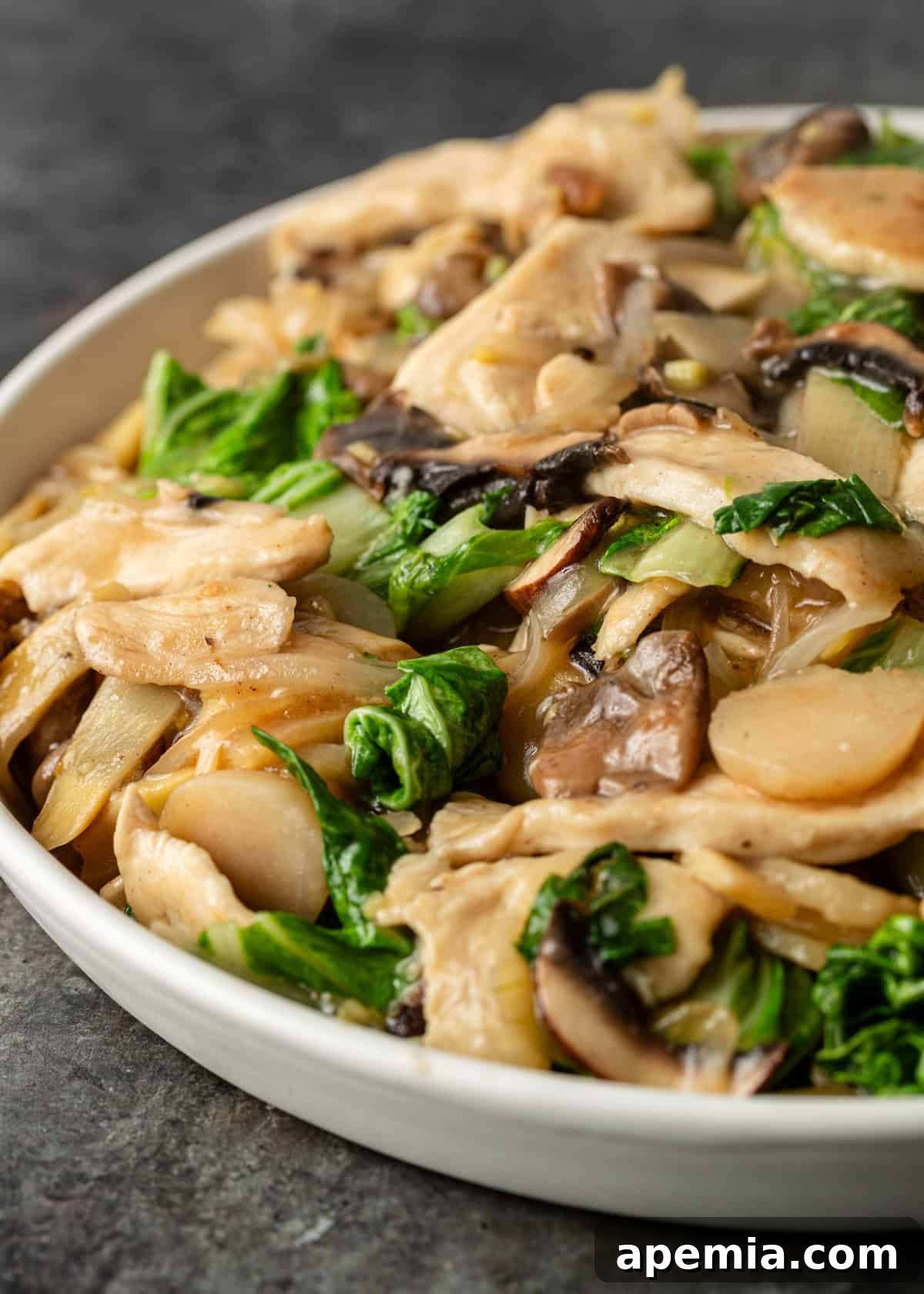
How to Make Moo Goo Gai Pan: Step-by-Step Guide for a Flawless Stir-Fry
- Velvet the Chicken to Perfection. Begin by thinly slicing your chosen chicken breast or thigh meat against the grain into bite-sized pieces. Transfer these delicate slices to a clean bowl. Here’s where the magic of velveting happens: add 1 teaspoon of vegetable oil, 2 teaspoons of cornstarch, ½ teaspoon of kosher salt, and ¼ teaspoon of ground white pepper. Mix thoroughly with your hands until every piece of chicken is evenly coated. This protective layer ensures the chicken remains incredibly tender and juicy during the high-heat stir-frying process. Allow it to marinate for at least 20 minutes at room temperature to fully absorb the flavors and achieve optimal texture.
- Prepare the Aromatic Sauce. In a separate medium-sized bowl, combine all the sauce ingredients: 1 cup of chicken stock, 2 tablespoons of cornstarch, 2 tablespoons of water, 1 tablespoon of Shaoxing wine, 2 teaspoons of oyster sauce, ½ teaspoon of sesame oil, and ¼ teaspoon of sugar. Whisk vigorously until the cornstarch is completely dissolved and the mixture is smooth and well-combined. This ensures a consistent, lump-free sauce that will thicken beautifully in the wok. Set it aside, giving it a final quick stir just before you’re ready to pour it into the wok.
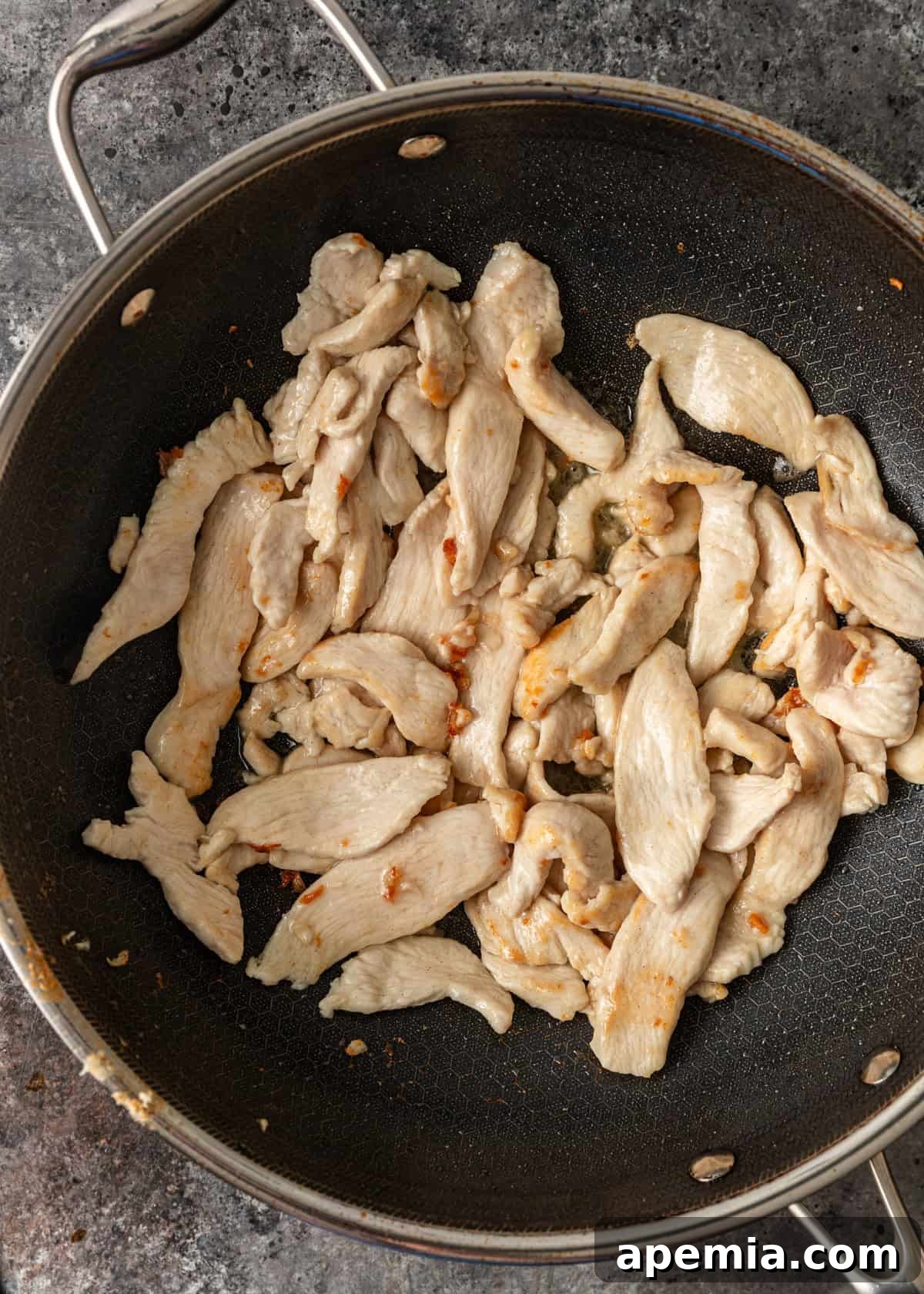
- Achieve a Perfect Sear on the Chicken. Heat your wok or a large, heavy-bottomed skillet over high heat until it’s almost smoking – this intense heat is key to authentic stir-frying and achieving “wok hei” (the breath of the wok). Add two tablespoons of vegetable oil and swirl it around to coat the entire surface of the wok. Working in small batches (to avoid overcrowding, which can lower the pan temperature and cause the chicken to steam instead of sear), stir-fry the marinated chicken for approximately 1 minute per batch, or until beautifully golden and cooked through. Immediately transfer the fried chicken back to its original marinade bowl to keep it tender and infuse it with more flavor. Set aside until needed.
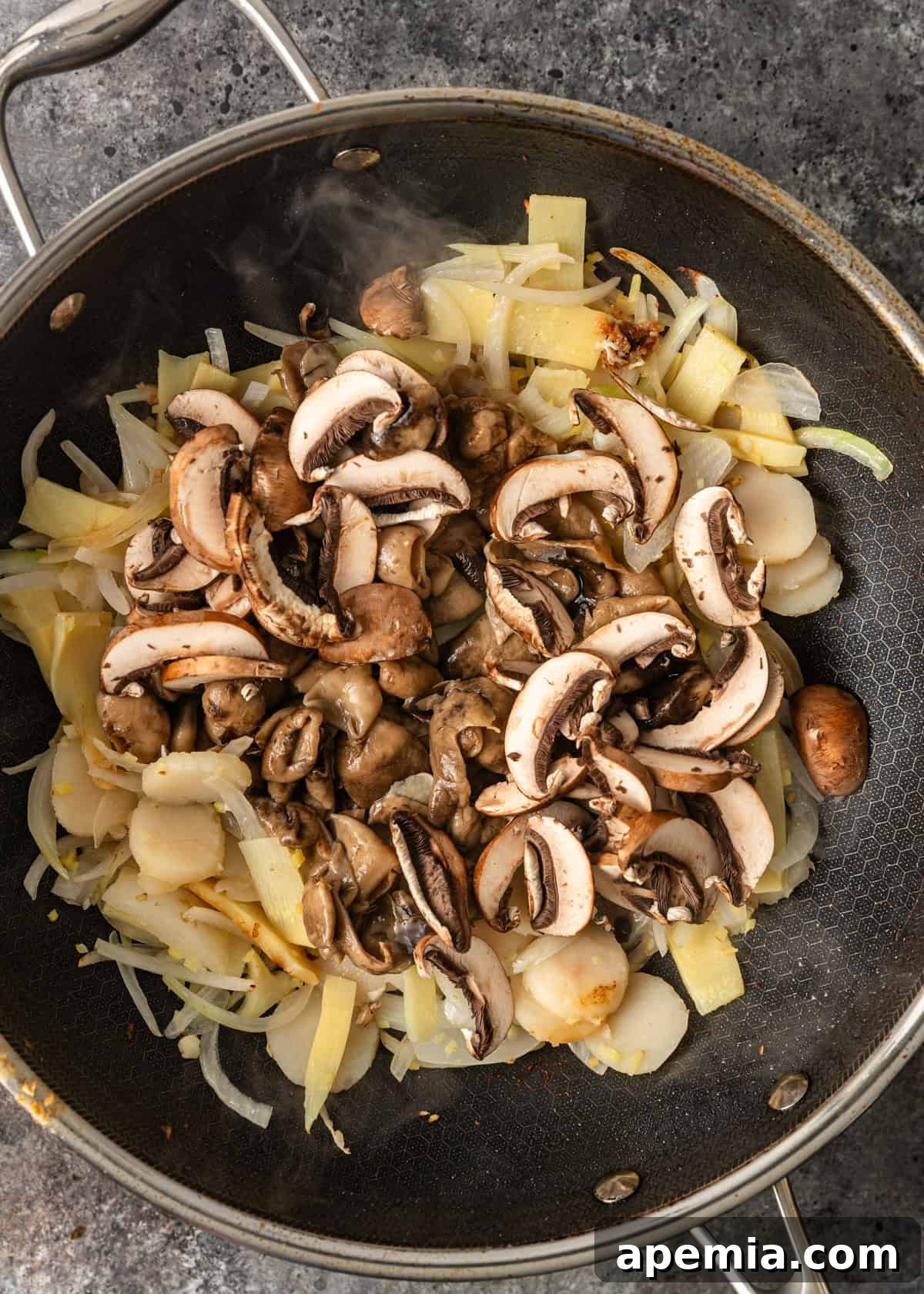
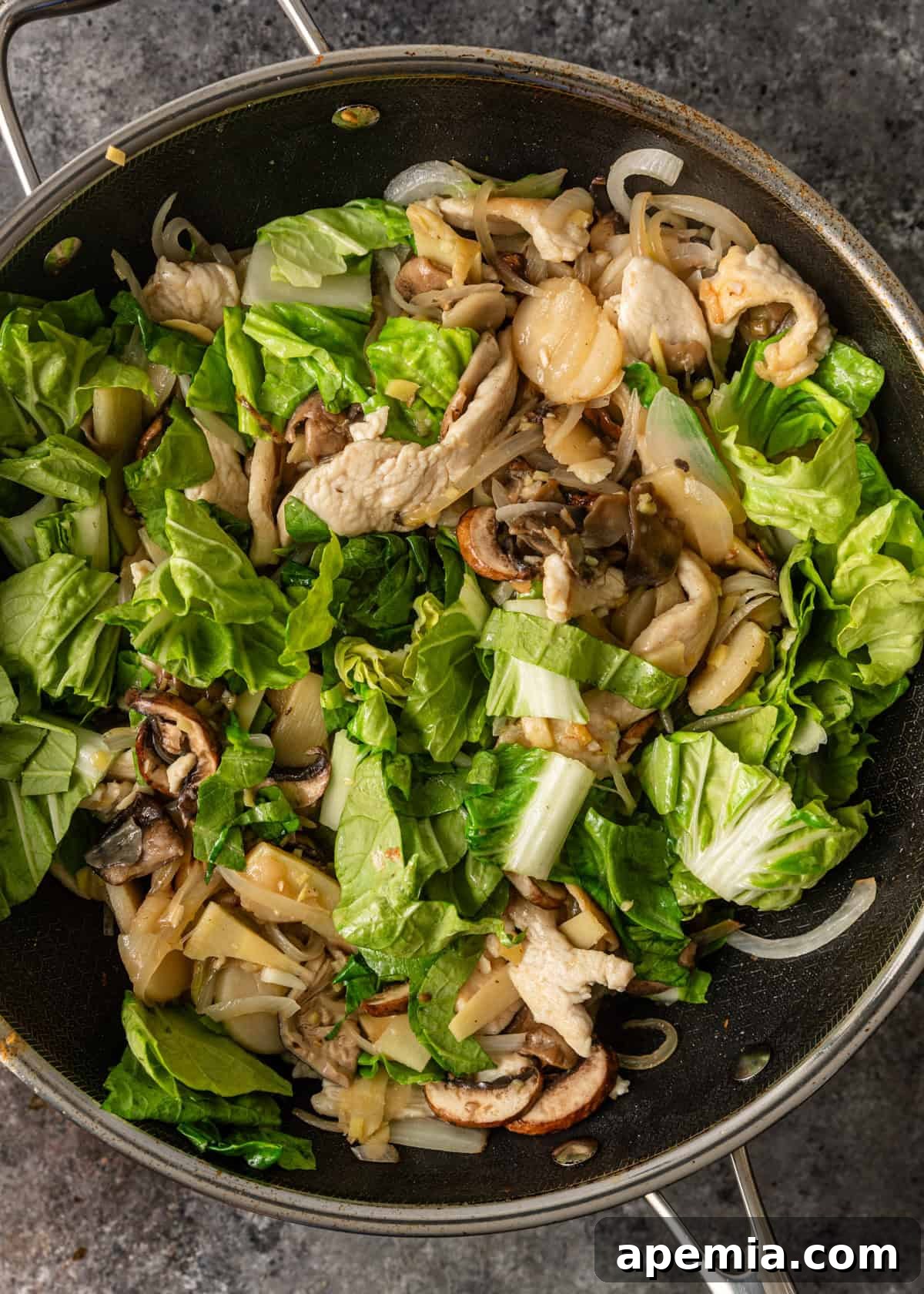
- Cook the Vegetables to Crisp-Tender Perfection. With the wok still hot from cooking the chicken, add the remaining tablespoon of vegetable oil. First, add your aromatics: the minced fresh ginger, minced garlic, and sliced white onion. Stir-fry these vigorously for about 30 seconds until they become wonderfully fragrant, releasing their incredible aromas. Next, add the heartier vegetables – the sliced cremini mushrooms, straw mushrooms, sliced bamboo shoots, and sliced water chestnuts. Continue to stir-fry for another 30 seconds, ensuring they begin to soften slightly but still retain a pleasant crunch. Finally, add the chopped bok choy, stirring quickly until it just begins to wilt and turns a vibrant green, typically another 30 seconds to 1 minute. The goal is crisp-tender vegetables, not soggy ones.
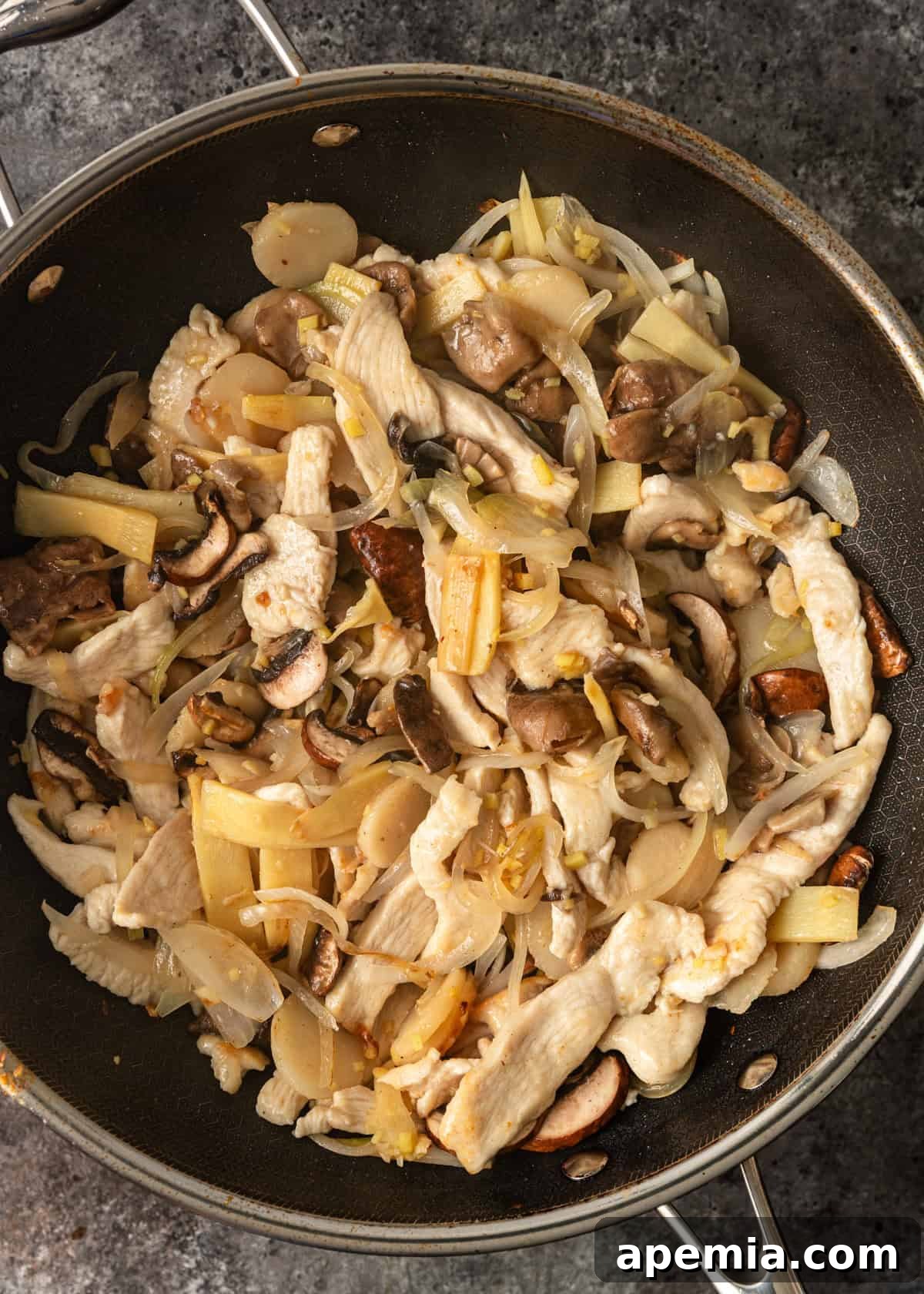
- Combine & Thicken the Sauce. Once the vegetables are perfectly cooked, return all of the perfectly seared chicken slices to the wok. Give your prepared sauce a final quick stir to re-emulsify the cornstarch, then pour it evenly over all the ingredients in the wok. Continue to stir-fry everything together constantly for 2 to 3 minutes. As the sauce heats, the cornstarch will activate, causing it to thicken rapidly and beautifully coat every piece of chicken and vegetable with a glossy, flavorful sheen. Ensure the sauce comes to a gentle simmer for optimal thickening.
- Serve Immediately. The magic of Moo Goo Gai Pan is best experienced fresh off the wok, when all the ingredients are at their peak of flavor and texture. Serve this piping hot, aromatic stir-fry right away over freshly steamed jasmine rice or your preferred noodles for a truly unforgettable and satisfying meal. Enjoy the vibrant flavors and textures you’ve just created!
Recommended Tools for Perfect Stir-Fries
While this recipe can be adapted to various kitchen setups, having the right tools can significantly enhance your stir-frying experience and ensure optimal results, making the process smoother and more enjoyable:
- Wok: The undisputed champion for high-heat, high-speed cooking with multiple ingredients. Its curved sides allow for easy tossing and uniform heat distribution, essential for achieving that characteristic stir-fry crispness. For home cooks, a large, heavy-bottomed skillet or a cast iron pan can serve as an excellent substitute, though one with slanted sides, much like a traditional wok, will make tossing and stirring much easier and prevent ingredients from spilling.
- Sharp Knife and Cutting Board: Essential for precise and efficient slicing and dicing, especially for the chicken and vegetables. Uniformly cut ingredients ensure even cooking and a consistent texture throughout the dish. A sharp knife also makes preparation safer and faster.
- Multiple Mixing Bowls: Having several bowls on hand for marinating the chicken and preparing the sauce separately is crucial for effective “mise en place.” This organization streamlines the cooking process, allowing you to quickly add ingredients to the hot wok without scrambling.
- Whisk: A small whisk is invaluable for thoroughly combining sauce ingredients, ensuring the cornstarch dissolves completely and prevents lumps, leading to a perfectly smooth and glossy sauce.
- Sturdy Spatula or Wok Spatula: A heat-resistant spatula, ideally with a curved edge, makes tossing and stirring ingredients in a hot wok much easier and more efficient, preventing sticking and ensuring even cooking.
Storing and Reheating Your Moo Goo Gai Pan Leftovers
One of the many great things about Moo Goo Gai Pan is that it makes for delicious leftovers, often tasting even better the next day as the flavors meld further! To ensure maximum freshness and safety, any remaining stir-fry should be transferred to an airtight container and refrigerated promptly within two hours of cooking. When stored properly, your Moo Goo Gai Pan will retain its quality and flavor for up to 4 days in the refrigerator, making it perfect for meal prepping.
In fact, many find the leftovers even more flavorful, as the chicken and vegetables have more time to fully soak up that incredible, savory sauce. For reheating, I recommend returning it to the stovetop in a skillet or wok over medium heat. Add a splash of water or chicken stock if it seems a little dry, and stir occasionally until it is thoroughly warmed through, typically 5-7 minutes. Alternatively, you can use a microwave, heating in 1-minute increments and stirring well between each, until the dish is piping hot. Be careful not to overcook during reheating, as this can dry out the tender chicken and make the vegetables mushy.
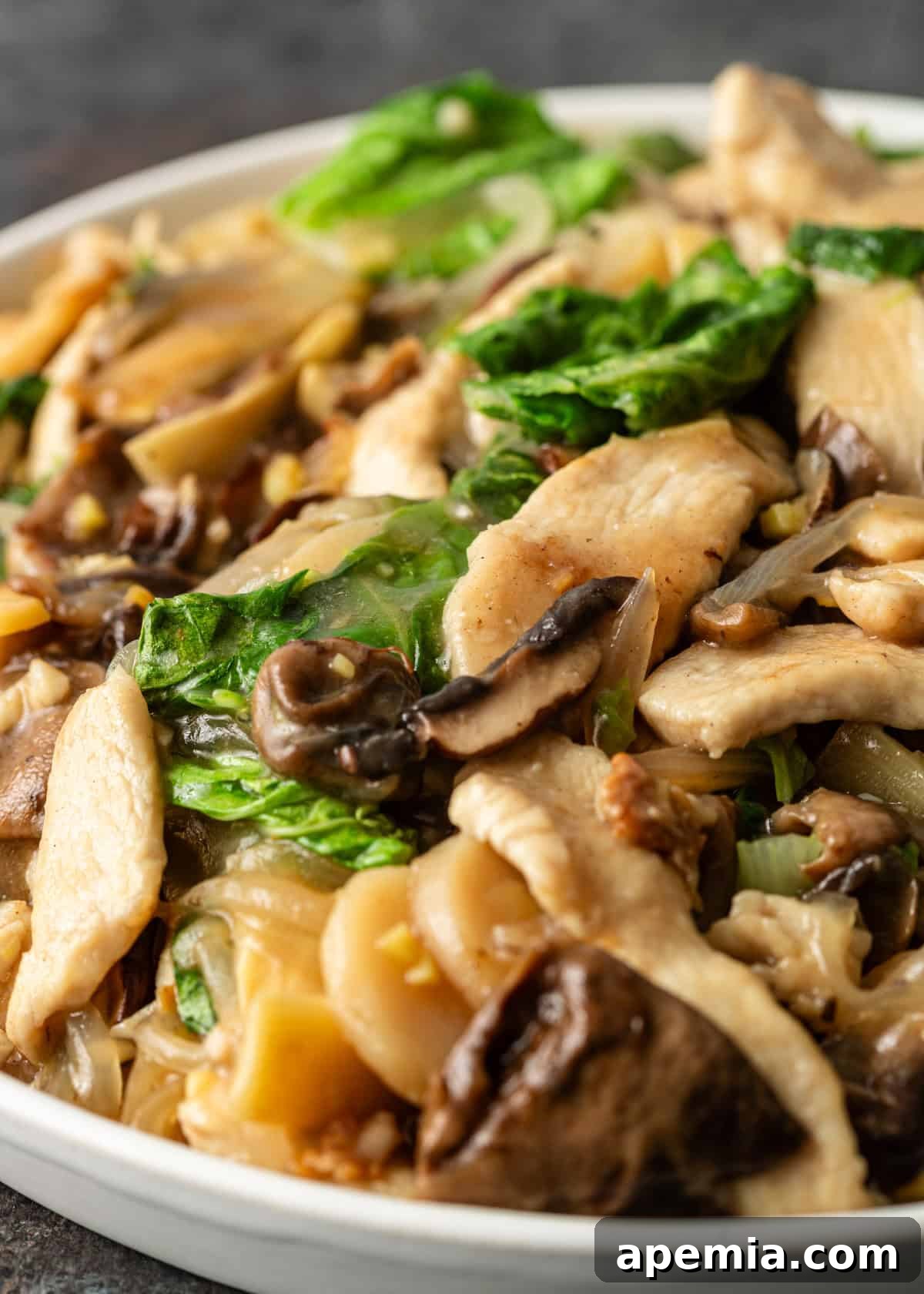
Love this recipe? Share it with the world on Pinterest!
Help spread the joy of homemade Chinese food by pinning this delicious Moo Goo Gai Pan recipe.
Pin This Recipe
Frequently Asked Questions About Moo Goo Gai Pan
Absolutely, using fresh vegetables exclusively will yield fantastic and vibrant results! While many recipes, including this one, suggest canned bamboo shoots, water chestnuts, and straw mushrooms for convenience and consistent texture, fresh alternatives can certainly be used if readily available. If opting for fresh bamboo shoots and water chestnuts, you might need to adjust their cooking times slightly to achieve your desired tenderness or crispness, as they tend to be firmer than their canned counterparts. Remember to properly prepare them; for instance, fresh bamboo shoots often require blanching to reduce any bitterness. Fresh mushrooms, such as shiitake or oyster mushrooms, can also add a wonderful depth of flavor and unique texture, but be mindful that they will release more moisture during cooking, so ensure your wok is very hot.
The secret to achieving perfectly tender and incredibly juicy stir-fried chicken, akin to what you’d find in a high-quality Chinese restaurant, lies in a technique called velveting. This traditional Chinese method, which involves marinating thinly sliced chicken in a mixture primarily of cornstarch, a bit of oil, salt, and sometimes egg white, creates a thin, protective coating around each piece of meat. This coating effectively shields the delicate chicken from the intense heat of the wok, preventing it from drying out. Simultaneously, it promotes a beautiful, light golden exterior while sealing in all the natural moisture, resulting in chicken that is remarkably tender, silky, and succulent on the inside. Additionally, frying the chicken in small batches is crucial as it prevents the wok from cooling down, allowing for a proper sear and locking in those precious juices rather than steaming the chicken.
The version of Moo Goo Gai Pan that most Westerners are familiar with and love, including this recipe, is best described as an American-Chinese adaptation rather than a strictly traditional Chinese dish. Its origins trace back to Cantonese cuisine, brought to the United States by Chinese immigrants from southern China who skillfully adapted their traditional recipes to local ingredients and tastes available in America. While fundamentally based on genuine Chinese culinary principles of stir-frying and flavor balance, the Americanized rendition often features milder spices and a sweeter, less intense flavor profile compared to its ancestral Cantonese counterparts. Historically, the traditional Cantonese dish, while also featuring chicken and mushrooms, likely incorporated a wider array of more robust and complex spices and cooking techniques, reflecting the deeper, more intricate flavors characteristic of authentic regional Chinese cooking. It stands as a delicious testament to culinary evolution and cultural fusion.
Moo Goo Gai Pan (Mushroom and Chicken Stir Fry) Recipe
Moo Goo Gai Pan is a delightful mushroom and chicken stir fry, generously packed with fresh water chestnuts, crisp bamboo shoots, vibrant bok choy, and savory onions, all brought together in a light yet deeply flavorful sauce! This recipe serves 4 and is perfect for a quick, healthy weeknight meal.
Recipe Overview
- Servings: 4
- Prep Time: 25 mins
- Cook Time: 10 mins
- Total Time: 35 mins
Ingredients
For the Velveting Chicken
- 1 lb chicken breast or thigh meat, thinly sliced
- 1 tsp vegetable oil, plus 3 tablespoons for cooking (divided)
- 2 tsp cornstarch
- 1/2 tsp kosher salt
- 1/4 tsp white pepper
For the Vibrant Vegetables
- 2-inch piece fresh ginger, skinned and minced
- 1 medium white onion, thinly sliced
- 2 cloves garlic, minced
- 8 oz cremini mushrooms, sliced
- 8 oz straw mushrooms, canned and drained
- 8 oz sliced bamboo shoots, canned and drained
- 8 oz sliced water chestnuts, canned and drained
- 4 cups bok choy, chopped into 2-inch pieces
For the Aromatic Sauce
- 1 cup chicken stock (low-sodium recommended)
- 2 tbsp cornstarch
- 2 tbsp water
- 1 tbsp Shaoxing wine (or dry sherry/chicken stock)
- 2 tsp oyster sauce
- 1/2 tsp sesame oil
- 1/4 tsp sugar
Instructions
- Prepare the Chicken: Thinly slice the chicken breast or thigh meat against the grain. In a medium bowl, combine the sliced chicken with 1 teaspoon of vegetable oil, 2 teaspoons of cornstarch, 1/2 teaspoon of kosher salt, and 1/4 teaspoon of ground white pepper. Mix well with your hands until the chicken is thoroughly coated. Let it marinate at room temperature for 20 minutes to tenderize.
- Prepare the Sauce: In a separate small bowl, whisk together all the sauce ingredients: 1 cup of chicken stock, 2 tablespoons of cornstarch, 2 tablespoons of water, 1 tablespoon of Shaoxing wine, 2 teaspoons of oyster sauce, 1/2 teaspoon of sesame oil, and 1/4 teaspoon of sugar. Stir vigorously until smooth and set aside. Remember to give it another quick stir just before adding to the wok, as cornstarch tends to settle.
- Cook the Chicken: Heat a large wok or skillet over high heat until it’s almost smoking. Add two tablespoons of vegetable oil, swirling to coat the surface. Add the marinated chicken in 2-3 batches (to avoid overcrowding, which can lower the pan temperature) and stir-fry each batch for about 1 minute, until lightly golden and cooked through. Transfer the cooked chicken back to your marinade bowl and set aside.
- Stir-fry the Vegetables: Add the remaining tablespoon of vegetable oil to the hot wok. First, add the minced ginger, sliced white onion, and minced garlic, stir-frying for about 30 seconds until fragrant. Next, add the sliced cremini mushrooms, straw mushrooms, sliced bamboo shoots, and sliced water chestnuts. Continue to stir-fry for another 30 seconds. Finally, add the chopped bok choy and stir-fry quickly until it just begins to wilt and brightens in color, about 30 seconds to 1 minute.
- Combine and Thicken: Return all the cooked chicken slices to the wok with the stir-fried vegetables. Give the prepared sauce a final stir and pour it evenly over everything in the wok. Stir-fry constantly for 2-3 minutes, allowing the sauce to heat through, thicken to a glossy consistency, and beautifully coat all the ingredients. Ensure it comes to a gentle simmer for optimal thickening.
- Serve Immediately: Serve your hot, fresh Moo Goo Gai Pan directly over steamed jasmine rice or your preferred noodles. Garnish with a sprinkle of fresh green onions if desired for an extra burst of flavor and color.
Nutrition Information (Estimate per serving)
Calories: 293 kcal | Carbohydrates: 31g | Protein: 33g | Fat: 5g | Saturated Fat: 1g | Polyunsaturated Fat: 1g | Monounsaturated Fat: 1g | Trans Fat: 0.01g | Cholesterol: 74mg | Sodium: 870mg | Potassium: 1170mg | Fiber: 6g | Sugar: 7g | Vitamin A: 3171 IU | Vitamin C: 37mg | Calcium: 116mg | Iron: 3mg
The information shown is an estimate provided by an online nutrition calculator. It should not be considered a substitute for a professional nutritionist’s advice. Individual nutritional values may vary based on specific ingredient brands and preparation methods.
Recipe Details
- Course: Main Dishes
- Cuisine: Chinese
- Author: Kevin
Have You Made This Recipe? Share Your Culinary Creation on Instagram!
We’d love to see your delicious Moo Goo Gai Pan! Tag @keviniscooking or use the hashtag #keviniscooking when you post your photos. Your culinary adventures inspire us!
