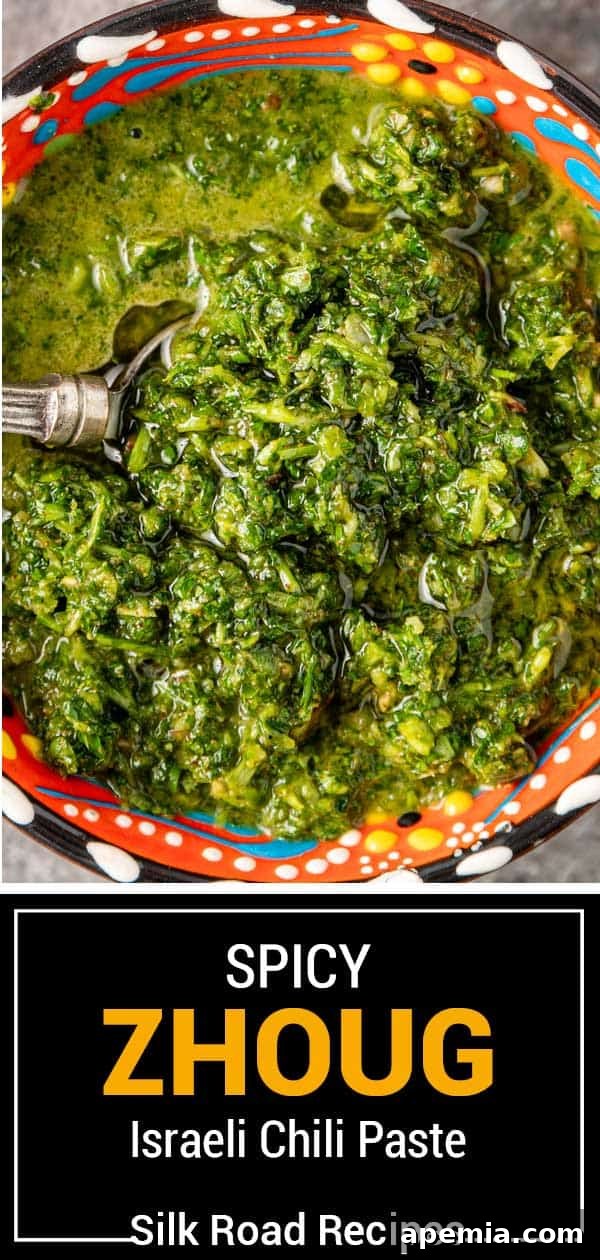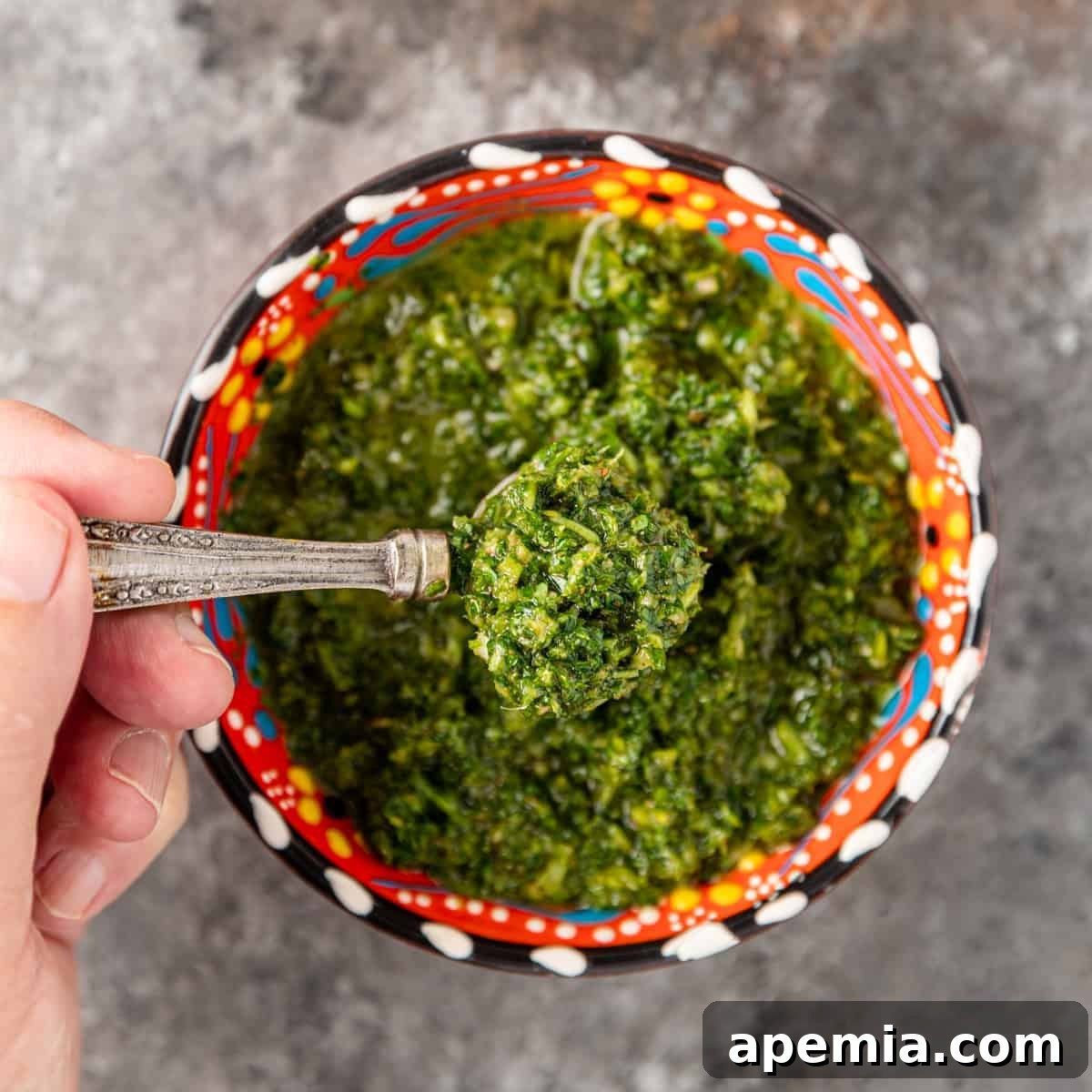
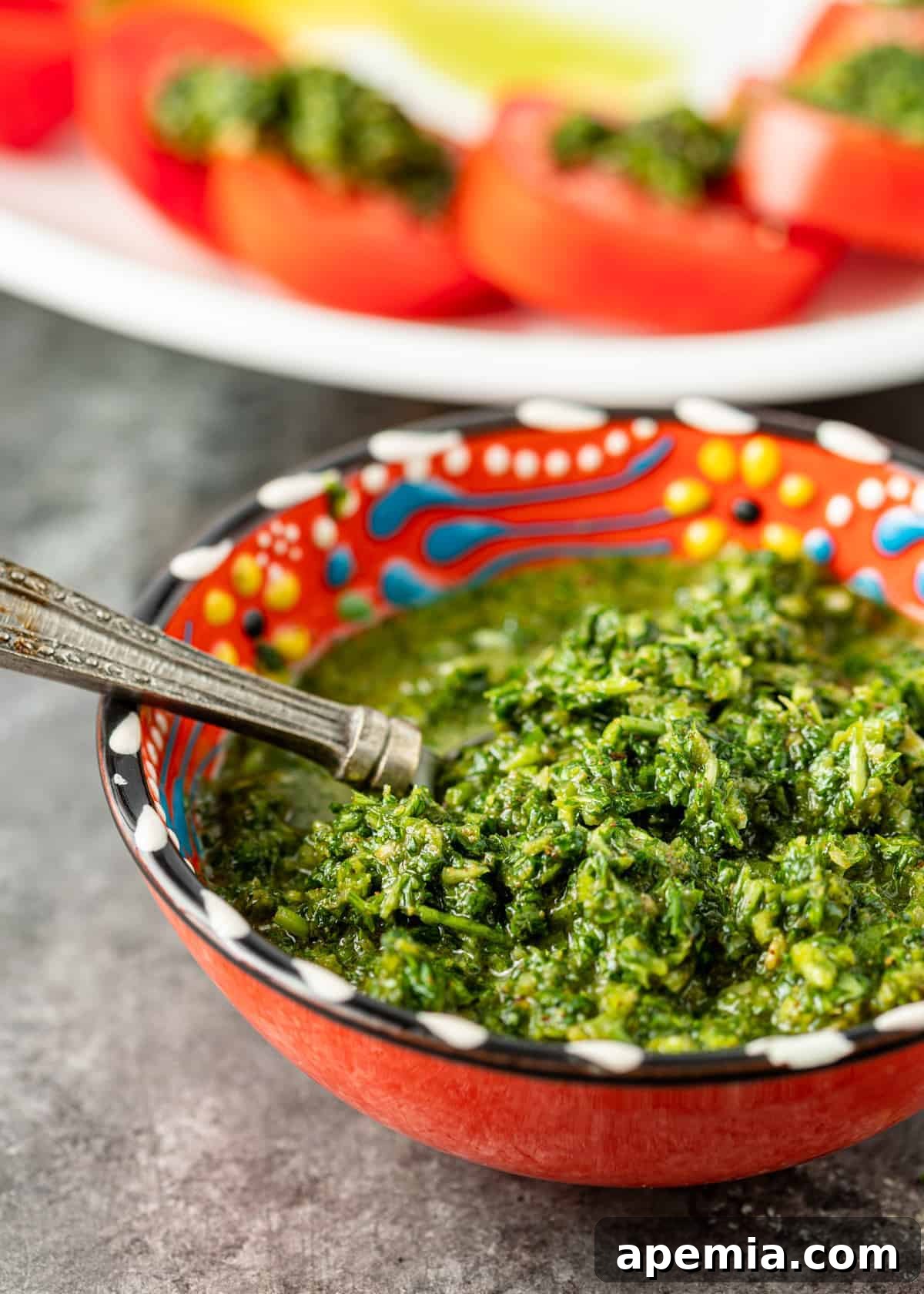
Zhoug, often pronounced “zoog” and also known as Schug, is an intensely flavorful and spicy Middle Eastern condiment originating from Yemen. This vibrant green chili paste is crafted from a harmonious blend of hot chiles, fragrant herbs, and a generous amount of garlic and traditional Middle Eastern seasonings. It offers an irresistible combination of fiery heat and refreshing herbal notes, making it an exceptional addition to a wide array of dishes, from creamy dips and savory appetizers to succulent grilled meats and roasted vegetables. Its rising popularity speaks to its versatility and unique ability to elevate any meal with a burst of exotic flavor.
What is Zhoug (Schug)? Your Essential Middle Eastern Green Chili Paste
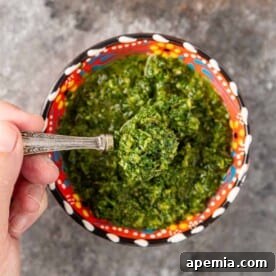
Zhoug, or schug, is more than just a sauce; it’s a culinary staple cherished across the Middle East. While its roots trace back to Yemen, where it has been a beloved part of Jewish cuisine for centuries, this vibrant green chili paste has been embraced and adapted in various forms, particularly in Israel. The version we delve into today is inspired by renowned chef Yotam Ottolenghi’s adaptation from his acclaimed cookbook, Jerusalem. Unlike some commercially available versions that are often finely pureed, Ottolenghi’s recipe, which this guide follows closely, maintains a delightful chunky texture. This consistency is preferred by many for its ability to cling to food, offering a more substantial flavor delivery than a smooth sauce.
This simple recipe yields approximately ⅔ cup, or about 10 servings, of this intensely spicy condiment. The star of the show, delivering its signature kick, is a generous quantity of serrano chiles. Balanced with fresh bunches of cilantro and parsley for their herbaceous freshness, and a touch of olive oil for a smooth finish, the moment this schug sauce touches your palate, there’s no mistaking its primary characteristic: bold, invigorating spice. Yet, beneath the heat lies a complex tapestry of aromatic flavors that truly define Middle Eastern cuisine.

Despite its potent spiciness, Zhoug is remarkably customizable and incredibly easy to prepare at home. It offers a fresh, dynamic alternative to other popular condiments you might enjoy daily, such as the richer Turkish pepper paste (biber salçası) or the intensely garlicky Lebanese toum. It strikes a perfect balance, being less heavy than toum and generally less fiery than some variations of harissa hot chili paste, making it a unique flavor enhancer in your culinary arsenal. You can effortlessly adjust its spice level, blend it to your preferred consistency, and store it for future use, ensuring you always have a vibrant burst of flavor ready for any meal.
Table of Contents
- A Journey Through Flavor: The Origins of Zhoug (Schug)
- Crafting the Perfect Zhoug: Chunky or Smooth?
- Essential Ingredients for an Authentic Zhoug
- Making Zhoug at Home: A Simple Step-by-Step Guide
- Recommended Tools for Making Zhoug
- Storing Zhoug for Lasting Freshness
- Frequently Asked Questions About Zhoug
- Zhoug Sauce (Schug) Recipe
Chef’s Insight
A Journey Through Flavor: The Origins of Zhoug (Schug)
The culinary journey of Zhoug is deeply intertwined with history and migration. It is widely believed that the vibrant chili paste we now commonly refer to as Zhoug was first introduced to Israel by Jewish immigrants from Yemen in the early 20th century. This rich heritage gives Zhoug its distinctive character, blending Yemeni culinary traditions with its new home in Israeli kitchens. Its robust flavors reflect the aromatic spices and fresh produce integral to both Yemeni and broader Middle Eastern cooking. As such, Zhoug is not just a condiment; it’s a testament to cultural exchange and adaptation, a beloved staple that brings the essence of these rich traditions to tables worldwide.
Chef’s Insight
Crafting the Perfect Zhoug: Chunky or Smooth?
One of the delightful aspects of preparing Zhoug is deciding on its texture. While Zhoug may visually remind you of other green sauces like Italian pesto or Argentinian chimichurri, traditional Zhoug is often characterized by a coarser, chunkier consistency. This texture is a nod to its origins, where ingredients were laboriously hand-pounded using grinding stones or a mortar and pestle. This method ensures that the fresh herbs, particularly cilantro and parsley, retain their vibrant flavor and avoid becoming gummy or overly pasty. The slight crunch and distinct herb pieces contribute to a more authentic and satisfying mouthfeel. However, modern preferences vary, and if you prefer a smoother, more uniform sauce, feel free to puree it further in your food processor. The beauty of homemade Zhoug lies in tailoring it to your personal taste and desired culinary application!
Essential Ingredients for an Authentic Zhoug
Creating an authentic and delicious Zhoug begins with selecting the right, fresh ingredients. Here’s a detailed look at what you’ll need and some helpful substitution tips:
- Serrano Chiles: These are the backbone of Zhoug’s signature heat. Serranos are known for their bright, clean spice. For an extra fiery kick, you can leave some or all of the seeds in, but be prepared for intense heat! If you prefer a milder Zhoug sauce, jalapenos make an excellent substitute, offering a similar fresh green pepper flavor with significantly less spice. Always handle chiles with care, wearing gloves if you have sensitive skin.
- Cilantro: This herb is crucial for Zhoug’s fresh, aromatic profile. For the best texture and flavor, remove the thicker stems, as they can be fibrous. The delicate leaves and thinner stems carry the most potent flavor. Use fresh, vibrant cilantro for the best results.
- Flat Leaf Parsley: Also known as Italian parsley, this is the preferred choice for Middle Eastern cuisine due to its robust flavor and flat leaves that blend well. While regular curly parsley can be used in a pinch, flat leaf parsley offers a more authentic taste. Like cilantro, remove any thick stems before blending.
- Garlic: A generous amount of freshly minced garlic is essential, contributing a pungent and deep savory note that complements the chiles and herbs. Two cloves provide a pronounced garlicky flavor. For a milder, more herbaceous sauce, you can reduce the amount of garlic or even substitute with fresh chives, which offer a gentle oniony essence.
- Cumin: Ground cumin introduces an earthy, nutty, and slightly peppery depth to the Zhoug. Its distinctive savoriness is a hallmark of Middle Eastern spices. While potent when first added, its flavor will mellow beautifully as it melds with the olive oil and other ingredients.
- Ground Cardamom & Clove: These two aromatic spices work in concert to create an enchanting aroma and a complex flavor profile, boasting notes of citrus, mint, and pepper. They add an exotic warmth that rounds out the spiciness. If you don’t have both, allspice or nutmeg can serve as adequate substitutes, each offering a slightly different but complementary warmth.
- Sugar: Just a small pinch of granulated sugar is added not for sweetness, but to balance the intense heat and herbaceousness of the other ingredients. It helps to round out the flavors without making the sauce overtly sweet. You can always adjust to taste after blending.
- Olive Oil: High-quality olive oil not only provides smoothness and helps emulsify the sauce, but also contributes its own fruity, peppery notes. Add it slowly, bit by bit, to ensure it’s evenly incorporated, creating a rich and vibrant paste. If needed, a neutral-flavored oil such as canola or vegetable oil can be used as a substitute, though olive oil offers superior flavor.
- Water: A small amount of water helps in achieving the desired consistency, ensuring the ingredients blend smoothly into a paste without becoming too thick or dry.
Making Zhoug at Home: A Simple Step-by-Step Guide
Creating fresh, homemade Zhoug is surprisingly simple, especially with the help of a food processor. Follow these steps for a perfect batch:
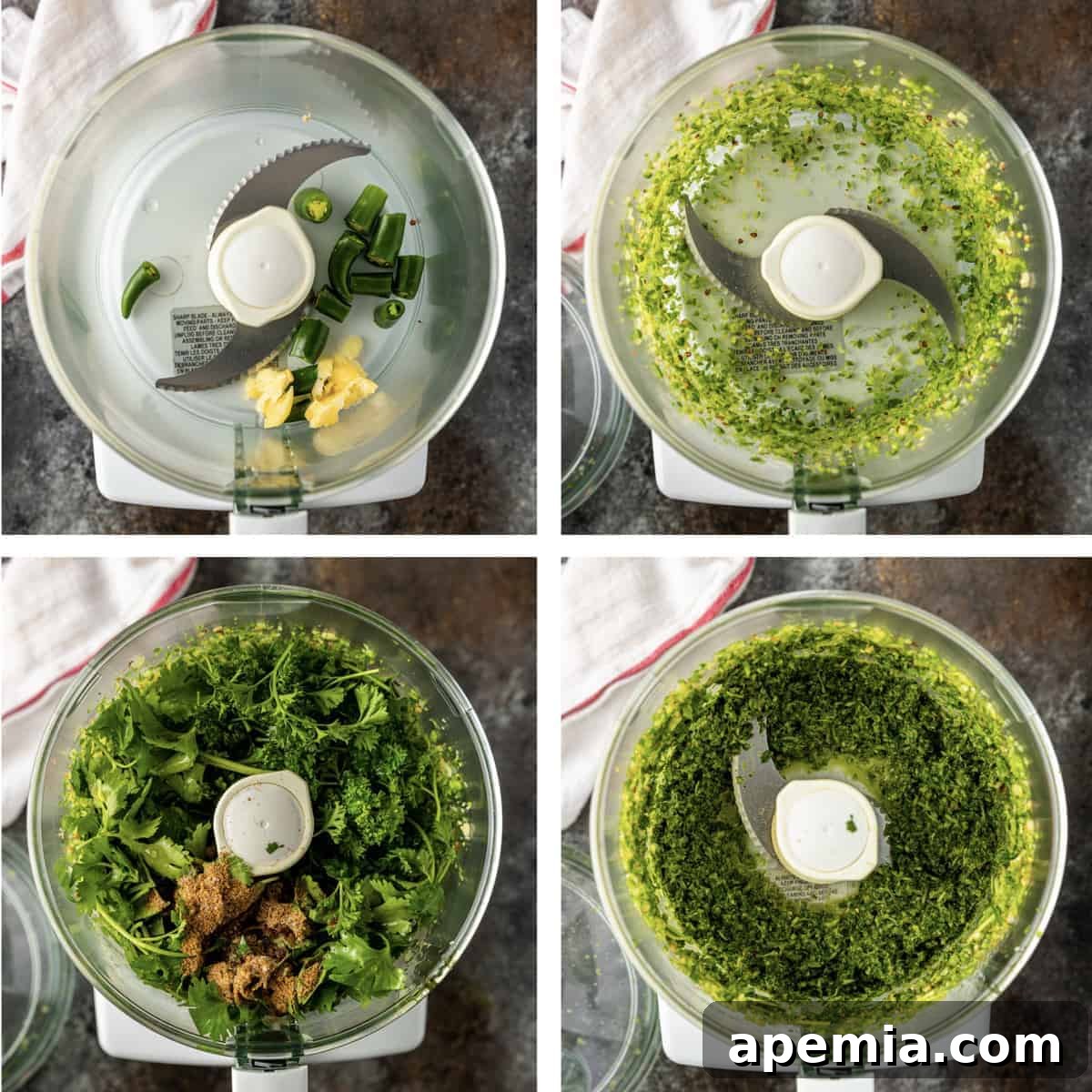
- Prepare the Chiles & Garlic: Begin by adding the coarsely chopped green chiles (serrano or jalapeño) and peeled garlic cloves to the bowl of your food processor. Pulse or process these ingredients first until they are very finely chopped. This initial step is crucial to ensure these harder ingredients break down thoroughly, preventing large chunks in your final Zhoug sauce.
- Process Remaining Ingredients: Next, add the fresh cilantro (stems removed), flat leaf parsley (stems removed), ground cumin, ground cardamom, ground clove, kosher salt, sugar, and water to the food processor. Slowly drizzle in the olive oil while pulsing. Continue to pulse the mixture until it forms a thick, coarse paste. Remember, traditional Zhoug has a slightly chunky texture, which many prefer for its authenticity. However, if you desire a smoother consistency, feel free to process it further until it reaches your preferred texture. Be careful not to overmix, as this can over-process the delicate herbs and result in a gummy or pasty consistency, compromising their vibrant flavor and appearance.
- Adjust to Taste: Taste your Zhoug and adjust seasonings as needed. If you desire more heat, add another serrano chile and pulse again. For a less spicy version, you can stir in a little more olive oil or a squeeze of lemon juice to mellow the flavors. You can also add a touch more salt or sugar to balance the overall taste profile.
- Store or Serve: Your fresh Zhoug is ready to be enjoyed immediately! For optimal flavor and longevity, transfer the sauce to an airtight jar or container. It can be stored in the refrigerator for up to one week. If you plan to store it for longer, consider the freezing tips below.
Recommended Tools for Making Zhoug
- Food Processor or High-Powered Blender: While traditionally made with a mortar and pestle, a food processor is the easiest and most efficient tool for preparing Zhoug at home. It quickly chops and blends the ingredients to your desired consistency, saving significant time and effort. A high-powered blender can also work effectively, just be mindful of over-processing.
Storing Zhoug for Lasting Freshness
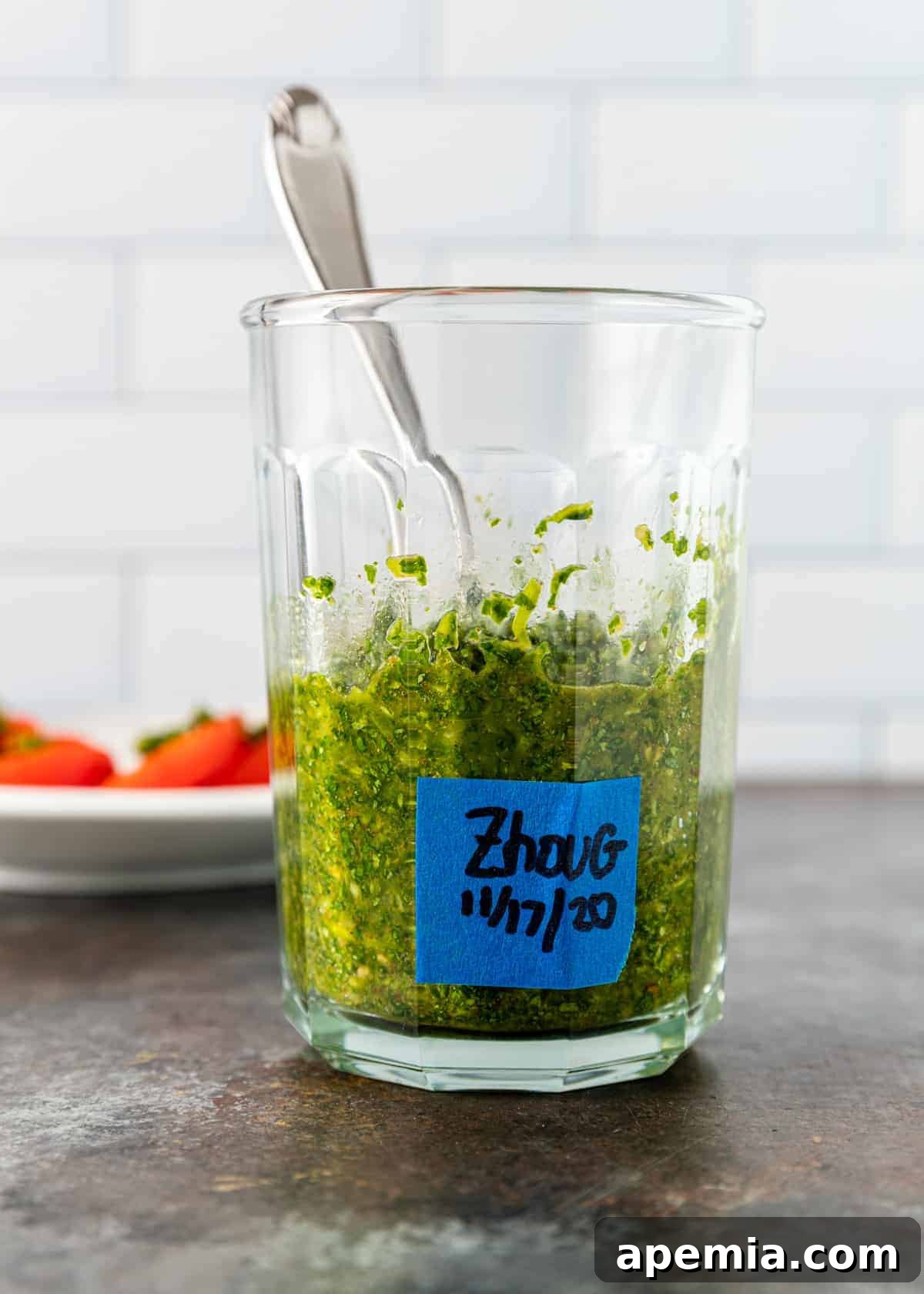
Proper storage is key to maintaining the vibrant flavor and freshness of your homemade Zhoug. To keep it fresh and prevent spoilage, Zhoug must always be refrigerated. When stored in an airtight container, it will typically last for up to one week in the fridge. It’s important to avoid leaving it out at room temperature for extended periods, as this can accelerate spoilage and diminish its quality.
An interesting tip: Zhoug’s flavors tend to mellow slightly when chilled. The cold temperature helps to quell some of the stronger, sharper notes in the sauce, resulting in a more harmonized and nuanced taste profile that many find appealing.
For extended freshness, especially if you won’t be using your Zhoug right away, here’s a quick and effective trick: after transferring the Zhoug to a jar, pour a thin layer of olive oil over the top of the sauce. This creates a protective seal, preventing the herbs from oxidizing and drying out, and helps to maintain the vibrant green color and fresh flavor until you’re ready to use it. This method also works wonderfully for other herb-based condiments like pesto.
Can you freeze Zhoug sauce?
Yes, Zhoug sauce can be successfully frozen, allowing you to enjoy this delicious condiment for much longer. The main consideration when freezing any herb-based sauce is to preserve the delicate texture and flavor of the fresh herbs, preventing them from becoming wilted or mushy upon thawing. To ensure optimal freezing: portion the Zhoug into small freezer-safe bags or ice cube trays. If using bags, press out as much air as possible before sealing to prevent freezer burn. Date the containers and use the frozen Zhoug within a few months for the best quality. When you’re ready to use it, transfer the desired amount to the refrigerator to defrost overnight. Once thawed, use it within a day or two. Freezing is a fantastic way to prepare a larger batch and have Zhoug readily available whenever a craving strikes.
Frequently Asked Questions About Zhoug
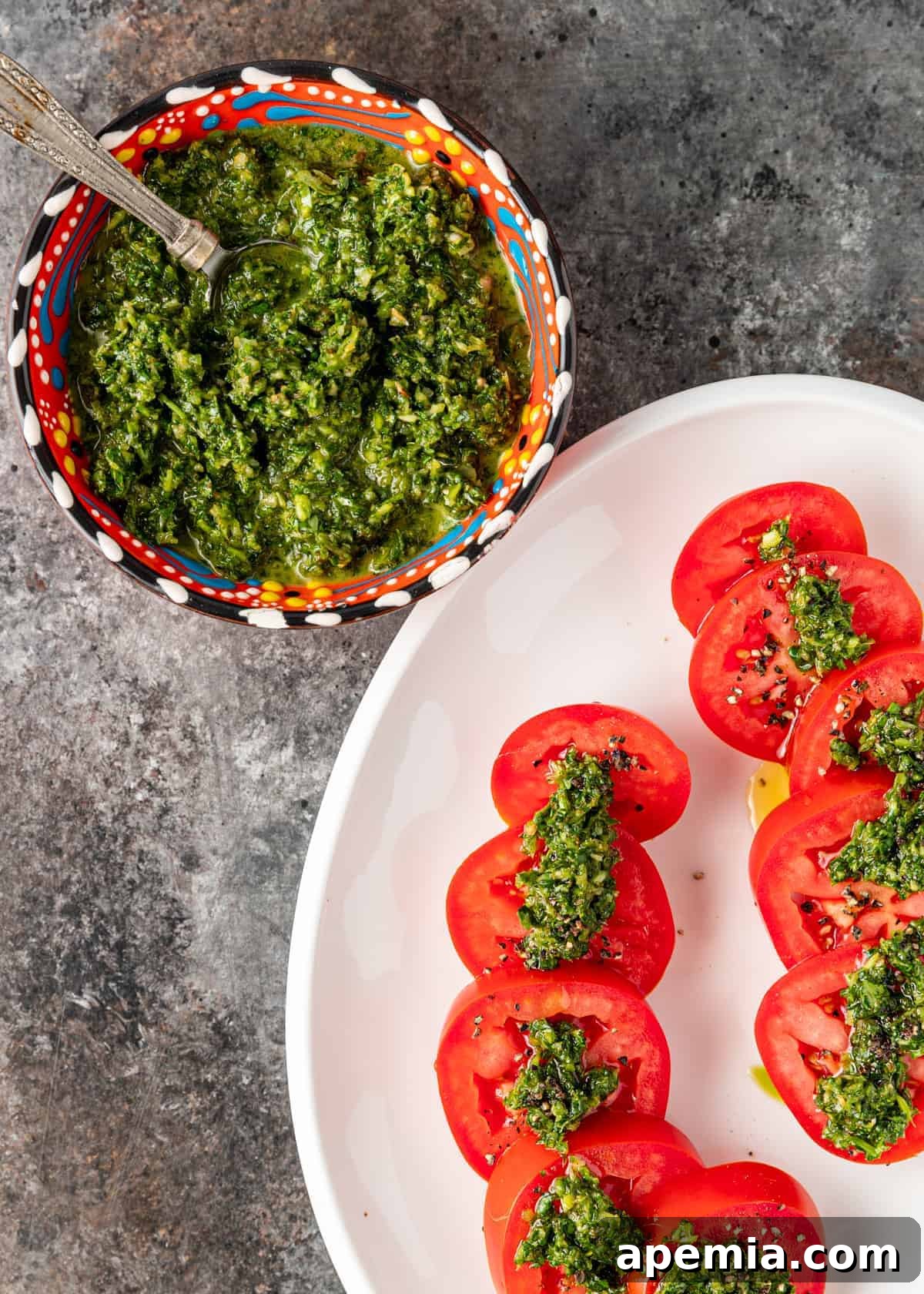
The versatility of Zhoug means it pairs wonderfully with almost anything! Traditionally, it’s served as a lively accompaniment to grilled meats like lamb shawarma, skewered kabobs, or alongside fresh and roasted vegetables. Its bright, spicy profile cuts through richness and adds a fresh counterpoint.
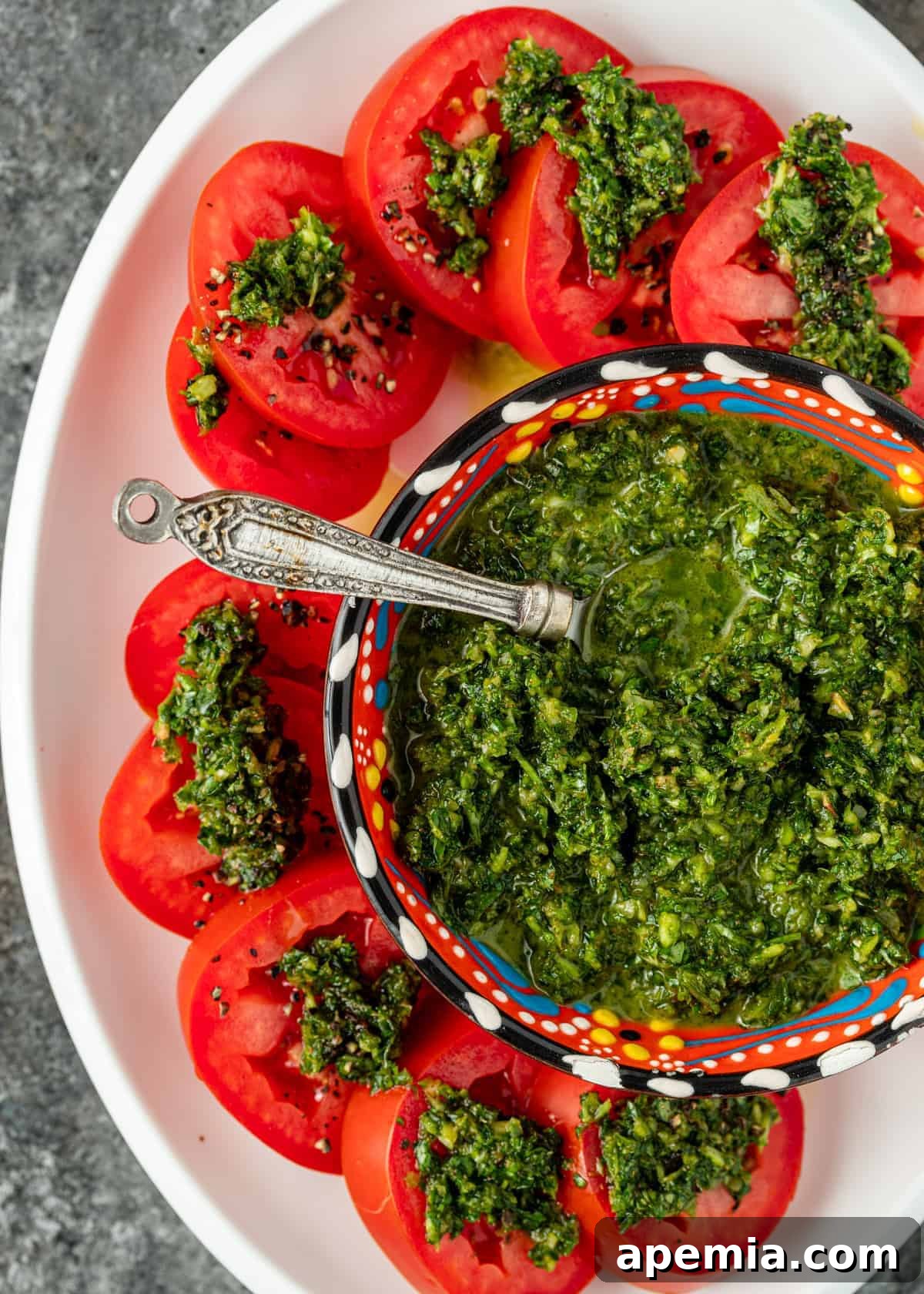
Beyond tradition, Zhoug is incredibly adaptable. It’s fantastic when mixed into creamy dips like hummus or tangy labneh, creating an instant flavor upgrade. Spread it generously on flatbreads or sandwiches for a zesty kick. It also serves beautifully on the side with fried foods such as falafel, brightening the plate with its vibrant color and bold taste. Don’t hesitate to experiment; Zhoug can transform eggs, soups, and even salads into something extraordinary.
While both chimichurri and Zhoug are vibrant green herb-based sauces that add a zesty kick to dishes, they originate from different culinary traditions and possess distinct flavor profiles. Chimichurri, an Argentinian staple, shares some ingredients with Zhoug, such as parsley and garlic. However, it also typically includes vinegar, red onion, a more substantial amount of olive oil, and different hot seasonings like red pepper flakes, paprika, and black pepper. Its flavor is generally tangy, garlicky, and herbaceous with a mild to moderate heat.
In contrast, Zhoug (or schug) is simpler yet more intensely spicy. It emphasizes a higher concentration of fresh herbs and green chiles over oil and typically features Middle Eastern spices like cumin, cardamom, and clove, which are absent in traditional chimichurri. Zhoug delivers a direct, fiery heat balanced by aromatic freshness, making it a bolder and more focused chili paste compared to the complex, vinaigrette-like character of chimichurri.
Yes, absolutely! Traditional Zhoug, made with fresh chiles, herbs, garlic, spices, and olive oil, is naturally vegan and gluten-free. It contains no animal products or gluten-containing ingredients, making it a fantastic and flavorful condiment suitable for a wide range of dietary preferences and restrictions. Always double-check ingredient labels if using pre-made spice blends to ensure no hidden additives.
Zhoug is renowned for its spiciness, with serrano chiles providing a significant kick. The heat level can be quite intense, especially if you leave the seeds in the chiles. If you prefer a milder version, you can certainly adjust the recipe. One common method is to remove all the seeds and white membranes from the serrano chiles before blending, as these parts contain most of the capsaicin (the compound responsible for heat). Alternatively, you can substitute some or all of the serrano chiles with milder peppers like jalapeños or even a few bell peppers to reduce the overall heat while retaining a fresh, green flavor. Another option is to simply use fewer chiles in the recipe and add more to taste.
Share this recipe on Pinterest!
Love this recipe? Share it with the world on Pinterest.
Subscribe to my Newsletter, follow me on Facebook, Pinterest, Instagram and YouTube for all my latest recipes and videos.
This post, originally published on Silk Road Recipes Jan. 11, 2021, was updated with new content on May 8, 2024.
Zhoug Sauce (Schug)
10
10 mins
10 mins
Print Recipe
Ingredients
- 2 cloves garlic crushed
- 2 serrano chiles coarsely chopped (See Note 1)
- 1 1/2 oz cilantro stems removed (about 1 bunch)
- 1/2 oz flat leaf parsley stems removed (about 1/3 bunch)
- 1/2 tsp ground cumin
- 1/2 tsp kosher salt
- 1/4 tsp ground cardamom
- 1/4 tsp ground clove
- 1/4 tsp sugar
- 2 tbsp olive oil
- 2 tbsp water
Instructions
-
Place garlic and chiles in the bowl of a food processor and pulse or process until finely chopped. This ensures even blending of harder ingredients.
-
Add all remaining ingredients (cilantro, parsley, cumin, salt, cardamom, clove, sugar, olive oil, and water) to the processor. Pulse several times to create a coarse, thick paste. I prefer a slightly chunky texture for authenticity, but you can puree until a smoother paste develops if that’s your preference. Avoid overmixing to prevent the herbs from becoming gummy.
-
Taste and adjust for spiciness or seasoning. Add more chiles for extra heat, or a little more salt/sugar to balance the flavors.
-
Serve immediately over grilled meats, spooned over fresh-cut tomatoes, mixed into hummus, or whatever you desire for an added kick of flavor. Store any leftover Zhoug in an airtight jar in the refrigerator for up to 3 weeks.
Notes
- Adjust the amount of chiles for your preferred level of heat. This recipe is designed to be spicy!
- For longer freshness when not using right away, add a thin layer of olive oil on top of the stored Zhoug in the jar.
- This recipe makes approximately ⅔ cup of Zhoug sauce.
- Recipe adapted from Jerusalem by Yotam Ottolenghi.
Nutrition
Carbohydrates: 1g |
Protein: 1g |
Fat: 3g |
Saturated Fat: 1g |
Sodium: 62mg |
Potassium: 34mg |
Fiber: 1g |
Sugar: 1g |
Vitamin A: 418IU |
Vitamin C: 4mg |
Calcium: 6mg |
Iron: 1mg
The information shown is an estimate provided by an online nutrition calculator. It should not be considered a substitute for a professional nutritionist’s advice.
Condiments
Middle Eastern
Kevin
Have You Made This Recipe? Let Me Know on Instagram
Tag @keviniscooking or tag me #keviniscooking!