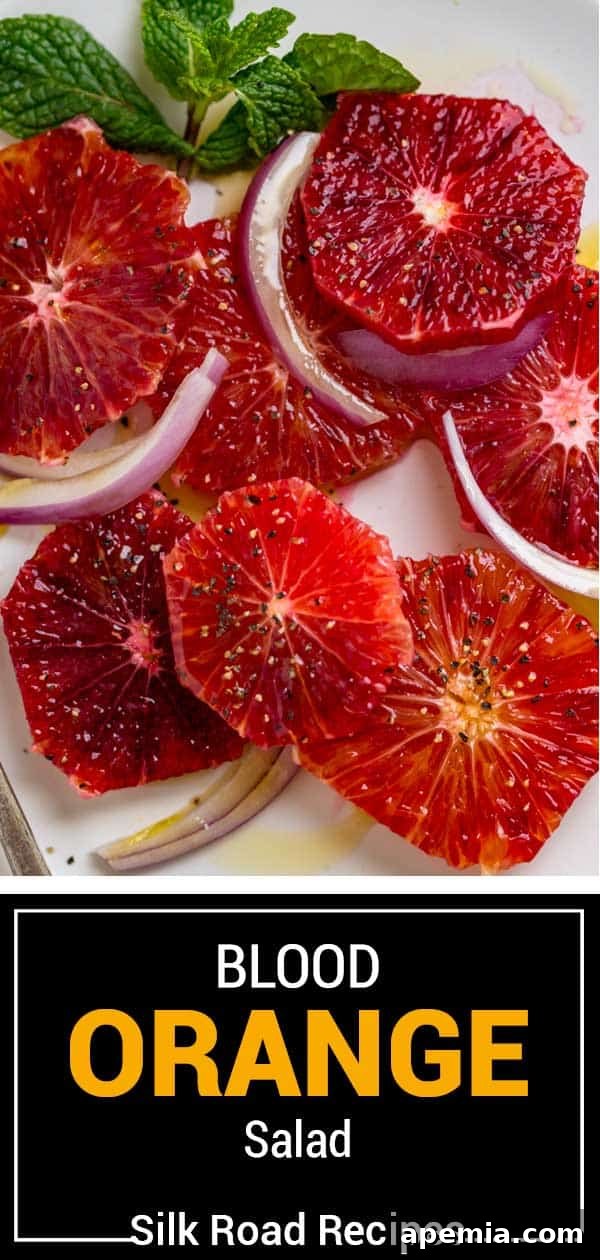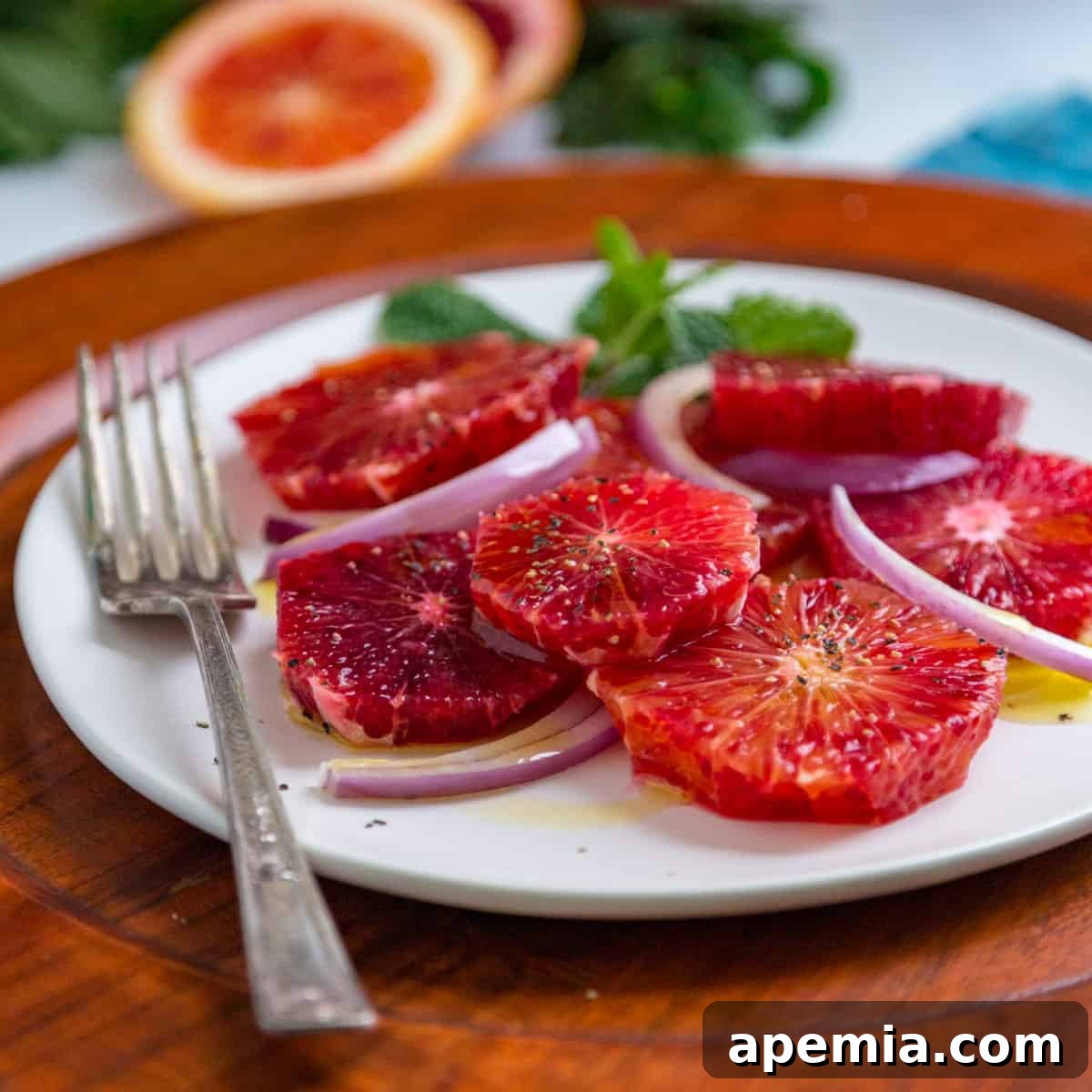
Chilled blood orange salad is a truly refreshing and visually stunning recipe that you can whip up in minutes, perfect as a vibrant side dish, a light lunch, a festive brunch, or any occasion that calls for a burst of fresh flavor. These delicious, ruby-hued blood oranges are readily available throughout the colder winter months, ready to brighten up our plates and palettes when we need it most. Embrace the season’s bounty with this simple yet elegant citrus salad that promises a delightful culinary experience.
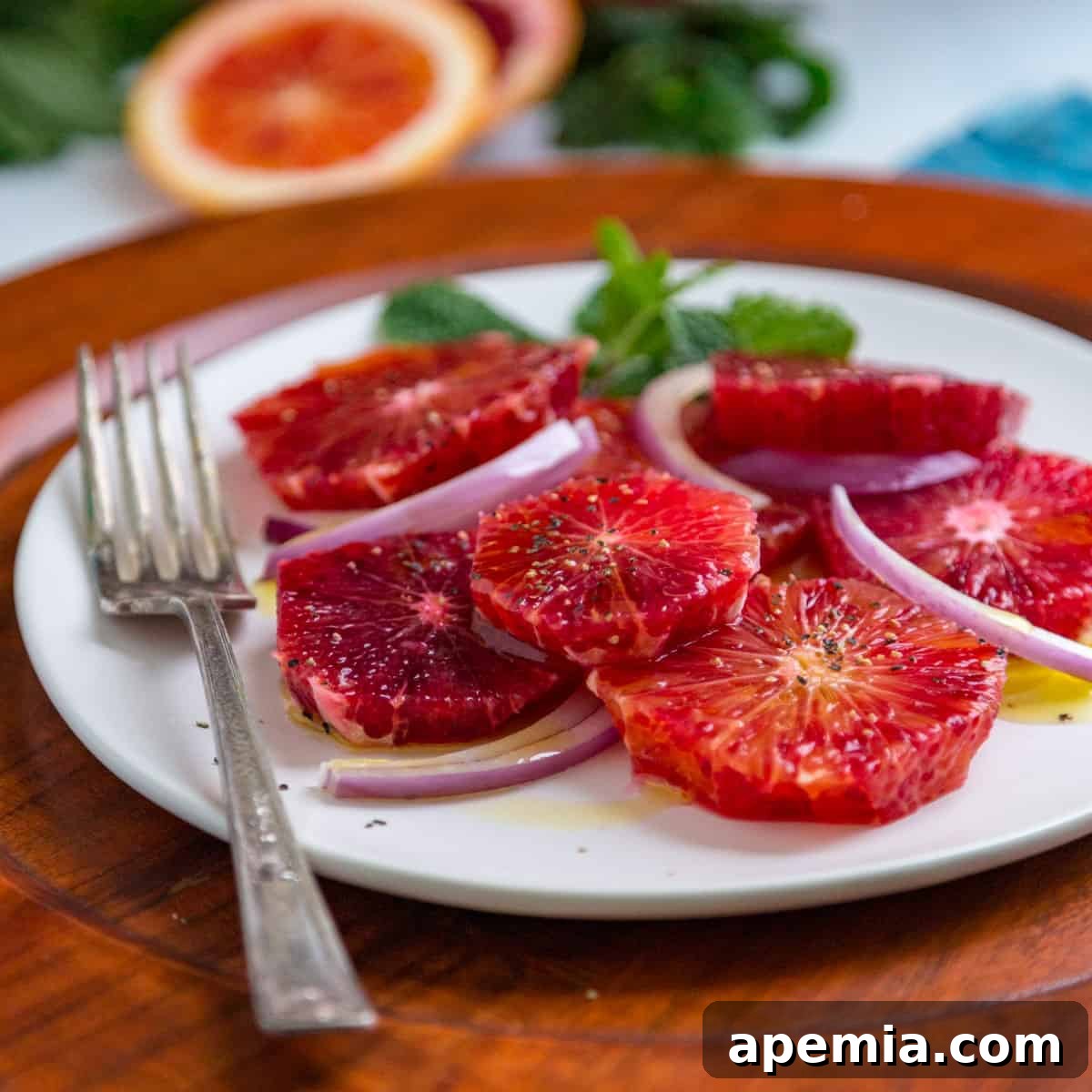
These gorgeous, juicy blood oranges traditionally hail from Sicily, often referred to as the “land of oranges.” Their distinctive flavor, which carries a unique spice-like edge and a refreshing sweetness with subtle raspberry notes, makes them fantastic in a variety of culinary creations—from vibrant jams and decadent desserts to refreshing juices. However, many find their true potential shines brightest in a simple, fresh blood orange salad, allowing their natural beauty and complex taste to take center stage.
This quick blood orange salad recipe perfectly encapsulates everything wonderful about Mediterranean food: the bright, zesty notes from fresh, chilled oranges are beautifully complemented by the subtle bite of thinly sliced red onion. A scattering of fresh herbs, a generous drizzle of high-quality olive oil, and a sprinkle of freshly cracked black pepper complete this harmonious blend of flavors and textures. It’s a testament to the power of simple, high-quality ingredients.
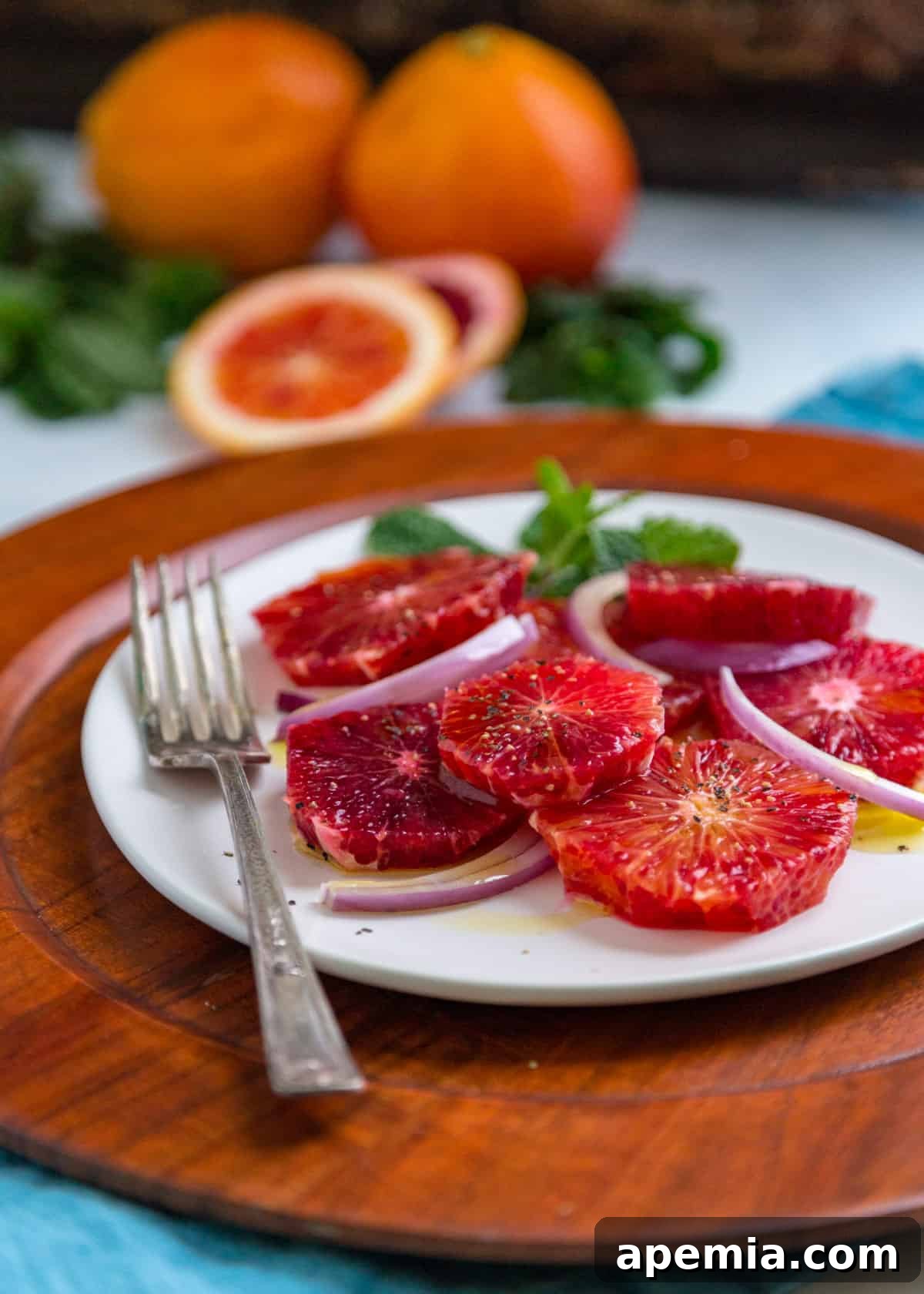
The beauty of this blood orange salad lies in its effortless preparation. It truly takes just about 15 minutes to assemble, making it an ideal choice when you need a quick yet elegant appetizer or a revitalizing bite between meals. The minimal prep time ensures that even on the busiest days, you can enjoy a burst of fresh, wholesome goodness. It’s a wonderful example of how simple ingredients can come together to create something truly extraordinary.
Table of Contents
- Why are they called “blood” oranges?
- Ingredient Notes and Substitutions
- How to Make Blood Orange Salad
- Recommended Tools
- Storing and Prep-Ahead
- Frequently Asked Questions
- Blood Orange Salad Recipe
Embracing a mindful approach to cooking, I always strive to minimize food waste, even when it comes to kitchen scraps. The vibrant peels of blood oranges can be repurposed creatively, often saved for infusions or even to add a unique twist to homemade chili crisp. Any leftover red onion can be easily incorporated into other delightful Mediterranean dishes, such as a refreshing chopped vegetable salad or a hearty Greek lentil salad, ensuring no delicious part goes to waste.
Why are they called “blood” oranges?
Blood oranges, primarily cultivated in Sicily, earn their striking name from the deep crimson hue of their flesh. This remarkable color is attributed to the presence of anthocyanin pigments, powerful antioxidants similar to those found in blueberries and red wine. Beyond their captivating appearance, they are celebrated for a distinct flavor profile—a perfect marriage of classic citrusy sweetness with a delightful hint of raspberry or red berry. Their unique taste and vibrant aesthetic make them a highly prized and flavorful addition to countless culinary creations.
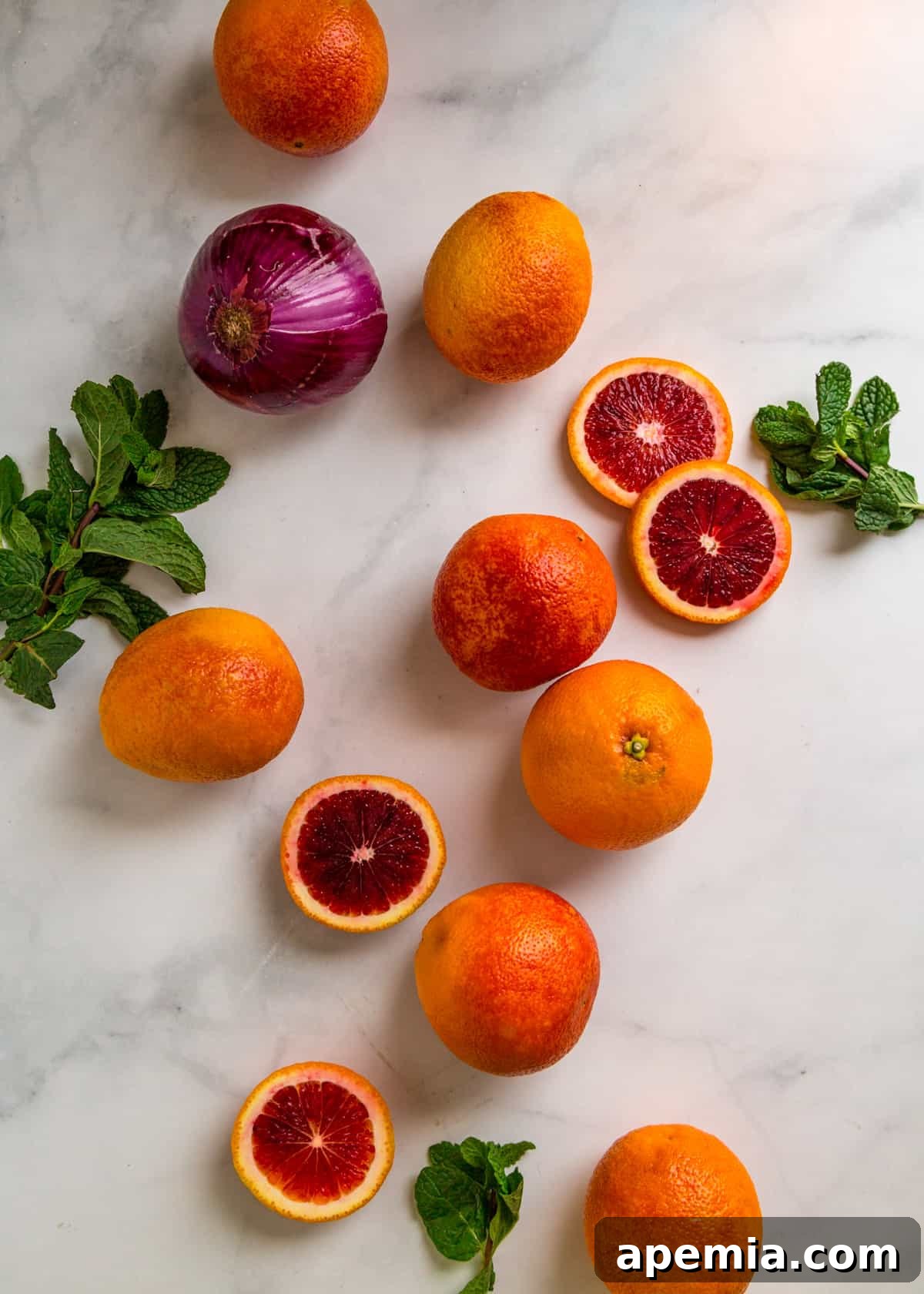
Tip From Kevin: For the best texture and flavor in your blood orange salad, I highly recommend chilling the blood oranges in the refrigerator for at least an hour before you begin preparation. When slicing, cut them into elegant quarter to half-inch rounds. A neat trick I’ve found is to leave the peel on while slicing the whole orange, then carefully remove the peel from each individual slice. This method often makes it easier to achieve clean cuts and ensures you remove all the bitter white pith before arranging them on your plate.
Ingredient Notes and Substitutions
- Blood Oranges: The star of our show, this unique citrus fruit offers a complex flavor profile. It’s generally less tangy than a typical navel orange, yet simultaneously boasts both a tarter edge and a deeper sweetness. What truly sets it apart is its delicate floral aroma and a distinct berry-like undertone, often likened to raspberries. When selecting, look for oranges that feel heavy for their size, indicating juiciness, and have firm skin with a slight give. The season for blood oranges typically peaks from January to May, though varieties like Moro might appear earlier in December.
- Red Onion: For raw salads, the red onion is undeniably the superior choice. Its milder flavor and subtle sweetness make it far more palatable than pungent white or yellow onions when served uncooked. It provides a crucial contrasting texture and a gentle sharpness that beautifully balances the oranges. If red onion is unavailable, a very sweet yellow onion might work in a pinch, but for optimal results, stick with red. To further mellow its bite, you can thinly slice the red onion and soak it in ice water for 10-15 minutes before draining and adding to the salad.
- Kosher Salt & Black Pepper: The quality of your salt and pepper significantly impacts the final dish. For fresh salads, I always recommend using freshly cracked black pepper for its vibrant aroma and robust flavor, along with flaky, large-grained kosher or sea salt. These salts provide a pleasing crunch and dissolve gradually, enhancing the flavors without making the salad overly salty.
- Extra Virgin Olive Oil (EVOO): The choice of olive oil is paramount in Mediterranean cuisine. Extra virgin olive oil is the least processed variety, retaining the most robust flavor, aroma, and beneficial nutrients. It’s rich in antioxidants and healthy fats, making it not just a dressing component but a core contributor to the salad’s health benefits and deliciousness. Choose a high-quality, cold-pressed EVOO for the best results.
- Optional Toppings for Enhanced Flavor: This blood orange salad recipe is exquisite as-is, but a few additions can elevate it further:
- Balsamic Glaze or Vinegar: A drizzle of good quality balsamic vinegar or a reduced balsamic glaze adds a layer of sweet and tangy complexity that beautifully complements the citrus. It introduces a darker, richer note that deepens the salad’s flavor profile.
- Fresh Mint: The combination of tart, almost spicy blood orange with cool, refreshing mint is simply divine. Mint adds a burst of freshness that invigorates the palate. Beyond mint, fresh rosemary and thyme also pair wonderfully with citrus, offering earthy and aromatic notes if you have them on hand.
- Other Herbs: Consider fresh basil for a sweeter, peppery note or cilantro for a bolder, brighter flavor, especially if leaning towards a more Latin-inspired twist.
- Toasted Nuts or Seeds: A sprinkle of toasted slivered almonds, pistachios, pine nuts, or sesame seeds can add a delightful crunch and nutty depth.
- Crumbled Cheese: For a creamy, tangy counterpoint, goat cheese or feta cheese crumbles are excellent choices. Their saltiness and texture provide a lovely contrast to the sweet citrus.
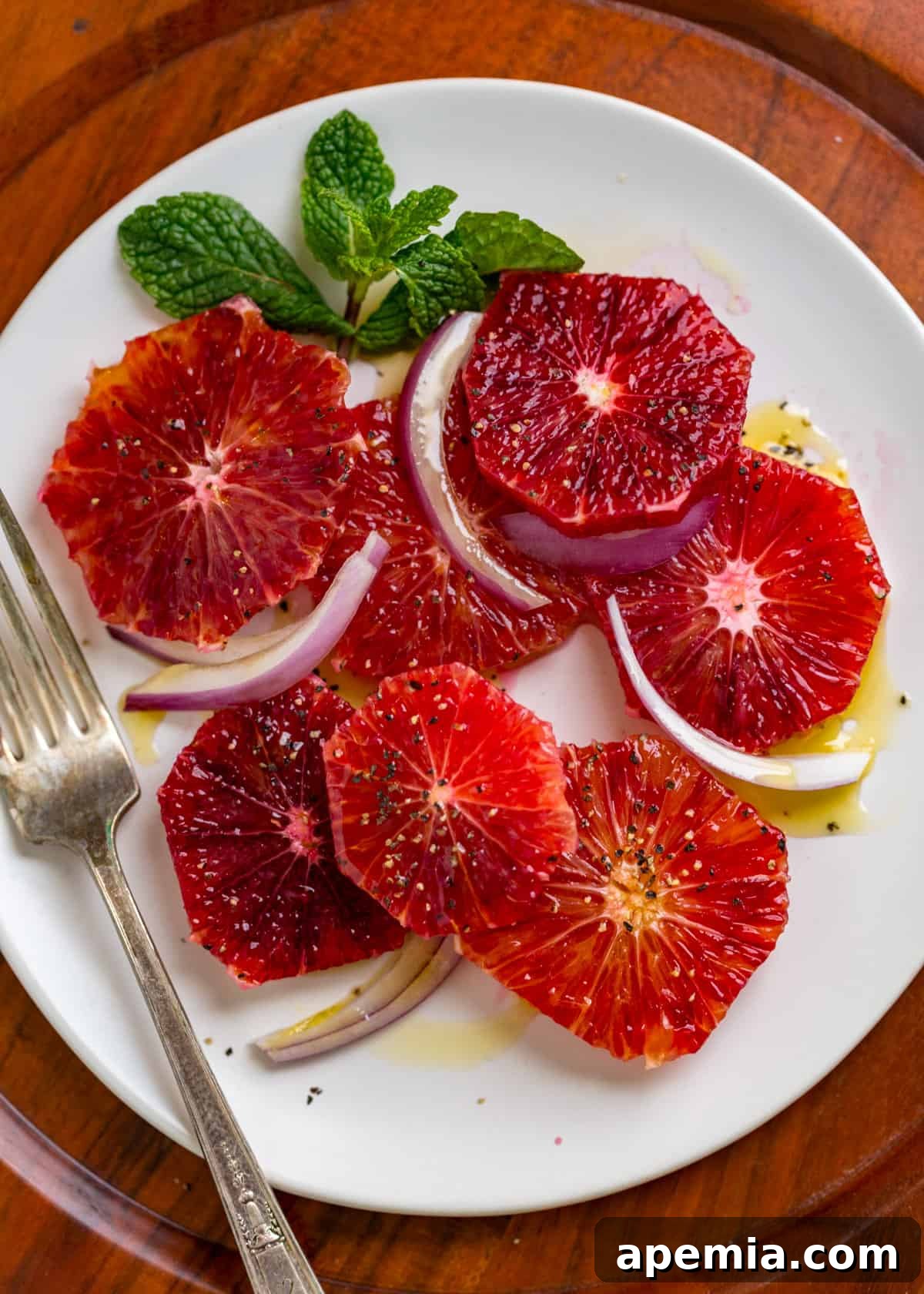
How to Make Blood Orange Salad
- Chill & Slice the Oranges: Begin by chilling your blood oranges for at least an hour in the refrigerator. This enhances their crispness and makes them easier to handle. Once chilled, remove them and slice into uniform ¼ to ½ inch rounds. A useful technique is to slice the whole oranges first, leaving the peel on, then carefully remove the peel and any lingering white pith from each individual slice. This ensures clean, appealing segments.
- Prepare the Onion: Take a medium red onion, cut it in half, peel away the outer layers, and trim both ends. For this salad, you’ll only need about a quarter of the entire onion. Cut one of the halves into half again, and then thinly slice this quarter. Reserve the remaining ¾ of the onion for another delicious recipe. Thinly sliced onion is key here, as it allows its mild flavor to blend seamlessly without overpowering the delicate oranges.
- Arrange & Serve: Artfully arrange the vibrant blood orange slices on individual serving plates or a large platter. Evenly sprinkle the finely sliced red onion over the oranges. Season generously with kosher salt and freshly cracked black pepper to taste. Finish with a luxurious drizzle of extra virgin olive oil. If desired, add a final touch with a splash of balsamic glaze and a scattering of fresh mint leaves. Serve immediately to enjoy the peak freshness and flavor of this delightful salad.
Recommended Tools
- Sharp Chef’s Knife: Essential for achieving clean, precise cuts on both the oranges and onions. A sharp knife ensures safety and a beautiful presentation. Avoid serrated knives for this task, as they can tear the delicate citrus flesh.
- Quality Cutting Board: A stable and clean surface is crucial for safe and efficient prep.
- Serving Platter or Individual Plates: To beautifully display your finished salad.
Storing and Prep-Ahead
The best strategy for preparing this blood orange salad in advance is to slice all of the ingredients and store them separately in airtight containers. This method ensures that each individual fruit and vegetable retains its unique texture, crispness, and vibrant flavor right up until you are ready to assemble and serve. Once sliced, both onions and oranges are best consumed within 5 days. Beyond this period, onions can become overly pungent, and oranges may begin to lose their firm texture and turn slightly sour. Similarly, a fully assembled blood orange salad should be eaten within 5 days to maintain its optimal freshness and taste.
Frequently Asked Questions
If you’re looking to transform this refreshing side dish into a more fulfilling meal, consider adding any combination of the following:
– Tender, young salad greens like baby spinach, arugula, or a spring mix can provide a soft bed for the citrus and add more volume. Microgreens also offer a lovely delicate texture.
– For a delightful crunch and healthy fats, include toasted pecans, walnuts, pistachios, or sesame seeds.
– To incorporate protein, thin slices of prosciutto, tender roast beef, or even boneless grilled lamb steak can turn this into a hearty entrée salad. Grilled shrimp or pan-seared scallops would also be exquisite.
Identifying a ripe blood orange involves a few sensory cues. A perfectly ripe orange will feel surprisingly heavy for its size, indicating it’s laden with plenty of spectacular juice. While it should feel firm, it shouldn’t be rock-hard; a slight, gentle give in the peel is ideal. Avoid any oranges that feel squishy or have soft spots, as these are likely overripe. You’re most likely to find blood oranges at their peak ripeness in January and February, which is typically when their flesh develops its deepest, most beautiful ruby-red color and their flavor is most pronounced.
Adding cheese can introduce a wonderful textural and flavor dimension to your blood orange salad. I highly recommend opting for something creamy and tangy to complement the citrus notes. Excellent choices include crumbled goat cheese (chevre) or briny feta cheese. For a richer, more luxurious pairing, you’d also find a great match with soft, buttery Brie, earthy Camembert, or even a nuanced crumbled bleu cheese for those who enjoy a stronger, more pungent flavor profile. A mild burrata or fresh mozzarella could also work for a creamy, subtle addition.
Absolutely! While blood oranges offer a unique flavor and stunning color, this salad concept can be adapted with other citrus fruits. Navel oranges, Cara Cara oranges (which have a lovely pinkish flesh), or even a combination of grapefruits and regular oranges would work beautifully. Adjust the sweetness and acidity of the dressing as needed based on the citrus you choose. The key is to use fresh, juicy, and well-chilled fruit.
Share this recipe on Pinterest!
Love this recipe? Share it with the world on Pinterest and inspire others to try this delightful salad.
Blood Orange Salad
5 from 1 vote
Blood orange salad is a bright and cheery winter salad bursting with fresh herbs, juicy fruit and vegetables, and a hint of pepper. This simple Mediterranean-inspired dish is not only visually stunning but also incredibly quick to prepare, making it an ideal choice for a light lunch, appetizer, or refreshing side dish.
4
15 mins
15 mins
Print Recipe
Ingredients
- 6 blood oranges chilled and peeled
- 1/2 medium red onion
- 1/8 tsp kosher salt
- 1/4 tsp black pepper
- 2 tbsp EV olive oil
- fresh mint optional for garnish
Instructions
- Chill the oranges for an hour. Peel and slice the oranges into 1/4 to 1/2-inch slices. You might find it easier to slice the chilled blood oranges with the peel on, then carefully trim the peel off, being sure to remove all the bitter white pith.
- Cut and peel the red onion, then trim the ends. Cut it in half, then thinly slice one-half (you’ll use about a quarter of the entire onion). Save the remaining onion for other uses.
- Divide and artfully arrange the orange slices on each plate. Divide and sprinkle the thinly sliced onion over the oranges, then season with salt and freshly cracked pepper. Drizzle extra virgin olive oil generously over the top. For an extra punch of flavor, you can also drizzle some balsamic glaze. Garnish with fresh chopped mint leaves if desired. Serve immediately.
Notes
- I often enhance the flavor by sprinkling on ground sumac, a Middle Eastern spice known for its delightful lemony taste.
Nutrition
Carbohydrates: 5g |
Protein: 0.5g |
Fat: 7g |
Saturated Fat: 1g |
Polyunsaturated Fat: 1g |
Monounsaturated Fat: 5g |
Sodium: 74mg |
Potassium: 77mg |
Fiber: 1g |
Sugar: 3g |
Vitamin A: 45IU |
Vitamin C: 12mg |
Calcium: 15mg |
Iron: 0.1mg
The information shown is an estimate provided by an online nutrition calculator. It should not be considered a substitute for a professional nutritionist’s advice.
salads
Italian, Mediterranean
Kevin
Have You Made This Recipe? Let Me Know on Instagram!
Tag @keviniscooking or use the hashtag #keviniscooking to share your delicious creations!