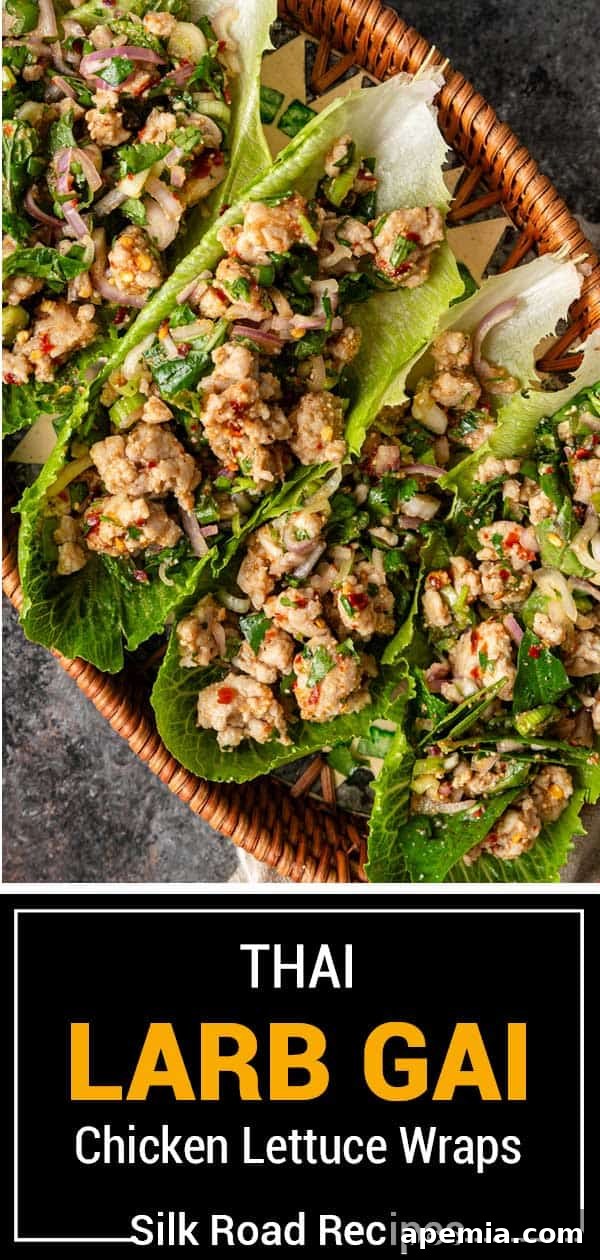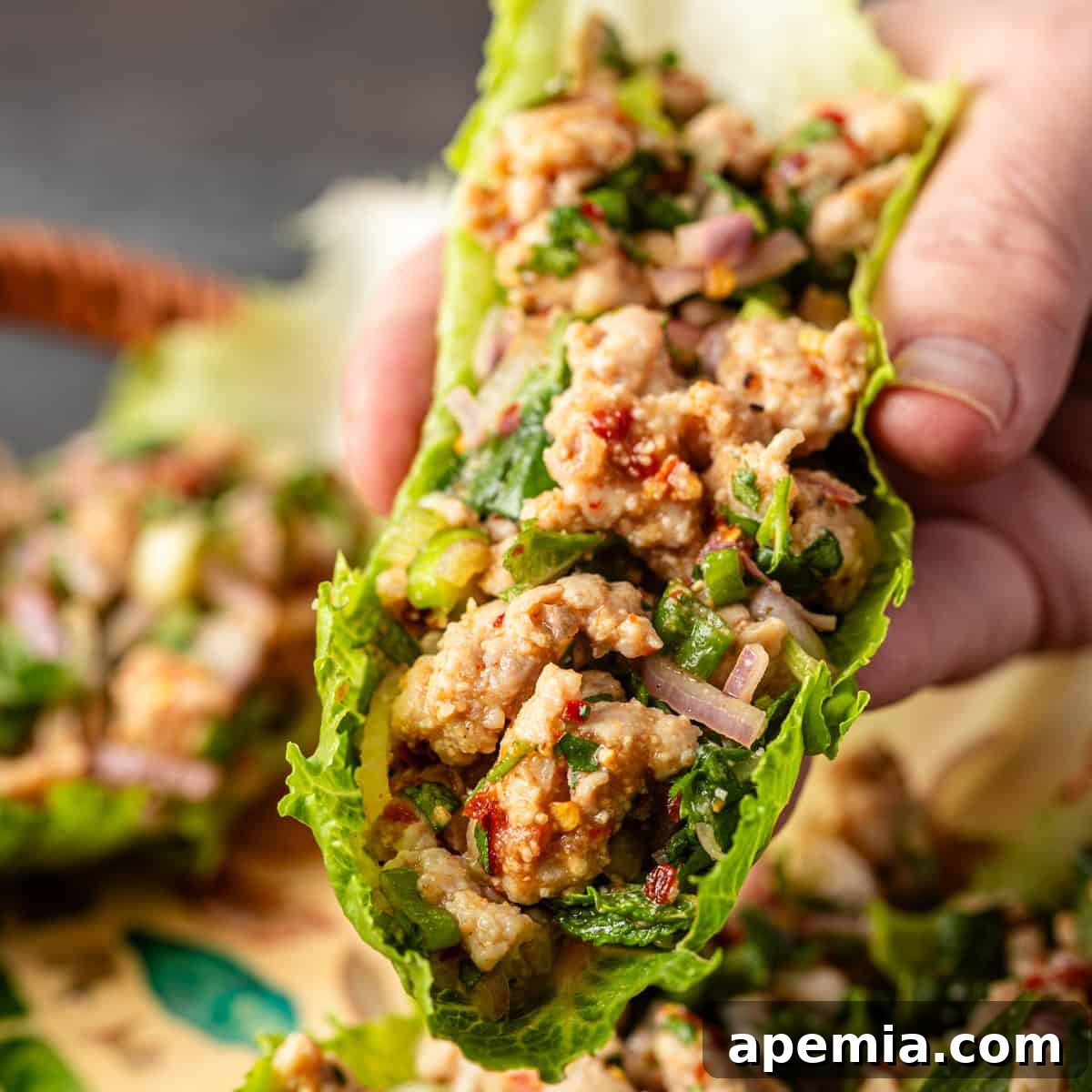
Authentic Thai Larb Gai Recipe: The Ultimate Chicken Lettuce Wraps
Prepare to tantalize your taste buds with this incredible recipe for Larb Gai. This vibrant Thai chicken lettuce wrap offers a refreshing burst of zesty herbs and aromatic spices, all coming together in less than 30 minutes. Crafted with succulent ground chicken, fresh cilantro, fragrant Thai basil, crisp onions, and a symphony of other delightful ingredients, you’ll find yourself utterly satisfied with this healthy and flavourful chicken salad experience.
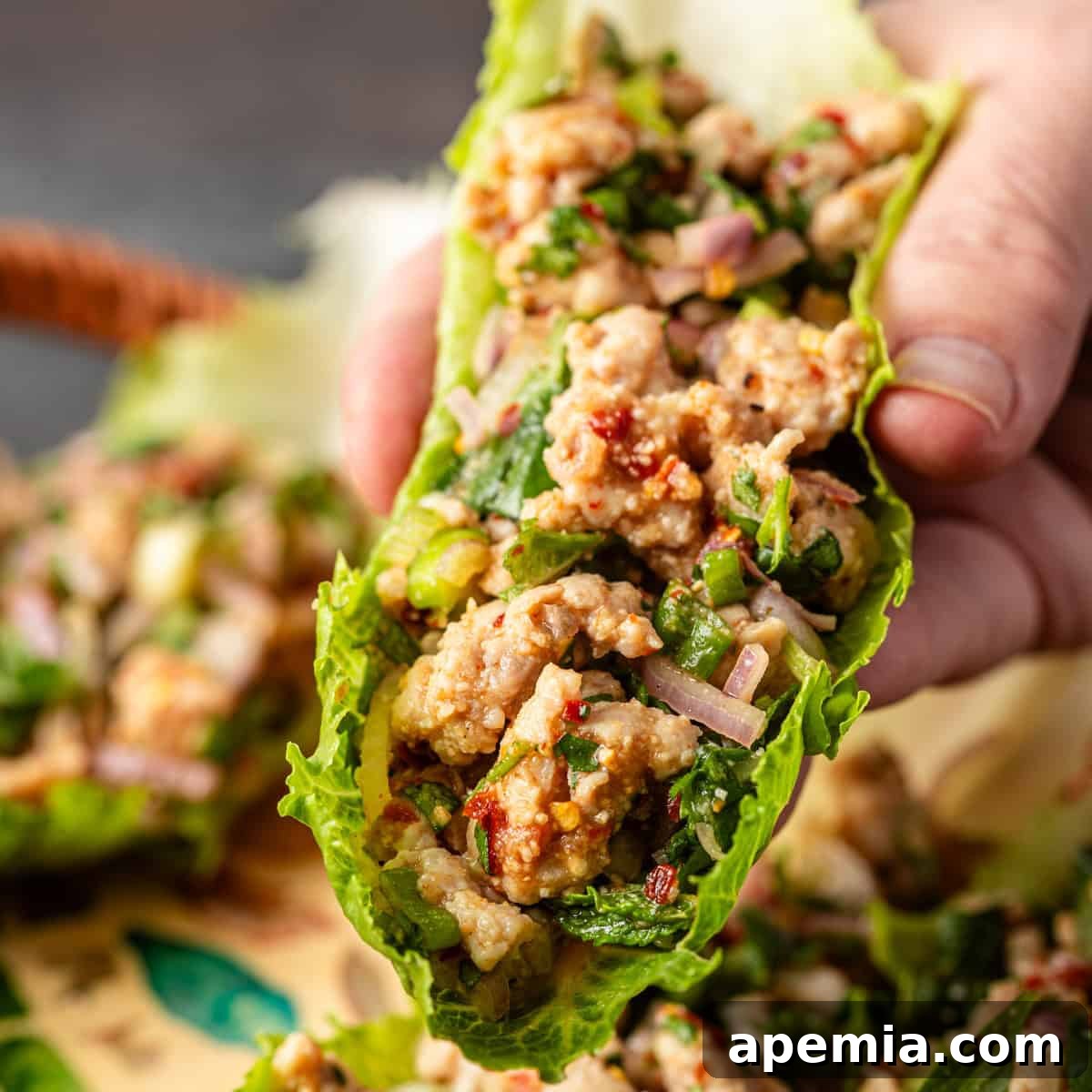
It’s fascinating how culinary traditions around the globe often feature their own unique interpretations of similar dishes. Chicken salad serves as a prime example, showcasing remarkable versatility across cultures. From the diverse, sun-kissed variations found throughout the Mediterranean region to the surprisingly rich and complex Turkish Circassian chicken salad, and even the curry-spiced version often enjoyed at home, chicken salad consistently delivers a quick, lean, and wholesome meal. Each rendition, while sharing a common theme, boasts distinct flavors and textures that reflect its regional heritage. Larb Gai, with its bold, fresh profile, stands out as a jewel in this global tapestry of chicken salads.
A Culinary Journey to the Heart of Thailand
My travels through Thailand were a feast for the senses, a vibrant tapestry woven with incredible sights, sounds, and, most importantly, unforgettable flavors. We made it our mission to sample every local delicacy we could find. Bangkok, in particular, was a mesmerizing whirlwind of bustling street markets, energetic vendors, and an endless array of culinary offerings. Amidst the chaos and charm, Larb Gai carved out a special place in my memory. Its unique combination of fresh herbs, savory chicken, and a perfectly balanced dressing truly set it apart from other dishes, becoming a personal highlight of my Thai gastronomic adventure.
The Secret Ingredient: Toasted Rice Powder (Khao Kua)
What truly elevates Larb Gai from a simple chicken salad to an extraordinary culinary experience is its “secret ingredient”: Khao Kua, or dry toasted glutinous rice that is finely ground into a coarse powder. If you’ve been hesitant about including this step, let me assure you, it’s an absolute game-changer. This seemingly modest addition imbues the dish with an incredible depth of flavor and a unique textural dimension that is simply unparalleled. The nutty, slightly smoky aroma and subtle crunch of the toasted rice powder transform every bite, binding the fresh ingredients together and creating a truly authentic Thai taste. It’s a step that, while taking only a few minutes, yields remarkable results and is highly recommended for an unforgettable Larb Gai.
A Symphony of Flavors: The Essence of Thai Larb Gai
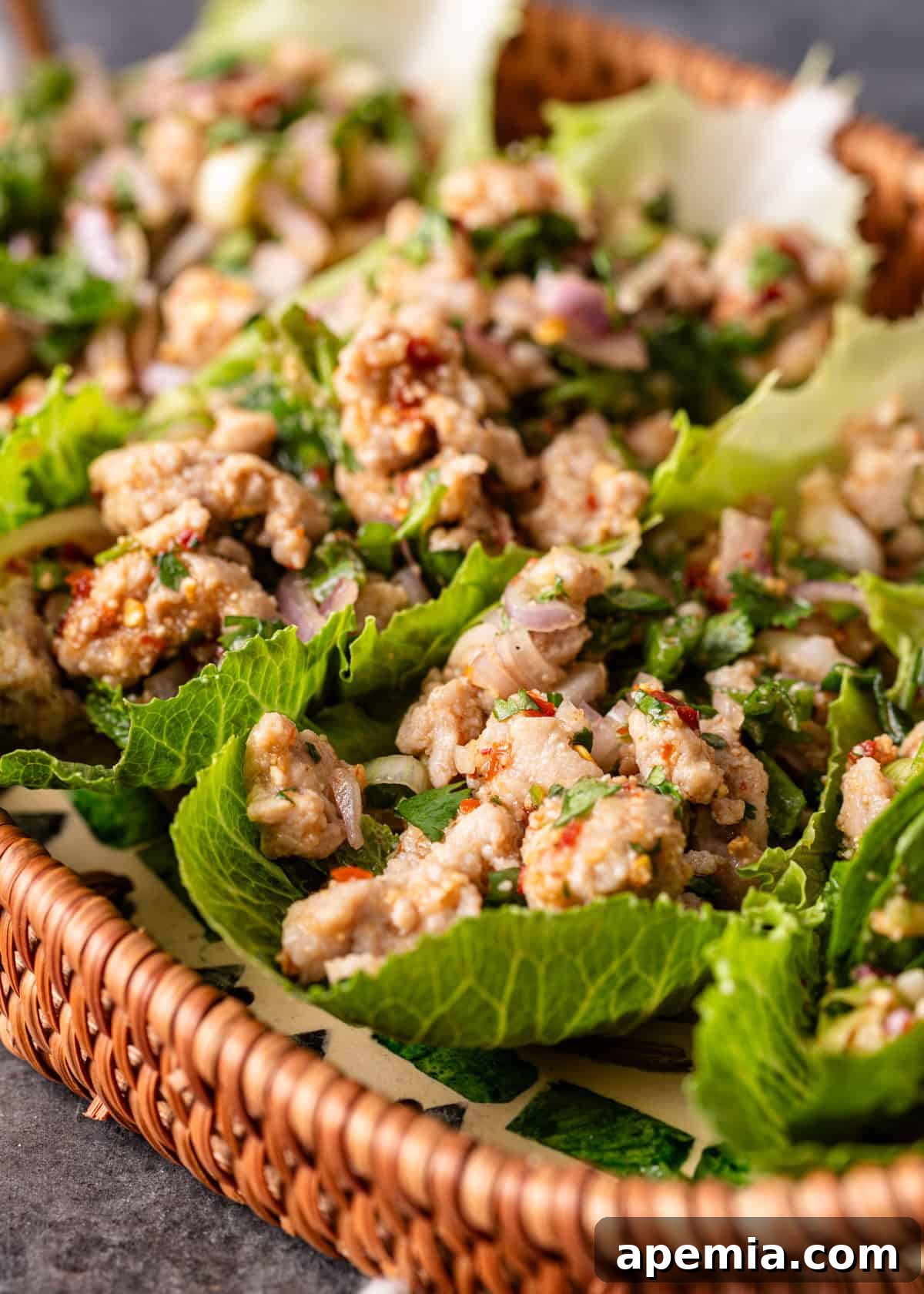
This Thai chicken salad wrap is a masterclass in balancing bold flavors and textures. Beyond the aforementioned toasted rice powder, it boasts an generous medley of fresh herbs, all unified by a sweet, bright, and spicy lime dressing that provides both moisture and an exhilarating zest. The interplay of sour, fruity notes with piquant chili and a hint of sweetness creates a flavor profile that is truly one-of-a-kind. Each mouthful delivers a delightful contrast: the robust, savory chicken mingling with the vibrant, peppery herbs and the crunchy texture of the toasted rice, all cradled within crisp, refreshing lettuce leaves. This intricate dance of tastes and textures makes Larb Gai an incredibly appetizing and deeply satisfying dish.
Imagine sinking your teeth into that juicy, perfectly seasoned ground chicken, beautifully bundled within a cool, crisp lettuce leaf. The satisfying crunch of the lettuce gives way to a burst of fresh herbs, the aromatic depth of toasted rice, and the complex zing of the lime dressing. It’s a meal that not only tastes incredible but also feels light and refreshing, making it an ideal choice for any time of year. Every bite is an invigorating experience, proving that healthy eating can be incredibly delicious and exciting.
The Magic of Toasted Rice (Khao Kua): Essential for Authentic Flavor
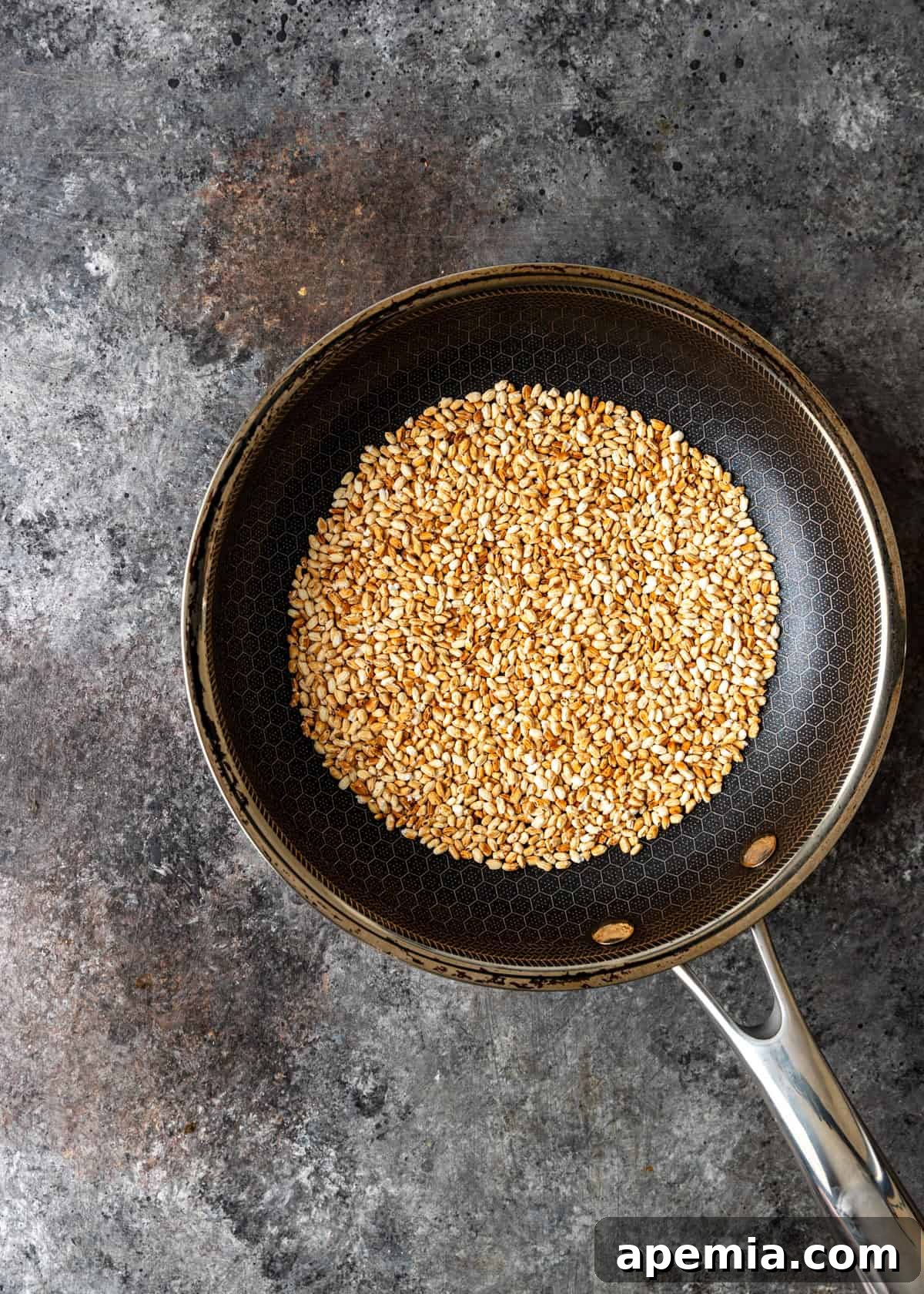
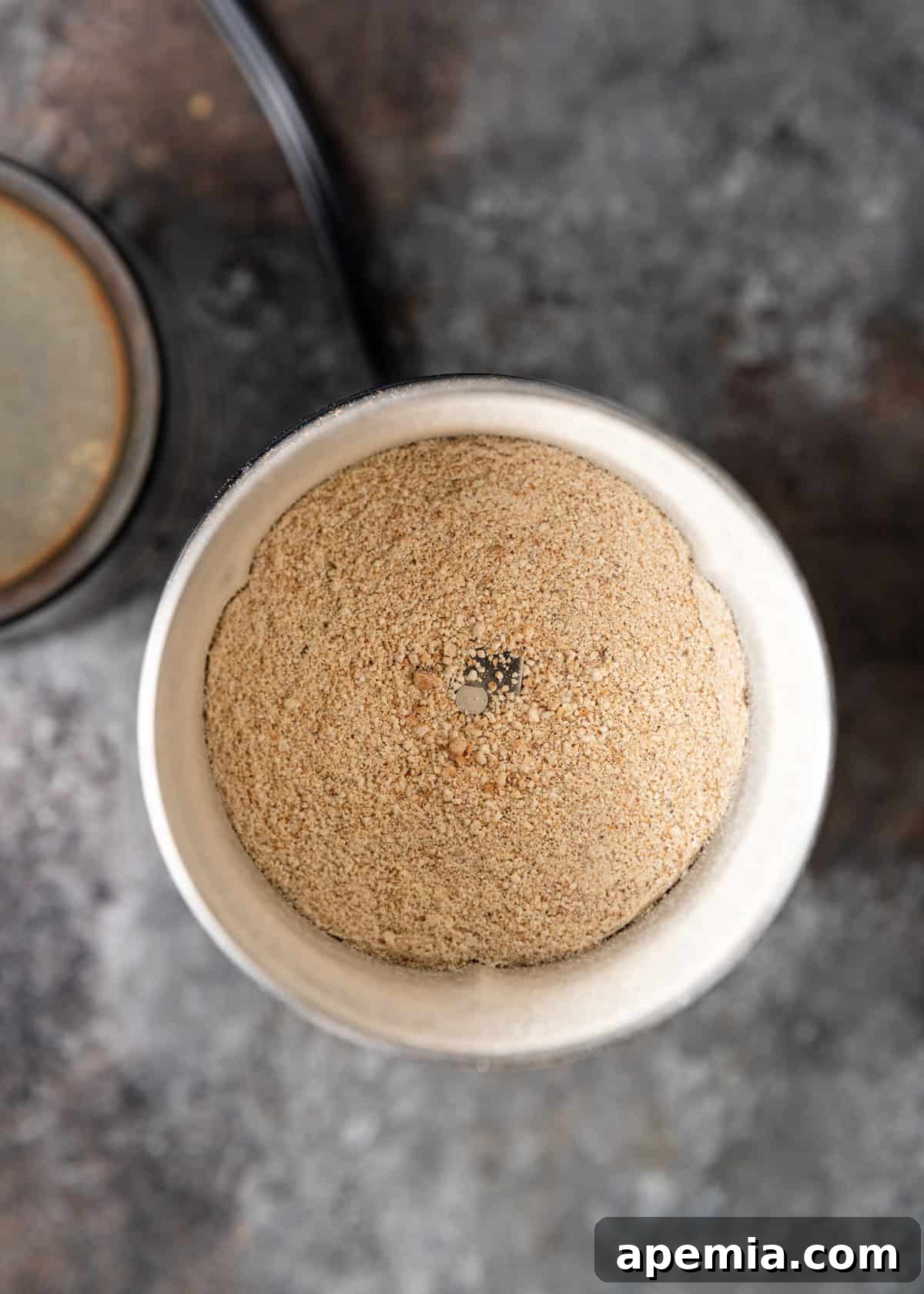
While often considered “optional” by some, the addition of toasted rice powder (Khao Kua) is a traditional element that I wholeheartedly recommend for authentic Larb Gai. It’s a simple step that takes mere minutes to execute but imparts a profound depth of flavor and texture that truly elevates the dish. Khao Kua is made from glutinous (sticky) rice, dry-toasted until golden brown and aromatic, then ground into a coarse powder. This process brings out a nutty, slightly smoky flavor and a pleasant chewiness that is crucial to the dish’s complexity.
Beyond its unique taste, toasted rice powder plays a vital role in the dish’s texture. When mixed with the chicken and dressing, it acts as a binder, absorbing some of the juices and contributing a subtle body to the sauce. This helps to balance the tangy, spicy, and savory elements, creating a harmonious mouthfeel. The delicate crunch of the rice powder adds an unexpected textural layer, making each bite more interesting and satisfying. Without Khao Kua, Larb Gai lacks a quintessential element that Thai cuisine connoisseurs cherish. Don’t skip this step – it’s the soul of the dish!
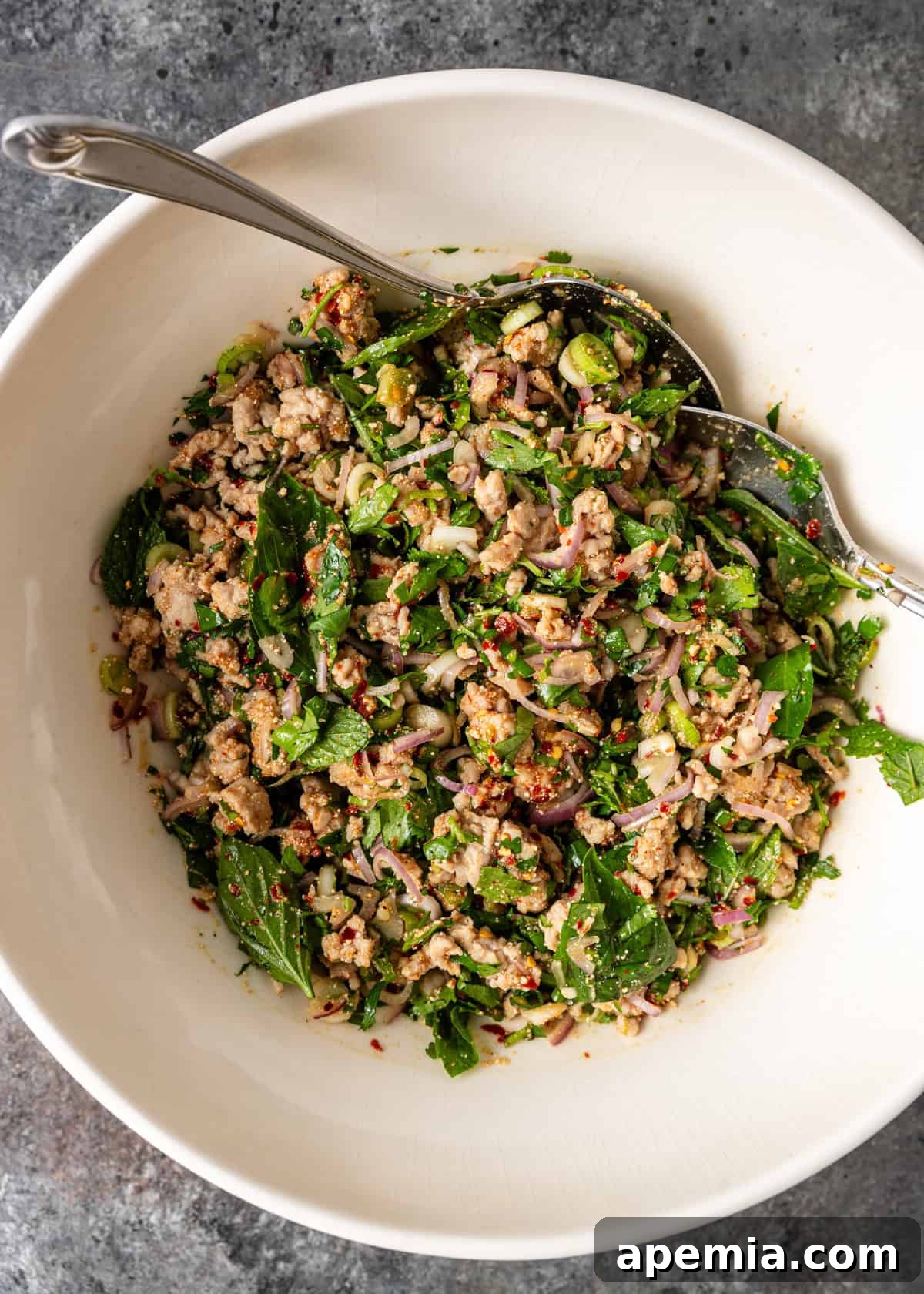
Ingredient Deep Dive: Notes and Substitutions
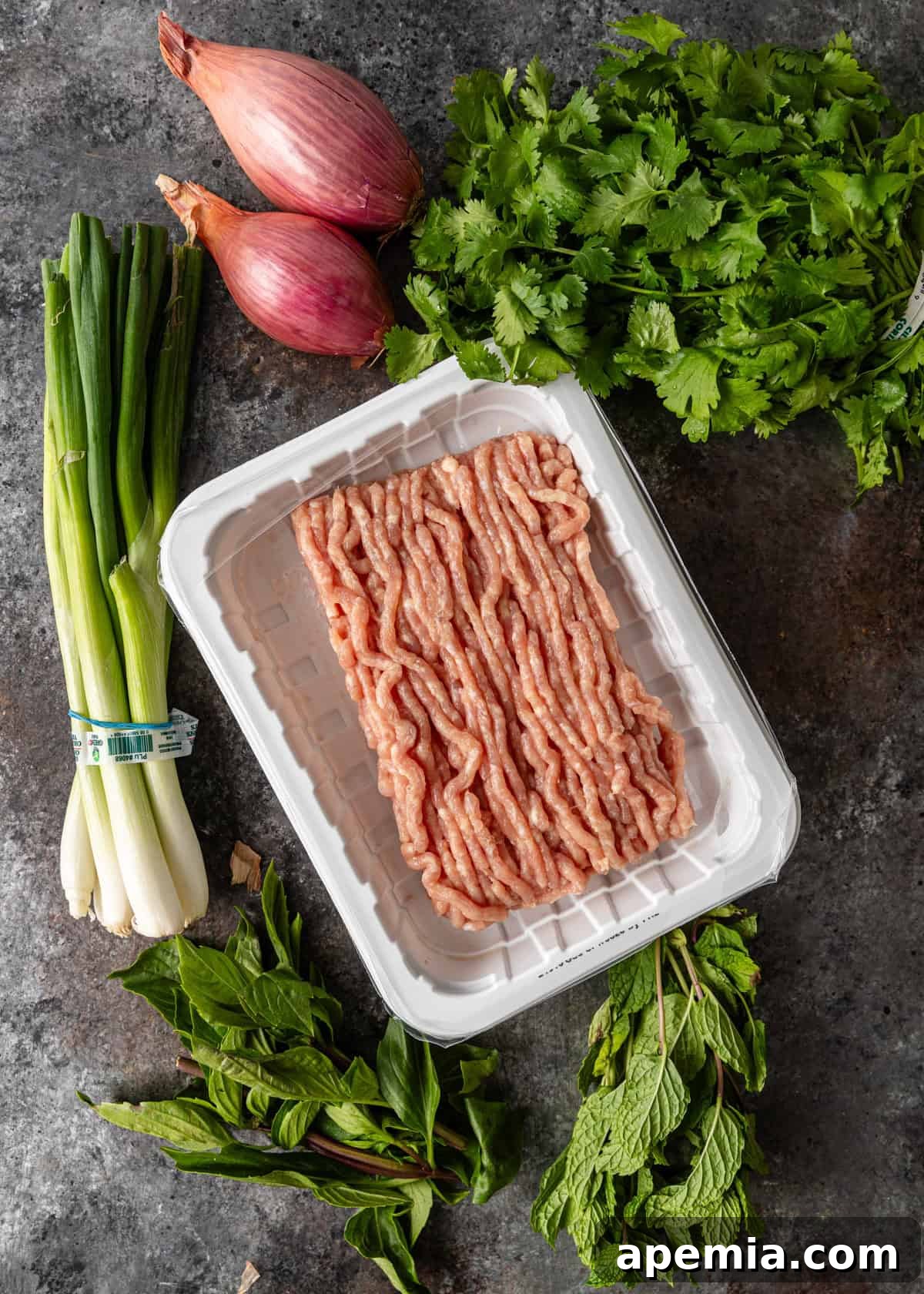
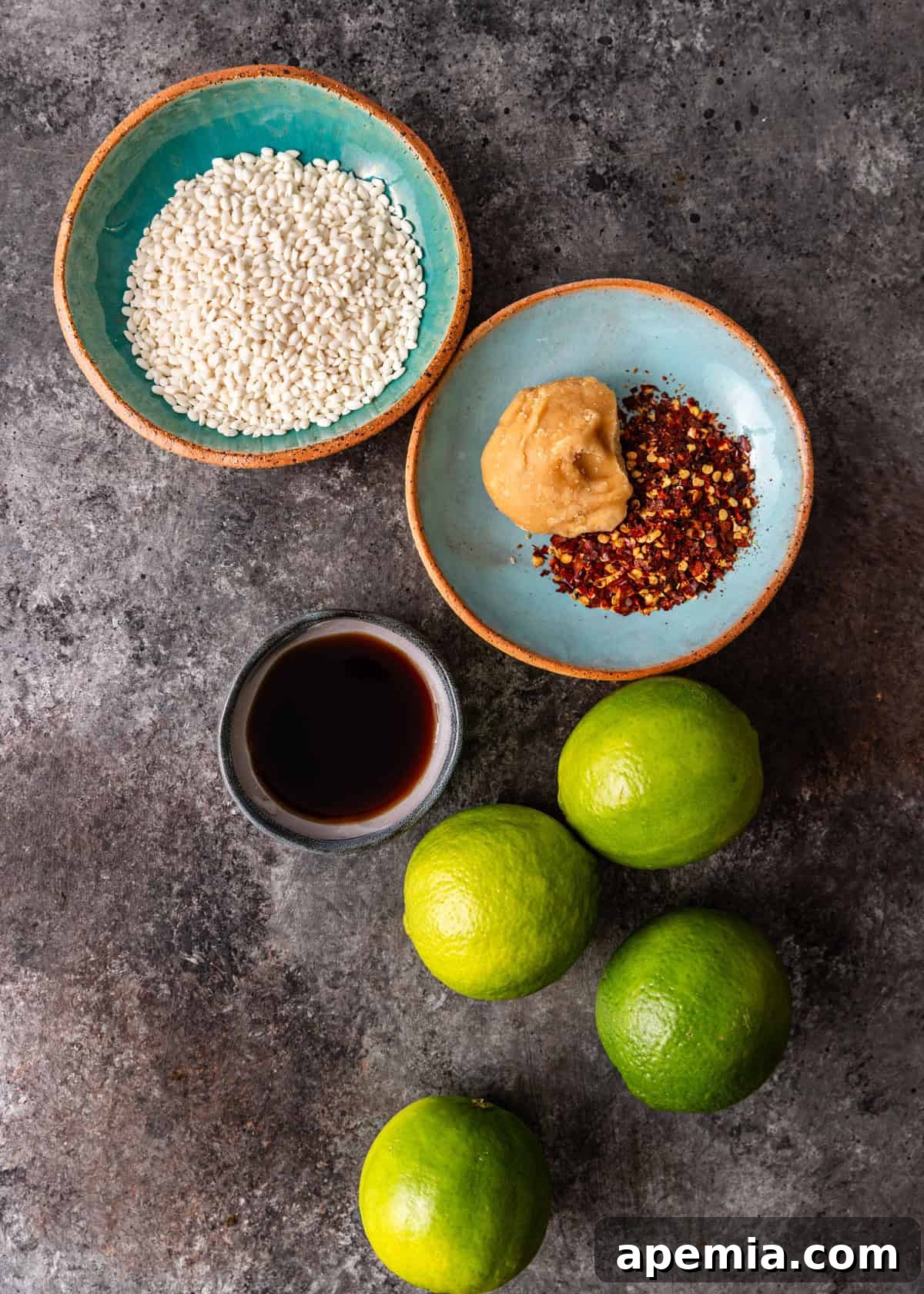
Crafting the perfect Larb Gai relies on understanding the role each ingredient plays. While the full list with quantities is in the recipe card below, here’s a closer look at the key components and potential adjustments:
- Ground Chicken: Larb Gai traditionally features chicken, offering a lean and tender base for these lettuce wraps. While other variations might use red meat like pork or beef, the “Gai” in Larb Gai specifically refers to chicken. For dietary needs or preference, ground turkey makes an excellent and healthy substitute.
- Shallots & Green Onions: These two alliums bring distinct layers of flavor. Shallots offer a pungent, slightly garlicky depth, while green onions provide a fresher, milder oniony bite. This combination adds wonderful dimension. If you only have one on hand, you can use a bit more of either, though the complexity will be slightly altered.
- Thai Basil: Do not confuse this with sweet Italian basil! Thai basil is characterized by its warm, slightly anise-like or licorice-like flavor, often with a hint of spice. It’s crucial for the authentic Thai aromatic profile. If unavailable, try to find holy basil (Grapow) or use a mix of regular basil and a tiny hint of mint.
- Cilantro: A generous amount of fresh cilantro is essential for its bright, citrusy, and slightly peppery notes. If you’re not a fan, you can substitute with more Thai basil or fresh parsley, though the flavor will be different.
- Mint: Fresh mint leaves provide a cool, refreshing counterpoint to the spicy and savory elements. If mint isn’t to your liking, feel free to omit it or increase the quantity of cilantro and Thai basil instead.
- Red Chili Flakes: These provide the signature heat of Larb Gai. For a different type of spice or a deeper flavor, cayenne pepper can be used. For an extra layer of authentic Thai flavor, consider adding a touch of Thai red curry paste. Adjust the quantity to your preferred level of spiciness.
- Limes: We use the juice of four fresh limes (approximately 8 tablespoons) for the dressing. Limes are paramount for the dish’s vibrant sour and fruity notes. While lemon juice can be substituted in a pinch, the unique fragrance and slightly sweeter acidity of fresh lime juice are ideal for authentic Larb Gai.
- Fish Sauce: This fermented condiment is the backbone of Thai savory flavor, providing essential umami and saltiness. Look for a good quality fish sauce for the best results. In a pinch, soy sauce can be used as a substitute, but it will lack the distinct funk and depth of traditional fish sauce.
- Thai Sticky Rice: Also known as Khao Niao, this is the ingredient used to make the toasted rice powder (Khao Kua). It’s crucial for both texture and aroma. While other rice types can be toasted, glutinous rice yields the most authentic texture and flavor when ground.
- Palm Sugar: This unrefined sugar provides a mellow sweetness and helps balance the sour and spicy flavors. Brown sugar is a suitable substitute if palm sugar is hard to find.
- Romaine Lettuce: Its sturdy, large leaves and crisp texture make Romaine my top choice for lettuce wraps, offering an ideal vessel for the flavorful filling. Other excellent options include butter lettuce, iceberg lettuce, or even bok choy, as detailed in the FAQ section below.
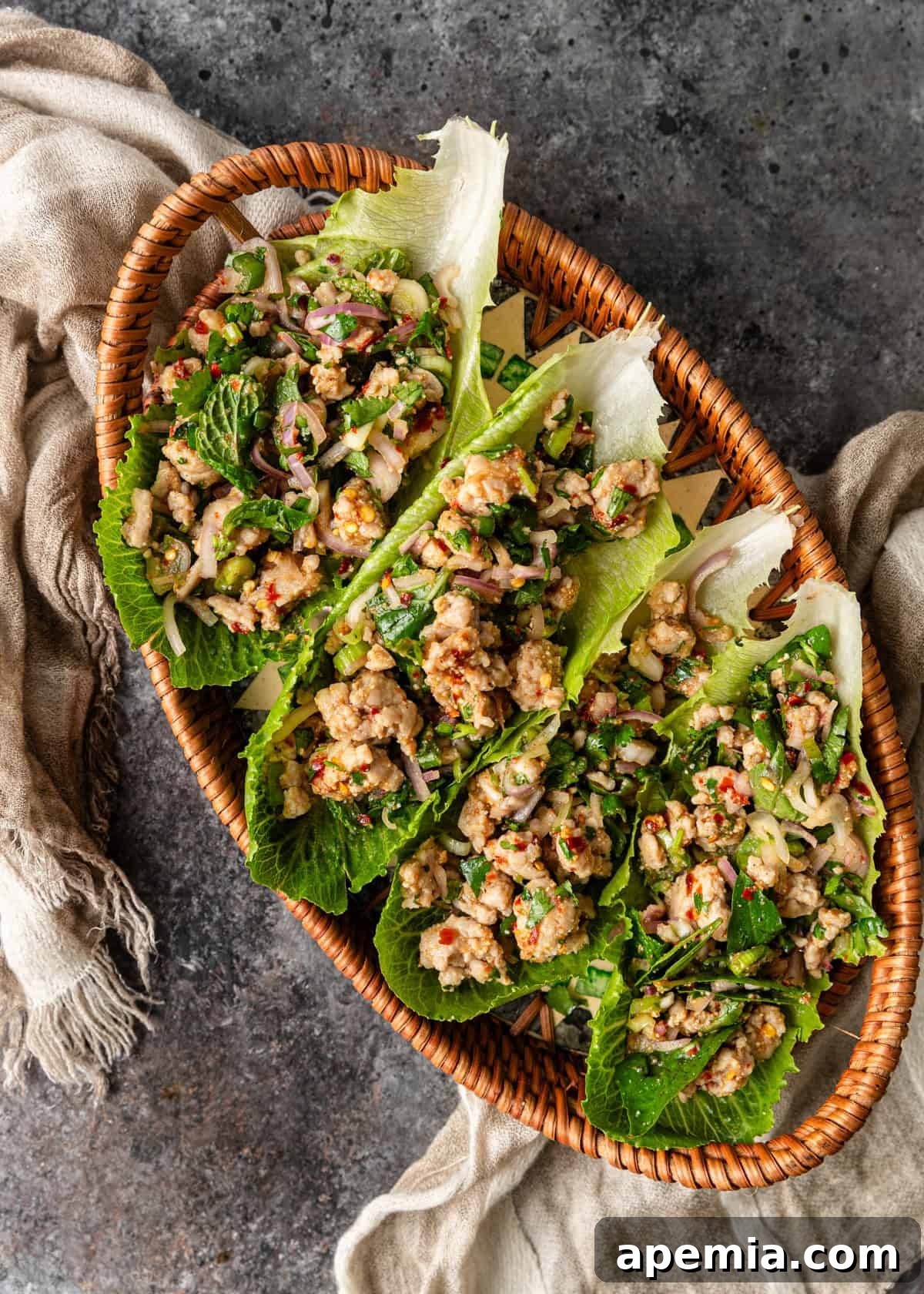
Mastering Larb Gai: Step-by-Step Guide
Creating this delicious Thai chicken lettuce wrap is simpler than you might think. Follow these detailed steps for a perfect result:
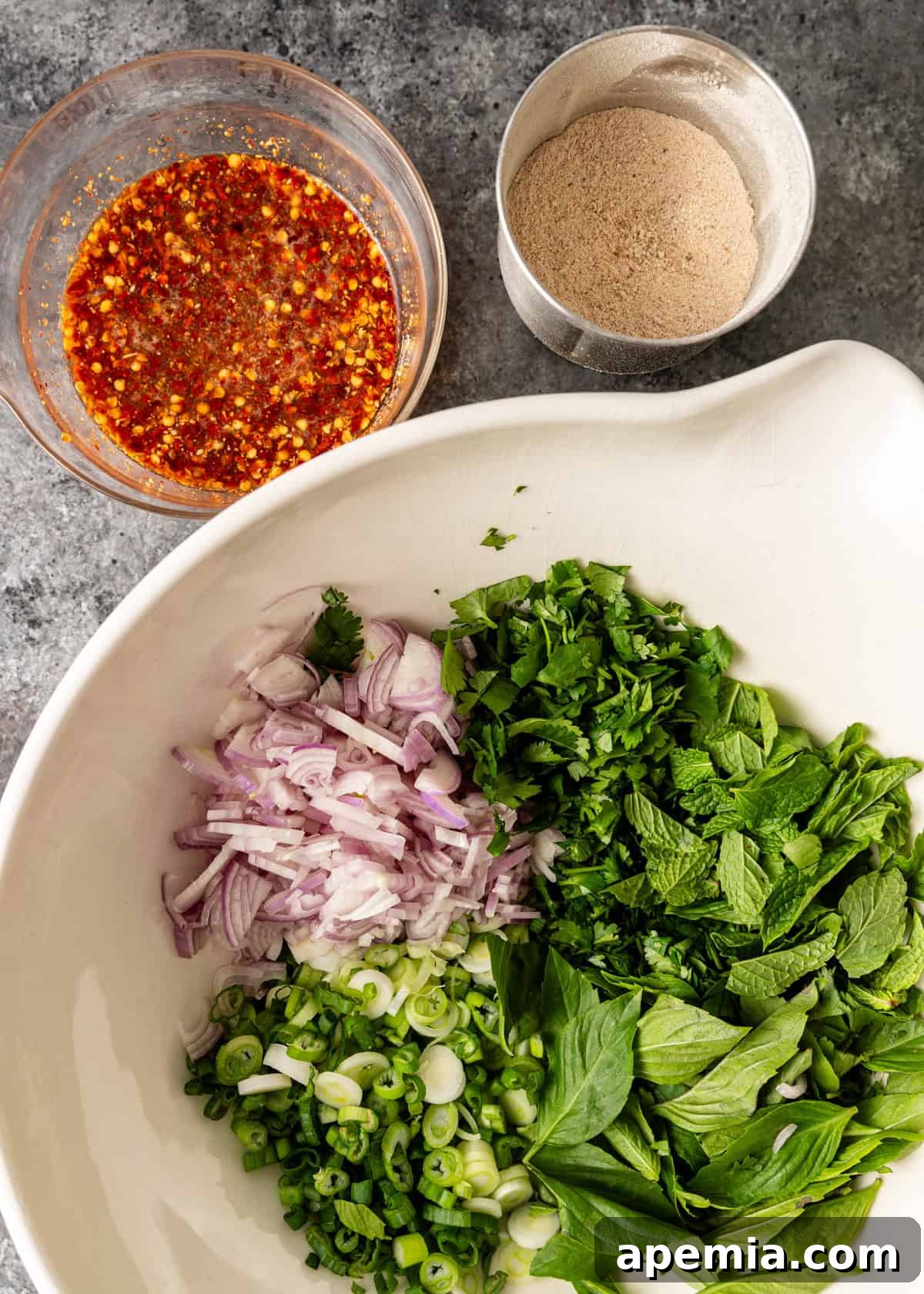
- Prepare the Fresh Vegetables & Herbs: Begin by thinly slicing your shallots and green onions. Roughly chop the fresh cilantro. Carefully pluck the leaves from the mint and Thai basil, discarding any stems. Combine all these prepared greens and aromatics in a large serving bowl. Set this bowl aside, ready for later assembly.
- Whisk Together the Zesty Dressing: In a separate, smaller bowl, combine all the dressing ingredients: palm sugar (or brown sugar), fish sauce, freshly squeezed lime juice, and red chili flakes. Whisk vigorously until the sugar completely dissolves, ensuring a smooth and well-integrated dressing. Taste and adjust for your preferred balance of sweet, sour, and spicy. Set this vibrant dressing aside.
- Toast & Grind the Aromatic Rice (Khao Kua): Heat a dry skillet over medium heat. Add the raw, uncooked Thai sticky rice to the skillet in an even layer. Continuously stir and toast the rice for approximately 8 minutes, or until it turns a beautiful golden brown and emits a distinctly nutty aroma. Be careful not to burn it. Once toasted, transfer the rice to a spice grinder, a small food processor, or use a traditional mortar and pestle. Grind it into a coarse powder – you want some texture, not a fine flour. Set the fragrant Khao Kua aside.
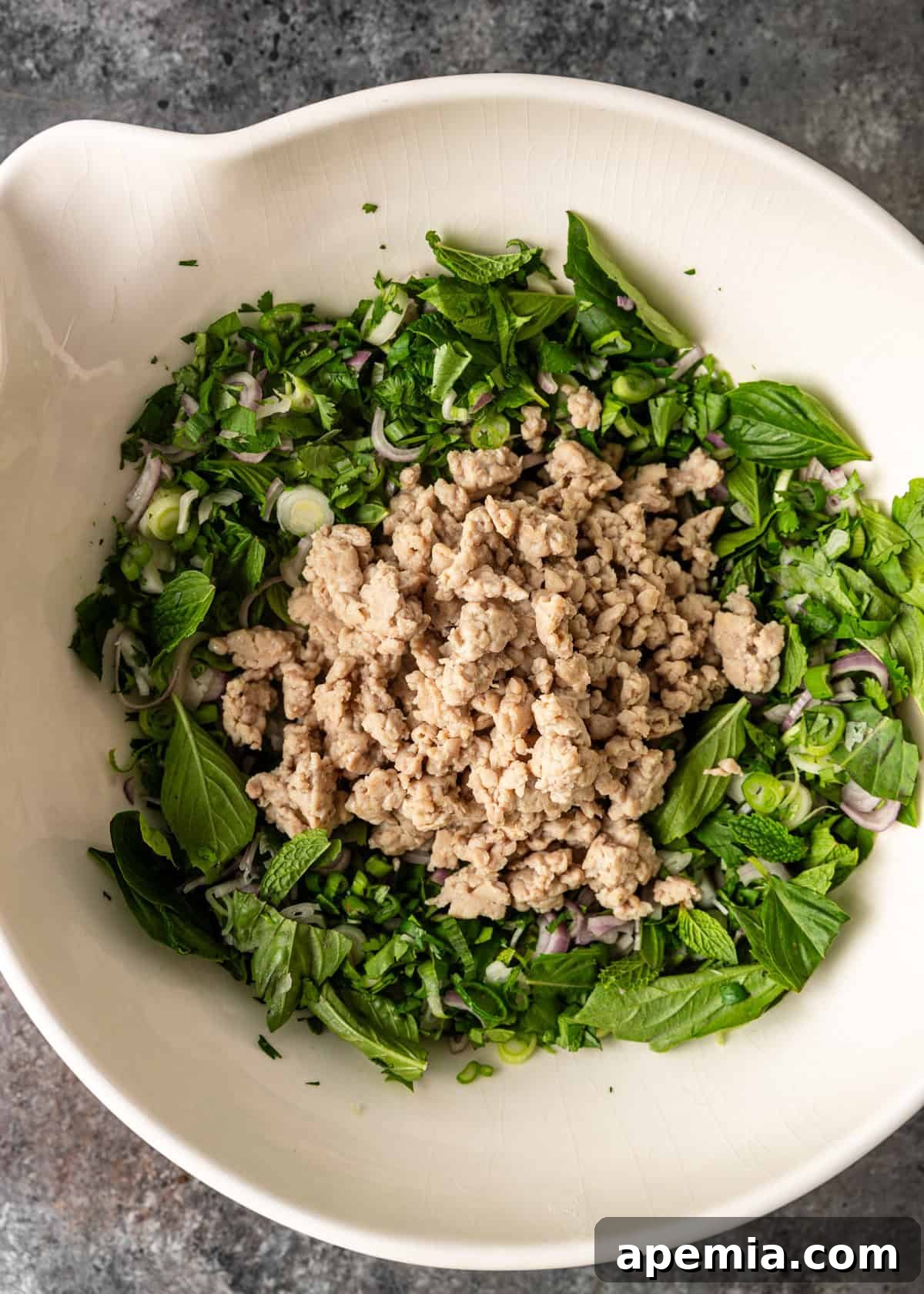
- Brown the Ground Chicken to Perfection: Return the skillet to medium heat (no need to clean it thoroughly). Add the ground chicken and cook, breaking it up with a spoon, until it is fully browned and cooked through. Drain any excess fat if necessary. Lightly season the cooked chicken with a pinch of salt and pepper to taste. Remember that the dressing and other ingredients will add significant flavor, so season sparingly here.
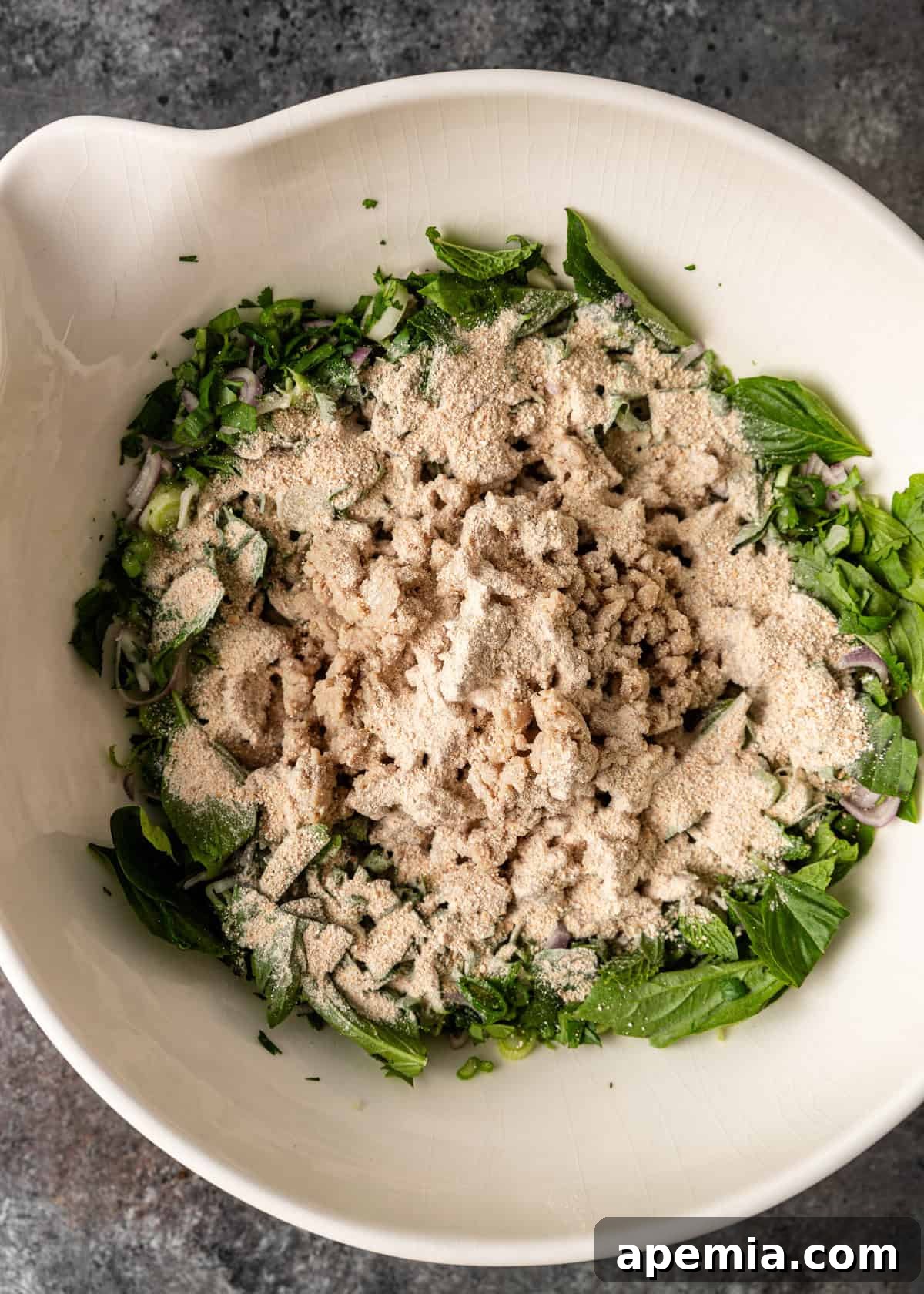
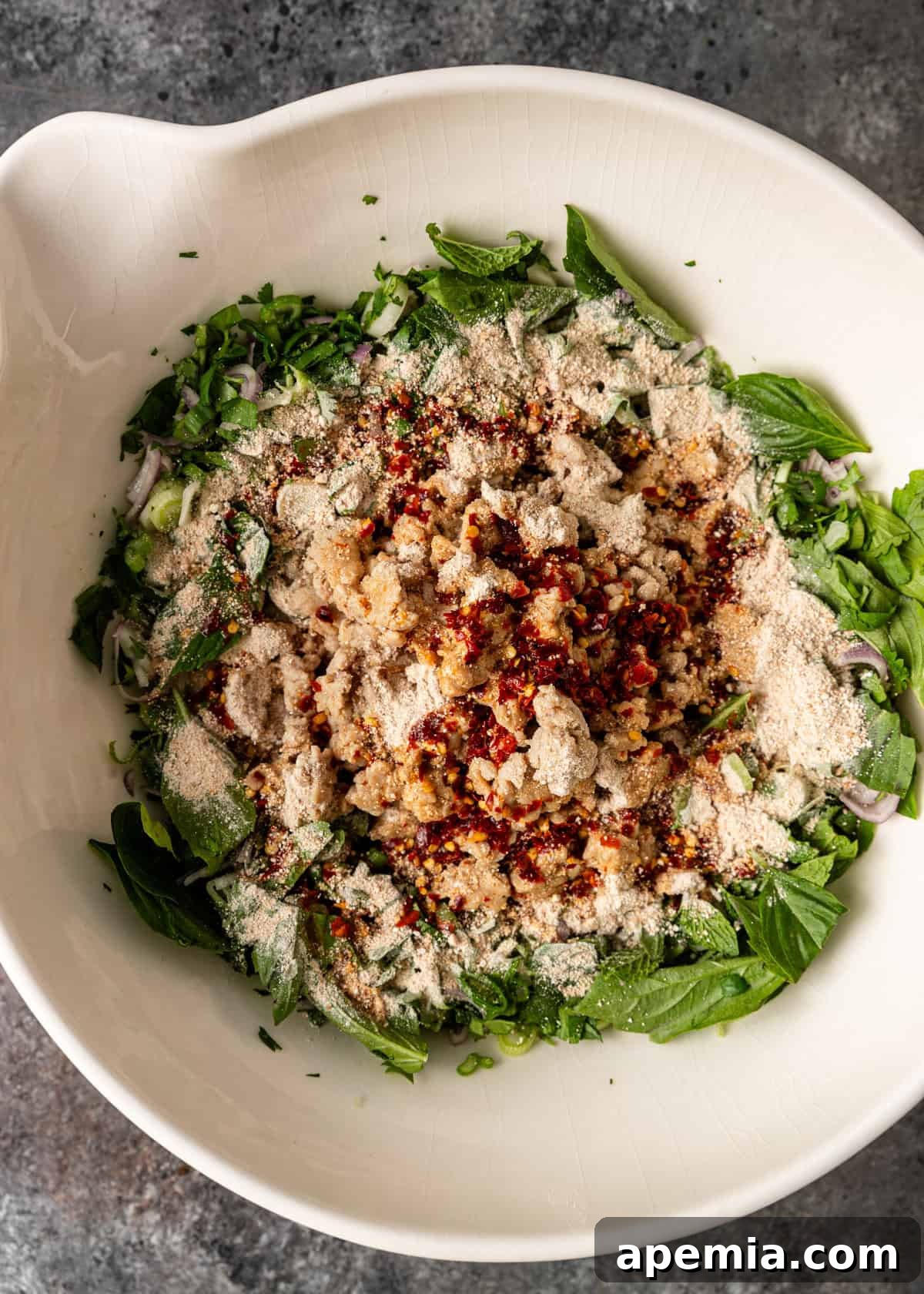
- Combine All Elements for a Flavorful Fusion: Transfer the cooked ground chicken into the large serving bowl with the prepared greens and herbs. Sprinkle the freshly ground toasted rice powder evenly over the chicken and herbs. Finally, pour the vibrant lime dressing over all the ingredients. Using tongs or your hands (wearing gloves, if preferred), gently but thoroughly toss everything together until the chicken, herbs, and rice are evenly coated with the dressing.
- Serve Immediately with Crisp Lettuce: Give your Larb Gai a final taste test and adjust the seasonings as desired – you might want a bit more lime, fish sauce, or chili. Serve the flavorful chicken mixture immediately with fresh, crisp lettuce leaves. Guests can spoon the Larb Gai into individual lettuce cups, creating a delightful and interactive meal.
Essential Tools for Larb Gai Preparation
Having the right tools can make preparing Larb Gai even more enjoyable and efficient:
- Mixing Bowls: You’ll need at least two: one large for combining the salad and another smaller one for the dressing.
- Skillet: A medium-sized skillet is perfect for toasting the rice and browning the ground chicken.
- Mortar & Pestle: For a truly traditional approach, a mortar and pestle allows you to grind the toasted rice into an authentic coarse powder, which some argue offers superior texture and aroma. Alternatively, a spice grinder or even a coffee grinder (cleaned thoroughly!) works perfectly for quickly grinding the rice.
Storage and Reheating Tips for Larb Gai
Larb Gai is best enjoyed fresh, but leftovers can be refrigerated for up to 4 days. However, to maintain the best quality, I highly recommend a specific storage strategy: store the individual components separately if you anticipate having leftovers. The fresh greens will become limp, and the toasted rice powder will absorb the dressing, losing its signature crunch and making the dish soggy over time. Keep the cooked chicken mixture (without the dressing or fresh herbs) in an airtight container, and store the dressing and fresh herbs in separate containers.
When you’re ready to enjoy your leftovers, simply reassemble the dish. Briefly microwave the chicken mixture until warmed through, or for a refreshingly cool meal, enjoy it chilled! I’ve certainly savored many a quick, satisfying cold lunch from this Larb Gai recipe. Toss with fresh herbs and dressing just before serving for the best experience.
Love this recipe? Share it with the world on Pinterest!
Pin this Recipe on Pinterest
Frequently Asked Questions About Larb Gai
- Should larb gai be served warm or cold?
- Unlike many traditional chicken salad recipes, authentic Thai Larb Gai is typically served either warm or at room temperature. This allows the ground chicken to be at its most tender and flavorful, and the aromatics of the herbs to fully bloom. While you certainly *can* enjoy it cold, serving it slightly warm or at room temperature will offer the most authentic and satisfying experience.
- What is the best lettuce to use for a lettuce wrap?
- Romaine lettuce is an excellent choice for lettuce wraps due to its sturdy structure and large, scoop-like leaves, which provide ample room for stuffing. Its crisp texture also adds a satisfying crunch. Other fantastic alternatives include butter lettuce, which is softer and more pliable; iceberg lettuce, known for its ultimate crispness; and even bok choy leaves, which offer a slightly different, mild flavor and good structure.
- What is the difference between larb gai and nam tok?
- While both are popular Thai salads, Larb Gai and Nam Tok differ significantly in their primary protein and preparation method. Larb Gai (which means “minced chicken salad”) features ground chicken (or sometimes pork) that is cooked and then tossed with herbs and dressing. Nam Tok, on the other hand, translates to “waterfall beef” (though it can also be pork). It typically uses grilled and sliced meat, most commonly steak, rather than ground meat, giving it a distinct texture and often a smoky flavor profile.
Thai Larb Gai (Chicken Lettuce Wraps) Recipe
Larb Gai is a mouthwatering Thai chicken lettuce wrap made with a juicy chicken and herb filling tossed in a spicy lime dressing.
Servings: 4
Prep Time: 13 mins
Cook Time: 15 mins
Total Time: 28 mins
Rating: 5 out of 5 stars (based on 2 votes)
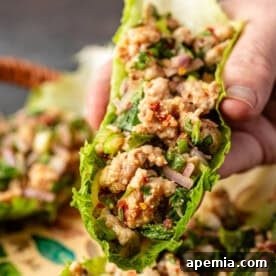
Video Guide: Crafting Your Larb Gai
Watch this video to guide you through each step of preparing authentic Thai Larb Gai, from toasting the rice to assembling your perfect lettuce wraps.
Ingredients
- 1 lb ground chicken
- 1/2 tsp kosher salt
- 2 shallots, sliced thin
- 4 green onions, sliced thin
- 1/2 cup cilantro, chopped
- 1/4 cup fresh mint leaves
- 1/4 cup Thai basil leaves
- 1 tbsp red chili flakes (adjust to taste)
- 1 tbsp palm sugar (or brown sugar)
- 1 tbsp fish sauce
- 4 limes, juiced (approximately 8 tablespoons)
- 3 tbsp Thai sticky rice, raw and uncooked
- Romaine lettuce leaves, for serving
Instructions
- Prepare Herbs & Vegetables: Slice the shallots and green onions thinly, and chop the cilantro. Gently pick the leaves from the fresh mint and Thai basil. Place all these prepared greens and aromatics into a large serving bowl.
- Craft the Dressing: In a small bowl, combine the red chili flakes, palm sugar (or brown sugar), fish sauce, and fresh lime juice. Stir well until the sugar completely dissolves, creating a balanced sweet, sour, and spicy dressing. Set aside.
- Toast & Grind the Rice: Heat a dry skillet over medium heat. Add the raw Thai sticky rice and toast, stirring frequently, for about 8 minutes until it turns golden brown and becomes fragrant. Remove from heat. Once slightly cooled, grind the toasted rice into a coarse powder using a spice grinder or a mortar and pestle. Set aside.
- Cook the Chicken: In the same skillet, cook the ground chicken over medium heat, breaking it apart, until it is fully browned and cooked through. Season lightly with salt. Transfer the cooked chicken to the large serving bowl with the prepared vegetables and herbs.
- Assemble & Serve: Sprinkle the ground toasted rice over the chicken, herbs, and vegetables. Pour the prepared dressing over everything. Toss vigorously until all ingredients are thoroughly combined and coated. Taste and adjust seasoning as needed. Serve immediately with crisp romaine lettuce leaves, allowing guests to build their own refreshing wraps.
Nutrition
Calories: 256kcal | Carbohydrates: 23g | Protein: 22g | Fat: 10g | Saturated Fat: 3g | Polyunsaturated Fat: 2g | Monounsaturated Fat: 4g | Trans Fat: 0.1g | Cholesterol: 98mg | Sodium: 758mg | Potassium: 831mg | Fiber: 4g | Sugar: 5g | Vitamin A: 1081IU | Vitamin C: 24mg | Calcium: 65mg | Iron: 2mg
The information shown is an estimate provided by an online nutrition calculator. It should not be considered a substitute for a professional nutritionist’s advice.
Course: Main Dishes
Cuisine: Thai
Author: Kevin
Have you made this recipe? We’d love to see it! Share your creations on Instagram.
Tag @keviniscooking or use the hashtag #keviniscooking!