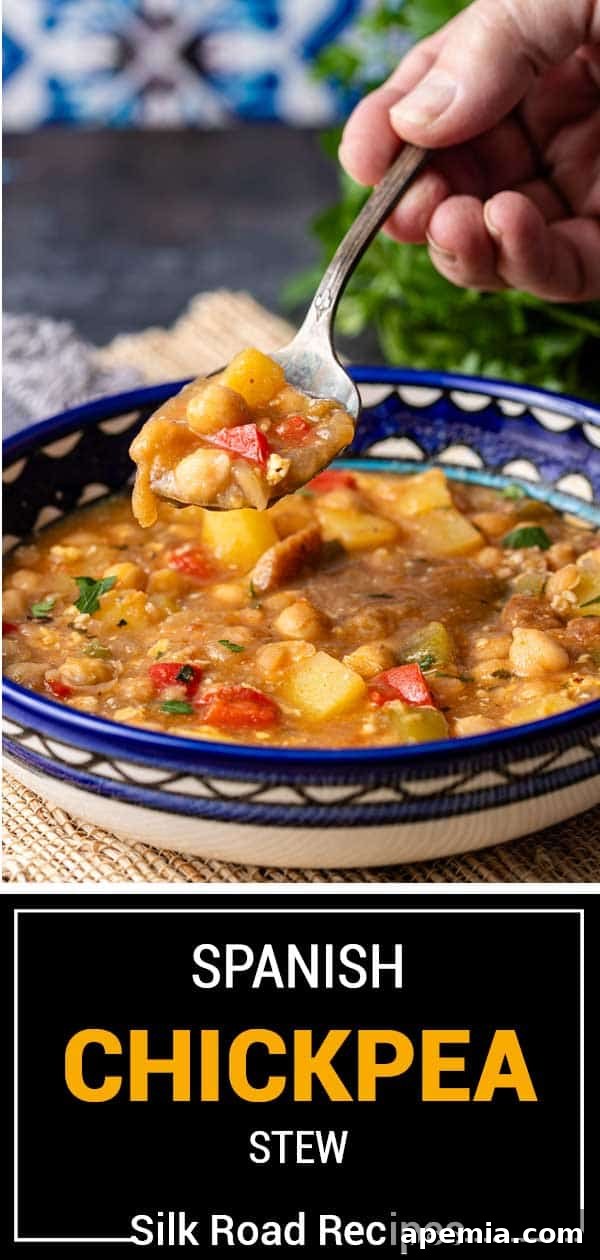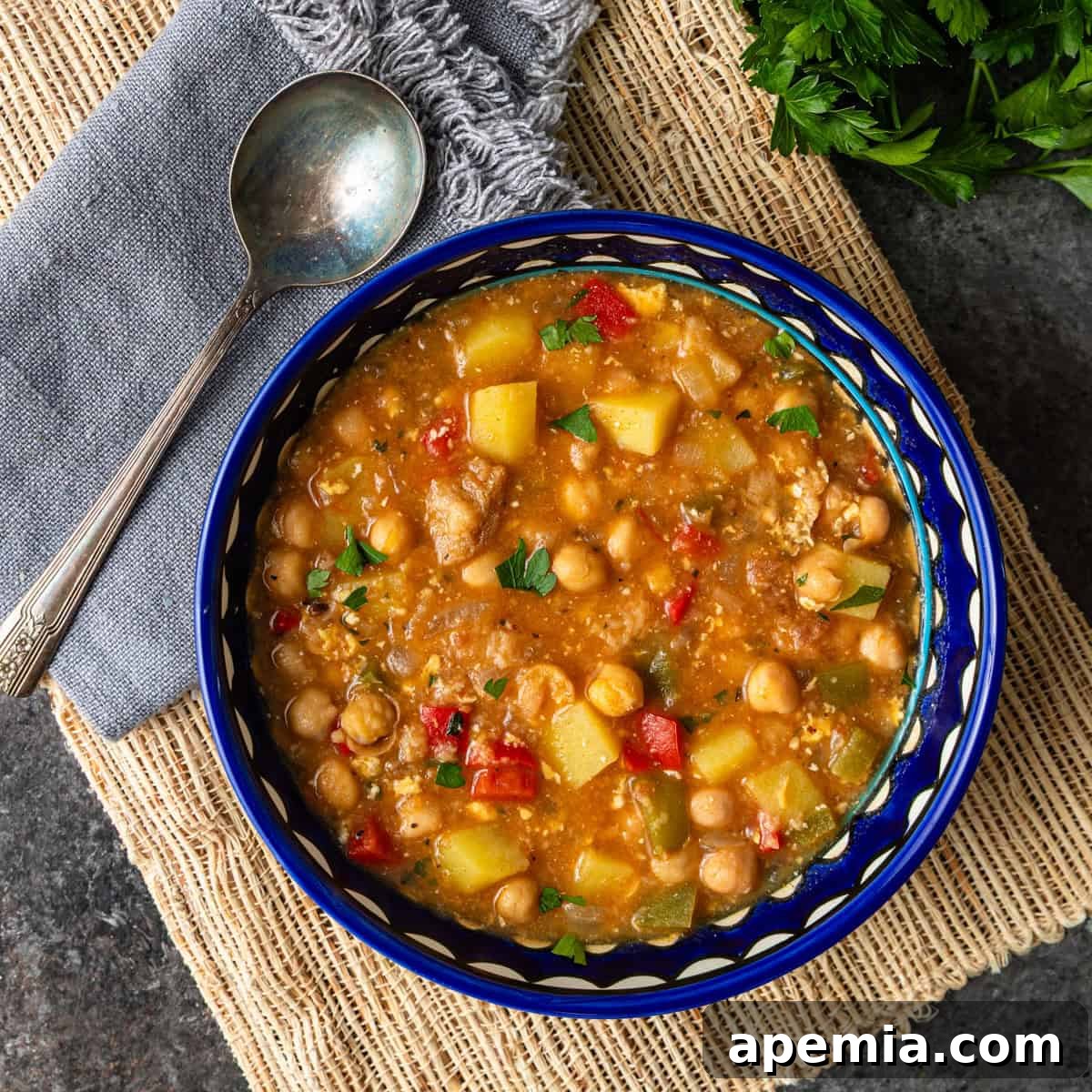
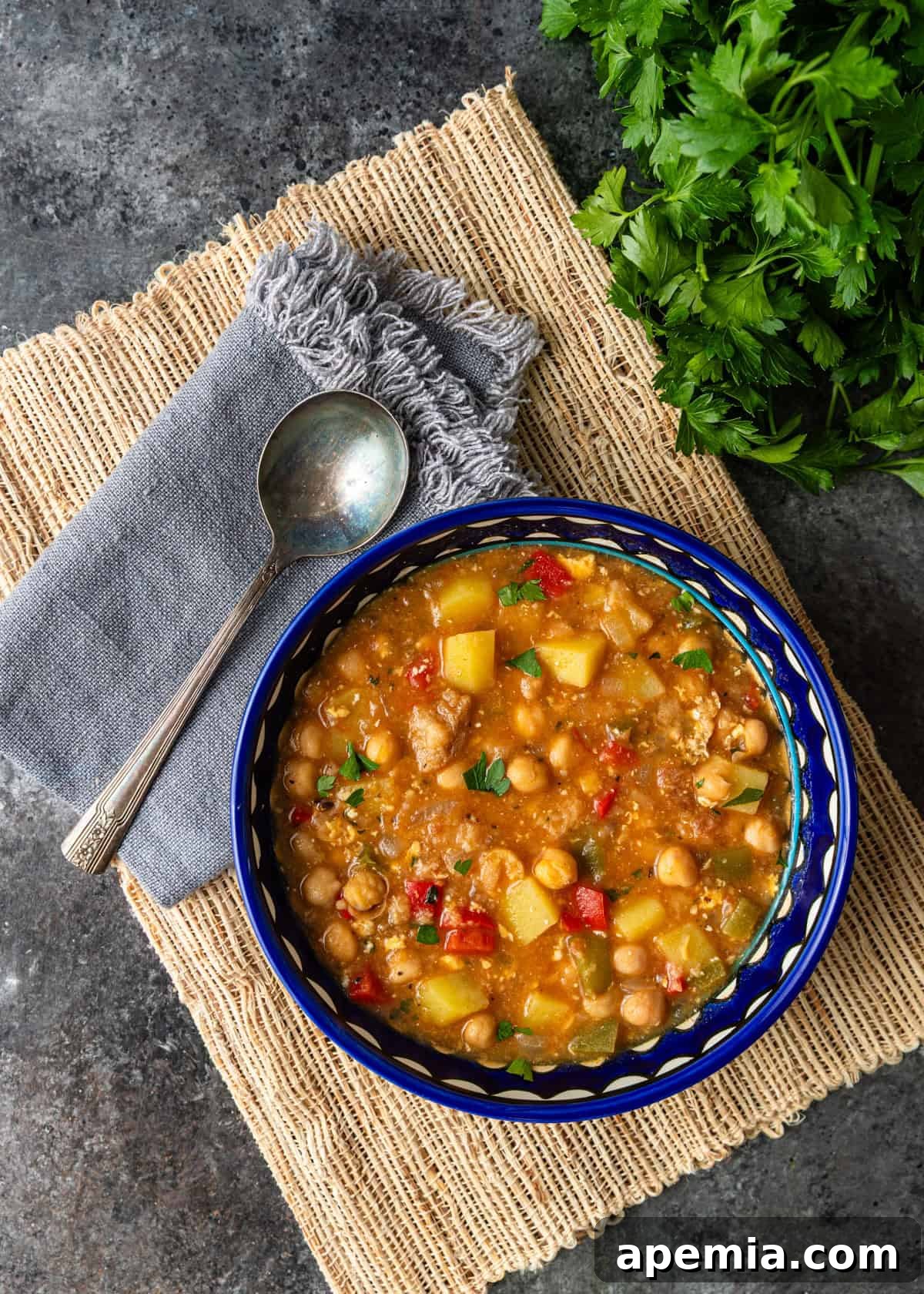
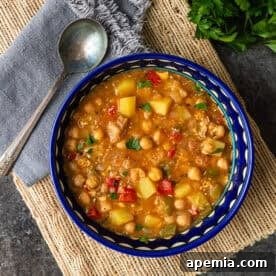
Indulge in the heartwarming embrace of a true Spanish classic: this exquisite chickpea stew, known in Spain as Potaje de Garbanzos. It’s a culinary journey where tender chickpeas, fragrant smoky paprika, and a medley of savory vegetables converge in a profoundly rich and robust broth. What truly elevates this stew to an extraordinary level is a centuries-old, ingenious technique: a unique bread and egg paste that transforms the dish into an unbelievably creamy and luxurious experience. This is more than just a meal; it’s a comforting tradition, perfect for chilly evenings and cherished family gatherings.
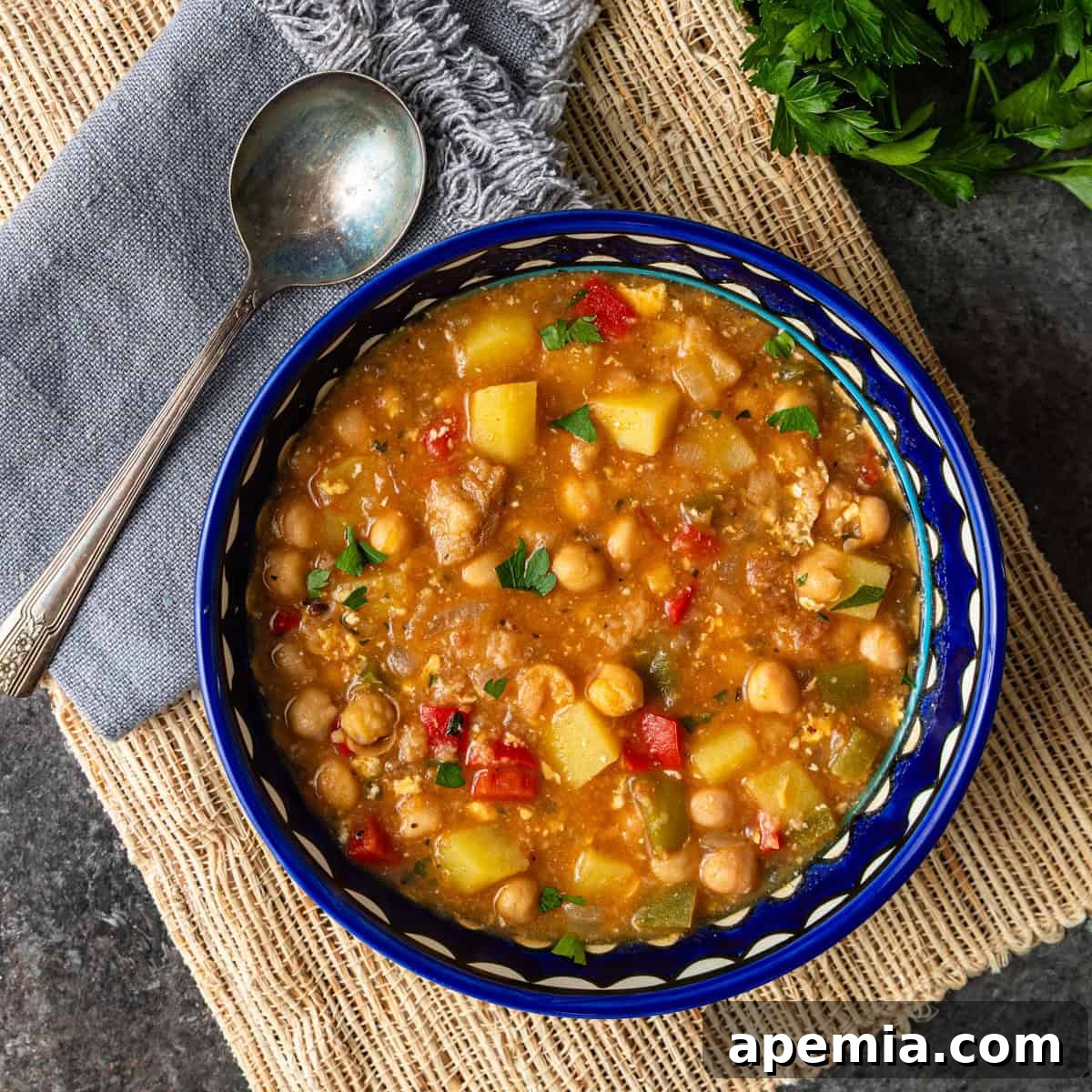
There’s an undeniable magic encapsulated within a warm, steaming bowl of Potaje de Garbanzos. This celebrated Spanish Chickpea Stew is a cornerstone of Mediterranean cuisine, especially savored during the cooler months, or as a beloved staple at family tables throughout Spain. Its ability to evoke comfort and tradition with every spoonful makes it an enduring favorite.
At its heart, this hearty dish is built upon the humble yet powerful garbanzo bean, complemented by chunky, tender potatoes. The vibrant, sweet-smoky flavor of Spanish paprika infuses the stew with that distinctive, authentic Spanish character that makes it utterly unforgettable. But the true genius and secret to its velvety perfection lie in the traditional bread and egg paste. This ancient technique, shared with other classic Spanish dishes like the rustic Sopa de Ajo, is the secret weapon, thickening the stew into a luscious, smooth, and deeply satisfying soup that you’ll want to savor spoonful after spoonful.
Historically, this method of enriching and thickening stews reflects a resourceful approach to cooking, maximizing flavor and texture from simple, readily available ingredients. It creates a body and richness often associated with cream-based dishes, but without dairy, making it an excellent choice for those seeking wholesome, traditional flavors.
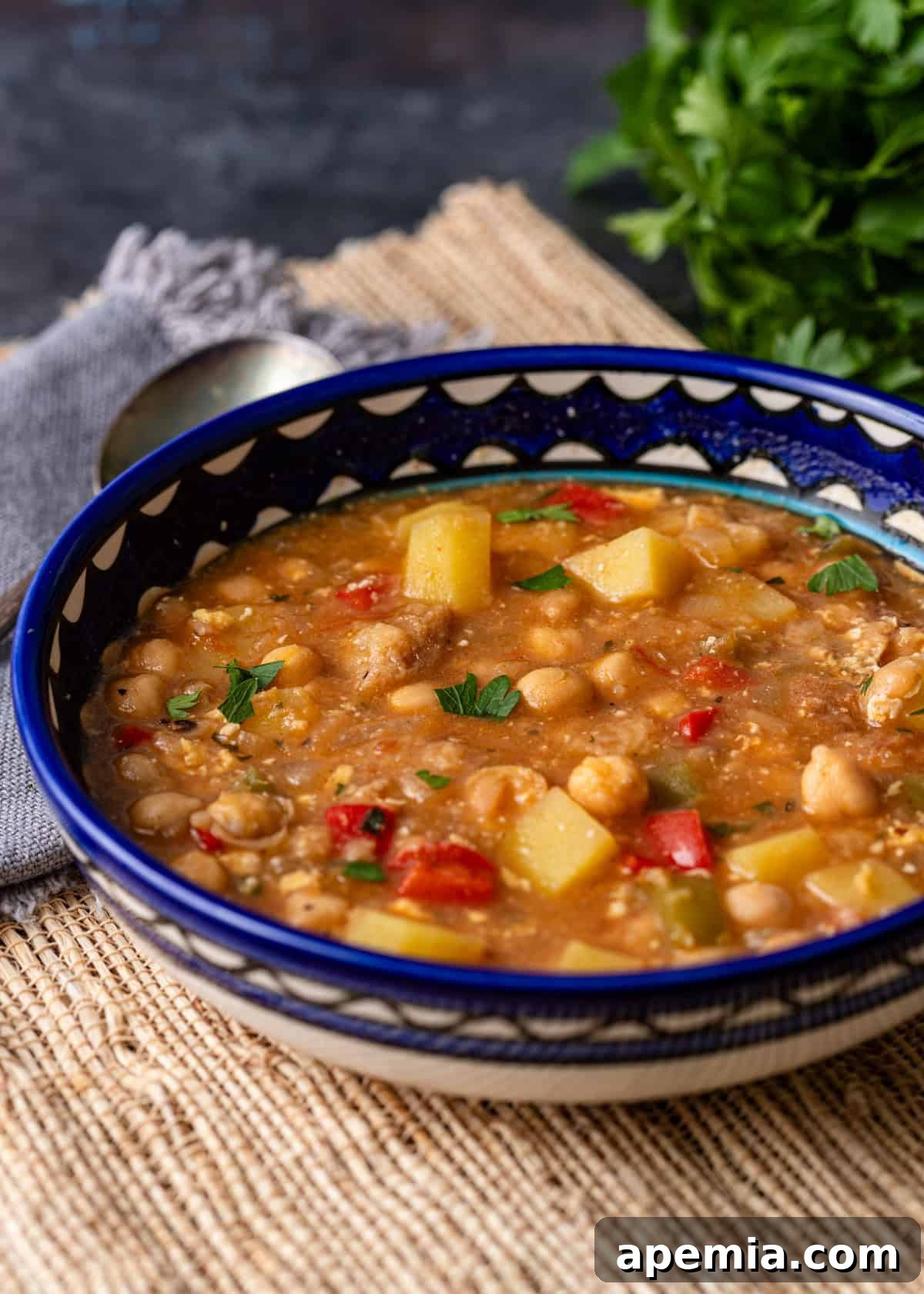
Table of Contents
- The Traditional Stew Thickener
- Ingredient Notes and Substitutions
- How to Make the Perfect Chickpea Stew
- Recommended Tools for Potaje
- Storage and Reheating Tips
- Frequently Asked Questions
- Spanish Chickpea Stew (Potaje de Garbanzos) Recipe
Chickpeas are an incredibly versatile legume, making them an effortless way to introduce vegetarian protein and substance into almost any meal. Their mild flavor and satisfying texture allow them to shine in a diverse range of dishes, from the aromatic spice of Aloo Chana Masala to the refreshing crunch of a Mediterranean salad. You can even transform them into a delightful snack with sweet roasted chickpeas! In this Spanish stew, they absorb all the rich, smoky flavors, becoming tender and deeply flavorful, proving why they are such a staple in healthy, satisfying cooking.
Tip From Kevin
The Traditional Stew Thickener: A Game-Changer
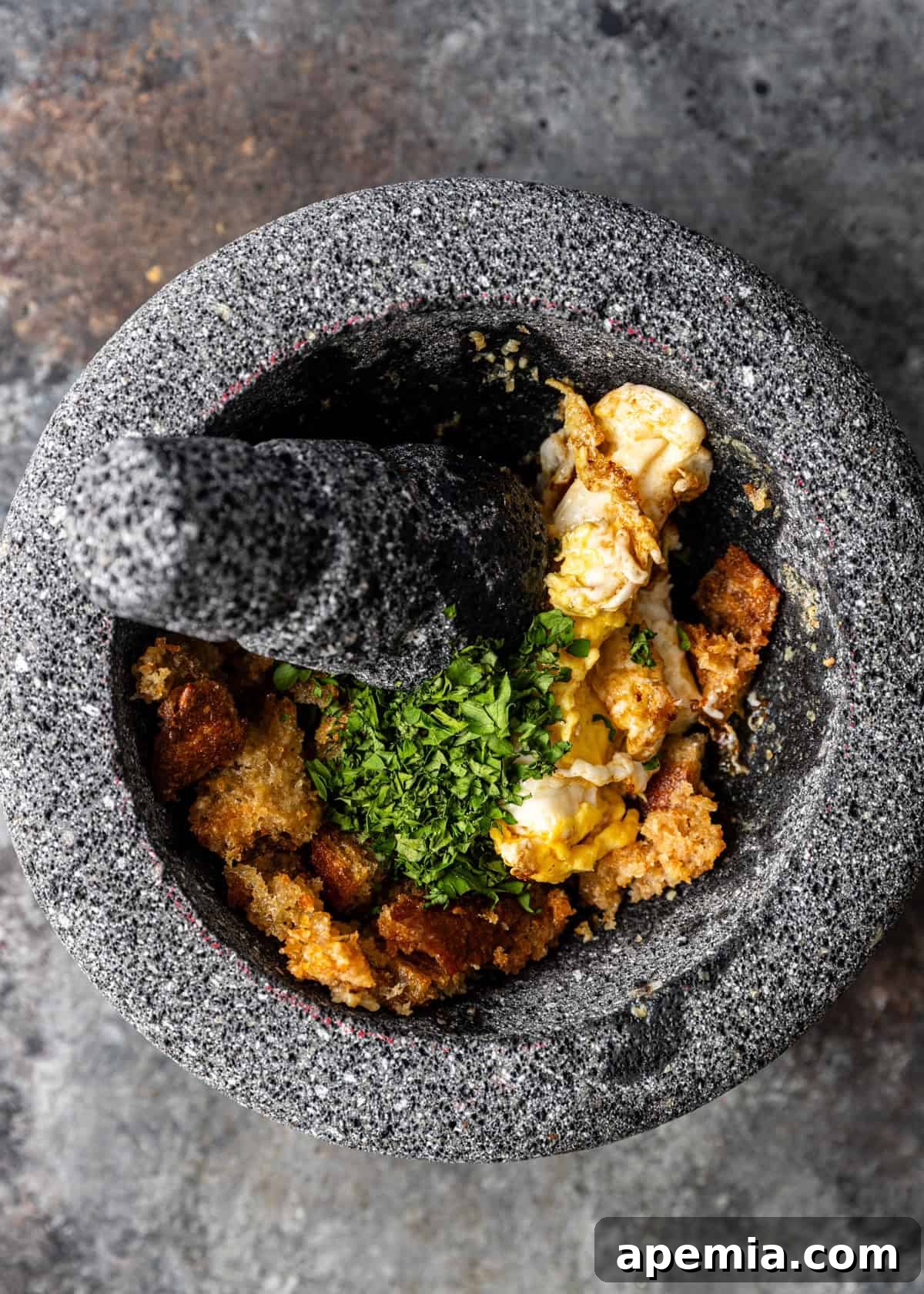
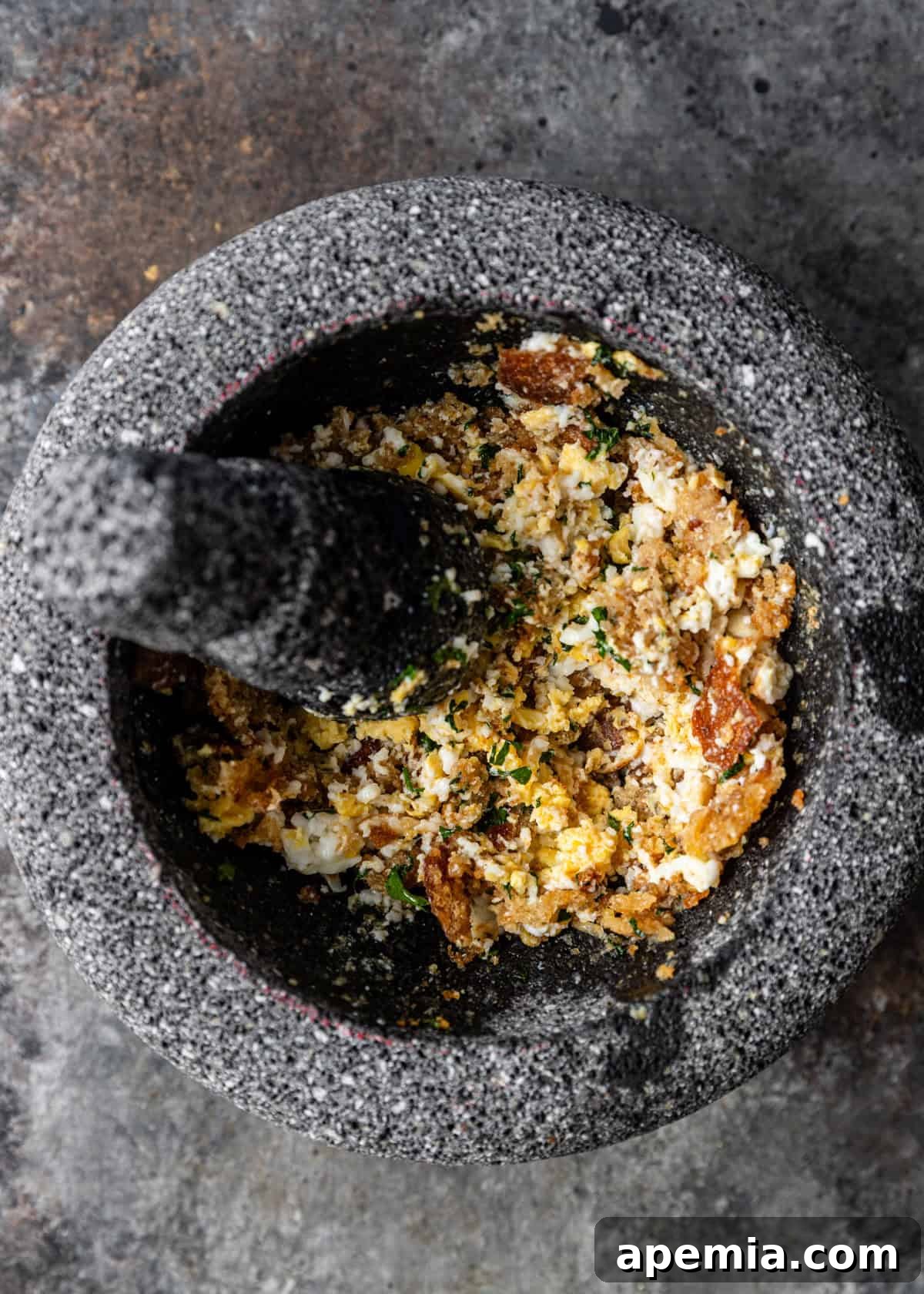
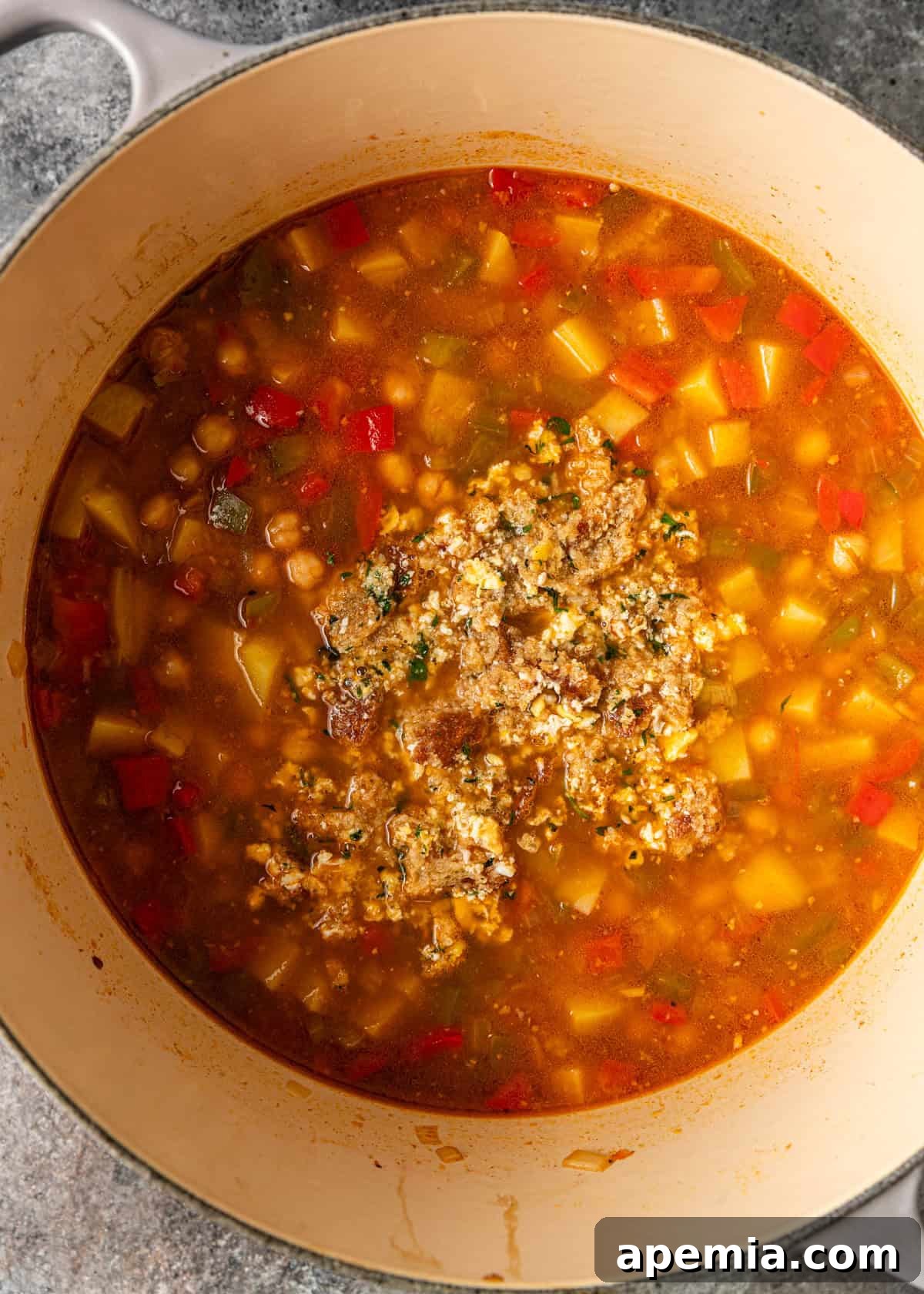
The secret to this stew’s incredible creaminess lies in a traditional Spanish “picada” – a paste made from cubed bread, lightly fried in olive oil with garlic, combined with a perfectly fried egg. Once mashed together, this flavorful blend is stirred into the simmering stew, magically transforming its texture into something rich, velvety, and utterly irresistible. This method adds not only body but also a depth of savory flavor that distinguishes it from other stews.
Ingredient Notes and Substitutions: Crafting the Perfect Potaje
(Be sure to check the recipe card below for a full list of precise ingredients and quantities)
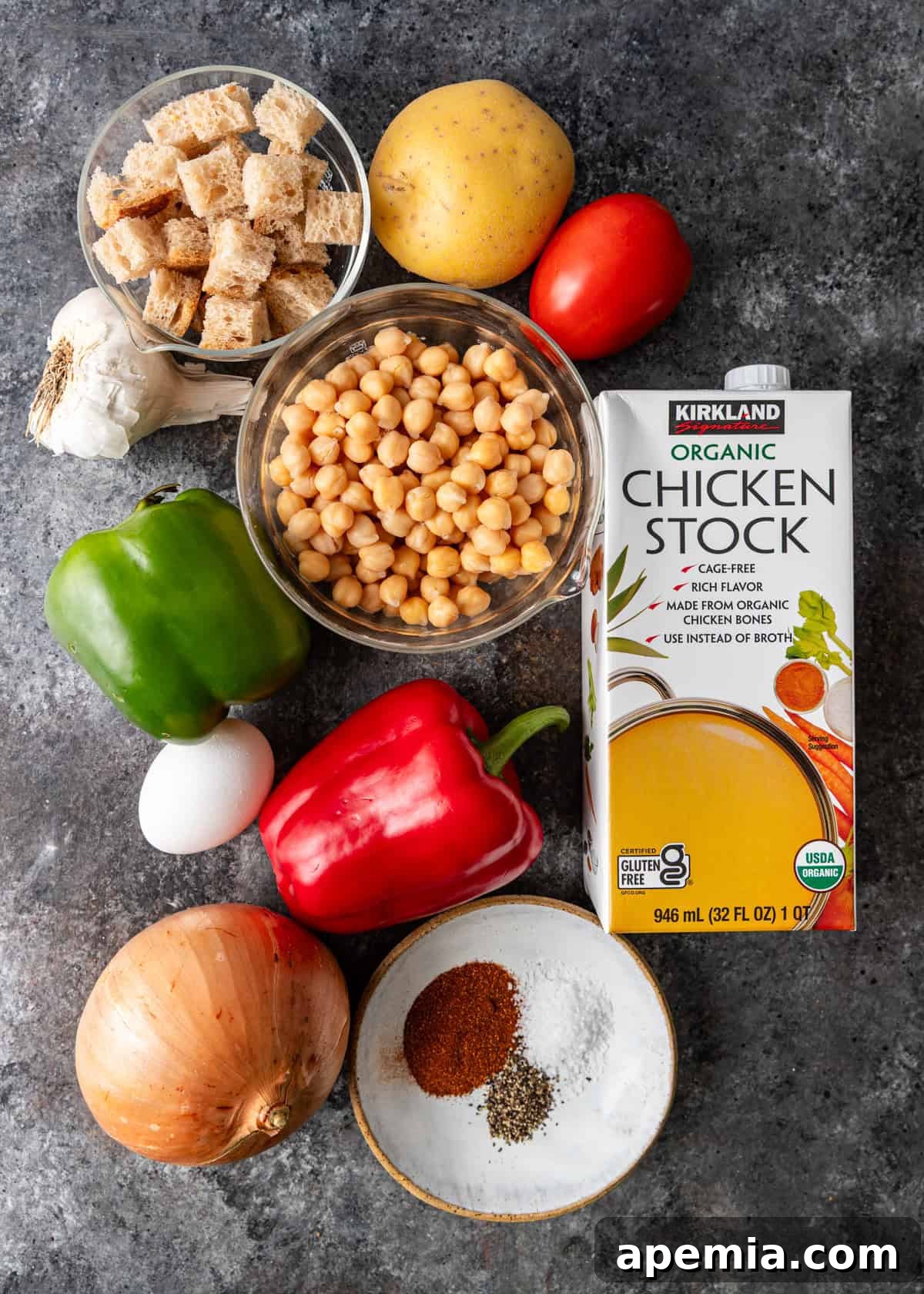
- Chickpeas: While canned chickpeas offer ultimate convenience, perfectly acceptable for a quick meal, for an even deeper, nuttier flavor and superior texture, we highly recommend cooking them from dry. You can find our guide on how to cook chickpeas from dry here. Just be sure to soak them overnight!
- Smoked Spanish Paprika (Pimentón de la Vera): This spice is absolutely non-negotiable for achieving that authentic, signature smoky flavor and beautiful color in our Potaje de Garbanzos. There are different varieties – ‘dulce’ (sweet), ‘agridulce’ (bittersweet), and ‘picante’ (hot). For this recipe, sweet smoked paprika is ideal, providing depth without overwhelming heat. If truly unavailable, regular paprika can be used in a pinch, or a very small dash of chipotle powder for a hint of smokiness, but the authentic flavor will be slightly altered.
- Bell Peppers (Red & Green): The combination of red and green bell peppers contributes a subtle sweetness and a pleasant textural contrast to the stew. Red peppers offer a sweeter note, while green peppers provide a slightly more bitter, earthy undertone. Using both creates a more complex flavor profile, but if you only have one color on hand, simply use the same total quantity of peppers. Freshness is key here!
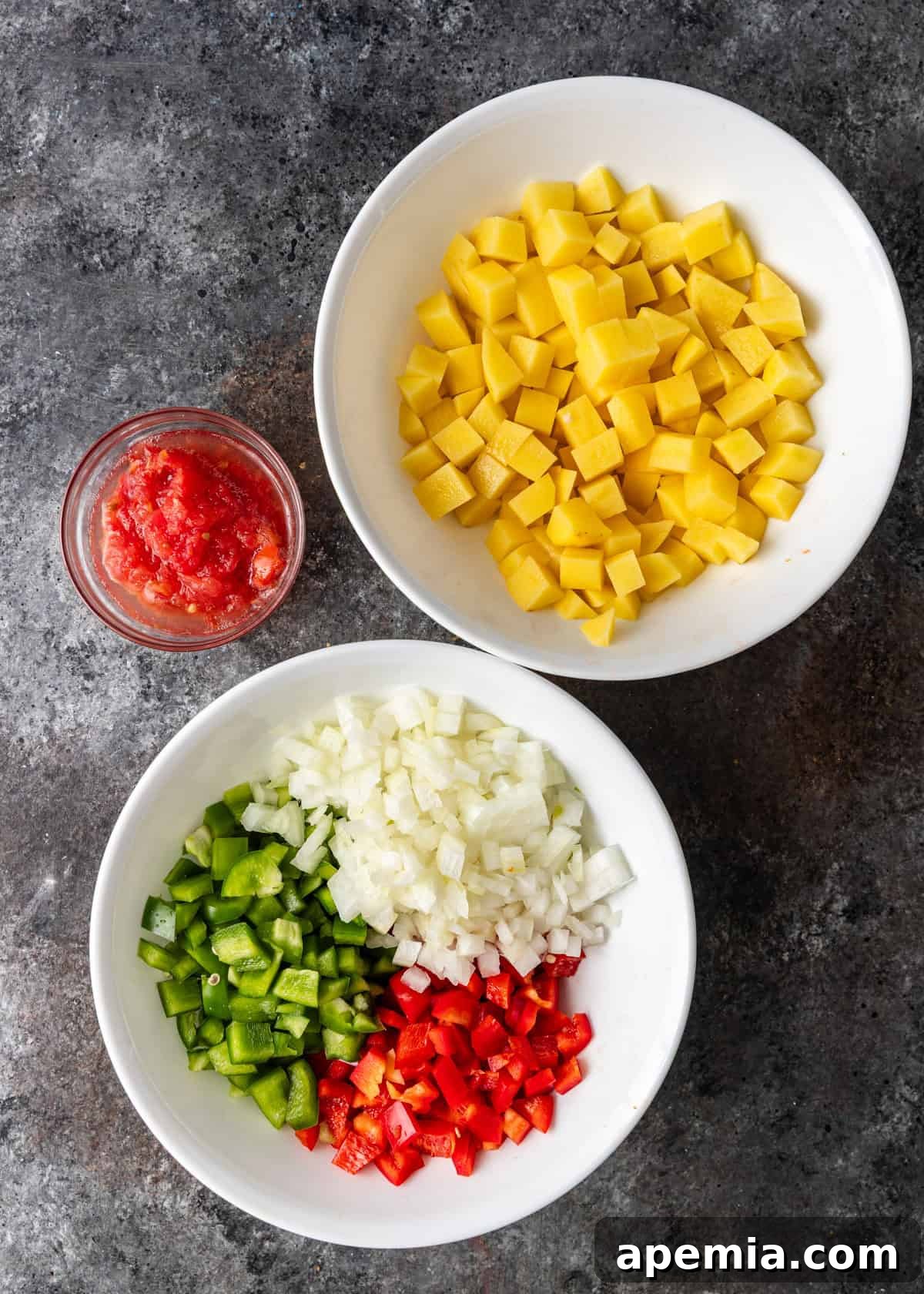
- Potatoes: For this stew, waxy potatoes are your best friend. Varieties like yellow or Yukon gold potatoes hold their shape beautifully during simmering, offering tender bites without disintegrating. Avoid starchy russet potatoes, as they tend to break down too much, potentially making your stew mushy. Cut them into uniform 1/2-inch cubes for even cooking.
- Tomato: Don’t underestimate the power of a freshly grated tomato! Grating it, rather than dicing or pureeing, allows it to meld seamlessly into the broth, adding a rich, savory depth and a touch of acidity that brightens the entire dish, all while maintaining a wonderfully velvety texture. This simple step makes a big difference.
- French Bread: A crusty loaf, preferably a day old, is ideal for creating the thickening paste. The staler bread will absorb the olive oil better and crisp up beautifully, contributing to a more robust paste. If you follow a gluten-free diet, a firm gluten-free bread can be used to create a similar effect.
- Egg: The humble egg, when fried and mashed with the garlicky bread, is the critical component that creates that luscious, creamy texture. It emulsifies with the bread and the stew’s liquid, binding everything together into a cohesive, flavorful broth. It’s a testament to traditional cooking techniques that maximize flavor and texture from simple ingredients.
- Chicken Stock: While chicken stock provides a rich and savory base, you can easily make this a vegetarian or vegan chickpea stew by substituting vegetable stock. Ensure your stock is low-sodium to control the overall saltiness of the dish.
How to Make the Perfect Spanish Chickpea Stew: Step-by-Step
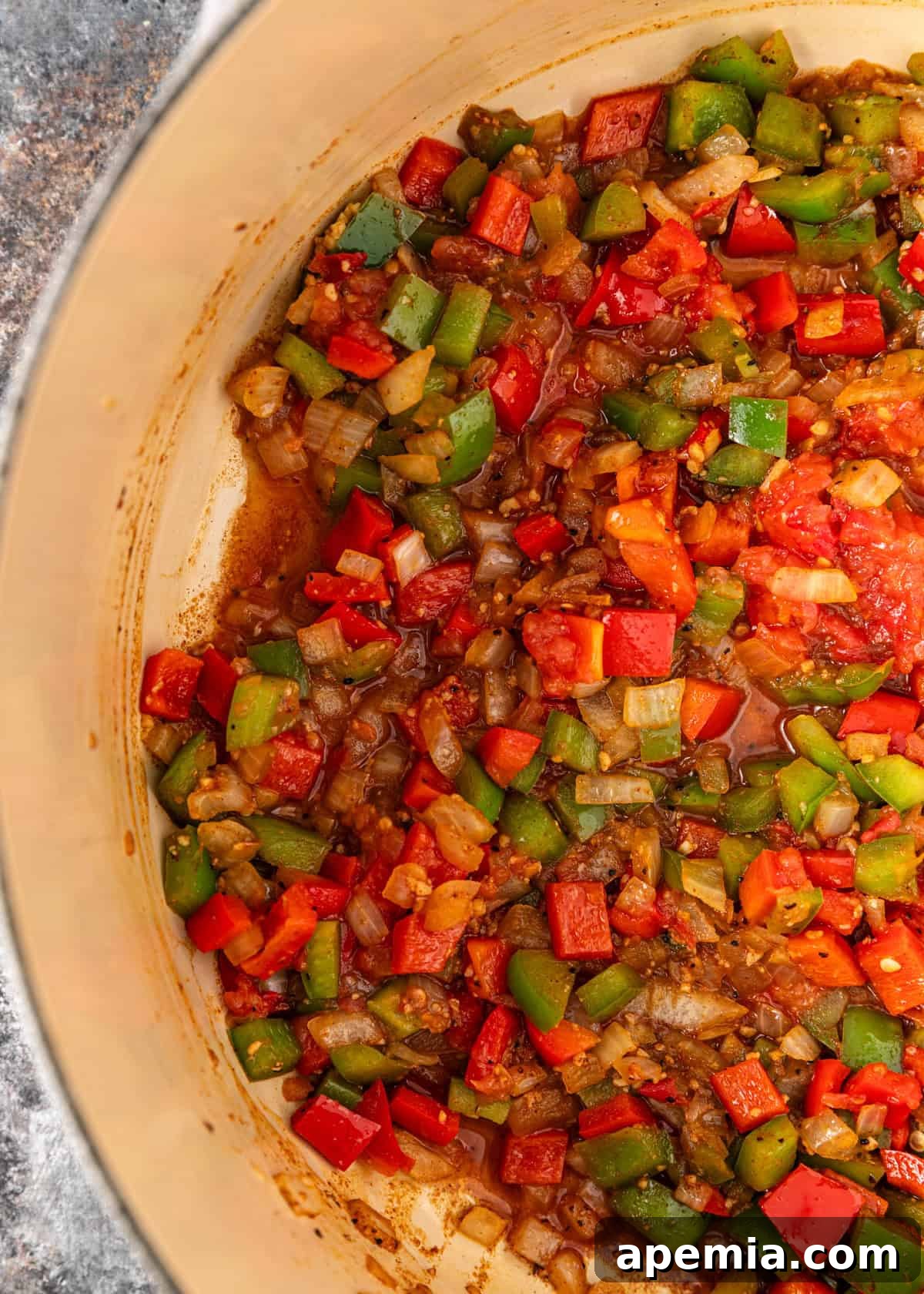
- Sauté the Aromatics and Vegetables. Begin by heating two tablespoons of quality extra virgin olive oil in a large Dutch oven or a heavy-bottomed soup pot over medium-high heat. Add the diced onion, bell peppers, two minced garlic cloves, smoked Spanish paprika, salt, and black pepper. Sauté these ingredients for about 5 minutes, stirring occasionally, until the vegetables begin to soften and release their fragrant aromas. Next, stir in the grated tomato and continue to cook for another 2 minutes, allowing the tomato’s flavor to develop and slightly reduce.
- Simmer the Stew Base. Introduce the cubed potatoes, the thoroughly drained chickpeas (if using canned, rinse them well), and the chicken stock (or vegetable stock for a vegetarian option) to the pot. Stir all the ingredients together to combine them well. Bring the mixture to a gentle boil, then reduce the heat to low, cover the pot with a lid, and let it simmer for approximately 25 minutes. This simmering time allows the potatoes to become wonderfully tender and the flavors to meld beautifully.
- Prepare the Bread and Garlic for Thickener. While your stew is simmering, turn your attention to the unique thickener. Heat the remaining two tablespoons of olive oil in a small frying pan over medium heat. Add the remaining three minced garlic cloves and the cubed French bread. Fry the bread cubes, stirring frequently, until they are beautifully golden brown and delightfully crispy. This step creates the flavorful base for our paste.
- Create the Creamy Thickening Paste. Carefully remove the fried bread and garlic mixture from the pan and transfer it to a mortar. In the same pan, fry the egg to your desired doneness (a runny yolk is perfect for mashing). Add the fried egg and two tablespoons of fresh chopped parsley to the mortar with the bread mixture. Using a pestle, mash everything together until it forms a rustic, well-combined paste. If you don’t have a mortar and pestle, you can chop finely and mash with a fork.
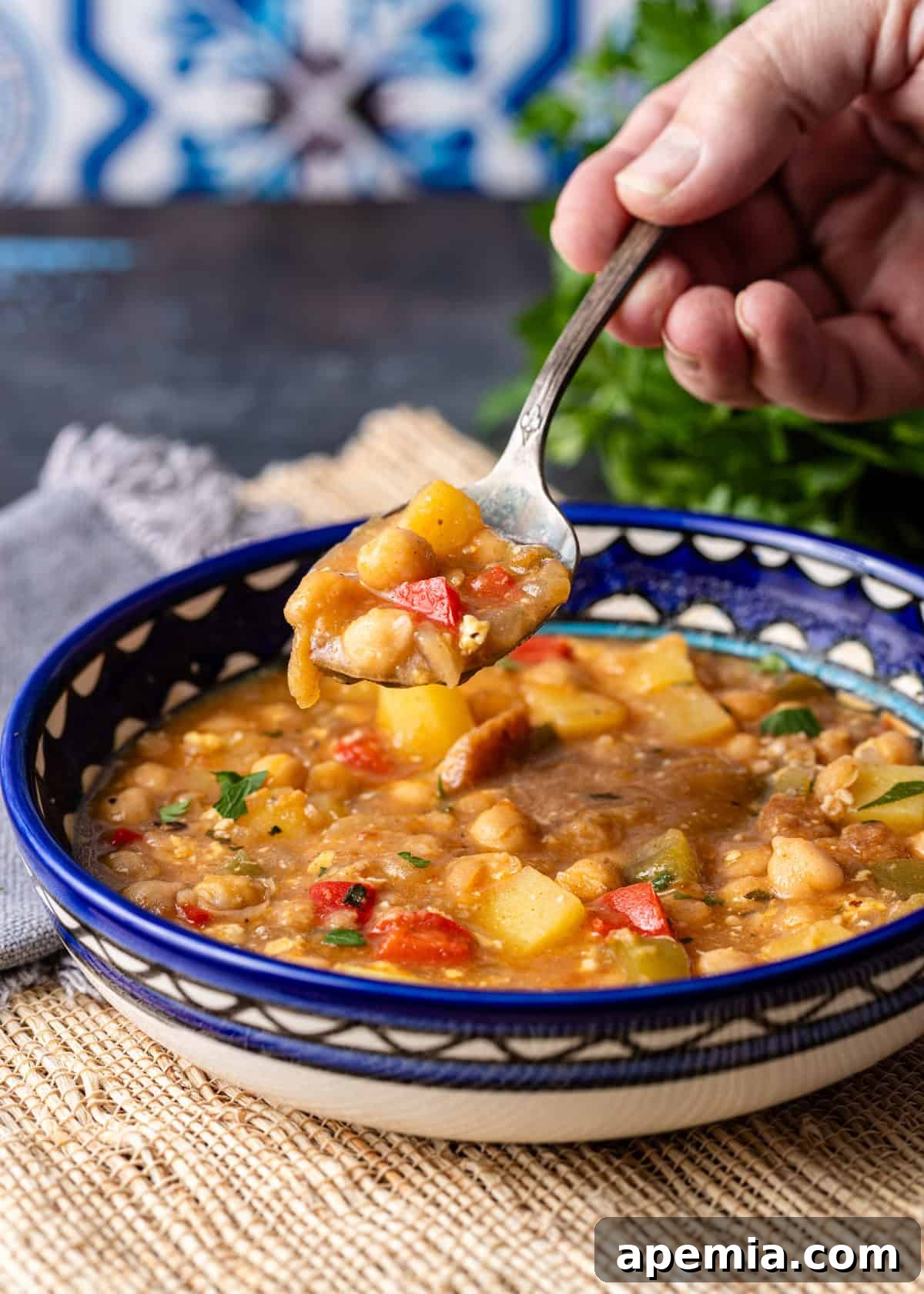
- Finish and Serve the Stew. Once the stew has simmered for the allotted time and the potatoes are tender, remove the lid. Stir in the freshly made bread and egg paste. Allow the stew to continue cooking, uncovered, for another 2 minutes. This brief period allows the paste to fully integrate and thicken the stew to its characteristic creamy consistency. Serve your Spanish Chickpea Stew hot, garnished with an additional sprinkle of fresh parsley for a burst of color and freshness. Enjoy this soulful and authentic Spanish delight!
Recommended Tools for a Perfect Potaje
- Dutch Oven: A heavy-bottomed Dutch oven is ideal for this stew. Its excellent heat retention and even distribution ensure a gentle, consistent simmer, allowing all the flavors to develop beautifully without scorching.
- Small Frying Pan: Essential for toasting the bread cubes to golden perfection and frying the egg, both crucial components of the traditional thickener.
- Mortar and Pestle: A must-have for truly authentic Potaje de Garbanzos! This traditional tool is perfect for creating the rustic, flavorful bread and egg paste, providing a texture that’s hard to replicate with modern appliances. If you don’t own one, a food processor or even a fork for mashing can be used as alternatives, though the texture might be slightly different.
- Sharp Knife and Cutting Board: For efficiently dicing and prepping all your fresh vegetables.
Storage and Reheating Tips: Enjoying Your Potaje Longer
One of the many joys of Spanish Chickpea Stew is that it often tastes even better the next day, as the flavors have more time to deepen and meld. Leftover Potaje de Garbanzos can be stored in an airtight container in the refrigerator for up to 3 days. The stew tends to thicken considerably once chilled, so you may need to adjust the consistency when reheating.
For longer storage, this stew freezes exceptionally well. Allow the stew to cool completely to room temperature before transferring it to freezer-safe containers or heavy-duty freezer bags. It can be stored in the freezer for up to 3 months. To maintain the best texture, thaw overnight in the refrigerator before reheating.
To reheat, gently warm the stew on the stovetop over low to medium heat, stirring occasionally, until it is heated through. If you find the consistency too thick after refrigeration or freezing, simply add a little extra chicken or vegetable broth, or even just water, until it reaches your desired creamy texture. Avoid overheating, which can compromise the chickpeas’ texture.
Share this recipe on Pinterest!
Love this recipe? Share it with the world on Pinterest to inspire others.
Frequently Asked Questions About Potaje de Garbanzos
For an even deeper and more luxurious flavor profile, consider adding a splash of good quality sherry vinegar during the final simmer. Its acidity beautifully balances the richness. A few strands of saffron, steeped in a little warm broth before adding to the stew, will also impart a subtle, exotic aroma and a beautiful golden hue, taking your Potaje to the next level.
No need to worry! While a mortar and pestle offer the most authentic texture, you can still achieve a fantastic result. Simply chop the fried bread, garlic, fried egg, and parsley very finely with a knife, then mash them together with a fork in a bowl until a relatively smooth paste forms. A small food processor or mini-chopper can also be used for a quicker, though slightly finer, paste.
This traditional Spanish method works by combining the starch from the bread, which breaks down and absorbs liquid, with the emulsifying properties of the egg. As the paste is stirred into the hot broth, the bread expands and releases its starches, while the egg helps to bind everything. This creates a beautifully smooth and thick consistency, providing a natural and wholesome way to achieve a rich body without relying on heavy creams or artificial thickeners.
Absolutely! To make this stew vegetarian, simply swap the chicken stock for a high-quality vegetable stock. To make it entirely vegan, use vegetable stock and omit the egg from the thickening paste. You can substitute the egg with a tablespoon of nutritional yeast or a small amount of mashed white beans in the paste for added richness and thickness, though the flavor and texture will be slightly different from the traditional version.
Potaje de Garbanzos is a complete meal on its own, but it pairs wonderfully with crusty bread for dipping, a simple green salad dressed with olive oil and vinegar, or a side of steamed rice. For an extra touch of Spanish authenticity, serve it with a drizzle of your best extra virgin olive oil and a sprinkle of smoked paprika on top.
Spanish Chickpea Stew (Potaje de Garbanzos)
★
★
★
★
4
15
mins
35
mins
50
mins
🖨️PrintRecipe
Ingredients
-
4
tbsp
extra virgin olive oil -
1
large yellow onion
diced -
1
green bell pepper
seeded and diced -
1
red bell pepper
seeded and diced -
5
cloves
garlic
divided -
2
tsp
sweet smoked Spanish paprika -
1
tsp
kosher salt -
1/2
tsp
ground black pepper -
1
tomato
grated -
2
medium white potatoes
peeled and cut into 1/2-inch cubes -
30
oz
canned garbanzo beans (chickpeas)
drained and rinsed -
3
cups
chicken stock (or vegetable stock for vegetarian/vegan) -
2
slices
french bread
cubed (day-old is best) -
1
egg -
1/4
cup
fresh parsley
chopped, plus extra for garnish
Instructions
-
Heat a Dutch oven or large soup pot over medium-high heat and add 2 tablespoons of olive oil. Add the diced onion, bell peppers, 2 minced garlic cloves, sweet smoked Spanish paprika, kosher salt, and ground black pepper. Sauté for about 5 minutes, stirring until the vegetables begin to soften. Then, stir in the grated tomato and cook for another 2 minutes.
-
Next, add the cubed potatoes, drained and rinsed chickpeas, and chicken stock (or vegetable stock). Mix all the ingredients well. Bring the stew to a boil, then cover the pot with a lid, reduce the heat to low, and simmer for 25 minutes, or until the potatoes are tender.
-
While the stew simmers, prepare the thickener. Heat a small frying pan over medium heat and add the remaining 2 tablespoons of olive oil, the remaining 3 minced garlic cloves, and the cubed bread. Fry until the bread is golden brown and crispy. Remove the bread mixture and transfer it to a mortar. In the same pan, cook the egg to your liking. Add the fried egg and 2 tablespoons of fresh parsley to the mortar with the bread mixture and mash everything thoroughly with a pestle until a rustic paste forms.
-
Once the stew has finished simmering and the potatoes are tender, remove the lid. Stir the prepared bread and egg thickener into the stew and mix thoroughly. Continue to cook, uncovered, for another 2 minutes, allowing the stew to thicken to a rich, creamy consistency. Serve hot, garnished with fresh parsley.
Notes
- Recipe adapted from Albert Bevia at Spain on a Fork.
Nutrition
Calories:
584
kcal
|
Carbohydrates:
76
g
|
Protein:
23
g
|
Fat:
23
g
|
Saturated Fat:
4
g
|
Polyunsaturated Fat:
4
g
|
Monounsaturated Fat:
13
g
|
Trans Fat:
0.01
g
|
Cholesterol:
46
mg
|
Sodium:
1652
mg
|
Potassium:
1196
mg
|
Fiber:
15
g
|
Sugar:
9
g
|
Vitamin A:
2207
IU
|
Vitamin C:
92
mg
|
Calcium:
143
mg
|
Iron:
6
mg
The information shown is an estimate provided by an online nutrition calculator. It should not be considered a substitute for a professional nutritionist’s advice.
Soups, Main Course
Spanish
Kevin
Have You Made This Recipe? Let Me Know on Instagram
Tag @keviniscooking or use hashtag #keviniscooking!