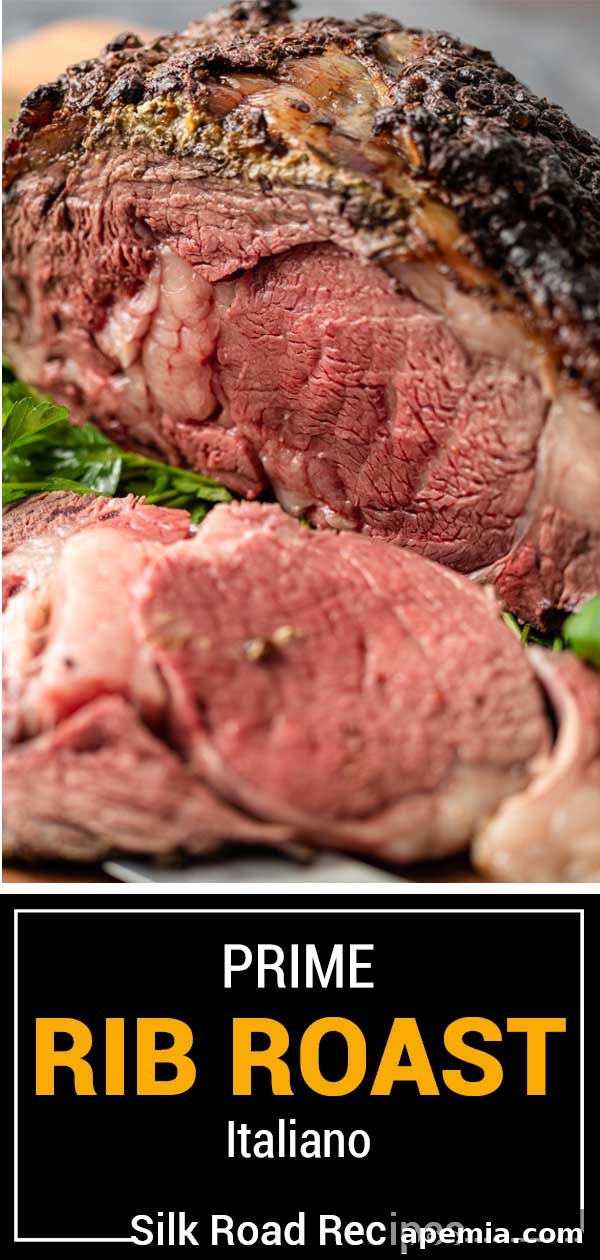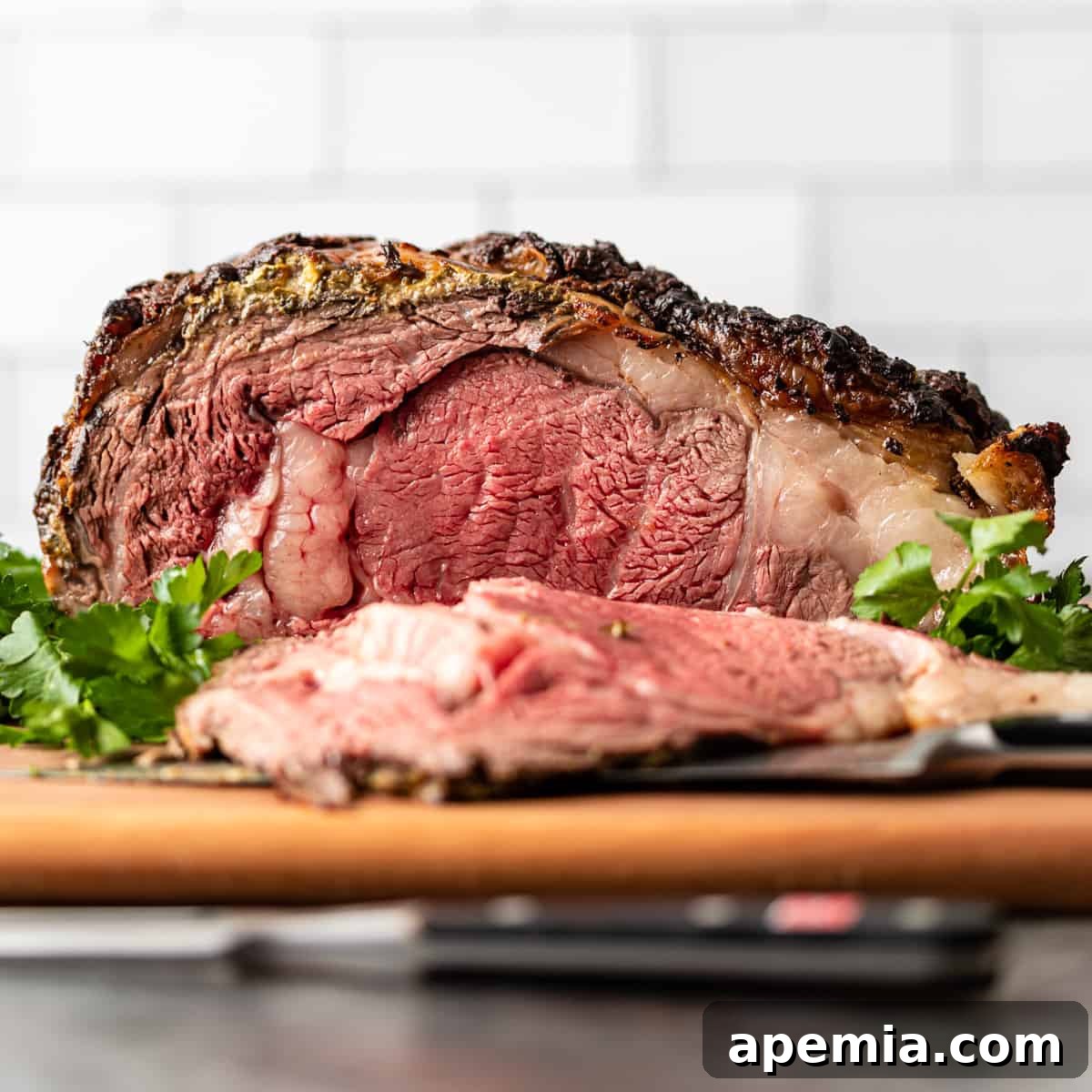
Prepare to elevate your culinary game with this extraordinary herb-crusted prime rib roast recipe, a true masterpiece designed to impress. Simple to prepare yet bursting with authentic Italian flavor, this robust and savory centerpiece dish features a vibrant blend of fresh tarragon, parsley, rosemary, and thyme, all enveloped in a spicy Dijon mustard rub. Get ready for an unforgettable dining experience featuring melt-in-your-mouth, fall-off-your-fork tender beef!
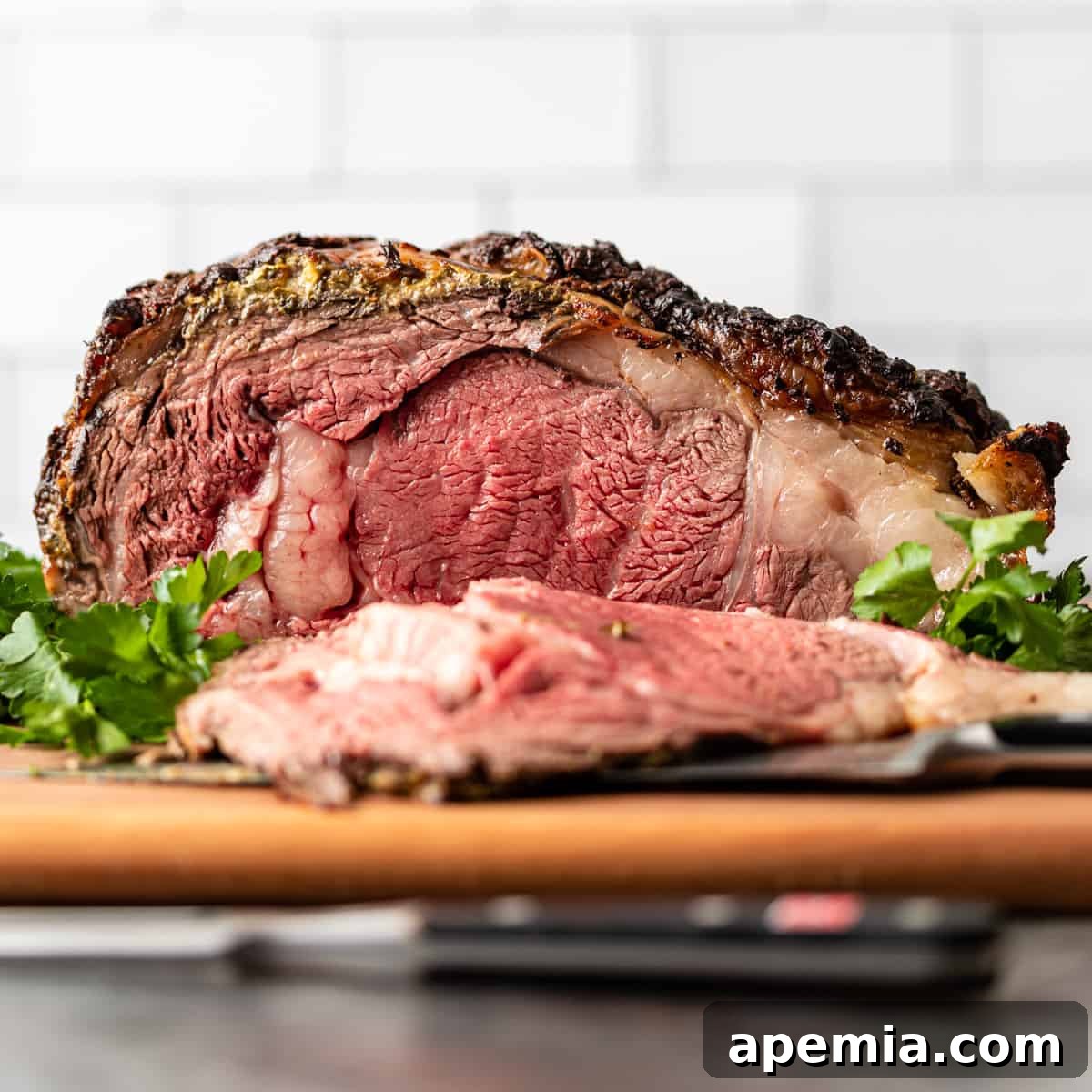
A perfectly roasted prime rib, also known as standing rib roast, is a luxurious dish on its own. However, this recipe takes it to an entirely new level by infusing it with an intensely flavorful mustard and herb rub. Every bite promises an exquisite combination of deep savoriness and a supremely succulent texture that will undoubtedly impress even the most discerning palates.
While the process of roasting a standing rib roast might seem daunting, it is remarkably straightforward. The key lies in patience, as it does require a bit of time for the magic to happen. I highly recommend dedicating a day when you can enjoy the cooking process without feeling rushed. Remember, slow and steady truly wins the race when it comes to achieving prime rib perfection!
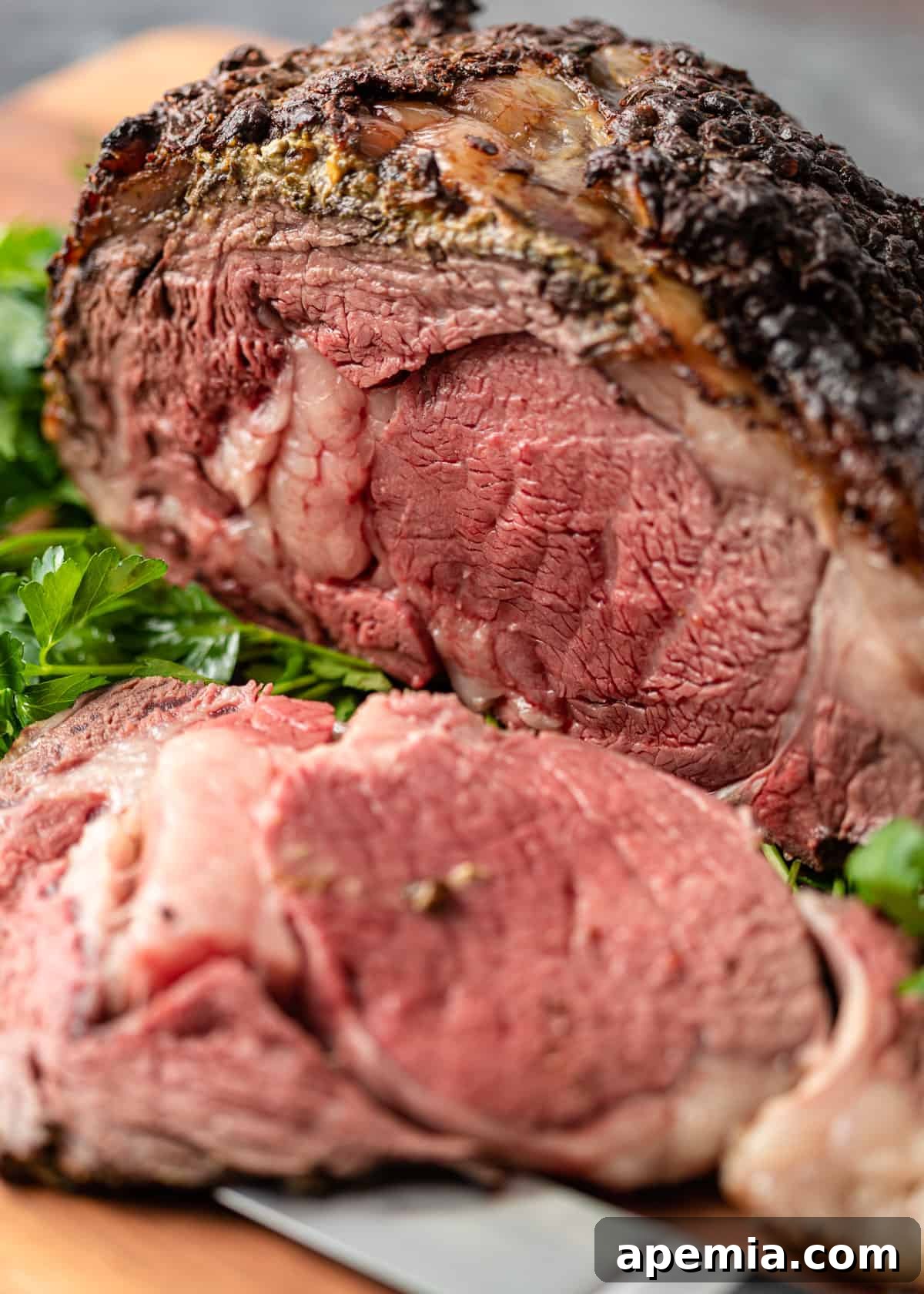
Table of Contents
- Why This Prime Rib Recipe Stands Out
- Ingredient Notes and Substitutions
- Expert Tips for Roasting Prime Rib
- How to Make Prime Rib Roast Italiano
- Serving Suggestions and Wine Pairings
- Frequently Asked Questions
- Prime Rib Roast Italiano Recipe
Why This Prime Rib Recipe Stands Out
This isn’t just another prime rib recipe; it’s an experience. What makes our Herb-Crusted Prime Rib Roast Italiano truly exceptional is the carefully curated blend of robust Italian herbs and the bold kick of Dijon mustard. Unlike many traditional recipes, we focus on a deeply aromatic rub that penetrates the meat, creating a flavor crust that is simply irresistible. This method ensures maximum flavor without the need for lengthy marination, allowing the natural richness of the prime rib to shine through while still delivering a complex and satisfying taste. It’s the ideal choice for holiday gatherings, special celebrations, or whenever you want to create an unforgettable meal.
For more mouthwatering rib creations, be sure to explore my Sticky Asian Short Ribs, Braised Beef Short Ribs, and these delectable Sweet and Sour Ribs.
Ingredient Notes and Substitutions
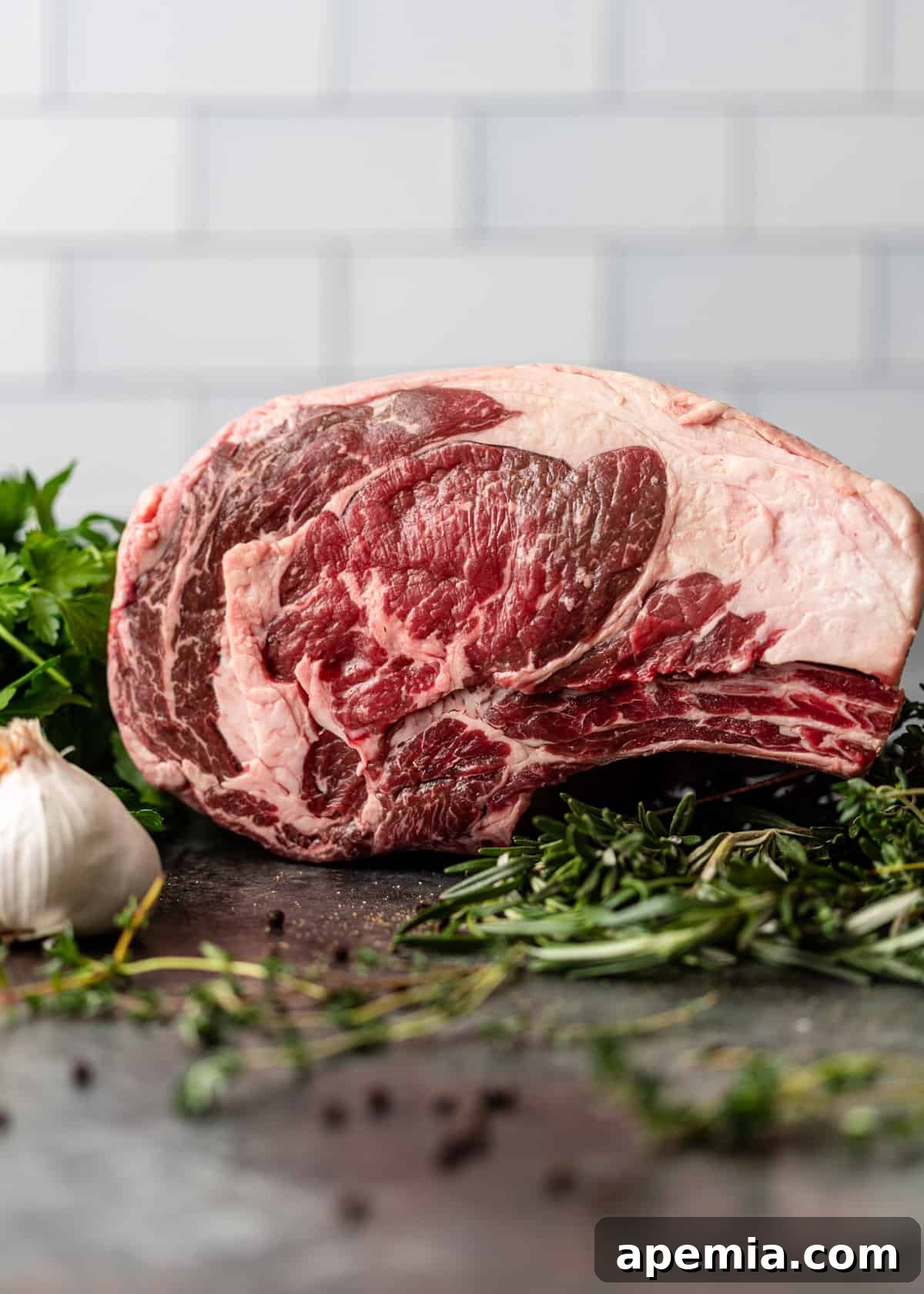
- Prime Rib (Standing Rib Roast) – This coveted cut, known for its rich marbling and tenderness, truly makes it one of the most delicious beef cuts available. For optimal results and even cooking, it is crucial to allow the roast to come to room temperature for at least 2 hours before placing it in the oven. This prevents the outer layers from overcooking while the center remains raw.
- Dijon Mustard – The pungent and tangy notes of Dijon mustard provide a bright flavor profile with a delightful kick of spiciness that beautifully complements the richness of the beef. It also acts as an excellent binder for the herb crust. If Dijon is unavailable, you can substitute with other strong mustards like horseradish mustard for extra heat, spicy brown mustard, or a coarse stone-ground mustard for added texture and robust flavor.
- Fresh Tarragon – Bold, aromatic, and distinctive, tarragon offers a unique subtle licorice-like flavor that is a hallmark of many classic French and Italian dishes. If fresh tarragon is hard to find, fresh basil can provide a sweet, peppery alternative, or a touch of fennel can offer a similar anise-like note.
- Assorted Fresh Herbs – A fragrant medley of fresh parsley, rosemary, and thyme creates a complex layering of freshness, aroma, and savory depth in the crust. These herbs are foundational to Italian cuisine. If using dried herbs, remember that their flavor is more concentrated; use about one-third of the amount specified for fresh herbs.
- Red Pepper Flakes – Just a half-teaspoon delivers a gentle warmth and balances the richness of the prime rib, adding a subtle spicy undertone without overpowering the other flavors. Adjust to your heat preference.
- Olive Oil – Essential for creating a thick, spreadable paste with the herbs and spices, the olive oil also aids in achieving a beautiful sear on the beef and contributes to the overall Mediterranean flavor profile.
- Dry Red Wine – Incorporating a dry red wine, such as a Cabernet Sauvignon, Merlot, or Chianti, into the roasting pan adds a profound richness and robust depth to the pan drippings, which are crucial for a flavorful gravy. For an alcohol-free alternative, an equal amount of good quality beef broth works wonderfully.
- Beef Broth – Rich and savory, beef broth adds essential moisture to the roasting process and forms the base for a truly delicious, flavorful gravy, ensuring no drop of flavor goes to waste.
Chef’s Tip
Expert Tips for Roasting Prime Rib
Achieving the perfect prime rib roast requires precision and a few key techniques. Start by preheating your oven to 450°F to create a beautiful, flavorful sear. After the initial sear for 15 minutes, reduce the heat significantly to 325°F for the remainder of the cooking time. Roasting uncovered allows for that desirable crispy crust. The most critical tool for success is a reliable meat thermometer. Here are the approximate cooking times and internal temperatures for different doneness levels, always measured in the thickest part of the meat, away from any bone:
- Rare: 15-20 minutes per pound, reaching an internal temperature of 115-120°F.
- Medium-Rare: 20-25 minutes per pound, reaching an internal temperature of 125-130°F.
- Medium: 25-30 minutes per pound, reaching an internal temperature of 135-140°F.
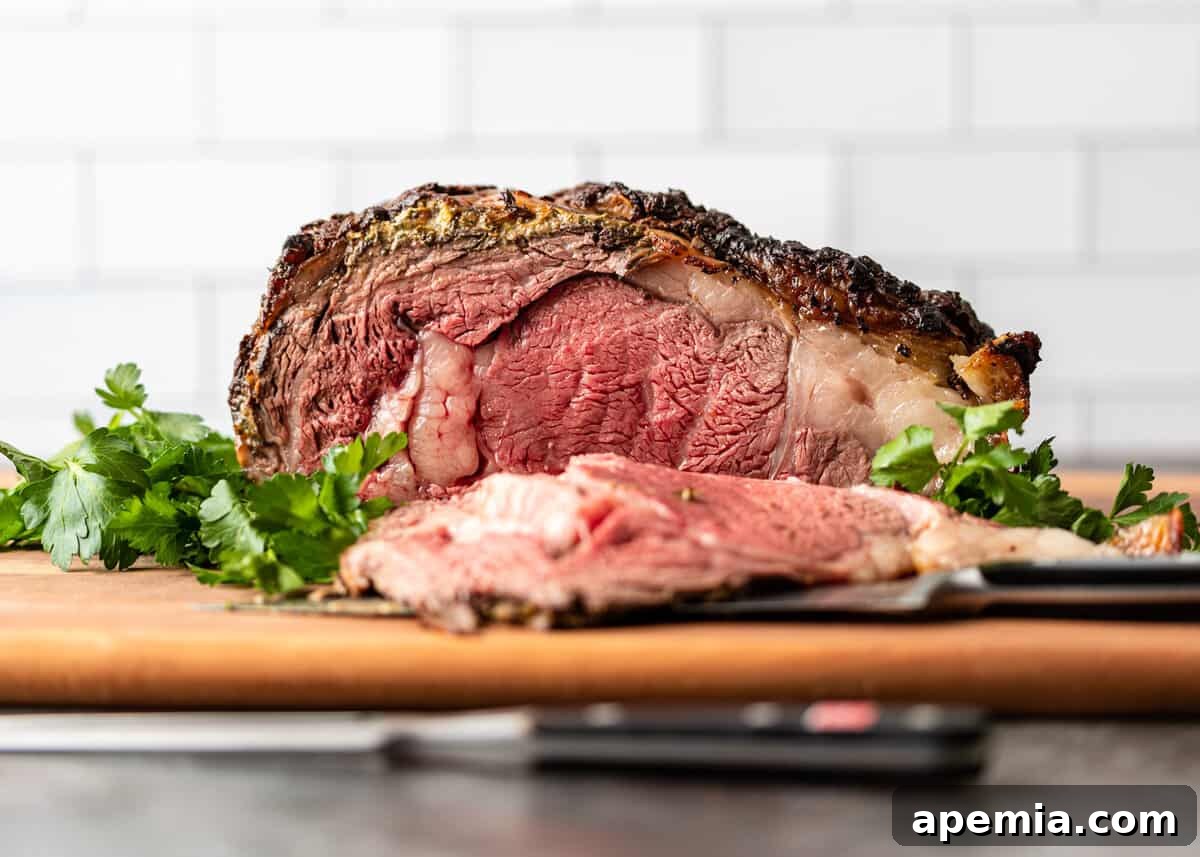
Remember that the roast will continue to cook after it’s removed from the oven, a phenomenon known as “carryover cooking.” Always remove the meat when it’s 5-10 degrees below your desired final temperature, as it will rise to the perfect doneness while resting. This resting period is non-negotiable for juicy, tender results.
How to Make Prime Rib Roast Italiano
- Prepare the Oven and Roasting Pan: Begin by preheating your oven to a blazing 450°F (230°C). While the oven heats, set up your roasting pan with a sturdy wire rack. This setup allows air to circulate around the roast and ensures the fat drips away, resulting in a beautifully even cook and a crispier exterior.
- Craft the Aromatic Spice Rub: In the bowl of a food processor, combine the peeled garlic cloves, Dijon mustard, fresh tarragon, parsley, rosemary, thyme, and red pepper flakes. Pulse until finely chopped and well combined. With the processor running, slowly drizzle in the olive oil until a thick, vibrant paste forms. This paste is the heart of your Italian flavor.
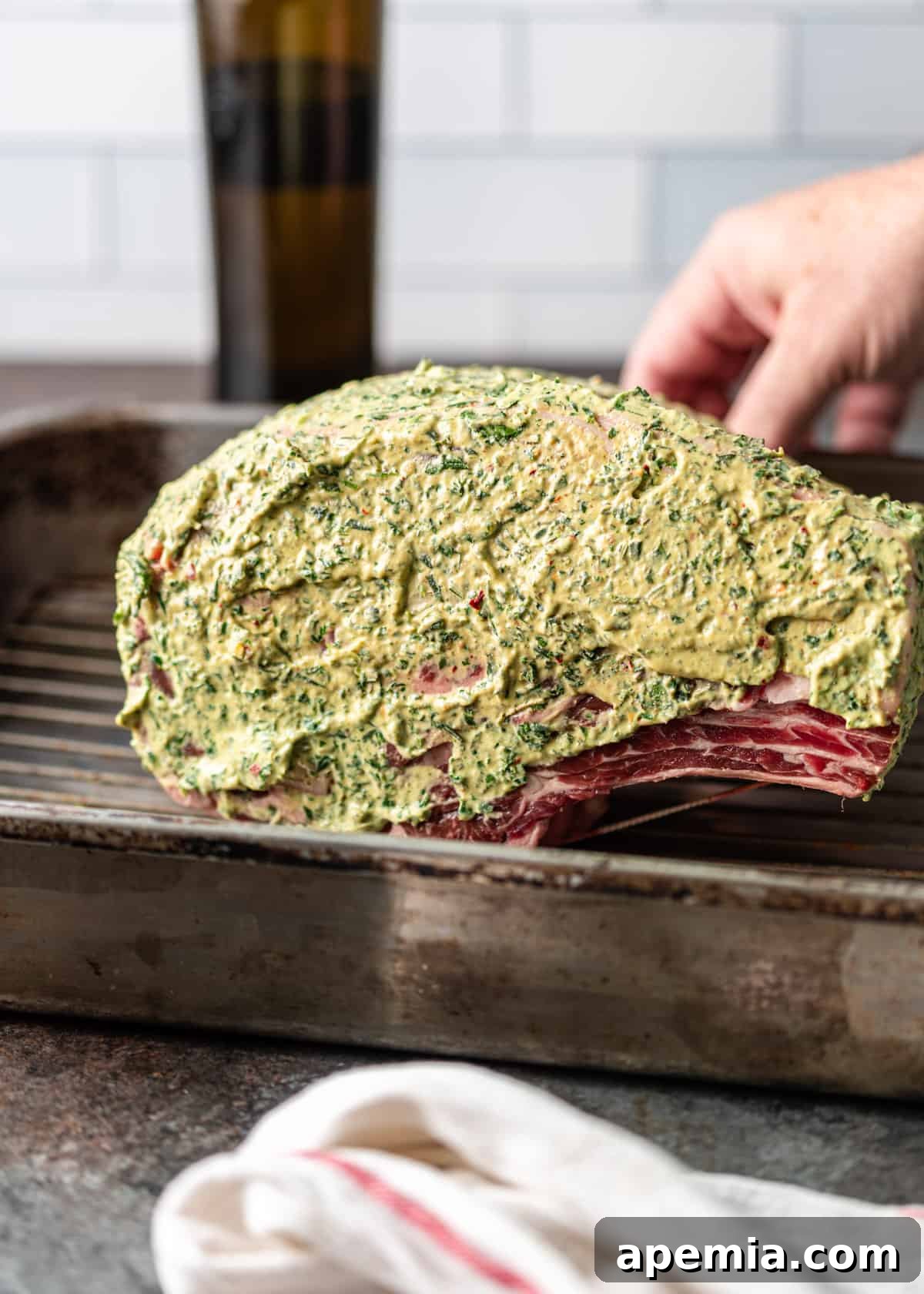
- Prepare and Season the Beef: Using a small, sharp knife, carefully puncture the prime rib roast all over. Make small, shallow incisions about 1/2 inch deep. These small pockets will allow the incredibly flavorful mustard and herb paste to deeply penetrate the meat. Generously rub the entire roast with the prepared paste, ensuring every surface is thoroughly coated. Place the roast in the prepared roasting pan with the rib side down and the fat side facing up. At this stage, resist the urge to add salt; the concentrated flavors of the rub are quite intense. You can always season with salt to taste after cooking, if desired.
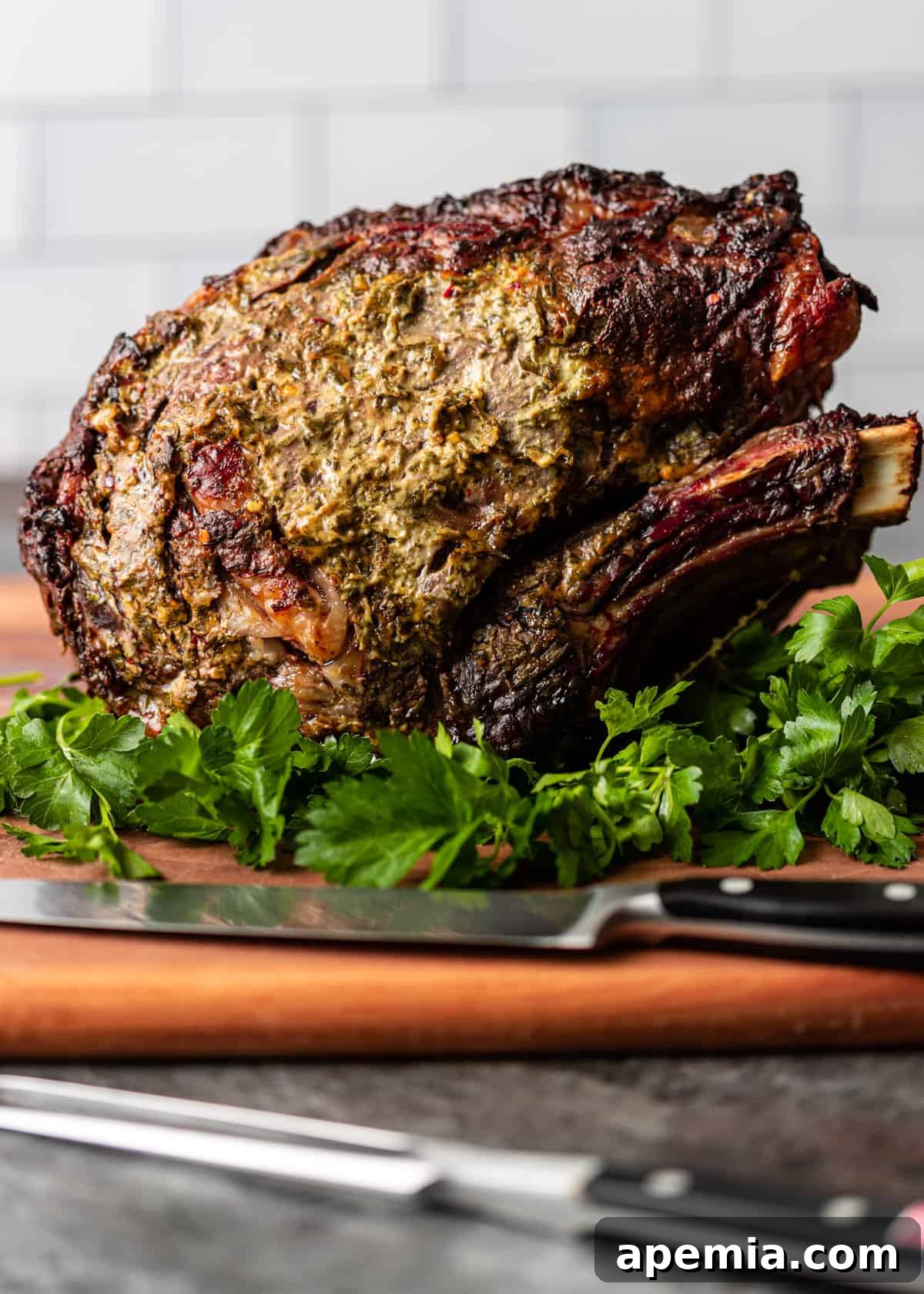
- Sear and Roast to Perfection: Transfer the roasting pan with the prepared prime rib into your preheated 450°F oven. Sear the roast for an initial 15 minutes. This high-heat blast creates a gorgeous browned crust, locking in juices and developing incredible flavor. After 15 minutes, reduce the oven temperature significantly to 325°F (160°C) for the remainder of the cooking process.
- Monitor and Cook to Desired Doneness: Continue to roast the prime rib, uncovered, for approximately 15-30 minutes per pound of meat. The exact timing will depend on your desired level of doneness. Use a reliable meat thermometer inserted into the thickest part of the roast, avoiding any bone.
- Rare: 115-120°F (46-49°C)
- Medium-Rare: 125-130°F (52-54°C)
- Medium: 135-140°F (57-60°C)
- Add the Flavorful Liquids: During the final 20 minutes of roasting, carefully pour the beef broth and dry red wine into the bottom of the roasting pan, around the roast. Return the pan to the oven and allow these liquids to mingle with the pan drippings, creating a rich foundation for your gravy.
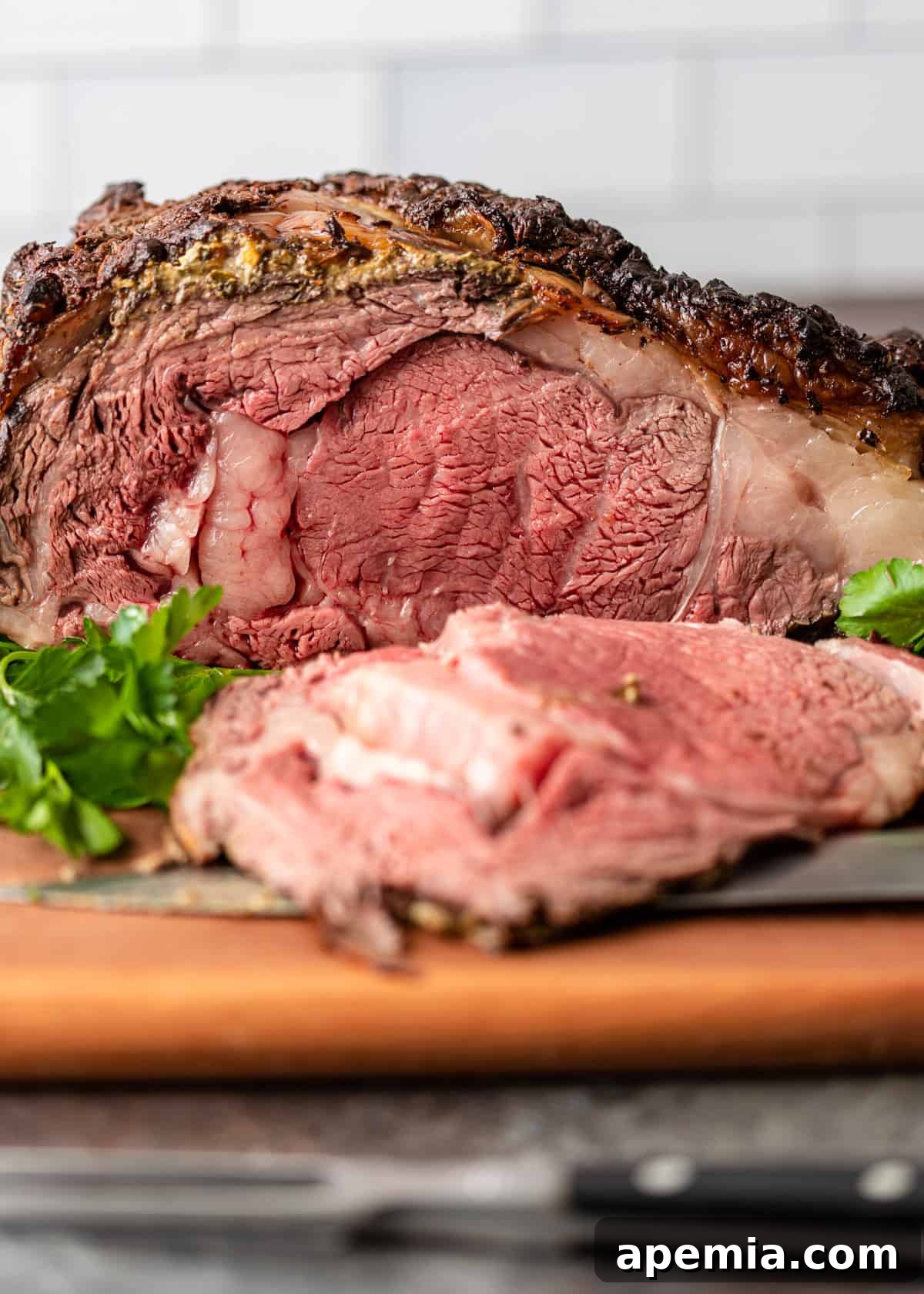
- Remove and Rest (Crucial Step!): Once your prime rib reaches 5-10 degrees Fahrenheit (approximately 3-6°C) below your desired final internal temperature, carefully remove it from the oven. Transfer the roast to a clean cutting board or platter. Loosely tent it with aluminum foil and allow it to rest undisturbed for 20-30 minutes. This resting period is vital, as it allows the juices to redistribute throughout the meat, resulting in an incredibly tender and moist roast. Skipping this step will result in dry meat.
- Prepare the Savory Gravy: While the prime rib rests, place the roasting pan over medium heat on your stovetop (if it’s stovetop-safe, otherwise transfer drippings to a saucepan). Scrape all the flavorful brown bits (known as fond) from the bottom of the pan, incorporating them into the cooking liquid. These bits are packed with concentrated flavor. For a thicker, luscious gravy, create a slurry with a few tablespoons of flour or cornstarch mixed with a little cold water, then whisk it into the pan liquids until thickened to your preference. Simmer gently, adjusting seasoning as needed.
- Slice and Serve: Carve the rested prime rib roast into generous slices. Top each succulent slice with a dollop of a flavorful compound butter (such as an herb-gorgonzola blend, or simply a fresh herb butter) and serve the rich, homemade gravy on the side. Enjoy your perfectly roasted Prime Rib Roast Italiano!
Serving Suggestions and Wine Pairings
A magnificent prime rib roast deserves equally delightful accompaniments. This Herb-Crusted Prime Rib Roast Italiano pairs beautifully with a variety of side dishes, enhancing the overall dining experience. Consider these harmonious pairings:
- Starchy Sides: Classic choices like creamy mashed potatoes, garlic-infused Roasted Potatoes, or a savory Mediterranean Rice Pilaf are perfect for soaking up the delicious gravy.
- Vegetable Sides: Complement the richness of the beef with vibrant greens or roasted vegetables such as Briam Vegetables (Greek roasted vegetables), sweet Pan Roasted Carrots with Toasted Spices, or crisp Greek Green Beans. A simple side of steamed asparagus or broccoli also works wonderfully.
- Fresh Salads: A light, refreshing salad helps to cut through the richness of the meat. Try a crisp Chopped Vegetable Salad or a tangy Lebanese Fattoush Salad.
Wine Pairings: For a dish as grand as prime rib, a robust red wine is the ideal companion.
- Cabernet Sauvignon: Its bold tannins and dark fruit notes stand up beautifully to the rich beef.
- Merlot: A softer option with plum and cherry notes, offering a smoother counterpoint.
- Zinfandel: For those who prefer a spicier, fruit-forward red that can handle the herb crust.
- Italian Reds: Given the Italian inspiration, a Barolo, Brunello di Montalcino, or a good Chianti Classico would be exceptional, echoing the herbal notes in the rub.
Frequently Asked Questions
This magnificent prime rib recipe is incredibly versatile and pairs well with a wide array of your favorite side dishes. To enhance your meal, consider these delightful options:
– Serve alongside a comforting starchy dish such as savory Roasted Potatoes, creamy mashed potatoes, or an aromatic Mediterranean Rice Pilaf.
– Enjoy with fresh, vibrant vegetables like the traditional Greek Briam Vegetables, subtly sweet Pan Roasted Carrots with Toasted Spices, or crisp Greek Green Beans. Steamed asparagus or sautéed spinach are also excellent choices.
– Complement the richness of the meat with a light and refreshing salad, such as a crisp Chopped Vegetable Salad or a zesty Lebanese Fattoush Salad.
For this particular prime rib recipe, marinating is not necessary at all. Rest assured, no flavor is sacrificed in the process!
Instead of a traditional marinade, we employ a robust and thick spice rub, which is generously applied after puncturing the beef. These small punctures allow the potent flavors of the mustard and herb rub to deeply penetrate the meat. Coupled with a slow roasting process, this method gives the rich seasonings ample time to infuse every fiber, ensuring profound flavor throughout. And don’t forget the mouthwatering pan gravy, which further enhances the taste!
The term “prime rib” refers to a specific, highly prized cut of beef, similar to how “ribeye” or “sirloin” denote particular cuts. It is sourced from the primal rib section of the cow and is celebrated for its exceptional marbling, which contributes significantly to its inherent tenderness, juiciness, and rich flavor.
“Prime rib roast” simply describes a common culinary preparation and cooking method for this specific cut, often involving herbs, spices, and other seasonings to enhance its natural qualities through roasting. You might also hear it called “standing rib roast” or “ribeye roast” when uncooked. Essentially, these terms are often used interchangeably in the kitchen and at the butcher counter. Don’t get too caught up in the subtle distinctions; whether labeled “prime rib,” “prime rib roast,” or “standing rib roast,” you’re getting the same incredible cut of beef.
To store leftover prime rib, allow it to cool completely, then slice it or keep it in larger pieces, whatever you prefer. Place the meat in an airtight container and refrigerate for up to 3-4 days. For reheating, gently warm slices in a pan with a splash of beef broth or water over low heat to prevent drying out. You can also reheat larger pieces slowly in a 250°F (120°C) oven until just warmed through, adding a bit of broth to the pan. Avoid high heat, as this can make the meat tough.
Share this recipe on Pinterest!
Love this recipe? Share it with the world on Pinterest.
Prime Rib Roast Italiano
6
18 minutes
3 hours
Saved
Pin Recipe
PrintRecipe
Ingredients
- 6 lb prime rib roast (See Note 1)
- 6 cloves garlic
- ⅓ cup Dijon mustard
- 1 tbsp fresh tarragon
- 1 tbsp fresh parsley
- 1 tbsp fresh rosemary
- 1 tbsp fresh thyme
- 1/2 tsp red pepper flakes
- ¼ cup olive oil
- 1 cup dry red wine
- 1 cup beef broth
Instructions
-
Preheat oven to 450°F (230°C).
-
Add the garlic, Dijon mustard, fresh herbs (tarragon, parsley, rosemary, thyme), and red pepper flakes to a food processor and blend until finely chopped. Slowly add the olive oil while blending to form a thick, aromatic paste.
-
Using a small knife, puncture the roast all over with shallow incisions (about 1/2 inch deep) to allow the mustard and herb paste to deeply penetrate the meat. Rub this mixture thoroughly over all sides of the prime rib roast (place it rib side down in the pan). I recommend avoiding additional salt at this point, as the flavors in the rub become quite condensed during cooking. You can always season with salt to taste later if needed.
-
Place the roast fat side up in a roasting pan on a wire rack. This allows the fat to render and drip away, contributing to a crispy crust. Place the roast in the preheated oven and sear for 15 minutes at 450°F (230°C). After searing, immediately drop the oven temperature down to 325°F (160°C) and continue to roast, uncovered, until a meat thermometer inserted into the thickest part of the meat (away from any bone) registers your desired doneness:
- Rare: 15-20 minutes per pound, 115-120°F (46-49°C)
- Medium Rare: 20-25 minutes per pound, 125-130°F (52-54°C)
- Medium: 25-30 minutes per pound, 135-140°F (57-60°C)
-
In the last 20 minutes of the total cooking time, carefully add the beef broth and dry red wine to the bottom of the roasting pan, around the roast. Continue to cook, allowing the liquids to meld with the pan drippings.
-
Remove the meat from the oven when it reaches 5-10°F (3-6°C) below your desired final temperature, as it will continue to cook during resting (carryover cooking). Carefully transfer the roast to a clean platter or cutting board, cover it loosely with aluminum foil, and let it rest for 20–30 minutes. This resting period is critical for juicy, tender results. In the meantime, place the roasting pan over medium heat on the stovetop (if stovetop-safe), add a little more beef broth, and scrape the bottom to deglaze and incorporate all the tasty brown bits and pieces that add so much flavor to the sauce. You can thicken this pan sauce using a flour or cornstarch slurry (roux) if a thicker gravy is desired, or serve it as a flavorful au jus with each slice of prime rib. Top each slice of prime rib with a generous dollop of compound butter (such as an herb-gorgonzola blend) and serve immediately.
Notes
- For optimal even cooking, it is crucial to remove the prime rib roast from the refrigerator at least 2 hours prior to roasting. This allows the meat to come fully to room temperature.
Nutrition
Serving:
8g
|
Calories:
743kcal
|
Carbohydrates:
4g
|
Protein:
63g
|
Fat:
51g
|
Saturated Fat:
23g
|
Polyunsaturated Fat:
3g
|
Monounsaturated Fat:
22g
|
Trans Fat:
0.002g
|
Cholesterol:
274mg
|
Sodium:
508mg
|
Potassium:
1108mg
|
Fiber:
1g
|
Sugar:
0.2g
|
Vitamin A:
230IU
|
Vitamin C:
4mg
|
Calcium:
71mg
|
Iron:
8mg
The information shown is an estimate provided by an online nutrition calculator. It should not be considered a substitute for a professional nutritionist’s advice.
main dishes
Italian
Kevin
Have You Made This Recipe? Let Me Know on Instagram
Tag @keviniscooking or tag me #keviniscooking!