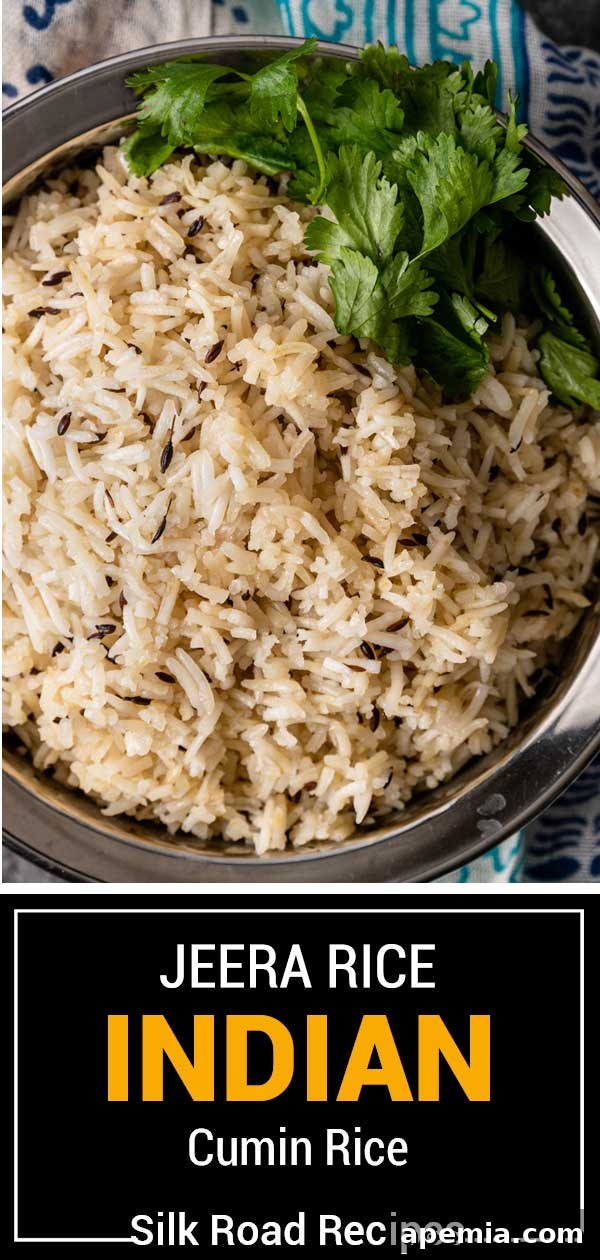
Jeera Rice Recipe: Master the Art of Flavorful Indian Cumin Rice
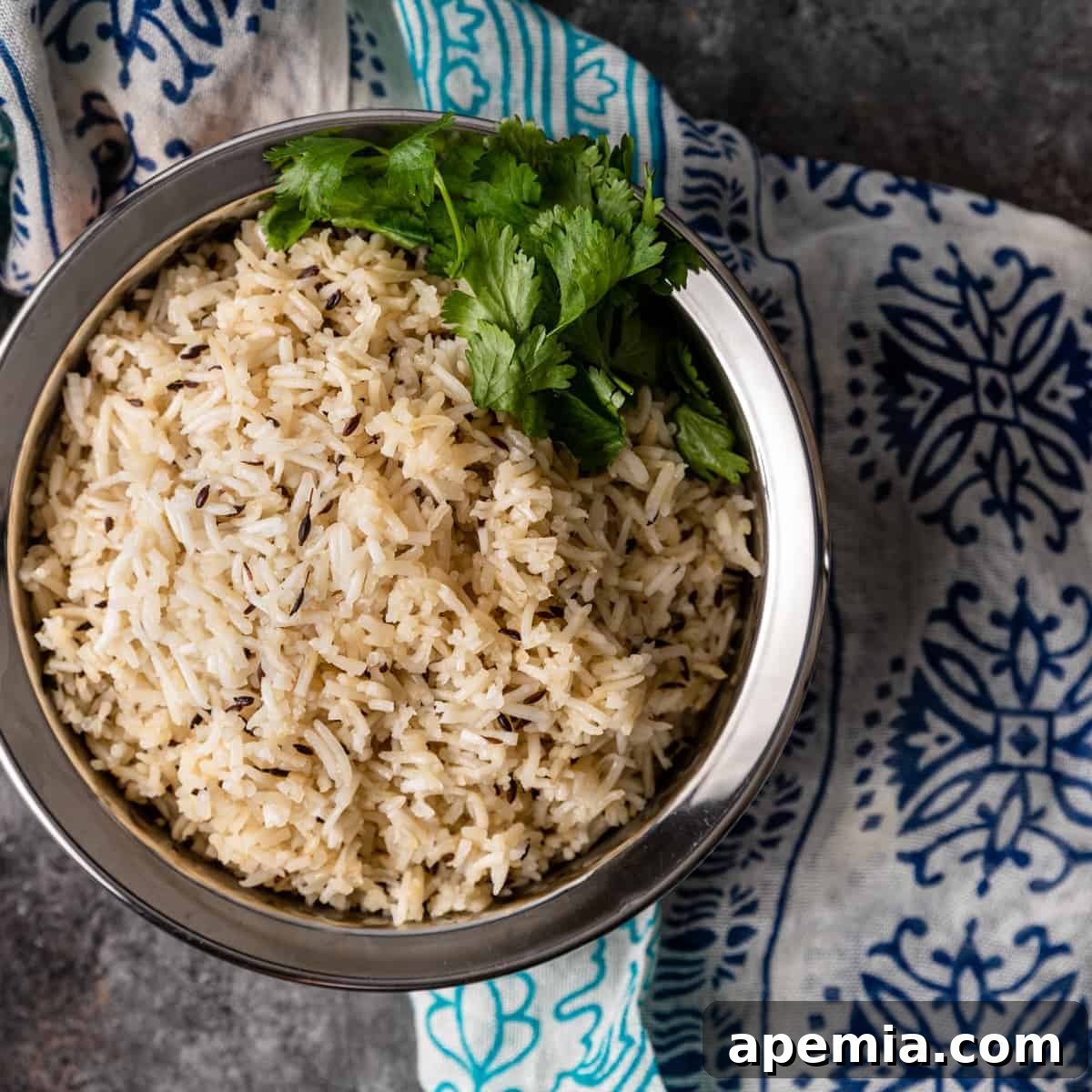
This recipe for Jeera Rice is a culinary journey that transforms simple basmati rice into an exceptionally flavorful and aromatic Indian side dish. With just a few staple ingredients – fragrant basmati rice, golden ghee, and the warming essence of toasted cumin seeds – you can create a dish that’s both elegant and incredibly comforting. Forget bland rice; prepare to unlock the true potential of cumin and elevate your meals. Make this essential Indian cumin rice today and savor its delightful simplicity!
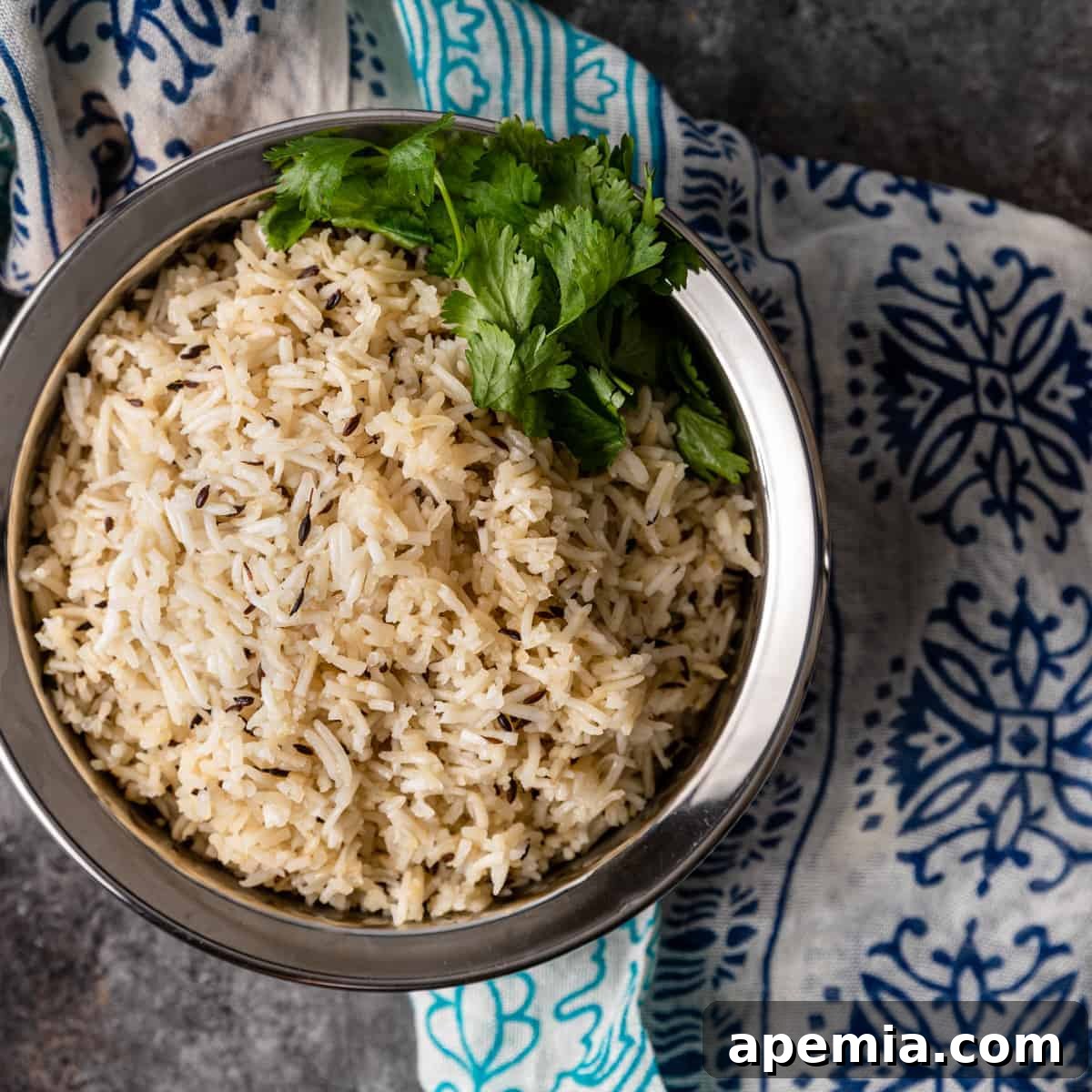
Don’t let the elegant simplicity of this Jeera Rice recipe mislead you! While it calls for minimal ingredients, the magic lies in the technique, which coaxes out profound flavors. The delicate, nutty fragrance of perfectly cooked basmati rice provides an ideal canvas, allowing the earthy, smokey, and slightly sweet notes of cumin seeds to truly shine. This dish is an excellent introduction to the beauty of Indian cooking, particularly the art of tempering spices, and will undoubtedly deepen your appreciation for cumin in a whole new way.
The Secret to Success: Mastering the Art of Tempering Spices
The cornerstone of successful Indian cumin rice, and indeed many Indian dishes, is the process of tempering the cumin seeds, also known as Tadka. This ancient culinary technique involves heating whole spices in oil or ghee until they crackle and release their full aromatic potential. Tempering doesn’t just activate the flavors; it infuses the entire dish with a rich, complex aroma that cannot be achieved by simply adding raw spices. It’s a common and revered practice in Indian Cuisine, acting as a flavor boost that elevates humble ingredients to extraordinary heights. If you’re eager to delve deeper into this fundamental technique, I highly recommend exploring my comprehensive post on Indian Tadka to truly master the art of spice infusion.

Table of Contents
- What is Jeera Rice? A Culinary Staple
- Why You Will Love This Jeera Rice Recipe
- Essential Ingredients for the Best Jeera Rice
- Step-by-Step Guide: How to Make Jeera Rice (Two Methods)
- Pro Tips for Perfectly Fluffy Jeera Rice
- The Fascinating History of Indian Cumin Rice
- Jeera Rice vs. Biryani: Understanding the Key Differences
- What to Serve with Indian Cumin Rice
- Frequently Asked Questions
- Jeera Rice Recipe Card
Beyond this delightful cumin rice, my culinary adventures include other stellar rice preparations. Don’t miss out on my refreshing Greek Lemon Rice for a tangy twist, or indulge in the fragrant luxury of this Persian Saffron Rice with Apricot.
What is Jeera Rice? A Culinary Staple
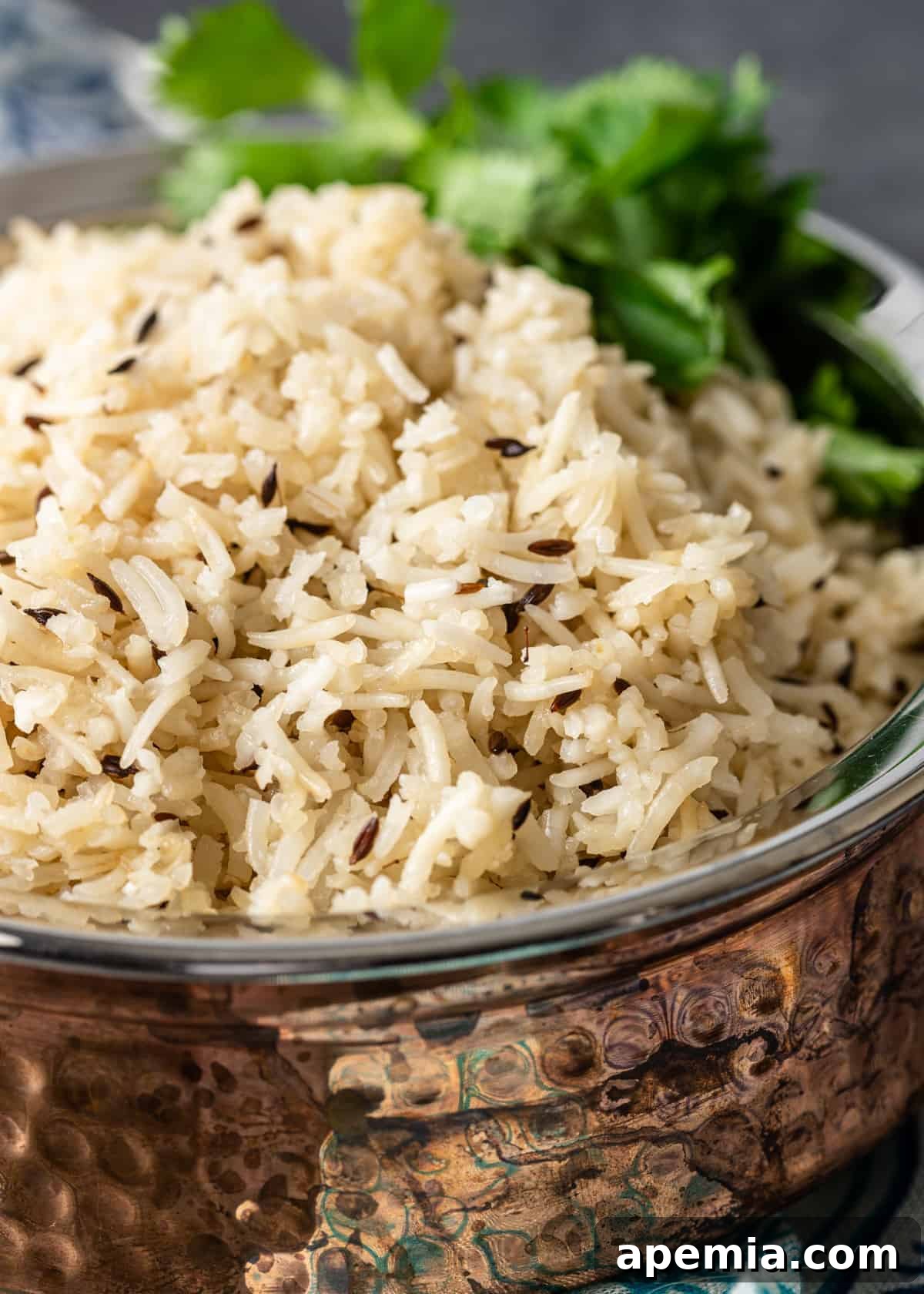
Jeera Rice, often referred to as Indian Cumin Rice, is an iconic and beloved side dish found throughout the Indian subcontinent. At its heart, it’s a wonderfully simple preparation that celebrates the distinctive flavor of cumin seeds (jeera in Hindi) infused into long-grain basmati rice. Unlike more elaborate rice dishes, Jeera Rice focuses on purity and aromatic elegance. It provides a fragrant, subtly spiced, and comforting accompaniment to a wide array of curries, dals, and grilled meats, making it an indispensable part of any Indian meal.
Why You Will Love This Jeera Rice Recipe
- Effortlessly Simple: With just three primary ingredients (plus water and salt), this recipe proves that incredible flavor doesn’t require complexity. It’s perfect for beginners and seasoned cooks alike.
- Bursting with Flavor: The tempering of cumin seeds in ghee unleashes a profound, earthy, and nutty aroma that elevates plain rice into a star side dish.
- Incredibly Versatile: Jeera rice pairs beautifully with almost any Indian main course, from rich curries to light dals, and even stands alone as a flavorful vegetarian meal component.
- Quick to Prepare: Once the rice is soaked, the active cooking time is surprisingly short, making it an excellent choice for weeknight dinners.
- Authentic Taste: This recipe delivers that authentic, restaurant-quality Jeera Rice experience right in your own kitchen.
Essential Ingredients for the Best Jeera Rice
- Basmati Rice: For this recipe, long-grain, aged white basmati rice is my absolute top recommendation. Its distinct aroma, delicate texture, and non-sticky nature make it ideal for fluffy Jeera Rice. If basmati isn’t available, you can substitute with another good quality long-grain white rice. However, it’s crucial to avoid short-grain or medium-grain varieties as their higher starch content will result in a mushy, clumpy texture that isn’t characteristic of authentic Jeera Rice.
- Ghee: Also known as clarified butter, ghee is a cornerstone of Indian cooking, prized for its rich, nutty flavor and high smoke point. It’s often found in the international aisle of larger supermarkets or alongside other cooking oils. The sweetness and deep flavor of ghee perfectly complement the cumin. If ghee is not readily available, unsalted butter makes an excellent substitute, though the final flavor profile will be slightly different.
- Cumin Seeds (Whole): These tiny powerhouses are the star of the dish, infusing the rice with their delicate, aromatic, and earthy warmth. Using whole seeds for tempering is essential, as ground cumin would not achieve the same depth of flavor or the satisfying crackle during the tempering process.
- Salt: A pinch of kosher salt (or sea salt) is vital for enhancing all the flavors in the dish. It balances the richness of the ghee and the earthiness of the cumin, bringing everything into delicious harmony.
- Water: The correct ratio of water to rice is critical for achieving perfectly fluffy grains.
Step-by-Step Guide: How to Make Jeera Rice (Two Methods)
Achieving perfectly fluffy and flavorful Jeera Rice begins with proper preparation of the basmati. Regardless of your chosen cooking method, the initial steps are the same:
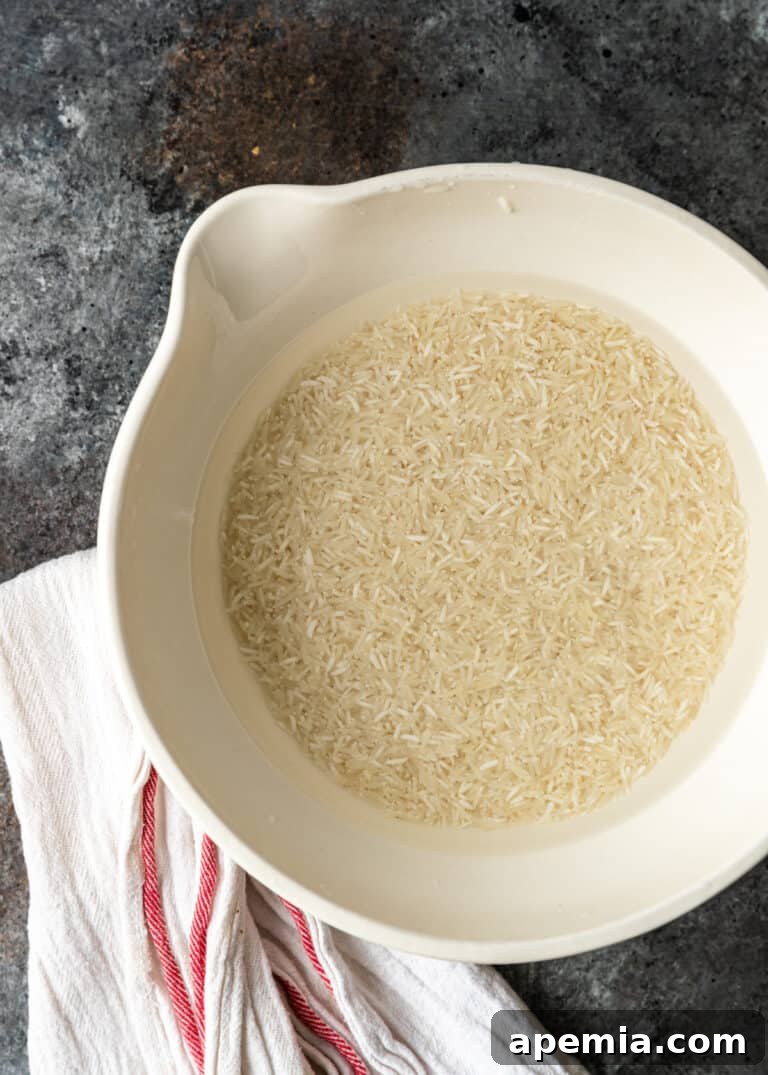
- Rinse & Soak the Rice: Place your basmati rice in a fine-meshed sieve and rinse it thoroughly under cold running water. Continue rinsing several times until the water runs completely clear. This crucial step removes excess starch, which is vital for preventing sticky, clumpy rice. Once rinsed, transfer the grains to a bowl and add enough fresh water to cover them by approximately one inch. Allow the rice to soak for a minimum of 30 minutes. Soaking helps the grains cook evenly, become longer, and achieve that desirable fluffy texture.
Steamed Version: For Maximum Aroma
The steamed method locks in all the aromatic goodness, resulting in deeply flavorful rice.
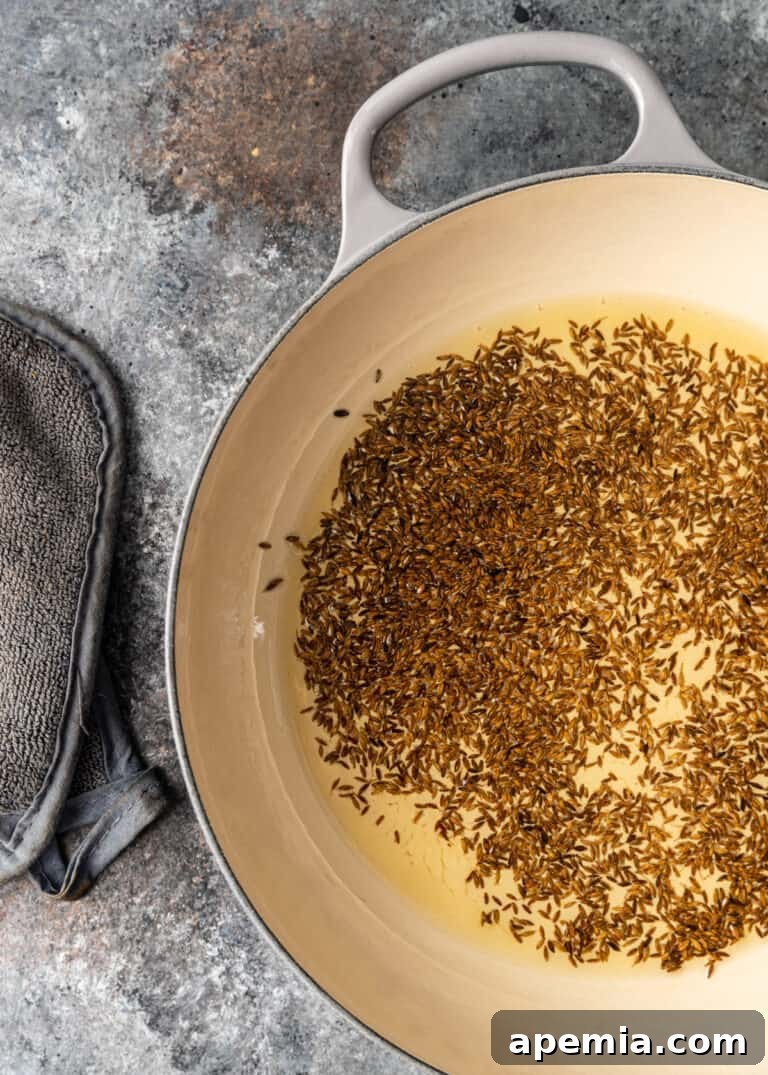
- Temper the Cumin Seeds: In a large saucepan or skillet equipped with a tight-fitting lid, melt the ghee or butter over medium heat. Once shimmering, add the whole cumin seeds. Cook them gently, stirring occasionally, until they begin to crackle and release their rich, unmistakable fragrance. This usually takes about 30-60 seconds. Be vigilant and watch them closely to prevent burning, which can turn the flavor bitter.
- Add Rice and Sauté: Carefully drain the soaked basmati rice, ensuring all excess water is removed. Add the drained rice and salt to the pan with the tempered cumin. Stir gently to ensure every grain is coated in the flavorful ghee and cumin. Sauté for about 2 minutes, allowing the rice to toast slightly and absorb the flavors.
- Bring to a Boil and Steam: Pour in precisely 3 cups of water and bring the mixture to a rolling boil over medium-high heat. As soon as it reaches a vigorous boil, immediately reduce the heat to the lowest setting, cover the pan tightly with its lid, and leave it completely undisturbed for 40 minutes. It is absolutely critical not to lift the lid at any point during this steaming process, no matter how tempted you are! Lifting the lid releases the trapped steam, which is essential for cooking the rice perfectly.
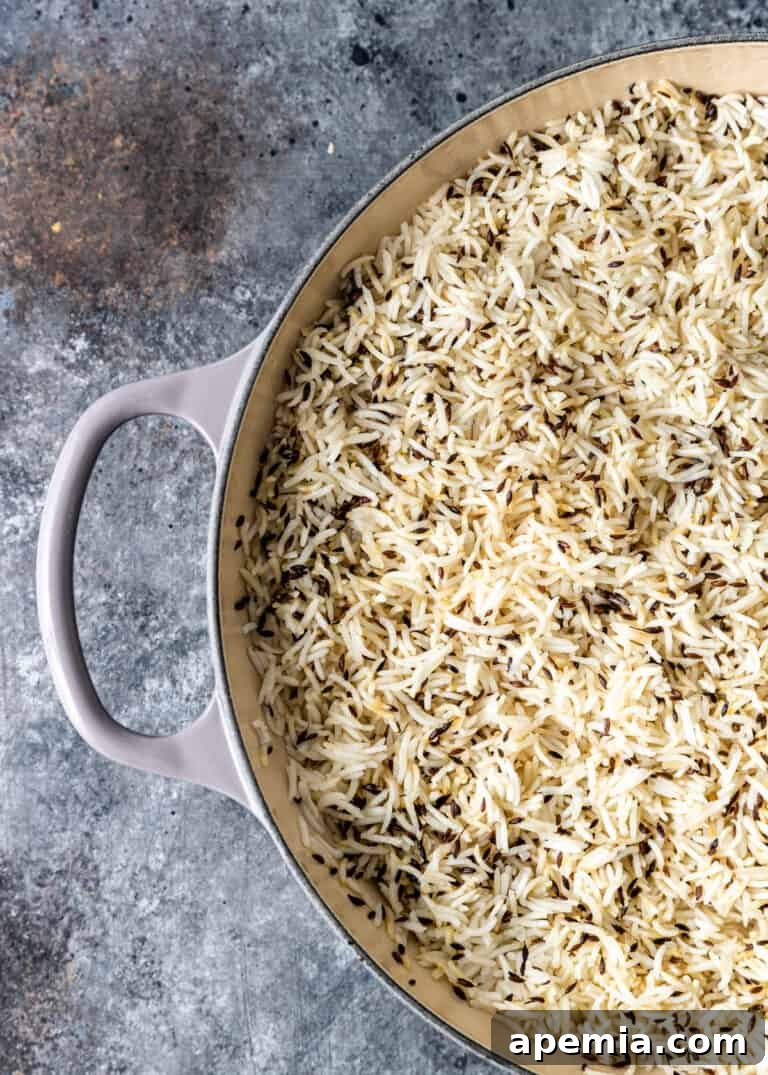
- Fluff & Serve: After the full 40 minutes, carefully remove the lid. Use a fork or chopsticks to gently fluff the rice grains, separating them to create a light and airy texture. Serve immediately and enjoy the fragrant result.
Boiled Version: For Lighter Texture
This method yields a slightly lighter, less rich rice, with the tempering added at the end.
- Cook the Basmati Rice: Fill a large Dutch oven or saucepan with ample water (like cooking pasta) and bring it to a vigorous boil. Stir in the well-drained, soaked rice and the salt. Once the water returns to a boil, reduce the heat to a gentle simmer, leaving the pot uncovered. Cook for 8-9 minutes, or until the rice is tender but still has a slight bite (al dente). Drain the cooked rice thoroughly in a colander, then return it to the empty saucepan.
- Toast the Cumin (Separate Tadka): While the rice is cooking or immediately after it’s drained, place a small skillet over medium heat. Add the ghee or butter and let it melt. Add the cumin seeds to the melted fat and cook until they begin to crackle and become fragrant, taking care not to burn them.
- Combine & Mix: Promptly pour the hot, toasted cumin seeds and the infused ghee mixture evenly over the top of the boiled rice in the saucepan. Using a spatula, gently fold and mix the cumin and ghee through the rice until it is thoroughly combined and every grain is coated with the aromatic tempering.
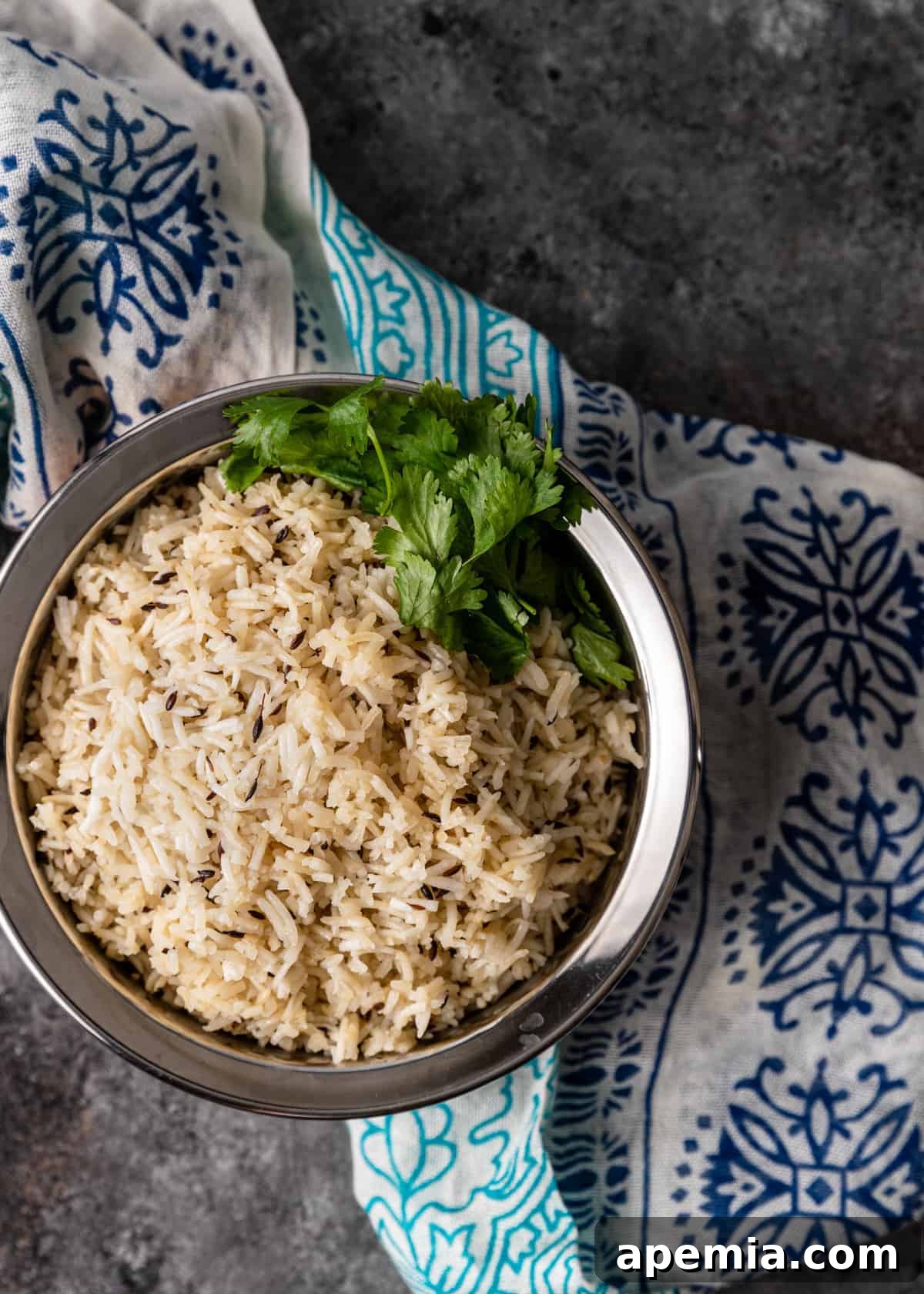
- Serve Warm: Serve your perfectly flavored Jeera Rice warm with your favorite curries or main dishes.
Chef’s Insight
The Remarkable History and Benefits of Cumin
Cumin, a cornerstone spice in our Jeera Rice, boasts a rich history and impressive health benefits. Beyond lending its bold, earthy flavor to Mexican cuisine (think salsas and hearty meats), it’s an indispensable ingredient in Indian and Middle Eastern cooking, where it imparts depth to countless curries, stews, and kebabs. But cumin is more than just a flavor enhancer; it’s also revered for its medicinal properties. Historically, it has been known to aid digestion, reduce inflammation, and may even contribute to weight management. Its origins trace back thousands of years to ancient Egypt, where it was not only a culinary staple but also played a role in the intricate mummification process. This small seed carries a powerful legacy of flavor and wellness.
Pro Tips for Perfectly Fluffy Jeera Rice
- Don’t Skip the Rinse & Soak: This is arguably the most critical step for achieving separate, fluffy grains. It removes excess starch and allows the rice to absorb water evenly, preventing breakage during cooking.
- Use the Right Pan: For the steamed method, a heavy-bottomed saucepan with a very tight-fitting lid is essential to trap steam effectively.
- Temper Cumin Carefully: Heat ghee/butter over medium heat and add cumin seeds. Cook until they crackle and are fragrant, but watch like a hawk! Burnt cumin will impart a bitter taste to your rice.
- Resist the Urge to Lift the Lid (Steamed Method): During the 40-minute steaming period, do not lift the lid. The trapped steam is actively cooking the rice. Releasing it will lead to unevenly cooked or undercooked grains.
- Fluff Gently: After cooking, use a fork or chopsticks to fluff the rice. A spoon can mash the delicate grains.
- Adjust Salt to Taste: The amount of salt can vary based on personal preference and what you’re serving the rice with. Always taste and adjust.
The Fascinating History of Indian Cumin Rice
While Jeera, or Indian Cumin Rice, is a wildly popular staple across India today, its origins trace back much further in time, rooted in a rich historical tapestry. The earliest accounts of this deceptively simple yet profoundly flavorful rice dish emerge from the captivating books and detailed travel logs of the ancient Mughal Empire. This powerful Muslim empire held sway over vast territories of South Asia, including the Indian subcontinent, from the early 16th century (1526) right up to the mid-19th century (1858).
The Mughal culture harbored a deep affinity for rice dishes, viewing them as culinary canvases for innovation. They were renowned for their experimentation, constantly striving to create new and exciting recipes, and it was within this inventive environment that the very first renditions of Jeera Rice came to be. The perfect marriage of amazing, comforting flavor and straightforward preparation quickly proved to be a winning combination. As a result, Jeera Rice was swiftly embraced and adopted into the broader Indian cuisine, where it has remained an integral and cherished part of the culinary landscape ever since.
Jeera Rice vs. Biryani: Understanding the Key Differences
While both Jeera Rice and Biryani are celebrated Indian rice dishes, they occupy distinct places in the culinary world due to their complexity, ingredient profiles, and typical roles in a meal:
- Jeera Rice: This is a beautifully simple dish, primarily composed of long-grain basmati rice, which is either boiled or steamed, then infused with the distinct flavor of toasted cumin seeds and rich ghee. Its flavor profile is mild, earthy, and delicately aromatic, making it an ideal, versatile accompaniment to a wide range of curries, dals, and other main dishes. The focus is on the subtle, comforting essence of cumin.
- Biryani: In stark contrast, Biryani is a far more elaborate and complex dish, often considered a complete meal in itself. It can feature an extensive array of aromatic herbs and spices, such as cinnamon, cloves, cardamom, bay leaves, saffron, garlic, ginger, and sometimes fresh mint or cilantro. Crucially, Biryani almost always incorporates a variety of meat (like chicken, lamb, or beef) or vegetables that are carefully layered and slow-cooked with the rice. This layering and slow-cooking process allows the flavors to meld deeply, resulting in a much bolder, richer, and more intricate taste profile. For a prime example, explore my flavorful Chicken Biryani recipe. Biryani is truly a celebratory dish, designed to be the main course rather than a simple side.
Frequently Asked Questions
Jeera Rice’s mild yet aromatic profile makes it an incredibly versatile side dish. It pairs beautifully with virtually any Indian curry, roasted meat, or vegetarian entree. Here are a few curated suggestions to inspire your meal planning:
- Rich Curries: Its delicate flavor provides a perfect contrast to robust and creamy curries such as Chicken Korma, the classic Butter Chicken, or a spicy Lamb Vindaloo.
- Grilled Meats: Enjoy it alongside succulent grilled options like these flavorful Chicken Tikka skewers or savory Koobideh Kabobs.
- Vegetarian Delights: For a satisfying meat-free meal, Jeera Rice is excellent with hearty Chickpea Masala, a vibrant Vegetable Jalfrezi Stir Fry, or a comforting Dal (lentil soup).
- Hearty Stews: It can also complement stews from various cuisines, such as a rich Instant Pot Lamb Stew or this aromatic Chicken Tagine with Chickpeas and Olives.
- Lamb Dishes: Particularly well-suited to lamb, try it with shredded Lamb Shawarma or a robust lamb curry.
Jeera Rice Recipe (Steamed or Boiled)
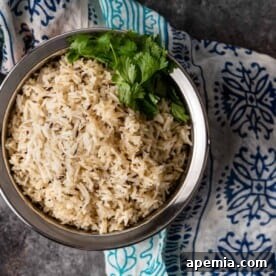
Jeera Rice Recipe (Steamed or Boiled)
Jeera rice is a simple, delicious side dish made by combining tender, fluffy basmati rice, and buttery ghee with gently tempered cumin seeds.
Prep: 35 mins
Cook: 9 mins
Total: 44 mins
Print Recipe
Ingredients
- 2 cups basmati rice
- 2 tbsp ghee or butter
- 4 tsp cumin seeds (whole)
- 1 tsp kosher salt
Instructions
- Rinse uncooked rice several times in a sieve until water runs clear. Place in a bowl and add enough water to cover the grains by 1 inch. Set aside to soak for 30 minutes.
Steamed Version
- In a saucepan or large skillet with a tight-fitting lid, melt the ghee or butter over medium heat. Add cumin seeds; cook until they start to crackle, watching closely to prevent burning. Add drained, soaked rice and salt, tossing to coat. Cook for 2 minutes.
- Add 3 cups of water and bring to a boil. Cover with lid and turn off heat. Let sit for 40 minutes, undisturbed (no lifting of lid).
- Remove lid and gently fluff rice with a fork or chopstick.
Boiled Version
- Bring a large saucepan or Dutch oven of water to a boil, then add soaked rice and salt. Bring water back to a boil, reduce heat to simmer and cook, uncovered, for 8-9 minutes. Drain cooked rice into a colander, then place back into the large saucepan.
- In a small skillet, melt ghee or butter over medium heat. Add cumin seeds; cook until they start to crackle, watching closely to prevent burning. Pour toasted cumin over boiled rice, and using a spatula, gently toss to coat.
Notes
For leftovers, let the rice cool completely and transfer to an airtight container or sealable bag and squeeze out excess air. Freeze for up to 2 months. To thaw, let come to room temp, add a tablespoon of water, cover and steam in a microwave for 2-3 minutes on high heat. Fluff with a fork and enjoy.
Nutrition
Carbohydrates: 50g
Protein: 5g
Fat: 6g
Saturated Fat: 3g
Cholesterol: 13mg
Sodium: 393mg
Potassium: 95mg
Fiber: 1g
Sugar: 1g
Vitamin A: 17 IU
Vitamin C: 1mg
Calcium: 30mg
Iron: 1mg
The information shown is an estimate provided by an online nutrition calculator. It should not be considered a substitute for a professional nutritionist’s advice.
Cuisine: Indian
Author: Kevin
Have You Made This Recipe? Let Me Know on Instagram!
Tag @keviniscooking or use the hashtag #keviniscooking!