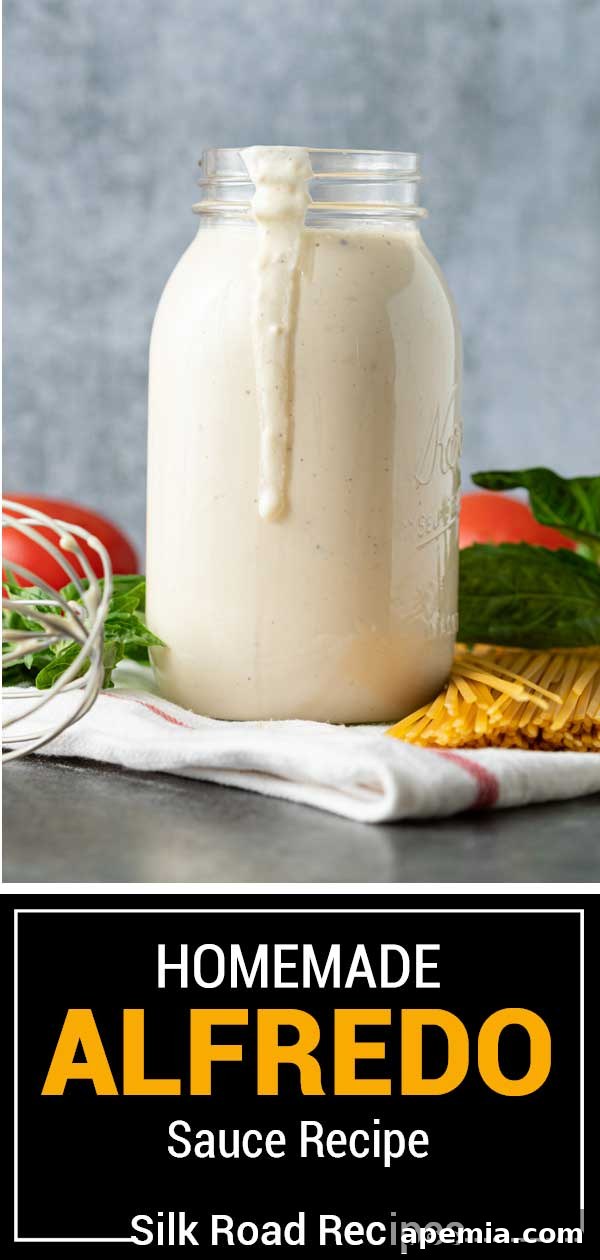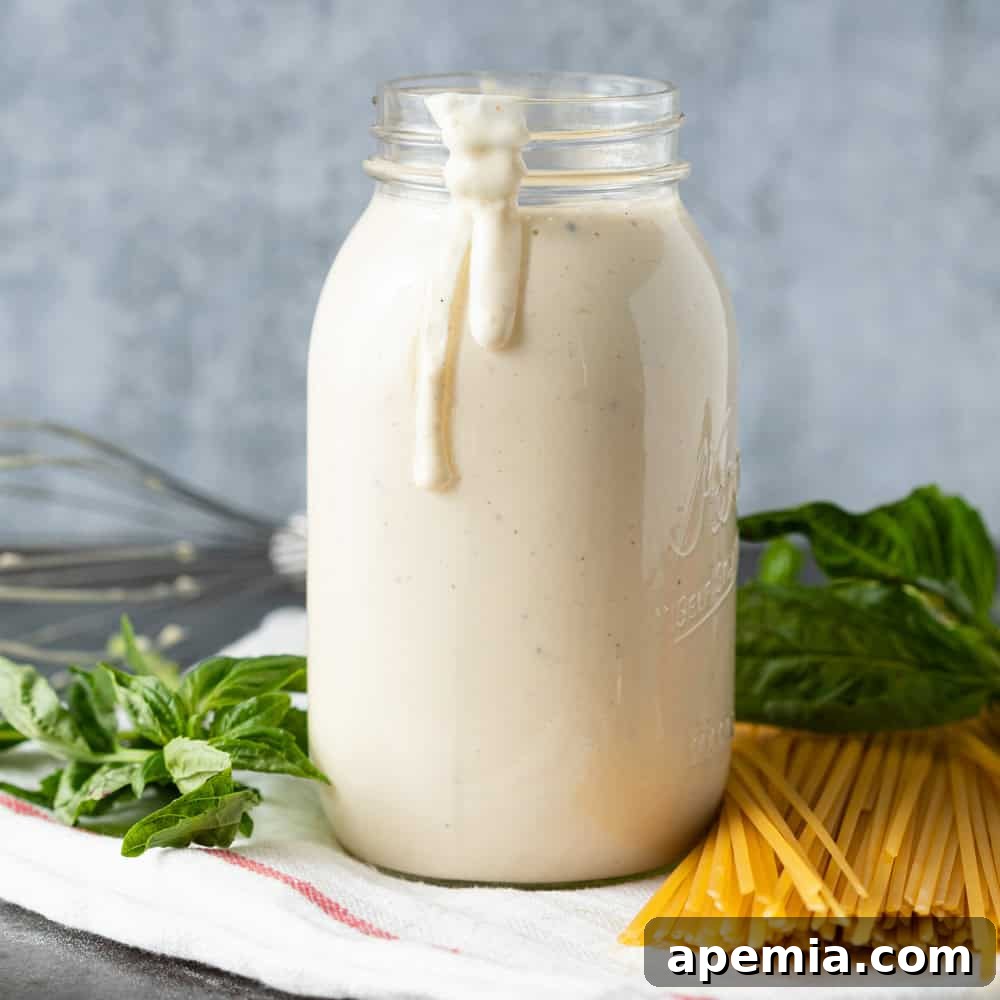
Homemade Alfredo sauce is a beloved culinary creation, widely adored in Italian-American cuisine for its rich, creamy texture and irresistible flavor. While often associated with Italian cooking, the rendition we typically enjoy today is a delicious evolution, inspired by a classic French “Mother sauce,” Béchamel, and transformed into a luxurious, cheesy delight with the addition of fresh cheese and subtle seasonings. It’s a velvety smooth, white cheese sauce that elevates any dish it graces.
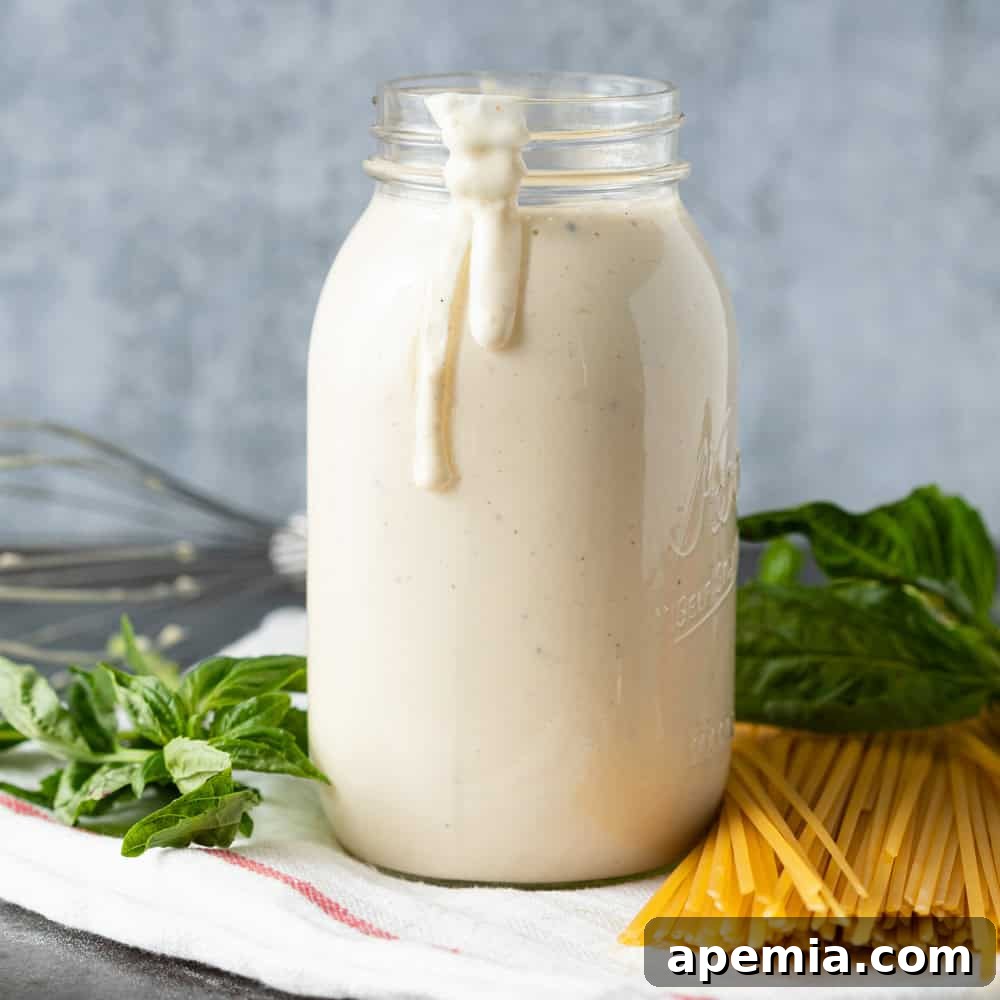
By popular demand from our readers, we’re sharing our cherished American-style homemade Alfredo sauce recipe. It’s important to note that this is not a classic Italian recipe, but rather a robust American interpretation of the iconic pasta dish and its rich, creamy sauce. This version is designed for maximum flavor and ease, bringing restaurant-quality taste right to your kitchen.
This homemade Alfredo sauce is wonderfully creamy, intensely cheesy, and remarkably simple to prepare, requiring only about 15 minutes from start to finish. It’s an incredibly versatile sauce, making it perfect over your favorite pasta, a fantastic complement to sautéed chicken or steamed vegetables, or an exquisite dipping sauce for warm, soft breadsticks. Follow our expert tips and video tutorial to master this quick and delicious recipe!
Table of Contents
- The Story of Alfredo Sauce: Italian Roots & American Evolution
- Essential Ingredients & Smart Substitutions
- How to Make the Best Homemade Alfredo Sauce
- Tips for a Flawless Alfredo Sauce
- Serving Suggestions & Creative Variations
- Storing and Reheating Your Homemade Alfredo
- Frequently Asked Questions About Alfredo Sauce
- Homemade Alfredo Sauce Recipe Card
The Story of Alfredo Sauce: Italian Roots & American Evolution
To truly appreciate the American-style Alfredo, it’s helpful to understand its origins. The “classic” Italian version is far simpler than many imagine, and it doesn’t even contain cream! In Italy, the dish that inspired Alfredo sauce is known as Fettuccine al Burro, which translates to “fettuccine with butter.” This elegant dish was created by Alfredo di Lelio in Rome in the early 20th century. His original recipe involved simply tossing fresh fettuccine pasta with a generous amount of butter, a specific type of aged Parmesan cheese (Parmigiano Reggiano), and a crucial ingredient: hot pasta water.
The magic of authentic Fettuccine al Burro lies in the emulsification process. As the freshly grated cheese melts, it combines with the butter and the starchy pasta water to form a glossy, smooth, and intensely rich sauce that beautifully coats every strand of pasta. The starch from the boiled pasta acts as a natural emulsifier, binding the fats and liquids into a cohesive, luxurious coating without the need for additional thickeners or dairy products like heavy cream. This traditional method results in a light yet decadent sauce that highlights the quality of its few, high-quality ingredients.
Tip From Kevin
The Rise of Italian-American Alfredo
The Alfredo sauce that gained widespread popularity and earned countless fans, particularly in American restaurant chains like The Cheesecake Factory and Olive Garden, is a distinct adaptation. These versions typically include heavy cream as a foundational ingredient, departing from the original Italian recipe. This addition of cream creates a thicker, richer, and more stable sauce that appeals to a broader palate, becoming a staple of Italian-American comfort food. Our recipe embraces this beloved American style, focusing on achieving that decadent, creamy texture.
Essential Ingredients & Smart Substitutions
(For a complete list of ingredients and precise quantities, please refer to the recipe card below.)
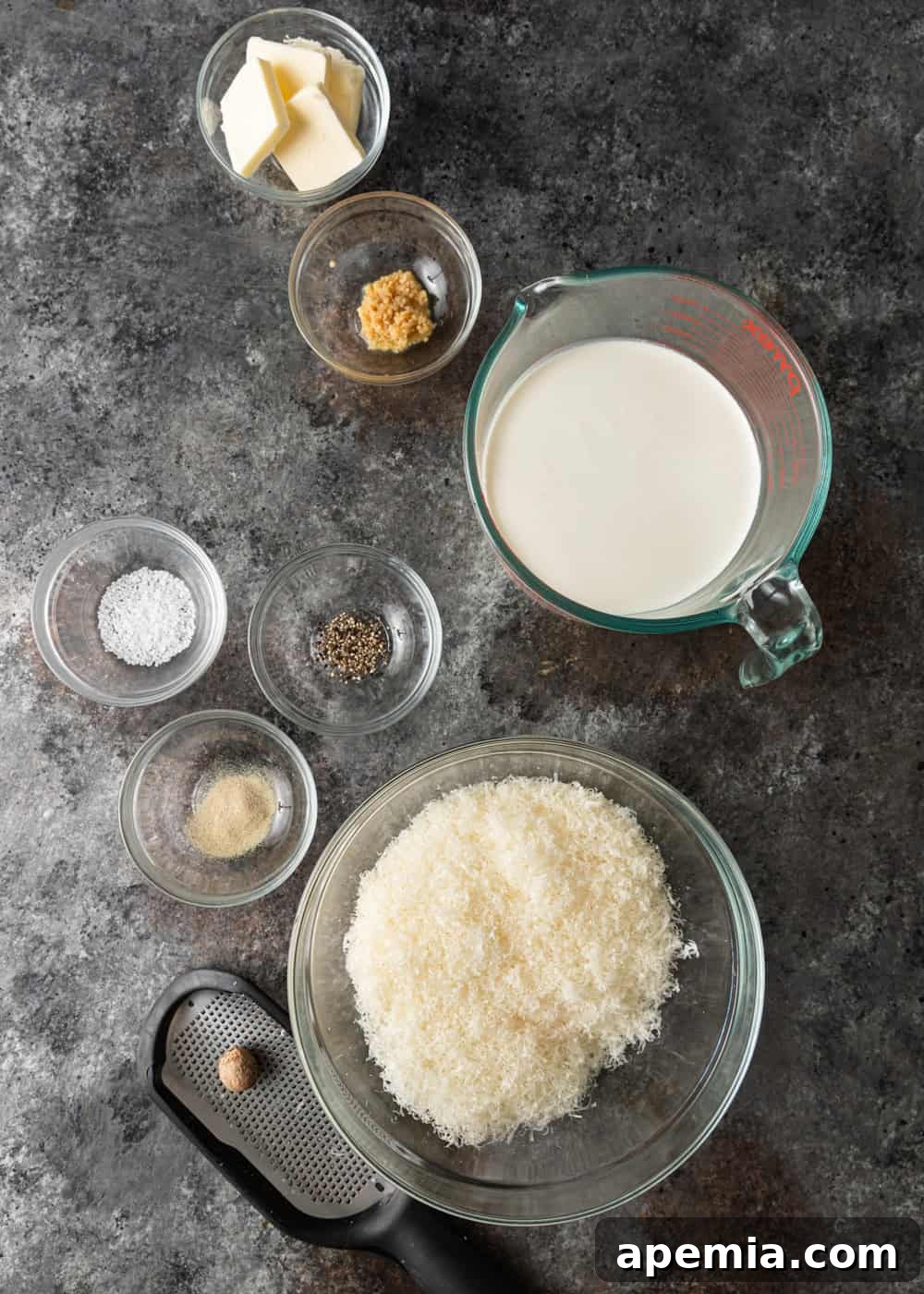
- Butter: High-quality butter is crucial here, as it provides a foundational richness and harmonizes the flavors of the dish. Both salted and unsalted butter work; if using salted, simply adjust the amount of added salt accordingly.
- Heavy Cream: This is the star of our American-style Alfredo, providing that signature thick, luxurious, and creamy consistency. For the best results, full-fat heavy cream is highly recommended. Skim or low-fat milk options typically won’t yield the desired richness and may result in a thinner, less satisfying sauce.
- Substitutes for Heavy Cream:
- Half and Half: A good option, though the sauce will be slightly less rich. Use an equal amount.
- Evaporated Milk: This can provide a decent creaminess and is a shelf-stable alternative.
- Whole Milk + Butter: Combine 3 parts whole milk with 1 part melted butter for a makeshift cream. Whisk well before adding.
- Whole Milk + Greek Yogurt: For a slightly tangier and lighter option, whisk equal parts whole milk and plain Greek yogurt together until smooth.
- Non-Dairy Options: For a dairy-free version, full-fat canned coconut milk (the thick cream part) or a rich cashew cream can be used, though the flavor profile will change significantly.
- Substitutes for Heavy Cream:
- Parmesan Cheese: Freshly grated Parmigiano Reggiano or good quality Parmesan cheese is non-negotiable. Its nutty, salty flavor is absolutely key to the sauce’s depth. Fine grating (using a microplane is ideal) ensures it melts quickly and smoothly into the sauce, preventing clumps and creating that desirable silky texture. Pre-grated cheeses often contain anti-caking agents that can make the sauce grainy.
- Garlic: Freshly minced garlic provides an aromatic depth that is essential. Avoid garlic powder if possible; the fresh flavor makes a noticeable difference. Sautéing it briefly helps to mellow its pungency and infuse the butter.
- Nutmeg: This unexpected but delightful ingredient subtly enhances and balances out the denser, richer flavors in the dish. Just a touch adds a layer of warmth and spicy sweetness that is a hallmark of classic cream sauces. Don’t skip it; it makes a world of difference!
- Salt and Pepper: Kosher salt and freshly ground white and black peppers season the sauce to perfection. White pepper is often preferred in white sauces to maintain their pristine color, but black pepper offers a bolder flavor.

How to Make the Best Homemade Alfredo Sauce
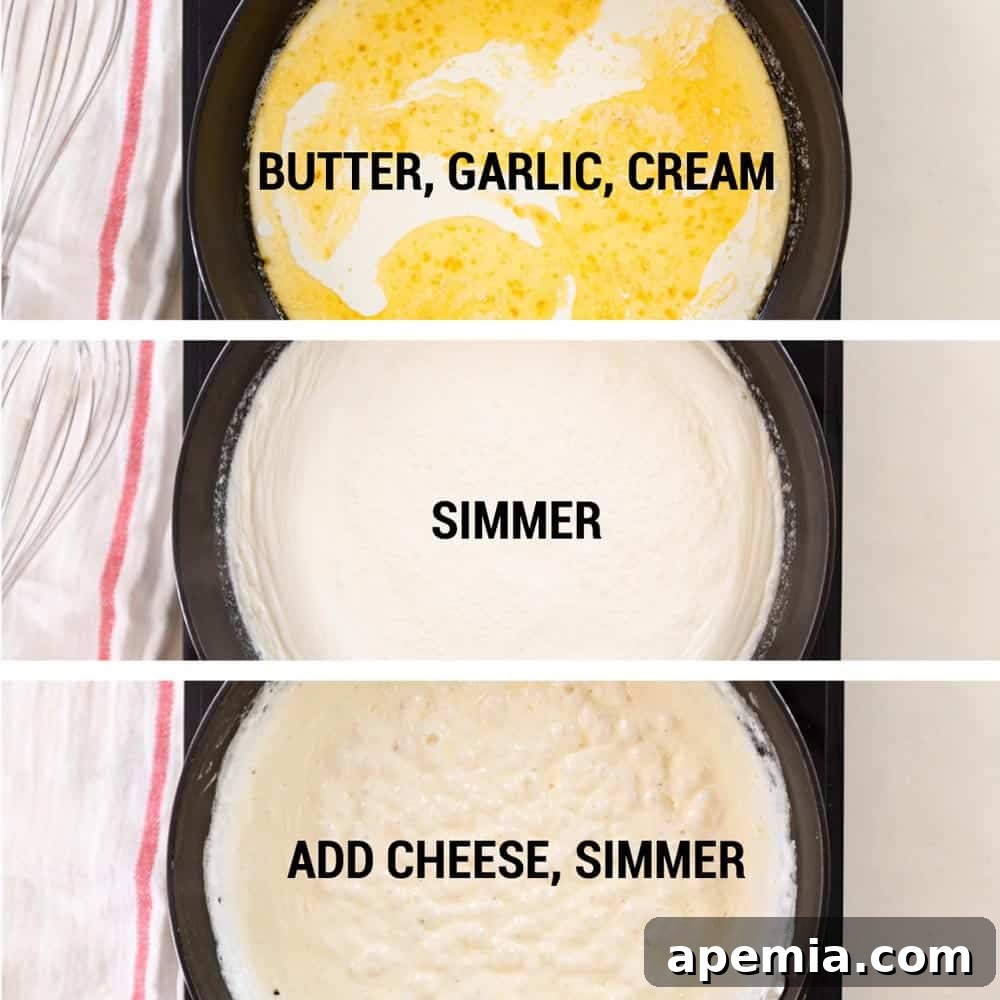
- Melt Butter & Sauté Garlic: In a large, deep skillet (a cast iron skillet works wonderfully for even heat distribution), melt the butter over medium heat. Once melted, add the minced garlic and sauté gently for about 30 seconds, just until it becomes fragrant. Be careful not to let the garlic brown, as this can lead to a bitter taste.
- Whisk in Heavy Cream & Simmer: Pour the heavy cream into the skillet with the butter and garlic. Whisk continuously until the ingredients are thoroughly combined. Bring the mixture to a gentle simmer, reducing the heat slightly if needed, and let it cook for 3 to 4 minutes. This allows the cream to warm through and slightly thicken, forming the base of your rich sauce.
- Add Cheese & Seasonings to Thicken: Reduce the heat to low. Add the freshly grated Parmesan cheese, kosher salt, white pepper, black pepper, and nutmeg to the simmering cream. Continue to whisk occasionally but gently. The cheese will begin to melt and incorporate, thickening the sauce. Continue cooking for another 3 to 4 minutes, or until the sauce reaches your desired consistency – it should be thick enough to beautifully coat the back of a spoon. Avoid boiling the sauce once the cheese is added, as high heat can cause the cheese to clump or the sauce to separate.
- Serve Immediately: Your homemade Alfredo sauce is best served piping hot and fresh. It can be tossed with pasta, drizzled over sautéed chicken or steamed vegetables, or served alongside warm breadsticks for dipping.
Tips for a Flawless Alfredo Sauce
- Freshly Grated Cheese is Key: This cannot be stressed enough. Pre-shredded Parmesan contains cellulose, an anti-caking agent, which can make your sauce gritty and prevent it from melting smoothly. Invest in a block of Parmigiano Reggiano and grate it finely yourself.
- Low and Slow Heat: When adding the cheese, ensure your heat is on low. High heat can cause the cheese to seize, become oily, or separate from the cream. Gentle heat allows for a smooth, homogenous sauce.
- Whisk, Whisk, Whisk: Consistent whisking, especially when adding the cream and cheese, helps to create a uniform, lump-free sauce and prevent anything from sticking to the bottom of the pan.
- Room Temperature Ingredients: Bringing your cream and cheese to room temperature before cooking can help them incorporate more smoothly and prevent temperature shock, which can sometimes lead to separation.
- Adjust Consistency with Pasta Water (Optional): If serving with pasta, reserving some starchy pasta water can be a chef’s secret weapon. If your sauce is too thick, a tablespoon or two of hot pasta water can thin it out beautifully while adding more emulsifying starch.
Serving Suggestions & Creative Variations
While classic Fettuccine Alfredo is always a winner, this versatile sauce can be enjoyed in countless ways:
- With Pasta: Beyond fettuccine, try it with penne, spaghetti, linguine, tortellini, or even gnocchi. Add cooked shrimp, grilled chicken, or sautéed mushrooms for a complete meal.
- Chicken Alfredo: Drizzle generously over pan-seared or grilled chicken breasts. Serve with a side of roasted asparagus or broccoli.
- Vegetable Topping: A spoonful of Alfredo sauce can transform steamed broccoli, cauliflower, green beans, or even roasted root vegetables into a decadent side dish.
- Dipping Sauce: Serve with warm garlic bread, breadsticks, or crunchy crudités for an irresistible appetizer.
- Pizza & Flatbread Base: Use it as a creamy base for white pizzas or flatbreads, topped with chicken, spinach, or sun-dried tomatoes.
- Baked Dishes: Incorporate into casseroles, gratins, or even a creamy lasagna for an extra layer of richness.
Creative Variations:
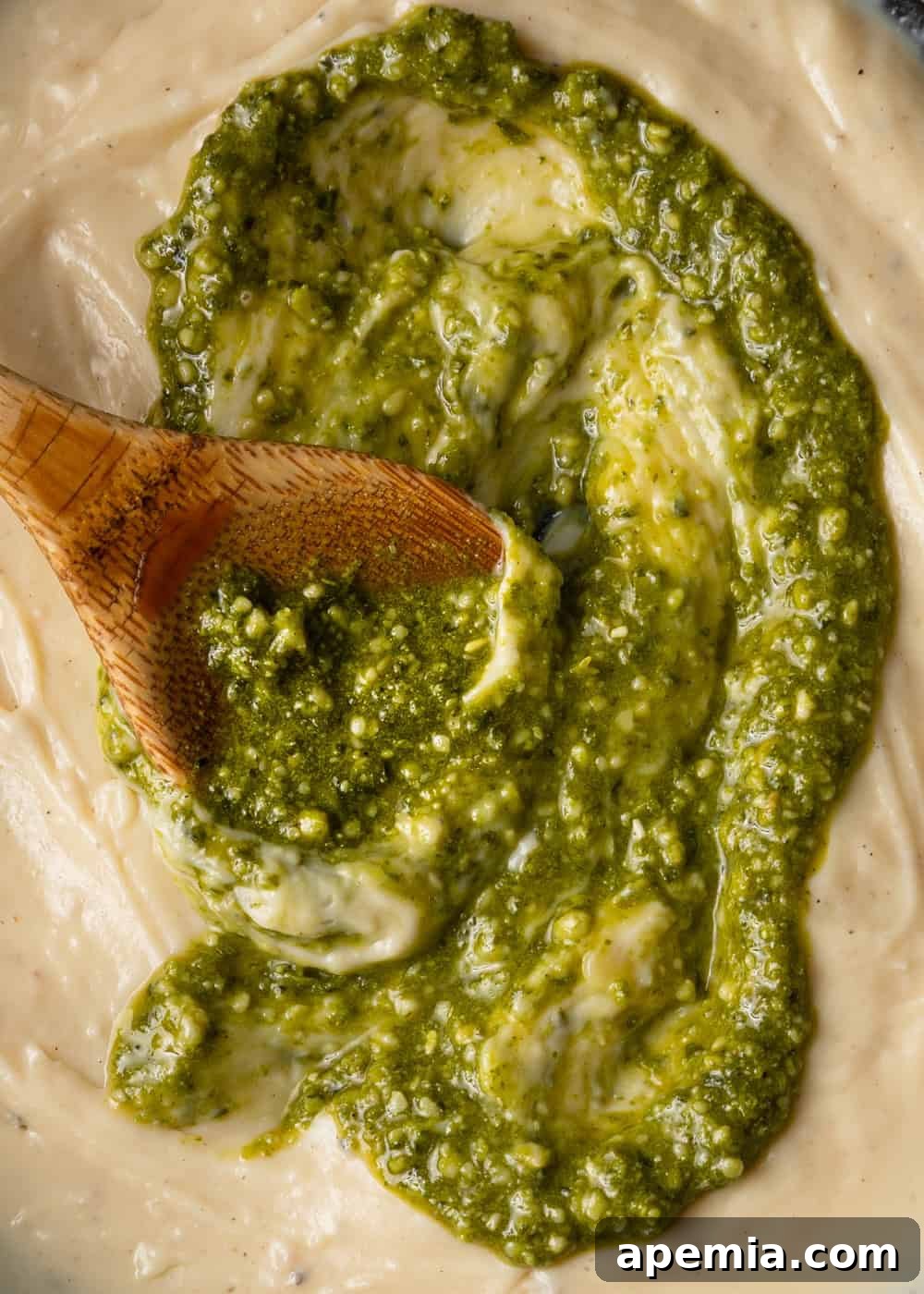
- Pesto Alfredo: For a fantastic flavor mashup, try combining this delicious Alfredo sauce with our fresh basil pesto recipe to create a vibrant Pesto Alfredo. It’s a game-changer over any pasta dish!
- Spicy Alfredo: Add a pinch of red pepper flakes with the garlic for a subtle kick.
- Garlic Herb Alfredo: Incorporate finely chopped fresh parsley, chives, or thyme along with the cheese.
- Mushroom Alfredo: Sauté sliced mushrooms separately and stir them into the finished sauce.
- Roasted Red Pepper Alfredo: Blend a few roasted red peppers into the cream before adding the cheese for a colorful and flavorful twist.
Storing and Reheating Your Homemade Alfredo
If you have any leftovers or wish to prepare the sauce ahead of time, proper storage is key to maintaining its quality. Store the homemade Alfredo sauce in an airtight, covered container in the refrigerator for up to 5 days. When reheating, it’s essential to do so gently to prevent the sauce from separating or becoming oily.
- Stovetop Reheating: Transfer the sauce to a saucepan and reheat over low heat, whisking constantly. If the sauce is too thick, add a tablespoon or two of milk, cream, or even water (for a lighter option) to achieve the desired consistency. Continue whisking until warmed through and smooth.
- Microwave Reheating: Reheat in short bursts (30-60 seconds) on medium power, stirring well after each interval, until hot and smooth. Add a splash of liquid if needed.
Avoid high heat and rapid boiling during reheating, as this can cause the fat and solids in the cheese and cream to separate, leading to a broken or greasy sauce.
Share this recipe on Pinterest!
Love this recipe? Share it with the world on Pinterest and save it for later!
Frequently Asked Questions About Alfredo Sauce
What are the essential ingredients for homemade Alfredo sauce?
The core ingredients for this American-style homemade Alfredo sauce are butter, heavy cream, fresh garlic, freshly grated Parmesan cheese, salt, and pepper. Butter and cream create the luxurious base, garlic infuses deep flavor, and Parmesan provides richness and thickness, while salt and pepper balance the seasoning.
How do you ensure a smooth and creamy Alfredo sauce?
To achieve a consistently smooth and creamy Alfredo sauce, start with room-temperature ingredients. Always use finely grated Parmesan cheese (ideally from a block) and add it gradually while continuously whisking over low heat. Avoid overheating, as excessively high temperatures can cause the cheese proteins to seize or the sauce to separate into an oily mess. A gentle, consistent whisk and moderate heat are your best friends here.
Can you modify Alfredo sauce for dietary restrictions?
Absolutely! For a dairy-free Alfredo, consider using full-fat coconut milk (from a can, using the thick cream) or a homemade cashew cream instead of heavy cream, and nutritional yeast for a cheesy flavor profile in place of Parmesan. If you’re looking for a gluten-free option, ensure all your ingredients are certified gluten-free (though traditional Alfredo naturally is). For a fully vegan version, combine vegan butter, a plant-based milk or cream, and a plant-based Parmesan alternative or nutritional yeast. The flavor and texture will differ from traditional Alfredo but can still be delicious!
Can I use milk instead of heavy cream?
While heavy cream yields the richest, most authentic American-style Alfredo, you can use whole milk as a substitute, often combined with butter for added fat. Keep in mind that using lighter milks will result in a thinner sauce and less luxurious mouthfeel. You might need to add a small amount of cornstarch slurry (1 tsp cornstarch mixed with 1 tbsp cold water) to help it thicken, but do so carefully to avoid a gummy texture.
Why did my Alfredo sauce break or become greasy?
A broken or greasy Alfredo sauce is usually a result of too much heat or improper cheese addition. High heat can cause the fat in the cream and cheese to separate. Always add cheese over low heat, grate it finely, and whisk continuously. Also, avoid using pre-shredded cheese with anti-caking agents, as these can hinder proper emulsification. If your sauce breaks, you can sometimes rescue it by removing it from the heat, adding a tablespoon of cold water or cream, and whisking vigorously.
Homemade Alfredo Sauce
4
10 mins
10 mins
20 mins
Video Tutorial
Watch our step-by-step video to ensure your Alfredo sauce comes out perfect every time!
Ingredients
- 4 tbsp butter
- 2 cloves garlic minced
- 1 1/2 cups heavy cream (See Note 1 for substitutes)
- 2.5 oz Parmigiano Reggiano or Parmesan (finely grated, ideally with a microplane)
- 1/2 tsp salt
- 1/4 tsp white pepper
- 1/4 tsp freshly grated nutmeg
- 1/8 tsp black pepper
Instructions
-
Melt Butter & Sauté Garlic: Melt the butter in a large, deep skillet (preferably cast iron) over medium heat. Add the minced garlic and sauté until fragrant, about 30 seconds, taking care not to brown it.
-
Whisk in Heavy Cream & Simmer: To the skillet, slowly whisk in the heavy cream until thoroughly combined. Bring the mixture to a gentle simmer and let it cook for 3 to 4 minutes, allowing it to slightly thicken.
-
Add Cheese & Seasonings: Reduce the heat to low. Whisk in the freshly grated Parmesan cheese, kosher salt, white pepper, black pepper, and nutmeg. Continue to cook, whisking occasionally, for another 3 to 4 minutes, until the sauce thickens enough to coat the back of a spoon. Do not boil once cheese is added.
-
Serve Immediately: Serve your rich and creamy Alfredo sauce immediately over your pasta of choice, sautéed chicken, steamed vegetables, or as a decadent dipping sauce for breadsticks.
-
Store Leftovers: Store any leftover sauce in a covered airtight container in the refrigerator for up to 5 days. Reheat gently over low heat, adding a splash of milk or cream if needed to restore consistency.
Notes
- Substitutes for heavy cream:
- Half and half (equal parts whole milk and cream)
- Evaporated milk
- 3 parts whole milk and 1 part melted butter
- Equal parts whole milk and Greek yogurt, whisked together
Nutrition Information
Calories:
291 kcal
|
Carbohydrates:
5 g
|
Protein:
9 g
|
Fat:
26 g
|
Saturated Fat:
17 g
|
Polyunsaturated Fat:
1 g
|
Monounsaturated Fat:
7 g
|
Trans Fat:
1 g
|
Cholesterol:
76 mg
|
Sodium:
689 mg
|
Potassium:
145 mg
|
Fiber:
1 g
|
Sugar:
1 g
|
Vitamin A:
810 IU
|
Vitamin C:
1 mg
|
Calcium:
276 mg
|
Iron:
0.3 mg
The information shown is an estimate provided by an online nutrition calculator. It should not be considered a substitute for a professional nutritionist’s advice.
Sauces
Italian, Italian-American
Kevin
Have You Made This Recipe? Let Me Know on Instagram
Tag @keviniscooking or tag me #keviniscooking!