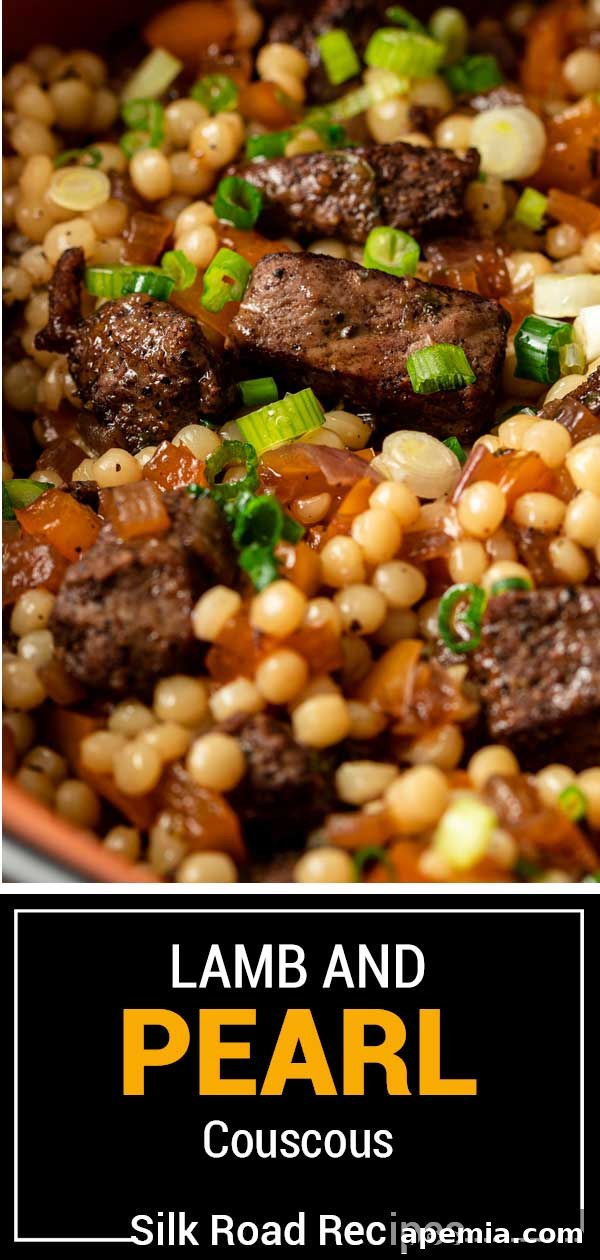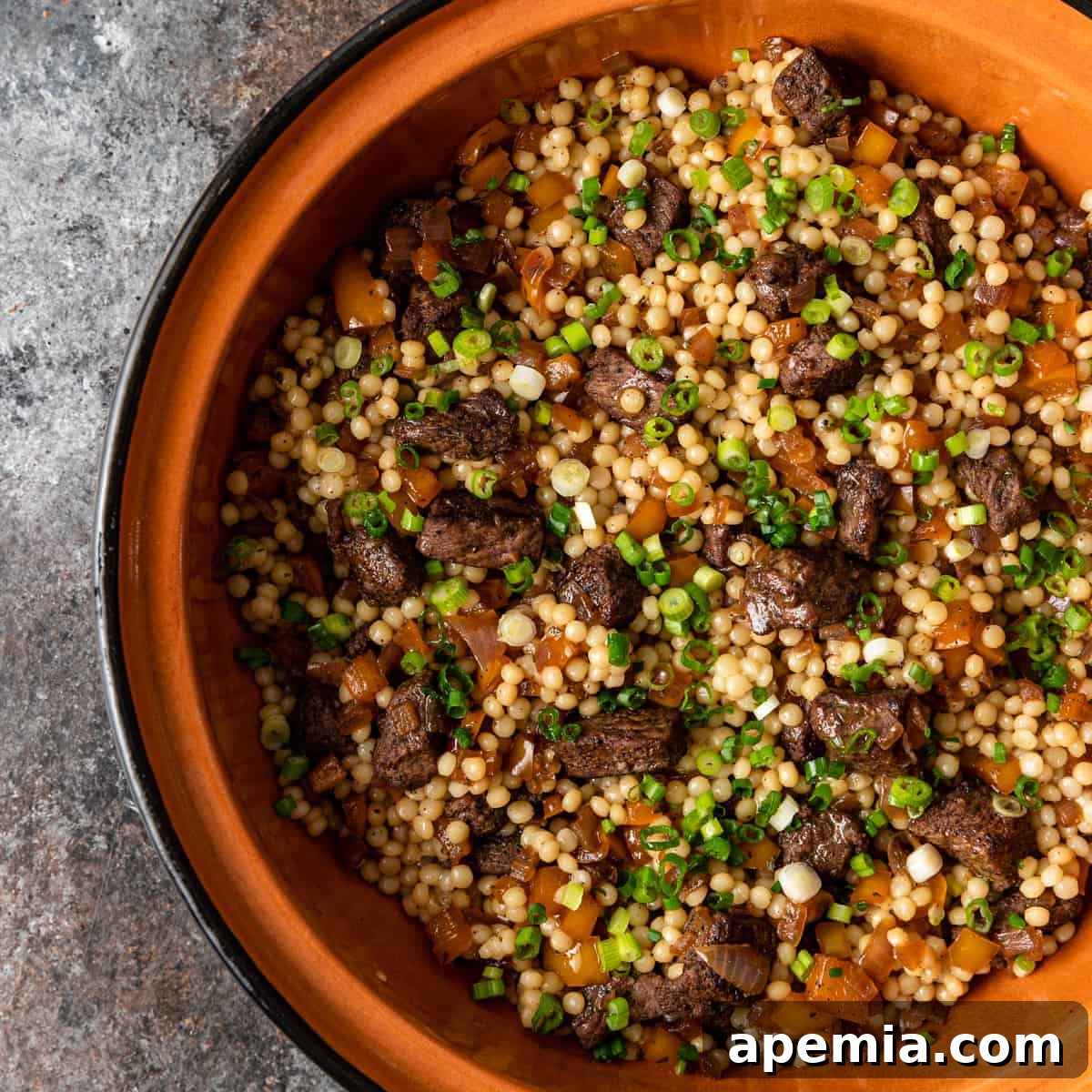
Embark on a culinary journey to the heart of the Middle East with this incredibly flavorful and easy-to-follow Lamb and Pearl Couscous recipe. This dish is a true masterpiece, combining succulent, tender lamb, marinated in a fragrant bath of olive oil and the sweet, smoky notes of traditional baharat spice blend, with fluffy pearl couscous and vibrant sautéed vegetables. Designed to be both a delightful dining experience and a confidence-builder in the kitchen, this recipe promises a meal that’s rich in aroma and taste, perfect for any occasion.
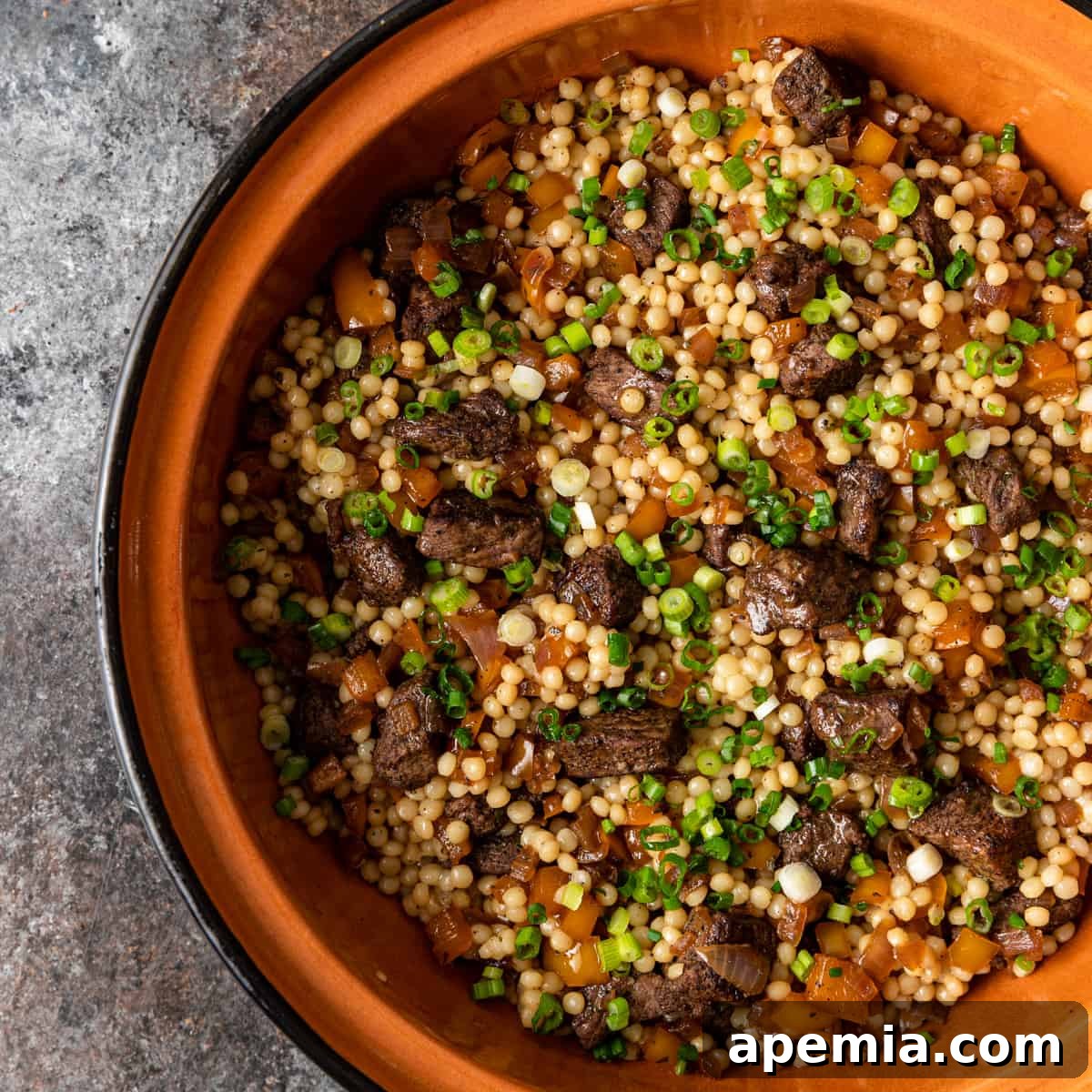
If you’re a connoisseur of authentic Middle Eastern Cuisine, you’ll find this pearl couscous recipe with lamb to be a welcome addition to your repertoire. Building on the success of beloved dishes like Ptitim (Israeli Couscous Salad), mouth-watering Kafta (with Beef or Lamb), and the aromatic Persian Saffron Rice with Apricot, this recipe continues our tradition of bringing exotic flavors to your home kitchen with simplicity and flair. It’s more than just a meal; it’s an opportunity to explore new tastes and techniques, expanding your culinary horizons one delicious bite at a time.
Table of Contents
- The Essence of Middle Eastern Flavors
- Ingredient Notes and Substitutions
- How to Make Lamb and Pearl Couscous
- Expert Tips for Perfect Pearl Couscous
- Understanding Couscous: Moroccan, Israeli, and Lebanese
- Lamb and Pearl Couscous Recipe
- Serving Suggestions and Variations
- Storage and Reheating Leftovers
While the rich tapestry of Middle Eastern cooking might seem intimidating at first glance, the secret lies in a well-stocked spice cabinet and a willingness to try. This lamb and pearl couscous dish is designed to demystify the process, guiding you through each step to create a complex yet approachable meal. You’ll soon discover that with a few key ingredients and a bit of guidance, preparing an exotic, crowd-pleasing dinner is entirely within your reach. Our goal is to empower you to confidently recreate these incredible global flavors right in your own kitchen.
For those eager to deepen their understanding of aromatic spices, we invite you to explore our comprehensive Spice Blends Archives. Here, you’ll find a wealth of ideas, invaluable tips, and inspiration drawn from every stop along the historic Silk Road, providing the knowledge you need to master a variety of global cuisines.
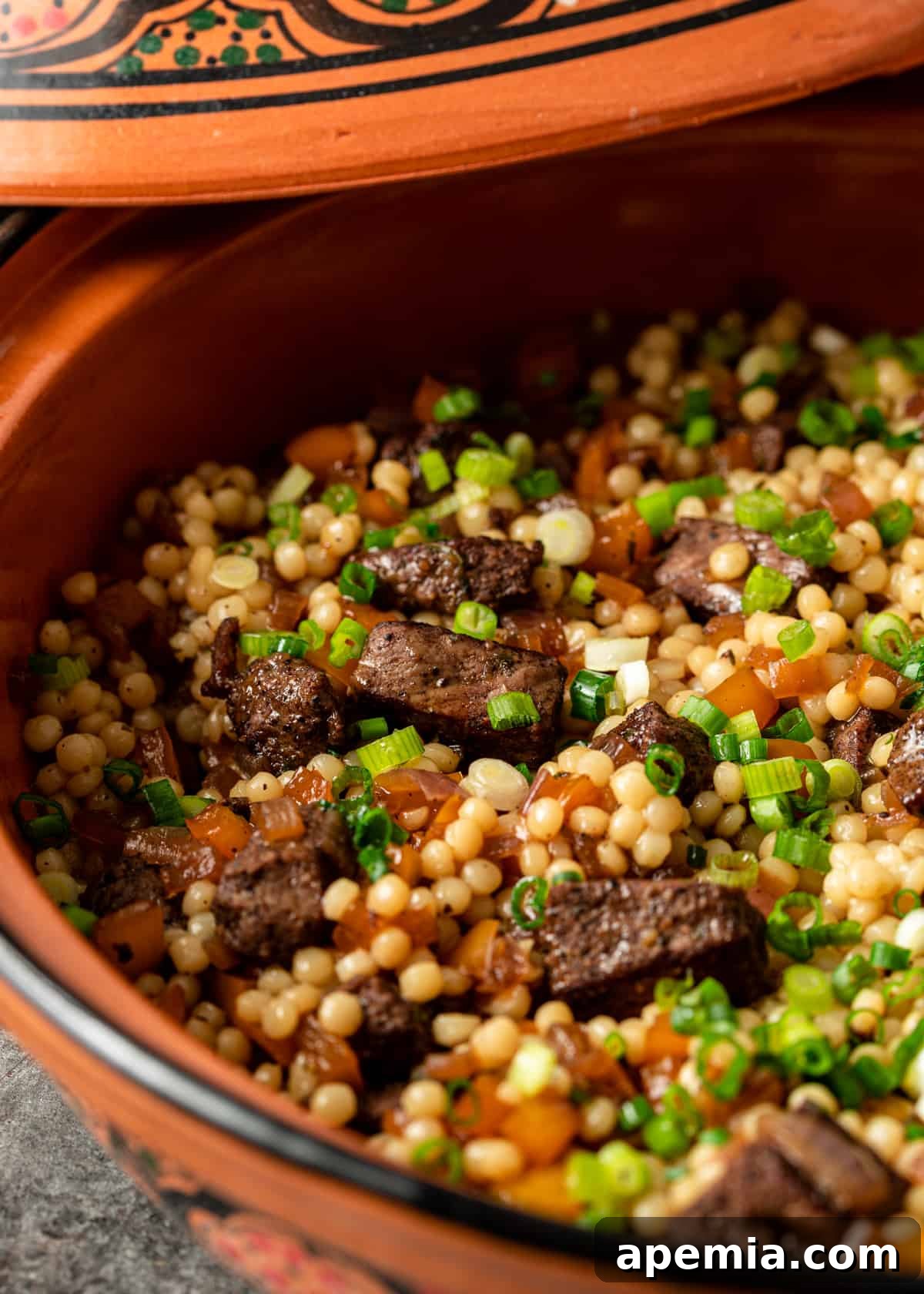
Ingredient Notes and Substitutions for Lamb and Pearl Couscous
Crafting the perfect lamb and pearl couscous dish begins with understanding each component’s role. Here’s a detailed look at the ingredients and how you can adapt them to your pantry or preferences:
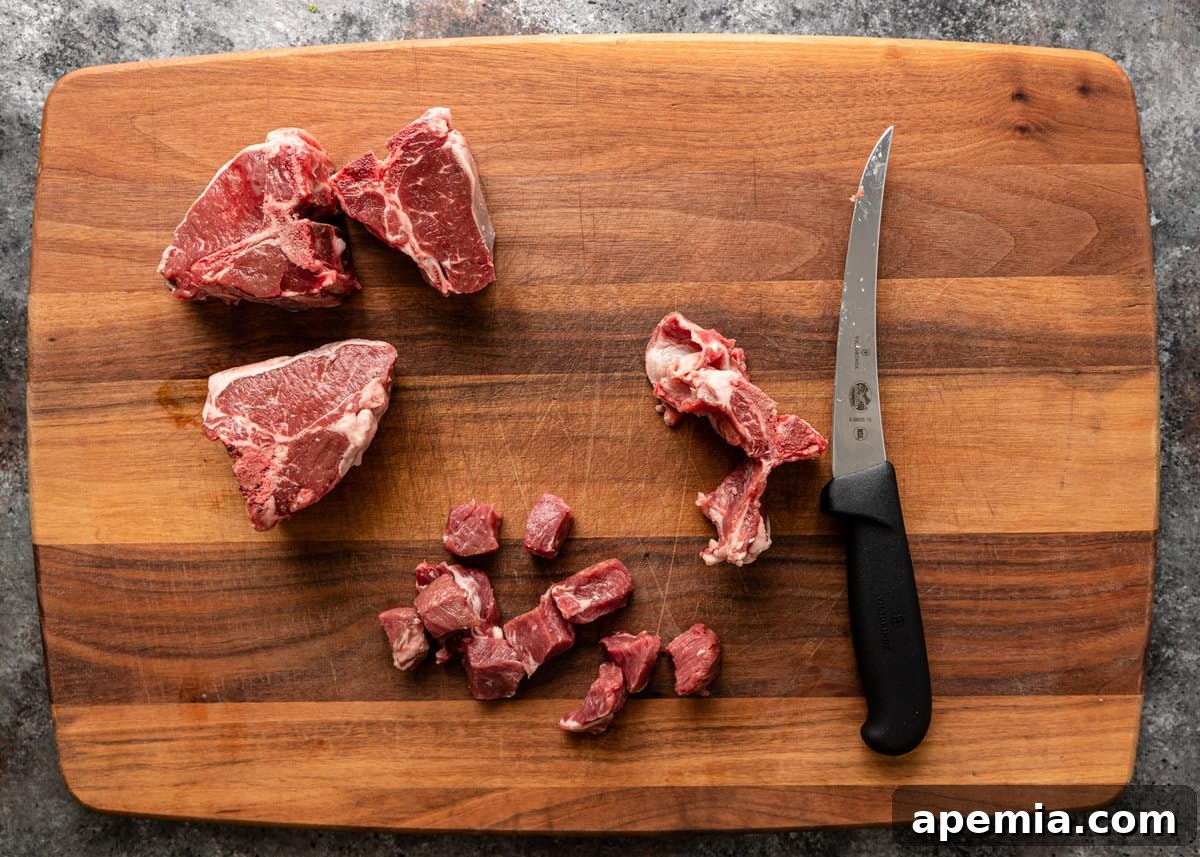
- Lamb: We highly recommend using lamb loin meat for its tenderness and quick cooking time. Alternatives include lamb leg or shoulder, but be aware these cuts require longer cooking times to become truly tender. If lamb is not to your taste, beef stew meat (such as beef chuck) can be an excellent substitute, offering a robust flavor profile that pairs well with the spices.
- Baharat Spice: This essential Middle Eastern blend is the heart of our marinade, offering a warm, earthy, sweet, and subtly smoky flavor. Typically composed of black pepper, cumin, coriander, cinnamon, nutmeg, cardamom, and cloves, baharat adds incredible depth. You can find it in the international aisle of most well-stocked grocery stores, or easily make your own using the linked recipe for a fresher, custom blend.
- Olive Oil: A high-quality olive oil forms the base of the marinade, infusing the lamb with its mild, nutty, and slightly floral notes without overpowering the baharat spice blend. It also aids in achieving a beautiful sear on the lamb.
- Pearl Couscous: Also known as Israeli couscous or ptitim, these small, pasta-like pearls provide a wonderful chewy texture. If pearl couscous is unavailable, good substitutes include quinoa, short-grain rice, millet, or even small pasta shapes like orzo, though the texture will vary slightly.
- Red Onion: Diced red onion contributes a pungent kick and a touch of sweetness that mellows beautifully upon cooking. Yellow or white onions can also be used, depending on availability and your preference for sharpness.
- Bell Peppers: These add a fresh, peppery bite and vibrant color to the dish. Feel free to use any color—red, yellow, orange, or a mix—to enhance visual appeal and flavor complexity.
- Honey: A touch of honey balances the savory and spicy elements, introducing a subtle sweetness that harmonizes all the flavors in the recipe. It also aids in caramelization during the searing process.
- Soy Sauce: While not traditionally Middle Eastern, soy sauce adds a fantastic salty, savory, and umami depth that elevates the overall flavor profile, creating a surprisingly cohesive and delicious blend.
- Mint: Dried mint provides a fresh, cooling contrast to the rich lamb and warm spices, brightening the dish and adding an authentic touch of Middle Eastern aroma.
- Green Onions: Used as a garnish, fresh chopped green onions offer a final pop of crisp, peppery flavor and a vibrant dash of color, adding a beautiful finish to the meal.
How to Make Lamb and Pearl Couscous: Step-by-Step Guide
Creating this magnificent Middle Eastern-inspired dish is simpler than you might imagine. Follow these detailed steps for a perfect result:
- Marinate the Lamb: In a medium bowl, combine your cubed lamb meat with olive oil and the baharat spice blend. Toss thoroughly to ensure every piece of lamb is evenly coated. Allow the lamb to marinate at room temperature for at least 15 minutes. This brief marination period allows the flavors to penetrate the meat, enhancing its taste and tenderness.
- Cook the Pearl Couscous: In a large pot, bring 3 cups of water and ½ teaspoon of salt to a rolling boil. Stir in the pearl couscous, ensuring it’s fully submerged. Once the water returns to a boil, reduce the heat to low, cover the pot tightly, and let it simmer for approximately 20 minutes, or until the couscous is tender and the water is absorbed. For best results, avoid lifting the lid during cooking.
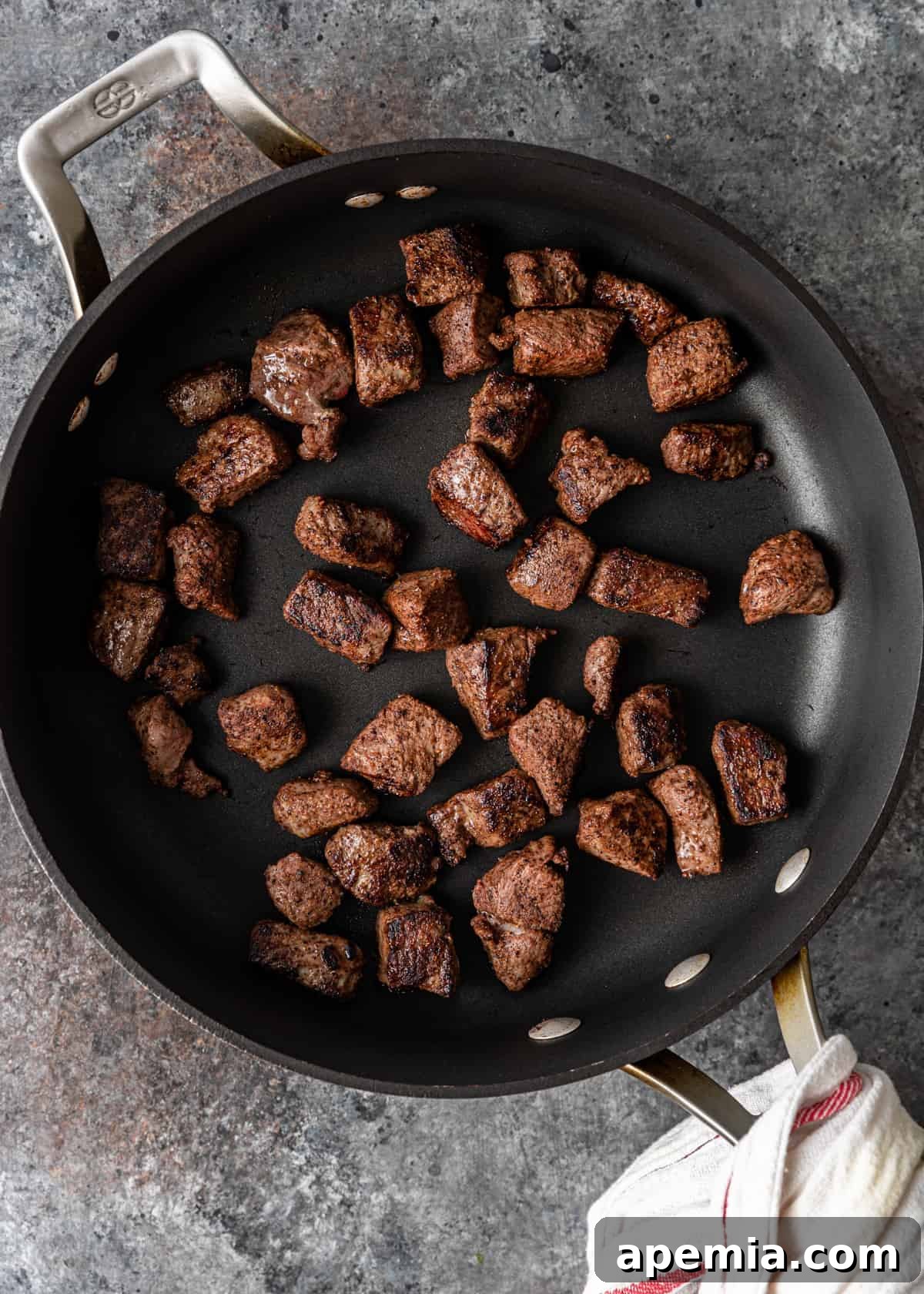
- Sear the Lamb to Perfection: Place a deep skillet or heavy-bottomed pan over medium-high heat. Allow the pan to get sufficiently hot – almost to the point of smoking. Carefully add the marinated lamb pieces, ensuring there is adequate space between each piece to allow for proper searing and caramelization. Cook without disturbing until a deep brown crust forms on the first side, then flip and sear the opposite side. This searing locks in the juices and develops rich flavor.
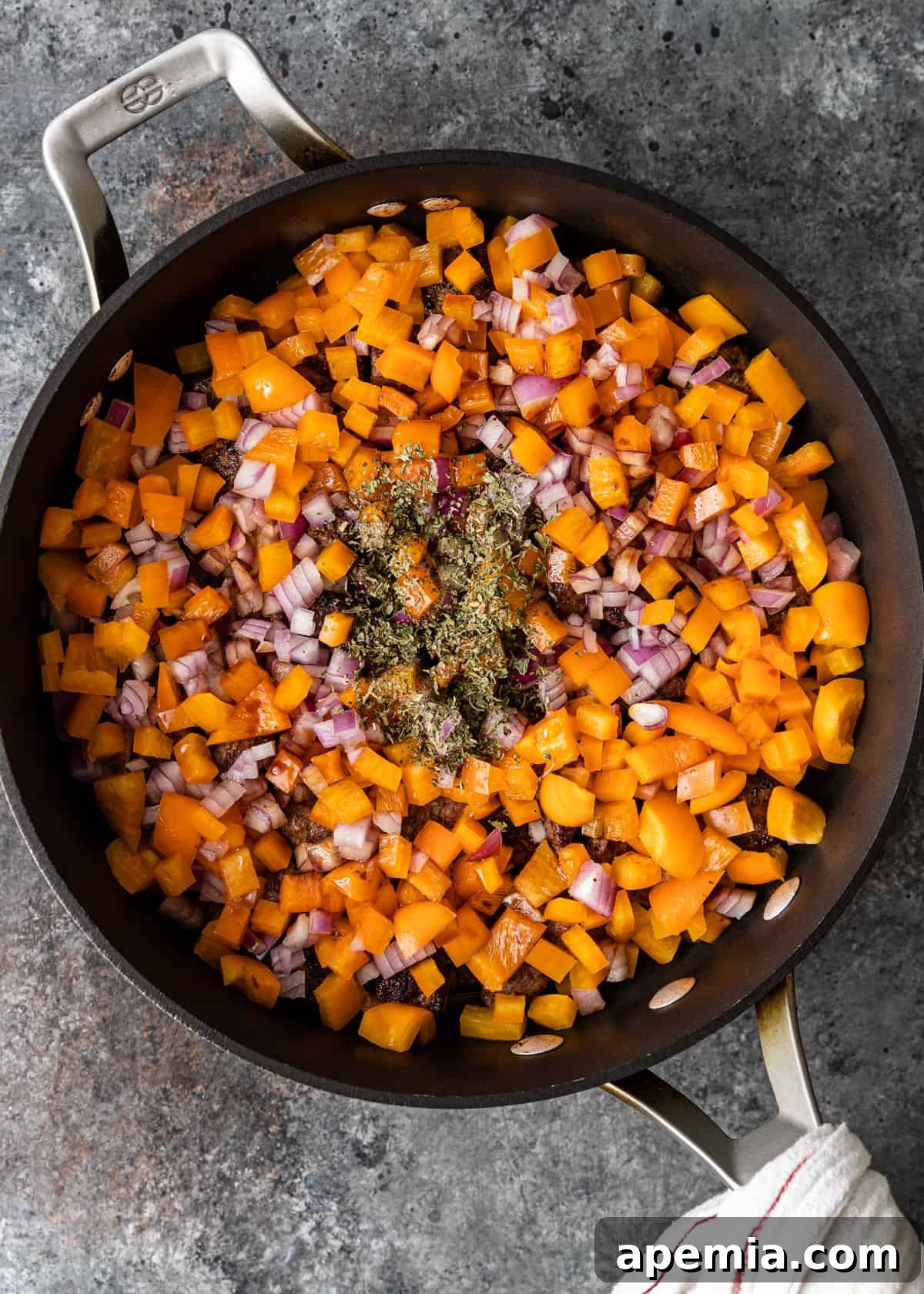
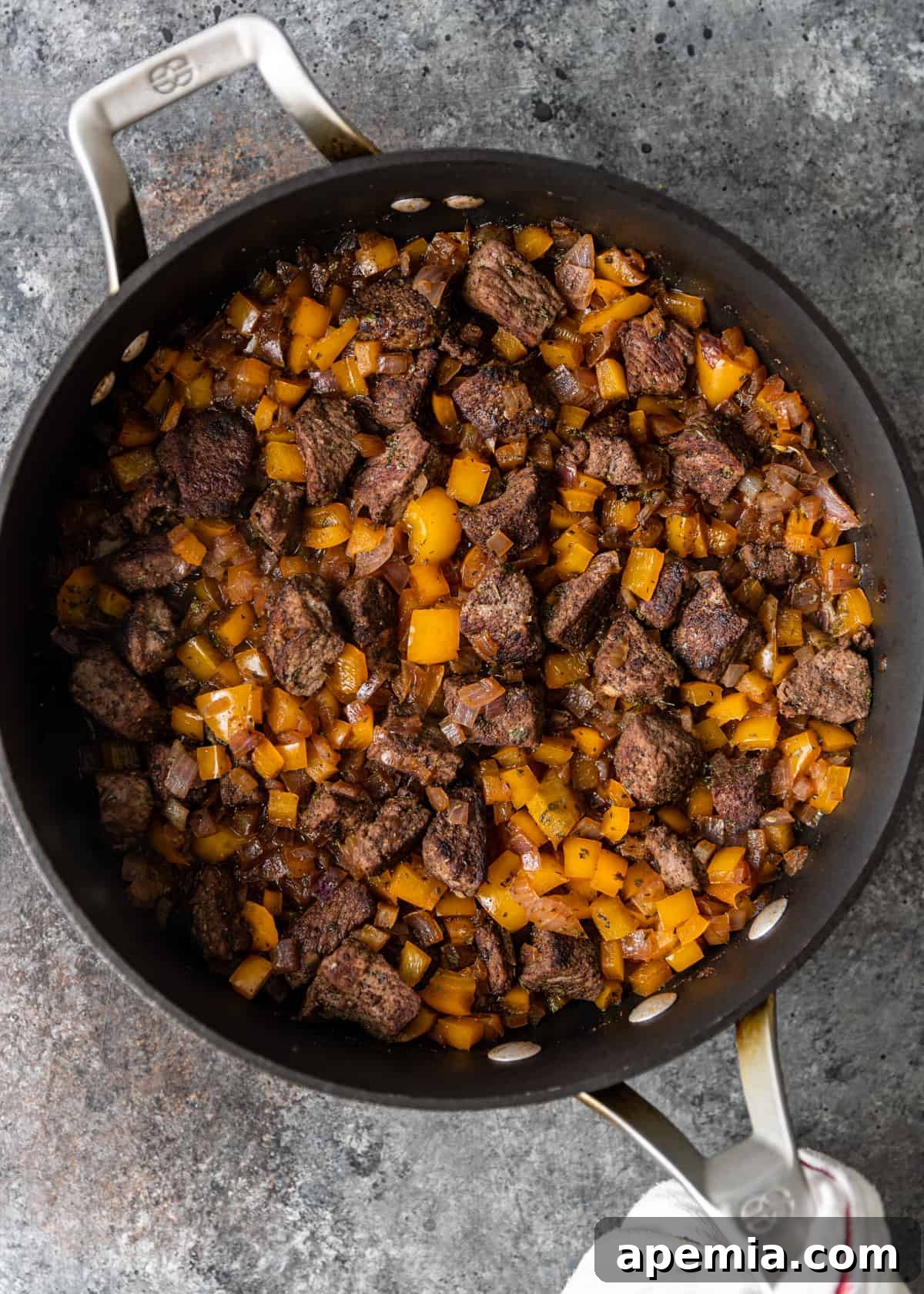
- Sauté the Vegetables and Seasonings: Once the lamb is beautifully browned, add the diced bell peppers, red onions, honey, soy sauce, and dried mint to the skillet. Stir well to combine all ingredients with the lamb. Cook for 3 minutes, allowing the vegetables to soften slightly and the flavors to meld. Reduce the heat to low, cover the skillet, and continue cooking for an additional 5 minutes to fully tenderize the vegetables and allow the sauce to thicken slightly.
- Combine and Season: Carefully drain any excess water from the cooked pearl couscous. Transfer the savory lamb and vegetable mixture into the pot with the couscous. Stir gently but thoroughly to incorporate all the ingredients, ensuring the couscous absorbs the rich flavors of the lamb and vegetables. Taste and adjust seasoning with additional salt if needed.
- Garnish and Serve Immediately: Scoop the flavorful lamb and pearl couscous mixture into individual serving bowls. Garnish generously with fresh chopped green onions for a vibrant burst of flavor and color. Serve this delicious dish immediately while it’s warm and inviting.
Expert Tips for Perfect Pearl Couscous
Should You Rinse Pearl Couscous Before Cooking?
No, there is generally no need to rinse pearl couscous before cooking for this recipe, or for most applications. Unlike true grains such as rice, where rinsing helps remove excess starch to prevent stickiness and achieve a fluffier texture, pearl couscous is closer to a pasta. It is typically manufactured in a way that doesn’t require pre-rinsing. Simply add it directly to boiling water, and let it cook to tender perfection.
Can You Overcook Pearl Couscous?
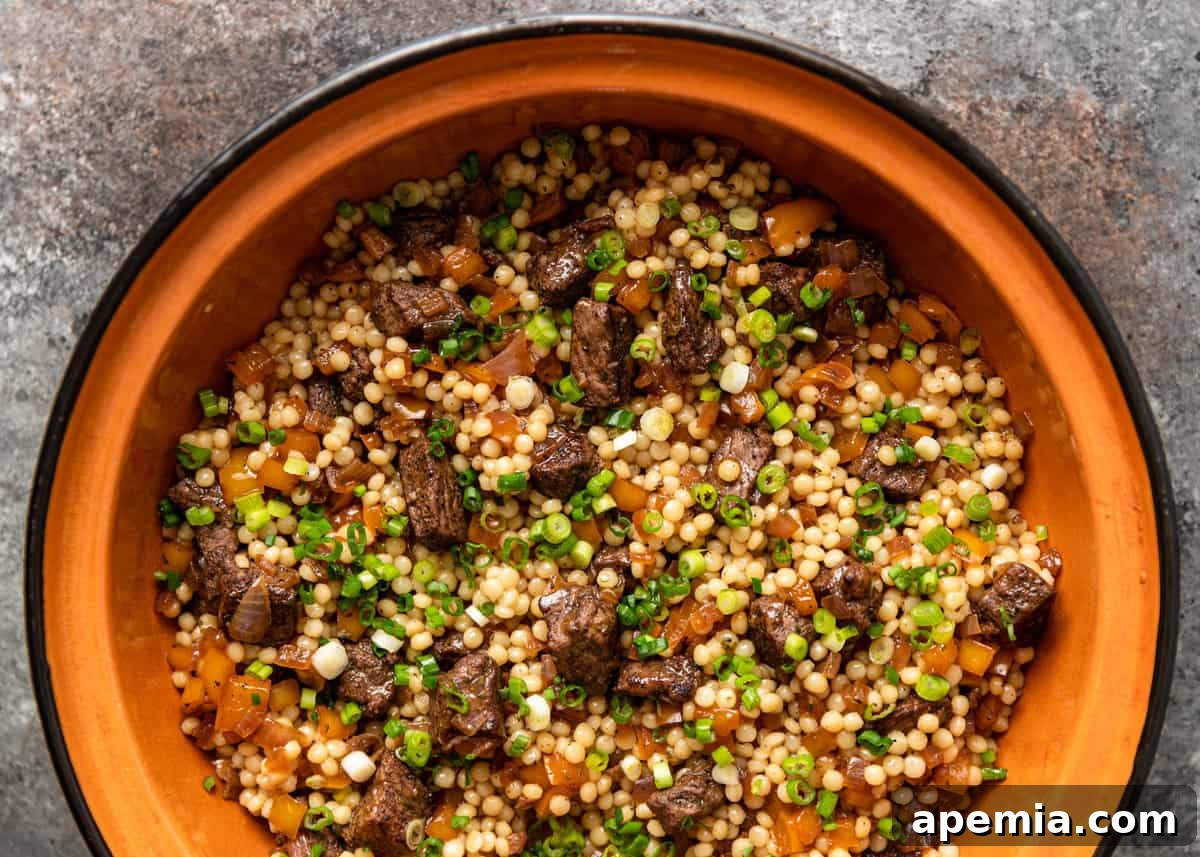
Yes, like any pasta or grain, pearl couscous can absolutely be overcooked. The primary culprits for overcooked couscous are using too much liquid or cooking it for an excessive amount of time. Overcooking can result in couscous that is sticky, gummy, or even mushy, losing its delightful individual pearl texture. To avoid this, it’s crucial to stick to the recommended water-to-couscous ratio and cooking times. A reliable timer is your best friend here! Ideally, your pearl couscous should be light, fluffy, and have a pleasant, slightly chewy texture.
Understanding Couscous: Moroccan, Israeli, and Lebanese
Couscous, in its simplest and most traditional form, is a staple of North African and Middle Eastern cuisines. It’s made by moistening coarsely ground grains, most commonly semolina wheat, and then rolling them between the hands to form tiny beads. Sometimes barley or millet are also used. However, not all couscous is created equal. There are distinct varieties, each with its own unique characteristics:
- Moroccan Couscous: This is arguably the most common and widely recognized type of couscous found on grocery shelves. It consists of very small granules, similar in size to semolina grains or fine sand. Moroccan couscous has a delicate, nutty flavor and is prized for its incredibly quick cooking time, often steaming in just a few minutes. It’s typically used as a light accompaniment to stews, tagines, or as a base for refreshing salads.
- Pearl Couscous (Israeli Couscous or Ptitim): Significantly larger than Moroccan couscous, pearl couscous beads can be about the size of small peas. The terms “pearl couscous” and “Israeli couscous” are often used interchangeably, referring to the toasted pasta-like spheres that originated in Israel in the 1950s as a substitute for rice. Some culinary experts also refer to a very similar, slightly larger variety as “Lebanese couscous” or “Moghrabieh couscous,” which also hails from the Levant region. Regardless of the exact regional name, pearl couscous is distinct for its substantial size, chewier texture, and rounder shape compared to its Moroccan relatives, and it requires a longer cooking time, more akin to pasta. It’s excellent for absorbing rich sauces and is perfect in hearty main dishes or cold salads.
- Lebanese Couscous (Moghrabieh): While often grouped with pearl couscous, Moghrabieh is traditionally slightly larger and firmer than Israeli pearl couscous. These large, chewy pearls are often rolled by hand and require a longer cooking process, typically simmered in broth until tender. Moghrabieh is commonly served in a rich stew with chicken or lamb, showcasing its ability to stand up to hearty flavors and textures.
Understanding these differences allows you to appreciate the versatility of couscous and choose the best type for your culinary creations.
Share this recipe on Pinterest!
Love this recipe? Share it with the world on Pinterest to inspire others.
Lamb and Pearl Couscous Recipe
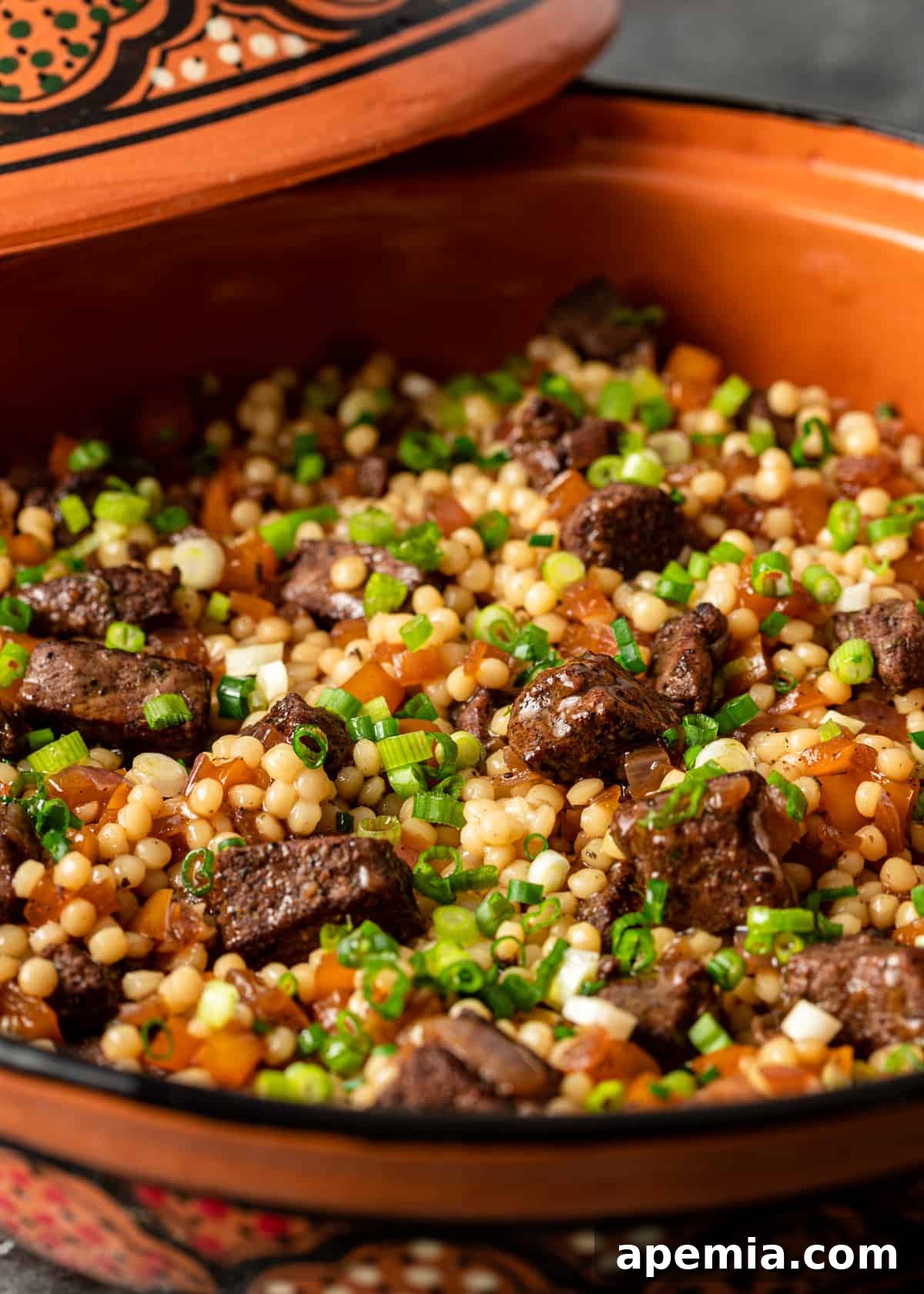
My lamb and pearl couscous recipe beautifully pairs tender baharat-spiced lamb with fluffy pearl couscous and perfectly sautéed vegetables. This dish offers a delightful blend of Middle Eastern flavors, making it an ultimate choice for a satisfying weeknight meal or an impressive dinner party. Its rich aromatics and wholesome ingredients come together in a harmonious blend that will transport your taste buds.
4
15 minutes
20 minutes
35 minutes
PrintRecipe
Ingredients
Instructions
-
In a bowl, combine the cubed lamb, baharat spice, and olive oil. Toss well to ensure the lamb is thoroughly coated. Let it marinate for 15 minutes to infuse the flavors.
-
Bring 3 cups of water and 1/2 teaspoon of salt to a boil in a large pot. Add the pearl couscous, stir, and bring it back to a boil. Reduce the heat to a simmer, cover the pot, and cook for 20 minutes until tender and liquid is absorbed.
-
Heat a deep skillet over medium-high heat for several minutes until it’s very hot, almost smoking. Add the marinated lamb pieces, ensuring not to overcrowd the pan. Allow them to sear and caramelize on one side before turning to brown the other side. This creates a rich crust and locks in moisture.
-
Add the diced red onion, bell peppers, honey, soy sauce, and dried mint to the skillet with the lamb. Stir everything to mix thoroughly. Cook for 3 minutes, then reduce the heat to low, cover, and cook for an additional 5 minutes to tenderize the vegetables and blend the flavors.
-
Drain any excess water from the cooked pearl couscous. Transfer the lamb and vegetable mixture into the couscous pot, stirring gently to combine all ingredients evenly. Taste and adjust seasoning with additional salt as needed.
-
Transfer the mixture to a large serving dish or scoop directly into individual bowls. Garnish with fresh chopped green onions before serving immediately.
Notes
- I recommend using lamb loin chop meat for its inherent tenderness and quicker cooking time, which is ideal for this recipe. Cuts like lamb shoulder or leg of lamb, while delicious, typically require longer braising or slow cooking methods to become tender enough for this preparation. If you prefer not to use lamb, a great alternative is beef stew meat (such as beef chuck), which will also absorb the rich flavors beautifully.
Nutrition
Carbohydrates: 50g |
Protein: 31g |
Fat: 11g |
Saturated Fat: 3g |
Polyunsaturated Fat: 1g |
Monounsaturated Fat: 5g |
Cholesterol: 75mg |
Sodium: 881mg |
Potassium: 602mg |
Fiber: 4g |
Sugar: 11g |
Vitamin A: 1094IU |
Vitamin C: 96mg |
Calcium: 47mg |
Iron: 3mg
The information shown is an estimate provided by an online nutrition calculator. It should not be considered a substitute for a professional nutritionist’s advice.
Have You Made This Recipe? Let Me Know on Instagram!
Tag @keviniscooking or use the hashtag #keviniscooking! We love to see your culinary creations!
Serving Suggestions and Variations
This Lamb and Pearl Couscous is a complete meal in itself, but it also pairs wonderfully with a few simple additions. For a lighter touch, serve it alongside a crisp green salad with a lemon-tahini dressing. A side of warm pita bread or a spoonful of plain Greek yogurt can also provide a delightful contrast in texture and flavor. To introduce more freshness, a sprinkle of fresh parsley or cilantro can be added along with the green onions.
Looking to switch things up? Here are a few variations:
- Vegetable Boost: Feel free to add other quick-cooking vegetables like zucchini, eggplant, or spinach during the last few minutes of cooking with the bell peppers and onions.
- Spice Variations: Experiment with different Middle Eastern spice blends. Ras el hanout or even a touch of sumac can offer unique aromatic twists.
- Citrus Brightness: A squeeze of fresh lemon juice over the finished dish can elevate all the flavors with a burst of acidity.
- Nutty Crunch: Toasted slivered almonds or pine nuts can be sprinkled on top for an added layer of texture and nutty flavor.
Storage and Reheating Leftovers
Leftovers of this delicious lamb and pearl couscous are just as enjoyable and make for a convenient next-day meal. Allow any unused portions to cool completely before transferring them to an airtight container. Store in the refrigerator for up to 3-4 days. To reheat, you can gently warm the dish in a skillet over medium-low heat, adding a splash of water or broth if it seems dry, until heated through. Alternatively, microwave individual portions on medium power, stirring occasionally, until warm. Avoid overheating to maintain the tender texture of the lamb and couscous.