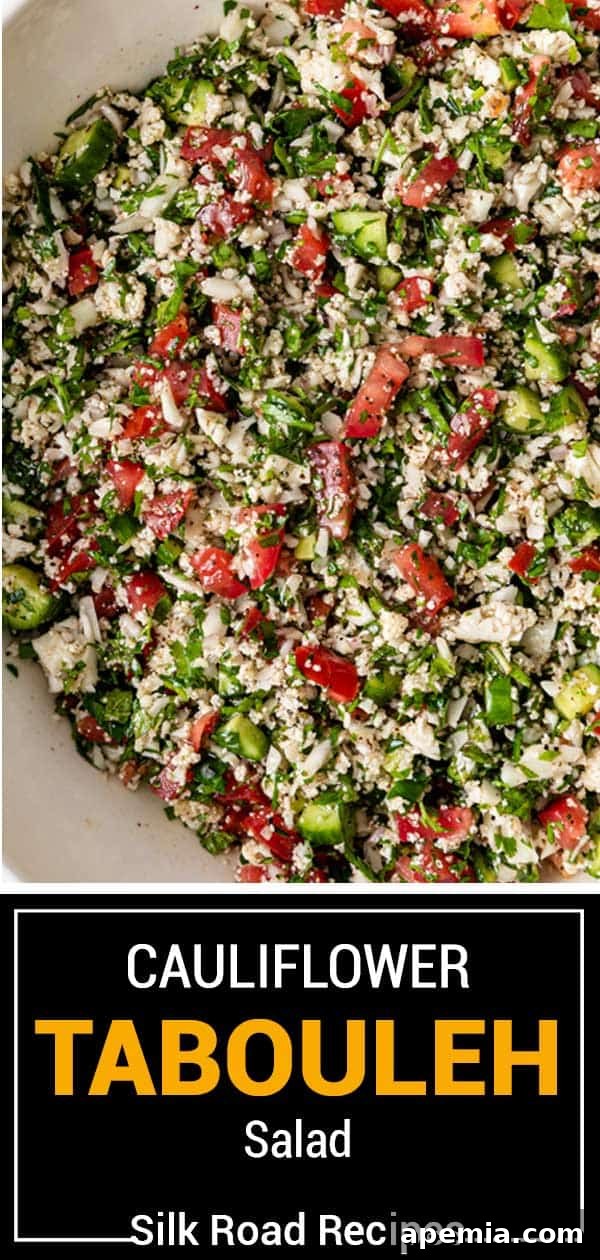
Cauliflower Tabbouleh: The Ultimate Grain-Free Mediterranean Salad
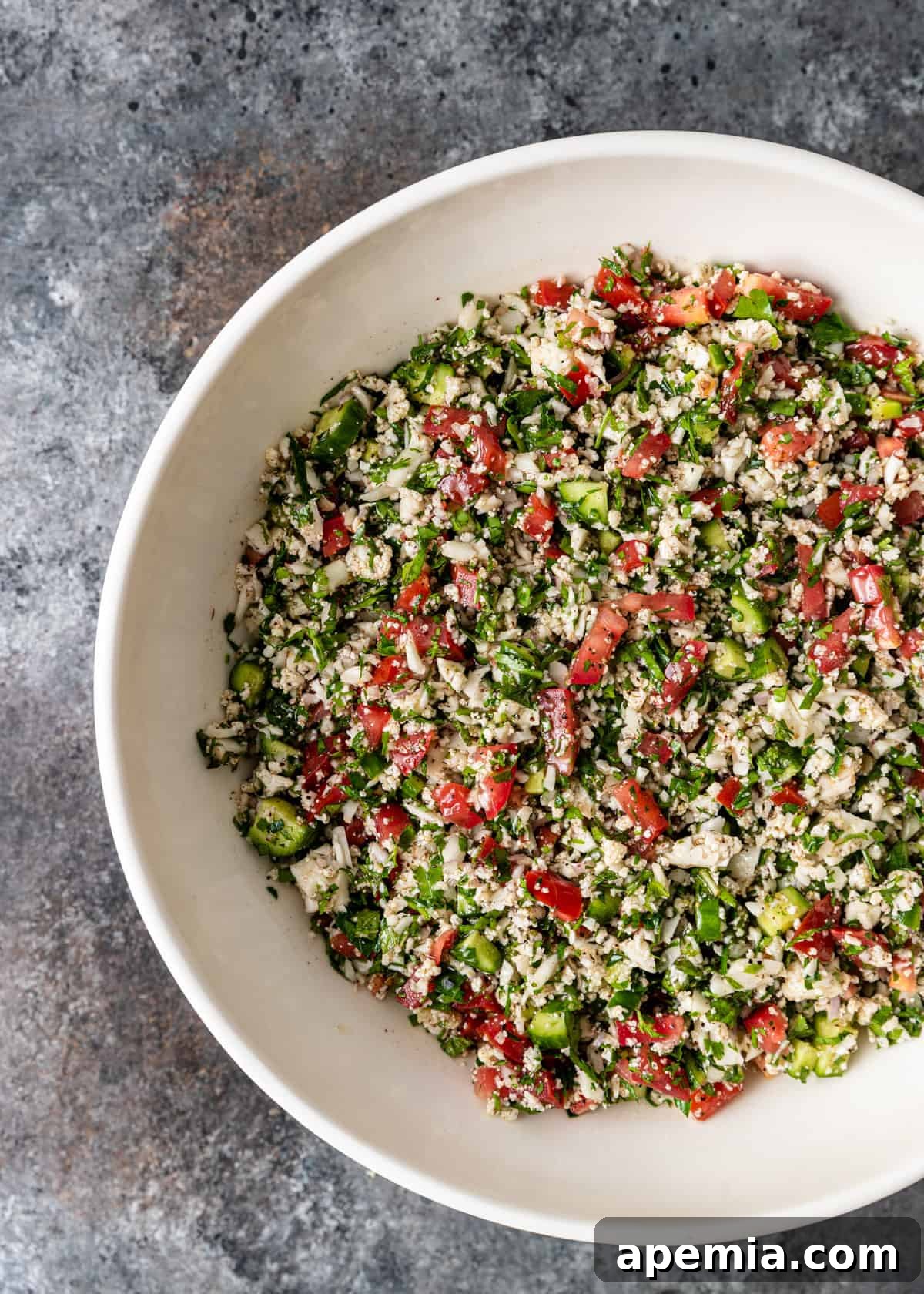
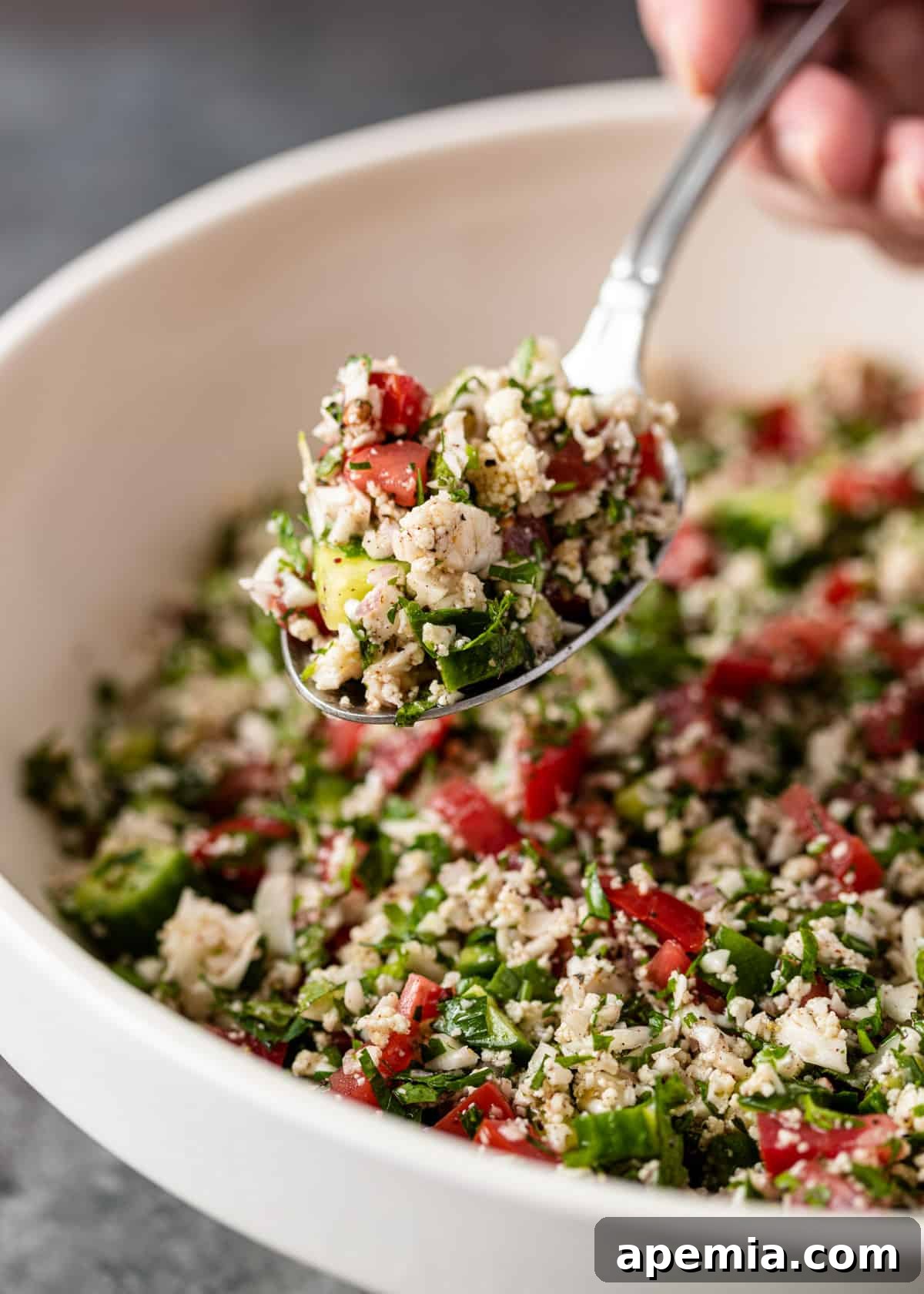
Prepare to be captivated by the irresistible flavors of this **Cauliflower Tabbouleh**. Also known as cauliflower tabouli, this effortlessly crafted recipe offers an intensely flavorful and refreshingly light experience. It captures all the vibrant essence of traditional tabbouleh while seamlessly fitting into a grain-free and gluten-free lifestyle. Whether you’re adhering to a specific diet or simply seeking a delicious and healthy meal, this salad is destined to become your new culinary obsession.
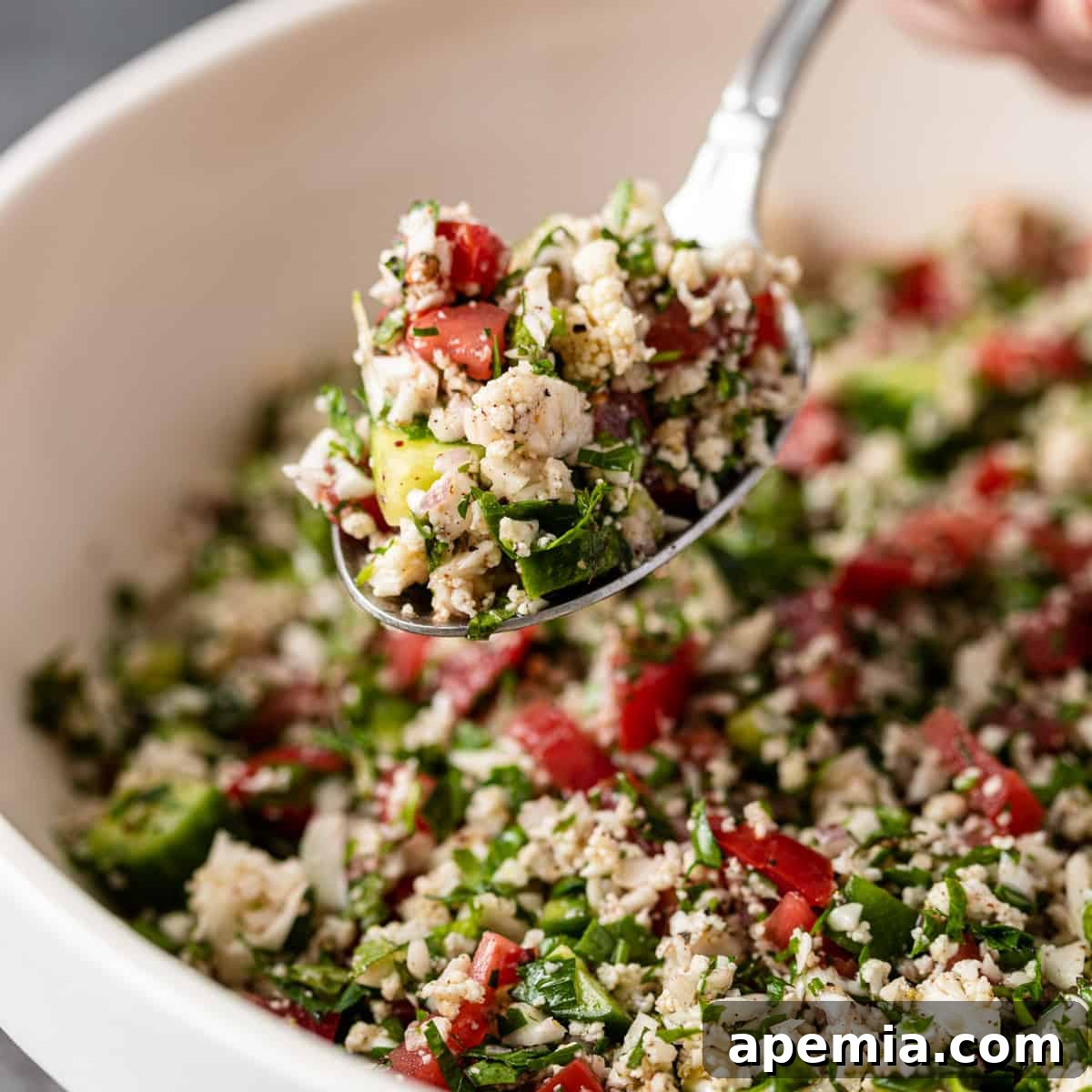
As the weather warms and the days grow longer, the desire for refreshing salads takes center stage. Our take on tabbouleh is a modern, grain-free interpretation of a beloved classic. Traditional tabbouleh salad holds a cherished place in both Middle Eastern and Mediterranean cuisine, gracing tables alongside countless dishes. This innovative cauliflower version has quickly become a personal favorite, offering all the herbaceous goodness without the grains.
Why Cauliflower Tabbouleh is Your New Favorite Salad
Just like its traditional counterpart, our cauliflower tabbouleh bursts with an abundance of fresh herbs and crisp vegetables, all finely chopped and generously coated in a bright, zesty lemon-herb dressing. The ingenious twist lies in the substitution of riced cauliflower for grains, making this salad an incredibly versatile and inclusive dish. This adaptation not only makes it gluten-free but also aligns perfectly with numerous popular dietary preferences, including vegan, Paleo, Whole30, and even keto lifestyles.
Beyond its dietary versatility, cauliflower tabbouleh stands out for its incredible freshness and vibrant flavor profile. It’s a celebration of crisp textures and aromatic herbs, creating a harmonious balance that brightens any meal. The mild, slightly nutty flavor of cauliflower rice provides an excellent canvas, absorbing the rich dressing and complementing the sharp notes of parsley and mint. It’s a testament to how simple ingredients, thoughtfully prepared, can create a truly spectacular culinary experience that caters to diverse palates and dietary needs without compromise.
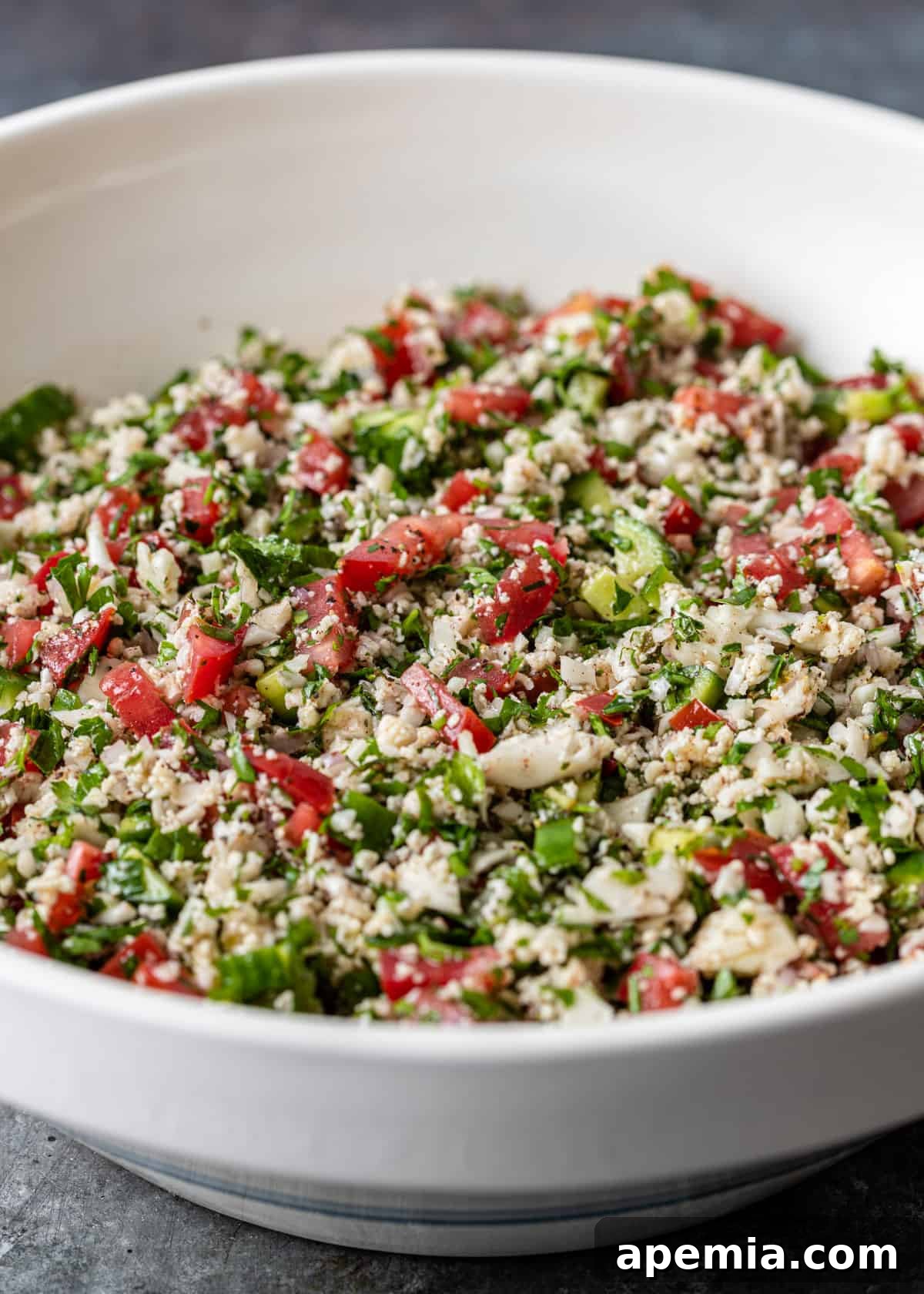
Imagine serving this exceptionally scrumptious salad alongside a platter of savory Kawarma (Hummus with Lamb) or some freshly baked Pita Bread (Khubz) for an utterly delightful snack or a satisfying main course. Its lightness makes it an ideal accompaniment to richer dishes, cutting through the richness with its herbaceous zest. It also shines as a standalone lunch, packed with nutrients and flavor, making it a perfect meal prep option for busy weeks.
Table of Contents
- The Essence of Tabbouleh: A Culinary Journey
- Ingredient Spotlight and Smart Substitutions
- How to Craft Your Perfect Cauliflower Tabbouleh
- Serving and Pairing Suggestions
- Expert Tips for Success
- Frequently Asked Questions
- Cauliflower Tabbouleh Salad Recipe Card
The Essence of Tabbouleh: A Culinary Journey
Tabbouleh, often hailed as the “king of salads” in Middle Eastern cuisine, is much more than just a side dish; it’s a cultural icon. Traditionally, it features finely chopped parsley, tomatoes, mint, onion, and bulgur wheat, dressed simply with olive oil and lemon juice. This salad embodies freshness and is a staple at gatherings, family meals, and celebratory feasts across the Levant and beyond. Its origins trace back centuries, a testament to the region’s rich agricultural heritage and appreciation for vibrant, wholesome ingredients. Our cauliflower version pays homage to this heritage, offering the familiar, beloved flavors in a contemporary, health-conscious package.
The beauty of tabbouleh lies in its simplicity and the quality of its components. Every ingredient plays a crucial role, contributing to a symphony of flavors and textures. The fine chop is not just for aesthetics; it ensures that each spoonful delivers a balanced burst of parsley, mint, tomato, and onion. By replacing bulgur with cauliflower rice, we maintain that desired texture and absorbency while transforming the salad into a lighter, more nutrient-dense option without sacrificing the authentic taste that makes tabbouleh so universally adored. This innovative approach makes it accessible to even more people, inviting them to experience the joy of this timeless dish.
Ingredient Spotlight and Smart Substitutions
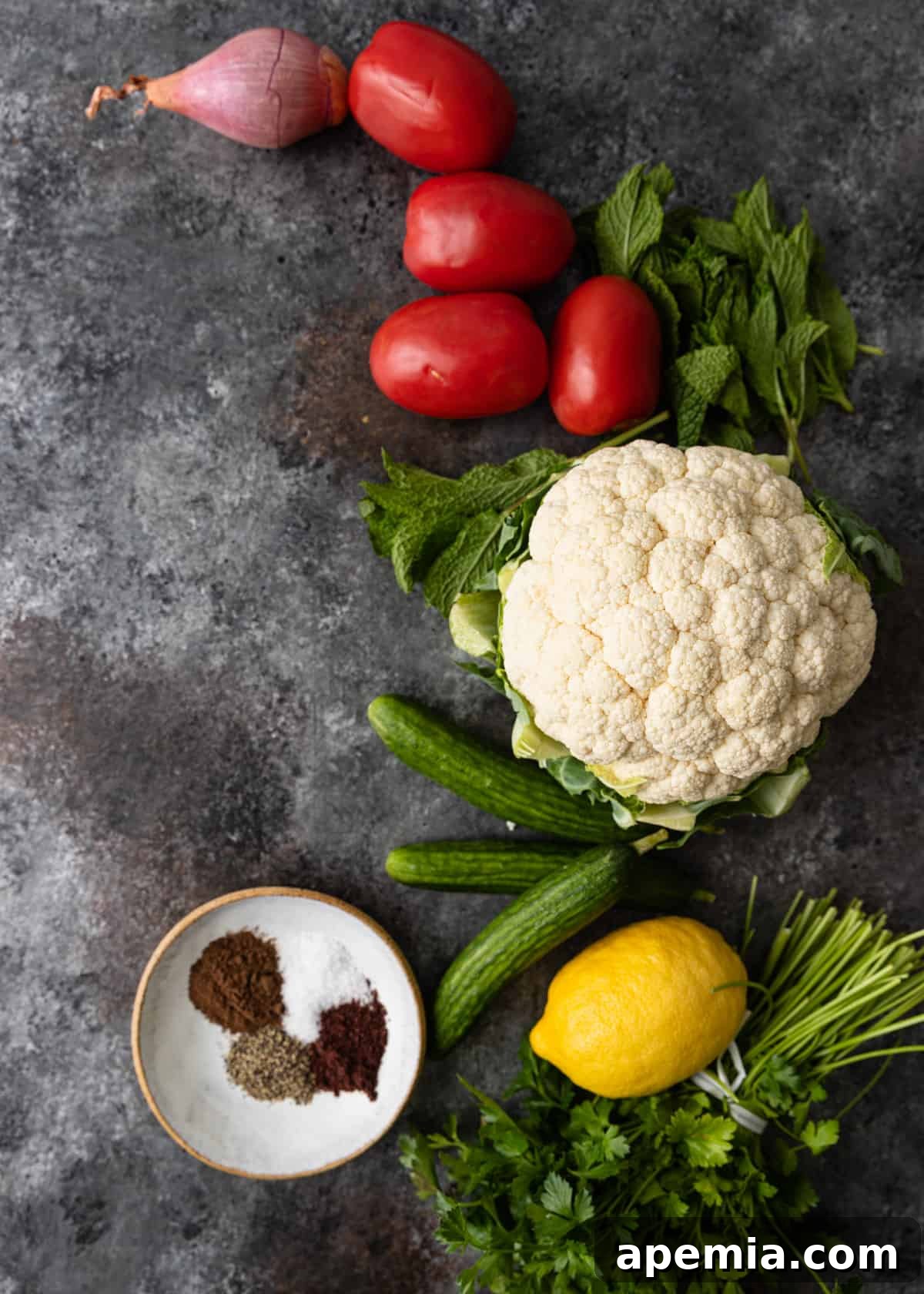
Crafting the perfect cauliflower tabbouleh begins with selecting the freshest ingredients. Each component contributes to the salad’s unique flavor and texture profile. Here’s a closer look at what you’ll need and how to make the best choices:
- Cauliflower: The undisputed star of our grain-free show! Crunchy, subtly nutty, and with a hint of sweetness, this incredibly versatile cruciferous vegetable perfectly mimics the texture of bulgur wheat when riced. It’s an excellent source of vitamins C and K, abundant in fiber, and its low-carb nature makes this tabbouleh a fantastic keto-friendly option, providing bulk and nutritional value without the grains.
- Tomatoes: For superior texture and less water content, opt for Roma tomatoes or other plum varieties. Their firm flesh makes them ideal for dicing finely without making the salad watery. They add a burst of sweet-tart flavor and juicy texture. If you’re feeling adventurous or looking for a burst of vibrant color and sweet-tart flavor, consider substituting or adding pomegranate arils, especially when tomatoes are not in peak season.
- Cucumber: Persian cucumbers are my top choice due to their thin skin, minimal seeds, and low moisture content, all of which are crucial for preventing a soggy salad. English cucumbers are another excellent alternative for the same reasons. If using a thicker-skinned variety, you might want to peel it first to ensure a delicate texture in the final salad.
- Shallots: These provide a delicate, sweet onion flavor with just the right touch of sharpness, offering a more refined and less pungent taste than a standard onion. They integrate beautifully without overpowering the fresh herbs. If shallots are unavailable, a small amount of finely minced yellow onion can be used, but use sparingly to avoid overpowering the other fresh flavors.
- Parsley: The true backbone of any good tabbouleh, parsley brings a clean, peppery, and earthy freshness that is indispensable. Always use flat-leaf Italian parsley; its flavor is significantly more robust and aromatic compared to its curly counterpart, which can be too bland and less impactful for this vibrant dish. The sheer volume of parsley is what gives tabbouleh its iconic character.
- Mint Leaves: Essential for that signature cooling, subtly sweet, and incredibly refreshing flavor that beautifully balances the rich earthiness of parsley and the tang of lemon. Fresh mint is non-negotiable here; dried mint simply won’t achieve the same bright, invigorating effect, making it a critical component for authenticity and taste.
- The Zesty Dressing: This vibrant dressing is what truly brings the salad to life, infusing every component with its characteristic Mediterranean flair. It’s a simple yet potent combination of high-quality **extra virgin olive oil**, freshly squeezed **lemon juice** for essential brightness and acidity, zesty **minced garlic** for aromatic depth, warming **ground allspice** for a subtle hint of exotic spice, and a touch of bright, tangy **sumac** for a unique lemony undertone. Don’t forget **kosher salt** and freshly ground **black pepper** to enhance and marry all the flavors. The synergy of these ingredients creates a dressing that perfectly coats every piece of the tabbouleh, infusing it with Mediterranean sunshine and making it utterly irresistible.
How to Craft Your Perfect Cauliflower Tabbouleh
Creating this delightful cauliflower tabbouleh is a straightforward process, but paying attention to a few key details will ensure a perfect result every time. Follow these steps for a vibrant and flavorful salad:
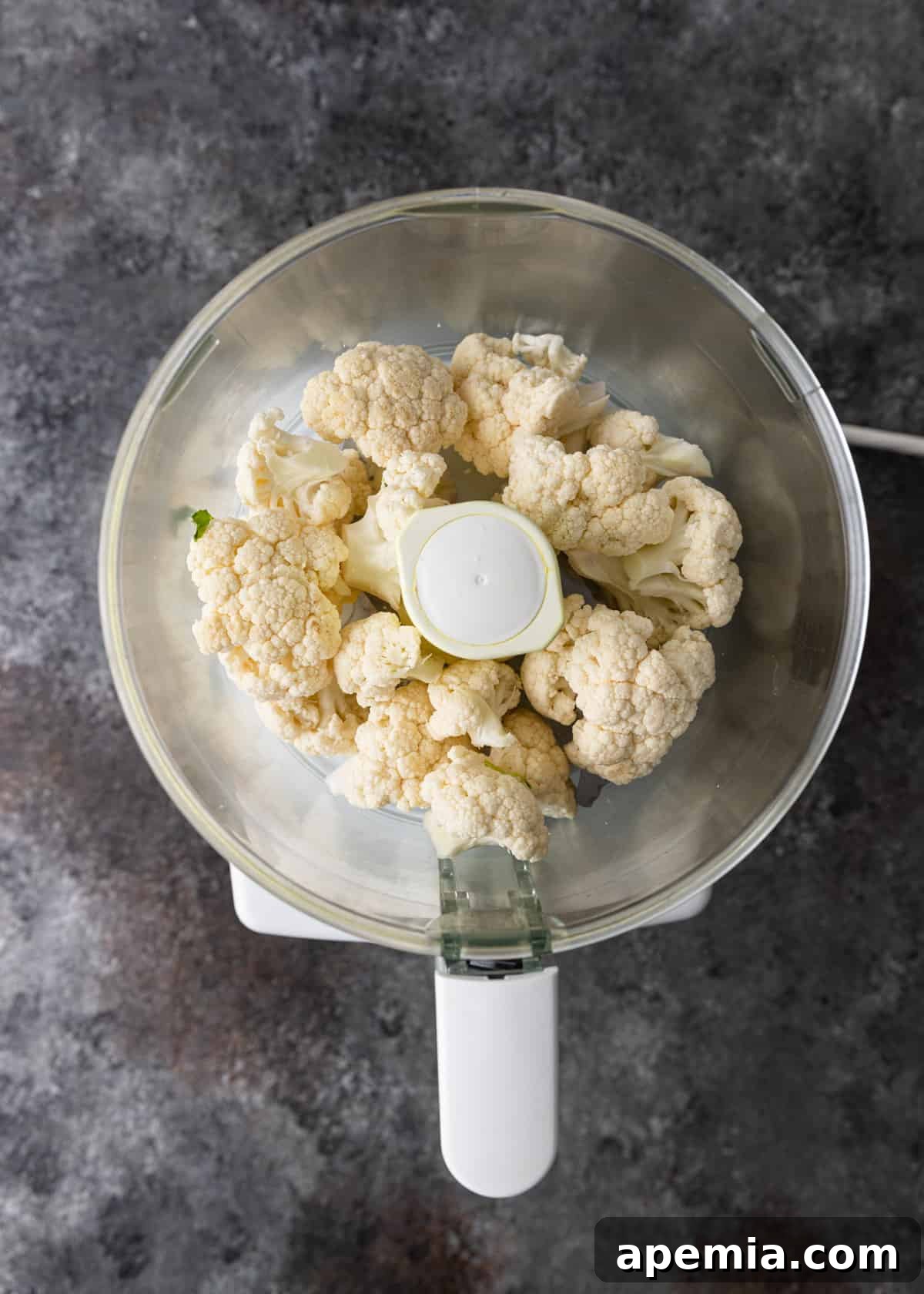
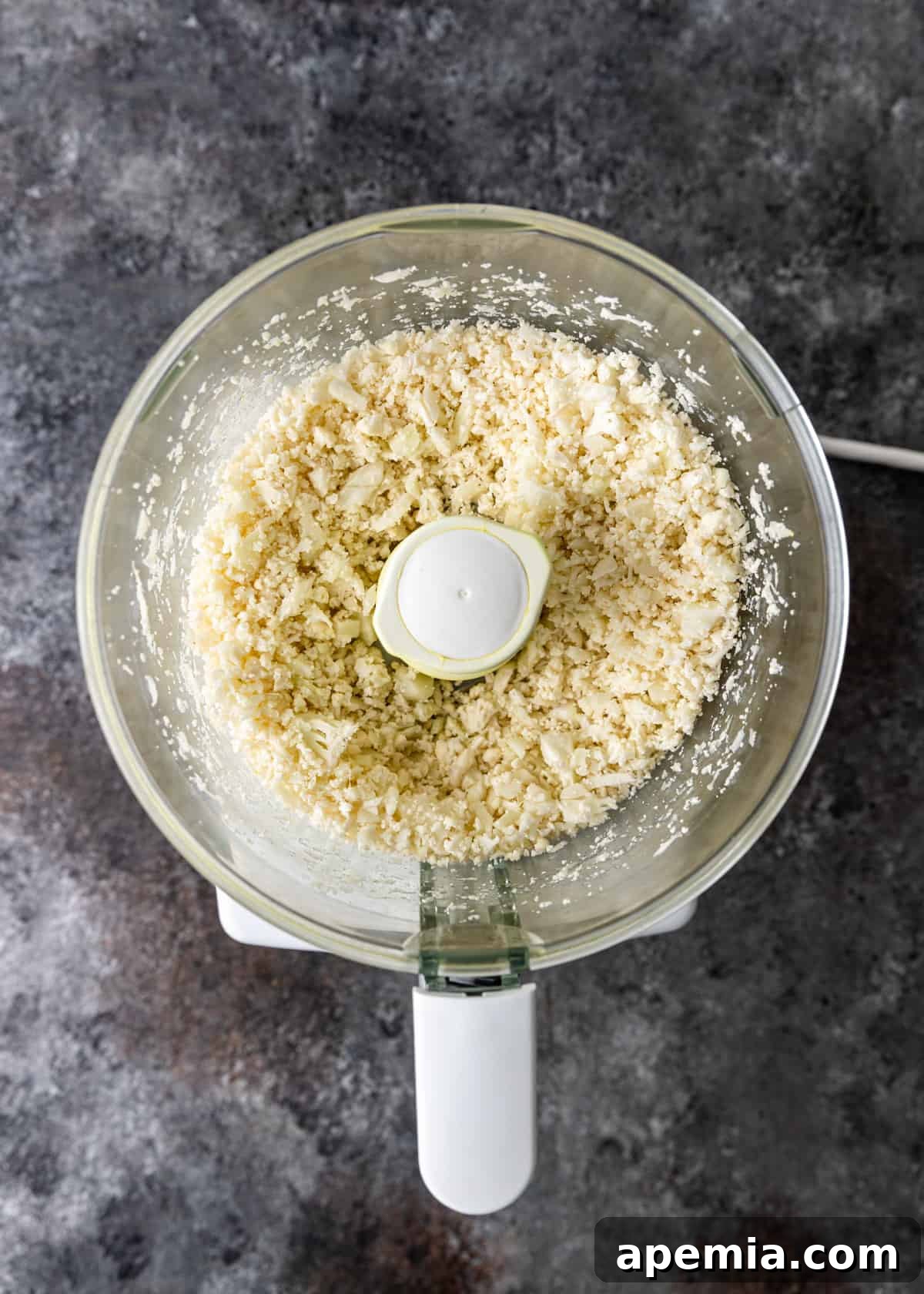
- Prepare the Cauliflower Rice: Begin by thoroughly washing and drying your medium head of cauliflower. Discard the tough outer leaves and stem, then cut the florets into large, manageable pieces. To achieve the perfect “rice” texture, work in small batches to avoid overcrowding your food processor. Pulse the cauliflower florets until they achieve a fine, granular texture resembling rice – fine, but still with a bit of bite and not overly wet. Be extremely careful not to over-process, as this can quickly turn the cauliflower into an undesirable mushy consistency. If you don’t have a food processor, a box cheese grater with medium holes works wonderfully to achieve the same result. Once riced, transfer it to a large salad bowl, ready for the other ingredients.
- Finely Dice the Vegetables: With a sharp chef’s knife, meticulously dice the cucumbers, tomatoes, and shallots. The key here is consistency and fineness; smaller, uniform pieces integrate better into the salad and ensure a balanced flavor and texture in every single bite. Add these finely diced vegetables, along with any natural juices they release during chopping, directly to the bowl with the riced cauliflower. These juices add an extra layer of flavor and contribute to the overall moisture of the salad.
- Process the Parsley with Precision: Tabbouleh is renowned for its abundant parsley content, and getting it finely chopped is absolutely crucial for the authentic texture and flavor. Take one bunch of flat-leaf parsley at a time. Trim and discard about half of the thicker stems, as they can be too fibrous and bitter. Finely chop the remaining parsley leaves and tender stems. For the best texture and to avoid bruised, darkened herbs, go over the chopped parsley a second time with your knife, ensuring it’s as finely minced as possible. Transfer this finely chopped parsley to the salad bowl, then repeat the process with the remaining parsley bunches.
- Add the Refreshing Mint: Gently pluck the fresh mint leaves from their stems, discarding the stems. Stack several mint leaves on top of each other and thinly slice them into fine ribbons. This technique, known as chiffonade, helps release their aromatic oils evenly throughout the salad, distributing that vital cooling and refreshing flavor. Add the finely sliced mint to the salad bowl and continue with the rest of the mint leaves, ensuring every part of the salad gets a touch of its invigorating essence.
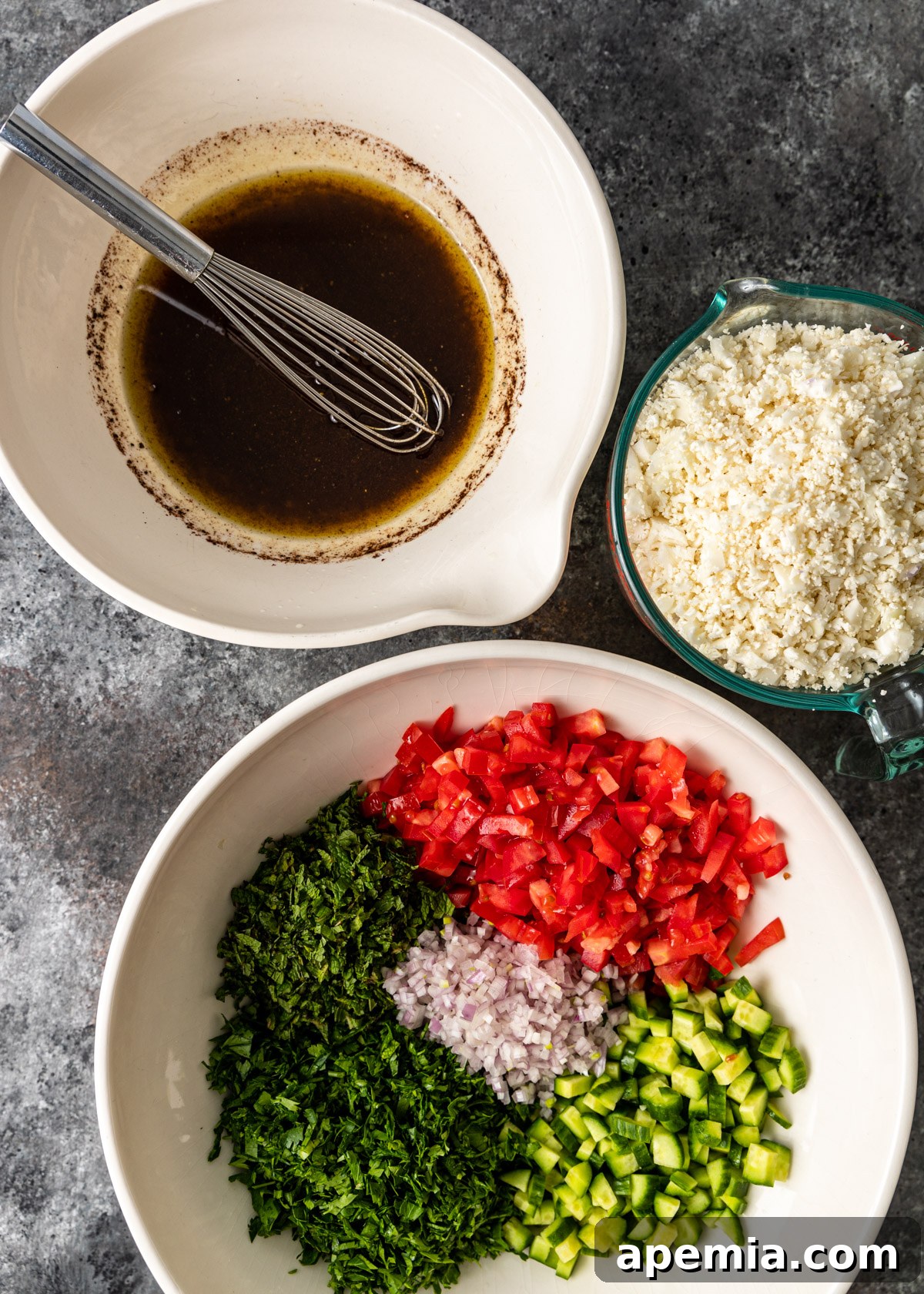
- Make the Dynamic Dressing: In a small bowl, whisk together the high-quality extra virgin olive oil, freshly squeezed lemon juice, minced garlic, ground allspice, kosher salt, freshly ground black pepper, and the optional tangy sumac. Whisk vigorously until all ingredients are well combined and the dressing emulsifies slightly. This creates a balanced, flavorful dressing that will generously infuse the salad with its characteristic tang and subtle warmth, elevating all the fresh flavors.
- Combine & Marinate for Flavor Fusion: Pour the prepared dressing evenly over the chopped vegetables and cauliflower rice in the large salad bowl. Using large spoons or your clean hands, gently toss all the ingredients together until everything is thoroughly coated and evenly distributed. Perform a quick taste test and adjust any seasonings as needed – perhaps a little more salt, lemon juice, or a pinch of sumac to perfectly suit your palate. Once seasoned to perfection, cover the bowl tightly with plastic wrap and refrigerate for at least 30 minutes. This crucial marinating step allows the flavors to meld beautifully, deepen, and truly integrate, transforming the salad from good to truly exceptional.
- Stir & Serve: Before serving, remove the tabbouleh from the refrigerator and give it a good stir. This redistributes the dressing and ensures every bite is packed with consistent flavor. Cauliflower tabbouleh can be enjoyed cold for a truly refreshing experience, particularly on a hot day, or at room temperature, which some find enhances the aromatic qualities of the herbs. Serve it as a vibrant side dish, a light and satisfying lunch, or as part of a larger Mediterranean mezze spread alongside chips or pita.
Serving and Pairing Suggestions
Cauliflower tabbouleh is incredibly versatile and pairs wonderfully with a wide array of dishes. Its fresh, zesty profile complements both rich and light meals, making it a fantastic addition to almost any table. Here are some inspired ideas to elevate your dining experience:
- Classic Mezze Platter: Create an authentic Middle Eastern feast by serving it alongside creamy hummus, smoky baba ghanoush, crispy falafel, an assortment of olives, and warm, fluffy pita bread.
- Grilled Meats and Fish: Its bright, herbaceous flavors brilliantly cut through the richness of grilled lamb kebabs, succulent chicken shawarma, or flaky white fish. It offers a refreshing counterpoint that cleanses the palate with every bite.
- As a Light Lunch: Enjoy a generous portion on its own for a satisfying and healthy midday meal. For added protein and satiety, you can easily top it with grilled halloumi cheese, chickpeas, or a sprinkle of toasted nuts.
- With Eggs: For a surprisingly delightful and vibrant breakfast or brunch, consider adding a scoop of tabbouleh to scrambled eggs, an omelet, or alongside a sunny-side-up egg.
- Stuffed in Wraps: Use this flavorful salad as a fresh, crunchy filling for lettuce wraps, soft tortillas, or whole-grain pitas. It pairs beautifully with grilled chicken, roasted vegetables, or even a simple spread of labneh.
- Next to Soups: A small bowl of refreshing tabbouleh can be a lovely and invigorating contrast to a warm, hearty lentil soup or a creamy, comforting tomato soup, adding a burst of freshness.
- Picnics and Potlucks: Its robust flavors and sturdy texture (when properly prepared) make it an excellent choice for outdoor gatherings, as it travels well and tastes great at room temperature.
Expert Tips for Success
To ensure your cauliflower tabbouleh is nothing short of perfect, achieving that ideal texture and vibrant flavor, keep these invaluable tips in mind:
- Don’t Over-Process the Cauliflower: This is paramount! The goal is a rice-like texture with distinct granules, not a paste or mush. Pulse in short bursts and check the consistency frequently. Over-processing is the quickest way to a soggy, unappealing salad.
- Chop Herbs by Hand for Best Results: While food processors might seem convenient for finely mincing herbs, they can easily bruise the delicate leaves of parsley and mint. Bruised herbs release excess moisture and can turn dark, leading to a less vibrant and potentially soggy result. A very sharp knife or an herb snipper is your best friend for achieving perfectly minced, fresh, and aromatic herbs.
- Manage Moisture Content from Vegetables: Tomatoes and cucumbers can release a significant amount of water, which can make your tabbouleh soggy. For a dryer salad, dice these vegetables about 10-15 minutes in advance, place them in a colander, and sprinkle lightly with salt. The salt will help draw out excess water, which you can then gently press out before adding the vegetables to the salad. However, remember some of their natural juices contribute to the dressing, so it’s often a balance depending on your preference.
- Fresh is Absolutely Best: This salad truly shines when made with the freshest possible ingredients. Opt for vibrant, firm vegetables and crisp, fragrant herbs. The quality of your produce will directly impact the final taste and texture of your tabbouleh.
- Adjust Seasoning to Your Taste: Tastes vary greatly, so always taste the dressing and the finished salad before serving. Don’t hesitate to add a little more salt, freshly ground black pepper, extra lemon juice for brightness, or even a pinch more sumac to perfectly suit your palate.
- Allow Ample Marination Time: While delicious immediately, giving the tabbouleh at least 30 minutes (or even longer, up to a few hours) in the refrigerator allows all the diverse flavors to meld, harmonize, and deepen. This crucial step transforms it from merely good to truly exceptional, making it a fantastic make-ahead option.
- Serve at the Right Temperature: While traditionally served at room temperature, many people prefer cauliflower tabbouleh chilled, especially on hot days, for an extra refreshing experience. Experiment to find your preferred temperature!
Frequently Asked Questions
- What is traditional Tabbouleh?
- Traditional tabbouleh is a beloved and refreshing Middle Eastern salad made primarily from a generous amount of finely chopped fresh parsley, complemented by diced tomatoes, fresh mint, finely minced onion, and a small quantity of bulgur (cracked wheat). It’s typically dressed simply with high-quality extra virgin olive oil and freshly squeezed lemon juice, creating a vibrant, herbaceous, and tangy flavor profile that’s a staple in Levantine cuisine.
- What is the best substitute for bulgur in Tabbouleh?
- Traditionally, tabbouleh uses fine bulgur wheat. However, for those seeking gluten-free or grain-free options, there are several excellent alternatives. Riced cauliflower, as expertly demonstrated in this recipe, is a superb choice, offering a remarkably similar texture and a neutral base that beautifully absorbs the vibrant dressing. Cooked and cooled quinoa is another popular gluten-free substitute that provides a slightly nuttier flavor and an additional boost of protein. While not gluten-free, couscous (made from a different variety of wheat) is also a common substitute in the United States for its fine texture.
- Is Cauliflower Tabbouleh healthy?
- Absolutely! Cauliflower tabbouleh is a true powerhouse of nutrients and an incredibly healthy choice. By replacing bulgur with cauliflower, it becomes significantly lower in carbohydrates and calories, making it ideal for keto, low-carb, and Whole30 diets. Cauliflower itself is rich in fiber, Vitamin C, Vitamin K, and powerful antioxidants. When combined with an abundance of fresh herbs, juicy tomatoes, and crisp cucumbers, and dressed with healthy extra virgin olive oil, this salad is packed with essential vitamins, minerals, and beneficial plant compounds that support overall well-being.
- How do you keep cauliflower tabbouleh from getting soggy?
- Preventing sogginess is crucial for achieving the perfect texture in cauliflower tabbouleh:
- Mind the Cauliflower: Pulse the cauliflower gently in a food processor until it resembles rice, but consciously avoid over-processing it into a wet paste or mush.
- Hand-Chop Herbs: Using a sharp knife or herb snipper to chop your parsley and mint prevents bruising, which can cause the delicate leaves to release excess moisture and turn dark.
- Manage Vegetable Juices: If your tomatoes or cucumbers are particularly juicy, dice them 10-15 minutes in advance, place them in a colander, and sprinkle lightly with salt. The salt will help draw out excess water, which you can then gently squeeze or press out before adding the vegetables to the salad.
- Serve Promptly (after marination): While marinating is beneficial for flavor, very long periods in the dressing (especially if vegetables are very juicy) can eventually soften the vegetables too much. Enjoy within a reasonable timeframe after chilling.
- Can I make cauliflower tabbouleh ahead of time?
- Yes, absolutely! Cauliflower tabbouleh is an excellent make-ahead salad, making it perfect for meal prep or entertaining. Preparing it a few hours in advance and allowing it to chill in the refrigerator helps the flavors meld and intensify, resulting in a more harmonious taste profile. Just be sure to store it in an airtight container to maintain its freshness and prevent it from absorbing other refrigerator odors. For optimal texture and vibrancy, I generally recommend making it no more than 24 hours in advance.
- How long is cauliflower tabbouleh good in the fridge?
- When stored properly in an airtight container in the refrigerator, cauliflower tabbouleh will maintain its freshness, vibrant flavors, and quality for up to 4 days. While it might still be safe to eat after this period, the texture of the vegetables and cauliflower rice might become slightly softer. Always give it a good stir before serving after refrigeration to redistribute the dressing.
- Can I freeze cauliflower tabbouleh?
- Freezing is generally not recommended for fresh salads like tabbouleh. The high water content in ingredients such as cucumbers, tomatoes, and fresh herbs means they will become mushy, lose their crisp texture, and often their vibrant color upon thawing. The delicate balance of flavors can also be compromised. It’s best enjoyed fresh and stored in the refrigerator for optimal taste and texture.
Cauliflower Tabbouleh Salad Recipe Card
Cauliflower Tabbouleh Salad: A Grain-Free Delight
This **cauliflower tabbouleh** is a crisp, refreshing, and grain-free spin on the classic Middle Eastern tabbouleh salad, utilizing nutrient-rich cauliflower rice! Perfect for any healthy diet.
Yields: 8 generous servings
Prep time: 15 minutes
Total time: 15 minutes (plus an essential 30 minutes for marinating)
Ingredients
- 1 medium head cauliflower (approximately 2-2.5 lbs)
- 1 lb Roma tomatoes (or plum tomatoes for superior texture; see Note 1 below)
- 3 Persian cucumbers (or any thin-skinned variety like English cucumber)
- 1 medium shallot, very finely minced
- 2 bunches Italian (flat-leaf) parsley (see Note 2 below)
- 1 bunch fresh mint leaves
- 1/2 cup extra virgin olive oil (high-quality recommended)
- 4 tbsp fresh lemon juice (from about 2-3 lemons)
- 1 clove garlic, finely minced
- 1 tsp ground allspice
- 1 tsp kosher salt (adjust to taste)
- 1 tsp freshly ground black pepper (see Note 3 below)
- 1/2 tsp sumac (optional, for an authentic tangy zest)
Instructions
- Prepare Cauliflower Rice: Thoroughly wash and dry the cauliflower. Discard the outer leaves and tough core, then chop the entire head into large florets. Working in small batches to avoid overcrowding, place the cauliflower pieces into a food processor and pulse until they achieve the texture of rice – fine, but with a slight bite. Be careful not to over-process, as it can quickly become mushy. Alternatively, use a box cheese grater with medium holes. Transfer the riced cauliflower to a large salad bowl.
- Dice Vegetables: Using a sharp chef’s knife, finely dice the tomatoes, cucumbers, and shallot. Aim for small, consistent pieces for best integration. Add these finely diced vegetables to the salad bowl along with any juices they naturally release during chopping.
- Chop Parsley: Take one bunch of Italian flat-leaf parsley at a time. Trim off about half of the thicker stems and discard them. Finely chop the remaining parsley leaves and tender stems. To achieve the finest possible texture (crucial for tabbouleh), go over the chopped parsley again with your knife. Add to the bowl and repeat with the second bunch of parsley (see Note 4 below for tips).
- Prepare Mint: Gently separate the fresh mint leaves from their stems, discarding the stems. Stack several mint leaves and thinly slice them into fine ribbons (chiffonade style), matching the fineness of the parsley. Add to the salad bowl and repeat with the remaining mint leaves.
- Make the Dressing: In a small bowl, whisk together the fresh lemon juice, extra virgin olive oil, minced garlic, ground allspice, kosher salt, freshly ground black pepper, and the optional sumac. Whisk until all ingredients are well combined and the dressing is slightly emulsified.
- Combine & Marinate: Pour the prepared dressing evenly over the chopped vegetables and cauliflower rice in the large salad bowl. Using large spoons or clean hands, gently toss all the ingredients together until everything is thoroughly coated and evenly mixed. Taste for flavor and adjust seasonings as needed (add more salt, pepper, or lemon juice to your preference). Cover the bowl tightly with plastic wrap and chill in the refrigerator for at least 30 minutes to allow the flavors to meld and deepen. This step is essential for the best taste.
- Serve: Before plating, remove the tabbouleh from the refrigerator and give it a good stir to redistribute the dressing and ensure consistent flavor. Serve traditionally, at room temperature, or chilled alongside chips, pita bread, grilled meats, falafel, or as a vibrant, healthy side dish to your favorite meal.
Notes
- You can use any type of tomato you prefer, but Roma (also known as plum tomatoes) are generally recommended for their firm flesh and lower water content, making them easier to dice into very small, uniform pieces. For a unique twist, consider substituting or adding vibrant pomegranate arils, which offer a delightful tart-sweet flavor.
- If Italian flat-leaf parsley is unavailable, curly parsley can be used, although its flavor is milder. If you use curly parsley, ensure a ratio of approximately 3 parts parsley to 1 part mint for optimal flavor balance.
- For those who enjoy a subtle kick, feel free to substitute red pepper flakes for the black pepper in the dressing.
- To achieve the best texture and prevent the herbs from becoming soggy or bruised, I highly recommend using a very sharp knife or a specialized herb snipper to cut the parsley and mint. Food processors or dull manual choppers tend to bruise the delicate leaves, causing them to release excess moisture and potentially darken.
Nutrition Information (Estimated per serving)
- Calories: 170 kcal
- Carbohydrates: 11g
- Protein: 3g
- Fat: 12g
- Saturated Fat: 2g
- Polyunsaturated Fat: 2g
- Monounsaturated Fat: 8g
- Sodium: 397mg
- Potassium: 519mg
- Fiber: 3g
- Sugar: 5g
- Vitamin A: 1369 IU
- Vitamin C: 63mg
- Calcium: 65mg
- Iron: 2mg
The information shown is an estimate provided by an online nutrition calculator. It should not be considered a substitute for a professional nutritionist’s advice. Values may vary based on specific ingredients and preparation methods.
Course: Salad
Cuisine: Lebanese, Mediterranean, Middle Eastern
Author: Kevin
We hope you enjoy creating and savoring this incredible cauliflower tabbouleh. It’s a dish that brings freshness, vibrant flavor, and wholesome health to your table, proving that nutritious eating can be utterly delicious and accessible to everyone!