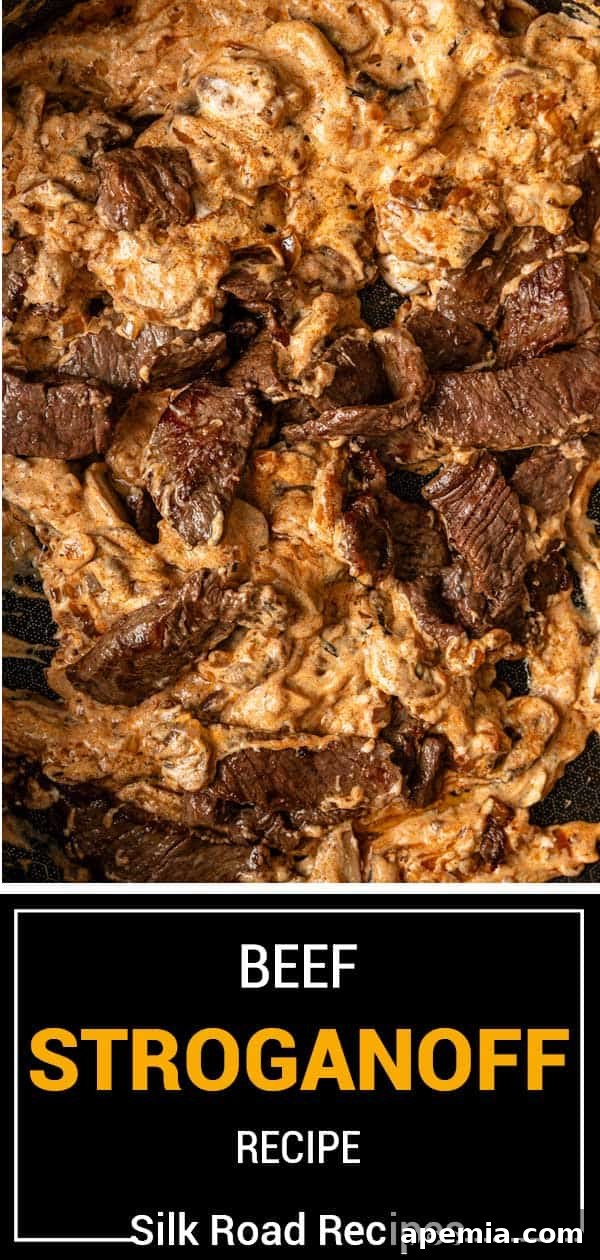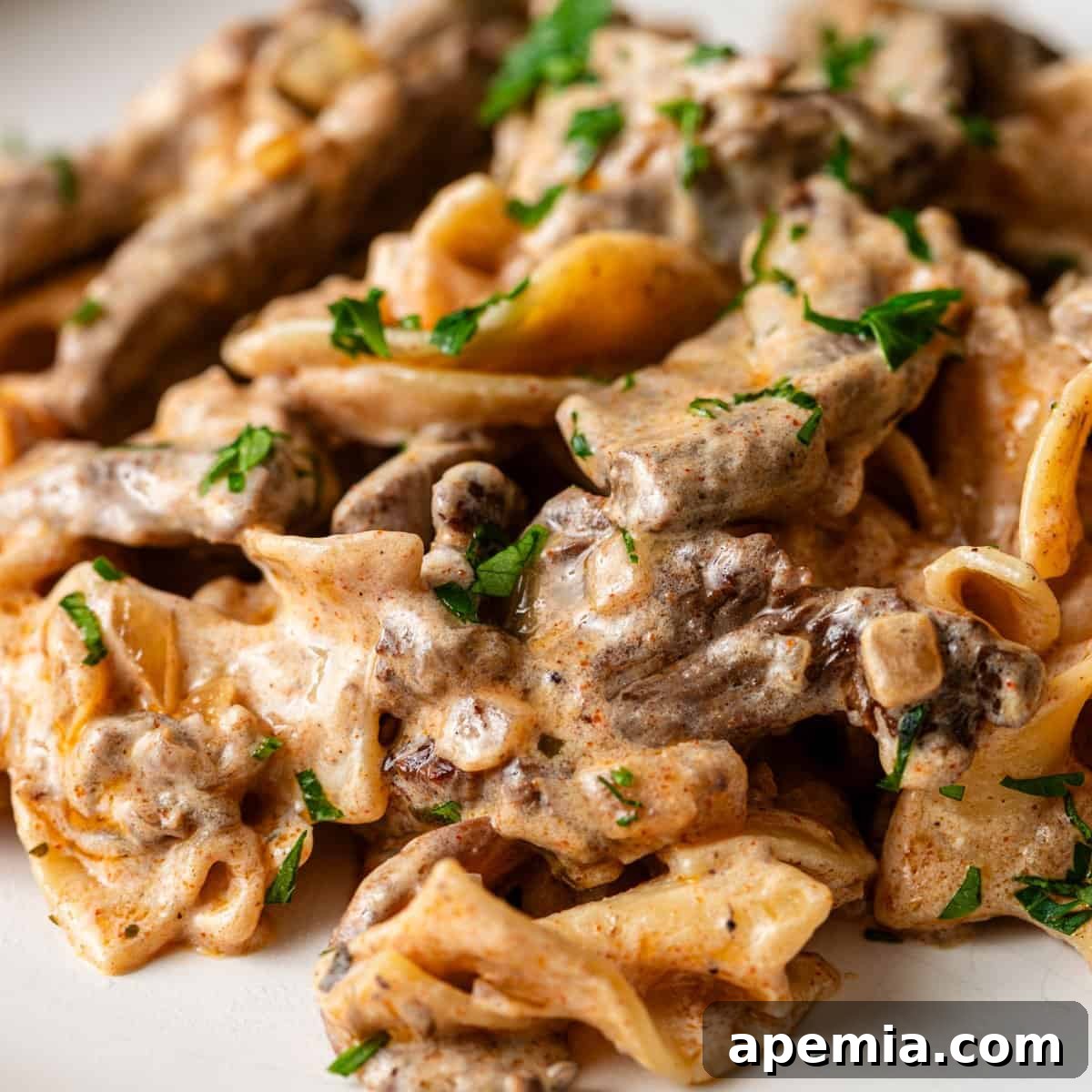
The Ultimate Creamy Beef Stroganoff: A Timeless Comfort Food Classic
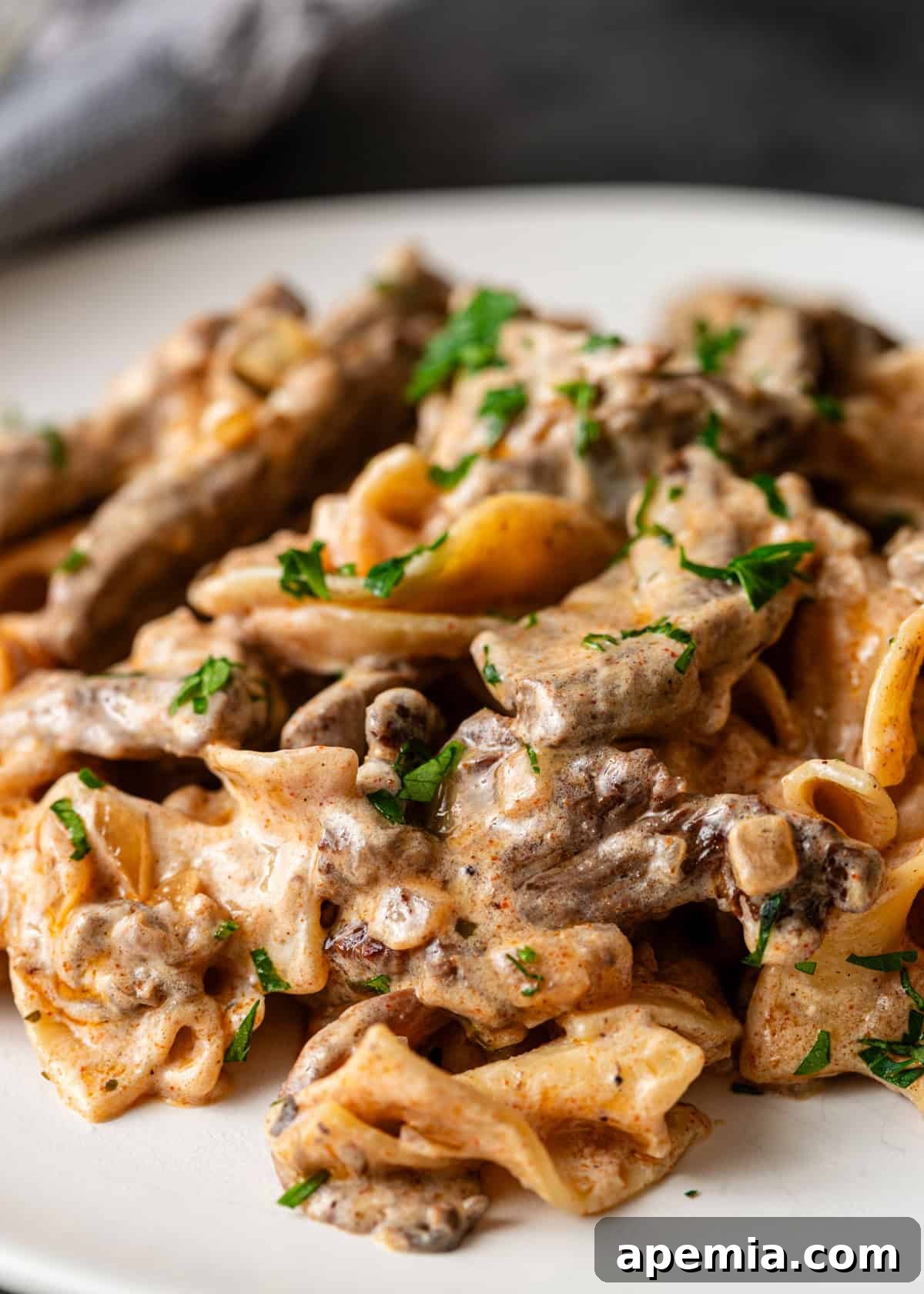
Beef Stroganoff is more than just a meal; it’s a culinary embrace, a dish that whispers comfort with every creamy, savory bite. This beloved classic masterfully combines thinly sliced, perfectly seared beef with an incredibly rich, mushroom-heavy sauce, all brought together by the irresistible tang of sour cream, a hint of sharp Dijon mustard, and the warm notes of paprika. It’s a truly satisfying skillet dinner that delivers layers of umami depth and heartwarming flavor, making it a perennial favorite for good reason.
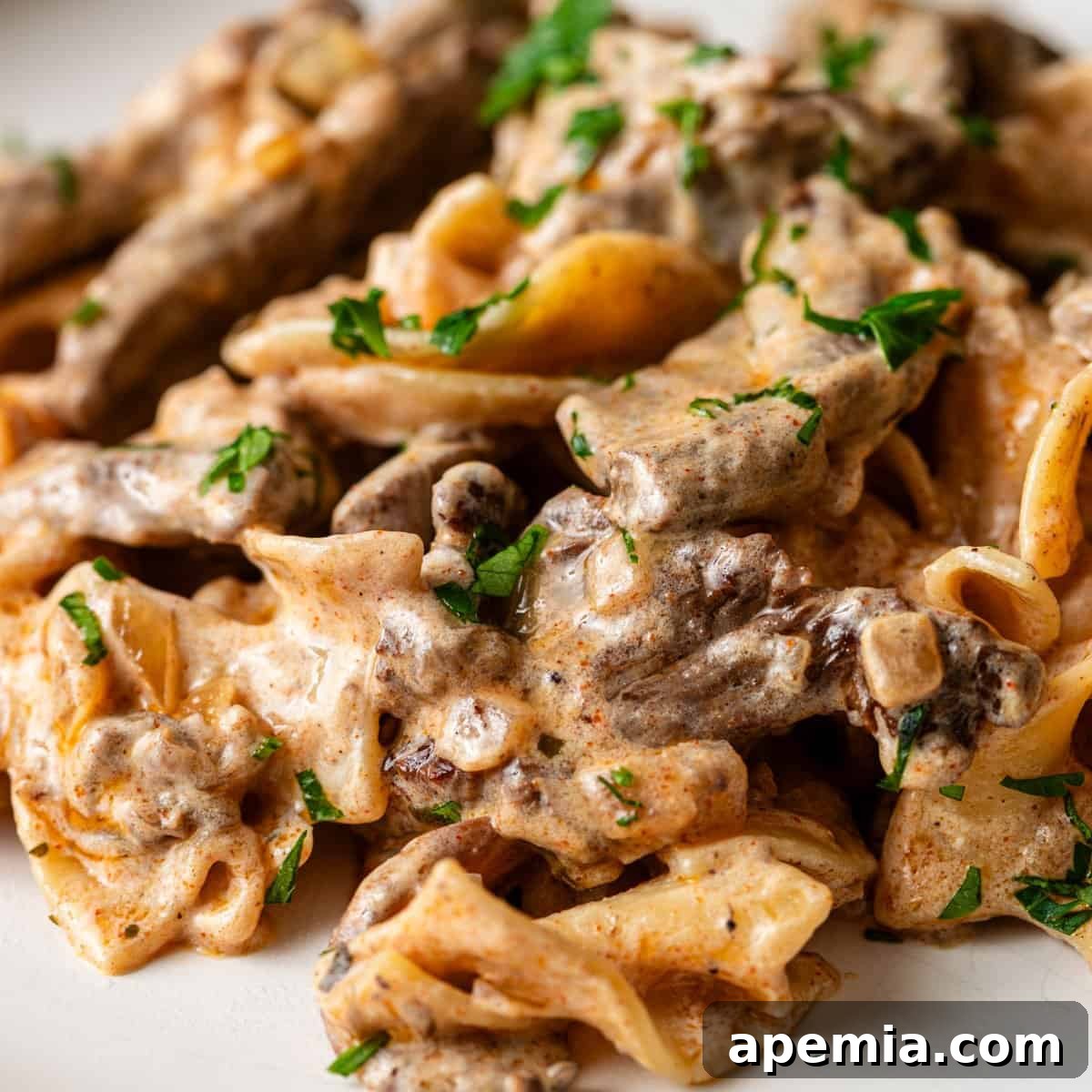
A Rich History: Tracing Beef Stroganoff’s Origins
The story of Beef Stroganoff begins in 19th-century Imperial Russia, a period of grand feasts and culinary innovation. It’s traditionally attributed to a French chef working for the Stroganov family, likely Count Pavel Alexandrovich Stroganov or his successor. The original concept was quite revolutionary for its time: quickly cooked, tender cuts of beef, often beef tenderloin, served in a luxurious, creamy, and tangy sauce. Unlike many dishes of that era where meat was braised or heavily spiced to mask imperfections or aid preservation, Stroganoff was designed to celebrate the inherent tenderness and flavor of high-quality beef.
As the dish gained popularity and spread from the aristocratic kitchens of St. Petersburg across Europe and eventually to North America, it began to evolve. Ingredients like mushrooms and paprika became common additions, contributing an amazing depth of flavor and a gentle, comforting spice that many modern renditions now feature. The mushrooms add an earthy umami, while paprika imparts a beautiful color and a subtle warmth without overwhelming the delicate balance. This evolution transformed a simple beef dish into the globally recognized, irresistible comfort food we cherish today.
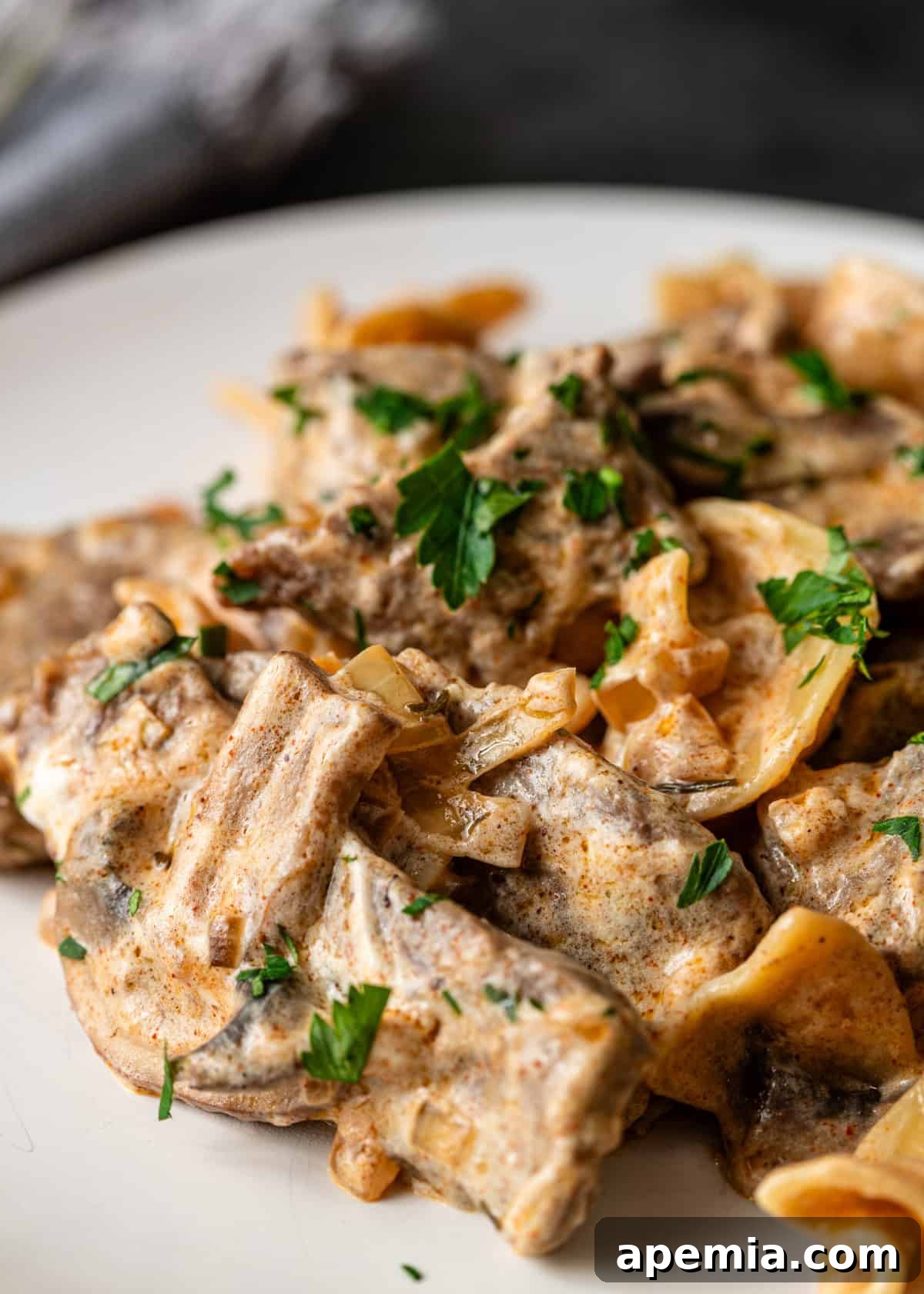
Table of Contents
- Why This Beef Stroganoff Recipe?
- Choosing the Best Beef Cuts
- Essential Ingredients & Smart Substitutions
- Step-by-Step Guide to Perfect Beef Stroganoff
- Recommended Kitchen Tools
- Serving Suggestions & Perfect Pairings
- Storage and Reheating Tips
- Frequently Asked Questions
- Beef Stroganoff Recipe
Why This Beef Stroganoff Recipe Stands Out
My version of Beef Stroganoff pays homage to its time-honored Russian origins while incorporating smarter, more efficient cooking techniques to ensure consistently outstanding results. We focus on maximizing flavor and tenderness at every stage. You’ll learn how to:
- Achieve Ultra-Tender Beef: By slicing the beef thinly across the grain and searing it in small batches over high heat, we lock in juices and develop a rich exterior crust without overcooking. This prevents the meat from becoming tough and ensures it melts in your mouth.
- Develop Deep Mushroom Flavor: Mushrooms are cooked until their moisture completely evaporates, intensifying their umami essence. This crucial step prevents a watery sauce and concentrates all that savory goodness.
- Balance the Richness: A touch of Dijon mustard is introduced to sharpen the sauce just enough, cutting through the richness of the sour cream and beef without overpowering it. Sweet paprika adds a lovely warmth and signature color, enhancing the depth of flavor subtly.
- Create a Velvety Smooth Sauce: We’ll guide you through building a lump-free, luxuriously creamy sauce that perfectly coats every strand of noodle and every piece of beef.
This approach transforms a simple skillet meal into a truly gourmet experience that’s surprisingly achievable at home. It’s a tried-and-true dish, perfect for cozy evenings, reminiscent of other comforting classics like Chicken Paprikash or a hearty Hungarian Goulash. While especially inviting during colder months, this Beef Stroganoff recipe is so packed with savory goodness and satisfying flavors that it will undoubtedly earn a permanent spot in your year-round recipe rotation.
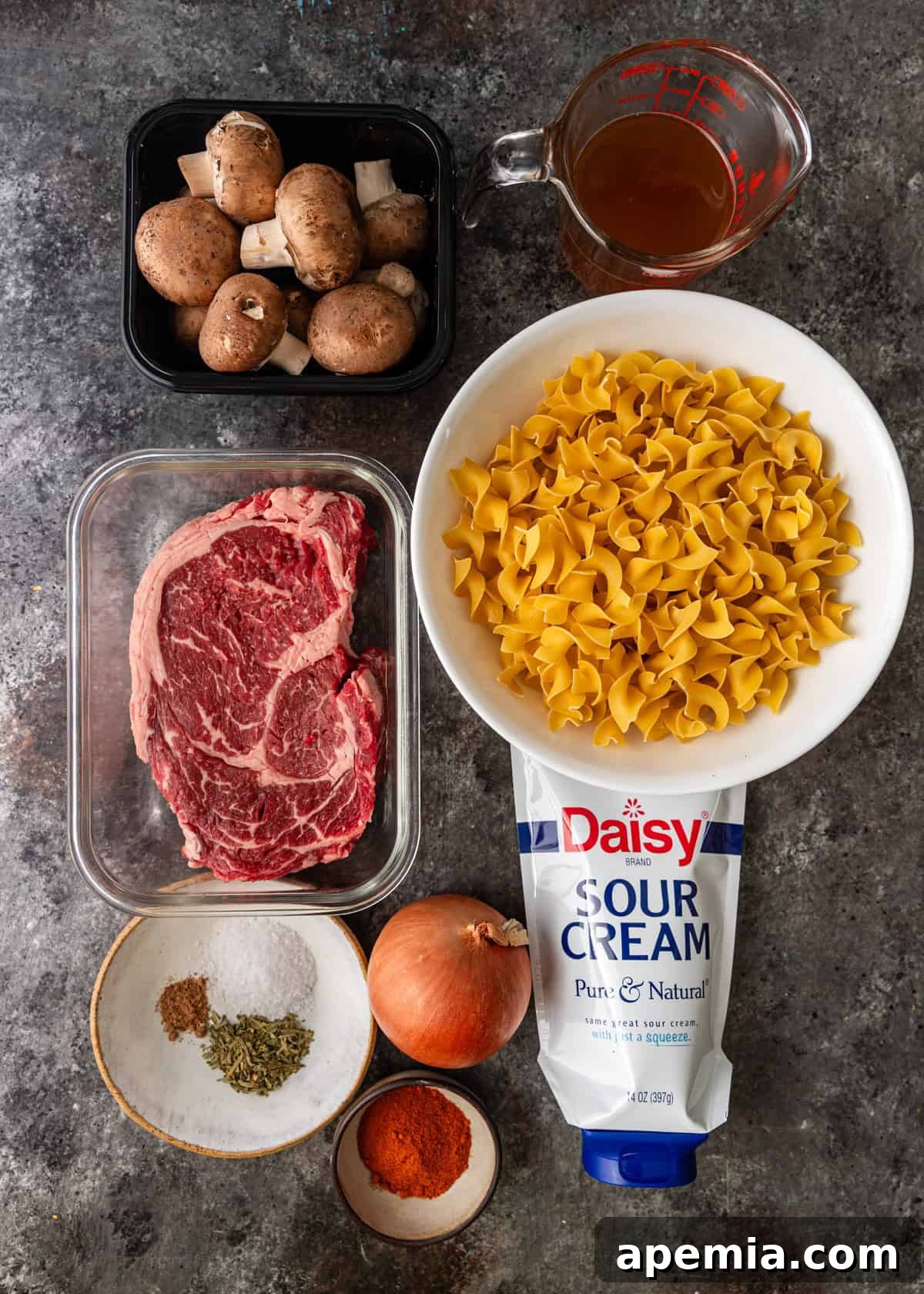
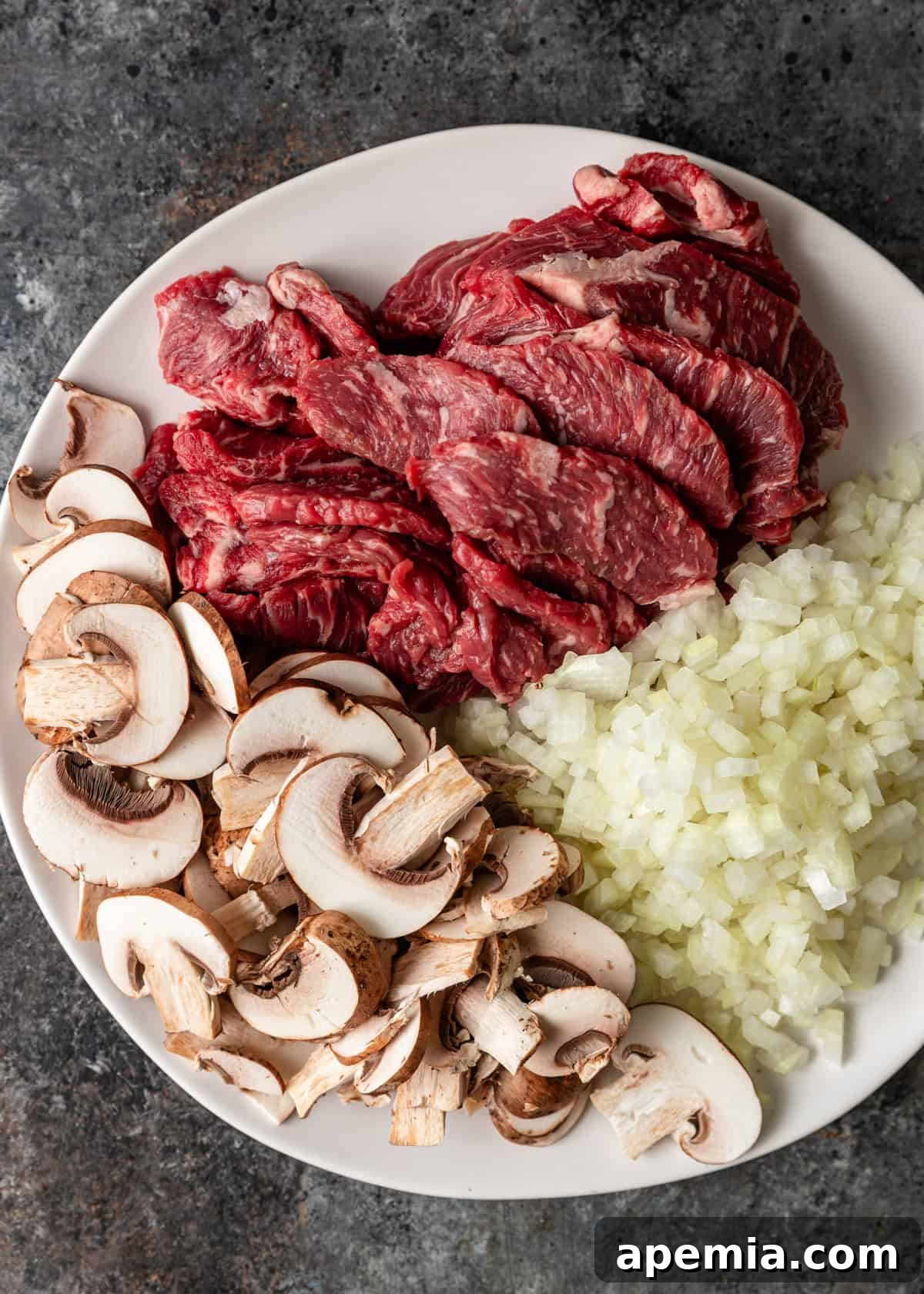
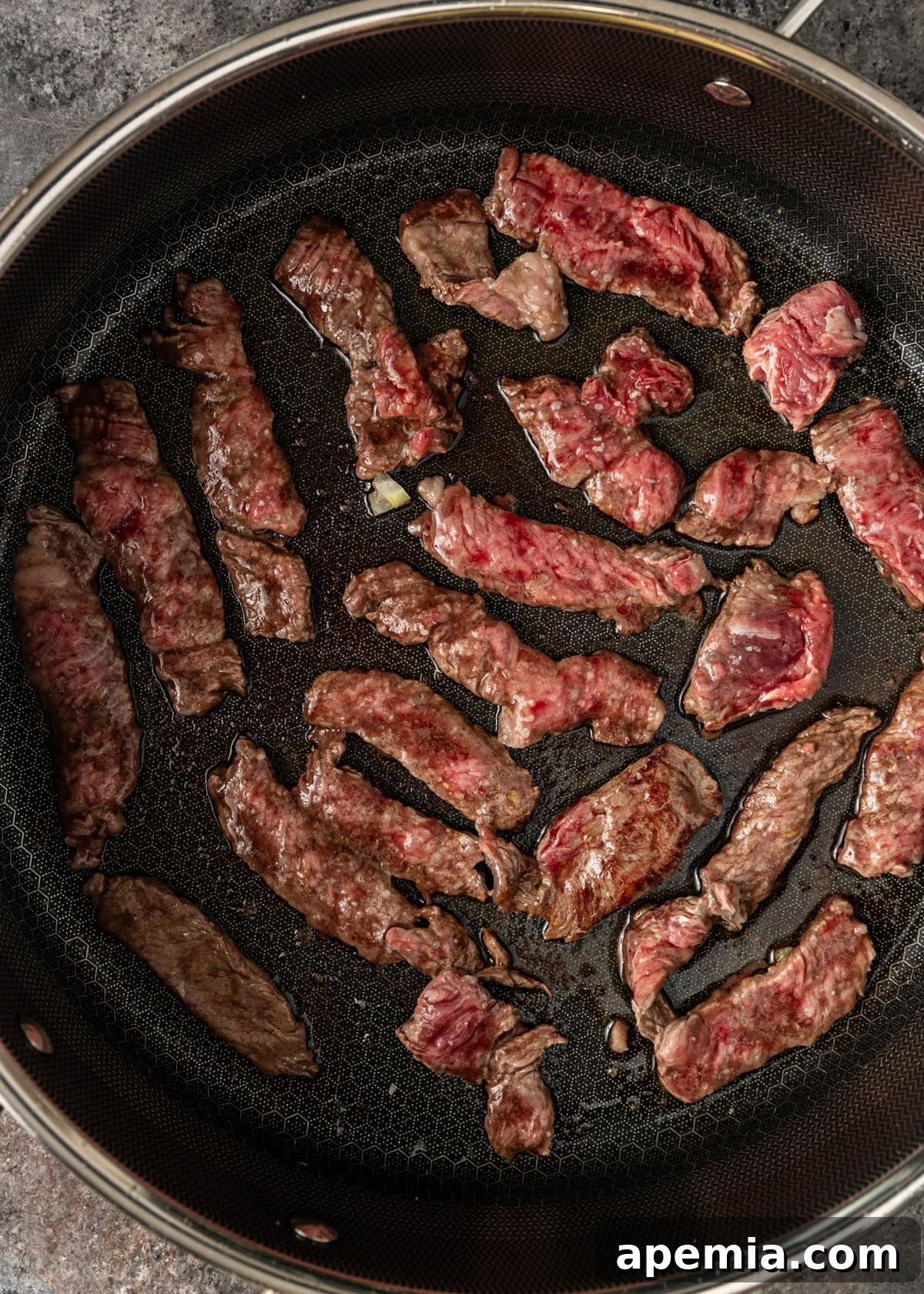
Chef’s Tip
Choosing the Best Beef Cuts for Stroganoff
The foundation of an exquisite Beef Stroganoff lies in selecting the right cut of beef. For truly tender, melt-in-your-mouth results, I always recommend:
- Sirloin: A lean, flavorful cut that cooks quickly and remains tender when sliced thinly across the grain. It’s a fantastic balance of taste and texture.
- Ribeye: Known for its generous marbling (as often shown in process photos), ribeye delivers exceptional tenderness and a rich, buttery flavor that beautifully complements the creamy sauce.
- Beef Tenderloin (Filet Mignon): The ultimate choice for luxurious tenderness. While pricier, it requires minimal cooking time and yields incredibly succulent results.
These premium cuts are ideal because they are inherently tender and benefit from brief, high-heat searing. Their fine grain ensures they absorb the sauce’s flavor without becoming stringy. I strongly advise against tougher cuts like beef chuck or stewing beef, which require prolonged braising to become tender – a method that simply doesn’t suit the classic Stroganoff preparation designed for quick cooking and a delicate texture.
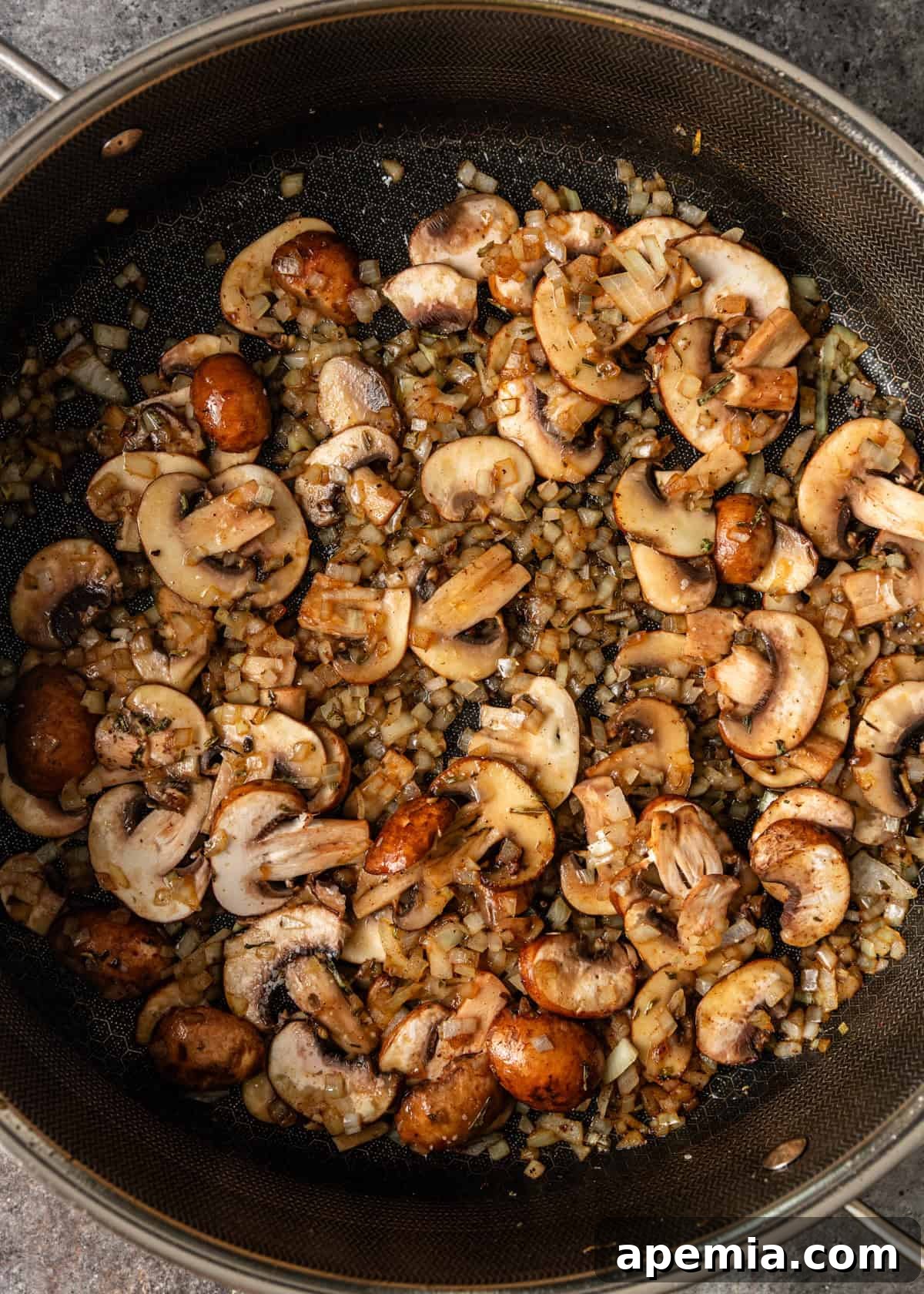
Essential Ingredients & Smart Substitutions
(For a complete list of ingredients and precise quantities, please refer to the recipe card below.)
- Beef: As discussed, ribeye, tenderloin, or sirloin are ideal. Remember to slice them thinly across the grain to ensure maximum tenderness and quick cooking. If you have trouble slicing, partially freezing the meat for 20-30 minutes can make it easier to get even, thin strips.
- Mushrooms: I highly recommend cremini mushrooms (also known as baby bellas) for their deeper, earthier flavor compared to standard white button mushrooms. They contribute significantly to the sauce’s umami profile. However, if white button mushrooms are all you have, they will still yield a delicious dish.
- Sour Cream: This is non-negotiable for achieving the signature tangy and creamy texture of Beef Stroganoff. Full-fat sour cream will give you the richest flavor and smoothest consistency. For a lighter alternative, plain, full-fat Greek yogurt can be used, but it’s crucial to stir it in off the heat to prevent curdling. A heavy cream can also be used, but won’t provide the same tang.
- Dijon Mustard: This ingredient is vital for adding a subtle, elegant acidity and depth that balances the richness of the sauce. Its nuanced flavor profile is distinct from yellow mustard, so please avoid substituting it, as it will alter the classic taste significantly.
- Paprika: Sweet paprika is traditionally used and contributes a beautiful reddish hue and a mild, sweet warmth to the sauce. For a more robust and smoky flavor, you can certainly opt for smoked paprika, which pairs wonderfully with beef.
- Dried Tarragon & Nutmeg: These spices add an aromatic complexity. Tarragon brings a subtle anise-like note that is classic in many French-inspired creamy sauces, while nutmeg adds a warm, delicate background spice. Don’t skip these for authentic flavor!
- Beef Stock: Use a good quality beef stock or broth to build the savory base of the sauce. Avoid overly salty varieties or adjust your added salt accordingly.
- All-Purpose Flour: This acts as a thickening agent, creating a smooth roux with the butter that gives the sauce its body.
- Egg Noodles: While any pasta can work, broad egg noodles are the traditional accompaniment to Stroganoff, providing the perfect tender vehicle for soaking up the rich sauce.
Step-by-Step Guide to Perfect Beef Stroganoff
Making delicious Beef Stroganoff is simpler than you might think when you follow these key steps:
- Prepare and Sear the Beef: Begin by slicing your chosen beef cut very thinly across the grain. This maximizes tenderness and ensures even cooking. Season the beef lightly with salt. Heat olive oil in a wide sauté pan or Dutch oven over medium-high heat until shimmering. Sear the beef in small batches, ensuring you don’t overcrowd the pan. Each batch should cook for only about 1 minute per side to achieve a beautiful sear and keep the interior tender. Overcrowding will steam the meat instead of searing it, leading to a gray, tough texture. Remove the seared beef to a plate and cover loosely to keep warm.
- Sauté the Aromatics & Mushrooms: Using the same pan, melt butter over medium heat. Add the diced yellow onion and sliced mushrooms, along with the remaining salt, dried tarragon, and ground nutmeg. Sauté, stirring occasionally, until the onions are translucent and the mushrooms have released all their moisture, which will then evaporate. This step is crucial for building deep flavor and preventing a watery sauce. Cook until the mushrooms are nicely browned and tender.
- Build the Velvety Sauce: Once the vegetables are cooked, sprinkle the all-purpose flour evenly over them. Stir constantly for about 1 minute to cook out the raw flour taste, creating a roux. Gradually whisk in the beef stock, scraping up any browned bits from the bottom of the pan (this is called deglazing and adds immense flavor). Reduce the heat to low. Stir in the sour cream, Dijon mustard, and sweet paprika until the sauce is smooth and fully combined. Ensure the heat remains low to prevent the sour cream from curdling.
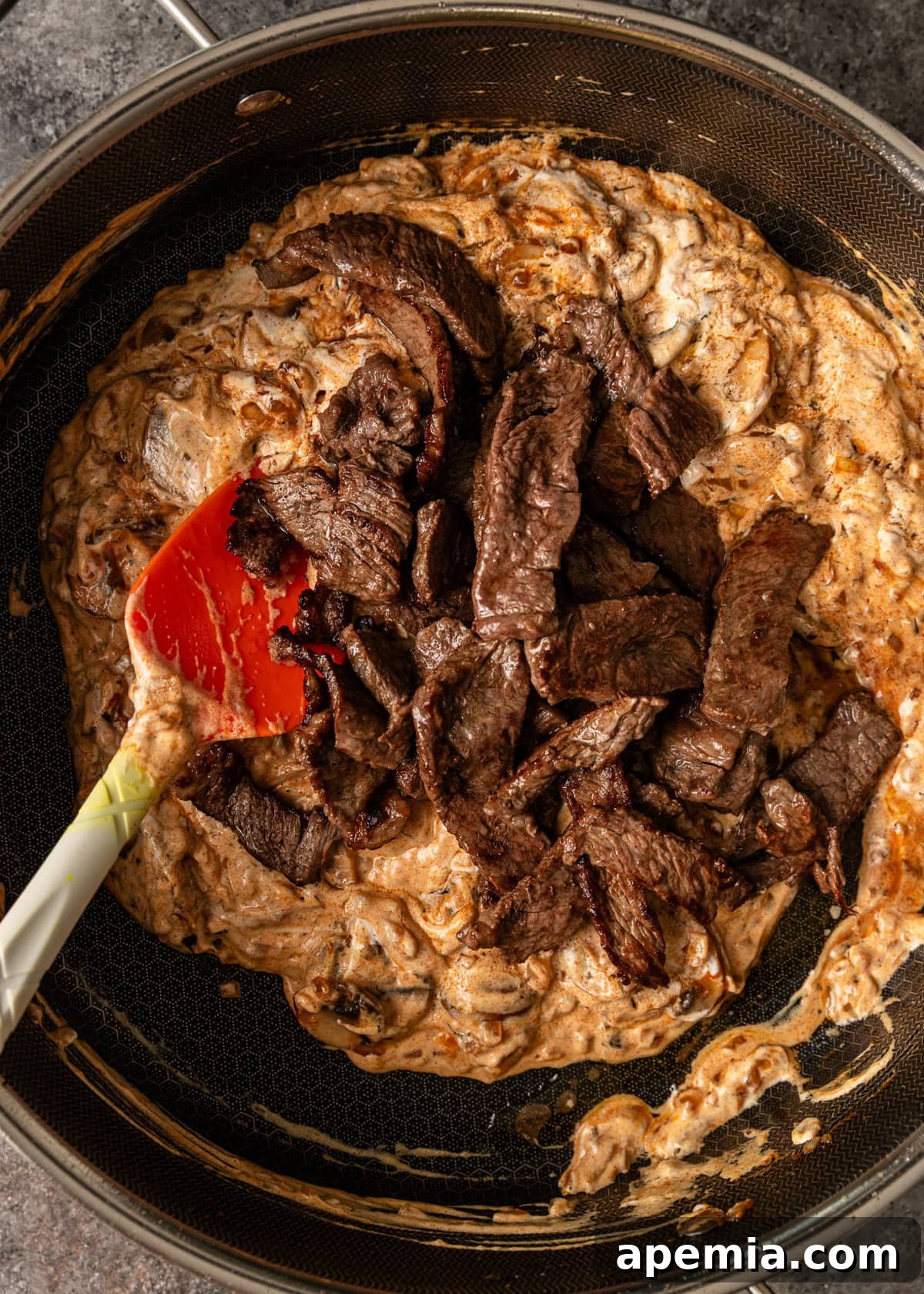
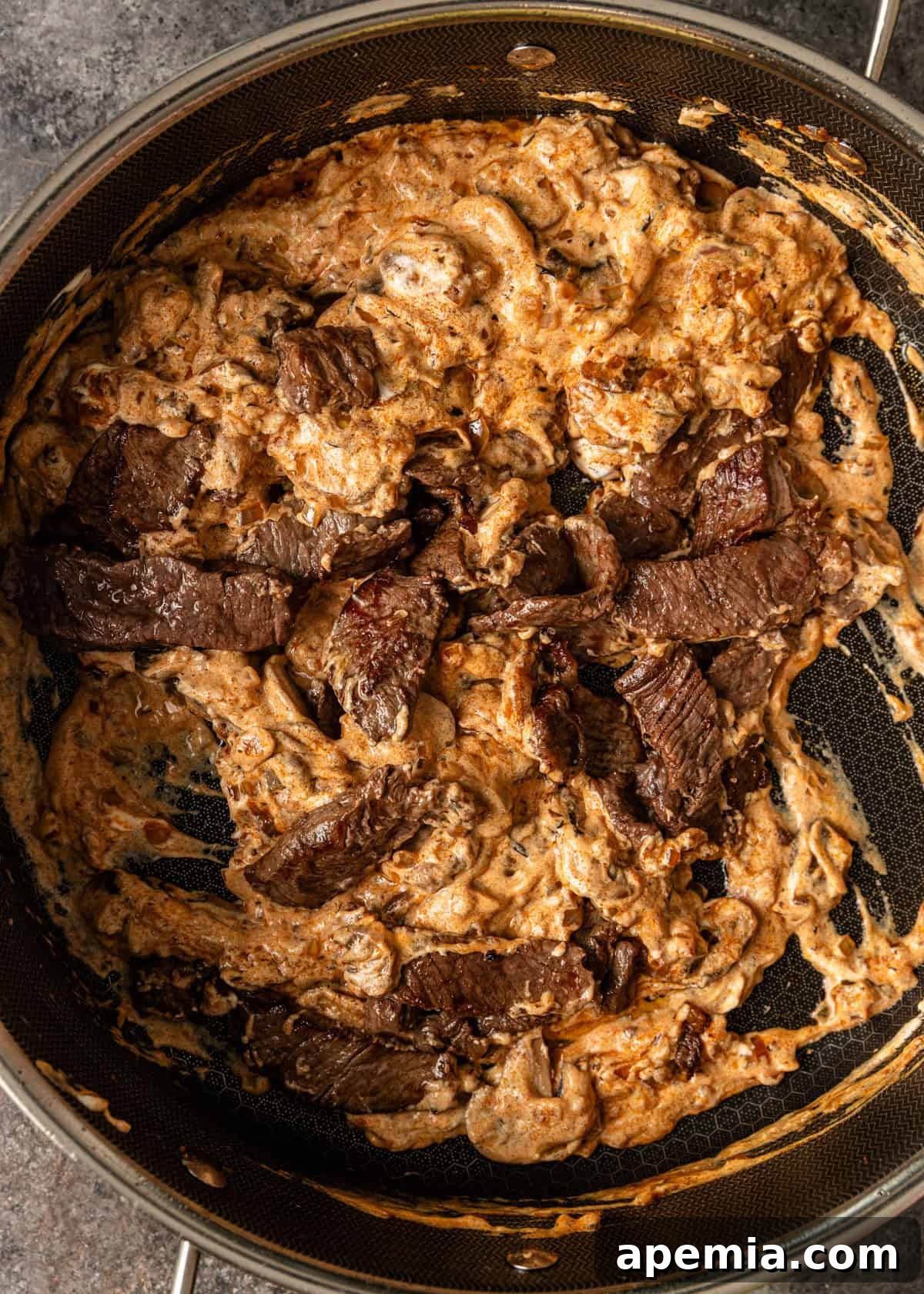
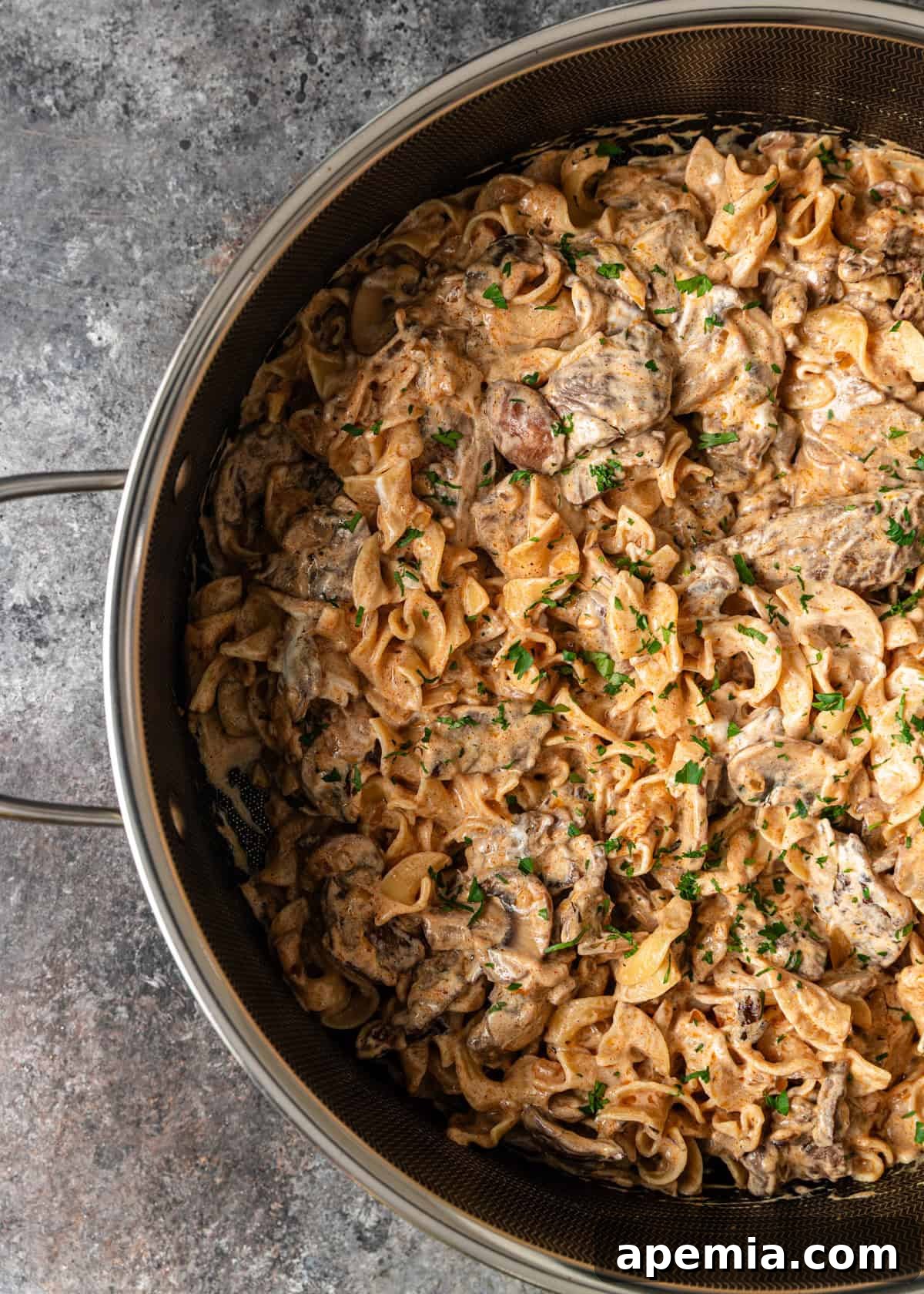
- Combine, Simmer & Finish: Return the seared beef to the pan, gently folding it into the sauce until every piece is coated. Allow it to simmer briefly for just 2 minutes to warm the beef through and allow the flavors to meld. Meanwhile, cook egg noodles according to package instructions until al dente. Drain them, reserving about ½ cup of the pasta water. Add the cooked noodles directly to the stroganoff sauce and toss gently to coat. If the sauce seems too thick, add a splash of the reserved pasta water until you reach your preferred consistency. Serve immediately, garnished with freshly chopped parsley.
Recommended Kitchen Tools for Stroganoff
Having the right tools can make preparing Beef Stroganoff a breeze and ensure the best results:
- Wide Sauté Pan or Dutch Oven: A large surface area is key for searing beef in batches without overcrowding. This allows for proper browning and flavor development. A Dutch oven also retains heat beautifully for simmering the sauce.
- Sharp Knife: Essential for slicing the beef thinly and evenly across the grain. A blunt knife can tear the meat, making it tough. A sharp knife ensures clean cuts for tender strips.
- Cutting Board: A sturdy cutting board is necessary for safely preparing your beef and vegetables.
- Silicone Spatula or Wooden Spoon: Perfect for gentle stirring without scratching non-stick surfaces and for scraping up flavorful browned bits from the bottom of the pan.
- Whisk: To ensure your sauce is lump-free and perfectly smooth when incorporating the flour and liquids.
Serving Suggestions & Perfect Pairings
Beef Stroganoff is traditionally served with broad egg noodles, which perfectly soak up the rich, creamy sauce. However, its versatility allows for many other delightful pairings:
- Potatoes: Creamy mashed potatoes, roasted potatoes, or even simple boiled potatoes are excellent for soaking up every last drop of the luscious sauce.
- Rice: White rice or wild rice can offer a lighter alternative to pasta, providing a neutral base that lets the Stroganoff flavors shine.
- Vegetables: A simple green salad with a light vinaigrette provides a refreshing contrast to the richness of the dish. Steamed green beans, asparagus, or broccoli florets are also wonderful additions, adding color and nutrients.
- Bread: A crusty baguette or sourdough bread is perfect for scooping up any remaining sauce on your plate.
- Garnish: Always finish with a sprinkle of fresh chopped parsley or chives for a burst of color and herbaceous freshness.
Storage and Reheating Tips for Leftovers
Beef Stroganoff makes fantastic leftovers, often tasting even better the next day as the flavors have more time to meld. Here’s how to store and reheat it properly:
- Storage: Allow the stroganoff to cool completely to room temperature before transferring it to an airtight container. Store in the refrigerator for up to 3 days. For best results and to prevent the noodles from becoming too soggy, I highly recommend storing the cooked egg noodles separately from the sauce and beef mixture if possible.
- Reheating on the Stovetop: This is the preferred method for reheating. Gently warm the stroganoff in a saucepan over low heat, stirring frequently. Add a splash of beef stock, water, or even a little milk to loosen the sauce as it warms, as it tends to thicken in the refrigerator. Continue stirring until heated through, being careful not to bring the sauce to a rolling boil, which can cause the sour cream to separate.
- Reheating in the Microwave: While less ideal for maintaining the sauce’s texture, you can microwave individual portions. Place the stroganoff in a microwave-safe dish and heat on medium power, stirring every minute or so, until warmed through. Again, a splash of liquid can help restore the sauce’s consistency.
- Freezing: While technically possible, freezing stroganoff with sour cream is not generally recommended as dairy-based sauces can separate and become grainy upon thawing and reheating. If you plan to freeze, it’s best to freeze the beef and mushroom mixture *before* adding the sour cream, then add fresh sour cream when reheating.
Share this recipe on Pinterest!
Love this recipe? Share it with the world on Pinterest.
Frequently Asked Questions About Beef Stroganoff
A watery sauce is a common issue and usually occurs for two main reasons: either the mushrooms weren’t cooked long enough, or the pan was overcrowded when searing the beef. Mushrooms release a significant amount of water when cooked. It’s crucial to sauté them until all that liquid has evaporated and they start to brown. If the beef pan is too full, the meat will steam instead of sear, releasing its juices and making the sauce thin. Always sear beef in small batches and ensure mushrooms are fully cooked down for a rich, concentrated sauce.
Tough beef in Stroganoff typically results from overcooking or incorrect slicing. Always cut your beef thinly against the grain; this shortens the muscle fibers, making the meat more tender. Beef tenderloin, ribeye, or sirloin cuts are best for this dish as they cook quickly. Sear the strips quickly over high heat for just about a minute per side. The beef should only simmer briefly at the end to warm through in the sauce, not undergo prolonged cooking, which will toughen it.
Preventing sour cream from curdling is essential for a smooth, creamy sauce. The key is gentle heat. Always lower the heat to its lowest setting or even remove the pan from the heat entirely before stirring in the sour cream. Once the sour cream is incorporated, avoid bringing the sauce to a rapid boil. Simmer gently over very low heat just until warmed through, stirring constantly.
You can prepare components of Beef Stroganoff ahead of time. The beef can be seared and the mushroom-onion mixture (without sour cream) can be made a day in advance. Store them separately in the refrigerator. When ready to serve, gently reheat the beef and mushroom mixture, then proceed with adding the sour cream and finishing the sauce with freshly cooked noodles. This helps maintain the best texture and prevents the sour cream from separating during prolonged storage.
Beef Stroganoff
4
15 minutes
15 minutes
30 minutes
PrintRecipe
Video Overview
Watch our quick video for a visual guide on preparing this delicious Beef Stroganoff!
Ingredients
- 1 lb ribeye, beef tenderloin, or sirloin thinly sliced across grain
- 1 tsp kosher salt divided
- 3 tbsp olive oil
- 3 tbsp butter
- 1 medium yellow onion diced
- 1/2 lb brown mushrooms sliced
- 1 tsp dried tarragon
- 1/8 tsp ground nutmeg
- 2 tbsp all-purpose flour
- 8 oz egg noodles
- 8 oz sour cream
- 1 tbsp Dijon mustard
- 1/2 cup beef stock
- 1 tbsp sweet paprika
- parsley chopped, for garnish
Instructions
-
Thinly slice the beef across the grain. Season the beef with 1/2 tsp kosher salt. In a deep sauté pan or Dutch oven, heat the olive oil over medium-high heat. Sear the beef in small batches for approximately 1 minute per side, ensuring the pan is not overcrowded to allow for proper searing and to prevent steaming. Remove the seared beef to a plate and cover it to keep warm.
-
In the same pan, melt the butter over medium heat. Add the diced yellow onion, sliced brown mushrooms, the remaining 1/2 tsp kosher salt, dried tarragon, and ground nutmeg. Cook, stirring occasionally, for several minutes until most of the water released from the mushrooms has evaporated and they are lightly browned. Sprinkle the vegetables with all-purpose flour and cook for another minute, stirring to create a roux.
-
While the vegetables are cooking, prepare the egg noodles according to package instructions until al dente. Drain the noodles and set them aside, reserving 1/2 cup of the pasta water.
-
To the sautéed vegetables, gradually stir in the sour cream, Dijon mustard, beef stock, and sweet paprika. Reduce the heat to low and stir gently until the sauce is smooth and well combined. Add the browned beef back into the pan and mix so that all the beef pieces are covered by the creamy sauce. Simmer for just 2 minutes to warm the beef through and allow the flavors to meld.
-
Add the drained, cooked pasta to the beef stroganoff mixture and toss everything together to coat the noodles thoroughly with the sauce. Cover the pan and simmer for an additional 2 minutes. If you prefer a thinner sauce, add some of the reserved pasta water until your desired consistency is achieved. Serve immediately, garnished generously with freshly chopped parsley.
Nutrition
The information shown is an estimate provided by an online nutrition calculator. It should not be considered a substitute for a professional nutritionist’s advice.