
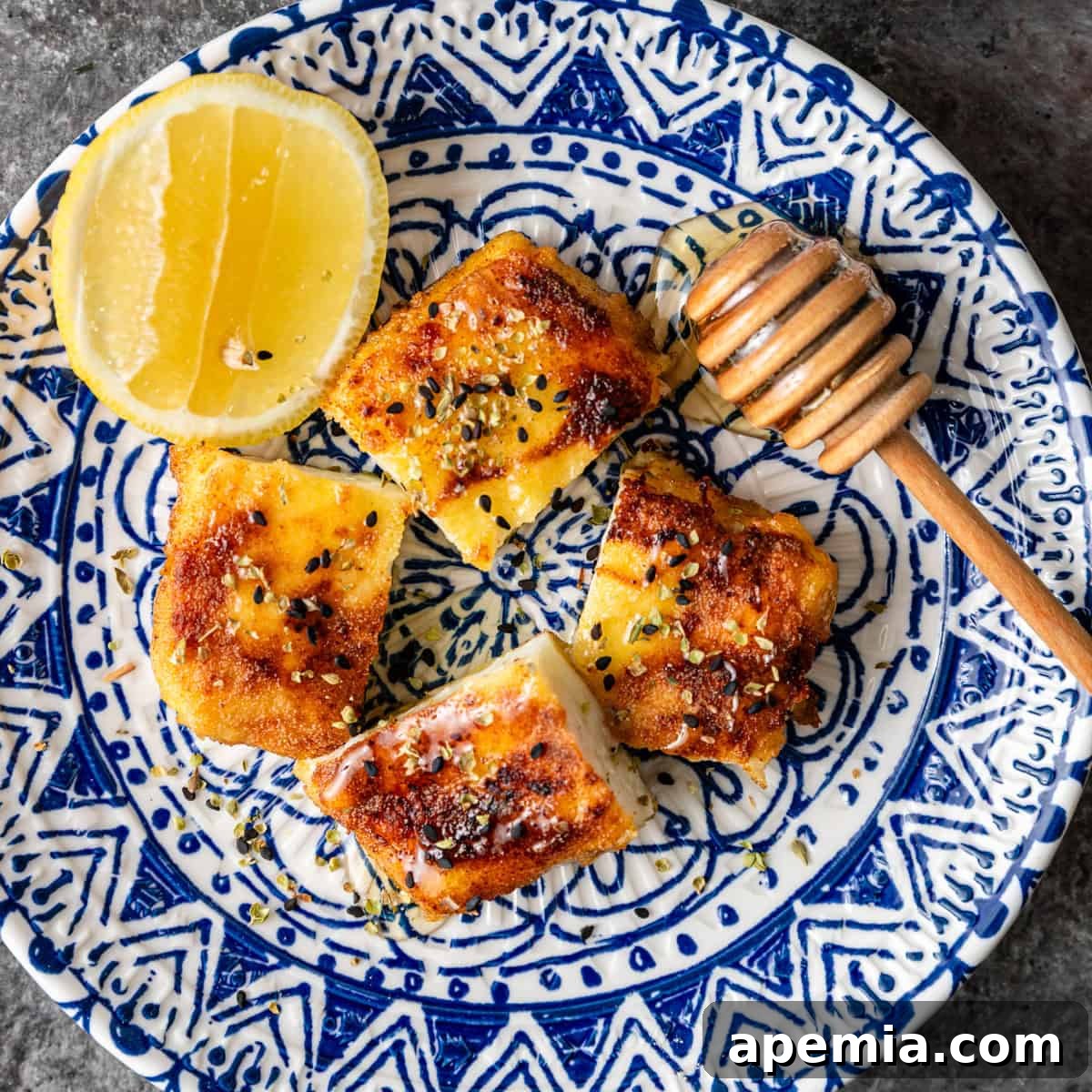
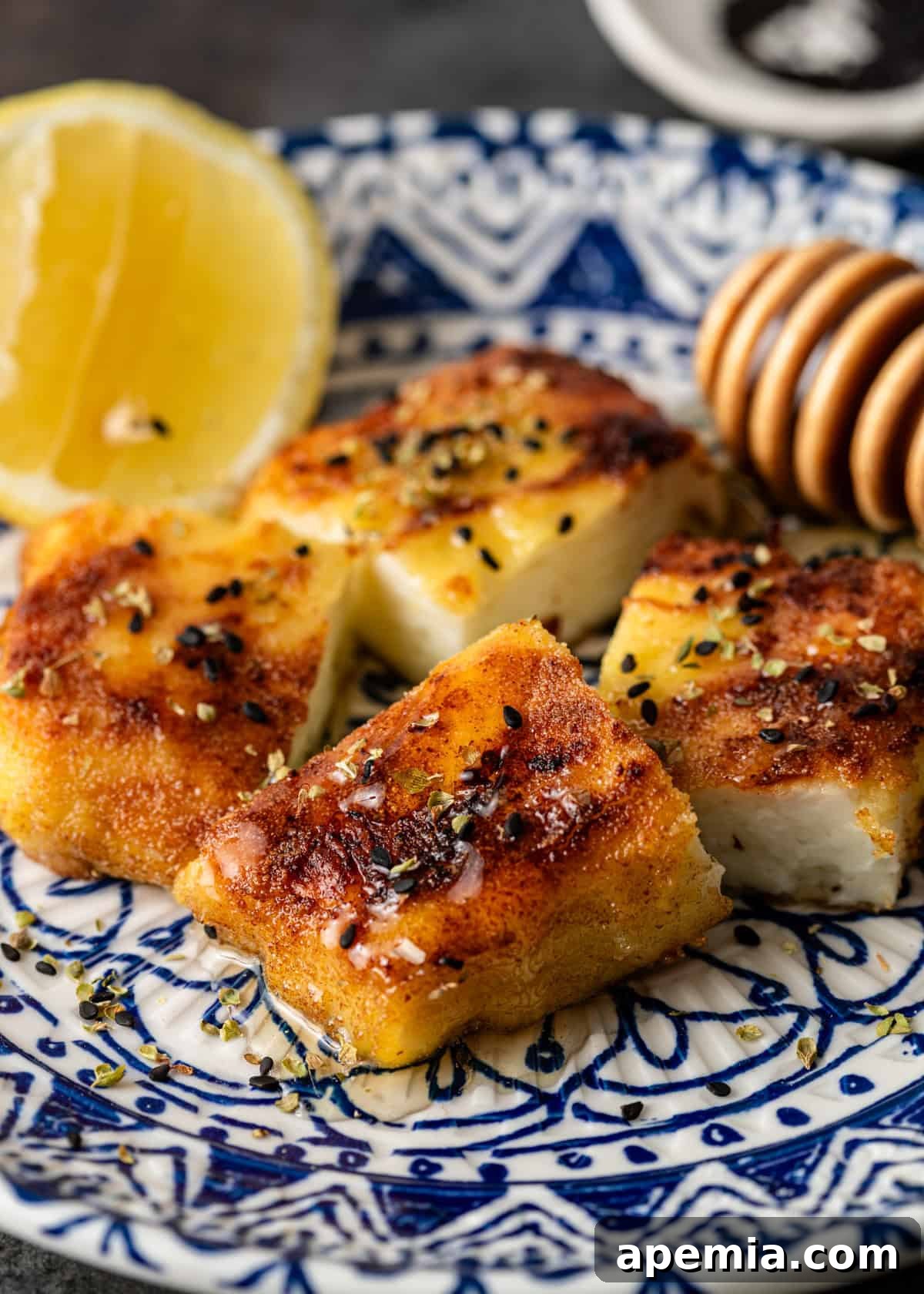
Experience the sensational blend of textures and flavors with authentic Greek Saganaki. This iconic dish features a golden-brown, irresistibly crispy fried exterior that beautifully encases a soft, wonderfully gooey cheese interior. Elevated with a drizzle of sweet honey, aromatic herbs, and crunchy sesame seeds, it’s a snackable delight that promises a true taste of Greece.
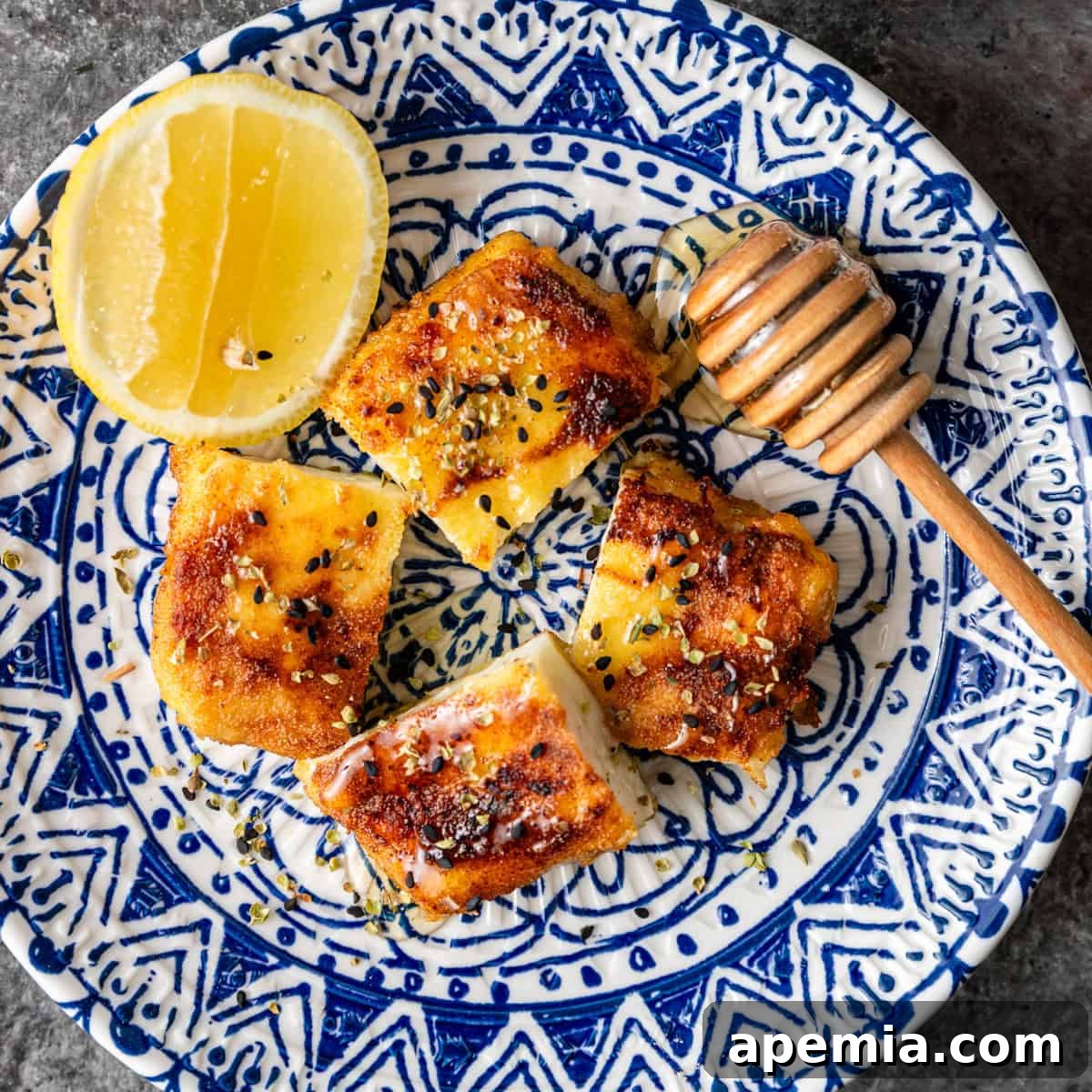
Saganaki: A Taste of Greece in Every Crispy Bite
Prepare to have your culinary expectations exceeded by Saganaki, the quintessential Greek pan-seared cheese dish! Its remarkable coarse, crispy semolina flour coating delivers an incredibly satisfying crunch, while the center remains astonishingly soft and melt-in-your-mouth cheesy. It’s a true “best-of-both-worlds” experience, offering a delightful contrast that makes it utterly unforgettable.
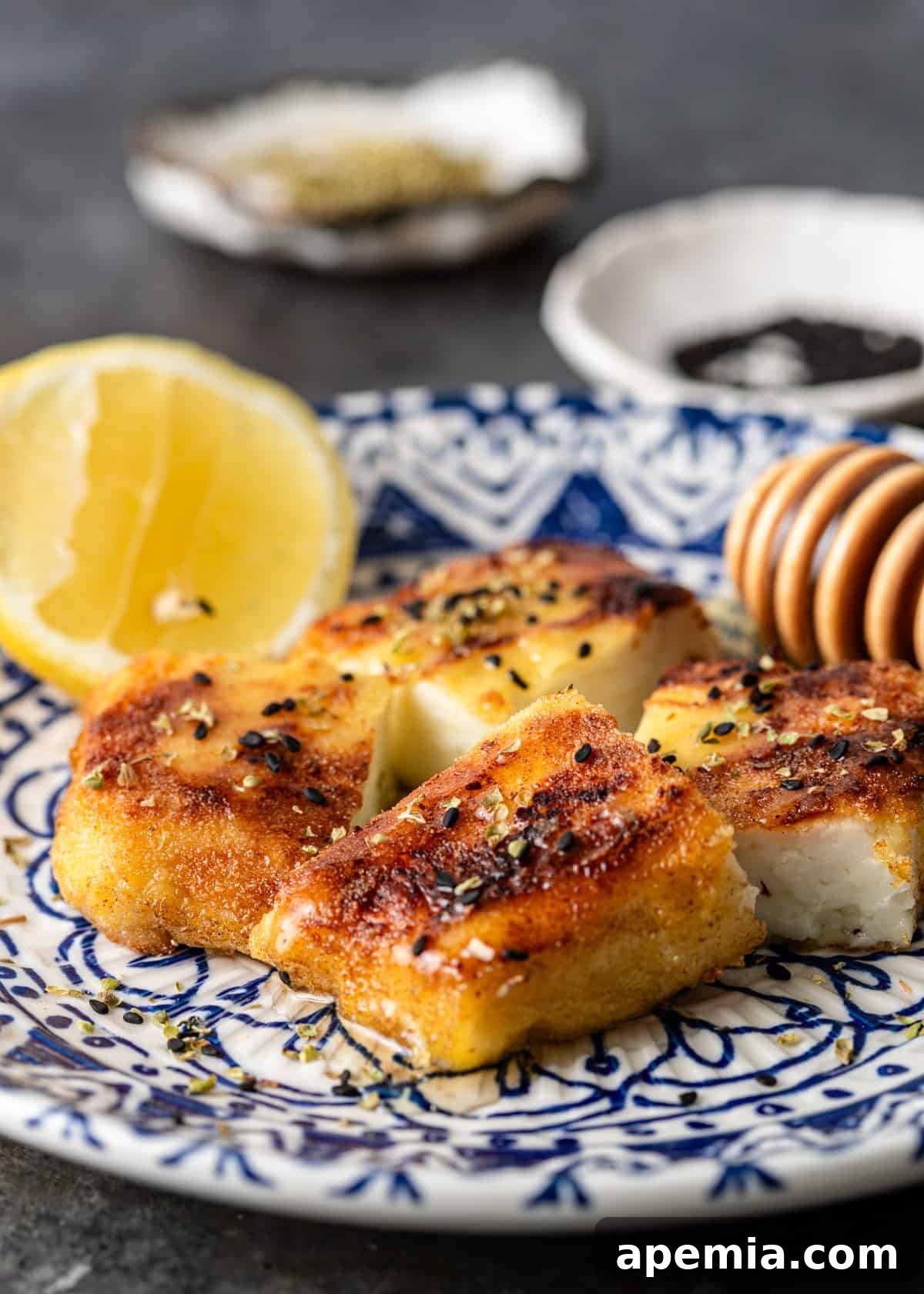
Traditionally served as a vibrant appetizer, much like the flaky layers of Spanakopita triangles, Saganaki can also be transformed into a more substantial meal with the addition of protein. My preferred way to enhance this already magnificent dish is with a generous drizzle of golden honey, a sprinkle of nutty sesame seeds, a pinch of earthy oregano, and a splash of bright, fresh lemon juice. These additions not only elevate the flavor profile but also add an aesthetic charm that is truly inviting.
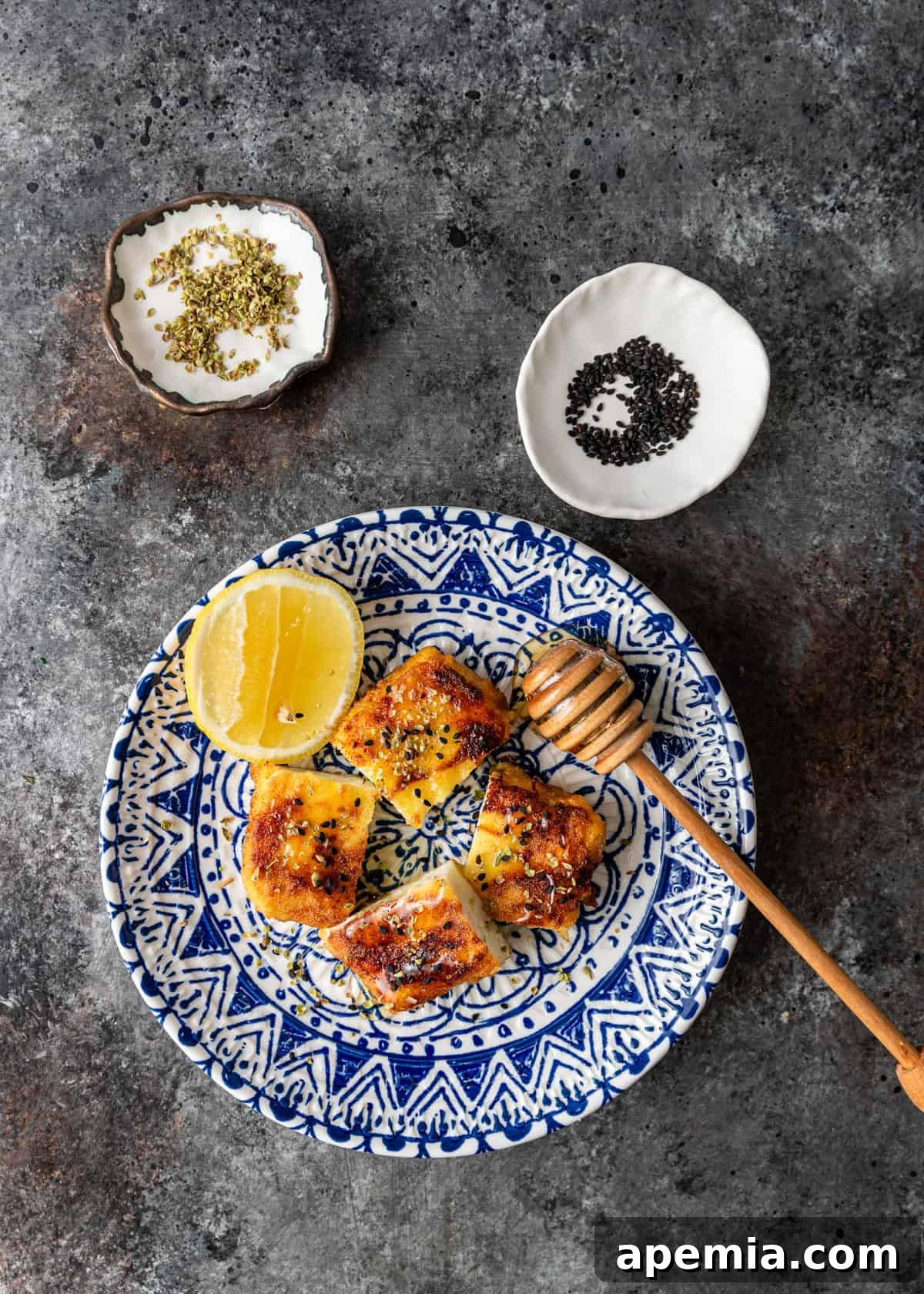
For this Saganaki recipe, I often choose halloumi cheese. This versatile Cypriot cheese is exceptionally well-suited for frying, maintaining its shape beautifully while developing a delicious golden crust and a soft interior. Whether pan-fried to perfection or fashioned into crispy fries, halloumi never disappoints. Its natural saltiness means minimal extra seasoning is required, allowing its unique flavor to shine.
Table of Contents
- The Magic of Saganaki: A Culinary Journey
- Which Cheese is Best for Saganaki?
- Ingredient Notes and Substitutions
- How to Make Saganaki: Step-by-Step Perfection
- Serving Saganaki: Beyond the Plate
- Recommended Tools for Saganaki
- Storing and Reheating Your Saganaki
- Frequently Asked Questions About Saganaki
- Saganaki (Greek Pan Seared Cheese) Recipe
The Magic of Saganaki: A Culinary Journey
Saganaki isn’t just a dish; it’s an experience, a celebration of simple ingredients transformed into something extraordinary. Its name itself, derived from “sagani,” meaning “small frying pan,” speaks to its humble origins and the communal joy it brings. In Greek tavernas, Saganaki often arrives tableside with a dramatic flourish, famously flambéed with a shout of “Opa!”—a tradition that began in Chicago but quickly became synonymous with the dish’s festive spirit. This fiery spectacle, typically achieved with a splash of brandy and a squeeze of lemon to extinguish the flames, adds an element of theatricality that perfectly complements its bold flavors.
But beyond the drama, Saganaki offers a beautiful interplay of textures and tastes. The initial crispness gives way to a creamy, savory interior, harmonizing beautifully with the optional additions of sweet honey, earthy herbs, and the bright zest of lemon. It’s an ideal appetizer, whetting the appetite without overwhelming it, and setting the stage for a delightful Greek feast. Whether enjoyed in a bustling Athenian restaurant or a quiet home kitchen, Saganaki embodies the warmth and hospitality of Greek culture.
Tip From Kevin
Which Cheese is Best for Saganaki?
The choice of cheese is paramount to creating an authentic and delicious Saganaki. In Greece, the traditional cheeses used are Kefalotyri, Kefalograviera, and Graviera. These are all medium-hard, firm yellow cheeses known for their slightly nutty and salty flavor profiles, which lend themselves beautifully to frying by becoming wonderfully tender in the center while holding their shape. Kefalotyri, with its robust flavor, is often considered the gold standard.
In Cyprus, however, halloumi is the cheese of choice, and it has gained significant popularity globally for Saganaki due to its unique properties. Halloumi is a semi-hard, unripened brined cheese that has a high melting point, making it perfect for grilling or frying without completely losing its form. It develops a fantastic golden crust and a satisfyingly squeaky texture, yet remains soft and pliable inside. While traditional Greek cheeses can sometimes be challenging to source outside of specialty stores, halloumi is much more widely available, making it an excellent and convenient substitute that still delivers an outstanding Saganaki experience.
If you have the opportunity, I highly encourage you to experiment with all these varieties. Each cheese offers a subtle difference in flavor and texture, allowing you to discover your personal favorite and truly appreciate the versatility of this beloved Greek dish. Whether you opt for the traditional Greek cheeses or the more accessible halloumi, the key is to select a firm cheese that can withstand the heat of frying and achieve that coveted duality of crispy exterior and molten interior.
Essential Ingredients for Authentic Saganaki
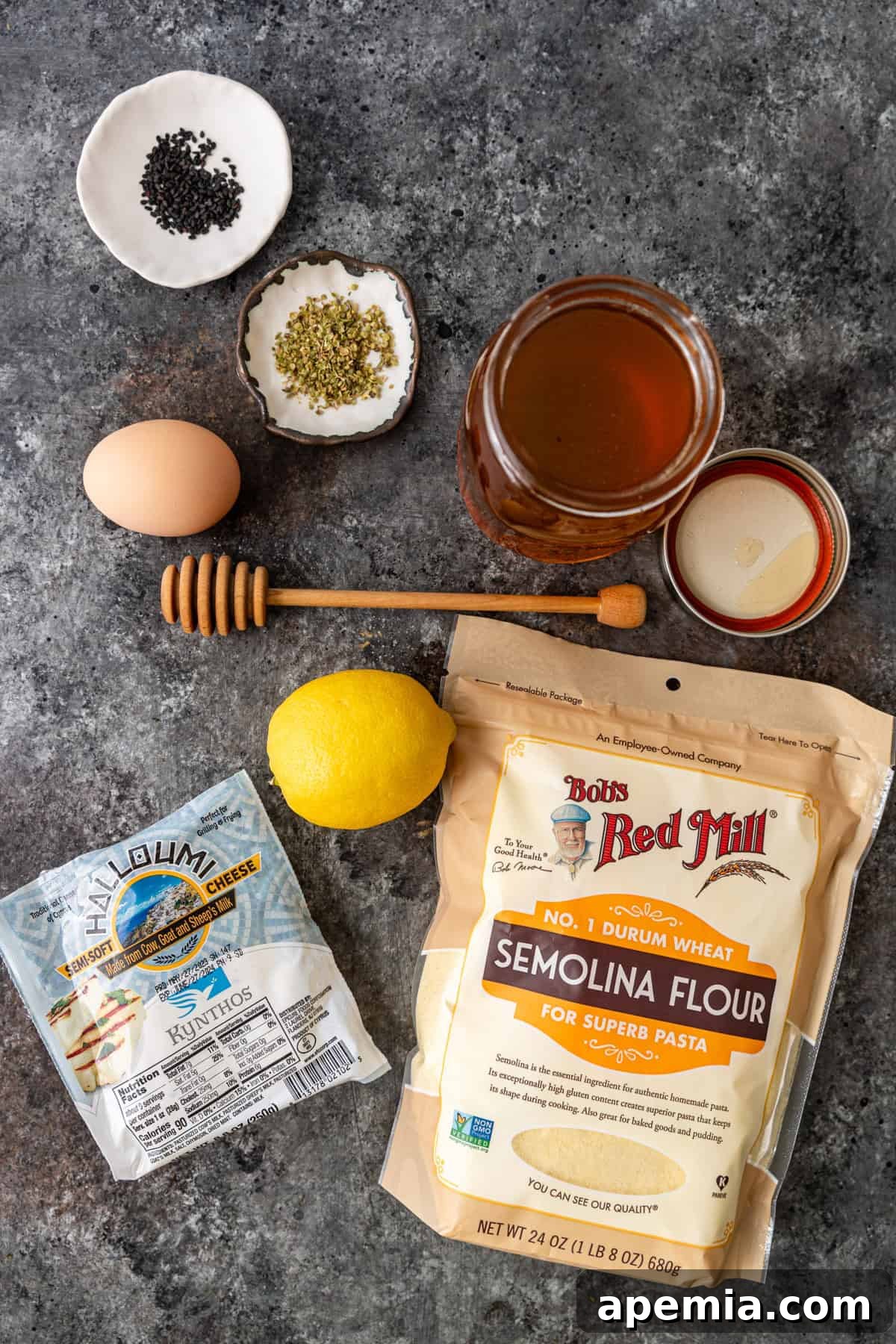
- Halloumi Cheese: This firm, brined Cypriot cheese is an excellent choice for Saganaki due to its high melting point. It crisps up beautifully on the outside while remaining delightfully soft and “squeaky” in the center. Halloumi is naturally quite salty, so no additional salt is usually needed. If substituting, look for other firm, semi-hard cheeses like Kefalotyri, Kefalograviera, or even a very firm Feta (though Feta will be softer). The goal is a cheese that holds its shape when heated but still gets delightfully gooey.
- Large Egg: The beaten egg acts as a binder and a protective barrier. It coats the cheese, preventing it from burning too quickly and ensuring the semolina flour adheres properly. This creates the perfect canvas for a golden-brown, crispy crust.
- Semolina Flour: I highly recommend using coarse semolina flour over regular all-purpose flour for this recipe. Its slightly gritty texture contributes significantly to the characteristic crunch of Saganaki, creating a more delicious and rustic coating. If semolina is unavailable, fine cornmeal can be used as a suitable substitute for a similar textural effect.
- Quality Olive Oil: As with many Mediterranean dishes, olive oil is the frying fat of choice here. A good quality extra virgin olive oil not only provides a high smoke point for effective frying but also infuses the cheese with a subtle, aromatic flavor that complements its richness.
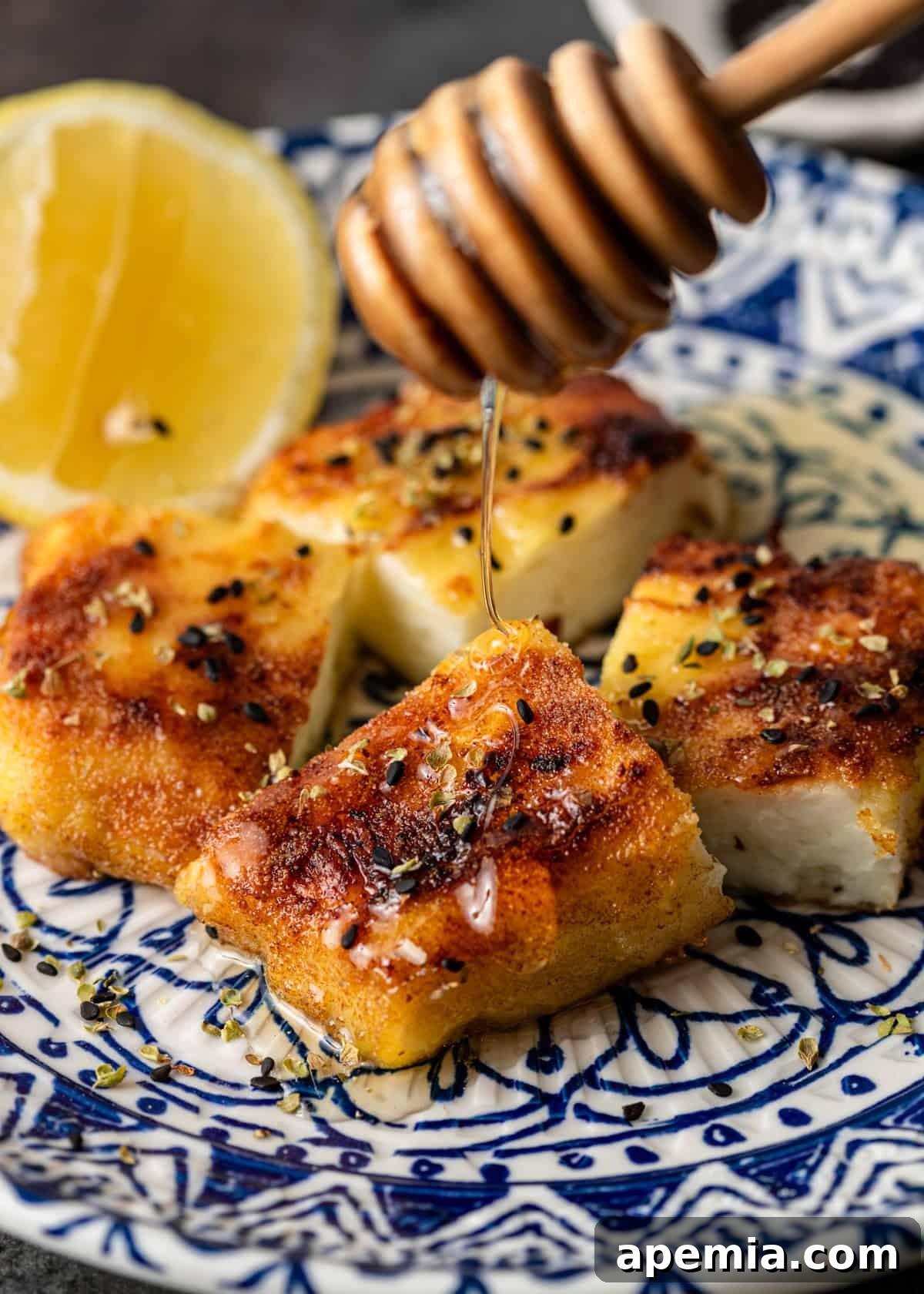
- Honey: A drizzle of pure, sweet honey is a game-changer for Saganaki. It introduces a wonderful sweet-and-salty dynamic that balances the richness of the cheese and brightens the overall flavor profile. If honey isn’t to your liking, a fruit preserve or even a sprinkle of dried cranberries could offer a similar sweet counterpoint.
- Black Sesame Seeds: These tiny seeds add an appealing visual contrast and a subtle, slightly more pronounced nutty flavor compared to white sesame seeds. They also contribute a pleasant textural element, enhancing the crunch of the dish.
- Dried Oregano: The fragrant, earthy notes of dried oregano are quintessential to Greek cuisine and pair perfectly with the savory cheese. While dried is convenient, fresh oregano, finely chopped, can be used for an even brighter, more herbaceous aroma.
- Fresh Lemon: A squeeze of fresh lemon juice is indispensable for Saganaki. Its vibrant acidity cuts through the richness of the fried cheese, acting as a palate cleanser and adding a zesty finish that makes each bite feel fresh and invigorating. Don’t skip this essential final touch!
How to Make Saganaki: Step-by-Step Perfection
- Prepare the Cheese: Begin by slicing your chosen cheese (halloumi or traditional Greek varieties) horizontally through the center. Aim for two even pieces, roughly 1/2 to 3/4 inch thick. This ensures uniform cooking and a perfect crispy-to-melty ratio.
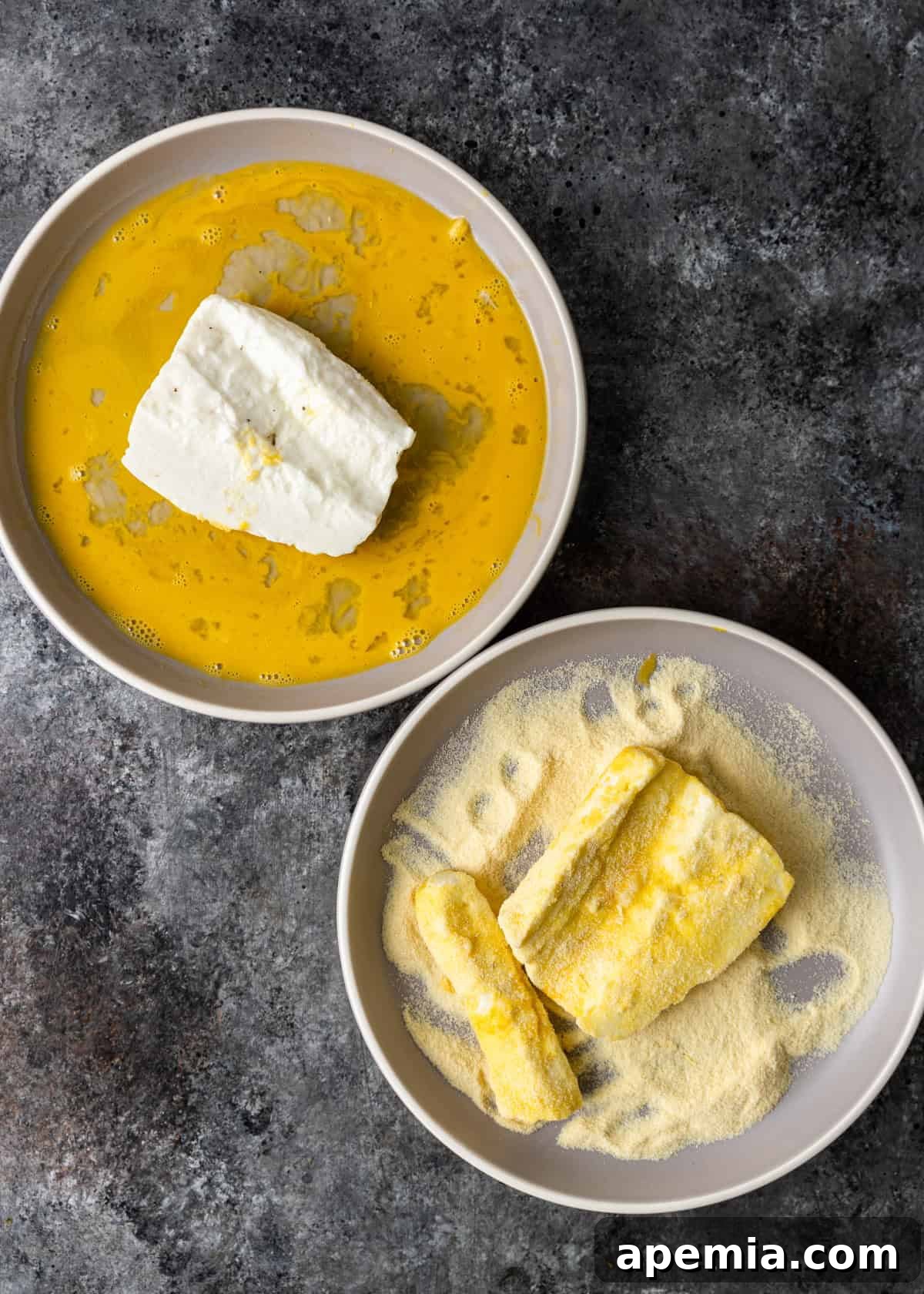
- Create the Coating Station: Set up two small, shallow plates. On the first plate, crack open a large egg and whisk it thoroughly with a fork until the yolk and white are fully combined. On the second plate, spread the semolina flour evenly. Now, carefully dip each slice of cheese into the beaten egg, ensuring all sides are well-coated. Allow any excess egg to drip off before transferring the cheese to the semolina flour. Roll the cheese in the semolina, pressing gently to create a thorough and even coating on all surfaces. This crust is key to Saganaki’s signature crunch.
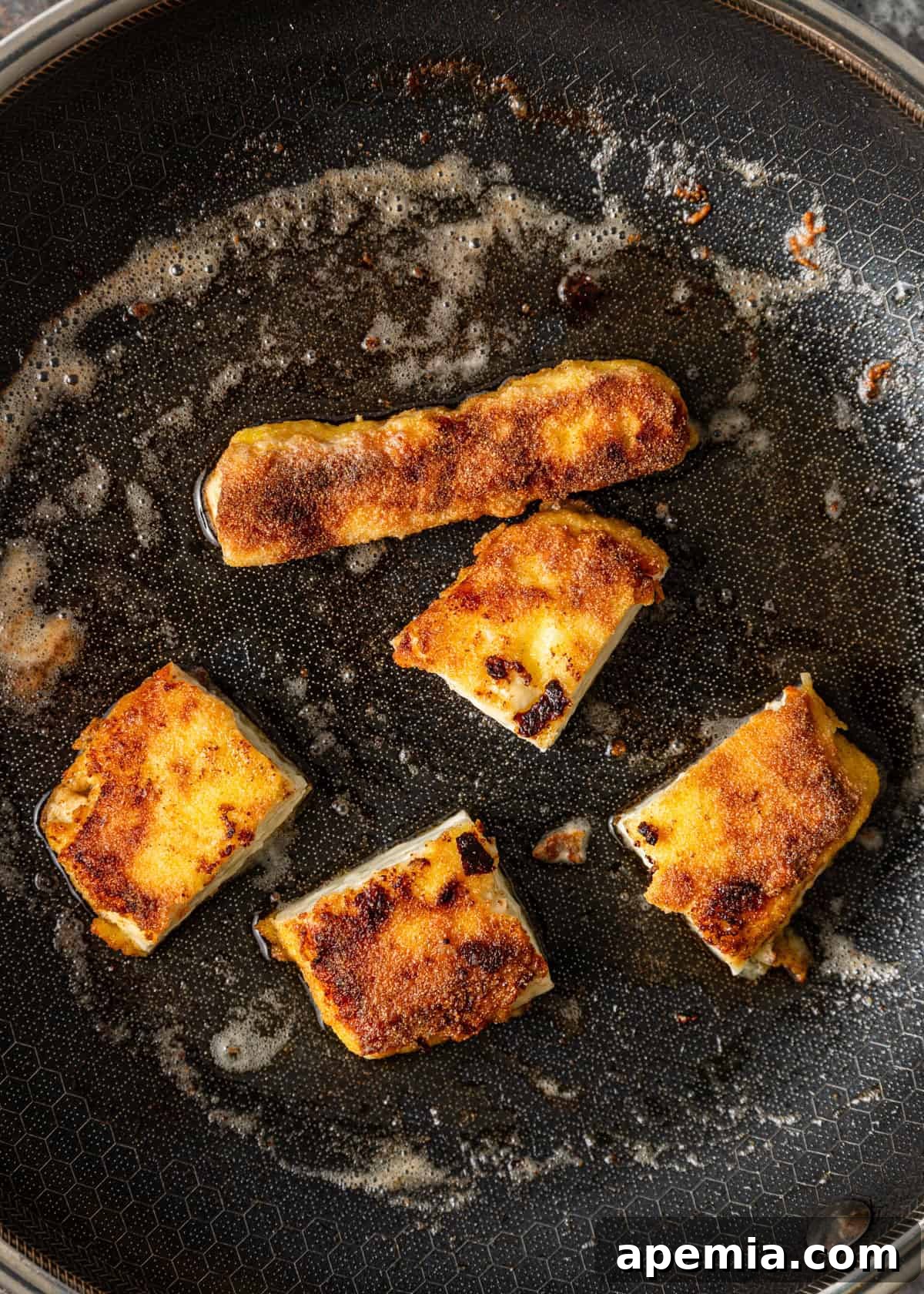
- The Frying Process: Heat the olive oil in a sturdy skillet over medium heat. You want the oil to be hot enough to sizzle when a corner of the cheese touches it, but not smoking. Carefully place the coated cheese slices into the hot skillet. Fry for approximately 2-3 minutes per side, or until each side achieves a beautiful, deep golden-brown crust. The exterior should be visibly crispy, and the cheese inside should feel softened. Remove the fried cheese from the skillet and place it on a clean cutting board. For easier serving and sharing, carefully slice each piece into 4 smaller, bite-sized portions, totaling 8 pieces.
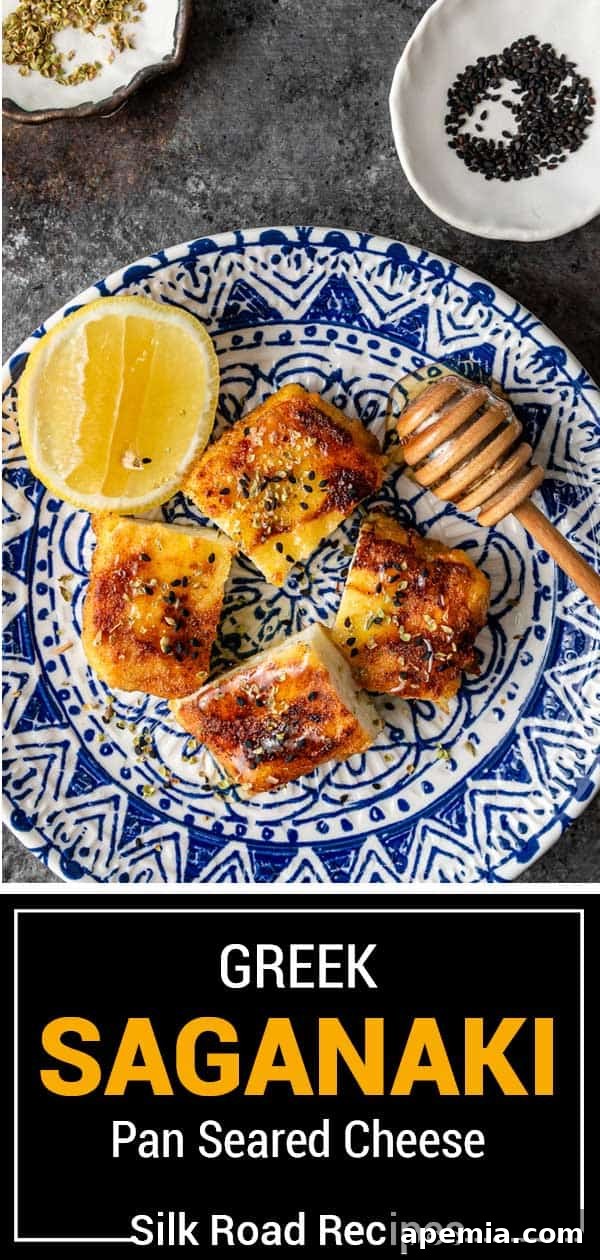
- Serve with Flair: Immediately transfer the warm, fried cheese pieces to a serving plate. Generously drizzle with honey, scatter the black sesame seeds, and sprinkle with dried oregano. Arrange a few fresh lemon slices alongside the Saganaki. The lemon is crucial—a squeeze of its bright, acidic juice just before eating cuts through the richness and enhances all the flavors. Serve hot and enjoy this incredible Greek delicacy!
Serving Saganaki: Beyond the Plate
While delicious on its own, Saganaki is incredibly versatile and can be enjoyed in numerous ways. Of course, you can bite into it as-is, savoring the immediate crunch followed by the soft, salty cheese. It’s also fantastic when “schmered” or spread over warm, crusty bread, allowing the melted cheese to soak into the pores of a good sourdough or baguette. This creates a more substantial snack or a delightful bruschetta-like experience.
For a lighter option, Saganaki makes a superb topping for a fresh Greek salad, adding a warm, savory, and textural element that complements the crisp greens and tangy dressing. Imagine it crumbled over mixed greens with tomatoes, cucumbers, olives, and a light vinaigrette – truly divine!
Consider serving Saganaki as part of a larger mezze platter, alongside other Greek delights like tzatziki, olives, dolmades, and pita bread. This creates a vibrant spread perfect for entertaining. As for drink pairings, a crisp, dry white wine like Assyrtiko or Sauvignon Blanc complements the richness of the cheese beautifully. For non-alcoholic options, sparkling water with lemon or even a light iced tea works well.
Recommended Tools for Saganaki
- Heavy-Bottomed Skillet: A traditional Greek pan-seared cheese calls for a traditional vessel! A good quality cast iron or heavy-bottomed non-stick skillet is essential for achieving an even cook and that perfect golden crust without hot spots or sticking.
- Tongs or Spatula: To safely flip the cheese and handle it without damaging the delicate coating.
- Shallow Plates: For setting up your egg wash and semolina coating station efficiently.
Storing and Reheating Your Saganaki
Saganaki is undoubtedly best enjoyed fresh, straight from the skillet. Like most fried foods, its unique textural contrast—the crispy exterior giving way to a soft interior—is at its peak immediately after cooking. As it cools, the crust tends to soften, and the cheese firms up.
However, if you do find yourself with leftovers, store them in an airtight container in the refrigerator for up to 3-5 days. While it won’t be quite the same as fresh, you can still enjoy it. To revive some of that coveted texture, avoid the microwave, which will only make it rubbery. Instead, reheat the Saganaki gently on the stovetop in a skillet with a tiny bit more olive oil, flipping occasionally until heated through and the crust regains some crispness. Alternatively, an air fryer can work wonders for reheating, crisping up the exterior beautifully in just a few minutes at around 350°F (175°C).
Frequently Asked Questions About Saganaki
Traditionally, Greek Saganaki is crafted using Kefalotyri, Kefalograviera, and Graviera cheeses. These are all medium-hard, firm, yellow cheeses that offer a delightful nutty and slightly salty flavor profile. Their texture is ideal for frying as they soften beautifully inside while developing a crisp exterior.
In the Republic of Cyprus, another Mediterranean gem, they famously use halloumi cheese. Halloumi is a fantastic alternative, often easier to find in many international grocery stores, and performs exceptionally well when fried. I highly recommend trying all these varieties if you get the chance to experience their subtle differences and discover your favorite for Saganaki!
Chicago-style Saganaki refers to a specific, flamboyant presentation of this pan-seared cheese dish. It originated in the 1960s at the Parthenon restaurant in Chicago, Illinois. Upon a diner’s suggestion, the fried cheese was brought to the table, doused with brandy, and dramatically flambéed. The dish is served still flaming, often accompanied by a hearty “Opa!” from the waiter. The flames gradually subside on their own, with the final embers typically extinguished by a squeeze of fresh lemon juice, which also adds a crucial bright flavor to the rich cheese. It’s a culinary spectacle that has become a beloved part of the Saganaki tradition, especially in Greek-American communities.
The term “Saganaki” directly translates to “a little pan” in Greek. This refers to the small, two-handled frying pan (sagani) in which the dish is typically cooked and served, often brought straight from the stove to the table while still sizzling. Over time, “saganaki” has also evolved to refer to a variety of other skillet-made appetizers in Greek cuisine, not just this specific fried cheese dish. It has become a broader term for small, pan-fried delights, but the cheese version remains the most famous.
While you can slice and coat the cheese with egg and semolina a few hours in advance and keep it refrigerated, Saganaki is truly best enjoyed immediately after it’s cooked. The signature crispy exterior and gooey interior are at their peak when fresh from the pan. Frying it just before serving ensures the optimal taste and texture experience.
The key to Saganaki’s exceptional crispiness lies in two main elements: the coating and the frying technique. First, the semolina flour provides a coarse, textured crumb that fries up to a delightful crunch. Second, frying the cheese in hot olive oil over medium-high heat ensures a rapid browning and crisping of the exterior while the interior quickly softens without fully melting away. Achieving that golden-brown crust is essential for the perfect Saganaki experience.
Share this recipe on Pinterest!
Love this recipe? Help spread the joy of Greek cuisine by sharing it with your friends and followers on Pinterest.
Saganaki (Greek Pan Seared Cheese)
4
10
6
16
PrintRecipe
Ingredients
- 225 g halloumi cheese (See Note 1)
- 1 egg beaten
- 2 tbsp semolina flour
- 2 tbsp olive oil
- 2 tbsp honey
- 1 tsp black sesame seeds
- 1 tsp dried oregano
- 1 lemon sliced for serving
Instructions
-
Cut the cheese horizontally through the middle, creating two flatter pieces.
-
On a small plate, whisk the egg until well combined. On another small plate, spread the semolina flour. Dip each piece of cheese into the beaten egg, coating it completely. Shake off any excess egg, then roll the cheese in the semolina, ensuring all sides are thoroughly covered.
-
In a skillet over medium heat, add the olive oil. Once hot, carefully place the coated cheese into the skillet. Fry for about 2-3 minutes on each side, or until golden brown and crispy. Remove the cheese from the heat and transfer it to a cutting board. Cut each piece into 4 smaller pieces, creating a total of 8 serving portions.
-
Immediately transfer the fried cheese to a serving plate. Drizzle generously with honey, sprinkle with black sesame seeds and dried oregano. Serve promptly with fresh lemon slices for squeezing.
Notes
- The cheeses traditionally used in Greece for Saganaki are Kefalotyri, Kefalograviera, and Graviera. These are medium-hard, yellow cheeses with a slight nutty flavor. In Cyprus, halloumi is commonly used. I typically use halloumi, which is more readily available to me, but I encourage you to try them all if you can to find your favorite.
- Recipe adapted from Rick Stein’s From Venice to Istanbul cookbook.
Nutrition
Carbohydrates: 18g |
Protein: 15g |
Fat: 22g |
Saturated Fat: 11g |
Polyunsaturated Fat: 2g |
Monounsaturated Fat: 9g |
Trans Fat: 0.01g |
Cholesterol: 41mg |
Sodium: 692mg |
Potassium: 80mg |
Fiber: 1g |
Sugar: 10g |
Vitamin A: 74IU |
Vitamin C: 14mg |
Calcium: 590mg |
Iron: 1mg
The information shown is an estimate provided by an online nutrition calculator. It should not be considered a substitute for a professional nutritionist’s advice.
appetizers, mezze
Greek
Kevin
Have You Made This Recipe? Let Me Know on InstagramTag @keviniscooking or tag me #keviniscooking!
Conclusion: Your Journey to Perfect Saganaki
There you have it – a comprehensive guide to crafting the perfect Saganaki in your own kitchen. This iconic Greek pan-seared cheese is more than just an appetizer; it’s a celebration of simple ingredients, brilliant textures, and vibrant flavors. From its alluring crispy exterior to its meltingly soft interior, each bite is a testament to the richness of Greek culinary traditions. Whether you choose the widely available halloumi or seek out the traditional kefalotyri, the result will be a dish that delights the senses and transports you straight to the sun-drenched tavernas of Greece.
Remember, the magic is in the contrasts: the crunch of the semolina, the creaminess of the cheese, the sweetness of honey, the earthiness of oregano, and the bright zing of fresh lemon. Don’t hesitate to experiment with the toppings and serving suggestions to make this recipe truly your own. Gather your ingredients, heat your skillet, and prepare to exclaim “Opa!” as you enjoy your very own homemade Saganaki. It’s an easy, impressive, and deeply satisfying dish that’s sure to become a cherished favorite.