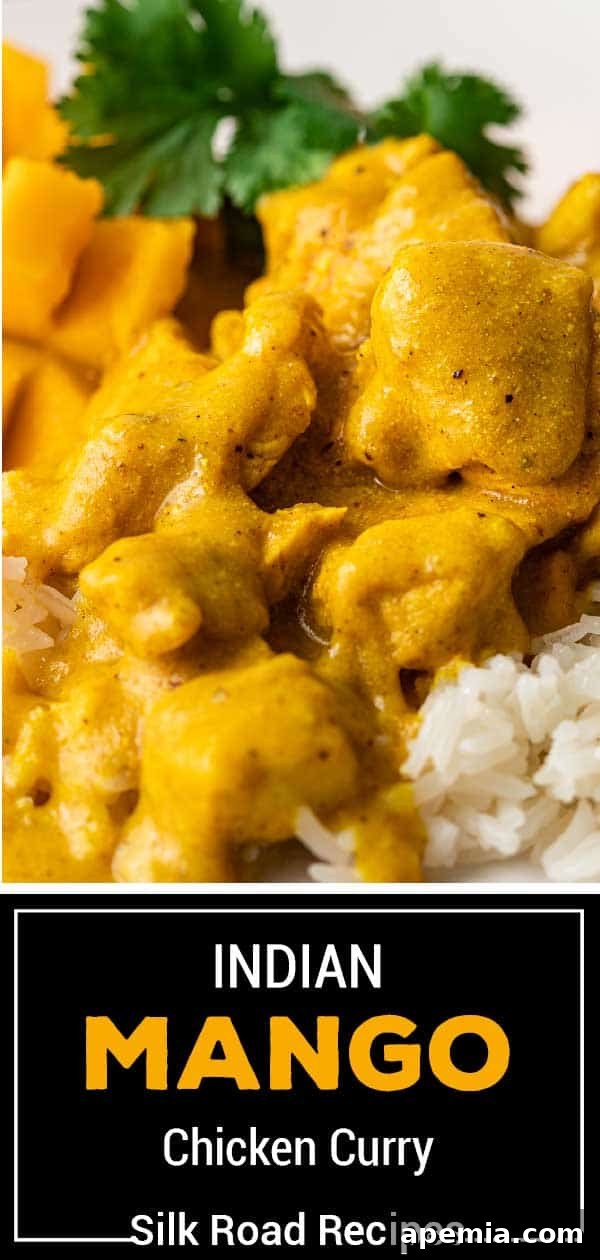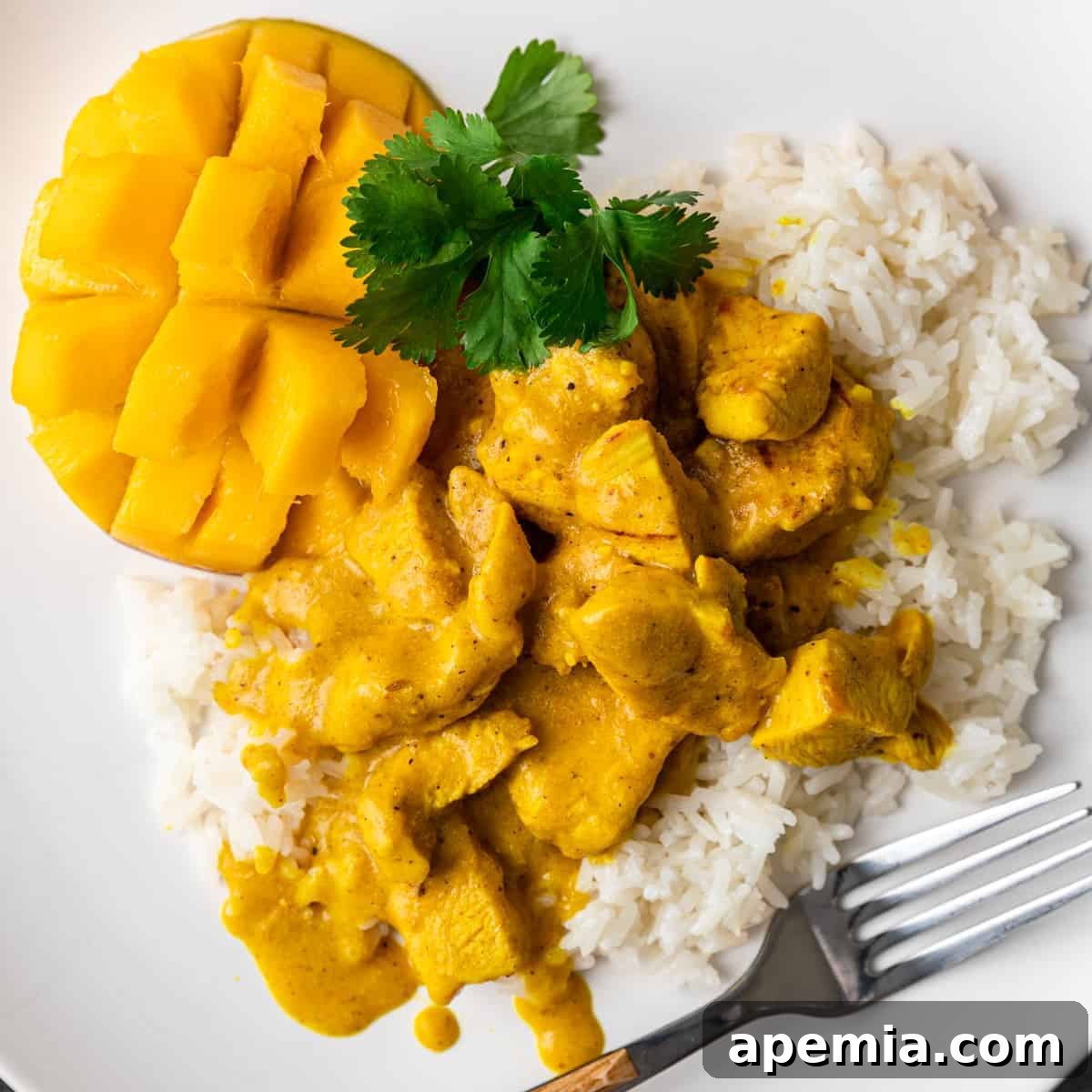
Indulge in the vibrant flavors of India with this incredibly creamy and utterly delicious mango chicken curry recipe. Ready to grace your plate in about an hour, this dish masterfully blends the sweet tang of ripe mangoes with a rich, aromatic blend of authentic Indian spices. Juicy, tender chicken is first infused with a tangy yogurt marinade, then gently simmered in a luxurious coconut and mango sauce, creating a harmony of fruity, spicy, and savory notes in every bite. It’s a delightful culinary journey that promises to tantalize your taste buds and become a beloved staple in your kitchen.
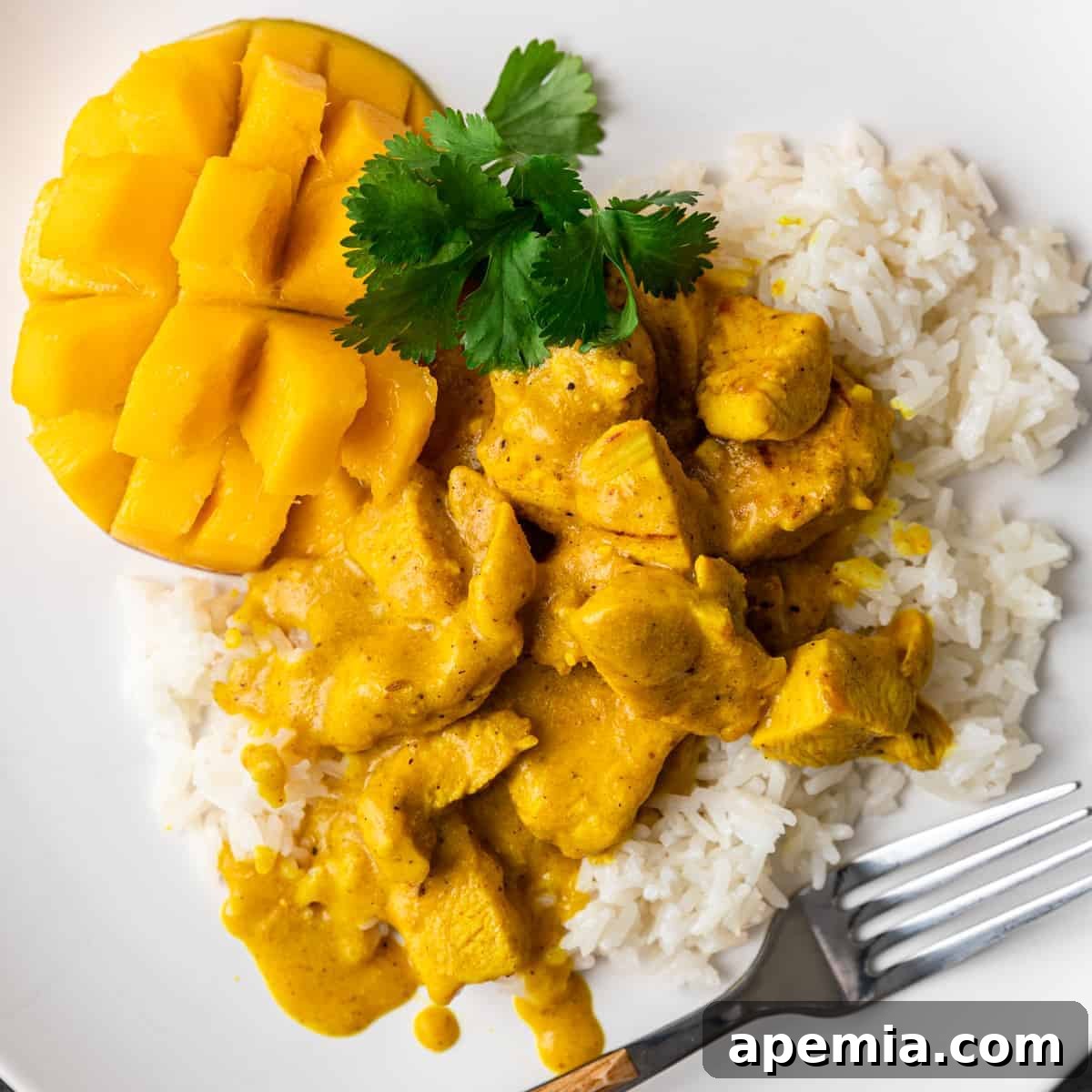
Creamy Mango Chicken Curry: A Taste of Authentic Indian Flavors
Mango chicken curry is a testament to the beautiful complexity of Indian cuisine, where contrasting flavors come together in perfect unison. While this dish is generously *spiced* with an array of traditional Indian aromatics, it’s important to differentiate between “spiced” and overtly “spicy” or hot. Our recipe prioritizes a depth of flavor over intense heat, creating a warm, comforting profile that is accessible to all palates. The marinade, a vibrant concoction of authentic Indian spices like earthy turmeric, pungent cumin, and fragrant garam masala, imbues the chicken with incredible taste without being overwhelmingly hot.
Any subtle warmth from the spices is beautifully mellowed and complemented by the luscious sweetness of the coconut and mango fruit sauce. I absolutely adore the velvety consistency that coconut milk imparts to curries and sauces. Many Thai curries also leverage this ingredient for its ability to create a thick, creamy texture without the need for dairy. Coconut milk is truly a culinary marvel, adding richness and depth that elevates this mango chicken to an exceptional level.

The Allure of Mango Chicken: A Harmony of Contrasting Tastes
What makes mango chicken so irresistible? It’s the delightful interplay between the sweet, juicy mangoes, the rich, creamy coconut milk, and the savory, aromatic spices. This curry offers a unique balance that captivates the senses. The initial burst of fruity sweetness gives way to the subtle warmth of the spices, all enveloped in a comforting, velvety sauce. This isn’t a dish designed to overwhelm with heat, but rather to enchant with its layers of flavor, making it a perfect choice for family dinners or entertaining guests.
The journey of Indian cuisine is vast and varied, with regional specialties showcasing distinct ingredient preferences. While our mango chicken recipe draws inspiration from across India, the use of coconut milk is particularly prevalent in the Southern Indian culinary tradition, where it contributes to many of the region’s famously rich and flavorful curries. This global appreciation for coconut milk’s versatility highlights its universal appeal in creating truly memorable dishes.
Perfect Pairings: Elevating Your Mango Chicken Experience
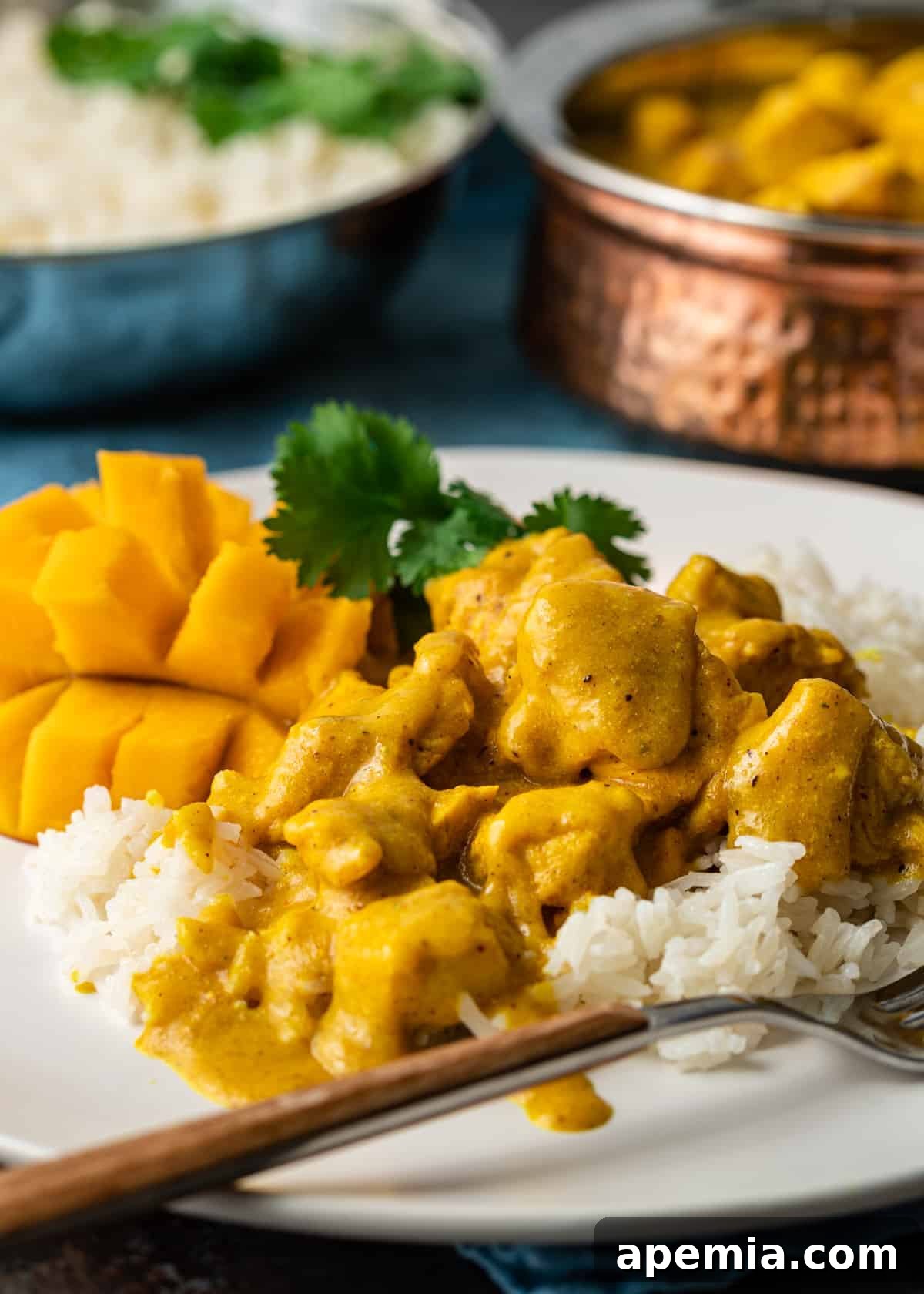
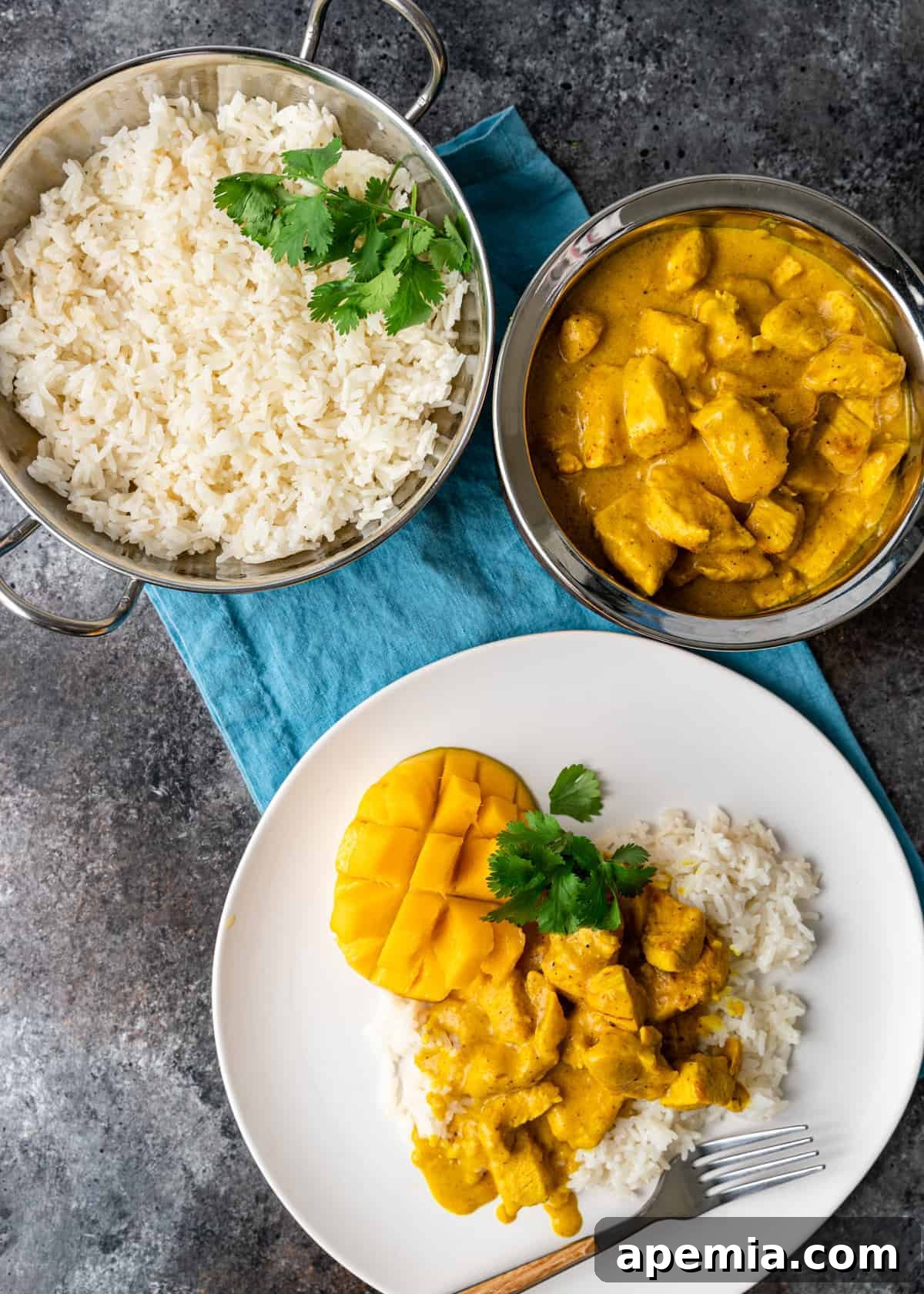
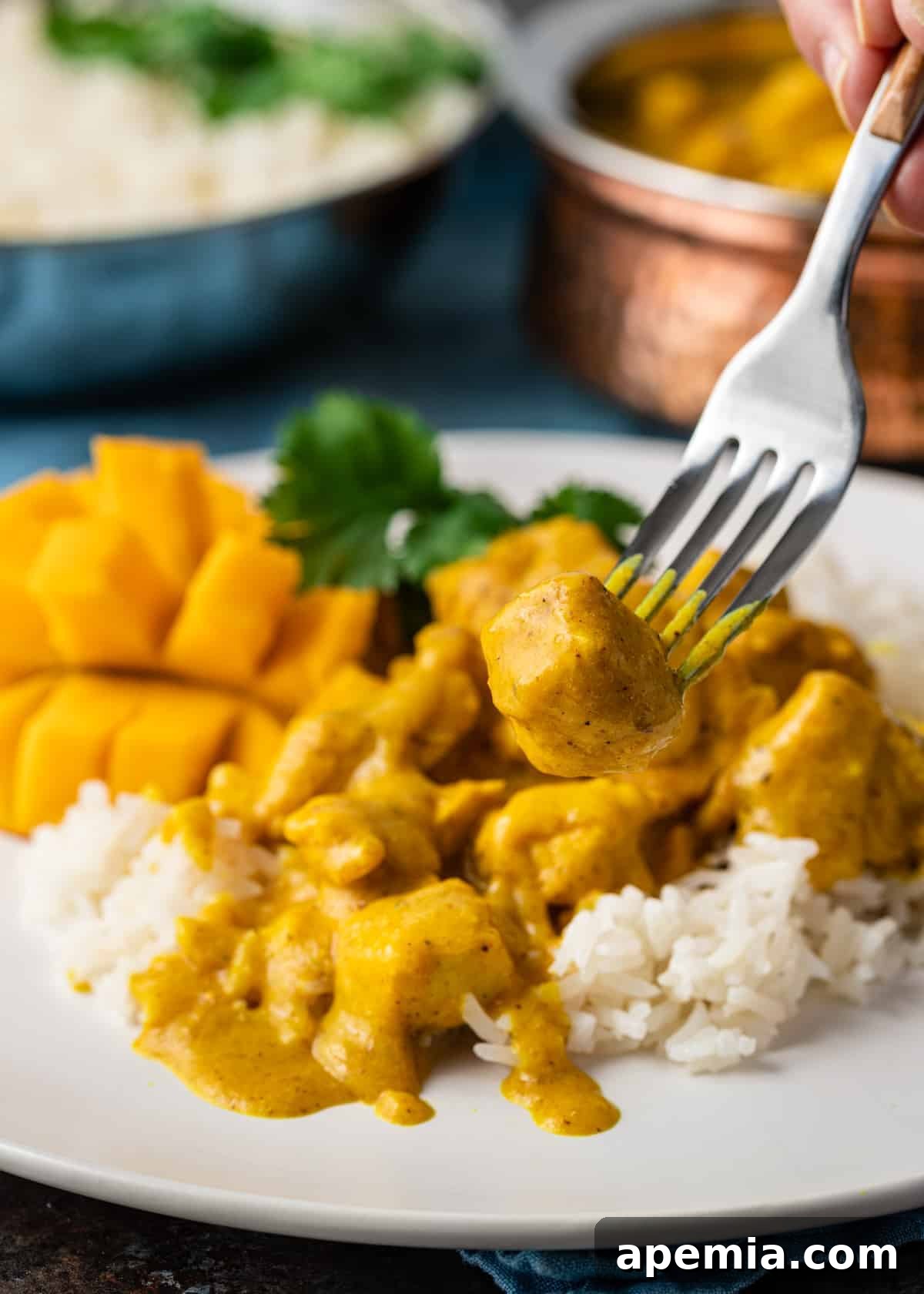
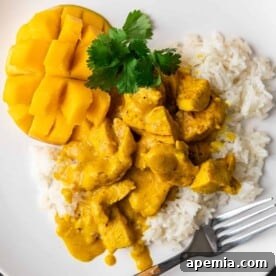
In my opinion, the ultimate way to savor this incredible mango chicken curry is by serving it generously over a bed of fluffy, steamed jasmine rice. The rice acts as a perfect canvas, absorbing every drop of the aromatic, sweet, and savory sauce. To add a burst of freshness and textural contrast, I highly recommend garnishing it with a sprinkle of vibrant, fresh cilantro and a handful of crunchy nuts, such as chopped cashews or slivered almonds. The slight bitterness of the cilantro and the nutty crunch create an exciting counterpoint to the creamy curry.
For those who enjoy a more seasoned accompaniment, this mango chicken also pairs exceptionally well with flavorful cumin rice, offering an extra layer of spice, or a zesty citrusy lemon rice, which introduces a bright, tangy note. And no Indian curry experience would be complete without some warm, pillowy naan bread on the side. Naan is simply perfect for scooping up every last bit of that exquisite sauce, ensuring no flavor goes to waste. These thoughtful pairings transform a delicious meal into an unforgettable dining event.
Table of Contents
- The Allure of Mango Chicken: A Harmony of Contrasting Tastes
- Perfect Pairings: Elevating Your Mango Chicken Experience
- Mastering the Mango: Selection and Preparation
- Essential Ingredients for an Authentic Taste
- Step-by-Step Guide to Crafting Your Mango Chicken Curry
- Recommended Tools for Your Kitchen
- Storing and Reheating Your Curry
- Frequently Asked Questions
- Mango Curry Chicken Recipe
If you’re eager to explore more rich and aromatic Indian curries, I highly recommend trying our robust beef keema matar or the comforting vegetarian delight of our potato curry. Each recipe offers a unique glimpse into the diverse tapestry of Indian flavors.
Tip From Kevin
Mastering the Mango: Selection and Preparation
Choosing the right mango is key to a truly flavorful curry. Look for fresh, firm mangoes that yield slightly to gentle pressure and have a sweet, fruity aroma near the stem. Avoid mangoes that are overly soft, bruised, or have a sour smell. While ripeness is important for sweetness, a mango that’s too soft might disintegrate into the curry, so a firm-ripe mango is ideal for cubing and pureeing.
To easily peel a fresh mango, begin by carefully slicing off the top and bottom ends to create stable flat surfaces. Stand the mango upright on a cutting board. Using a sharp knife or a vegetable peeler, carefully glide downwards to remove the skin, following the natural curve of the fruit. Once peeled, hold the mango and slice the flesh away from the large, flat pit, working around all sides. Alternatively, you can slice the mango in half, score the flesh in a crosshatch pattern, and then scoop out the cubes directly from the skin with a spoon.
If fresh mangoes are out of season or unavailable, don’t hesitate to use frozen mango chunks. They are a fantastic substitute, often picked at peak ripeness and conveniently pre-peeled and diced, saving you valuable prep time. Just be sure to thaw and drain them thoroughly before pureeing to avoid excess water in your sauce.
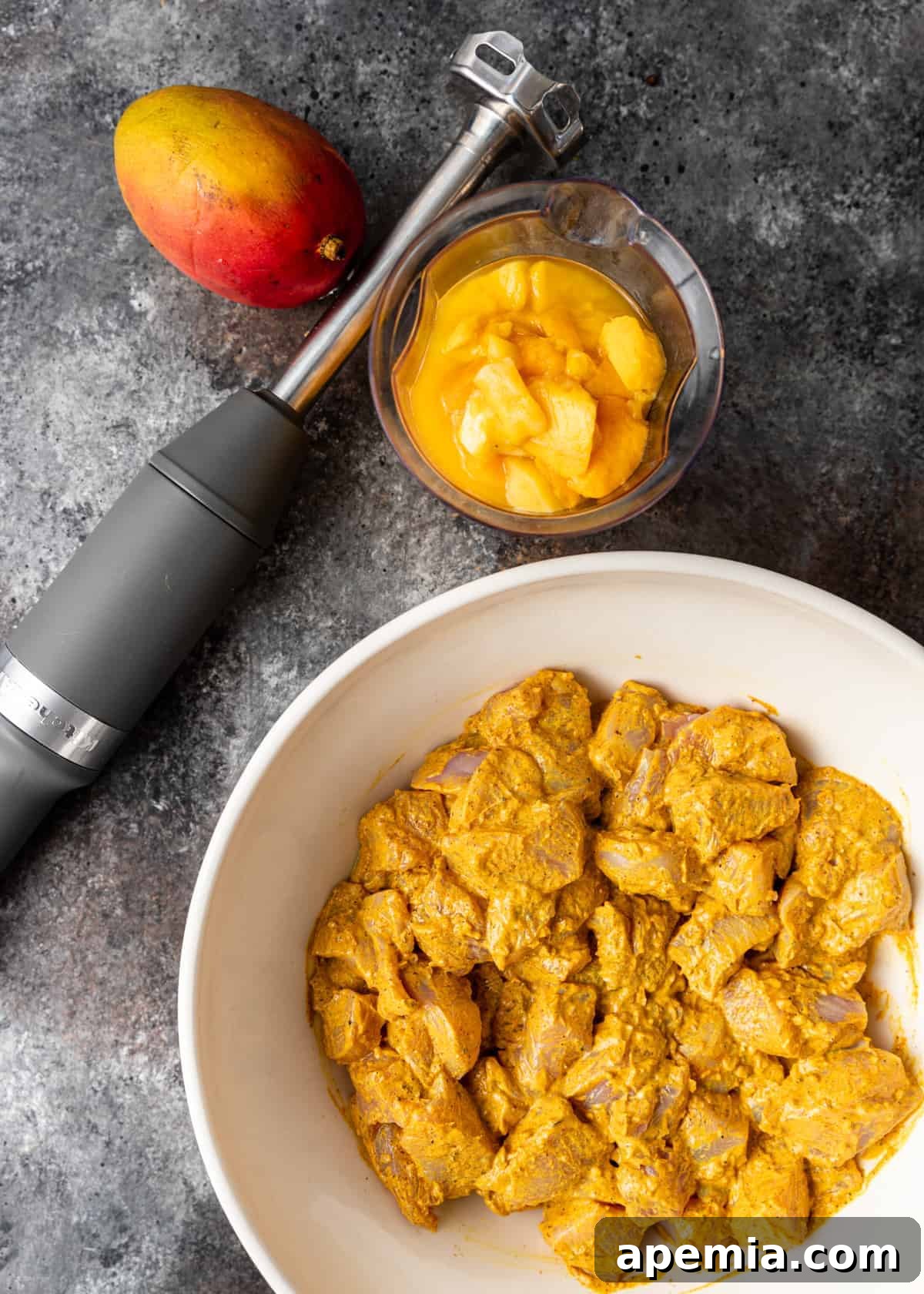
Essential Ingredients for an Authentic Taste
(Be sure to check the full recipe card below for precise quantities and comprehensive instructions)
- Chicken – For this mango curry, boneless, skinless chicken breasts are my preferred choice due to their lean profile and ability to absorb the marinade beautifully. However, you can achieve equally delicious results with boneless, skinless chicken thighs for a richer flavor, or even chicken tenders for quicker cooking. Ensure the chicken is cut into uniform bite-sized pieces for even cooking.
- Mango – As discussed, fresh, firm-ripe mangoes offer the best flavor and contribute to a desirable sauce consistency. If opting for frozen mango, always remember to thaw and drain it completely before pureeing. This prevents the addition of unwanted water, which could thin out your delicious curry sauce.
- Marinade – The cornerstone of tender, flavorful chicken in this recipe is a vibrant Greek yogurt-based marinade. Greek yogurt, with its thicker consistency and tangy profile, is superior to regular plain yogurt, which might not impart the same depth of flavor or tenderizing effect. The marinade is further enhanced with a touch of sugar, kosher salt, and a critical blend of aromatics and spices:
- Lemon Juice – Adds a bright, acidic lift to the marinade, helping to tenderize the chicken. Lime juice can be used as a worthy substitute if lemon is not available.
- Garlic & Fresh Ginger – These two aromatics are absolutely integral to the authentic flavor profile of Indian curry. Their pungent, zesty notes cannot be replicated by jarred or powdered versions, so always opt for fresh garlic and ginger paste for the best results.
- Seasonings – The heart of this curry’s flavor comes from a carefully selected spice blend. Ground cumin and turmeric powder, staples in virtually all Indian curry recipes, provide earthy warmth and a beautiful golden hue. They are joined by a touch of cayenne pepper for a gentle kick and the highly aromatic garam masala, a blend of roasted ground spices. Feel free to adjust the amounts of garam masala and cayenne to tailor the spiciness to your preference; remember, this dish is more about flavor depth than intense heat.
- Coconut Milk – Full-fat coconut milk is essential for achieving the rich, creamy texture and subtle sweetness of the sauce. For an even thicker, more decadent sauce, you can substitute with coconut cream. It is crucial to distinguish between coconut *cream* and *cream of coconut*; the latter is a sweetened product typically used in cocktails and desserts and is not suitable for this savory curry. Always check the label to ensure you’re using unsweetened coconut milk or cream.
- Vegetable Oil – A neutral oil like vegetable oil is ideal for cooking, allowing the flavors of the spices and chicken to shine without interference.
Step-by-Step Guide to Crafting Your Mango Chicken Curry
- Prepare the Marinade and Chicken: In a spacious bowl, whisk together all the marinade ingredients until thoroughly combined. Add your bite-sized chicken pieces to this aromatic mixture, tossing well to ensure every piece is evenly coated. Cover the bowl tightly and refrigerate for at least one hour. This crucial step allows the yogurt to tenderize the chicken and the spices to deeply infuse their flavors, resulting in exceptionally juicy and flavorful meat.
- Create the Mango Purée: While the chicken is marinating, prepare your mango purée. Place the mango chunks into a bowl and use an immersion blender (or a standard blender) to purée them until smooth. Set this vibrant purée aside; it will be added to the sauce later to give the curry its signature fruity sweetness and thick texture.
- Cook the Marinated Chicken: Remove the chicken from the refrigerator. Heat the vegetable oil in a large frying pan or a Dutch oven over high heat. Once the oil is shimmering, carefully add the marinated chicken in a single layer, making sure not to overcrowd the pan. Cook for 3 to 5 minutes, stirring occasionally, until the chicken pieces are mostly white all over. Due to the yogurt marinade, the chicken may not brown significantly, but it should be cooked through on the exterior.
- Simmer and Thicken the Sauce: Reduce the heat to low. Pour the prepared mango purée and the full-fat coconut milk into the pan with the chicken. Stir everything gently to combine, scraping any bits from the bottom of the pan to incorporate all the flavors. Allow the curry to simmer uncovered for 15 minutes. During this time, the flavors will meld beautifully, and the sauce will naturally thicken to a rich, creamy consistency. Stir occasionally to prevent sticking.
- Season and Serve: Taste the curry and season with additional salt if needed. Remove the pan from the heat. Serve your homemade mango chicken curry immediately over a generous bed of steamed rice. Garnish generously with fresh cilantro leaves and a sprinkle of chopped nuts (such as cashews or almonds) for added texture and visual appeal. Enjoy this flavorful and comforting meal!
Recommended Tools for Your Kitchen
Having the right tools can make preparing this mango chicken curry even more enjoyable and efficient:
- Blender (Immersion or Standing) – An immersion blender (also known as a stick blender) is incredibly convenient for pureeing the mango directly in a bowl or even in the cooking pot, minimizing cleanup. A standard countertop blender or food processor will also work perfectly fine to achieve a smooth mango purée.
- Large Frying Pan or Dutch Oven – You’ll need a spacious pan that can comfortably accommodate all the chicken, mango purée, and coconut milk without overcrowding. A high-quality pan with good heat distribution, like a heavy-bottomed frying pan or a Dutch oven, is ideal to ensure even cooking and simmering of your delicious curry.
- Whisk – For thoroughly combining the marinade ingredients, a whisk is indispensable to ensure a smooth, lump-free mixture that evenly coats the chicken.
Storing and Reheating Your Curry
One of the many joys of this mango chicken curry is how well it keeps, often tasting even better the next day as the flavors continue to meld. Leftovers can be stored in an airtight container and refrigerated for up to 4 days, making it an excellent meal prep option.
Reheating is wonderfully straightforward. Simply transfer the desired portion back into a pan and gently warm it on the stovetop over medium-low heat, stirring occasionally, until it is thoroughly heated through. You might want to add a splash of water or extra coconut milk if the sauce has thickened too much in the refrigerator. Avoid overheating to maintain the chicken’s tenderness and the sauce’s creamy texture. You can also reheat individual portions in the microwave, stirring halfway through, until hot.
Share this recipe on Pinterest!
Love this recipe? Share it with the world on Pinterest.
Frequently Asked Questions
Both coconut milk and coconut cream are derived from the flesh of mature coconuts and water. The primary distinction lies in their water content: coconut milk contains more water, resulting in a thinner consistency, while coconut cream has a higher fat content and a much thicker, richer texture. For this recipe, full-fat coconut milk works perfectly to create a creamy sauce. Many brands of canned “full-fat coconut milk,” like the Thai Kitchen brand from Costco that I often use, are wonderfully thick and creamy, bridging the gap between typical coconut milk and cream. Always make sure to use unsweetened varieties for savory dishes.
Determining when chicken is perfectly cooked can sometimes be tricky, especially when it’s marinated in a colorful, spiced yogurt sauce. The most reliable way to ensure your mango chicken is safely and thoroughly cooked is by using a digital meat thermometer. Insert the thermometer into the thickest part of a chicken piece, avoiding the bone if using thighs. The chicken is fully cooked when it reaches an internal temperature of 165°F (74°C). By the time your sauce has simmered and thickened for the recommended duration, the chicken should certainly have reached this temperature, but a quick check provides peace of mind and guarantees a perfectly cooked, juicy result.
The secret to the irresistible creaminess of Indian restaurant curries often boils down to a rich, fatty ingredient. It’s surprisingly simple! Some establishments achieve this luxurious texture by incorporating dairy products into their sauces, such as full-fat Greek yogurt, heavy cream, or even cashew paste. Other restaurants, particularly those specializing in South Indian cuisine, rely on the velvety richness of coconut milk or coconut cream, much like we do in this mango chicken curry recipe.
Interestingly, the choice between dairy and coconut products in Indian curries often reflects regional culinary traditions. Northern Indian cuisine tends to favor dairy-based richness, utilizing yogurt, paneer, and ghee. In contrast, Southern India’s coastal regions are renowned for their vibrant curries made with fresh coconut milk and cream, which impart a distinct flavor and unparalleled creaminess. Our recipe cleverly combines the yogurt marinade (Northern influence) with a coconut milk sauce (Southern influence) for a globally inspired, perfectly creamy curry.
Absolutely! This recipe can be easily adapted for a vegetarian diet. Instead of chicken, you can use paneer (Indian cheese), firm tofu, or a mix of hearty vegetables like chickpeas, cauliflower, and potatoes. If using paneer or tofu, lightly pan-fry them before adding to the sauce. For vegetables, cook them until tender during the simmering phase. Ensure your Greek yogurt is plant-based if you’re aiming for a vegan version, or simply omit it from the marinade and adjust other liquids slightly.
For mango chicken curry, varieties that are sweet, relatively firm, and have less fiber are ideal. Alphonso, Ataulfo (honey mango), or Kent mangoes are excellent choices. These varieties offer a beautiful balance of sweetness and tang, and their smooth flesh purées into a lovely, consistent sauce. Avoid overly fibrous or stringy mangoes, as they can impact the sauce’s texture. If you can’t find these specific varieties, simply choose any ripe, sweet mango that isn’t too soft.
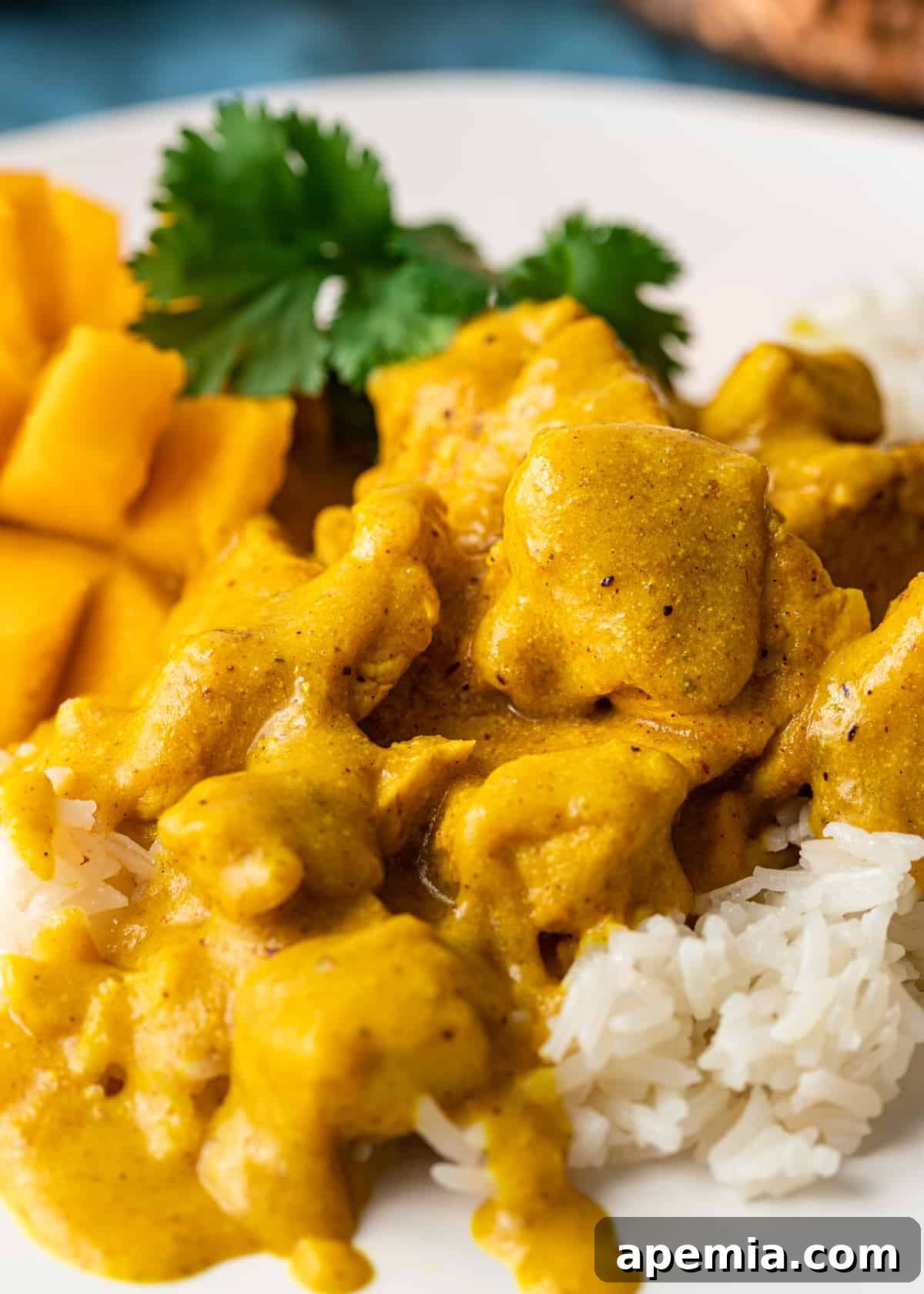
Mango Curry Chicken Recipe
PrintRecipe
Video
A video tutorial for this recipe would typically be embedded here.
Ingredients
- 2 lbs chicken breast cut into bite size pieces (or boneless, skinless thighs/tenders)
- 2 cups mango chunks thawed if frozen, fresh is recommended
Marinade
- 1/2 cup plain Greek yogurt
- 1 tbsp lemon juice
- 1 tbsp sugar
- 2 garlic cloves minced
- 1 tbsp ginger paste
- 2 tsp garam masala seasoning
- 1 1/2 tsp ground cumin
- 1 tsp kosher salt
- 1 tsp cayenne pepper
- 1 1/2 tsp turmeric powder
Cooking
- 1 tbsp vegetable oil
- 1 cup full fat coconut milk or coconut cream
Garnish (Optional)
- fresh cilantro leaves
- 1/2 cup chopped cashews or almonds
Instructions
-
Whisk together all marinade ingredients in a bowl until smooth. Add the chicken pieces, toss to coat thoroughly, then cover and refrigerate for at least 30 minutes to 1 hour to allow flavors to develop.
-
Using an immersion blender, stand blender, or food processor, purée the mango chunks until completely smooth. Set aside.
-
Heat vegetable oil in a large frying pan or Dutch oven over high heat. Add the marinated chicken and cook for 3-5 minutes, stirring occasionally, until the chicken is cooked on the exterior (it may not brown much due to the marinade).
-
Pour in the mango purée and full-fat coconut milk (or cream). Stir well to combine all ingredients. Reduce the heat to low and let the curry simmer gently, uncovered, for 15 minutes. The sauce will naturally thicken to a creamy consistency during this time. Stir occasionally to prevent sticking.
-
Taste the curry and adjust seasoning with salt if necessary. Remove from heat and serve immediately. Garnish generously with fresh cilantro leaves and chopped nuts (cashews or almonds) if desired, and serve over your preferred steamed rice.
Notes
- Feel free to substitute 2 pounds of chicken tenders or boneless, skinless chicken thigh meat for the chicken breast. Ensure all chicken is cut into similar-sized pieces for even cooking.
- The amount of garam masala and cayenne pepper can be adjusted to your personal preference for spice. This recipe aims for a balanced flavor rather than intense heat. Indian spices are primarily about aromatic flavor complexity, not always about making a dish “hot.”
- For an even creamier sauce, use full-fat coconut cream instead of coconut milk. Remember, do not confuse coconut cream with “cream of coconut,” which is a sweetened product.
- For the freshest flavor, always use fresh garlic and ginger paste. Pre-minced or powdered versions do not offer the same vibrant taste profile crucial for authentic Indian curries.
Nutrition
Carbohydrates: 16g |
Protein: 36g |
Fat: 15g |
Saturated Fat: 10g |
Trans Fat: 1g |
Cholesterol: 98mg |
Sodium: 577mg |
Potassium: 828mg |
Fiber: 2g |
Sugar: 13g |
Vitamin A: 1009IU |
Vitamin C: 31mg |
Calcium: 49mg |
Iron: 3mg
The information shown is an estimate provided by an online nutrition calculator. It should not be considered a substitute for a professional nutritionist’s advice.