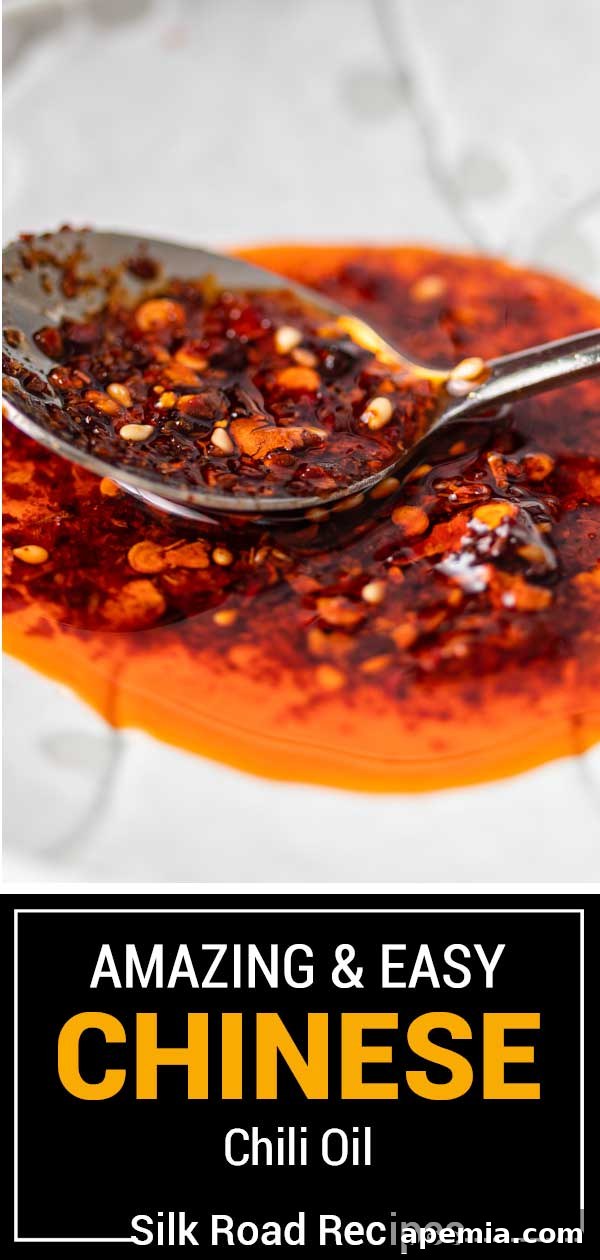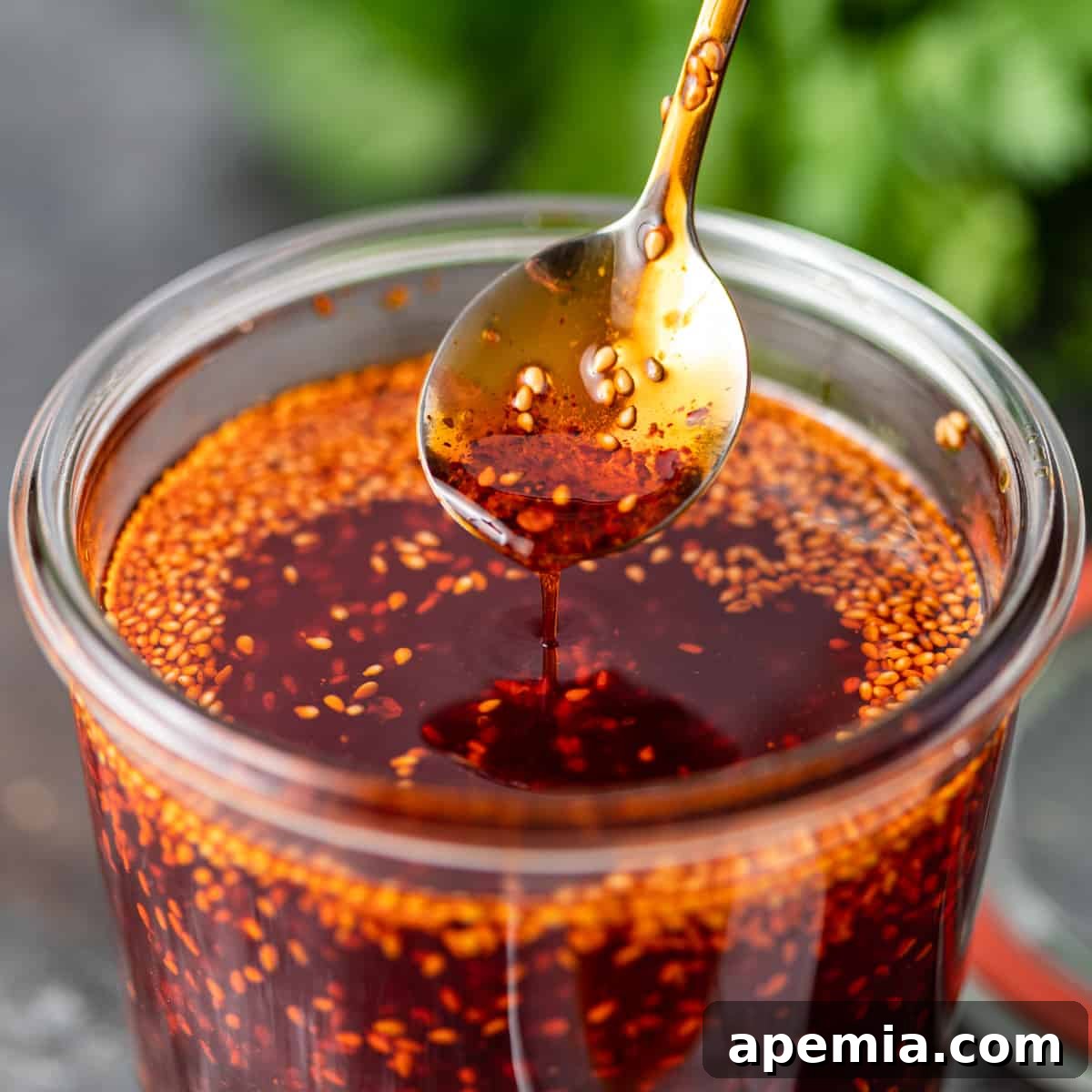
The Ultimate Guide to Homemade Chinese Chili Oil (Chili Crisp)
Discover the secret to elevating countless dishes with homemade Chinese Chili Oil, often affectionately known as Chili Crisp. This vibrant red condiment isn’t just about heat; it offers a mesmerizing blend of intoxicating warmth, nuanced by a symphony of aromatic spices and a satisfying crispy texture. Once you experience its rich, complex flavors, you’ll find yourself wanting to drizzle it over everything – from simple rice bowls to gourmet stir-fries. While commercially available, crafting your own Chinese chili oil at home is surprisingly easy and allows for unparalleled freshness and flavor customization.

For any culinary enthusiast who appreciates a delightful kick and a burst of flavor in their cooking, Chinese chili oil stands as an essential Chinese pantry staple. Its vivid, deep red hue is a testament to its fiery character, but it’s the complex layers of spice, warmth, and subtle sweetness that truly make it addicting. This comprehensive guide will teach you how to master the art of making this incredible condiment, ensuring you have a fresh batch that lasts for months, ready to transform any meal into a culinary adventure.
The magic behind this versatile condiment lies in a traditional process: a medley of popular Asian spices is gently simmered in vegetable oil, allowing their distinctive flavors to deeply infuse the oil. This aromatic oil is then carefully combined with the satisfying crispness of toasted white sesame seeds and the distinctive flakes of Sichuan chilis. The result is a textural and flavorful masterpiece, perfect as a topping for everything from classic stir-fries and steaming noodle dishes to fluffy rice bowls. Beyond a simple garnish, it’s also a fantastic ingredient to incorporate into other sauces or to enhance any dish that could benefit from an extraordinary layer of heat and complexity.
The Exquisite Flavor Profile: Beyond Just Heat
When you think of this Chinese chili oil, shift your focus from merely “spicy heat from the chilis” to “more on subtle, aromatic flavors from the steeped spices.” While this oil undeniably delivers a delightful kick, it is the exceptional depth of FLAVOR that truly sets it apart. The carefully selected whole spices are not just for show; they are steeped at a controlled temperature to coax out their essential oils and aromatic compounds, creating an intricate flavor base that is both warming and fragrant.
This versatile condiment has quickly become a star in many kitchens, appearing in a wide array of recipes, including my popular Shrimp and Pork Shumai and refreshing Pai Huang Gua (Chinese Cucumber Salad). Explore these recipes and more to discover the myriad ways crispy chili oil can enhance a variety of meals, introducing new textures, dynamic flavors, and an irresistible aromatic finish.
Key Ingredients for Authentic Chinese Chili Oil
Crafting the perfect batch of Chinese chili oil begins with understanding the role of each ingredient. The beauty lies in the synergy of these components, creating a harmonious blend of heat, aroma, and texture. Here’s a detailed look at the core ingredients, along with useful notes and substitutions.
Ingredients for Steeping: The Aromatic Foundation
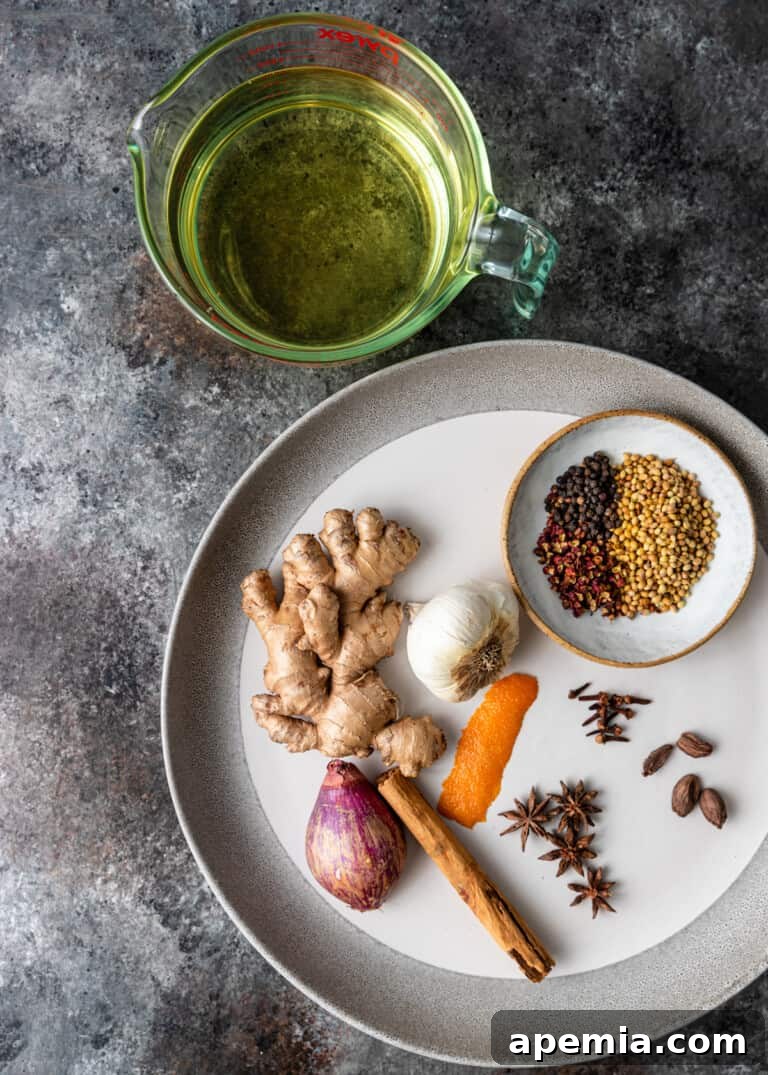
These whole spices and aromatics are gently simmered in oil to create a deeply flavorful base, infusing the oil with their distinct characters before being strained out.
- Cloves: Known for their slightly sweet, warm, and intensely aromatic profile. Cloves contribute a subtle complexity and depth that rounds out the overall flavor, preventing the oil from being one-dimensional.
- Star Anise: A cornerstone in Chinese cuisine, star anise offers a powerful, sweet, and peppery licorice-like flavor. It pairs exceptionally well with savory dishes, adding an exotic and fragrant note to the chili oil.
- Cardamom (Black or Green Pods): Possessing a very strong, herbal, sweet, and citrus-like taste, cardamom brings a bright and complex layer. Black cardamom, often dried over fires, has a smokier, more intense flavor than its green counterpart, but both are excellent choices. Allspice or nutmeg can serve as interesting alternatives if cardamom is unavailable, though they will alter the flavor profile.
- Cinnamon Stick: A powerful and spicy aromatic with a subtly bitter edge. Cinnamon infuses the oil with warmth and a delicate sweetness, adding a comforting and familiar undertone.
- Coriander Seeds: These small, round seeds impart a sweet and lemony flavor, offering a brighter and subtler taste compared to cardamom. They contribute to the oil’s overall aromatic complexity without overpowering the other spices.
- Sichuan Peppercorns: Indispensable in Chinese cuisine, particularly Sichuan dishes, these peppercorns are famous for creating a unique “mala” (numbing-spicy) sensation when heated. They provide a distinctive buzz and an aromatic citrusy-peppery note that is irreplaceable for authentic flavor.
- Black Peppercorns: Universally popular for their mild spiciness and pungent aroma, black peppercorns add a familiar warmth and a foundational peppery kick to the oil.
- Orange Peel: Dried citrus peels are included primarily as aromatics. They release a light, fruity, and slightly bitter scent into the oil, adding a layer of freshness and balancing the heavier spice notes.
- Shallot: This delicate and sweet member of the onion family provides a subtle allium heat and a fragrant sweetness that mellows and enhances the overall aromatic base.
- Ginger Root: Fresh ginger contributes a pungent, spicy, and warming flavor. For convenience, 1 tablespoon of dried ground ginger or dried sand ginger (also known as ground galangal) can be used as a substitute, offering similar aromatic qualities.
- Vegetable Oil: The base for infusion. A neutral oil like vegetable oil is crucial as it allows the flavors of the spices to shine without imparting its own strong taste.
Ingredients for Pouring Over: Texture and Final Flavor
These ingredients are where the “crisp” in chili crisp comes from, providing texture and the immediate spicy punch once the hot oil is poured over them.
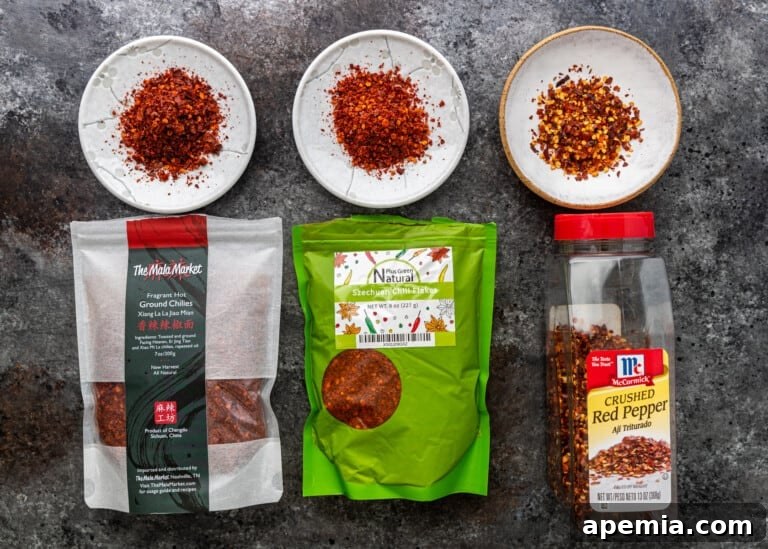
- Sichuan Chili Flakes: These are the star of the show for heat and color. For the best flavor and texture, specific Sichuan chili flakes are preferred. If using regular red chili flakes (common in Western pantries), you’ll need to add about 2 teaspoons of paprika to achieve that signature rich, deep red color characteristic of authentic Chinese chili oil. This also helps balance the heat and color profile.
- White Sesame Seeds (Toasted): Toasting white sesame seeds transforms them, giving them a golden hue, a satisfying crispness, and a wonderfully nutty flavor. They add a delightful crunch and aroma to the finished chili oil.
- Kosher Salt: Essential for seasoning, salt balances and enhances all the other flavors, bringing out their best characteristics and providing a necessary savory element.
- Black Vinegar: Deep, fruity, and slightly tangy, black vinegar adds a crucial layer of acidity and umami that brightens the chili oil and cuts through the richness. Rice vinegar can be used as a more readily available substitute, though it will offer a milder tang.
Step-by-Step Guide: How to Make Chinese Chili Oil
Making homemade Chinese chili oil is a rewarding process that yields incredible results. Follow these simple steps for a perfect batch every time:
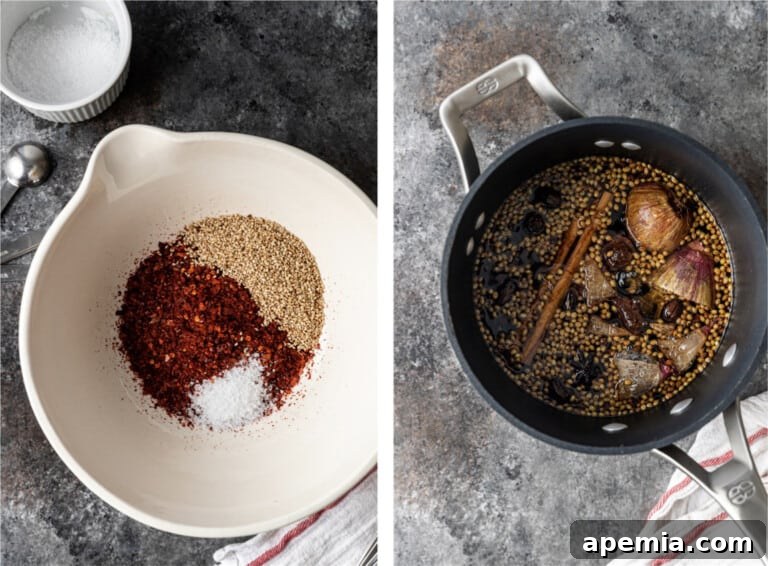
- Simmer and Steep the Aromatics: Begin by adding all the “steeping” ingredients (cloves, star anise, cardamom, cinnamon stick, coriander seeds, Sichuan peppercorns, black peppercorns, orange peel, garlic, shallot, ginger root, and vegetable oil) to a large, heavy-bottomed saucepan. Gradually bring the mixture to a gentle simmer, aiming for a temperature between 225°F – 250°F (107°C – 121°C). Maintain this low simmer for approximately 1 hour, uncovered. This slow infusion process is key to extracting maximum flavor from the spices.
- Prevent Burning During Steeping: Throughout the steeping process, it’s crucial to monitor the temperature to prevent the aromatics, especially the garlic and shallot, from burning. If any ingredient begins to brown too quickly or appears to be burning, promptly remove and discard it to avoid imparting a bitter taste to your oil. Consistency in temperature ensures a clean, fragrant oil.
- Prepare the Chili Flake Mixture: While your aromatic oil is steeping, prepare your heat-proof bowl. In a large, heat-proof bowl, combine the Sichuan chili flakes, toasted white sesame seeds, and kosher salt. Stir these ingredients thoroughly to ensure they are evenly distributed. This mixture will eagerly await the hot, infused oil.
- Heat Oil to Optimal Temperature: After the 1-hour steeping period, turn the heat up to medium-high. Slowly bring the infused oil to a higher temperature, ideally around 375°F (190°C). This high temperature is vital for properly “cooking” the chili flakes and creating their signature crispness and deep red color.
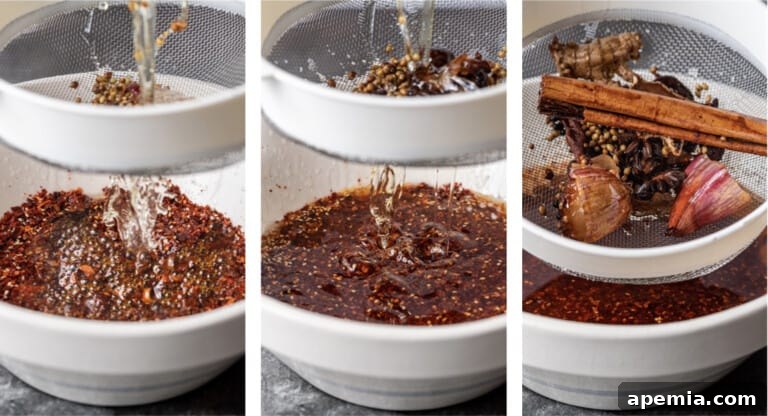
- Carefully Strain and Pour: Once the oil reaches 375°F, turn off the heat. Very slowly and carefully strain the hot, infused oil over the chili flakes, sesame seeds, and salt mixture in your heat-proof bowl. Discard all the steeped spices and aromatics from the strainer. Be extremely cautious during this step as the mixture will bubble vigorously upon contact. Pouring slowly helps to control the reaction and ensures even cooking of the flakes. The sizzling is a good sign, indicating the chili flakes are being perfectly crisped.
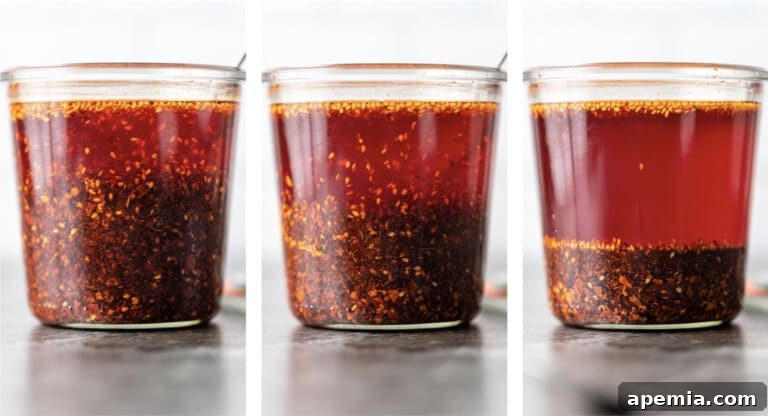
- Cool and Add Vinegar: Allow the chili crisp mixture to cool completely to room temperature. This cooling period helps the flavors to meld and the oil to develop its full character. Once cool, stir in the black vinegar. The vinegar adds a bright, tangy finish that balances the richness and heat, providing an essential acidic counterpoint.
- Seal and Store Your Chili Oil: Finally, carefully pour your homemade crispy chili oil into clean, sterilized jars and seal them tightly. This method ensures maximum freshness and shelf life.
Storage and Longevity of Chinese Chili Oil
Proper storage is key to enjoying your homemade Chinese chili oil for as long as possible while maintaining its vibrant flavor and texture. This condiment is quite stable due to its oil content, offering flexibility in storage options.
For optimal freshness and to extend its shelf life, store your Chinese chili oil in the refrigerator. When refrigerated, it will last for up to 3 months. The cool temperature helps to preserve the delicate aromas and prevents any potential spoilage. If you find yourself reaching for your chili oil frequently and plan to use it up within a shorter period, it can also be safely left at room temperature in your pantry for up to 2 months. Ensure it’s kept in a cool, dark place away from direct sunlight to prevent the oil from oxidizing and turning rancid. Always use clean utensils to scoop out the chili oil to avoid introducing contaminants.
Deep Dive: Crafting Sichuan Chili Flakes at Home
For those aiming for ultimate authenticity and control over their chili oil’s flavor and texture, making Sichuan chili flakes at home is a rewarding endeavor. The process is relatively simple and significantly enhances the final product.
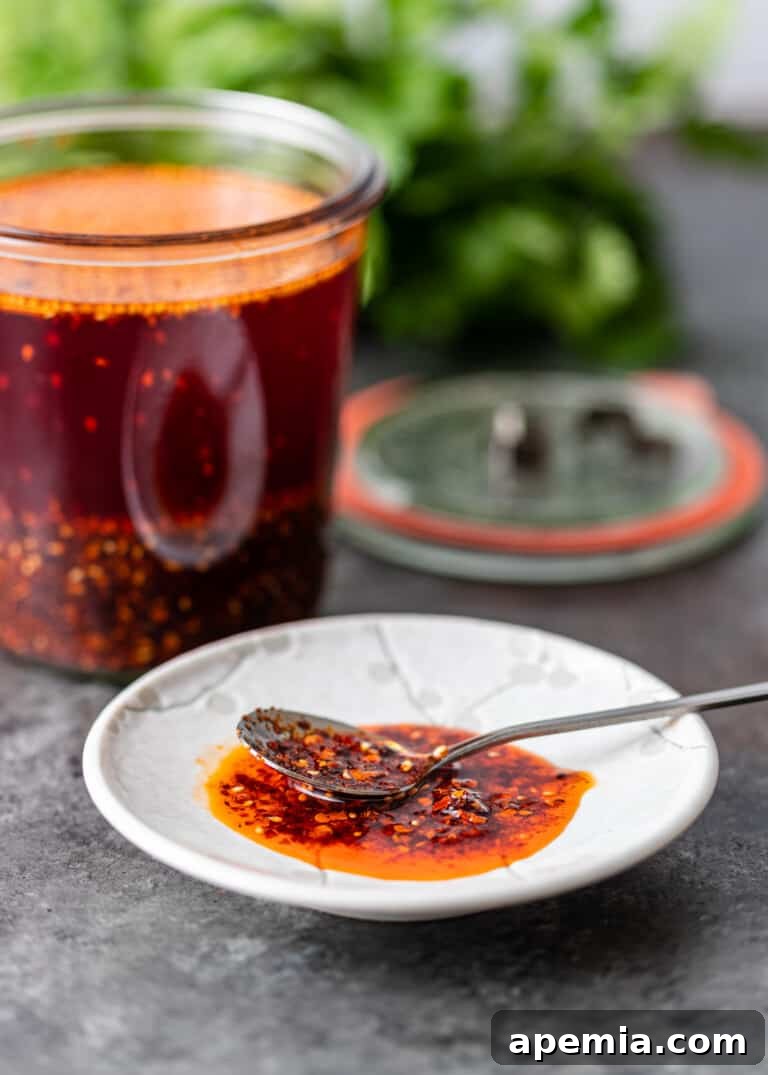
To prepare these intensely flavorful flakes at home, you start by frying whole dried chilis – ideally Facing Heaven chilis or Er Jing Tiao chilis, known for their aromatic qualities and vibrant color – in a small amount of vegetable oil until they become wonderfully crispy. This frying process is not just about drying them out further; it’s a crucial step that heightens their flavor, intensifies their color, and perfects their texture. After frying, the crisp peppers are then ground into flakes, seeds, or a fine powder, depending on your desired consistency. The direct heat and oil interaction during frying create a deeper, toastier flavor profile and achieve a bright, appealing red color naturally, without the need for any additional dyes or artificial additives.
Sichuan vs. Regular Red Chili Flakes: Understanding the Difference
A common question arises when making Chinese chili oil: Can I simply use regular red chili flakes instead of Sichuan varieties? The short answer is yes, you can, especially in a pinch, but it’s important to understand the distinctions and how to best compensate for them.
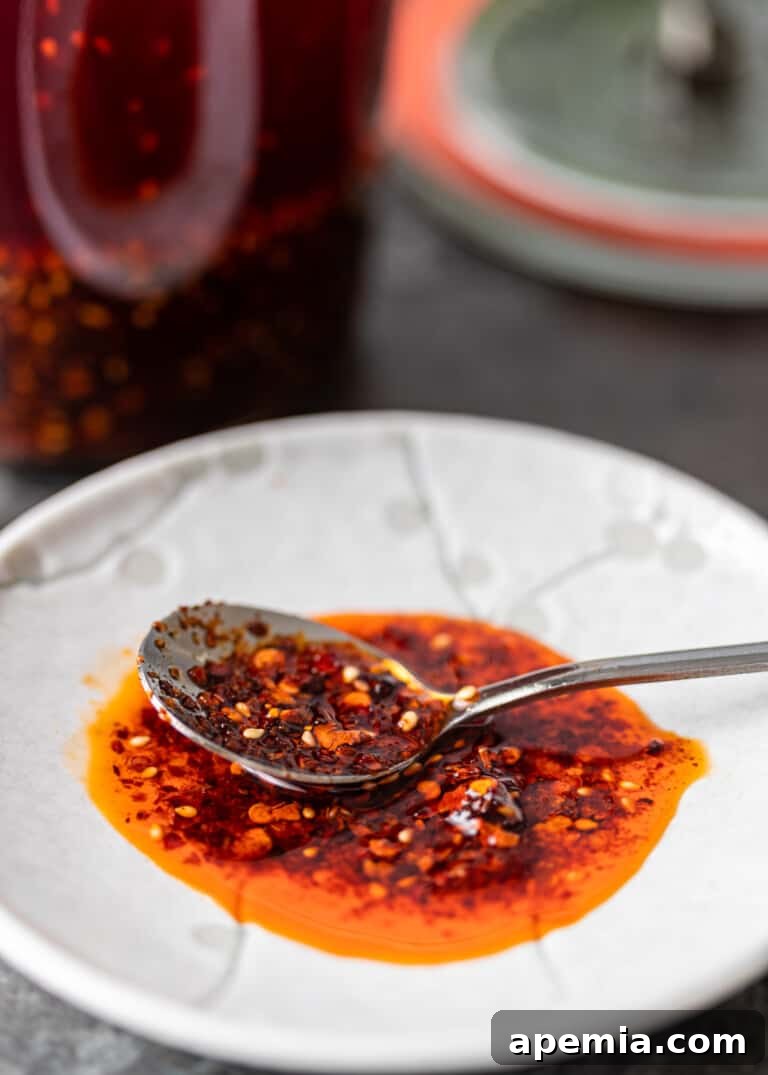
Sichuan chili flakes, derived from specific Chinese chili varieties, offer a unique aromatic depth and often a more nuanced heat compared to generic red pepper flakes (which are typically made from common red peppers like Cayenne). More significantly, they contribute to the characteristic vibrant red color of traditional Chinese chili oil. If you opt to use regular red chili flakes, which might not be as vibrant or possess the same complex aroma, you’ll want to make a small adjustment: add about 2 teaspoons of paprika to your chili flake mixture before pouring the simmered oil over them. Paprika is excellent for boosting that rich, deep red color that is so characteristic and visually appealing in this beloved condiment. While the flavor profile won’t be identical to using authentic Sichuan chilies, this substitution will help achieve a closer aesthetic and a satisfactory level of heat and color.

Chinese Chili Oil (Chili Crisp)
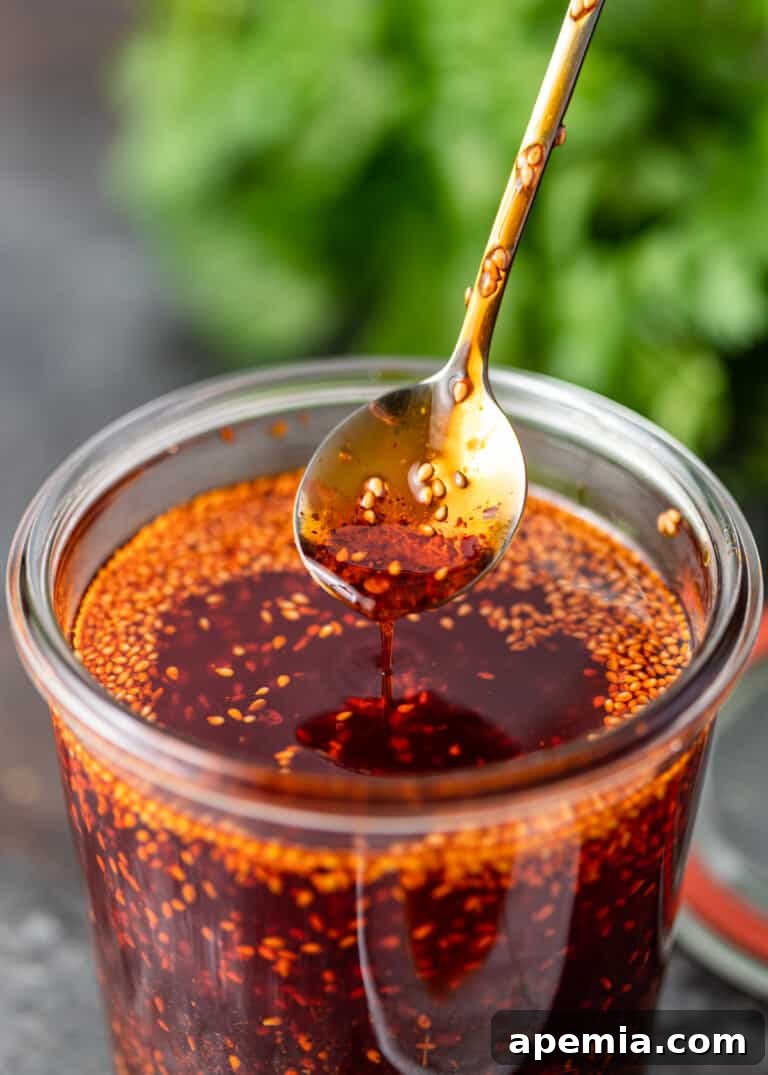
Chinese Chili Oil boasts a vibrant red color, an intoxicating heat, and is beautifully nuanced by subtle spices and a satisfying crisp texture. You’ll want to drizzle this over everything for an instant flavor upgrade.
Servings: 3 cups
Prep Time: 10 mins
Cook Time: 10 mins
Steep Time: 1 hr
Total Time: 1 hr 20 mins
Ingredients
Steep (Aromatic Oil Base)
- 10 whole cloves
- 4 star anise (link)
- 4 black or green cardamom pods
- 1 stick cinnamon (link)
- 2 tbsp coriander seeds
- 2 tsp Sichuan peppercorns
- 1 tsp black peppercorns
- 2 2-inch pieces orange peel (use a vegetable peeler)
- 4 cloves garlic (link)
- 1 shallot (link)
- 1 2-inch piece ginger root
- 3 cups vegetable oil (link)
Pour Over (Chili Crisp Elements)
- 1 cup Sichuan chili flakes or Asian red pepper flakes
- 2 tbsp white sesame seeds, toasted
- 2 tsp kosher salt (link)
- 2 tbsp black vinegar or rice vinegar
Instructions
- To a large saucepan, add the first 12 ingredients (all “Steep” ingredients). Bring to a gentle simmer (225°F – 250°F / 107°C – 121°C). Turn heat off and steep, uncovered, for 1 hour.
- After steeping, turn the heat up to medium-high to bring the oil to 375°F (190°C).
- While the oil is heating up, combine the Sichuan chili flakes, toasted white sesame seeds, and salt in a large heat-proof bowl. Stir well to combine, then set aside.
- Carefully strain the HOT oil over the chili flakes and sesame seeds, discarding the steeped spice mixture. This will bubble up vigorously, so pour slowly and be extremely careful.
- Allow the chili crisp to cool completely to room temperature. Once cool, stir in the black vinegar.
- Carefully pour the finished crispy chili oil into clean, sterilized jars and seal tightly. Keep refrigerated for up to 3 months, or at room temperature in your pantry for up to 2 months if used often.
Notes
- The main difference between black and green cardamom lies in their processing. Green cardamom pods are harvested before maturity. Black cardamom, conversely, is harvested later and traditionally dried over large fires, giving it a smokier, more intense flavor. They are generally interchangeable, with black cardamom offering a bolder taste.
- You can substitute 1 tablespoon of dried ground ginger or dried sand ginger (also known as ground galangal) for the fresh ginger root.
- Sichuan chili flakes are traditionally made by frying whole chilies in vegetable oil until crisp, then grinding them into flakes, seeds, or powder. This frying process significantly enhances the flavor, color, and texture, yielding a toasty flavor and characteristic vivid red color without artificial dyes or additives. If using regular red chili flakes, add 2 teaspoons of paprika to the chili flakes before pouring the oil over them to achieve a rich, deep red color.
- During the steeping process, if the garlic or any other aromatic browns too quickly, remove it to prevent it from burning and imparting a bitter taste to the oil. Aim to keep the oil temperature around 225°F (107°C) for optimal steeping.
Nutrition Facts (Estimate per Serving)
(Based on approx. 1 tbsp serving)
- Calories: 309kcal
- Carbohydrates: 53g
- Protein: 14g
- Fat: 15g
- Saturated Fat: 2g
- Trans Fat: 1g
- Sodium: 1301mg
- Potassium: 1782mg
- Fiber: 33g
- Sugar: 7g
- Vitamin A: 23424IU
- Vitamin C: 6mg
- Calcium: 404mg
- Iron: 17mg
The information shown is an estimate provided by an online nutrition calculator. It should not be considered a substitute for a professional nutritionist’s advice.
Course: Condiments
Cuisine: Asian, Chinese
Author: Kevin