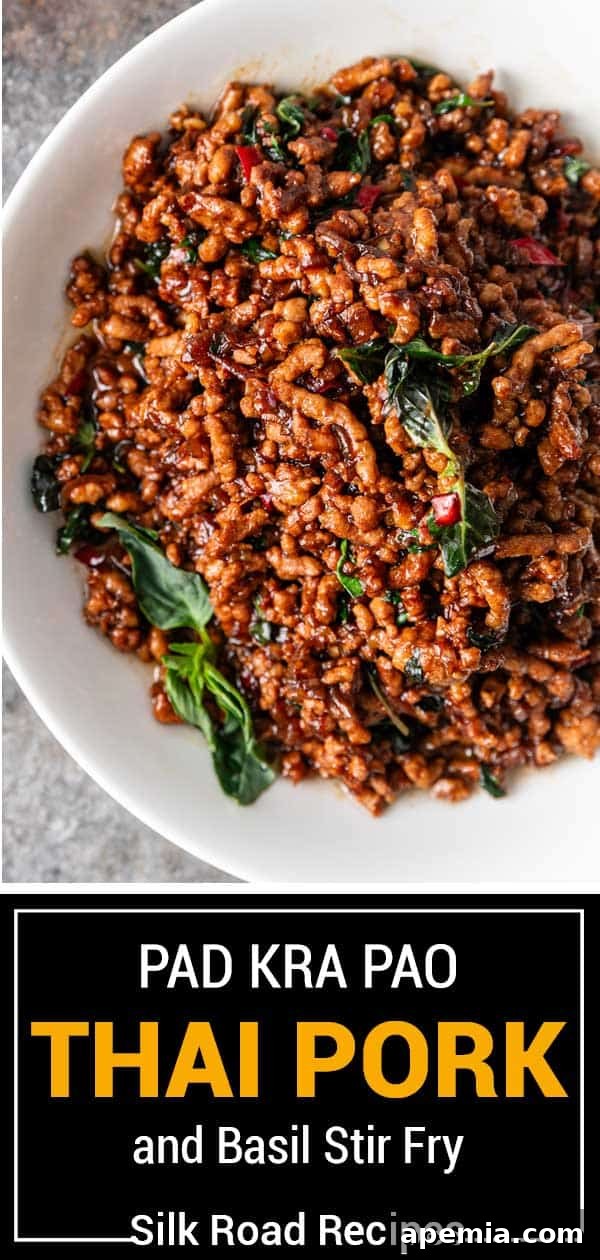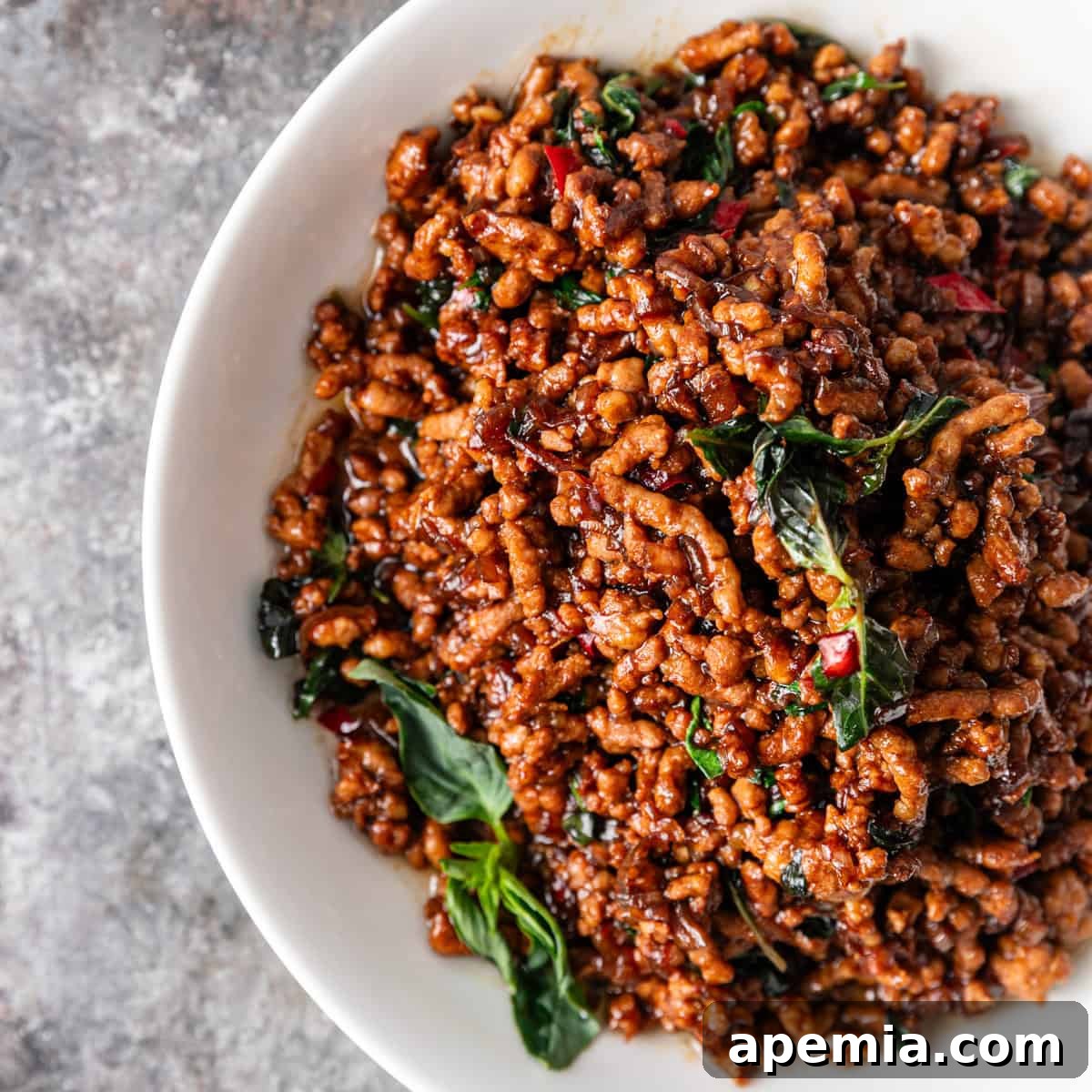
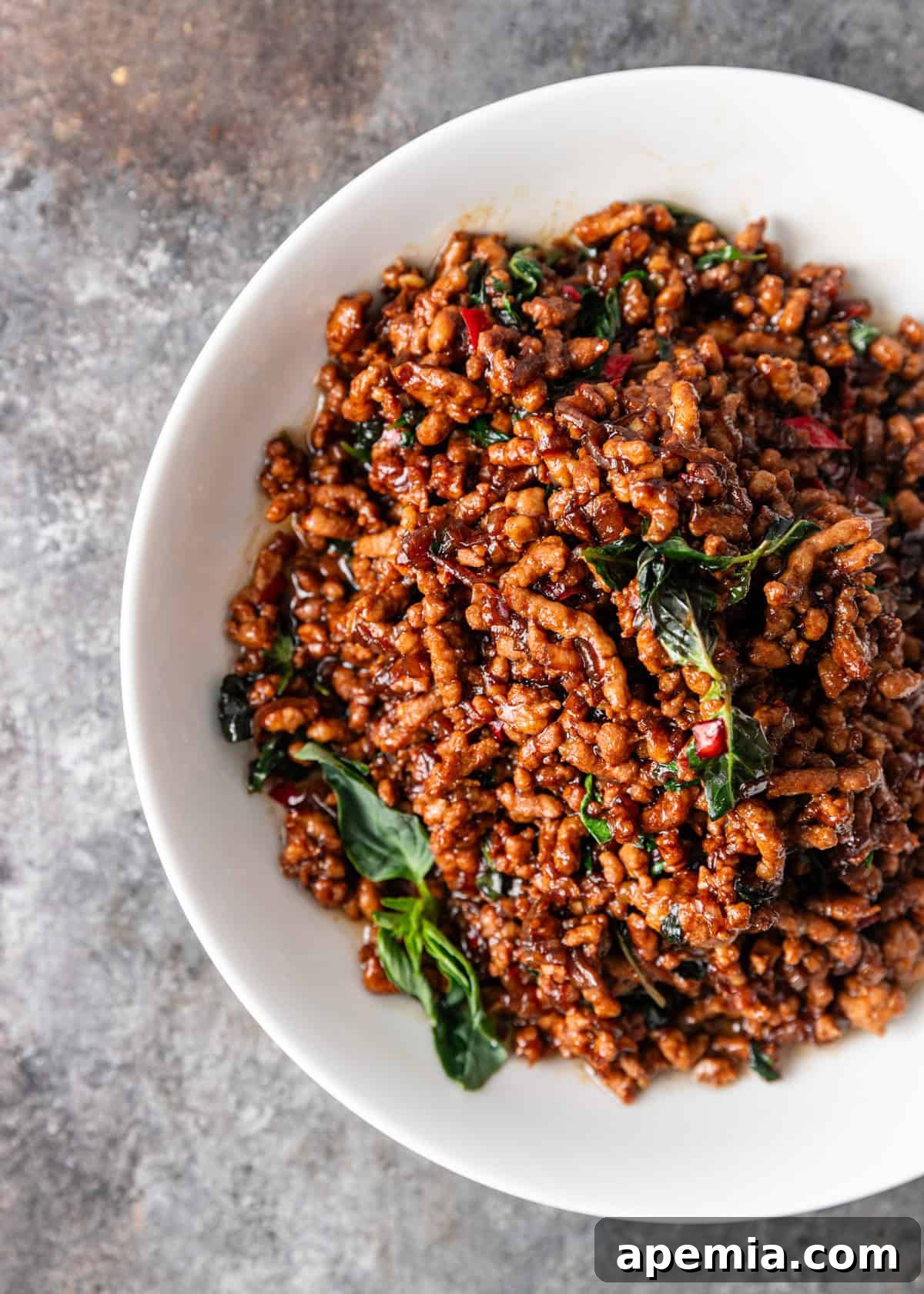
Pad Kra Pao isn’t just another stir-fry; it’s a celebrated icon of Thai cuisine, renowned for its explosive flavors and incredible speed. Often hailed as one of Thailand’s most beloved street food dishes, this spicy basil stir fry transforms humble ground pork into a culinary masterpiece that will undoubtedly elevate your weeknight dinner routine. Ready in a flash, it combines juicy ground pork, intensely aromatic holy basil, and a vibrant kick from fiery Thai chiles, creating an utterly addictive meal you’ll want to whip up time and again.
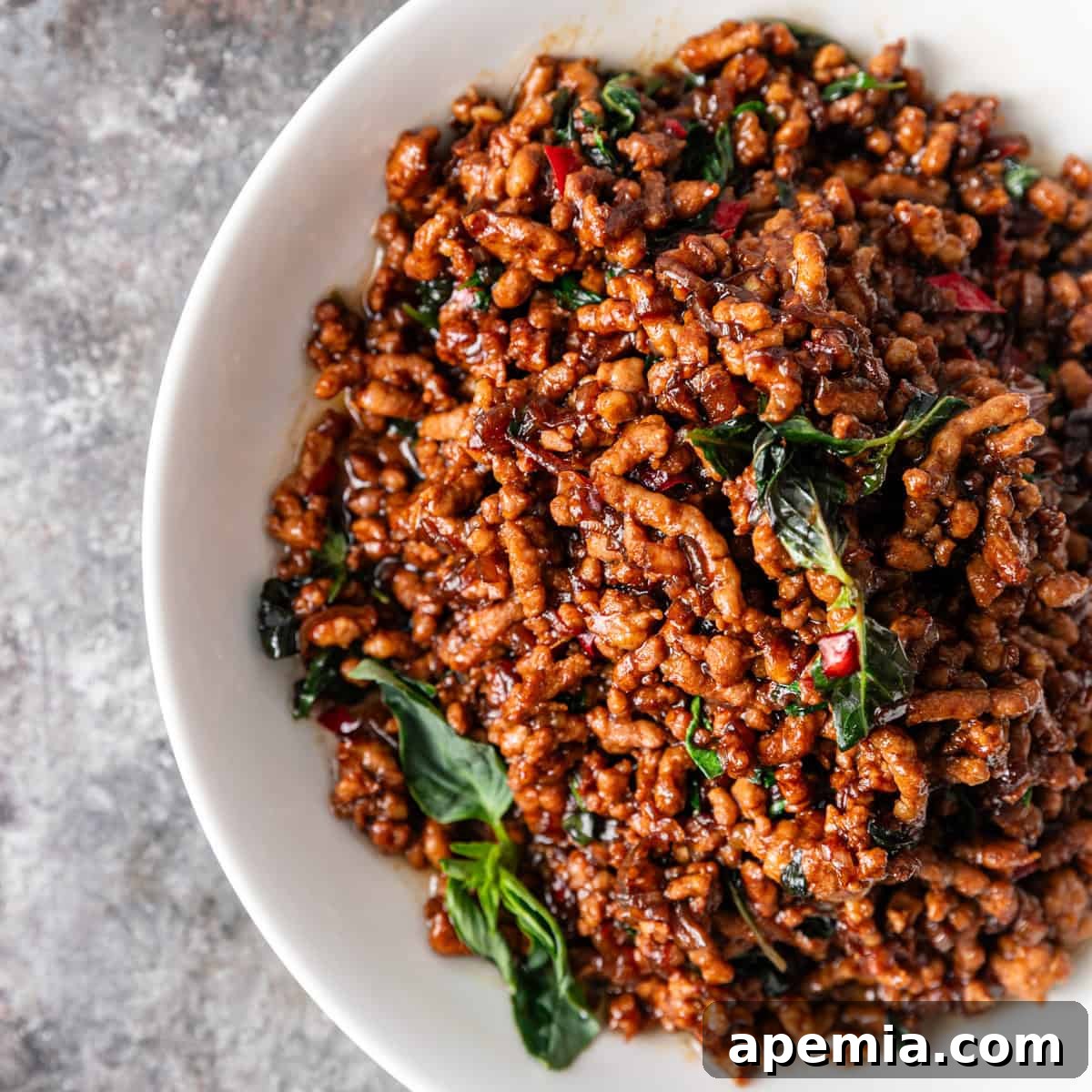
Mastering Pad Kra Pao at home is easier than you think, bringing the magic of Thai street food into your kitchen in under 20 minutes. The secret to its irresistible taste lies in high heat and a searing hot wok, which quickly crisps the ground pork to perfection. This crucial technique, known as “wok hei” (the breath of the wok), infuses the dish with a distinctive smoky, charred flavor while locking in all the spicy, savory, and aromatic goodness of this recipe.
While I thoroughly enjoy other Asian-inspired dinners like Sesame Gojuchang Noodles or Sticky Short Ribs, Pad Kra Pao holds a special place due to its unparalleled vibrancy. The star ingredient, holy basil, contributes an unmistakable peppery, clove-like kick that awakens the palate with every single bite. It’s a dish that truly sings with freshness and bold character.
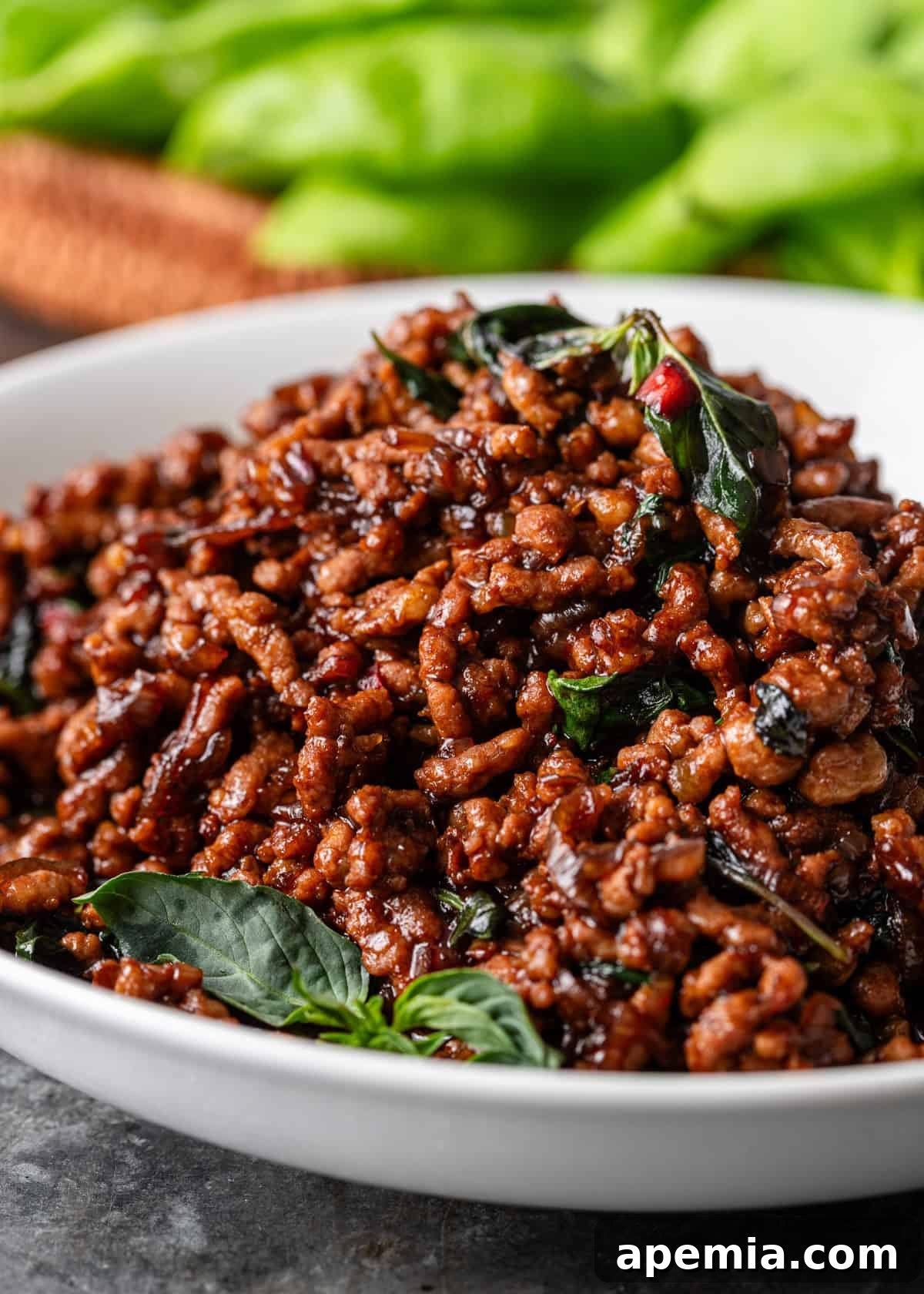
This dish doesn’t hold back on flavor. It receives a robust heat from fresh Thai chiles, a deeply savory and salty foundation from a combination of soy and fish sauces, and an aromatic punch from generous amounts of garlic and shallots. Despite being incredibly quick to prepare, Pad Kra Pao is a symphony of complex flavors, proving that fast food can indeed be incredibly gourmet and satisfying.
Table of Contents
- What is Pad Kra Pao?
- The Essence of Holy Basil
- Ingredient Notes and Substitutions
- How to Make Pad Kra Pao
- Achieving Wok Hei: The Secret to Stir-Fry Perfection
- Recommended Tools
- Storing and Reheating
- Serving Suggestions & Variations
- Frequently Asked Questions
- Thai Pork and Basil Stir Fry (Pad Kra Pao) Recipe
Ready to ignite your taste buds and experience the thrill of authentic Thai cooking? Let’s fire up that wok and create some culinary magic!
What is Pad Kra Pao?
Pad Kra Pao, often transliterated as Pad Krapow or Phat Kaphrao, directly translates to “stir-fried holy basil.” This beloved dish is a staple of Thai street food and a common feature in Thai homes, known for its incredible balance of spicy, savory, and aromatic notes. It’s typically made with ground meat (most commonly pork or chicken), stir-fried with garlic, chilies, and plenty of holy basil, all bound together with a savory sauce. Served traditionally over steaming jasmine rice and often topped with a fried egg, Pad Kra Pao offers a satisfying and robust meal that’s both comforting and exhilarating.
Its widespread popularity stems from its simplicity, speed of preparation, and undeniably bold flavor profile. It’s the kind of dish that truly encapsulates the vibrant spirit of Thai culinary traditions, offering a quick yet profound taste experience that leaves a lasting impression.
Tip From Kevin
The Essence of Holy Basil (Kra Pao)
Holy basil (Ocimum tenuiflorum), or ‘Kra Pao’ in Thai, is the traditional and namesake herb for this iconic dish. Its unique flavor profile is characterized by distinct peppery, clove-like, and slightly spicy notes that are simply irreplaceable in authentic Pad Kra Pao. Unfortunately, true holy basil can be incredibly challenging to locate outside of specific Asian or Thai markets, and even then, its availability is often limited. I’ve personally scoured numerous specialized stores only to come up empty-handed.
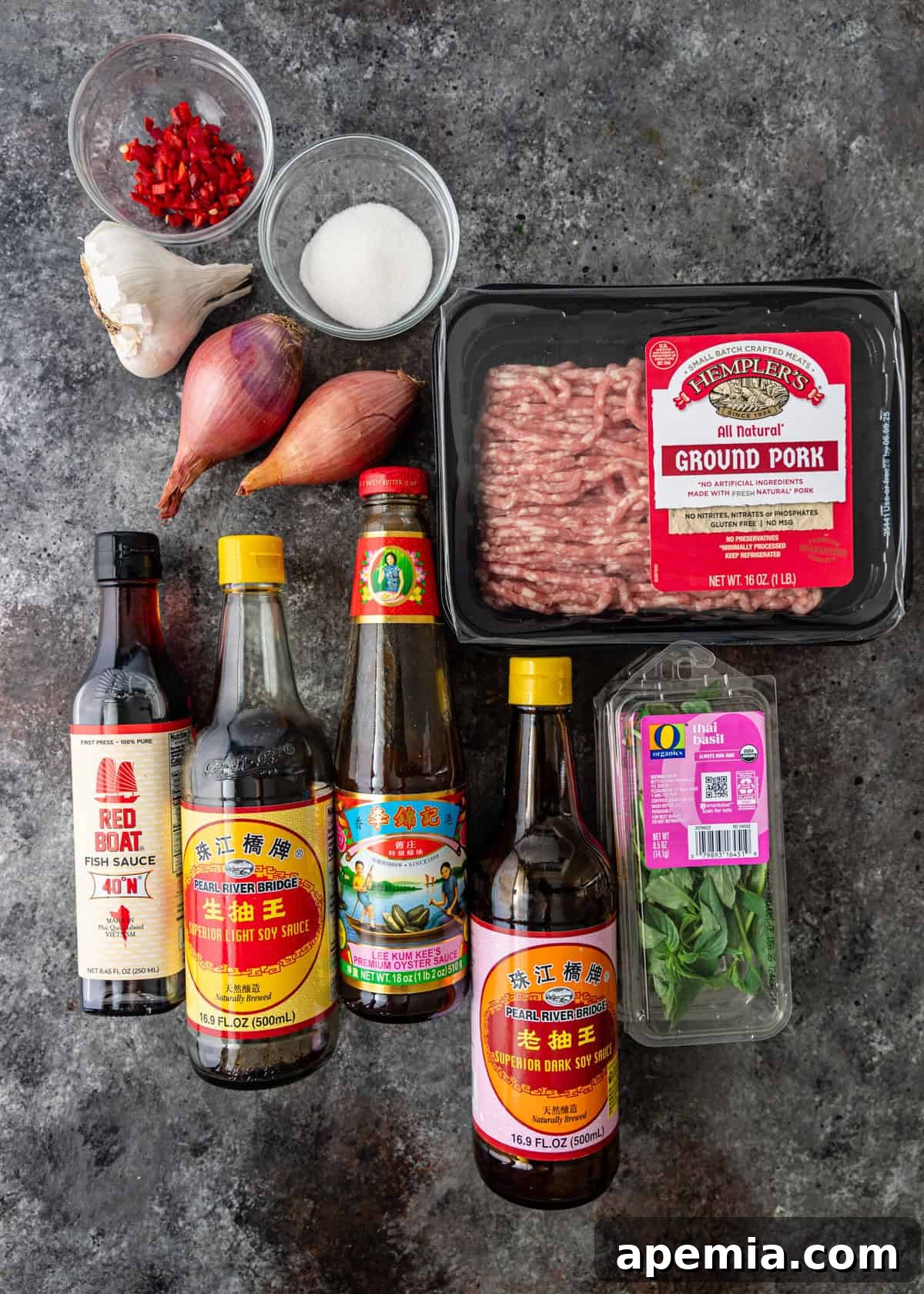
When holy basil is unavailable, Thai basil (pictured in the ingredient shot above), which has a sweeter, more anise or licorice-like taste, serves as an excellent and widely accessible alternative. While it imparts a slightly different character, it still contributes beautifully to the stir-fry’s aroma. Look for holy basil during its peak season, typically from late spring (May-June) through late summer and early fall (September), in specialized markets or consider growing your own if you have a green thumb!
Ingredient Notes and Substitutions for Pad Kra Pao
(Be sure to check the recipe card below for a full list of ingredients and precise quantities)
- Canola Oil – A neutral-flavored oil with a high smoke point, making it absolutely perfect for high-heat stir-frying. It ensures the aromatics and sauces are the stars, without adding any competing flavors. Vegetable oil or peanut oil can also be used effectively.
- Shallots – These delicate members of the onion family provide a sweeter, milder aromatic base compared to regular onions. Slice them thinly to allow them to caramelize quickly and blend seamlessly into the dish.
- Garlic– A generous six cloves might seem like a lot, but this quantity is essential for driving the deeply savory core flavor of Pad Kra Pao. Freshly minced garlic yields the best results, infusing the stir-fry with an irresistible pungency.
- Thai Chiles – These small but incredibly potent chiles are responsible for Pad Kra Pao’s signature fiery kick. For a milder heat, you can reduce the number of chiles or opt for less spicy alternatives like serrano peppers, red Fresno chiles, or even a pinch of dried red pepper flakes. Adjust to your personal heat preference, but don’t shy away entirely – some heat is key!
- Ground Pork – The traditional protein for Pad Kra Pao, ground pork browns beautifully in a hot wok, absorbing all the rich flavors without becoming dry. Its fat content also contributes to the overall richness. You can substitute with ground chicken, ground beef, or even thinly sliced chicken or beef if preferred. For a vegetarian option, crumbled firm tofu or finely chopped mushrooms work wonderfully.
- Holy Basil – As discussed, this herb is the soul of the dish, contributing peppery, clove-like notes. If authentic holy basil is elusive, Thai basil is an excellent and more readily available substitute, offering a sweeter, licorice-like flavor profile that still complements the dish beautifully. Common sweet basil, while not ideal, can be used in a pinch if no other option is available.
- The All-Important Sauce – This simple yet potent combination of staple ingredients creates the signature savory, slightly sweet, and umami-rich coating for the pork.
- Oyster Sauce – Essential for umami richness and a subtle sweetness that helps the sauce cling perfectly to the meat. If you don’t have oyster sauce, a touch of hoisin sauce or even a mushroom-based stir-fry sauce can offer a similar depth, though the flavor will be slightly different. For a vegan option, use a vegetarian mushroom oyster sauce.
- Fish Sauce – A cornerstone of Thai cooking, fish sauce provides a deep, savory, and salty backbone. Even a small amount adds incredible complexity without making the dish taste overtly “fishy.” Don’t skip it if you want authentic flavor!
- Light Soy Sauce – Contributes a straightforward salty and savory element to the sauce. Use a good quality light (or regular) soy sauce for the best flavor.
- Dark Soy Sauce – Thicker, slightly sweeter, and less salty than light soy sauce, its primary role here is to deepen the color of the dish, giving it that characteristic rich hue, and to add a subtle caramel note to the overall flavor profile.
- Sugar – Just a touch is needed to balance the intense saltiness from the soy and fish sauces and to mellow out the heat from the chiles, creating a perfectly harmonious flavor.
How to Make Pad Kra Pao: Step-by-Step Instructions
- Prepare the Sauce. In a small bowl, whisk together all the sauce ingredients: oyster sauce, fish sauce, light soy sauce, dark soy sauce, and sugar. Set this flavorful mixture aside; having it ready ensures a smooth and quick cooking process.
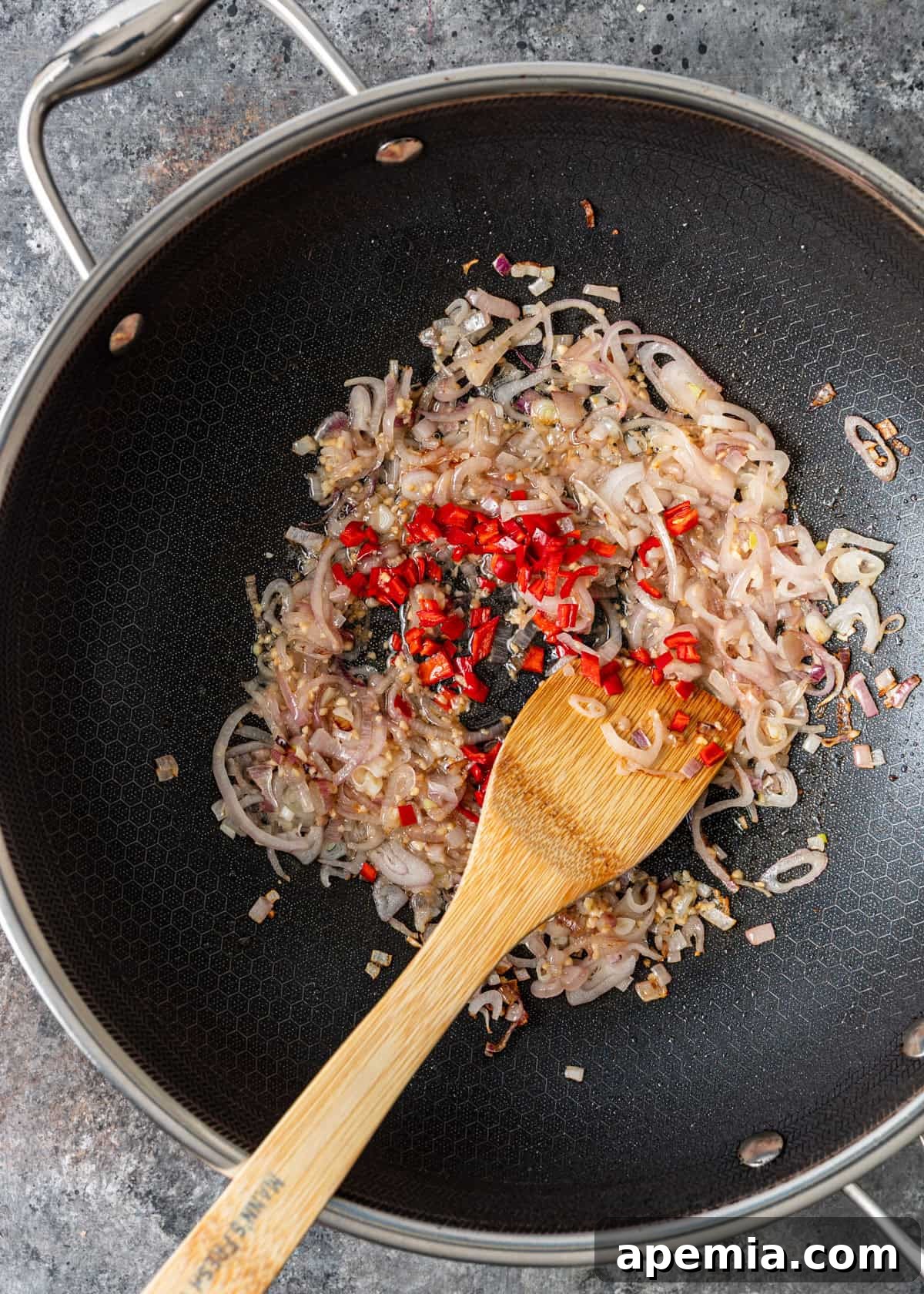
- Stir-Fry the Aromatics. Heat the canola oil in a wok or large skillet over high heat until it’s shimmering and almost smoking. Add the thinly sliced shallots and stir-fry vigorously for about 1 minute until they begin to soften and become fragrant. Immediately add the minced garlic and diced Thai chiles, continuing to stir-fry for another minute until they are intensely aromatic but not burnt.
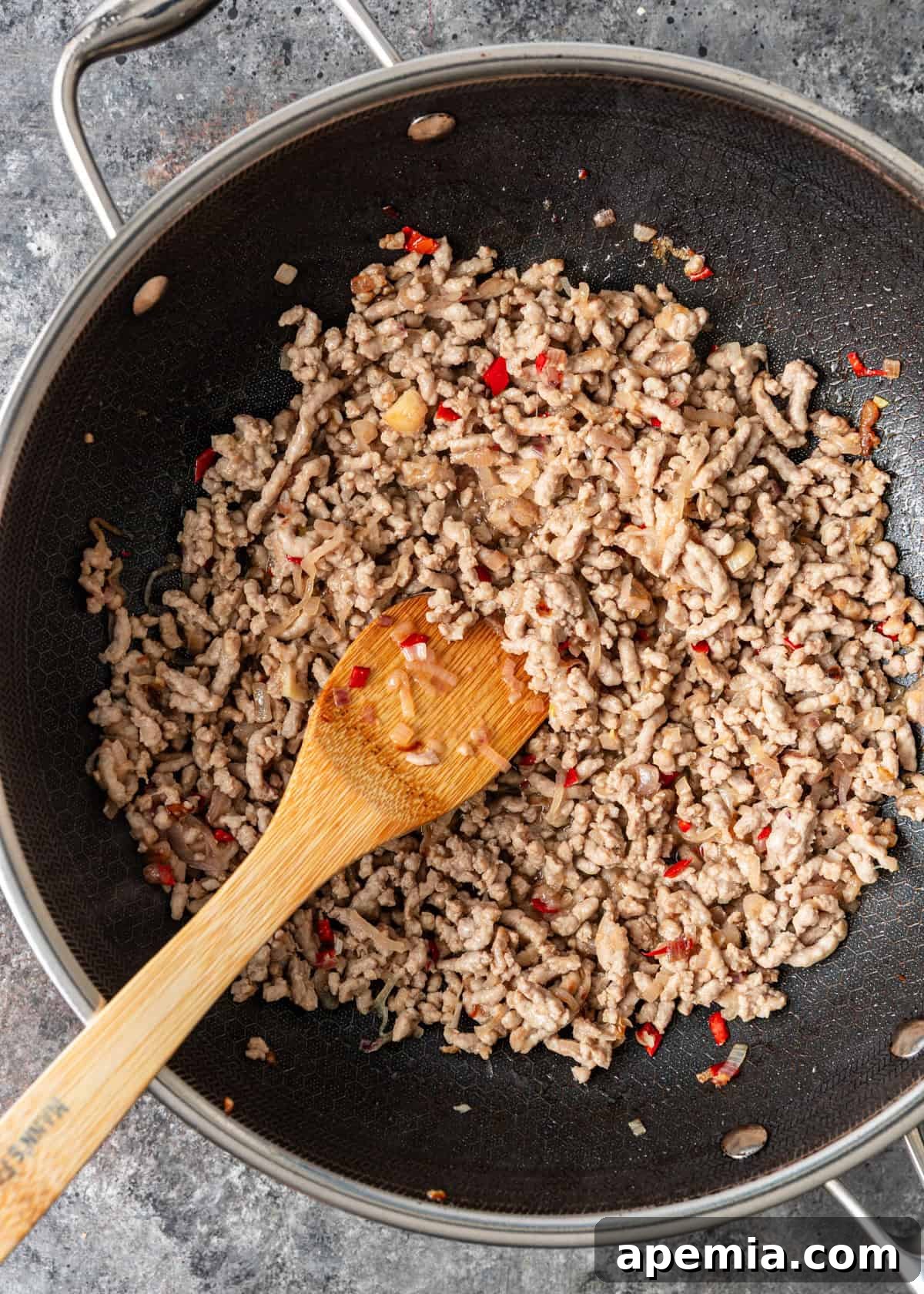
- Cook the Ground Pork. Add the ground pork to the wok, breaking it up with your spoon or spatula. Stir-fry constantly, ensuring the pork is evenly browned and cooked through. Continue cooking until most of the liquid released from the pork has evaporated, leaving behind a lovely, slightly crispy texture. You’ll want to leave a small amount of rendered oil in the wok, as this is crucial for the sauce.
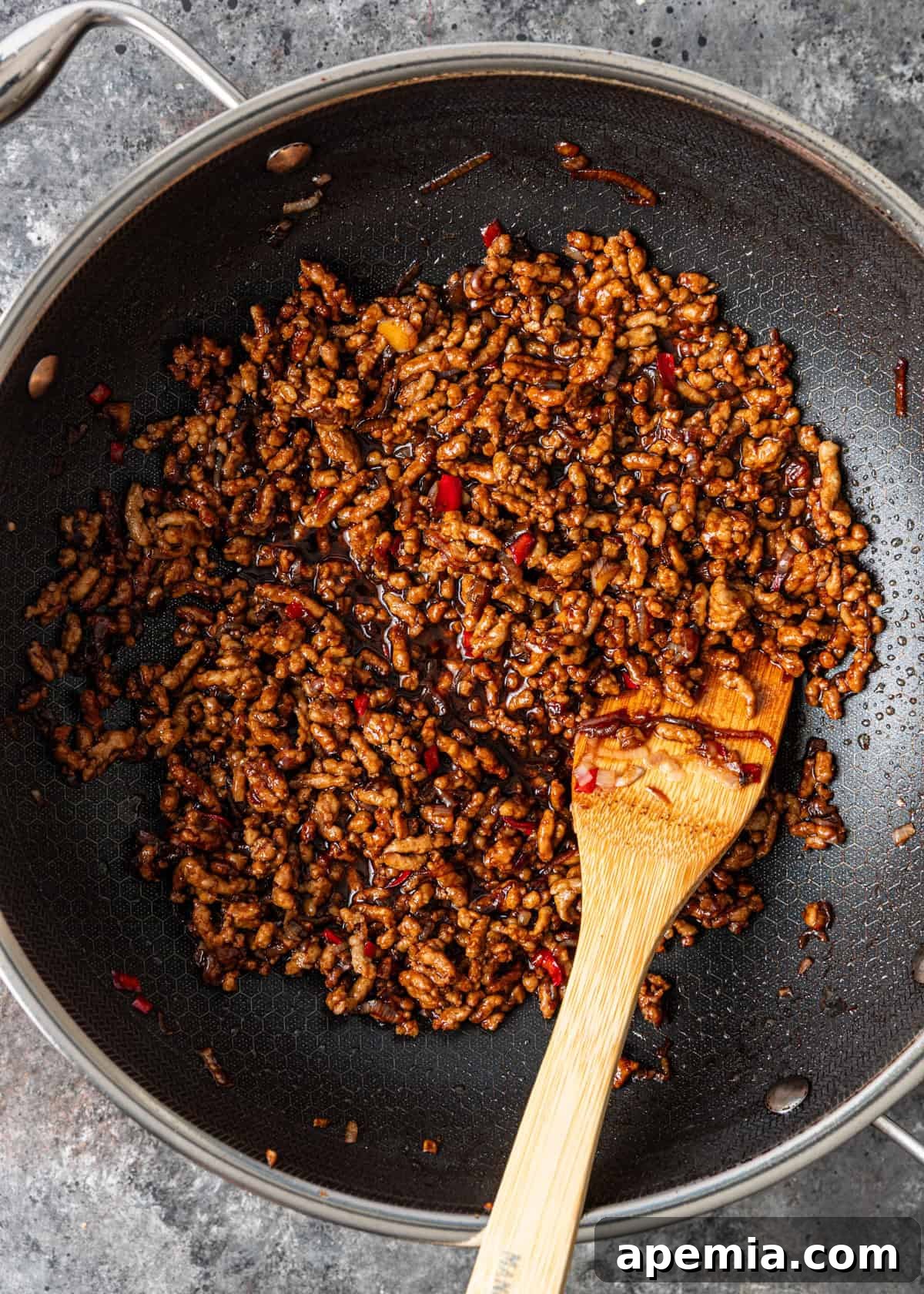
- Add the Signature Sauce. Pour the prepared sauce mixture over the browned pork and aromatics. Stir well to ensure every piece of meat is thoroughly coated in the rich, glossy sauce. Allow the sauce to simmer and reduce for a few minutes, stirring occasionally, until it thickens slightly and becomes beautifully shiny and caramelized.
- Finish with Fresh Basil. Add the holy basil (or Thai basil) leaves to the wok. Quickly toss and stir until the basil just begins to wilt and its fragrant essence is released into the dish. This step should be very fast to preserve the basil’s vibrant flavor and color.
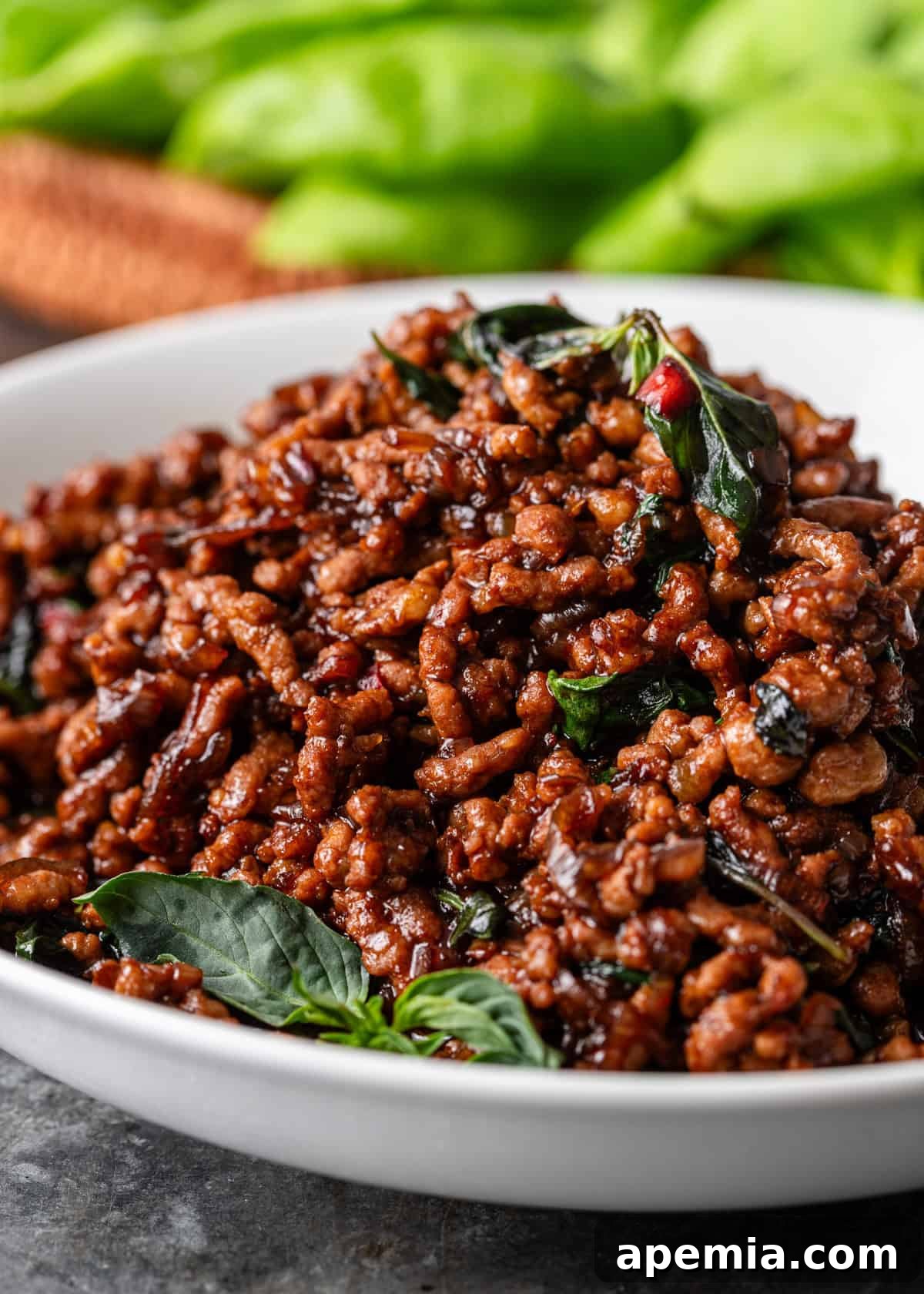
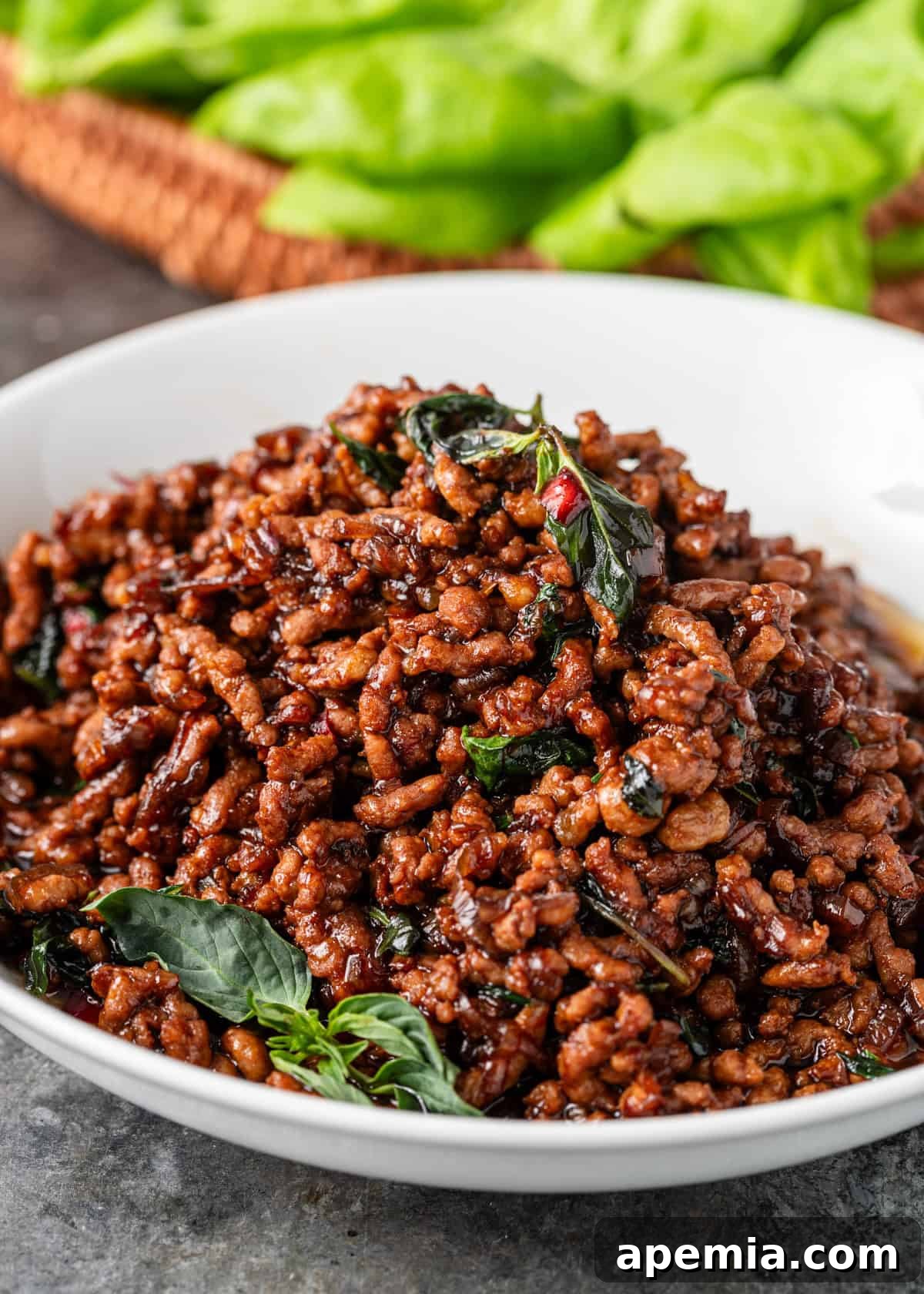
- Serve It Up. Transfer the spicy pork and holy basil stir fry to serving plates. Traditionally, it’s spooned generously over fluffy steamed jasmine rice. For a lighter meal, serve it in crisp lettuce cups. Garnish with extra fresh basil leaves, a few additional sliced chiles, or a traditional fried egg (kai dao) for an authentic touch.
Achieving Wok Hei: The Secret to Stir-Fry Perfection
The concept of “wok hei” is paramount in stir-frying, translating literally to “the breath of the wok.” It refers to the unique, smoky, slightly charred aroma and flavor imparted to food when cooked rapidly over extremely high heat in a well-seasoned wok. This effect is a hallmark of truly great stir-fries, and it’s what transforms a simple Pad Kra Pao into an extraordinary culinary experience.
To achieve wok hei at home, ensure your wok (or skillet) is smoking hot before adding any oil or ingredients. Work in batches if necessary to avoid overcrowding the pan, which lowers the temperature and steams the food instead of stir-frying it. The quick searing and caramelization that high heat provides is essential for developing the complex flavors and textures of this dish.
Recommended Tools for Pad Kra Pao
- Wok or Large Skillet – A carbon steel wok is ideal for achieving the intense heat and “wok hei” necessary for an authentic Pad Kra Pao. Its wide, sloped sides allow for quick and even cooking. If a wok isn’t available, a large, heavy-bottomed nonstick skillet can work in a pinch, though you’ll need to ensure it gets very hot.
- Sharp Knife & Cutting Board – Essential for the precise and efficient preparation of your aromatics, including thinly slicing shallots, mincing garlic, and dicing chiles cleanly. Proper knife skills will make the prep much faster.
- Rice Cooker (Optional but Recommended) – For perfectly fluffy and fragrant jasmine rice every single time, without the need for constant supervision on the stovetop. It’s a game-changer for regular Asian cooking.
- Spatula or Wok Turner – A flat-edged, sturdy spatula or a traditional wok turner is crucial for efficiently stirring, tossing, and breaking up the ground pork in a hot wok without damaging the surface.
Storing and Reheating Pad Kra Pao
To maintain the best quality, allow your Pad Kra Pao to cool completely before transferring it to an airtight container. It can then be stored safely in the refrigerator for up to 3 days. For optimal freshness and texture, I highly recommend storing any accompanying jasmine rice in a separate container; this prevents the rice from becoming soggy from the stir-fry sauce and preserves its fluffy consistency.
While technically possible, Pad Kra Pao is generally not ideal for freezing. The delicate basil leaves tend to lose their vibrant flavor and desirable texture once defrosted, making for a less satisfying experience. It’s best enjoyed fresh or after short-term refrigeration.
When you’re ready to enjoy leftovers, reheat the stir-fry in a skillet over medium heat for approximately 3 to 5 minutes, stirring occasionally, until it is piping hot throughout. If the dish appears a bit dry, add a small splash of water or a drizzle of fresh oil to restore its moisture and sheen. For a quicker option, you can microwave it in a covered, microwave-safe container for 1-2 minutes, stirring halfway through to ensure even heating.
Serving Suggestions & Variations
Pad Kra Pao is a versatile dish that pairs wonderfully with a variety of accompaniments and can be adapted to suit different tastes and ingredients.
- Classic Pairing: Always serve Pad Kra Pao over a generous portion of freshly steamed jasmine rice. Its mild fragrance and soft texture provide the perfect canvas for the stir-fry’s bold flavors.
- Fried Egg (Kai Dao): A traditional and highly recommended addition! A crispy fried egg with a runny yolk adds richness and a creamy texture that perfectly complements the spicy pork.
- Fresh Vegetables: Offer slices of fresh cucumber or a side of blanched green beans to provide a cool, refreshing contrast to the spicy stir-fry.
- Lime Wedges: A squeeze of fresh lime juice just before eating can brighten the entire dish and enhance its aromatic qualities.
- Protein Alternatives: While ground pork is classic, feel free to experiment with ground chicken, ground beef, thinly sliced chicken breast or thigh, or even shrimp.
- Vegetarian/Vegan Pad Kra Pao: Crumble firm or extra-firm tofu and pan-fry it until golden before adding to the wok. Alternatively, use finely chopped mushrooms (like cremini or shiitake) for a meatier texture. Ensure to use vegetarian oyster sauce or a suitable stir-fry sauce alternative.
- Add More Vegetables: For added texture and nutrition, consider incorporating thinly sliced bell peppers (red, yellow, or green), green beans, or even some bamboo shoots during the stir-frying process. Add them after the aromatics but before the pork for optimal crispness.
Share this recipe on Pinterest!
Love this recipe? Share it with the world on Pinterest.
Frequently Asked Questions About Pad Kra Pao
Holy basil (Ocimum tenuiflorum), known as ‘Kra Pao’ in Thai, is the traditional and authentic herb for this dish. It boasts a distinct bold, peppery, and slightly spicy taste with prominent clove-like undertones. Its leaves are typically more jagged and have a slightly fuzzy texture. It can be quite hard to find outside of very specialized Asian markets.
Thai basil (Ocimum basilicum var. thyrsiflora), on the other hand, is a different variety. It is sweeter and more aromatic, often described as having hints of licorice or anise. Its leaves are smooth, almost shiny, and often accompanied by characteristic purple stems. While it’s a great substitute when holy basil isn’t available, it will lend a slightly different, milder flavor profile to the Pad Kra Pao.
Achieving very high heat is absolutely crucial for an authentic Pad Kra Pao. This intense heat creates what is known as “wok hei,” a smoky, charred flavor that is a hallmark of perfectly executed stir-fries. High heat also ensures the pork caramelizes beautifully on the outside while staying juicy within, preventing it from steaming and becoming bland. You’ll know your wok is ready for cooking when it’s shimmering and just barely starting to smoke. A simple water test confirms this: add a few drops of water to the pan, and they should sizzle and evaporate immediately upon contact. Don’t be afraid to crank up the heat and stir-fry quickly for the best results!
Prik nam pla is a vibrant and essential Thai condiment, often served alongside many dishes, including Pad Kra Pao (especially when topped with a fried egg!). It’s typically a simple mixture of fish sauce, lime juice, sliced fresh bird’s eye chiles, and sometimes garlic or sugar. This zesty, spicy, and salty sauce is drizzled over the stir-fry or rice to add an extra layer of bold flavor and a fresh zing. While optional, it’s a traditional addition that many connoisseurs appreciate for enhancing the authentic Thai experience.
Absolutely! While ground pork is the classic choice, Pad Kra Pao is incredibly versatile. You can easily substitute ground chicken, ground beef, or even thinly sliced chicken or beef. For a delicious vegetarian or vegan version, crumbled firm tofu or finely chopped mushrooms (like cremini or shiitake) work exceptionally well. Just ensure that for vegetarian options, you use a mushroom-based vegetarian oyster sauce instead of traditional oyster sauce.

Thai Pork and Basil Stir Fry (Pad Kra Pao)
Pin Recipe
PrintRecipe
Ingredients
- 2 tbsp canola oil
- 2 large shallots sliced thin
- 6 cloves garlic minced
- 2 Thai chiles seeded and diced (or hot chili of choice)
- 1 lb ground pork
- 3 packages of Holy basil leaves (See Note 1)
Sauce
- 2 tbsp oyster sauce
- 1 tbsp fish sauce
- 1 tbsp light soy sauce
- 2 tsp dark soy sauce
- 1 tsp sugar
Instructions
-
In a small bowl, thoroughly mix together the oyster sauce, fish sauce, light soy sauce, dark soy sauce, and sugar to create your flavorful stir-fry sauce. Set it aside for later.
-
Heat the canola oil in a wok or large, heavy-bottomed skillet over high heat until it’s very hot and shimmering. Add the thinly sliced shallots and stir-fry for 1 minute until fragrant. Next, add the minced garlic and diced Thai chiles, continuing to stir-fry for another minute until the aromatics are very fragrant. Immediately add the ground pork to the wok. Stir-fry vigorously, breaking up the pork with your spatula, until it is no longer pink, has started to brown, and most of the liquid released from the pork has evaporated. There should still be some rendered oil in the wok.
-
Pour the prepared sauce mixture over the browned pork and aromatics. Quickly toss and stir to coat the meat thoroughly. Allow the sauce to cook down and reduce for several minutes until it becomes glossy and clings beautifully to the pork. Finally, add the holy basil leaves (or Thai basil) and toss just until they wilt and release their intense aroma, typically less than a minute.
-
Serve your delicious Pad Kra Pao immediately over steamed jasmine rice or in crisp lettuce cups (butter lettuce works wonderfully for this). For an authentic touch, consider topping with a fried egg.
Notes
- Holy basil is the traditional herb used in this dish (the name Pad Kra Pao translates to Holy basil stir-fry), but it is genuinely hard to locate in many regions. I’ve often found it unavailable even in specialized Asian and Thai markets. When fresh holy basil is not accessible, I consistently use 3 of the 0.5 ounce packages of fresh Thai basil, as seen in the photo above. While different, Thai basil offers a fantastic alternative flavor.
Nutrition
The information shown is an estimate provided by an online nutrition calculator. It should not be considered a substitute for a professional nutritionist’s advice.