
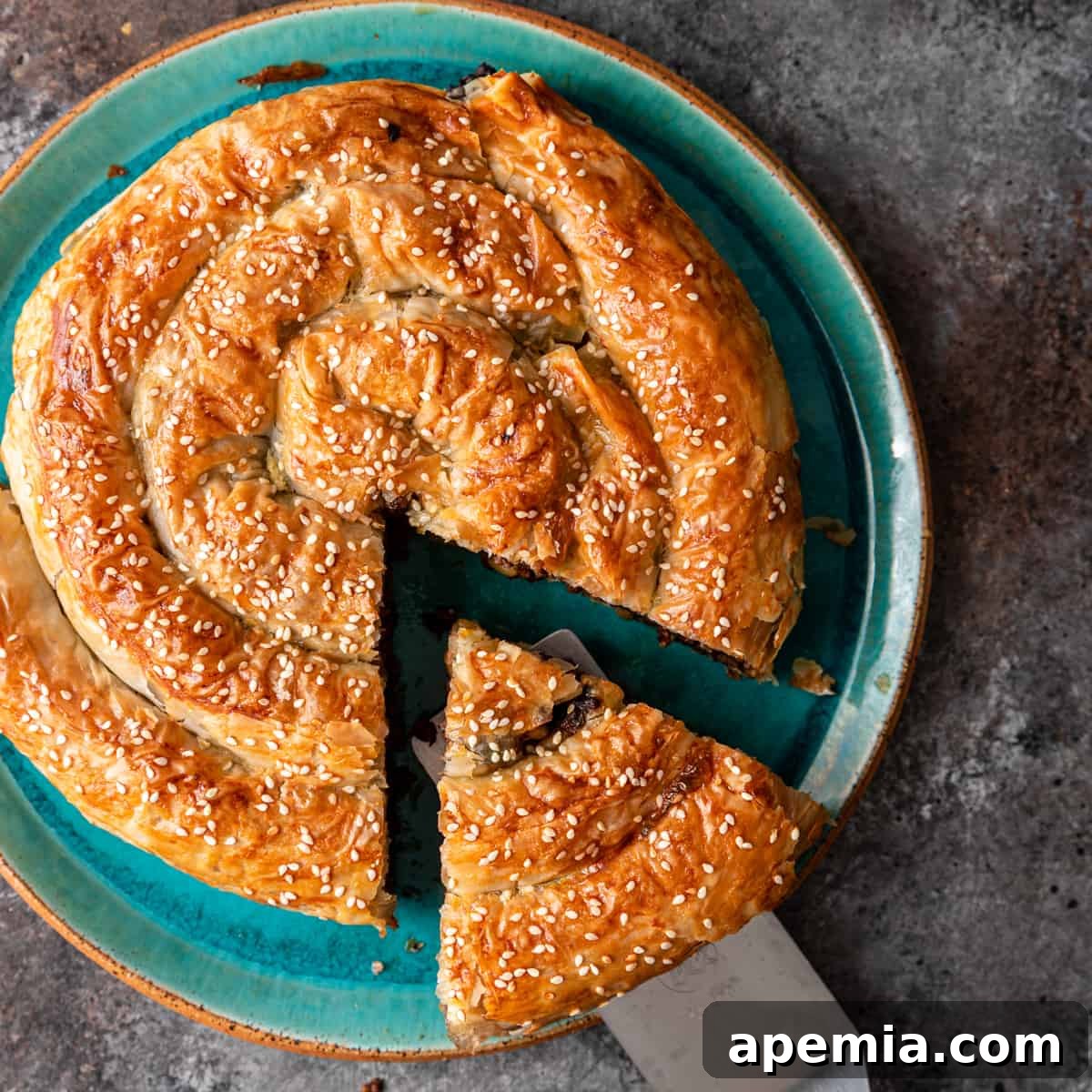
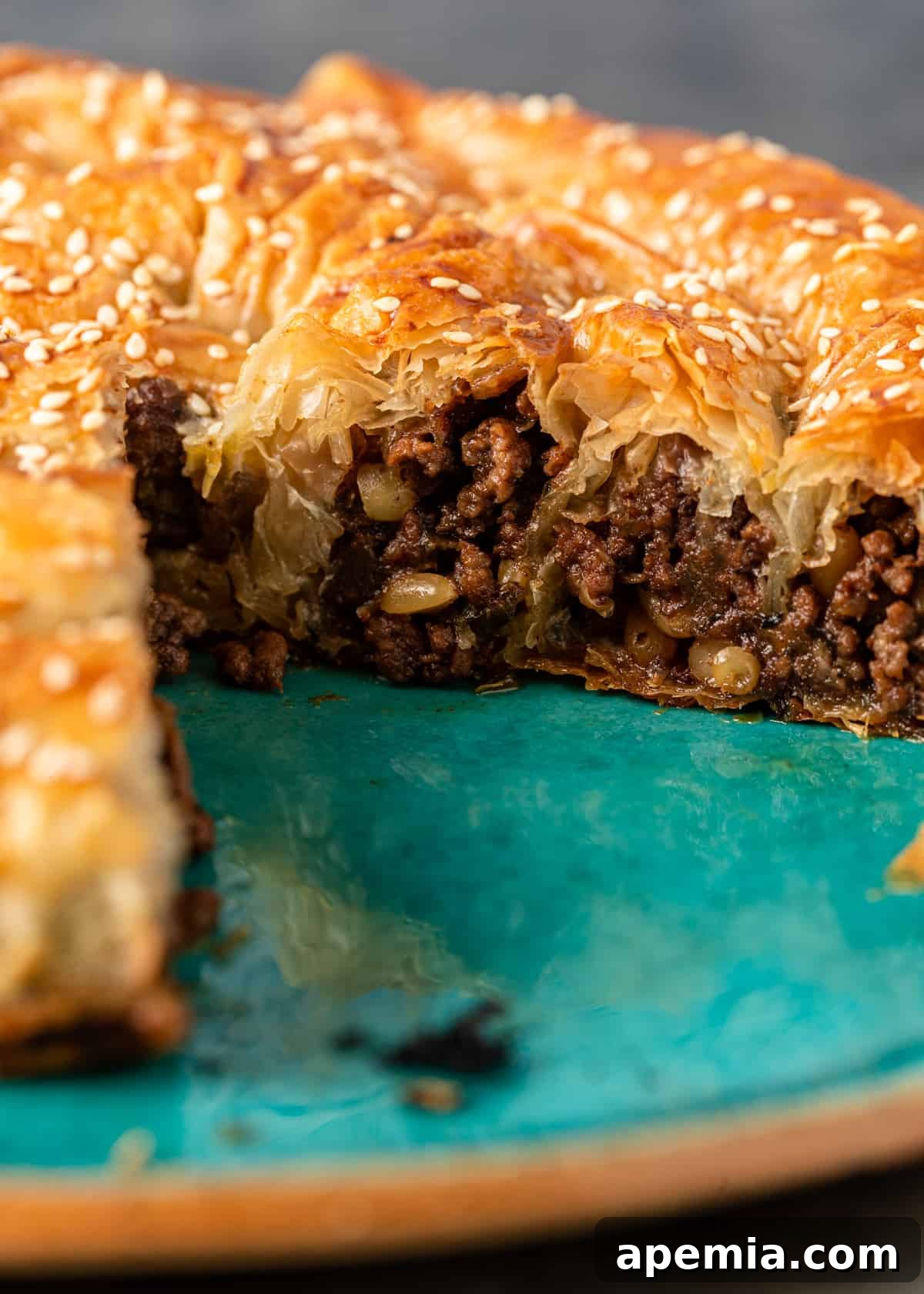
Dive into the delightful world of **Borek**, a magnificent golden, meat-filled pastry that’s far more captivating than its humble appearance suggests! Originating from the rich culinary traditions of the Ottoman Empire, this dish offers an exquisite symphony of textures and flavors. Each bite of our crispy borek reveals a succulent filling of perfectly spiced ground beef, complemented by the satisfying crunch of pine nuts, the vibrant freshness of herbs, the sweet tenderness of juicy onions, and a unique, tangy hint of pomegranate molasses. It’s a truly mouth-watering experience that promises to elevate any meal and transport your taste buds straight to the heart of Turkey.
The Irresistible Allure of Savory Meat Pies: Introducing Turkish Borek
Who can resist the comforting charm of a crispy, savory meat pie? These delightful culinary creations are celebrated globally, offering simple, handheld pockets of flavor that are as enjoyable to prepare as they are to devour. While you might encounter similar savory pastries in various cultures—from China’s xian bing to Crimea’s chebureki, and Lebanon’s fatayer—today, we embark on a journey to explore the crown jewel of Turkish cuisine: the renowned **Borek**.
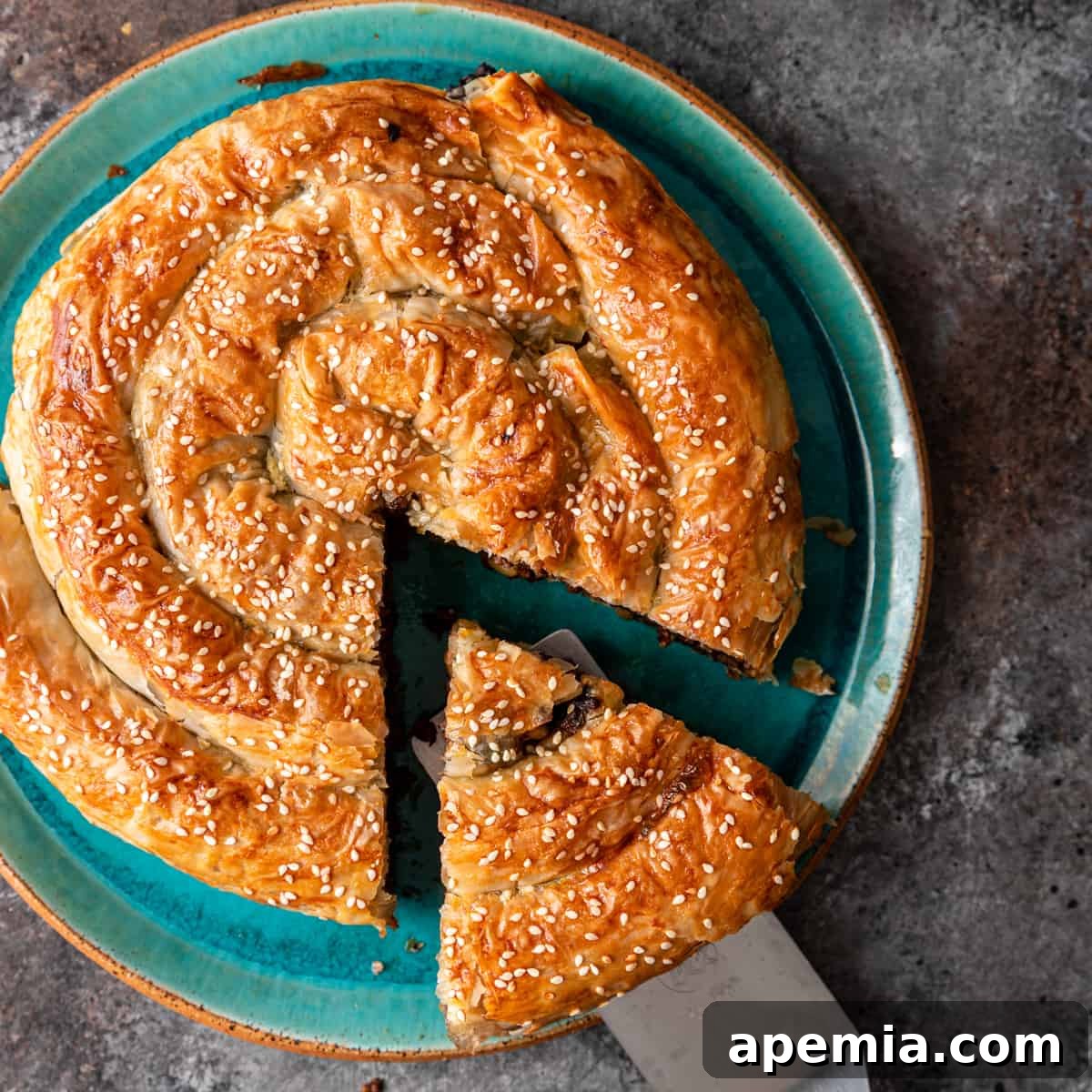
You may have previously encountered my recipe for Turkish gozleme, a beloved stuffed flatbread. But have you ever had the pleasure of tasting Borek? This unique pastry, sometimes spelled *burek*, *byrek*, or *bourekas*, stands out with its distinctive spiral shape and versatile fillings. Whether filled with savory meat, creamy cheese, or a delectable combination of both, borek is baked to golden perfection and often topped with crunchy sesame seeds. The variety of fillings is truly astonishing, ranging from versions reminiscent of Greek spanakopita with spinach and feta, to those featuring other vegetables or hearty potatoes. Each variation offers a delightful exploration of regional flavors and traditions, making borek a truly adaptable and beloved dish.
Imagine serving this visually impressive dish for breakfast or brunch. Your guests will be captivated by its golden crust and intricate spiral design, completely unaware of how incredibly simple it was to prepare. With my comprehensive guide and video tutorial, crafting this elegant pastry becomes an effortless endeavor, even for novice bakers, promising rave reviews and satisfied smiles.
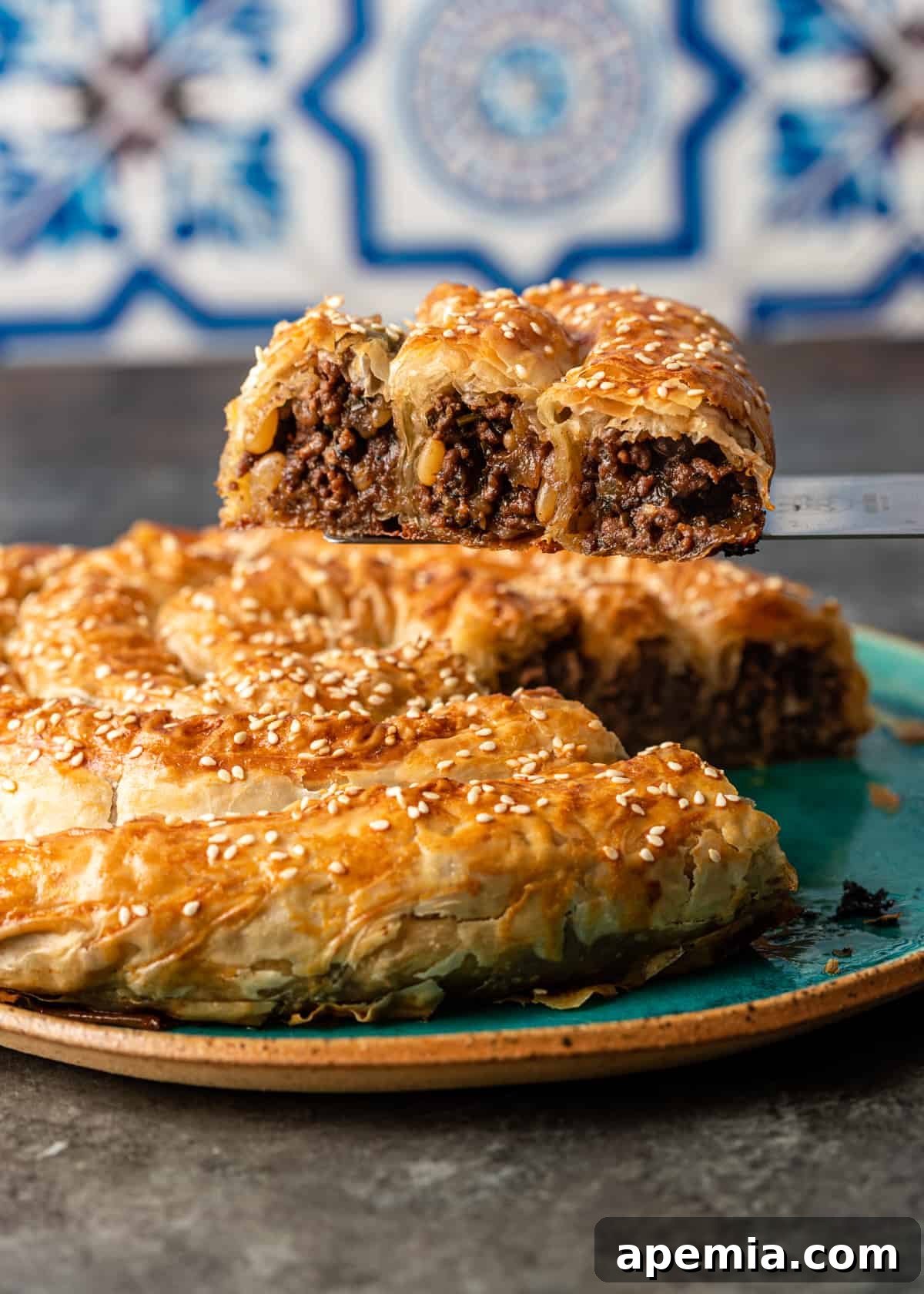
Table of Contents
- What is Borek? A Culinary Journey Through Ottoman Heritage
- Essential Ingredients for Your Perfect Borek
- Step-by-Step Guide: Crafting Your Delicious Meat Filling
- Assembling and Baking Your Signature Borek
- Recommended Tools for an Effortless Borek Experience
- Storage, Make-Ahead Tips, and Reheating Instructions
- Frequently Asked Questions About Borek
- Borek (Crispy Savory Meat-Filled Pastry) Recipe
What is Borek? A Culinary Journey Through Ottoman Heritage
Borek, also known as burek, is a type of baked or fried pastry that holds a significant place in Ottoman (Turkish) cuisine and has spread its influence across the Balkans, the Middle East, and beyond. Its defining characteristic is the use of *yufka* pastry, a thin, unleavened dough remarkably similar to, but often slightly thicker than, the more widely known filo (or phyllo) dough. This delicate dough is expertly layered, filled with a diverse array of ingredients, and then baked until wonderfully crisp and golden. While our focus today is on a savory meat filling, borek can house anything from various cheeses, fresh spinach, hearty potatoes, or a combination of these. It can be prepared as a large, impressive dish to be sliced into portions, or elegantly shaped into individual pastries, each offering a unique culinary experience that speaks to centuries of tradition and innovation.
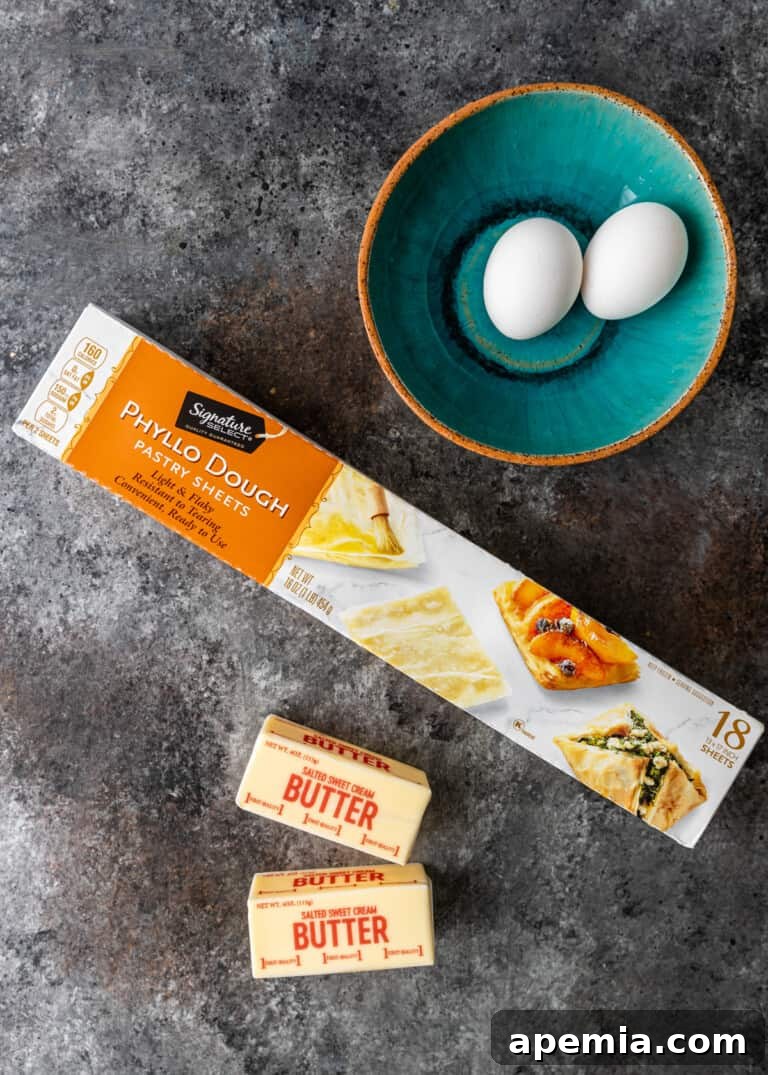
Essential Ingredients for Your Perfect Borek
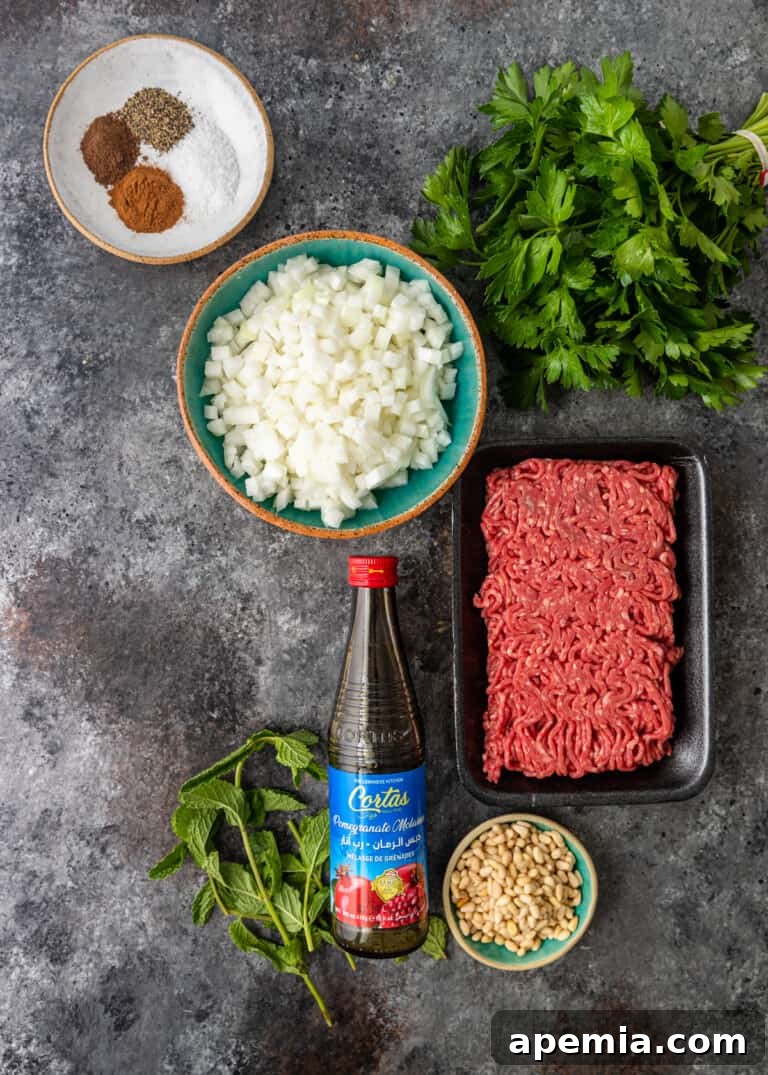
Crafting a truly authentic and delicious borek begins with selecting the right ingredients. Here’s a detailed breakdown of what you’ll need and some helpful substitution tips, ensuring every element contributes to a perfect harmony of flavor and texture:
-
Phyllo Dough: The Crispy Foundation
The traditional dough for byrek is *yufka*, an unleavened dough that shares many characteristics with filo (or phyllo) dough but is typically a bit thicker, offering a slightly more substantial bite. For this borek recipe, either yufka or standard phyllo dough will yield excellent results. I’ve experimented with both, and each delivers a wonderfully crispy and flaky pastry. Handling phyllo requires a gentle touch; always keep unused sheets covered with a damp cloth to prevent them from drying out and becoming brittle.
-
Sesame Seeds: A Touch of Flavor and Texture
Sprinkling sesame seeds over the top of your borek before baking adds more than just visual appeal. They contribute a subtle, nutty sweetness and an irresistible crunch that beautifully complements the savory filling and flaky pastry. Don’t skip this crucial step for an authentic and professional-looking finish!
-
The Heart of the Dish: Our Flavorful Meat Filling
The success of a meat-filled borek largely hinges on its succulent filling. It’s crucial to use ground meat that isn’t excessively fatty, as too much grease can oversaturate the delicate dough and make it soggy. A 90/10 lean-to-fat ratio for **ground beef** is ideal, ensuring a moist yet not oily result. This rich beef mixture is brought to life with an array of complementary ingredients:
-
Pine Nuts: Adding a Delicate Crunch
Pine nuts are essential for introducing a delightful, light, and buttery crunch to the meat filling. Their mild flavor and unique texture elevate the dish. If pine nuts are unavailable or not to your taste, lightly toasted pumpkin seeds or finely chopped walnuts make excellent substitutes, each offering their own unique textural dimension and subtle flavor profile.
-
White Onions: Moisture, Flavor, and Sweetness
Crisp and juicy white onions are diced and sautéed until tender, adding crucial moisture, a pleasant texture, and a foundational savory-sweet flavor to the filling. Their caramelization during cooking deepens the overall taste. Red or yellow onions can also be used, imparting slightly different but equally delicious aromatic notes.
-
Pomegranate Molasses: The Tangy Secret Ingredient
Pomegranate molasses is a staple in Middle Eastern cuisine, a thick, sweet, and distinctly tart syrup made from reduced pomegranate juice. It provides a unique depth of flavor that brightens the rich meat filling, adding a complex tanginess that cuts through the richness. Often labeled “pomegranate syrup,” it’s a key component that sets this borek apart from simpler meat pies.
-
Fresh Herbs: Vibrant Aroma and Taste
A generous half-cup each of fresh **mint** and **parsley** infuses the filling with vibrant, aromatic flavors that beautifully complement and cut through the richness of the meat. Mint offers a cooling freshness, while parsley provides an earthy, clean taste. If either of these herbs isn’t to your preference, consider experimenting with fresh basil or oregano for a different but equally delightful herbal profile.
-
Spices: The Soul of the Filling
Beyond the fundamental **salt** and **pepper** which enhance all flavors, this meat-filled pastry is beautifully seasoned with **allspice** and **cinnamon**. Allspice is a very common and characteristic Turkish spice, offering a warm, complex, and slightly peppery note that hints at cloves, nutmeg, and cinnamon, so I highly advise against substituting it for an authentic taste. The cinnamon, while adding a lovely warmth and sweetness, can be swapped with a pinch of nutmeg or ground cloves if desired, though cinnamon is truly authentic to the region and pairs wonderfully with the beef.
-
Step-by-Step Guide: Crafting Your Delicious Meat Filling
The rich, aromatic meat filling is the heart and soul of our borek. Follow these simple steps to prepare it to perfection, ensuring a flavorful and perfectly textured core for your pastry:
-
Toast the Pine Nuts for Enhanced Flavor
Begin by adding the pine nuts to a dry skillet. Toast them over medium heat for approximately 2 to 3 minutes, or until they turn a beautiful golden brown and release their fragrant, nutty aroma. It’s crucial to watch them closely, as pine nuts can go from perfectly toasted to burnt very quickly. Once toasted, immediately remove them from the skillet and set them aside to cool.
-
Sauté Onions and Cook the Meat Mixture
Pour olive oil into the same skillet and heat over medium. Add the diced white onions and sauté for about 10 minutes until they become soft, translucent, and slightly caramelized, releasing their natural sweetness. Next, add the ground beef, ground cinnamon, allspice, kosher salt, black pepper, and the distinctive pomegranate molasses. Stir frequently with a wooden spoon, breaking up the meat to ensure it cooks evenly, and continue to cook until the beef is thoroughly browned and almost all of the liquid has evaporated. This ensures a rich, concentrated flavor and prevents the filling from making the pastry soggy.
-
Fold in Herbs and Pine Nuts, Then Cool
Once the meat is browned and the liquid reduced, remove the skillet from the heat. Stir in the previously toasted pine nuts, fresh mint leaves, and chopped parsley. Mix everything until it is well combined and evenly distributed throughout the meat mixture. It’s absolutely crucial to let the meat filling cool completely before you begin assembling the borek. A warm filling can make the delicate phyllo dough tear or become prematurely soggy, compromising the crispiness of the final product.
Assembling and Baking Your Signature Borek
Now comes the artistic part – assembling your beautiful spiral borek. This process, while requiring a bit of care, is incredibly rewarding and results in an impressive presentation. Follow these steps for a perfectly golden and crispy pastry:
-
Prepare the Phyllo Layers and Pan
Preheat your oven to 350°F (175°C). Prepare your chosen baking vessel by generously coating a 10-inch cast iron skillet or a similar heavy-bottom, oven-safe pan with melted butter; set it aside. In a small bowl, lightly whisk one whole egg and one egg yolk with a fork to create an egg wash, and set this aside as well, as it will give your borek a beautiful golden sheen.
Next, carefully take one sheet of phyllo dough and lay it flat on a clean, dry work surface. Immediately cover the remaining phyllo sheets with a lightweight, damp tea towel to prevent them from drying out and becoming brittle. Brush the exposed phyllo sheet entirely with melted butter, ensuring full coverage. Place a second sheet directly on top of the first and brush it generously with more melted butter. Repeat this process with a third sheet, creating a sturdy yet flaky base of three buttered phyllo layers for your borek log. This layering ensures both crispiness and structural integrity.
-
Fill, Roll, and Repeat for Three Logs
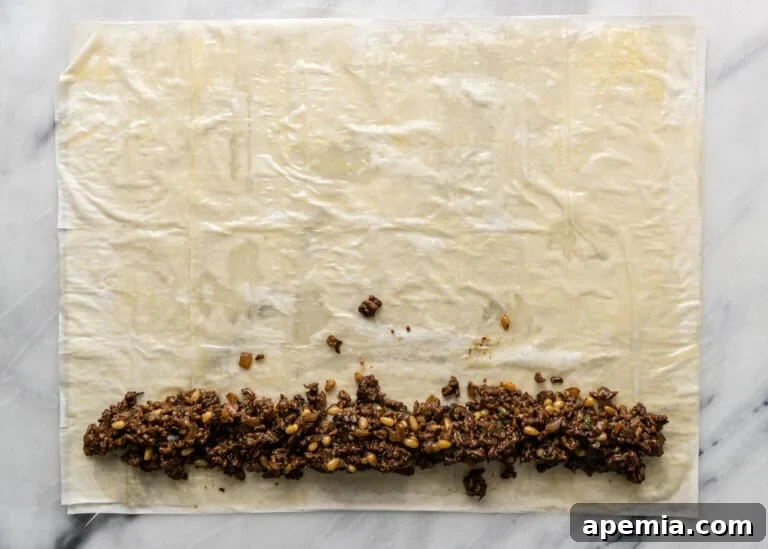
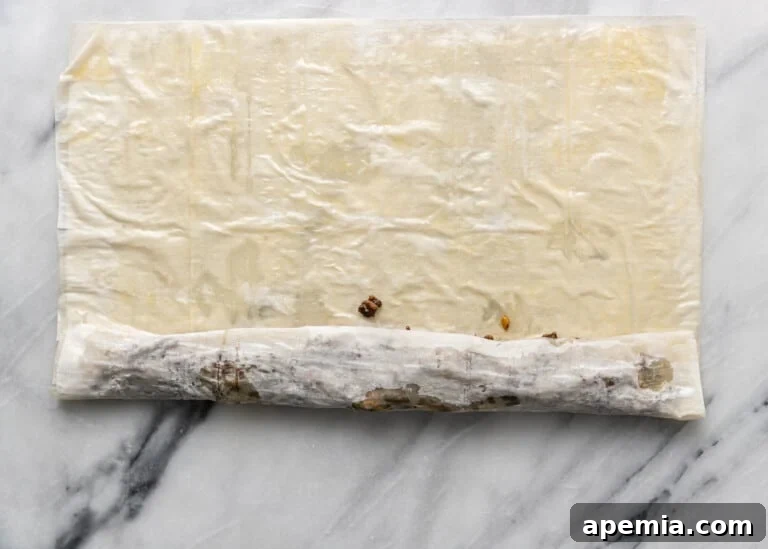
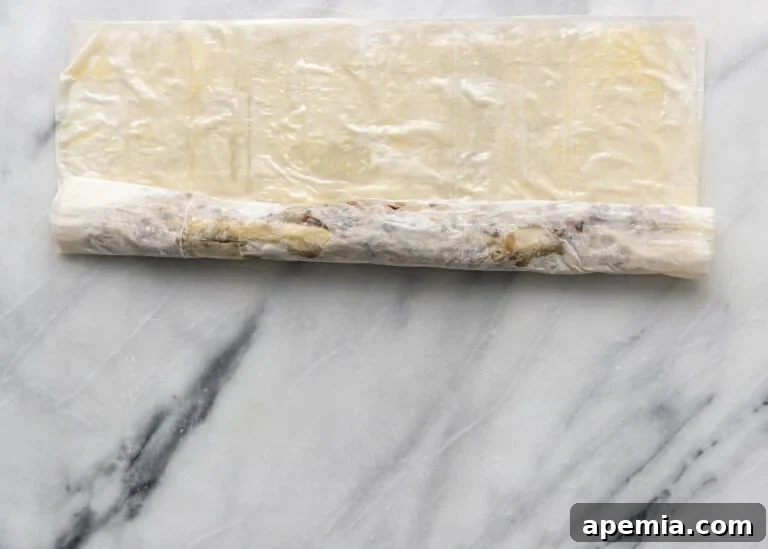
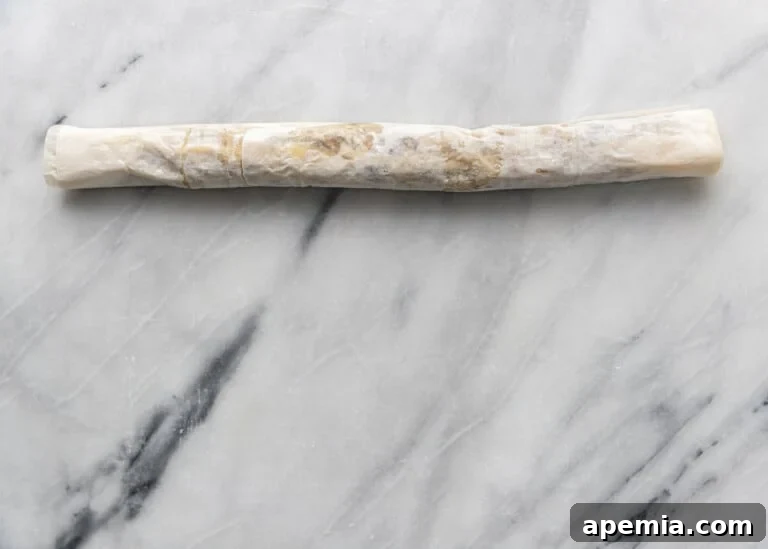
Divide your completely cooled meat filling into three equal portions. Spoon one-third of the filling evenly along the bottom edge of your layered phyllo sheets, leaving a small border at the ends. Now, carefully and gently, using both hands or with the aid of a long kitchen knife to guide the roll, tightly roll the phyllo sheets and filling away from you into a log shape. Try to keep the roll as even and tight as possible. Repeat this layering and rolling process two more times, using the remaining phyllo sheets and meat filling, to create a total of three distinct borek logs.
-
Shape the Iconic Spiral
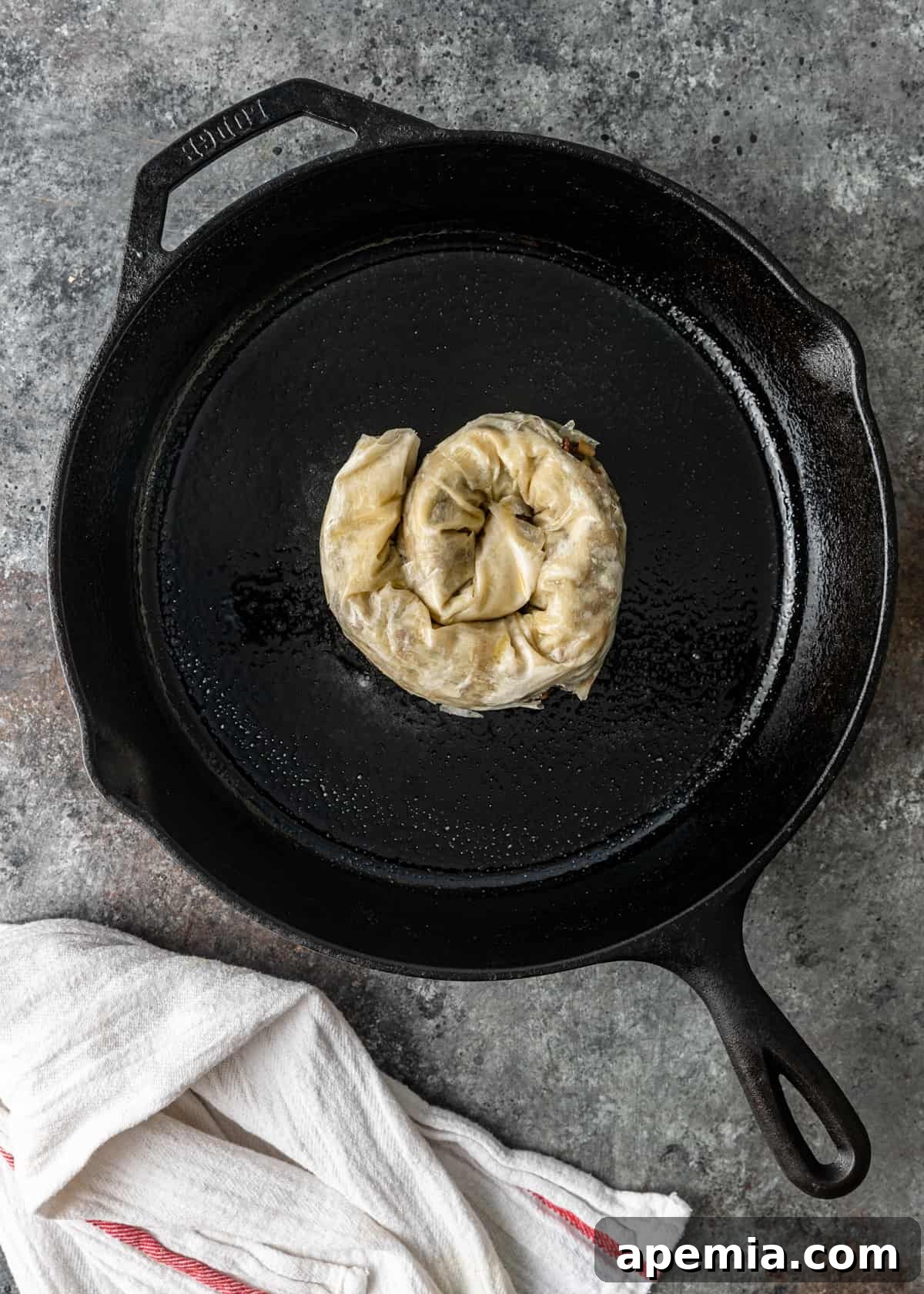
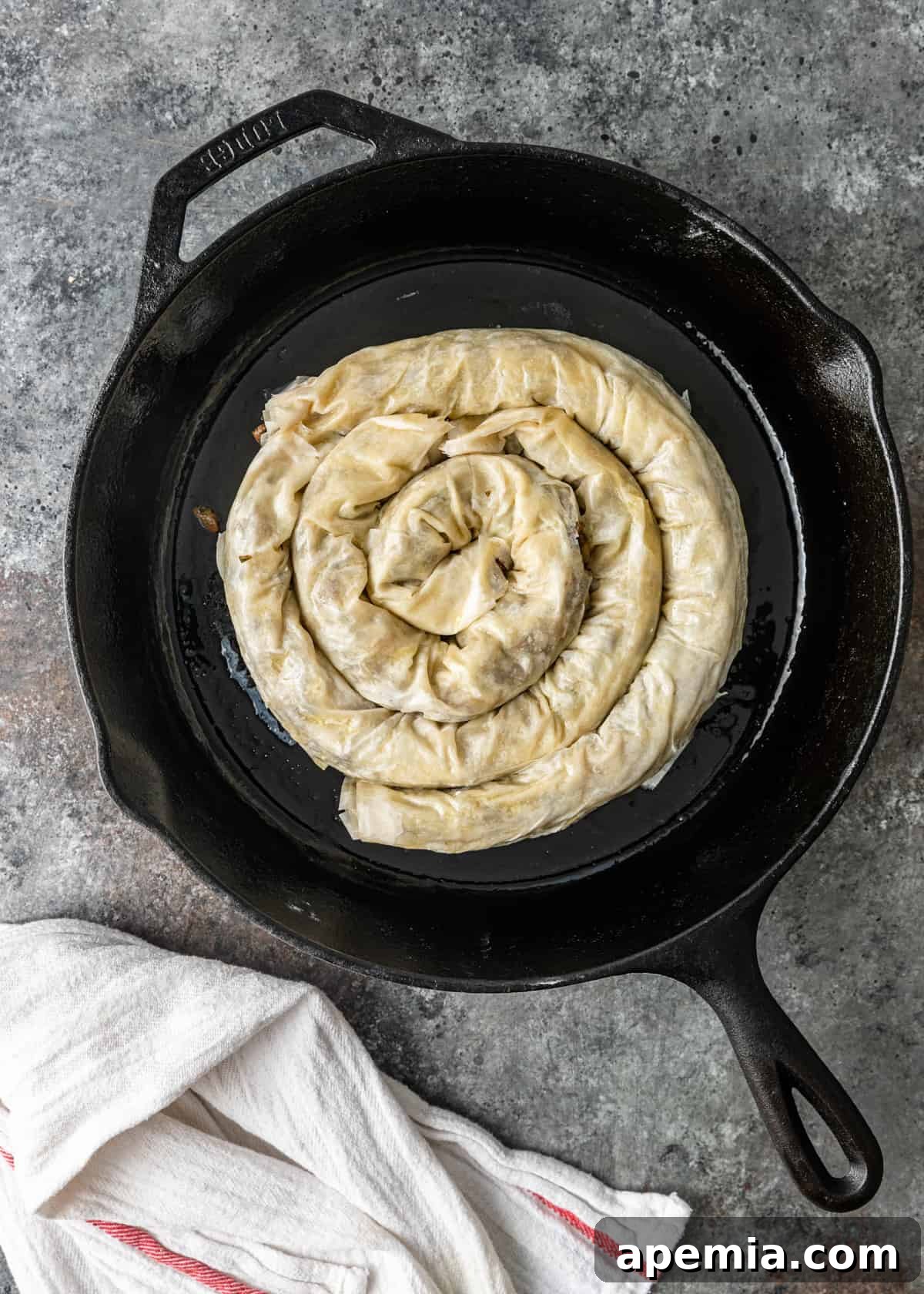
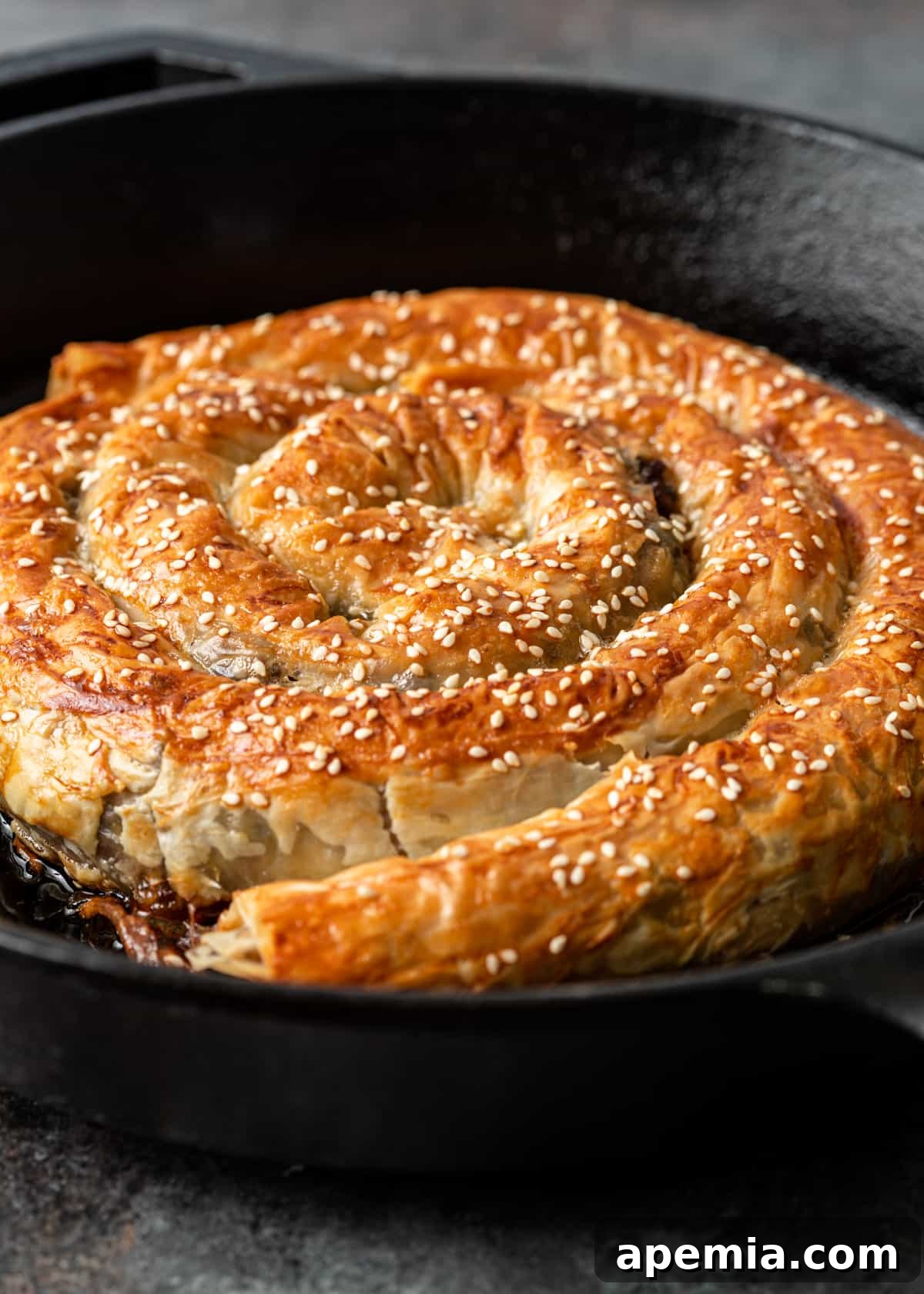
Carefully place one of the rolled logs in the center of your buttered skillet. Gently coil it into a tight spiral, starting from the center and working outwards. Take the second log and subtly join its end to the outer end of the first spiral, brushing a little melted butter where they meet to help them adhere seamlessly. Continue to coil this second log around the first, extending the spiral outwards. Repeat this step with the final log, connecting it to the end of the second. The goal is for the separate logs to be in contact with each other, forming a continuous, impressive spiral that fills the pan, but avoid squishing them too tightly to allow for even baking and flakiness. Refer to the video guide for a visual demonstration of this technique if needed.
-
Egg Wash, Sesame Seeds, and Bake to Golden Perfection
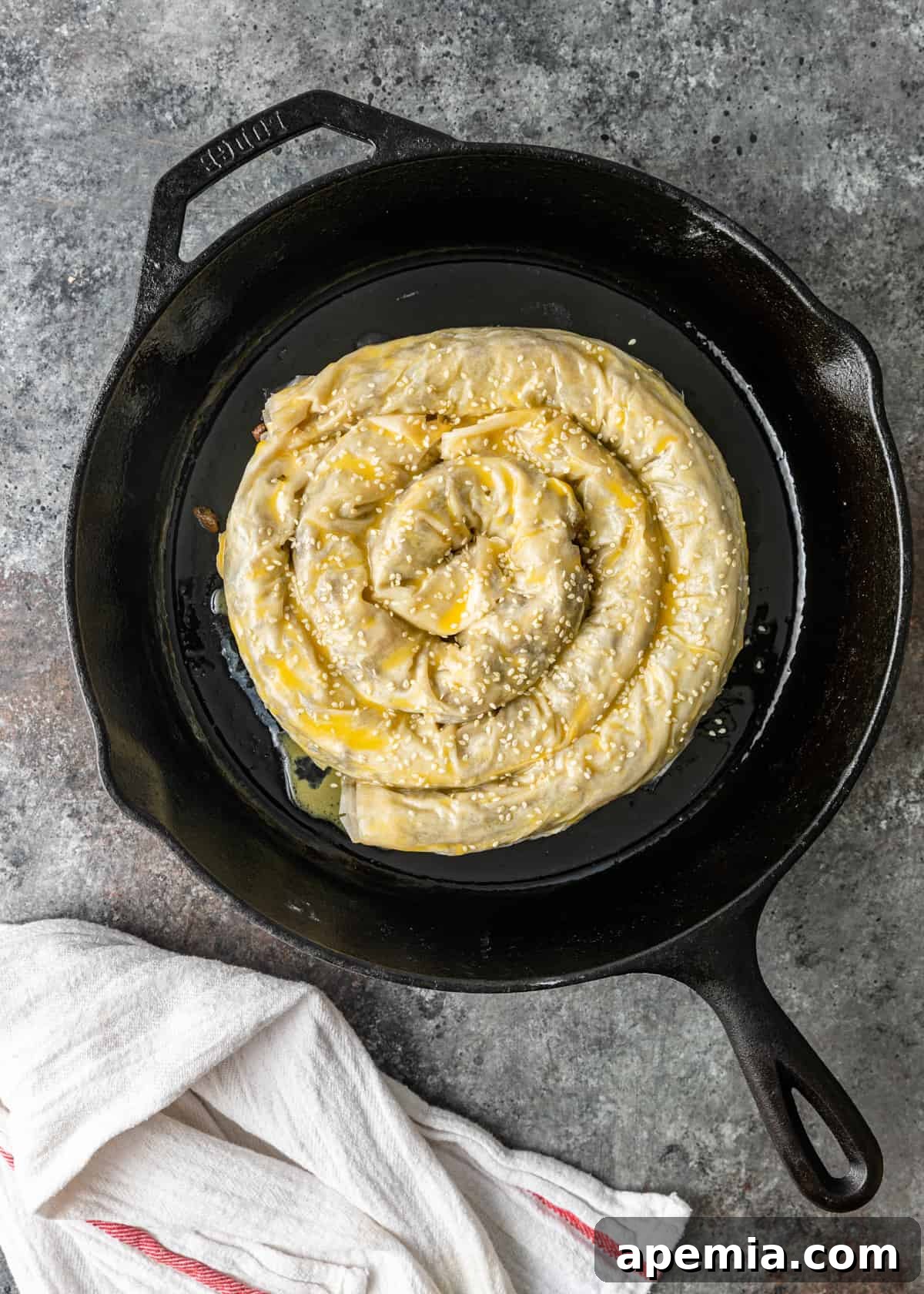
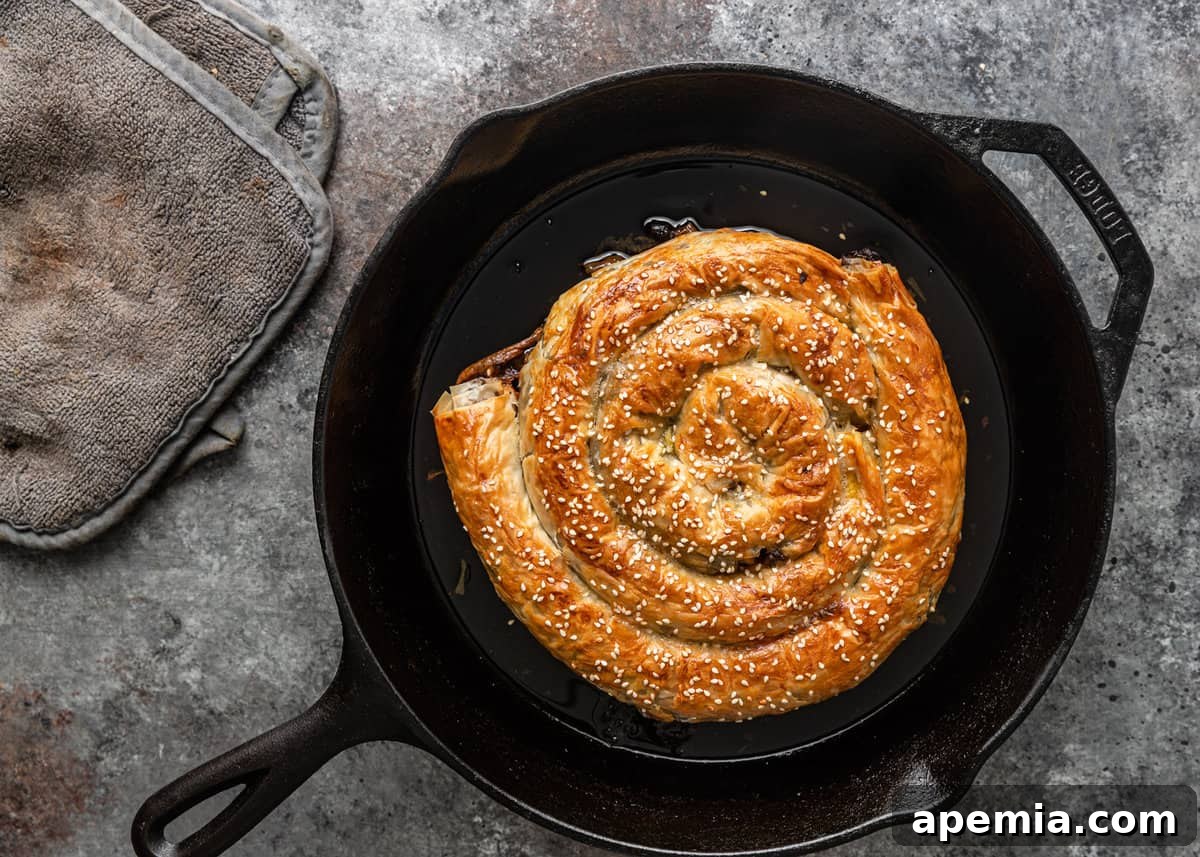
Once your borek spiral is beautifully formed in the skillet, generously brush the prepared egg wash all over the top and sides of the pastry. This will give it a glorious golden sheen and help the sesame seeds stick. Evenly sprinkle the sesame seeds across the surface; these add not only crunch but also a lovely toasted flavor. Transfer the skillet to your preheated oven and bake for approximately 35 minutes, or until the borek achieves a rich, golden brown color and the phyllo is perfectly crispy and cooked through.
-
Serve Warm and Enjoy!
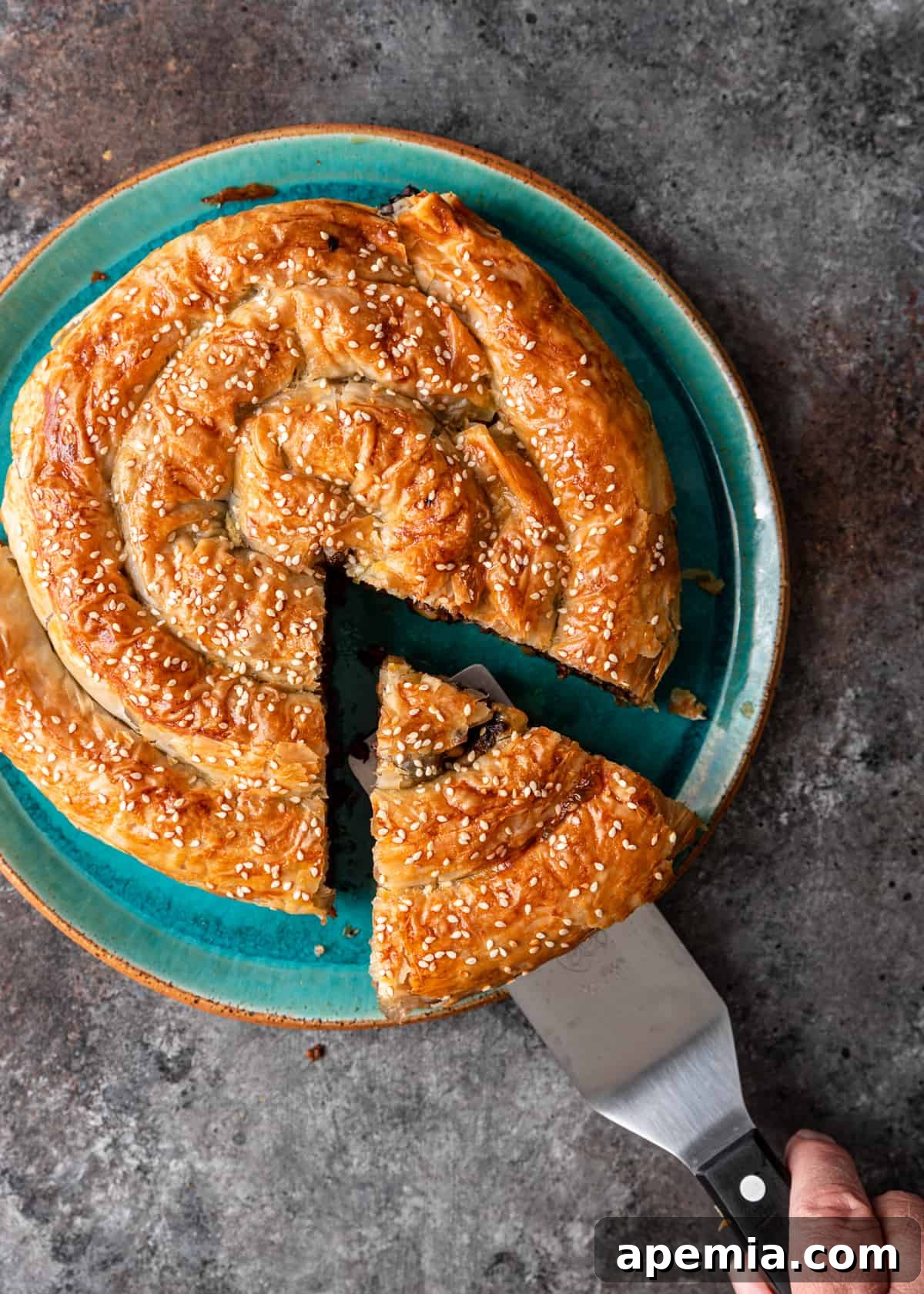
As soon as your borek emerges from the oven, fragrant and golden, it’s ready to be served. The anticipation will be palpable! Using a sharp knife, carefully slice the warm, baked pastry into 4 or 6 generous wedges, depending on your desired portion sizes. Serve immediately and savor every delicious, crispy bite, enjoying the harmonious blend of textures and flavors you’ve created.
Recommended Tools for an Effortless Borek Experience
Having the right tools at hand can make all the difference in ensuring a smooth and successful borek-making process. These simple items will greatly assist you:
- 10-inch Cast Iron Skillet or Heavy-Bottom Oven-Proof Pan: This is crucial not only for elegantly shaping the borek spiral but also for baking the pastry evenly and achieving that perfect crispy crust on all sides. A good quality skillet will retain and distribute heat effectively, leading to superior results.
- Long Kitchen Knife: A long, thin kitchen knife can be incredibly helpful for carefully rolling the delicate phyllo sheets into tight, uniform logs, especially when handling multiple layers and a generous filling. It helps maintain an even cylindrical shape and prevents tearing.
- Pastry Brush: An indispensable tool for evenly applying melted butter to the delicate phyllo sheets, ensuring each layer crisps beautifully. It’s also perfect for brushing on the egg wash for that desirable golden finish.
- Damp Tea Towel: Essential for keeping unused phyllo sheets moist and pliable while you work, preventing them from drying out and cracking, which can be a common challenge when working with this delicate dough.
Storage, Make-Ahead Tips, and Reheating Instructions
Borek is a wonderful dish that can be partially prepared in advance, making it perfect for entertaining or busy weeknights. Here’s how to store and reheat it to maintain its delicious quality:
- Advance Preparation of Filling: The delicious beef filling can be cooked and prepared up to 2 days in advance. Once cooked, allow it to cool completely before transferring it to an airtight container. Store it in the refrigerator until you are ready to assemble your borek. This step significantly cuts down on prep time on the day of baking, making the assembly much quicker.
- Storing Unbaked Borek: You can also fill, shape, and store the entire unbaked, meat-filled pastry up to 2 days ahead of time. While it requires careful handling to maintain the beautiful spiral shape, placing it gently in the skillet and covering it tightly with plastic wrap before refrigerating works well. When ready to bake, remove it from the fridge and let it sit at room temperature for about 15-20 minutes before applying the egg wash and baking as instructed.
- Refrigerating Baked Borek: Once baked and cooled completely, this borek recipe can be refrigerated for up to 4 days. Ensure it’s stored in an airtight container to maintain its freshness and prevent it from drying out. The phyllo will lose some of its crispness when refrigerated, but it can be largely restored with proper reheating.
- Reheating Instructions: To bring leftover borek back to its crispy glory, reheating it in the oven is the best method. Place the desired portion in a preheated oven at 350°F (175°C) for about 10-15 minutes, or until it’s thoroughly warmed through and the crust regains its crisp texture. Avoid reheating in the microwave, as it will unfortunately make the delicate pastry soggy and unappetizing.
Frequently Asked Questions About Borek
Borek is predominantly a baked pastry, which is why it achieves its characteristic flaky and deliciously crispy golden crust. While you might occasionally find fried versions in some regions or variations, baking is by far the traditional and most common method of preparation. Frying tends to be messier, and can result in a considerably oilier pastry, which often detracts from the delicate, layered texture of the phyllo dough that makes borek so special.
Absolutely! Borek is incredibly versatile, and many popular versions are entirely vegetarian. A common and highly delicious alternative uses a filling of creamy feta cheese and fresh spinach, much like the beloved Greek pastry spanakopita. In fact, if you’re seeking a fantastic vegetarian borek, I highly recommend exploring my spanakopita recipe and using that delightful filling in place of the beef mixture described here. Other popular vegetarian fillings include hearty potatoes, savory leeks, or a medley of sautéed seasonal vegetables, offering endless possibilities for customization.
While both Baklava and borek are iconic pastries made with layered phyllo dough, they serve entirely different culinary purposes and have distinct flavor profiles. Baklava is a famous sweet dessert, characterized by its rich, thin layers of buttered phyllo, typically filled with finely chopped walnuts or pistachios, and generously drenched in a sweet, aromatic honey or sugar syrup after baking. It’s enjoyed as a decadent treat. In contrast, borek is a savory dish, usually served as a main course, breakfast, or brunch item. Its fillings are savory, ranging from seasoned meats and various cheeses to vegetables, and it is never sweetened with syrup. They are distinct in their flavor profile, serving time, and role in a meal.
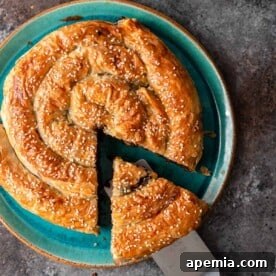
Borek (Crispy Savory Meat-Filled Pastry)
Borek is a delightful, baked Turkish spiral phyllo pastry. This recipe features a rich, savory meat filling bursting with pine nuts, fresh herbs, aromatic onions, and a touch of tangy pomegranate molasses, all encased in a perfectly crispy crust. It’s an impressive dish perfect for any occasion!
Print Recipe
Video Tutorial
A comprehensive video tutorial demonstrating each step of this borek recipe would typically be embedded here, offering visual guidance for an easier cooking experience.
Ingredients
- 9 filo pastry sheets (or yufka pastry)
- 12 tablespoons butter (melted)
- 1 egg (and 1 egg yolk, beaten, for egg wash)
- 1 tablespoon sesame seeds
- Meat Filling (prepared separately, see instructions above)
Meat Filling Ingredients
- 2 tablespoons olive oil
- ⅓ cup pine nuts
- 2 white onions (diced, approximately 2 cups total)
- 1 lb ground beef (90/10 lean recommended)
- 1 teaspoon ground cinnamon
- 1 teaspoon allspice
- 1 teaspoon kosher salt
- ½ teaspoon ground black pepper
- ¼ cup pomegranate molasses
- ½ cup mint leaves (chopped)
- ½ cup parsley (chopped)
Instructions
Meat Filling Preparation
-
In a large skillet over medium heat, dry toast the pine nuts for 2-3 minutes, or until golden and fragrant. Remove pine nuts from pan and set aside.
-
Add the olive oil to the skillet along with the diced onions. Sauté over medium heat for 10 minutes until softened and translucent. Add the ground beef, cinnamon, allspice, salt, pepper, and pomegranate molasses. Stir frequently to break up the meat and cook until the meat is no longer pink and any liquid has almost entirely evaporated. Stir through the toasted pine nuts, fresh mint, and chopped parsley. Remove from heat and set aside to cool completely before rolling into phyllo pastry sheets.
Borek Assembly and Baking
-
Preheat oven to 350°F (175°C). Coat a 10-inch cast iron skillet or heavy-bottom oven-safe pan generously with melted butter. In a small bowl, whisk 1 whole egg and 1 egg yolk with a fork to create an egg wash; set aside.
-
Lay one sheet of phyllo dough on a clean work surface. Brush thoroughly with melted butter. Immediately cover the remaining phyllo sheets with a lightweight damp tea towel to prevent them from drying out. Lay a second sheet on top and brush with more melted butter. Repeat with a third sheet for a total of 3 buttered phyllo layers.
-
Divide the cooled meat filling into three equal portions. Place one-third of the meat filling evenly along the bottom edge of the layered phyllo sheets. Using both hands or the aid of a long kitchen knife, carefully roll up the phyllo and filling into a log shape. Repeat this process for a total of three logs.
-
Place one log in the center of the buttered skillet and gently coil it into a spiral. Join the second log to the outer end of the first by tucking the ends inside each other and brushing with melted butter to help them adhere. Continue forming the spiral with the second log. Repeat with the final log, ensuring all three logs’ sides are in contact but not tightly squished, forming a continuous spiral in the pan.
-
Generously brush the entire top and sides of the borek spiral with the prepared egg wash. Sprinkle evenly with sesame seeds.
-
Bake in the preheated oven for 35 minutes, or until the top is golden brown and perfectly crispy. Serve warm, cut into 4 or 6 wedges.
Notes
- For a delicious vegetarian option, you can substitute the meat filling with a spinach and cheese mixture. I highly recommend using the filling recipe from my Spanakopita Triangles for an equally flavorful alternative.
Nutrition Information
The information shown is an estimate provided by an online nutrition calculator. It should not be considered a substitute for a professional nutritionist’s advice.
- Calories: 1813 kcal
- Carbohydrates: 234 g
- Protein: 46 g
- Fat: 52 g
- Saturated Fat: 22 g
- Polyunsaturated Fat: 7 g
- Monounsaturated Fat: 21 g
- Trans Fat: 2 g
- Cholesterol: 141 mg
- Sodium: 2685 mg
- Potassium: 696 mg
- Fiber: 10 g
- Sugar: 6 g
- Vitamin A: 1327 IU
- Vitamin C: 11 mg
- Calcium: 116 mg
- Iron: 17 mg
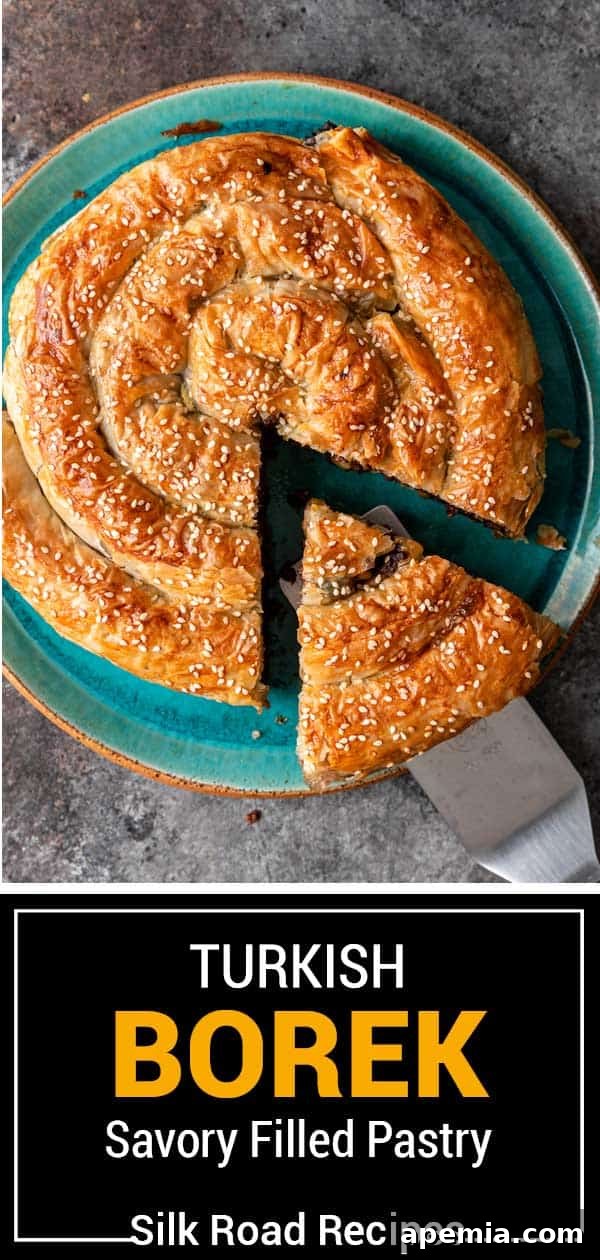
The Perfect Finish: Serving Your Homemade Borek
There’s nothing quite like pulling a fresh, golden borek out of the oven, its fragrant aroma filling your kitchen and promising a culinary delight. This versatile pastry is truly a dish for all occasions. Serve it warm, sliced into generous wedges, as the star of a hearty breakfast or a leisurely brunch. Its savory depth and satisfying crispiness make it an excellent main course for dinner, perhaps accompanied by a simple side salad, a dollop of creamy yogurt, or a sprinkle of fresh herbs to balance its richness. For a more casual setting, cut it into smaller squares or fingers, and it transforms into an exquisite appetizer or a perfect party snack that will undoubtedly disappear quickly!
Whether you’re new to Turkish cuisine or a seasoned enthusiast, this borek recipe promises a delightful and rewarding cooking experience. The intricate spiral, the flaky layers of pastry, and the deeply flavorful meat filling come together to create a dish that is both elegant and comforting. Don’t be intimidated by the delicate phyllo; with a little patience and our detailed instructions, you’ll master this classic Turkish pastry in no time. Enjoy the process, and more importantly, savor the incredible flavors of your homemade Turkish Borek!