
Welcome to the heart of Indian comfort food! This egg curry recipe, also known as Anda Curry, is a testament to how simple ingredients can create an explosion of complex flavors. Forget elaborate meat preparations; in this dish, humble hard-boiled eggs transform into culinary stars, simmering gently in a velvety-smooth tomato-onion gravy. Infused with the intoxicating aromas of cardamom, cinnamon, and fenugreek, every spoonful promises a warm, aromatic, and deeply satisfying experience. It’s the perfect dish to scoop up with warm naan or fluffy rice, transporting your taste buds straight to the vibrant kitchens of India!

Egg Curry, or Anda Curry, holds a special place in Indian households, revered for its ability to deliver profound flavors without requiring complicated techniques or extensive cooking times. It’s a versatile and beloved home-style dish found across virtually every region of India, each boasting its unique twist on the classic. At its core, Anda Curry features perfectly hard-boiled eggs immersed in a fragrant, spiced tomato-onion gravy. These unassuming eggs are elevated by a symphony of warm spices such as earthy turmeric, aromatic cardamom, sweet cinnamon, and the distinctive notes of fenugreek, creating a truly irresistible culinary delight.
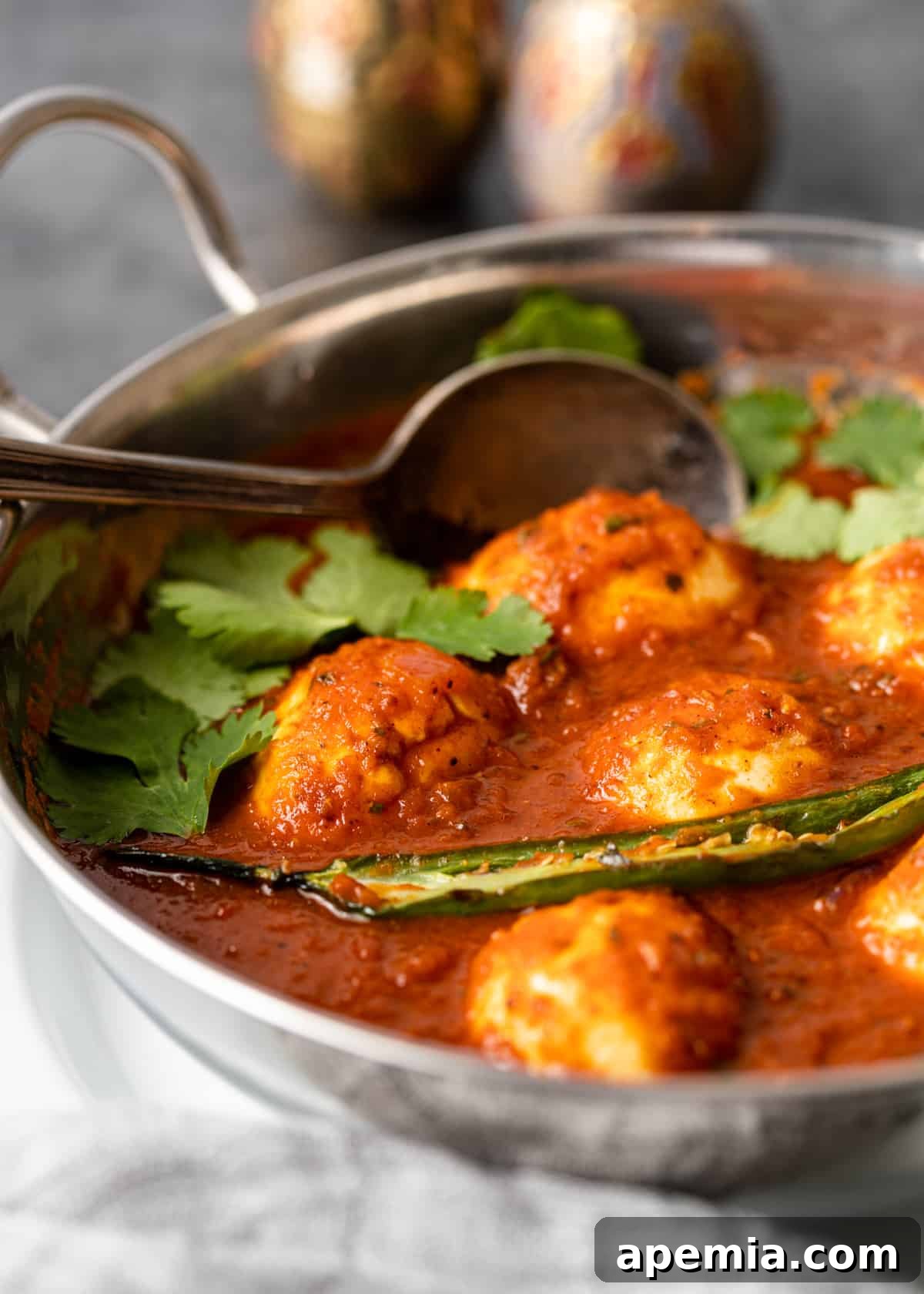
Table of Contents
- The Heart of Indian Comfort Food: Egg Curry
- Why You’ll Love This Authentic Anda Curry Recipe
- Mastering the Tomato-Onion Gravy: A Versatile Foundation
- Essential Ingredients for an Authentic Anda Curry
- Step-by-Step Guide: Crafting Your Perfect Egg Curry
- Pro Tips for the Best Egg Curry Every Time
- Serving Suggestions: Complete Your Indian Feast
- Storage and Reheating Guide
- Frequently Asked Questions About Egg Curry
- Egg Curry Recipe (Anda Curry)
The Heart of Indian Comfort Food: Egg Curry
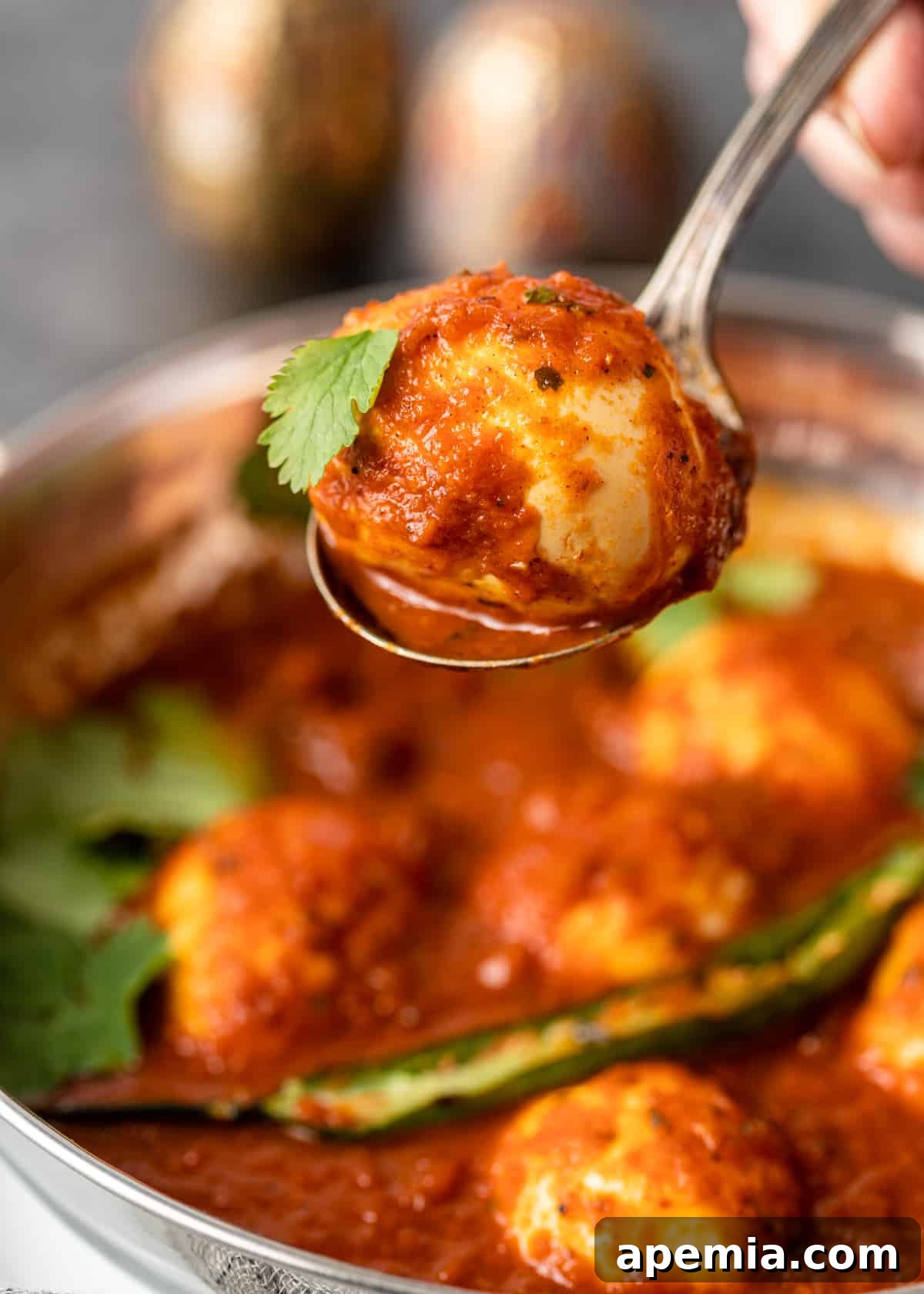
What truly distinguishes this Anda Curry recipe? It’s the delightful interplay of textures and aromas. We begin by lightly browning the hard-boiled eggs in ghee, imparting a nutty richness and creating a subtly crispy exterior. This blistering helps the eggs maintain their shape and absorb the gravy’s flavors beautifully without becoming rubbery. The homemade gravy is then meticulously prepared and pureed until it achieves an irresistible silken smoothness, ensuring a luxurious mouthfeel with every bite. When paired with warm, fluffy naan bread, wholesome roti, or aromatic jeera rice, this Indian Egg Curry transforms a simple meal into an exotic escape, making you feel as though you’ve embarked on a flavorful journey to the heart of India.
If you’re a fan of richly flavored yet straightforward Indian dishes like Paneer Butter Masala or a comforting Chicken Curry, then this Anda Curry is an absolute must-add to your recipe collection. Unlike many meat-based curries that demand hours of simmering to tenderize and develop flavor, this egg curry comes together surprisingly quickly. You get all the signature aromatic punch and depth of flavor in a fraction of the time, making it an ideal choice for busy weeknights or when you crave authentic Indian taste without the wait.
Why You’ll Love This Authentic Anda Curry Recipe
- Incredibly Flavorful: This isn’t just a simple egg dish; it’s a symphony of spices and textures that will tantalize your palate. The rich, velvety gravy is truly unforgettable.
- Quick & Easy: Compared to many traditional Indian curries, this recipe comes together in under an hour, making it perfect for a delicious weeknight meal.
- Budget-Friendly & Nutritious: Eggs are an affordable and excellent source of protein, making this a wholesome and economical option for feeding the family.
- Versatile & Customizable: While perfect as is, the base gravy can be adapted for various protein or vegetable additions. Adjust the spice level to your preference!
- Comfort Food at its Best: There’s something inherently comforting about a warm, aromatic curry, and this Anda Curry delivers that cozy feeling with every bite.
Mastering the Tomato-Onion Gravy: A Versatile Foundation
The heart of this incredible Indian Egg Curry lies in its luscious tomato-onion gravy. This robust and flavorful base is surprisingly versatile and can be used in countless other ways beyond just simmering hard-boiled eggs. Think of it as your secret weapon in the kitchen!
- Baked Eggs (Shakshuka-Style): Crack fresh eggs directly into the simmering gravy and bake until the whites are set and yolks are runny.
- With Other Proteins: Substitute the eggs with cubes of paneer, tender chicken pieces, succulent shrimp, or hearty chickpeas for a different curry experience.
- Over Roasted Vegetables: Spoon it generously over roasted cauliflower, potatoes, or sweet potatoes for a vibrant side dish or light meal.
- Lentil Base: Simmer with cooked lentils for a rich and comforting dal.
- Pasta Sauce: Toss it with your favorite pasta for an Indian-inspired twist on a classic.
- Stews & Meatballs: Use it as a flavorful base for various stews, or incorporate it into a sauce for meatballs or stuffed bell peppers.
- Dipping Sauce: Serve it as a warm, savory dip with crispy pakoras or samosas.
This homemade gravy is truly a kitchen superstar!


Essential Ingredients for an Authentic Anda Curry
(For a complete list of ingredients and precise quantities, please refer to the recipe card below.)
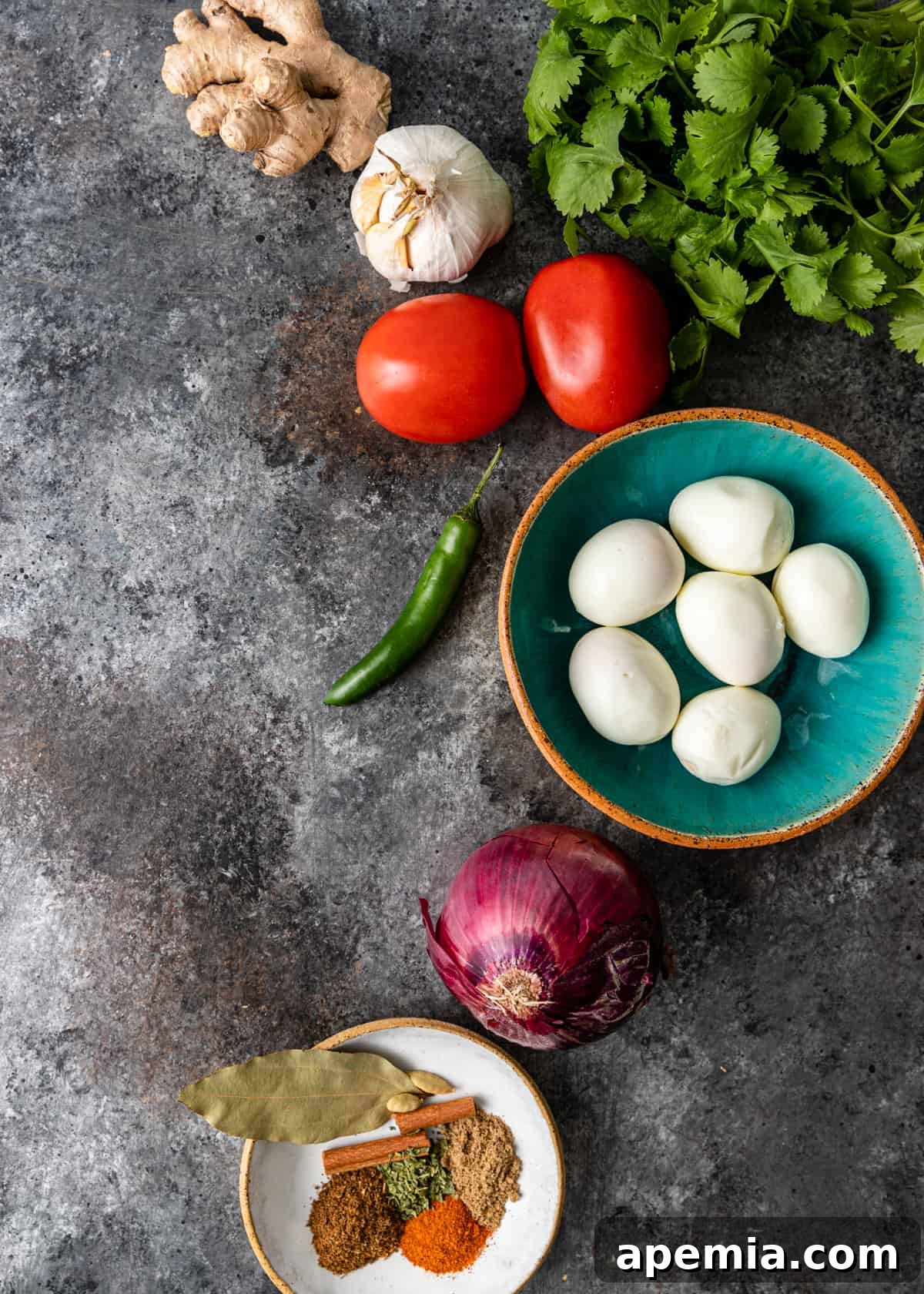
- Eggs: Hard-boiled eggs are, of course, the foundation of this dish. Lightly browning them in ghee is a step I highly recommend, as it imparts a beautiful nutty flavor, creates a delightful crispy texture, and helps them absorb the curry sauce better. However, if you’re short on time, you can certainly add the peeled boiled eggs directly to the curry. You’ll need about 6 to 8 eggs for a generous serving.
- Ghee: Clarified butter, or ghee, is my preferred fat for both browning the eggs and building the curry base. Its rich, nutty flavor is quintessential to authentic Indian cooking and adds incredible depth. If ghee isn’t available or you prefer a neutral base, any high-quality vegetable oil works well.
- Whole Spices: Aromatic whole spices like cinnamon sticks, green cardamom pods, and Indian bay leaf are crucial for building the foundational fragrance of the curry. These release their essential oils slowly, infusing the ghee and subsequently the entire gravy with an unparalleled aroma. Remember to remove them before blending the gravy for a smooth texture, or leave them in for visual appeal if you don’t mind their presence.
- Ground Spices: A carefully balanced blend of ground coriander, turmeric, chili powder, and an extra touch of garam masala forms the core flavor profile. Ground coriander provides a lemony, earthy note, turmeric offers its vibrant color and subtle bitterness, and chili powder allows you to control the heat.
- Tomatoes: Fresh tomatoes are paramount for building the vibrant, slightly tangy base of your curry. I find Roma (plum) tomatoes work best due to their lower water content and robust flavor, but any ripe, juicy tomato will do. In a pinch, quality canned crushed tomatoes can also be used.
- Aromatics: Fresh ginger and garlic, finely minced or pureed into a paste, are non-negotiable for any Indian curry. They provide a pungent, warming depth that is fundamental to the dish’s character. Onion, cooked until translucent, forms the sweet and savory backbone of the gravy.
- Garam Masala: This complex blend of roasted and ground spices is used both to season the eggs and as a finishing spice for the sauce. I love using my homemade garam masala for its freshness, but a good quality store-bought blend is perfectly acceptable.
- Fenugreek Leaves (Kasoori Methi): These dried leaves contribute a unique, slightly bitter, and aromatic flavor that is distinctly Indian and elevates the curry to another level. Don’t skip them if you can help it!
- Green Chili: For those who appreciate a kick, a slit Serrano chili pepper adds fiery heat. Adjust the amount or substitute with a milder jalapeño if you prefer less spice.
Step-by-Step Guide: Crafting Your Perfect Egg Curry
- Prepare the Eggs: In a deep skillet, heat a teaspoon of ghee or oil over medium heat. Gently add the peeled hard-boiled eggs and cook them, swirling occasionally, until they achieve a light golden-brown color and a slightly blistered exterior. This adds a fantastic texture. Remove the eggs from the pan and place them on a paper towel-lined plate to drain. While still warm, season them with a generous pinch of garam masala and chili powder for an extra layer of flavor.
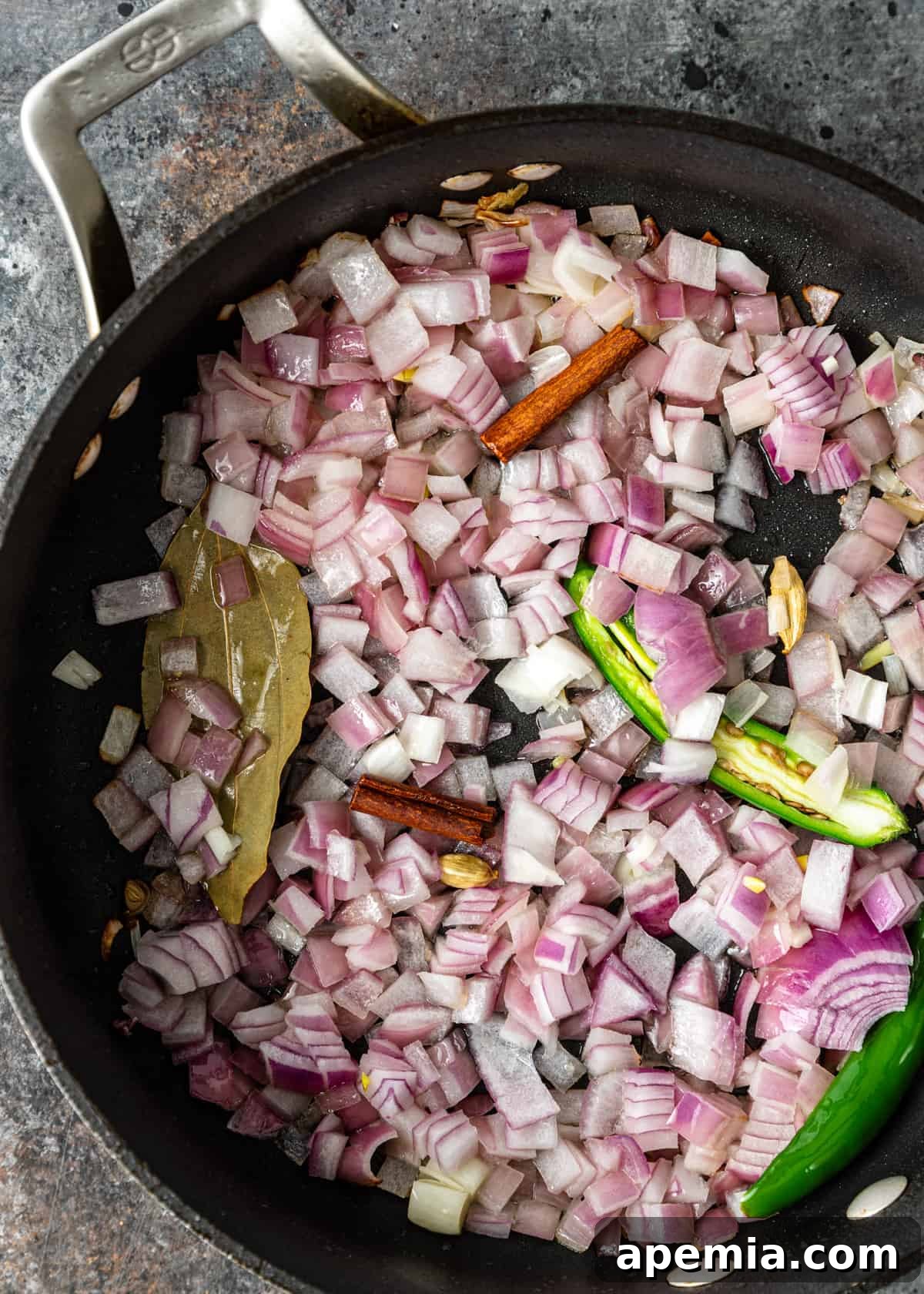
- Bloom the Aromatics & Whole Spices: In the same skillet, add another tablespoon of ghee. Once shimmering, introduce the whole spices: Indian bay leaf, cinnamon stick, green cardamom pods, and the slit green chili. Sauté these for about a minute until they become intensely fragrant. Next, add the minced garlic and grated ginger, continuing to stir-fry for another minute until their raw aroma disappears.
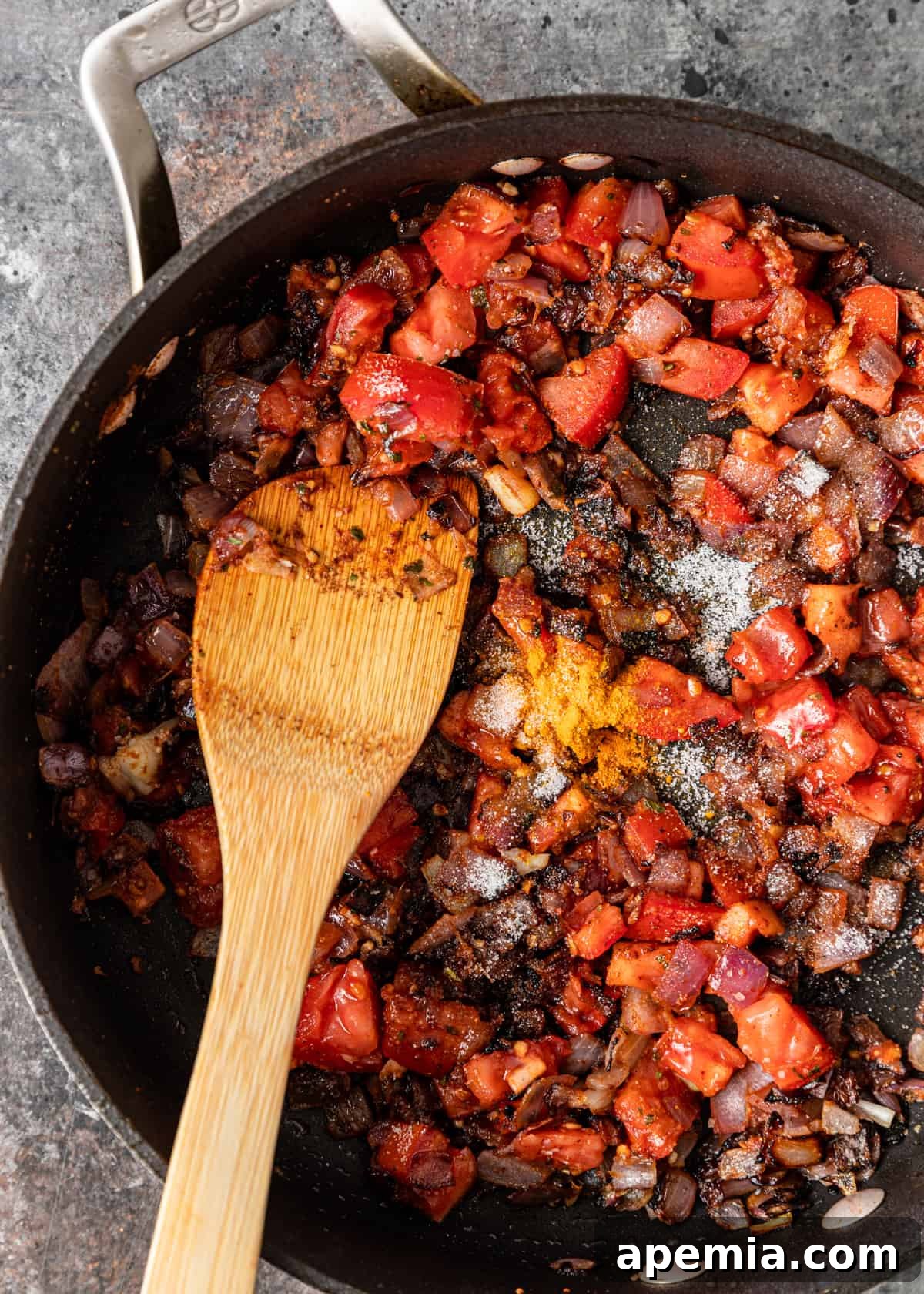
- Build the Gravy Base: Add the finely chopped onion to the pan and cook until it turns soft and translucent, about 5-7 minutes. Then, stir in the chopped fresh tomatoes. Continue to cook, stirring occasionally, until the tomatoes have completely broken down and the mixture starts to thicken and release oil around the edges. If using whole spices and you prefer a completely smooth gravy, remove the bay leaf, cinnamon stick, and cardamom pods at this stage.
- Spice the Curry: Now, it’s time to add the ground spices: ground coriander, the remaining garam masala, turmeric, chili powder, along with sugar and salt. Cook this spice mixture for about a minute, allowing the spices to toast and release their full aroma. Pour in 1.5 cups of water, bring the mixture to a high simmer, and cook for another 3 minutes, stirring frequently to prevent sticking.
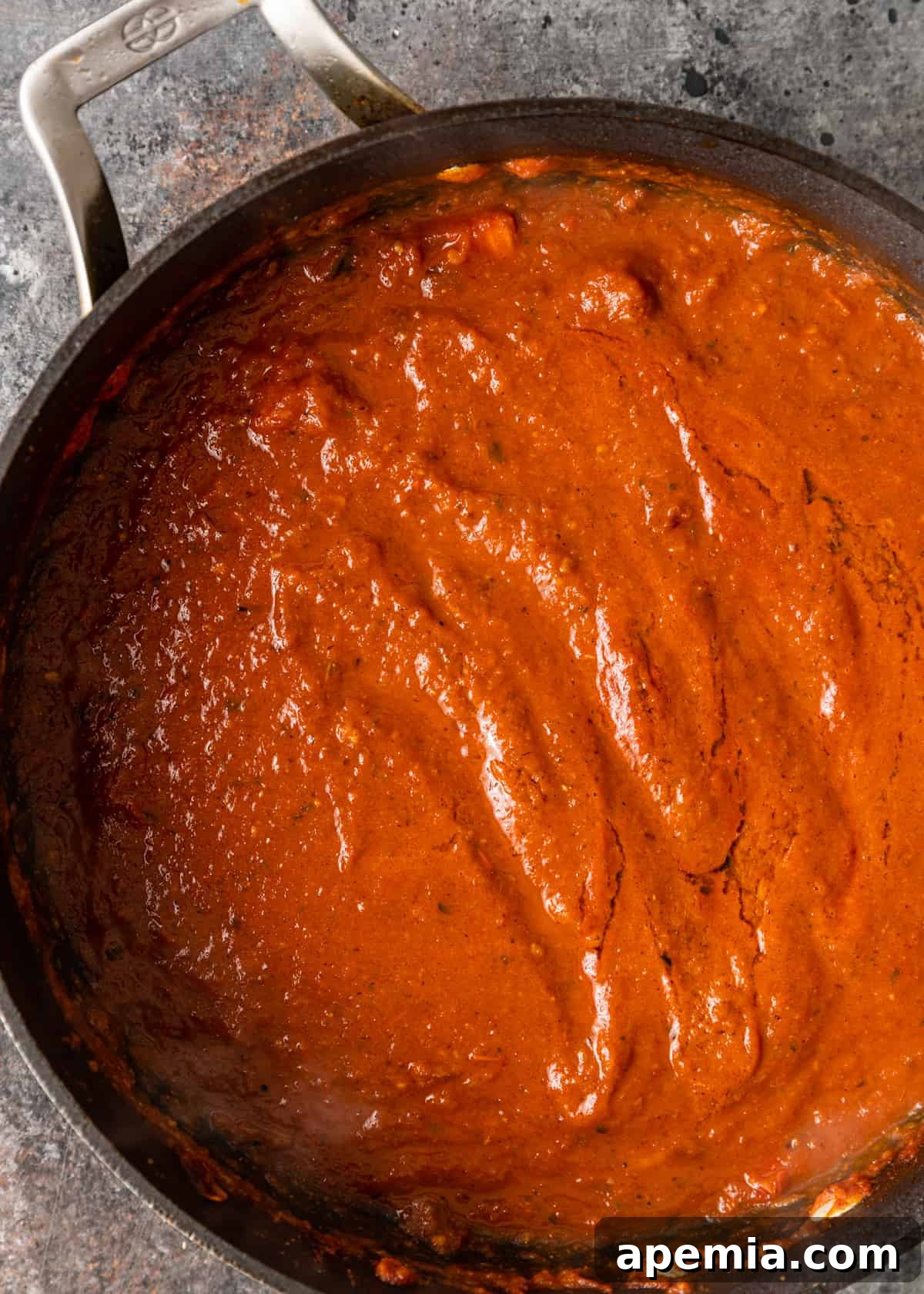
- Achieve Silky Smoothness & Finish: Carefully transfer the gravy mixture to a blender and puree until it is completely smooth and velvety. Alternatively, use an immersion blender directly in the skillet. Return the smooth curry to the pan over low heat. Stir in the fenugreek leaves, crushing them lightly between your palms before adding to release their flavor. Gently fold in the browned, seasoned eggs. Allow everything to simmer on low for about 5 minutes, giving the flavors time to meld and the eggs to warm through and absorb the delicious gravy.
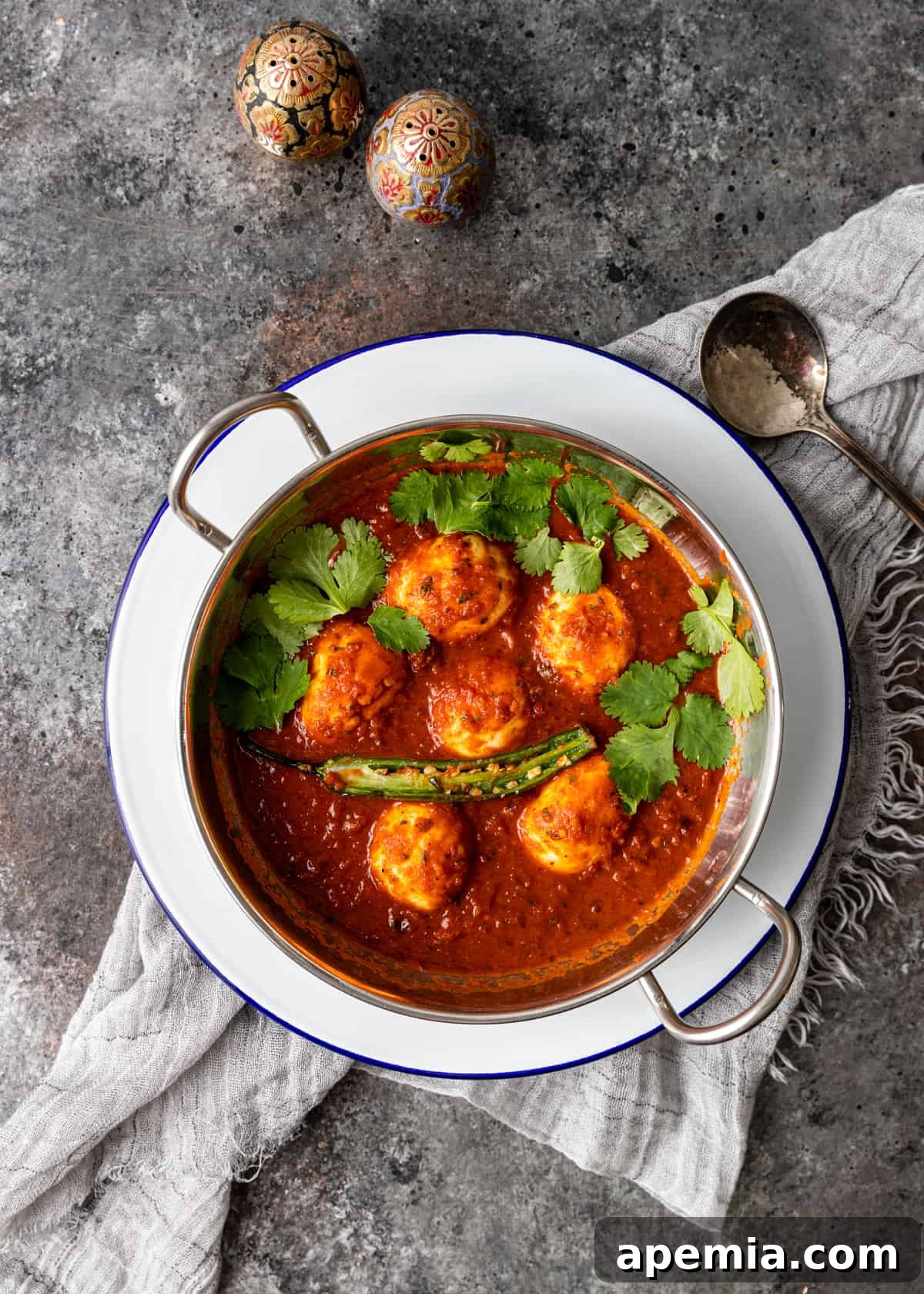
- Serve & Garnish: Your authentic Egg Curry (Anda Curry) is now ready! Serve it hot, garnished with fresh cilantro leaves, alongside warm naan, roti, or a fragrant bowl of jeera rice or plain steamed basmati rice.
Pro Tips for the Best Egg Curry Every Time
- Don’t Rush the Onions: Cooking the onions until they’re truly soft and translucent (or even slightly golden) is key to a sweet, well-developed gravy base. Rushing this step can lead to a raw onion flavor.
- Toast Your Spices: When you add the ground spices, give them a minute or two to toast in the oil before adding water. This “blooming” process significantly deepens their flavor.
- Fresh Aromatics Make a Difference: While pastes are convenient, fresh ginger and garlic yield a brighter, more vibrant flavor.
- Balance the Heat: Taste your curry before adding the full amount of chili powder or green chilies. You can always add more heat, but it’s hard to take it away!
- Final Simmer is Crucial: The last simmer after blending isn’t just for warming the eggs. It allows the flavors to truly meld and any raw tomato taste to cook out, resulting in a more harmonious curry.
- Adjust Consistency: If your curry is too thick, thin it with a splash of hot water or vegetable broth. If it’s too thin, simmer it uncovered for a few more minutes until it reaches your desired consistency.
Recommended Tools
- Deep Skillet or Dutch Oven: Essential for comfortably sautéing the ingredients and simmering the curry without overcrowding.
- Saucepan with Lid: For boiling eggs to perfection, especially if you’re preparing them ahead of time.
- Immersion Blender or Regular Blender: Crucial for achieving that perfectly smooth, silky tomato-onion gravy. An immersion blender offers convenience with less cleanup.
- Cutting Board and Sharp Knife: For prepping all your fresh vegetables and aromatics.
Serving Suggestions: Complete Your Indian Feast
Egg Curry is incredibly versatile and pairs wonderfully with a variety of Indian breads and rice dishes. Here are some ideas to create a complete and unforgettable meal:
- With Breads: Serve hot with pillowy naan bread, soft roti, crispy parathas, or simple chapati to soak up every last drop of the flavorful gravy.
- With Rice: Pair it with fragrant steamed basmati rice, aromatic jeera rice (cumin rice), or even a saffron-infused pulao for a more elaborate touch.
- Refreshing Sides: Complement the rich curry with cooling Cucumber Raita (yogurt dip), a tangy kachumber salad (Indian chopped salad), or a side of savory Dal Makhani or yellow lentil dal.
- Appetizer Pairings: For a true Indian spread, start your meal with crispy Crispy Corn Pakora or delicious Zucchini Lentil Fritters before diving into the main course.
- Aromatic Drinks: Wash it all down with a sweet or savory lassi, or a refreshing glass of nimbu pani (Indian lemonade).
Share this recipe on Pinterest!
Love this recipe? Help others discover it by sharing it on Pinterest.
Storage and Reheating Guide
Egg curry, like many Indian dishes, often tastes even better the next day as the flavors have more time to meld and deepen. Here’s how to store and reheat it:
- Refrigeration: Store leftover egg curry in an airtight container in the refrigerator for up to 3-4 days.
- Freezing: While the gravy freezes beautifully, hard-boiled eggs can sometimes change texture (becoming a bit rubbery) after freezing and thawing. If you plan to freeze, it’s best to freeze the gravy on its own and add freshly boiled eggs when reheating. Freeze the gravy in an airtight container for up to 2-3 months.
- Reheating:
- From Refrigerator: Gently reheat the curry in a saucepan over medium-low heat, stirring occasionally, until thoroughly warmed through. Add a splash of water or broth if it has thickened too much.
- From Freezer (Gravy only): Thaw the frozen gravy overnight in the refrigerator, then reheat as described above. Add freshly prepared eggs during the final simmering stage.
Frequently Asked Questions About Egg Curry
Browning the hard-boiled eggs in ghee is a step that adds significant value to the dish. This process creates a slight textural contrast with a delicate, crispy crust on the exterior, preventing the eggs from becoming spongy when simmering in the gravy. It also infuses them with a lovely nutty flavor from the ghee and helps them better absorb the rich curry sauce. While you can skip this step if you’re in a rush, it truly enhances the overall experience.
The final simmer after blending is a crucial step that allows the spices to fully bloom and their flavors to marry perfectly. It also helps to cook out any lingering raw tomato flavor from the pureed sauce, creating a more harmonious and deeply flavored curry. This short, extra simmering time makes a noticeable difference in the depth and richness of the dish, so it’s definitely worth the few extra minutes.
The ideal consistency for egg curry gravy is one that is thick enough to beautifully cling to the eggs and your naan or rice, but still easily spoonable. It shouldn’t be watery, nor should it be overly paste-like. If, after the final simmer, your curry feels too thick, simply stir in a splash of hot water or vegetable broth, one tablespoon at a time, until you achieve your desired consistency before serving.
No, this recipe specifically calls for hard-boiled eggs. The texture and structural integrity of hard-boiled eggs are essential for this dish, allowing them to simmer in the gravy without falling apart. If you’re looking for a curry with raw eggs, you might be thinking of a different preparation, like an Indian-style Shakshuka.
Absolutely! The spice level is completely adjustable to your preference. For a milder curry, reduce the amount of chili powder and use a jalapeño instead of a serrano chili, or omit the fresh chili entirely. For a spicier kick, increase the chili powder, add an extra green chili, or even a pinch of cayenne pepper.

Egg Curry Recipe (Anda Curry)
Print Recipe
Ingredients
Eggs
- 6-8 hard-boiled eggs, peeled
- 1 tsp ghee or vegetable oil (for browning eggs)
- 1/8 tsp garam masala (for seasoning eggs)
- 1/8 tsp chili powder (for seasoning eggs)
Curry (Tomato Onion Gravy)
- 1 tablespoon ghee or vegetable oil
- 1 Indian bay leaf (See Note 1 below)
- 1 cinnamon stick (or 1/4 tsp ground cinnamon)
- 2 cardamom pods (or 1/8 tsp ground cardamom)
- 1 green chili serrano, slit lengthwise (or jalapeño for less heat)
- 4 cloves garlic, minced (or garlic paste)
- 1 tablespoon ginger, grated (or ginger paste)
- 1 red onion, chopped (about 1.5 cups)
- 2 roma (plum) tomatoes, chopped (about 1.5 cups)
- 1 teaspoon ground coriander
- 1 teaspoon garam masala (for gravy)
- 1 teaspoon sugar
- 1 teaspoon kosher salt
- ½ teaspoon chili powder (for gravy)
- ½ teaspoon ground turmeric
- 2 teaspoons fenugreek leaves (kasoori methi)
- Fresh cilantro leaves for garnish
Instructions
- In a deep skillet, heat 1 teaspoon of ghee over medium heat. Add the peeled hard-boiled eggs and gently cook, swirling them around the pan, until they are lightly golden and blistered. Remove from the pan to a paper towel-lined plate. Season them with 1/8 tsp garam masala and 1/8 tsp chili powder.
- To the same pan, melt the tablespoon of ghee over medium heat. Add the Indian bay leaf, cinnamon stick, cardamom pods, and green chili. Stir-fry for about a minute until fragrant. Then, add the minced garlic and grated ginger, stirring and sautéing for another minute.
- Add the chopped red onion and tomatoes to the pan and stir thoroughly. Sauté for 6-8 minutes, or until the onion is wilted and translucent, and the tomatoes have completely broken down.
- If using whole spices (bay leaf, cinnamon stick, cardamom pods), remove and discard them for a smoother gravy.
- Season the mixture with ground coriander, 1 tsp garam masala, sugar, salt, ½ tsp chili powder, and turmeric. Cook for another minute, stirring to combine. Add 1.5 cups of water. Bring to a high simmer and cook for 3 minutes, stirring often.
- Carefully transfer the gravy mixture to a blender or use an immersion blender to puree until completely smooth. Pour the smooth curry back into the skillet. Stir in the fenugreek leaves (crushed between your palms). Add the browned eggs to the gravy and continue cooking on low heat for another 5 minutes to heat through and allow flavors to meld.
- Serve hot, garnished with fresh cilantro leaves. This flavorful Egg Curry (Anda Curry) pairs perfectly with warm naan, roti, jeera rice, or plain steamed rice.
Notes
- Indian Bay Leaf: Do not substitute a regular bay leaf (laurel) for an Indian bay leaf. Indian bay leaves have a distinct aroma, closer to cinnamon. If you can’t find Indian bay leaf, you can omit it or use a tiny pinch of ground cinnamon, clove, or cassia as a substitute, keeping in mind the flavor will be slightly different.
Nutrition
Carbohydrates: 7g |
Protein: 9g |
Fat: 7g |
Saturated Fat: 2g |
Polyunsaturated Fat: 1g |
Monounsaturated Fat: 3g |
Cholesterol: 249mg |
Sodium: 502mg |
Potassium: 195mg |
Fiber: 2g |
Sugar: 3g |
Vitamin A: 584IU |
Vitamin C: 6mg |
Calcium: 56mg |
Iron: 1mg
The information shown is an estimate provided by an online nutrition calculator. It should not be considered a substitute for a professional nutritionist’s advice.
Have You Made This Recipe? Let Me Know on Instagram!
Tag @keviniscooking or use hashtag #keviniscooking!