Authentic Turkish Simit Recipe: Crafting the Iconic Sesame Bread Rings
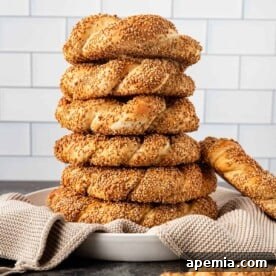
Step into the vibrant streets of Turkey with every bite of homemade Simit, the iconic Turkish sesame bread. This incredibly popular street food is not just a treat for the palate but a cherished cultural experience, now easily recreated in your own kitchen with simple, accessible ingredients. Imagine a bread with a wonderfully soft, pillowy interior, perfectly complemented by a crisp, subtly sweet exterior, generously coated with a rich molasses glaze and an abundance of toasted sesame seeds. It’s a culinary journey that promises an unforgettable sensory delight.
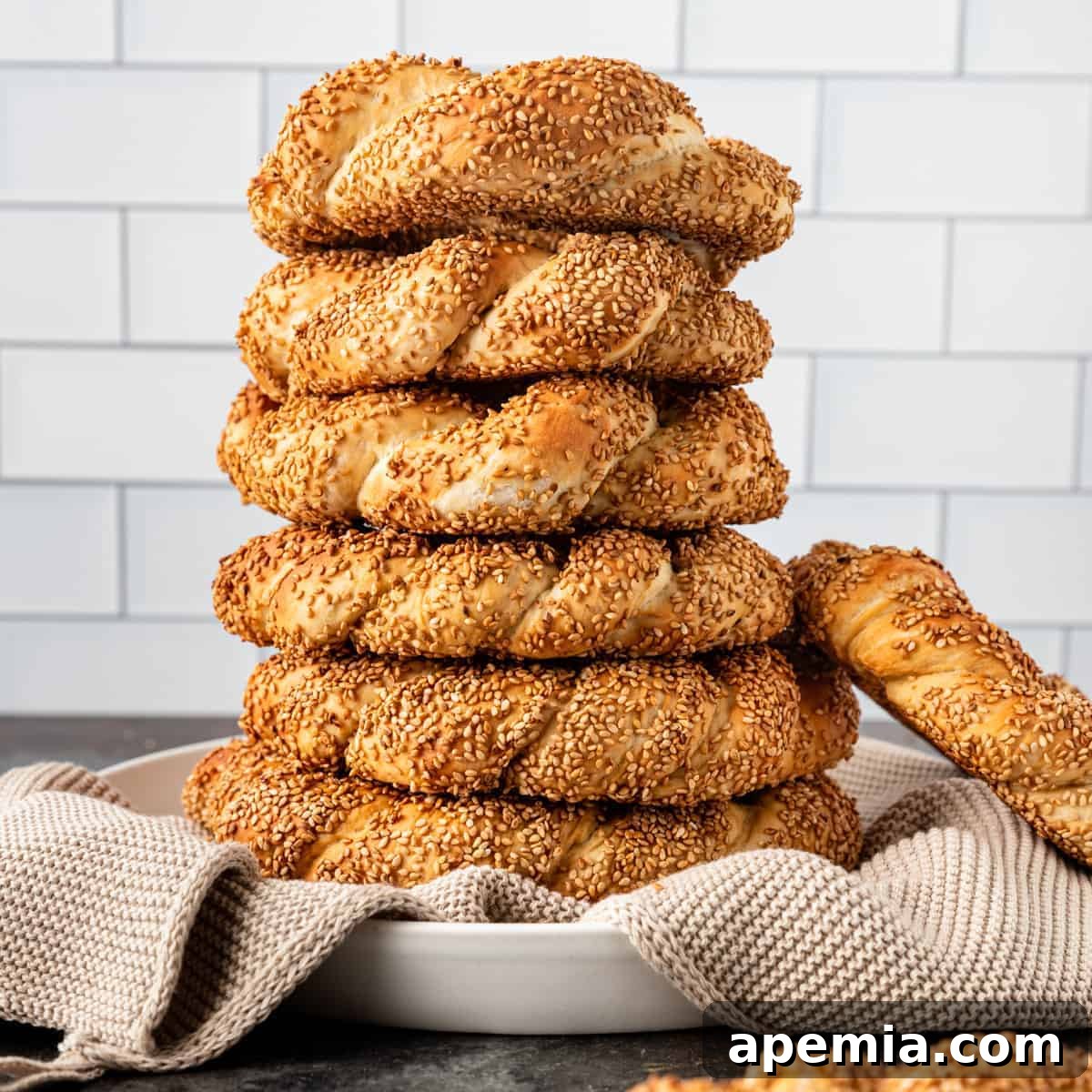
My first encounter with Simit in the bustling heart of Istanbul left an indelible impression. Each morning, as the city awoke, street vendors would gracefully balance towering stacks of these golden rings on their heads, their melodic calls echoing through the narrow alleyways and grand boulevards. The moment I tasted one, I was instantly captivated. First, the irresistible aroma of toasted sesame and sweet molasses would draw me in, creating an eager anticipation. Then, the satisfying crunch of the molasses-glazed crust and perfectly toasted sesame seeds would give way to an incredibly fluffy, tender bread inside. It was a revelation – a simple yet profound pleasure that sparked a daily craving, following me throughout my travels across the enchanting landscapes of Turkey. This delightful breakfast staple or anytime snack became a cherished memory, inspiring me to master its creation at home.
Simit holds a truly special place in Turkish culture, seamlessly integrating into daily life as a quick breakfast on the go, a satisfying midday snack, or even an elegant appetizer served alongside an array of traditional mezzes. While its distinctive circular shape might remind some of bagels, the similarities largely end there. Traditional bagels undergo a boiling process before baking, which is responsible for their characteristic dense, chewy consistency. Simit, on the other hand, is uniquely prepared by being simply dipped in a sweet molasses mixture and then generously coated with sesame seeds before it goes into the oven. This distinct preparation method results in a significantly airier, lighter, and fluffier bread with a delicate crumb and a delightful crisp crust. It offers all the comforting appeal of a classic ring-shaped bread, but with a unique textural profile that is anything but heavy. Once you discover the joy and simplicity of crafting these authentic sesame bread rings yourself, you’ll find yourself returning to this rewarding recipe again and again, eager to share this taste of Turkey with friends and family.
For those eager to further explore the rich and diverse culinary heritage of the Silk Road, we invite you to discover more traditional bread recipes. Be sure to check out our guides for baking Challah Bread, the soft and versatile Pide Turkish Flatbread, and this comforting, rustic Barbari Bread. Each recipe offers a unique journey through ancient flavors and baking traditions.
Enhance Your Baking: Watch Our Simit Recipe Video!
To provide you with the clearest guidance and confidence, we’ve prepared a detailed video tutorial. Watch the video in the recipe card below to see exactly how these irresistible Simit are made, from mixing the dough to forming the perfect rings and achieving that golden-brown finish. Visual learning makes the process even easier and more enjoyable.
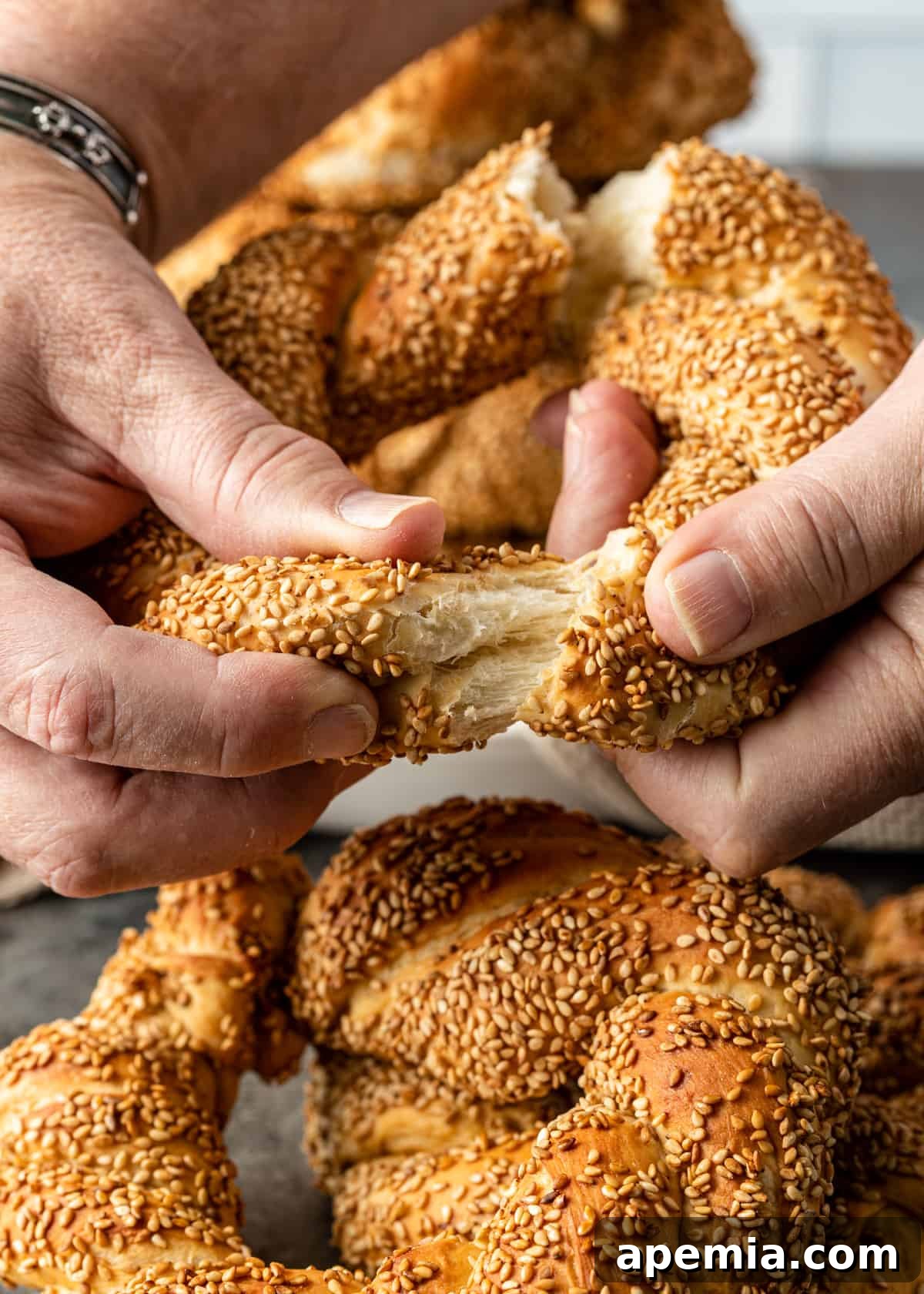
Table of Contents
- Watch Our Simit Recipe Video!
- Essential Ingredient Notes and Substitutions for Perfect Simit
- Mastering Turkish Simit: A Step-by-Step Guide to Perfection
- Frequently Asked Questions About Turkish Simit
- Authentic Turkish Simit (Sesame Bread Rings) Recipe
Essential Ingredient Notes and Substitutions for Perfect Simit
Crafting the perfect Simit begins with understanding the role of each ingredient and how to best utilize them. Here’s a detailed look at what you’ll need and some helpful tips for success:
- All-Purpose Flour: This is the fundamental building block of our dough. Simple, readily available all-purpose flour works wonderfully, providing the ideal gluten structure for a light and airy Simit. Sifting the flour beforehand is a small but important step, as it helps aerate the flour, prevents lumps, and contributes to a finer, more consistent crumb in the finished bread.
- Granulated Sugar: While Simit is not overly sweet, sugar plays a crucial role beyond just adding a delicate sweetness. It acts as food for the yeast, helping to activate it effectively, and also contributes to the tenderizing of the dough, resulting in a harmoniously flavored bread with a hint of subtle sweetness.
- Instant Yeast: This is the magical leavening agent that gives Simit its signature light, fluffy, and voluminous texture. Instant yeast is incredibly convenient because it doesn’t require prior proofing; you can mix it directly with your dry ingredients. Always ensure your yeast is fresh and active for optimal rising power, as old yeast can lead to a dense bread.
- Salt: A measured pinch of salt is vital for enhancing the overall flavor profile of the bread, bringing out the subtle sweetness and nutty notes. Furthermore, salt plays a key role in controlling the yeast activity, preventing over-proofing, and strengthening the gluten network, which is essential for a well-formed, elastic dough and a good rise.
- Warm Water: The temperature of your water is absolutely crucial for this recipe. Warm water, ideally between 105-115°F (40-46°C), is essential for properly activating the instant yeast without “killing” it. Water that’s too hot will deactivate the yeast, while water that’s too cold will significantly hinder its activity, leading to a poor or non-existent rise. Achieving the correct water temperature ensures the smoothest dough development and the fluffiest final texture.
- Vegetable Oil: Incorporating a neutral-flavored vegetable oil, such as canola, sunflower, or a light olive oil, adds significant moisture, richness, and pliability to the dough. This results in a softer interior texture and helps in achieving that desirable golden-brown, slightly crisp crust during baking.
- Molasses: This is the distinctive ingredient responsible for Simit’s characteristic sweet, slightly tangy glaze and its beautiful deep golden-brown color. Traditionally, grape molasses (üzüm pekmezi) is used, offering a distinct fruity sweetness and depth. However, if grape molasses is difficult to source in your area, pomegranate molasses makes an excellent and equally flavorful substitute, providing a similar rich depth of flavor and appealing color. Feel free to experiment with what’s available!
- Sesame Seeds: These tiny, powerhouse seeds are absolutely fundamental to the authentic Simit experience. They provide a wonderful sweet, earthy, and nutty flavor along with a delightful textural crunch that makes Simit so satisfying. Toasted sesame seeds are highly recommended as they release a far more intense aroma and deeper flavor profile. If you only have untoasted seeds, simply spread them in a dry pan over medium heat and stir frequently for several minutes until they turn a beautiful light golden brown and become wonderfully fragrant. Be careful not to burn them, as they can toast very quickly.
Mastering Turkish Simit: A Step-by-Step Guide to Perfection
Creating delicious, authentic Simit in your own kitchen is a rewarding experience. Follow these detailed steps carefully to achieve perfectly light, fluffy, and flavorful sesame bread rings:
- Combine Dry Ingredients: In the large bowl of your stand mixer, begin by sifting the all-purpose flour. Sifting is an important step that aerates the flour and helps prevent lumps, ensuring a smoother dough. Next, add the granulated sugar, instant yeast, and salt to the sifted flour. Use a whisk to thoroughly combine these dry ingredients, ensuring they are evenly distributed.
- Introduce Wet Ingredients & Initial Mix: Create a small well or depression in the center of your dry ingredients mixture. Carefully pour in the vegetable oil and the warm water. Remember, the water temperature (ideally 105-115°F or 40-46°C) is critical for activating the yeast properly without damaging it.
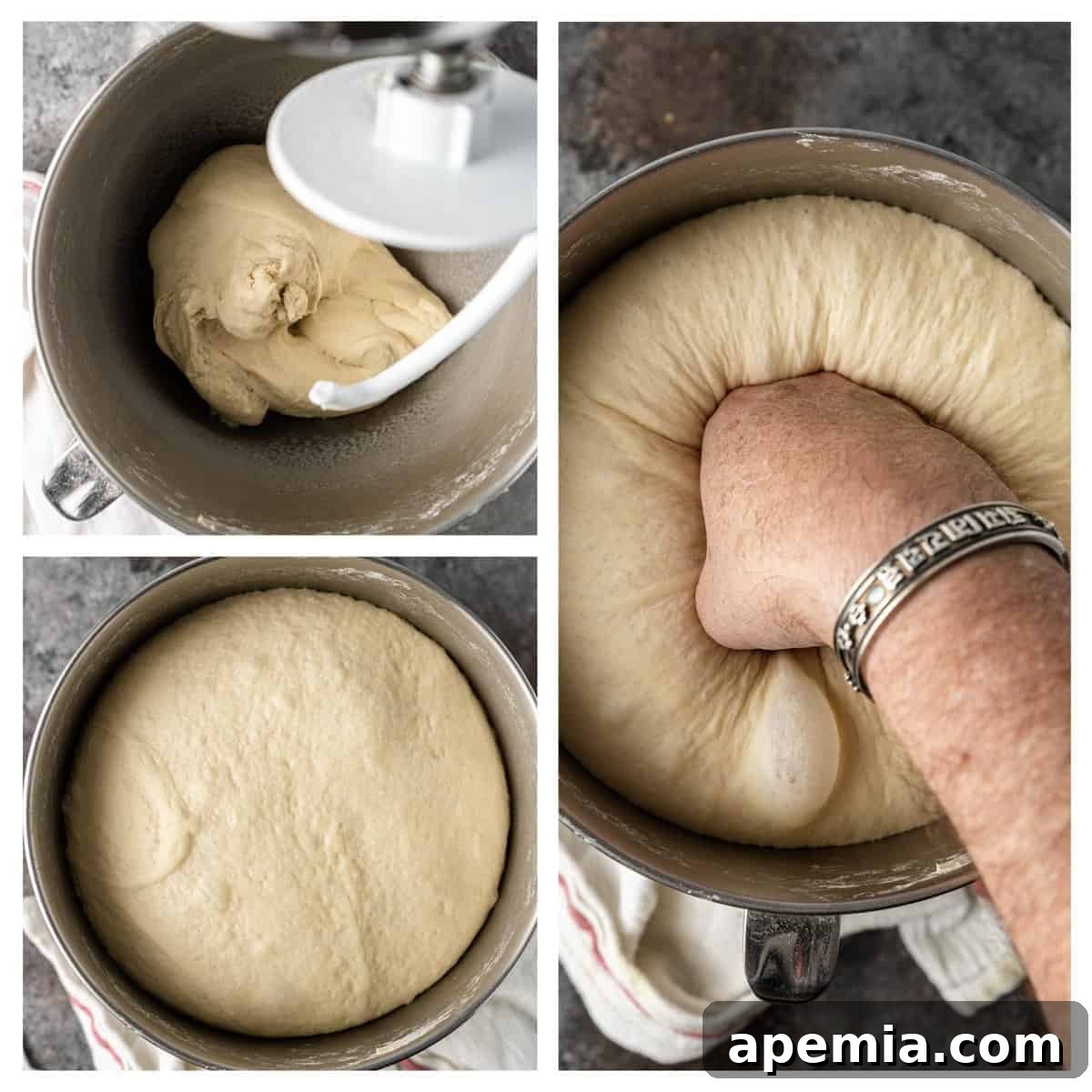
- Form the Dough: Attach the dough hook attachment to your stand mixer. Begin mixing on a low speed until all the ingredients start to come together and form a shaggy, cohesive dough. At this initial stage, observe the dough’s consistency: if it appears too dry and isn’t forming a ball, add warm water one tablespoon at a time until it reaches a soft, manageable texture. Conversely, if the dough seems too wet and excessively sticky, add a tablespoon of flour at a time until it’s just right. The goal is a dough that is pliable but not tacky.
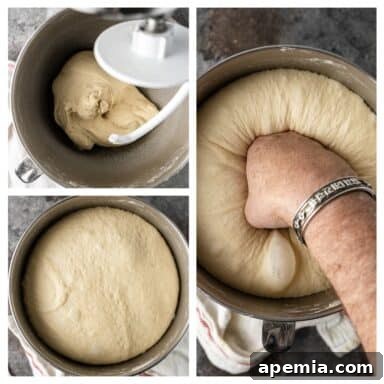
- Knead the Dough: Increase the mixer speed to medium-low and continue kneading the dough with the dough hook for approximately 8 to 10 minutes. This extended kneading time is essential for developing the gluten, which will make the dough smooth, elastic, and no longer sticky to the touch. A good indicator that your dough is properly kneaded is when it pulls away cleanly from the sides and bottom of the mixing bowl, leaving the bowl almost perfectly spotless.
- First Rise (Bulk Fermentation): Once the dough is beautifully kneaded, gently form it into a neat ball. Lightly grease the mixing bowl with a tiny bit of vegetable oil, then place the dough back into the bowl, turning it once to lightly coat its surface. Cover the bowl securely with a clean linen towel or plastic wrap. Place the covered bowl in a warm, draft-free spot in your kitchen and allow the dough to rise for about 1 hour, or until it has impressively doubled in size. This first rise is crucial for developing the bread’s flavor and structure.
- Prepare the Coating Station: While your dough is undergoing its first rise, take this time to prepare your work area for the next steps. Line a large baking sheet (or two, depending on your oven size) with parchment paper; this will prevent the Simit from sticking and ensure easy cleanup. In a wide, shallow bowl, whisk together the molasses (grape or pomegranate) with an equal amount of water until they are thoroughly combined into a smooth mixture. In a separate, wide, shallow dish, spread out the toasted sesame seeds in an even layer. Have both of these ready and easily accessible for dipping the formed Simit rings.
Continuing with the shaping and coating process for your Simit:
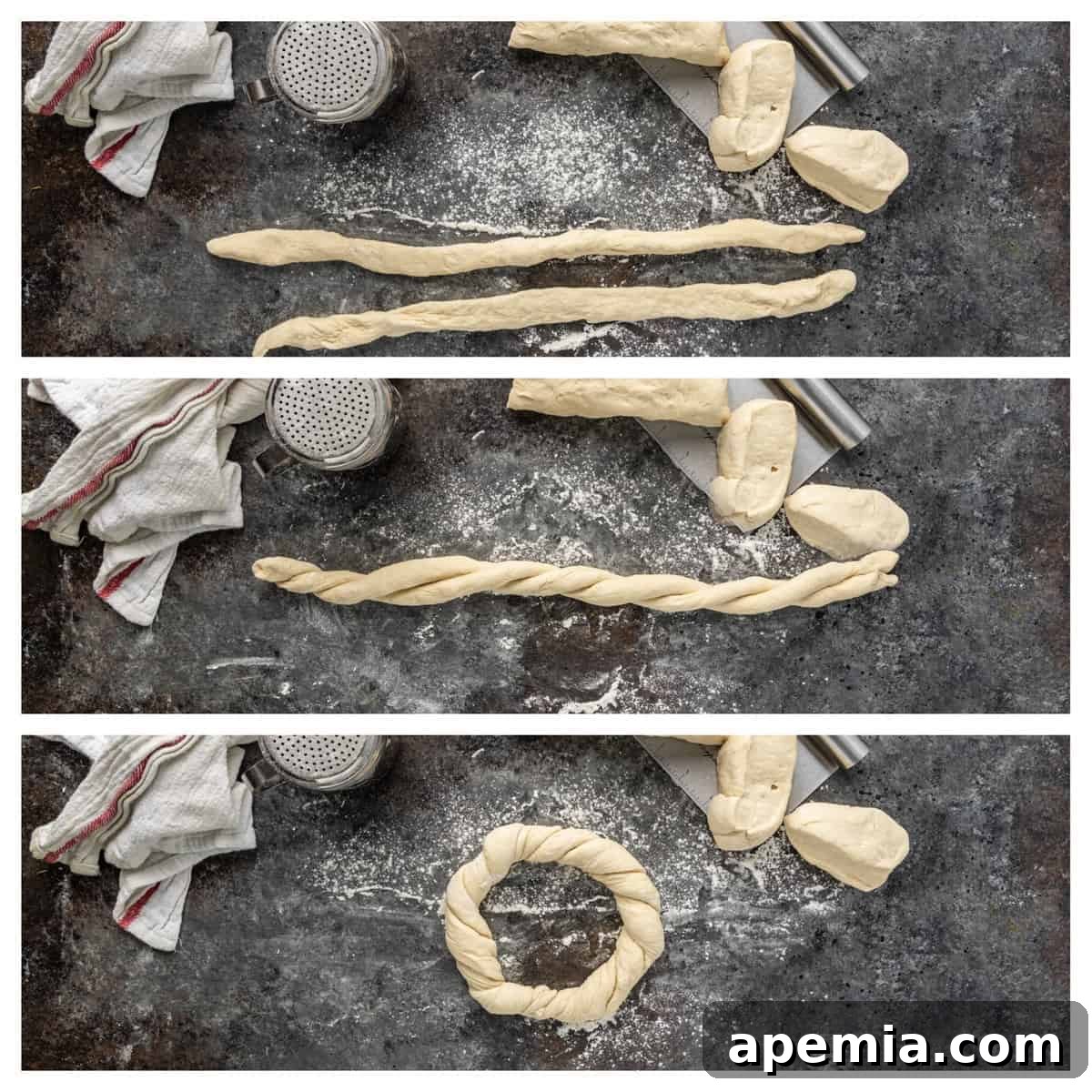
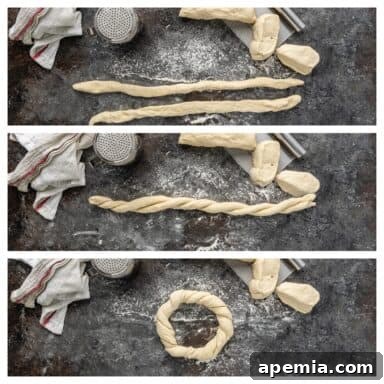
- Divide and Roll the Dough: After the dough has completed its first rise and gloriously doubled in size, gently punch it down to release the accumulated air. Transfer the dough to a lightly floured surface. Now, divide the dough into 16 equal portions. For the most consistent results and even baking, we highly recommend using a kitchen scale to ensure each portion weighs the same. Take two of these portions and, working with one at a time, roll each piece into a long, thin rope or “tube,” aiming for approximately 20 inches (50 cm) in length. A helpful technique to achieve this is to first flatten a dough portion into a small rectangular shape. Then, using open palms, gently roll the dough away from you while applying light, even pressure and simultaneously stretching it outwards. Repeat this fluid motion, gradually lengthening the dough until you form a consistent, slender rope, similar to a thin breadstick.
- Twist and Form the Rings: Once you have two long, thin dough ropes, lay them side by side, ensuring they are parallel and close to each other. Firmly pinch the ends together at both sides to securely join them. Now, gently and evenly twist the two ropes around each other in opposite directions, creating a beautiful spiral effect along their entire length. This twisting gives Simit its distinctive visual appeal. After twisting, carefully bring the two ends of the twisted dough together to form a perfect circular ring. Pinch these ends together very firmly to seal the ring, ensuring it holds its shape during rising and baking. Transfer the freshly formed ring to your prepared parchment-lined baking sheet. Repeat this entire twisting and shaping process with the remaining 14 dough pieces; you should ultimately yield a total of 8 beautifully shaped Simit rings. Arrange them on the baking sheet(s) with ample space between each one to allow for their final rise without touching.
The final crucial preparation step before baking:
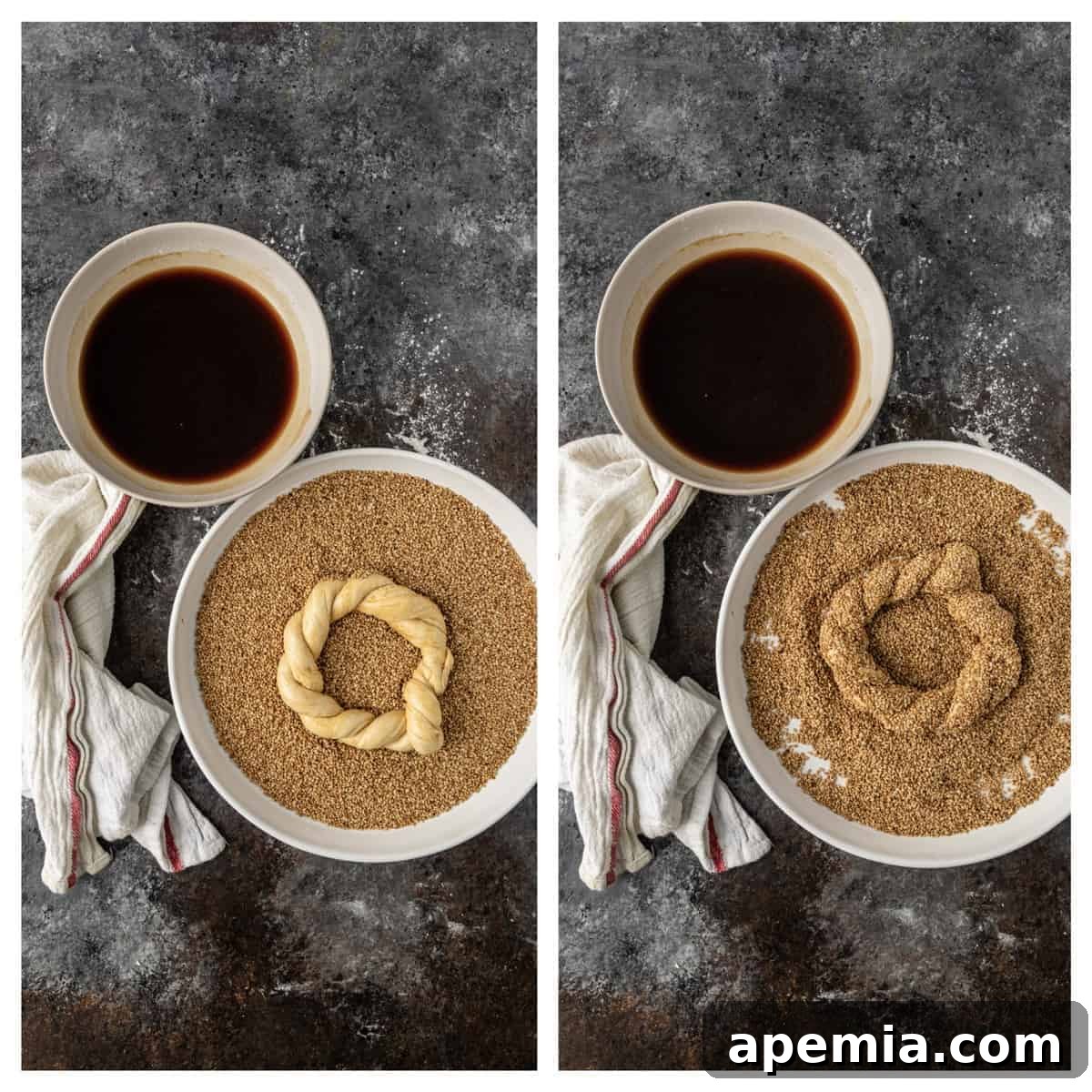
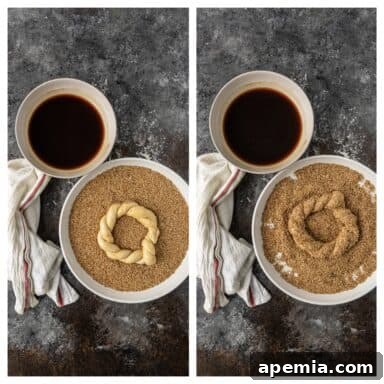
- Dip and Generously Coat: This step is paramount for achieving Simit’s signature appearance, irresistible crunch, and deep flavor. Carefully take one dough ring and fully immerse it into the shallow bowl containing the molasses mixture. Turn the ring to ensure it is completely coated on all sides. Allow any excess liquid to drip off briefly before proceeding. Immediately transfer the molasses-coated ring into the shallow dish of toasted sesame seeds. Roll and press the ring gently into the sesame seeds, ensuring that every surface is thoroughly and generously covered. The more sesame seeds, the richer the flavor and the more satisfying the crunch will be! Return the fully coated Simit ring to your parchment-lined baking sheet. Repeat this precise dipping and coating process with all the remaining Simit rings, placing them evenly spaced on the baking sheet(s) to prepare for their final rise and bake.
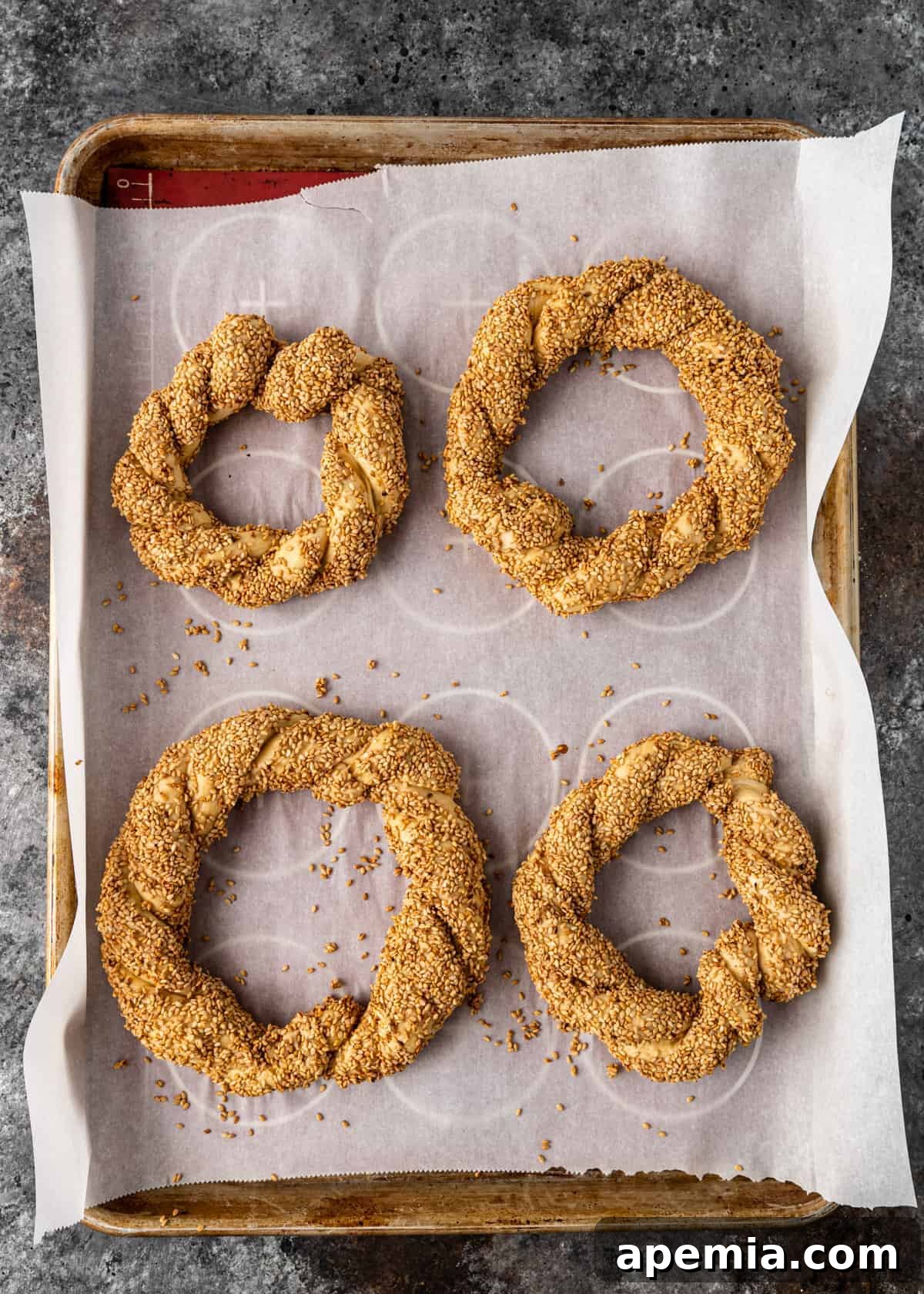
The baking instructions for perfectly golden Simit:
- Second Rise (Proofing): Once all the Simit rings are meticulously coated and arranged on your baking sheet(s), loosely cover them with a clean linen towel. Allow the rings to rise again for another 20 minutes in a warm, draft-free spot. This brief second rise, often called proofing, is vital for achieving an even lighter, fluffier internal texture. During this 20-minute proofing period, preheat your oven to a precise 400°F (200°C), ensuring it’s ready for baking.
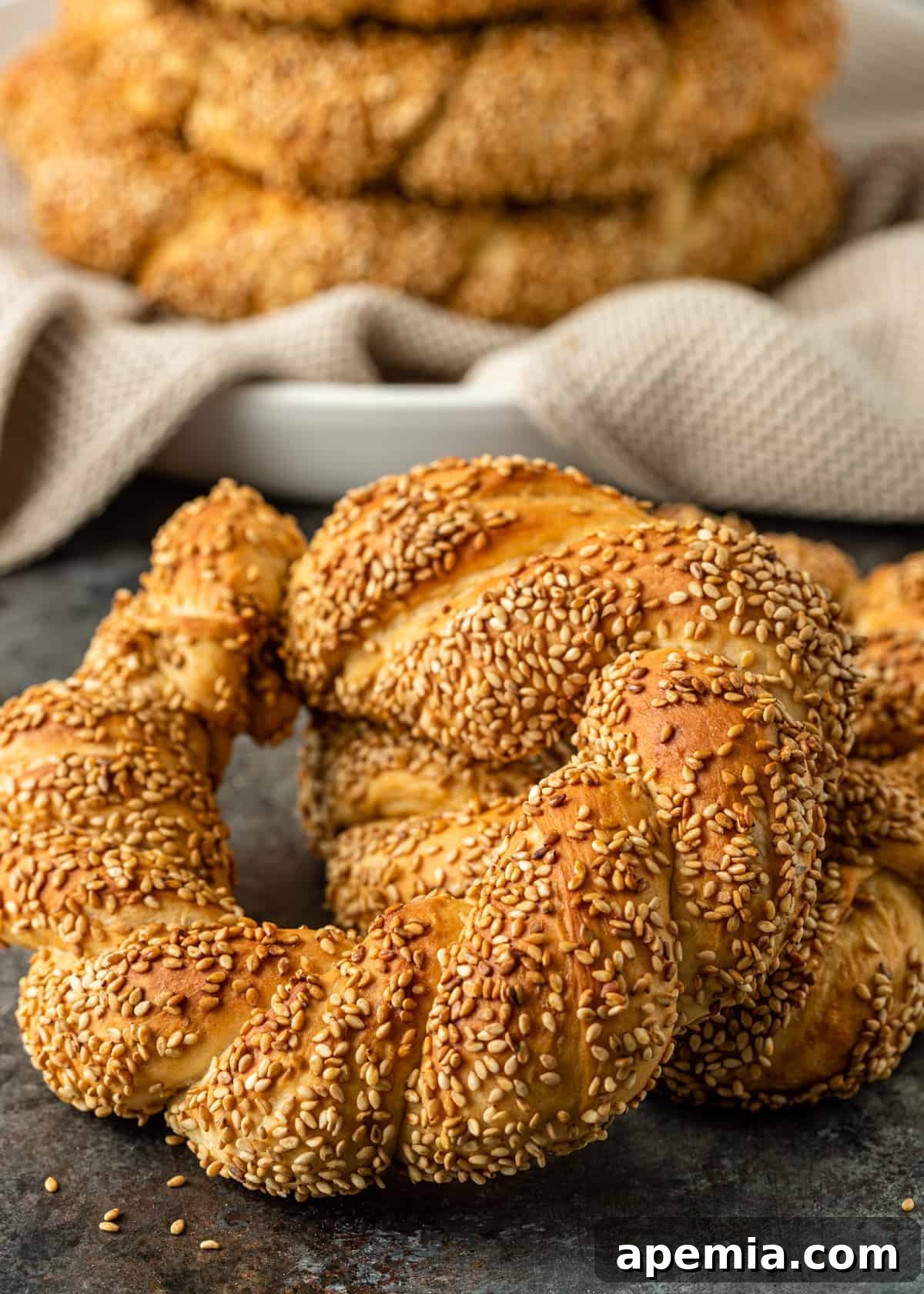
- Bake to Golden Perfection: Carefully transfer the baking sheet(s) with the proofed Simit rings into the preheated oven. Bake for approximately 14 to 18 minutes. The exact baking time may vary slightly depending on your oven’s calibration and specific characteristics, so it’s important to keep a watchful eye. The Simit are perfectly baked when they achieve a beautiful, deep golden-brown color all over and sound hollow when gently tapped on the bottom. Their crisp crust will also be evident.
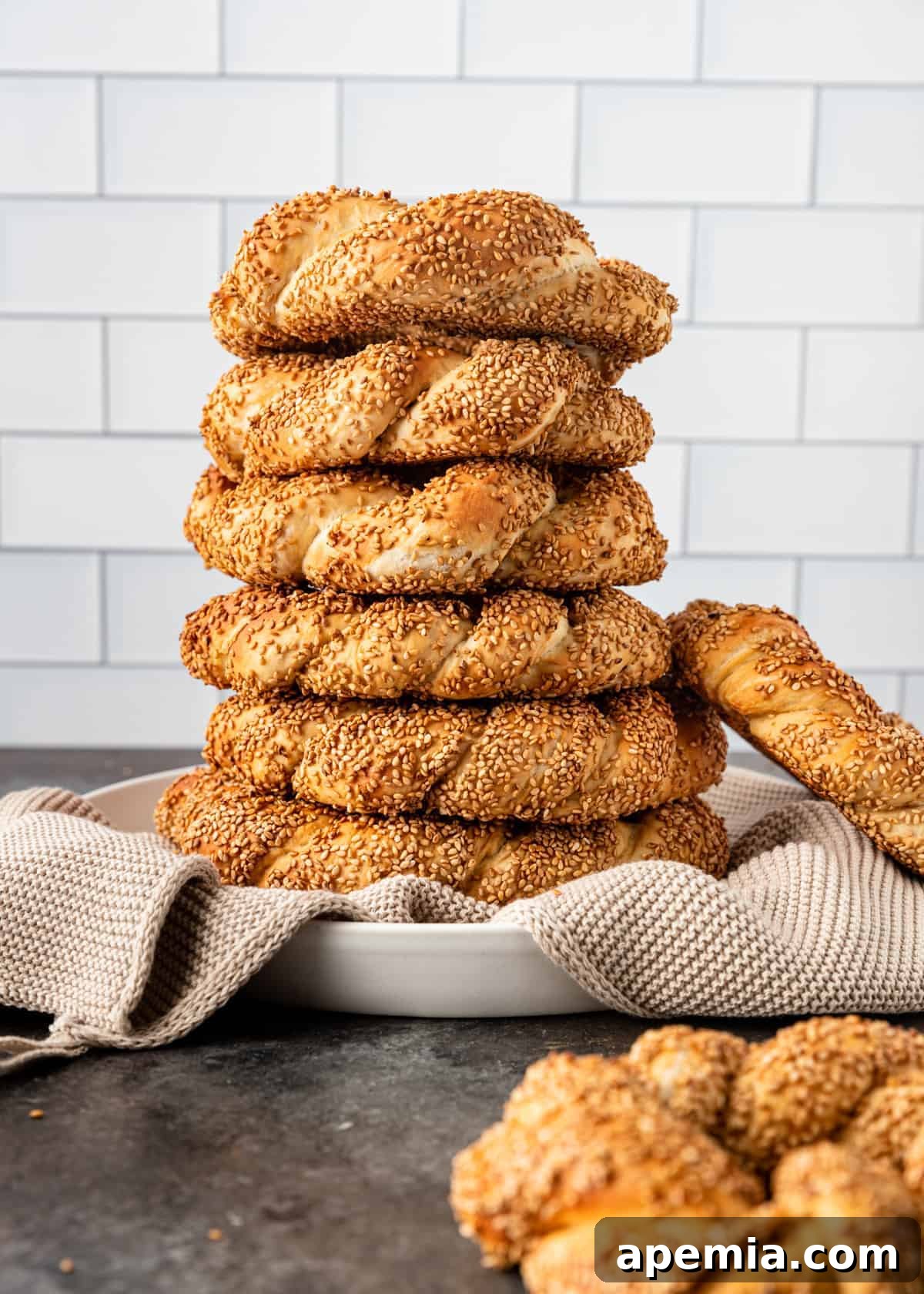
- Cool and Savor: Once baked, promptly remove the Simit from the oven and transfer them to a wire rack to cool slightly. Simit is an absolute culinary delight when enjoyed warm, at which point its crust is at its absolute crispiest and its interior is wonderfully soft. While they are undoubtedly best savored fresh from the oven, any remaining Simit should be allowed to cool completely before storing. Once fully cooled, place them in an airtight container or wrap them securely in a bag to maintain their freshness for a couple of days.
Frequently Asked Questions About Turkish Simit
Curious to learn more about Simit? Here are some common questions and their detailed answers to help you better understand, prepare, and enjoy this beloved Turkish delicacy:
While the terms Simit and Gevrek are often used interchangeably to refer to Turkish sesame bread rings, there is a subtle but important distinction, primarily rooted in regional preparation styles. Both are iconic circular breads made from a similar dough, and both are dipped in molasses and generously coated in sesame seeds before baking. However, in traditional Gevrek recipes, particularly those from İzmir, the molasses-dipped ring undergoes a quick boil or a brief fry before being seeded and baked. This additional step imparts an extra layer of crispiness and a slightly chewier, denser texture to Gevrek, setting it apart from the generally airier, softer Simit found in other regions like Istanbul. Our recipe focuses on the Istanbul-style Simit, celebrated for its light and fluffy interior.
Turkish Simit is incredibly versatile and can be enjoyed in numerous ways throughout the day, making it a perfect food for any occasion. It’s the quintessential grab-and-go breakfast or a delightful light snack, often enjoyed simply with a glass of robust Turkish tea (çay). For a more substantial and traditional Turkish breakfast or brunch, pair Simit with slices of fresh white cheese (beyaz peynir), ripe tomatoes, crisp cucumbers, and a medley of olives. It also wonderfully complements various dips and spreads like a creamy tzatziki, a flavorful olive tapenade, or a spicy pepper paste. Many people enjoy slicing Simit horizontally and filling it with popular Turkish delicacies such as sucuk (spicy Turkish sausage) and melted cheese, or for a sweet treat, a generous spread of hazelnut cream. Leftover Simit slices can also be lightly toasted for an extra crunch. Its delightful texture and mild flavor make it a perfect accompaniment to almost any meal or simply enjoyed on its own as a satisfying bite.
Homemade Simit, like most fresh bread, is undoubtedly best enjoyed on the day it’s baked. However, you can certainly store leftovers to savor later. To maintain their freshness for a couple of days, place your cooled sesame bread rings in an airtight container at room temperature, ensuring they are not exposed to air. For longer storage, Simit freezes beautifully. Once completely cooled, transfer the rings to a freezer-safe bag or wrap them tightly in plastic wrap and then in aluminum foil to prevent freezer burn. They can be stored in the freezer for up to 3 months. When you’re ready to enjoy them again, simply defrost them overnight in the refrigerator. For the best reheating results, which mimic that fresh-baked crunch, pop them into a toaster oven, a conventional oven (preheated to around 350°F/175°C for 5-7 minutes), or even a regular toaster until they are warmed through and the crust is crisp once more. We advise against microwaving, as it can unfortunately make the Simit chewy and diminish its desirable texture.
Absolutely! Simit dough is quite accommodating if you need to prepare it in advance, which can be a fantastic time-saver for busy schedules. After completing the first rise (bulk fermentation) as directed in the recipe, instead of punching the dough down and proceeding with shaping, you can tightly wrap the dough in plastic wrap, ensuring no air can reach it. Then, place it in the refrigerator for up to 24 hours. When you’re ready to bake, remove the dough from the refrigerator and allow it to come to room temperature for approximately 30-60 minutes. Once it’s pliable again, you can proceed with dividing, rolling, shaping, and the second rise as outlined in the recipe. This method allows you to enjoy freshly baked Simit with less effort on the day you plan to serve them.
Several factors can contribute to a dense Simit. Firstly, ensure your yeast is fresh and active; expired or inactive yeast won’t allow the dough to rise properly. Secondly, the water temperature during mixing is crucial – too hot will kill the yeast, too cold will inhibit it. Aim for 105-115°F (40-46°C). Thirdly, inadequate kneading can prevent proper gluten development, which is necessary for a light, airy structure. Ensure you knead for the full 8-10 minutes until the dough is smooth and elastic. Lastly, make sure you allow sufficient time for both the first and second rises; rushing these steps will result in a heavy bread. A warm, draft-free environment is ideal for optimal rising.
📌
Share this delicious Simit recipe on Pinterest!
Loved baking these authentic Turkish sesame bread rings? Help us spread the joy of Turkish cuisine by sharing this fantastic recipe with your friends and followers on Pinterest!
This post, originally published on Silk Road Recipes in February 2021, has been extensively updated in June 2023 with rich new content, enhanced photos, and/or a helpful video tutorial to provide the best possible experience and comprehensive guidance for making perfect homemade Simit.
Don’t miss out on more delicious and authentic recipes from around the world! Subscribe to my exclusive Newsletter for culinary inspiration delivered straight to your inbox. You can also follow me on Facebook, Pinterest, Instagram and YouTube for all my latest culinary creations, essential cooking tips, and engaging video tutorials.
Authentic Turkish Simit (Sesame Bread Rings)
★★★★★ (Based on 3 reader votes)
Master this authentic Turkish Simit recipe to bake the warmest, fluffiest, and most delicately sweet sesame bread rings, featuring a perfectly crunchy, molasses-coated exterior and a tender interior.
Print Recipe
Recipe Video Guide
For a detailed visual guide, watch our Turkish Simit recipe video to follow along with each step:
(Video tutorial demonstrating the Simit preparation steps is available here, check the main article for embed.)
Ingredients
For the Dough:
- 4 cups all-purpose flour (sifted)
- 1 tablespoon granulated sugar
- 2 teaspoons instant yeast
- 1 teaspoon kosher salt
- 1 1/2 cups warm water (plus 1-2 tablespoons more if dough is too dry)
- 1/4 cup vegetable oil (such as canola or sunflower)
For Assembly and Coating:
- 1/4 cup grape molasses (or pomegranate molasses, see Note 1)
- 1/4 cup water
- 2 cups toasted sesame seeds (see Note 2 for toasting instructions)
Instructions
- Combine Dry Ingredients: In the bowl of a stand mixer, sift in the all-purpose flour. Add the granulated sugar, instant yeast, and kosher salt. Whisk briefly to combine these dry ingredients evenly.
- Add Wet Ingredients: Create a small well in the center of the dry ingredients. Pour in the vegetable oil and the warm water (ensure it’s between 105-115°F or 40-46°C).
- Mix the Dough: Attach the dough hook and mix on low speed until the dough comes together into a shaggy mass. If the dough appears too dry, add water one tablespoon at a time. If it’s too wet and sticky, add flour one tablespoon at a time until the dough is soft but manageable.
- Knead Thoroughly: Increase the mixer speed to medium-low and knead the dough with the dough hook for about 8-10 minutes. Continue until the dough is smooth, elastic, and no longer sticky, pulling cleanly away from the sides of the bowl.

Ensure thorough kneading for a smooth, elastic dough that forms the base of perfect Simit. - First Rise: Form the dough into a ball, lightly grease the bowl, and return the dough, turning once to coat. Cover the bowl with a linen towel or plastic wrap and let it rise in a warm, draft-free place for 1 hour, or until doubled in size.
- Prepare Coating Station: While the dough rises, line a large baking sheet with parchment paper. In a shallow bowl, whisk together the 1/4 cup grape molasses and 1/4 cup water until well combined. In a separate, wide, shallow dish, spread out the 2 cups of toasted sesame seeds. Set aside.
- Divide & Roll: After the first rise, gently punch down the dough and transfer it to a lightly floured surface. Divide the dough into 16 equal portions (use a kitchen scale for accuracy). Take two portions and roll each into a long, thin rope, approximately 20 inches (50 cm) long. To do this, flatten the dough into a rectangle, then use open palms to roll and stretch the dough away from you, repeating along the length.
Precisely rolling and shaping the dough into long ropes, ready for twisting into rings. - Twist & Form Rings: Lay the two long dough ropes parallel. Pinch the ends together firmly on both sides. Gently twist the two ropes in opposite directions to create a spiral. Bring both twisted ends together and pinch them firmly to form a circular ring. Place on the prepared baking sheet. Repeat with the remaining 14 dough pieces to make 7 more rings, for a total of 8 Simit.
- Dip & Coat: Carefully dip each Simit ring completely into the molasses mixture, turning to coat all sides, and let excess drip off. Immediately transfer to the dish of toasted sesame seeds and roll/press gently to ensure the ring is fully covered. Return the coated ring to the parchment-lined baking sheet. Repeat for all remaining rings.
Generously coating the Simit rings in molasses and toasted sesame seeds for their signature flavor and crunch. - Second Rise & Preheat: Loosely cover the coated Simit rings with a linen towel and let them rise for another 20 minutes. During this time, preheat your oven to 400°F (200°C).
- Bake: Bake the Simit for 14 to 18 minutes, or until they are beautifully golden brown and firm to the touch. Baking time may vary.
- Cool & Serve: Transfer the baked Simit to a wire rack to cool slightly. Simit is best enjoyed warm. Allow any leftovers to cool completely before storing in an airtight container or sealed bag for up to 2-3 days, or freeze for longer storage.
Recipe Notes
- Molasses Choice: While grape molasses (üzüm pekmezi) is traditionally used for Simit, pomegranate molasses is an excellent and widely available substitute that will also impart a wonderful color and a pleasant sweet-tangy flavor.
- Toasting Sesame Seeds: If you have untoasted sesame seeds, you can easily toast them yourself. Spread them in a dry pan over medium heat, stirring frequently for several minutes until they turn light golden brown and become fragrant. Watch them carefully as they can burn quickly.
Nutrition Facts (Estimated per serving)
Calories: 510kcal | Carbohydrates: 58g | Protein: 14g | Fat: 26g | Saturated Fat: 8g | Sodium: 299mg | Potassium: 252mg | Fiber: 6g | Sugar: 2g | Calcium: 376mg | Iron: 8mg
The information shown is an estimate provided by an online nutrition calculator and should not be considered a substitute for a professional nutritionist’s advice. Values may vary based on ingredients and preparation methods.
Recipe Information
Have you made this incredible Turkish Simit recipe? We absolutely love seeing your culinary creations!
Don’t forget to share your photos on Instagram and tag us @keviniscooking or use the hashtag #keviniscooking. Join our vibrant community of home bakers and show off your delicious Simit!