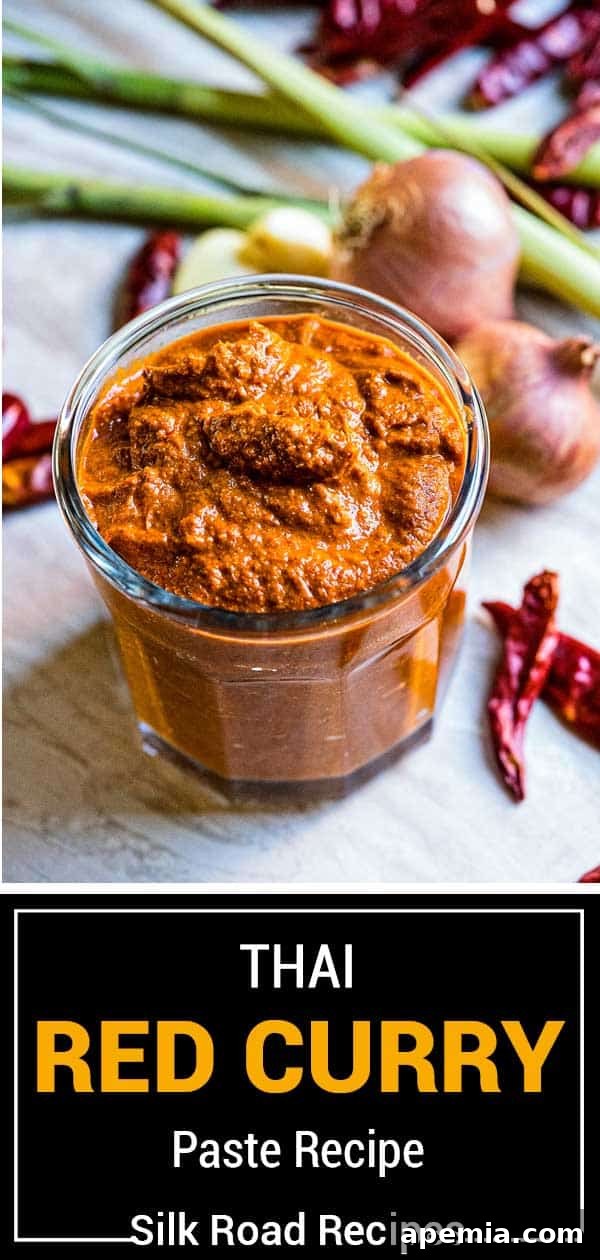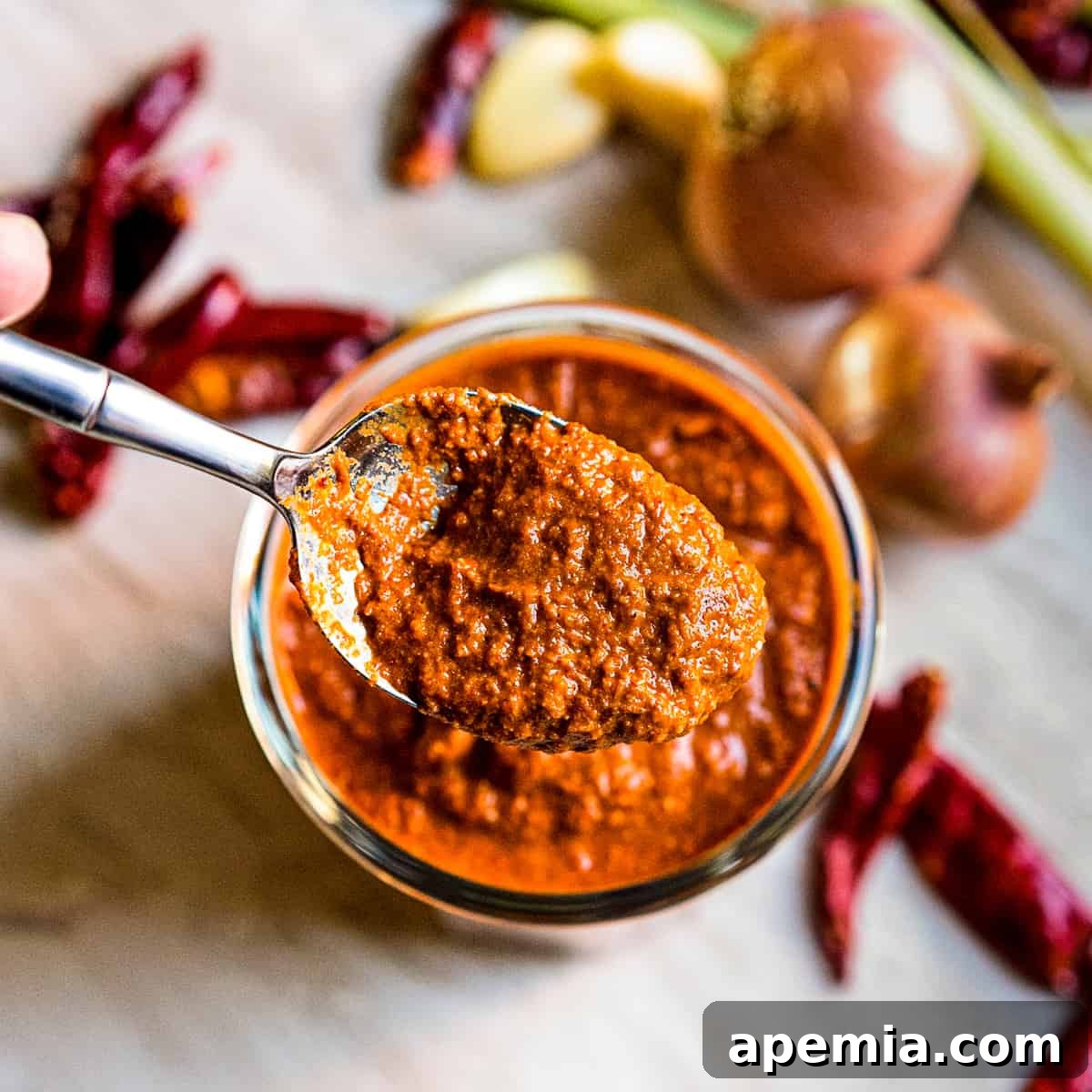
Thai red curry paste is an indispensable cornerstone of Southeast Asian cuisine, renowned for its complex flavor profile that goes far beyond mere heat. This vibrant condiment is surprisingly easy to create at home, requiring less than 15 minutes with a food processor or blender. It’s a harmonious blend of earthy, floral, and citrusy notes, meticulously crafted from fresh kaffir lime leaves, aromatic ginger and lemongrass, savory fish paste, and fiery dried red chiles.
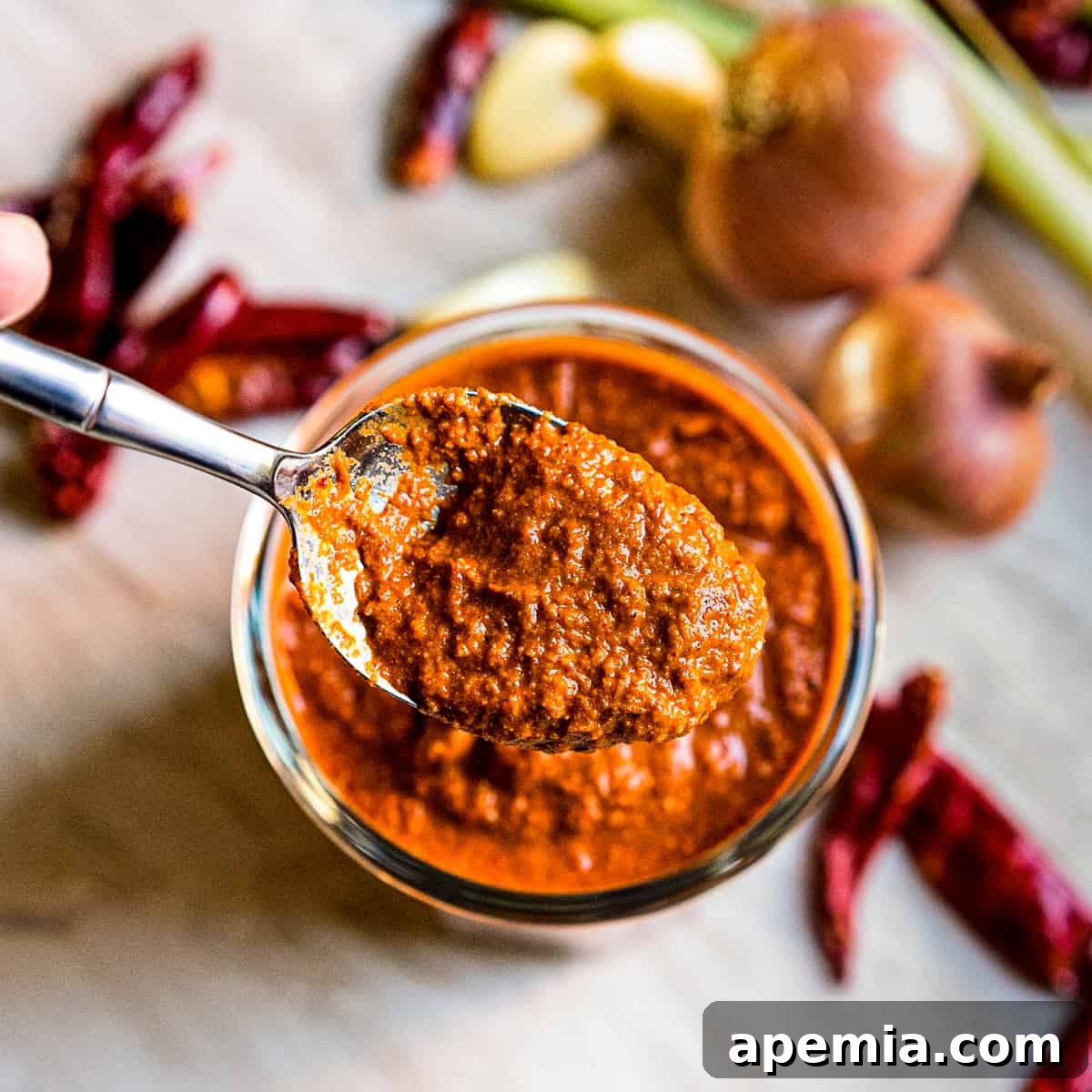
In the culinary world, the perfect sauce or condiment often elevates a good dish to a great one—it’s truly where the magic happens! To achieve that authentic and unforgettable taste, I often turn to trusted sources. This particular recipe for red curry paste draws inspiration from Sujet Saenkham’s highly acclaimed cookbook, Spice I Am. While staying true to the original essence, I’ve made minor adjustments to ensure ingredient accessibility for home cooks without compromising on flavor integrity. The result is a homemade paste that promises to hit every desired note.
This intricate spice blend is a symphony of flavors: intensely hot, deeply salty, refreshingly lemony, and wonderfully herbaceous. It’s a revelation compared to any jarred equivalent you might find on grocery store shelves. Moreover, crafting it yourself allows for complete customization; you can precisely adjust the saltiness and spiciness to perfectly suit your personal palate, or accommodate the preferences of your less spice-tolerant dinner guests. (For those who prefer a milder experience, a yellow curry blend might be a gentler introduction to Thai flavors.) This homemade paste is the secret behind many of my favorite dishes, including my celebrated Red Curry Chicken.
Table of Contents
- The Star of Heat: Red Chilies
- Essential Ingredient Notes and Substitutions
- How to Master Homemade Thai Red Curry Paste
- Recommended Tools for Perfect Paste
- Storing and Freezing Your Curry Paste
- Frequently Asked Questions About Red Curry Paste
- Thai Red Curry Paste Recipe
Beyond its iconic namesake dish, Thai red curry paste, along with its cousins like Panang and green curry pastes, forms the aromatic backbone of countless delectable and authentic homemade Thai dishes. Imagine the aromatic delight of grilled curry chicken, the rich creaminess of a yellow shrimp curry, or the delicate flavors of flaky baked halibut, all elevated by a spoonful of this incredible paste. Learning to make your own opens up a world of culinary possibilities.
Tip From Kevin
The Star of Heat: Red Chilies
Choosing the right dried red chiles is paramount for achieving the characteristic heat and depth of flavor in your Thai red curry paste. While there are many varieties like Japones chiles, dried Tien Tsin, and dried Bird’s Eye chiles, I most frequently use Tien Tsin chiles in Asian cooking. These slender, vibrant red chiles deliver a clean, sharp heat that is truly distinctive. If local availability is an issue, they are readily found online.
Another excellent option is Chiles de Arbol, often found in the Mexican food section of your local market. They offer a similar heat level and are a fantastic, accessible substitute. Generally, any small, dried red chile will work effectively, so don’t hesitate to experiment with what you can find, keeping in mind that the Scoville heat units can vary between types.
Essential Ingredient Notes and Substitutions
(For a complete list of ingredients and precise quantities, please refer to the recipe card below.)
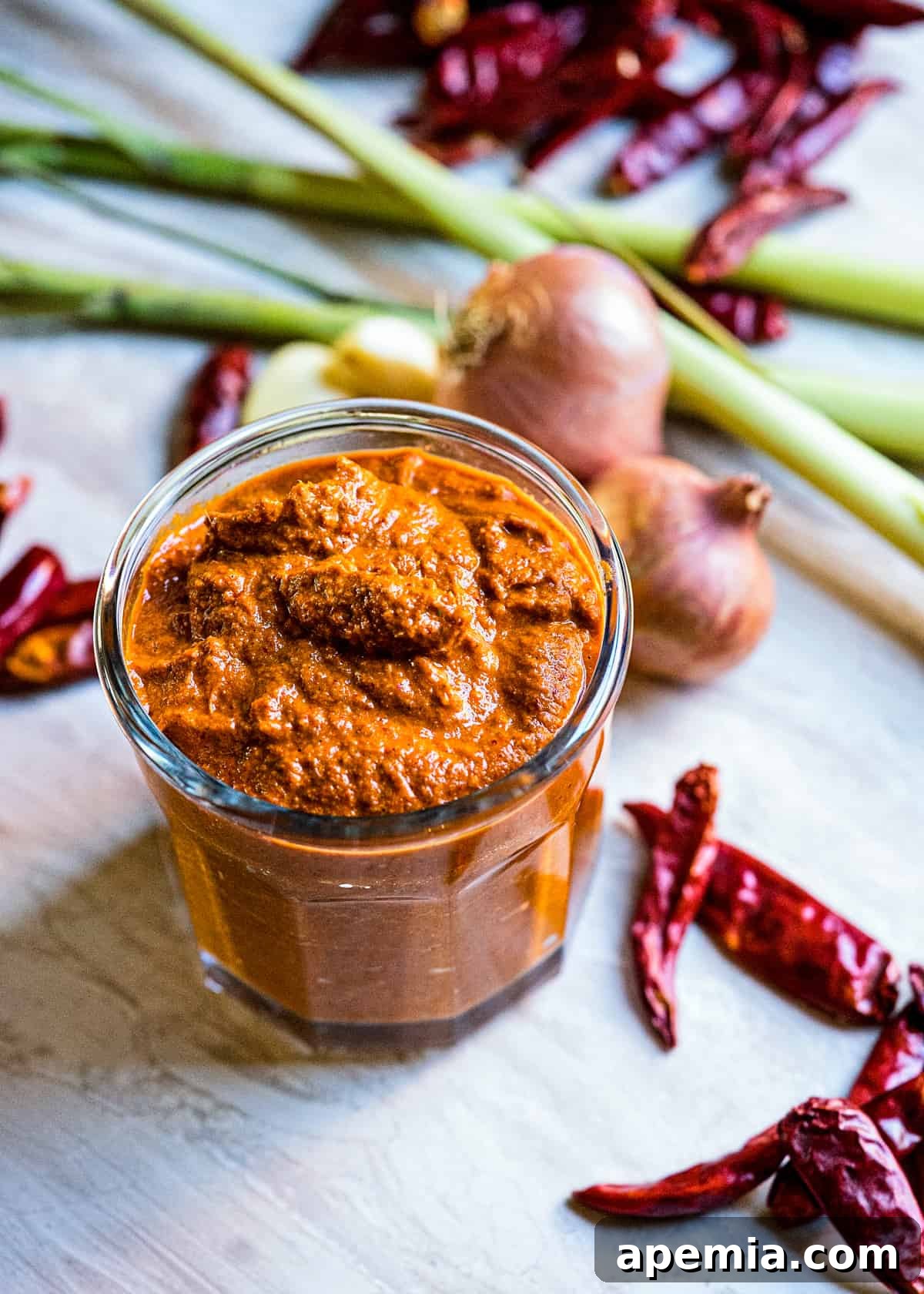
- Tien Tsin Chile Peppers: These potent chiles, also known as Chinese Red or Tianjin peppers, are the backbone of the paste’s heat. If you can’t source them, Chiles de Arbol from the Mexican section of your grocery store make an excellent substitute, offering comparable heat. The key is to use small, dried red peppers, not fresh ones, for the authentic flavor and color.
- Garlic: Begin with 4 cloves for your first batch. Thai cuisine often embraces generous amounts of garlic, so feel free to increase the quantity in subsequent batches if you desire a more pungent flavor. Fresh garlic is always preferred for its vibrant aroma.
- Lemongrass Stalks: This fragrant herb provides a distinct citrusy, floral note. When preparing, remove the tough outer leaves and slice off the root end. We primarily use the firm white part of the stalk, with just a small portion of the tender green.
- Shallots: Milder and sweeter than onions, shallots contribute a delicate oniony flavor. If shallots are unavailable, yellow or sweet onions can be used as alternatives, though they may alter the final flavor profile slightly.
- Fresh Ginger: While traditional Thai red curry paste often uses galangal, fresh ginger is an excellent and more accessible substitute, offering a similar pungent, spicy, and slightly sweet flavor. If using ginger paste, measure 1 tablespoon for every inch of fresh ginger required (so 6 tablespoons for this recipe).
- Shrimp Paste (Kapi): Known as kapi in Thailand, this fermented krill product is crucial for achieving an authentic Thai red curry paste. It provides a deep umami, salty, and subtly fishy flavor that cannot be replicated by other ingredients. It’s often found in specialty Asian markets and is a non-negotiable for true authenticity.
- Kaffir Lime Leaves: These highly aromatic leaves from the Thai lime tree impart a unique, intense citrus and floral fragrance. They are fundamental to the distinctive flavor of many Southeast Asian dishes. If fresh or frozen kaffir lime leaves are hard to find, a combination of lime and lemon zest can offer a reasonable, albeit not identical, substitute. Remember to remove the tough central vein before blending.
How to Master Homemade Thai Red Curry Paste
Making your own Thai red curry paste is a straightforward process that rewards you with incredible flavor. Follow these simple steps for a truly authentic experience:
- Soak the Chiles: Begin by placing the dried red chiles in a heatproof bowl. Cover them with hot water and allow them to soak for approximately 3 minutes. This softens the chiles, making them easier to blend into a smooth paste and helping to release their full flavor.
- Prepare the Lemongrass: To prepare the lemongrass, first slice off the tough root end. Then, remove the dry, fibrous outer leaves, revealing the tender, pale white stalk. We’ll use primarily this white section, along with a small portion of the lighter green part just above it. Slice the prepared stalks in half lengthwise for easier processing.
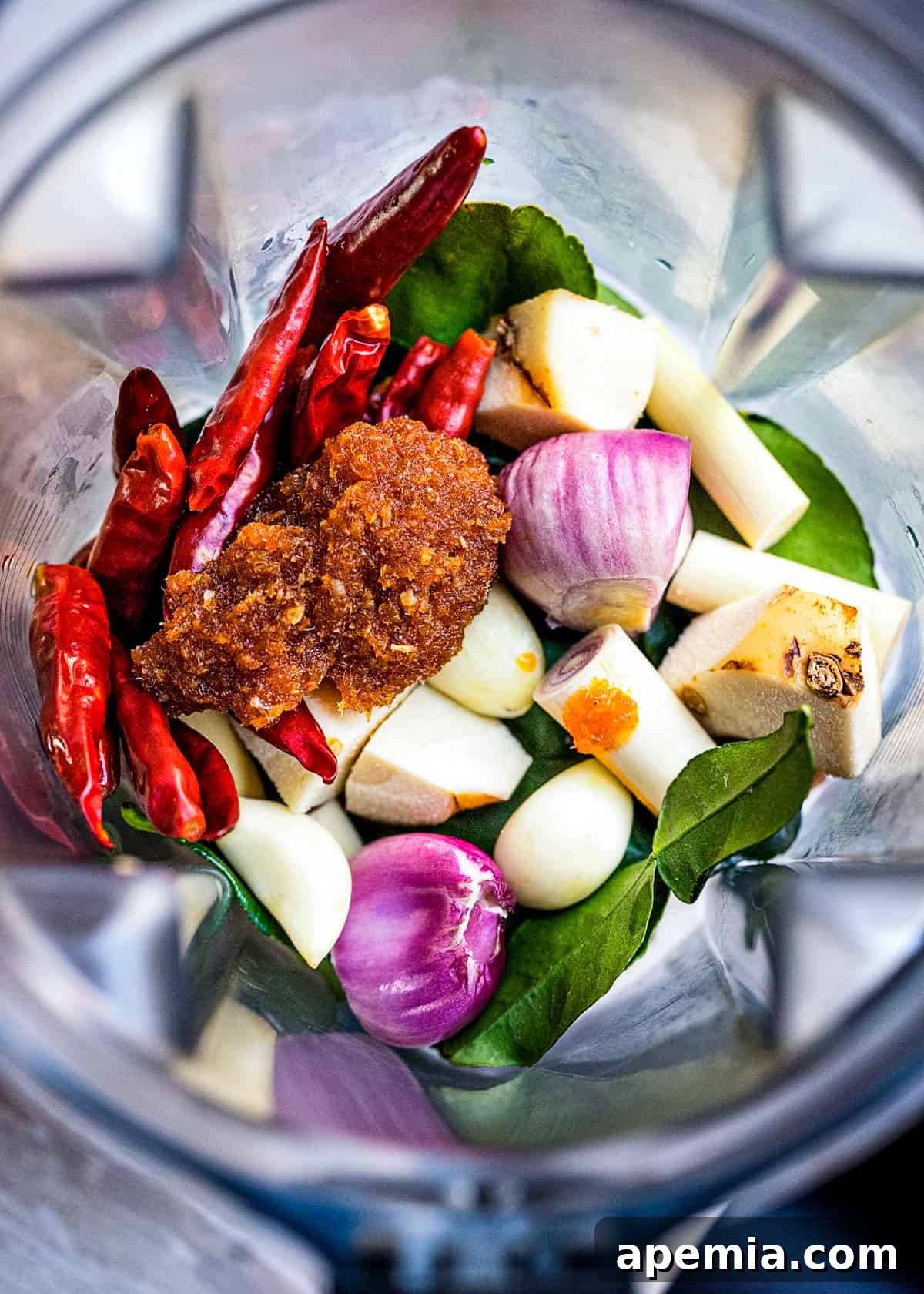
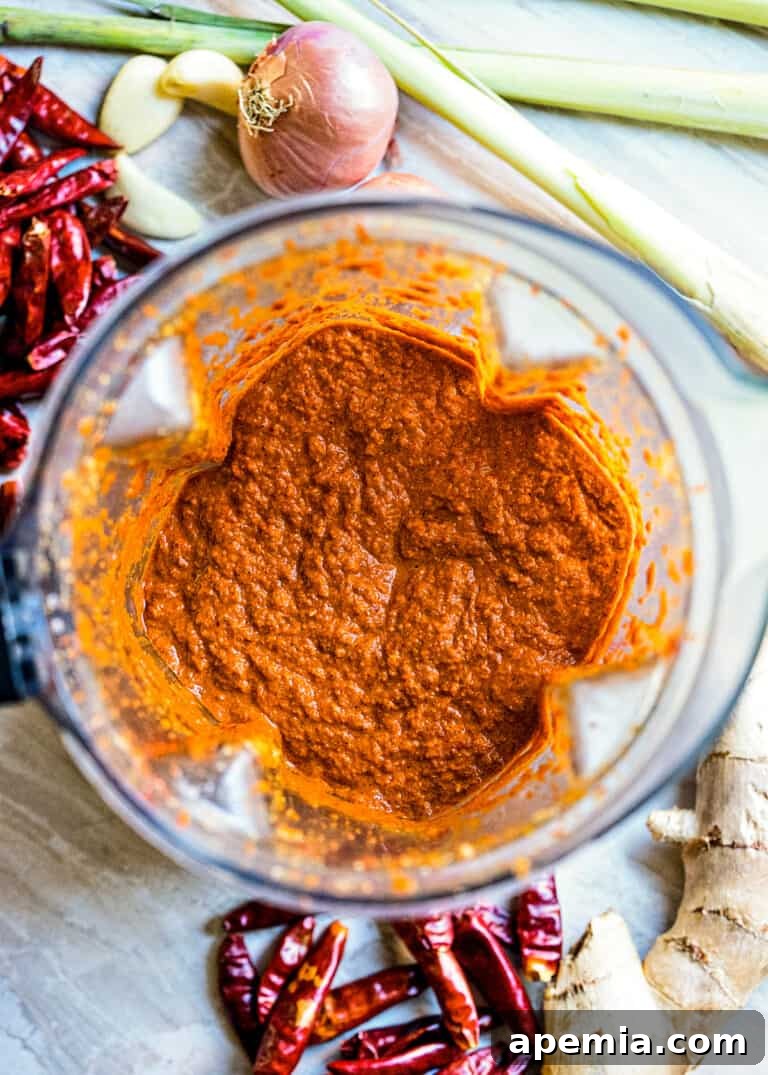
- Blend to Perfection: Transfer all the prepared ingredients – the softened, drained chiles, garlic, lemongrass, shallots, ginger, shrimp paste, and kaffir lime leaves – into a food processor or a high-powered blender. Begin pulsing until the ingredients are broken down into a coarse mixture. Gradually add water, one tablespoon at a time, pulsing after each addition, until the mixture transforms into a smooth, thick, and uniform paste. Depending on your machine and the dryness of your chiles, this could require up to ¼ cup of water.
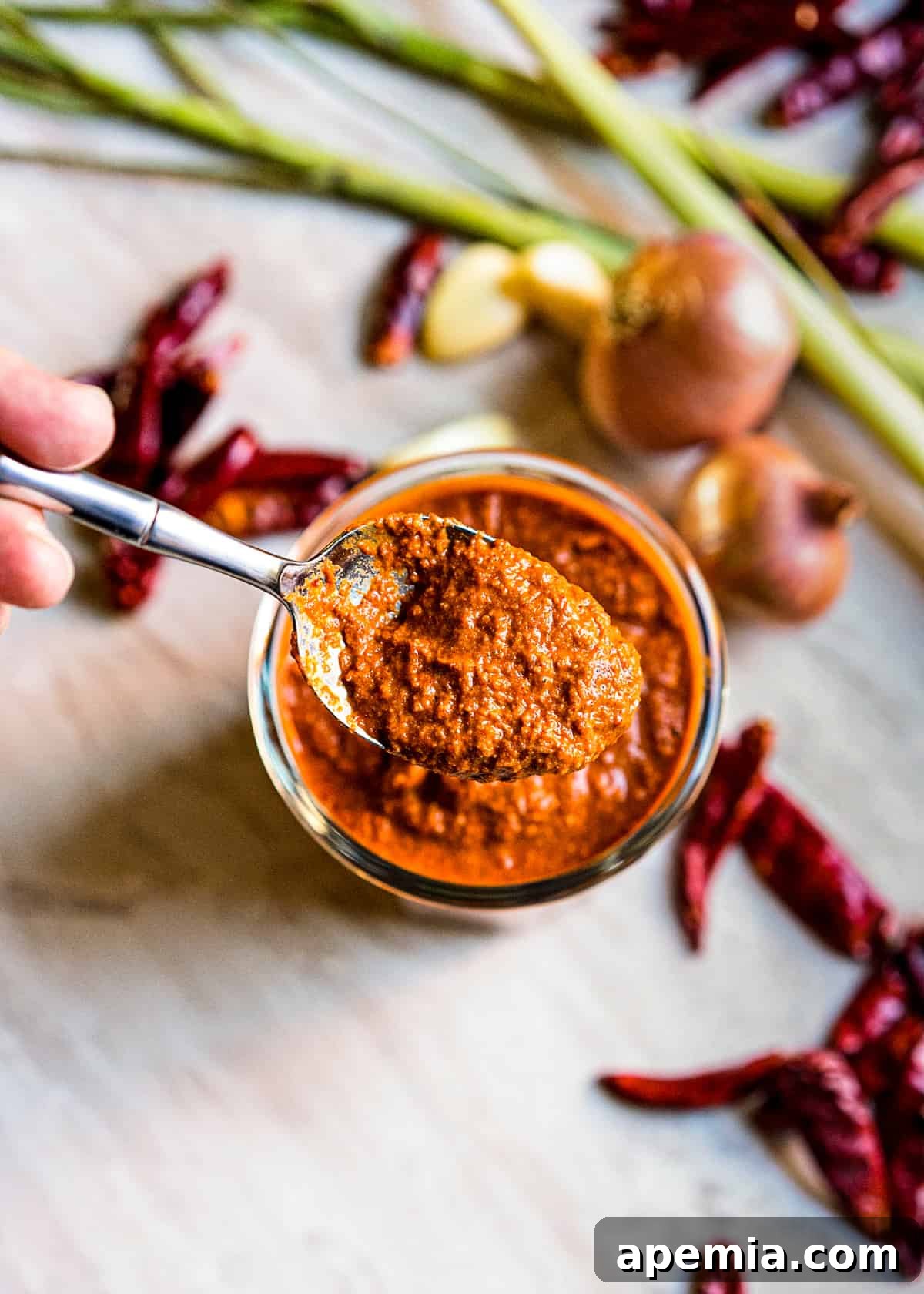
- Store for Future Feasts: Once your vibrant Thai red curry paste is ready, transfer it to an airtight container. It can be refrigerated for up to 5 days, ready to infuse your meals with authentic Thai flavor.
Recommended Tools for Perfect Paste
- Food Processor: A sturdy food processor is your best friend for making curry paste. Its powerful blades can break down tough ingredients like lemongrass and chiles efficiently.
- High-Powered Blender: Alternatively, a high-powered blender (like a Vitamix) can achieve an incredibly smooth paste, especially if you prefer a very fine consistency.
Storing and Freezing Your Curry Paste
One of the many advantages of making homemade Thai red curry paste is its excellent shelf life and freezer-friendliness. Freshly made paste will keep beautifully in an airtight container in the refrigerator for up to 5 days. This makes it perfect for meal prepping a few days in advance or having it on hand for quick weeknight dinners.
For those who love to cook in bulk or always want a supply of authentic flavor readily available, this red curry paste recipe is ideal for freezing. It freezes exceptionally well and maintains its quality for up to 2 months in the freezer. To freeze effectively, I recommend dividing the paste into an ice cube tray. This allows you to freeze it in convenient, pre-portioned cubes, which simplifies thawing and ensures you always use just the right amount for your recipes. Once the cubes are solid, pop them out, transfer them to a freezer-safe plastic bag, and don’t forget to scribble the date on the bag for easy tracking.
📌
Share this recipe on Pinterest!
Love this recipe? Help others discover it by sharing on Pinterest.
Frequently Asked Questions About Red Curry Paste
This is a common misconception! While many assume red curry is the spiciest due to its color, traditionally, green curries are often considered the hottest in Thai cuisine. This intensity comes from the use of fresh, fiery green Bird’s Eye chilies and other green varieties. Red curries typically fall somewhere in the middle of the spice spectrum, with yellow curry being the mildest. However, heat levels can vary significantly based on regional preferences in Thailand and the specific types and quantities of chiles used by individual cooks. For example, green curry in southern Thailand tends to be much spicier than in Bangkok.
That being said, don’t underestimate the heat of this homemade Thai red curry paste! Tien Tsin chile peppers, a common choice for red curry, pack a significant punch, ranging from 50,000 to 70,000 Scoville Heat Units (SHU). To put that into perspective, it’s easily 40,000 SHU or more higher than your average jalapeño pepper. This is precisely why Thai red curry paste is typically used as a foundational flavor in larger dishes like curries, soups, and stews, where ingredients like coconut milk and other aromatics help to balance and mellow its intense heat. If you’re using it directly as a rub on meat or vegetables, exercise caution and use it with a light hand.
The versatility of homemade Thai red curry paste is truly astounding, extending far beyond traditional curries. Its complex, aromatic, and spicy profile makes it an incredible flavor enhancer for a wide array of dishes. Beyond the obvious use in creamy red curries, here are some fantastic applications:
- Broth-based Dishes: A small spoonful can transform simple broths or soups. I often add a touch to ramen or pho for an extra layer of spice and depth.
- Stir-fries and Fried Rice: Incorporate it directly into your stir-fry sauce or fried rice mixture for an instant burst of Thai flavor.
- Marinades and Rubs: Use it as a marinade for chicken, beef, pork, or tofu before grilling, baking, or pan-frying. It creates a beautiful crust and infuses the protein with incredible taste.
- Salad Dressings: Whisk a small amount into a vinaigrette for a spicy, tangy, and exotic salad dressing.
- Dips and Spreads: Blend it into mayonnaise, yogurt, or cream cheese for a flavorful dip for vegetables, crackers, or sandwiches.
- Sautéed Vegetables: Toss vegetables like green beans, broccoli, or bell peppers with a little paste while sautéing for a quick and easy side dish.
Honestly, finding a truly “good” substitute for authentic Thai red curry paste is challenging because its unique blend of fresh herbs and spices creates such a distinctive flavor profile. Store-bought red curry pastes can vary widely in quality and authenticity, often lacking the vibrancy of homemade.
Your best bet, if you absolutely cannot make your own, is to use another type of Thai curry paste. Yellow curry paste is generally milder and sweeter, while green curry paste tends to be hotter and more herbaceous. Panang curry paste is quite similar to red curry, but often boasts a richer, nuttier flavor and a slightly thicker consistency, offering a bit more complexity and aroma than your average red curry paste. While these alternatives can provide a similar base, they won’t replicate the exact nuanced flavor of a homemade red curry paste.
Thai Red Curry Paste
2 cups
15
15
Print Recipe
Video
A video showcasing the preparation of Thai Red Curry Chicken, using homemade Red Curry Paste, would typically be displayed here.
Video Title: Thai Red Curry Chicken
Description: Red curry chicken is a spicy, creamy dish full of intoxicating Thai herbs and spices that you can make at home in 40 minutes — or less!

Watch the video here
Ingredients
-
▢
40 small dried red chiles (See Note 1) -
▢
4 cloves garlic -
▢
3 lemongrass stalks -
▢
2 shallots ends cut and outer skin removed -
▢
6 inch fresh ginger peeled and chopped into 3 pieces -
▢
2 tbsp shrimp paste -
▢
6 leaves kaffir lime -
▢
1/4 cup water
Instructions
-
Soften the chiles by placing them in a bowl with hot water for 3 minutes. While they soak, prepare the lemongrass: trim the root end and peel off the tough outer leaves, using only the white part and a little of the tender green. Cut the prepared lemongrass stalks in half.
-
In a food processor or high-powered blender, combine the drained chiles, garlic cloves, prepared lemongrass, shallots, fresh ginger, shrimp paste, and kaffir lime leaves. Pulse the ingredients until they are well broken down. Then, continue to blitz, adding water one tablespoon at a time, until a thick, smooth paste forms. You may not need the full 1/4 cup of water, or you might need it all, depending on the ingredients’ moisture content and your desired consistency.
-
Transfer the finished paste to an airtight container. It can be stored in the refrigerator for up to 5 days. For longer storage, freeze the paste in ice cube trays, then transfer the frozen cubes to a plastic freezer bag. It will keep well in the freezer for up to 2 months.
Notes
- For the small dried red chiles, I prefer Tien Tsin chile peppers (also known as Chinese Red Peppers or Tianjin peppers), which can be found in the Asian food section of your market or at any Asian specialty store. As an excellent substitute, you can use Chiles de Arbol, typically found in the Mexican food section of your local market.
- This recipe is adapted from Sujet Saenkham’s esteemed cookbook, Spice I Am, with modifications for ingredient accessibility.
Nutrition
The information shown is an estimate provided by an online nutrition calculator. It should not be considered a substitute for a professional nutritionist’s advice.
Have You Made This Recipe? Let Me Know on Instagram
Tag @keviniscooking or tag me #keviniscooking!