
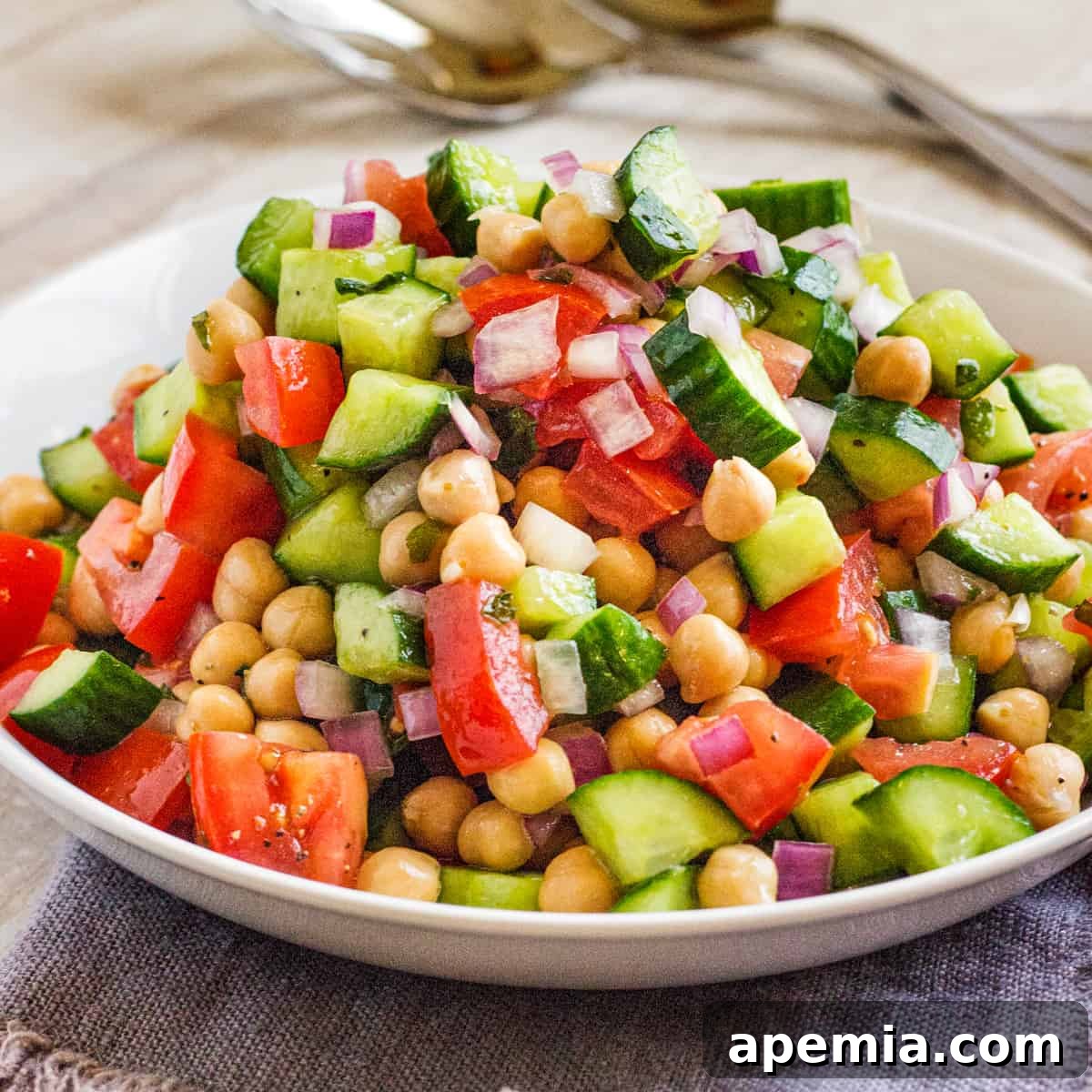
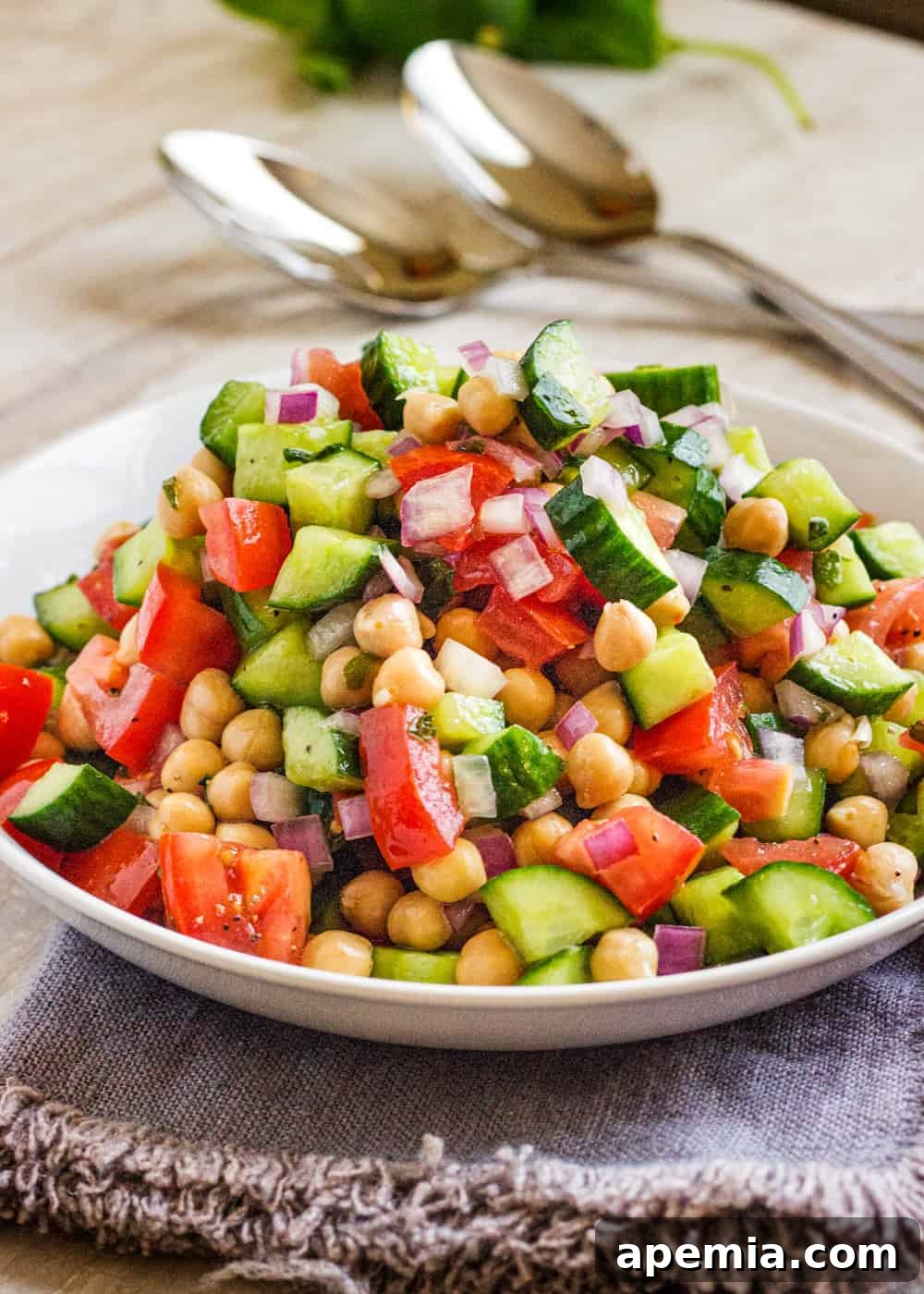
Brighten up your day and elevate your culinary experience with this vibrant recipe for Shirazi Salad with Chickpeas. This crisp, refreshing, and incredibly easy-to-make salad can be prepared in under ten minutes, requiring only a handful of simple, fresh ingredients. Bursting with lively, zesty flavors, it offers a satisfying and wholesome meal or side dish that will energize you without feeling heavy.
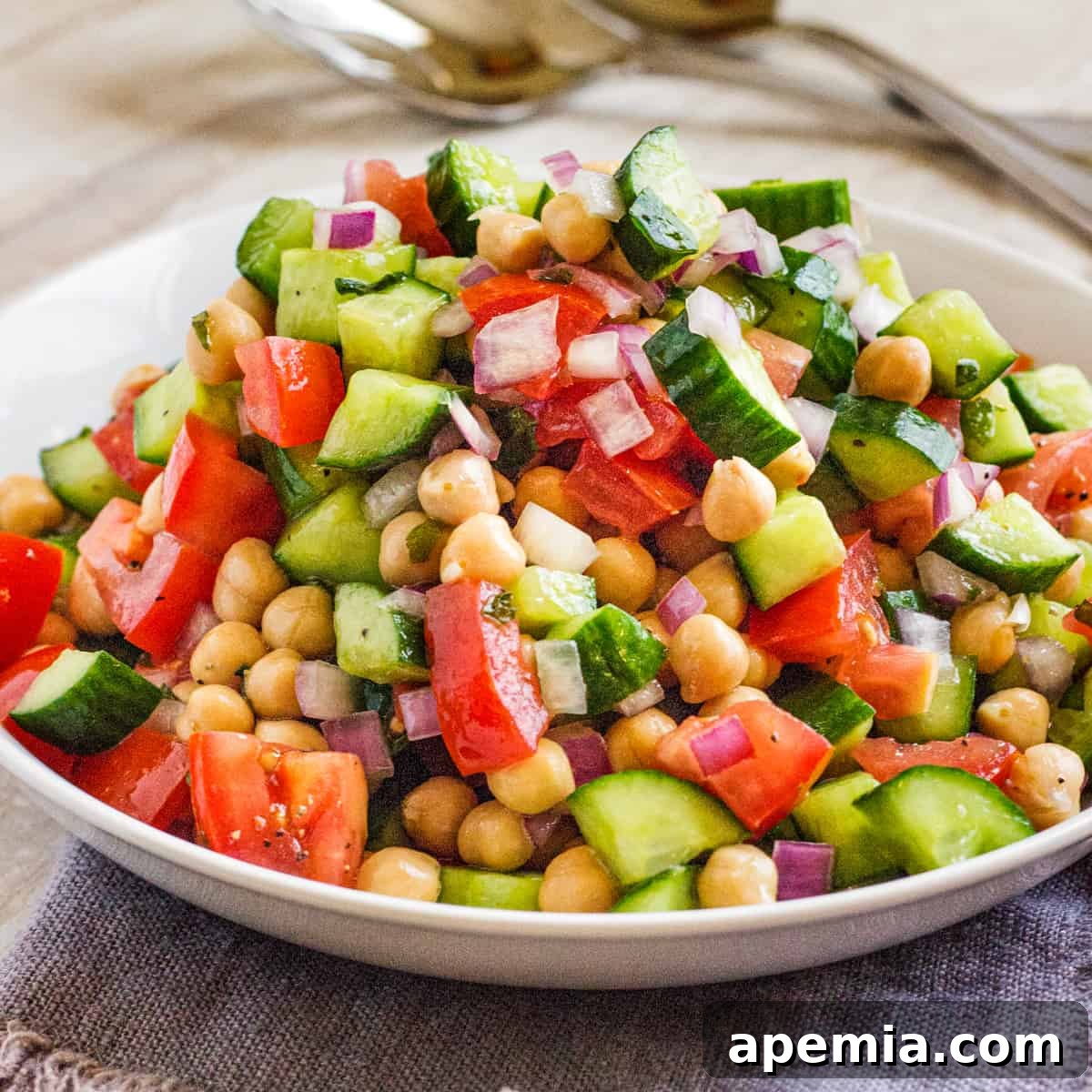
Are you searching for an effortlessly delicious, endlessly versatile, and truly captivating side dish that impresses every time? Look no further! Today’s recipe for Shirazi Salad, enhanced with the hearty addition of chickpeas, is a treasured gem from the rich tapestry of Middle Eastern cuisine. It’s a remarkably simple yet sensational fusion of freshly diced vegetables, aromatic herbs, high-quality olive oil, and an exhilarating burst of citrus.
Preparing this salad is surprisingly straightforward, proving that extraordinary flavors don’t always demand complex techniques. All you truly need is to finely chop your chosen vegetables, introduce the nourishing chickpeas, gently mix in the vibrant dressing, and allow it a brief period to marinate. The delightful outcome is a fabulously fresh, incredibly zingy, and deeply satisfying side dish that complements almost any meal, from a casual weeknight dinner to an elegant gathering.
Consider pairing this delightful salad with robust meat dishes such as my Chicken Koobideh, the tender Shredded Lamb Shawarma, or savory Beef and Lamb Koobideh Kabobs. Its refreshing profile cuts through richer flavors beautifully. Beyond its role as a perfect accompaniment, Shirazi salad also shines as a superb vegetarian lunch option or a fulfilling snack all on its own. I often prepare a larger batch at the beginning of the week, allowing me to enjoy its evolving flavors for days.
What Exactly is Shirazi Salad?
Shirazi salad derives its evocative name from Shiraz, a historic and culturally significant city nestled in southwestern Iran. This region is famed for its gardens, poetry, and, of course, its exquisite culinary traditions.
While it shares a similar chopped vegetable foundation with my Mediterranean chopped veggie salad, this particular rendition stands out with the inclusion of chickpeas, which provide a significant boost of plant-based protein, making it more substantial and satisfying.
Shirazi salad is a quintessential Persian side dish, cherished for its simplicity and the incredible burst of fresh flavors it delivers. It’s a staple on Iranian tables, often served with grilled meats, rice dishes, or alongside stews. The key to its appeal lies in the meticulous dicing of vegetables into uniform, small pieces, ensuring a delightful texture in every bite. This isn’t just a salad; it’s an integral part of Persian culinary heritage, embodying the freshness and vibrancy characteristic of the region’s produce.
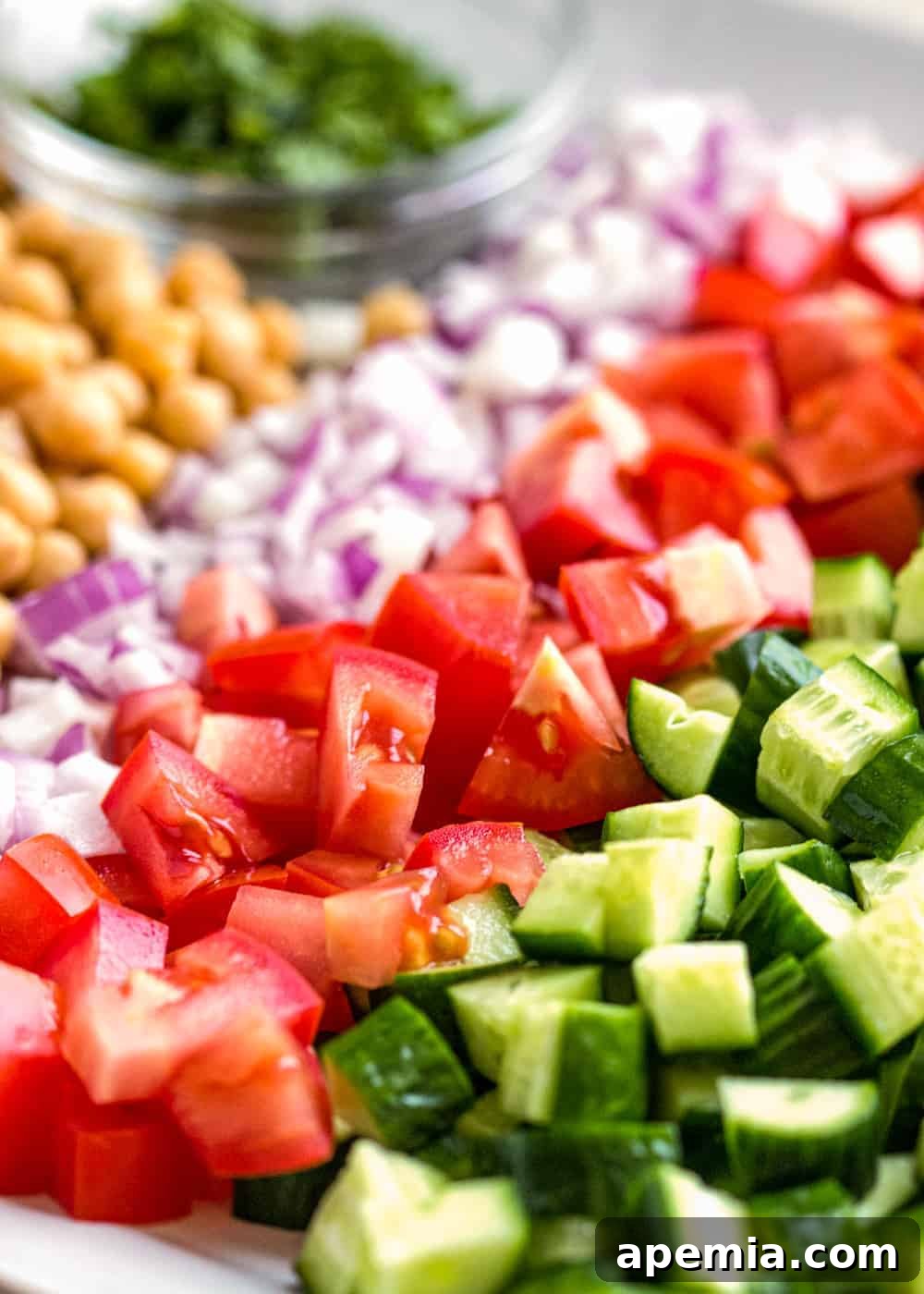
Key Ingredients & Expert Tips for the Perfect Shirazi Salad
Crafting an exceptional Shirazi salad begins with selecting the freshest, highest-quality ingredients. Each component plays a vital role in creating its signature taste and texture. Here’s a detailed look at what you’ll need and how to make the best choices:
- Cucumbers: Persian cucumbers are the star here. Their thinner skins, minimal seeds, and lower water content result in an incomparably crisp texture and a wonderfully mild flavor. If Persian cucumbers are hard to find, English cucumbers or any other seedless variety make an excellent substitute, ensuring that watery sogginess doesn’t dilute your salad’s vibrant taste.
- Tomatoes: Opt for ripe, yet firm Roma tomatoes. Their robust texture holds up beautifully when diced, preventing the salad from becoming overly watery. While other tomato varieties can work, ensure they are firm enough to maintain their shape. Removing the seeds is optional but can help reduce excess moisture and intensify the tomato flavor.
- Chickpeas: Our unique addition! Chickpeas are a game-changer for this recipe, introducing an earthy depth, a pleasing texture, increased volume, and a significant protein boost. This transforms the salad from a simple side into a more substantial and satisfying dish. Canned chickpeas are convenient, but for an even fresher taste, consider preparing them from scratch using my guide on how to cook chickpeas.
- Onion: Red onion is preferred for its beautiful color, crisp texture, and pleasantly sweet, peppery bite. If you find red onion too strong, a quick soak in cold water for 10-15 minutes can mellow its pungency. Yellow or white onions can also be used, though they offer a slightly different flavor profile.
- Citrus Juice: The heart of the dressing! Freshly squeezed lemon juice, lime juice, or a harmonious blend of both is essential. This provides the bright acidity, tangy sourness, and refreshing zing that truly brings the salad to life, balancing the richness of the vegetables. Always use fresh juice for the best results; bottled juices simply don’t compare.
- Mint: This subtly sweet and wonderfully cooling herb is indispensable. Fresh mint leaves, finely chopped, provide an aromatic counterpoint that perfectly balances and enhances all the other flavors in the dish. If fresh mint isn’t readily available, one tablespoon of dried mint can be used, though fresh is highly recommended for its potent fragrance and flavor.
- Olive Oil: A good quality, light, and nutty olive oil serves as the perfect vehicle, incorporating and enhancing the flavors of the dressing and coating the vegetables beautifully. Choose an extra virgin olive oil for its superior taste and health benefits.
- Salt: Essential for seasoning, salt brings all the individual flavors into harmony, making them truly sing. Use kosher salt for a clean taste.
- Pepper: A dash of freshly cracked black pepper adds a subtle sharp, peppery heat that completes the flavor profile.
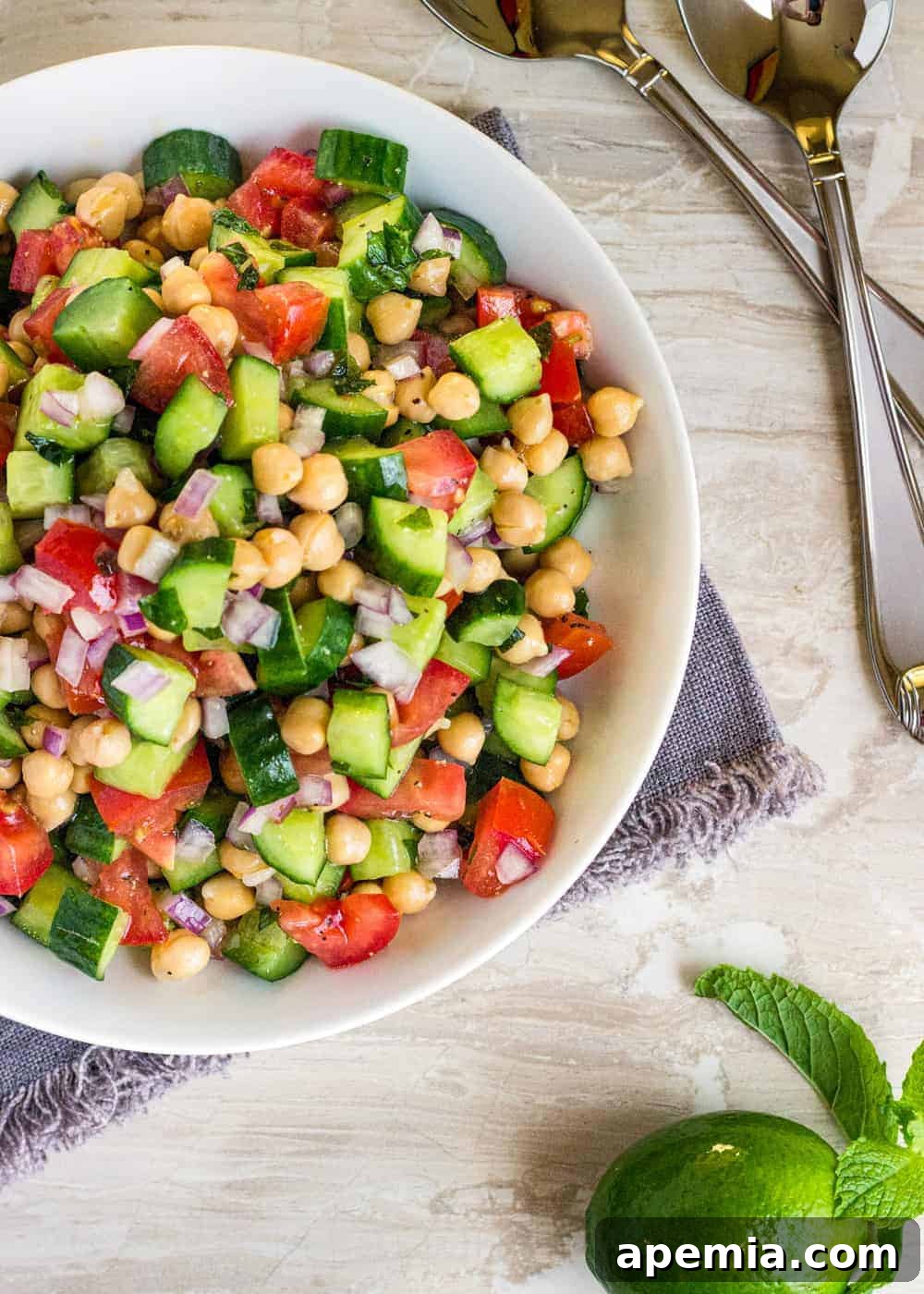
Recipe Video
For a detailed visual guide on how to prepare the dressing and assemble this exquisite salad, we invite you to watch the step-by-step video conveniently located in the recipe section at the bottom of this post.
Crafting Your Shirazi Salad: A Step-by-Step Guide
Creating this refreshing Shirazi salad is an enjoyable process that yields delicious results. Follow these simple steps for a perfect outcome:
- Prepare the Vegetables: Begin by dicing the cucumbers, tomatoes, and red onion into small, uniform pieces. Aim for consistency in size, as this not only enhances the visual appeal but also ensures an even distribution of flavor and texture in every bite. Transfer the meticulously diced vegetables and the cooked chickpeas into a large mixing bowl. Toss gently to combine, then set aside.
- Whisk the Dressing to Perfection: In a separate, smaller bowl, combine the high-quality olive oil, freshly squeezed citrus juice (lemon, lime, or a mix), the fragrant chopped mint, a pinch of kosher salt, and a generous crack of fresh black pepper. Whisk these ingredients vigorously until they are well emulsified and the dressing appears slightly cloudy and cohesive. This ensures that the flavors are thoroughly blended before being introduced to the vegetables.
- Combine All Ingredients: Now, carefully pour the prepared citrus dressing over the diced vegetables and chickpeas in the large bowl. Using a gentle hand, toss all the ingredients together thoroughly. The goal is to ensure every piece of vegetable and every chickpea is evenly coated with the vibrant dressing, maximizing flavor infusion.
- Allow to Marinate: Once combined, cover the bowl tightly with plastic wrap or a lid and place it in the refrigerator to marinate. A minimum of 30 minutes is recommended, but for a truly profound depth of flavor, allow the salad to marinate for 1 to 2 hours. The longer the salad marinates, the more time the vegetables have to absorb the zesty dressing, resulting in a more harmonious and flavorful experience.
- Serve and Savor: Before serving, give the salad a final gentle stir to redistribute the dressing and ensure every mouthful is packed with flavor. This Shirazi salad is wonderfully versatile; enjoy it as a light and healthy main course, a revitalizing side dish, or a protein-packed snack. Its fresh taste is a welcome addition to any meal.
The Rich History and Origin of Shirazi Salad
As its name proudly suggests, Shirazi salad hails from Shiraz, a magnificent city in southern Iran renowned for its historical significance and lush landscapes. While the concept of a fresh, chopped vegetable salad is ancient, the current form of this beloved recipe is a relatively recent creation in the grand scope of culinary history.
Intriguingly, the tomato, a cornerstone ingredient in modern Shirazi salad, did not make its grand debut in the region until the late 1800s. Before then, the salad would have featured other local produce. It’s a fascinating thought that this vibrant fruit, originally cultivated by the Aztecs in the Americas, journeyed across continents to become an essential component of Persian cuisine. This global exchange of ingredients continuously enriches traditional recipes, giving us the delicious variations we enjoy today.
Traditional Components vs. Modern Adaptations
Traditionally, Shirazi salad is a medley of finely diced Persian cucumbers, ripe Roma tomatoes, crisp onions, and a generous mix of fresh herbs, all elegantly tossed in a tangy dressing. While the specific herbs might vary, classic combinations invariably include refreshing mint, fragrant cilantro, fresh parsley, and sometimes a hint of dill, each contributing to its unique aromatic profile.
In its most authentic Iranian form, the dressing is crafted using ab-e-ghooreh, a special sour grape juice. This ingredient delivers an unparalleled tartness and depth. However, ab-e-ghooreh can be quite challenging to source outside of Iran. Consequently, most contemporary versions of this salad, particularly in the United States and other Western countries, expertly substitute it with fresh lemon or lime juice, which admirably replicate the bright, zesty character essential to the dish.
You’ll also notice that this particular recipe incorporates chickpeas, which, while not strictly traditional, are a fantastic addition. They significantly enhance the salad’s heartiness and satiety, transforming it into a more filling and protein-rich meal. Many modern interpretations embrace such creative additions. I’ve even seen innovative versions featuring pomegranate seeds, which add a delightful burst of sweetness and crunch, though we’re sticking to the classic with a chickpea twist today!
Health Benefits of Shirazi Salad with Chickpeas
Beyond its incredible taste, Shirazi salad is a powerhouse of nutrition. It’s an excellent source of essential vitamins, minerals, and dietary fiber, thanks to its abundance of fresh vegetables. Cucumbers contribute to hydration and contain vitamin K, while tomatoes are rich in antioxidants like lycopene and vitamin C. Onions offer anti-inflammatory compounds, and fresh mint is known for its digestive benefits.
The addition of chickpeas further boosts its nutritional profile, providing significant plant-based protein and fiber, which are crucial for digestive health, blood sugar regulation, and prolonged satiety. Olive oil, a staple in Mediterranean and Middle Eastern diets, adds healthy monounsaturated fats. This salad is naturally low in calories and high in nutrients, making it an ideal choice for a healthy lifestyle. It’s a wonderful way to increase your daily intake of fresh produce and enjoy a meal that’s both delicious and incredibly good for you.
How Long Does Shirazi Salad Last?
When stored properly in an airtight container in the refrigerator, leftover Shirazi salad will maintain its freshness and vibrant flavors for approximately 3 to 5 days. It’s important to keep an eye on the cucumbers and tomatoes, as these vegetables tend to soften and become mushy over time, particularly after being dressed. For the best texture and taste, consuming it within the first 2-3 days is ideal.
This recipe is generally not suitable for freezing. The high water content in both cucumbers and tomatoes means they will inevitably lose their crisp texture and turn unpleasantly soft and watery upon thawing. Freezing would compromise the very essence of what makes this salad so delightful. For optimal enjoyment and to prevent waste, I recommend preparing smaller batches more frequently rather than freezing, allowing you to savor it fresh within a week.
Subscribe to my Newsletter and follow me on Facebook, Pinterest, Instagram, and YouTube for all my latest recipes and videos.
Shirazi Salad with Chickpeas
★
★
★
★
4
10 mins
10 mins
Print Recipe
Video
Watch the recipe video here to see the preparation process.
Ingredients
- 5 Persian cucumbers (See Note 1)
- 4 Roma tomatoes, diced
- 2 cups cooked chickpeas
- 1/2 medium red onion, diced
- 1/3 cup fresh lemon or lime juice
- 10 leaves fresh mint, chopped (See Note 2)
- 1 tbsp olive oil
- 1/8 tsp salt
- 1/8 tsp black pepper
Instructions
- Dice the tomato, cucumber, and onion into small, uniform pieces (See Note 3). In a bowl, mix the chopped vegetables with chickpeas. Set aside.
- Whisk together the citrus juice, olive oil, mint, kosher salt, and freshly cracked black pepper until well combined.
- Pour the dressing over the vegetables and toss gently to coat thoroughly.
- Refrigerate and allow to marinate for at least 30 minutes before serving (See Note 4).
Notes
- Substitute 2 English cucumbers if Persian cucumbers are unavailable; ensure they are seedless. Peeling is optional, but Persian cucumbers have very thin skins.
- If fresh mint is not available, substitute with 1 tablespoon of dried mint.
- Maintaining uniform dice size for all vegetables is crucial for aesthetic appeal and consistent texture in every bite.
- The longer the salad marinates, the more fully the flavors will develop and meld. This salad is excellent served alongside grilled meats or enjoyed as a light meal on its own.
Nutrition
Calories: 198kcal
|
Carbohydrates: 30g
|
Protein: 9g
|
Fat: 6g
|
Saturated Fat: 1g
|
Sodium: 84mg
|
Potassium: 532mg
|
Fiber: 8g
|
Sugar: 8g
|
Vitamin A: 612IU
|
Vitamin C: 19mg
|
Calcium: 64mg
|
Iron: 3mg
The information shown is an estimate provided by an online nutrition calculator. It should not be considered a substitute for a professional nutritionist’s advice.
Salad
Middle Eastern, Persian
Kevin
Have You Made This Recipe? Let Me Know on Instagram!
Tag @keviniscooking or use the hashtag #keviniscooking!
Frequently Asked Questions About Shirazi Salad
- Is Shirazi Salad vegan and gluten-free?
- Yes, this Shirazi salad recipe, especially with chickpeas, is naturally vegan, vegetarian, and gluten-free, making it an excellent choice for a wide range of dietary preferences. Always ensure your chickpeas are prepared without animal products if making them from scratch, and check for any cross-contamination if severe allergies are a concern.
- Can I make Shirazi Salad ahead of time?
- Absolutely! Shirazi salad benefits greatly from marinating. You can prepare it up to 2-3 hours in advance to allow the flavors to meld beautifully. If preparing further ahead, store the chopped vegetables and dressing separately and combine them about an hour before serving to maintain optimal crispness.
- What’s the best way to dice the vegetables uniformly?
- For the best texture and presentation, aim for small, consistent dice, ideally around 1/4 inch (0.6 cm). Use a sharp knife and take your time. For cucumbers, you can slice them into rounds, then stack and slice into matchsticks, and finally dice. For tomatoes, cut into wedges, remove seeds if desired, then slice and dice. For onions, halve and make horizontal and vertical cuts before dicing.
- Can I add other herbs or vegetables?
- While the core ingredients are classic, feel free to experiment! Fresh parsley or dill can be added along with mint for a richer herbal aroma. Some variations include bell peppers, radishes, or even a sprinkle of sumac for an extra tangy note. For a sweeter touch, a handful of pomegranate seeds can be a delightful addition.
- What is ab-e-ghooreh, and where can I find it?
- Ab-e-ghooreh is a sour grape juice traditionally used in Persian cuisine, particularly in Shirazi salad, for its distinct tartness. It can be challenging to find outside of specialty Middle Eastern grocery stores or online. If you can’t find it, fresh lemon or lime juice is the most common and effective substitute, providing a similar bright, acidic profile.
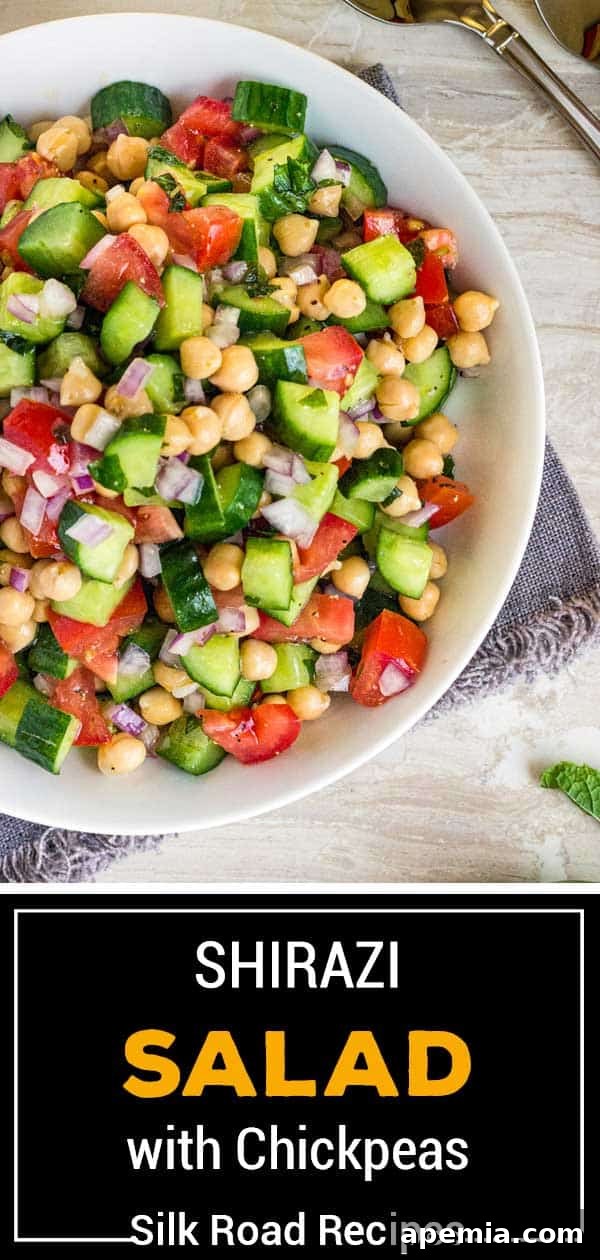
We hope this comprehensive guide inspires you to create your own delightful Shirazi Salad with Chickpeas. It’s more than just a salad; it’s a celebration of fresh ingredients, vibrant flavors, and an homage to the rich culinary traditions of Persia. Enjoy the process of bringing this bright, healthy, and incredibly satisfying dish to your table!