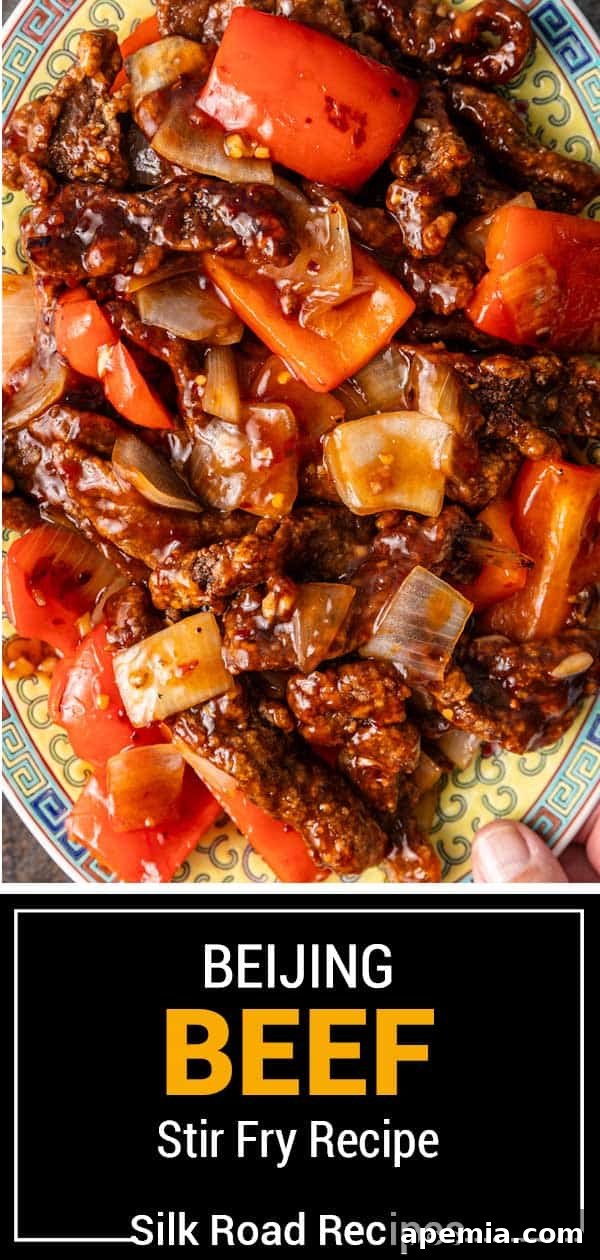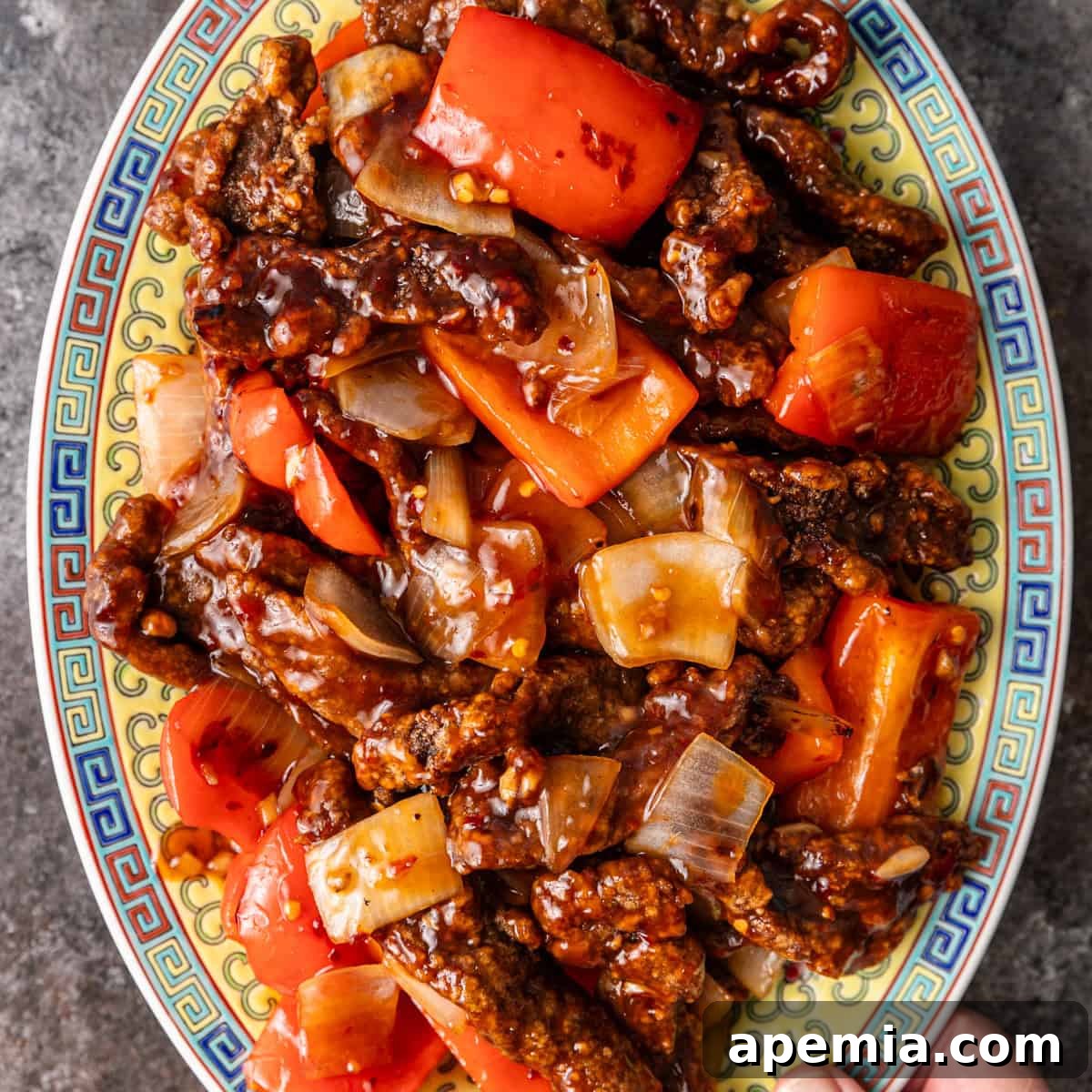
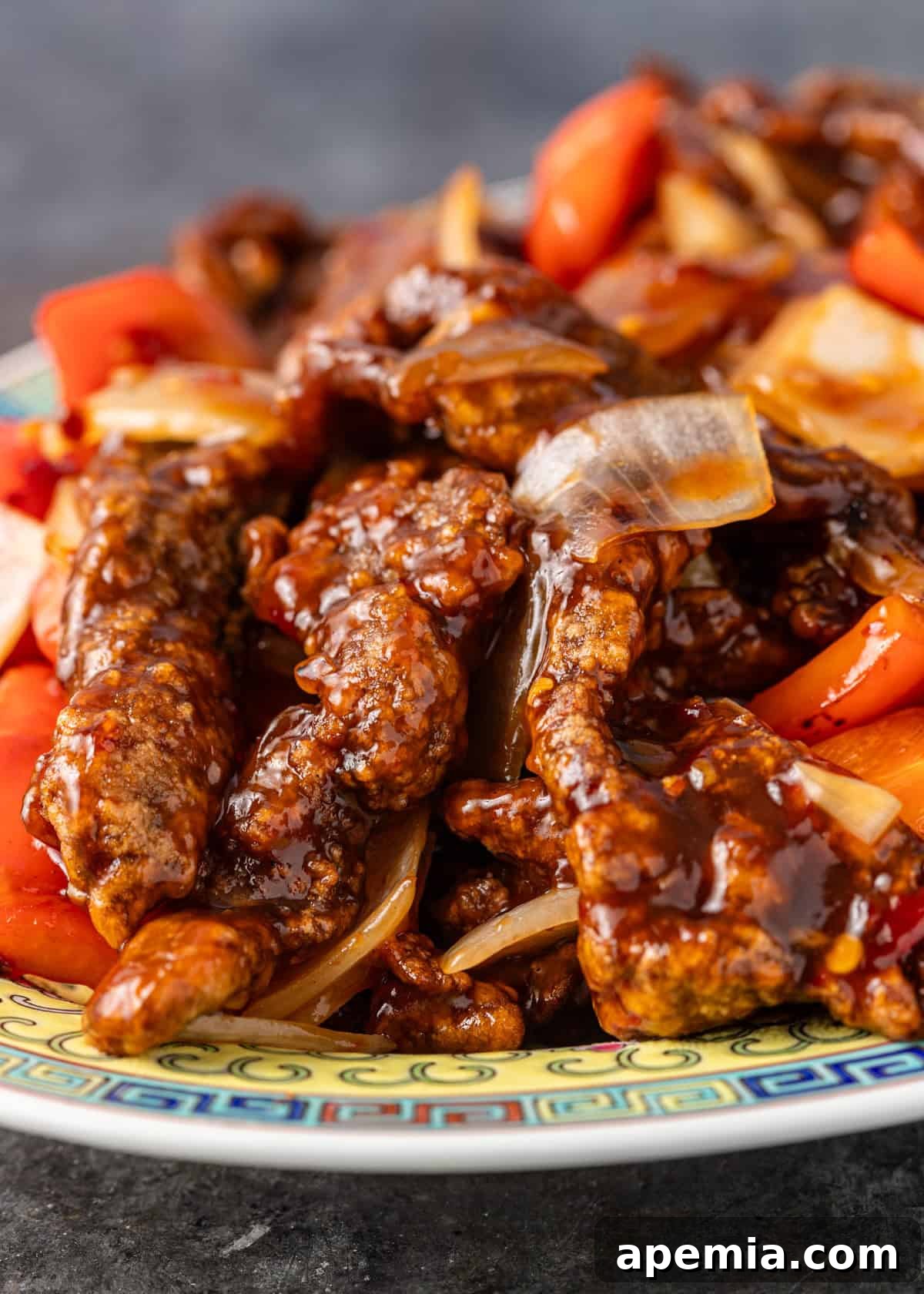
Beijing Beef Stir Fry is a phenomenal Chinese-American dish, celebrated for its irresistible combination of crispy, tender beef strips, vibrant sautéed vegetables, and a signature sweet and tangy sauce. This iconic takeout favorite, once reserved for restaurant visits, can now be recreated in your kitchen faster than you can order delivery. Prepare for an explosion of flavors that will make this homemade version a new staple in your meal rotation!
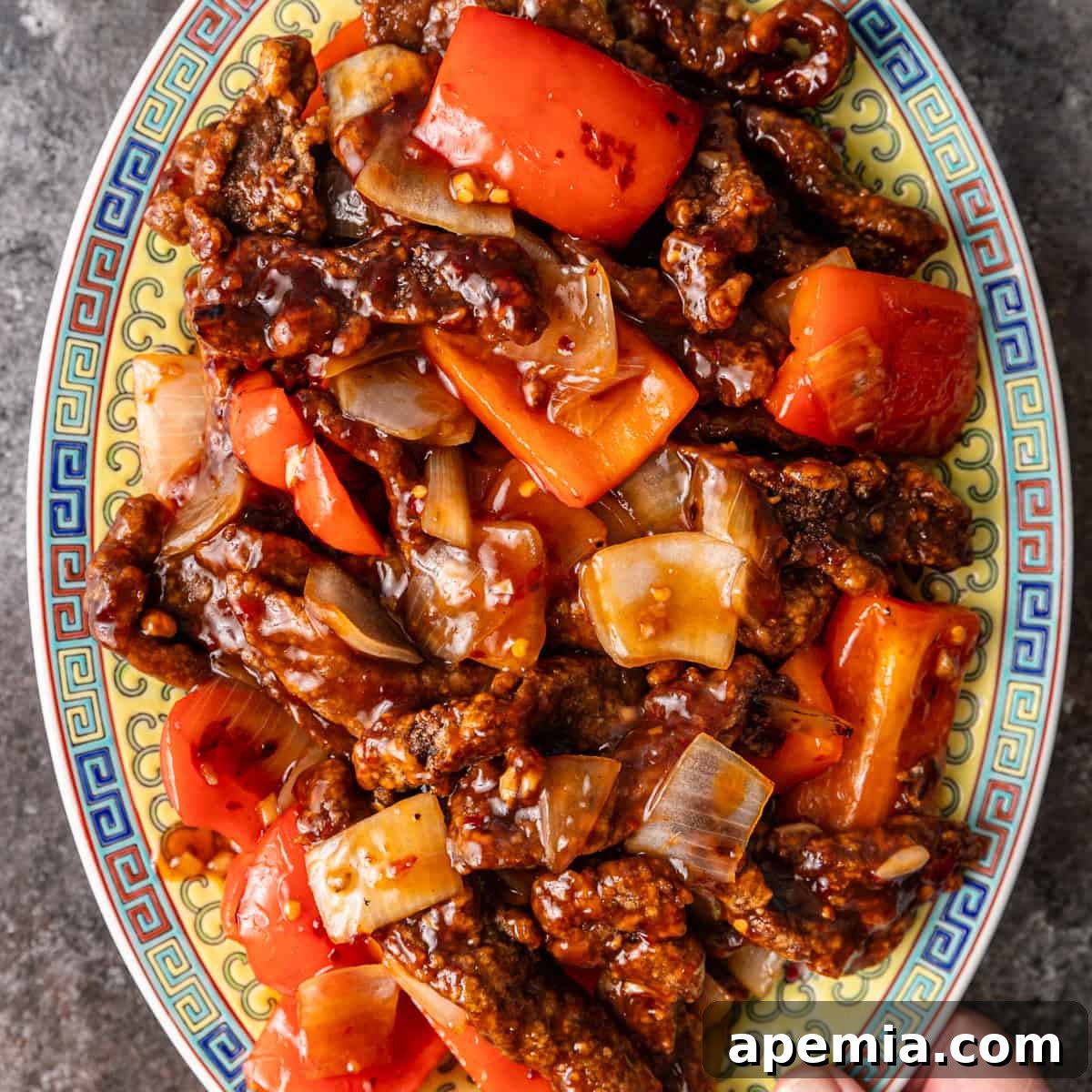
There’s a good reason why Beijing Beef consistently ranks high among Chinese takeout enthusiasts. The perfectly crisp, juicy beef, beautifully complemented by sweet bell peppers and onions, all coated in that glossy, sticky sauce, creates a truly unforgettable culinary experience. This isn’t just a meal; it’s a journey for your taste buds, blending savory, sweet, and a hint of spice into every bite.
This Beijing Beef recipe is the latest star in my ever-growing Chinese recipe collection, and it’s already making waves. After its debut at my last dinner gathering, evidenced by sparkling clean plates and delighted guests, I can confidently say it’s set to become a regular fixture. It might even surpass the popularity of beloved classics like Shrimp Fried Rice and Sweet and Sour Pork!
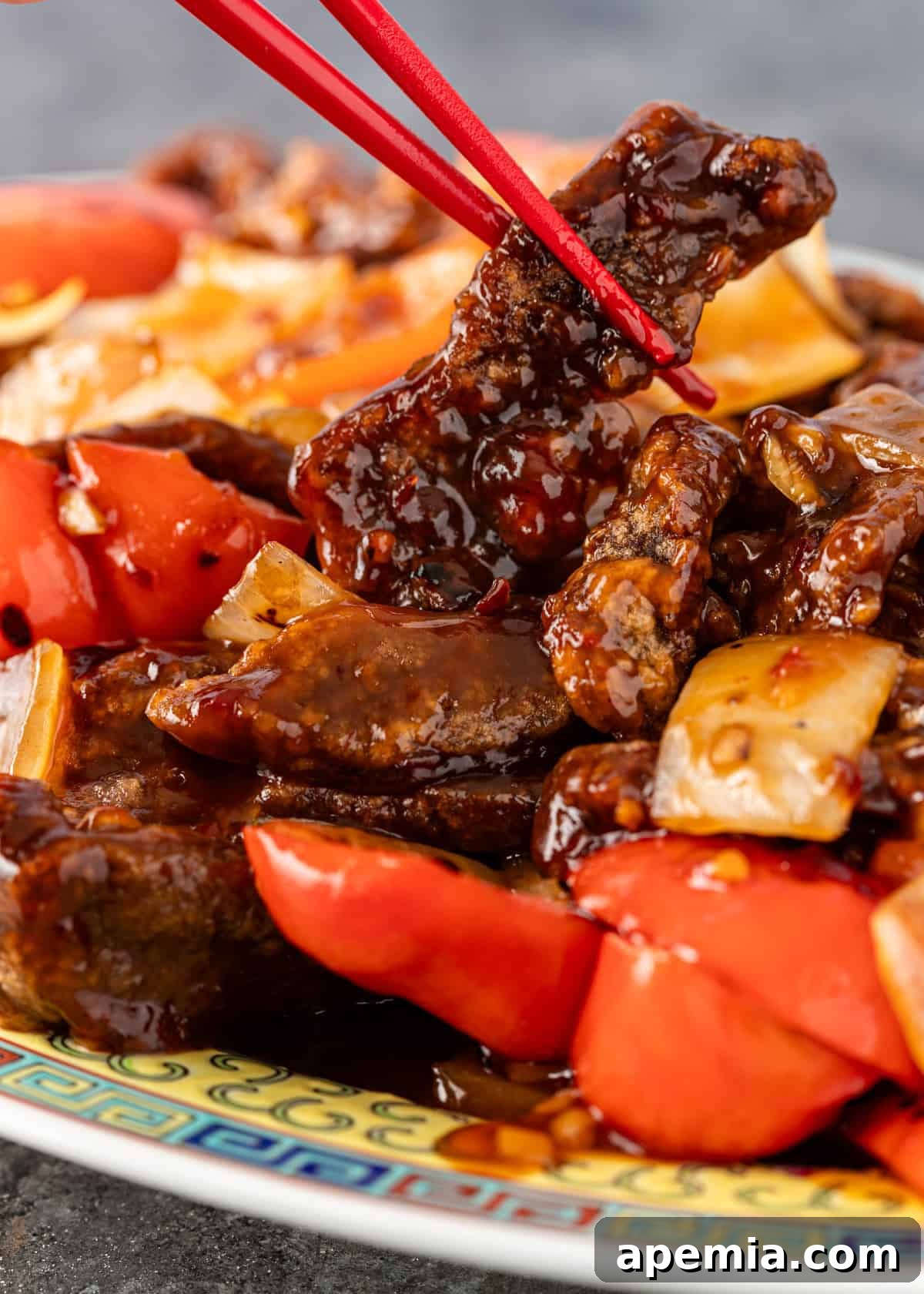
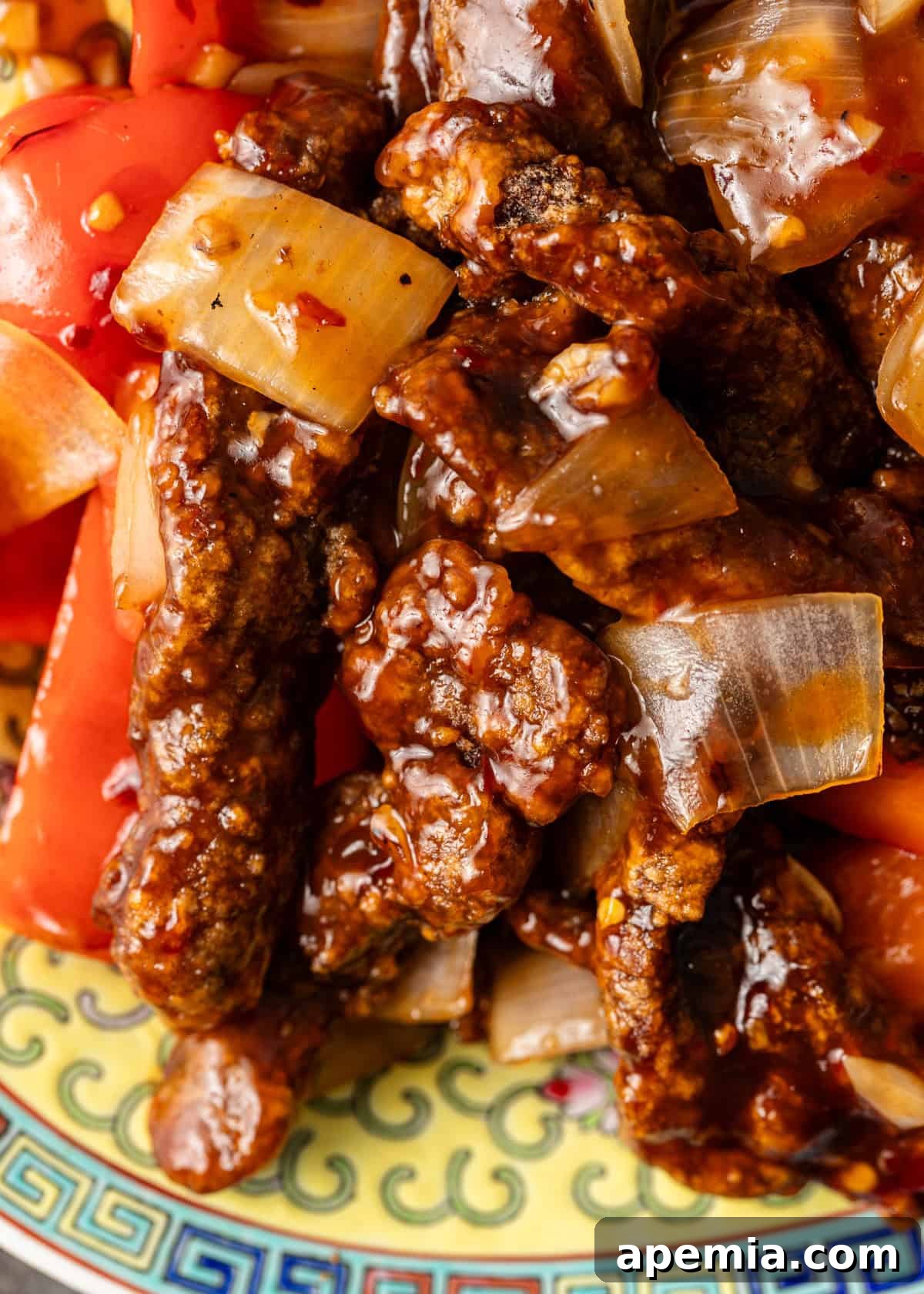
The magic of Beijing Beef largely lies in its distinct sauce. Crafted from a harmonious blend of rich hoisin sauce, umami-packed oyster sauce, a kick of chili paste, and the bright tang of vinegar, it’s a symphony of flavors. Granulated sugar balances the savory and spicy notes, while a cornstarch slurry ensures the sauce achieves that perfect, smooth viscosity. This thick, shimmering glaze clings beautifully to every piece of beef and every vegetable, delivering an irresistible sweetness and tang with a subtle spicy finish.
Table of Contents
- The Secret to Tender Beef: Baking Soda in Your Marinade
- Ingredient Notes and Substitutions for Beijing Beef
- How to Master Beijing Beef Stir Fry at Home
- Essential Tools for Beijing Beef Success
- Storing and Reheating Leftover Beijing Beef
- Frequently Asked Questions About Beijing Beef
- Beijing Beef Stir Fry Recipe
Just envisioning the preparation process, from marinating the beef to the final stir-fry, is enough to get anyone’s appetite going! Each step is designed to maximize flavor and texture, culminating in a dish that looks as good as it tastes. You’ll be amazed at how easily you can achieve restaurant-quality results in your own kitchen.
This delectable Beijing Beef is too good to let any of its rich sauce go to waste. Always serve it alongside a generous portion of fluffy steamed Jasmine rice or perfectly cooked lo mein noodles. These classic accompaniments are not just sides; they’re essential for soaking up every last drop of that incredible sweet and tangy sauce, ensuring a truly satisfying and complete meal experience.
Tip From Kevin
The Secret to Tender Beef: Baking Soda in Your Marinade
Achieving restaurant-quality tender beef at home is simpler than you might think, thanks to a clever trick: incorporating baking soda into your marinade. This humble ingredient acts as a natural tenderizer by slightly increasing the beef’s pH level, making it more alkaline. This alkaline environment helps to break down the tough protein fibers, preventing them from tightening up excessively during cooking. The result is remarkably soft, melt-in-your-mouth beef strips, rather than chewy, tough ones.
Beyond tenderization, baking soda also plays a crucial role in moisture retention. By altering the protein structure, it enables the beef to hold onto its natural juices more effectively, ensuring each piece remains incredibly succulent and flavorful. This technique, often referred to as “velveting” in Chinese cuisine when combined with cornstarch and egg white, is a game-changer for stir-fries, guaranteeing that every bite of your Beijing Beef is a delight. Don’t skip this step for truly superior results!
Ingredient Notes and Substitutions for Beijing Beef
(For a complete list of ingredients and precise quantities, please refer to the recipe card below)
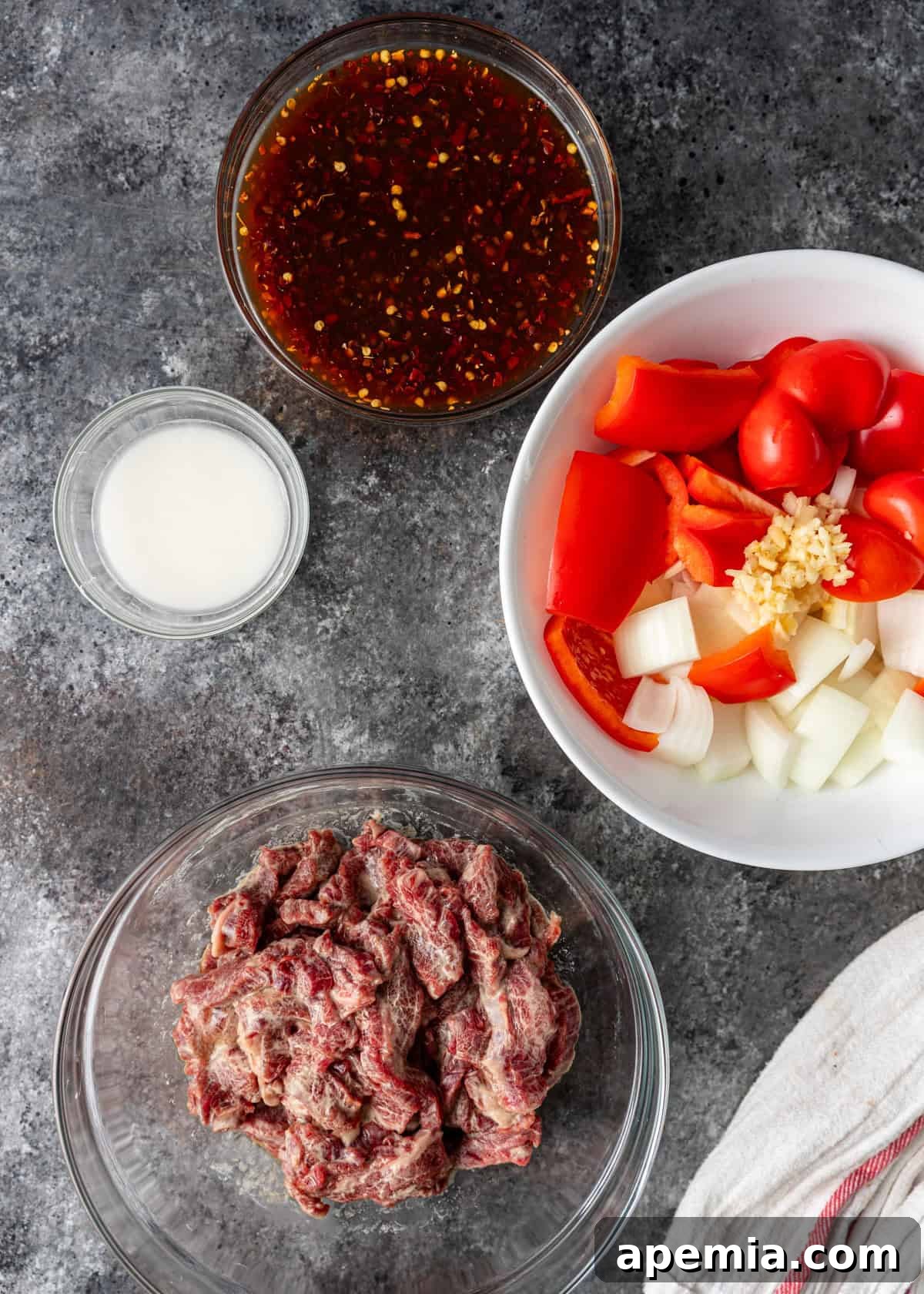
- Flank Steak – This cut is ideal for stir-fries due to its robust flavor and fibrous texture, which benefits greatly from proper slicing. Always slice the beef against the grain into thin, ¼-inch strips. This crucial step prevents the beef from becoming tough and chewy, ensuring maximum tenderness. The beef is then marinated in a blend of key ingredients to enhance its texture and flavor:
- White Pepper – Offers a milder, earthier heat compared to black pepper, which can be used as a substitute if white pepper is unavailable.
- Light Soy Sauce – A staple in Chinese cooking, this is lighter in color and saltier than dark soy sauce, providing essential savory depth.
- Baking Soda, Cornstarch & Egg Whites – These three components are critical for the Chinese velveting technique. They work together to tenderize the meat, lock in moisture, and create a protective coating that yields an incredibly crispy exterior when fried. A final dusting of **cornstarch** just before frying guarantees that extra-crispy texture Beijing Beef is known for.
- Peanut Oil – Valued for its high smoke point and distinct nutty flavor, perfect for deep frying and stir-frying. If you need a substitute, soybean oil or any other neutral vegetable oil with a high smoke point will work well.
- Vegetables – The classic Beijing Beef stir fry typically features crisp onions, vibrant red bell peppers, and aromatic garlic. Feel free to customize your stir-fry with any fresh or frozen vegetables you prefer, such as crunchy cabbage, tender broccoli florets, thinly sliced carrots, or delicate snow peas, for added color and nutrition.
- Sauce Ingredients – This sweet and sour masterpiece is built upon a foundation of light soy sauce, granulated sugar, warming red chili flakes, and a touch of tangy ketchup. The unique character comes from:
- Hoisin Sauce – A thick, fragrant, and slightly sweet Chinese barbecue sauce that is essential for its deep, savory, and tangy notes. It’s truly difficult to replicate its complex flavor profile. In a pinch, a mix of soy sauce with brown sugar and a tiny bit of peanut butter could serve as a rudimentary alternative, but the authentic taste will be missed.
- Oyster Sauce – This rich, savory-sweet condiment provides a distinct umami depth that is irreplaceable. Its unique flavor profile is a cornerstone of many Chinese stir-fries.
- Chili Paste – For that fiery kick! Any favorite brand of chili paste will work beautifully. For an extra spicy and smoky flavor, sometimes I use harissa to elevate the heat.
- Apple Cider Vinegar – Contributes a bright, fruity tang to the sauce. Rice vinegar or champagne vinegar can be used as suitable alternatives if apple cider vinegar isn’t on hand.
- Cornstarch Slurry – This is the secret to thickening your sauce to that perfect, luscious consistency. Remember to always use cold water when preparing the slurry; hot water will cause the cornstarch to clump immediately, preventing it from blending smoothly into your sauce.
How to Master Beijing Beef Stir Fry at Home
- Prepare the Marinade for Tender Beef. Begin by tossing the thinly sliced beef strips with baking soda, white pepper, light soy sauce, egg whites, and 2 tablespoons of cornstarch. This crucial velveting step ensures incredibly tender and moist beef. Mix everything thoroughly to coat each strip, then cover the bowl and refrigerate for at least 20 minutes to allow the flavors to meld and the tenderizers to work their magic.
- Organize Vegetables, Sauce, & Slurry. While the beef marinates, take this time for mise en place. Slice your red bell peppers, white onions, and mince the garlic. Set them aside in a bowl. In a separate small bowl, combine all the sauce ingredients (water, soy sauce, hoisin, oyster sauce, sugar, chili paste, red chili flakes, ketchup, and apple cider vinegar) and whisk until thoroughly blended. Finally, prepare your cornstarch slurry by whisking 1 tablespoon of cornstarch with 1 tablespoon of cold water until smooth. Having all components ready is key to successful stir-frying.
- Set Up for Frying. Pour about 1/4 cup of peanut oil into your wok or large skillet and heat it over medium-high heat until it reaches 350°F (175°C). Proper oil temperature is vital for achieving crispy beef. Meanwhile, prepare a plate lined with several layers of paper towels. This will be used to drain excess oil from the fried beef, keeping it perfectly crispy.
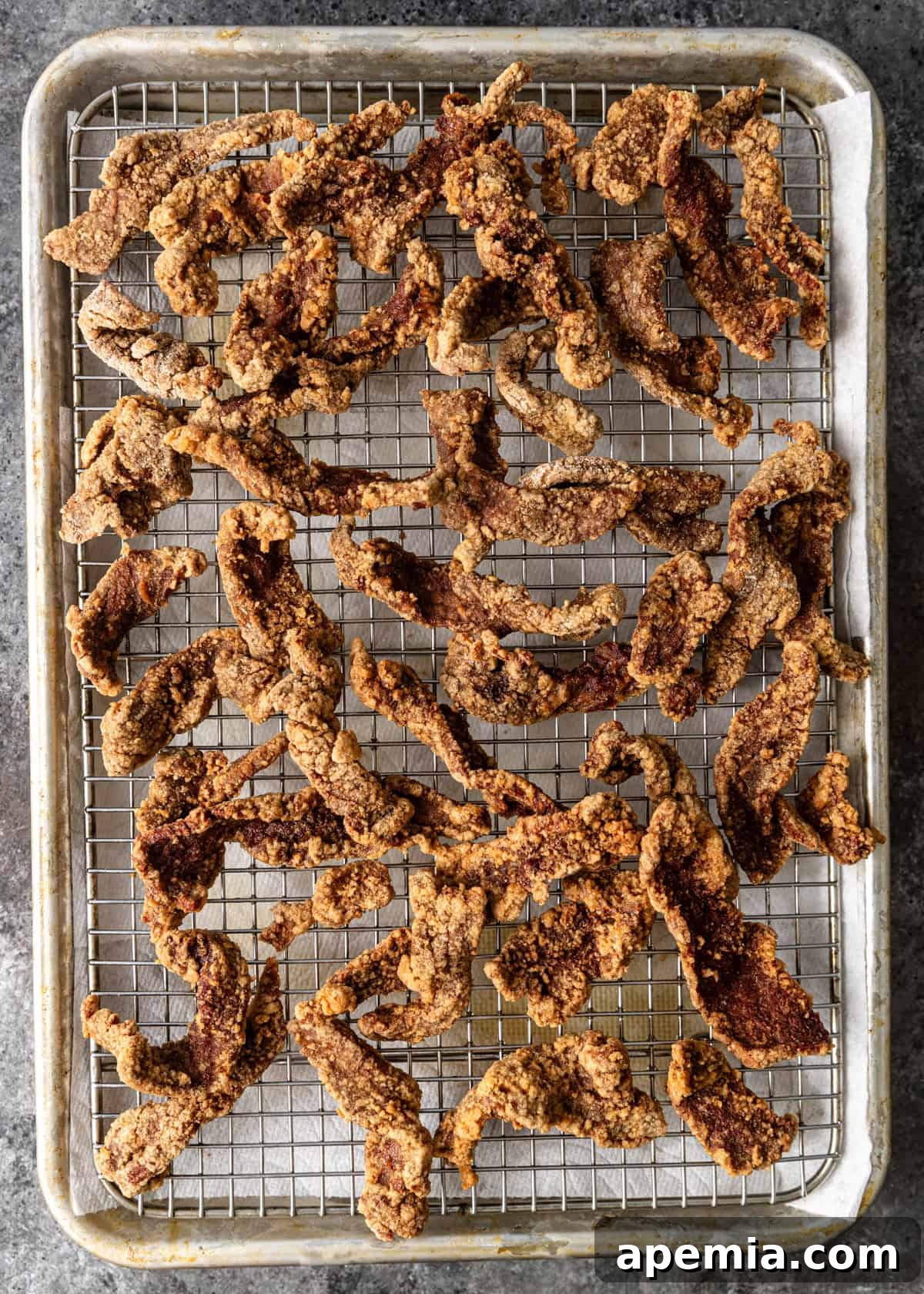
- Fry the Crispy Beef. In a plastic baggie or a shallow bowl, add the remaining 1/4 cup of cornstarch. Transfer the marinated beef strips into the bag/bowl and toss or shake vigorously until each piece is fully coated. Working in batches to avoid overcrowding, carefully fry the beef for 3 to 4 minutes per batch, or until it turns golden brown and delightfully crispy. Use tongs or a slotted spoon to transfer the fried beef to the paper towel-lined plate to drain and cool while you cook the vegetables.
- Sauté the Vegetables. Carefully pour out all but approximately 2 tablespoons of the hot oil from the wok, reserving it in a heat-safe container for future use or disposal. Return the wok to high heat. Add the sliced onions, bell peppers, and minced garlic to the still-hot wok. Stir-fry for 2 to 3 minutes, just until the vegetables are vibrant, slightly softened, but still retain a pleasant crisp-tender bite.
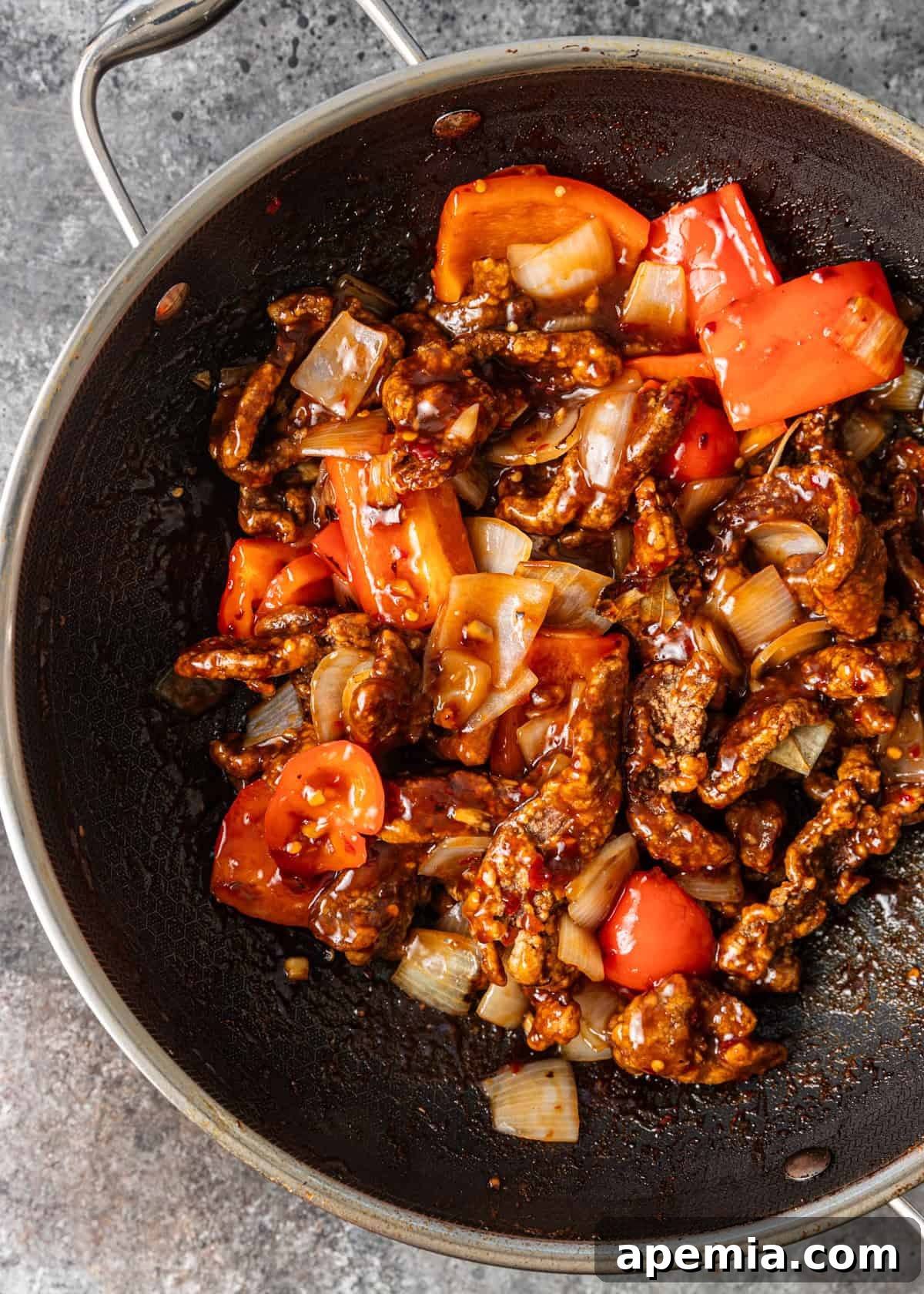
- Combine & Thicken. Return the crispy beef to the wok with the sautéed vegetables. Pour the prepared sauce over the meat and vegetables, tossing quickly to ensure everything is evenly coated. Give your cornstarch slurry a quick re-stir, then slowly pour it into the center of the wok while continuously stirring. The sauce will rapidly thicken and become glossy, beautifully coating all the ingredients. Serve your homemade Beijing Beef immediately with steamed rice for the ultimate takeout-style experience!
Essential Tools for Beijing Beef Success
- Wok – For high-speed, high-heat cooking and handling a generous volume of ingredients like those in this Beijing Beef recipe, a wok is unparalleled. Its sloped sides allow for easy tossing and provide varying heat zones, perfect for stir-frying. While a large skillet can work, a wok truly enhances the cooking experience and results.
- Paper Towel-Lined Plate – This simple setup is crucial for maintaining the crispy texture of your fried beef. Allowing the beef to rest and drain on paper towels after frying prevents it from sitting in cooled oil, which can make it soggy. This step ensures your Beijing Beef remains perfectly crisp until it’s ready to be tossed in the sauce and served.
- Thermometer (Optional but Recommended) – An instant-read thermometer helps ensure your oil reaches the precise 350°F needed for perfect frying, preventing greasy or undercooked beef.
Storing and Reheating Leftover Beijing Beef
Should you be lucky enough to have any leftover Beijing Beef, store it promptly in an airtight container in the refrigerator. It will keep well for up to 3 to 4 days. When it comes to reheating, you have a few excellent options to help restore some of that initial crispy texture. For best results, avoid the microwave as it tends to make fried foods soft.
Instead, try reheating on the stovetop with a small amount of fresh oil over medium-high heat, stirring until warmed through and the beef regains some crispness. Alternatively, an air fryer set to 350°F (175°C) for 5-7 minutes, or spreading it on a baking sheet in an oven preheated to 375°F (190°C) for 10-15 minutes, will help bring back that delightful crunch. Whichever method you choose, you can still enjoy delicious, almost as good as fresh, Beijing Beef leftovers.
Share this recipe on Pinterest!
Loved making this savory and sweet Beijing Beef? Share your culinary success with friends and fellow foodies on Pinterest to inspire their next meal!
Frequently Asked Questions About Beijing Beef
While Beijing Beef and Mongolian Beef share some striking similarities, they are distinct dishes, each with its own unique flavor profile. Both feature thinly sliced flank steak, seared to a crispy perfection, and then coated in a rich, thick sauce. However, the sauces themselves are where the differences truly shine. Mongolian Beef typically boasts a deeper, more intensely savory and less sweet flavor, primarily due to the prominent use of dark brown sugar, fresh ginger, an abundance of red chilis for a spicy kick, and aromatic sesame oil. It often incorporates a thicker, saltier dark soy sauce, which contributes to its more profound umami taste. Beijing Beef, on the other hand, leans more into the sweet and tangy spectrum with its signature hoisin and oyster sauce base, providing a brighter, sweeter, and sometimes spicier profile.
Beijing Beef, much like many popular dishes found on Chinese restaurant menus across the Western world, is best described as a Chinese-American creation rather than a traditional dish directly from Beijing, China. You’ve likely encountered its deliciousness at fast-food chains like Panda Express. Nevertheless, it incorporates many qualities and ingredients that are distinctly Chinese. The technique of velveting the beef, the use of a thick sweet and sour sauce, and the inclusion of fresh, tender-crisp vegetables are all hallmarks of Chinese culinary traditions. Key ingredients such as hoisin sauce, oyster sauce, white pepper, and peanut oil are fundamental staples in a well-stocked Chinese pantry, giving this fusion dish a comforting and familiar flavor profile that resonates with authentic Chinese cuisine.
For Beijing Beef and most other Chinese beef stir fry recipes, flank steak is widely considered the top choice. This long, flat cut comes from the cow’s lower chest or abdominal area. It’s boneless, making it incredibly easy to prepare and slice, and it boasts a rich, beefy flavor that stands up well to bold sauces. Crucially, its fibrous texture benefits immensely from being sliced thinly against the grain, which is paramount for achieving tender results in a quick stir-fry. If flank steak isn’t available, several other cuts make excellent alternatives. These include chuck steak, which is known for its deep flavor and tenderizes well when cut correctly; sirloin steak, a lean and flavorful option; and skirt steak, which is similar to flank steak in texture and also requires slicing against the grain. Whichever cut you choose, remember that proper slicing is key to unlocking the perfect texture for your stir-fry.
Beijing Beef Stir Fry
4
25 minutes
10 minutes
35 minutes
PrintRecipe
Ingredients
Beef
-
1
lb
flank steak
cut across grain into 1/4″ strips -
1/4
tsp
baking soda
-
1
tsp
white pepper
-
1
tbsp
light soy sauce
-
2
tbsp
cornstarch
-
1
egg white
beaten (save yolk for other use) -
1/4
cup
cornstarch
dust marinated beef in before frying -
1/4
cup
peanut oil
for frying
Vegetables
-
1
red bell pepper
cut into 2″ pieces -
1
white onion
cut into 2″ pieces -
2
cloves
garlic
minced
Sauce
-
1/2
cup
water -
2
tbsp
light soy sauce
-
1/4
tbsp
oyster sauce
-
1/4
cup
hoisin sauce
-
1/4
cup
sugar
-
2
tsp
chili paste -
1
tsp
red chili flakes -
3
tbsp
ketchup
-
2
tbsp
apple cider vinegar
Slurry
-
1
tbsp
cornstarch
-
1
tbsp
water
Instructions
-
Begin by slicing the flank steak across the grain into uniform 1/4-inch strips. Transfer these strips to a mixing bowl and add the baking soda, white pepper, light soy sauce, 2 tablespoons of cornstarch, and the beaten egg white. Mix these ingredients thoroughly using your hands until every piece of beef is well coated. Cover the bowl and refrigerate for 20 minutes; this marinating time is essential for tenderizing the beef while you prepare the remaining ingredients.
-
Next, prepare your vegetables. Slice the red bell pepper and white onion into 2-inch pieces, and mince the garlic cloves. Place all cut vegetables into a separate bowl and set aside, ready for cooking.
-
In another small bowl, whisk together all the sauce ingredients: water, light soy sauce, hoisin sauce, oyster sauce, sugar, chili paste, red pepper flakes, ketchup, and apple cider vinegar. Stir until the sugar is dissolved and the sauce is well combined. Set this aside.
-
Prepare the cornstarch slurry by mixing 1 tablespoon of cornstarch with 1 tablespoon of cold water in a small bowl until smooth and free of lumps. Set this aside. Line a plate with paper towels to drain the fried beef later, and set it near your cooking station. Heat the peanut oil in a wok or a large, heavy-bottomed skillet over medium-high heat until it registers 350°F (175°C) on a thermometer, or a small piece of beef sizzles vigorously when dropped in.
-
Place the remaining 1/4 cup of cornstarch in a clean bowl or a plastic bag. Add the marinated beef strips and toss or shake to ensure they are completely and evenly coated. Use a spoon or your fingers to break up any pieces that may be sticking together. Carefully fry the coated beef in two batches to avoid overcrowding, which can lower the oil temperature and result in soggy beef. Fry each batch for 3-4 minutes, or until the beef is beautifully golden brown and crispy. Once cooked, remove the beef from the oil with a slotted spoon or spider and transfer it to the prepared paper towel-lined plate to drain.
-
Carefully pour the majority of the hot oil from the wok into a heat-safe container to cool, leaving approximately 2 tablespoons of oil remaining in the wok. Return the wok to high heat.
-
Add the prepared red bell pepper, onion, and garlic to the hot wok and stir-fry briskly for 2-3 minutes. You want them to be crisp-tender, not mushy. Once the vegetables are cooked, return the crispy beef to the pan. Pour the entire pre-mixed sauce over the beef and vegetables, tossing quickly to coat all ingredients evenly. Stir the cornstarch slurry once more, then pour it into the center of the wok. Continue to toss and stir continuously as the sauce thickens rapidly to a glossy, desirable consistency.
-
Serve your piping hot Beijing Beef Stir Fry immediately with freshly steamed rice. Enjoy the incredible balance of sweet, tangy, and savory flavors with every delicious bite!
Nutrition
Calories:
466
kcal
|
Carbohydrates:
43
g
|
Protein:
28
g
|
Fat:
14
g
|
Saturated Fat:
3
g
|
Polyunsaturated Fat:
3
g
|
Monounsaturated Fat:
5
g
|
Cholesterol:
69
mg
|
Sodium:
1321
mg
|
Potassium:
615
mg
|
Fiber:
2
g
|
Sugar:
23
g
|
Vitamin A:
1144
IU
|
Vitamin C:
42
mg
|
Calcium:
51
mg
|
Iron:
3
mg
The information shown is an estimate provided by an online nutrition calculator. It should not be considered a substitute for a professional nutritionist’s advice.
main dishes
Chinese
Kevin
Have You Made This Recipe? Let Me Know on Instagram
Tag @keviniscooking or tag me #keviniscooking!