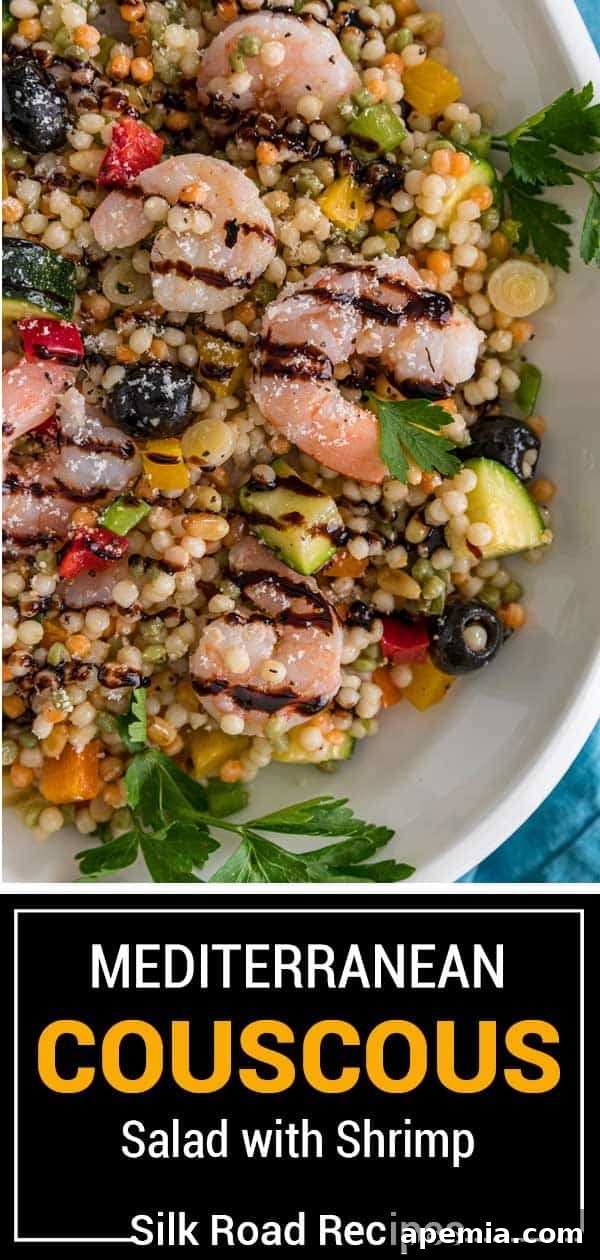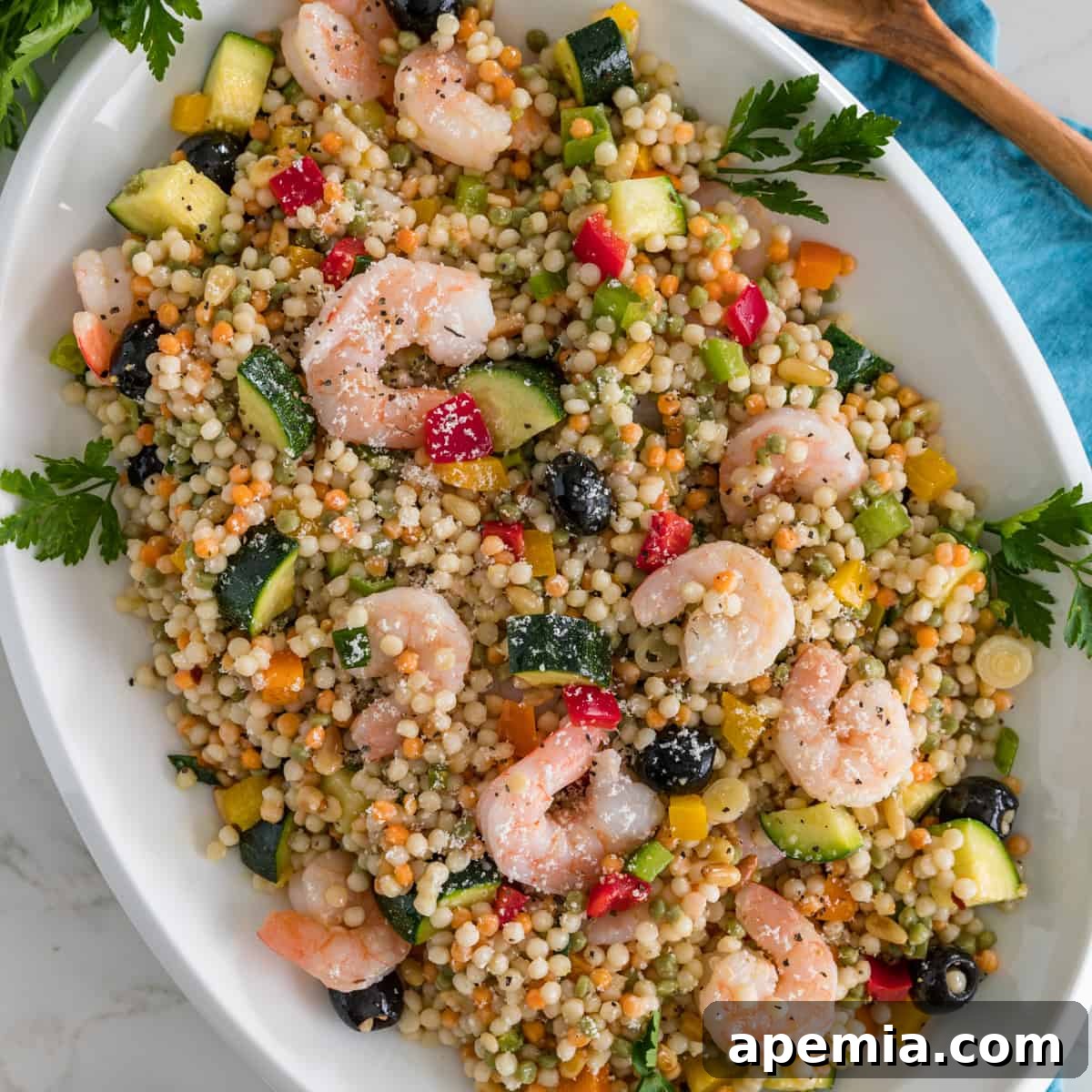
Mediterranean Couscous Salad with Shrimp: A Refreshing Culinary Journey
Embark on a delightful culinary adventure with our exquisite Mediterranean Couscous Salad with Shrimp. This recipe offers a harmonious blend of light, fluffy couscous, succulent shrimp, and a vibrant medley of seasonal vegetables and aromatic herbs. Drizzled with a sweet and subtly spicy olive oil dressing, and finished with a tangy balsamic syrup, this salad is a true testament to the fresh, wholesome flavors of the Mediterranean. A sprinkle of crumbled feta or grated Parmesan cheese elevates it further, transforming a simple meal into an utterly satisfying experience that will transport your taste buds straight to the sunny coasts of the Mediterranean.
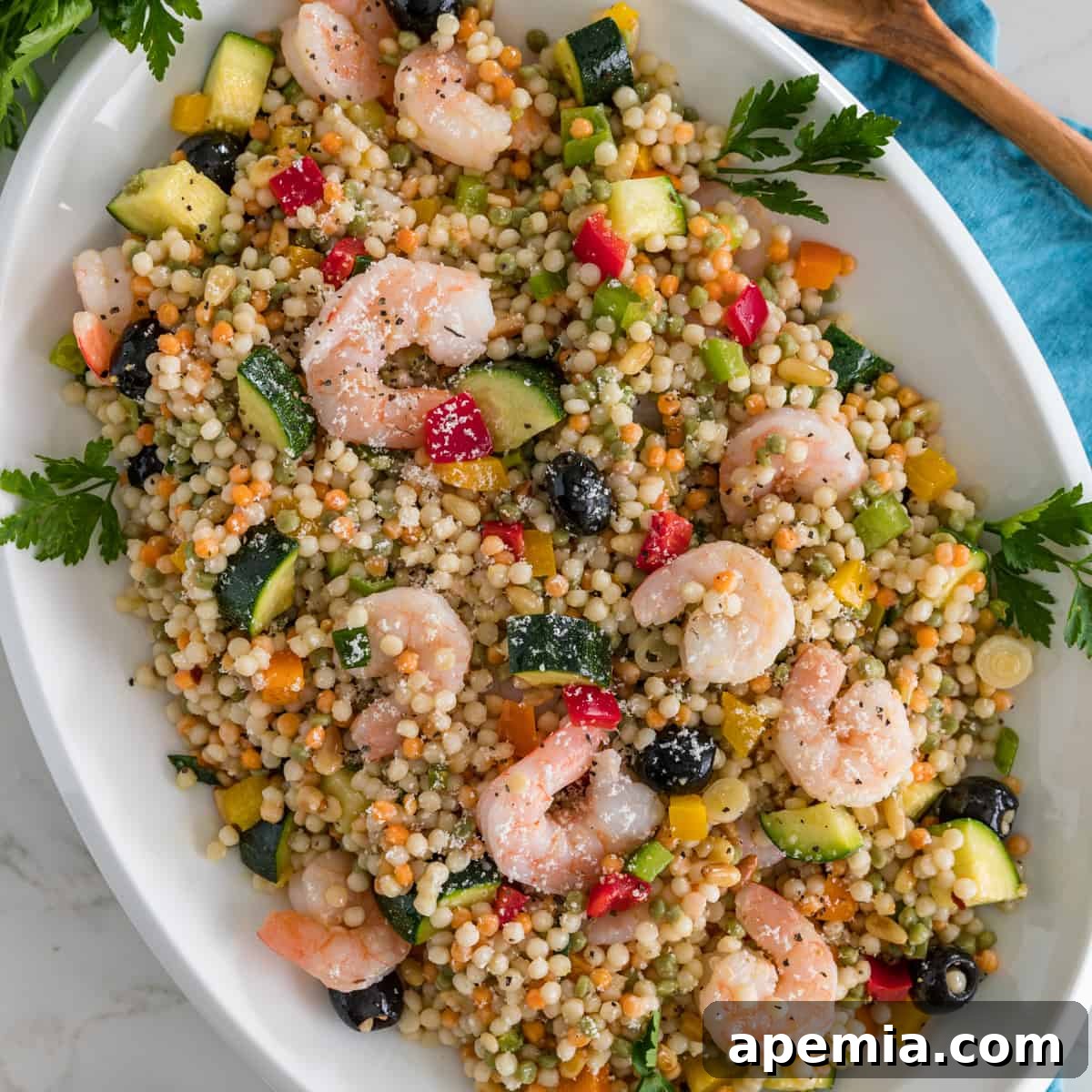
The Allure of Couscous: A Mediterranean Staple
Couscous, a versatile and healthy pasta-like grain, serves as the perfect foundation for this vibrant salad. Revered across the Middle East, the Mediterranean, and particularly throughout Africa, couscous is celebrated not only for its delicate texture but also for its impressive nutritional profile. Rich in protein and dietary fiber, it offers a satisfying fullness without being heavy, making it an ideal choice for a wholesome meal.
In this recipe, we utilize Israeli couscous, also known as pearl couscous, which features larger, chewier grains compared to traditional fine couscous. Its robust texture holds up beautifully against the crisp vegetables and tender shrimp, absorbing the flavors of the dressing perfectly. Couscous is exceptionally easy to prepare, making it a go-to ingredient for quick and healthy dishes. Its mild flavor also allows it to be incredibly adaptable, pairing well with a myriad of ingredients.
Why This Shrimp Couscous Salad Is Your Next Favorite Meal
This Mediterranean Shrimp Couscous Salad is more than just a meal; it’s an experience. It perfectly embodies the principles of the renowned Mediterranean diet, which emphasizes fresh, whole ingredients, healthy fats, and lean proteins. This salad is particularly perfect for the warmer months, offering a light yet complete meal that celebrates seasonal produce. Imagine the sweetness of ripe Roma tomatoes, the subtle crunch of bell peppers, the earthy notes of zucchini, and the fresh bite of green onions, all harmonizing with the delicate couscous.
The dressing, a bright and zesty concoction of lemon and high-quality olive oil, infused with minced garlic and a hint of spice, ties all the components together. The final touch of balsamic drizzle adds a sophisticated tang, creating layers of flavor that will keep you coming back for more. It’s a fantastic way to enjoy a healthy, fiber-rich, and protein-packed meal that feels both indulgent and incredibly fresh.
Ingredient Deep Dive and Clever Substitutions
Crafting the perfect Mediterranean Couscous Salad begins with selecting the finest ingredients. Each component plays a crucial role in delivering the authentic flavors and textures of this delightful dish.
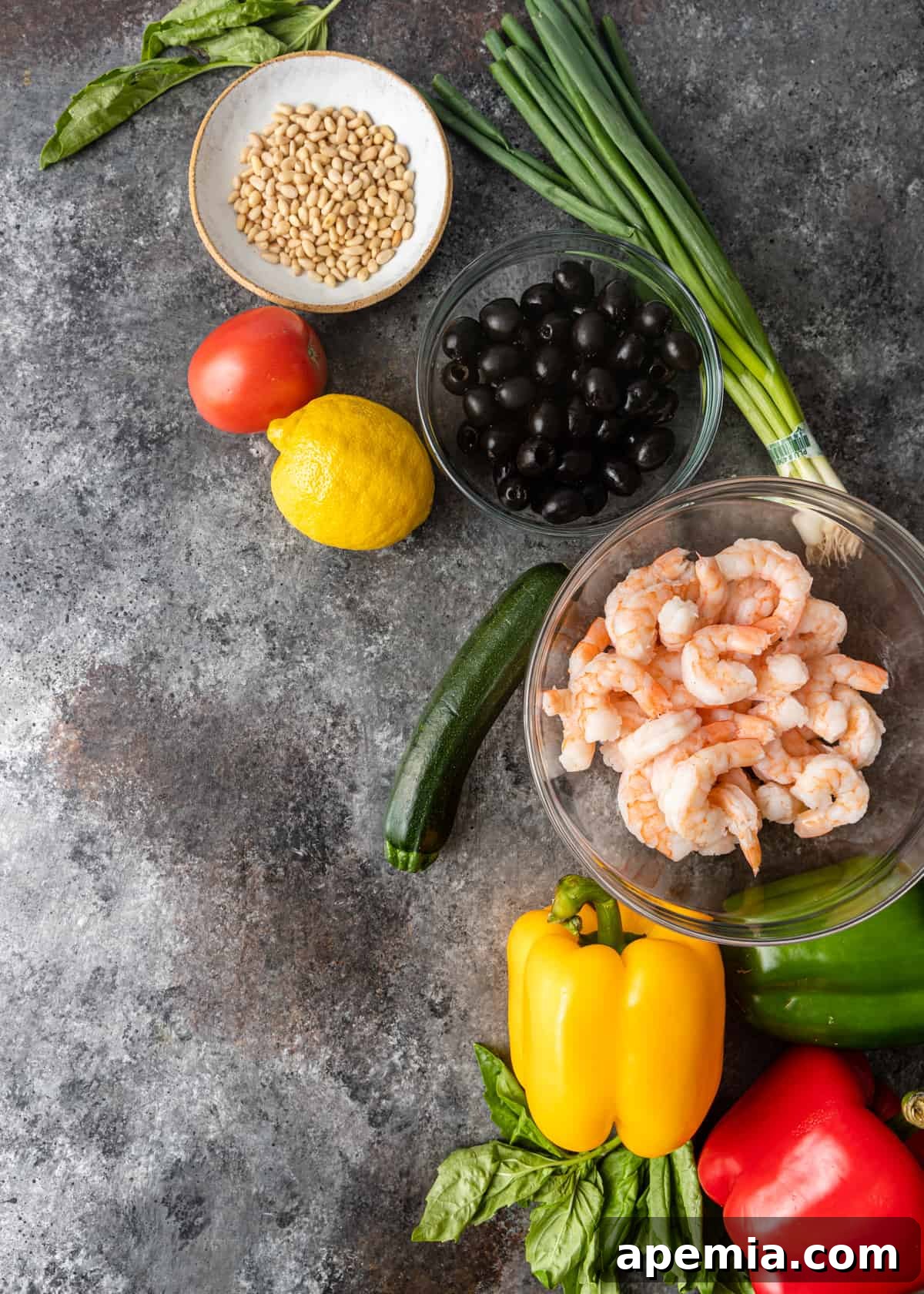
- Israeli Couscous (Pearl Couscous): As mentioned, this larger variety of couscous offers a satisfying chew. We’ll use a touch of olive oil during cooking to ensure each pearl remains distinct and fluffy, preventing sticking.
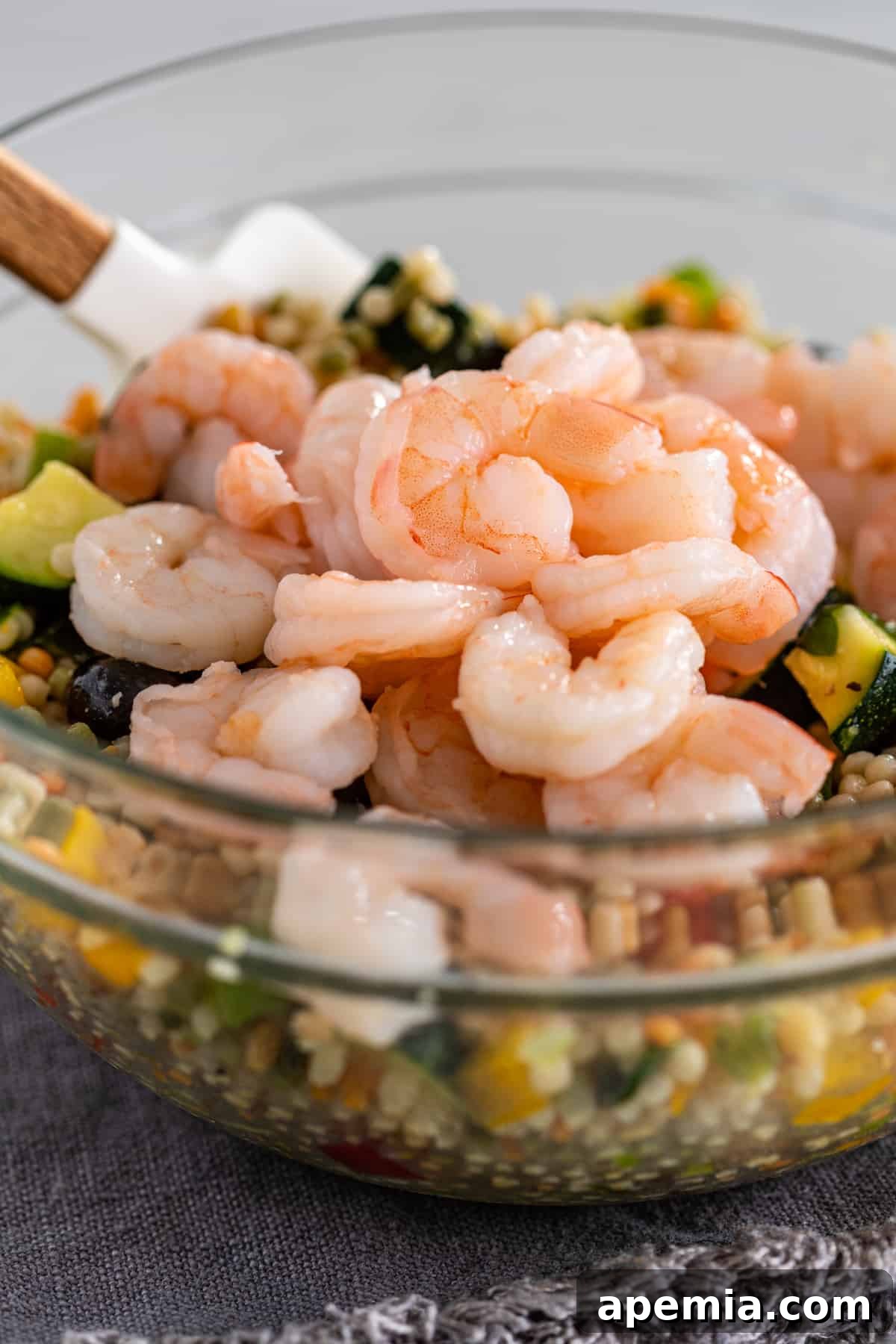
- Shrimp: For this recipe, large shrimp are recommended as they provide a substantial bite and visual appeal. However, smaller shrimp work equally well; simply ensure you have 1 pound in total. Fresh or frozen (thawed) shrimp can be used.
- Bell Peppers: A mix of vibrant colors, such as half red and half green bell peppers, not only enhances the visual appeal but also adds a spectrum of sweet and slightly bitter notes. Orange or yellow bell peppers can also be included for more color and sweetness.
- Roma Tomatoes: These tomatoes are chosen for their firm flesh and lower water content, which is crucial for preventing a soggy salad. Remember to seed and chop them to avoid excess moisture. If Romas aren’t available, cherry or grape tomatoes, halved, make an excellent substitute.
- Green Onions: Offering a milder onion flavor, green onions provide a subtle sharpness. Chives, leeks, or even finely minced shallots are suitable alternatives for a similar aromatic profile.
- Black Olives: A cornerstone of Mediterranean cuisine, black olives (like Kalamata or ripe black olives) add a salty, briny depth. If olives aren’t to your liking, capers offer a similar salty burst, or you might experiment with other pickled vegetables such as pickled turnips for an exotic twist.
- Zucchini: This summer squash adds a delicate freshness and a slight crunch when raw. Yellow squash or even finely diced cucumber can be used as substitutes, maintaining the salad’s refreshing quality.
- Basil: Fresh basil brings a sweet, peppery aroma that is quintessential to Mediterranean flavors. Other fresh herbs like thyme, parsley, or cilantro can also be used, or a combination of them, to customize the herbal notes.
- Pine Nuts: These small, buttery nuts add a delightful crunch and a subtle richness. Toasting them briefly in a pan enhances their flavor significantly. If pine nuts are hard to find, toasted slivered almonds or walnuts can be used instead.
- Salad Dressing: Our dressing is a simple yet potent mix of olive oil, fresh lemon juice, pungent minced garlic, a touch of sugar to balance the acidity, salt, earthy dried oregano, and a pinch of red pepper flakes for a gentle warmth. Feel free to adjust the seasoning and add other herbs or spices to your preference.
- Balsamic Syrup & Feta Cheese (Optional Toppings): These are highly recommended for a truly authentic finish. Balsamic syrup, a reduced balsamic vinegar, offers a concentrated sweet and tangy kick. You can easily make your own by simmering balsamic vinegar until it thickens. Feta cheese, with its salty, crumbly texture, provides a wonderful counterpoint to the sweetness of the dressing. Parmesan cheese can also be used for a slightly different, nutty flavor.
Step-by-Step Guide to Your Mediterranean Masterpiece
Creating this flavorful couscous salad is surprisingly simple. Follow these steps for a perfect result every time:
- Prepare the Couscous: In a medium saucepan, bring 2 1/4 cups of salted water (or chicken stock for added flavor) to a rolling boil. Stir in 2 tablespoons of olive oil and 2 cups of Israeli couscous. Reduce the heat to low, cover the saucepan, and let it simmer for approximately 8 minutes, or until all the liquid has been absorbed and the couscous pearls are tender and fluffy. Remove from heat and allow it to cool completely before assembling the salad. This cooling step is essential to prevent the salad from becoming warm and wilted.
- Prepare Shrimp and Vegetables: While the couscous cools, dedicate your time to preparing the other ingredients. If using fresh shrimp, clean and devein them thoroughly. If using raw shrimp, you’ll need to cook them first (see Note 1 below for perfect shrimp cooking instructions). Chop all the bell peppers, Roma tomatoes (after seeding), green onions, zucchini, and basil into uniform, bite-sized pieces. Ensure the black olives are drained and pitted.
- Toast the Pine Nuts: For enhanced flavor and aroma, lightly toast the pine nuts. Place 1/2 cup of pine nuts in a small, dry pan over medium heat. Stir continuously for 2-3 minutes until they turn a light golden brown and become fragrant. Watch them carefully, as they can burn quickly. Once toasted, immediately remove them from the pan to cool.
- Whisk the Dressing: In a small bowl, combine all the dressing ingredients: 2 tablespoons olive oil, 1 juiced lemon (about 3 tbsp), 2 cloves minced garlic, 1/2 teaspoon dried oregano, 1/2 teaspoon sugar, 1/2 teaspoon kosher salt, and 1/4 teaspoon red pepper flakes. Whisk vigorously until all ingredients are well combined and emulsified. Alternatively, you can add all ingredients to a small jar with a tight-fitting lid and shake it until thoroughly mixed.
- Assemble the Salad: In a large mixing bowl, gently combine the cooled couscous, cooked shrimp, all the chopped vegetables (bell peppers, Roma tomatoes, green onions, black olives, zucchini), fresh basil, and toasted pine nuts. Pour the prepared dressing over the ingredients. Toss everything gently to ensure the dressing evenly coats all components. Taste and adjust seasoning with additional salt and pepper if desired.
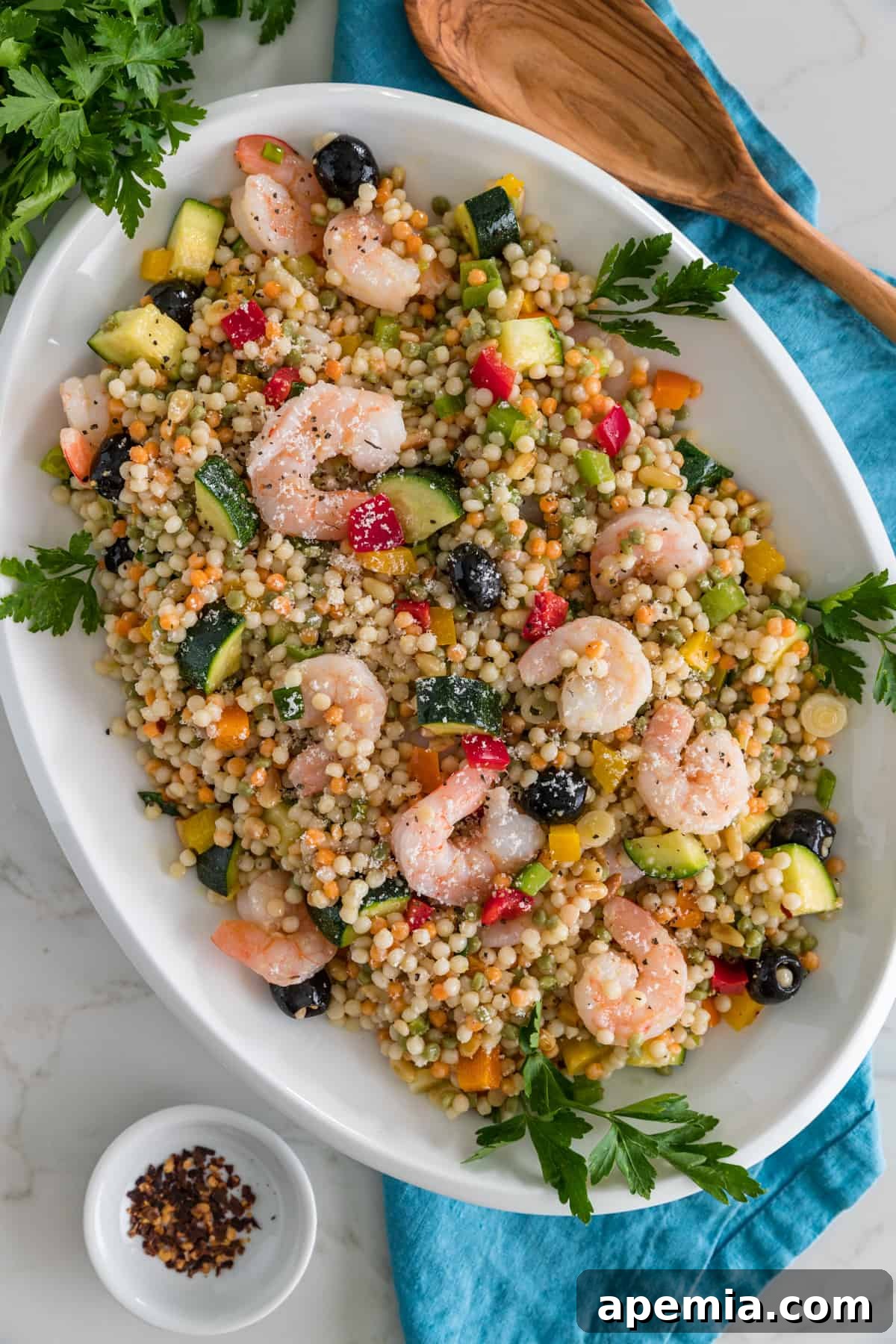
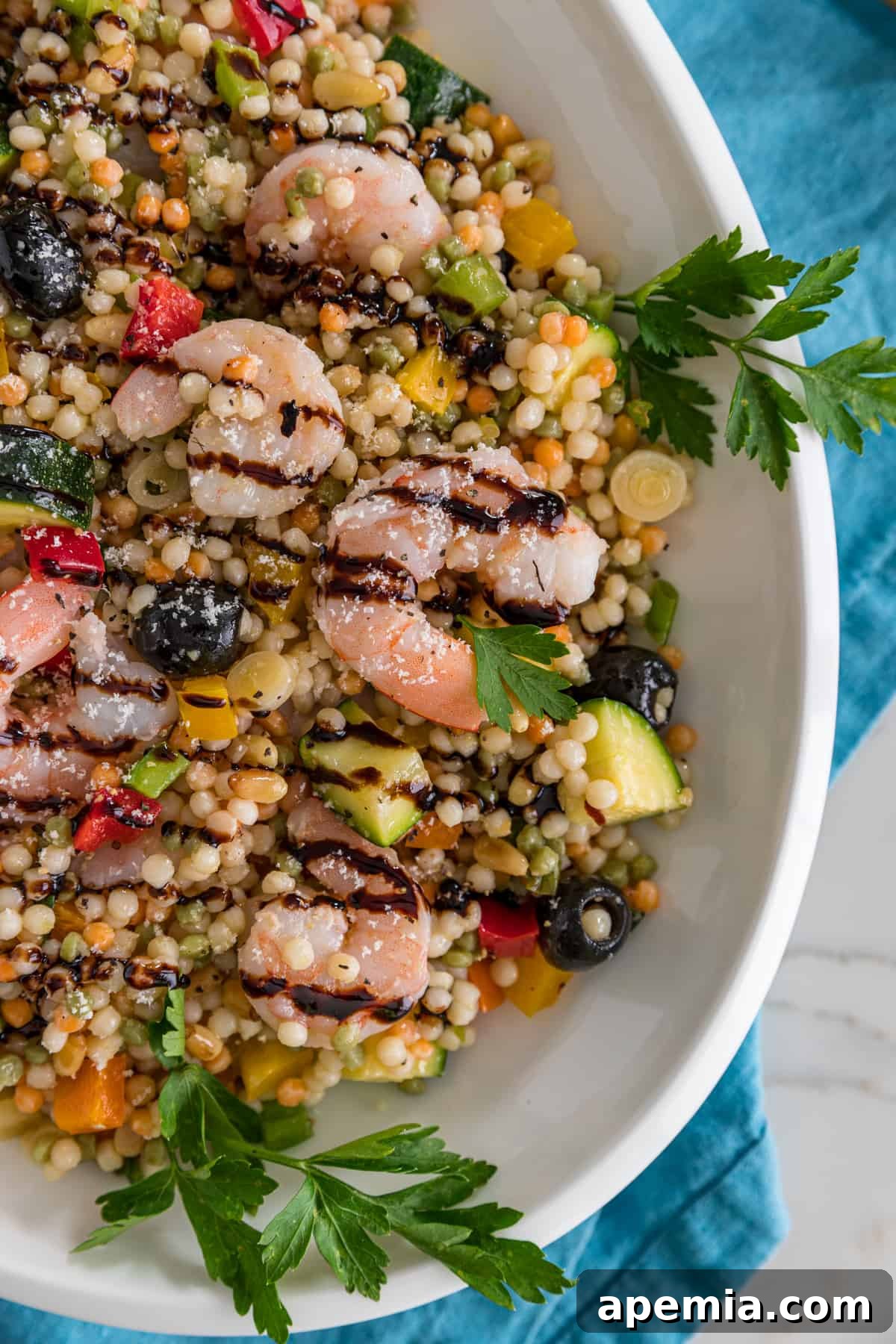
- Chill and Serve: For the best flavor, cover the bowl and chill the salad in the refrigerator for at least one hour. This allows the flavors to meld and deepen. Before serving, give the salad another gentle toss. Drizzle with balsamic syrup and sprinkle with feta or Parmesan cheese, if using. Serve chilled and enjoy!
Tips for Success and Frequently Asked Questions
How long does couscous salad last in the fridge?
This Mediterranean Couscous Salad keeps well in an airtight container in the refrigerator for up to 3 days. It’s an excellent candidate for meal prepping! For optimal freshness, especially if you’re planning to enjoy it throughout the week, I recommend preparing the dressing and chopping all your vegetables in advance. Store them separately. The dressing will stay fresh for up to a week, and the chopped veggies will last 3-4 days. Then, cook the couscous and shrimp in smaller batches as needed, assembling the salad just before serving. This method ensures maximum freshness and prevents any ingredients from becoming soggy.
What other veggies can you add to couscous salad?
The beauty of couscous salad lies in its adaptability! While squashes, tomatoes, and onions are classic choices, you can truly experiment with almost any vegetable you enjoy. For a truly Mediterranean flair, consider adding:
- Crisp cucumbers, diced
- Grilled or roasted eggplant
- Tender okra
- Sautéed mushrooms
- Roasted beets, cubed
- Artichoke hearts, quartered
- Sun-dried tomatoes, chopped
- Fresh spinach or arugula, gently folded in just before serving
Feel free to incorporate whatever seasonal vegetables are fresh and appealing to you. The more colorful, the better!
What is the difference between couscous vs. quinoa?
Couscous and quinoa are both popular, healthy grain alternatives, but they are fundamentally different. Couscous is actually a type of pasta made from semolina wheat, giving it a soft, pasta-like consistency when cooked. Quinoa, on the other hand, is not a grain but rather a seed from a plant related to spinach and beets. It is considered a “pseudo-cereal.” When cooked, quinoa has a distinct nutty flavor and a slightly crunchy, fluffy texture. Both are highly nutritious, boasting significant amounts of fiber and protein, but couscous contains gluten, while quinoa is naturally gluten-free.
If you’re curious about using quinoa in a similar fresh salad, explore recipes like an Ahi Tuna Salad with Quinoa for another healthy and flavorful option!
Mediterranean Couscous Salad with Shrimp Recipe
My Mediterranean Couscous Salad is a burst of protein, fiber, and incredibly bright, zesty flavors. It’s the perfect light and satisfying dish to enjoy all summer long!
Mediterranean Couscous Salad with Shrimp
This vibrant Mediterranean Couscous Salad is packed with protein, fiber, and an abundance of fresh, zesty flavors. Enjoy this light and incredibly satisfying dish throughout the season!
Prep Time: 15 mins
Cook Time: 20 mins
Total Time: 35 mins
Print Recipe
Ingredients
Salad
- 2 cups Israeli Couscous (pearl couscous)
- 2 1/4 cups water or chicken stock
- 1 teaspoon kosher salt
- 2 tbsp olive oil
- 1 lb large shrimp, cooked (See Note 1)
- 4 bell peppers, half red, half green (or orange bell pepper)
- 2 Roma tomatoes, seeded and chopped
- 2 green onions, sliced
- 15 oz black olives, drained and pitted
- 1 large zucchini, cubed
- 1/4 cup basil leaves, chopped
- 1/2 cup pine nuts, lightly toasted
Salad Dressing
- 2 tablespoon olive oil
- 1 lemon, juiced (about 3 tbsp)
- 2 cloves garlic, minced
- 1/2 teaspoon dried oregano
- 1/2 teaspoon sugar
- 1/2 teaspoon kosher salt
- 1/4 teaspoon red pepper flakes
Toppings (optional)
- Balsamic Syrup
- 1/4 cup feta cheese (or Parmesan cheese)
Instructions
- In a medium-sized saucepan, bring salted water to a boil. Add olive oil and Israeli couscous, stir. Cover and simmer for 8 minutes, or until the liquid is evaporated and the couscous is tender and fluffy. Remove from heat and set aside to cool completely.
- While the couscous cools, clean and devein the shrimp (if raw, cook according to Note 1 below). Chop all the bell peppers, Roma tomatoes (seeded), green onions, black olives, zucchini, and basil.
- Over medium heat, lightly toast the pine nuts in a small dry fry pan for 2-3 minutes until golden and fragrant. Remove immediately from heat to prevent burning.
- In a small bowl, whisk together all the dressing ingredients: olive oil, lemon juice, minced garlic, dried oregano, sugar, kosher salt, and red pepper flakes. Alternatively, combine them in a jar, seal, and shake well to mix.
- In a large mixing bowl, combine the cooled couscous, cooked shrimp, all the chopped vegetables, toasted pine nuts, and the prepared salad dressing. Toss gently to ensure all ingredients are well coated. Season to taste with additional salt and pepper as needed.
- Cover the bowl and chill the salad in the refrigerator for at least one hour to allow the flavors to meld. Before serving, toss once more and drizzle with balsamic syrup and sprinkle with feta cheese (both optional) for an authentic Mediterranean finish.
Notes
- If using raw shrimp: In a pot, bring 8 cups of water with 1 teaspoon of kosher salt to a boil. Add the raw (thawed) shrimp. Turn off the heat, stir, and cook for just 1 minute, or until the shrimp turn pink and opaque. Immediately transfer the cooked shrimp to an ice bath (a bowl with water and ice cubes) to stop the cooking process and prevent overcooking. Shrimp cook very quickly, so be careful not to overcook them, or they will become rubbery.
Nutrition Information (per serving)
The information shown is an estimate provided by an online nutrition calculator. It should not be considered a substitute for a professional nutritionist’s advice.
- Calories: 573 kcal
- Carbohydrates: 58g
- Protein: 22g
- Fat: 29g
- Saturated Fat: 4g
- Trans Fat: 1g
- Cholesterol: 95mg
- Sodium: 1832mg
- Potassium: 625mg
- Fiber: 9g
- Sugar: 6g
- Vitamin A: 3264 IU
- Vitamin C: 121mg
- Calcium: 123mg
- Iron: 3mg
Cuisine: Mediterranean
Author: Kevin
Have You Made This Recipe? Let Me Know on Instagram!
Tag @keviniscooking or tag me #keviniscooking!