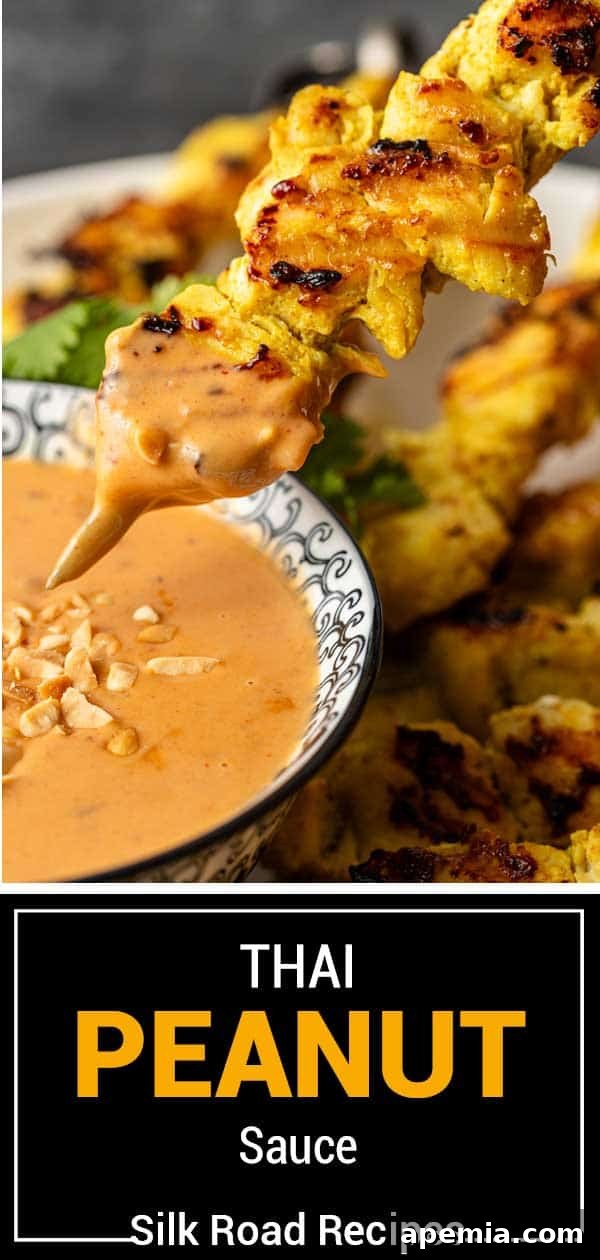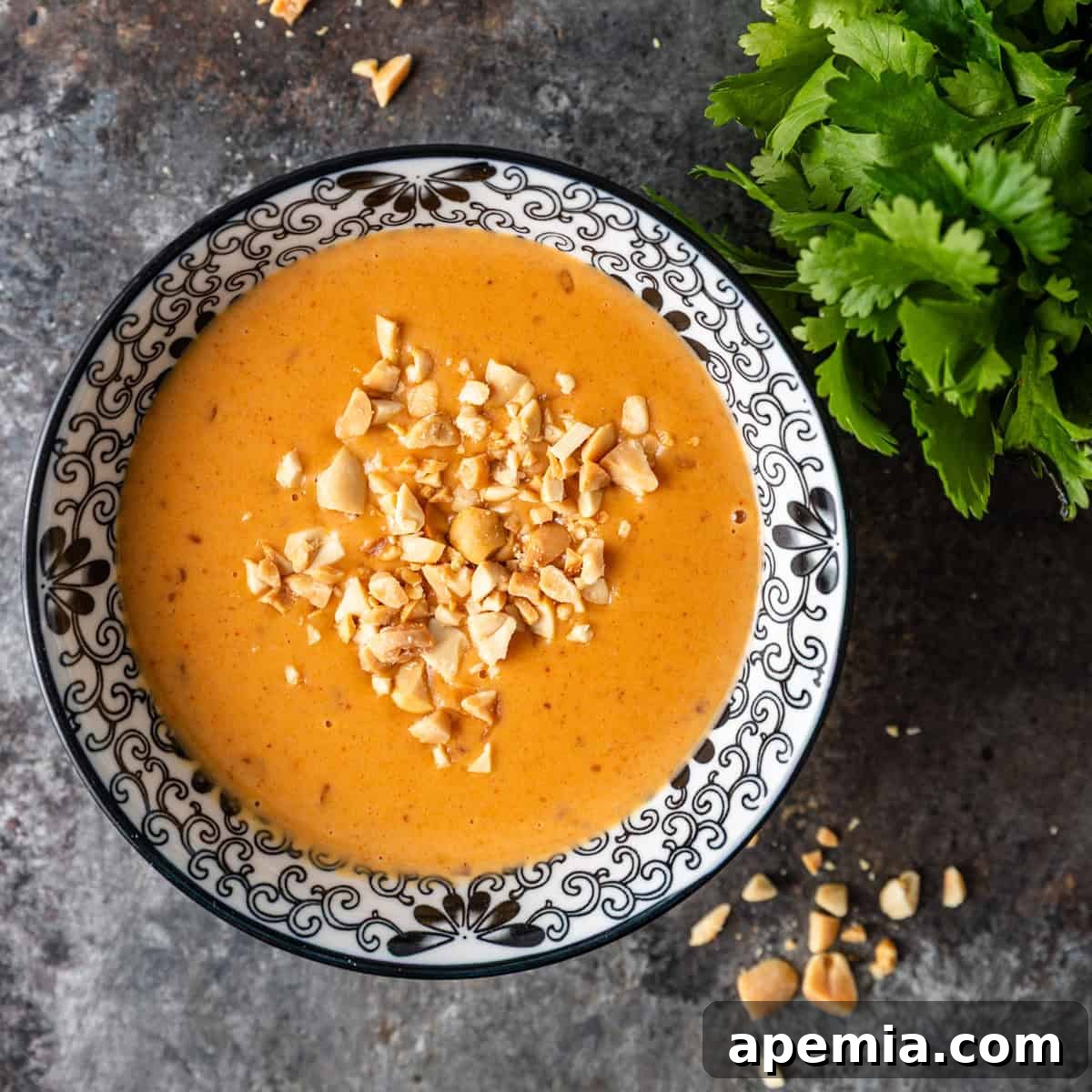
Craft your very own restaurant-quality Thai peanut sauce right in your kitchen with this incredibly quick and straightforward recipe! It’s brimming with bold, aromatic ingredients like fiery chili paste, rich sesame oil, savory hoisin, fresh ginger, and pungent garlic — all balanced with an abundance of creamy peanut butter. The result is an authentic, mouthwatering Thai flavor that will transport your taste buds straight to the vibrant streets of Bangkok.
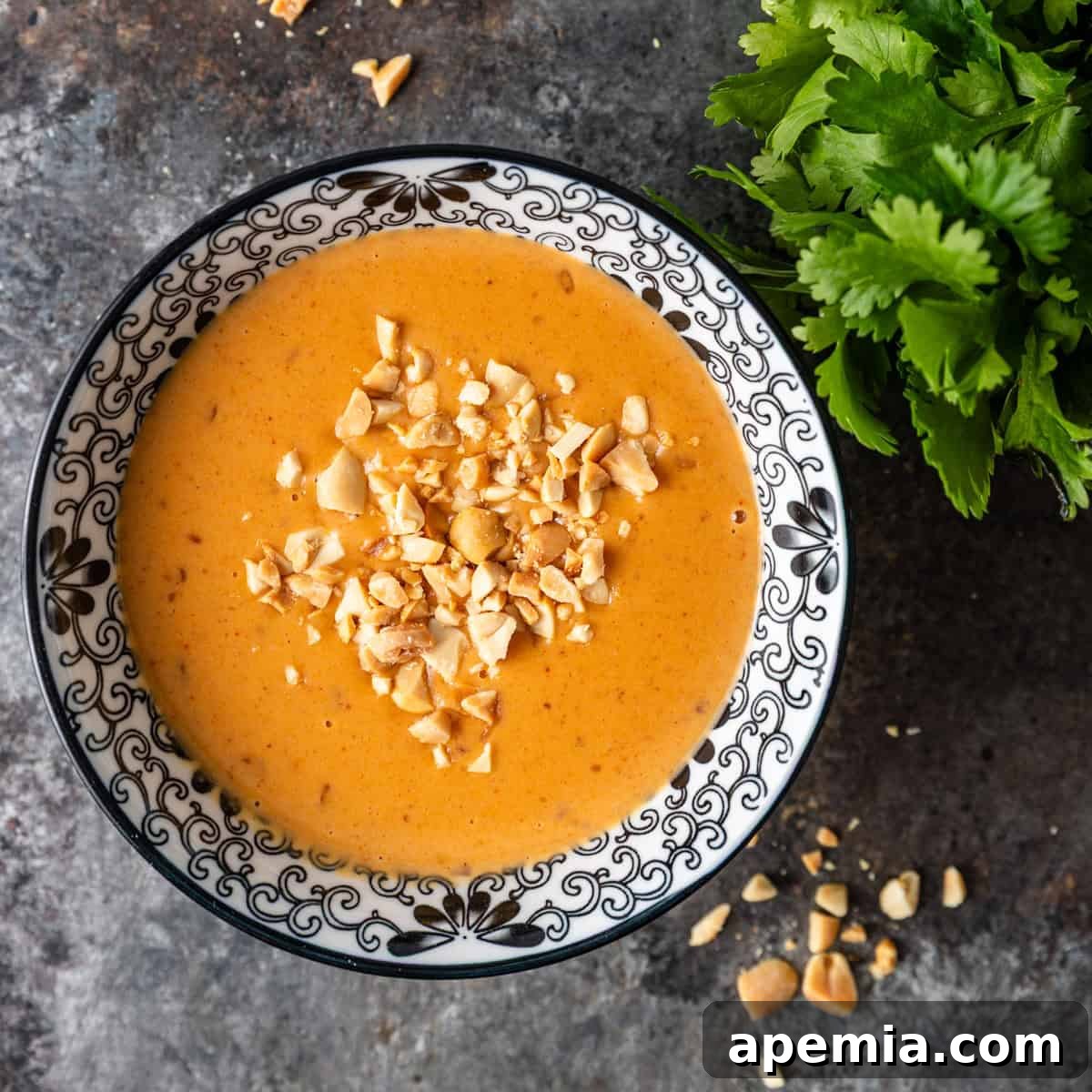
Few condiments boast the incredible versatility of Thai peanut sauce. If you’ve ever dined at a Thai restaurant, chances are you’ve encountered its delightful presence alongside almost every dish you’ve ordered. And for excellent reason – its applications are virtually limitless, making it an indispensable staple in any adventurous kitchen.
This delectable sauce pairs wonderfully with succulent chicken satay, crisp spring rolls, and savory egg rolls. It’s also an ideal dipping companion for pork pot stickers and other delightful dumplings. Beyond the classics, imagine it drizzled over fresh, crunchy vegetables for a vibrant snack, or as a rich dressing for a vibrant salad. I personally adore stirring it into warm rice and noodle dishes, transforming them with its irresistible savory, nutty, and subtly spicy kick.
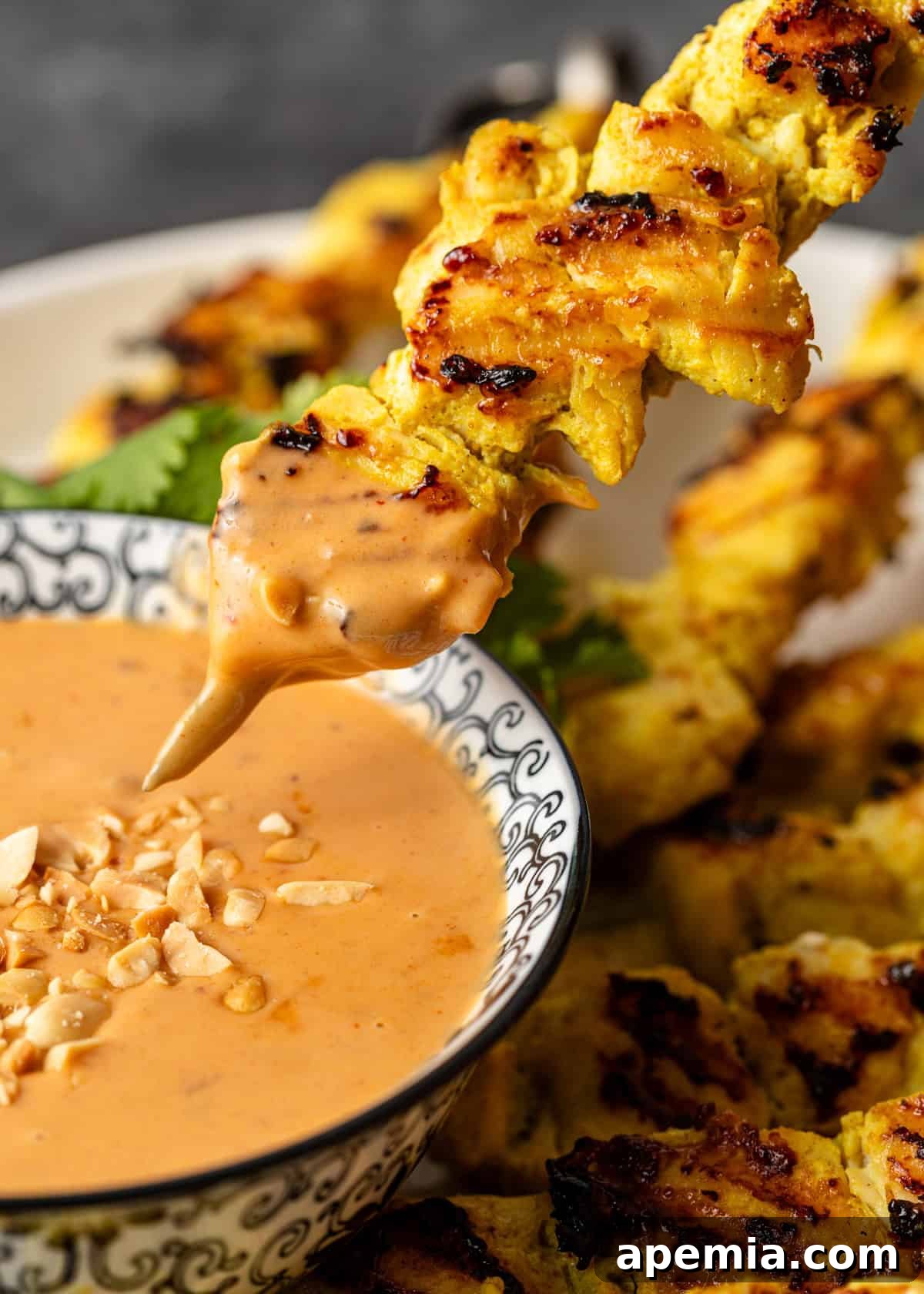
Not only is my Thai peanut sauce recipe incredibly versatile, but it’s also remarkably quick and easy to prepare. You’ll be amazed at how effortlessly it comes together in just a few simple steps, requiring less than 15 minutes from start to finish. This makes it perfect for busy weeknights or impromptu gatherings when you want to impress without spending hours in the kitchen.
Table of Contents
- The Secret to Authentic Thai Red Curry Paste
- Ingredient Notes and Expert Substitutions
- Mastering the Art of Thai Peanut Sauce
- Perfect Pairings and Serving Suggestions
- Recommended Kitchen Tools
- Storing Your Homemade Thai Peanut Sauce
- Frequently Asked Questions
- Thai Peanut Sauce Recipe Card
The true mastery of this sauce lies in understanding how to fine-tune the seasonings to achieve your ideal flavor profile. Each ingredient plays a vital role: the invigorating spice of chili paste, the bright tang of vinegar, the deeply savory and salty notes of hoisin, and the nutty richness of sesame oil all contribute to a complex and harmonious blend. Learning how these distinct flavors interact is the ultimate key to crafting a truly perfect, unforgettable Thai peanut sauce that perfectly suits your palate.
Chef’s Tip
The Secret to Authentic Thai Red Curry Paste
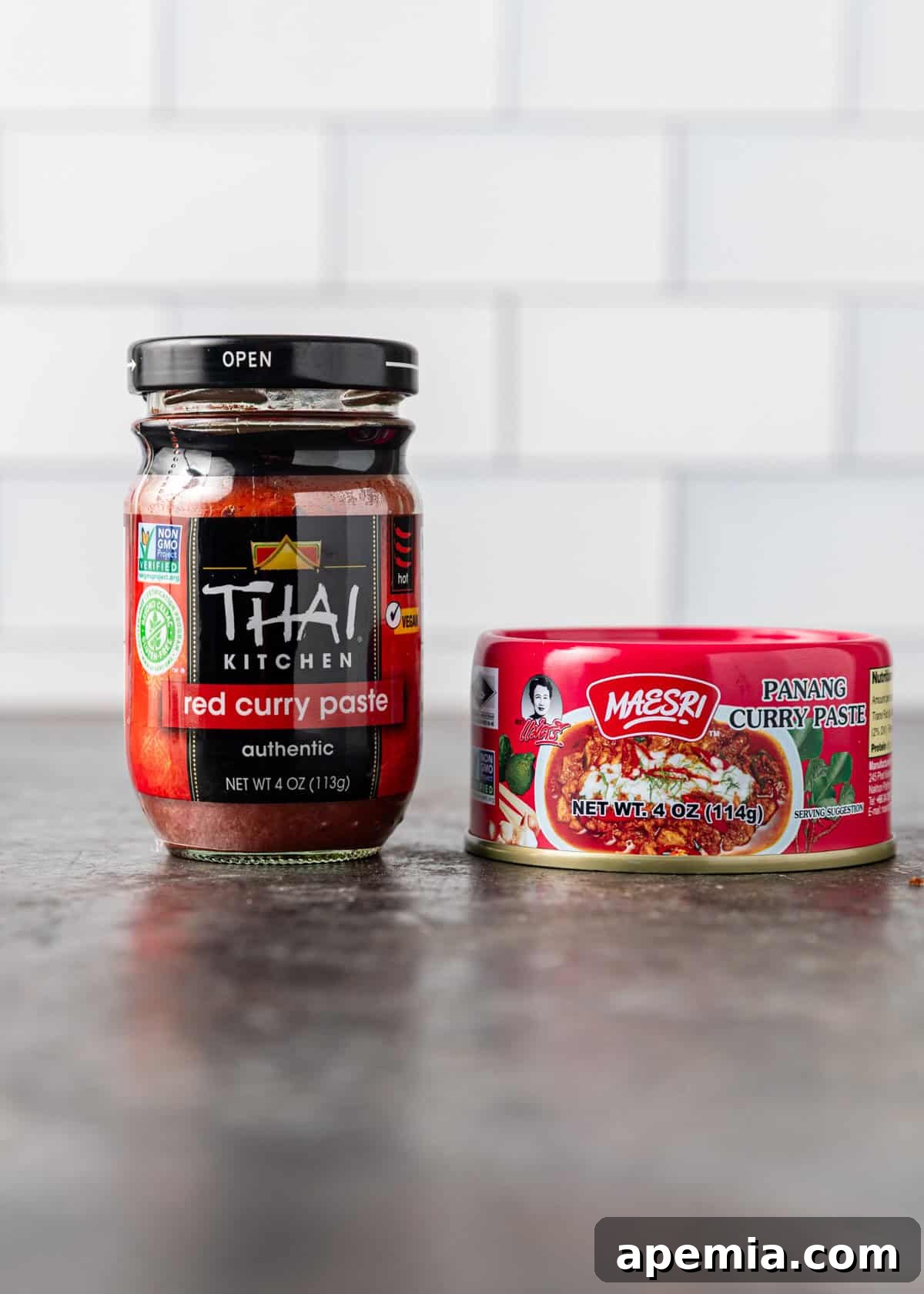
Just like my passion for crafting exquisite homemade spice blends, I find immense joy in preparing a variety of international condiments from scratch. My Thai Red Curry Paste is remarkably simple to make, coming together in 15 minutes or less, yielding a vibrant, fresh flavor that truly elevates any dish. Alternatively, you can also use my Panang Curry Paste recipe for a slightly different, yet equally delicious, aromatic profile.
If you prefer the convenience of store-bought options, I highly recommend Thai Kitchen Red Curry Paste for a widely available and reliable choice, or Maesri Panang Curry Paste for a deeper, richer flavor profile, often found in specialty Asian markets (as seen in the images above).
The quality of your curry paste significantly impacts the final taste of your peanut sauce. A good paste should offer a harmonious blend of dried chilies, garlic, shallots, galangal, lemongrass, and kaffir lime zest. Sautéing the curry paste briefly in oil before adding other liquids, as instructed in this recipe, is a crucial step that unlocks its full aromatic potential and deepens the overall flavor of the sauce. This process, often referred to as “blooming” the spices, ensures that every nuance of the paste shines through.
Ingredient Notes and Expert Substitutions
(For a comprehensive list of all ingredients and precise quantities, please refer to the detailed recipe card below.)
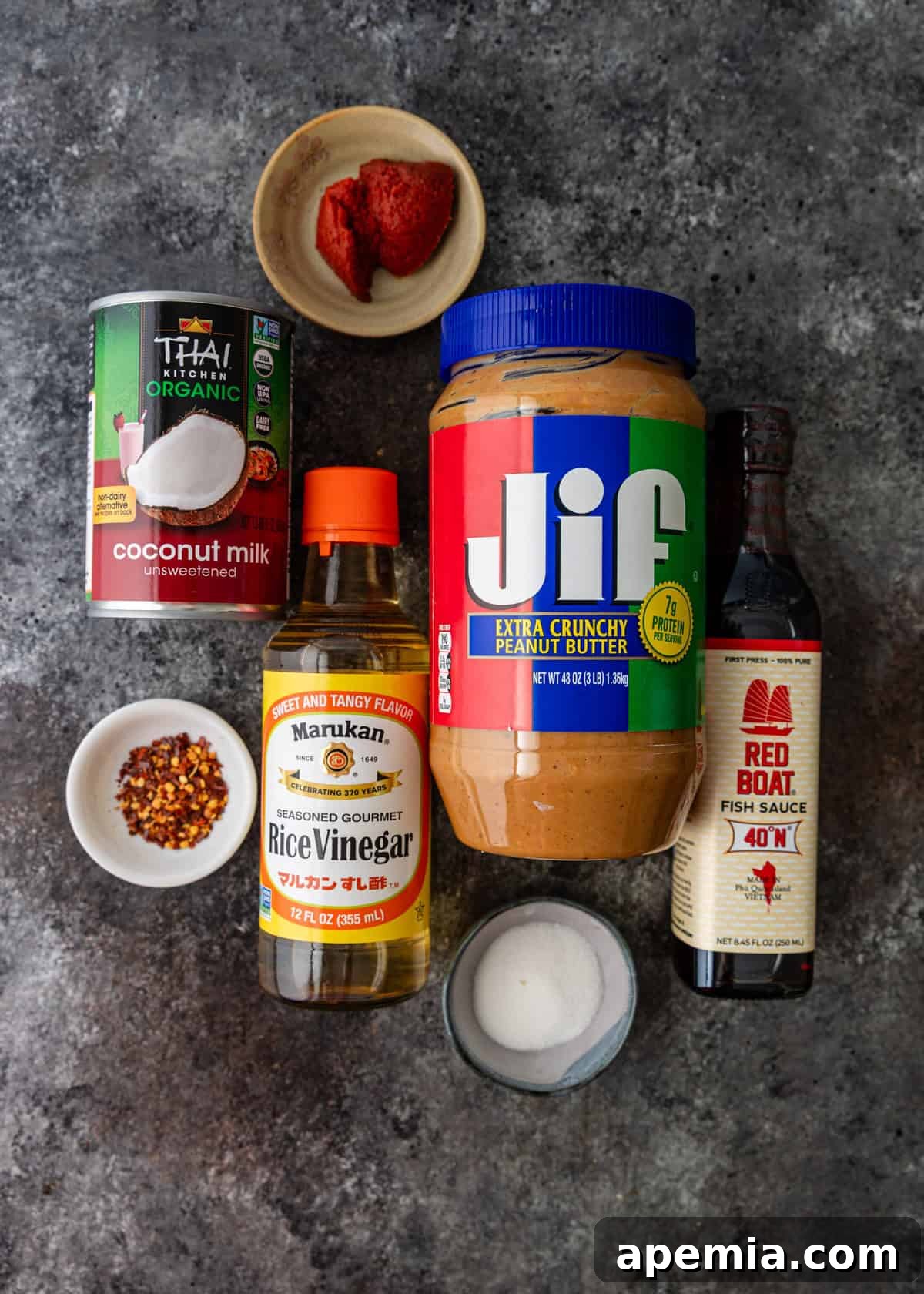
- Peanut Butter: I primarily use smooth peanut butter to ensure a silky, creamy sauce base. For an added textural dimension and delightful crunch, I prefer to incorporate freshly chopped peanuts as a garnish just before serving. However, if you’re a fan of a chunkier sauce, feel free to use chunky peanut butter directly. If your peanut butter is particularly thick, a brief microwave warming can make it much easier to blend smoothly. Natural peanut butter (without added sugars or oils) will give a purer flavor, but may require more stirring to prevent separation.
- Thai Red Curry Paste: In my opinion, this is the definitive curry paste for a truly authentic flavor. It delivers a potent kick of heat, a subtle tang, and a hint of salt that forms the backbone of the sauce. While I highly recommend it, you can experiment with other red curry pastes or even Panang curry paste if that’s what you have on hand. The goal is to achieve a flavorful heat, acidity, and savory base. Remember to adjust the quantity based on the spice level of your chosen paste.
- Rice Vinegar: The bright, tangy, and slightly sour notes of rice vinegar are absolutely essential to cut through the richness of the peanut butter and curry, providing a crucial balance to this thick and savory condiment. Without it, the sauce can taste flat. If rice vinegar is unavailable, white vinegar or freshly squeezed lime juice can serve as excellent substitutes, though lime juice will introduce a citrusy aroma that is equally delicious and often used in Thai cuisine.
- Fish Sauce: This fermented ingredient, derived from salted fish, is a cornerstone of Southeast Asian cuisine. It imparts an irreplaceable salty, savory, and deep umami flavor that cannot be replicated by any other ingredient. It’s the secret weapon that gives this peanut sauce its authentic Thai character. While its aroma can be strong on its own, when cooked into a dish, it transforms into a complex, savory depth. It’s truly one of those ingredients that you can’t substitute effectively, so make sure to seek it out among the Asian ingredients at your local grocery store. Brands like Red Boat or Squid Brand are excellent choices.
- Coconut Milk: Contrary to popular belief, coconut milk is actually less sweet than typical dairy milk. Its defining characteristic is a unique floral and subtly tropical sweetness, alongside its wonderfully thick and creamy consistency, which lends a luxurious mouthfeel to the sauce. It also helps to mellow the spice of the curry paste. If you need a substitute, a combination of half-and-half or heavy cream could work, but you would need to adjust the amount of sugar to compensate for the lost natural sweetness and potentially add a tiny splash of coconut extract for flavor. Always use full-fat canned coconut milk for the best results, as the reduced-fat versions can lead to a thinner, less rich sauce.
- Hoisin Sauce: While not explicitly listed in the original recipe card’s ingredient list, Hoisin is mentioned in the intro and “flavor adjustment” paragraph. It’s a sweet, salty, and tangy Chinese barbecue sauce that adds depth and a beautiful sheen to the sauce. If not using, you might need to adjust sugar and salt levels.
- Ginger and Garlic: The recipe description mentions ginger and garlic but they are not in the ingredients list. Freshly minced ginger and garlic (about 1-2 cloves garlic and 1-inch ginger, grated) should be added with the curry paste for maximum aromatic impact.
- Sesame Oil: A drizzle of toasted sesame oil adds a distinct nutty aroma and flavor, contributing to the overall Asian profile. Add it towards the end to preserve its delicate notes.
- Sugar: White granulated sugar helps to balance the savory, spicy, and sour elements, contributing to the characteristic sweet and salty profile of Thai cuisine. Brown sugar can also be used for a deeper, molasses-like sweetness.
- Red Pepper Flakes (Optional): For those who crave an extra layer of heat, red pepper flakes are a fantastic addition. You can adjust the quantity to your preferred spice level, adding them to the sauce while it simmers to allow their flavor to infuse.
Mastering the Art of Thai Peanut Sauce
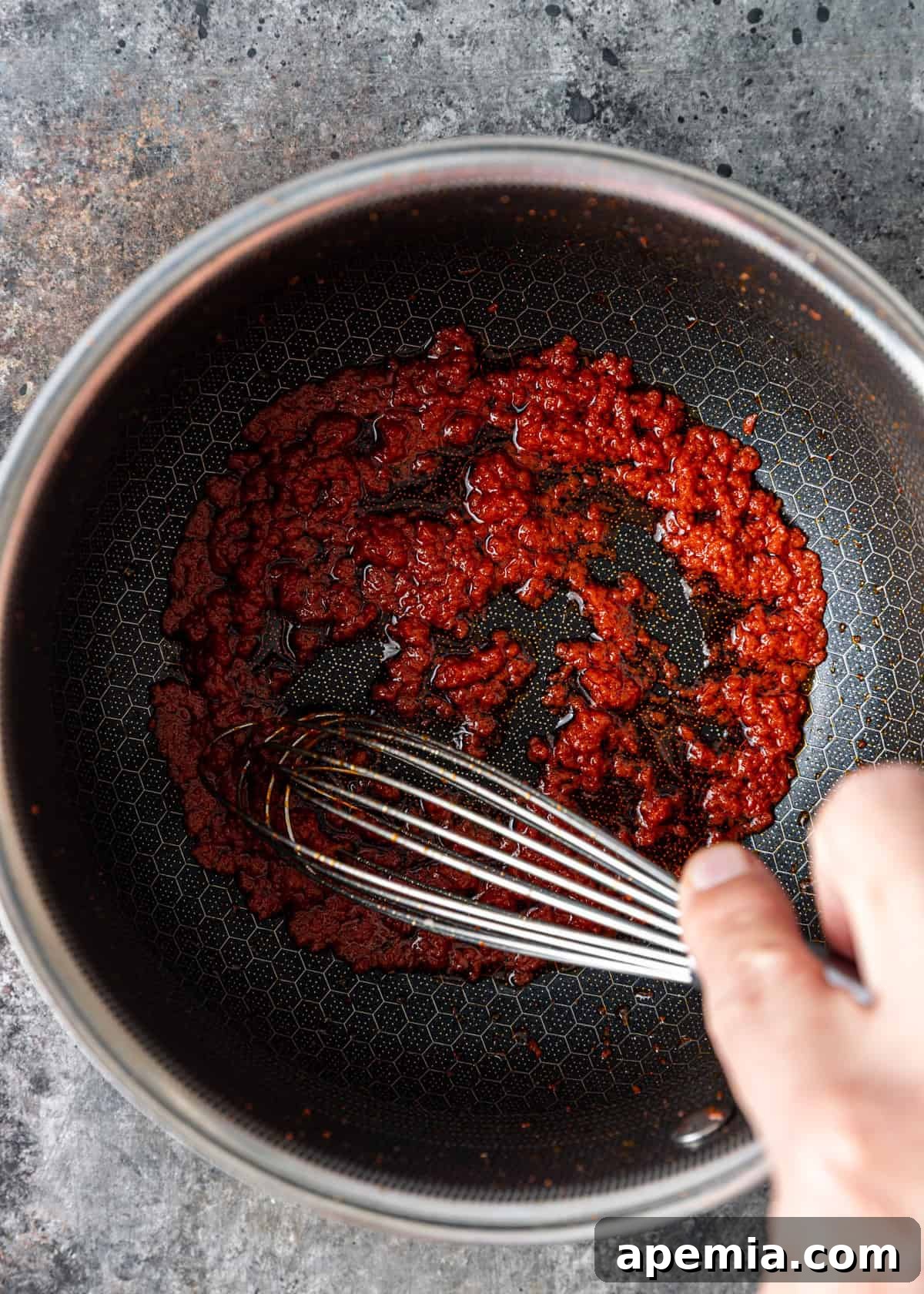
- Bloom and Simmer: Begin by heating a small saucepan over medium heat with a tablespoon of canola or coconut oil. Add the red curry paste (along with minced garlic and ginger, if using) and whisk constantly for about 1 minute until fragrant. This crucial step “blooms” the spices, releasing their full aroma and deepening the flavor. Pour in the coconut milk, bring it to a gentle boil, and continue whisking for another 2 minutes to allow the flavors to meld beautifully.
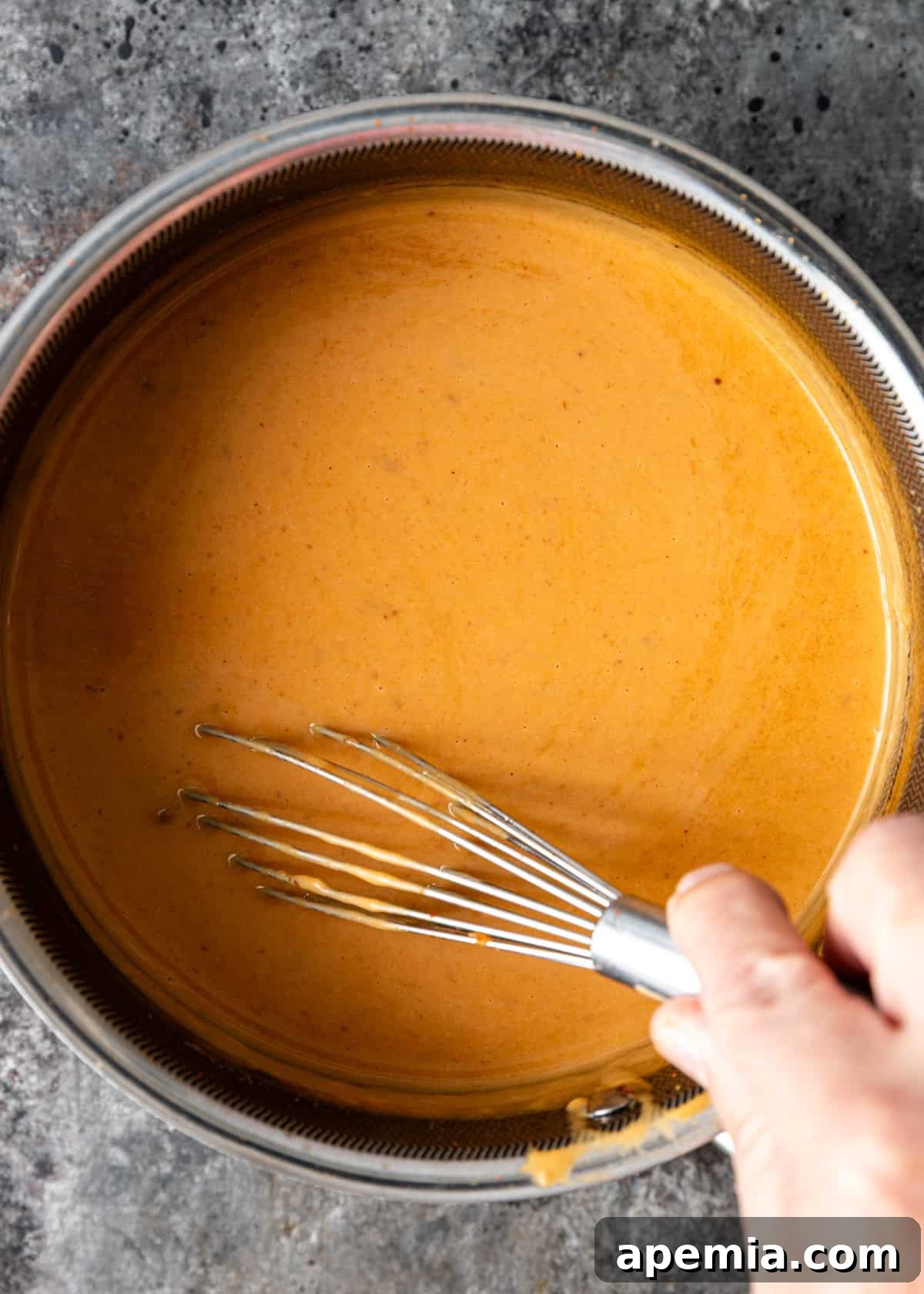
- Combine and Thicken: Introduce the peanut butter to the saucepan. Continue whisking diligently as the sauce simmers. You’ll notice it gradually thickening and coming together, transforming into a creamy, luscious consistency within 2 to 3 minutes. Reduce the heat to low to maintain a gentle simmer.
- Season and Adjust: Stir in the fish sauce, sugar, and rice vinegar. Whisk everything together for approximately 1 minute, ensuring all ingredients are thoroughly incorporated. Taste the sauce and adjust the seasonings to your preference. This is where you can truly personalize the flavor. Add a pinch more sugar for sweetness, a dash more vinegar for tang, or a splash more fish sauce for umami depth. If the consistency is too thick, gradually add a tablespoon or two of water or extra coconut milk until it reaches your desired creaminess.
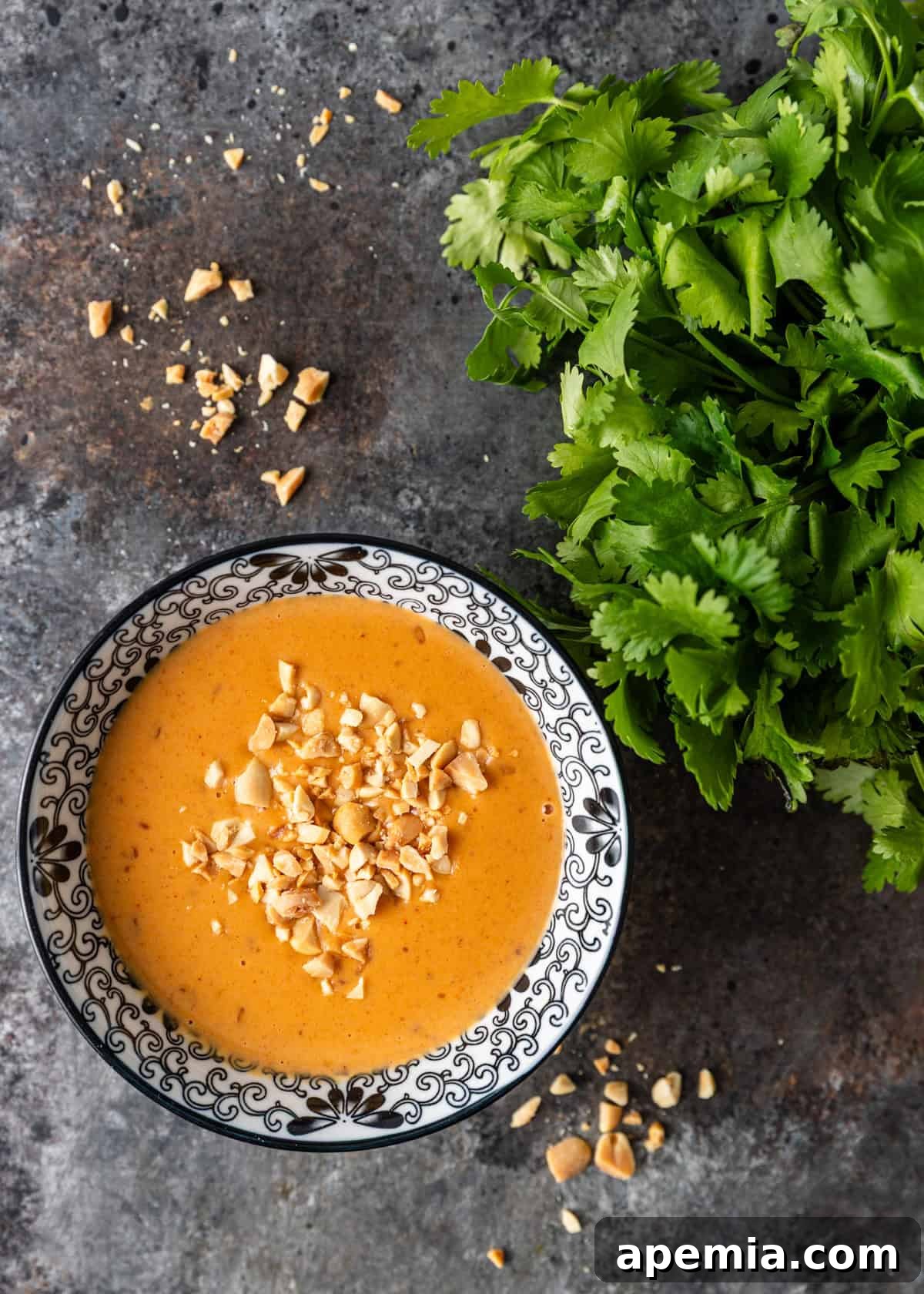
- Serve with Flair: Remove the sauce from the heat. Serve it immediately at room temperature to best appreciate its complex flavors. For an added layer of texture and a visually appealing garnish, sprinkle generously with freshly chopped peanuts and a handful of fresh cilantro.
Troubleshooting Tips:
- Too Thick? Gradually whisk in small amounts of water, coconut milk, or even lime juice until you reach your desired consistency.
- Too Thin? Return the sauce to low heat and simmer gently, whisking occasionally, until it thickens slightly. Be careful not to scorch the bottom. Adding a bit more peanut butter can also help.
- Flavor Balance Off?
- Too Spicy? Add more coconut milk or a touch more sugar/peanut butter to mellow the heat.
- Too Sweet? Introduce more rice vinegar or lime juice for acidity, or a dash more fish sauce for savory balance.
- Too Salty? Dilute with more coconut milk or water, and balance with a bit more sugar and peanut butter.
Perfect Pairings and Serving Suggestions
The versatility of homemade Thai peanut sauce is truly astounding. Beyond the classic chicken satay, this sauce can elevate a myriad of dishes, transforming everyday meals into exciting culinary experiences:
- Dipping Delight: It’s the ultimate dip for Vietnamese spring rolls, crispy Chinese egg rolls, various dumplings, and even fresh vegetable sticks like carrots, cucumbers, and bell peppers.
- Noodle Nirvana: Toss it with warm or cold noodles (think rice vermicelli, soba, or even spaghetti!) for a quick and flavorful peanut noodle dish. Add shredded chicken, tofu, or an array of colorful vegetables for a complete meal.
- Salad Sensation: Whisk in a bit more lime juice or water to thin it slightly, and use it as a dressing for Asian-inspired salads. It pairs beautifully with mixed greens, shredded cabbage, carrots, bell peppers, and grilled chicken or shrimp.
- Marinade Magic: This sauce makes an incredible marinade for chicken, pork, beef, or tofu. Marinate your protein for at least 30 minutes (or up to 4 hours) before grilling, baking, or stir-frying for deeply infused flavors. It’s particularly fantastic for grilled skewers.
- Stir-Fry Savior: Towards the end of your stir-fry, add a few spoonfuls of peanut sauce to coat your ingredients, creating a rich and glossy finish.
- Rice Bowl Booster: Drizzle generously over rice bowls topped with your favorite protein and steamed or sautéed vegetables for a satisfying and flavorful meal.
- Sandwich & Wrap Spread: Use it as a unique and flavorful spread in sandwiches, wraps, or even as a base for a gourmet burger.
For garnishing, always consider adding a sprinkle of chopped roasted peanuts for crunch, fresh cilantro leaves for brightness, and a few red pepper flakes for an extra kick of heat.
Recommended Kitchen Tools
- Blender or Immersion Blender: Essential for achieving that perfectly smooth, creamy consistency. A regular blender works beautifully, but an immersion blender offers the convenience of blending directly in your saucepan or storage container, minimizing cleanup.
- Small Saucepan: Ideal for blooming the curry paste and simmering the sauce to allow flavors to develop and the sauce to thicken properly.
- Whisk: Crucial for continuously stirring and preventing the peanut butter from sticking or the sauce from scorching, ensuring a smooth and even consistency throughout the cooking process.
- Airtight Container: For convenient and safe storage of your freshly made peanut sauce in the refrigerator.
Storing Your Homemade Thai Peanut Sauce
To maintain its freshness and flavor, always keep your homemade Thai peanut sauce refrigerated when not in use. Avoid letting it sit out at room temperature for longer than a few hours, especially in warmer climates, to prevent spoilage. When stored correctly in an airtight container, this vibrant sauce will last for up to one week in the refrigerator, ready to enhance your meals at a moment’s notice.
If you find that the sauce has thickened considerably after being refrigerated, simply allow it to sit at room temperature for about an hour before serving. A quick whisk will bring it back to its desired smooth consistency. If it’s still too thick, you can stir in a small amount of warm water or extra coconut milk until it reaches your preferred texture.
For longer preservation, Thai peanut sauce freezes exceptionally well. Pour it into a freezer-safe container or even ice cube trays (for convenient single-serving portions), and it can be stored for up to 6 months. When you’re ready to use it, let it thaw completely in the refrigerator or at room temperature. Give it a vigorous stir, and if needed, add a splash of water or coconut milk to restore its creamy texture before serving.
Share this recipe on Pinterest!
Love this recipe? Share it with the world on Pinterest to inspire others.
Frequently Asked Questions
You’ll often find these terms used interchangeably in many Western contexts, but they’re not technically identical. Satay originates from the Indonesian word sate, which refers specifically to “skewered meat.” Therefore, “satay sauce” literally means a condiment served alongside skewered meat. This condiment isn’t exclusively a peanut-based sauce; it could be any sauce designed to complement satay.
This Thai peanut sauce recipe can be considered a delicious descendant or variation of the broader category of Indonesian satay sauces. While it shares a similar palate of Southeast Asian ingredients, it distinctively highlights the unique aromatic profile and vibrant flair characteristic of Thai cuisine, with a greater emphasis on the sweet, sour, salty, and spicy balance.
Separation in peanut sauce primarily occurs due to the natural oils in peanut butter rising to the top. If you’re using natural peanut butter that tends to separate in its jar, your homemade sauce is likely to do the same. The simplest solution is to give the sauce a quick, thorough stir before serving. Opting for a “no-stir” variety of peanut butter (which often contains stabilizers) can also significantly reduce separation. Additionally, keeping the sauce properly chilled in the refrigerator helps prevent separation because the oils and fats will remain solid. As a general rule, always ensure your sauce is refrigerated anyway for food safety and optimal freshness.
Absolutely! This Thai peanut sauce is an exceptional marinade. Many of the ingredients found in this recipe, such as fish sauce, curry paste, and coconut milk, are core components in several of my favorite marinades, including my popular Thai grilled curry chicken. The combination of savory, sweet, tangy, and spicy flavors penetrates deeply into meats, poultry, fish, or tofu, tenderizing and infusing them with incredible taste. Simply coat your protein of choice with the sauce and let it marinate for at least 30 minutes, or up to 4 hours for maximum flavor, before grilling, baking, or pan-frying.
While peanut butter itself offers healthy fats and protein, Thai peanut sauce can be quite calorie-dense due to the coconut milk, sugar, and oil. However, consumed in moderation, it can be part of a balanced diet. You can make it healthier by using natural peanut butter, reducing the amount of added sugar, and opting for light coconut milk (though this will alter the richness). It’s also an excellent way to make vegetables more appealing!
For the creamiest, silkiest sauce, smooth, unsweetened peanut butter is ideal. If you prefer a bit of texture, you can opt for chunky peanut butter or, as I do, use smooth peanut butter and then add crushed roasted peanuts as a garnish. Avoid overly sweetened peanut butters, as they can throw off the delicate balance of flavors; it’s better to control the sweetness yourself with added sugar.
Thai Peanut Sauce
8
5 mins
10 mins
15 mins
Pin Recipe
PrintRecipe
Video
Ingredients
- 2 tbsp canola oil
- 2 tbsp red curry paste
- 1 1/2 cans full-fat coconut milk (13.5 ounce cans recommended)
- 1 cup creamy peanut butter
- 2 tbsp fish sauce
- 2 tbsp granulated sugar
- 1 tsp rice vinegar or coconut vinegar, or lime juice
- 1/2 tsp red pepper flakes optional, for extra heat
- 1 tbsp fresh ginger, minced (optional)
- 2 cloves garlic, minced (optional)
- 1 tsp toasted sesame oil (optional)
Instructions
-
Heat the canola oil in a small saucepan over medium-high heat for about 30 seconds. Add the red curry paste (and minced ginger and garlic, if using), and whisk constantly for approximately 1 minute until highly fragrant. This step is crucial for blooming the spices.
-
Pour in the coconut milk and bring the mixture to a gentle boil. Continue whisking constantly for 2 minutes to ensure all the flavors are well combined and the sauce starts to come together.
-
Add the peanut butter to the saucepan. Continue to whisk vigorously and cook for 2 to 3 minutes, until the sauce thickens and achieves a smooth, unified consistency. It should coat the back of a spoon.
-
Reduce the heat to a low simmer. Stir in the fish sauce, sugar, and rice vinegar (and toasted sesame oil, if using). Cook for about 1 minute more, whisking until all the ingredients are fully incorporated and the sauce is beautifully harmonized. Remove from heat.
-
Taste and adjust seasonings as desired (e.g., more sugar for sweetness, more vinegar/lime for tang, more red pepper flakes for heat). Serve immediately at room temperature. Garnish with chopped peanuts and fresh cilantro for enhanced texture and flavor. Store any leftovers covered in the refrigerator for up to 5 days.
Notes
- Most coconut milk cans are 13.5 to 13.66 ounces. You will need approximately 1 1/2 cans for this recipe. The remaining half-can can be saved for another recipe, such as my delicious Chicken Satay, which this sauce perfectly complements!
- For an extra layer of freshness, stir in some finely chopped fresh cilantro or a squeeze of fresh lime juice just before serving.
- To make this sauce vegan, substitute the fish sauce with a high-quality tamari or soy sauce, and add a pinch of dried mushroom powder for an umami boost.
Nutrition
Carbohydrates: 13g |
Protein: 10g |
Fat: 35g |
Saturated Fat: 16g |
Polyunsaturated Fat: 6g |
Monounsaturated Fat: 10g |
Trans Fat: 0.01g |
Sodium: 521mg |
Potassium: 413mg |
Fiber: 3g |
Sugar: 6g |
Vitamin A: 628IU |
Vitamin C: 1mg |
Calcium: 35mg |
Iron: 3mg
The information shown is an estimate provided by an online nutrition calculator. It should not be considered a substitute for a professional nutritionist’s advice.
Made this recipe? Let me know on Instagram!
Tag @keviniscooking or tag me #keviniscooking!