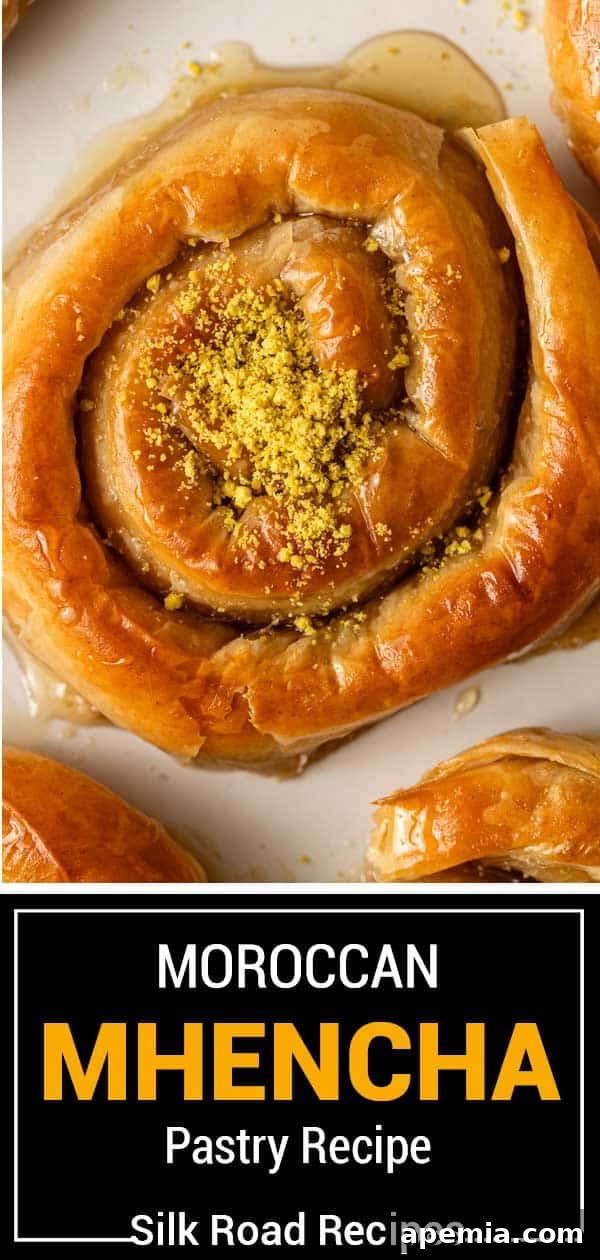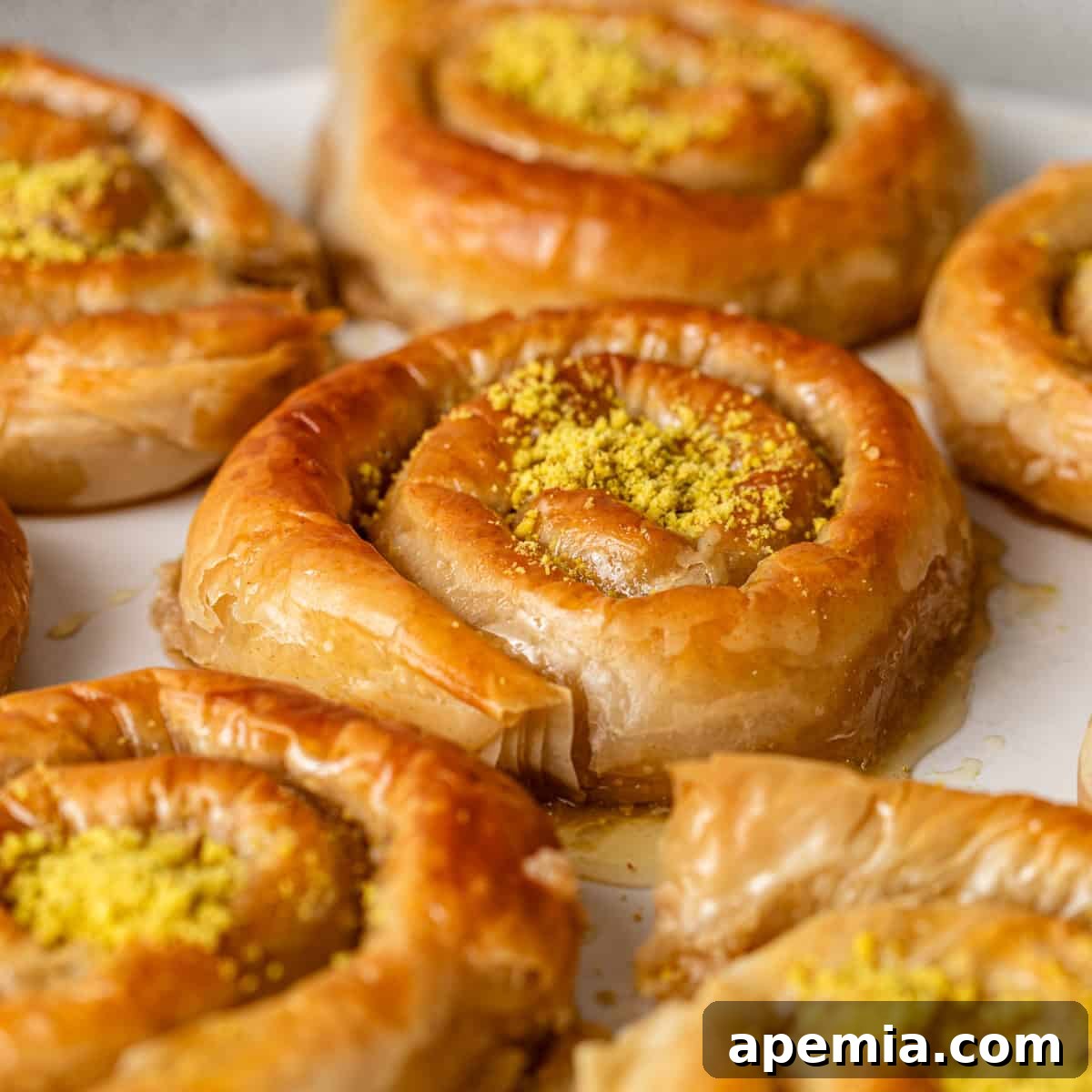
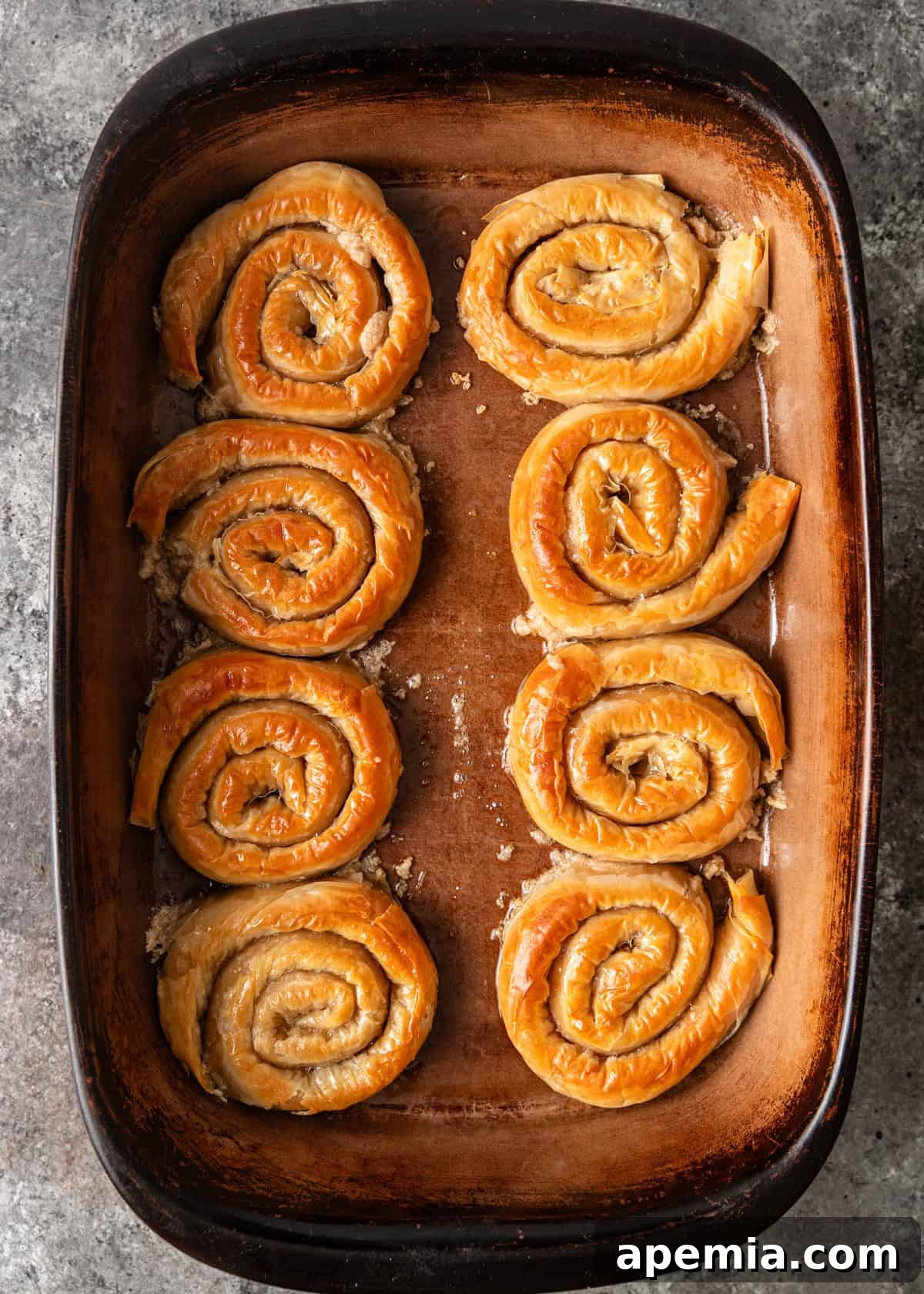
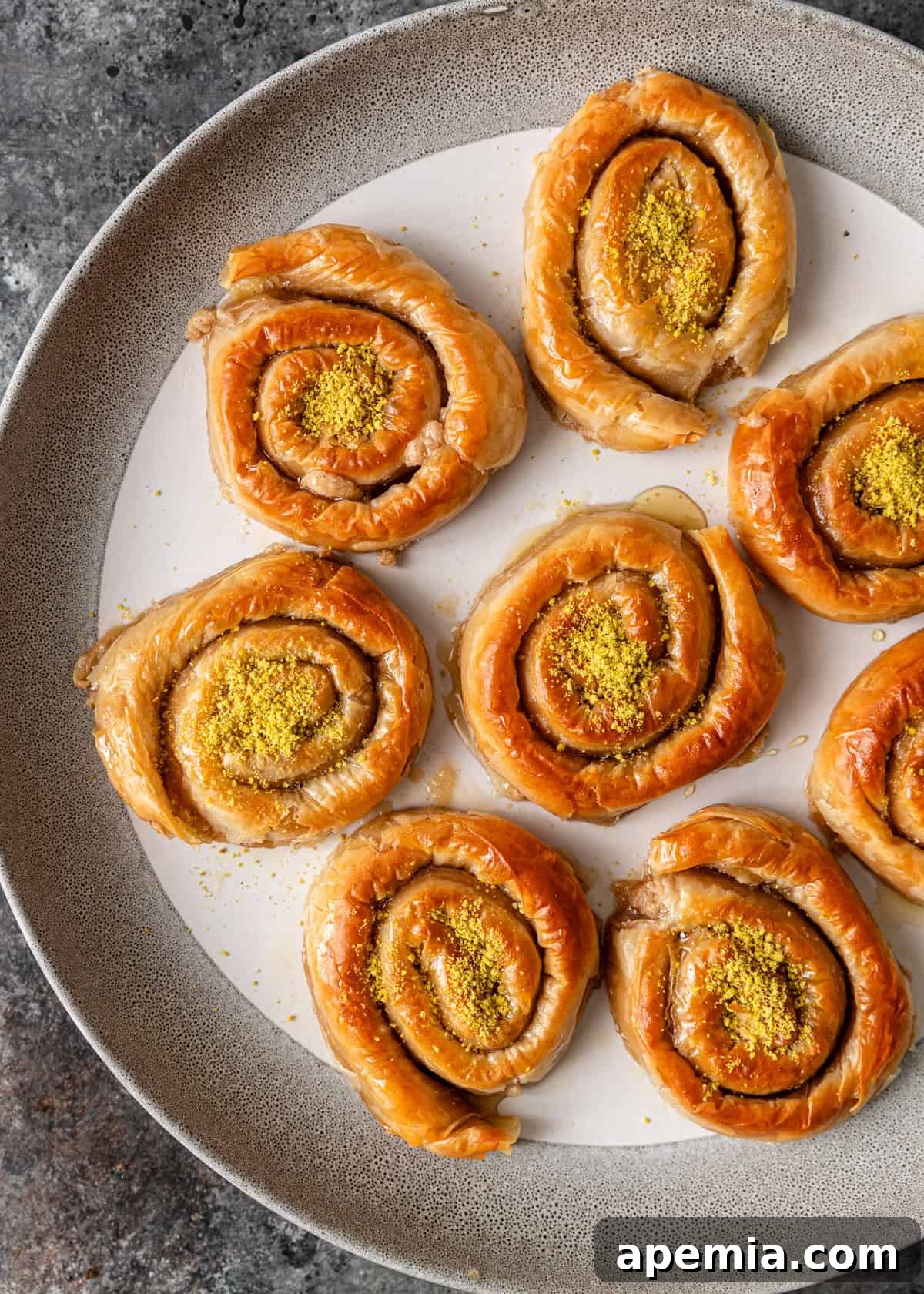
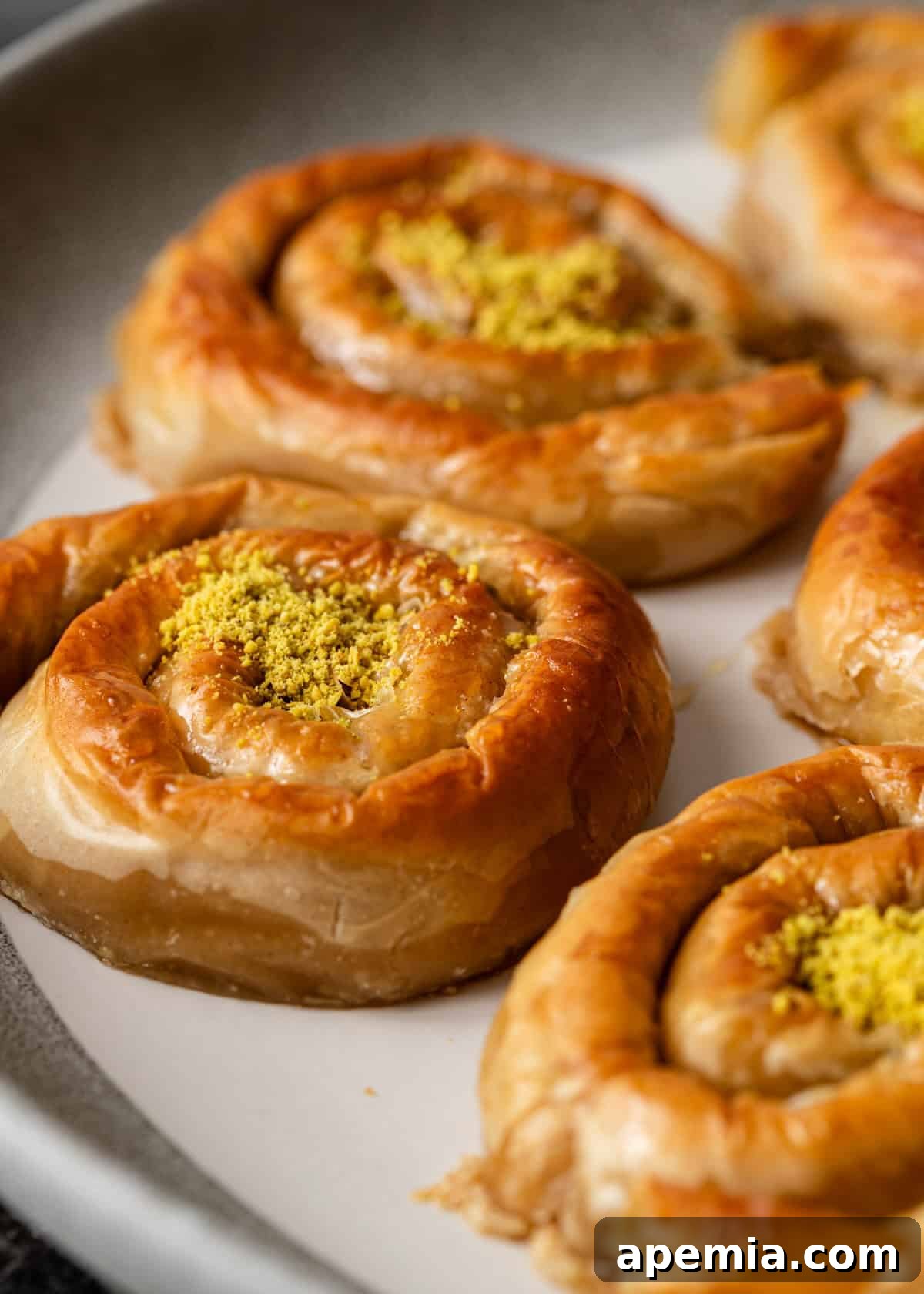
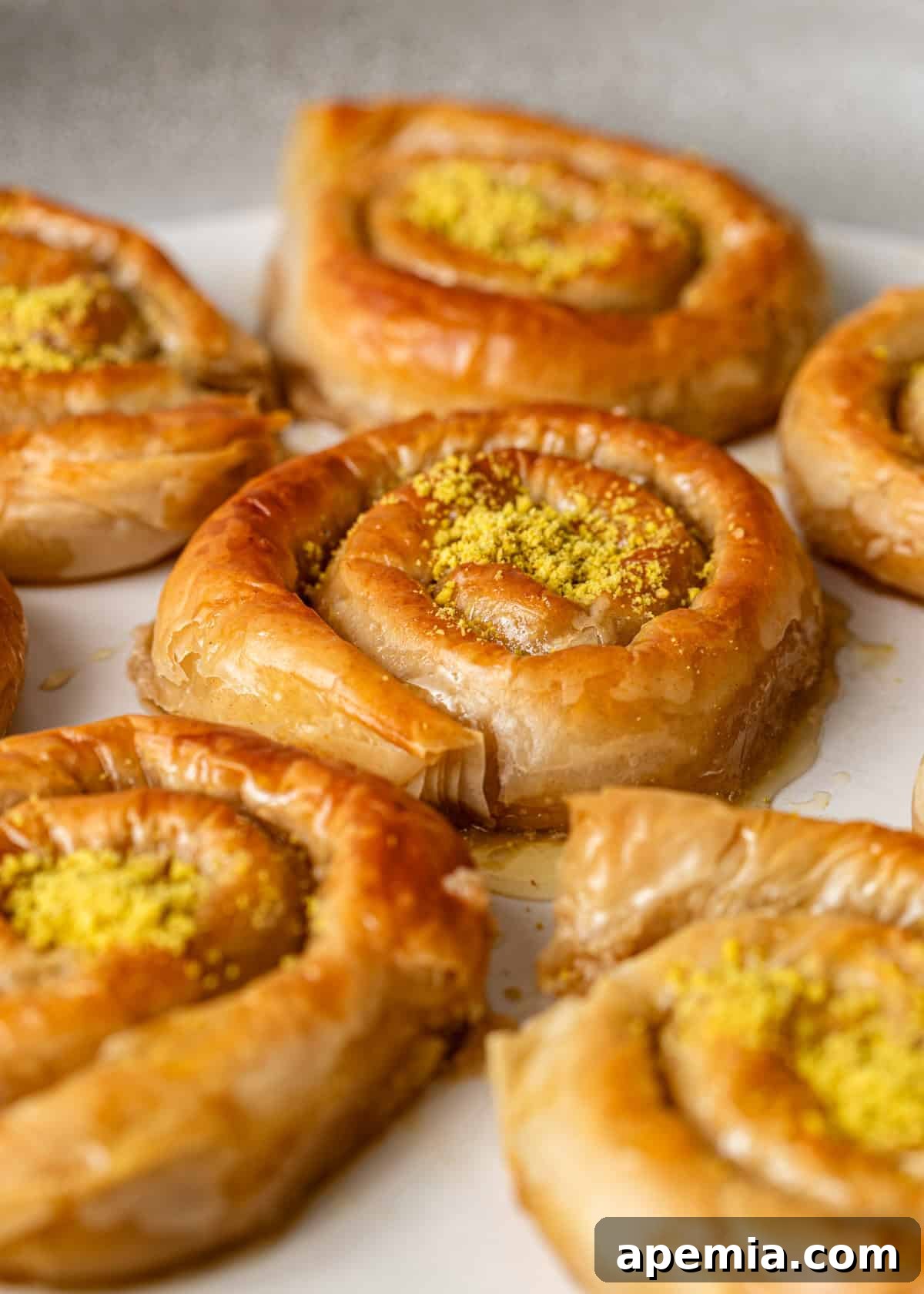
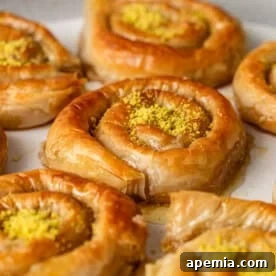
Just one glance at Mhencha, and you’ll be captivated – eager to experience its unique charm and exquisite taste. This truly remarkable Moroccan pastry, often called the “snake cake,” is intricately coiled into a plump, golden spiral, a visual masterpiece that hints at its delicious contents. Encased within delicate, flaky, and buttery filo dough lies a rich, aromatic spiced almond paste, creating a dessert that is almost too good to keep to yourself!
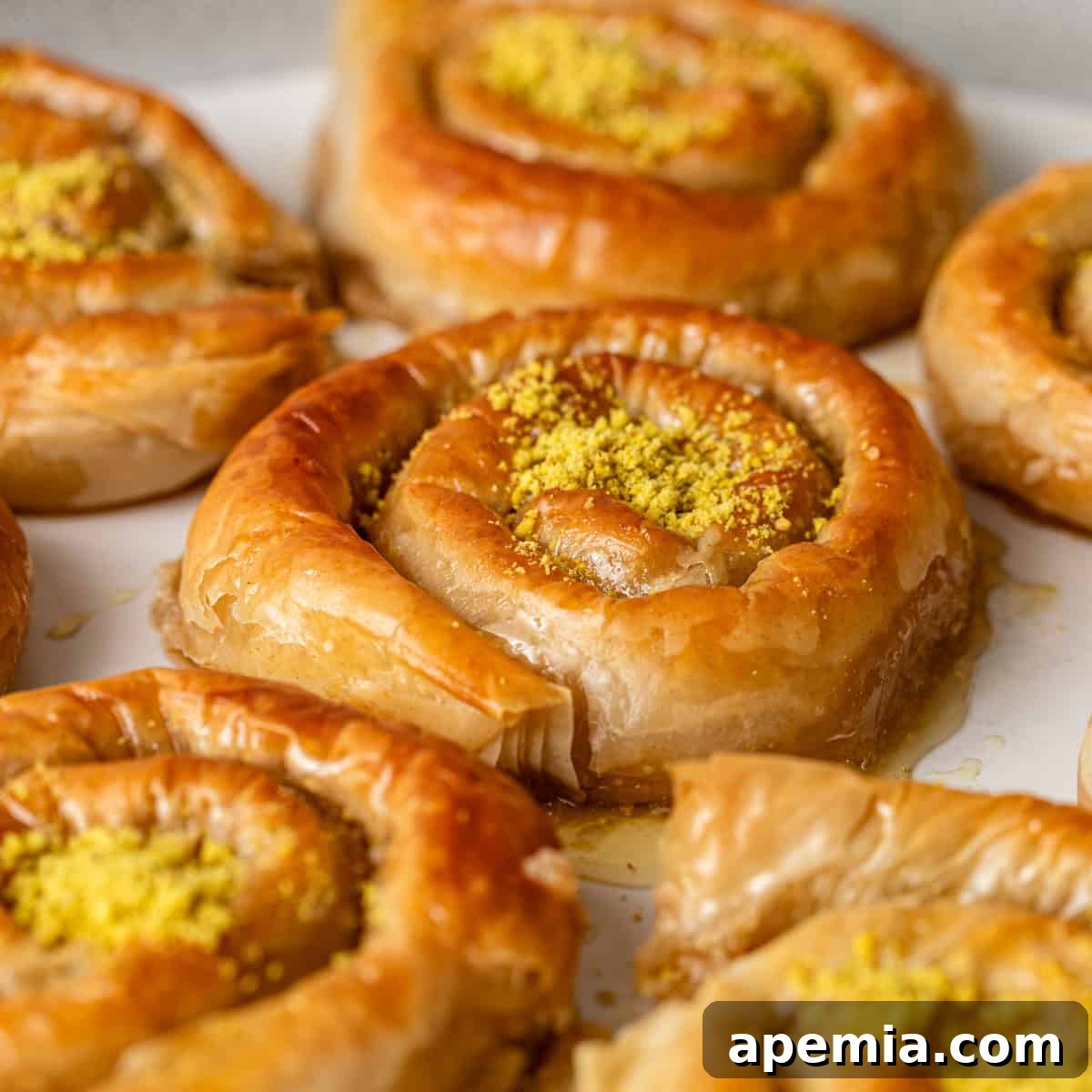
Mhencha is more than just a dessert; it’s an experience. It’s incredibly engaging to look at, surprisingly fun to prepare, and undeniably delightful to eat. This sweet and flaky almond Mhencha genuinely lives up to all expectations, delivering a symphony of textures and flavors. After baking to a perfect golden brown, each coil is generously soaked in a warm mixture of honey and fragrant orange blossom water, adding an irresistible sticky sweetness and a delicate floral aroma that defines this Moroccan delicacy.
While Mhencha shares a coiled appearance with other pastries, don’t confuse it with Borek. Borek is a savory pastry, often found in various cuisines across the Middle East and Balkans, and is typically stuffed with juicy ground meat or cheese, offering a completely different flavor profile.
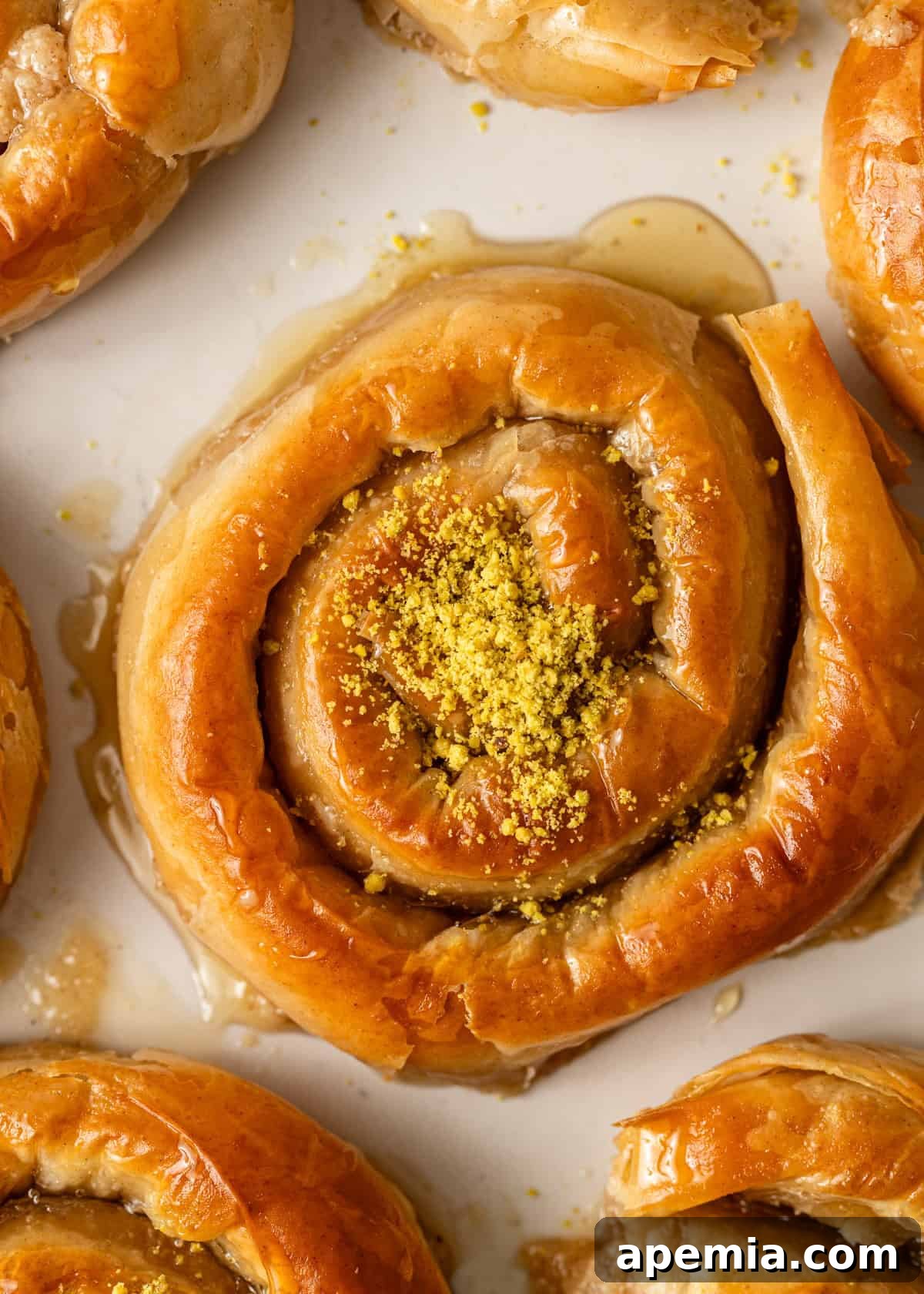
While almond paste is the most beloved and traditional choice for Mhencha filling, variations exist. However, the classic almond filling remains supreme for its rich flavor and delightful texture. The simple yet incredibly delicious almond paste used in this recipe is a harmonious blend of finely ground almond flour, sweet granulated sugar, a hint of warm cinnamon, and the enchanting essence of orange blossom water. This combination creates a filling that is both sweet and fragrant, perfectly complementing the crispiness of the filo pastry.
Table of Contents
- The Magic of the Almond Filling
- Essential Ingredients: Notes and Substitutions
- How to Make Moroccan Mhencha
- Recommended Tools for Mhencha
- Storing and Reheating Mhencha
- Frequently Asked Questions About Mhencha
- Moroccan Mhencha Pastry Recipe
Orange blossom water is an ingredient I simply cannot get enough of, and it’s absolutely crucial for an authentic Mhencha. This highly fragrant, delicately sweet liquid is a staple in North African, Middle Eastern, and Mediterranean culinary traditions. Derived from the distillation of bitter orange tree blossoms, it imparts a unique floral sweetness, a subtle perfume that elevates desserts to an ethereal level. Unlike orange juice, it’s not tart or tangy; instead, it offers a gentle, sophisticated sweetness reminiscent of a blooming garden. You’ll frequently encounter its captivating aroma in other regional favorites like Baklava, the savory and sweet Moroccan Pastilla, and the delightful shortbread Maamoul cookies.
Tip From Kevin
The Magic of the Almond Filling
The heart of Mhencha lies in its incredibly simple yet profoundly flavorful almond filling. This isn’t just any almond paste; it’s a vibrant mixture infused with traditional Moroccan spices and the irreplaceable orange blossom water. The result is a paste that, while similar to marzipan in its almond base, offers a distinctively lighter texture and a more complex, fragrant sweetness that store-bought marzipan simply cannot replicate. The cinnamon and orange blossom water elevate the almond flavor, creating an authentic taste profile.
While I highly recommend preparing this filling from scratch for the most authentic experience, you may consider a high-quality, store-bought marzipan as a substitute in a pinch. If you do, remember that commercial marzipan often has a denser texture and a more concentrated almond flavor. To mimic the traditional Mhencha taste, gently warm the marzipan to make it pliable and then incorporate a sprinkle of cinnamon and a few drops of orange blossom water into it. Be sure to add cinnamon over each rolled piece before wrapping it in the filo dough to ensure even distribution of flavor.
Essential Ingredients: Notes and Substitutions
(Be sure to check the recipe card for a full list of ingredients and quantities)
- Filo Pastry (Phyllo Dough) – Mhencha is traditionally crafted with warqa, a delicate Moroccan pastry dough known for its slight chewiness and pliability, often compared to an ultra-thin crepe. For wider accessibility and ease of use, I’ve opted for commercially available filo pastry in this recipe, which yields wonderfully flaky results. If you are fortunate enough to find warqa, I encourage you to use it for an even more authentic experience, as it offers a subtly different texture.
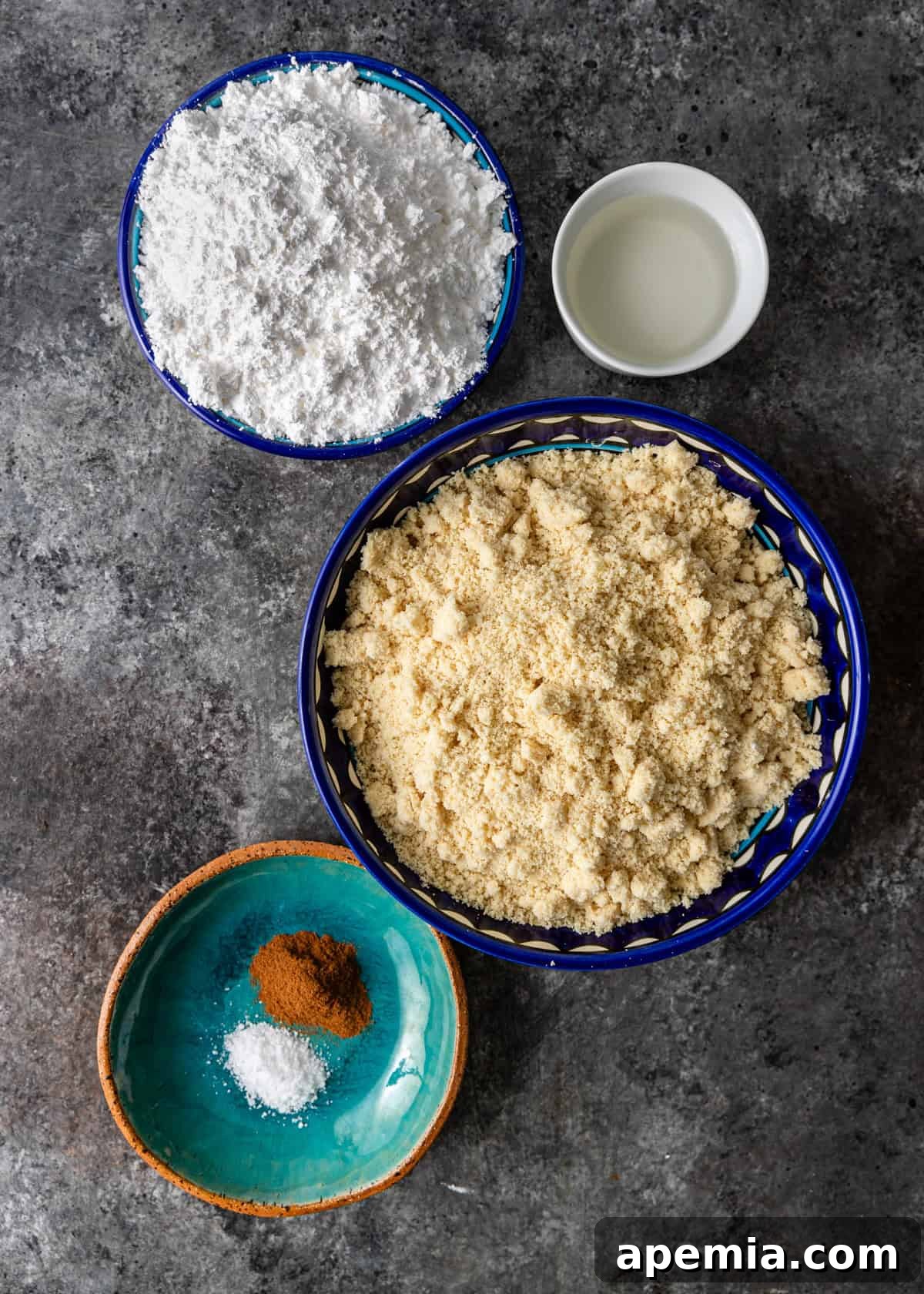
- Almond Flour – This is the foundation of our irresistible filling, providing the primary flavor and texture. It’s imperative not to substitute almond flour with other flours, as it defines the distinctive taste of Mhencha. Choose a finely ground almond flour for the smoothest paste.
- Powdered Sugar (Confectioners’ Sugar) – Powdered sugar dissolves seamlessly into the almond mixture, creating a smooth, cohesive paste. While caster sugar (superfine granulated sugar) is also a common choice in some almond paste recipes, powdered sugar ensures a silkier texture without any grittiness.
- Cinnamon – The warm, earthy notes of cinnamon are a classic pairing with almonds in Moroccan sweets, adding depth and complexity to the filling. For a slightly different aromatic twist, you can experiment with alternatives like a pinch of cardamom, a whisper of allspice, or a dash of freshly grated nutmeg.
- Orange Blossom Water – This is the soul of Moroccan Mhencha. It is not simply orange-flavored water but the delicate, fragrant distillate of orange tree blossoms. Its flavor is floral and sweet, not citrusy like oranges. It’s an indispensable ingredient in authentic Moroccan baking, lending an unmistakable perfume and delicate sweetness that cannot be truly replicated. Find it in specialty food stores or online.
- Honey – The golden honey syrup is what transforms Mhencha into a sticky-sweet, irresistible treat. Opt for raw or pure honey for the most vibrant and clean flavor. Lighter-colored honeys like clover or acacia tend to be easier to work with and allow the delicate floral notes of the orange blossom water to shine through.
- Orange Zest – We primarily use the zest in our honey syrup for an added burst of fresh citrus aroma, which beautifully complements the orange blossom water. Don’t let the juicy orange go to waste! Save the juice for another culinary adventure, perhaps in a moist and flavorful Greek olive oil cake or a refreshing beverage.
- Ground Nuts for Garnish – Mhencha is often crowned with a sprinkle of toasted almonds, but the beauty of this pastry lies in its adaptability. Feel free to use other finely ground nuts like pistachios (as pictured for a pop of color and flavor), walnuts, or even a medley of dried fruits for a festive touch. Garnish yours however you like to add an extra layer of texture and visual appeal!
How to Make Moroccan Mhencha: A Culinary Journey
Creating Moroccan Mhencha is a delightful process, blending simple steps with artistic presentation. Follow these instructions carefully to achieve perfectly coiled, golden pastries bursting with almond flavor.
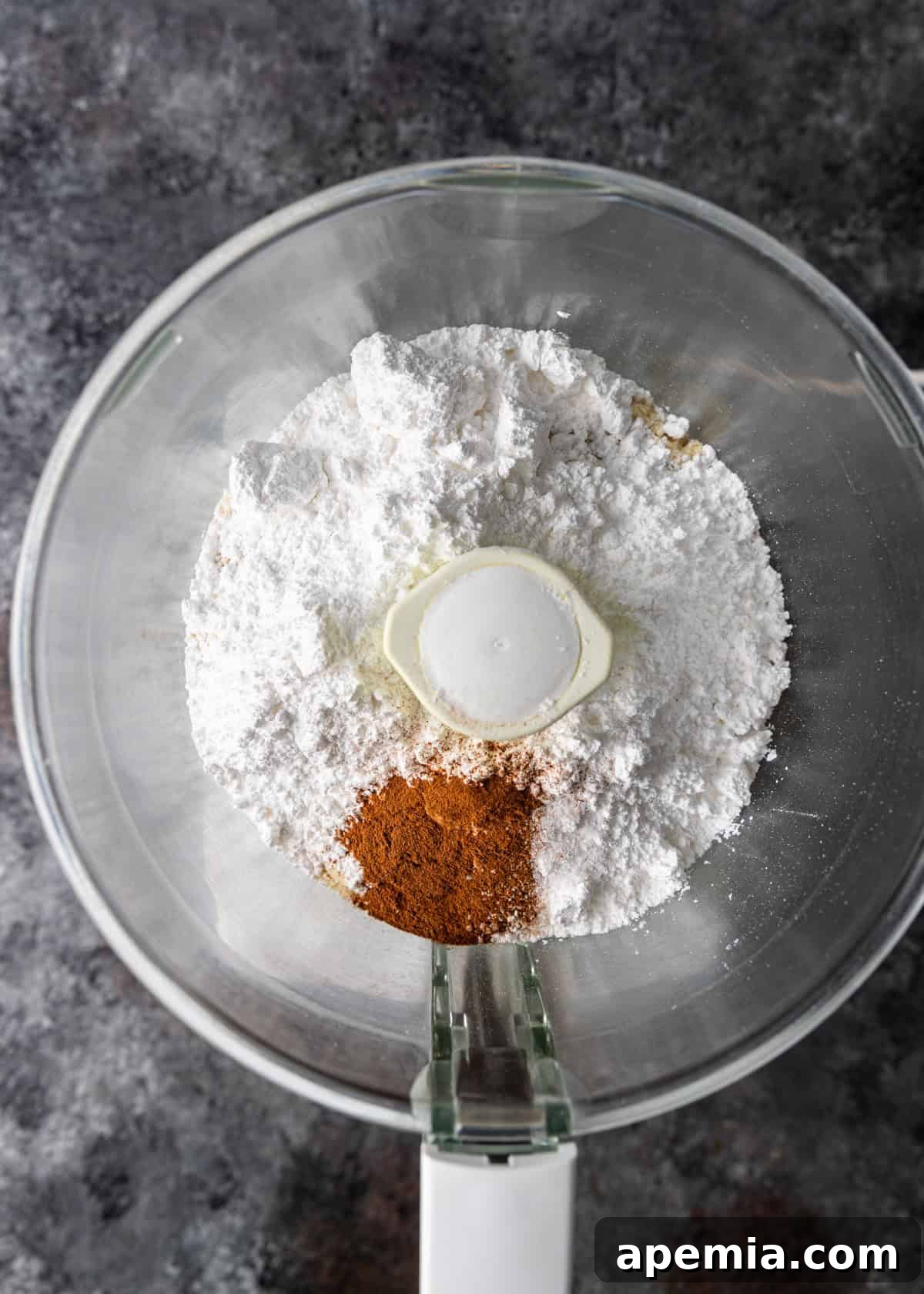
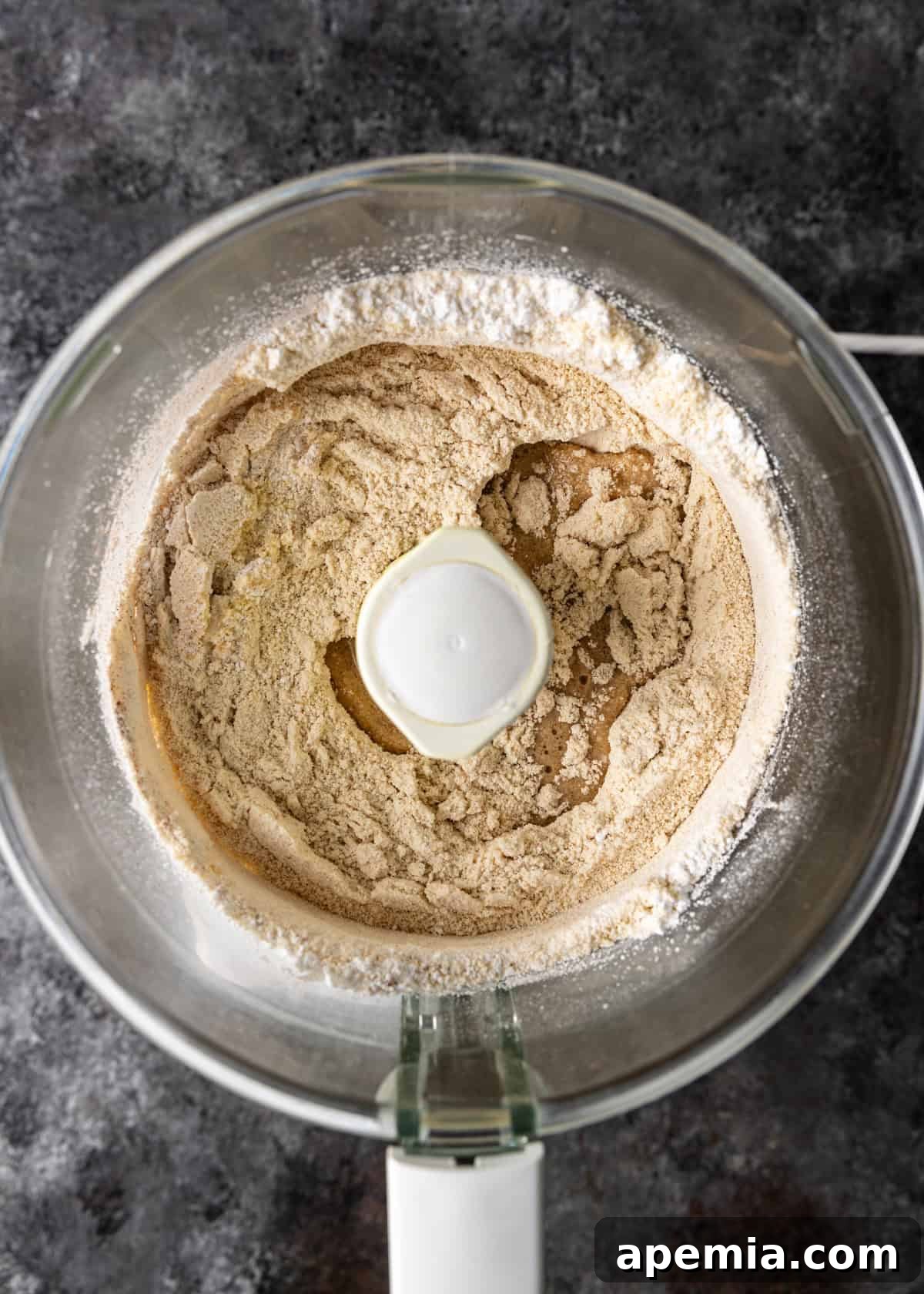
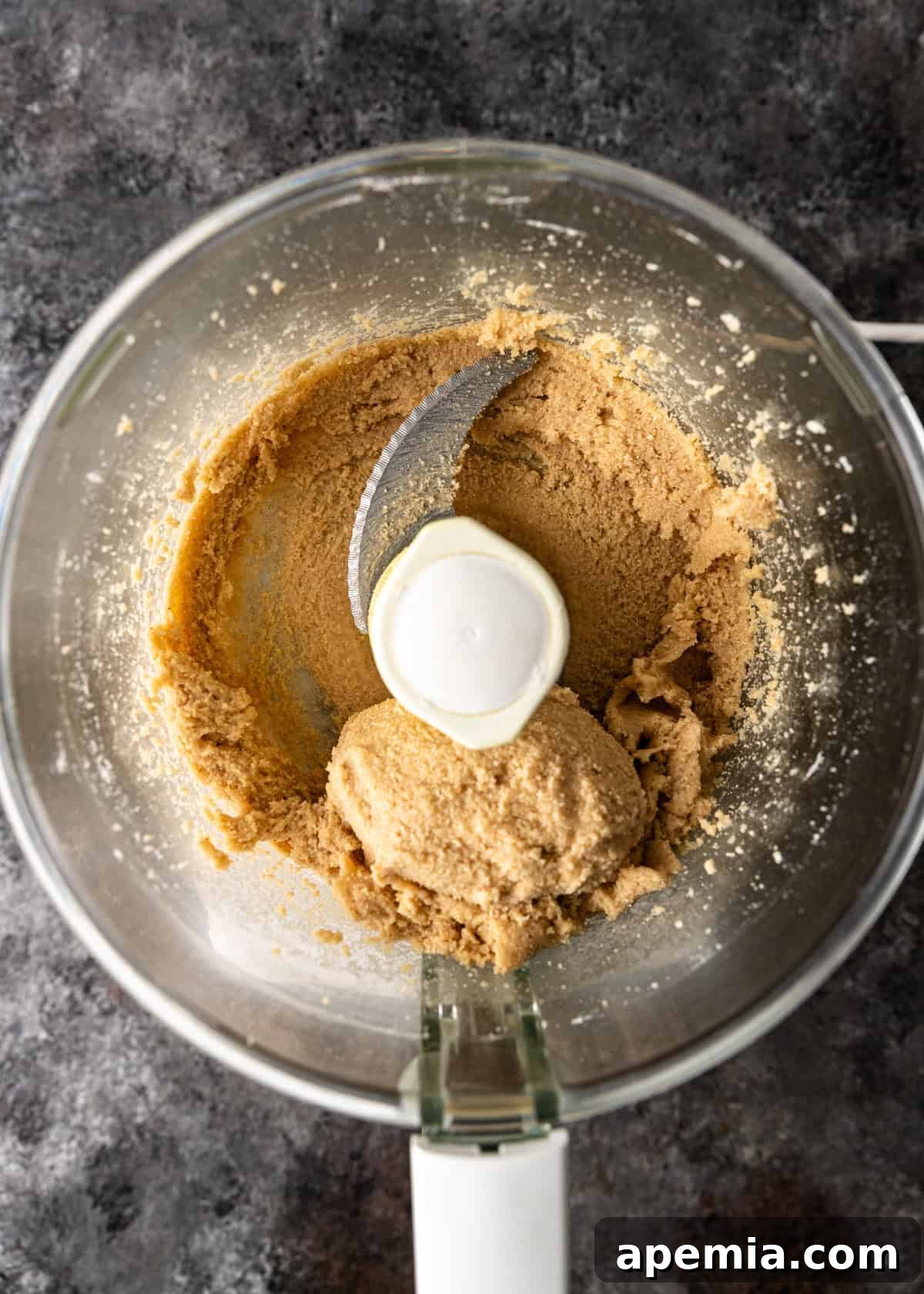
- Prepare the Almond Filling. In the bowl of a food processor, combine the almond flour, powdered sugar, cinnamon, and kosher salt. Pulse the mixture several times until all ingredients are thoroughly combined and no lumps remain. Gradually add the orange blossom water, continuing to pulse until a thick, pliable paste forms. The consistency should be firm enough to hold its shape when rolled. For precision, the paste should weigh approximately 400 grams.
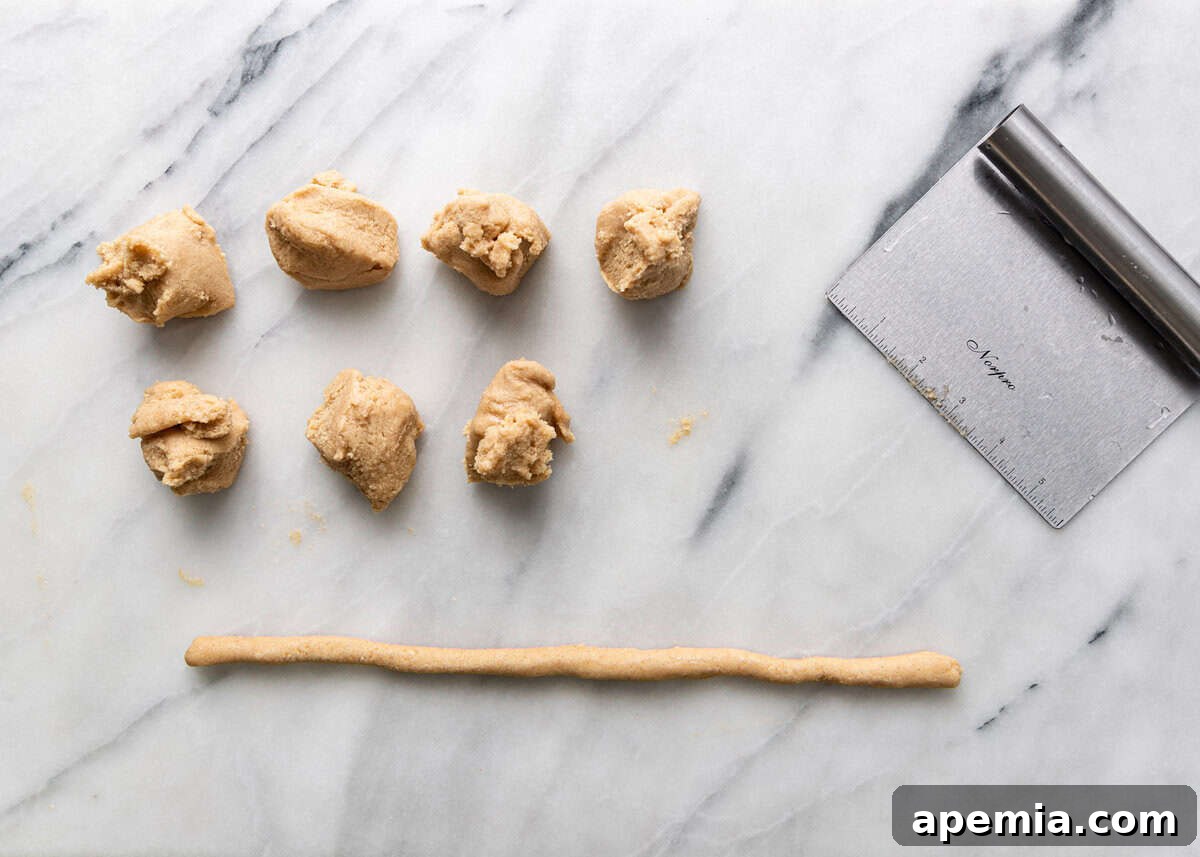
- Shape the Filling Logs. Divide the almond paste into 8 equal portions. On a clean, lightly floured surface, take each portion and gently roll it with your hands or a small rolling pin into a log approximately 12 inches long and about 1/2 to 3/4 inch thick. These logs will be the core of your Mhencha. Keep the shaped logs covered with a light, damp kitchen towel to prevent them from drying out while you prepare the pastry.
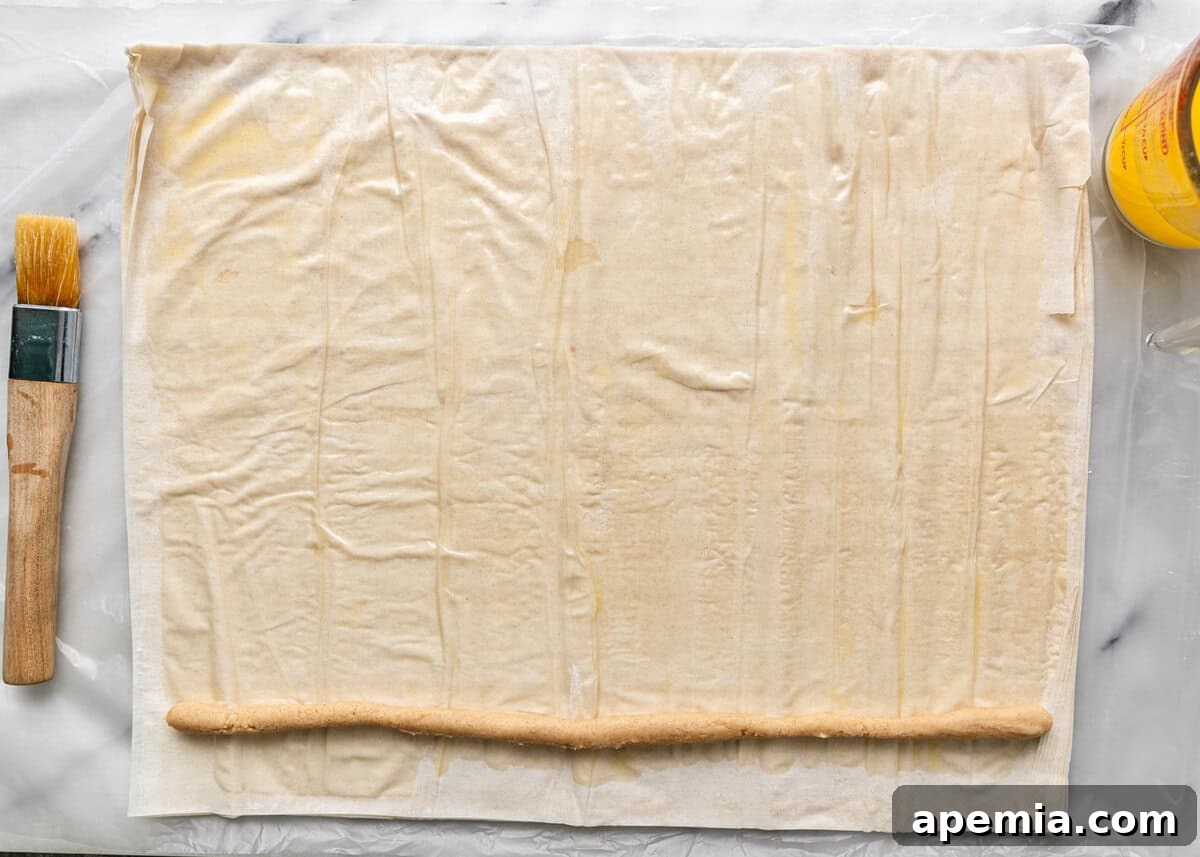
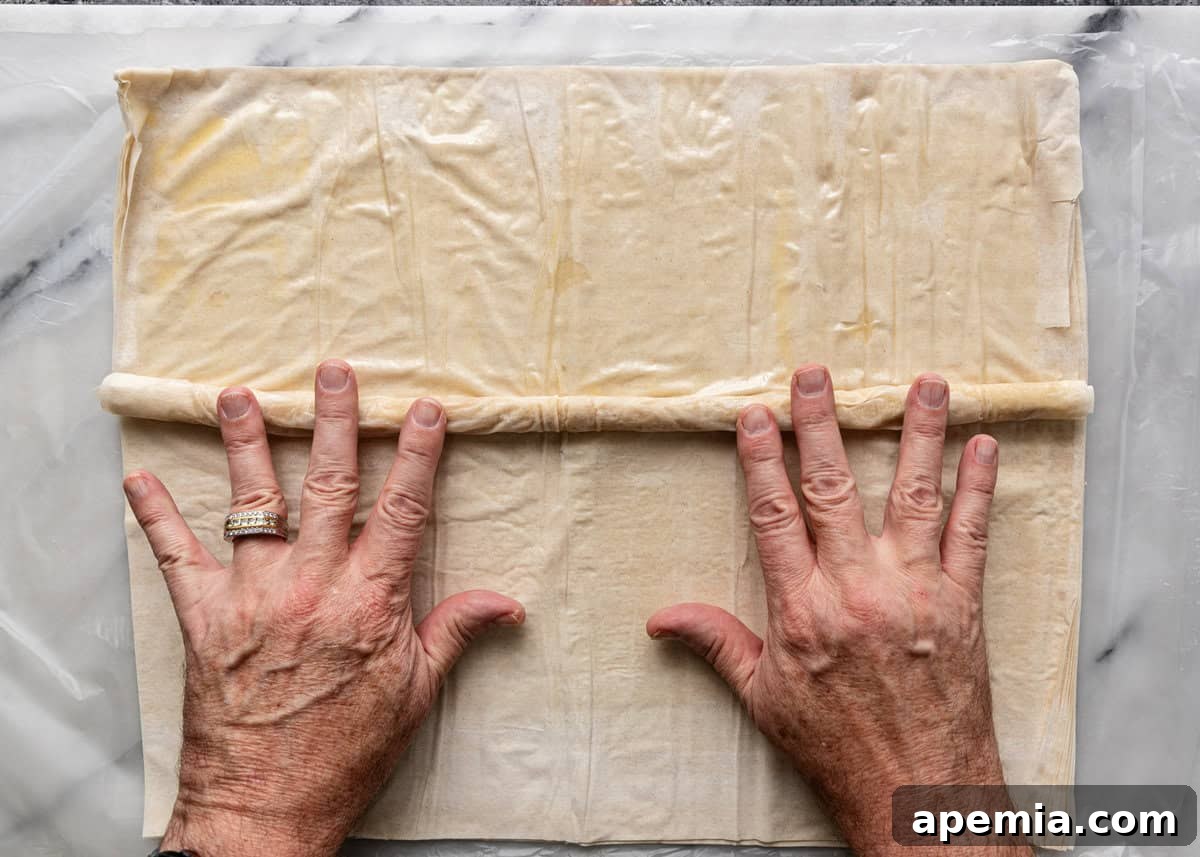
- Fill the Filo Pastry. Carefully unroll your filo pastry sheets. Lay one sheet flat on your clean work surface and brush it generously with melted butter, ensuring full coverage to achieve maximum flakiness. Place one almond paste log along the long edge of the buttered filo sheet, leaving a small border. Begin to loosely roll the filo sheet over the almond log, creating a long, filled rope. The key is to roll it without making it too tight, as over-tightening can cause the pastry to tear during baking. Repeat this process with the remaining filo sheets and almond logs until all are used.
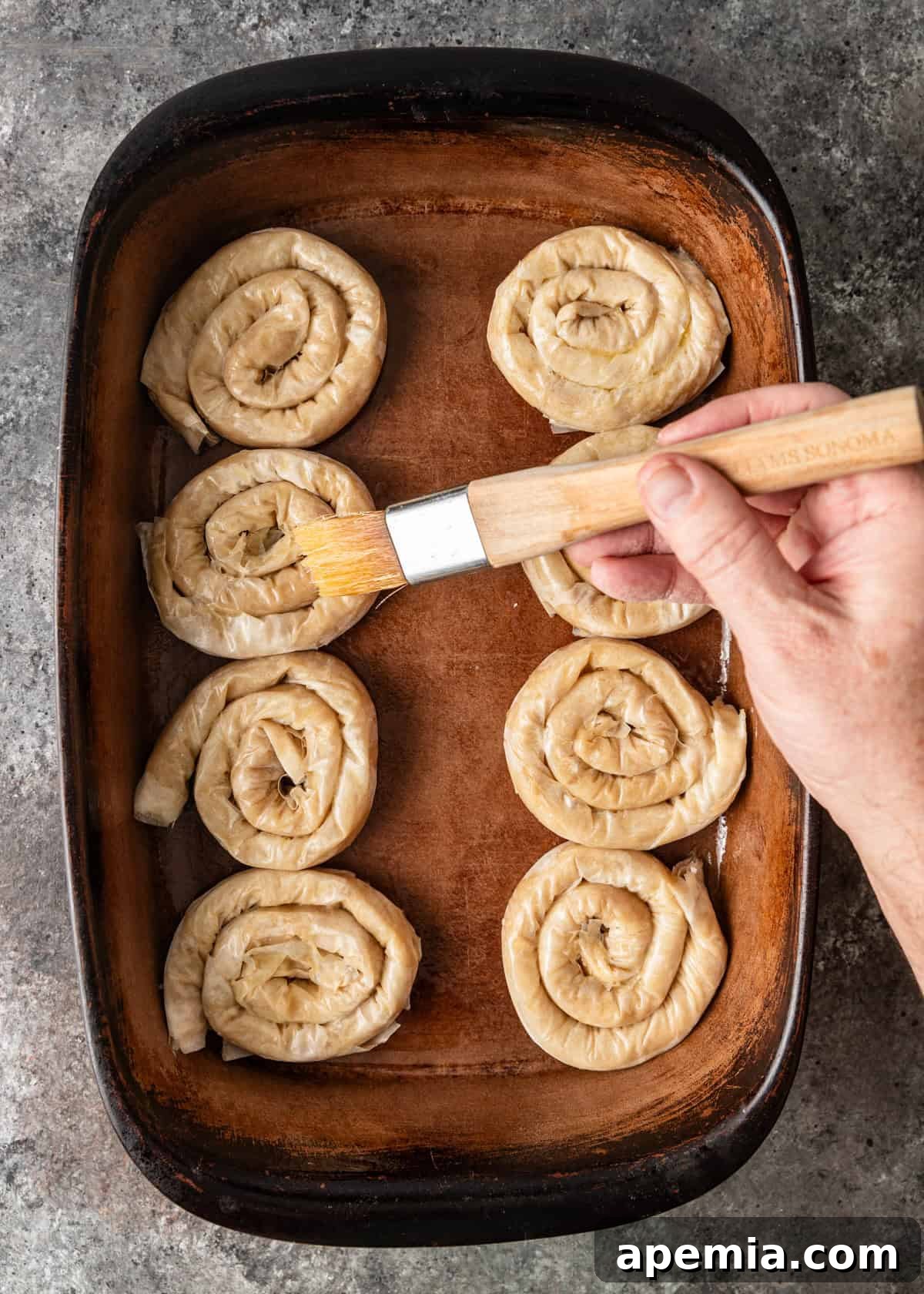
- Coil the Mhencha. Take one of the filled filo ropes and carefully begin to coil it tightly from one end, forming a beautiful spiral shape, resembling a snake. Place the coiled pastry onto a prepared baking sheet lined with parchment paper or a silicone mat. Repeat with the remaining filled ropes, arranging them on the baking sheet with a little space between each. Refer to the process images above for a visual guide to perfect coiling.
- Bake to Golden Perfection. Before baking, give your coiled Mhencha a final generous brush with any remaining melted butter. This ensures a deep golden-brown color and a wonderfully crisp exterior. Bake in a preheated oven at 350 degrees F (175 degrees C) for 10 to 15 minutes, or until the pastry is beautifully golden and visibly flaky. Keep a close eye on them to prevent over-browning.
- Prepare and Apply the Honey Syrup. While the Mhencha is still baking, prepare the enchanting honey and orange zest syrup. In a small, microwave-safe bowl, combine the honey and orange zest. Heat in the microwave for approximately 30 seconds, or until the honey is warm and more fluid. Stir well to infuse the orange zest flavor. Immediately upon removing the hot Mhencha from the oven, generously spoon this warm honey syrup all over the pastries. The heat of the Mhencha will help absorb the syrup, creating that characteristic sticky, sweet finish.
- Garnish and Serve. Allow the Mhencha to cool slightly, absorbing the honey syrup. Before serving, garnish as desired with additional orange zest or a sprinkle of finely ground nuts, such as pistachios or toasted almonds, for extra texture and visual appeal. Mhencha is delightful served warm or at room temperature, often accompanied by a cup of traditional Moroccan mint tea.
Recommended Tools for Mhencha
Having the right tools can make the Mhencha-making process even smoother and more enjoyable. Here are a few recommendations:
- Baking Sheet or Stone Dish – While a traditional baking stone dish can provide excellent heat distribution for an evenly golden crust, a standard baking sheet or pan lined with parchment paper or a silicone mat works perfectly well. Ensure your chosen pan is large enough to accommodate the coiled pastries without crowding.
- Food Processor – Essential for creating a smooth, consistent almond paste. It quickly combines all the filling ingredients, saving you time and effort.
- Kitchen Scale – Baking is often described as a science, and using a kitchen scale ensures accuracy, especially when portioning the almond paste for uniform Mhencha pieces. Aiming for 50-gram balls of paste, as recommended, guarantees consistent cooking and presentation.
- Pastry Brush – An absolute must for evenly coating the delicate filo sheets with melted butter and for drizzling the honey syrup over the baked pastries. A silicone pastry brush is easy to clean and prevents bristles from shedding.
Storing and Reheating Mhencha
One of the many wonderful qualities of Mhencha is its excellent shelf life, allowing you to savor this delightful pastry over several days.
For short-term storage, Mhencha can be safely kept at room temperature in an airtight container for up to 7 to 10 days. The honey syrup acts as a natural preservative, helping to maintain its freshness and moisture. If you wish to extend its shelf life further, store the Mhencha in the refrigerator for up to two weeks. Ensure it’s in a tightly sealed container to prevent it from absorbing other food odors.
Mhencha also freezes remarkably well, making it an ideal candidate for meal prepping or preparing ahead for special occasions. To freeze, arrange the cooled pastries in a single layer on a baking sheet and freeze until solid. Once firm, transfer them to a freezer-safe airtight container or heavy-duty freezer bag, separating layers with parchment paper to prevent sticking. It can be frozen for several months without compromising quality.
When you’re ready to enjoy frozen Mhencha, simply let the pastry thaw at room temperature for a few hours before serving. While delicious at room temperature, many prefer Mhencha slightly warmed. You can gently reheat it in a preheated oven (around 300°F/150°C) for 5-10 minutes until warmed through and the filo re-crisps slightly. Alternatively, an air fryer set to a lower temperature for a few minutes can also achieve a lovely warmth and crispness. For an extra touch of indulgence, drizzle a little more warm orange blossom honey over the top just before serving – it truly enhances the experience.
Share this recipe on Pinterest!
Love this recipe? Share it with the world on Pinterest.
Frequently Asked Questions About Mhencha
While store-bought almond paste or marzipan can be used as a convenient substitute, it’s crucial that it has a thick, firm consistency. It must be able to be shaped into a log and hold its form as it’s wrapped in the delicate filo dough. However, for the most authentic and deeply flavorful Moroccan Mhencha, I strongly recommend making the almond filling from scratch using traditional ingredients. The homemade version, with its specific blend of cinnamon and orange blossom water, offers a unique taste profile that commercial products simply cannot replicate.
Unfortunately, almond butter is not suitable for Mhencha filling, and that’s a firm no. Almond butter has a much thinner, creamier consistency, similar to peanut butter. This means it would not hold its shape when rolled into logs and would become far too runny and melt excessively during the baking process, leading to a messy and disappointing result. The firm, pliable texture of almond paste is essential for this recipe.
Orange blossom water imparts a very distinct floral flavor that is hard to perfectly mimic. However, if you cannot find it, you have a couple of alternatives. Rose water can be used for a similar floral essence, though it will give a different, distinct flavor profile. Alternatively, you can create a reasonable substitute by using plain water with a bit of orange extract and fresh orange zest. A good starting point would be 1 teaspoon of orange zest per tablespoon of water, along with a tiny drop of orange extract, adjusting to taste. Avoid using orange juice, as its acidity and strong citrus flavor are not a good match for the delicate notes required.
Moroccan Mhencha Pastry
Saved
Pin Recipe
PrintRecipe
Ingredients
Filling
- 1 1/2 cups almond flour
- 1 cup powdered sugar
- 1 tsp cinnamon
- 1/4 tsp kosher salt
- 3 tbsp orange blossom water
Assembly
- 8 sheets filo pastry
- 8 tbsp butter melted
Garnish
- 1 cup honey
- 1 tsp orange zest
- ground nuts (optional)
Instructions
-
Preheat your oven to 350°F (175°C). Prepare your baking sheet or pan by lining it with parchment paper or a silicone mat. A baking stone dish can also be used for excellent results.
-
In a food processor, combine the almond flour, powdered sugar, cinnamon, and kosher salt. Pulse until the ingredients are thoroughly mixed and form a fine blend. Add the orange blossom water and continue to process for about 1 minute until a thick, cohesive paste forms. This paste should weigh approximately 400 grams.
-
Divide the almond paste into 8 equal portions, each weighing about 50 grams. On a clean work surface, roll each portion into a log approximately 12 inches long. Cover these logs with a light, damp kitchen towel to prevent them from drying out.
-
Take one sheet of filo pastry and lay it flat on your work surface. Brush the entire surface generously with melted butter. Place one almond paste log along the long edge of the filo sheet. Carefully and loosely roll up the filo sheet around the almond paste. Be careful not to roll too tightly, as this can cause the pastry to crack during baking. Repeat this process for all remaining almond paste logs and filo sheets.
-
Once you have all 8 filled filo ropes, take each rope and coil it tightly to form a spiral, resembling a snake. Place the coiled Mhencha onto your prepared baking sheet or pan. Repeat with all remaining pieces. Brush each coiled Mhencha with additional melted butter. Bake for 10-15 minutes, or until they are lightly golden brown and flaky.
-
While the Mhencha bakes, combine the honey and orange zest in a small, microwave-safe bowl. Heat in the microwave for approximately 30 seconds, then stir well until the honey is fluid and the zest is fragrant.
-
As soon as the Mhencha pastries are removed from the oven, immediately spoon the warm honey syrup generously over them, ensuring each piece is thoroughly soaked. Garnish with ground nuts, such as pistachios or almonds, if desired. Serve warm or at room temperature for an authentic Moroccan treat.
Nutrition
Carbohydrates: 212g |
Protein: 25g |
Fat: 32g |
Saturated Fat: 10g |
Polyunsaturated Fat: 3g |
Monounsaturated Fat: 10g |
Trans Fat: 0.5g |
Cholesterol: 30mg |
Sodium: 1532mg |
Potassium: 241mg |
Fiber: 8g |
Sugar: 59g |
Vitamin A: 350IU |
Vitamin C: 0.3mg |
Calcium: 83mg |
Iron: 10mg
The information shown is an estimate provided by an online nutrition calculator. It should not be considered a substitute for a professional nutritionist’s advice.