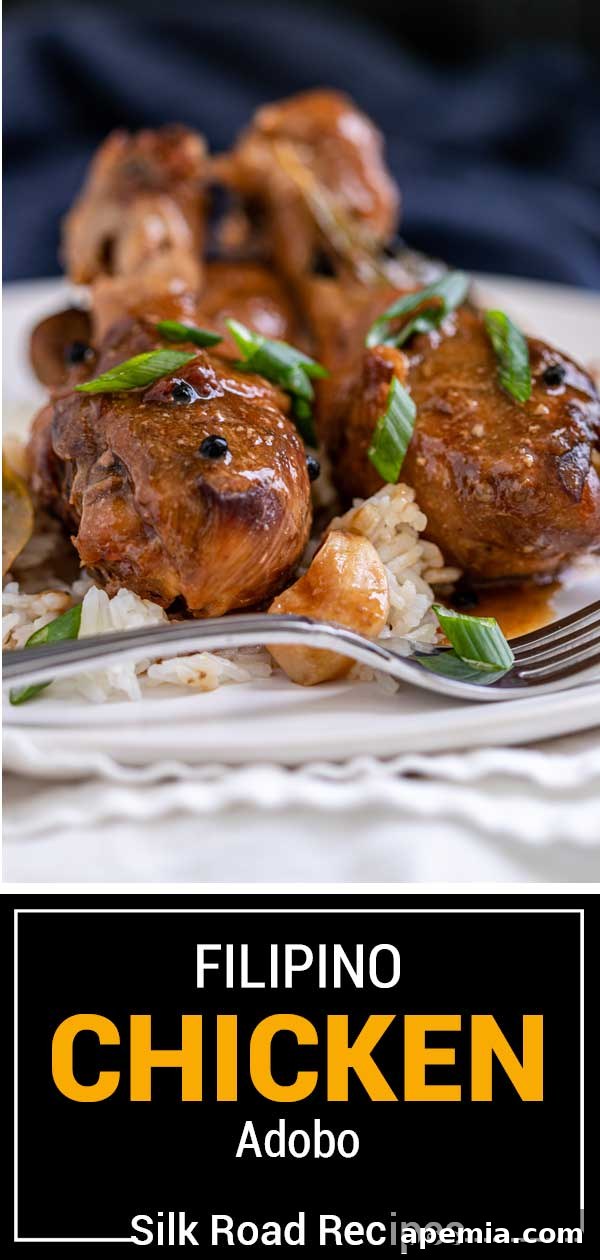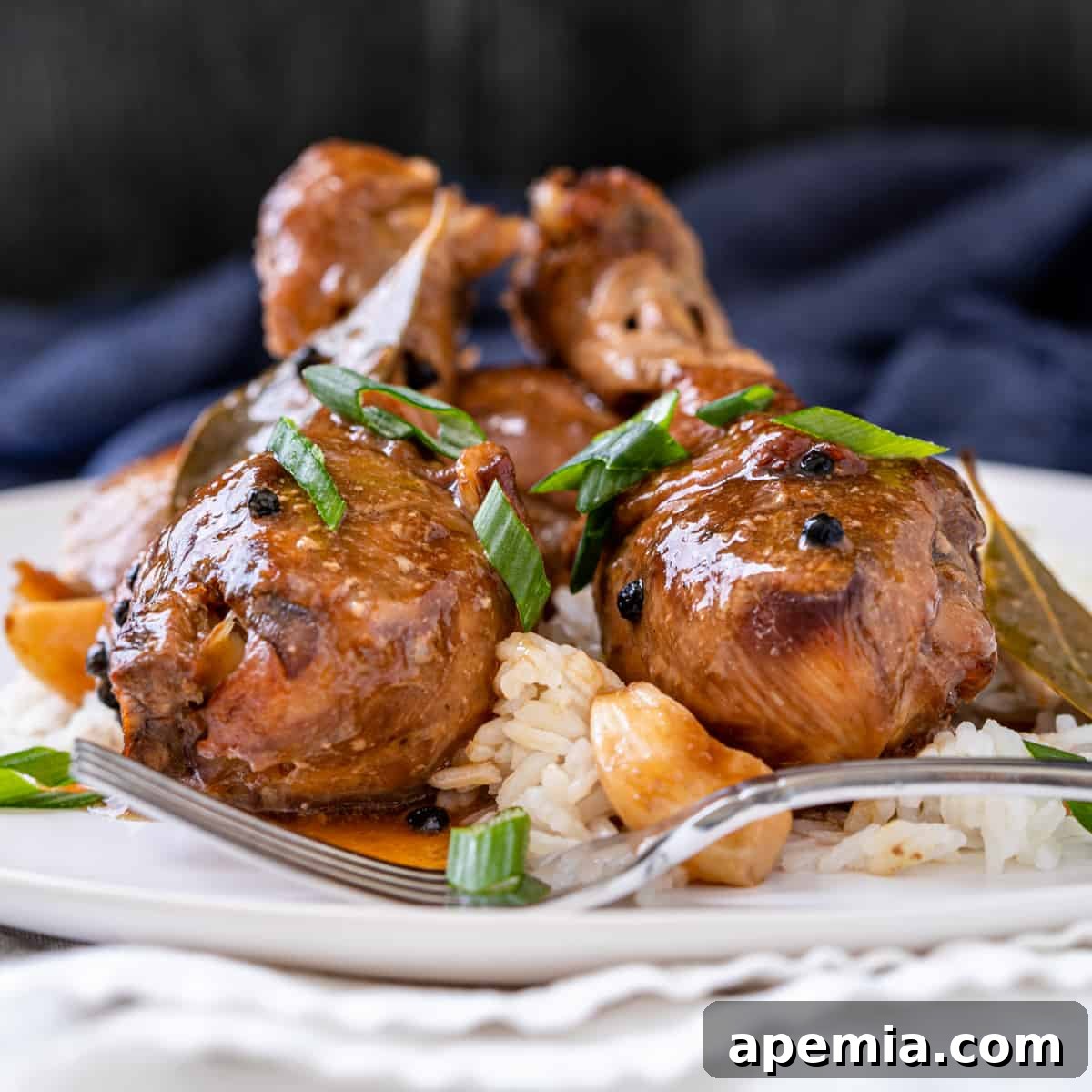
Authentic Filipino Chicken Adobo: The Ultimate Comfort Food Masterpiece
Experience the heart and soul of Filipino cuisine with this bold and savory Chicken Adobo. More than just a dish, it’s a culinary embrace – a simple yet profoundly flavorful stew where tender chicken luxuriates in a symphony of soy sauce, vinegar, and garlic, transforming into a tangy, sticky, and utterly irresistible masterpiece. This iconic dish isn’t just food; it’s a story on a plate, a testament to the Philippines’ rich culinary heritage.
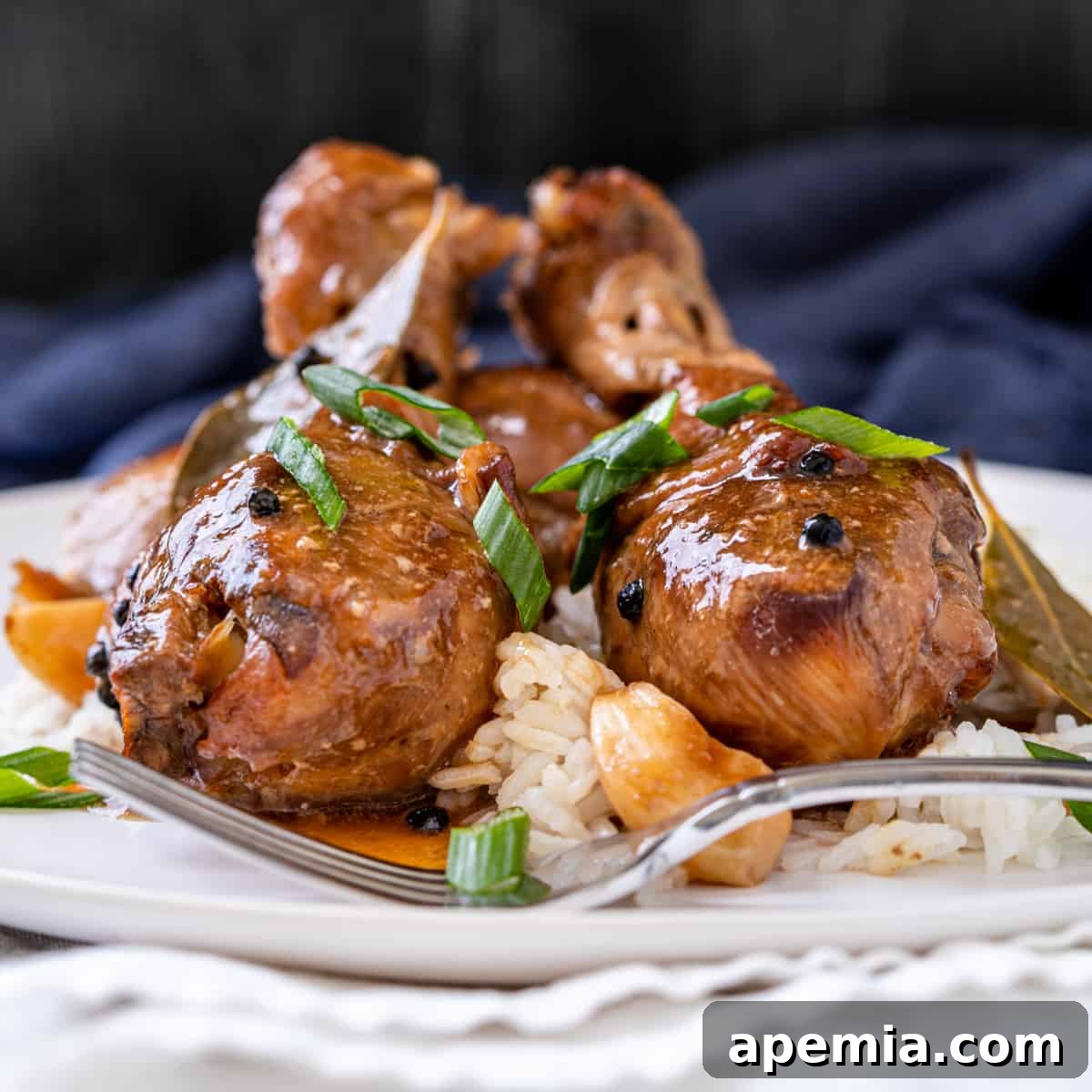
My first unforgettable encounter with melt-in-your-mouth chicken adobo happened during a warm family dinner just outside Manila. The aroma alone was intoxicating, a tantalizing preview of the culinary journey to come. But it was that distinctive tangy vinegar note, beautifully intertwined with the savory depth of caramelized soy and the fragrant punch of roasted garlic, that truly captivated my senses. With just one spoonful, I instantly understood why this humble yet magnificent creation held its rightful place as the unofficial national dish of the Philippines, beloved by generations.
This recipe is my homage to that experience, designed to bring the same profound depth of flavor right into your kitchen. We achieve this with a straightforward ingredient list and an easy, forgiving braising method. The vinegar, whether traditional coconut or a suitable substitute, provides that essential bright tang, cutting through the richness and awakening the palate. Soy sauce steps forward as the umami superhero, contributing a complex savory backbone and its signature dark hue. And for those subtle yet crucial earthy undertones? Bay leaves and robust black peppercorns round out the profile, making every bite a perfectly balanced delight.
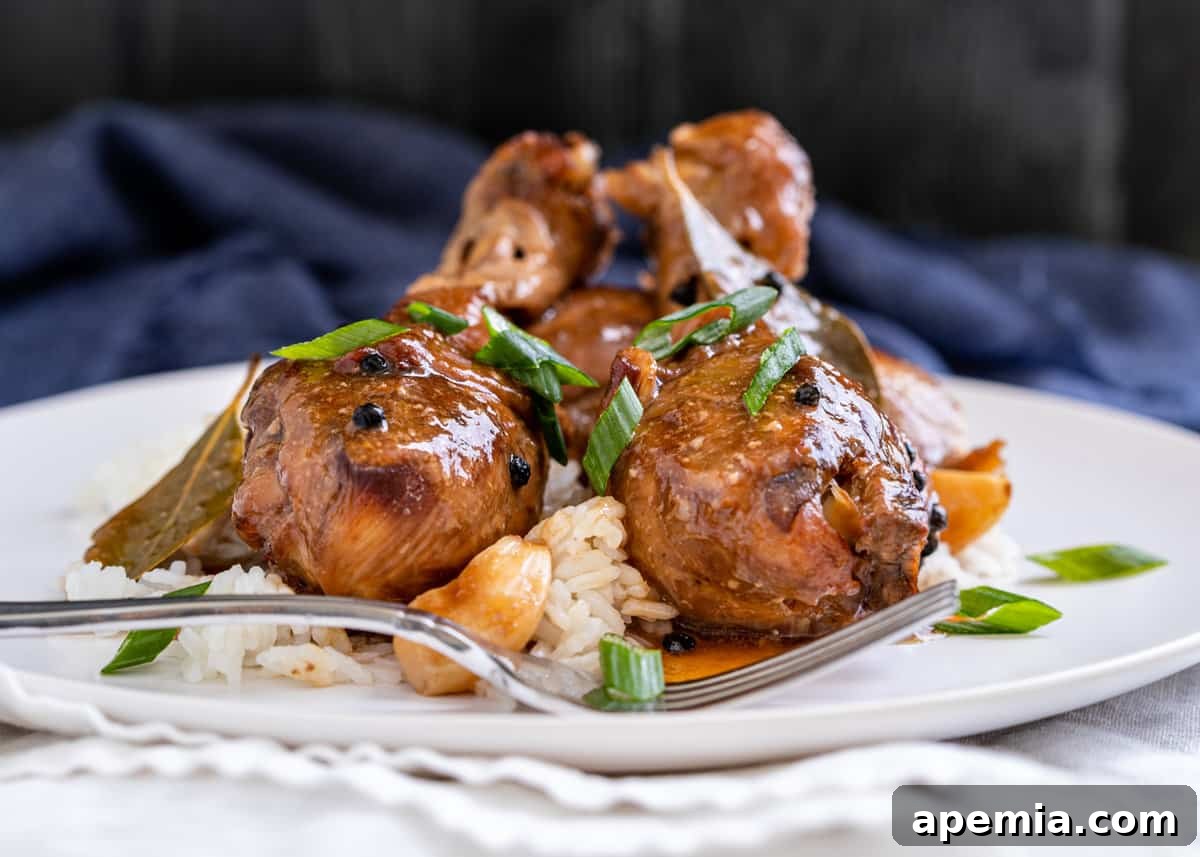
Table of Contents
- What is Filipino Chicken Adobo?
- The Irresistible Flavor Profile
- Ingredient Notes and Substitutions
- How to Make Chicken Adobo
- Serving Suggestions and Perfect Pairings
- Recommended Tools
- Storage and Reheating
- Frequently Asked Questions
- Filipino Chicken Adobo Recipe Card
What is Filipino Chicken Adobo?
Chicken Adobo is unequivocally one of the most iconic and beloved dishes in Filipino cuisine. It’s a method of cooking indigenous to the Philippines, typically involving meat (often chicken or pork, or a combination of both) simmered in a rich, tangy, and savory sauce composed primarily of vinegar, soy sauce, garlic, peppercorns, and bay leaves. While there are countless regional variations across the archipelago, the core principle remains the same: a perfect balance of acidity and umami that creates a depth of flavor unlike anything else.
The name “adobo” itself is derived from the Spanish word “adobar,” meaning “to marinate.” However, Filipino adobo predates Spanish colonization. Before the arrival of the Spanish, Filipinos used vinegar and salt as a preservation method, naturally tenderizing and flavoring meats. When soy sauce was introduced through Chinese trade, it was seamlessly incorporated, evolving into the beloved dish we know today. This rich history makes every bite of adobo not just delicious, but a taste of Filipino resilience and culinary adaptation.
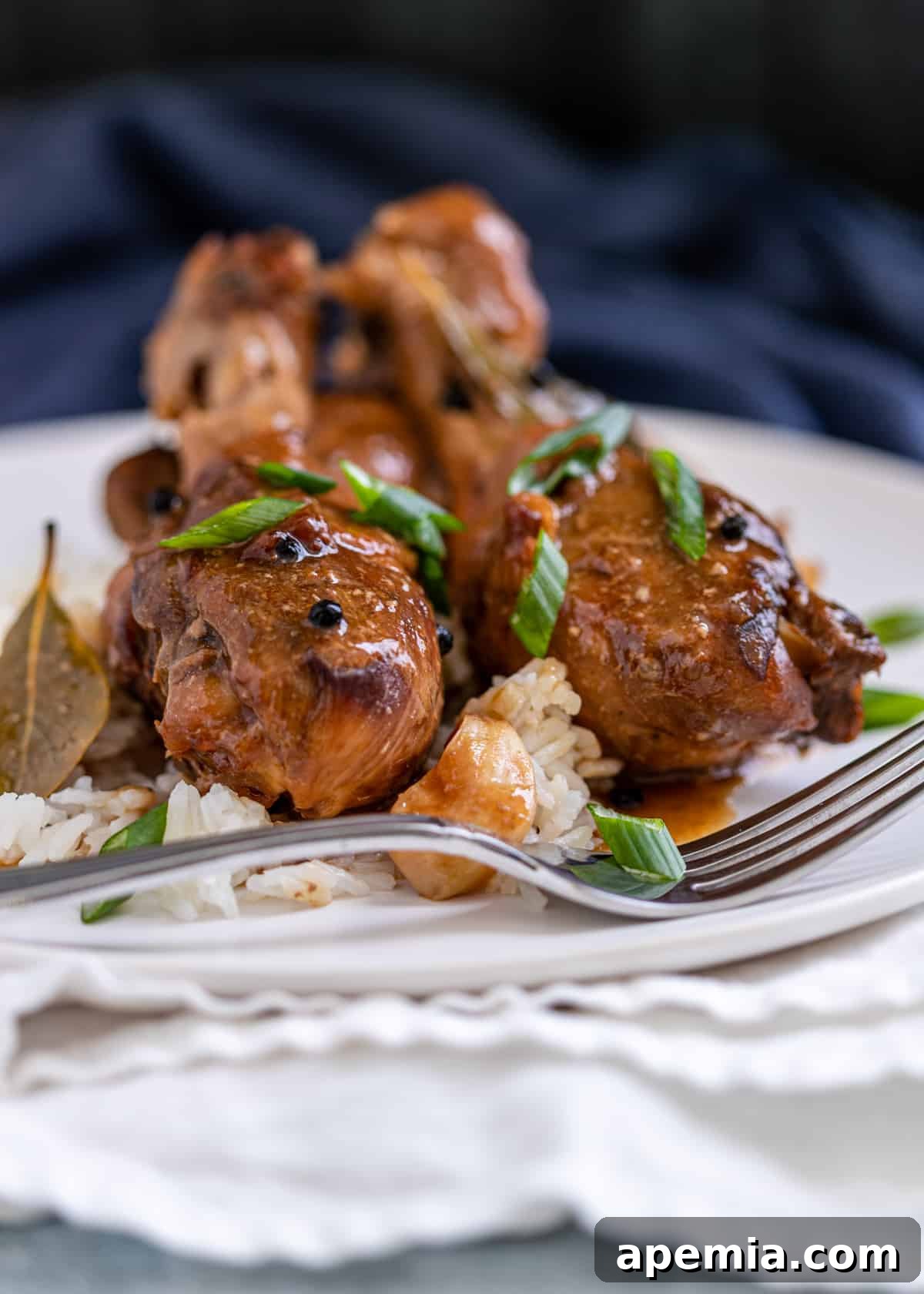
Much like my equally tasty Korean Bulgogi Ribs and Vietnamese Pork Chops, this Filipino chicken adobo recipe beautifully illustrates that the most satisfying and celebrated dishes often emerge from humble ingredients and simple, time-honored cooking techniques. Spoon this glistening, fall-off-the-bone tender chicken over a bed of steamed jasmine rice, scatter some fresh green onions for a pop of color and freshness, and prepare yourself for one of the week’s most comforting and satisfying dinners.
The Irresistible Flavor Profile of Adobo
The magic of Chicken Adobo lies in its beautifully complex yet harmonious flavor profile. It’s a captivating dance of tangy, savory, sweet, and aromatic notes that tantalize every part of your palate. The vinegar provides a bright, refreshing acidity that cuts through the richness of the chicken, preventing the dish from being heavy. This tanginess is perfectly balanced by the deep, salty umami of the soy sauce, which also contributes to the signature dark, glossy appearance of the sauce.
Fresh garlic, used generously, infuses the entire dish with a pungent, aromatic warmth that mellows and sweetens as it slow-cooks. Black peppercorns add a subtle heat and earthy spice, while bay leaves contribute a unique, herbaceous fragrance that rounds out the overall aroma. A touch of sugar helps to caramelize the chicken and further balances the sharp acidity of the vinegar, creating that coveted sticky glaze. The result is a profoundly satisfying, addictive flavor that keeps you coming back for more, making it an enduring favorite.
Tip From Kevin
The Secret to Authentic Adobo: Coconut Vinegar
For a truly traditional Filipino adobo recipe, coconut vinegar is often the preferred choice. It offers a milder acidity and a subtle, almost sweet undertone compared to other vinegars, which contributes to a uniquely nuanced flavor in the final dish. You can typically find coconut vinegar in most well-stocked Asian markets or specialty food stores. However, don’t let its absence deter you! If coconut vinegar isn’t readily available, you can create an excellent substitute. A blend of 3 parts white vinegar with 1 part water, white wine vinegar, or apple cider vinegar works wonderfully to achieve a similar balance of tang and mellow notes. Cane vinegar is another fantastic, authentic option if you can source it, though it can also be a bit challenging to find outside of specific markets.
Key Ingredients & Smart Substitutions for Chicken Adobo
(Make sure to check the full recipe card below for precise ingredient quantities)
- Chicken: The best results for Filipino Chicken Adobo come from using bone-in, skin-on chicken thighs and drumsticks. The bone adds incredible flavor to the braising liquid, while the skin helps keep the meat moist and can crisp up beautifully during the final cooking stage. While boneless cuts can be used in a pinch, they might not deliver the same richness and could dry out slightly due to the longer cooking time required for flavor development. For an even more robust flavor, consider adding a few chicken wings or backs to the braise.
- Vinegar: As discussed, coconut vinegar is traditional for its mellow acidity and subtle sweetness. If unavailable, a mix of 3 parts white vinegar to 1 part water, white wine vinegar, or apple cider vinegar works well. Cane vinegar is also a great option if found. The key is to achieve that distinctive tang without it being overwhelmingly sharp.
- Soy Sauce: A good quality dark soy sauce is crucial for adobo’s signature color and deep umami flavor. While regular soy sauce is perfectly fine, you can opt for a low-sodium version if you’re mindful of salt intake. For a gluten-free alternative, tamari or coconut aminos are excellent substitutes that will still provide that essential savory depth.
- Light Brown Sugar: This adds a necessary touch of sweetness that beautifully balances the sharp tang of the vinegar and aids in the caramelization process, contributing to the glossy sauce. Coconut sugar is a fantastic alternative, and regular granulated sugar can also be used if brown sugar isn’t available, though brown sugar adds a slight molasses depth.
- Garlic Cloves: Don’t be shy with the garlic! Filipino adobo thrives on a generous amount of garlic. As it slow-cooks, the raw pungency mellows into a sweet, aromatic base that infuses every part of the dish. Whole or roughly smashed cloves are ideal.
- Bay Leaves: These aromatic leaves impart a robust, slightly herbal, and subtly peppery note that is characteristic of Filipino adobo. Fresh bay leaves offer a more pronounced flavor, but dried bay leaves are perfectly acceptable; just use slightly fewer if they are particularly potent. Remember to remove them before serving.
- Black Peppercorns: Whole black peppercorns release their earthy, piquant flavor gradually during the braising process, adding a lovely depth and mild warmth. Freshly cracked black pepper can be used at the end for an extra punch of flavor.
How to Craft Your Perfect Chicken Adobo
Making authentic Filipino Chicken Adobo is a rewarding and surprisingly straightforward process. Follow these steps to achieve tender, flavorful chicken bathed in a rich, glossy sauce:
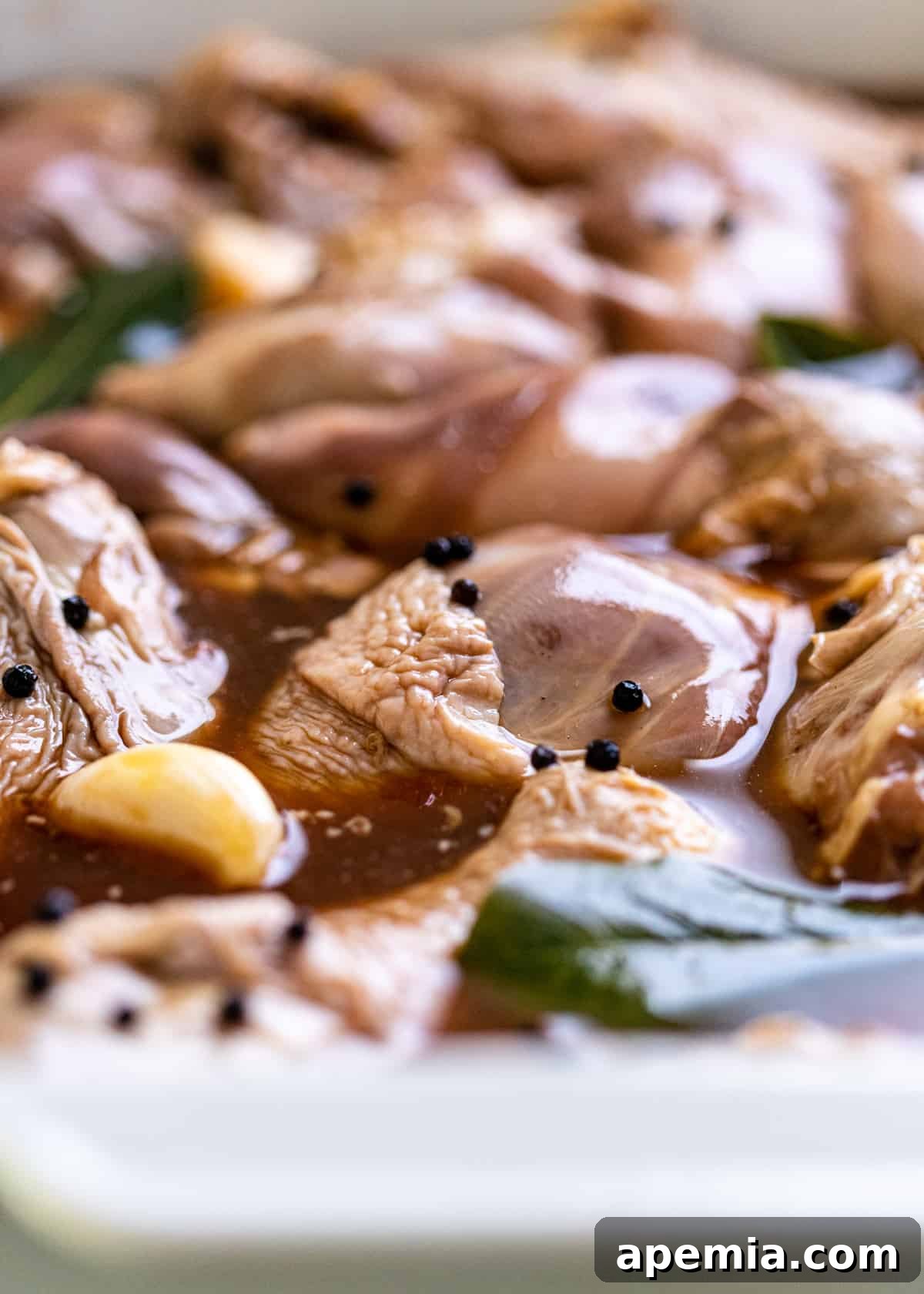
- Prepare the Marinade & Marinate the Chicken. In a large bowl, whisk together the vinegar, soy sauce, minced or crushed garlic, light brown sugar, whole black peppercorns, and bay leaves. Place your chicken pieces (thighs and drumsticks are ideal) in a non-reactive container or a large, sealable plastic bag. Pour the prepared marinade over the chicken, ensuring all pieces are well coated. Refrigerate for at least 4 hours to allow the flavors to deeply penetrate the meat. For the most profound flavor and melt-in-your-mouth tenderness, marinating overnight (8-12 hours) is highly recommended.
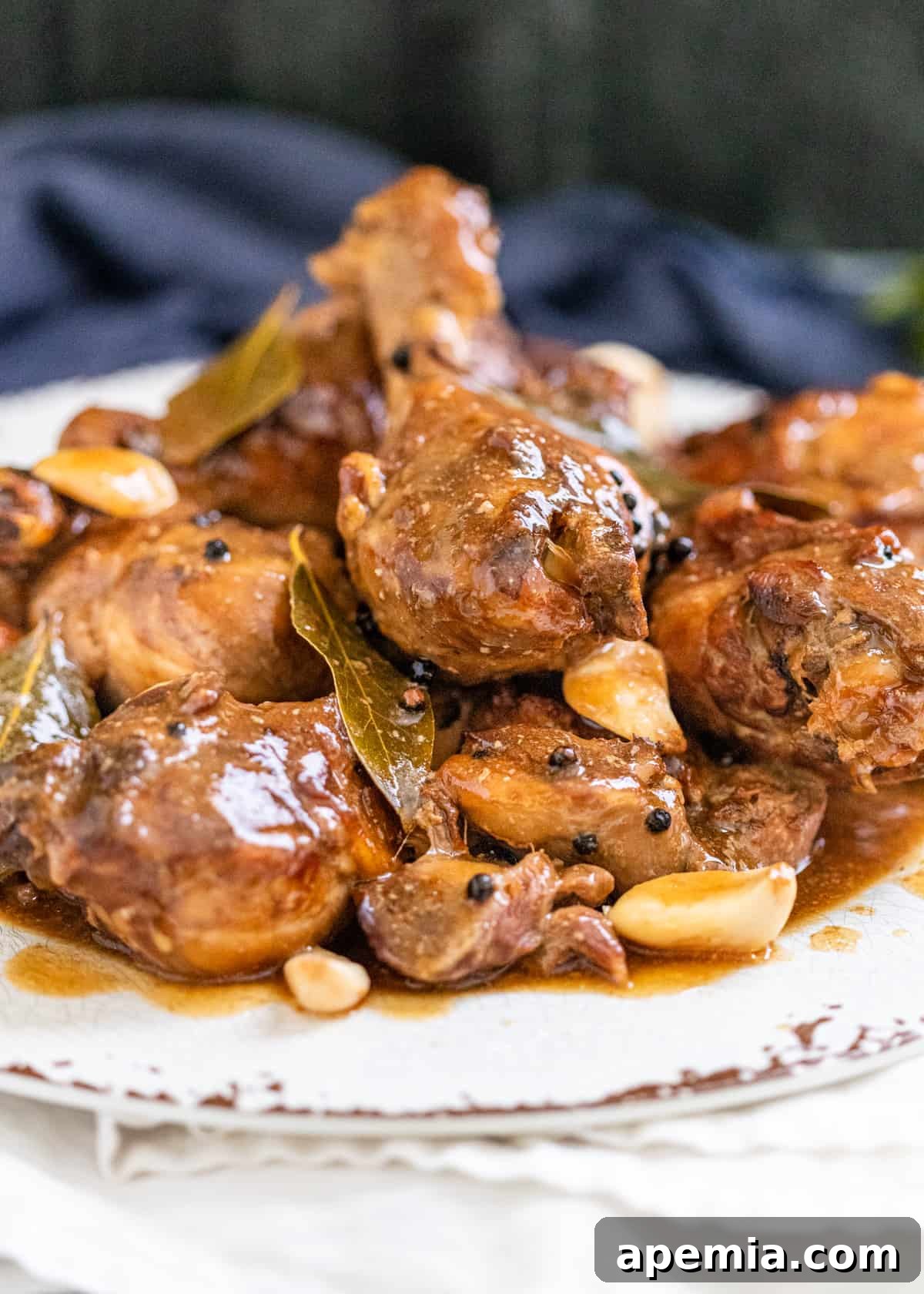
- Slow Braise in the Oven. Preheat your oven to a gentle 300°F (150°C). Transfer the marinated chicken and all of the luscious marinade into a large, oven-safe baking dish or a Dutch oven. Cover the dish tightly with aluminum foil to trap the moisture, ensuring the chicken remains incredibly juicy. Bake for approximately 1 hour, allowing the low and slow heat to tenderize the chicken and meld the flavors.
- Baste & Continue Cooking. After the initial hour, carefully remove the foil. Gently turn the chicken pieces to ensure even cooking and color. Baste the chicken generously with the braising liquid that has accumulated in the dish. Return the dish to the oven, uncovered, and continue baking for another 30 minutes, or until the chicken reaches an internal temperature of 165°F (74°C) and begins to develop some color. This uncovered stage allows some of the liquid to reduce and intensify.
- Reduce the Sauce for a Perfect Glaze. Once the chicken is cooked through and tender, carefully remove it from the baking dish and set it aside on a warm plate, loosely covered with aluminum foil to keep it warm. Pour the remaining braising liquid from the baking dish into a saucepan. Bring the liquid to a rolling boil over medium-high heat on the stovetop. Reduce the heat and simmer gently, stirring occasionally, until the sauce has thickened and achieved a beautiful, glossy consistency. This reduction process concentrates the flavors and creates that irresistible adobo glaze. Taste and adjust seasoning if needed.
- Glaze, Serve & Garnish. Spoon the rich, reduced adobo sauce generously over the reserved chicken pieces. Serve immediately over a mound of freshly steamed jasmine rice. Garnish with thinly sliced green onion tops for a touch of freshness and a vibrant pop of color. The combination of the tender chicken, sticky savory-tangy sauce, and fluffy rice is pure culinary bliss.
Serving Suggestions and Perfect Pairings
While Filipino Chicken Adobo is undeniably satisfying on its own with steamed rice, there are several ways to elevate your dining experience and explore its versatility. Beyond the classic:
- Steamed Rice & Green Onions: The absolute quintessential pairing. The rice soaks up every drop of the flavorful sauce, and green onions add a fresh, pungent contrast.
- Fried Egg (Adobo with “Silog”): For a classic Filipino breakfast or brunch experience, serve your adobo with a fried egg (sunny-side up or over easy) and extra garlic fried rice (sinangag). This is often called “Adobosilog.”
- Pickled Vegetables (Acharang Papaya): The bright, sour crunch of pickled green papaya or other pickled vegetables offers a wonderful counterpoint to the richness of the adobo.
- Steamed Greens: A side of blanched bok choy, green beans, or even simple steamed spinach can add a healthy and refreshing element to your meal.
- Sautéed Kangkong (Water Spinach): This popular Filipino leafy green, often sautéed with garlic, is another excellent and authentic accompaniment.
- Fresh Tomato and Onion Salad: A simple salad of sliced fresh tomatoes and red onions, lightly dressed with a touch of vinegar, can provide a light and refreshing contrast.
Recommended Tools for Adobo Mastery
Having the right tools can make your chicken adobo preparation smoother and more enjoyable:
- Large Dutch Oven or Heavy-Bottomed Pot: Essential for evenly browning the chicken if you choose to sear it (though this recipe primarily bakes) and for the slow-braising process. Its even heat distribution prevents scorching and ensures consistent cooking. A Dutch oven is also ideal for reducing the sauce on the stovetop.
- Large Glass Mixing Bowl or Non-Reactive Container: Crucial for marinating the chicken. Vinegar, being acidic, can react with certain metals like aluminum, potentially imparting an off-flavor to your food. Glass, ceramic, or high-quality stainless steel bowls are the safest choices.
- Aluminum Foil: Used to tightly cover your baking dish during the initial braising phase, aluminum foil creates a moist, steamy environment, ensuring your chicken adobo remains incredibly juicy and tender as it slowly cooks.
- Meat Thermometer: For peace of mind and perfectly cooked chicken, a reliable meat thermometer helps ensure the chicken reaches a safe internal temperature of 165°F (74°C) without becoming overcooked and dry.
- Small Saucepan: Ideal for efficiently reducing the braising liquid into that thick, glossy adobo glaze after the chicken is cooked.
Storage and Reheating Filipino Chicken Adobo
One of the truly wonderful qualities of this chicken adobo recipe is how beautifully its flavors develop and deepen over time. Many Filipinos will tell you it’s even better the next day, as the chicken continues to absorb the rich sauce!
To store your leftovers, first allow the chicken adobo to cool completely to room temperature. Then, transfer it to an airtight container and store it in the refrigerator for up to 4 days. The vinegar in the sauce also acts as a natural preservative, extending its freshness.
When you’re ready to reheat, there are a couple of excellent methods to bring back that tender, succulent texture and vibrant flavor:
- Stovetop Reheating: Gently warm the chicken adobo in a saucepan or Dutch oven over medium-low heat. Add a splash of water or chicken broth if the sauce has thickened too much, to help loosen it and prevent it from drying out. Stir occasionally until heated through.
- Microwave Reheating: For convenience, you can reheat individual portions in the microwave. Place the chicken and sauce in a microwave-safe dish and cover it with a lid or microwave-safe plastic wrap, leaving a small vent. Reheat in short bursts (30-60 seconds) until hot, stirring in between to ensure even heating and to keep the chicken moist.
If you’re looking to extend the life of your adobo even further, this recipe freezes remarkably well. Place cooled portions in freezer-safe containers or heavy-duty freezer bags, ensuring there’s minimal air exposure, for up to 2 months. To serve, thaw the frozen adobo overnight in the refrigerator, then reheat using either the stovetop or microwave instructions above to restore its tender, fall-apart texture and rich flavor.
Share this recipe on Pinterest!
Love this recipe? Share it with the world on Pinterest.
Frequently Asked Questions About Chicken Adobo
Filipino adobo is uniquely defined by its primary braising liquid: a harmonious blend of vinegar and soy sauce, generously flavored with garlic and peppercorns. This combination creates a distinctive balance of tangy and savory notes that is quite different from other dishes bearing the “adobo” name, such as Spanish or Latin American adobos, which typically refer to a marinade or rub, often tomato or chili-based. Filipino adobo relies on the slow simmering of meat directly in this flavorful liquid, allowing it to deeply infuse the chicken rather than just coat it.
While a minimum of 4 hours of marination will certainly yield delicious results, marinating the chicken overnight (8-12 hours) is highly recommended for the best possible outcome. The extended time allows the acid from the vinegar and the salt from the soy sauce to deeply penetrate the chicken, tenderizing the meat and infusing it with maximum flavor. This is key to achieving the signature tenderness and rich taste that Filipino adobo is celebrated for.
Yes, absolutely! Chicken adobo adapts beautifully to a slow cooker, producing incredibly tender chicken with minimal effort. Simply combine all marinade ingredients and the chicken in your slow cooker, then cook on the “Low” setting for 6-8 hours or on “High” for 3-4 hours, until the chicken is fork-tender. After cooking, remove the chicken and set aside. Transfer the liquid to a saucepan on the stovetop and bring it to a boil, reducing it by half over medium-high heat. This reduction step is crucial to create that thick, sticky, and intensely flavorful glaze that is characteristic of perfect adobo. Pour the reduced sauce over the chicken before serving.
The beauty of adobo is its versatility! Beyond chicken, you can make Adobong Baboy (Pork Adobo), Adobong Pusit (Squid Adobo), or even Adobong Manok at Baboy (Chicken and Pork Adobo). Regional variations also exist, with some adding coconut milk (Adobo sa Gata), turmeric, or even liver spread for added richness. This recipe provides a solid foundation from which you can explore these delicious variations.
The key to a thick, glossy adobo sauce is the reduction process at the end of cooking. After the chicken is tender, remove it from the braising liquid. Transfer the liquid to a saucepan and simmer it vigorously over medium-high heat. Allow it to boil and evaporate, stirring occasionally, until it reaches your desired consistency. The natural starches released from the chicken, combined with the caramelized sugars from the brown sugar, will help it thicken into a beautiful glaze. You can also press the cooked garlic cloves into the sauce for extra body and flavor.
Filipino Chicken Adobo
6
15 mins
1 hr 30 mins
1 hr 45 mins
PrintRecipe
Video
Ingredients
- 4 lbs bone-in, skin-on chicken thighs and drumsticks
- 1 cup white vinegar or coconut vinegar (See Note 1 below for substitutions)
- 1/2 cup soy sauce
- 1 tbsp light brown sugar or coconut sugar (See Note 2 for substitutions)
- 2 tsp whole black peppercorns
- 15 garlic cloves (smashed or roughly minced)
- 6 bay leaves (fresh preferably, or dried)
- 2 green onion tops (sliced thinly, for garnish)
Instructions
-
Place the chicken pieces in a large, non-reactive container or a sturdy, sealable plastic bag.
-
In a separate bowl, thoroughly mix together the vinegar, soy sauce, brown sugar, black peppercorns, smashed garlic cloves, and bay leaves. Pour this marinade mixture evenly over the chicken, turning the pieces to ensure they are fully coated. Seal the container or bag and refrigerate for a minimum of 4 hours, or ideally, overnight (8-12 hours) for the best flavor penetration.
-
Preheat your oven to 300°F (150°C).
-
Transfer the marinated chicken and all of the marinade liquid into a 13×9-inch (or similar sized) baking dish or a Dutch oven. Cover the dish tightly with aluminum foil and bake for 1 hour. After 1 hour, carefully remove the foil, turn the chicken pieces, and baste them with the braising liquid. Continue to cook uncovered for another 30 minutes, or until the chicken is very tender and reaches an internal temperature of 165°F (74°C). The skin should also begin to develop a nice color.
-
Once cooked, carefully remove the chicken from the baking dish and place it on a serving platter, loosely covered with aluminum foil to keep warm. Pour the remaining braising liquid from the baking dish into a saucepan. Bring the liquid to a boil over medium-high heat on the stovetop. Reduce the heat and simmer, allowing the sauce to reduce by about half and thicken to a glossy consistency. Taste the sauce and adjust seasoning if necessary (you may want a little more sugar or a tiny splash of vinegar depending on your preference). Spoon this rich, reduced sauce over the warm chicken before serving. Garnish generously with thinly sliced green onions and serve immediately with steamed rice.
Recipe Notes
1. Coconut Vinegar Substitutions: To achieve a more authentic flavor, I made the effort to find coconut vinegar at my local Asian market, which wasn’t too difficult. Coconut vinegar has a cloudy, white appearance and a slightly milder taste than apple cider vinegar, with a hint of sweetness. If you cannot find it, here are some excellent substitute options:
- Cane Vinegar: Another traditional Filipino vinegar, though also can be tricky to find outside of specialty stores.
- White Vinegar Blend: Use 3 parts white distilled vinegar mixed with 1 part water. This dilutes the intensity of white vinegar.
- White Wine Vinegar Blend: Use 3 parts white distilled vinegar mixed with 1 part white wine vinegar. This adds a bit more complexity.
- Apple Cider Vinegar Blend: Use 3 parts white distilled vinegar mixed with 1 part apple cider vinegar. Apple cider vinegar offers a fruity tang.
2. Sugar Substitutions: Light brown sugar provides a lovely caramel note. You can easily substitute coconut sugar for a similar depth of flavor and less refined option. Regular granulated white sugar can also be used if needed, though it will offer a simpler sweetness profile.
Nutrition Information
Estimates per serving:
Calories: 471kcal | Carbohydrates: 5g | Protein: 41g | Fat: 31g | Saturated Fat: 9g | Polyunsaturated Fat: 7g | Monounsaturated Fat: 13g | Trans Fat: 0.2g | Cholesterol: 154mg | Sodium: 1226mg | Potassium: 491mg | Fiber: 1g | Sugar: 1g | Vitamin A: 343IU | Vitamin C: 6mg | Calcium: 50mg | Iron: 3mg
The information shown is an estimate provided by an online nutrition calculator. It should not be considered a substitute for a professional nutritionist’s advice.
Main Dishes, Dinner
Filipino, Asian
Kevin
Have You Made This Recipe? Let Me Know on Instagram!
Tag @keviniscooking or use the hashtag #keviniscooking!