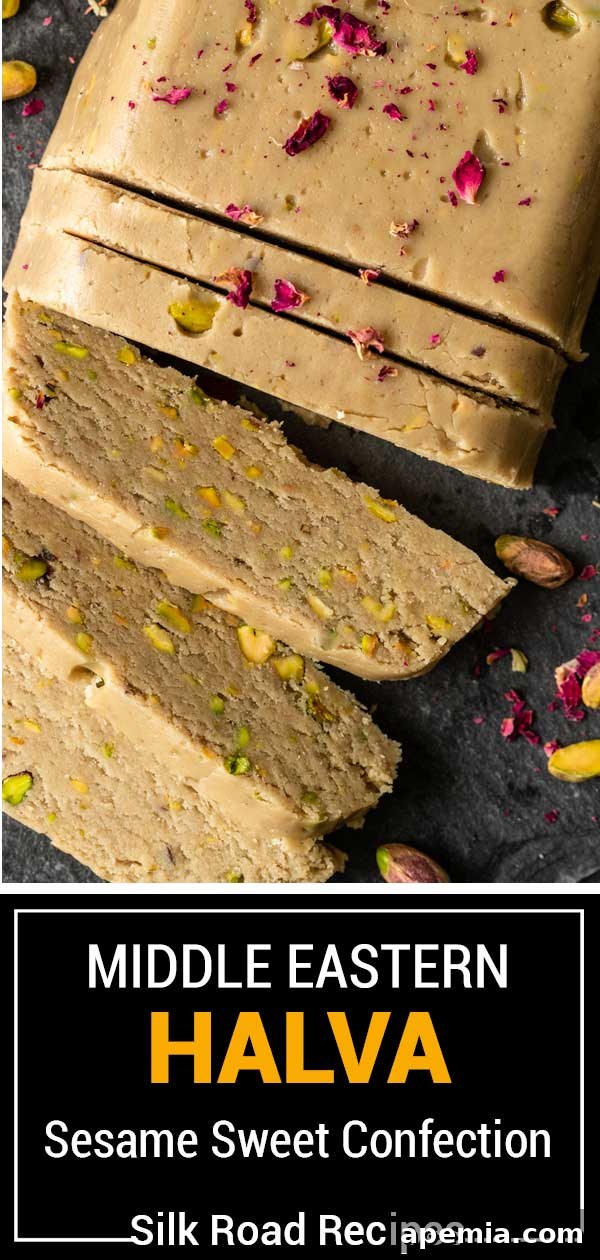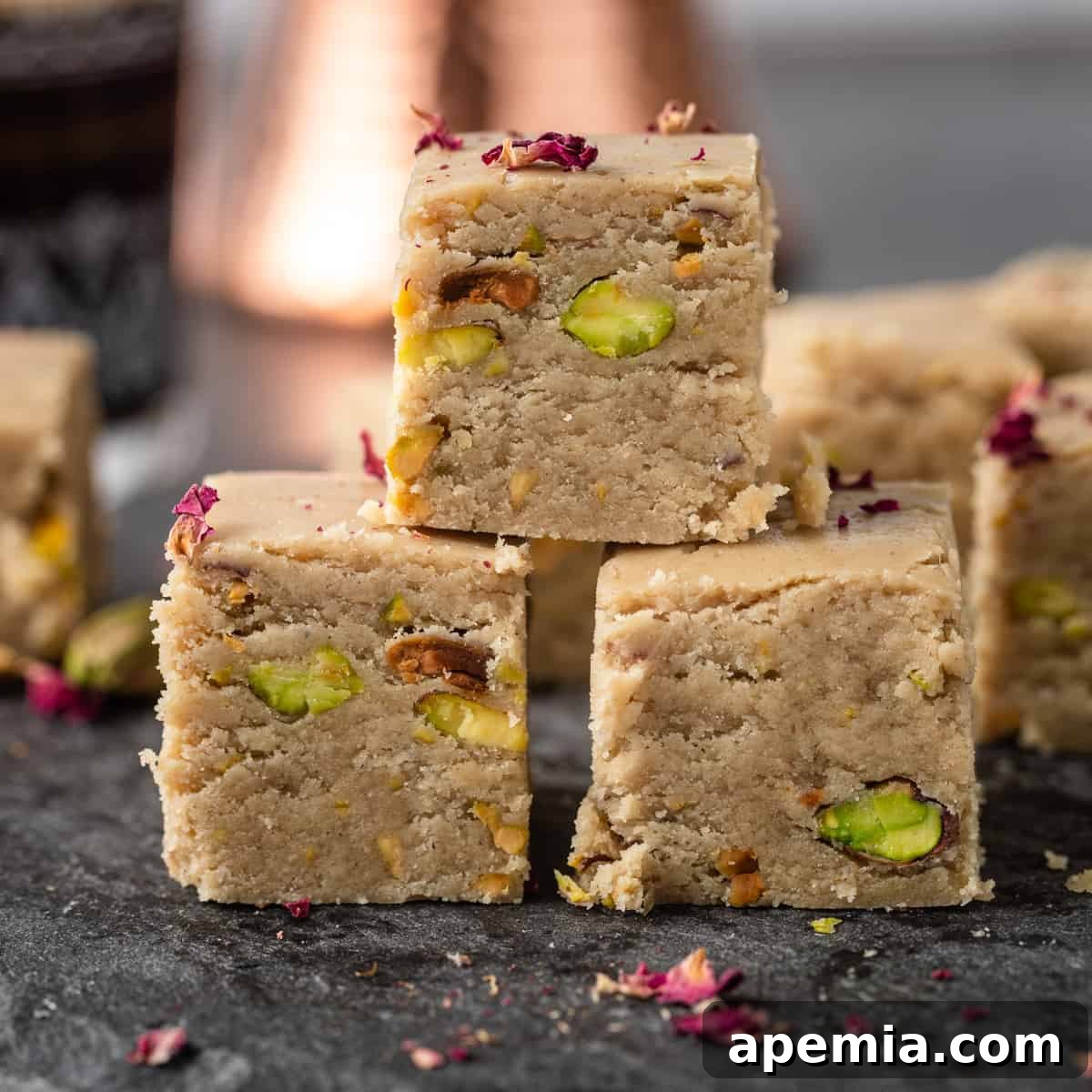
Irresistible Middle Eastern Halva: A Sweet, Nutty, and Spiced Delight
Experience the magic of the Middle East with this irresistible homemade halva recipe. Sweet, nutty, and delicately spiced, this traditional confection is a delightful take on a dessert cherished for centuries. Crafted from a rich sugar syrup and creamy tahini, this fudge-like treat is generously packed with crunchy pistachios and infused with the warm, aromatic essence of cardamom. Perfect for special occasions or a comforting everyday indulgence, this halva promises a truly authentic and memorable taste adventure.
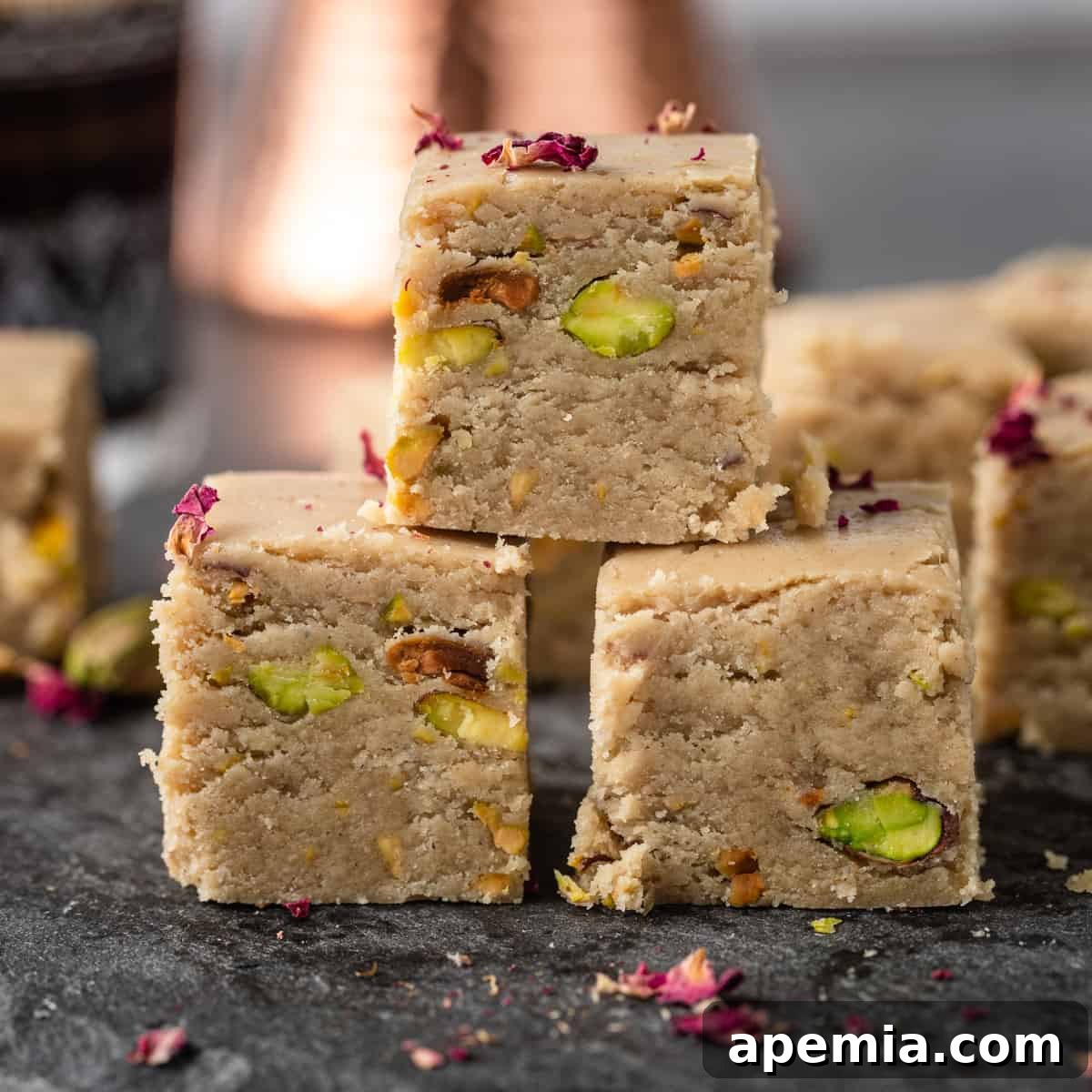
Discovering Halva: An Ancient Confection’s Global Journey
Have you ever had the pleasure of tasting halva? Known by many names across the globe—halvah, halwa, helva, khalva, or even chalvas—this exquisite sweet boasts a history stretching back to ancient Persia around the 7th Century. From its origins, this traditional confection embarked on a remarkable journey along the historic Silk Road, weaving its way into countless cultures and inspiring unique regional variations across North Africa, Eastern Europe, and the Middle East.
More than just a dessert, halva represents a rich tapestry of culinary heritage, cherished in diverse communities from the Mediterranean to Central Asia. Its enduring popularity stems from its unique texture—often crumbly yet melt-in-your-mouth soft—and its ability to carry a wide spectrum of flavors. Whether enjoyed as a simple sweet, a festive treat, or a daily indulgence with coffee or tea, halva offers a comforting taste that connects generations and cultures.
This particular halva recipe celebrates the beloved Middle Eastern variety, which distinguishes itself by using tahini as its foundational ingredient. If you’re a fan of my fudgy tahini brownies or my tahini chocolate bark recipe, you’ll know that I’m passionate about incorporating this magical sesame paste into desserts. In this halva, tahini is a major contributor to the rich, deeply comforting, and distinctly nutty flavor that makes this treat truly special.
And what an incredible flavor it is! The delicate sweetness of the sugar syrup beautifully harmonizes with the earthy, slightly bitter undertones of the tahini, creating a captivating dance of flavors with every bite. The addition of crunchy pistachios provides a delightful textural contrast, while warm vanilla and bright, aromatic cardamom elevate the entire experience. The resulting fudge-like texture is simply impossible to resist, making this homemade halva a true culinary delight.
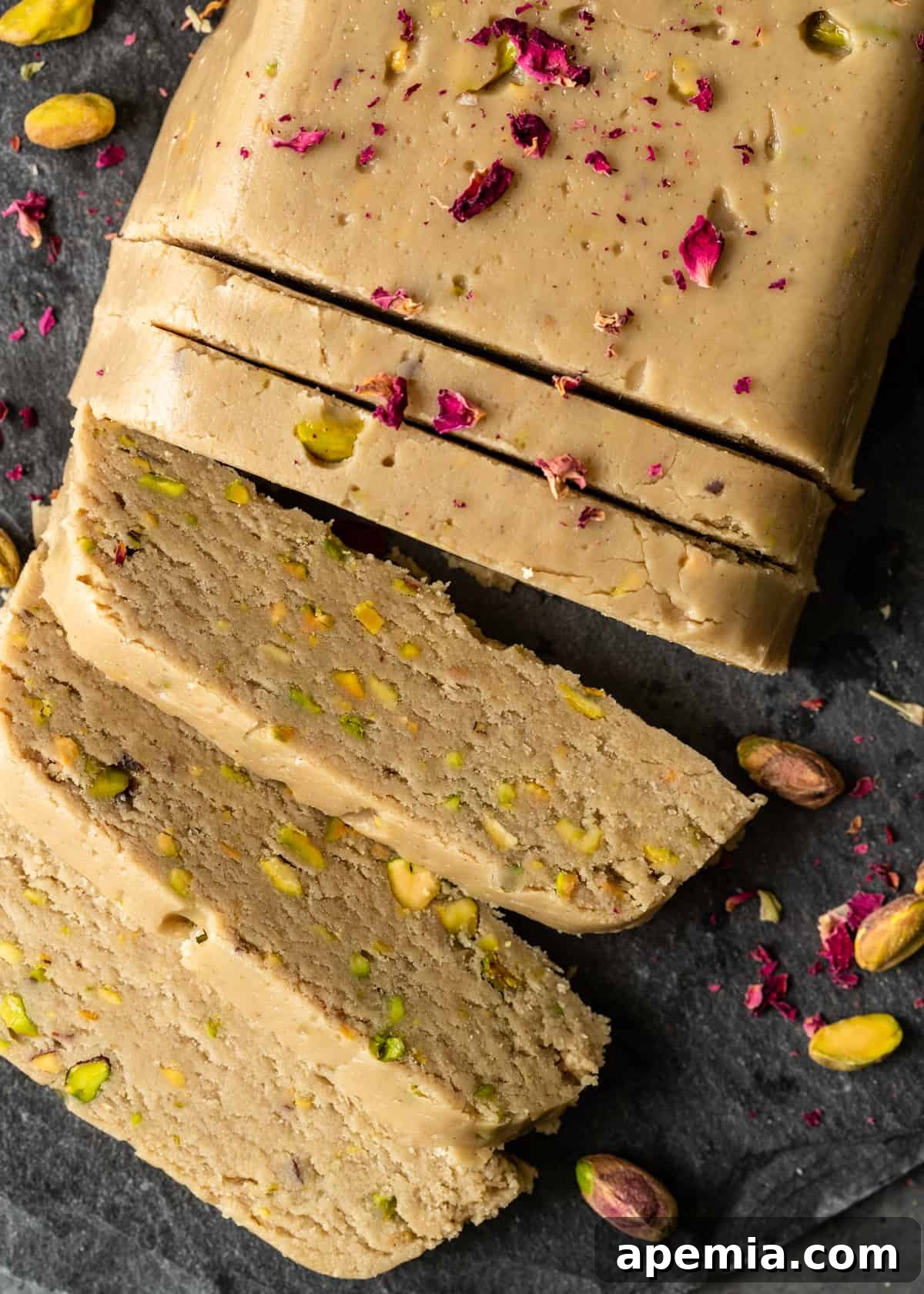
Essential Ingredients for Perfect Halva
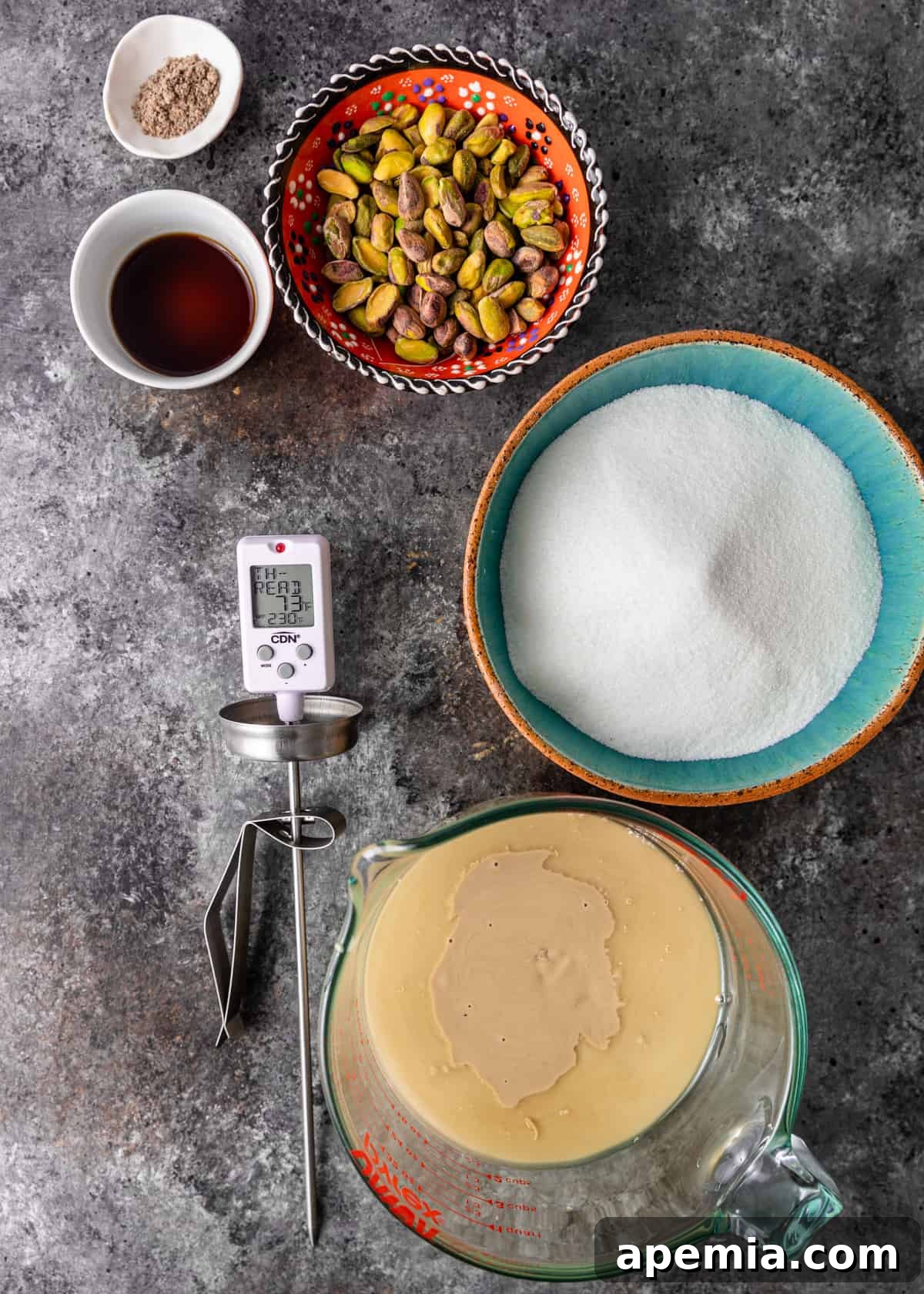
Creating authentic Middle Eastern halva requires a few key ingredients, each playing a crucial role in achieving that signature taste and texture. Here’s a detailed look at what you’ll need and some suggested substitutions.
- Granulated Sugar: This is the foundation of our sugar syrup, which gives halva its characteristic sweetness and structure. Using granulated white sugar is essential for achieving the correct consistency and ensuring the syrup cooks evenly. There are no ideal substitutions for granulated sugar in this context, as it forms the crystalline structure of the halva.
- Ground Cardamom: A staple in Middle Eastern desserts, ground green cardamom imparts a bright, subtly citrusy aroma and a gentle warmth. Its complex flavor profile is indispensable for an authentic halva experience. If you don’t have ground cardamom, you can grind whole green cardamom pods yourself for a fresher, more intense flavor. For a different but complementary spice profile, a tiny pinch of cinnamon could be considered, though it will alter the classic taste.
- Water: Used to dissolve the sugar and create the syrup. The precise amount of water is critical for reaching the correct sugar concentration and temperature, which dictates the halva’s final texture.
- Tahini: The heart of this Middle Eastern halva, tahini is a creamy, rich paste made from ground sesame seeds. It provides the distinct nutty flavor and contributes significantly to the dessert’s unique crumbly-yet-soft texture. Ensure you use a good quality, well-stirred tahini for the best results. Other regional variations of halva might use flour, semolina, or ground sunflower seeds as a base, but for this recipe, tahini is key.
- Vanilla Extract: Pure vanilla extract offers a delicate, gentle, and warming sweetness that beautifully complements the other flavors. It rounds out the overall taste of the halva. For an exciting twist and to explore other traditional Middle Eastern flavors, consider substituting vanilla with a few drops of orange blossom water or rose water. These floral notes add an exquisite fragrance and taste.
- Pistachios: Roughly chopped, raw, and unsalted pistachios are essential for adding a wonderful crunch and a vibrant green color to the halva. They also contribute a mild, buttery flavor. If you have a nut allergy or simply prefer a different nut, almonds or cashews can be used as alternatives, providing a similar textural contrast. Ensure any nuts used are unsalted.
How to Make Homemade Halva: A Step-by-Step Guide
Making delicious homemade halva might seem daunting, but with this clear and simple guide, you’ll achieve perfect results every time. Follow these steps carefully to create a sweet, nutty, and flavorful Middle Eastern treat.
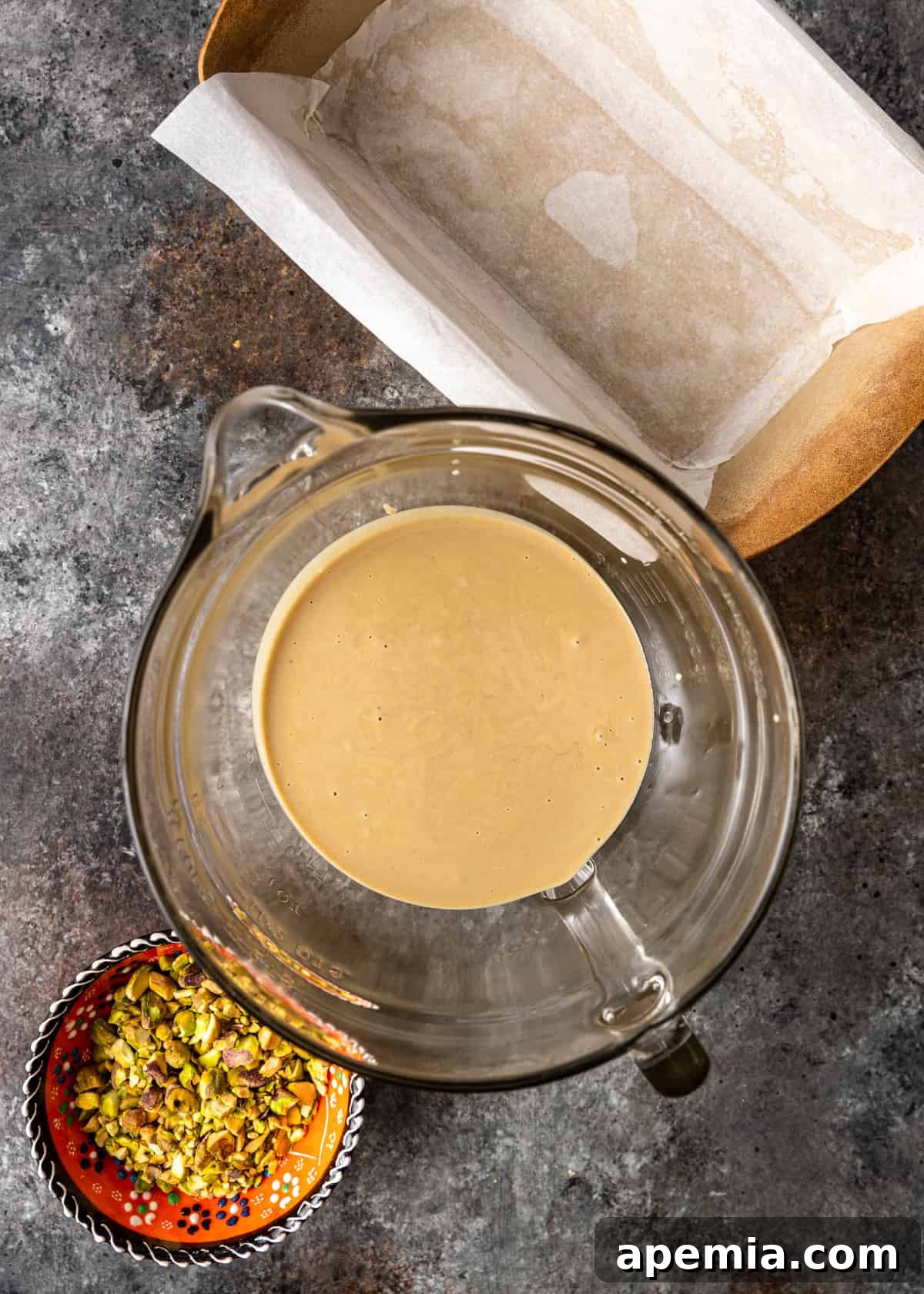
- Prepare Your Pan and Tahini Mixture: First, lightly coat a standard loaf pan with a nonstick cooking spray. Then, line it with parchment paper, making sure to leave a slight overhang on the sides. This overhang will act as a convenient handle, making it much easier to lift your set halva out of the pan later. In a separate heat-proof bowl, combine your tahini and vanilla extract thoroughly. Give it a good whisk to ensure it’s well mixed, then set this bowl aside.
- Craft the Sugar Syrup: In a medium saucepan, combine the granulated sugar, ground cardamom, and water. Place the saucepan over low heat and gently bring the mixture to a simmer, stirring continuously with a wooden spoon. Continue to cook until all the sugar crystals are completely dissolved, which should take about 5 minutes. Once dissolved, increase the heat to medium and bring the syrup to a full boil. It is absolutely crucial to use a candy thermometer for accuracy here. Continue boiling the mixture until it reaches precisely 250 degrees Fahrenheit (121 degrees Celsius).
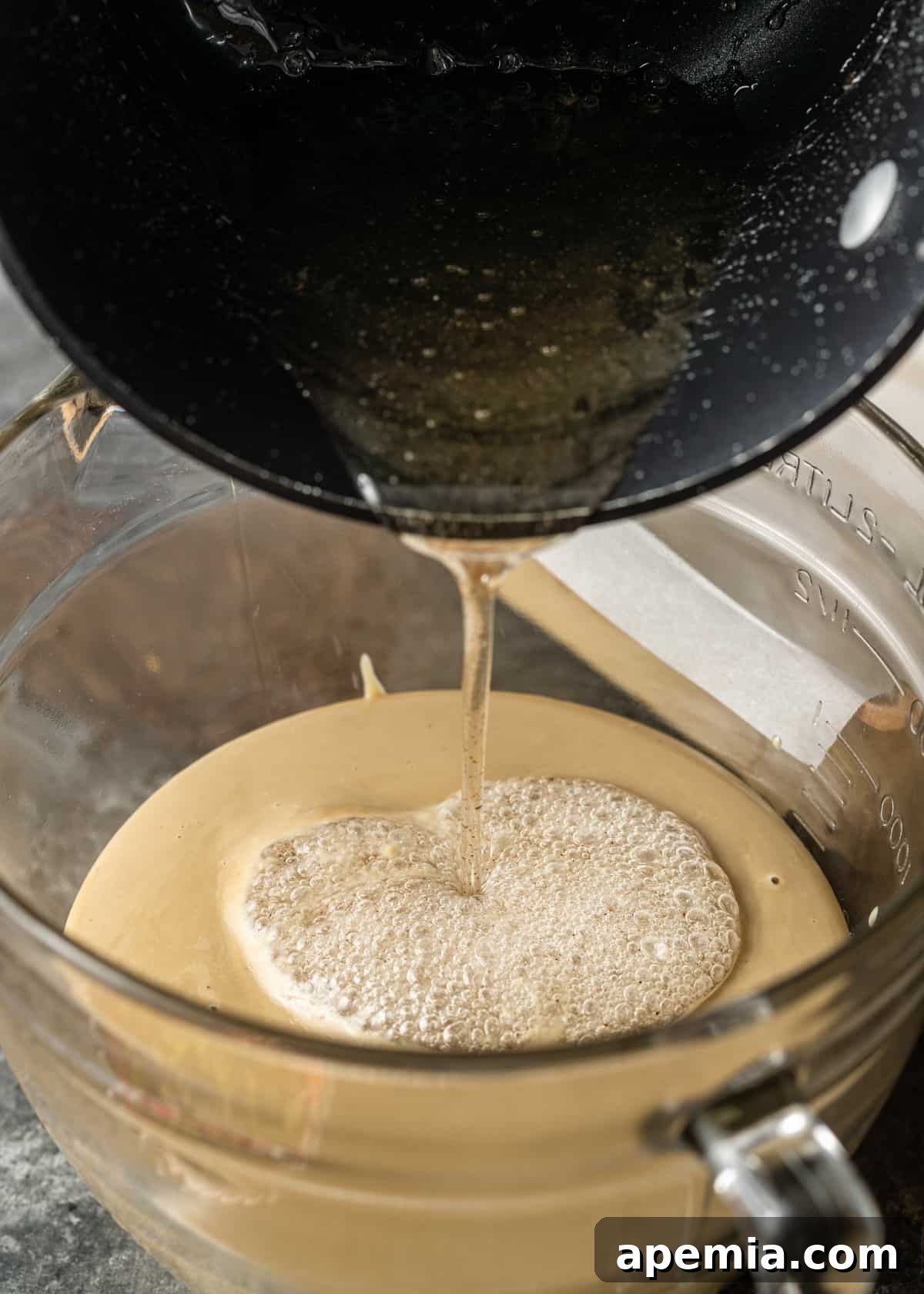
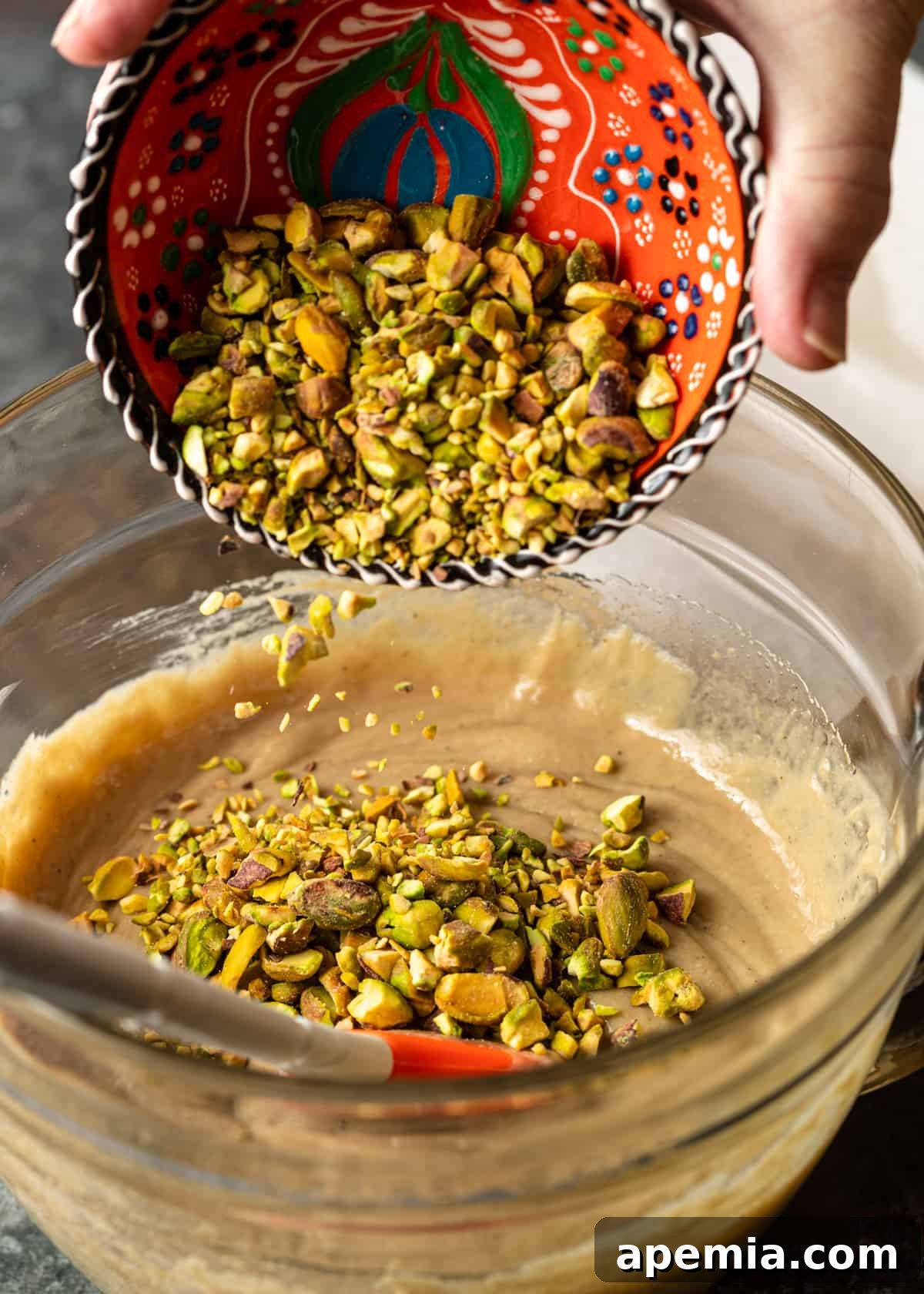
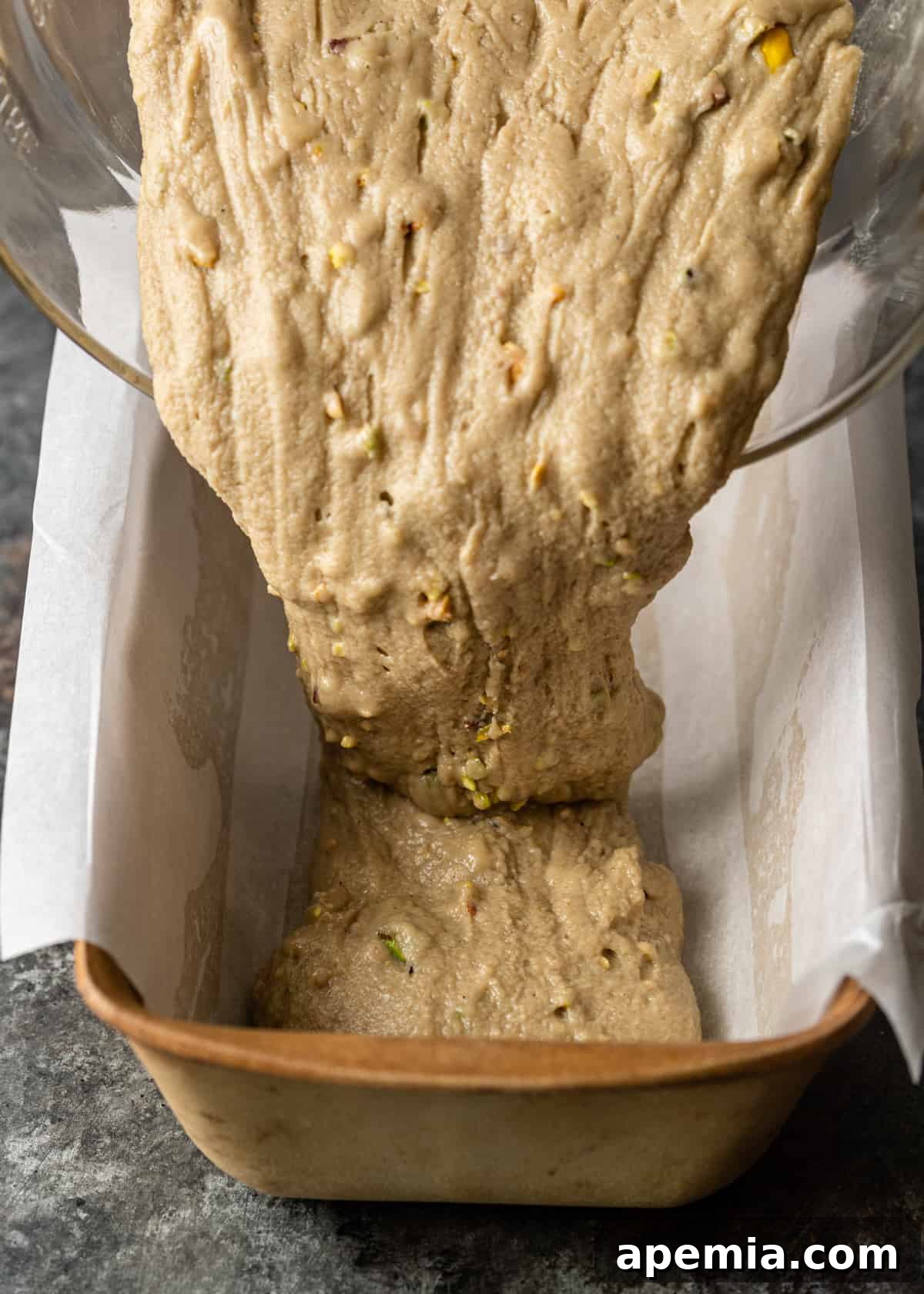
- Combine and Thicken: As soon as the sugar syrup hits the target temperature of 250°F, immediately remove it from the heat. Carefully and slowly pour the hot syrup into the bowl containing the tahini and vanilla mixture. As you pour, vigorously stir the tahini mixture with a spatula or wooden spoon. This intense stirring is vital to ensure that the syrup is thoroughly incorporated into the tahini. Once combined, add the chopped pistachios and continue stirring until the entire mixture transforms into a glossy, thick, and somewhat crumbly consistency.
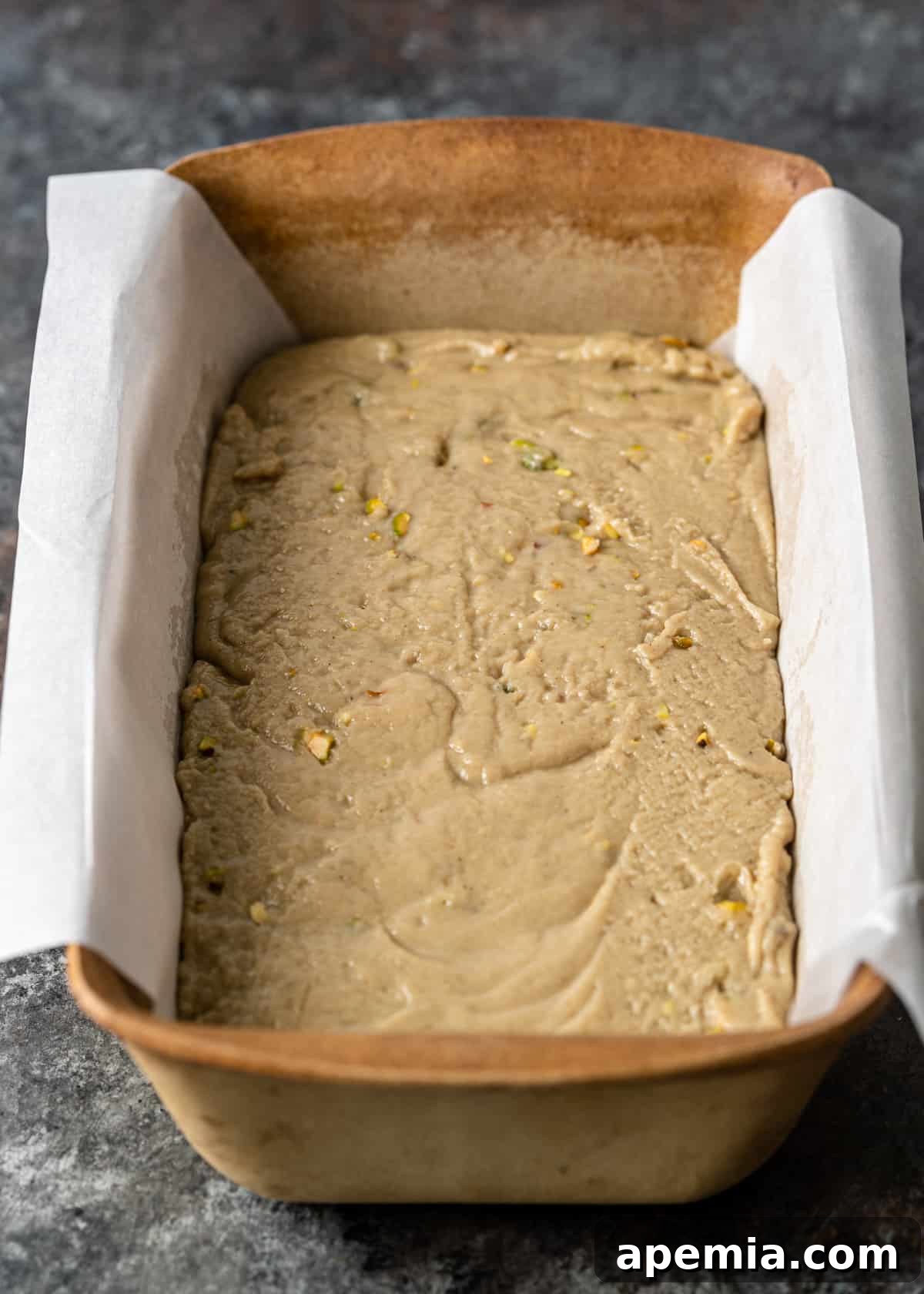
- Set the Halva: Pour the warm, thickened halva mixture into your prepared loaf pan. Use your spatula to gently spread and smooth out the top surface of the halva. Once smoothed, cover the pan tightly with plastic wrap, pressing it down lightly onto the surface of the halva to prevent any air pockets. Transfer the pan to the refrigerator and allow the halva to set completely. This crucial chilling period typically takes about 24 hours to achieve the perfect firm, sliceable consistency.
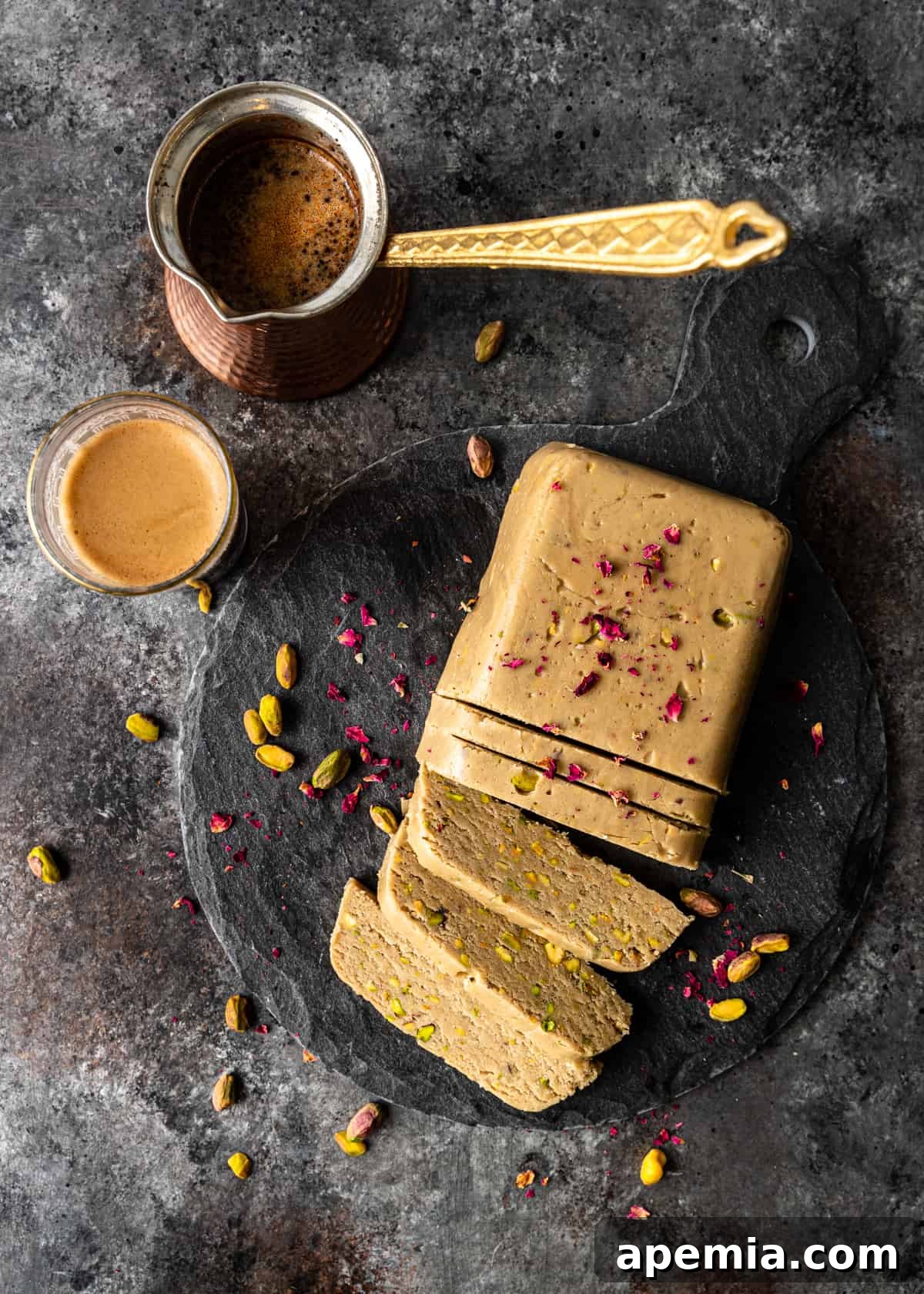
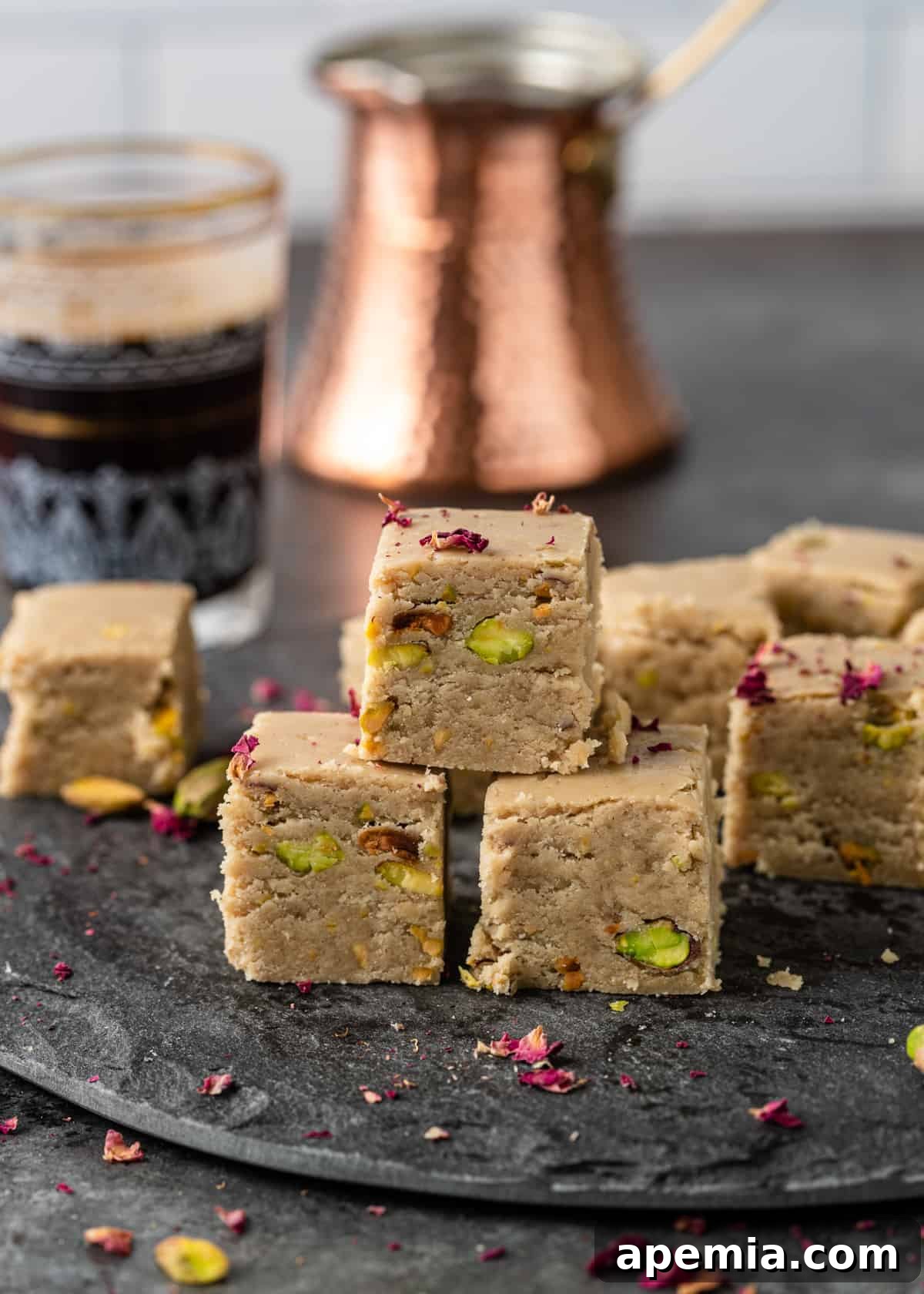
- Slice and Serve: Once fully set, gently remove the halva from the loaf pan using the parchment paper overhang. For the cleanest cuts, slice the halva into your desired bite-sized pieces while it is still cold from the refrigerator. Although it’s sliced cold, halva is best enjoyed at room temperature, allowing its flavors and textures to fully develop. Allow the sliced pieces to come to room temperature for about 15-30 minutes before serving. Enjoy this delightful Middle Eastern sweet!
Recommended Tools for Halva Making
While the process of making halva is straightforward, having the right tools can make all the difference in achieving perfect results. These items are highly recommended for ensuring accuracy and ease in your kitchen:
- Loaf Pan: A standard loaf pan (approximately 9×5 inches) is ideal for shaping your halva. Once the cooked syrup is combined and poured into the pan, it allows the halva to set into a neat, rectangular block that is easy to cut into uniform pieces. While a loaf pan is recommended, you can also use a 10-inch round dish for a different presentation, or even mini muffin pans if you wish to create individual, bite-sized sweets. The key is a shape that allows for easy removal and portioning once set.
- Candy Thermometer: This tool is absolutely vital for making halva. The success of your halva’s texture—its characteristic crumbly yet firm consistency—depends entirely on the sugar syrup reaching precisely 250 degrees Fahrenheit (121 degrees Celsius). If the syrup heats beyond this temperature, too much water will evaporate, causing the sugar to crystallize excessively and result in a hard, brittle, and unpalatable dessert. An accurate candy thermometer provides the precise temperature control needed to prevent overcooking and ensure your halva turns out perfectly every time.
Storing and Enjoying Your Homemade Halva
One of the many advantages of halva is its exceptional shelf life, making it a perfect make-ahead dessert or a thoughtful gift. Proper storage ensures that its unique flavor and texture are preserved for an extended period.
Halva keeps remarkably well! Store your homemade halva in an airtight container at room temperature, and it will remain fresh and delicious for several weeks. For even longer preservation, you can safely store it in the refrigerator for up to 6 months. When refrigerating, ensure it’s still in an airtight container to prevent it from absorbing other odors and to maintain its moisture content.
It’s important to keep halva away from excessive heat. If exposed to high temperatures, the halva can begin to melt, leading to the separation of sesame oil on the surface. While this doesn’t necessarily spoil the halva, it can result in an unappealing, oily appearance and a less desirable texture. Always allow chilled halva to come to room temperature before serving to fully appreciate its soft, crumbly consistency and rich flavors.
Pro Tip: Mastering Sugar Syrup for Perfect Halva
Understanding the science behind cooking sugar syrup is crucial for achieving the ideal halva texture. As sugar syrup cooks, water evaporates, leading to an increased concentration of sugar and a corresponding rise in temperature. The highest temperature the syrup reaches directly determines its texture once cooled—this is how various candy stages are named.
For our halva, the sugar syrup must reach 250°F (121°C). This temperature falls between the “Firm Ball Stage” and “Hard Ball Stage.” At this point, the sugar concentration is ideal for creating the soft, pliable, yet crumbly texture we desire in halva, similar to the consistency needed for caramels, nougat, or marshmallows. Going beyond this temperature will cause the syrup to become too hard and brittle, resulting in a halva with an undesirable, rock-hard consistency. Always rely on a candy thermometer for precise temperature control to ensure perfect results.
Frequently Asked Questions About Halva
Here are some common questions about halva to help you better understand and enjoy this wonderful Middle Eastern sweet.
- What exactly is halva?
- Halva is a broad term for a diverse family of confections found across the Middle East, Central Asia, and Eastern Europe. While its appearance and specific flavors can vary significantly by region, at its core, halva is a sweet, rich dessert characterized by a unique crumbly yet soft, fudge-like texture. It typically involves combining a cooked sugar syrup with a base ingredient to create a delightful sweet treat. Its enduring popularity for over a millennium is a testament to its irresistible charm and deliciousness.
- How does Middle Eastern halvah differ from other international variations?
- The most defining characteristic of Middle Eastern halvah is its primary base ingredient: tahini (ground sesame paste). This gives it a distinct nutty flavor and a particular texture. In contrast, Iranian varieties often use flour, Greek chalvas is based on semolina, and Russian khalva is typically made from ground sunflower seeds. Indian halwa often incorporates ingredients like carrots, lentils, or gourds, while North African versions might feature dates. Despite these ingredient differences, all halva variations share commonalities in their sweet nature, cooking methods, and often a similar, albeit varied, delightful texture.
- Why did my homemade halva turn out hard and brittle instead of soft and crumbly?
- If your halva became hard and brittle, the most common reason is that your sugar syrup was overcooked. When the syrup heats above 250 degrees Fahrenheit (121 degrees Celsius), too much water evaporates, causing the sugar to crystallize more densely and set much firmer. This results in a hard, glassy texture rather than the desired soft, crumbly consistency. To prevent this, always use a reliable candy thermometer and remove the syrup from the heat precisely when it reaches 250°F. Monitoring the temperature closely is key to achieving that perfect halva texture.
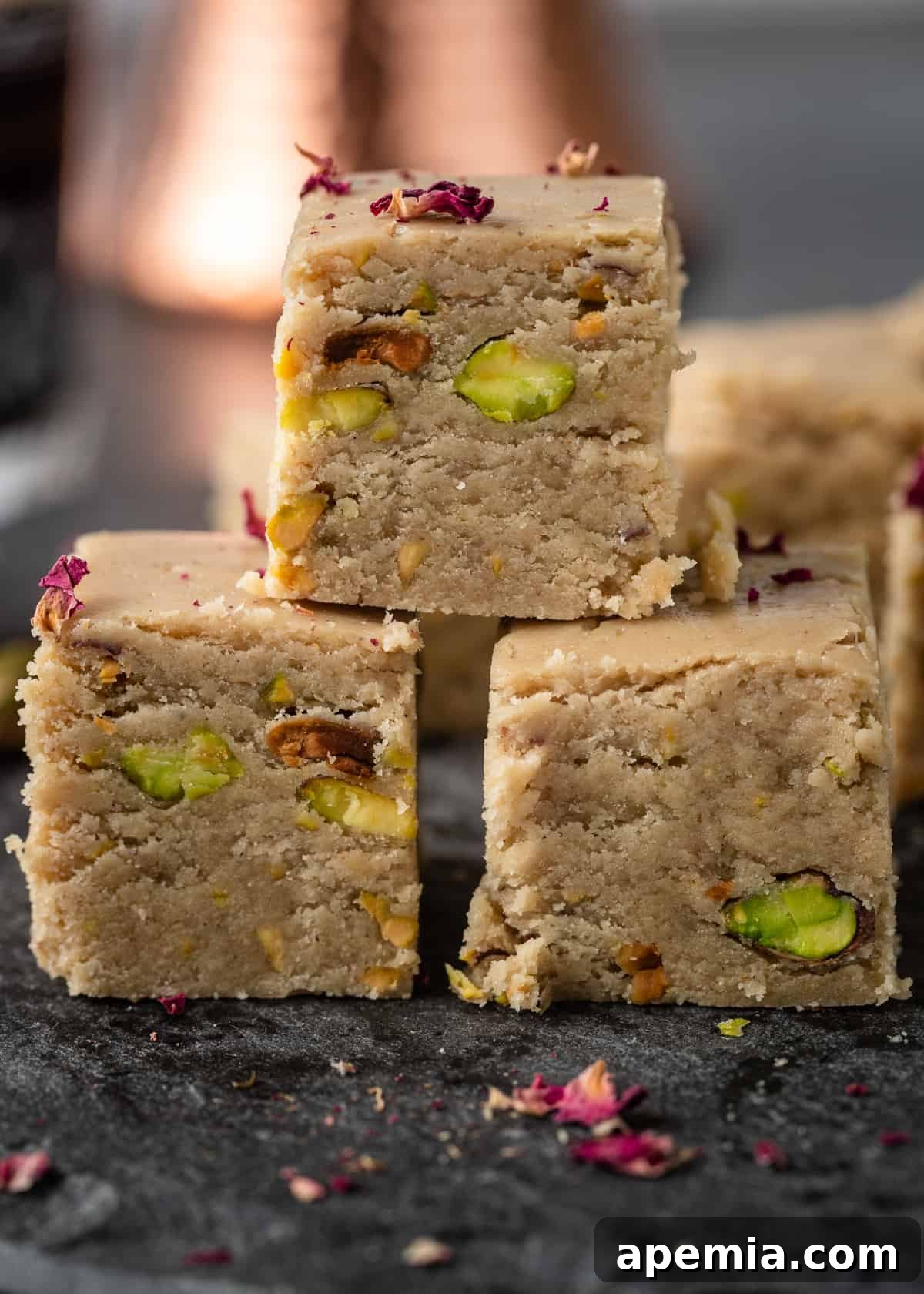
Middle Eastern Halva Recipe
Rich, nutty, and incredibly satisfying, this 20-minute prep halva recipe creates a soft, fudge-like Middle Eastern candy using creamy tahini, granulated sugar, aromatic cardamom, and a hint of vanilla.
Recipe Details
- Servings: 20 pieces
- Prep time: 5 minutes
- Cook time: 15 minutes
- Chill time: 1 day
- Total time: 1 day 20 minutes
Ingredients
- 1 ½ cups granulated sugar
- ½ teaspoon ground cardamom
- ½ cup water
- 1 ⅔ cups tahini (recommended brand)
- 1 teaspoon vanilla extract (See Note 1 below for substitutions)
- ½ cup unsalted raw pistachios, chopped
Instructions
- Prepare Pan and Tahini Mixture: Lightly coat a loaf pan with nonstick cooking spray and line it with parchment paper, leaving a slight overhang on the sides for easy removal. In a separate heat-proof bowl, combine the tahini and vanilla extract; set aside.
- Make the Sugar Syrup: In a small saucepan, combine the sugar, cardamom, and water. Place over low heat and bring to a simmer, stirring with a wooden spoon until the sugar is completely dissolved (about 5 minutes).
- Boil the Syrup: Increase the heat to medium and bring the mixture to a rolling boil. Continue to cook, without stirring, until the syrup reaches precisely 250°F (121°C) on a candy thermometer.
- Combine Ingredients: Immediately remove the saucepan from the heat. Slowly pour the hot sugar syrup into the bowl with the tahini and vanilla, stirring vigorously with a spatula or wooden spoon to thoroughly incorporate. Add the chopped pistachios and continue to stir until the halva mixture becomes glossy and thick.
- Set the Halva: Pour the mixture into the prepared loaf pan and smooth the top surface evenly. Cover the pan tightly with plastic wrap and refrigerate for at least 24 hours, or until completely set.
- Slice and Serve: Once firm, gently remove the halva from the pan using the parchment paper overhang. Slice the halva into individual pieces while it is still cold for cleaner cuts. Allow the sliced halva to come to room temperature for about 15-30 minutes before serving to enjoy its best texture and flavor.
Notes
- For an authentic Middle Eastern flavor twist, you can substitute the vanilla extract with orange blossom water or rose water.
- If you don’t have a loaf pan, you can use a 10-inch round dish, mini muffin pans for bite-sized pieces, or even a simple tub to mold the halva into desired shapes.
Nutrition Information (Estimated Per Serving)
The following is an estimated nutritional breakdown for one serving of this halva recipe. Please note that this information is provided by an online nutrition calculator and should not be considered a substitute for professional nutritional advice.
- Calories: 182 kcal
- Carbohydrates: 20g
- Protein: 4g
- Fat: 11g
- Saturated Fat: 2g
- Sodium: 7mg
- Potassium: 115mg
- Fiber: 1g
- Sugar: 15g
- Vitamin A: 25 IU
- Vitamin C: 1mg
- Calcium: 29mg
- Iron: 1mg
Recipe Metadata
- Course: Desserts
- Cuisine: Middle Eastern
- Author: Kevin