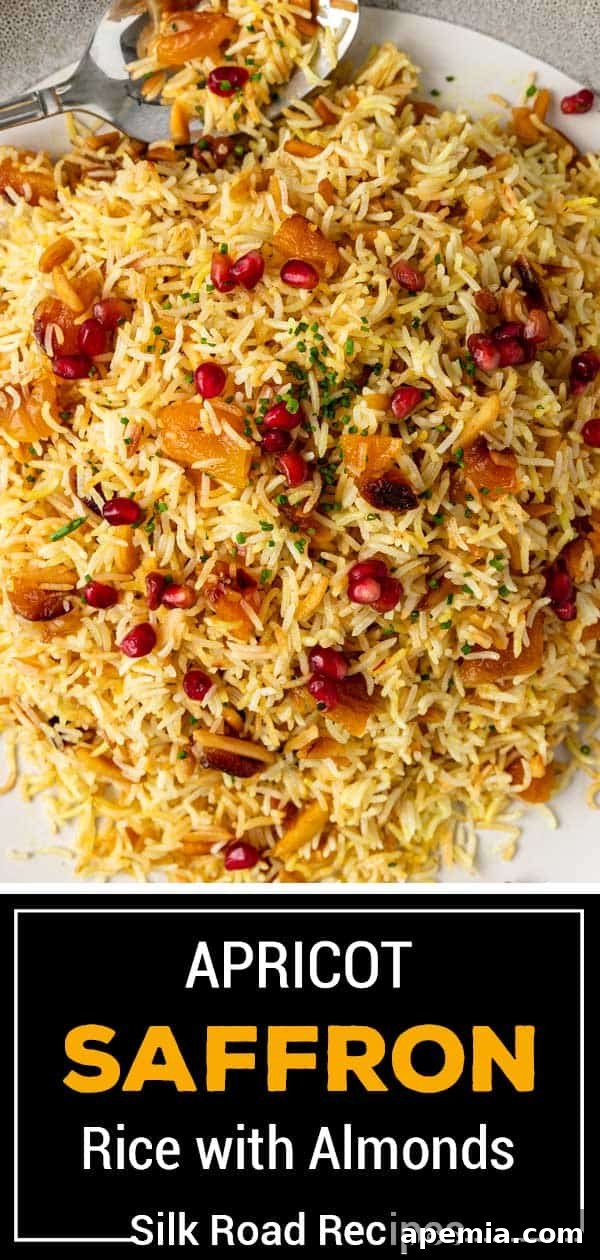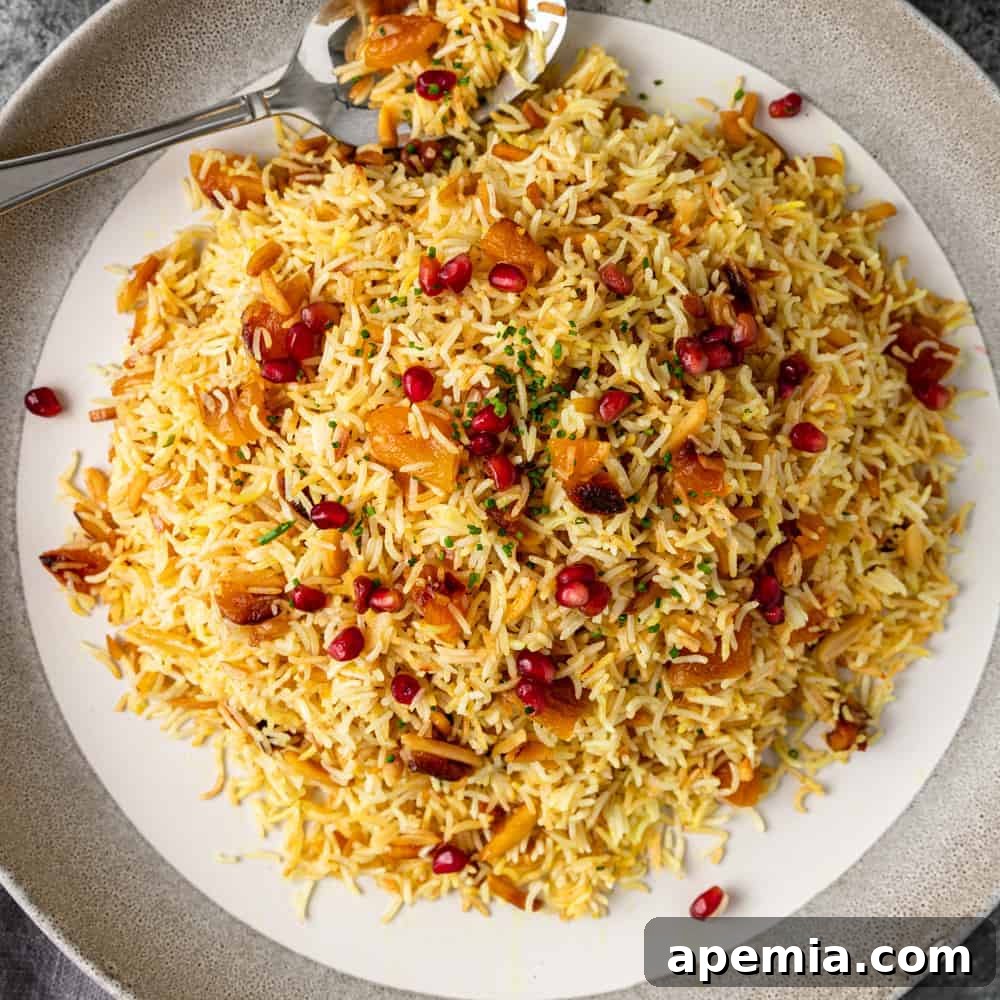
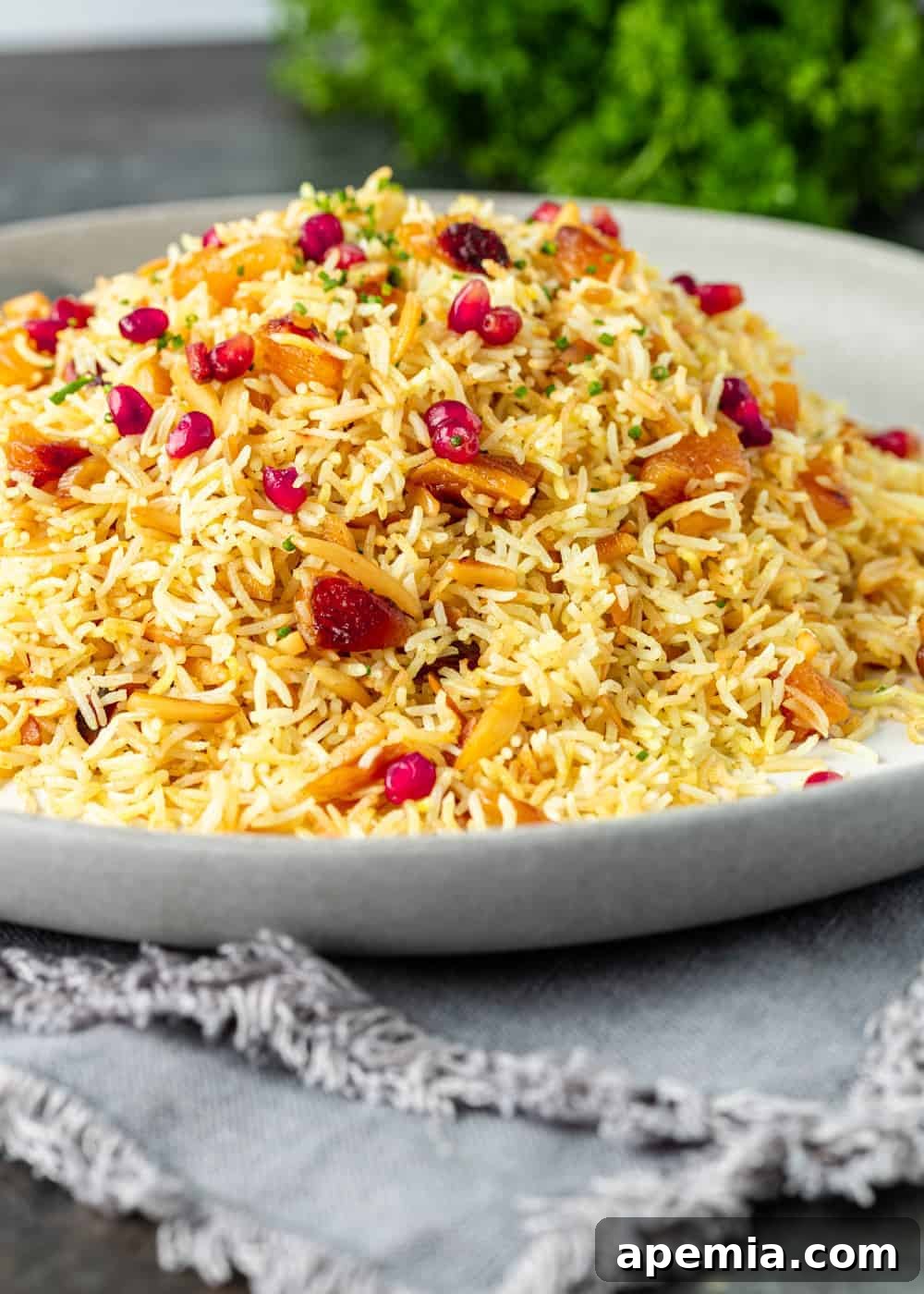
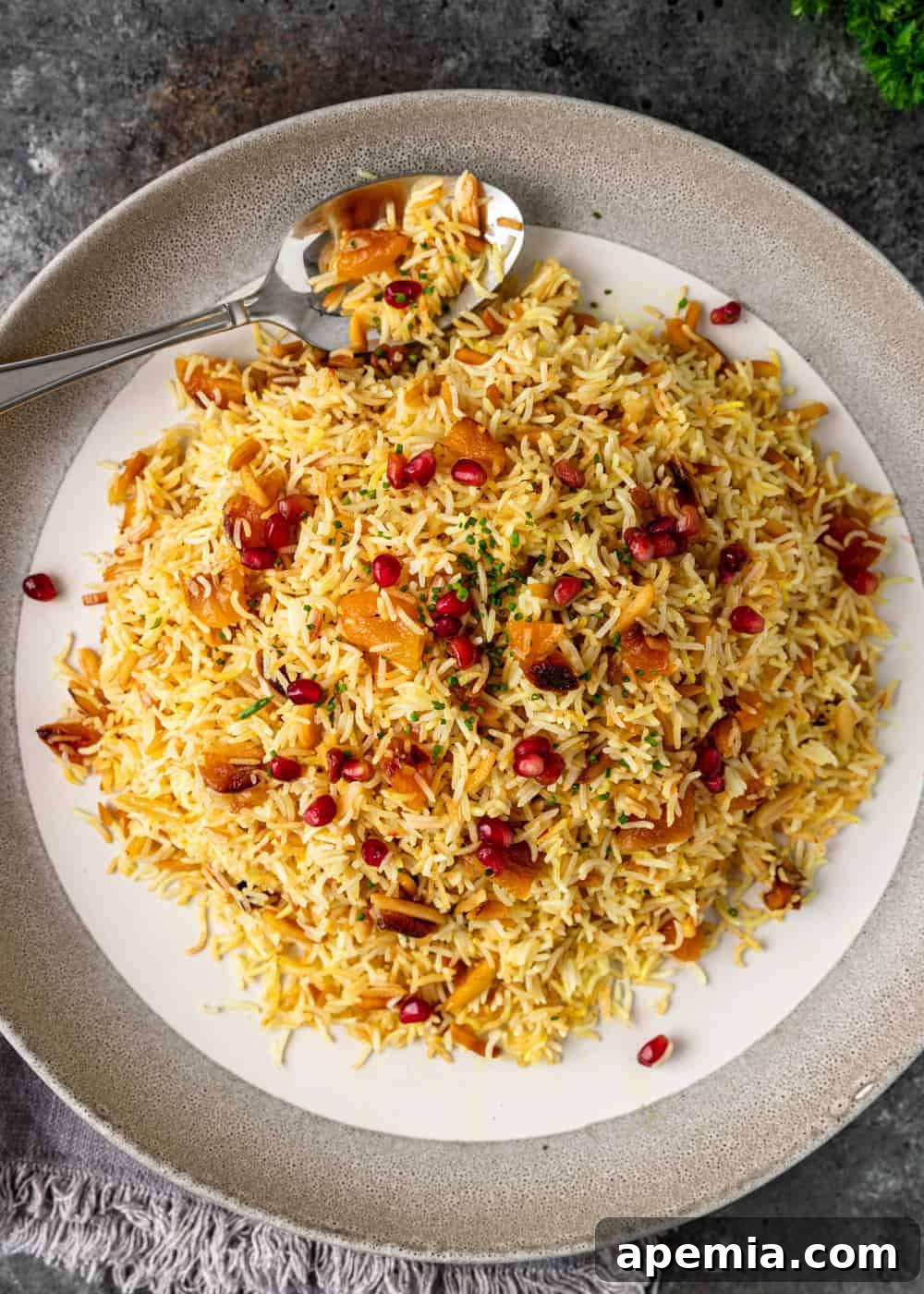
Golden, tender Persian saffron rice is a truly enchanting side dish, offering a symphony of flavors and textures. Its unique taste comes from the harmonious blend of fragrant basmati rice, earthy nuts, sweet apricots, and the unmistakable aroma of saffron and butter. Balancing sweet and savory notes with a delightful tang from the fruit, this mellow yet rich dish perfectly complements a wide array of your favorite Middle Eastern main courses. It’s not just a side; it’s a culinary experience.
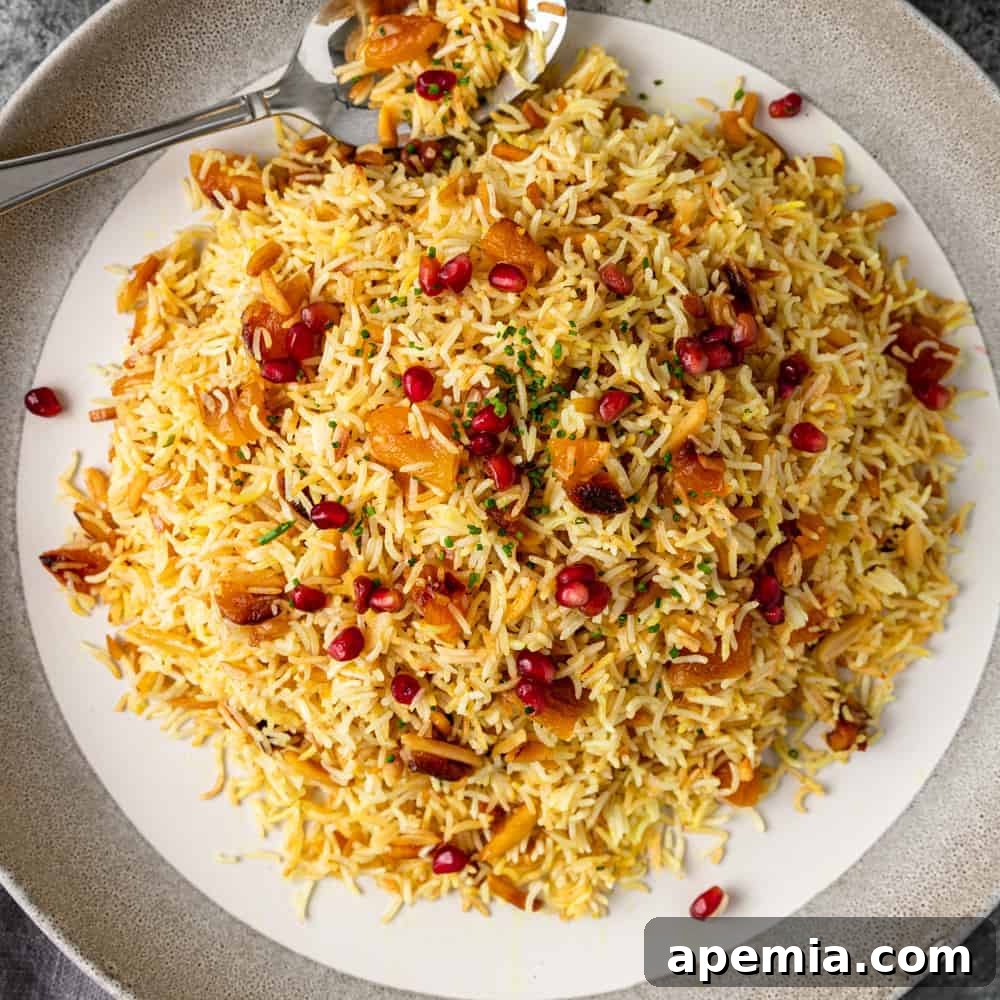
Imagine the delightful crunch of tahdig (the crispy bottom layer of Persian rice) or the layered richness of tachin, but instead, this recipe offers a light, incredibly fluffy texture and a mildly soothing flavor profile. While it doesn’t aim for the dramatic crispness of its counterparts, this Persian saffron rice recipe achieves an unparalleled tenderness and aromatic depth that makes it a standout on any table.
Crafting this elegant dish requires a little patience – about three hours from start to finish. This extended preparation time is primarily due to the essential soaking process for the basmati rice, a step crucial for achieving that signature fluffy texture. We’ll dive into the ‘why’ behind this in our Frequently Asked Questions section below. This method also involves a unique two-step cooking process, where the rice is first par-boiled and then gently steamed with the other ingredients, ensuring each grain remains perfectly separate and tender, infused with the rich flavors of almonds, dried fruit, and butter, without ever becoming mushy.
Persian saffron rice is incredibly versatile, pairing beautifully with almost any main course. However, its delicate yet complex flavors truly shine when served alongside saucy, richly spiced dishes like roasted chicken with pomegranate sauce or a hearty spiced eggplant stew. Its sweet and savory balance cuts through richer mains, providing a refreshing contrast that elevates the entire meal.
Table of Contents
- The Magic of Saffron: Blooming for Flavor
- Understanding Your Ingredients: Notes and Substitutions
- Step-by-Step Guide: How to Make Persian Saffron Rice
- Essential Tools for Perfect Persian Saffron Rice
- Storing and Reheating Leftovers
- Frequently Asked Questions
- Persian Saffron Rice with Apricot Recipe
The Magic of Saffron: Blooming for Flavor and Color
Saffron, often called “red gold,” is the most precious spice in the world, renowned for its distinctive sweet, floral, and subtly earthy flavor, as well as its vibrant golden-red hue. To truly unlock its full potential in a dish, it’s essential to “bloom” the saffron. Blooming saffron involves steeping the delicate threads in a hot liquid – typically water or milk – allowing them to fully release their intense color, complex flavor, and captivating aroma before being incorporated into your cooking. This step ensures that every grain of your Persian saffron rice is beautifully colored and deeply flavored.
While various methods exist, my preferred technique for blooming saffron is to gently crush the threads first. This can be done finely in the palm of your hand, using the back of a spoon, or with a traditional mortar and pestle. Crushing the threads helps to break down their cell walls, facilitating a quicker and more complete release of their essence. Once crushed, I place them in a small bowl with a few tablespoons of warm water. The warmth of the water helps to accelerate the blooming process, allowing the saffron to develop that rich, deep red infusion that will transform your rice. Some cooks even recommend using an ice cube, claiming the gradual melting allows for a slow, deep bloom, but I find the warm liquid method to be faster and equally effective for immediate use.
Understanding Your Ingredients: Notes and Substitutions for Persian Saffron Rice
(For a complete list of precise quantities, please refer to the recipe card below)
- Basmati Rice: This long-grain aromatic rice is the cornerstone of authentic Persian rice dishes. Basmati, meaning “fragrant one” in Hindi, possesses a delicate, floral, and nutty aroma that is truly unique. Its grains elongate significantly when cooked and remain separate and fluffy, which is crucial for the ideal texture of Persian rice. While other long-grain varieties might work in a pinch, basmati is highly recommended for its superior texture and aromatic qualities that define this dish.
- Butter: Butter plays a vital role in enriching the flavor of this rice. Not only does it add a luxurious richness to the final dish, but it’s also used to toast the dried fruit and nuts. This toasting step in butter imparts a deep, nutty, and caramelized flavor that infuses into the basmati rice as it steams, contributing significantly to the overall deliciousness. Both salted and unsalted butter can be used; adjust added salt accordingly.
- Almonds: For this Persian saffron rice recipe, I particularly enjoy using Marcona almonds. These Spanish almonds are typically blanched, roasted in olive oil, and lightly salted, offering an incredibly rich and slightly sweeter flavor profile compared to conventional almonds. Their delicate texture and intense flavor truly elevate the dish. However, standard blanched, slivered almonds are an excellent and readily available alternative that will still provide a wonderful crunch and nutty taste.
- Dried Apricots: The dried apricots contribute a wonderful chewiness and a sweet-tart flavor that brightens the entire dish. Their natural sweetness is amplified during the sautéing process. If you’re looking for variations, other dried fruits such as figs, raisins (golden or dark), prunes, or even cranberries can be fantastic substitutes, or they can be added alongside the apricots for an even richer medley of flavors. Dates, with their deep caramel notes, also make a delightful addition.
- Saffron: As discussed, saffron is the star, imparting its signature golden hue and a complex sweet, floral, and slightly citrusy flavor. Use good quality saffron threads for the best results; a little goes a long way.
- Advieh Spice Blend: Advieh is a fragrant and warming spice blend integral to Persian cuisine. While regional variations exist, it commonly includes spices like cumin, cinnamon, turmeric, cardamom, and sometimes rose petals or ginger. This blend adds a layer of warm, aromatic complexity that is deeply comforting and distinctly Middle Eastern. I often prepare my own Advieh for maximum freshness and customized flavor, but you can readily find pre-made blends at most Middle Eastern grocery stores or through online specialty retailers.
- Kosher Salt & White Pepper: Essential seasonings that enhance all other flavors. Kosher salt provides a clean, pure salty taste, while white pepper offers a subtle heat without the visible specks of black pepper, maintaining the dish’s aesthetic appeal.
Step-by-Step Guide: How to Make Fluffy Persian Saffron Rice
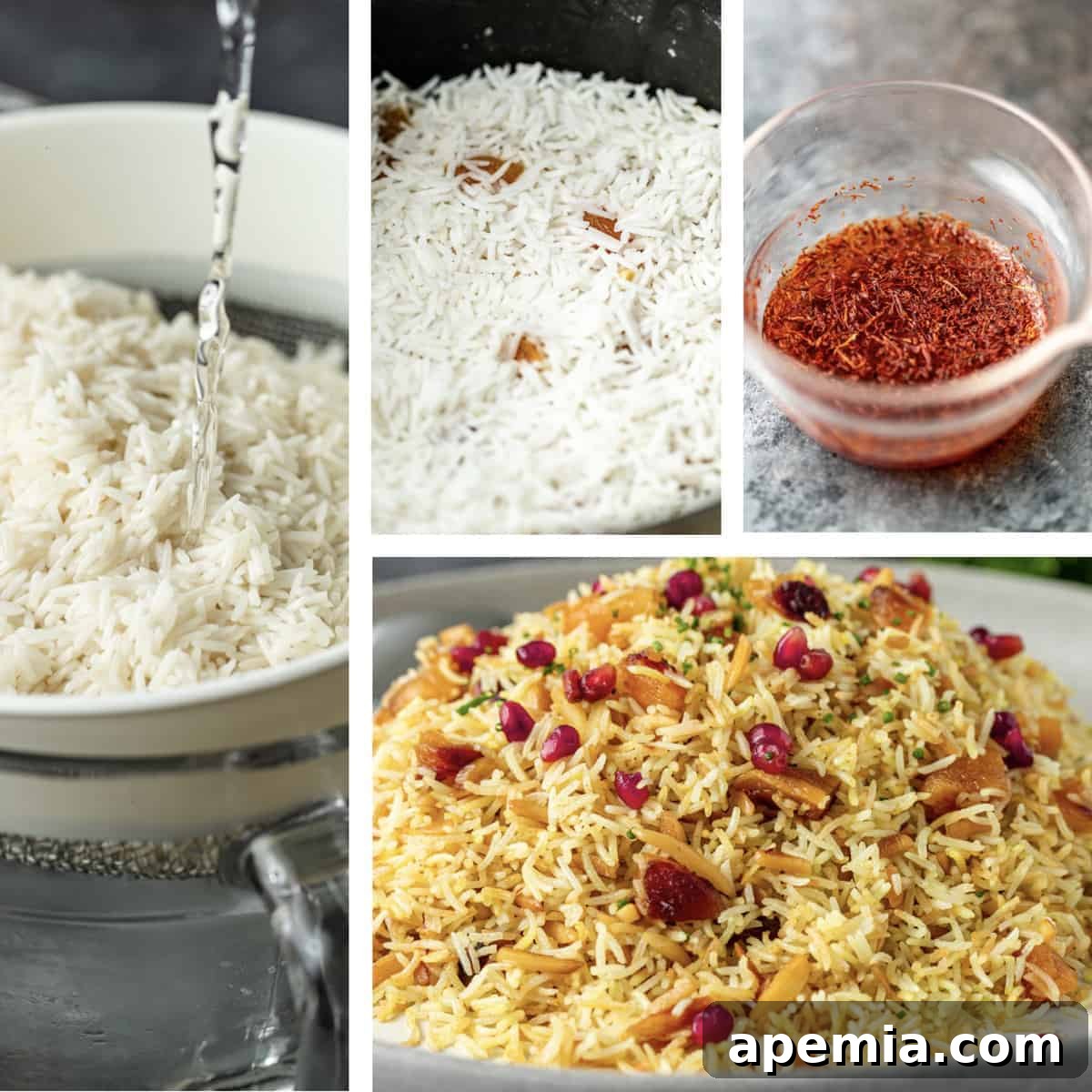
- Prepare the Basmati (Soak & Rinse): Begin by thoroughly rinsing your basmati rice under cold running water until the water runs clear. This removes excess starch, which is key to achieving separate, fluffy grains. Transfer the rinsed rice to a large bowl, cover it generously with lukewarm water, and stir in 2 tablespoons of salt. Allow the rice to soak for an essential 1 to 2 hours. This soaking process is critical for tender, evenly cooked grains. After soaking, drain the rice completely and rinse it once more under cold, running water to remove any residual salt from the soaking liquid.
- Par-Boil the Rice: In a medium-sized pot, bring a substantial amount of water to a rolling boil. Add another 2 tablespoons of salt to the boiling water – this seasons the rice from within. Carefully add the soaked and rinsed basmati rice to the pot. Boil gently for precisely 3 to 4 minutes. The goal here is to par-cook the rice until it’s almost done; the grains should still have a slight bite or al dente texture but should not be crunchy or hard. Drain the rice immediately through a fine-mesh sieve, rinse briefly with cold water to stop the cooking process and prevent sticking, and set it aside to drain completely.
- Toast Nuts & Fruit with Spices: While the rice drains, melt 6 tablespoons of butter in the same pot (or a separate large nonstick pot with a tight-fitting lid). Add the blanched almonds and sauté them over medium heat for about 4 minutes, or until they turn a light golden color and become fragrant (Marcona almonds might take only 2 minutes). Next, add the coarsely chopped dried apricots to the pan, stir, and cook for another 3 minutes until they soften slightly and become plump. Sprinkle the Advieh spice blend, 1/2 teaspoon of white pepper, and 1/2 teaspoon of kosher salt over the almonds and apricots, stirring to coat them evenly.
- Layer and Add First Layer of Rice: Add half of the par-boiled basmati rice directly into the pot with the toasted nuts, fruits, and spices. Gently stir everything together, ensuring the rice is well mixed with the flavorful butter, almonds, apricots, and spices. Spread this mixture evenly across the bottom of the pot.
- Bloom the Saffron: Just before the final steaming of the rice, crush the saffron threads (as described above) and place them in a small bowl. Add 2 tablespoons of hot water to the crushed saffron. Let this mixture sit for at least 10 minutes to allow the saffron to fully bloom and release its vibrant color and intense aroma.
- Steam the Rice to Perfection: Gently spoon the remaining plain par-boiled rice on top of the first seasoned layer in the pot. Do not stir this top layer into the bottom layer; keep them distinct. Melt the remaining 2 tablespoons of butter and drizzle it evenly over the top layer of rice. Pour 3 tablespoons of water over the rice as well – this creates steam for perfect cooking. Cover the pot with a tight-fitting lid. If you have a heat diffuser, place it under the pot on your burner to ensure even, very low heat distribution and prevent scorching. Cook the rice on the lowest possible heat for 35 minutes.
- Rest and Infuse: Once the 35 minutes of steaming are complete, remove the pot from the heat. Carefully lift the lid and evenly drizzle the bloomed saffron and its infused water over the rice. Replace the lid, then cover the entire pot with a clean kitchen towel before putting the lid back on. This towel absorbs excess steam, preventing it from dripping back onto the rice and making it soggy, ensuring perfectly fluffy grains. Let the rice rest for an additional 10 minutes off the heat. This resting period allows the saffron flavor to fully infuse and the steam to distribute evenly, resulting in perfectly distinct and tender grains.
- Serve and Enjoy: After the resting period, gently remove the lid and towel. Using a large serving spoon or spatula, carefully toss the two layers of basmati rice together, mixing the saffron-infused top layer with the apricot-nut-spiced bottom layer. Serve your beautiful, fragrant Persian saffron rice immediately while it’s still warm, perhaps garnished with fresh pomegranate seeds for an extra burst of color and tartness.
Essential Tools for Perfect Persian Saffron Rice
- Nonstick Pot or Dutch Oven: A good quality heavy-bottomed pot, preferably nonstick, is crucial for preventing the rice from sticking and burning, especially during the crucial steaming phase. Ensure it comes with a tightly fitting lid to trap all the steam efficiently. A Dutch oven is an excellent choice for its even heat distribution.
- Heat Diffuser: This flat, metal plate is placed between your burner and the pot. It helps to disperse heat evenly and gently, preventing direct hot spots that can scorch delicate foods like rice. For Persian rice, where gentle, consistent steam is key, a heat diffuser is invaluable for achieving a perfect, non-sticky result without burning the bottom layer.
Storing and Reheating Leftovers
To ensure your delicious Persian saffron rice remains fresh and flavorful, allow any leftovers to cool completely to room temperature before storing. Transfer the cooled rice to an airtight container or a resealable freezer bag, pressing out any excess air to prevent freezer burn. It can be safely refrigerated for up to 5 days, making it a convenient meal prep option. For longer storage, freeze the rice for up to 2 months.
Reheating Persian saffron rice is simple and quick, especially using a microwave. If reheating from frozen, it’s best to let the rice thaw on the counter until it reaches room temperature, which helps it reheat more evenly. To reheat, add a tablespoon of water or a small pat of butter to the container with the leftover rice. Cover the container and microwave on high for 2 to 3 minutes, or until thoroughly heated through. The added moisture helps to restore its fluffy texture. Once heated, gently fluff the rice with a fork before serving, and it will be almost as good as freshly made.
Share this recipe on Pinterest!
Love this recipe? Share it with the world on Pinterest and inspire others to try this delicious Persian saffron rice.
Frequently Asked Questions About Persian Saffron Rice
Soaking basmati rice is a fundamental step in Persian cooking, and for good reason! Firstly, it helps to release excess starch from the surface of the grains, which prevents them from clumping together and becoming mushy during cooking. This is crucial for achieving the desired separate, fluffy texture. Secondly, soaking allows the rice grains to absorb moisture evenly before cooking. This pre-hydration helps the rice cook more quickly and uniformly, resulting in wonderfully tender grains. If the soaking water is lightly salted, as in this recipe, the grains also absorb that flavor, enhancing the overall taste of the finished dish. Beyond culinary benefits, some studies suggest that soaking grains can also make them easier to digest by reducing phytic acid content.
While some culinary traditions suggest soaking saffron for up to 20 minutes or even longer, my personal experience, and that of many Persian cooks, indicates that 10 minutes is often sufficient for saffron to release its full color and a significant amount of its flavor and aroma. For this particular Persian saffron rice recipe, the saffron is added right before the final resting period. During this rest, the rice is covered, trapping steam and moisture, which allows the saffron to continue infusing its essence into the grains even after the initial blooming period. Therefore, a 10-minute bloom is typically the perfect amount of time to prepare it for this dish.
The hallmark of perfectly cooked Persian saffron rice is its exquisite texture: individual, long, and fluffy grains that are tender through and through, yet distinct and never sticky or mushy. After the initial par-boiling step, the rice should still retain a slight “bite” – it should be al dente, not fully soft. The final steaming process, combined with the resting period, is what transforms it into that ideal fluffy consistency. If, after the initial 35 minutes of steaming, your rice still feels a little firm or hard, don’t worry. Simply add an additional tablespoon or two of water to the pot, cover tightly again, and continue to steam on very low heat for another 5 to 10 minutes. This extra steam will help the grains soften without becoming overcooked.
Absolutely! To make this delightful Persian saffron rice vegan or dairy-free, simply substitute the butter with a high-quality plant-based butter alternative or a neutral-flavored oil such as olive oil or vegetable oil. The rich flavor profile of the dish comes from the saffron, nuts, fruits, and Advieh spice, so it will still be incredibly delicious. Ensure your chosen butter substitute or oil is suitable for sautéing and steaming to achieve the best results.
Persian cuisine boasts an incredible variety of rice dishes, each unique and flavorful. Beyond plain chelow (steamed white rice), popular examples include polo (rice cooked with other ingredients) such as “Adas Polo” (lentil rice), “Baghali Polo” (dill and fava bean rice), and “Zereshk Polo” (barberry rice). There’s also the famous “Tahdig,” the crispy, golden crust at the bottom of the rice pot, and “Tahchin,” a savory yogurt and saffron rice cake, often with chicken or meat. This apricot saffron rice is a beautiful example of a sweet and savory polo that highlights the versatility of Persian rice cookery.
Persian Saffron Rice with Apricot
★
★
★
★
8
2 hrs
45 mins
10 mins
2 hrs 55 mins
Video
Ingredients
- 2 cups basmati rice
- 1/2 cup butter
- 2/3 cup blanched almonds (See Note 1)
- 3 oz dried apricots coarsely chopped, quartered
- 1/4 tsp saffron threads
- 1 tsp advieh spice blend
- 1/2 tsp kosher salt
- 1/2 tsp white pepper
Instructions
-
Rinse the rice well under running cold water, then put the rice in a large bowl, cover it with lukewarm water and stir in 2 tablespoons of salt. Allow to soak for 1 to 2 hours. Drain and rinse again.
-
Bring a medium pot of water to a boil, add 2 more tablespoons of salt, then add the rice and boil gently for 3 to 4 minutes, until almost cooked (See Note 2). Drain, rinse, and set aside to drain completely.
-
In the same pan, melt 6 tablespoons of the butter and sauté the almonds until slightly golden, about 4 minutes (2 minutes if using Marcona almonds). Add the chopped dried apricots, cook for 3 more minutes, then stir in the advieh spice blend, half a teaspoon of white pepper, half teaspoon salt, and half of the rice.
-
Gently flatten down the rice, tapping to flatten using your fingers or spatula, then spoon the remaining rice on top.
-
In a small bowl, crush saffron threads and stir in 2 tablespoons of hot water. Allow saffron to bloom, set aside.
-
Melt the remaining 2 tablespoons of butter and pour over the top, along with 3 tablespoons of water. Cover the pan with a tight lid and cook on the lowest possible heat for 35 minutes (I use a heat diffuser on top of the burner like when using a tagine). Turn off the heat, drizzle the saffron and its water over, cover with a tea towel, put the lid back on, and set aside for 10 minutes.
-
Serve hot, using a large spoon, scooping the two layers of rice together, or toss to mix.
Notes
- I like to use Marcona almonds and roughly chop them. Marcona almonds are blanched, then roasted in olive oil and sprinkled with sea salt. Feel free to use blanched, slivered almonds.
- Check the rice by trying a grain. It should still have a little bit of bite to it.
- For leftovers, let the rice cool completely and transfer to an airtight container or sealable bag and squeeze out excess air. Freeze for up to 2 months. To thaw, let come to room temp, add a tablespoon of water, cover, and steam in the microwave for 2-3 minutes on high heat. Fluff with a fork and enjoy.
Nutrition
Carbohydrates: 46g |
Protein: 6g |
Fat: 6g |
Saturated Fat: 1g |
Cholesterol: 2mg |
Sodium: 312mg |
Potassium: 266mg |
Fiber: 2g |
Sugar: 7g |
Vitamin A: 408IU |
Vitamin C: 1mg |
Calcium: 61mg |
Iron: 1mg
The information shown is an estimate provided by an online nutrition calculator. It should not be considered a substitute for a professional nutritionist’s advice.
Have You Made This Recipe? Let Me Know on Instagram
Tag @keviniscooking or tag me #keviniscooking!