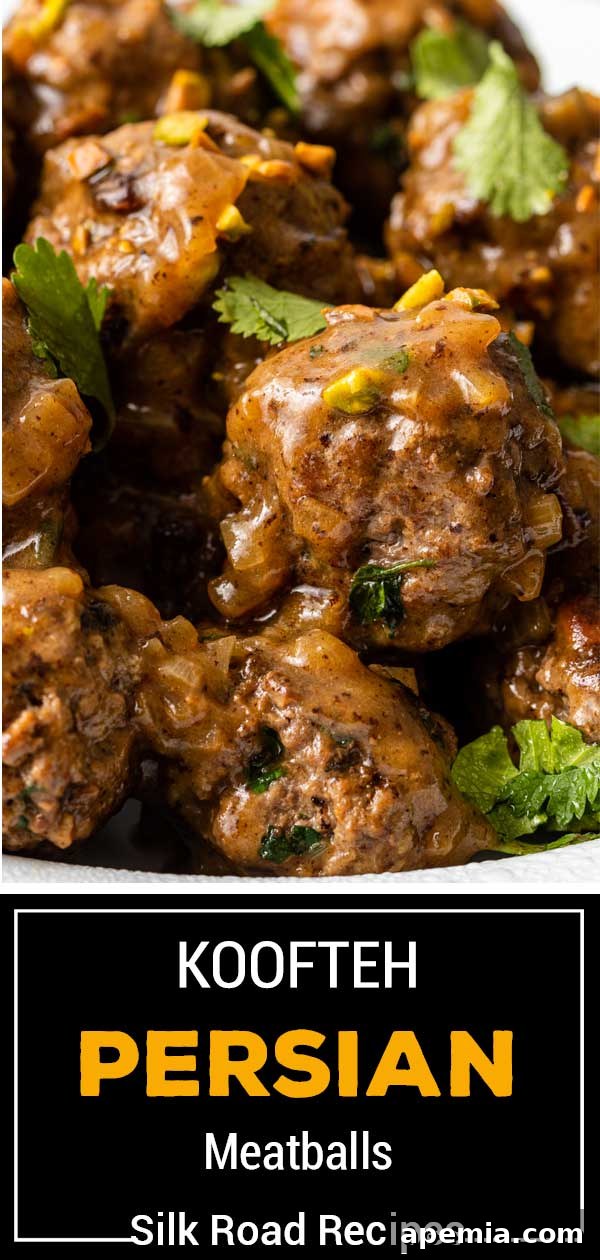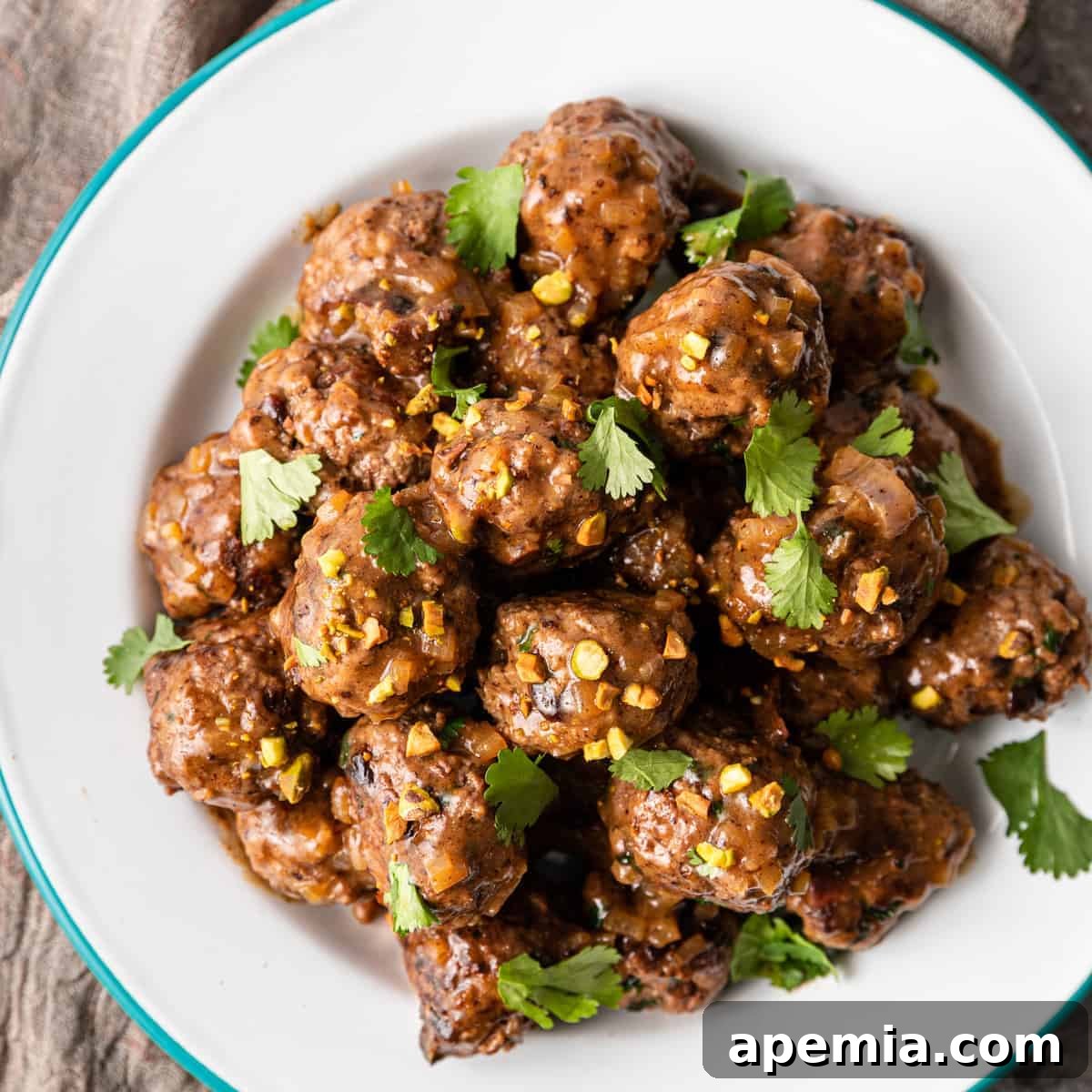
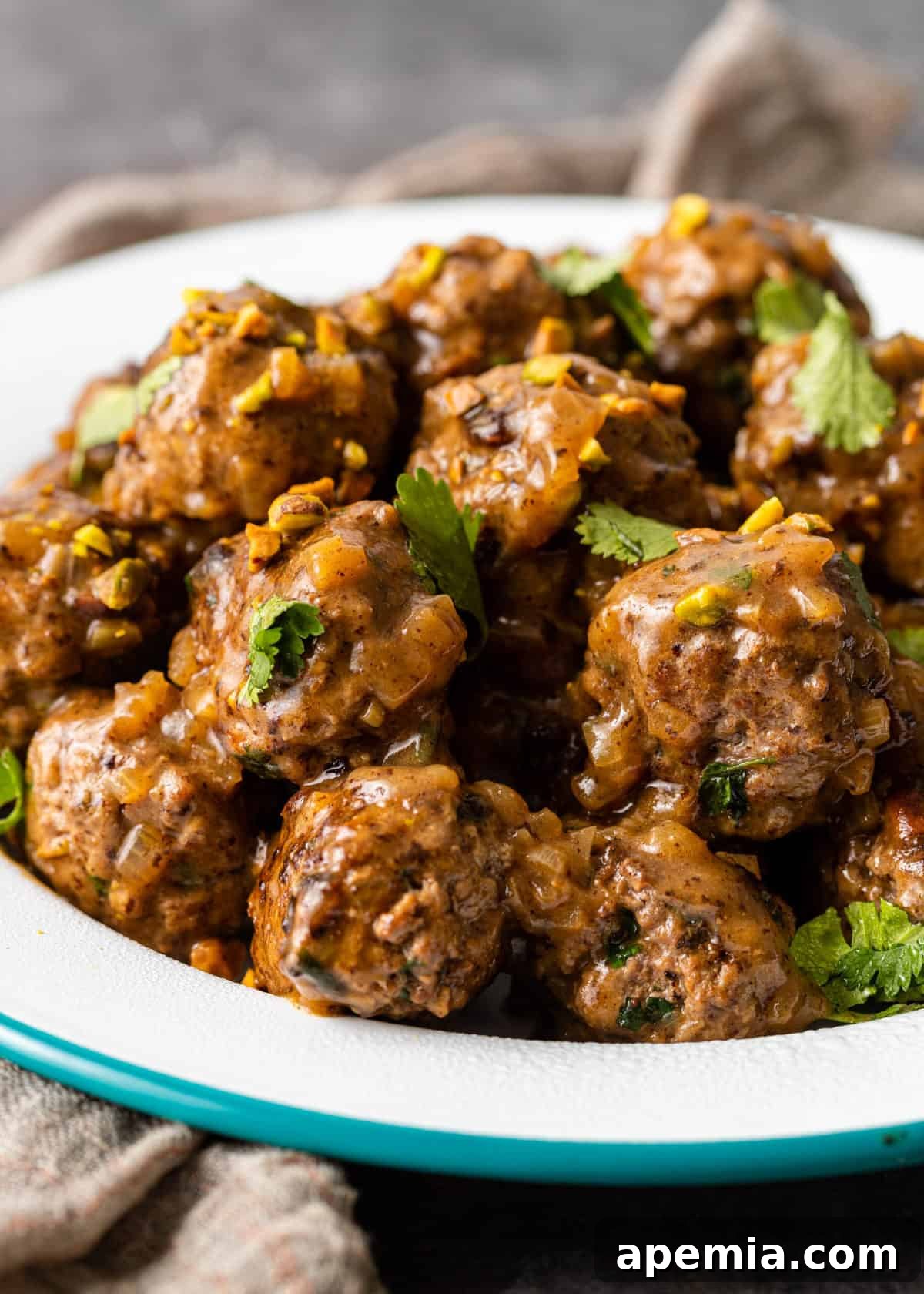
Delve into the rich culinary heritage of Persia with these extraordinary Persian meatballs, known as Koofteh. This recipe elevates the classic meatball to an art form, blending succulent ground lamb with the vibrant crunch of pistachios, the delightful sweetness and tang of dried cherries, and an aromatic symphony of warm, earthy Middle Eastern spices. The result is a truly unforgettable dish that perfectly balances sweet, salty, and subtly spicy notes, promising a unique flavor experience that will captivate your palate.
The journey of the humble meatball is a fascinating one, with many culinary historians tracing its origins back to ancient Persia, the land we now know as Iran. Persian Koofteh stands as a testament to this legacy, embodying the profound culinary philosophy of bringing together diverse flavors and textures to forge dishes that are not only delicious but also profoundly comforting and uniquely captivating. Unlike their Western counterparts, Koofteh are often larger, more substantial, and celebrated for their complex flavor profiles, typically featuring fruits, nuts, and a distinctive spice blend.
This particular rendition focuses on luscious Persian lamb meatballs. Lamb is a cornerstone protein in Iranian cuisine, frequently gracing tables in iconic dishes like Koobideh kebabs and rich, slow-cooked stews. Its naturally mild, slightly sweet, and earthy flavor profile provides an ideal canvas for the fragrant Persian spices and seasonings. In this recipe, the lamb is harmoniously paired with the bright zest of tart dried fruit, the delicate crunch of pistachios, and a thoughtfully curated selection of peppery, citrusy, and warm spices, creating a layered taste sensation that is truly unparalleled.
Table of Contents: A Culinary Journey
- The Essence of Koofteh: Unveiling the Flavor Profile
- Ingredient Insights and Smart Substitutions
- Mastering Persian Meatballs: A Step-by-Step Guide
- Pro Tips for Perfect Persian Meatballs
- Recommended Kitchen Tools
- Serving Suggestions and Culinary Pairings
- Storing and Reheating Your Koofteh
- Frequently Asked Questions
- Persian Meatballs (Koofteh) Recipe Card
If the mere thought of these unique Koofteh lamb meatballs isn’t enough to ignite your culinary curiosity, then join us as we delve deeper into the exquisite ingredients and time-honored techniques that bring this dish to life. Prepare for an epicurean adventure!
Expert Tip
The Essence of Koofteh: Unveiling the Flavor Profile
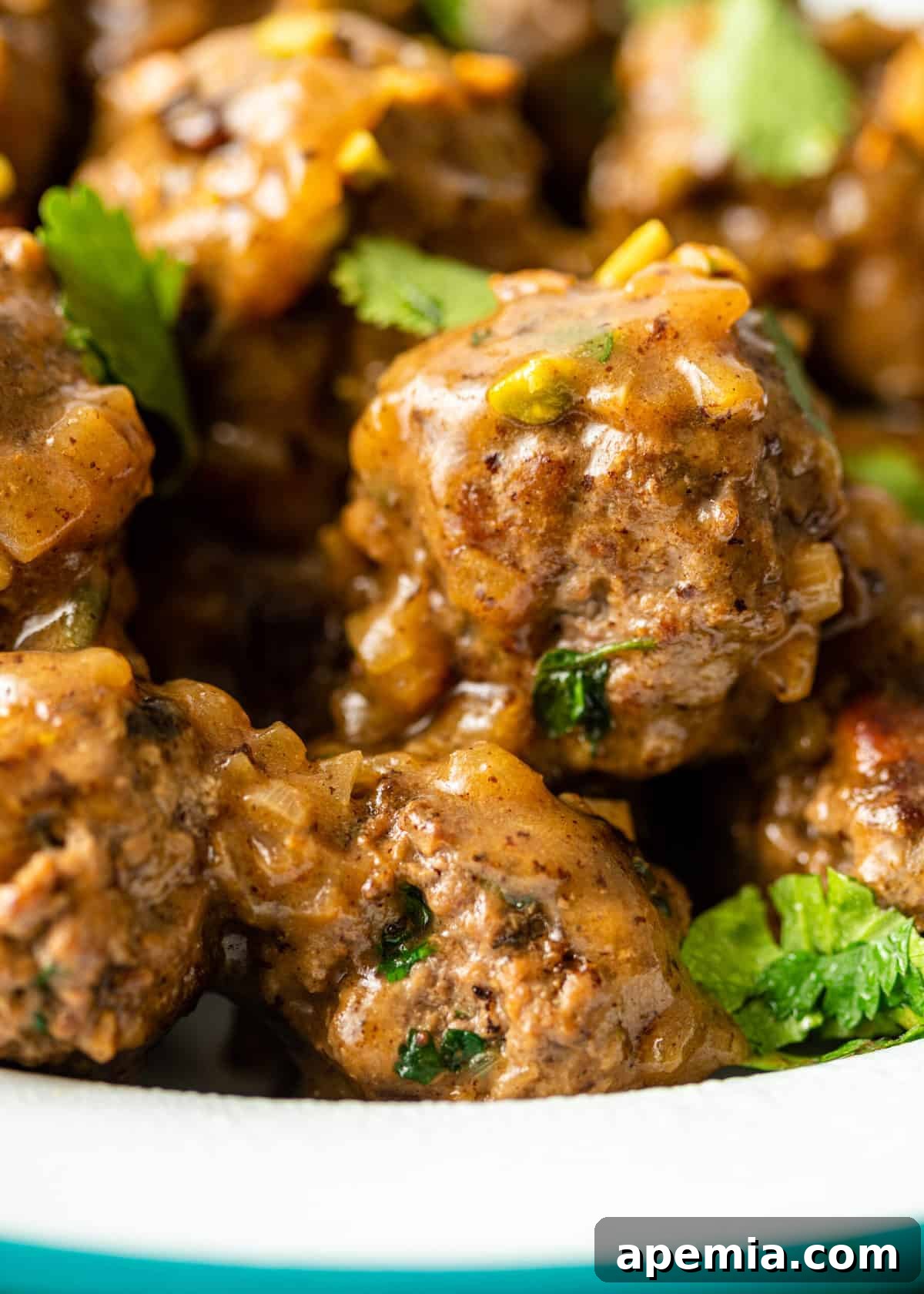
While this recipe champions ground lamb for its authentic Persian character, feel free to substitute with ground beef if preferred. However, the true magic of these tender meatballs lies in the careful integration of dried cherries and finely chopped pistachios. These additions are not merely for decoration; they are paramount to creating that signature sweet-and-salty balance and delivering an irresistible textural crunch that perfectly complements the savory, sauced meatballs (Koofteh). Don’t underestimate their impact on the final delightful bite!
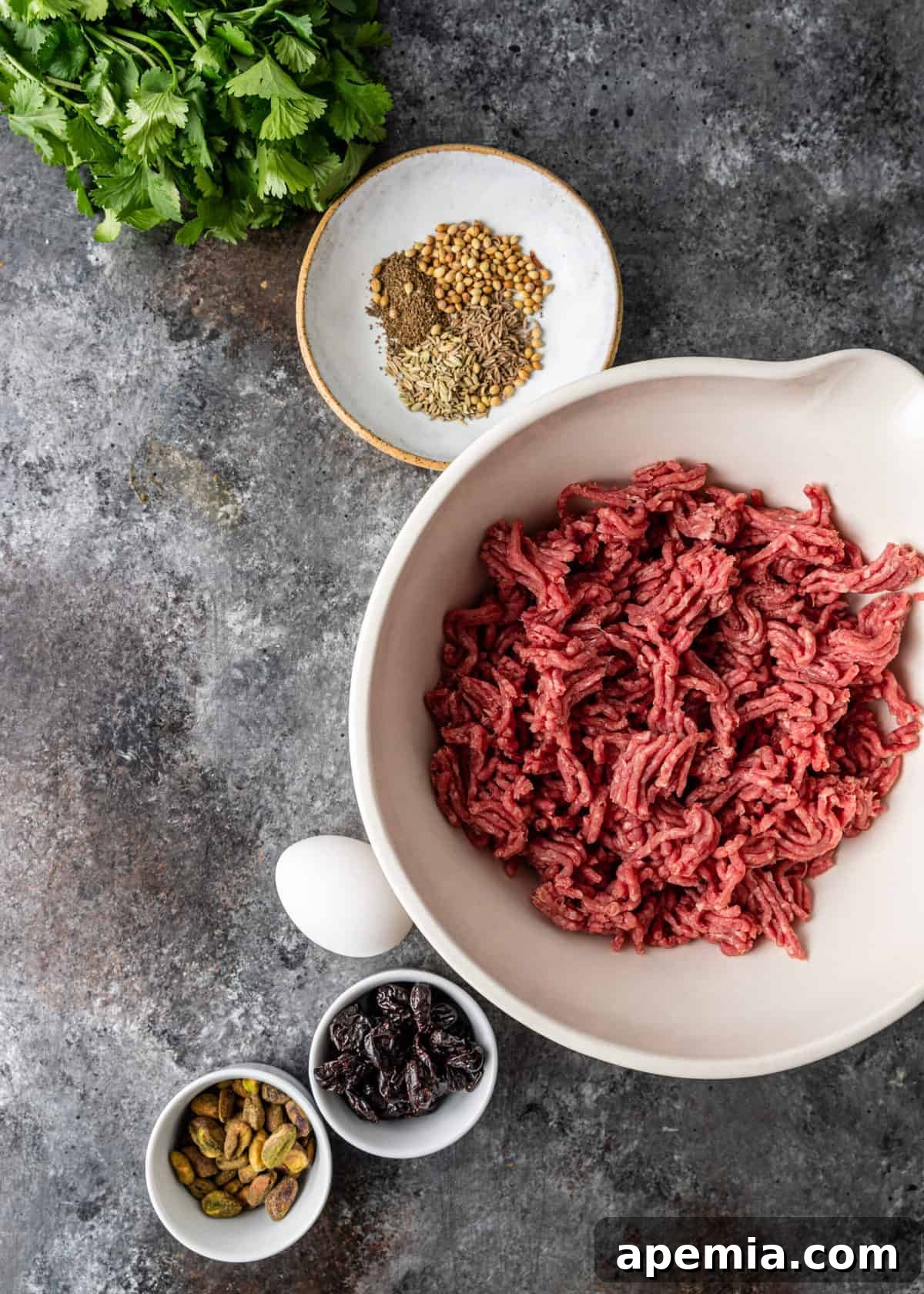
Ingredient Insights and Smart Substitutions
Understanding each ingredient’s role is key to mastering this exceptional dish. Here’s a closer look at what goes into our Koofteh and how you can adapt it to your pantry and preferences:
- Ground Lamb: The star of this traditional Persian recipe. Lamb offers a distinct, rich flavor that is naturally sweet and earthy, complementing the aromatic spices beautifully. While you can certainly use ground beef, chicken, or turkey for a different take, I wholeheartedly encourage experiencing these authentic Persian lamb meatballs at least once to truly appreciate their heritage.
- Pistachios: These vibrant green nuts are a staple in Persian cuisine, prized not just for their delightful crunch but also for their subtly sweet and earthy flavor. They add a wonderful textural contrast to the tender meat. If pistachios aren’t available, blanched almonds make an excellent substitute. Always opt for unsalted or lightly salted nuts to ensure they don’t overpower the delicate flavor of the lamb and spices.
- Dried Cherries: The secret weapon for that signature sweet-and-tart duality. Dried cherries cut through the richness of the lamb and provide a burst of fruity brightness. Their chewy texture also adds another interesting dimension. If you have dried cranberries on hand, they are a fantastic alternative, offering a similar tart-sweet profile.
- Egg & Breadcrumbs: These essential binding agents work in tandem to keep the meatballs moist and tender while ensuring they hold their shape during cooking. They also play a crucial role in absorbing the rich flavors of the spices and sauce, making every bite incredibly succulent. For optimal texture, whisk the egg briefly before adding it to the meat mixture.
- Aromatic Seasonings: We’re using ground spices for convenience, which makes the preparation swift and easy. However, for those who prefer an even deeper aroma, you can toast and grind whole spices (conversions provided in the recipe card below). Each spice contributes uniquely to the complex profile:
- Celery Seed: Offers a slightly bitter, earthy, and warm flavor reminiscent of celery. Caraway seeds make a good substitute, or simply use a little more fennel for a similar aromatic depth.
- Ground Cumin & Coriander: This classic Middle Eastern duo forms the backbone of the spice blend. Cumin provides a warm, earthy, and slightly pungent note, while coriander offers a lighter, citrusy, and floral aroma, creating a beautifully balanced and intoxicating fragrance.
- Ground Fennel: Imparts a distinctive, sweet, and slightly licorice-like flavor that adds an intriguing layer to the overall spice profile. Anise or caraway seeds can be used as alternatives if fennel is unavailable, or you can slightly increase the amount of cumin.
- Cilantro: Freshly chopped cilantro brings a burst of bright, herbaceous freshness that lifts the entire dish. If you’re not a fan of cilantro, fresh parsley or Thai basil are excellent substitutes that offer a similar vibrant green note.
- Salt: Essential for enhancing all the flavors. Adjust to taste.
- Chicken Stock & Flour: These are the heroes of our rich, savory pan gravy. The flour acts as a thickener, transforming the flavorful lamb drippings and chicken stock into a luscious sauce that clings beautifully to the meatballs.
- Shallots: These delicate, mild onions are sautéed to create a sweet and aromatic foundation for the pan gravy. Their subtle flavor is less pungent than regular onions, making them ideal for building a nuanced base. Any other type of onion can be substituted, though you might adjust the quantity based on its intensity.
Mastering Persian Meatballs: A Step-by-Step Guide
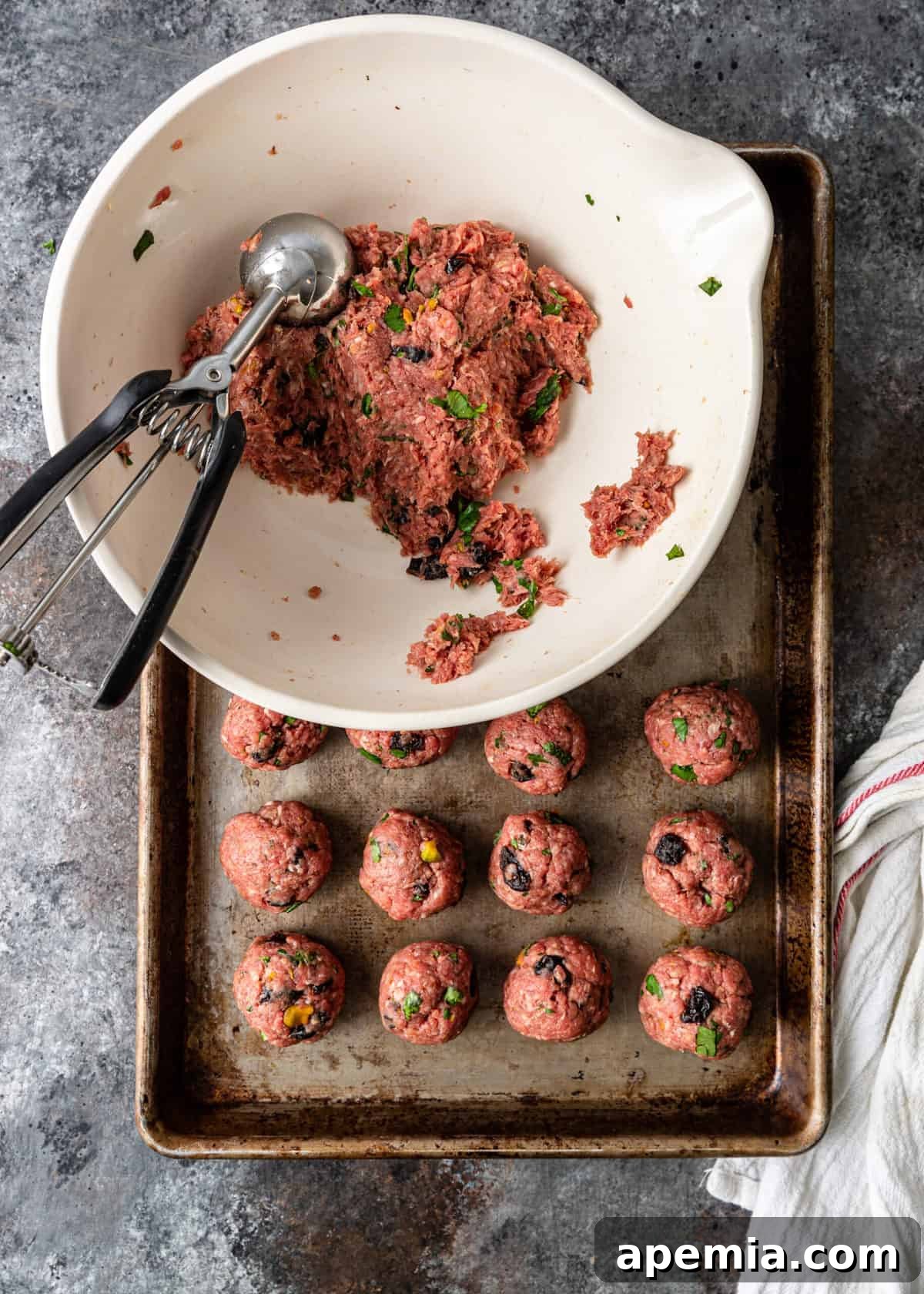
- Prepare the Meatball Mixture: In a large mixing bowl, combine the ground meat, chopped dried cherries, breadcrumbs, whisked egg, all the carefully measured spices, and fresh cilantro. Using your hands, gently mix the ingredients together until they are just combined. Be careful not to overmix, as this can lead to tough meatballs.
- Shape the Koofteh: With lightly moistened hands or a 1.5-inch scoop, roll the meat mixture into uniform, golf ball-sized meatballs. Uniformity in size ensures even cooking. Aim for about 18-20 meatballs from one pound of meat.
- Brown the Persian Meatballs: Heat the olive oil in a large, heavy-bottomed frying pan or Dutch oven over medium-high heat. Once shimmering, add the meatballs in batches, ensuring not to overcrowd the pan. Cook until beautifully browned on all sides and cooked through. Browning is essential for developing a rich flavor and appealing crust. Transfer the browned meatballs to a plate and cover them loosely to keep them warm while you prepare the sauce.
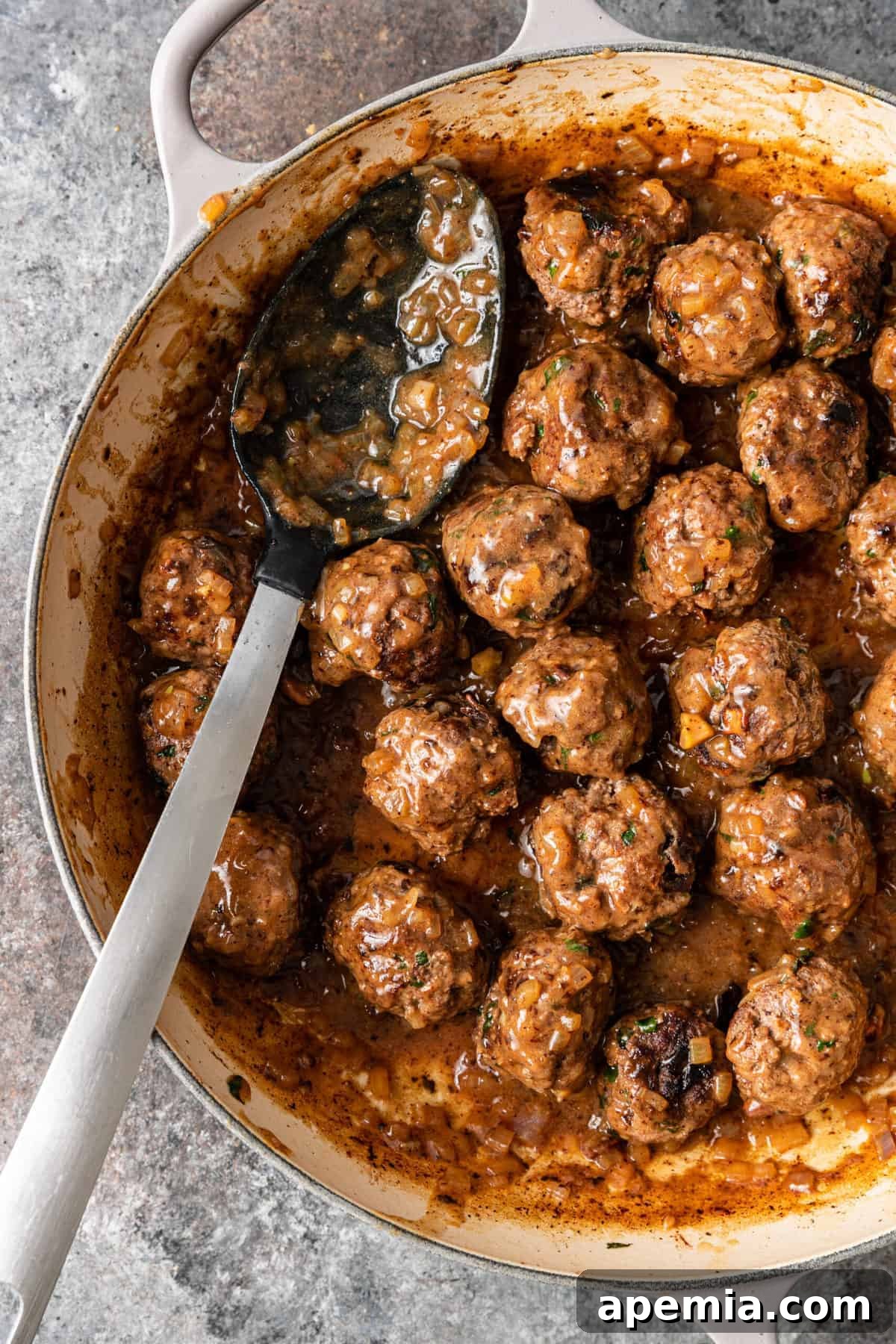
- Craft the Savory Pan Sauce: Using the same pan with the flavorful lamb drippings (do not clean it!), reduce the heat to medium. Add the diced shallot and sauté until translucent and fragrant, about 2-3 minutes. Sprinkle in the flour and stir continuously for about a minute to cook out the raw flour taste. Gradually, begin to pour in the chicken stock, adding just a small amount at a time and whisking vigorously after each addition to prevent lumps and ensure a smooth, thick gravy forms. Continue adding stock until the sauce reaches your desired consistency. Season the gravy to taste with salt and pepper.
- Finish and Serve: Gently return the browned Persian lamb meatballs to the pan, nestling them into the rich sauce. Stir carefully to coat each meatball thoroughly. Cover the pan and let it simmer on low heat for a few minutes, allowing the meatballs to warm through and absorb more of that delicious sauce. Serve immediately, piping hot, with your favorite accompaniments.
Pro Tips for Perfect Persian Meatballs
Achieving truly exceptional Koofteh is within your reach with these helpful tips:
- Don’t Overmix the Meat: This is arguably the most crucial tip! Overmixing the ground meat will develop the proteins too much, resulting in dry, tough, and chewy meatballs instead of the tender, juicy texture we desire. Mix gently by hand until just combined.
- Keep Your Hands Moist: When shaping the meatballs, lightly moistening your hands with water will prevent the meat mixture from sticking, making the process much smoother and ensuring perfectly round Koofteh.
- Use a Scoop for Uniformity: A 1 ½-inch cookie scoop or ice cream scoop is a game-changer. It helps create consistently sized meatballs, which is vital for even cooking. No more guessing if one meatball is done while another is still raw!
- Achieve a Deep Brown Crust: Don’t rush the browning step. A beautiful, deep brown crust on your meatballs isn’t just for looks; it locks in juices and develops incredible flavor through the Maillard reaction.
- Taste and Adjust the Sauce: Always taste your pan sauce before serving. Adjust the seasoning (salt, pepper) as needed. Remember, the sauce is key to the overall flavor of the dish.
- Internal Temperature Check: For perfectly cooked lamb meatballs, use an instant-read thermometer. They are safely cooked when they reach an internal temperature of 160°F (71°C). Remove them from the heat immediately upon reaching this temperature to prevent overcooking.
Recommended Kitchen Tools
These tools will make your Koofteh preparation smoother and more enjoyable:
- Large Saucepan or Dutch Oven: Essential for browning the meatballs and preparing the savory pan gravy efficiently. Choose one with a heavy bottom for even heat distribution.
- Spacious Mixing Bowl: To comfortably combine all the ingredients for your meatball mixture without mess.
- 1 ½” Scoop (or similar): As mentioned in our pro tips, a scoop is invaluable for quickly and consistently shaping your Koofteh. This ensures they cook evenly and look professional.
- Whisk: For smoothly incorporating the flour and chicken stock into your pan gravy, preventing lumps.
- Instant-Read Meat Thermometer: The best way to guarantee your meatballs are perfectly cooked and juicy, never dry.
Serving Suggestions and Culinary Pairings
Persian meatballs are incredibly versatile and pair beautifully with a variety of sides. Here are some traditional and complementary ideas to complete your meal:
- Rice: The classic accompaniment! Saffron rice (Tahchin) is a luxurious choice, offering vibrant color and delicate aroma. Simple steamed basmati rice is also perfect for soaking up every drop of that rich pan gravy.
- Fresh Bread: A must for scooping up the delicious sauce. Options like Khubz (whole wheat pita), soft Naan bread, or thin Armenian flatbread (Lavash) are all excellent choices.
- Salad-e Shirazi: A refreshing Persian cucumber and tomato salad with red onion, mint, and a lime dressing, offers a bright contrast to the richness of the meatballs.
- Yogurt Dip: A simple plain yogurt or a cooling Mast-o-Khiar (yogurt with cucumber and mint) can provide a lovely creamy counterpoint.
- Fresh Herbs (Sabzi): A plate of fresh herbs like mint, basil, and tarragon, often served alongside Persian meals, adds freshness and aids digestion.
- Roasted Vegetables: Roasted carrots, zucchini, or bell peppers can add extra nutrients and sweetness.
Storing and Reheating Your Koofteh
These flavorful Koofteh are just as delicious the next day, if not more so, as the flavors meld and deepen. Proper storage and reheating will ensure you enjoy them at their best.
- Refrigeration: Cooked Koofteh, whether made with lamb or any other red meat, can be safely stored in an airtight container in the refrigerator for up to 3-4 days. For the best flavor and moisture retention, store the meatballs submerged in their delicious pan sauce. This allows them to continue absorbing that rich, savory goodness.
- Freezing: Persian meatballs freeze beautifully, making them an excellent meal prep option. Once the meatballs and sauce have completely cooled to room temperature, transfer them to a freezer-safe airtight container or heavy-duty Ziploc bag. They can be frozen for up to 2-3 months. To avoid freezer burn, ensure as much air as possible is removed from the container or bag.
- Thawing: Before reheating, it’s best to thaw frozen meatballs overnight in the refrigerator. If you’re in a hurry, you can gently thaw them on the stovetop over very low heat, stirring occasionally, or use the defrost setting on your microwave.
- Reheating:
- Stovetop (Recommended): Place the meatballs and sauce in a saucepan over medium-low heat. Stir regularly and gently until they are thoroughly warmed through. This method helps maintain their moisture and prevents drying out. Add a splash of chicken stock or water if the sauce seems too thick.
- Oven: Preheat your oven to 300°F (150°C). Place the meatballs and sauce in an oven-safe dish, cover it with foil, and heat for 15-25 minutes, or until heated through.
- Microwave: For a quick reheat, place a few meatballs and some sauce in a microwave-safe dish, cover, and microwave in 1-minute intervals, stirring in between, until hot. This method is best for small portions.
Share this recipe on Pinterest!
Love this recipe? Help others discover this incredible dish by sharing it with the world on Pinterest.
Frequently Asked Questions About Koofteh
Dry and tough meatballs are usually the result of one of two common mistakes:
- Overmixing: The absolute worst thing you can do when making meatballs is to overmix the ground meat. This develops the protein strands, leading to a dense, rubbery texture. Always mix by hand and only just until the ingredients are combined.
- Overcooking: Keep a close eye on the cooking time and, ideally, use a meat thermometer. Once your meatballs reach an internal temperature of 160°F (71°C), remove them from the heat immediately. Any further cooking will dry them out.
Pro Tip for Tenderness: Whisk your egg thoroughly before adding it to the meat mixture. This breaks up the yolk and white, making it easier to evenly incorporate into the other ingredients, contributing to a more tender meatball.
Koofteh distinguishes itself from other meatball varieties in several significant ways, rooted deeply in Persian culinary tradition:
- Historical Preparation: Historically, in authentic Persian Koofteh recipes, the meat was often meticulously ground or even pounded by hand for an extended period. This labor-intensive process created a very sticky and incredibly fine meat paste, which contributed to a unique texture. While this traditional pounding is rarely done in modern kitchens, the desire for a finely textured meatball persists.
- Unique Ingredients: What truly sets Koofteh apart are its distinctive ingredients. The inclusion of dried fruits like cherries (or apricots, plums in other variations) and a variety of nuts such as pistachios or walnuts directly into the meat mixture is quite unique and provides a signature sweet, savory, and textural complexity not often found in other meatball cuisines.
- Size and Presentation: Persian Koofteh traditionally tend to be quite large, sometimes reaching the size of a baseball or even larger, especially for celebratory dishes. For this particular recipe, I’ve opted for smaller, golf ball-sized meatballs. This choice makes them cook much faster and more evenly in a skillet, perfect for a weeknight meal while still retaining their authentic flavor.
- Spice Profile: The aromatic blend of Middle Eastern spices, including cumin, coriander, fennel, and often turmeric or saffron, gives Koofteh its unmistakable warm and exotic flavor.
Persian meatballs are incredibly versatile and pair wonderfully with a range of sides to create a complete and satisfying meal:
- Rice: The most traditional accompaniment. Fluffy basmati rice, especially aromatic saffron rice (Tahchin), is perfect for soaking up the rich gravy.
- Breads: A variety of flatbreads are ideal for scooping up the savory sauce. Consider warm Khubz, soft Naan, or delicate Armenian flatbread (Lavash).
- Salads: A refreshing Salad-e Shirazi (cucumber, tomato, onion, mint salad with a lime dressing) provides a crisp, tangy counterpoint.
- Yogurt: A simple dollop of plain yogurt or a creamy Mast-o-Khiar (yogurt with cucumber and mint) can offer a cooling contrast to the rich meat.
- Roasted Vegetables: Sweet roasted carrots, parsnips, or bell peppers can complement the earthy spices beautifully.
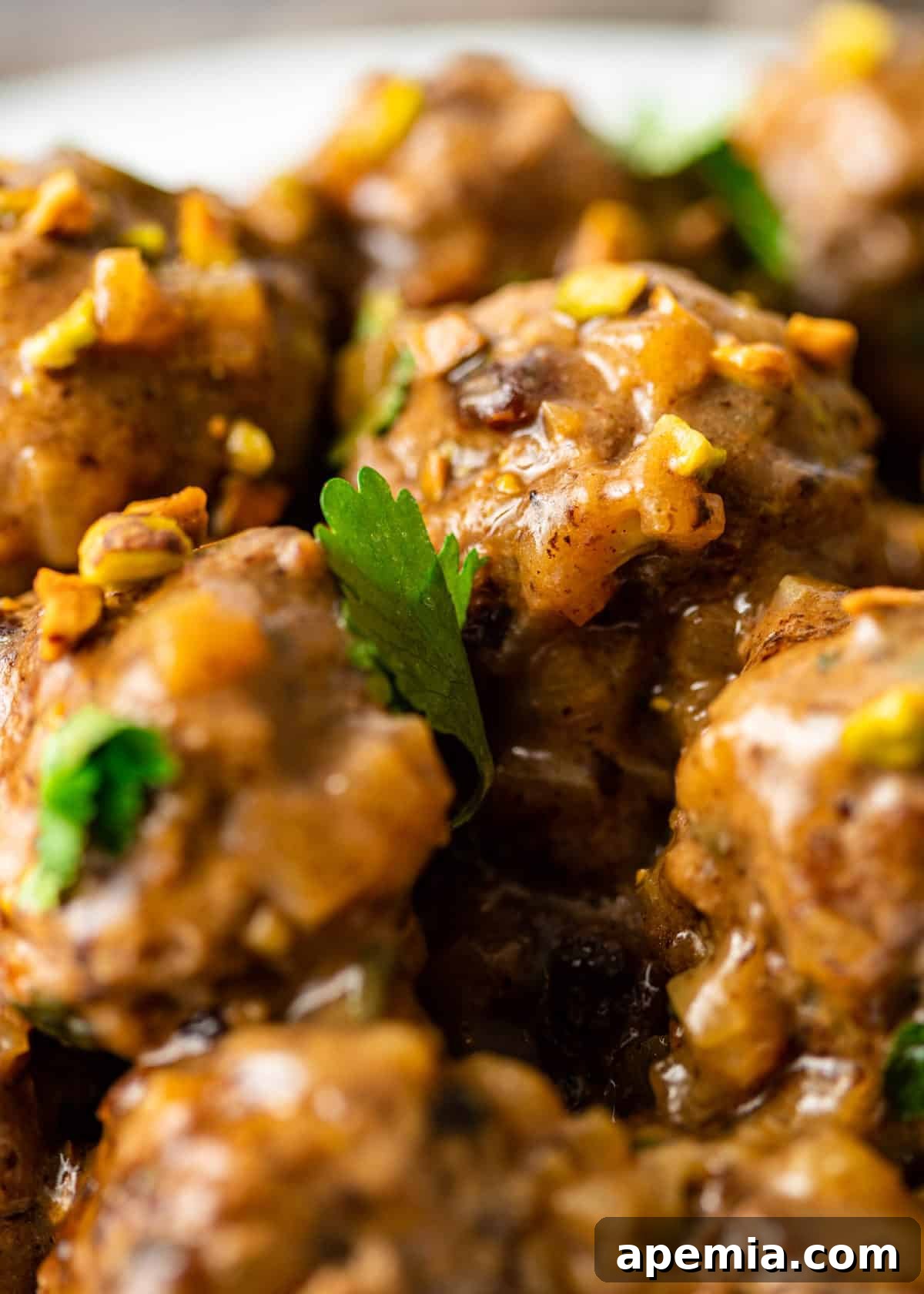

Persian Meatballs (Koofteh)
4
10
20
30
PrintRecipe
Video Overview

Ingredients
- 1 lb ground lamb or beef (See Note 1 below for substitutions)
- 2 tbsp pistachios chopped
- 1/4 cup dried cherries chopped
- 1/2 tsp celery seed
- 1/2 tsp ground coriander
- 1/2 tsp ground cumin
- 1/2 tsp ground fennel seed
- 1/2 tsp salt
- 1/4 cup cilantro leaves chopped
- 1/2 cup breadcrumbs
- 1 egg
For the Pan Sauce:
- 2 tbsp olive oil
- 1 large shallot diced, about 1/3 cup
- 2 tbsp flour
- 1 1/2 cups chicken stock
Instructions
-
In a spacious bowl, combine the ground lamb, chopped pistachios, dried cherries, all the measured spices (refer to Note 1 if using whole spices), salt, fresh cilantro, breadcrumbs, and the whisked egg. Mix these ingredients thoroughly by hand, ensuring everything is well incorporated but being careful not to overmix. Once combined, use a 1 1/2-inch scoop or your hands to roll the mixture into uniform golf ball-sized meatballs. This recipe typically yields between 18-20 meatballs. Set them aside as you prepare your cooking station.
-
In a large, heavy-bottomed frying pan or Dutch oven, heat the olive oil over medium-high heat. Carefully add the meatballs in batches, making sure not to overcrowd the pan, which can prevent proper browning. Cook the meatballs, turning occasionally, until they are beautifully browned on all sides and cooked through. Once browned, remove them from the pan and transfer to a plate, covering loosely to keep warm.
-
Reduce the heat to medium. In the same pan (do not clean it, as the lamb drippings are crucial for flavor!), add the diced shallot and sauté for about 2-3 minutes until it becomes translucent and fragrant. Stir in the flour and cook for approximately one minute, continually stirring to cook out the raw flour taste. Gradually begin to add the chicken stock, pouring in a small amount at a time and whisking constantly and vigorously after each addition. This continuous stirring is key to preventing lumps and achieving a smooth, thick, rich gravy. Continue until all stock is incorporated and the sauce has thickened to your liking. Taste and season with additional salt and pepper if needed.
-
Gently return the cooked meatballs to the pan, nestling them into the savory sauce. Carefully turn each meatball to ensure it’s fully coated with the pan sauce. Cover the pan with a lid and let it simmer on low heat for an additional 2 minutes. This step allows the meatballs to warm through completely and further absorb the incredible flavors of the gravy. Serve your delicious Persian meatballs immediately, ideally with fluffy rice or fresh flatbread.
Recipe Notes for Success
- For Whole Spice Enthusiasts: If you prefer to use whole spices for a more intense aroma and flavor, substitute the ground celery seed, coriander, cumin, and fennel seed with 1/2 tsp whole celery seed, and 1 teaspoon each of whole coriander seeds, cumin seeds, and fennel seeds. To prepare, gently toast these whole spices in a dry skillet over medium heat until they become fragrant, typically just for one or two minutes. Be careful not to burn them; the goal is to release their essential oils. Once aromatic, remove from heat and grind them into a fine powder using a spice grinder or a mortar and pestle.
- Meat Substitutions: While ground lamb is highly recommended for its authentic flavor profile in this Persian dish, you can certainly substitute it with ground beef, turkey, or even chicken if lamb is not to your liking or unavailable. Each will offer a slightly different taste experience, but the unique spice blend and fruit/nut additions will still shine through.
Nutrition Information (Estimated Per Serving)
Calories:
550
kcal
|
Carbohydrates:
24
g
|
Protein:
26
g
|
Fat:
38
g
|
Saturated Fat:
14
g
|
Trans Fat:
1
g
|
Cholesterol:
126
mg
|
Sodium:
605
mg
|
Potassium:
472
mg
|
Fiber:
2
g
|
Sugar:
7
g
|
Vitamin A:
418
IU
|
Vitamin C:
1
mg
|
Calcium:
78
mg
|
Iron:
4
mg
The information shown is an estimate provided by an online nutrition calculator and should be used as a guide only. It should not be considered a substitute for a professional nutritionist’s advice or specific dietary calculations.
Main Course
Persian, Iranian, Middle Eastern
Kevin
Have You Made This Recipe? Let Me Know on Instagram
Tag @keviniscooking or use the hashtag #keviniscooking! We love seeing your culinary creations!