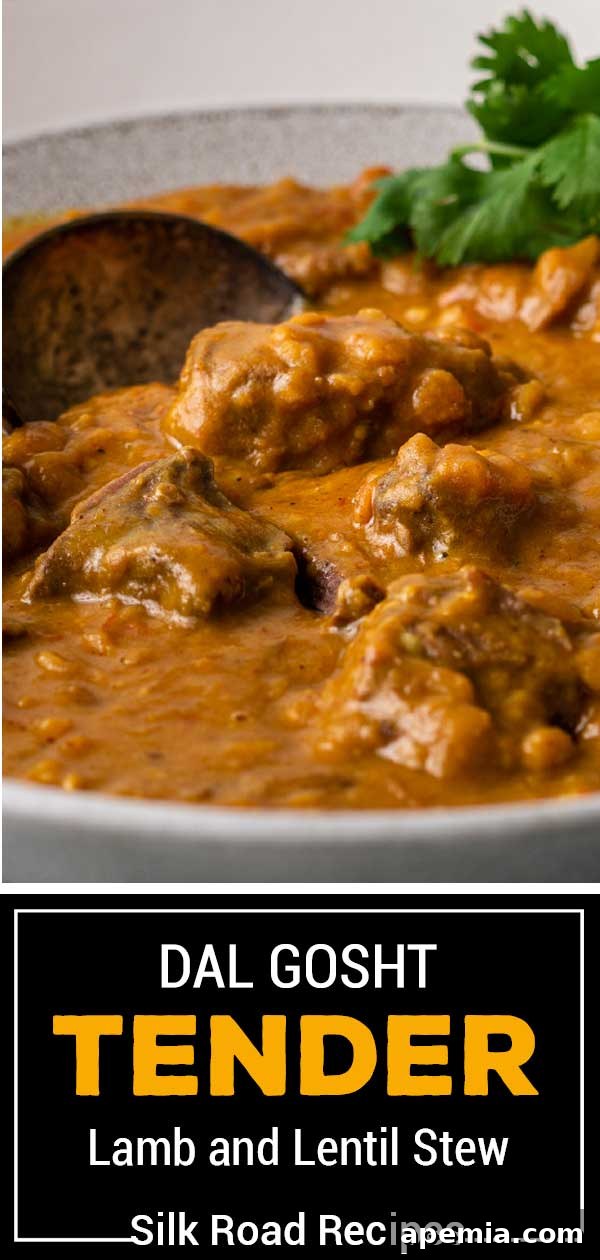
Dal Gosht: An Irresistible Instant Pot Lamb and Lentil Stew
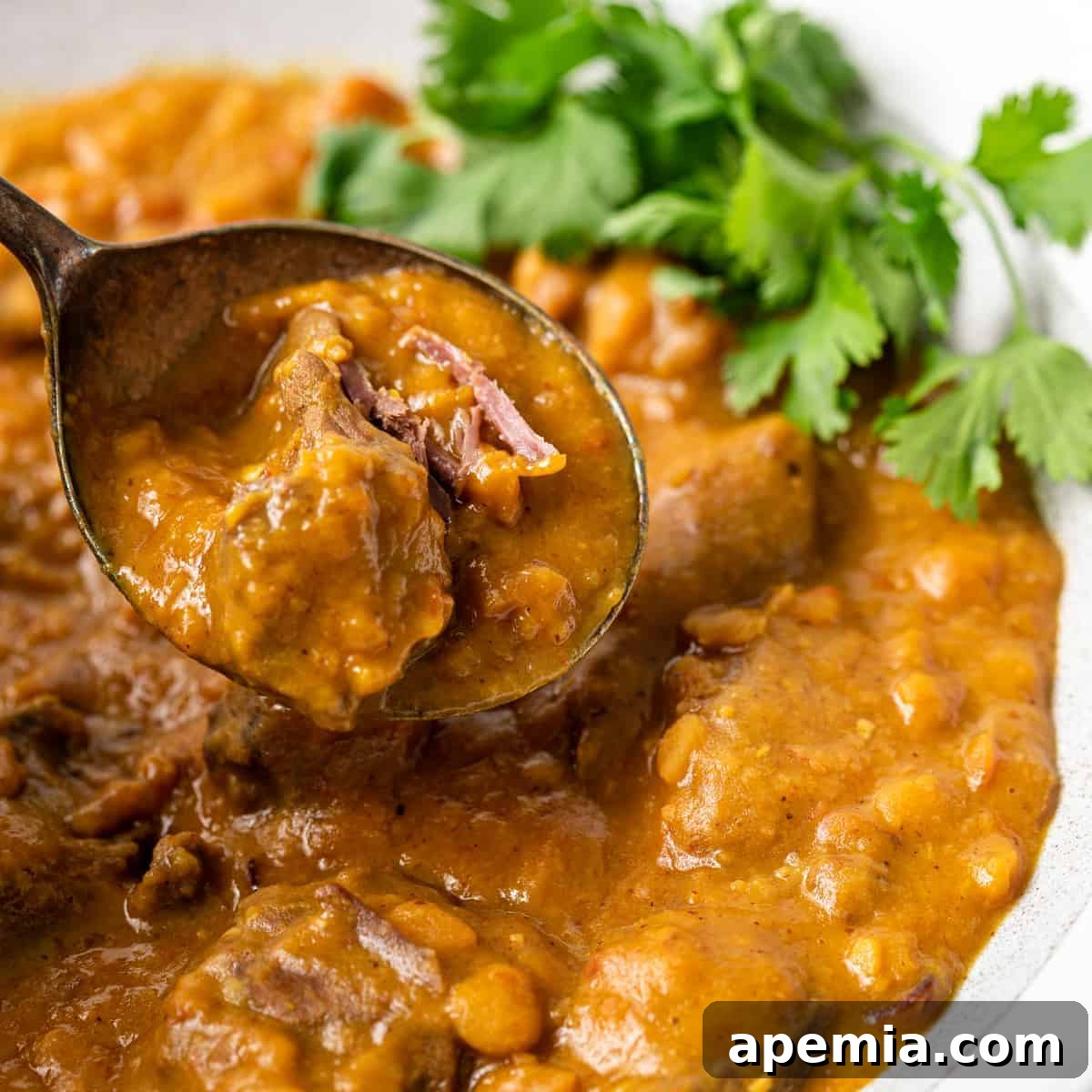
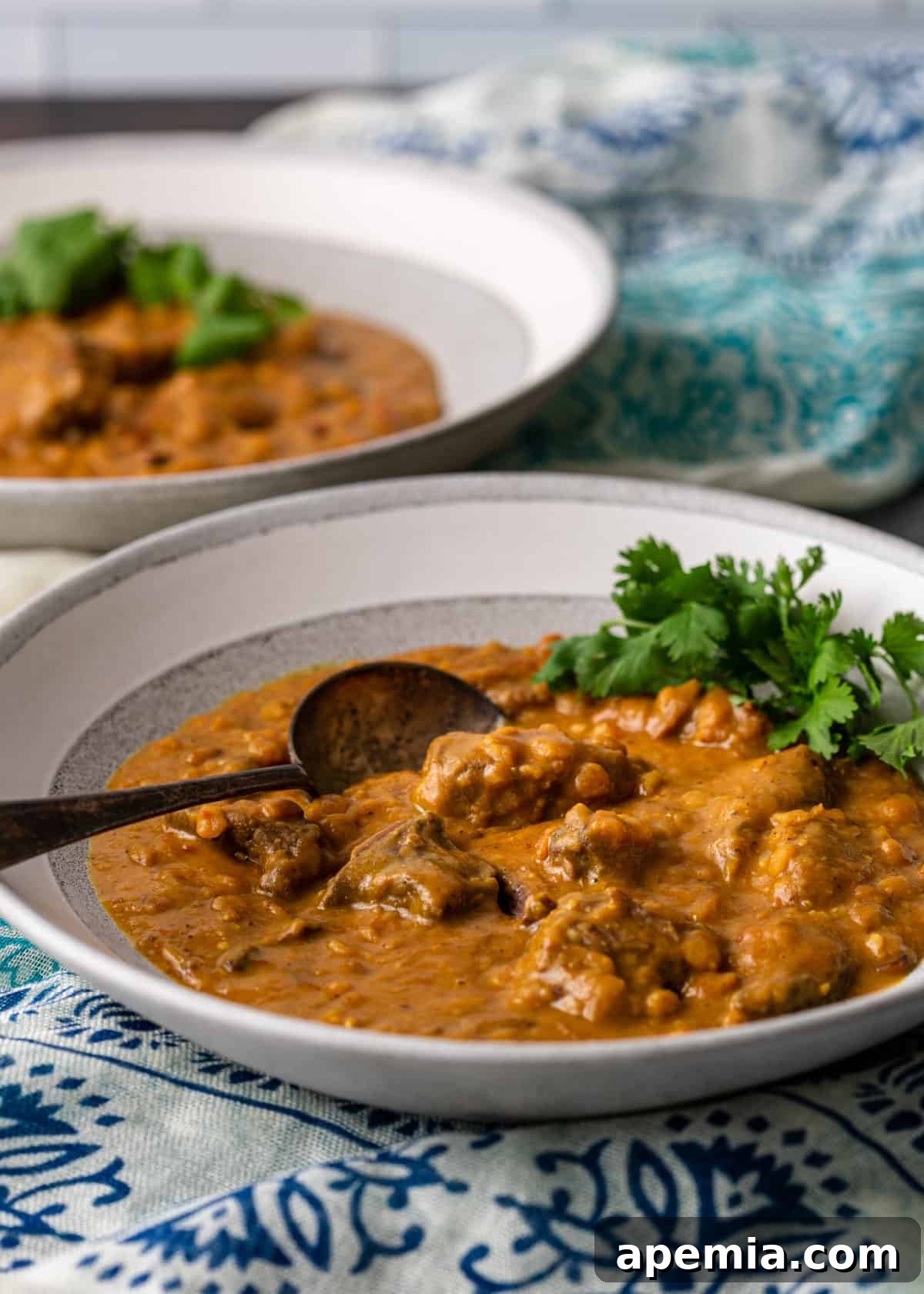
Embark on a culinary journey with Dal Gosht, a magnificent Indian dish that masterfully blends the rich, savory flavors of tender lamb with the earthy goodness of lentils. This iconic curry, celebrated for its deeply aromatic and robustly seasoned gravy, bears the undeniable touch of Middle Eastern culinary traditions. Imagine succulent, fall-apart lamb simmered to perfection with hearty lentils, all bathed in a luxurious sauce infused with the warm, complex notes of cloves, coriander, cumin, and cinnamon, brightened by ripe tomatoes and sweet onions. It’s a truly comforting and satisfying meal that promises to delight your senses. To truly savor every last drop of this exquisite curry, be sure to serve it alongside fluffy basmati rice and warm, pillowy naan bread. This recipe offers a streamlined approach, allowing you to create this impressive dish with surprising ease, thanks to the magic of the Instant Pot. Get ready to transform simple ingredients into a gourmet experience that will transport your taste buds straight to the heart of North India.
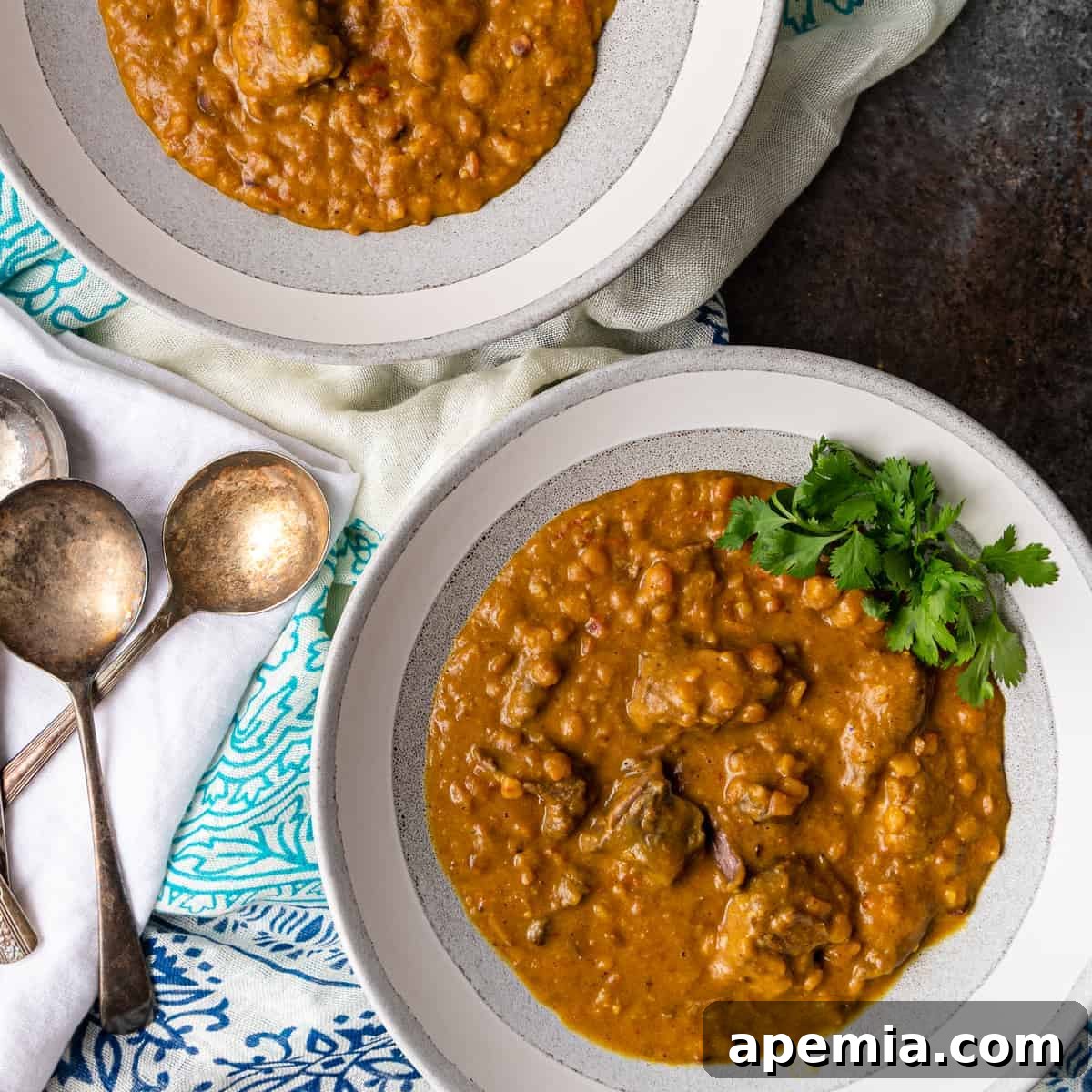
Dal Gosht stands as a testament to the rich tapestry of North Indian cuisine, a hearty curry distinguished by its thick, intensely flavorful gravy. This foundational sauce is built upon a sofrito of finely diced onions, aromatic ginger, and pungent garlic, creating a base that is then generously seasoned with a symphony of traditional Indian spices. Central to its character are the warming notes of garam masala, the gentle heat of chili powder, and an array of other carefully selected ground spices that contribute to its distinctive profile.
The secret to unlocking the full potential of these spices lies in a time-honored Indian cooking technique known as tadka, or tempering. This method involves briefly simmering whole or ground spices in hot oil or ghee, allowing their essential oils to bloom and their aromas to intensify, creating a more potent and deeply aromatic foundation for the dish. This technique is a cornerstone in countless Indian preparations, from the comforting simplicity of Dal Tadka to the inventive flavors of Indian Turkey Lentil Soup, ensuring that every spoonful of Dal Gosht is bursting with unparalleled flavor.
While traditional Dal Gosht can be a labor of love, requiring separate cooking times for the lamb and lentils before carefully combining them, this recipe embraces the efficiency and convenience of the Instant Pot. By transforming it into an “Instant Pot lamb stew,” we drastically reduce cooking time and simplify the process. This modern approach not only accelerates the preparation but also results in significantly fewer dishes to clean, making it an ideal choice for busy weeknights or when you crave authentic Indian flavors without the extensive kitchen commitment. The pressure cooker works its magic, ensuring that both the lamb and lentils achieve a sublime tenderness simultaneously, while their flavors meld beautifully under pressure.
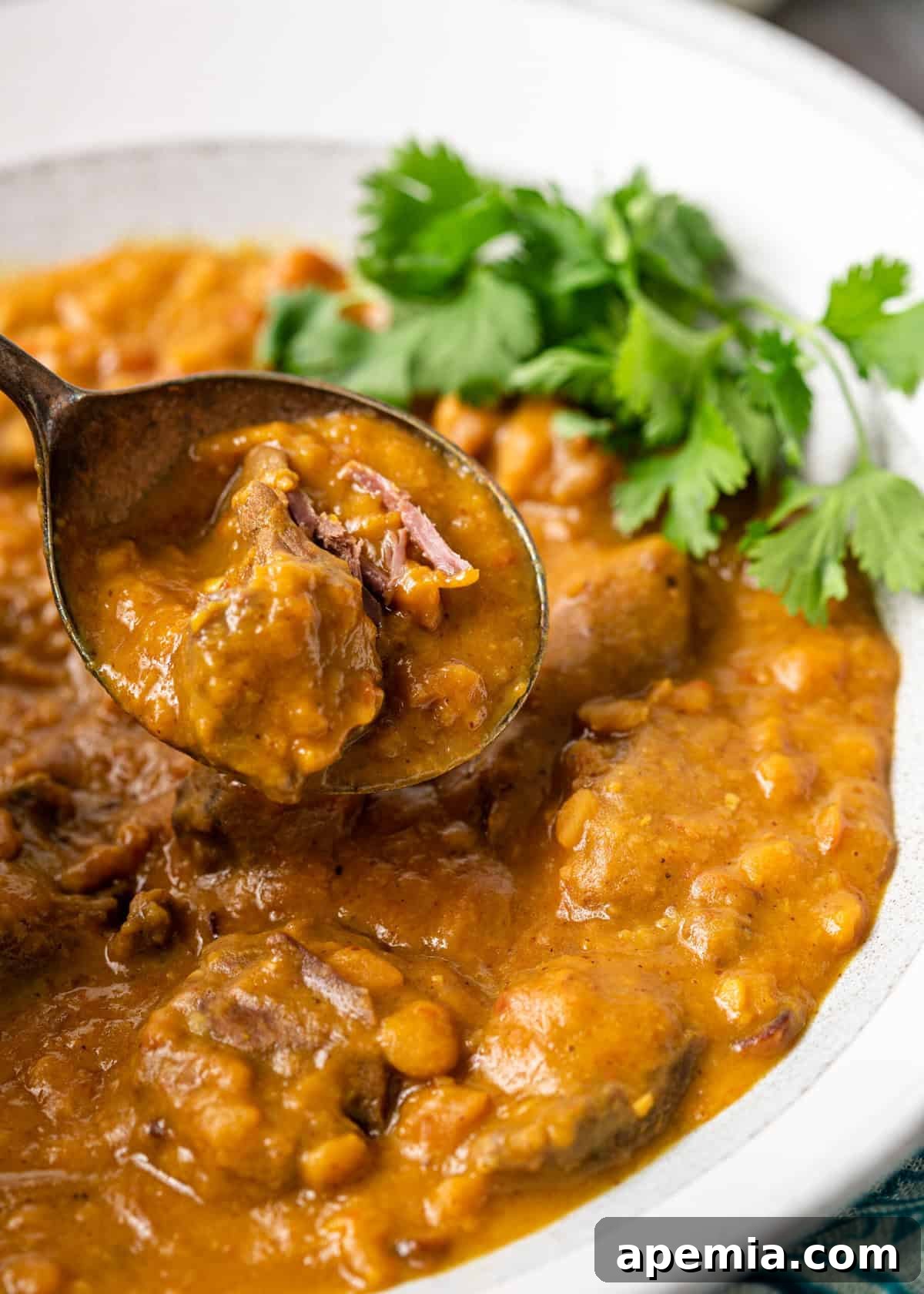
Table of Contents
- History and Origin of Dal Gosht
- Substitute Beef if You Like
- Ingredient Notes and Substitutions
- How to Make Dal Gosht in the Instant Pot
- Recommended Tools for Effortless Cooking
- Storing and Reheating Your Dal Gosht
- Frequently Asked Questions About Dal Gosht
- Lamb and Lentil Curry (Dal Gosht) Recipe
The Rich History and Origin of Dal Gosht
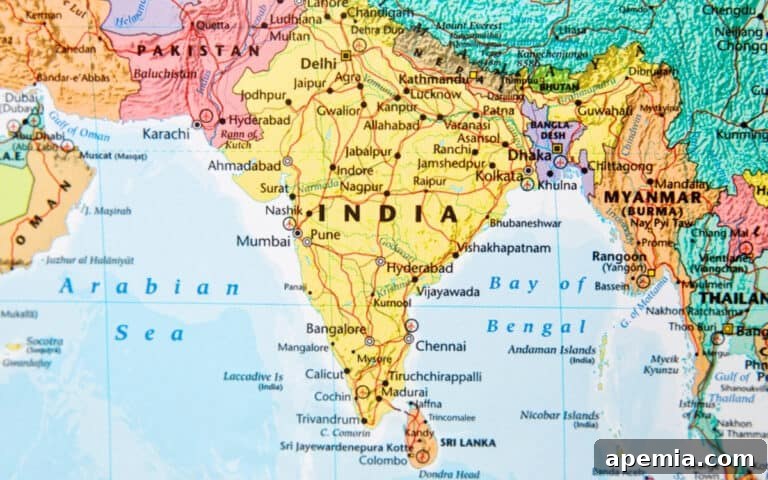
Dal Gosht is more than just a dish; it’s a culinary artifact reflecting centuries of cultural exchange and gastronomic evolution. Its roots can be traced back to the Mughal Empire, a period marked by profound Persian and Central Asian influences on Indian cuisine. The term “Gosht” itself is Persian for “meat,” and “Dal” refers to lentils. This combination, therefore, speaks to a fusion of traditions where the slow-cooked, richly spiced meat stews of Persia met the lentil-based staples of the Indian subcontinent.
Originally, such meat and lentil preparations were often reserved for special occasions and royal feasts, meticulously prepared over hours to achieve unparalleled tenderness and depth of flavor. The dish evolved, incorporating local Indian spices and cooking methods, but retained its essence as a luxurious, comforting meal. The warmth of the spices, combined with the protein-rich lentils and tender meat, made it a highly nutritious and satisfying staple in many households, especially across North India and parts of Pakistan.
Today, Dal Gosht remains a beloved classic, enjoyed in various regional permutations. Our Instant Pot version respects this rich heritage by delivering those authentic, slow-simmered flavors in a fraction of the time, making this historical delicacy accessible to modern home cooks. It’s a bridge between ancient traditions and contemporary convenience, ensuring that the legacy of this magnificent dish continues to thrive on dinner tables everywhere.
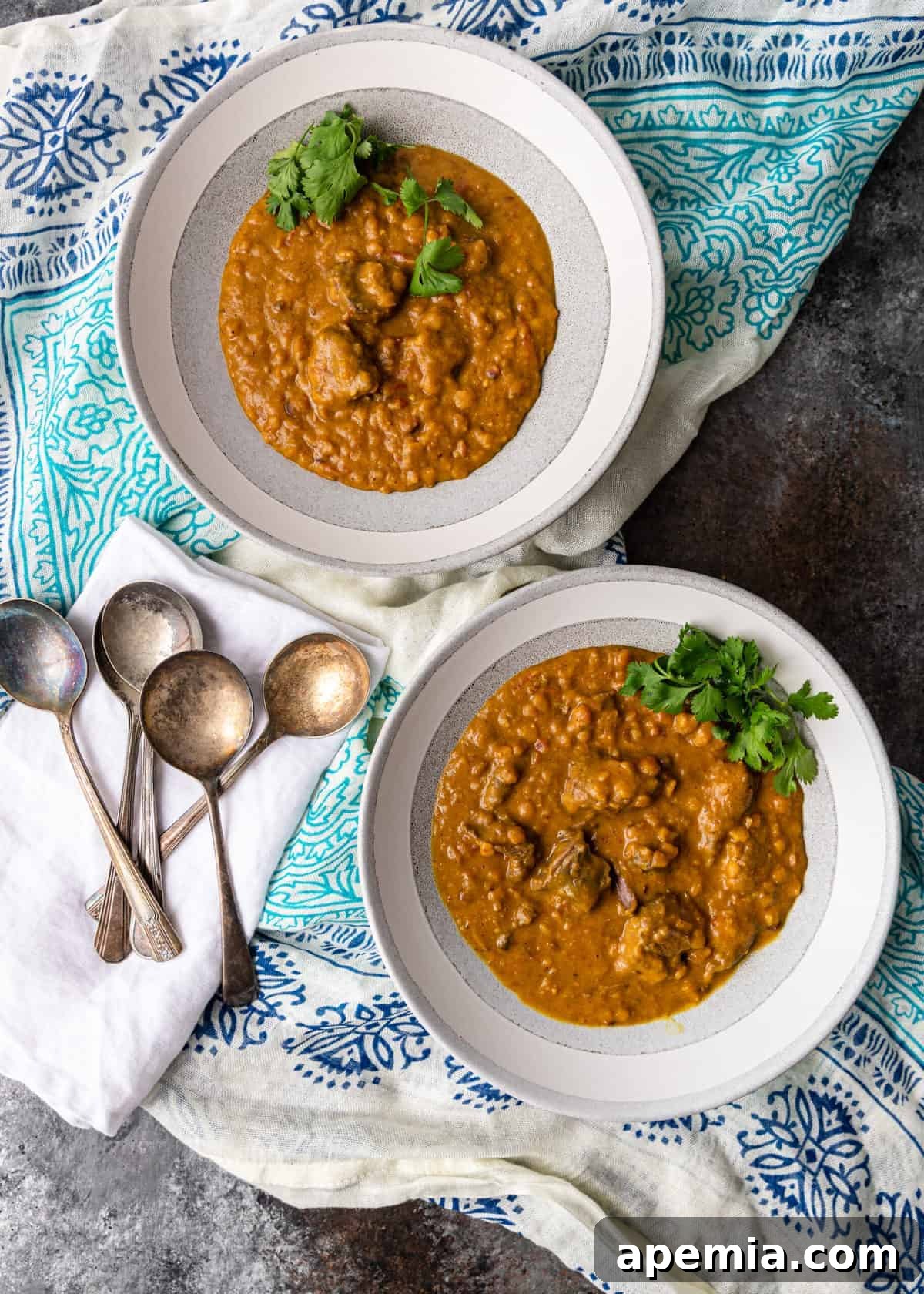
Serve this exquisite lamb and lentil curry with fluffy, fragrant Basmati rice and warm, freshly baked naan bread for a complete and utterly satisfying meal. The perfect pairing allows you to soak up every drop of the rich, spiced gravy, creating an unforgettable dining experience.
Tip From Kevin
Craving a Different Flavor? Substitute Beef if You Like
While lamb offers a unique depth to this Dal Gosht recipe, we understand that not everyone is a fan or has access to it. The versatility of this dish allows for easy substitutions without compromising on flavor. If you’re looking for an alternative, beef is an excellent choice. I highly recommend using cubed beef chuck for its rich marbling and robust flavor profile. Beef chuck, when cooked under pressure, becomes incredibly tender and absorbs the spices beautifully, creating a stew that is just as hearty and satisfying. Simply follow the same cooking instructions, and you’ll achieve a delicious beef and lentil curry that’s sure to impress.
Detailed Ingredient Notes and Savvy Substitutions
(For a complete list of ingredients and their precise quantities, please refer to the comprehensive recipe card below)
- Lamb – The word “gosht” in Dal Gosht broadly translates to “meat,” reflecting the dish’s adaptability. Traditionally, it’s often prepared with mutton (meat from an older sheep), beef, or even chicken. However, for this convenient Instant Pot rendition, we opt for lamb. Lamb shoulder is particularly recommended for its excellent marbling, which renders down beautifully under pressure, resulting in exceptionally tender and flavorful meat. Cutting it into 1-inch chunks ensures even cooking and perfect bite-sized pieces.
- Split Chickpea Lentils (Chana Dal) – Chana dal provides a wonderful nutty flavor and a pleasing texture to the stew, thickening the gravy without becoming overly mushy. If you can’t find chana dal, a fantastic alternative is masoor dal (split red lentils). Masoor dal cooks faster and will also create a creamy consistency, though the flavor will be slightly different. Ensure to rinse your chosen lentils thoroughly before adding them to the pot.
- Aromatic Seasonings – The soul of Dal Gosht lies in its intricate blend of spices. Beyond the foundational turmeric, cumin, and ground coriander – staples in almost every Indian curry – Dal Gosht is elevated by a fragrant whole cinnamon stick (which should be removed before serving for the best texture) and pungent ground cloves. Crucially, it also features:
- Garam Masala – This cornerstone Indian spice blend is a complex mix of roasted and ground spices, adding a warm, sweet, and aromatic depth. For the freshest and most vibrant flavor, I highly recommend making your own at home. However, high-quality pre-made versions are widely available in the spice aisle of most grocery stores.
- Red Chile Powder – Known as “mirchi powder” in India, this vibrant red powder, often made from Raja Mirchi chiles, provides essential heat and color. Kashmiri chili powder is the best alternative, offering a beautiful red hue with a milder heat profile. It’s crucial to use Indian chili powders, as American chili powder blends typically contain additional spices like cumin and oregano, which would alter the authentic flavor of Dal Gosht.
- Fresh Herbs – To cut through the richness of this otherwise deeply savory dish and add a burst of freshness, generous garnishes of freshly chopped mint and fragrant cilantro are absolutely essential. They provide a vibrant contrast that elevates the entire meal. A squeeze of fresh lemon juice at the end also brightens the flavors beautifully.
- Aromatics: Red Onions, Ginger Paste, & Garlic – These three ingredients form the backbone of the savory *tadka* and are indispensable for developing a truly deep, complex flavor in your Dal Gosht. While red onions are preferred for their slightly sweeter and milder flavor when sautéed, white or yellow onions can be substituted if necessary. For the best results, always strive to use fresh ginger and garlic, either finely minced or in paste form. Pre-made ginger-garlic paste is a convenient option if fresh preparation is a time constraint.
- Tomatoes – Whether you opt for fresh, ripe tomatoes, diced and chopped, or the convenience of canned chopped tomatoes, they are vital for adding tanginess and depth to the gravy. Canned tomatoes are often a great choice for consistency and flavor, especially when fresh, in-season tomatoes aren’t available.
Simplified Steps: How to Make Dal Gosht in Your Instant Pot
- Sauté the Onions to Golden Perfection. Begin by activating the “Sauté” function on your Instant Pot and add the vegetable oil. Once the oil glistens and is sufficiently heated, introduce the sliced red onions. Sauté them patiently for approximately 10 minutes, stirring occasionally, until they achieve a beautiful golden-brown color and become slightly caramelized. This step is crucial for building a deep flavor base.
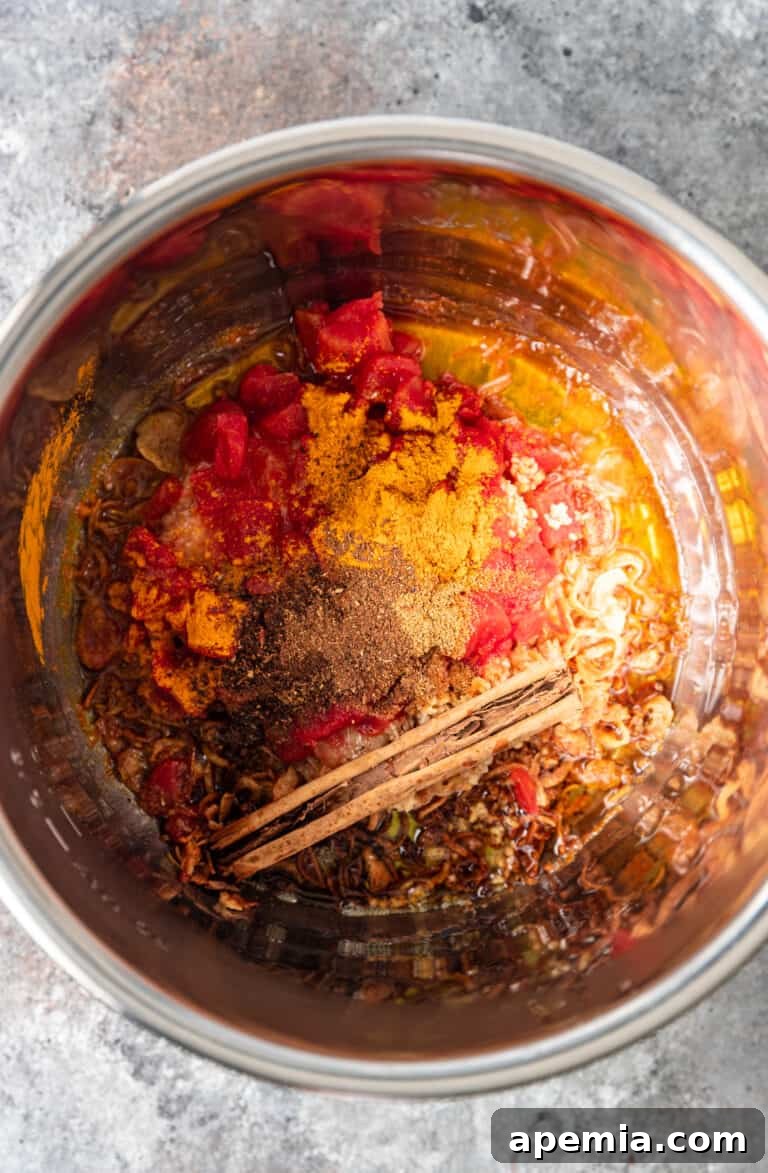
- Infuse with Aromatics and Spices. To the browned onions, add the minced garlic, ginger paste, chopped tomatoes, and all the dry seasonings (cinnamon stick, kosher salt, red chile powder, turmeric, ground coriander, garam masala, ground cumin, and ground cloves). Stir these ingredients thoroughly, ensuring they are well combined. Continue to cook for another 5 minutes, allowing the spices to bloom in the hot oil and release their intoxicating aromas. This “tadka” process is key to the curry’s rich flavor profile.
- Combine Lamb, Lentils, and Pressure Cook. Carefully pour 3 cups of water into the pot. Then, add the cubed lamb and the rinsed split chickpea lentils (chana dal). Give everything a good stir to ensure even distribution of ingredients and spices. Secure the Instant Pot lid, ensuring it is properly sealed. Select the “Meat/Stew” setting and adjust the cooking time to 25 minutes. Alternatively, you can manually set it to cook at high pressure for 25 minutes.
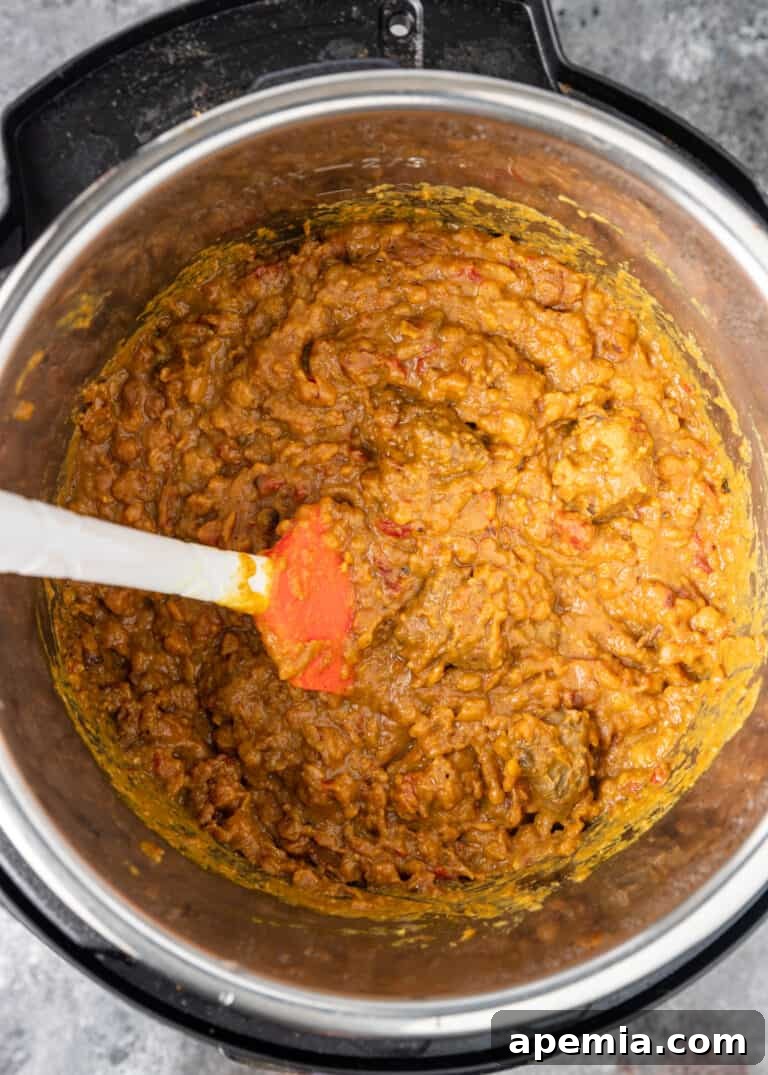
- Release Pressure and Finish with a Stir. Once the cooking cycle is complete, perform a quick release of the pressure valve according to your Instant Pot’s instructions. Carefully open the lid. Locate and discard the whole cinnamon stick, as its work is done. Stir the lamb and lentil curry vigorously to re-incorporate all the ingredients, ensuring the rich gravy is evenly distributed throughout the tender meat and lentils.
- Adjust Consistency and Seasoning to Taste. Evaluate the consistency of your Instant Pot lamb stew. If you find it too thick for your preference, gradually add a splash of water or milk until your desired consistency is achieved. Taste the curry and adjust the seasoning with additional salt as needed. This is your chance to fine-tune the flavors to perfection.
- Garnish and Serve for a Complete Meal. Ladle the hot Dal Gosht into individual serving bowls. Garnish generously with the freshly chopped mint and cilantro. For an extra zing and bright counterpoint to the rich flavors, serve with fresh lemon wedges, allowing diners to squeeze juice over their portion. Serve immediately with warm naan bread and fluffy basmati rice for a truly authentic and satisfying Indian feast.
Recommended Tools for Effortless Cooking
- Instant Pot – The undeniable star of this recipe! The beauty of the Instant Pot is its multi-functional design, which eliminates the need for numerous pots and pans. With a single appliance, you can effortlessly sauté your aromatics, and then pressure cook the lamb and lentils to tender perfection, all in one pot. This not only saves you time during cooking but also simplifies the cleanup process, making this Dal Gosht recipe a true weeknight hero.
- Sharp Chef’s Knife and Cutting Board – Essential for safely and efficiently preparing your onions, tomatoes, and lamb.
- Measuring Cups and Spoons – For accurate ingredient proportions, ensuring consistent results every time.
- Sturdy Stirring Spoon or Spatula – To effectively sauté onions and mix ingredients, especially within the Instant Pot’s non-stick insert.
Expert Tips for Storing and Reheating Your Delicious Dal Gosht
Dal Gosht is one of those fantastic dishes that often tastes even better the next day as the flavors continue to meld and deepen. Proper storage ensures you can enjoy your culinary creation for days to come. Allow any leftover lamb and lentil curry to cool completely to room temperature before transferring it to an airtight container. This step is crucial to prevent bacterial growth and maintain food safety. Once cooled, refrigerate it promptly for up to 4 days.
When you’re ready to enjoy it again, reheating is straightforward. Transfer the desired portion to a saucepan or pot and gently reheat on the stovetop over medium heat. Stir occasionally to ensure even heating and prevent sticking, adding a splash of water or milk if the curry has thickened too much in the refrigerator. Continue heating until it is warmed through to your satisfaction. Avoid overheating, as this can affect the texture of the lamb and lentils. You can also reheat individual portions in the microwave, stirring halfway through for best results.
Share this recipe on Pinterest!
Love this recipe? Share it with the world on Pinterest to inspire others to cook!
Frequently Asked Questions About Dal Gosht
For an Instant Pot lamb stew, the shoulder cut is undeniably ideal. This hard-working muscle boasts a good amount of marbling and connective tissue throughout. When cooked under pressure, this marbling slowly melts, infusing the meat with incredible flavor and rendering it exceptionally tender. Lamb leg is another excellent choice for similar reasons, providing succulent results in a pressure cooker environment. These cuts are preferred over leaner options that might dry out.
Yes, absolutely! Lentil curries, including Dal Gosht, freeze exceptionally well, making them perfect for meal prepping. Once the lentils have undergone the crucial softening process during cooking, they maintain their tender texture even after being frozen and thawed, unlike some other ingredients. To freeze, allow your leftover lamb and lentil curry to cool completely, then portion it into individual, airtight freezer-safe containers or bags. It can be stored in the freezer for up to 3 months. For reheating, transfer the frozen portion to the refrigerator to thaw overnight. Then, gently bring it back to temperature on the stovetop over low to medium heat, adding a little water or broth if needed to achieve the desired consistency.
If you find your lamb curry disappointingly chewy, there are usually a couple of common culprits. Firstly, the way the lamb is cut can make a significant difference. It’s crucial to slice against the grain of the meat, not with it. Cutting against the grain effectively shortens the muscle fibers, making them much easier to chew and resulting in a more tender bite. Secondly, undercooking can also lead to chewiness. Ensure your lamb is cut into small, manageable 1-inch chunks, which helps it cook more quickly and evenly. Furthermore, selecting the right cut of lamb is important; quick-cooking cuts like the shoulder or leg are perfect for stews. Avoid tougher cuts such as lamb neck for pressure cooking unless you plan for a significantly longer cooking time, as they require more time to break down and become tender.
While “gosht” literally means meat, you can certainly adapt this recipe to be vegetarian. Simply omit the lamb and increase the quantity of lentils, or add other vegetables like potatoes, carrots, or spinach. You could also incorporate paneer (Indian cheese) or firm tofu for added protein and texture. The spice base and tadka method would remain the same, ensuring a flavorful and satisfying vegetarian lentil curry.
Chana Dal (split chickpea lentils) is traditional for its firm texture and nutty flavor. However, if it’s unavailable, Masoor Dal (split red lentils) is an excellent substitute. Masoor Dal cooks faster and will give your Dal Gosht a creamier consistency. Just be mindful of the cooking time, as red lentils require slightly less time than chana dal in a pressure cooker. You could also use a mix of different dals for a more complex flavor and texture.
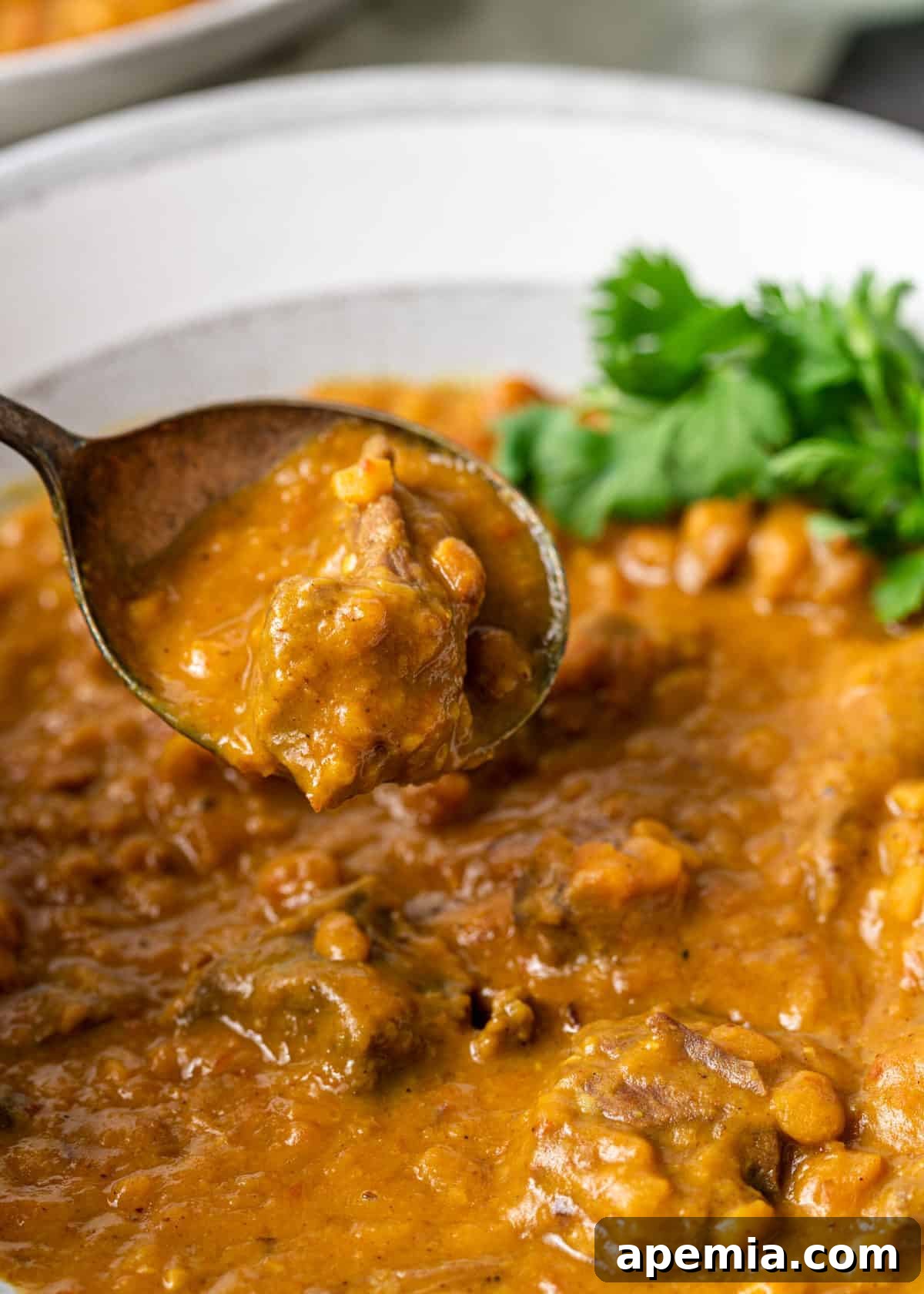
Lamb and Lentil Curry (Dal Gosht)
Ingredients
- 1/4 cup vegetable oil
- 2 red onions sliced
- 4 cloves garlic minced
- 2 tbsp ginger paste
- 2 cups tomatoes chopped (or 14 oz can chopped)
- 1 cinnamon stick (3 inches long) or 1 teaspoon ground cinnamon powder
- 2 tsp kosher salt
- 1 tsp red chile powder (mirchi powder)
- 1 tsp turmeric
- 1 tsp ground coriander
- 1/2 tsp garam masala
- 1/2 tsp ground cumin
- 1/4 tsp ground cloves
- 1 1/2 lbs lamb shoulder cut into 1-inch chunks
- 1 1/2 cups split chickpea lentils (chana dal, See Note 1)
- 1/4 cup cilantro chopped
- 8 mint leaves chopped
Instructions
-
Set the Instant Pot to the Saute setting and heat the oil. When oil is hot, add onions and saute until browned and slightly crispy, about 10 minutes.
-
Add garlic, ginger, tomatoes and spices. Stir to combine and cook another 5 minutes. Add 3 cups of water, the lamb and lentils and stir again. Close and seal the pressure cooker lid. Change to the Meat/Stew setting and adjust time to 25 minutes, or manually set it to cook for 25 minutes at high pressure (See Note 2 for slow cooker times).
-
When cook time is up, perform a quick release of pressure and open the pot. Remove and discard the cinnamon stick. Stir the stew to combine, then taste and season with salt if needed (See Note 3).
-
Garnish with chopped cilantro, mint, and lemon slices (optional). Serve hot with steamed rice and warm naan.
Notes
- Red lentils may be substituted for the split chickpea lentils.
- Slow Cooker: 25 minutes on High pressure in the IP ≈ 6–8 hours on LOW or 3–4 hours on HIGH in a slow cooker.
- If stew is too thick, thin with milk or water to desired consistency.
Nutrition
The information shown is an estimate provided by an online nutrition calculator. It should not be considered a substitute for a professional nutritionist’s advice.