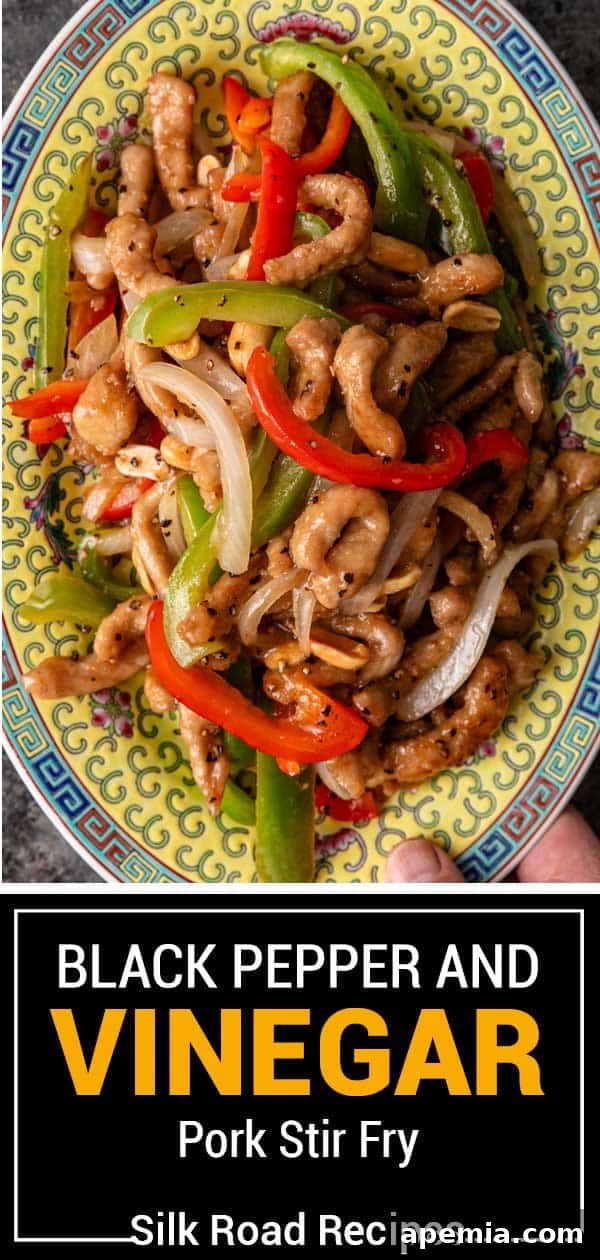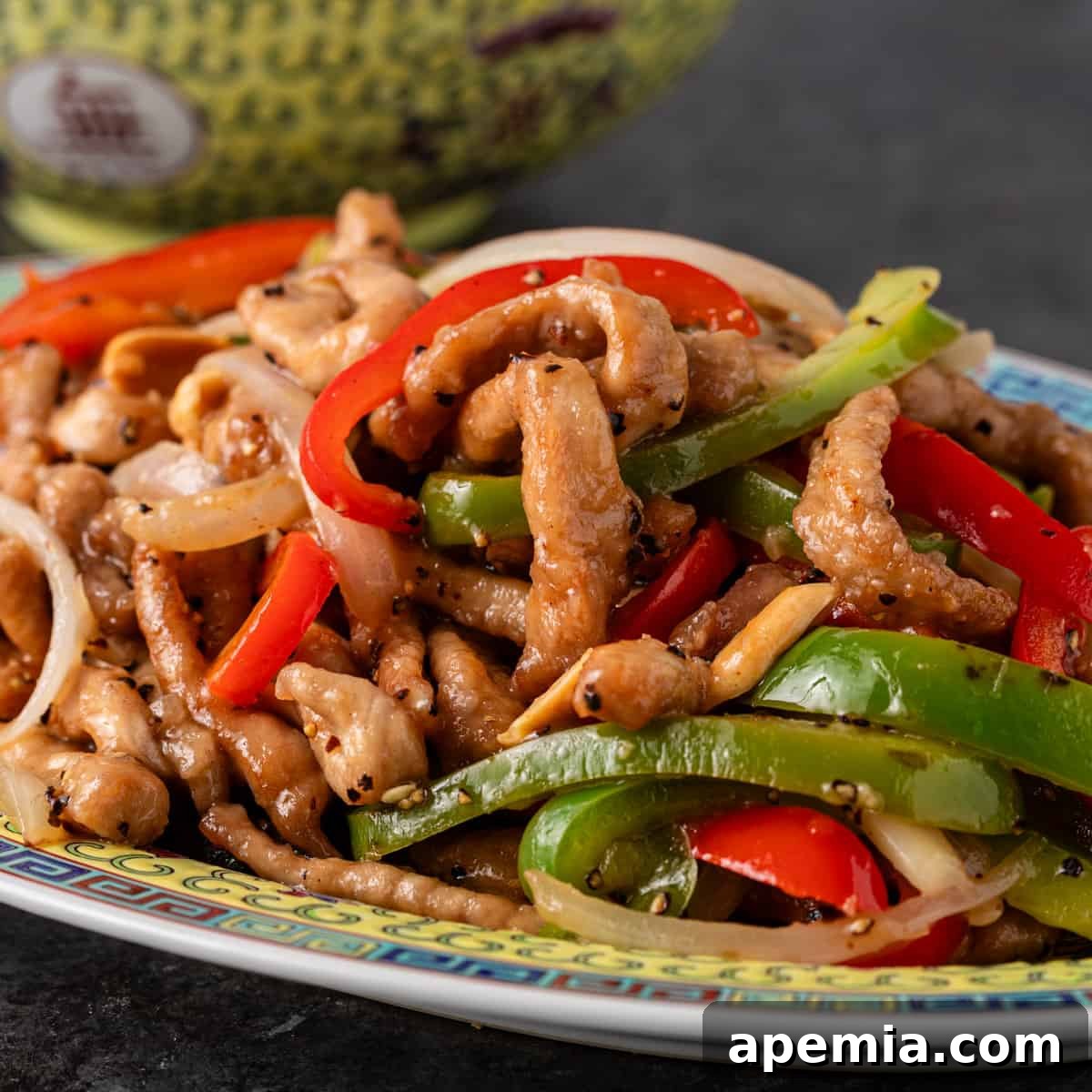
Elevate your weeknight dinner routine with this incredibly flavorful and surprisingly simple Vinegar Pork Stir Fry! This classic Chinese recipe delivers perfectly crispy and tender pork strips coated in a tangy, peppery sauce, all ready in just 30 minutes. Served alongside vibrant seasonal vegetables and a bed of fluffy white rice, it transforms into a complete and utterly delicious meal for four.
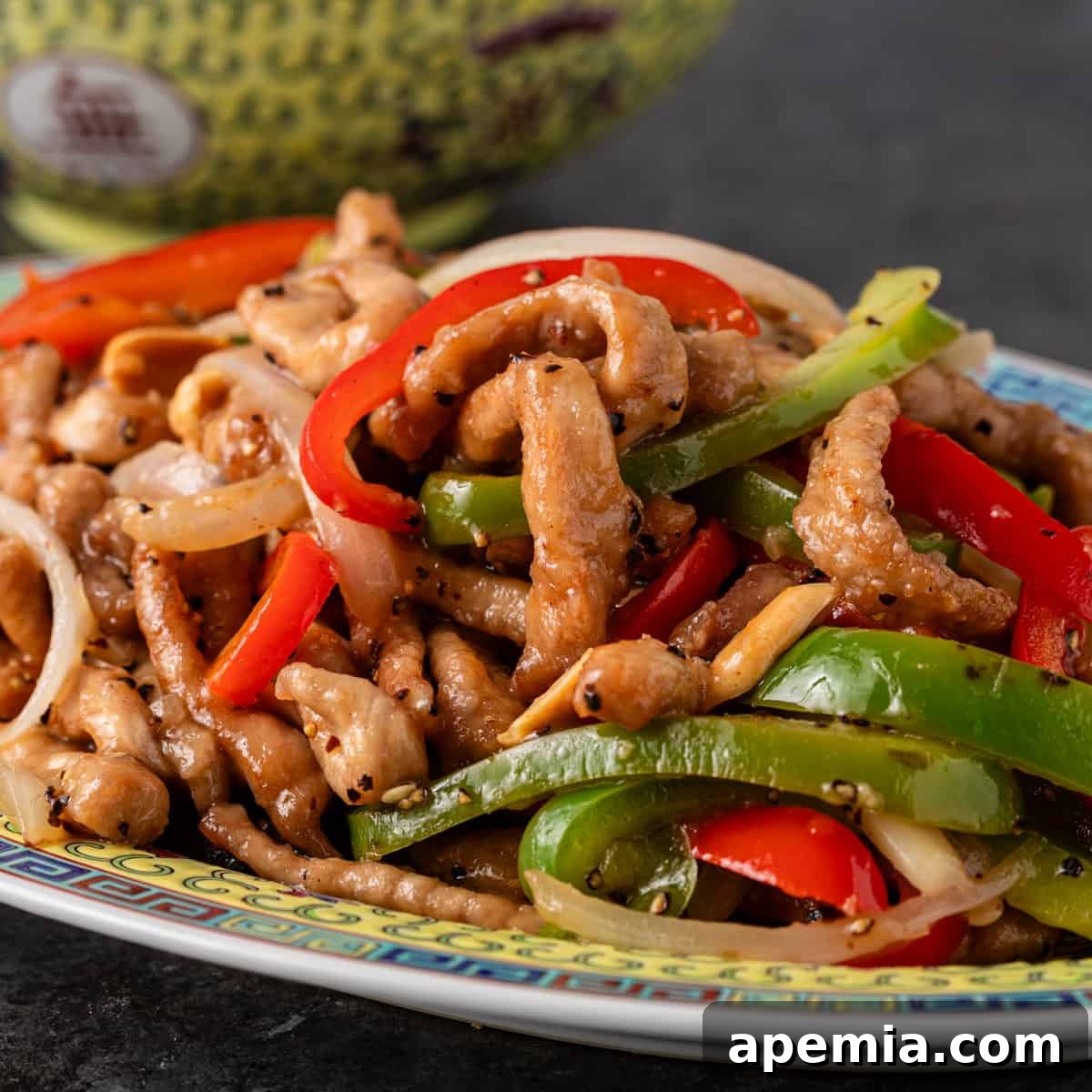
In the realm of quick and satisfying Chinese cuisine, the Vinegar Pork Stir Fry stands out as a true gem. It’s the kind of dish you can effortlessly whip up on even the busiest of evenings, promising a burst of authentic flavors without requiring hours in the kitchen. From a brief marinade to the sizzling wok, you’ll have this delightful creation plated and ready to enjoy in a mere half-hour, making it a perfect solution for those craving homemade Asian fare with minimal fuss.
Despite its rapid preparation, this stir-fry is anything but lacking in flavor. Quite the opposite, in fact! Each succulent strip of pork undergoes a quick but effective marinade in a blend of sweetened soy sauce and fragrant white pepper. This initial step lays a foundational layer of taste, preparing the meat for its ultimate transformation. Once seared to perfection, the pork is then generously coated in a captivating, mouthwatering sauce – a symphony of tangy vinegar and robust black pepper that will awaken your taste buds with every bite. The contrasting notes of sweetness, saltiness, tang, and heat create a complex profile that belies the dish’s simplicity.
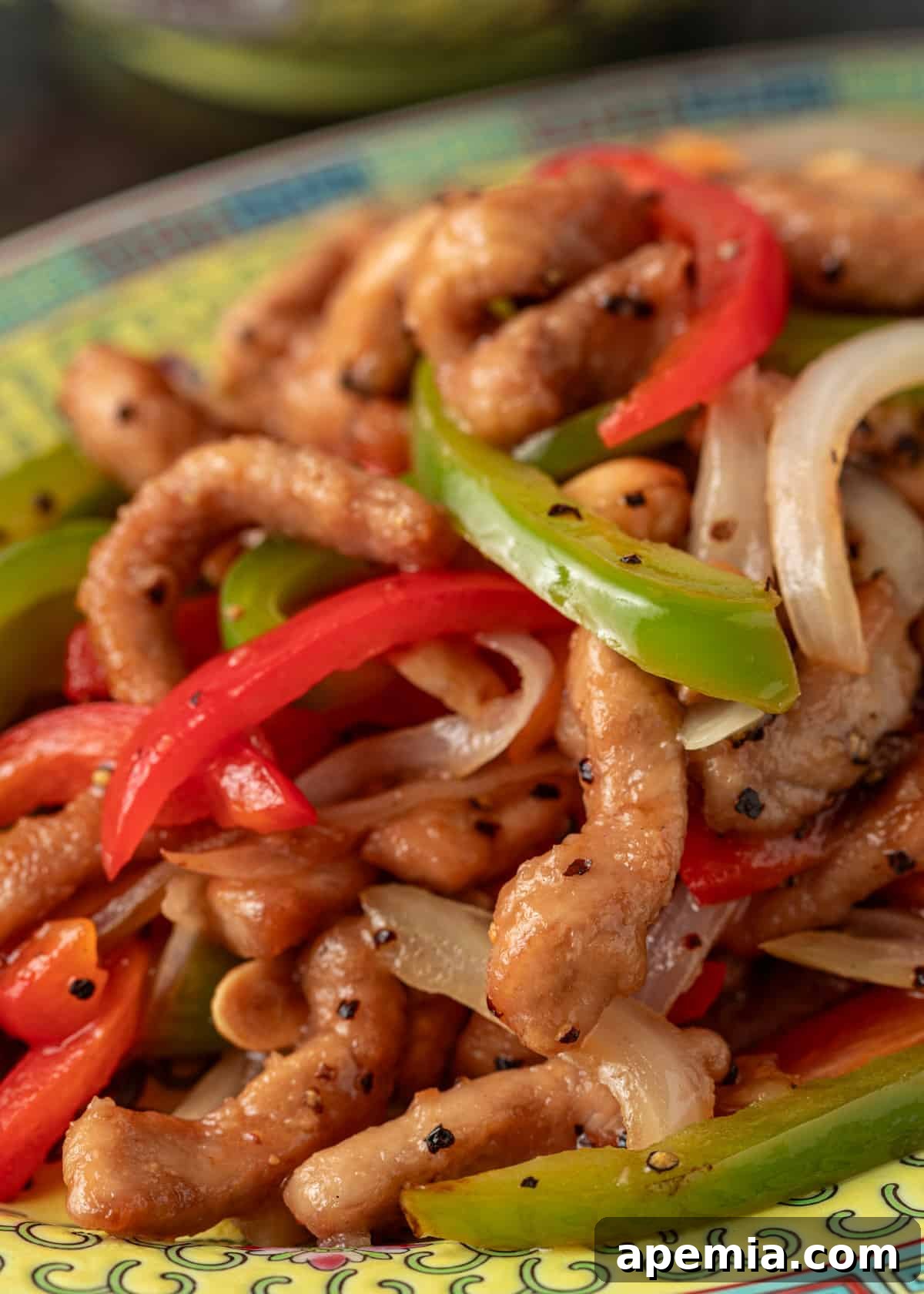
One of the secrets to the irresistible texture of these juicy pork strips lies in a technique often referred to as “velveting” – though in this recipe, it’s a simplified version. By tossing the marinated pork in cornstarch just before frying, we create a delicate coating that protects the meat from overcooking. This isn’t the traditional, more elaborate velveting process used in some professional Chinese kitchens (like the one I employ in my Szechuan pork recipe), but it works wonders in achieving remarkably tender and crisp results. The cornstarch forms a light barrier, locking in moisture and ensuring that each piece of pork retains its succulence while developing a slight exterior crispness that beautifully complements the rich sauce.
Table of Contents
- Pork Loin vs Pork Tenderloin: Choosing the Right Cut
- Ingredient Notes and Expert Substitutions
- How to Make Vinegar Pork Stir Fry: Step-by-Step Guide
- Recommended Tools for Perfect Stir-Frying
- Storing and Reheating Your Stir Fry
- Frequently Asked Questions About Pork Stir Fry
- Black Pepper and Vinegar Pork Stir Fry Recipe Card
If you’re captivated by the vibrant flavors of this vinegar pork stir fry, you’re in for a treat with other recipes from my collection! Explore similar Asian-inspired dishes like my robust Hunan chicken, the classic and savory moo shu pork, or the rich and aromatic Chinese curry beef with black bean sauce. Each offers a unique culinary adventure, perfectly complementing a busy weeknight meal.
Tip From Kevin
Pork Loin vs Pork Tenderloin: Choosing the Right Cut
Understanding the difference between pork loin and pork tenderloin is crucial for achieving the best results in your stir-fry. While both are delicious cuts from the same animal, they come from different parts and possess distinct characteristics that influence their cooking methods and final texture.
Pork loin, typically wider and with a leaner but slightly fattier muscle, is often found as chops or larger roasts. Its robust structure makes it excellent for slicing into uniform strips that hold up beautifully under the high heat of stir-frying. The minimal fat marbling helps keep the meat moist without becoming greasy, and its inherent flavor pairs wonderfully with bold sauces.
Pork tenderloin, on the other hand, is a much leaner, smaller, and more delicate cut. It’s incredibly tender and best suited for quick-cooking methods that don’t require extensive slicing or browning, as it can dry out easily. While it can be used in a stir-fry, it requires more careful handling to prevent it from becoming tough.
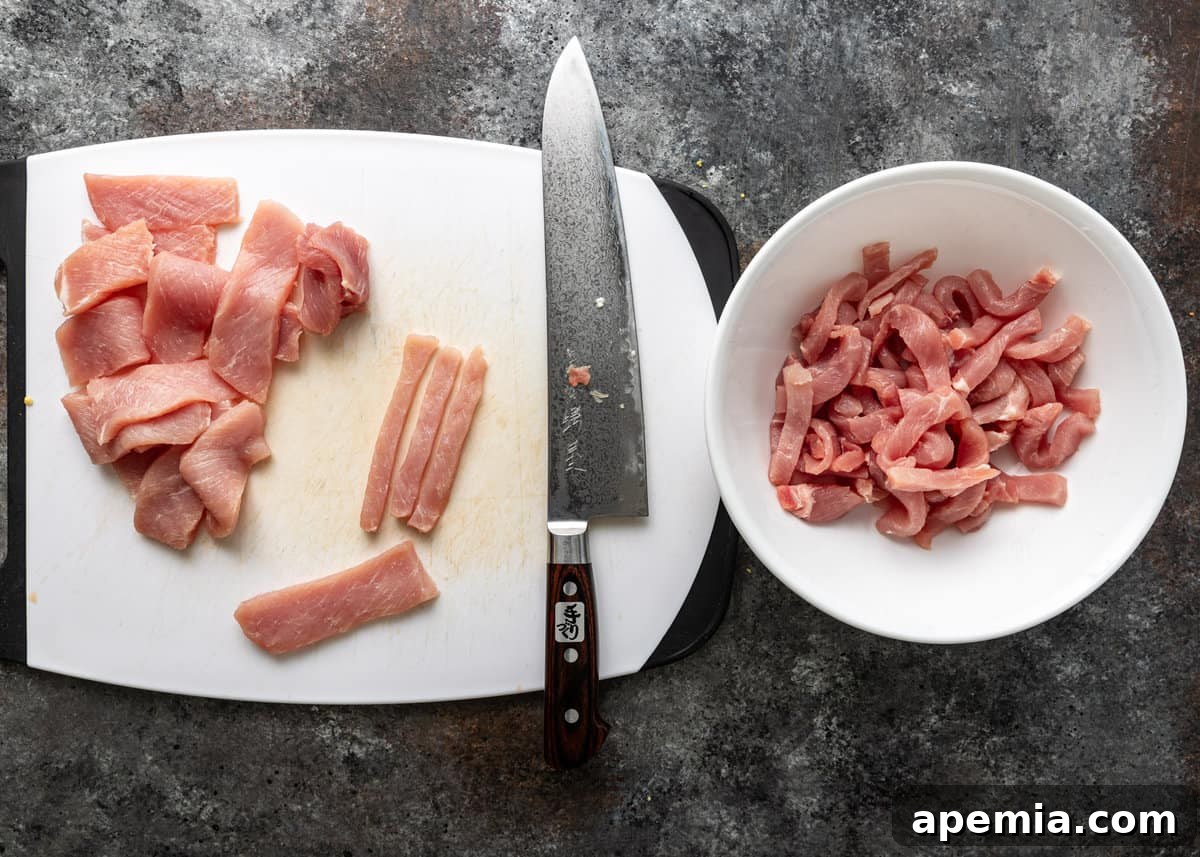
For this tangy vinegar pork stir fry, I strongly prefer using pork loin. Its slightly firmer texture allows for easier, more consistent thin slicing, which is essential for uniform cooking in a wok. Whether you opt for pork loin chops (with the bone removed) or readily available pork loin cutlets, as I have, this cut will provide the perfect balance of tenderness and structure to absorb the marinade and sauce without falling apart.
Ingredient Notes and Expert Substitutions
- Pork Loin: As discussed, pork loin is ideal. Aim for 2-3 uniform cutlets, sliced thinly. If pork loin is unavailable, pork shoulder or butt can work well, offering a richer flavor but requiring slightly more trimming. Pork tenderloin can be used, but cook it even more quickly to avoid dryness.
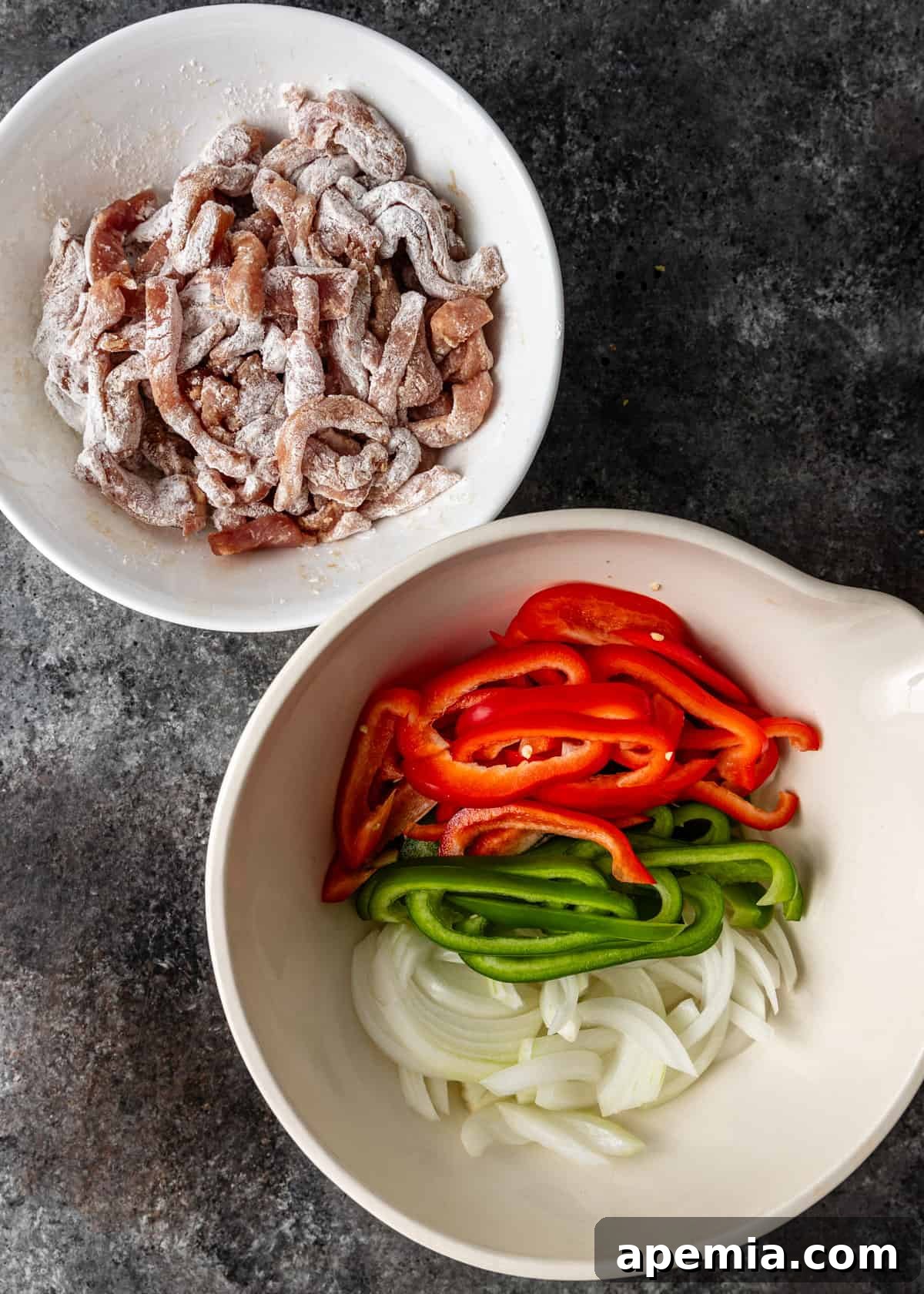
- Marinade Essentials: A simple yet powerful marinade combines soy sauce for savory depth, sugar to balance flavors and aid in browning, and white pepper for a classic, subtle warmth. This brief marinade significantly enhances the pork’s overall taste.
- Cracked Black Pepper: This is a star ingredient, providing a bold, pungent heat that distinguishes this dish. Freshly cracked black pepper is paramount here; pre-ground pepper simply won’t deliver the same “in your face” intensity. Don’t be shy – we’re using a generous amount to make its presence known.
- Assorted Vegetables: My recipe calls for thinly sliced green bell pepper, red bell pepper, and white onion. These offer a fantastic crunch and vibrant color. However, feel free to unleash your culinary creativity! Almost any quick-cooking stir-fry friendly vegetable works: bok choy, sliced mushrooms, snow peas, bamboo shoots, carrots (thinly julienned), broccoli florets (blanched first), or water chestnuts are all excellent choices. Focus on fresh, seasonal produce for the best flavor and texture.
- Roasted Peanuts: These are included for an optional, delightful textural contrast and a nutty aroma. They add a layer of complexity and crunch that elevates the dish. If you have nut allergies or simply prefer not to include them, feel free to omit them without compromising the core flavors.
- The Flavorful Sauce: The heart of this stir-fry, the sauce is a harmonious blend of:
- White Vinegar: Provides the signature tang. Rice vinegar offers a milder, slightly sweeter alternative, or you can use a combination of white and rice vinegar for a more nuanced acidity. Avoid balsamic as it can be too strong and alter the flavor profile significantly.
- Chicken Stock: Adds richness and body to the sauce. Vegetable broth or even water can be substituted in a pinch, though chicken stock offers the most flavor.
- Soy Sauce: A staple for umami and saltiness. Any good quality regular soy sauce will work perfectly. If you’re managing sodium intake, low-sodium soy sauce is a viable alternative.
- Cornstarch: Essential for thickening the sauce, giving it that desirable silky, glossy texture that clings beautifully to the pork and vegetables.
How to Make Vinegar Pork Stir Fry: Step-by-Step Guide
- Prepare the Pork: Begin by thinly slicing each pork loin cutlet into ¼-inch strips. To ensure they cook quickly and absorb maximum flavor, cut each of these strips lengthwise into about 3 smaller pieces. Transfer these thin strips to a bowl and add the soy sauce, sugar, and white pepper. Toss thoroughly to ensure every piece is evenly coated, then set aside to marinate briefly while you prepare your vegetables. This short marination period is key for flavor absorption.
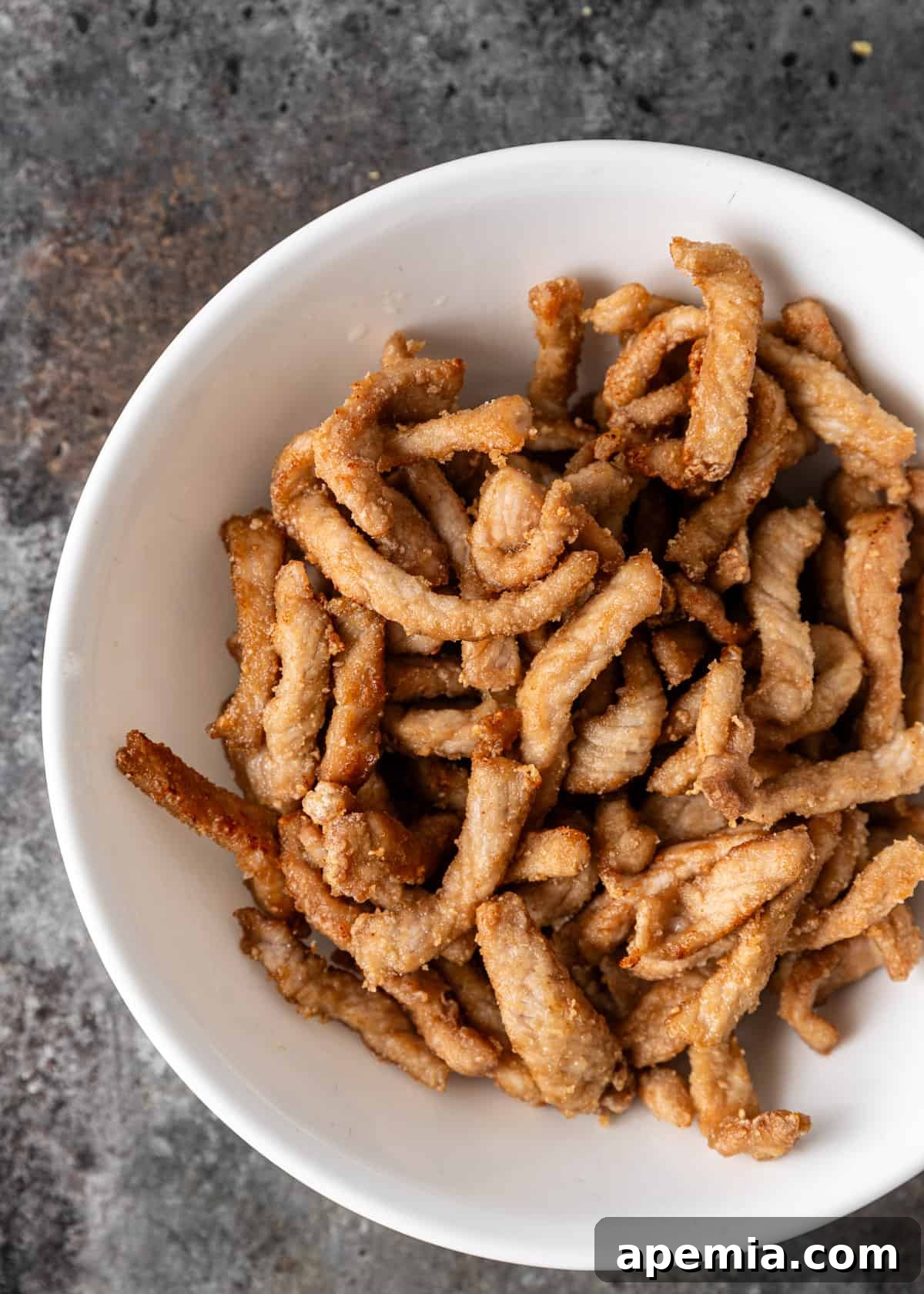
- Sear the Meat: While the oil is heating in your wok over medium-high heat, toss the marinated pork in ¼ cup of cornstarch. Make sure each strip is lightly coated; this is our velveting step that ensures tenderness. Add the pork to the hot wok in batches to avoid overcrowding. Overcrowding will lower the wok’s temperature, causing the pork to steam rather than fry, resulting in a less desirable texture. Stir-fry each batch until beautifully browned and crispy, typically a few minutes per batch. Once cooked, transfer the crispy pork to a paper towel-lined bowl to drain any excess oil.
- Whisk the Sauce: In a small bowl, combine all the sauce ingredients: chicken stock, white vinegar, soy sauce, and cornstarch. Whisk them together until the cornstarch is fully dissolved and the mixture is smooth. Set this aside, ready to be added at the precise moment to thicken and coat your stir fry.
- Stir-Fry the Vegetables: With the wok still hot (add a tiny bit more oil if needed), add your thinly sliced bell peppers and onion. Stir-fry these over high heat for just several minutes. The goal is for them to be crisp-tender, not soft and mushy. They should retain a slight bite and their vibrant colors.
- Combine & Thicken: Return the cooked pork to the wok with the stir-fried vegetables. Give the sauce mixture a quick re-whisk, then pour it evenly over the contents of the wok. Immediately begin stirring vigorously. The cornstarch in the sauce will quickly activate with the heat, causing the sauce to thicken and cling to every piece of pork and every vegetable, creating that signature glossy coating.
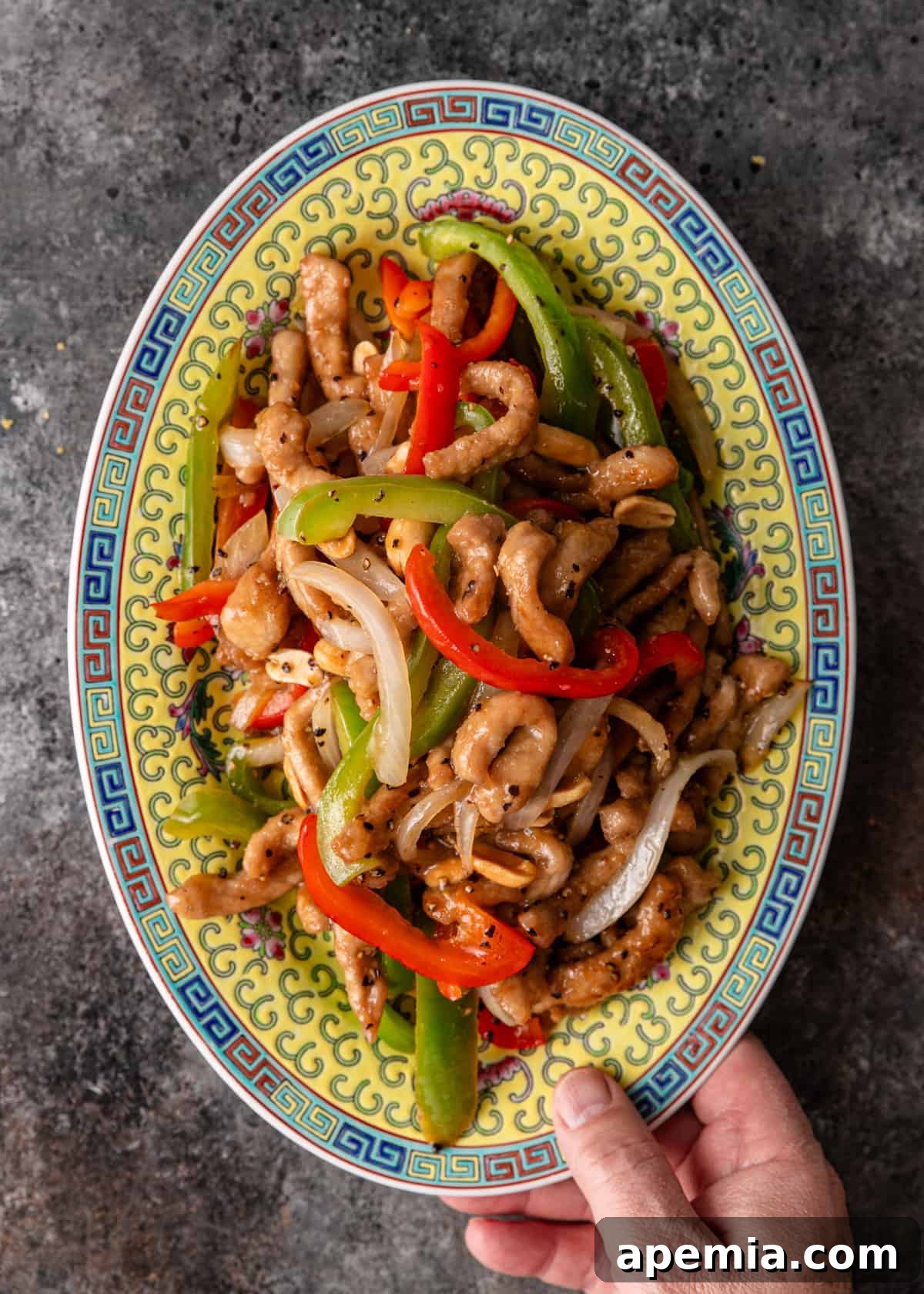
- Finish & Serve: Once the sauce has thickened and coated everything, add the cracked black pepper and toss in the roasted peanuts. Stir to combine thoroughly, ensuring the peppery kick is distributed throughout. Taste and season with salt if desired, adjusting to your preference. Serve your tangy black pepper and vinegar pork stir fry immediately with freshly steamed white rice for a truly authentic and satisfying Chinese meal.
Recommended Tools for Perfect Stir-Frying
- Sharp Knife: A good quality, sharp knife is indispensable for preparing this dish. It allows you to achieve uniform, thinly sliced pork cutlets and precisely cut vegetables, which are crucial for even cooking in a stir-fry. Investing in a sharp knife makes prep work much safer and more efficient.
- Wok: While you can use a large frying pan, a wok is hands-down the best vessel for stir-fries. Its unique shape – a deep, rounded bottom and high, sloping sides – allows for efficient cooking. It distributes heat evenly and retains it well, yet also allows food to move up the sides to cool slightly, providing different temperature zones. Its high walls also effectively prevent oil splatter, keeping your stovetop cleaner, and its expansive surface area makes it easy to work with a large volume of ingredients without overcrowding. If you don’t have a wok, use the largest, heaviest bottomed skillet you own.
Storing and Reheating Your Stir Fry
One of the best qualities of this vinegar pork stir fry is how wonderfully it holds up as leftovers. Transfer any uneaten portions to an airtight container and refrigerate promptly. It will stay fresh and delicious for up to 4 days, making it an ideal candidate for meal prepping. In fact, many find this dish to be even more flavorful the next day, as the sauce continues to infuse into the pork and vegetables, deepening its tangy, peppery essence.
You’re in for a real treat when you reheat those leftovers for lunch the next day! For best results, reheat on the stovetop in a pan over medium heat, stirring constantly until warmed through. This method helps restore some of the textures. Alternatively, you can reheat it in the microwave; just be sure to stir halfway through to ensure even heating. Add a splash of water or chicken stock if the sauce seems too thick during reheating.
Frequently Asked Questions About Pork Stir Fry
Achieving tender pork in a stir fry hinges on a few critical techniques. First, avoid overcrowding the wok. Adding too much meat at once drastically drops the temperature of the pan, causing the pork to simmer in its own juices rather than sear. This leads to tough, grey meat instead of crispy, browned pieces. Cook in small batches if necessary.
Secondly, don’t overcook the pork! Stir-fries are designed for quick cooking. Once the pork is browned on the outside, it’s likely cooked through. Constant, quick stirring also helps ensure even cooking without burning, and it’s easy to lose track of time when you’re focusing on coating everything with that silky sauce. Move quickly and efficiently throughout the stir-frying process – it’s the number one way to guarantee tender meat!
Absolutely not. Boiling pork before stir-frying is generally not recommended for this type of dish. The fibers of the meat can only absorb so much flavor, and you want every moment of the cooking process to be dedicated to soaking up the delicious flavors of the marinade and the final sauce. Boiling can also lead to a rubbery texture and dilute the natural pork flavor.
When selecting vegetables for a stir-fry, it’s important to choose wisely to maintain proper texture and prevent excess moisture. Avoid vegetables that quickly become soft or release a significant amount of liquid, such as tomatoes or many types of squash (with zucchini being a common and usually acceptable exception if cooked briefly). These can make your stir-fry watery and diminish the desired crisp-tender texture.
Additionally, steer clear of ingredients that take an excessively long time to cook thoroughly. Dense vegetables like potatoes, raw broccoli florets, asparagus spears, or Brussels sprouts are better suited for other cooking methods unless they are blanched or pre-cooked beforehand. Stick to quick-cooking vegetables that can achieve crisp-tenderness in just a few minutes over high heat.
Share this recipe on Pinterest!
Love this recipe? Help spread the word by sharing it with your friends and followers on Pinterest.
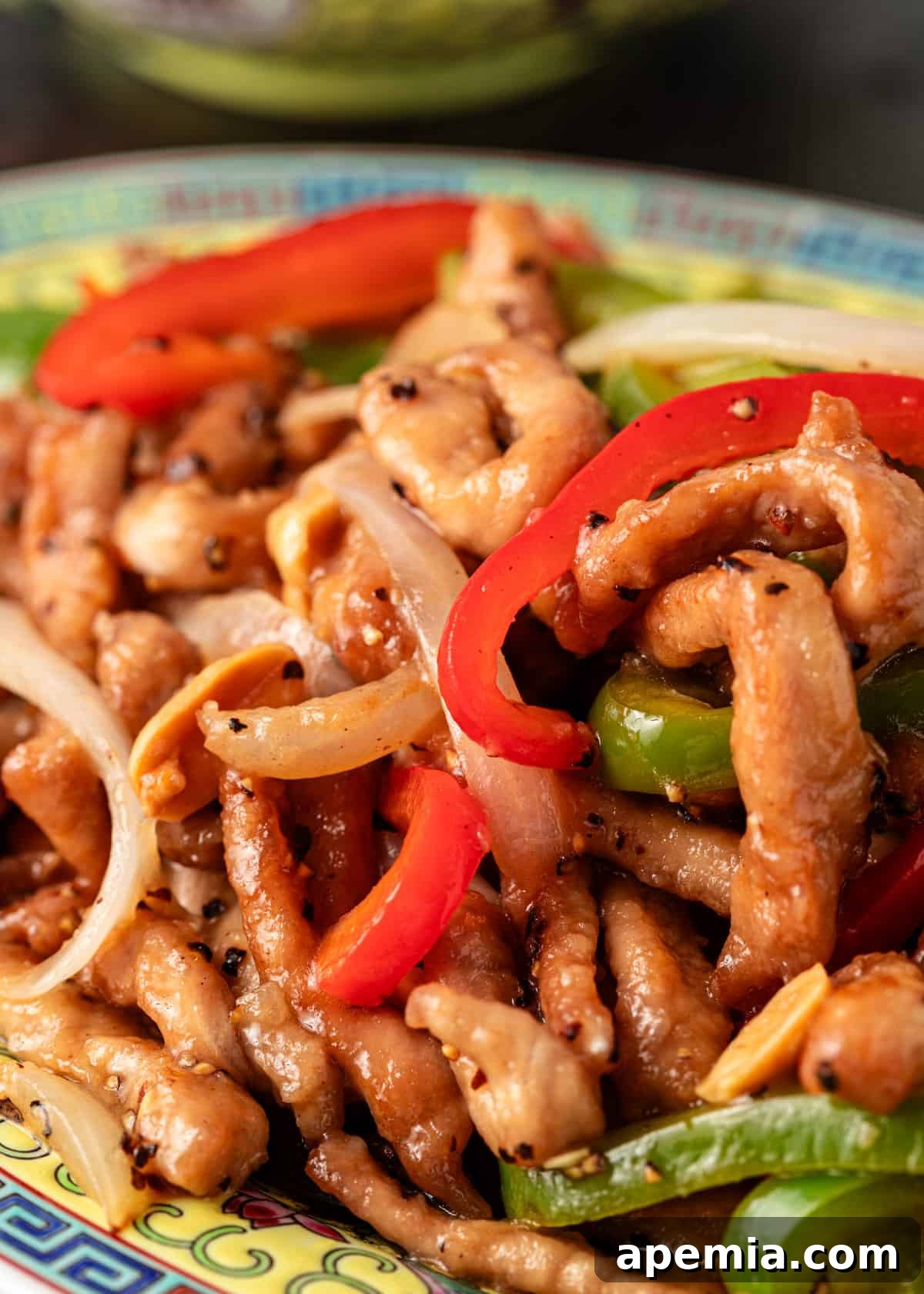
Black Pepper and Vinegar Pork Stir Fry
Crispy vinegar pork stir fry is coated in a thick, silky sauce, infused with black pepper and loaded with juicy vegetables for a tasty 30-minute meal.
4
15 mins
15 mins
30 mins
Print Recipe
Ingredients
- 1.5 lbs pork loin (2-3 cutlets)
- 1 tbsp soy sauce
- 1 tbsp sugar
- 1/4 tsp white pepper
- 1 medium white onion, sliced thin
- 1 red bell pepper, seeded and sliced thin
- 1 green bell pepper, seeded and sliced thin
- 1/2 cup vegetable oil (for frying)
- 1/4 cup cornstarch
- 1 tbsp cracked black pepper
- 1/2 cup roasted peanuts
Sauce
- 1/2 cup chicken stock
- 1/3 cup white vinegar
- 1 tbsp soy sauce
- 1 tbsp cornstarch
Instructions
- Slice each pork loin cutlet into 1/4-inch strips and then cut each strip into 3 pieces lengthwise. Add pork to a bowl and add the soy sauce, sugar, and white pepper. Toss to mix and let marinate briefly while chopping vegetables.
- Toss the pork in 1/4 cup cornstarch, making sure each strip is coated.
- Heat the oil in a wok over medium-high heat. Working in batches, stir fry the pork until crispy and brown, several minutes per batch. Transfer the cooked pork to a paper towel-lined plate.
- In a small bowl, whisk together all the sauce ingredients and set aside.
- Add the sliced vegetables (bell peppers and onion) to the wok and stir fry for 2-3 minutes over high heat until crisp-tender. Return the cooked pork to the wok and mix well. Give the sauce mixture a quick stir again and then pour it into the wok. Quickly stir fry to coat all ingredients; the sauce will thicken rapidly.
- Add the cracked black pepper and roasted peanuts, then stir to combine thoroughly. Season with salt if needed, and serve immediately with steamed rice.
Nutrition
Carbohydrates: 24g
Protein: 46g
Fat: 9g
Saturated Fat: 3g
Polyunsaturated Fat: 3g
Monounsaturated Fat: 3g
Cholesterol: 108mg
Sodium: 713mg
Potassium: 1004mg
Fiber: 4g
Sugar: 7g
Vitamin A: 1051IU
Vitamin C: 64mg
Calcium: 50mg
Iron: 2mg
The information shown is an estimate provided by an online nutrition calculator. It should not be considered a substitute for a professional nutritionist’s advice.
Have You Made This Recipe? Let Me Know on Instagram!
Tag @keviniscooking or use the hashtag #keviniscooking!