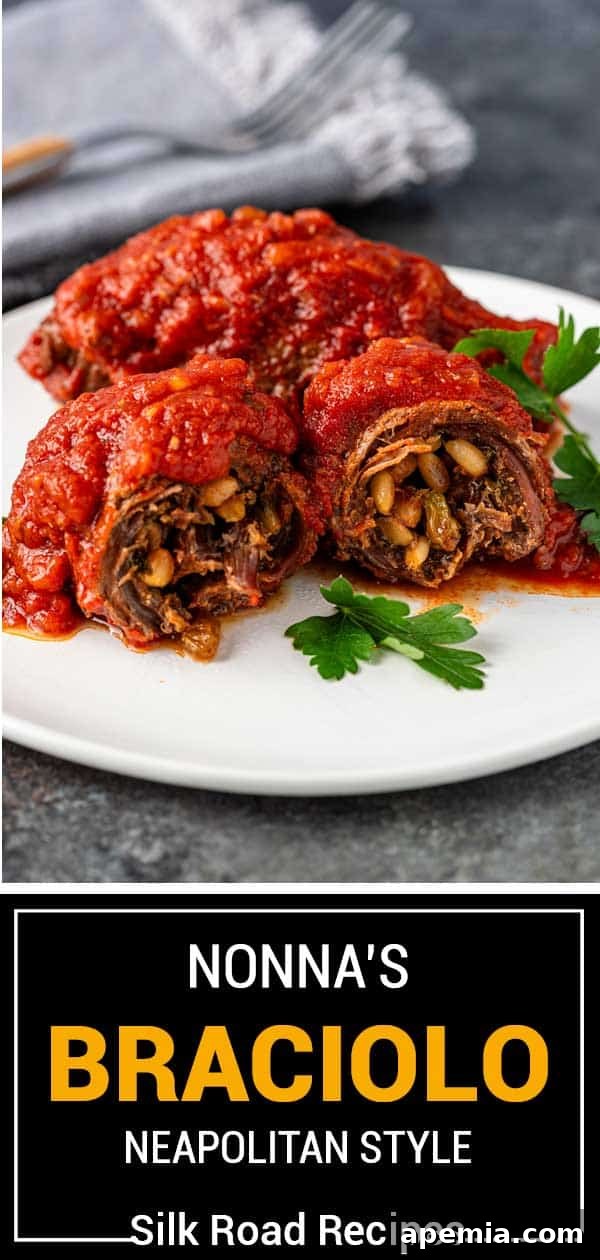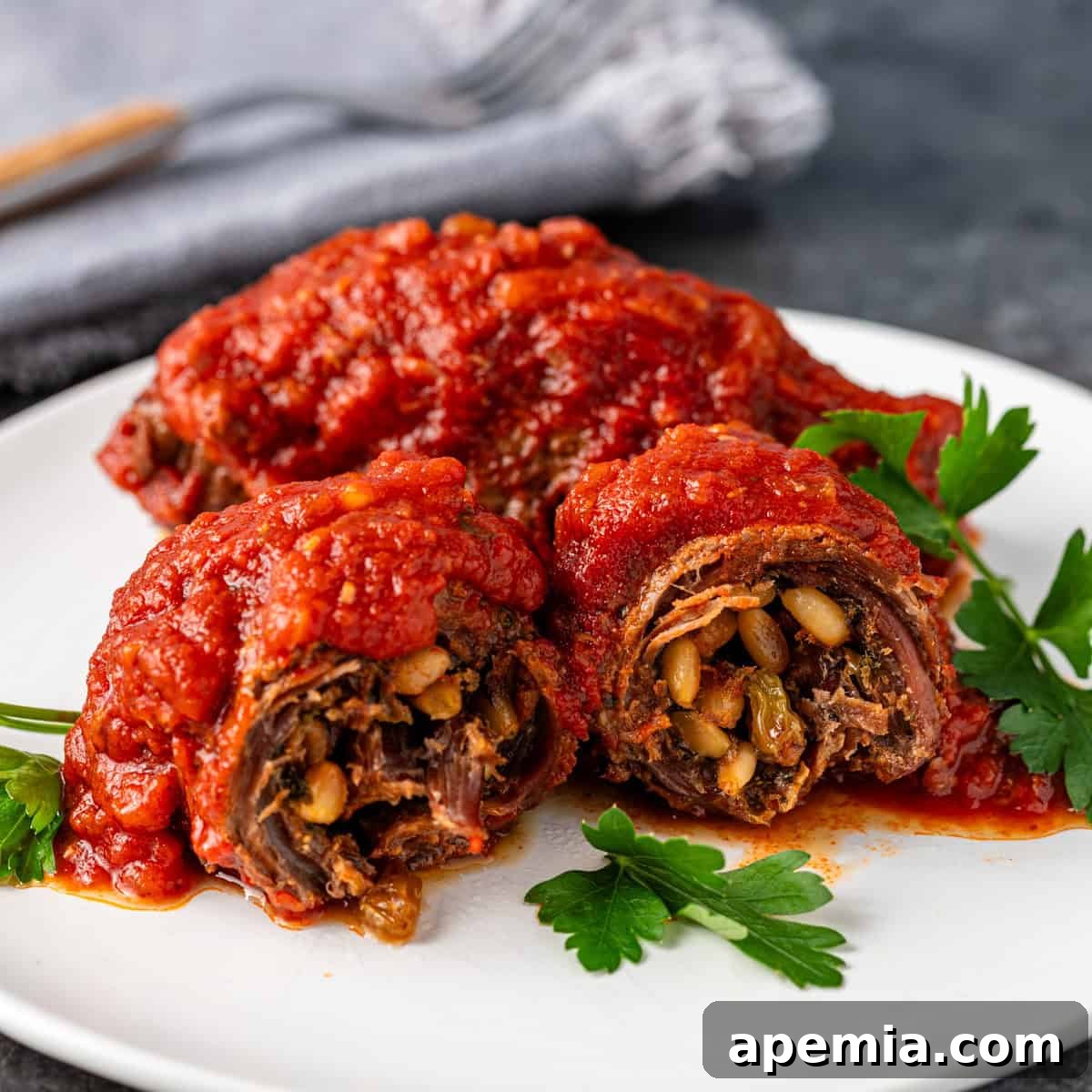
Welcome to the heart of Neapolitan cuisine, where tradition, flavor, and comfort converge in a single, magnificent dish: Braciole. These exquisite beef rolls, lovingly slow-braised to fork-tender perfection, are a true testament to the art of Italian home cooking. Each thin slice of beef is meticulously filled with a harmonious blend of golden raisins, toasted pine nuts, fresh herbs, and rich Parmigiano-Reggiano cheese. Once rolled and secured, they embark on a gentle, hours-long simmer in a robust tomato-wine sauce, transforming modest ingredients into an upscale, deeply satisfying meal. Perfect for a cozy Sunday dinner or an elegant gathering, Neapolitan Braciole promises a culinary experience that nourishes both body and soul.
Discovering Braciole: A Neapolitan Culinary Gem
Braciole, pronounced “brah-JO-lay” in its authentic Italian form, or often heard as “brah-ZHOHL” in Italian-American communities, transcends mere culinary definition; it embodies a profound cultural heritage. Hailing from Naples, a city celebrated for its vibrant culinary traditions and a deep reverence for dishes perfected through time, braciole captures the very essence of Italian comfort food. While various regions across Italy boast their unique interpretations of stuffed meat rolls, Neapolitan braciole distinguishes itself through its signature sweet and savory filling and the unparalleled depth of its slow-simmered sauce.
In the Neapolitan way of life, the philosophy of “slow food” is ingrained in daily rituals. Sundays, in particular, are often dedicated to preparing elaborate meals that gently simmer for many hours, allowing complex flavors to intertwine and humble ingredients to undergo a remarkable transformation. This braciole recipe perfectly illustrates this tradition, elevating a simple cut of beef into an extraordinarily flavorful and tender creation through patience and meticulous care. It is a dish that evokes sentiments of warmth, family gatherings, and joyful celebrations, whether it graces a special occasion or simply brightens a quiet afternoon at home.
The Distinctive Sweet and Savory Filling of Neapolitan Braciole
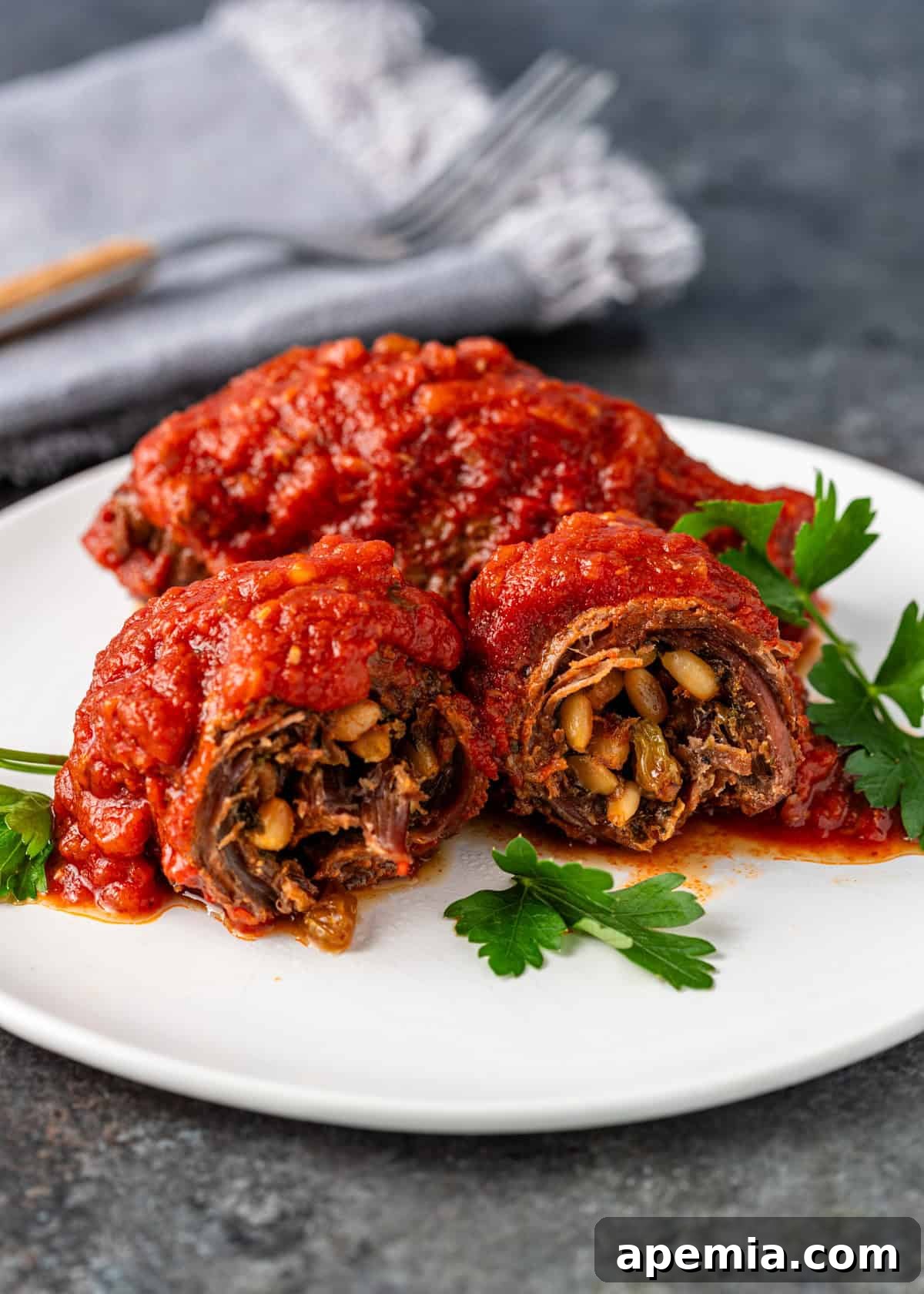
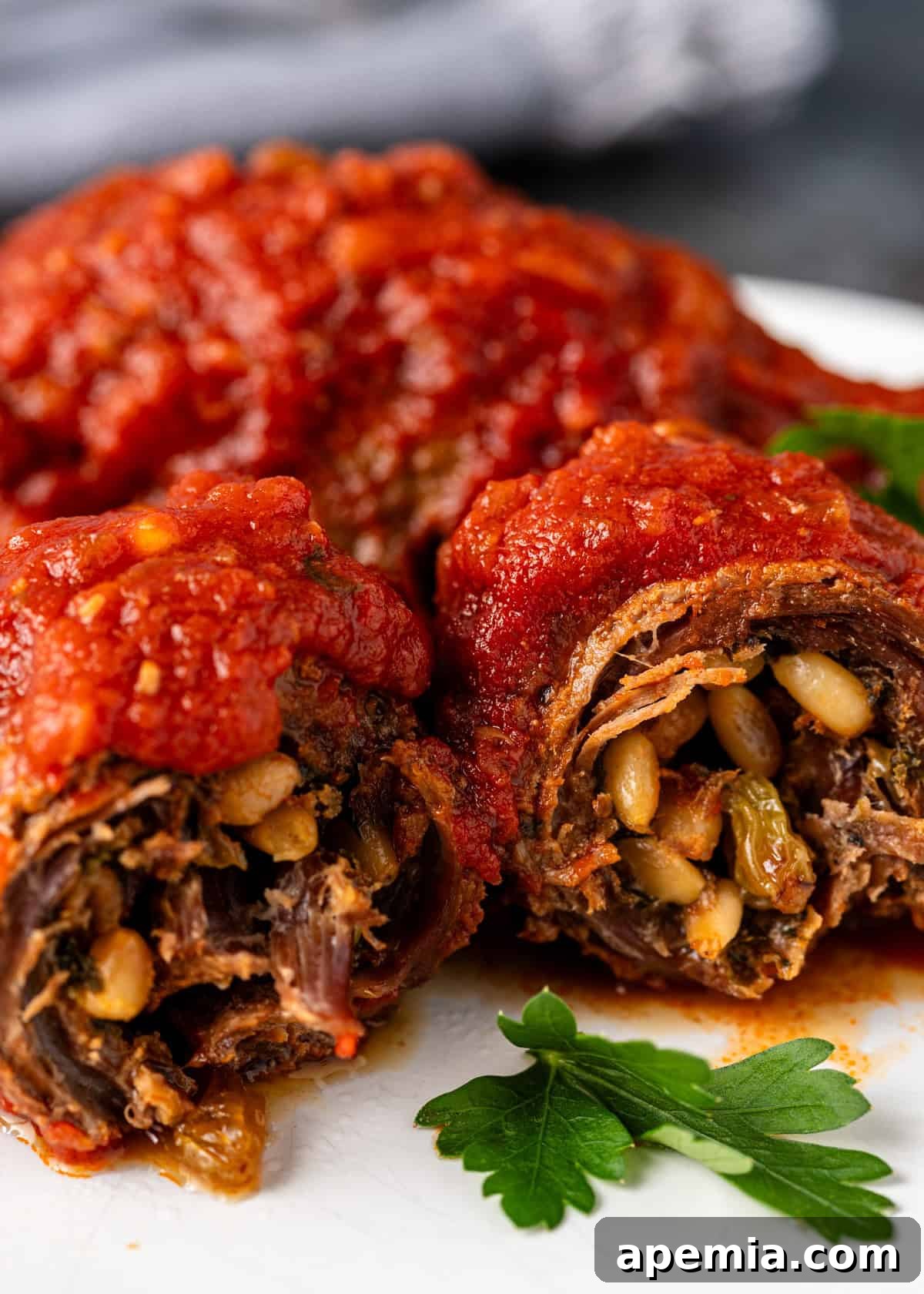
What truly sets Neapolitan braciole apart from other Italian variations is the ingenious combination of ingredients thoughtfully tucked inside each beef roll. Unlike simpler or purely savory versions, this recipe features a vibrant and balanced filling. Golden raisins contribute a subtle sweetness and a tender, buttery richness as they plump up during the braising process. Crunchy pine nuts introduce a delightful textural contrast and a fragrant, nutty aroma. Fresh parsley adds bright, herbaceous notes that cut through the richness, while generous amounts of aged Parmigiano-Reggiano cheese impart a crucial salty, umami depth. This unique sweet-savory interplay is more than just a flavor profile; it is a strategic culinary choice. During the extended braising, these internal components slowly release their essences, infusing both the beef and the surrounding tomato sauce with layers of complex flavor that are simultaneously intriguing and profoundly satisfying. The delicate sweetness of the raisins beautifully mellows the inherent richness of the beef and the slight acidity of the tomatoes, culminating in a perfectly balanced and unforgettable culinary experience.
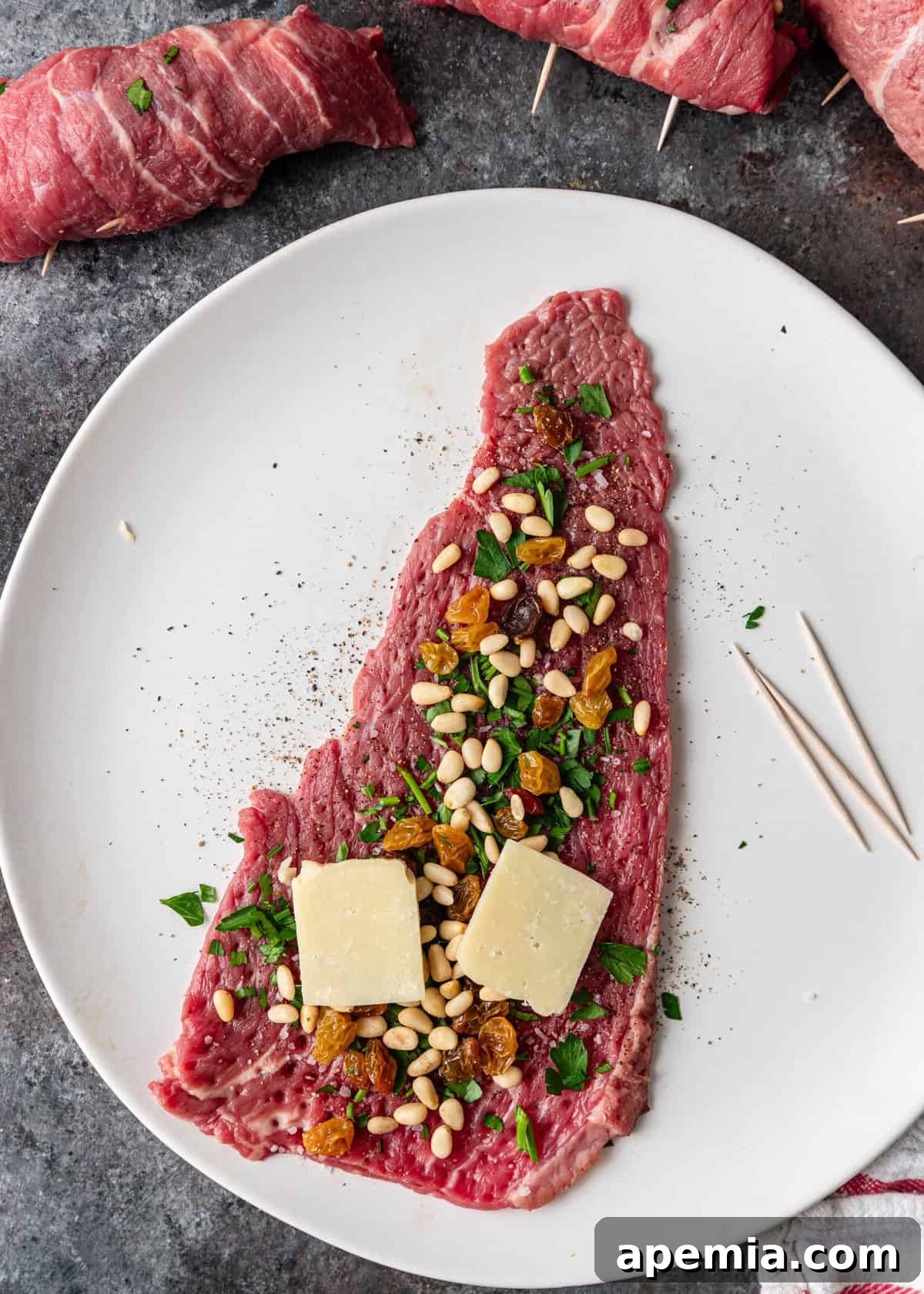
Table of Contents
- The Art of Slow Braising: Patience for Perfection
- A Culinary Journey to Naples: My Braciole Inspiration
- Stovetop or Oven Baking Tips for Braciole
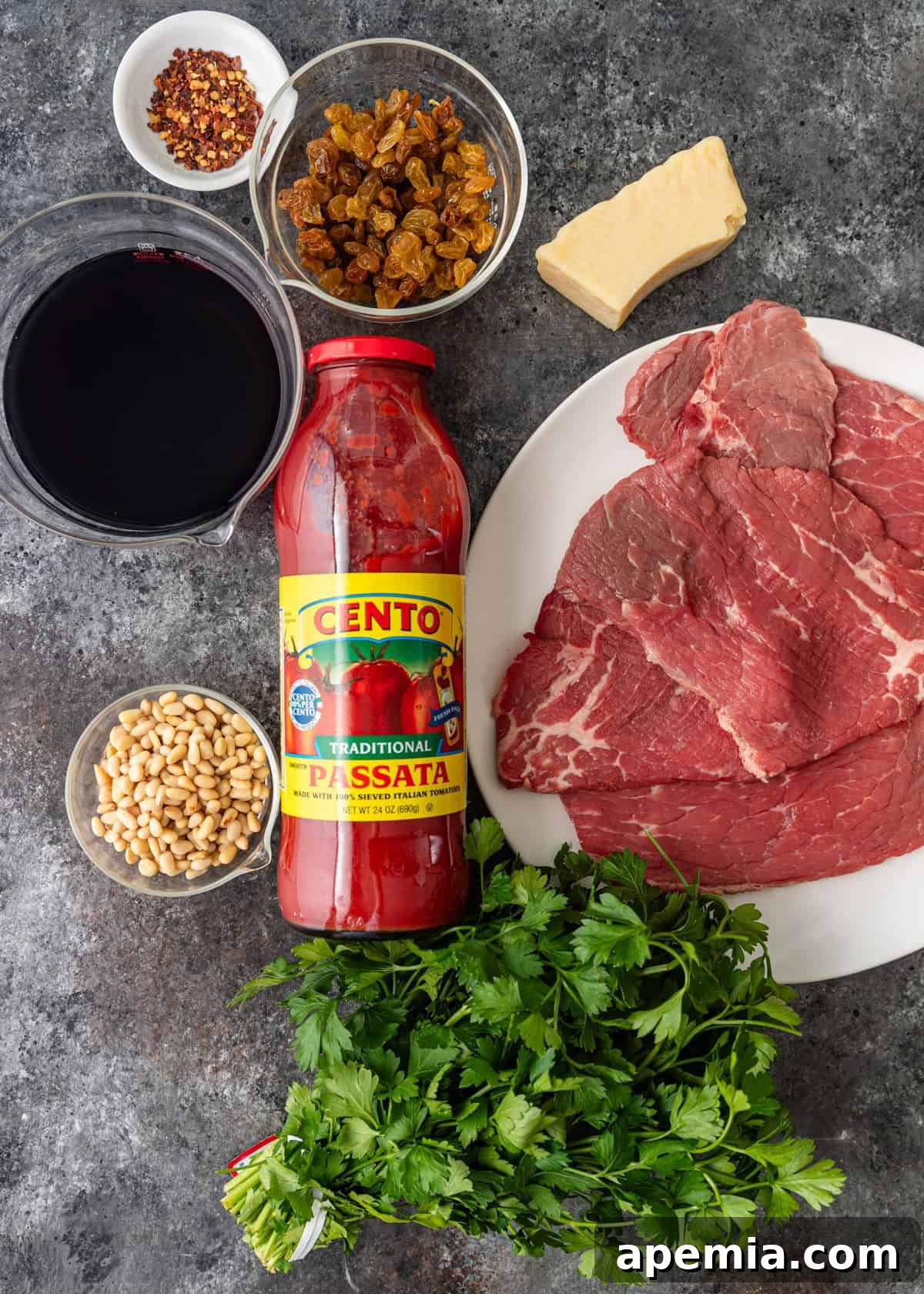
- Ingredient Notes and Substitutions for Authentic Braciole
- How to Make Neapolitan Braciole: Step-by-Step Guide
- Recommended Tools for Braciole Preparation
- Serving Suggestions for Neapolitan Braciole
- Frequently Asked Questions About Braciole
- Neapolitan Braciole Recipe Card
The Art of Slow Braising: Patience for Perfection
This Neapolitan braciole recipe is a stellar illustration of how slow cooking can profoundly transform seemingly simple ingredients into a dish of extraordinary depth, tenderness, and complexity. The extended, gentle braise is paramount, especially when working with leaner, tougher cuts of beef like top round. This patient method allows the beef’s connective tissues to slowly break down and dissolve over hours, resulting in meat that is incredibly succulent and so tender it can be effortlessly cut with a fork—a true hallmark of perfectly prepared braciole.
However, the magic of slow braising extends far beyond simply tenderizing the meat. As the beef rolls delicately simmer in the rich tomato-wine sauce for several hours, the flavors from the internal filling—the delicate sweetness of the raisins, the earthy nuttiness of the pine nuts, the sharp tang of the cheese, and the fresh zest of the parsley—begin to meld harmoniously with the robust notes of the red wine, aromatic garlic, and smooth passata. The sauce itself undergoes a remarkable transformation, gradually thickening and intensifying, absorbing all these wonderful nuances to become a velvety, deeply complex concoction. This luxurious sauce is so delicious, you’ll find yourself wanting to spoon it over every accompanying starch, ensuring no drop goes to waste. This entire process is a true labor of love, akin to preparing other celebrated slow-simmered dishes such as classic Hungarian Goulash or a hearty Ragu. In this culinary journey, patience is not just a virtue; it is unequivocally rewarded with unparalleled flavor and an unforgettable melt-in-your-mouth texture. Trust me, the wait for this exquisite beef braciole is absolutely worth it!
A Culinary Journey to Naples: My Braciole Inspiration
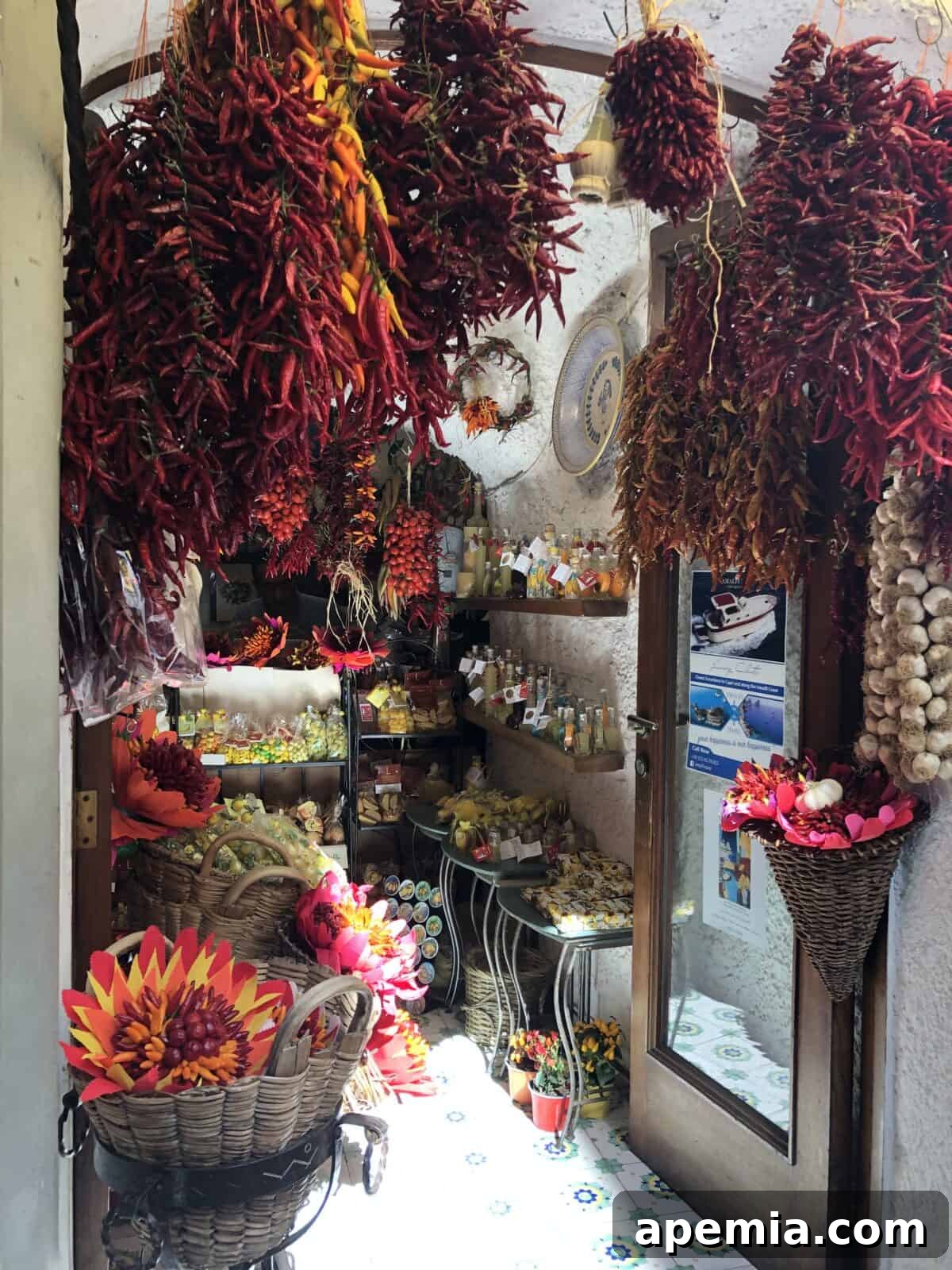
My profound passion for authentic Italian cuisine was ignited and deepened significantly during a truly unforgettable trip to Naples, followed by a breathtaking journey along the stunning Amalfi Coastline in Sorrento. It was in these enchanting locales that I truly immersed myself in the vibrant essence of Neapolitan cooking. I savored everything from the most amazing, perfectly blistered pizza I’ve ever tasted to exquisite, crispy arancini, and of course, the utterly unforgettable braciole. I’ve always held the belief that the finest way to truly understand and appreciate food is directly from the masters who create it. Consequently, it has become a cherished habit of mine to politely inquire with the waiter if the chef might be amenable to a brief conversation. After offering heartfelt compliments on their culinary artistry, I often, quite optimistically, ask if there’s any chance of gleaning insights into their treasured recipes. More often than not, this bold approach results in a hurried scribbling of key notes on my iPhone, which I then diligently research, refine, and adapt upon my return home.
This specific Neapolitan braciole recipe is a direct and inspired descendant of one such memorable encounter in a bustling Neapolitan kitchen. The authentic flavors, the intricate balance of sweet and savory elements, and the incredible tenderness of the slow-cooked beef left an indelible mark on my culinary memory. While I was so thoroughly engrossed in savoring every delectable bite that I regrettably forgot to capture a photo of the dish itself, the chef’s remarkable generosity in sharing his cherished version—despite the charming challenge of a strong accent and a slight language barrier during translation—enabled me to recreate and now share this extraordinary culinary experience with you. This recipe is more than just instructions; it’s a tangible piece of Naples, lovingly brought directly to your kitchen for you to enjoy and share.




Expert Tip
Stovetop or Oven Baking Tips for Braciole
While traditional braciole often simmers on the stovetop, it can also be successfully braised in the oven, offering a hands-off approach. The crucial elements for success are understanding the appropriate temperature equivalents and diligently maintaining moisture throughout the cooking process.
- A slow, gentle stovetop simmer, covered for approximately 4 hours, generally equates to oven cooking at a low temperature, typically between 275–300°F (135–150°C). This extended, low-temperature method is ideal for developing the most tender meat and allowing flavors to deepen gradually and thoroughly.
- If you prefer to braise at a slightly higher oven temperature, such as 350°F (175°C), the overall cooking time will be considerably reduced, usually to about 2 to 2½ hours. However, be aware that higher temperatures can accelerate moisture evaporation, potentially drying out your braciole if not managed carefully.
- Regardless of whether you choose stovetop or oven braising, it is absolutely crucial to keep the pot or baking dish tightly covered with a lid or foil. This seal is essential for trapping steam and moisture, which prevents the beef rolls from becoming dry and ensures they remain succulent.
- For optimal results, begin checking the tenderness of your braciole around the 2-hour mark if baking at 350°F, or closer to 3 hours if using a 300°F oven. The beef rolls are perfectly done when the meat is easily pierced and pulls apart effortlessly with a fork.
- Should you observe that the sauce liquid is reducing too much or becoming too thick during the long cooking process, simply add a little extra beef broth, water, or even a splash more red wine. This helps maintain the ideal consistency and ensures there’s enough luscious sauce to serve.
- For a truly authentic, slow-braised outcome that perfectly mirrors the traditional stovetop method, I highly recommend setting your oven to 300°F (150°C) and cooking, covered, for the full 3 to 4 hours. This patience will be richly rewarded.
Ingredient Notes and Substitutions for Authentic Braciole
(For a complete list of ingredients and precise quantities, please refer to the recipe card below.)
- Beef Top Round: This is an excellent choice for braciole. It’s a lean cut, and while initially quite firm, it becomes incredibly tender and develops a rich flavor profile through the slow cooking process. Other lean, more economical cuts like bottom round or flank steak can also be used effectively. For added convenience, many butchers offer “breakfast steaks” or pre-tenderized round steaks, which are often cut to an ideal thinness, perfect for rolling.
- Golden Raisins: These provide a signature sweet and subtly buttery depth to the traditional Neapolitan filling. As they soften and plump up during the braise, they release their concentrated flavor. If golden raisins are unavailable or not to your taste, finely chopped walnuts or slivered almonds can offer a textural element. However, be mindful that using nuts will shift the flavor profile away from the traditional sweet-savory balance characteristic of Neapolitan braciole.
- Parmigiano-Reggiano: This hard, aged Italian cheese is absolutely essential for its distinct salty, nutty, and umami characteristics. It melts beautifully inside the beef rolls, seasoning the meat from within, and contributes a vital richness to the overall sauce. An excellent and commonly used alternative, offering a sharper and saltier flavor, is Pecorino Romano cheese.
- Passata: Also known as strained tomatoes, passata forms the smooth, luxurious, and velvety base of our exquisite tomato sauce. Its finely sieved texture ensures a refined and consistent sauce. In a pinch, high-quality crushed tomatoes can be used, although the resulting sauce will have a slightly chunkier consistency compared to the smooth passata.
- Red Wine: A crucial ingredient that serves multiple purposes. It is used to deglaze the pan, lifting all the delicious browned bits, and significantly deepens the complexity and richness of the sauce. A dry Italian red wine, such as Montepulciano or Sangiovese, is highly recommended as it complements the flavors of the dish beautifully. Alternatively, any full-bodied dry red wine that you enjoy drinking will work wonderfully.
- Red Pepper Flakes: A small pinch of red pepper flakes provides a subtle warmth and a gentle kick of spice, which expertly balances the richness of the dish without overpowering its delicate flavors. You can easily adjust the amount to suit your personal spice preference, adding a little more for extra heat if desired.
How to Make Neapolitan Braciole: Step-by-Step Guide
- Prepare the Beef Slices: Begin by laying your beef slices out on a clean, sturdy surface. Using a meat mallet, firmly pound each slice until it is uniformly thin, aiming for approximately ¼-inch thickness. This essential step ensures the beef is tender and pliable, making it easy to roll without tearing, and guarantees even cooking.
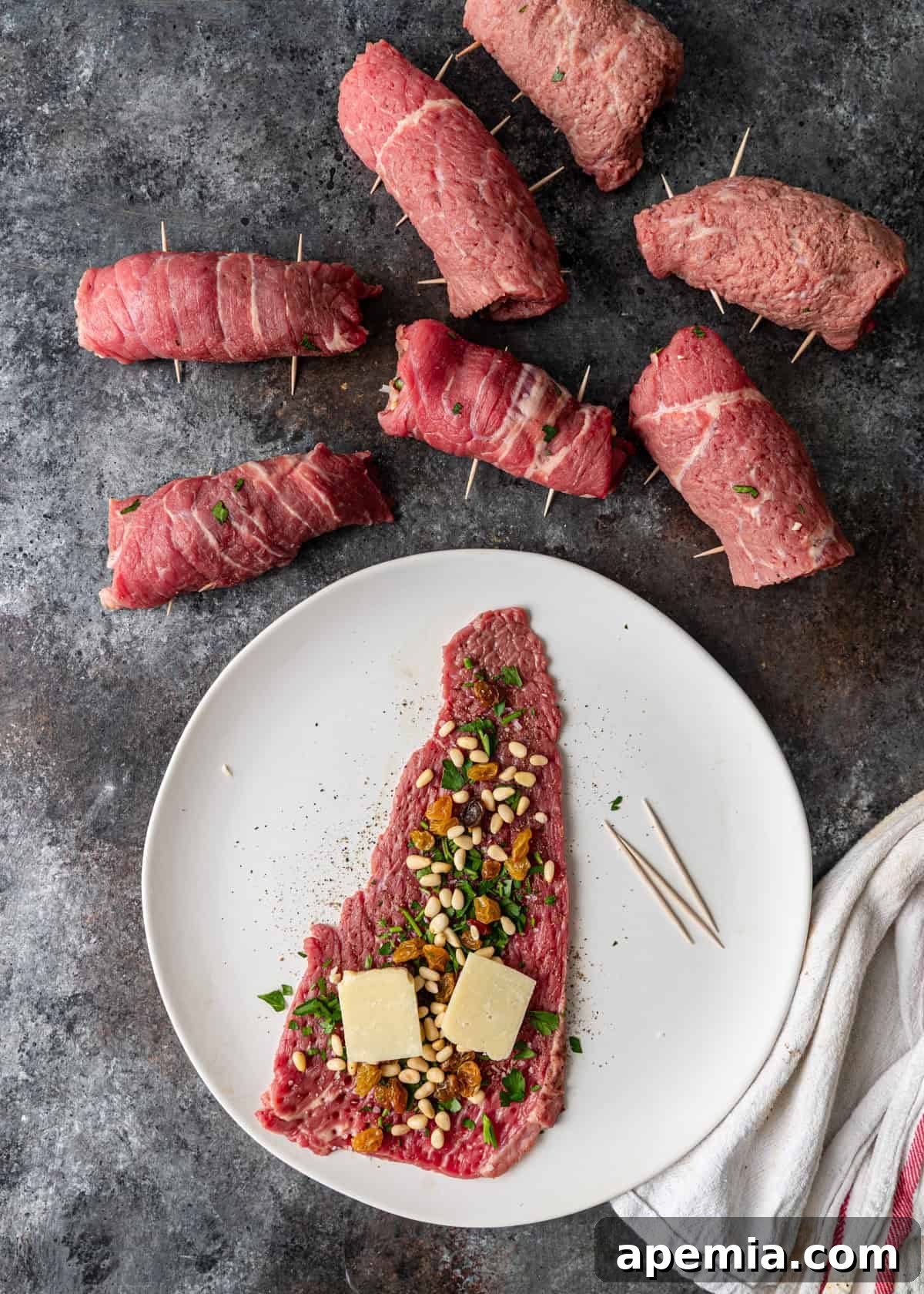
- Assemble the Flavorful Rolls: Generously season the flattened beef slices on one side with kosher salt and freshly ground black pepper. Evenly sprinkle the seasoned surface with a layer of minced fresh parsley, golden raisins, toasted pine nuts, and the Parmigiano-Reggiano cheese. Carefully roll each slice tightly, starting from one end, to keep the delicious filling securely inside. Secure each roll firmly with either butcher’s twine or several sturdy toothpicks to prevent any unraveling during the cooking process. Set the assembled rolls aside.
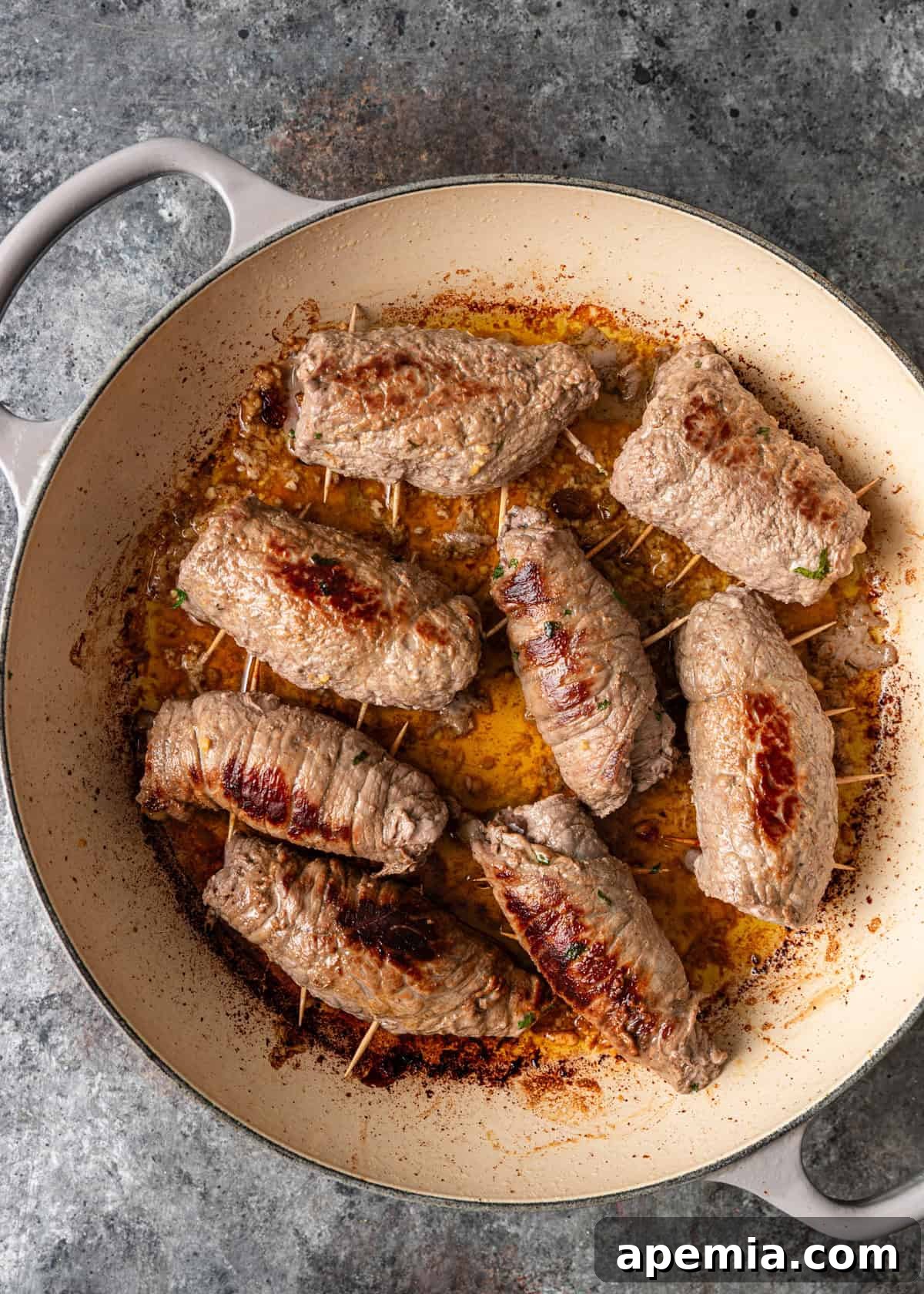
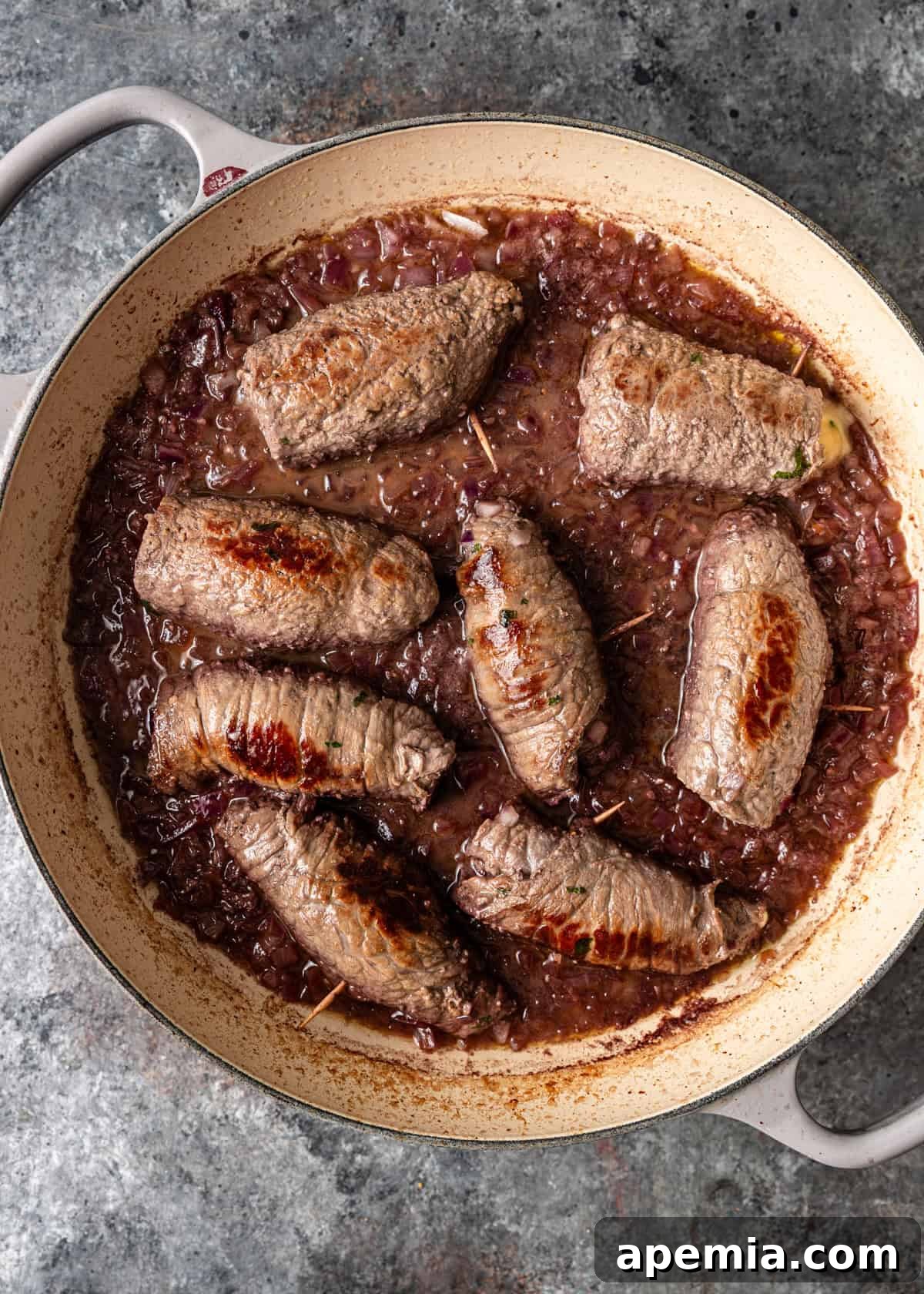
- Brown the Braciole for Depth: Heat the extra-virgin olive oil in a large, heavy-bottomed pot or Dutch oven over medium heat. Once the oil begins to shimmer, carefully add the secured beef rolls. Sear them on all sides until they develop a beautiful golden-brown crust. This crucial browning step is not to be rushed, as it develops a rich, savory crust and lays the foundational layers of flavor for the exquisite sauce. Remove the browned braciole and set aside.
- Build the Aromatic Sauce: In the same pot, add the diced red onion and minced garlic. Sauté them gently for about 1-2 minutes until they are softened and highly fragrant. Pour in the red wine, then immediately use a wooden spoon to vigorously scrape the bottom of the pan, deglazing it and releasing all the concentrated, browned bits of flavor. Continue to cook until the red wine has reduced by half.
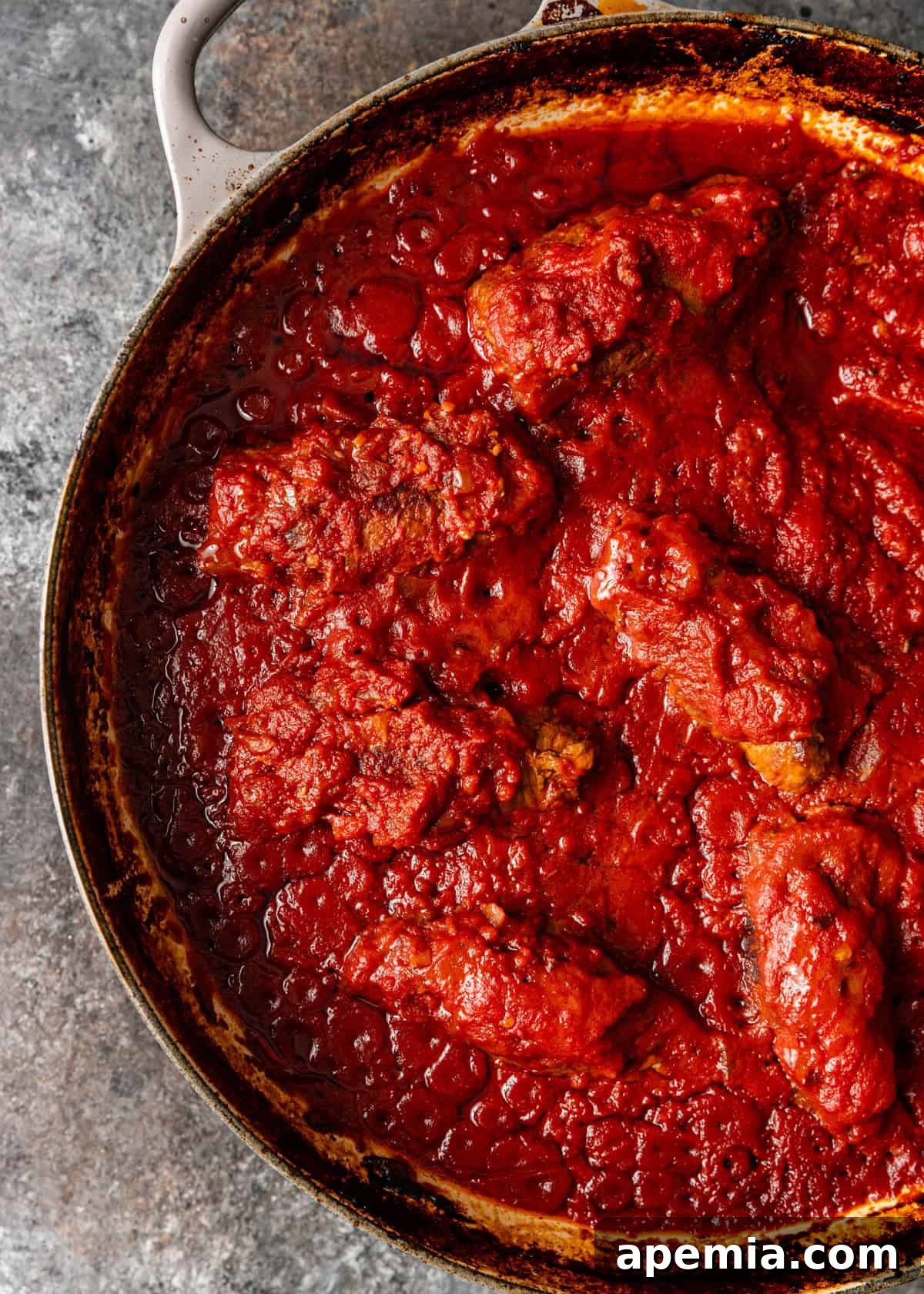
- Slow-Cook Until Tender Perfection: Stir in the passata, the remaining ½ teaspoon of kosher salt, and a pinch of red pepper flakes. Bring the sauce to a gentle boil, then carefully nestle the browned braciole back into the pot, ensuring they are mostly submerged in the sauce. Reduce the heat to its lowest setting, cover the pot tightly with a lid, and allow it to simmer gently for approximately 4 hours, or until the beef is incredibly tender and can be easily cut with a fork.
- Serve and Savor: Once the braciole has reached fork-tender perfection, carefully remove each roll from the rich sauce. Discard the butcher’s twine or toothpicks used to secure them. Serve the braciole generously spooned with the warm tomato-wine sauce, finishing each serving with an extra sprinkle of freshly grated Parmigiano-Reggiano for that perfect final touch.
Recommended Tools for Braciole Preparation
Having the right kitchen tools can significantly streamline the braciole preparation process, making it more efficient and enjoyable:
- Meat Mallet: An essential tool for consistently and evenly flattening the beef slices to the optimal thickness. This ensures the meat is tender and pliable enough for easy rolling and uniform cooking.
- Kitchen Twine or Toothpicks: Crucial for keeping your carefully assembled beef rolls securely intact throughout the long, slow simmering process. This prevents the delicious filling from escaping and maintains the structural integrity of the braciole.
- Heavy-Bottomed Pot or Dutch Oven: Ideal for this recipe due to its ability to distribute heat evenly. It’s perfect for achieving a deep, even sear on the beef and for the consistent, gentle braising that this dish demands.
Serving Suggestions for Neapolitan Braciole
Braciole is a remarkably hearty and deeply satisfying main dish, perfectly poised to be the star of any dinner spread. Its rich, flavorful, and luxurious sauce is wonderfully versatile, pairing exquisitely with a variety of starches that are designed to capture every precious drop. Here are some exquisite pairing ideas to elevate your meal and ensure a complete, memorable dining experience:
- Creamy Polenta or Velvety Mashed Potatoes: The smooth, comforting texture of creamy polenta or the rich, buttery goodness of mashed potatoes provides an absolutely ideal base. They are perfect for soaking up every last bit of the luscious tomato-wine sauce, creating a truly harmonious bite.
- Pasta Perfection: For a classic Italian presentation, toss the delectable braciole sauce directly with your favorite cooked pasta shape. Hearty choices like rigatoni, paccheri, or even wide fettuccine work beautifully. Arrange the tender braciole rolls artfully on top of the sauced pasta for a complete and traditional Italian meal that’s both elegant and filling.
- An Impressive Dinner Party Spread: If you’re hosting a special dinner party and wish to create an unforgettable Italian feast, consider serving this incredible Neapolitan braciole recipe alongside other beloved Italian dishes. Pairing it with something like Stuffed Lasagna Rolls would create a truly magnificent and diverse spread that is sure to impress all your guests.
- Simple, Fresh Vegetable Sides: To beautifully balance the richness of the braciole, complement it with a light and fresh vegetable side. Sautéed spinach with garlic, a medley of roasted vegetables such as Briam (Greek Roasted Vegetables), or a crisp green salad tossed with a bright vinaigrette all make excellent and refreshing companions.
- Artisan Bread for Sopping: Absolutely do not let any of that glorious, savory sauce go to waste! Serve your beef braciole with generous slices of crusty Focaccia Bread or another high-quality artisanal bread. This allows everyone at the table to dip and sop up every last, flavorful bit of the exquisite tomato-wine sauce.
Share this recipe on Pinterest!
Love this traditional Neapolitan Braciole recipe? Help spread the culinary joy by sharing it with your friends and followers on Pinterest!
Frequently Asked Questions About Braciole
The extended braising period is absolutely fundamental for achieving the desired tenderness, particularly when utilizing leaner, initially tougher cuts of beef like top round. Slow cooking at a consistently low temperature allows the tough connective tissues within the meat to gradually break down and gelatinize over several hours. This intricate process results in beef that is incredibly fork-tender and succulent. Furthermore, this long, gentle simmer is crucial for enabling the complex flavors from the internal filling and the rich sauce to fully meld, deepen, and concentrate, creating a more robust and profoundly satisfying dish. Attempting to rush this step with faster cooking methods will inevitably compromise the melt-in-your-mouth texture and the deeply developed flavor profile that defines authentic braciole.
Yes, absolutely! Braciole can be cooked very successfully in the oven, offering a convenient, hands-off approach. To ensure success, it is imperative that your pot or Dutch oven is tightly covered with a lid or a double layer of heavy-duty foil to prevent any moisture loss during the extended cooking. For a truly slow-braised result that closely mirrors stovetop simmering, we recommend cooking at a consistent 300°F (150°C) for approximately 3 to 4 hours. If you need a slightly quicker cooking time, you can set your oven to 350°F (175°C), which will typically reduce the cooking duration to about 2 to 2½ hours. Always make sure to check for tenderness towards the end of the cooking time, and if the liquid in the sauce appears to be reducing too rapidly, simply add a splash of beef broth or water to maintain the ideal consistency.
While the raisin-pine nut mixture is a beloved and iconic tradition in Naples, the beauty of braciole lies in its regional diversity and adaptability. Fillings can vary significantly across different Italian regions and even among individual family culinary traditions. Some popular variations include incorporating toasted breadcrumbs for added texture and to help absorb some of the juices, slices of savory cured meats such as prosciutto, or even unexpected additions like finely chopped hard-boiled eggs for a unique twist. Different combinations of fresh herbs and local cheeses are also common. The essence of braciole allows cooks to creatively incorporate ingredients that reflect local produce availability and cherished family recipes. Feel completely free to experiment with different fillings while maintaining the core concept of stuffed, rolled, and slow-braised beef for a truly personalized dish.
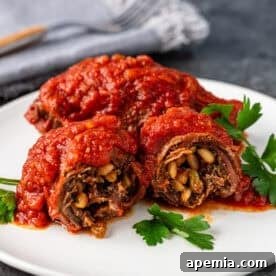
Braciole (Neapolitan Style)
Experience true Neapolitan comfort with these slow-braised braciole, simmered in a rich red wine and passata sauce, and featuring a classic sweet-savory raisin-pine nut filling.
Servings: 8
Prep Time: 15 mins
Cook Time: 4 hrs 15 mins
Total Time: 4 hrs 30 mins
Print Recipe
Ingredients
- 1 1/2 lbs beef top round, cut into 8 slices (See Note 1)
- Kosher salt, to taste
- Ground black pepper, to taste
- 1 cup golden raisins
- 1/2 cup pine nuts
- 1/4 cup parsley, minced
- 8 slices Parmigiano-Reggiano or 8 tablespoons grated
- 1/4 cup extra-virgin olive oil
- 3 cloves garlic, minced
- 1 red onion, diced
- 1 cup red wine
- 4 cups passata (strained tomatoes)
- 1/2 tsp kosher salt
- Pinch red pepper flakes
Instructions
Beef Rolls
- First, prepare the beef slices. Pound them with a meat mallet until they’re about ¼-inch thick to ensure even cooking and easy rolling.
- Lay the flattened slices out. Season each slice with salt and pepper, then sprinkle evenly with parsley, golden raisins, pine nuts, and Parmigiano-Reggiano. Roll them up tightly and secure each with butcher’s twine or several toothpicks. Set aside.
Sauce
- Heat the olive oil in a large, heavy-bottomed pot or Dutch oven over medium heat. Add the secured beef rolls and sear until they are beautifully browned on all sides. Remove the braciole and set aside.
- In the same pot, add the diced red onion and minced garlic. Sauté for about 1-2 minutes until fragrant and softened. Pour in the red wine, stirring to scrape up any browned bits from the bottom of the pan. Cook until the liquid has reduced by half.
- Stir in the passata, the remaining ½ tsp kosher salt, and a pinch of red pepper flakes. Bring the sauce to a gentle boil. Carefully return the browned beef rolls to the pot.
- Reduce the heat to low, cover the pot tightly with a lid, and let it simmer for about 4 hours, or until the beef is incredibly tender and can be easily cut with a fork.
- Carefully remove the braciole from the sauce and remove the twine or toothpicks. Serve immediately, topped with the rich sauce and a sprinkle of freshly grated Parmigiano-Reggiano.
Notes
- Beef Choices: Beyond top round, excellent alternatives include beef bottom round or flank steak. Many butchers offer “breakfast steaks” or pre-tenderized thin round steaks, which are ideal for this recipe.
- Cooking Method Flexibility (Stovetop vs. Oven):
A stovetop simmer, covered for 4 hours, simulates a low, gentle braise. This is roughly equivalent to oven cooking at 275–300°F (135–150°C).
If you choose to bake, a covered pot at 350°F (175°C) will cook significantly faster, usually around 2–2½ hours.
- Always keep the dish tightly covered (with a lid or foil) to prevent moisture loss, especially in the oven.
- Check for tenderness at the 2-hour mark when baking at 350°F; the meat should be fork-tender.
- If the sauce liquid reduces too much, add a little beef broth or water to maintain consistency.
For the truest slow-braised outcome with optimal tenderness, an oven temperature of 300°F (150°C) for 3–4 hours, covered, is recommended.
Nutrition
- Calories:
- 381 kcal
- Carbohydrates:
- 29 g
- Protein:
- 26 g
- Fat:
- 17 g
- Saturated Fat:
- 3 g
- Polyunsaturated Fat:
- 4 g
- Monounsaturated Fat:
- 8 g
- Cholesterol:
- 55 mg
- Sodium:
- 320 mg
- Potassium:
- 1129 mg
- Fiber:
- 4 g
- Sugar:
- 18 g
- Vitamin A:
- 838 IU
- Vitamin C:
- 18 mg
- Calcium:
- 122 mg
- Iron:
- 5 mg
The information shown is an estimate provided by an online nutrition calculator and should not be considered a substitute for a professional nutritionist’s advice.
Course: Main dishes
Cuisine: Italian, Mediterranean
Author: Kevin