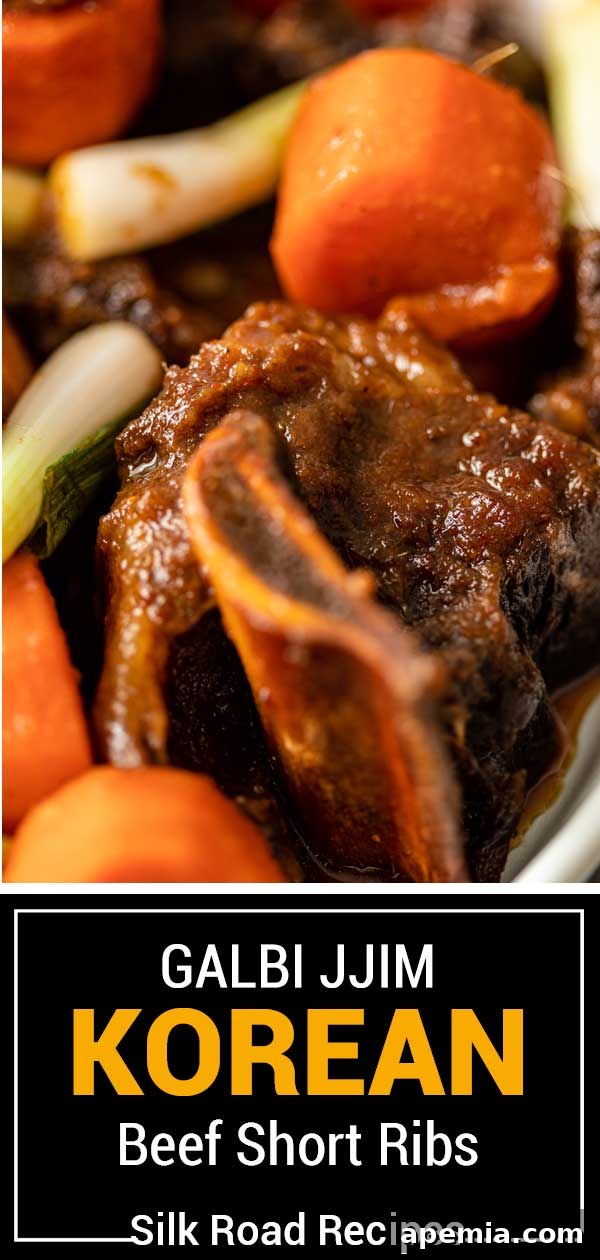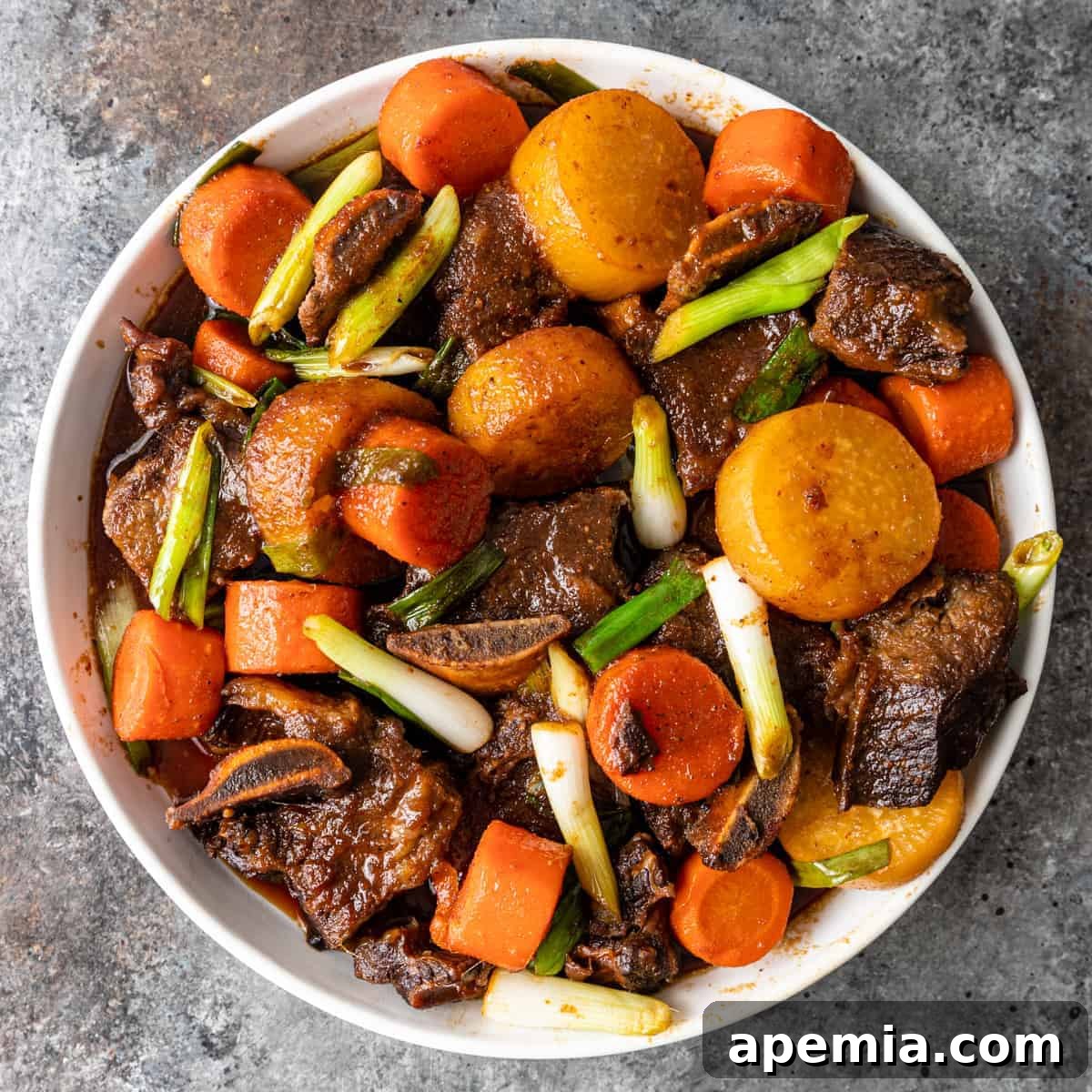
Welcome to the ultimate guide for crafting the most delectable Galbi Jjim, a beloved Korean braised short ribs dish that promises a symphony of sweet, savory, and aromatic flavors. This detailed recipe is specifically designed for the Instant Pot, ensuring a tender, fall-off-the-bone result in a fraction of the traditional cooking time. Prepare for a truly hearty Asian meal that will tantalize your taste buds and impress your family and friends.
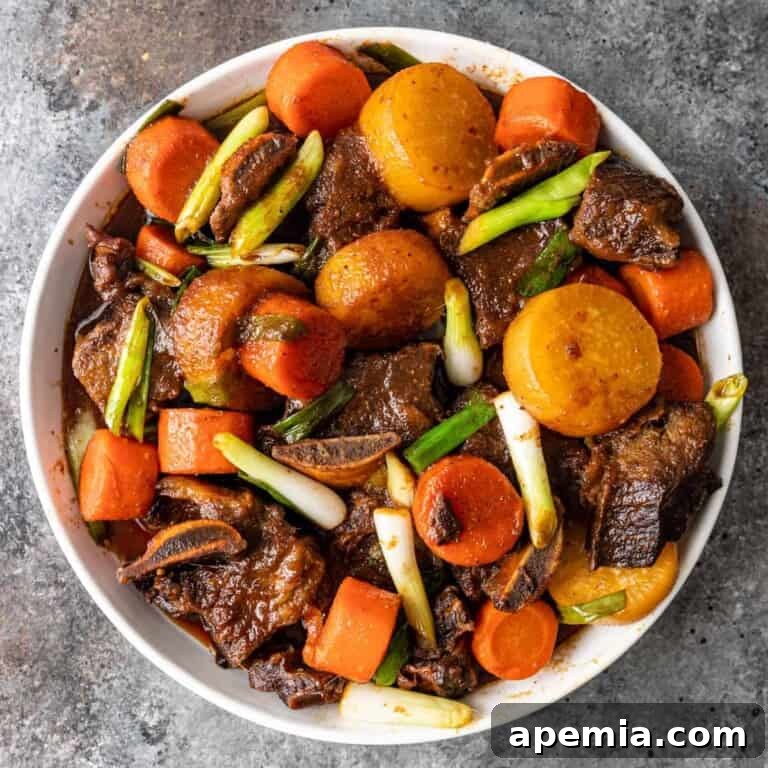
There’s nothing quite like a comforting plate of ribs to warm the soul. While summer often calls for the smoky delights of grilled ribs, as the weather cools, my kitchen shifts its focus to the rich, deep flavors of braised dishes. The Instant Pot has become an indispensable tool for achieving that slow-cooked perfection quickly, making it ideal for this exquisite Korean classic. This Instant Pot Galbi Jjim recipe is a testament to how modern cooking techniques can enhance traditional dishes, bringing authentic flavors to your table with unparalleled convenience.
Mastering Galbi Jjim: A Korean Culinary Gem
Galbi Jjim, also known as Korean braised short ribs, is a cornerstone of Korean celebratory meals, often gracing tables during holidays like Lunar New Year and Chuseok. It’s renowned for its incredibly tender beef short ribs, which are slowly cooked in a rich, flavorful sauce featuring a unique blend of sweet fruits, aromatic vegetables, and savory seasonings. The result is a dish that is not only deeply satisfying but also beautifully balanced, offering a complex flavor profile that appeals to all palates. While traditionally prepared over several hours, our Instant Pot method brings this culinary masterpiece within easy reach for any weeknight or special occasion.

Alternate names/spellings: Galbijjim, Galbi, Korean Braised Short Ribs, Kalbi
Pronunciation: gal·bee jim
Cuisine: Asian / Korean
Course: Main dish
Preparation: Braised (Galbi Jjim) or Grilled (Kalbi)
Difficulty: Easy 🥄
Description: Succulent beef short ribs, meticulously braised in a naturally sweet and savory liquid. This exquisite sauce is crafted from a harmonious blend of Asian pears, Daikon radish, carrots, and fresh green onions (scallions), creating an unforgettable depth of flavor.
Galbi Jjim vs. Kalbi: Unpacking the Differences
While often used interchangeably, “Galbi Jjim” and “Kalbi” refer to distinct Korean rib dishes, primarily differentiated by their preparation methods. Understanding this distinction is key to appreciating the unique culinary traditions each represents.
- Galbi Jjim (갈비찜): This is a braised dish, meaning the ribs are slowly cooked in a liquid, resulting in incredibly tender meat that easily pulls away from the bone. The cooking liquid itself becomes a rich, flavorful sauce, typically sweet and savory with notes of fruit and aromatics. Galbi Jjim is a stew-like dish, often served with vegetables cooked alongside the meat. It’s a comforting, hearty meal, perfect for colder weather or festive gatherings.
- Kalbi (갈비): On the other hand, Kalbi, often seen as “Korean BBQ Short Ribs,” refers to grilled ribs. These ribs are usually marinated in a similar sweet and savory sauce (often featuring soy sauce, garlic, sesame oil, and fruit puree) and then grilled over an open flame or on a hot pan. The grilling process gives Kalbi a distinct smoky char and slightly chewy texture. While often made with beef short ribs, kalbi can sometimes feature pork ribs, particularly in specific regional variations.
In essence, if you’re craving tender, melt-in-your-mouth ribs swimming in a luscious sauce, Galbi Jjim is your go-to. If you prefer a smoky, charred, and slightly firmer rib with a sticky marinade, Kalbi is the choice.
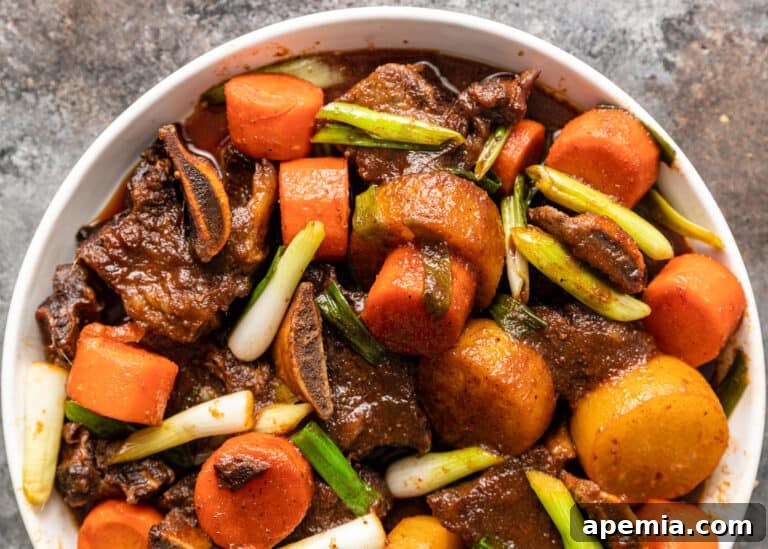
Essential Ingredients for an Authentic Galbi Jjim
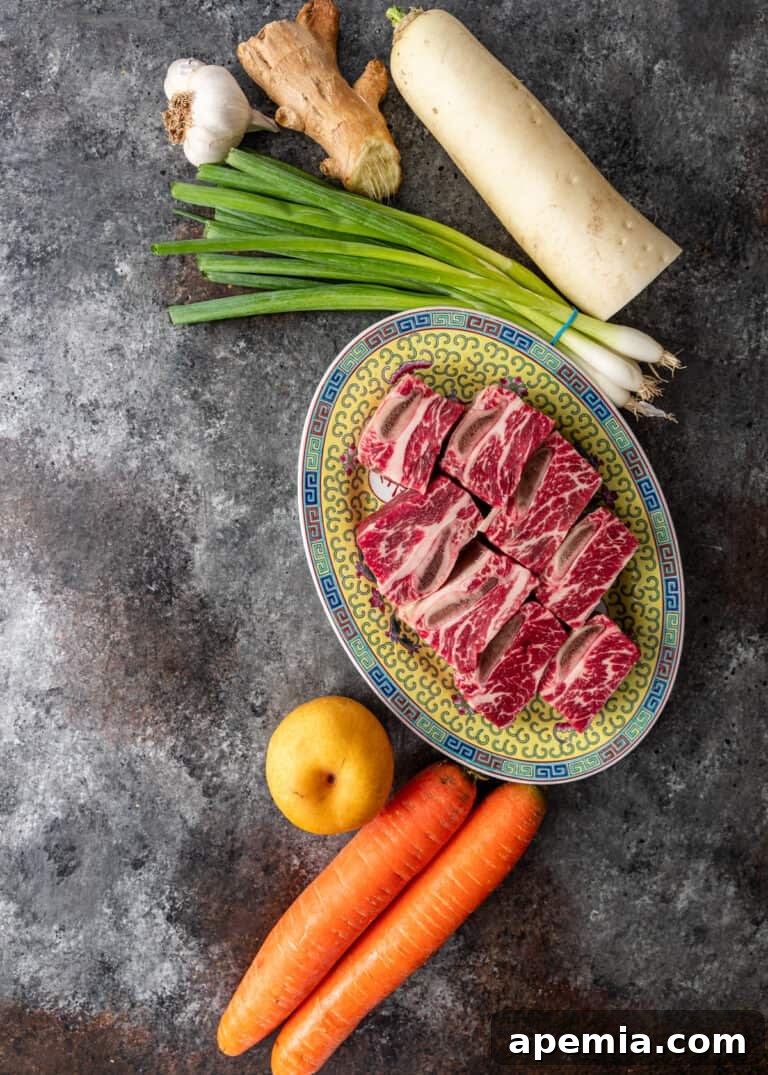
The magic of Galbi Jjim lies in the quality of its ingredients and the balanced interplay of flavors. Here’s a deeper dive into the key components and potential substitutions to ensure your dish is nothing short of spectacular:
- Beef Short Ribs: The star of the show! For the best Galbi Jjim, look for or ask your butcher for 1 ½” thick single beef short ribs. These are cut across the bone, allowing the meat to cook evenly and slide off the bone more easily after braising. Bone-in ribs provide a richer flavor to the braising liquid. If single-cut ribs are unavailable, flanken-cut (cut across the bones into thin strips) can work, but the cooking time might need slight adjustment, and the presentation will be different.
- Asian Pear: This sweet, juicy fruit is a secret weapon in many Korean marinades and braises. Native to Asia and now cultivated in places like California, Asian pears possess a firm, crisp flesh similar to an apple, but with the distinct, subtly floral sweetness of a pear. Beyond its flavor contribution, the enzymes in Asian pears help naturally tenderize the beef, ensuring that fall-off-the-bone texture. If fresh Asian pears are out of season (typically October and November in the U.S.), good substitutes include ripe Bosc pears or sweet, firm-flesh apples like Fuji or Gala. A tablespoon of grated apple or pear can often substitute for a quarter of a fruit.
- Sake: Also known as Japanese rice wine, sake is made from fermented rice and boasts a higher alcohol by volume (ABV) than most grape wines, typically ranging from 18-20% compared to 9-16%. In cooking, sake adds depth, sweetness, and helps to tenderize meat. If you need a substitute, cooking sherry, mirin (a sweeter Japanese rice wine with lower alcohol content), or a dry white wine will work well. For a non-alcoholic alternative, rice wine vinegar is a good option; despite its name, it contains no alcohol by volume and offers a similar tang and acidity, though you might need to adjust for sweetness.
- Daikon Radish: A large, mild white radish commonly used in East Asian cuisine, Daikon radish absorbs the braising liquid’s flavors beautifully and adds a subtle peppery note and tender texture. It’s a fantastic addition to the stew. If Daikon is hard to find, several root vegetables make excellent substitutes:
- White Turnips: Often considered the best substitute due to their similar texture and mild, slightly bitter flavor.
- Jicama: Offers a crisp texture when raw, but softens nicely when cooked, with a slightly sweet, nutty flavor.
- Red Radish: Use in moderation as it can be stronger in flavor.
- Parsnips: Sweeter than Daikon, but provides a good texture.
- Korean Radish (Mu): Very similar to Daikon, often smaller and rounder. An ideal substitute if available.
- Horseradish Root: Use sparingly as it has a very pungent, spicy flavor.
- White Carrot: Milder than orange carrots, can be a decent texture substitute.
- Water Chestnuts: Primarily for texture, with a very mild flavor.
- Other Aromatics and Seasonings: Don’t underestimate the power of fresh garlic, ginger paste (or fresh ginger), white onion, light soy sauce, apple juice, sugar, red pepper flakes, and black pepper. These ingredients combine to create the complex, irresistible braising liquid that defines Galbi Jjim.
Instant Pot Galbi Jjim: Speed and Flavor Unleashed
While traditional Galbi Jjim can take hours of simmering on the stovetop, the Instant Pot (or any other multi-cooker) transforms this labor of love into a surprisingly quick and effortless endeavor. Pressure cooking significantly reduces the time required to achieve perfectly tender ribs, making this rich and complex dish accessible even on busy weeknights. The Instant Pot’s sealed environment also helps to infuse the flavors more deeply into the meat and vegetables, resulting in a more intensely satisfying meal.
This particular recipe has been meticulously developed and tested for the Instant Pot. While preparing Galbi Jjim in a slow cooker or on the stovetop is certainly possible, those methods require considerably longer cooking times and may necessitate adjustments to liquid ratios. For the quickest and most consistent results, the Instant Pot is highly recommended.
Galbi Jjim Recipe Instructions: Your Path to Perfect Braised Ribs
Follow these steps to create an unforgettable Instant Pot Galbi Jjim:
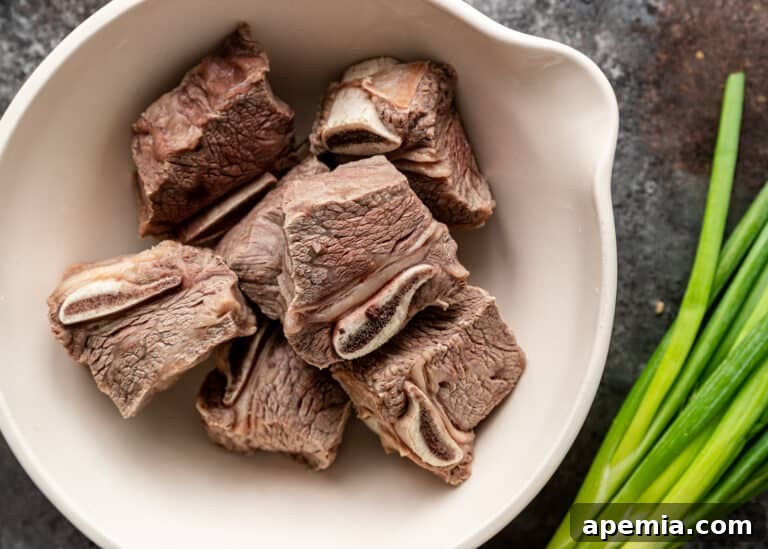
- Prepare the Ribs for Braising: Begin by thoroughly soaking your beef short ribs in cold water for at least 15 minutes. This crucial step helps to draw out any excess blood and removes any small bone chips or residue from the butchering process, ensuring a cleaner flavor. After soaking, rinse the ribs well and transfer them to a large stock pot of boiling water. Bring the water back to a boil and flash boil the ribs for 5 minutes. This optional but highly recommended parboiling step further cleanses the ribs and helps to eliminate any gamey taste they might sometimes have. Drain the ribs and set them aside.
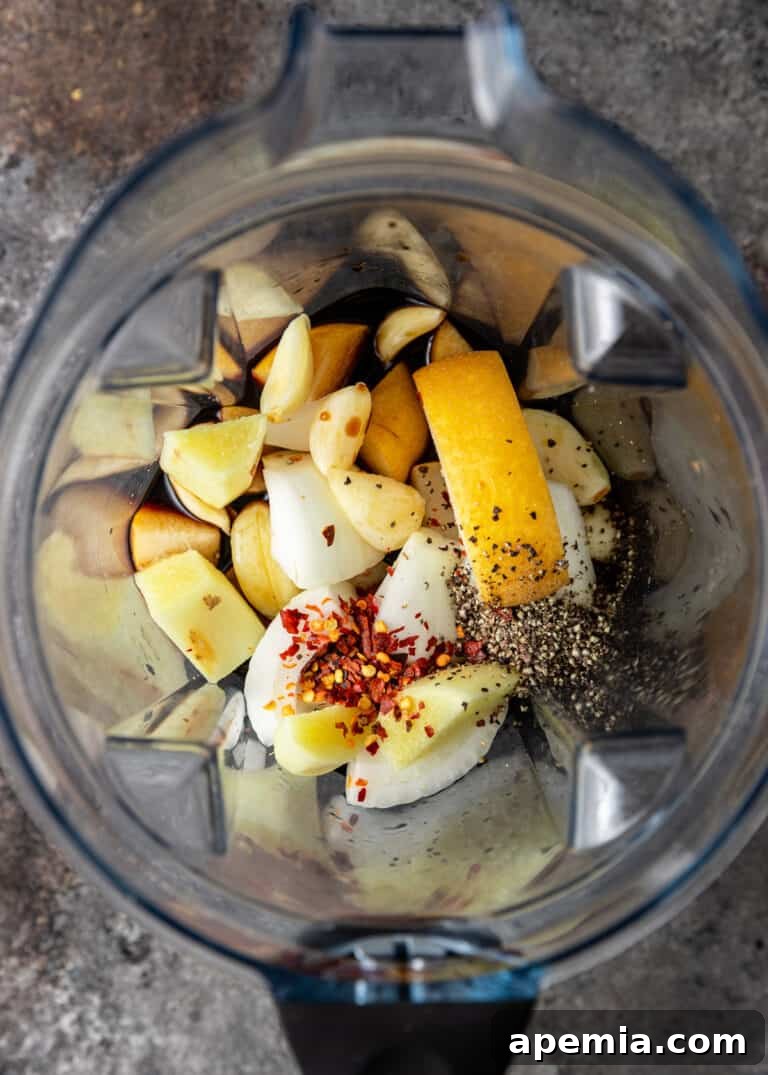
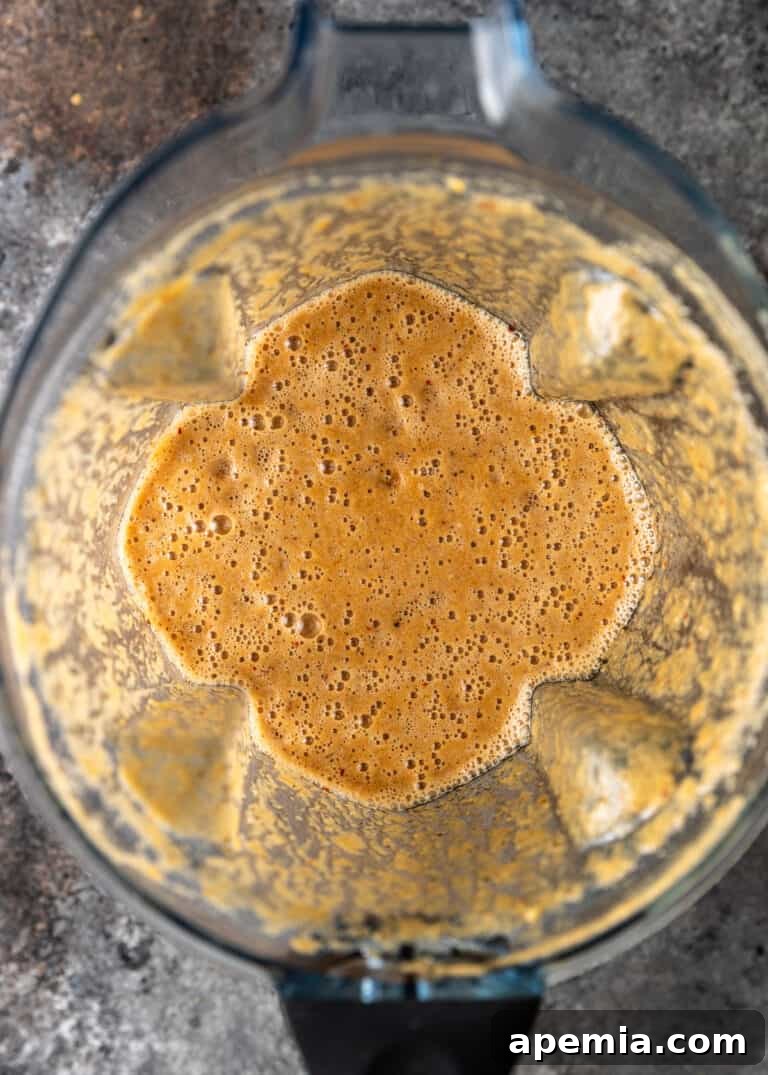
- Craft the Aromatic Braising Liquid: The soul of Galbi Jjim lies in its rich sauce. In a high-speed blender, combine the quartered white onion, Asian pear (or Fuji apple), garlic cloves, ginger paste (or fresh ginger piece), light soy sauce, mirin (or sake), apple juice, sugar, red pepper flakes, and black pepper. Process until the mixture is completely smooth and uniform. If you don’t have a high-speed blender, a regular blender, immersion blender, or food processor will also achieve the desired consistency, though it might take a bit longer.
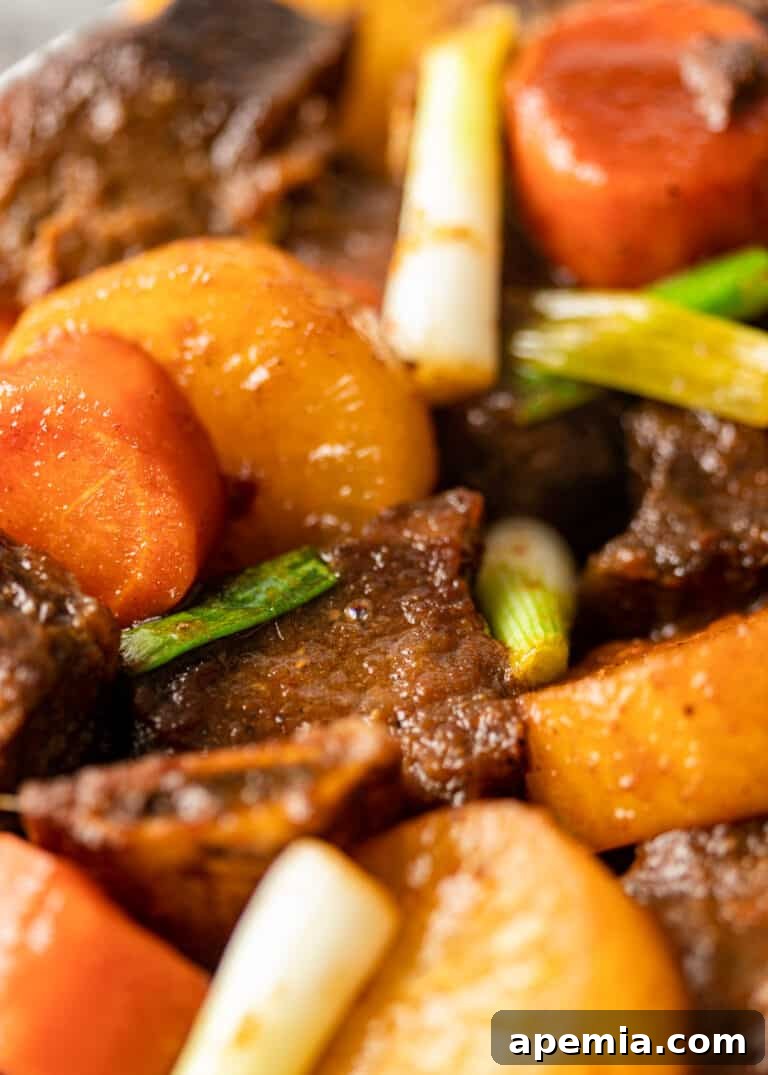
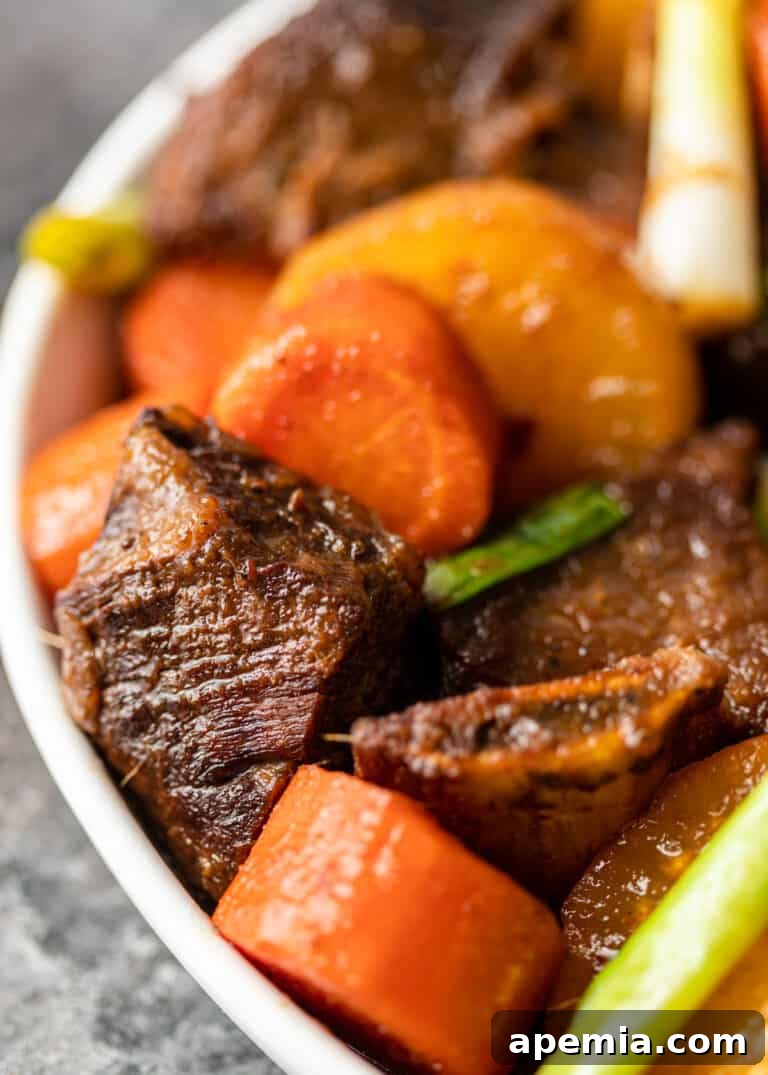
- Pressure Cook to Perfection: Arrange the prepared beef short ribs in the bottom of your Instant Pot. Pour the smooth braising liquid evenly over the ribs. When preparing braised short ribs, it’s important to note that the liquid will only cover the ribs about halfway. This is exactly what you want! If the ribs were fully submerged, they would boil rather than braise, potentially leading to a gummy or chewy texture instead of the desired tender, succulent result. Close the lid of the Instant Pot, set the vent to sealing, and cook on the “Pressure Cook” (or “Manual”) setting for 45 minutes on High. Once cooking is complete, allow for a Natural Release of pressure for 10-15 minutes, then manually release any remaining pressure.
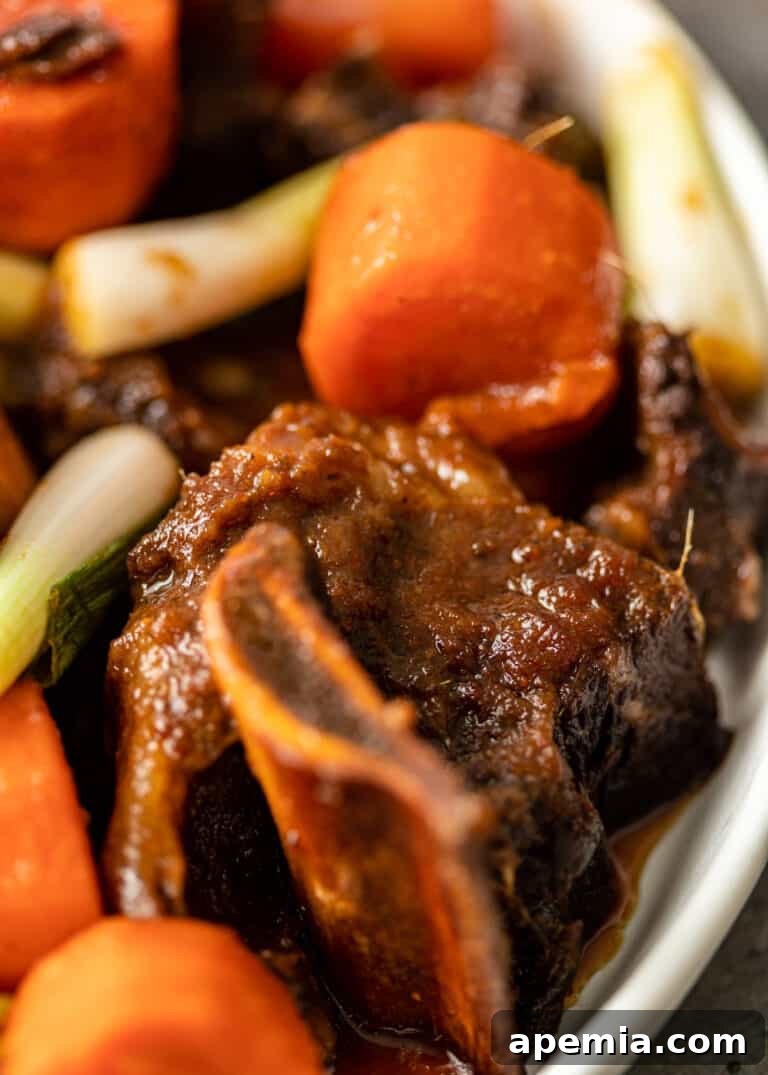
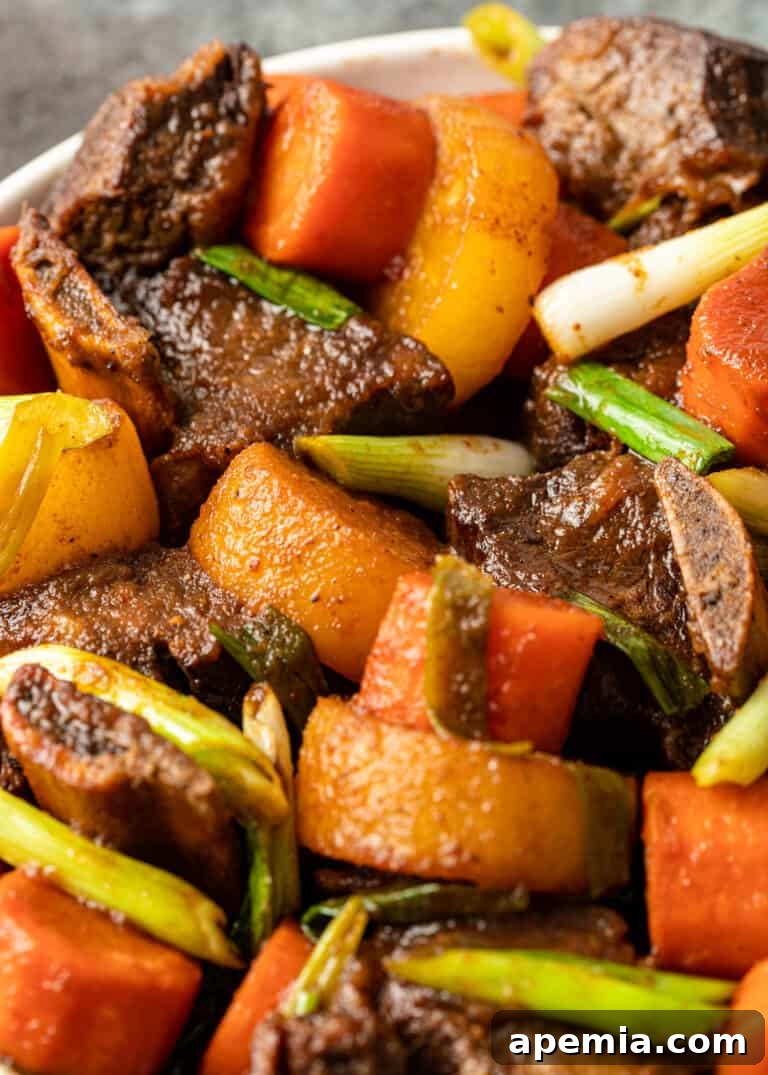
- Finish with Vegetables and Thicken the Sauce: Carefully remove the lid. Using tongs, transfer the perfectly cooked ribs to a separate dish, cover them loosely with foil to keep warm, and set aside. Add the sliced carrots and Daikon radish chunks to the pot with the braising liquid. Stir gently, then press the “Sauté” setting and cook for about 15 minutes, allowing the vegetables to tenderize and the sauce to reduce slightly. In the last 5 minutes of sautéing, stir in the trimmed green onions (scallions). At this point, the vegetables should be tender-crisp, and the sauce will have thickened to a luscious consistency.
- Serve and Enjoy: Serve the tender Galbi Jjim ribs with the flavorful vegetables and plenty of the rich braising sauce poured over. This dish is exceptionally delicious when served alongside fluffy steamed rice, allowing it to soak up all the wonderful flavors.
Serving Suggestions & Perfect Pairings
Galbi Jjim is a complete meal in itself, but it truly shines when accompanied by complementary sides. As with most hearty braised beef dishes, it pairs wonderfully with staples that can absorb its rich sauce. Here are some recommendations:
- Rice: Steamed white rice is the classic choice, providing a neutral canvas for the vibrant flavors of the ribs. You could also explore Baked Basmati rice pilaf or even Lebanese rice pilaf for a slightly different aromatic profile.
- Potatoes: Roasted or mashed potatoes offer a comforting alternative or addition to rice, creating a heartier meal.
- Kimchi and Banchan: No Korean meal is complete without an array of “banchan” (small side dishes). Fresh or fermented kimchi, seasoned spinach, or marinated bean sprouts would provide a refreshing contrast to the richness of the Galbi Jjim.
Sauce Versatility: The braising liquid is liquid gold! You can simply spoon it generously over the meat and sides. For a thicker gravy, you have a couple of options:
- Reduce: After removing the ribs and adding the vegetables, continue to simmer the sauce on the “Sauté” setting (or stovetop) until it reduces to your desired thickness.
- Cornstarch Slurry: For a quicker thickening method, create a slurry by whisking together 1-2 tablespoons of cornstarch with an equal amount of cold water. Stir this into the simmering sauce gradually until it reaches your preferred consistency.
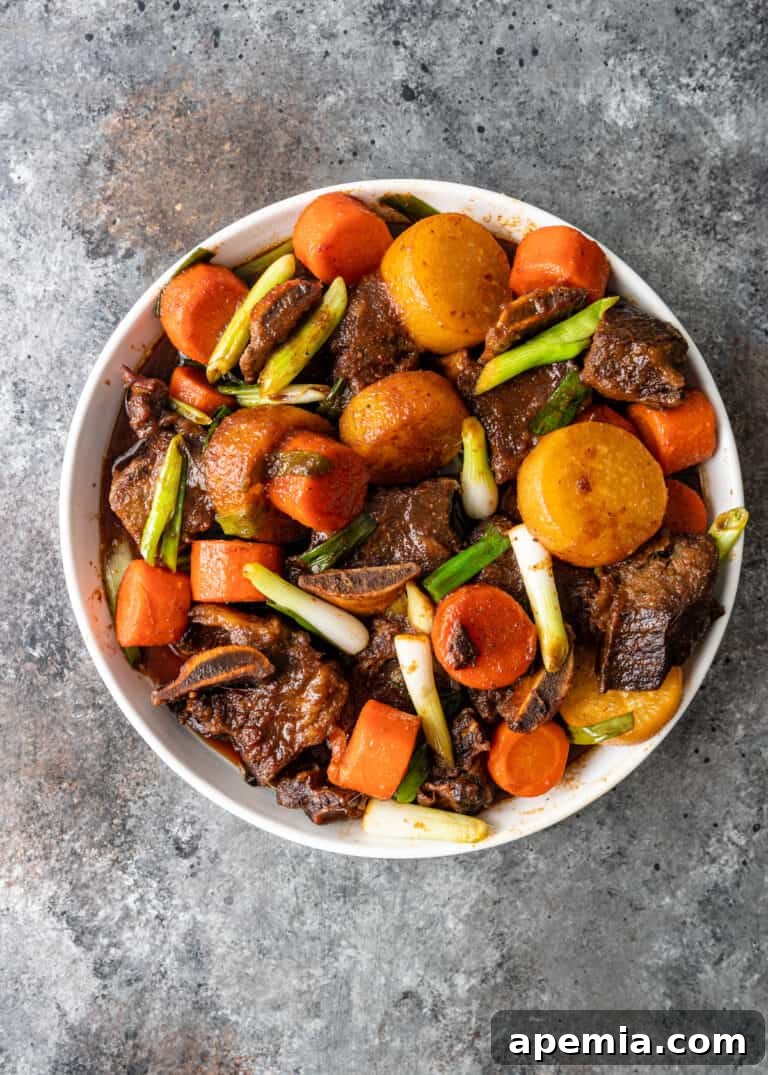
Galbi Jjim (Korean Braised Short Ribs)
This Galbi Jjim recipe makes a Korean braised short ribs dish with sweet fruit flavors. Make Instant Pot Galbi Jjim for a hearty Asian meal.
Servings: 8
Prep Time: 30 mins
Cook Time: 1 hr
Total Time: 1 hr 30 mins
Video Guide
Galbi Jjim is a Korean braised short ribs dish with flavors of apple and ginger. Watch this video to see the process of making this quick, hearty Instant Pot meal.
Ingredients
- 4 lbs beef short ribs (See Note 1)
- 1/2 white onion, quartered
- 1/2 Asian pear or Fuji apple, quartered
- 10 garlic cloves
- 1 tbsp ginger paste or 1-inch piece fresh ginger
- 1/3 cup light soy sauce
- 1/3 cup mirin or sake
- 1/3 cup apple juice
- 1/3 cup sugar
- 1 tsp red pepper flakes
- 1 tsp black pepper
- 2 carrots, peeled and cut into 1-inch chunks
- 1/2 daikon radish (approx. 8-inches), peeled and cut into 1-inch chunks
- 8 green onions, trimmed and cut into thirds
Instructions
- Soak ribs in cold water for 15 minutes (See Note 2). Rinse thoroughly and add to a stock pot of boiling water. Return water to boil and flash boil for 5 minutes. Drain and set ribs aside.
- In a blender, combine the onion, pear, garlic, ginger, soy sauce, mirin, apple juice, sugar, red pepper flakes, and black pepper. Puree until smooth.
- Transfer the parboiled short ribs to the Instant Pot. Pour the prepared sauce over them. Close the lid and cook on the Pressure Setting for 45 minutes on High. Allow for Natural Release of pressure.
- Once pressure is released, remove the lid. Using tongs, carefully remove the ribs, cover them with foil, and set aside. Transfer the sliced carrot and radish to the pot with the sauce, stir, and press the “Sauté” setting for 15 minutes. During the last 5 minutes, add the green onions and stir to combine. The vegetables will become firm-tender, and the sauce will thicken.
- Serve the tender ribs with the cooked vegetables and plenty of the rich sauce poured over. For a complete meal, I highly recommend serving this alongside some freshly steamed rice.
Notes
- For best results, ask your market’s butcher for 1 ½” thick single beef short ribs.
- Soaking the ribs helps to draw out any excess blood and cleans away bone residue. The optional 5-minute boil can further help to rid the short ribs of any gamey taste they might occasionally have.
Nutrition Information (Estimate)
Calories: 374kcal | Carbohydrates: 21g | Protein: 33g | Fat: 17g | Saturated Fat: 7g | Cholesterol: 98mg | Sodium: 746mg | Potassium: 797mg | Fiber: 2g | Sugar: 15g | Vitamin A: 2750IU | Vitamin C: 10mg | Calcium: 46mg | Iron: 4mg
The information shown is an estimate provided by an online nutrition calculator. It should not be considered a substitute for a professional nutritionist’s advice.
Course: Main Dishes
Cuisine: Asian, Korean
Author: Kevin
Have You Made This Recipe? Let Me Know on Instagram
Tag @keviniscooking or use the hashtag #keviniscooking!