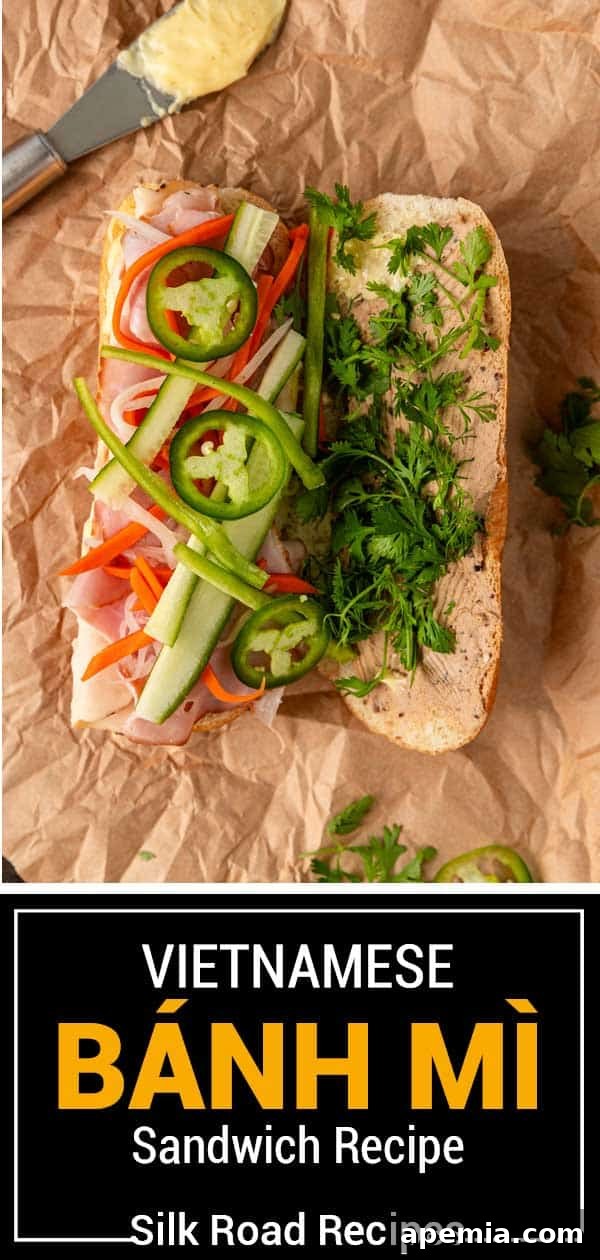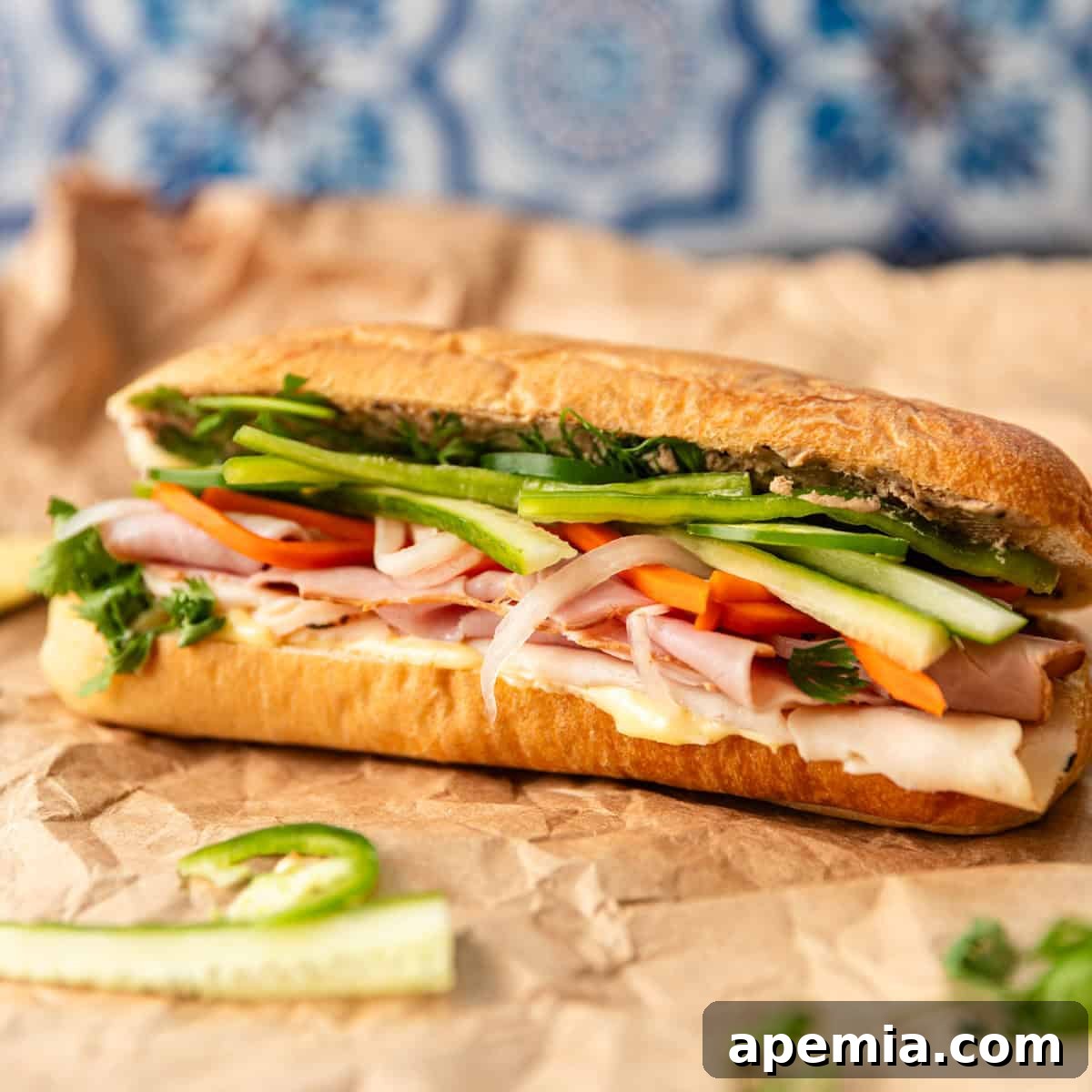
Experience the world’s most interesting and irresistible sandwich with this comprehensive guide to crafting the perfect Banh Mi at home. This iconic Vietnamese sandwich masterfully blends savory meats, crisp pickled vegetables, fresh herbs, creamy spreads, and a hint of spice, all tucked into a perfectly crusty baguette. While staying true to the classic Vietnamese flavors, we’ll explore practical substitutions to make this culinary masterpiece accessible for any home cook. Prepare to embark on a delightful flavor journey that balances rich, earthy notes with vibrant, refreshing textures in every single bite!
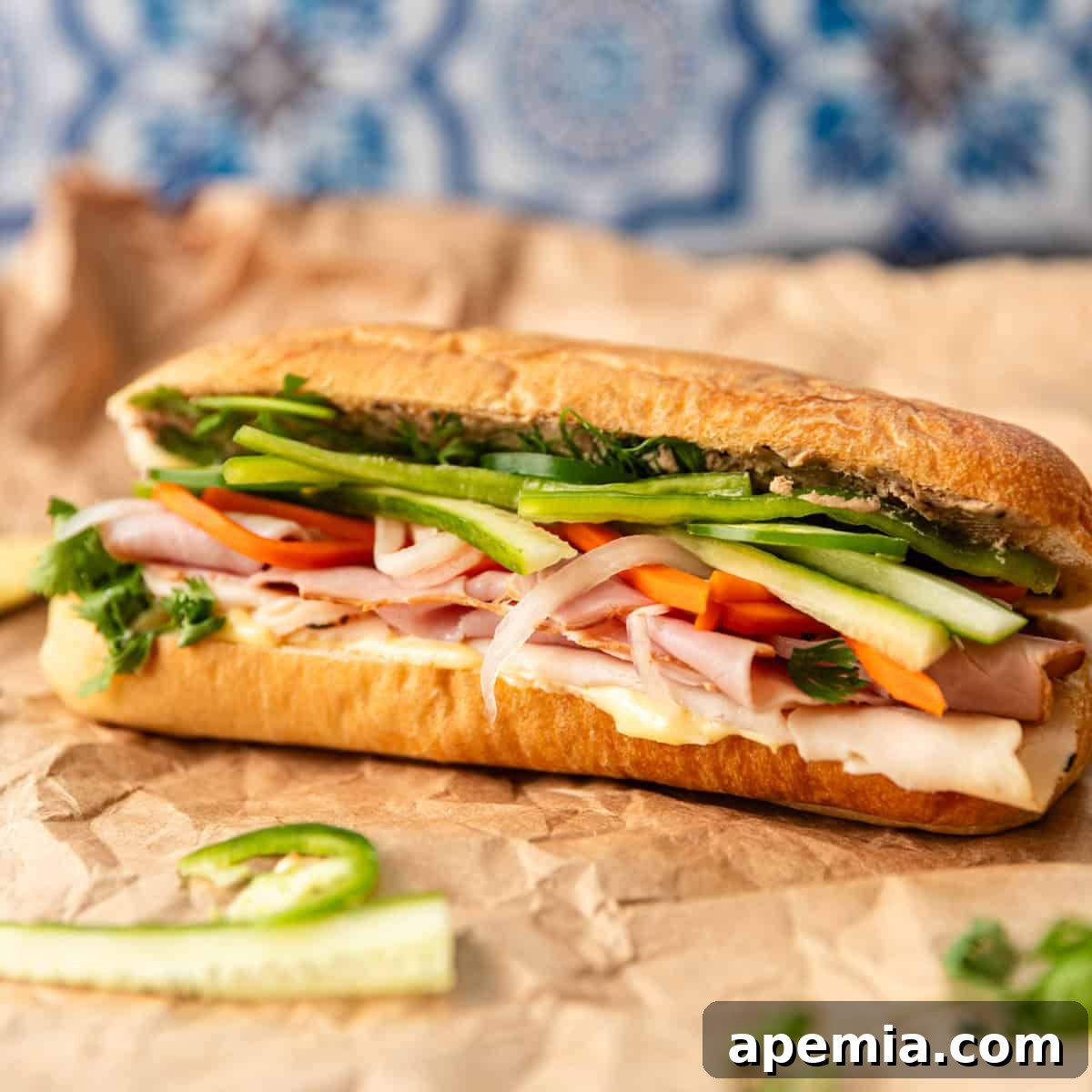
The Ultimate Banh Mi Sandwich Recipe: A Taste of Vietnam at Home
The Banh Mi is more than just a sandwich; it’s a testament to culinary fusion, a delicious legacy of Vietnam’s rich history and French colonial influence. Originating from the bustling streets of Saigon, this beloved dish has captivated palates worldwide, earning its reputation as one of the most exciting and flavorful sandwiches you’ll ever encounter. Each component plays a crucial role, creating a harmonious symphony of textures and tastes that is both complex and incredibly satisfying. From the crisp exterior of the baguette to the tender, savory fillings, the tangy pickles, and the refreshing herbs, every element contributes to an unforgettable eating experience.
Making an authentic Banh Mi at home might seem daunting, given its unique array of ingredients. However, with a few key components and a simple approach, you can recreate this Vietnamese classic in your own kitchen. This guide will walk you through the essential elements, offer insights into traditional choices, and provide easy-to-find substitutions without compromising on flavor. Get ready to master the art of Banh Mi and bring the vibrant street food culture of Vietnam directly to your dining table.
Unveiling the Key Ingredients for an Authentic Banh Mi
To truly understand and appreciate the Banh Mi, it’s vital to dive into its distinct ingredients. While the essence of the sandwich lies in its balance, certain elements are non-negotiable for achieving that authentic Vietnamese taste. We’ll explore some of these foundational ingredients and offer tips for sourcing or creating them.
Maggi Seasoning: The Umami Secret
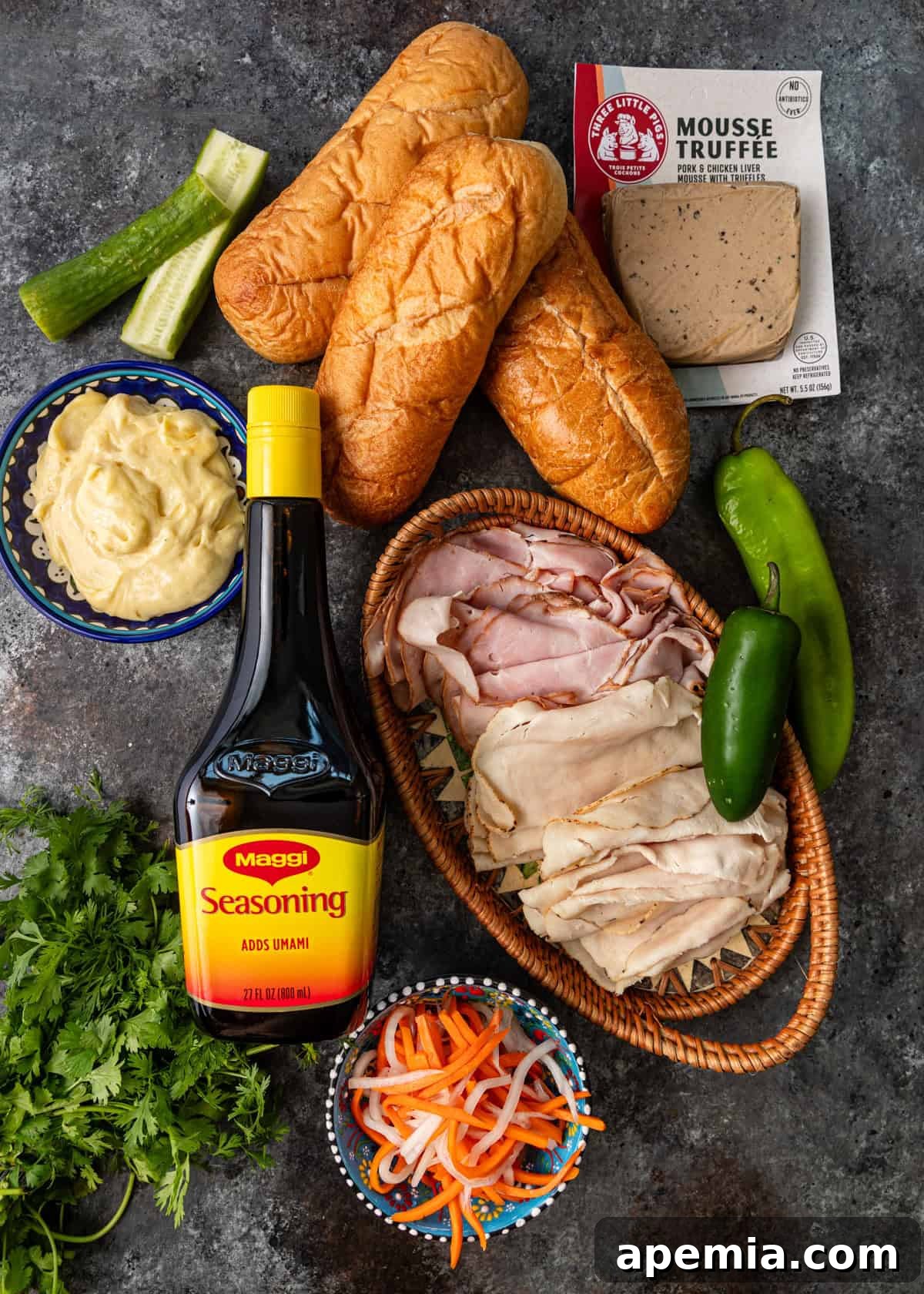
One of the less common, yet incredibly impactful, ingredients in an authentic Banh Mi is Maggi seasoning. This liquid seasoning, which I first discovered while cooking in Cairo, holds a special place in many European and Asian kitchens. It’s a rich, savory condiment derived from vegetable protein, offering a deep umami flavor that beautifully complements the meats in a Banh Mi. Imagine a cross between a robust soy sauce and a complex Worcestershire sauce, but with its own distinct profile. Maggi adds a layer of depth and savoriness that truly elevates the sandwich. You can often find it in the international aisle of larger supermarkets or, more reliably, in any Asian grocery store. If Maggi is unavailable, a high-quality dark soy sauce can serve as a decent substitute, though it won’t replicate the exact unique taste.
Vietnamese Pickled Carrots and Daikon: The Tangy Crunch
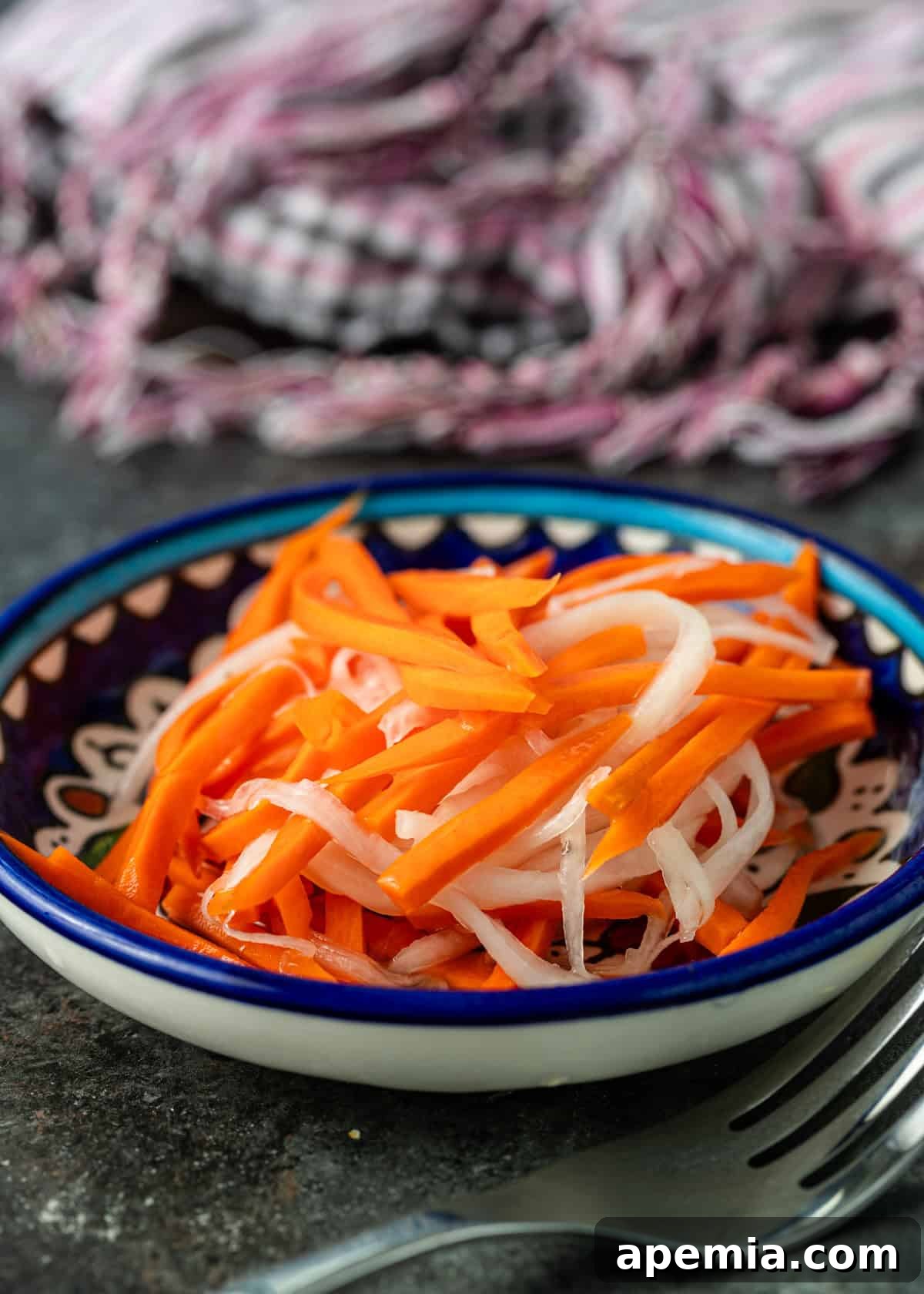
No Banh Mi is complete without its signature pickled carrots and daikon (Đồ Chua). These sweet and tangy pickles are a crucial component, providing a refreshing crunch and a vibrant acidity that cuts through the richness of the meats and spreads. They are sweeter than typical Western pickles and surprisingly easy to make at home in about 30 minutes. The julienned carrots and daikon radish soak up a vinegar-sugar brine, transforming into crisp, flavorful strips that are essential for the sandwich’s iconic balance. Their bright, piquant notes are indispensable for the overall flavor profile of the Banh Mi, adding an explosion of freshness with every bite.
Vietnamese Mayo (Bơ Trứng): The Creamy Foundation
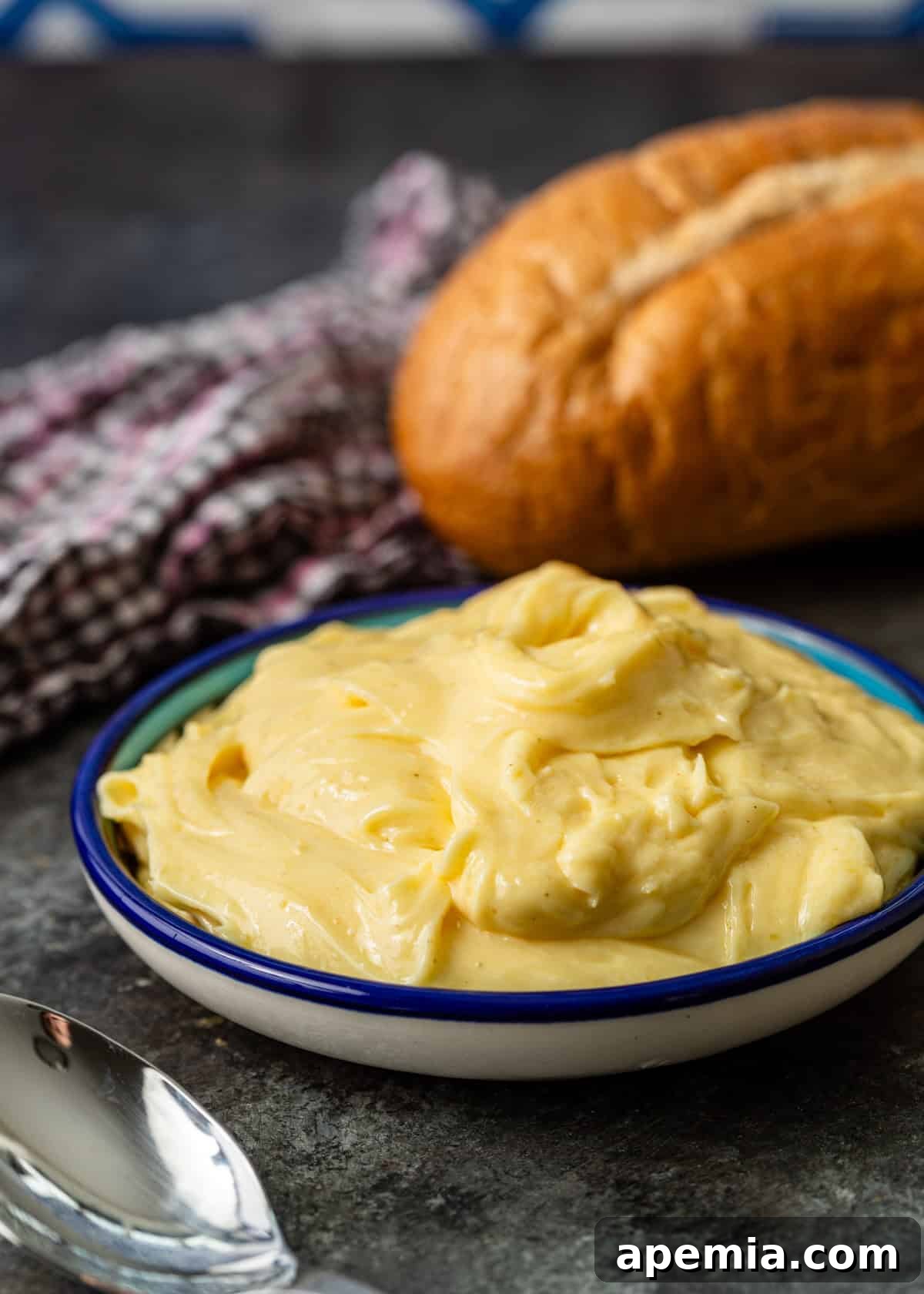
Often recognized by its distinctive yellow hue, Vietnamese mayonnaise is another cornerstone of a traditional Banh Mi. This isn’t your average store-bought mayo; it’s typically richer, creamier, and has a unique golden color, sometimes incorporating butter for an even more decadent texture. It provides a luxurious smoothness that perfectly coats the palate and binds the diverse flavors of the sandwich together. Spreading this rich mayo on one half of the baguette creates a creamy base that complements the other fillings beautifully. Fortunately, this essential spread is quite simple to prepare from scratch, ensuring an authentic taste for your homemade Banh Mi.
Table of Contents
- The Perfect Bread: A Crucial Element
- Choosing Your Paté: The Rich Spread
- Selecting the Meats: Traditional and Accessible Options
- Ingredient Notes and Substitutions (Expanded)
- How to Make a Banh Mi Sandwich
- Recommended Tools
- Storing Your Banh Mi Ingredients for Freshness
- Frequently Asked Questions About Banh Mi
- Vietnamese Bánh Mì Sandwich Recipe
After savoring your delicious Banh Mi, if you’re still craving more Vietnamese flavors, don’t miss out on my Vietnamese spring rolls! They’re light, fresh, and perfectly complemented by a dip in homemade Nuoc Cham fish sauce. They make an excellent appetizer or a refreshing light meal to share with friends.
Tip From Kevin
Choosing Your Paté: The Rich Spread
Paté is another critical ingredient that highlights the French influence on Banh Mi. Its creamy, savory depth provides a counterpoint to the fresh vegetables and spicy chiles. There’s a wide array of patés available, but for this recipe, my personal favorite is Three Little Pigs™ Trois Petis Cochons Pork & Chicken Liver Mousse. (Just to be clear, I’m not sponsored by them—it’s just genuinely excellent!) I typically find it at my local Fred Myers. When selecting a paté, the most important characteristic is that it should be smooth and easily spreadable. Many brands offer a variety of liver mousses, including pork and duck liver, which also work beautifully. Don’t be afraid to experiment to find your preferred flavor and texture; the goal is a rich, unctuous layer that enhances the entire sandwich.
Tip From Kevin
The Perfect Bread: A Crucial Element
The bread is arguably the soul of a Banh Mi. There’s truly nothing quite like a freshly baked French roll, especially those I savored in Saigon. The ideal Banh Mi baguette is light, airy, and incredibly crispy on the outside, yet wonderfully soft and fluffy on the inside. This delicate balance prevents the sandwich from feeling too heavy or dense, allowing the fillings to shine.
Upon returning home, I conducted several taste tests to find the best replication for that perfect Banh Mi experience. My top choice is always a classic French baguette. Look for one with a pronounced crispy crust; if it’s not quite crisp enough, a few minutes in a hot oven can work wonders. Crucially, try to find a baguette that isn’t too dense on the inside. Many commercial baguettes can be heavy, but an authentic Banh Mi calls for a light, almost ethereal crumb. Unfortunately, denser options like most hoagie rolls simply won’t achieve the desired texture.
Surprisingly, I discovered an excellent second choice right here in Portland: Mexican bolillo rolls from my local market’s bakery. These rolls often boast that perfect crusty exterior and a delightfully fluffy interior, making them an unexpected but superb alternative when a truly light French baguette isn’t available. Don’t underestimate their potential for your homemade Banh Mi!
Tip From Kevin
Selecting the Meats: Traditional and Accessible Options
The variety of meats used in a classic Vietnamese Banh Mi sandwich is vast and often regional, reflecting the ingenuity and culinary traditions of Vietnam. Traditionally, Banh Mi features a combination of various cold cuts, each contributing a unique flavor and texture. Some of the most common include:
- Vietnamese Brawn (Thịt Nguội): This is a distinctive pink ham, often studded with small bits of gelatin and sometimes even pig’s ears, giving it a unique texture and savory depth. It’s a hallmark of many traditional Banh Mi.
- Pork Loaf (Chả Lụa): Similar to a finely textured chicken loaf found in Western delis, Chả Lụa is a steamed pork sausage that is firm yet smooth, offering a delicate flavor that balances the stronger components.
- Head Cheese: Despite its name, head cheese is not a dairy product but a terrine made from the meat of a calf or pig’s head, typically set in aspic. It’s molded into rolls and then thinly sliced, providing a rich, savory, and often gelatinous texture.
- Roast Pork (Thịt Heo Quay): Crispy-skinned roast pork, often marinated with five-spice powder, is another incredibly popular and flavorful filling, adding a wonderful crackling texture and aromatic notes.
For this recipe, aiming for both authenticity and accessibility, I’ve chosen a combination of smooth paté with thinly sliced roast pork and chicken. This pairing offers a satisfying richness and familiar flavors that are easier to source for the home cook. However, I strongly encourage you to experiment with different traditional Vietnamese meats if you can find them. Visiting a Vietnamese deli or market can open up a world of possibilities, allowing you to discover your personal favorite combinations for your homemade Banh Mi.

Ingredient Notes and Substitutions (Expanded)
(Be sure to check the recipe card for a full list of ingredients and quantities)
- Bread Rolls: The cornerstone of Banh Mi is a light, crusty baguette. As discussed, a French baguette or Mexican bolillo roll works best. Toasting briefly can revitalize its crust and warmth. Avoid dense rolls which detract from the sandwich’s delicate balance.
- Meat: This recipe uses a delightful combination of roast pork and roast chicken, thinly sliced for an easier at-home preparation. For a more traditional approach, seek out Vietnamese cold cuts like Thịt Nguội (pink ham), Chả Lụa (pork loaf), or even head cheese from an Asian deli.
- Pork or Chicken Paté: Any smooth, spreadable liver paté will work wonderfully. My top recommendation is Three Little Pigs™ Trois Petis Cochons Pork & Chicken Liver Mousse, widely available. The key is its creamy texture which contrasts beautifully with crunchy elements.
- Vietnamese Mayo (Bơ Trứng): Essential for its rich, creamy, and distinct golden flavor. While you can make it at home using my easy recipe, a good quality regular mayonnaise can be used in a pinch, though the flavor profile will differ slightly.
- Maggi Seasoning: This unique liquid seasoning provides a depth of umami unlike any other. If you can’t find Maggi, dark soy sauce is the best alternative, though it won’t fully replicate Maggi’s distinct flavor. Look for Maggi in Asian markets or international aisles.
- Cucumbers: For the best texture and fewest seeds, opt for Persian, Japanese, or English cucumbers. Their mild flavor and crispness are perfect for adding a refreshing element without overpowering other ingredients. Slice them thinly lengthwise for optimal layering.
- Chiles: I’ve opted for both jalapeños and milder Anaheim chiles to offer a balanced heat. Feel free to adjust the spiciness to your preference by adding more jalapeños or substituting with hotter peppers like serranos if you desire a more intense kick. Seed the chiles for less heat.
- Vietnamese Pickled Carrots and Daikon: These sweet and tangy pickles are indispensable. They provide the signature acidity and crunch that defines the Banh Mi. Making them at home is surprisingly quick and rewarding, ensuring optimal freshness and flavor.
- Fresh Cilantro: This aromatic herb adds a burst of freshness. For those with the gene that makes cilantro taste like soap, excellent substitutes include fresh chives, dill, or Thai basil, all of which offer their own unique aromatic qualities.
How to Make a Banh Mi Sandwich
Crafting a Banh Mi is an art of layering, where each ingredient contributes to the ultimate symphony of flavors and textures. Follow these simple steps for assembly:
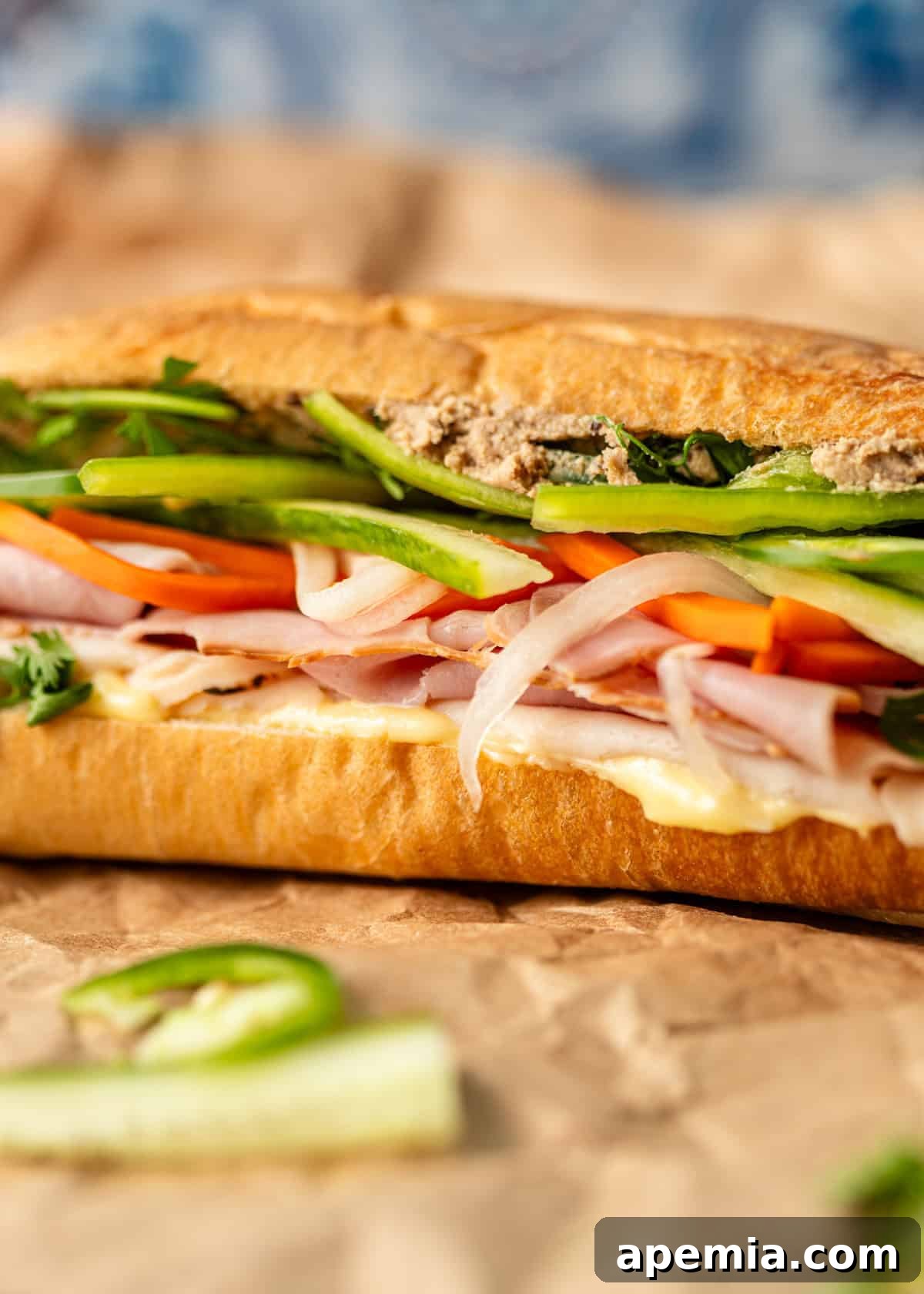
- Prep the Bread: Begin by slicing each long bread roll horizontally, being careful not to cut all the way through, creating a pocket. If your bread isn’t as crusty as desired, toast it in a preheated oven for a few minutes until the exterior achieves that perfect crunch.
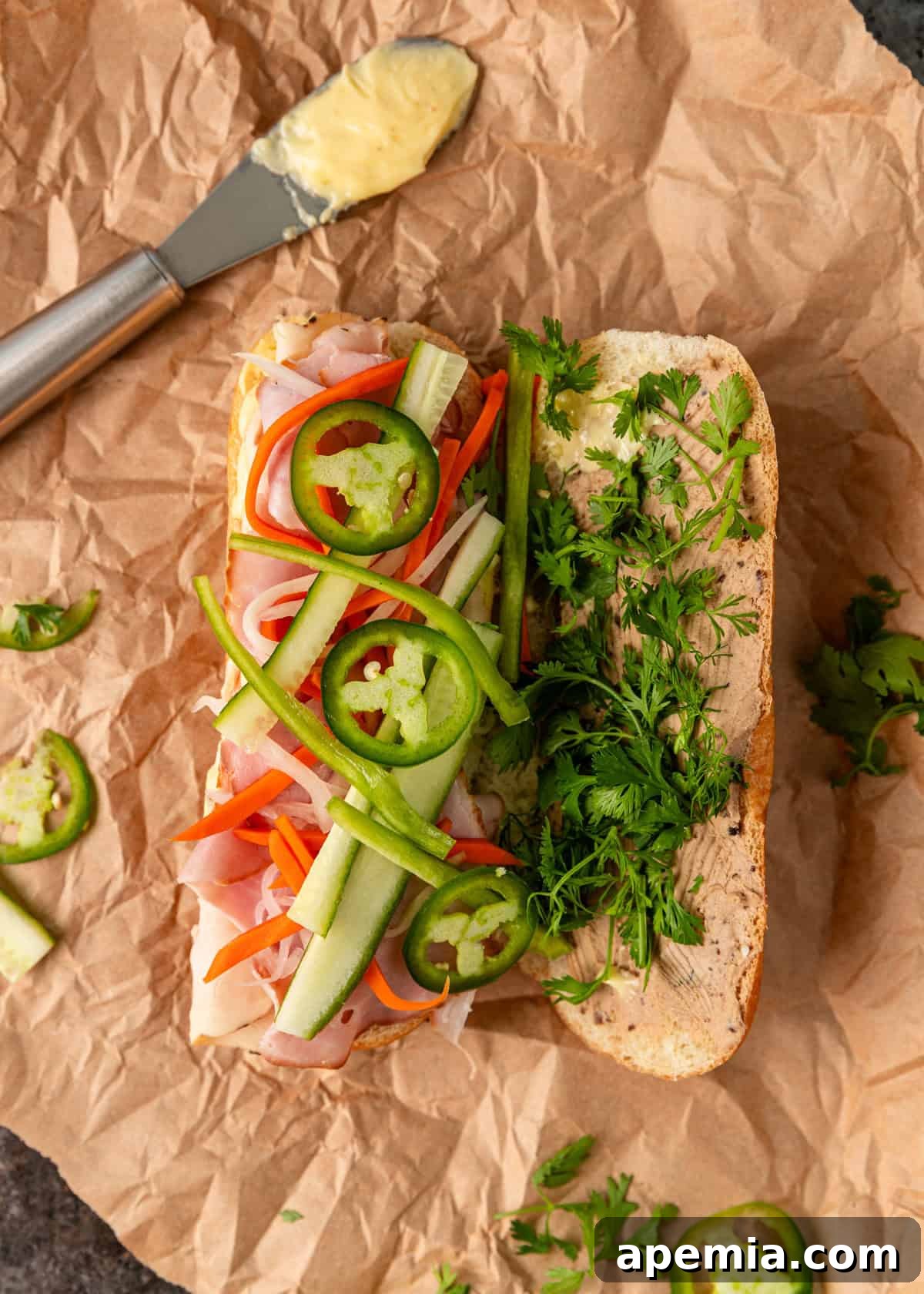
- Slather the Spreads: Open each roll. Generously spread the creamy paté on one side of the bread and an equal amount of the golden Vietnamese mayo on the other side. These two spreads form the rich base of your sandwich.
- Add the Protein: On the side slathered with mayonnaise, layer approximately 4 slices of your roast pork and 4 slices of roast chicken. Distribute the meat evenly to ensure every bite is flavorful.
- Season with Maggi: Evenly sprinkle about 1 teaspoon of Maggi seasoning over the layered meats on each sandwich. This adds a crucial layer of umami depth.
- Top With Vegetables & Herbs: Next, distribute the Vietnamese pickled carrots and daikon evenly across both halves of the sandwich. Lay several long, thin cucumber slices, green Anaheim chile pieces, and bright jalapeño rings over the fillings. Finally, sprinkle a generous amount of fresh cilantro sprigs on the paté-covered half.
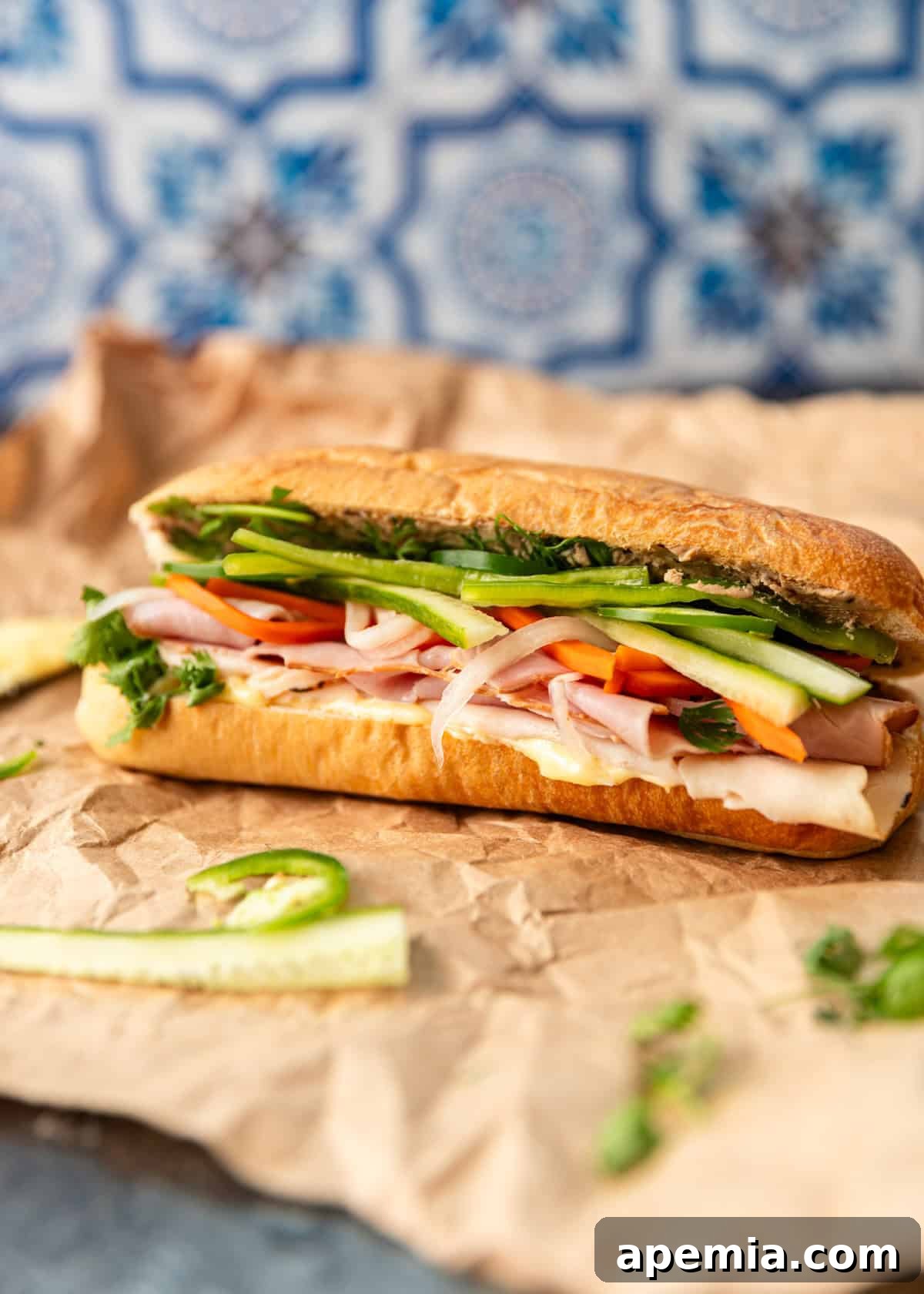
- Serve & Enjoy: Gently press the baguette halves back together, compressing the fillings slightly. Your homemade Banh Mi sandwich is now ready! Serve it immediately to best enjoy the contrast of warm, crispy bread and fresh, cool fillings.
Recommended Tools
Having the right tools can make your Banh Mi preparation even smoother:
- Sharp Chef’s Knife: Essential for finely slicing cucumbers, chiles, and any other fresh vegetables. A good sharp knife makes prep work quick and safe.
- Serrated Bread Knife: Perfect for cleanly slicing the baguette lengthwise without crushing its delicate structure, ensuring that coveted crispy crust remains intact.
Storing Your Banh Mi Ingredients for Freshness
While a fully assembled Banh Mi sandwich can technically be kept in the fridge for up to 4 days, its vibrant freshness and textural integrity will quickly diminish. The fresh vegetables, creamy paté, and sauces tend to make the crispy baguette soggy and limp over time. For the absolute best experience, Banh Mi should be enjoyed immediately after assembly.
To ensure you always have a fresh and delicious Banh Mi, I highly recommend storing the individual components separately. Keep your prepped meats, pickled vegetables, sliced cucumbers, chiles, and fresh herbs in airtight containers in the refrigerator. The bread can be stored at room temperature or even frozen and reheated. This way, you can easily assemble a fresh Banh Mi whenever a craving strikes, preserving the delightful contrast of textures and flavors that makes this sandwich so special.
Share this recipe on Pinterest!
Love this recipe? Share it with the world on Pinterest.
Frequently Asked Questions About Banh Mi
Traditionally, Banh Mi often features a combination of two main types of pork: Thịt Nguội (“pink ham”) and Chả Lụa (Vietnamese pork loaf). Some regional variations also include head cheese or crispy roast pork (Thịt Heo Quay). For a more accessible homemade version, thinly sliced roast pork and chicken are excellent and widely available choices, as used in this recipe. The key is often a mix of textures and flavors rather than a single meat.
The best bread for a Banh Mi is undoubtedly a light, airy French baguette with a very crispy crust. Look for one that feels light for its size, indicating a fluffy interior rather than a dense one. If a perfect French baguette is hard to find, Mexican bolillo rolls can be a surprisingly good alternative, often providing that desirable crispy exterior and soft, pillowy inside. Avoid overly dense bread options like standard hoagie rolls, as they tend to make the sandwich too heavy.
In the context of Banh Mi, paté is a rich, savory spread typically made from ground meat (often liver, like pork or chicken liver) combined with fat and seasonings. It’s a direct nod to the French culinary influence on Vietnamese cuisine. The paté provides a creamy, unctuous layer that adds depth and richness, contrasting beautifully with the tangy pickles and fresh herbs. When choosing one, prioritize a smooth, easily spreadable consistency. My recommendation is Three Little Pigs™ Pork & Chicken Liver Mousse, but any high-quality, smooth liver paté will enhance your Banh Mi.
Vietnamese Bánh Mì Sandwich Recipe
Pin Recipe
PrintRecipe
Ingredients
- 4 crusty long bread rolls (See Note 1)
- 8 tbsp pork and or chicken pate (See Note 2)
- 8 tbsp Vietnamese Mayo Butter for Bánh Mì or regular mayonnaise (See Note 3)
- 16 slices roast or grilled pork (See Note 4)
- 16 slices roast or grilled chicken
- 4 tsp Maggi Seasoning (See Note 5)
- Vietnamese Pickled Carrots and Daikon
- 2 cucumbers finely sliced lengthwise into long strips
- 1 Anaheim green chile seeded and finely sliced
- 1 large jalapeno thinly sliced into rings
- 1 cup fresh cilantro sprigs
Instructions
-
Slice each bread roll horizontally, almost through, creating a hinged opening. On one half, spread 2 tablespoons of the smooth paté. On the other half, spread 2 tablespoons of the rich Vietnamese Mayo Butter.
-
Layer the mayo side generously with 4 slices of the roast pork and 4 slices of the roast chicken. Drizzle 1 teaspoon of Maggi seasoning evenly over the meats, then top with a good amount of the crisp pickled carrots and daikon. Distribute all fillings evenly across the bread.
-
Add several pieces of the finely sliced cucumber, green chile pieces, and some jalapeño rings over the layers.
-
On the paté-covered half, scatter the fresh cilantro sprigs. Carefully press the two halves of the sandwich together, and serve immediately to enjoy its peak freshness and incredible flavors.
Notes
- For the bread, prioritize a French baguette that is light, airy, and crusty. If unavailable, Mexican bolillo rolls often make a great second choice due to their similar texture profile. Toast briefly if extra crispiness is desired.
- When choosing paté, any smooth, spreadable liver mousse works well. My preferred brand is Three Little Pigs™ Trois Petis Cochons Pork & Chicken Liver Mousse for its excellent flavor and texture.
- To achieve that authentic Banh Mi flavor, consider making my easy Vietnamese Mayo Butter for Banh Mi. It’s richer and creamier than regular mayonnaise.
- Traditional Banh Mi often uses a variety of cold cuts like Thịt Nguội (“pink ham”) or brawn (head cheese), and Chả Lụa (Vietnamese pork or chicken loaf). Feel free to experiment with these options from a Vietnamese deli if you wish to explore more authentic protein choices.
- Maggi seasoning is a unique liquid condiment with a deep umami flavor, widely used in European and Asian cooking. If you can’t find it at an Asian market, order it online or substitute with dark soy sauce for a similar savory kick.
Nutrition
The information shown is an estimate provided by an online nutrition calculator. It should not be considered a substitute for a professional nutritionist’s advice.