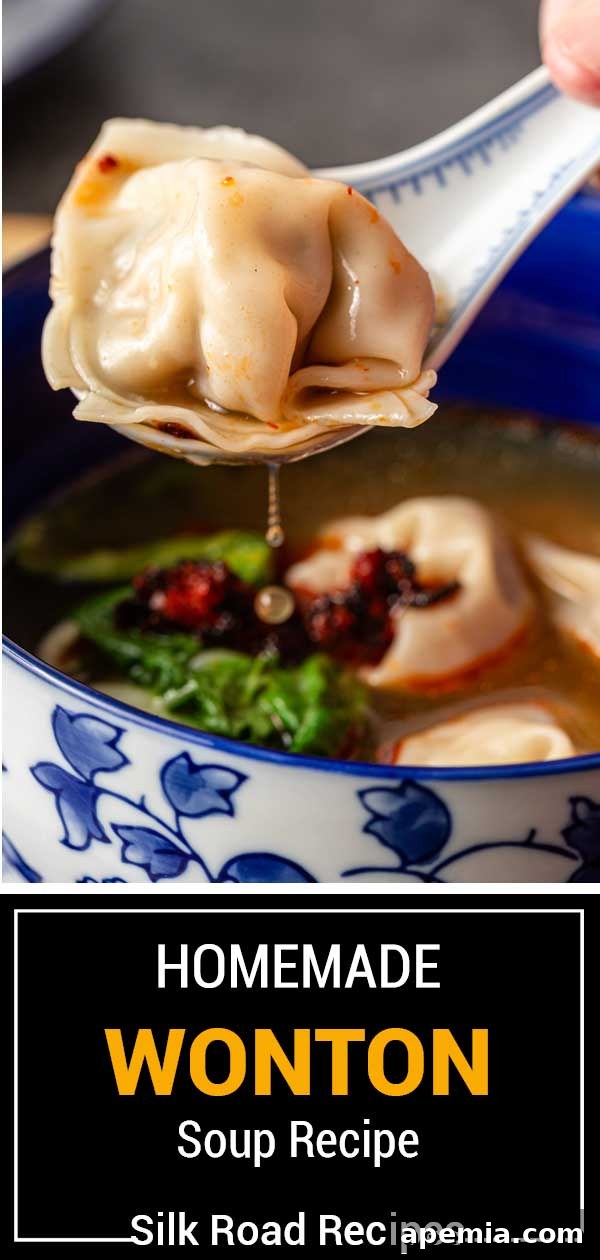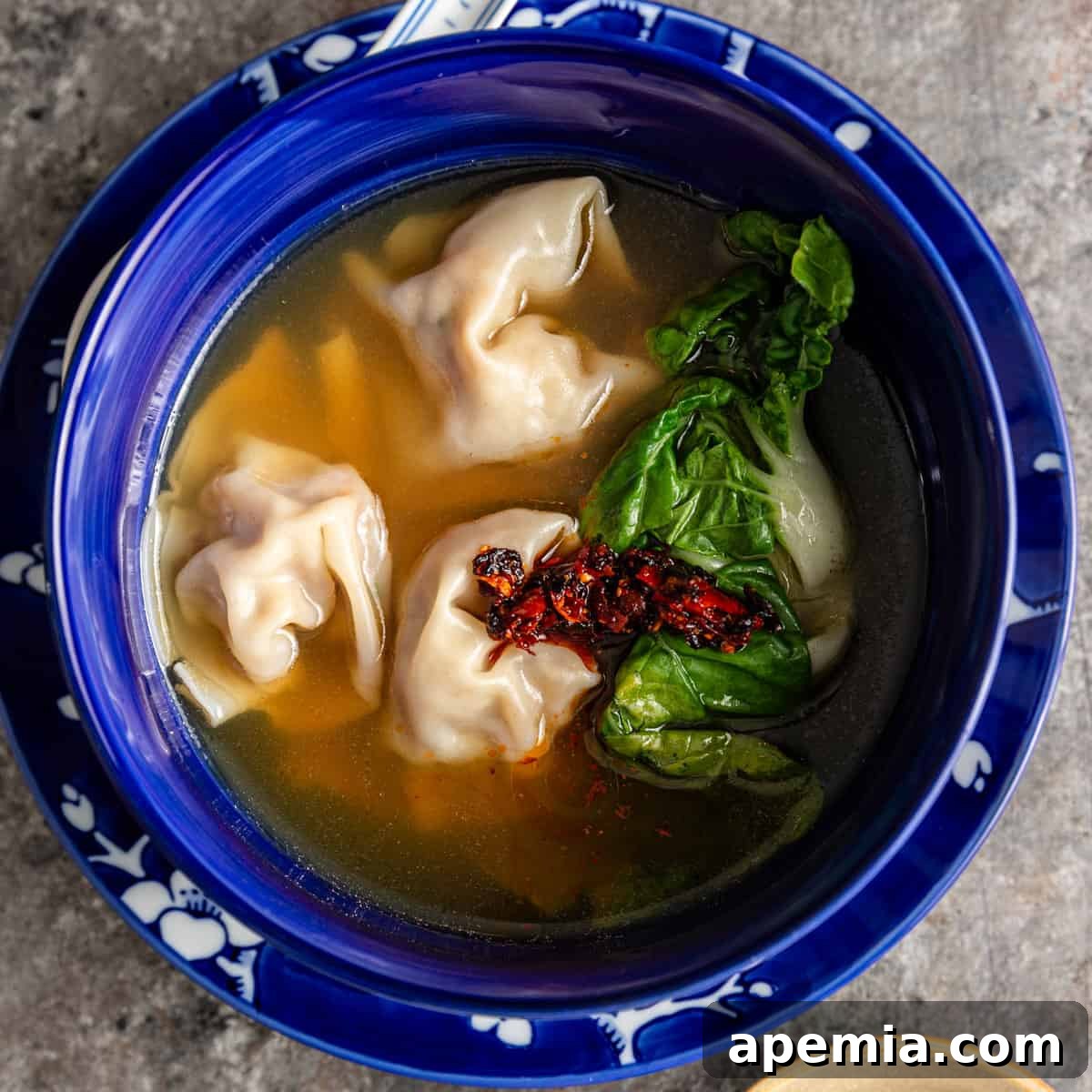
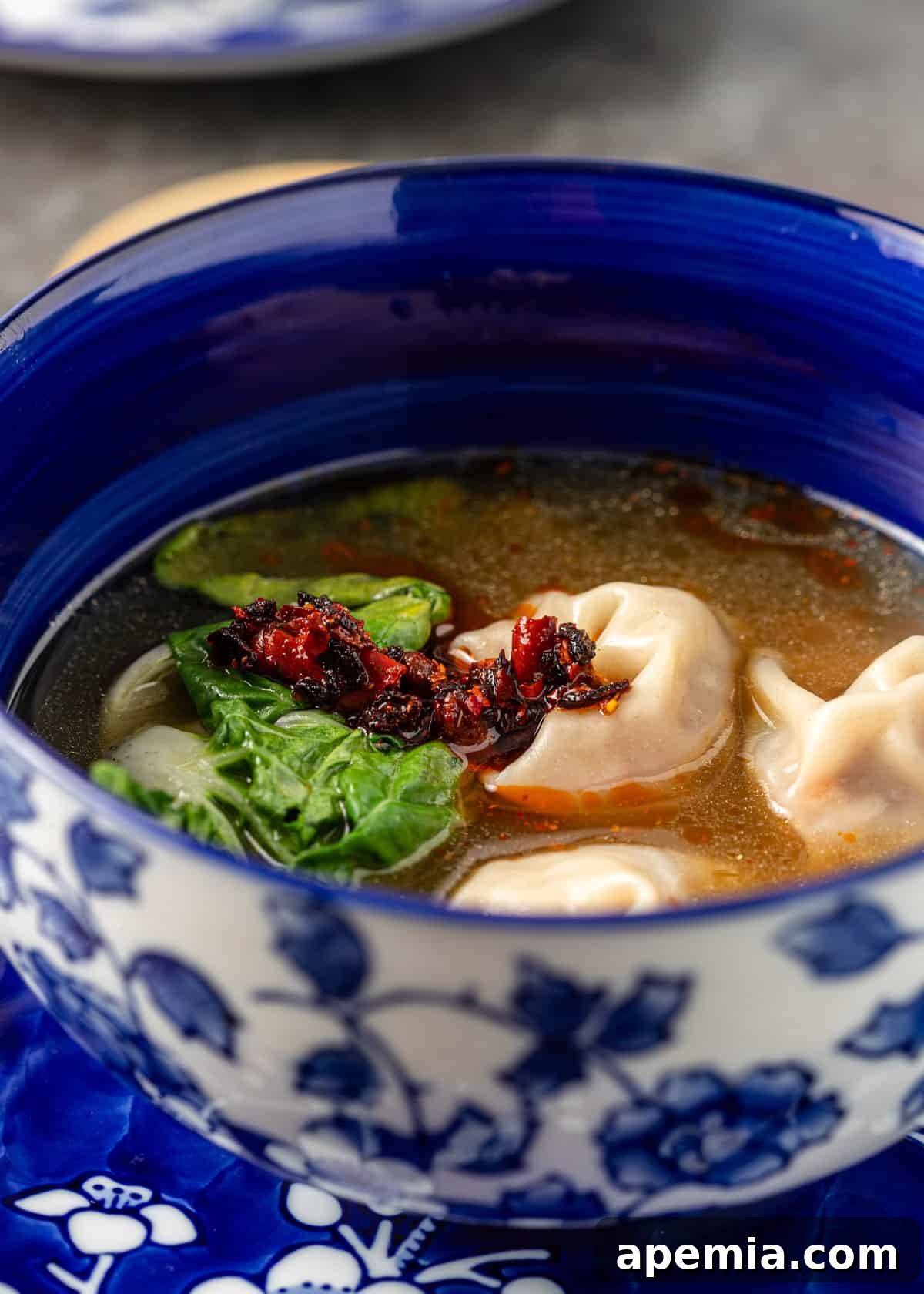
Embark on a culinary journey to craft the perfect bowl of homemade wonton soup from scratch. This comprehensive wonton soup recipe guides you through every step, from preparing a deeply flavorful broth to folding tender, succulent dumplings. We enhance each serving with crisp, blanched baby bok choy, fresh green onions, and a touch of homemade chili crisp, creating a harmonious blend of tastes and textures that will tantalize your palate. Get ready to discover the secrets to a truly unforgettable Chinese comfort food classic!
There’s something inherently comforting and restorative about a steaming bowl of broth-based soup. When that broth is brimming with delicate, savory parcels of dough and intensely flavored filling, it transcends mere sustenance to become a truly soulful experience. We’re not talking about typical pasta here; we’re diving into the delightful world of wontons. These exquisite Chinese dumplings are perfectly engineered for soup, boasting an ideal dough-to-filling ratio that delivers a burst of flavor in every bite. One might even consider them the Asian equivalent of tortellini, but with their own distinct charm and culinary heritage.
A bowl of expertly prepared wonton soup serves as an exquisite starter for beloved Asian entrees such as Moo Shu Pork, a robust Broccoli Beef Stir-Fry, or delicate Shrimp with Snow Peas. Alternatively, it stands beautifully on its own as a light, satisfying, and utterly simple meal that nourishes both body and soul. Its versatility makes it a staple in any home chef’s repertoire, whether for a quick weeknight dinner or a special gathering.
This homemade wonton soup recipe ensures you can confidently serve a dish crafted with care and fresh ingredients to your friends and family. And despite its gourmet appeal, you won’t be chained to the kitchen all day. Thanks to readily available packaged wonton wrappers, this cozy soup can be on your table in under an hour from start to finish. Don’t forget the finishing touch: a drizzle of my signature chili crisp or a spoonful of vibrant chili oil adds an extra layer of spice and texture that truly elevates the dish, making each spoonful an adventure in flavor.
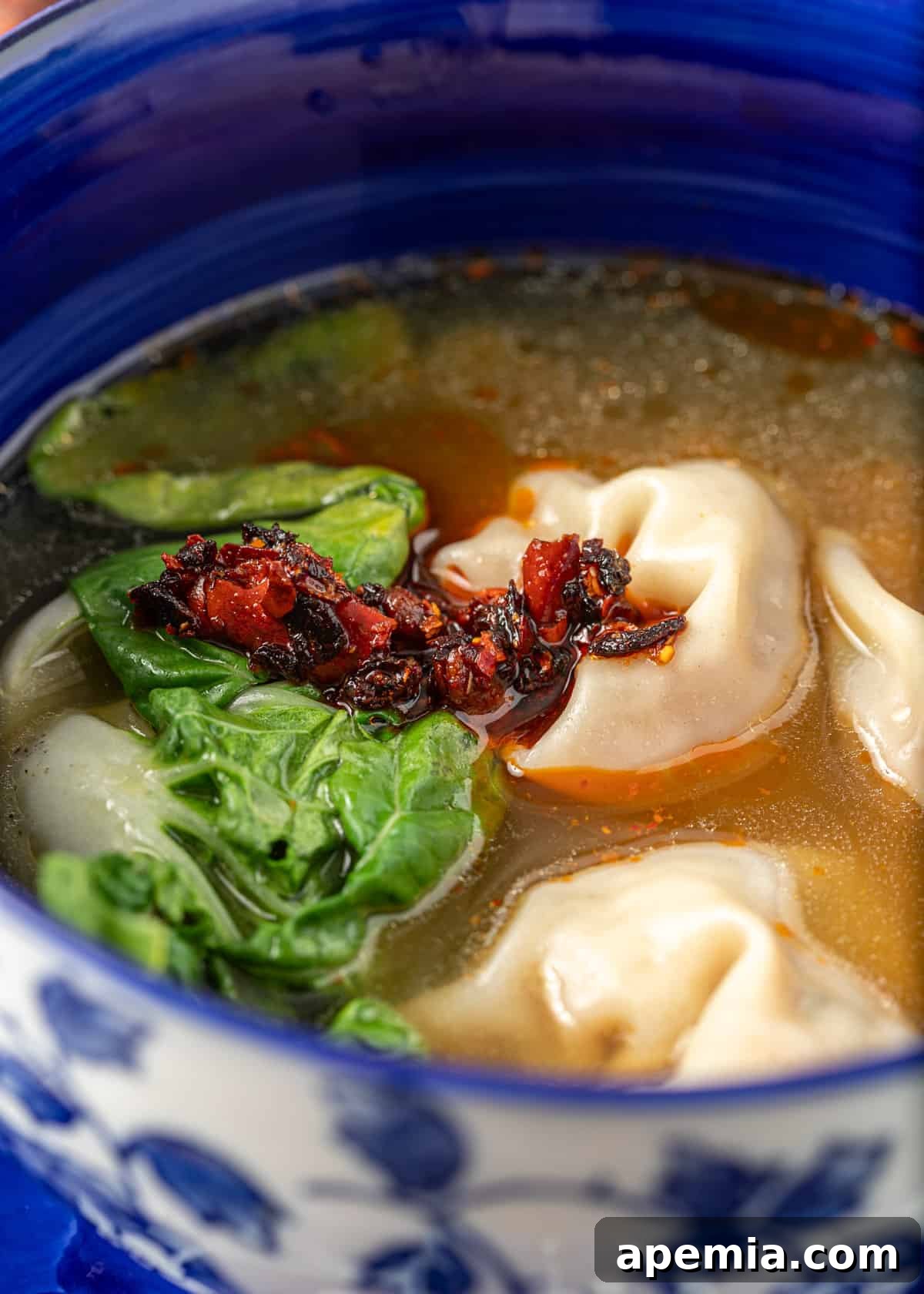
Table of Contents
- The Essence of Dried Shrimp
- Ingredient Notes and Substitutions
- Crafting the Perfect Wonton Soup
- Recommended Tools for Wonton Soup
- Storing and Reheating Your Wonton Soup
- Frequently Asked Questions About Wonton Soup
- Wonton Soup Recipe
Wonton wrappers are a true kitchen MVP in Asian cuisine, and I always make sure to have a supply on hand. Their versatility extends far beyond soup, allowing me to whip up crowd-pleasing appetizers like crispy crab rangoon for impromptu gatherings. These delectable bites vanish even faster than my renowned crispy egg rolls, proving just how irresistible they are. Having these wrappers ready means you’re always just a few steps away from a delicious meal or snack, making last-minute culinary decisions a breeze. They are the secret weapon for many quick and flavorful dishes.
Tip From Kevin
The Essence of Dried Shrimp
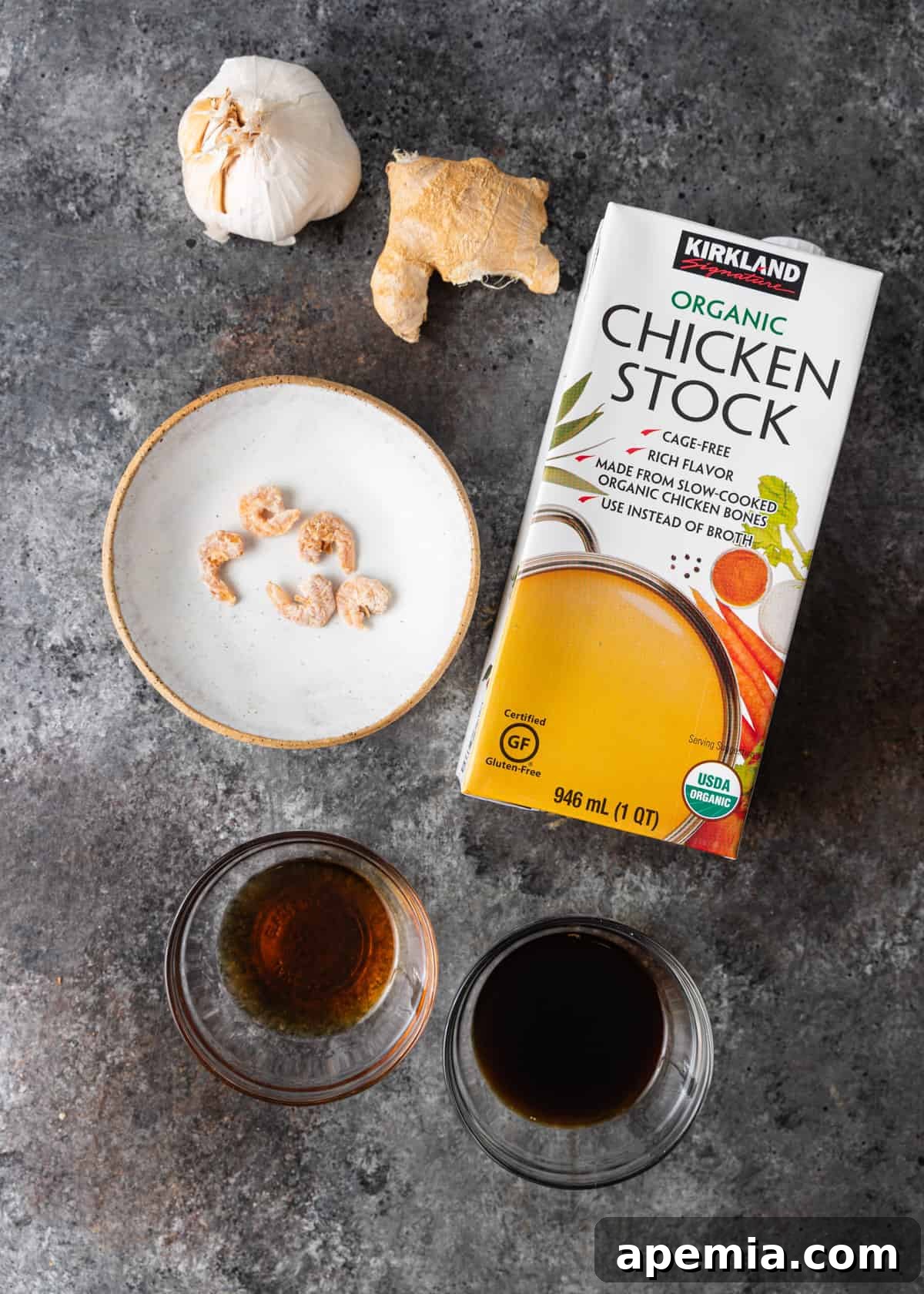
Dried shrimp is an undisputed cornerstone of Chinese cooking, one of the most common and prized pantry staples across the region. This humble dried seafood, easily found in most Asian markets and online, is a flavor powerhouse. It imparts a profound, savory umami that can transform a simple dish into something extraordinary. In many recipes, it’s not just an accent but the star flavor, lending a unique depth that is hard to replicate. I particularly love incorporating dried shrimp into soup bases, including this wonton soup recipe. It adds that elusive, special touch – a layer of flavor that guests often rave about but can’t quite identify. Think of dried shrimp as your new secret weapon in the kitchen, guaranteed to elevate your cooking and add an authentic, irresistible dimension to your Asian-inspired meals.
Ingredient Notes and Substitutions
(Be sure to check the recipe card for a full list of ingredients and quantities below)
- Chicken Stock – The foundation of your broth! You can use your favorite store-bought brand, ensuring it’s a good quality low-sodium variety, or elevate your soup with rich homemade chicken stock. If you only have chicken broth on hand, it can be substituted, but stock typically offers a more robust flavor profile.
- Garlic & Ginger – Fresh is always best for both. For the broth, the ginger needs to be thinly sliced to infuse its aromatic warmth without being overpowering. Fresh garlic, lightly smashed, releases its potent flavor beautifully into the simmering liquid, creating a fragrant base for your wonton soup.
- Soy Sauce – Opt for light soy sauce in the broth. Its milder saltiness and umami profile will enhance the soup without dominating the delicate flavors of the wontons and other ingredients. Dark soy sauce, while delicious, would alter the broth’s color and might be too intense.
- Toasted Sesame Oil – This is crucial. Unlike regular sesame oil, toasted sesame oil is made from roasted sesame seeds, giving it a deeper color and a much richer, nuttier flavor. It’s primarily used as a finishing oil or for seasoning, adding a distinctive aromatic depth to your wonton soup.
- Dried Shrimp – While optional, I highly recommend adding these for an authentic, profound umami boost to your broth. As discussed in my tip above, dried shrimp introduces a unique savory complexity that sets this wonton soup recipe apart. It’s a small addition with a huge flavor impact.
- Wontons – The stars of the show! These delightful Chinese dumplings are made with thin wonton wrappers, readily available in the international aisle of most supermarkets or at any Asian grocery store. For the delectable filling, you’ll need:
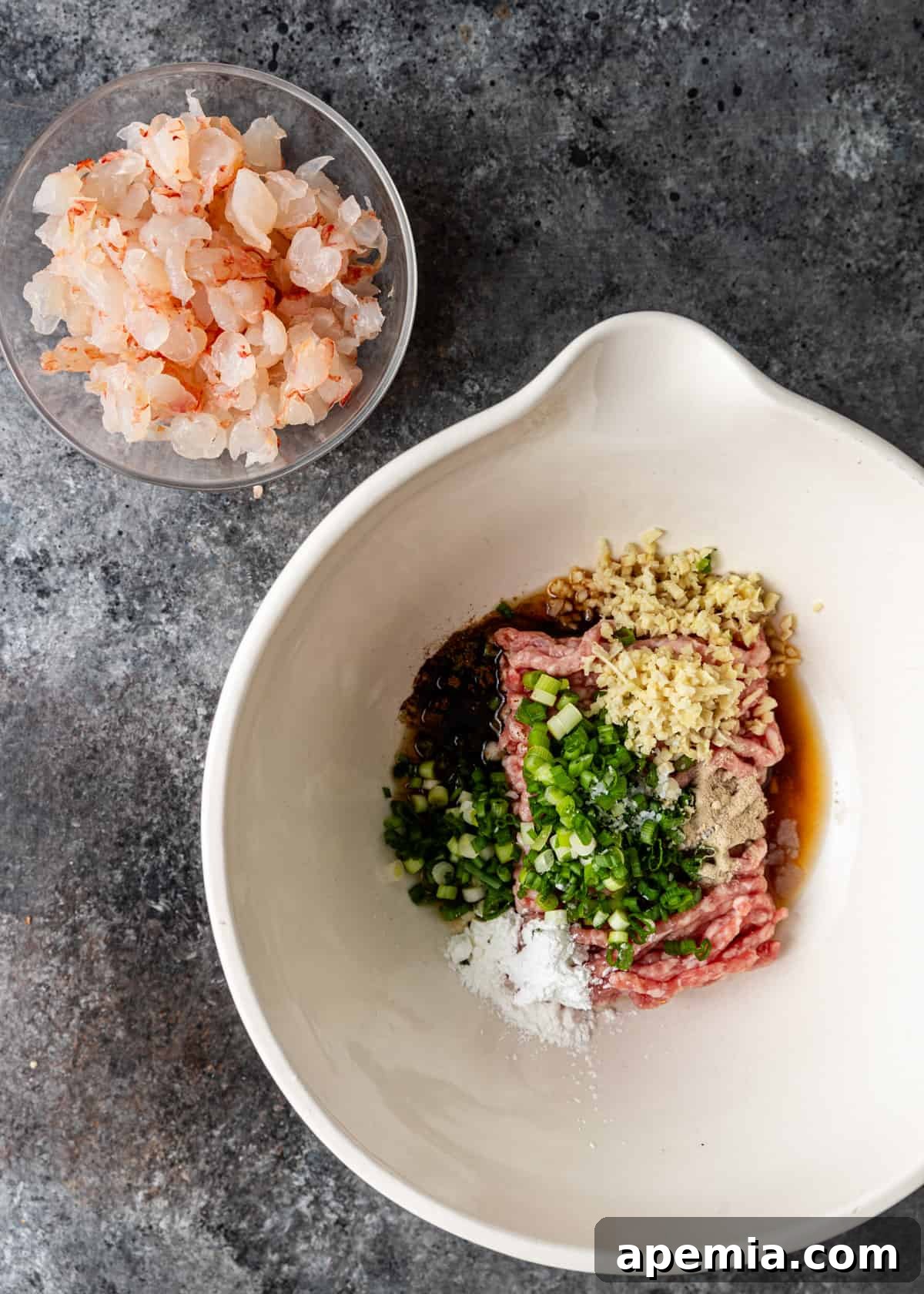
- Ground Pork – Ensure you use plain ground pork, not seasoned sausage, to control the flavor profile precisely. The pork forms the savory backbone of the filling.
- Shrimp – Peeled, deveined, and finely chopped, shrimp adds a lovely sweetness and springy texture that complements the pork beautifully.
- Fresh Ginger – Minced fresh ginger provides a pungent, spicy warmth to the filling, balancing the richness of the meats. While fresh is ideal, a good quality ginger paste can be used in a pinch for convenience.
- Green Onions – Finely chopped green onions add a fresh, mild oniony flavor and a hint of vibrant color to the filling.
- Light Soy Sauce – Used in the filling to provide essential savory depth and seasoning.
- Shaoxing Wine – This is a key ingredient in authentic Chinese cooking. It’s a fermented rice wine with a complex, slightly sweet, and aromatic flavor. Dry sherry is the best widely available substitute if Shaoxing wine is unavailable, though it won’t be an exact match. Mirin can work due to the small quantity, but be mindful that it is significantly sweeter.
- Chinese Five Spice – A blend of star anise, cloves, Chinese cinnamon, Szechuan peppercorns, and fennel seeds, this spice mix infuses the filling with warm, complex, and deeply aromatic notes. My homemade blend offers superior freshness and flavor.
- White Pepper – Milder and more floral than black pepper, white pepper is traditionally used in Chinese cuisine to add a subtle peppery warmth without visible flecks.
- Cornstarch – A small amount of cornstarch in the filling helps bind the ingredients together and keeps the wontons tender and juicy by retaining moisture.
- Baby Bok Choy – This small, tender Chinese cabbage is a delightful addition to wonton soup. It offers a unique flavor profile often described as a delicate cross between spinach, celery, and water chestnuts. Being harvested young, baby bok choy is smaller, more tender, and slightly sweeter than its mature counterpart, adding a fresh, crisp element to each bowl.
- Chili Crisp – For those who enjoy a little heat and texture, chili crisp is an essential topping. This popular Chinese condiment delivers a fantastic spicy, savory kick with a hint of sweetness and an irresistible crunch from fried aromatics. A single spoonful goes a long way, and making your own homemade version is surprisingly easy and incredibly rewarding!
- Green Onions – Thinly sliced and often cut at an angle for visual appeal, green onions are a classic, fresh garnish for any wonton soup recipe. They add a mild, pungent freshness that brightens the entire dish.
How to Make Wonton Soup: A Step-by-Step Guide
- Prepare the Flavorful Soup Base. Begin by combining the chicken stock, thinly sliced fresh ginger, smashed garlic cloves, light soy sauce, and toasted sesame oil in a large stock pot. If using, now is the time to add the dried shrimp to infuse maximum umami into the broth. Bring this mixture to a gentle boil over medium heat. Once boiling, reduce the heat to low and allow the broth to simmer for a minimum of 10 minutes. This simmering time is crucial for the flavors to meld and deepen. Afterward, carefully remove and discard the garlic, ginger slices, and dried shrimp, leaving behind a clear, fragrant broth. Keep the soup base warm on a low simmer while you prepare the other components.
- Prepare Water for Wontons and Bok Choy. In a separate, equally large stock pot, fill it with at least 6 cups of water and bring it to a rolling boil. This pot will be dedicated solely to blanching the baby bok choy and cooking your freshly formed wontons, preventing any flavor transfer from the broth.
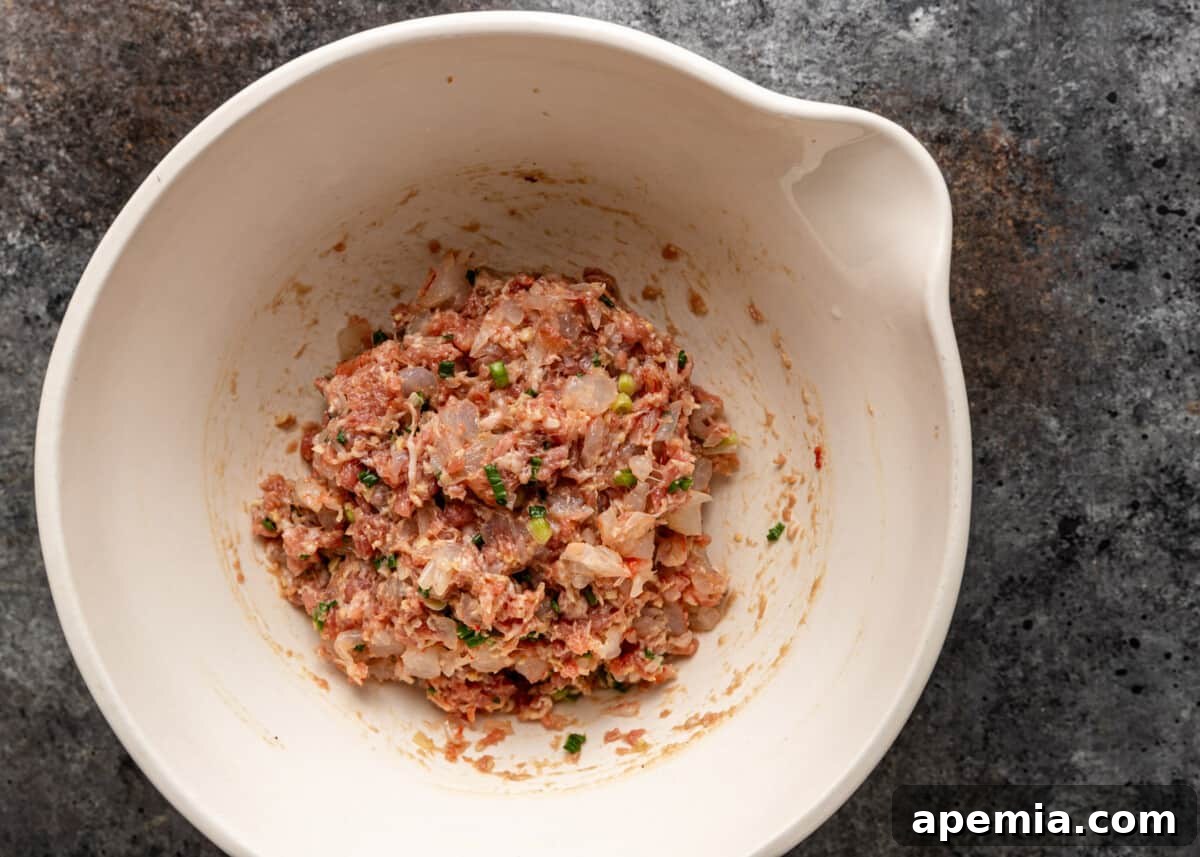
- Form the Exquisite Wontons. In a medium mixing bowl, combine the ground pork, finely minced green onions, minced fresh ginger, light soy sauce, Shaoxing wine, toasted sesame oil, kosher salt, white pepper, Chinese five spice, and cornstarch. Mix these ingredients thoroughly, working the pork until it forms a cohesive paste. This ensures an even distribution of flavors and a tender texture. Next, gently fold in the finely chopped shrimp, mixing just enough to incorporate them without overworking the mixture.
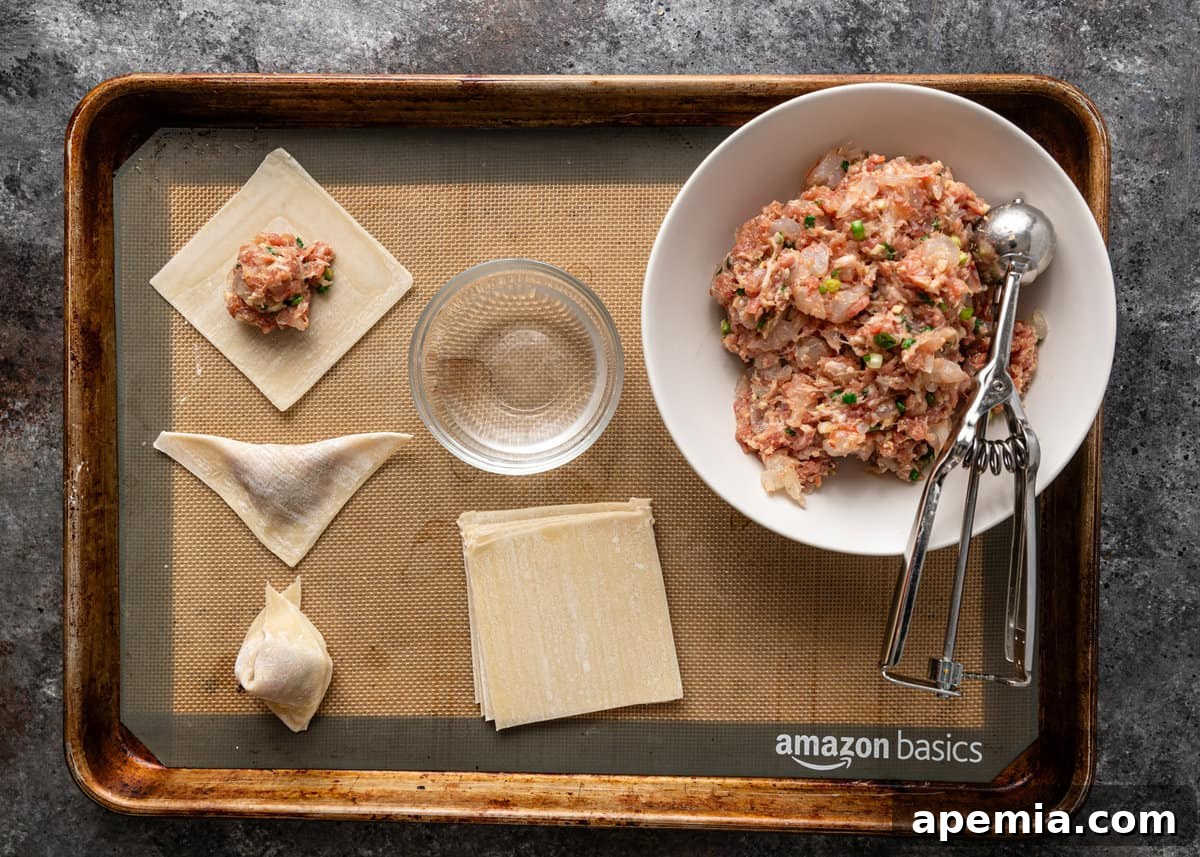
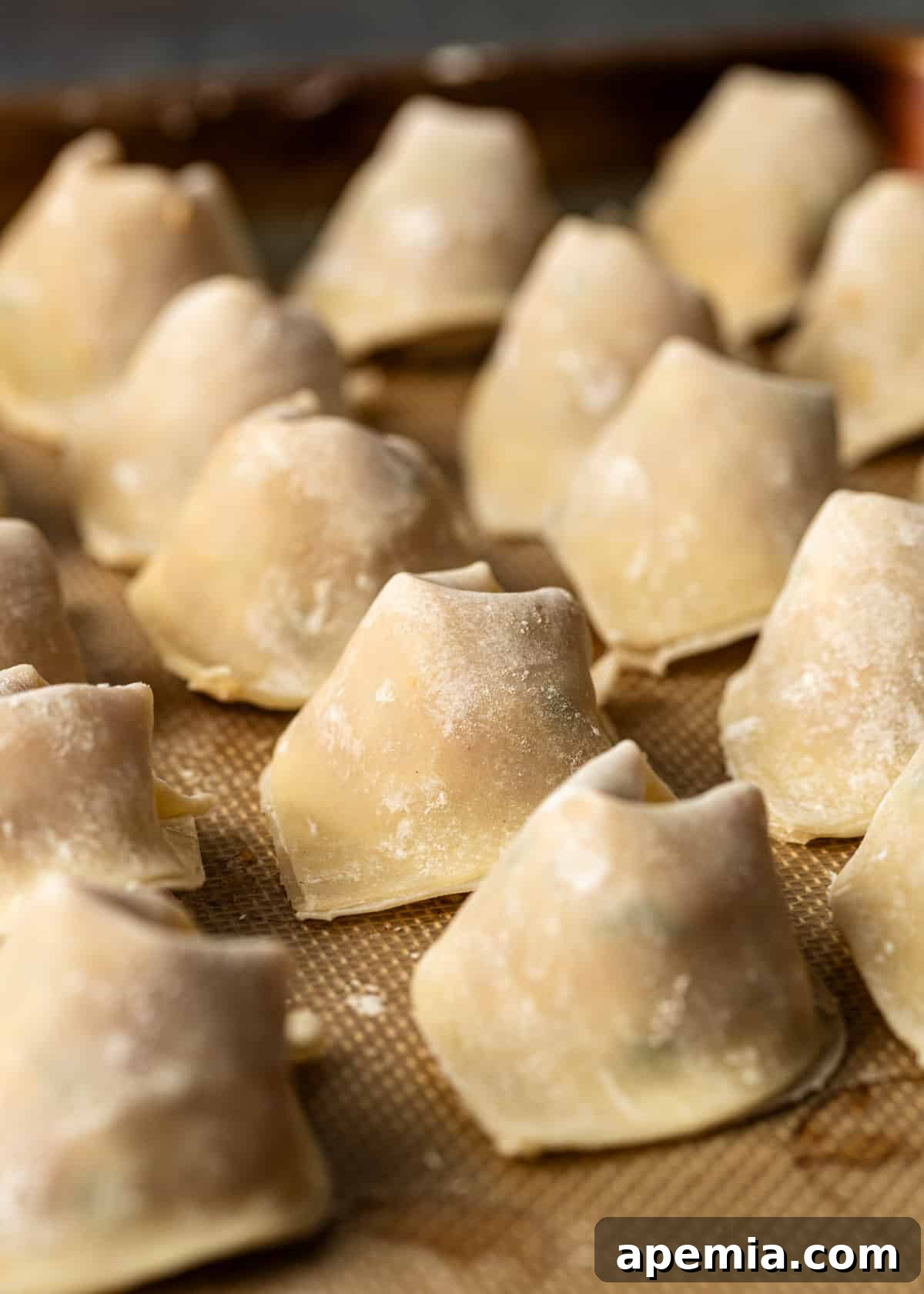
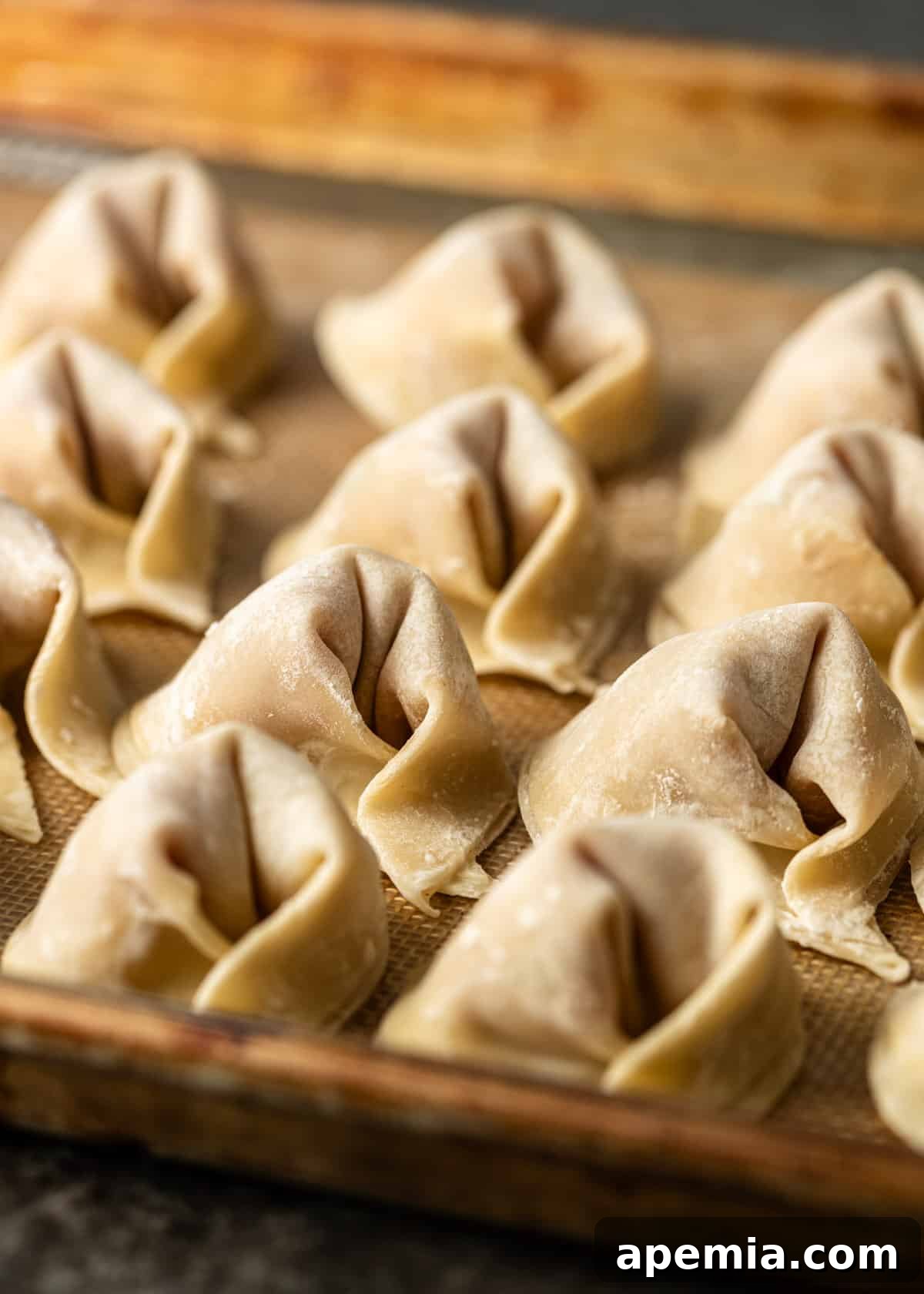
To form the wontons, lay a wrapper on a clean surface in a diamond shape with a point facing you. Moisten the top two edges of the wrapper with water using your index finger. Place about 2 teaspoons of the filling in the center of the wrapper. Fold the bottom corner over the filling to meet the top corner, forming a triangle. Gently press out any air pockets around the filling, then firmly seal the edges. Finally, bring the two opposite ends (the side points of the triangle) together, dab with a little more water, and pinch them firmly to seal, creating the classic wonton shape. As you work, keep the remaining wrappers and finished wontons covered with a damp kitchen towel to prevent them from drying out. This recipe yields approximately 30-32 delicious wontons. - Cook the Baby Bok Choy & Wontons. Once your second pot of water is boiling, carefully add the baby bok choy. Blanch them for precisely 1 minute until they are tender-crisp and vibrant green. Promptly remove them with a slotted spoon or strainer, drain well, and transfer two blanched bok choy to each serving bowl.
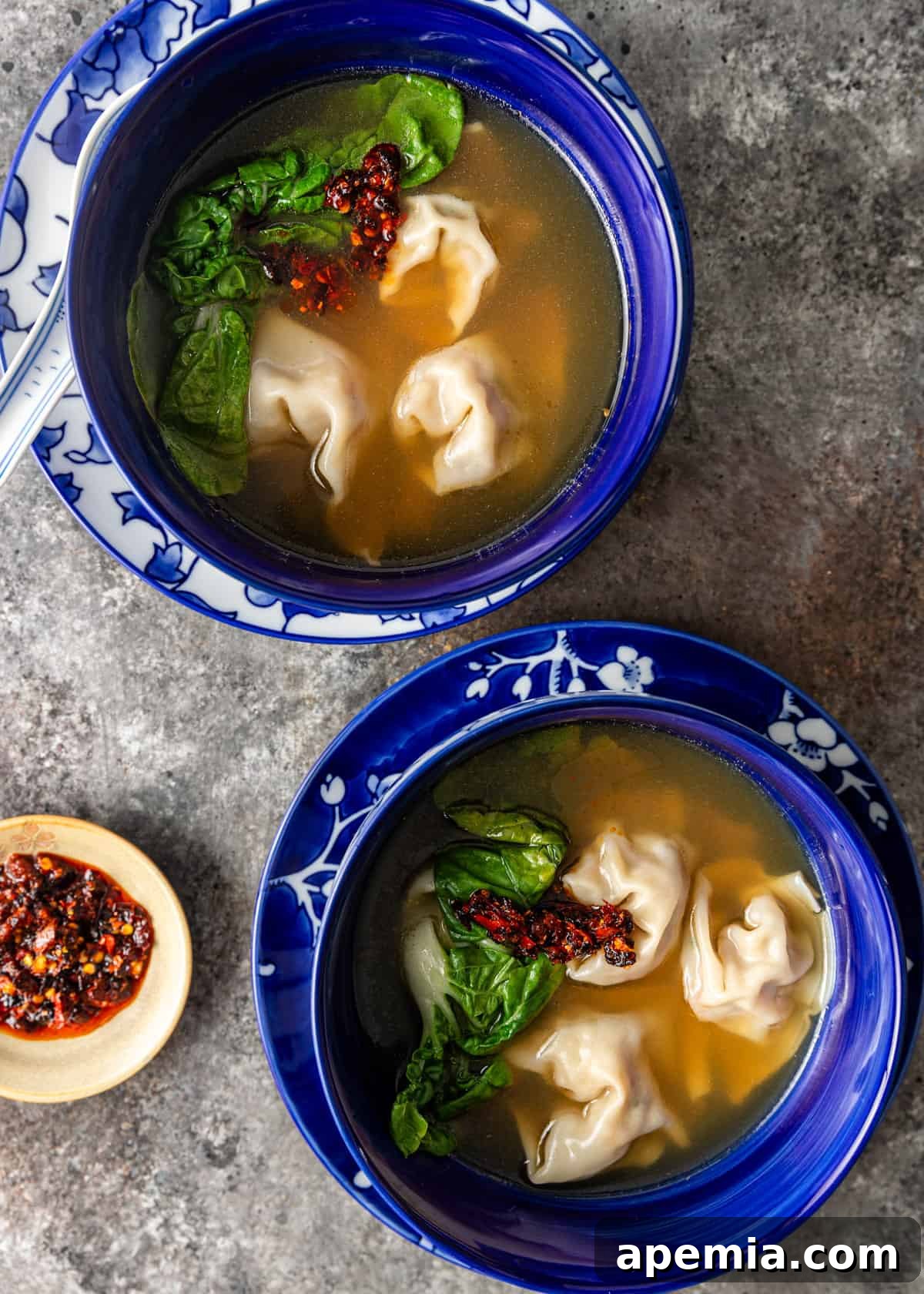
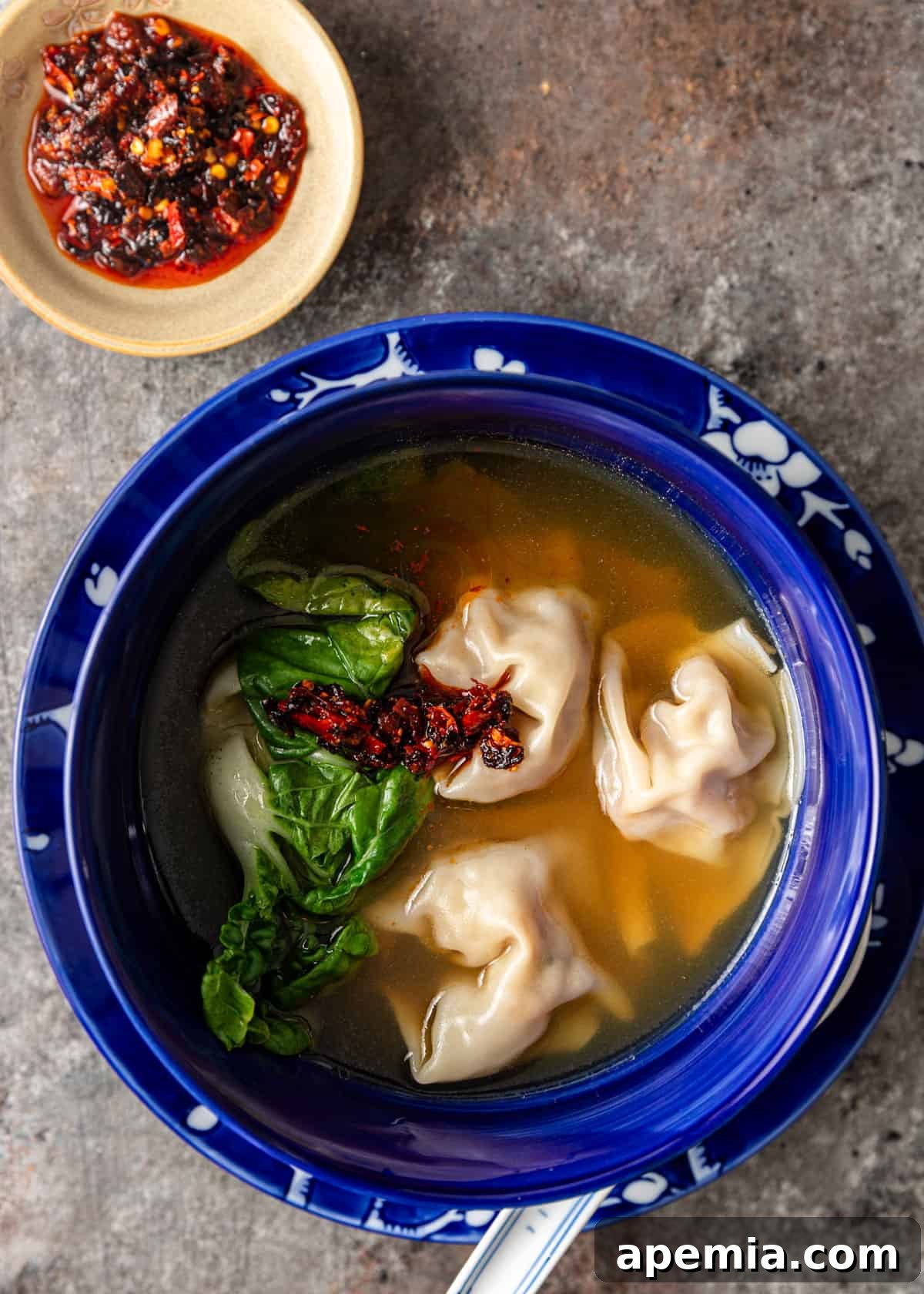
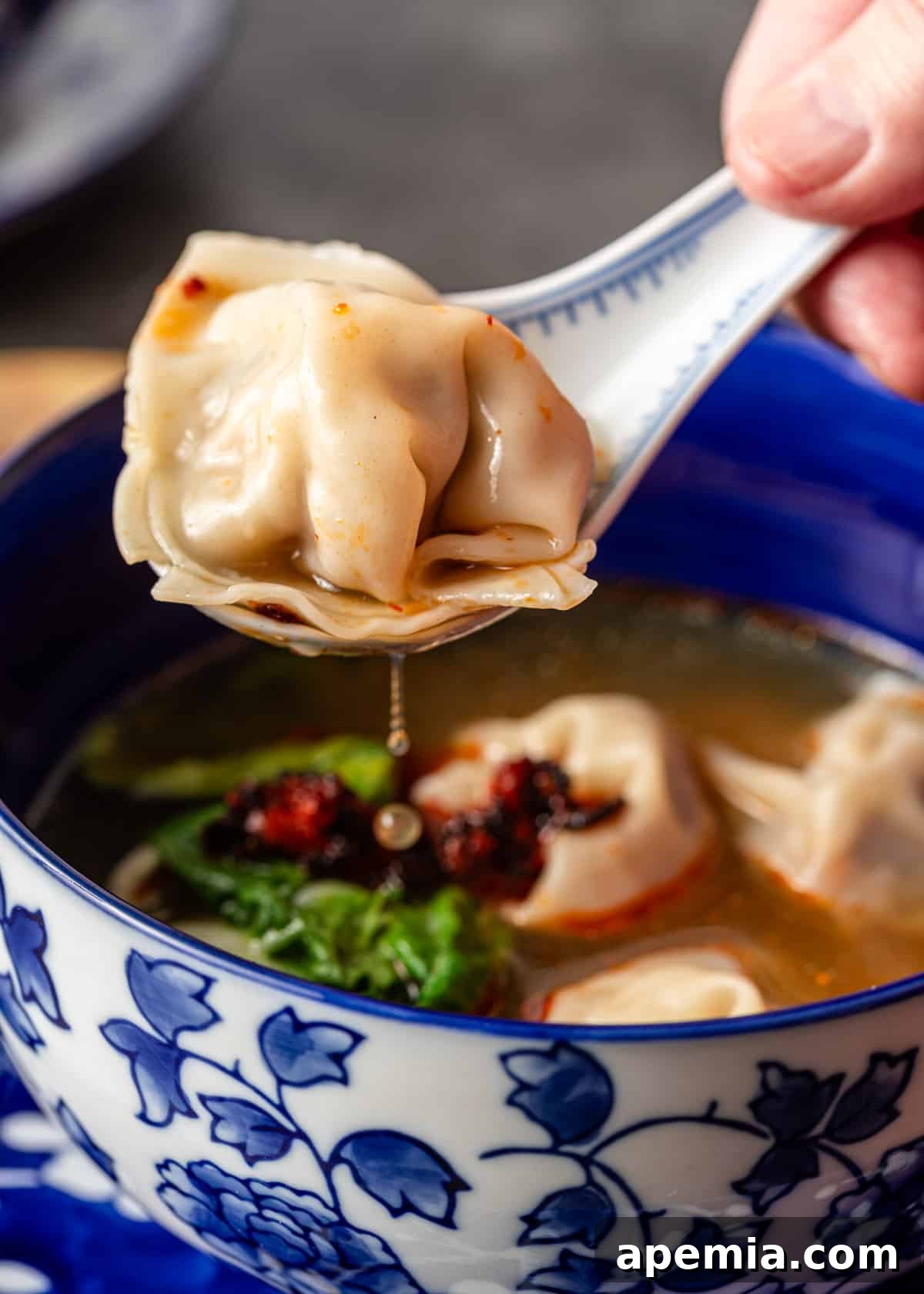
Next, gently add the freshly formed wontons to the same boiling water in small batches to avoid overcrowding the pot, which can lower the water temperature. Stir them gently with a spoon immediately after adding to prevent them from sticking together or to the bottom of the pot. Boil the wontons until they float to the surface, which typically takes about 4 minutes. Once they rise, continue to cook them for an additional 1 to 1½ minutes to ensure the filling is thoroughly cooked and the wrappers are perfectly tender. - Serve with the Rich Soup Base. Carefully transfer about 7 cooked wontons into each bowl, alongside the blanched baby bok choy. Ladle a generous amount of the warm, seasoned broth over the wontons and vegetables. For the ultimate finishing touch, garnish each bowl with a sprinkle of thinly sliced green onions and a spoonful of your favorite chili crisp for that perfect balance of heat and crunch. Serve immediately and savor the comforting flavors of your homemade wonton soup!
Recommended Tools for Wonton Soup
Having the right kitchen tools can significantly streamline the process of making this exquisite wonton soup recipe, ensuring a smooth and enjoyable cooking experience. Here are a few essential items:
- Two Stock Pots – You will ideally need two large stock pots. One is for gently simmering the aromatic broth, allowing its flavors to develop fully without interruption. The second pot is designated for boiling the wontons and blanching the bok choy, which helps maintain the clarity and distinct flavors of your soup base.
- Mixing Bowls – A medium mixing bowl is perfect for preparing the wonton filling, allowing ample space to combine and thoroughly mix all the ingredients. Additionally, a small dip bowl filled with water is indispensable for moistening and sealing the edges of the wonton wrappers, ensuring they hold their shape beautifully during cooking.
- Strainer or Slotted Spoon – This is a crucial tool for carefully removing the delicate wontons from the boiling water. A strainer or slotted spoon allows you to lift them out gently, minimizing the risk of tearing the wrappers or losing any of the precious filling, ensuring your wontons arrive intact and perfect in your serving bowls.
Storing and Reheating Your Wonton Soup
While wonton soup is undoubtedly best enjoyed fresh, you can certainly save and savor leftovers. However, for optimal quality and to prevent the wontons from becoming soggy or falling apart, it’s highly recommended to store the boiled wontons separately from the broth. Wontons will continue to absorb liquid and soften over time if left submerged, compromising their texture.
To store, allow both the cooked wontons and the broth to cool completely. Place the wontons in an airtight container in the refrigerator, and store the broth in a separate airtight container. Both will keep well for 2-3 days.
When you’re ready to enjoy your leftovers, simply reheat the broth in a saucepan on the stovetop until it’s simmering hot. Add the cooked wontons directly to the hot broth and allow them to warm through for a few minutes. Alternatively, you can microwave them gently. This method ensures your wontons retain their tender bite and the broth remains flavorful.
Frequently Asked Questions About Wonton Soup
The world of dumplings is vast and wonderfully diverse, and wontons are a cherished member of this culinary family. Essentially, all wontons are a type of Chinese dumpling, but not all dumplings are wontons. The key distinguishing feature of wontons lies in their wrapper: it is typically much thinner and often a bit more delicate compared to other dumpling varieties. For instance, the wrapper for wontons is more akin to the thinness of shumai, contrasting with the thicker, more robust dough used for pan-fried potstickers (guo tie) or the fluffy, leavened dough of bao. Dumplings, in general, can encompass an incredible array of fillings, from various meats and vegetables to seafood, with textures and consistencies that range widely. They can also be prepared in numerous ways: boiled, steamed, pan-fried, or deep-fried. Wontons, specifically, are most commonly characterized by a savory mixture of ground meat (often pork) and sometimes shrimp or vegetables, and they are traditionally simmered in a light, flavorful chicken broth or stock, as showcased in this wonton soup recipe. So, while you might enjoy many kinds of dumplings, a wonton is a distinct and beloved type, celebrated for its tender wrapper and rich filling in a comforting soup.
Determining when your wontons are perfectly cooked is quite straightforward, and it’s mostly about observation. The primary indicator that wontons are cooked through is when they float to the surface of the boiling water. As they cook, the internal filling expands slightly, and the density changes, causing them to rise. Once they reach the surface, I always recommend letting them continue to boil for another minute to 1½ minutes. This extra cooking time ensures that the filling is completely cooked and the wrapper achieves a beautifully tender, yet still firm, texture. When you remove them from the water, they should appear plump and slightly translucent, a clear sign of their readiness to be enjoyed in your delicious wonton soup.
Yes, you absolutely can prepare components of your wonton soup in advance, which is fantastic for meal prepping or entertaining. Both the wontons and the broth can be made ahead of time, but it is crucial to store them separately to maintain optimal quality. Uncooked wontons will keep well in an airtight container in the refrigerator for up to 2 days; simply boil them fresh just before serving while you reheat your prepared broth.
For longer storage, freezing is an excellent option. To freeze uncooked wontons, arrange them in a single layer on a parchment-lined baking sheet and flash freeze until they are firm (this prevents them from sticking together). Once frozen, transfer them to a freezer-safe storage bag or container, where they will keep for up to 2 months. The seasoned broth can also be frozen for up to 3 months in a freezer-safe container. When ready to enjoy, thaw the broth overnight in the refrigerator. You can then boil the frozen wontons directly from the freezer (they might take a minute or two longer to cook), and combine them with the reheated broth as directed in the recipe. This make-ahead strategy ensures you can enjoy homemade wonton soup with minimal effort on busy days.
Share this recipe on Pinterest!
Love this recipe? Share it with the world on Pinterest.
Wonton Soup Recipe
Ingredients
Soup Base
- 8 cups chicken stock
- 1 inch fresh ginger sliced
- 2 cloves garlic smashed
- 2 tbsp light soy sauce
- 1 tbsp toasted sesame oil
- 10 dried shrimp optional
Wontons
- 1/2 lb ground pork
- 1/4 cup green onions thinly sliced
- 1 tbsp fresh ginger minced
- 1 tbsp light soy sauce
- 1 tbsp Shaoxing wine
- 1 tsp toasted sesame oil
- 1/2 tsp kosher salt
- 1/4 tsp white pepper
- 1/8 tsp Chinese 5 Spice
- 1 tsp cornstarch
- 1/2 lb shrimp peeled, deveined, and chopped
- 40 fresh wonton wrappers
Serving
- 8 baby bok choy
- 1/4 cup chili crisp
- 1 cup green onions thinly sliced
Instructions
Soup Base
-
Combine chicken stock, ginger, garlic, soy sauce, sesame oil and dried shrimp in a stock pot over medium heat and bring to a boil. Turn heat to low and simmer for 10 minutes. Remove and discard garlic, ginger and dried shrimp. Keep stock warm on simmer.
-
In another stock pot heat 6 cups of water for wontons.
Wonton Filling
-
In a medium bowl, mix together the ground pork, green onions, ginger, soy sauce, Shaoxing wine, sesame oil, salt, white pepper, Chinese 5 Spice and cornstarch. Mix the filling until the pork forms a paste. Add the shrimp, mixing to incorporate thoroughly.
Form Wontons
-
Fill a small bowl with some water and line a tray with parchment or silicone mat for the wontons. Keep wrappers and finished wontons covered with light kitchen towel as you work, to keep them from drying out.
-
Take a wonton wrapper and place on clean surface in diamond shape with one point close to you. With your index finger, wet the top two edges of the wrapper. Add 2 teaspoons of the filling in the center. Fold the wrapper down and over filling and gently press out any air. Press and seal edges. Next, bring the opposite ends of the wrapper together and use a dab of water and pinch together to seal. This makes about 30-32 wontons total.
-
Put bok choy in stockpot of boiling water and blanch for 1 minute. Remove, drain and transfer 2 baby bok choy to each bowl.
-
Next, gently add the wontons to the boiling water in several batches. Move them around with a spoon to avoid sticking. When the wontons rise and float to the surface, continue boiling for another 1½ minutes.
-
Transfer 7 wontons to each bowl and scoop seasoned broth over each bowl of wontons and bok choy. Serve with Chili Crisp and sliced green onions.
Nutrition
The information shown is an estimate provided by an online nutrition calculator. It should not be considered a substitute for a professional nutritionist’s advice.