
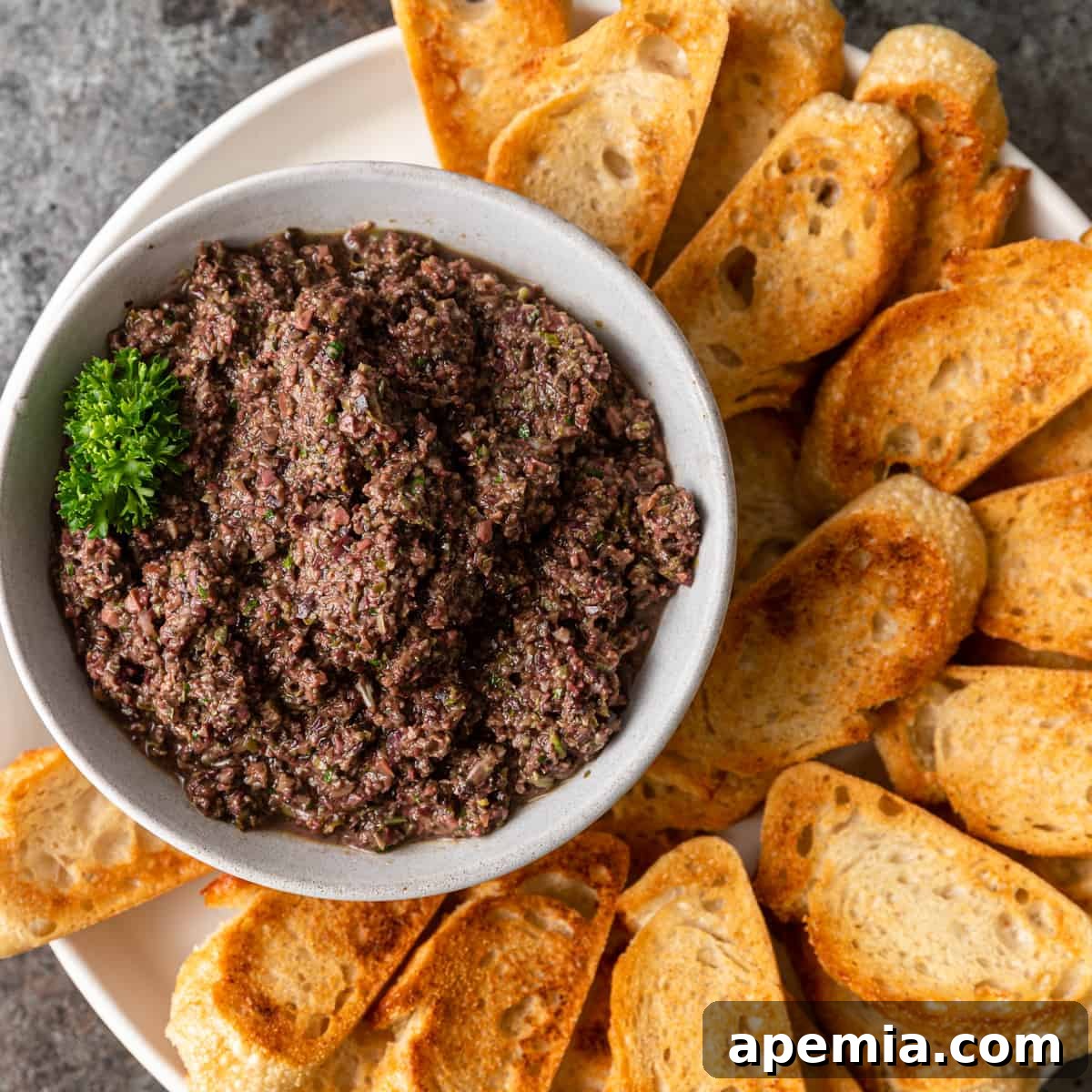
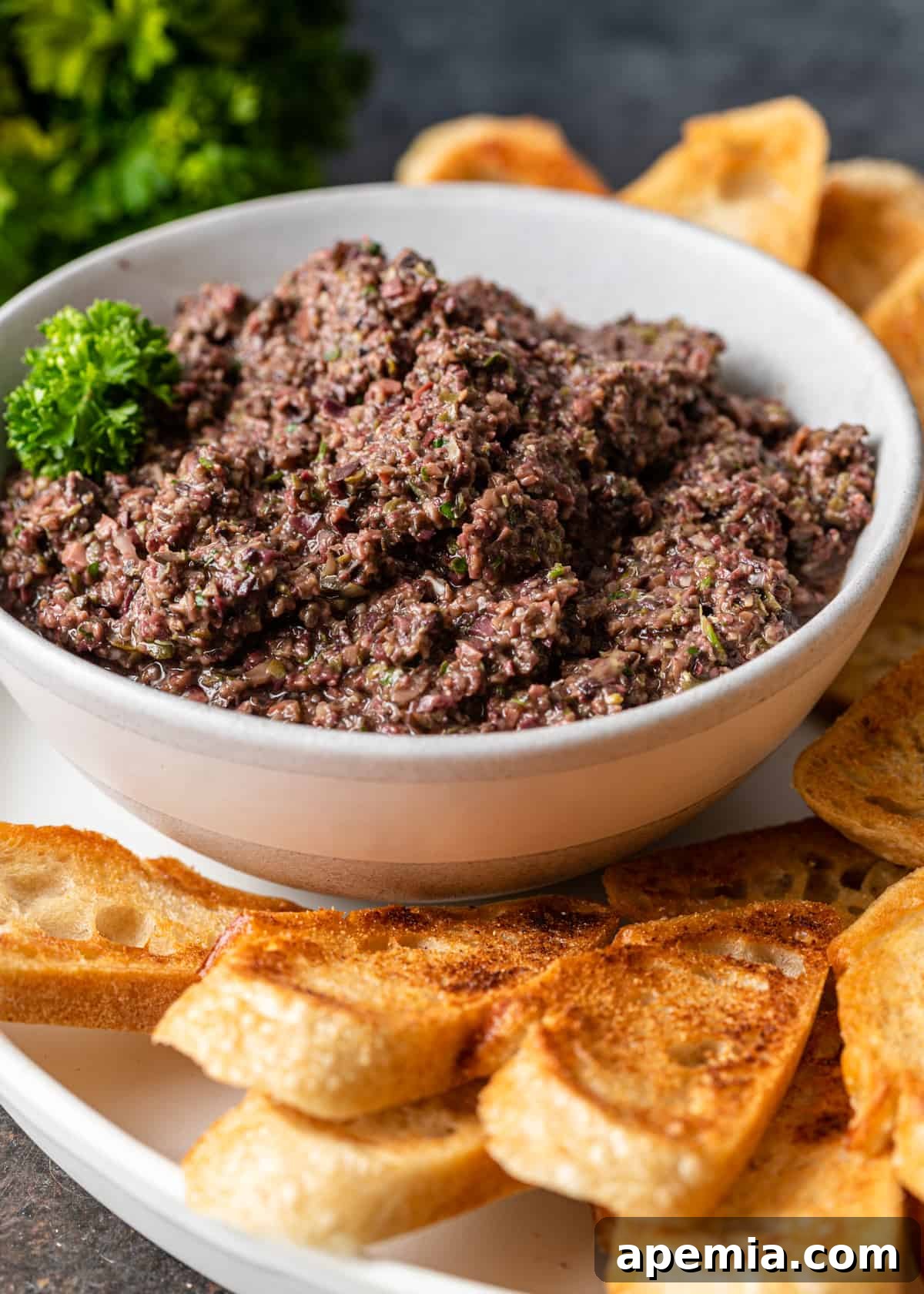
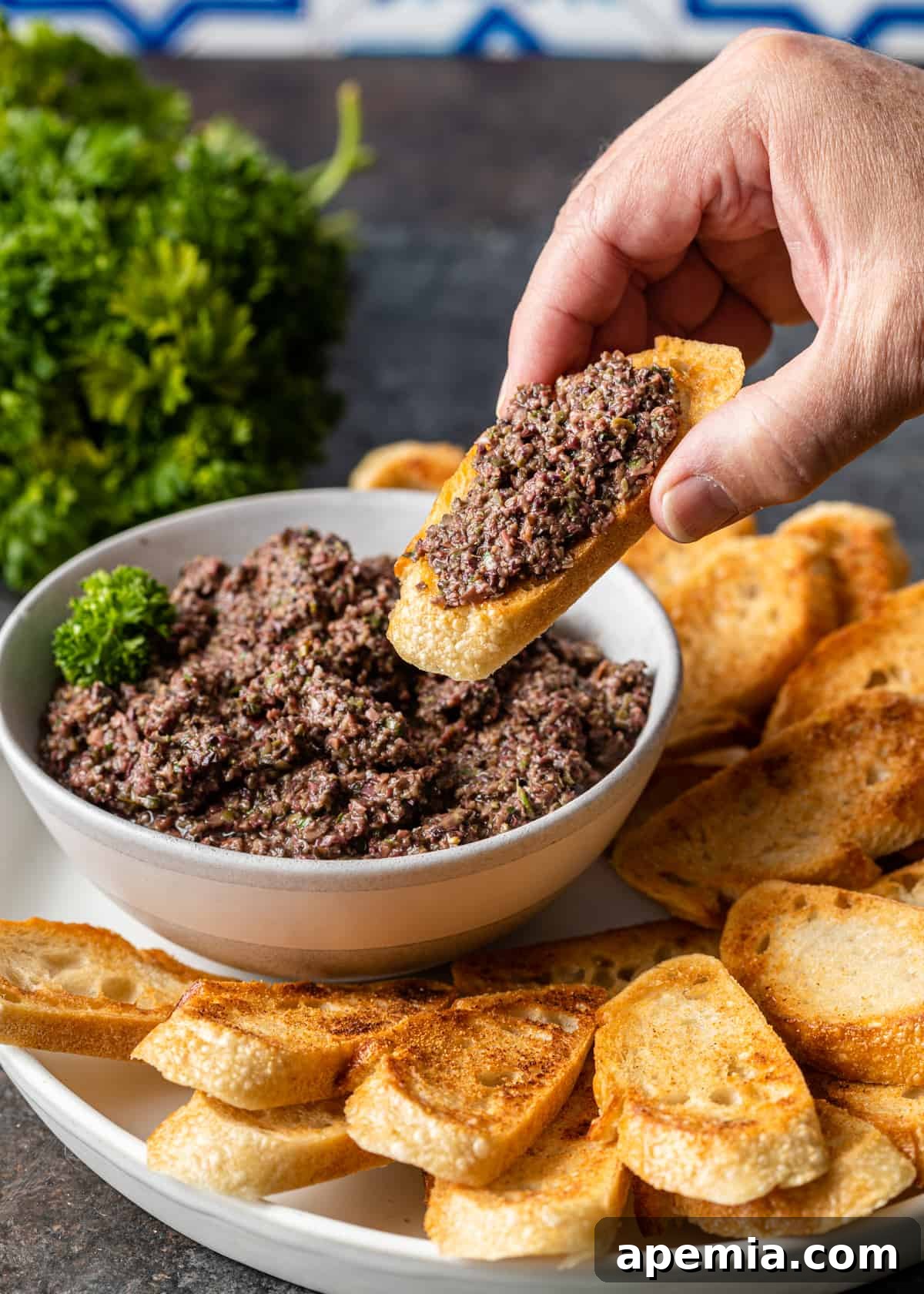
This rustic, authentic, and unbelievably tasty olive tapenade is a classic Mediterranean dip made from a harmonious blend of green and black olives. Infused with capers and anchovies for a briny umami punch, a hint of garlic for a pungent kick, and a burst of fresh lemon juice, this mouthwatering olive spread is guaranteed to be a conversation starter at any gathering.
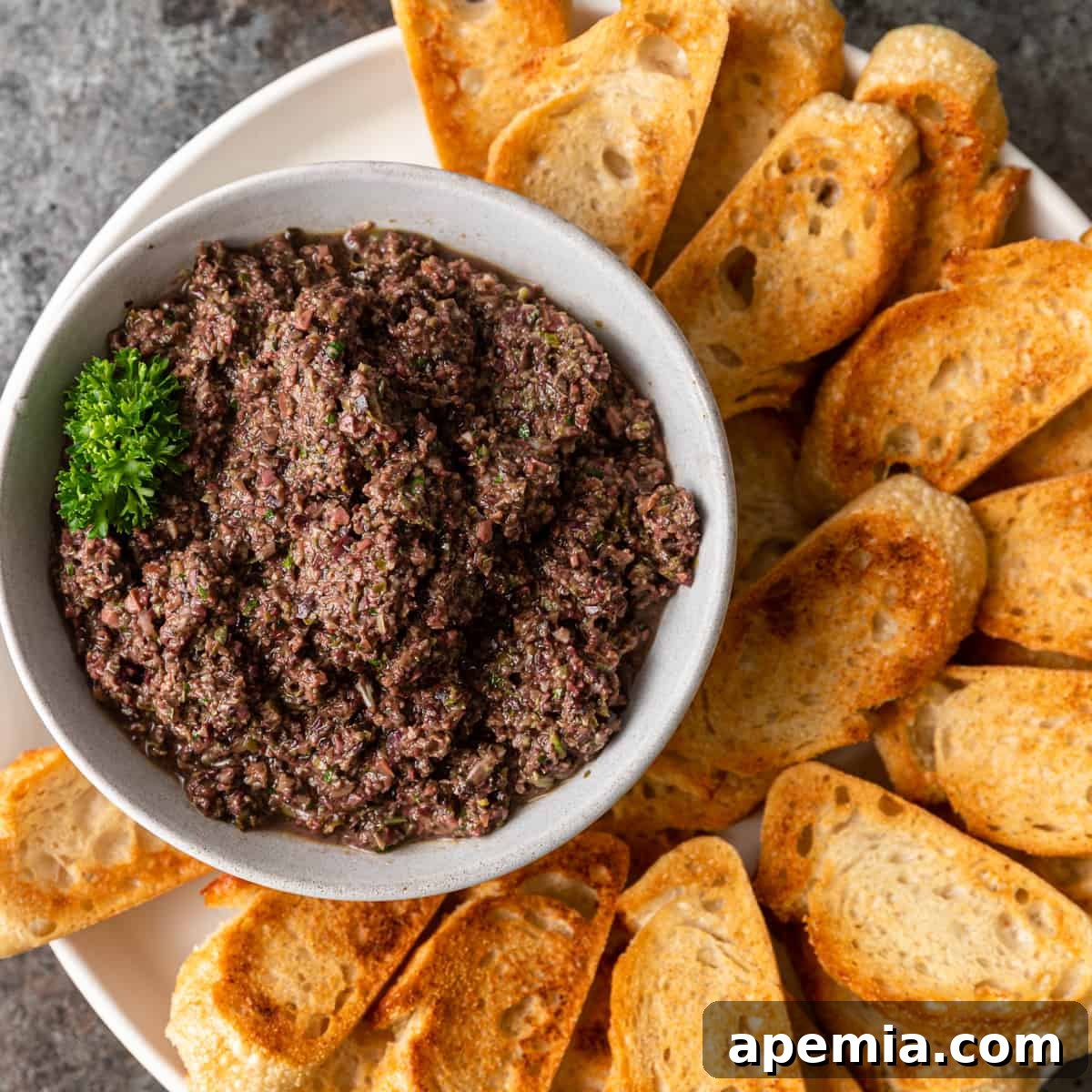
Homemade Olive Tapenade: A Taste of the Mediterranean
Are you looking to elevate your next dinner party or family gathering with a simple yet incredibly flavorful dish? Look no further than this traditional olive tapenade recipe. Crafted with the vibrant tastes of the Mediterranean, this savory spread is not only easy to prepare but also a guaranteed crowd-pleaser, perfect for sharing with friends and loved ones.
The Mediterranean region, particularly Greece and Italy, is renowned for its rich culinary heritage and an impressive array of delicious dips and spreads. From the creamy tang of tzatziki to the robust, potato-and-garlic-loaded skordalia, this ancient culinary tradition consistently delivers extraordinary flavors and delightful textures. Olive tapenade stands proudly among these iconic dishes, offering a distinct profile that’s both bold and comforting.
Originating in the Provence region of France, tapenade has become a staple across the broader Mediterranean, celebrated for its unique combination of olives, capers, anchovies, and olive oil. Its rustic charm and intense flavor make it a versatile addition to any meal, whether served as an appetizer or incorporated into more elaborate dishes. It’s a testament to how a few high-quality ingredients can come together to create something truly spectacular.
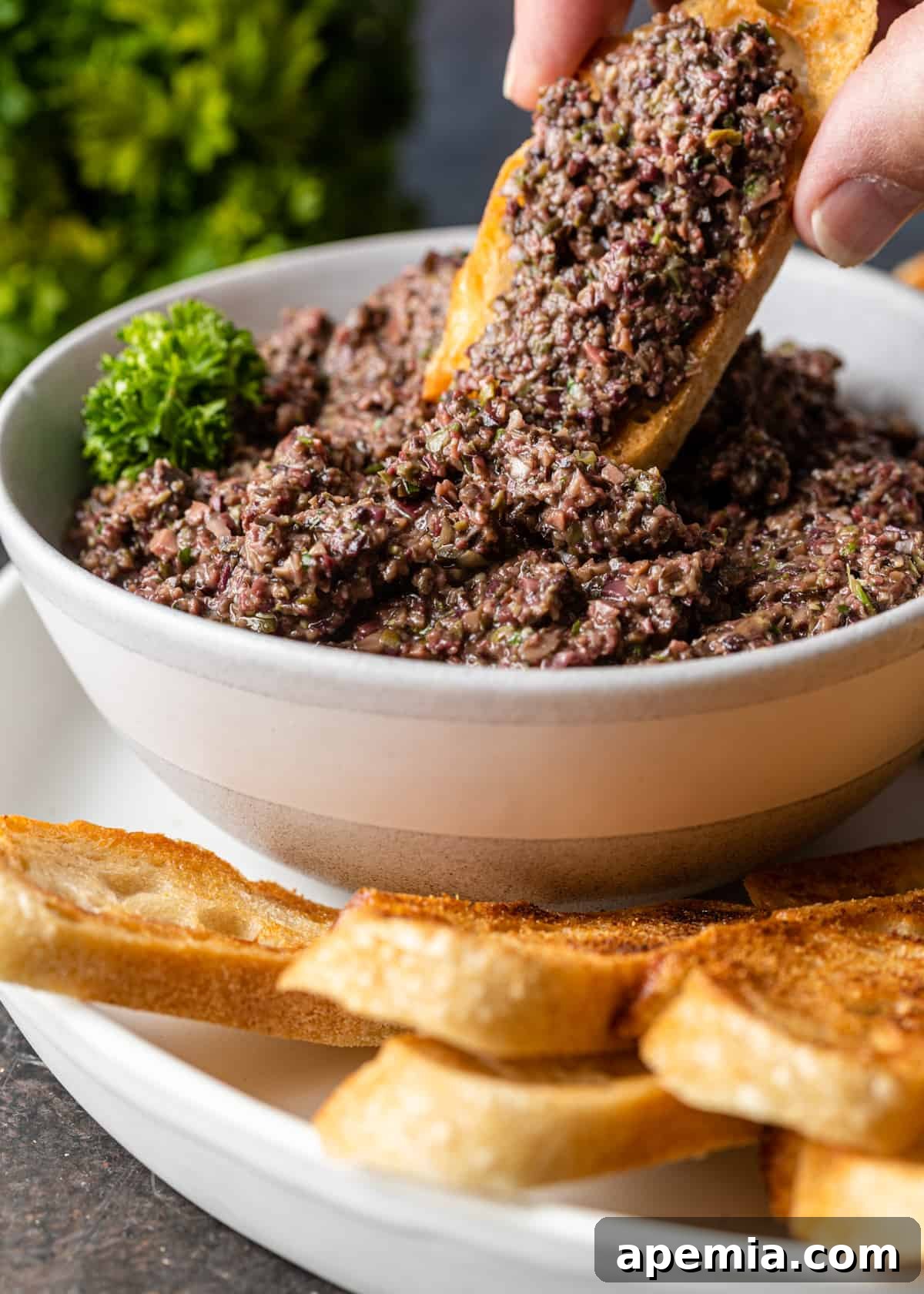
Table of Contents
- Why You’ll Love This Olive Tapenade
- Choosing the Best Olives for Tapenade
- Essential Ingredients & Smart Substitutions
- How to Make Authentic Olive Tapenade
- Recommended Tools for Perfect Tapenade
- Storing & Extending the Life of Your Tapenade
- Frequently Asked Questions About Tapenade
- Olive Tapenade (Mediterranean Olive Spread) Recipe Card
Why You’ll Love This Olive Tapenade
This olive tapenade recipe is a symphony of flavors and textures, blending delightfully savory green and black olives with salty capers, briny anchovies, and pungent fresh garlic. The ingredients are then processed to form a wonderfully coarse, rustic olive spread that perfectly complements pita chips, slices of toasted baguette, or even fresh vegetable crudités. The beauty of this recipe lies in its simplicity and the depth of flavor it achieves with minimal effort.
With its rich, savory, and umami-laden profile, this easy-to-make olive tapenade is an absolute showstopper. It’s ideal for casual snacking, elegant appetizers, or as a flavorful component in your main dishes. Beyond its incredible taste, tapenade also offers a healthy dose of good fats from the olives and olive oil, making it a nutritious choice for conscious eaters. It truly is a versatile delight, perfect for any occasion where bold flavors are appreciated.
Tip From Kevin
Choosing the Best Olives for Tapenade
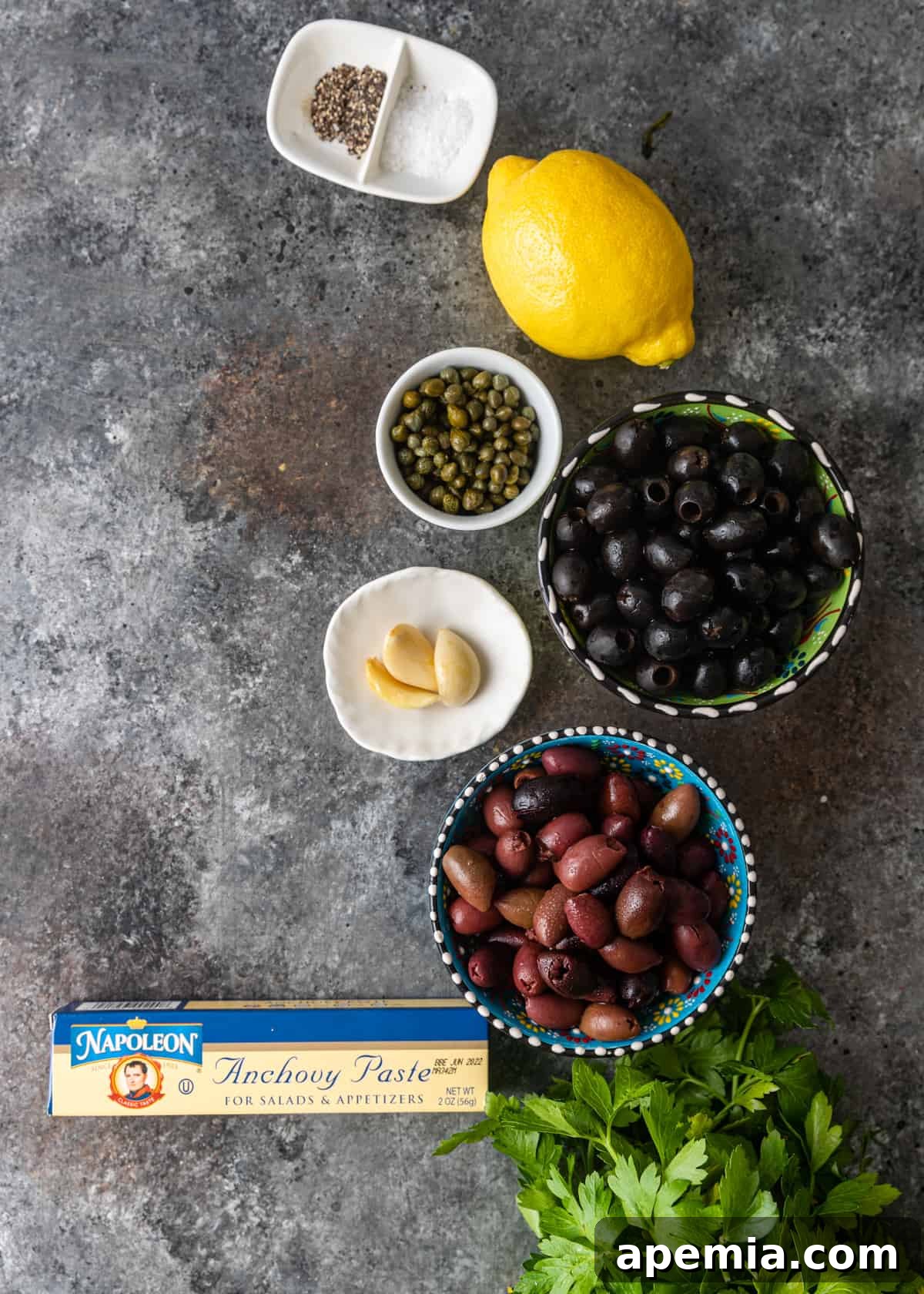
The foundation of an outstanding tapenade is, undoubtedly, the olives. While any green or black cured, brined olives can be used, selecting varieties with robust flavors will significantly enhance your dip. I personally prefer a mix of Manzanillo, Mission, and Kalamata olives for their distinct characteristics and complementary tastes. Manzanillo olives offer a slightly nutty and smoky flavor, Mission olives are generally milder, and Kalamata olives provide a rich, fruity, and slightly wine-like tang. Using a combination of green and black olives also adds visual appeal and a more complex flavor profile to the tapenade.
When selecting olives, always opt for pitted varieties to save time and effort. If you purchase unpitted olives, be prepared to carefully remove the pits yourself. Ensure your olives are well-drained before blending to prevent a watery tapenade. The quality of your olives directly impacts the final taste, so choose good quality, fresh-looking olives from a reputable source.
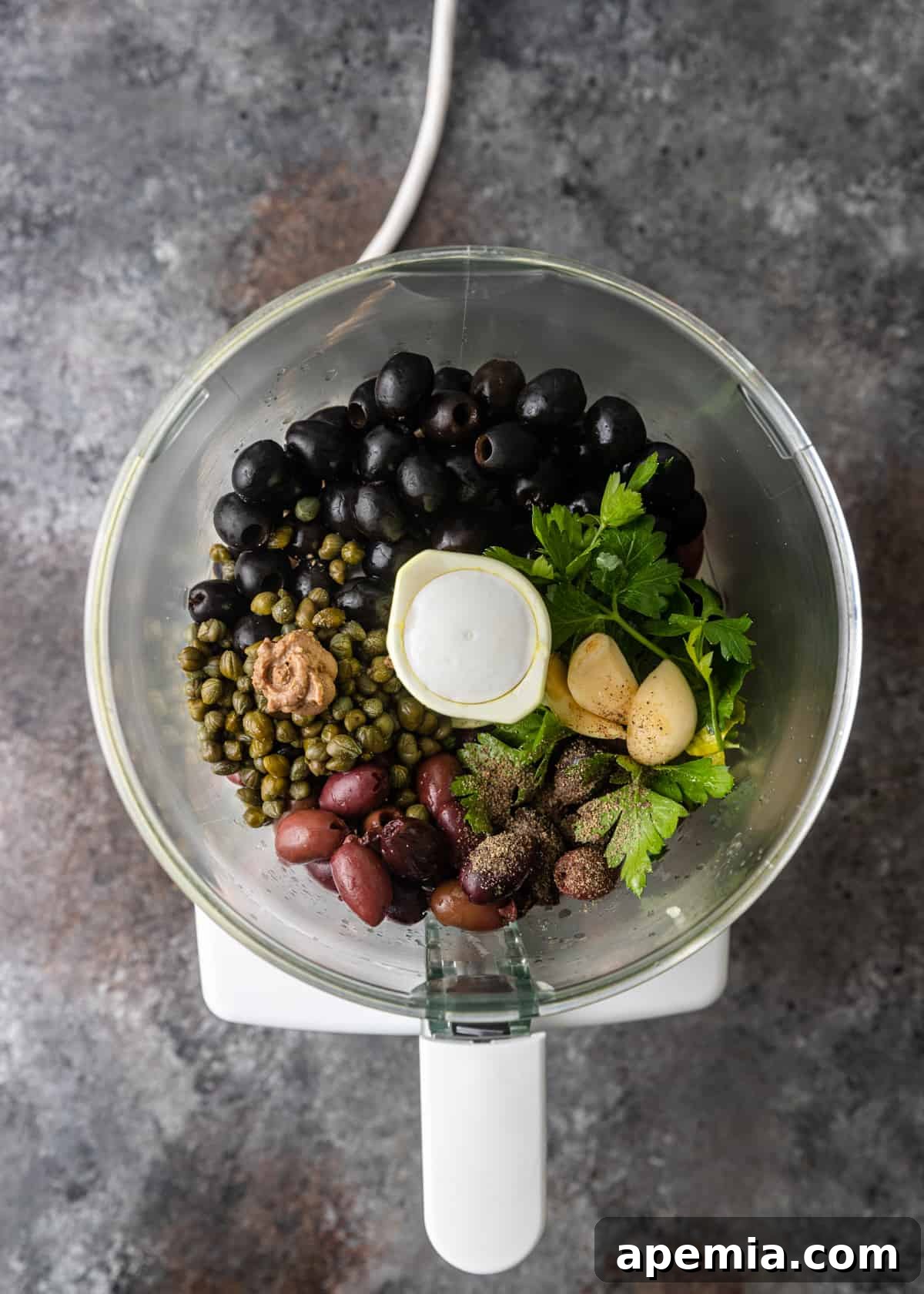
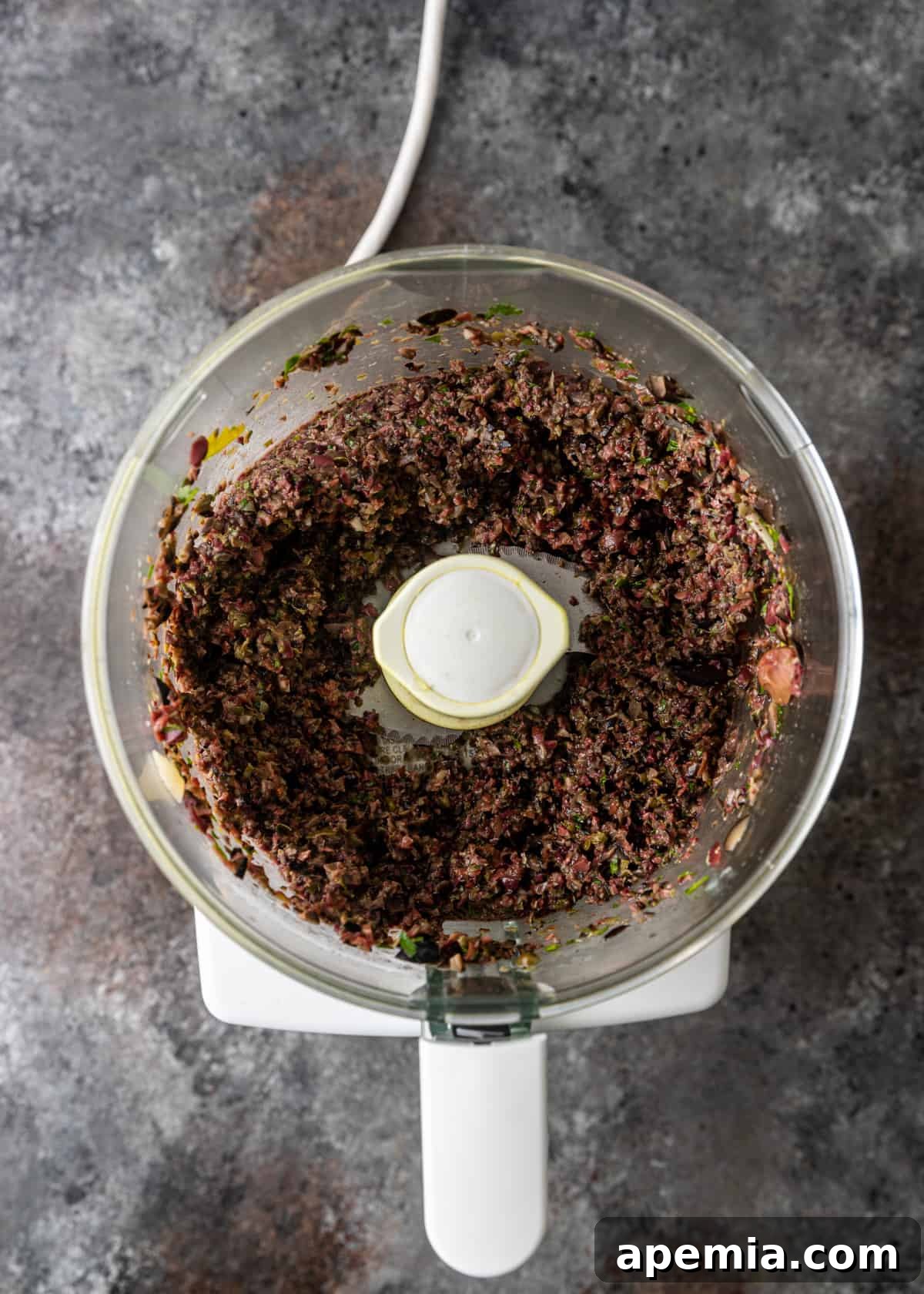
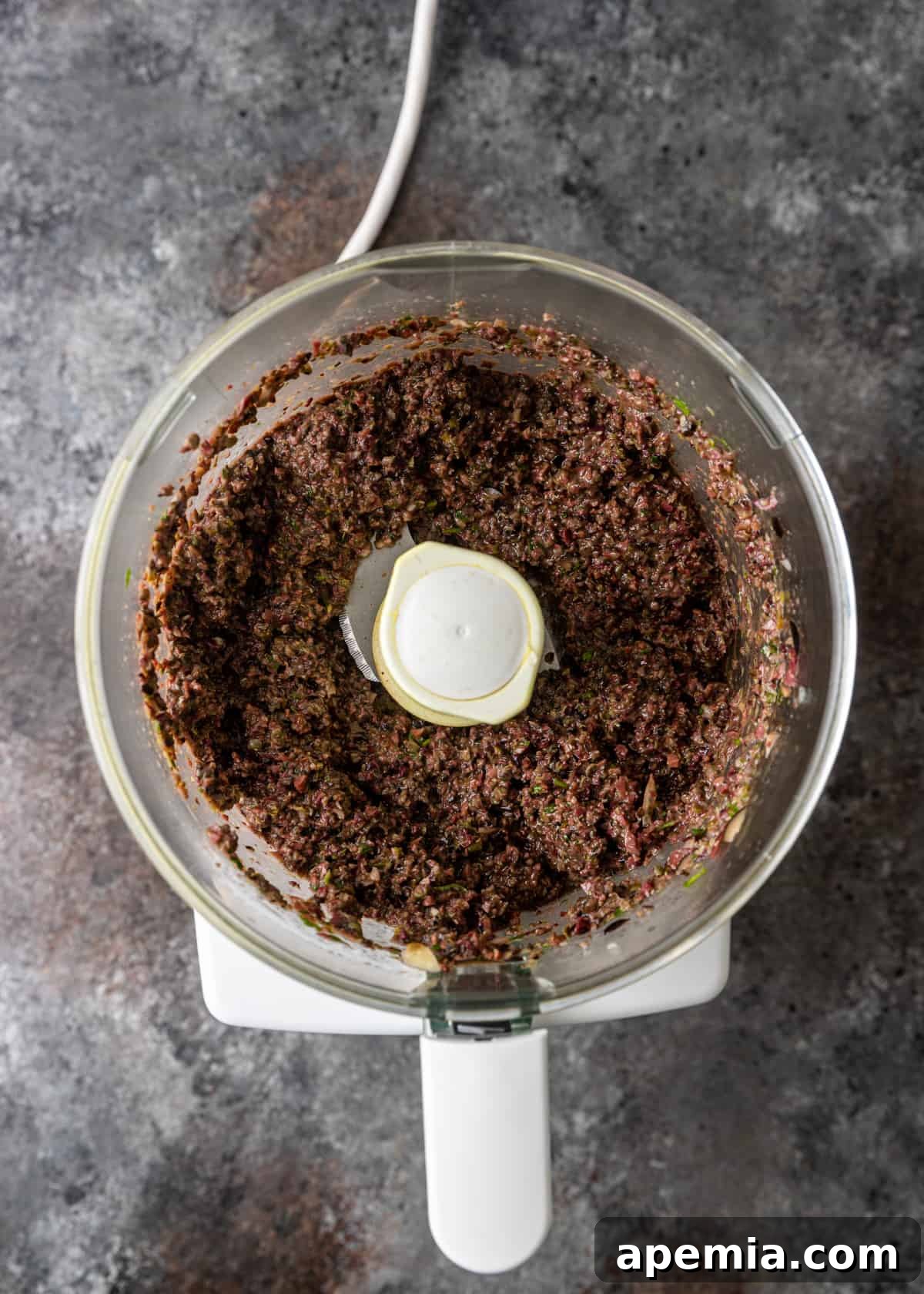
Essential Ingredients & Smart Substitutions
(Be sure to check the recipe card below for a full list of ingredients and quantities)
- Cured & Brined Olives – The star of the show! As mentioned, any variety of green and black olives will do, but for the best flavor, I recommend a combination of Manzanillo, Mission, and Kalamata. Aim for equal amounts of green and black to achieve a balanced taste and appealing color. Always ensure they are pitted and thoroughly drained before use.
- Anchovy Paste – This ingredient is crucial for that deep, savory, umami flavor that elevates tapenade beyond a simple olive spread. If you don’t have anchovy paste, you can mince 2 anchovy fillets very finely. Don’t worry, the anchovy flavor isn’t overtly “fishy”; it simply adds a delightful depth that rounds out the other flavors. For a vegan option, see our FAQ section.
- Capers – These tiny, pickled flower buds contribute a burst of salty, tangy, and slightly lemony flavor, which beautifully complements the richness of the olives and the umami of the anchovies. Ensure they are drained before adding them to your food processor.
- Fresh Parsley – A generous amount of fresh parsley adds a vibrant, herbal brightness that cuts through the intensity of the more potent ingredients. It introduces a fresh note that makes the tapenade feel lighter and more aromatic. Flat-leaf (Italian) parsley is generally preferred for its flavor.
- Fresh Garlic – Raw garlic provides a robust, savory kick and a pleasant pungency to this olive tapenade. Start with the recommended amount, and feel free to adjust to your personal preference for garlicky intensity. For a milder garlic flavor, you can briefly sauté the cloves before adding them.
- Lemon Juice – Freshly squeezed lemon juice is essential. It provides a much-needed acidity that brightens the entire dip, balancing the rich, salty flavors of the olives and anchovies. While bottled lemon juice can work in a pinch, fresh lemon juice offers a superior, more vibrant taste.
- Ground Black Pepper – A pinch of freshly ground black pepper adds a subtle warmth and enhances the overall flavor profile. Adjust to taste, but a little goes a long way. Salt is typically not needed due to the brininess of the olives, capers, and anchovies, but always taste and adjust at the end.
- Extra Virgin Olive Oil – High-quality extra virgin olive oil is key to emulsifying the chopped ingredients, creating a smooth yet rustic, spreadable consistency. It also contributes to the rich, fruity flavor of the tapenade. While avocado oil can be a decent substitute for texture, it lacks the distinct flavor profile of olive oil. Sunflower oil works for consistency but will not add much flavor.
- For Serving: Baguette Slices & Pita Chips – Crispy toasted baguette slices or warm pita chips are classic accompaniments for tapenade. Their crunch and mild flavor provide the perfect canvas for this bold dip. Feel free to substitute with your own favorite crusty breads, crackers, or fresh vegetable sticks.
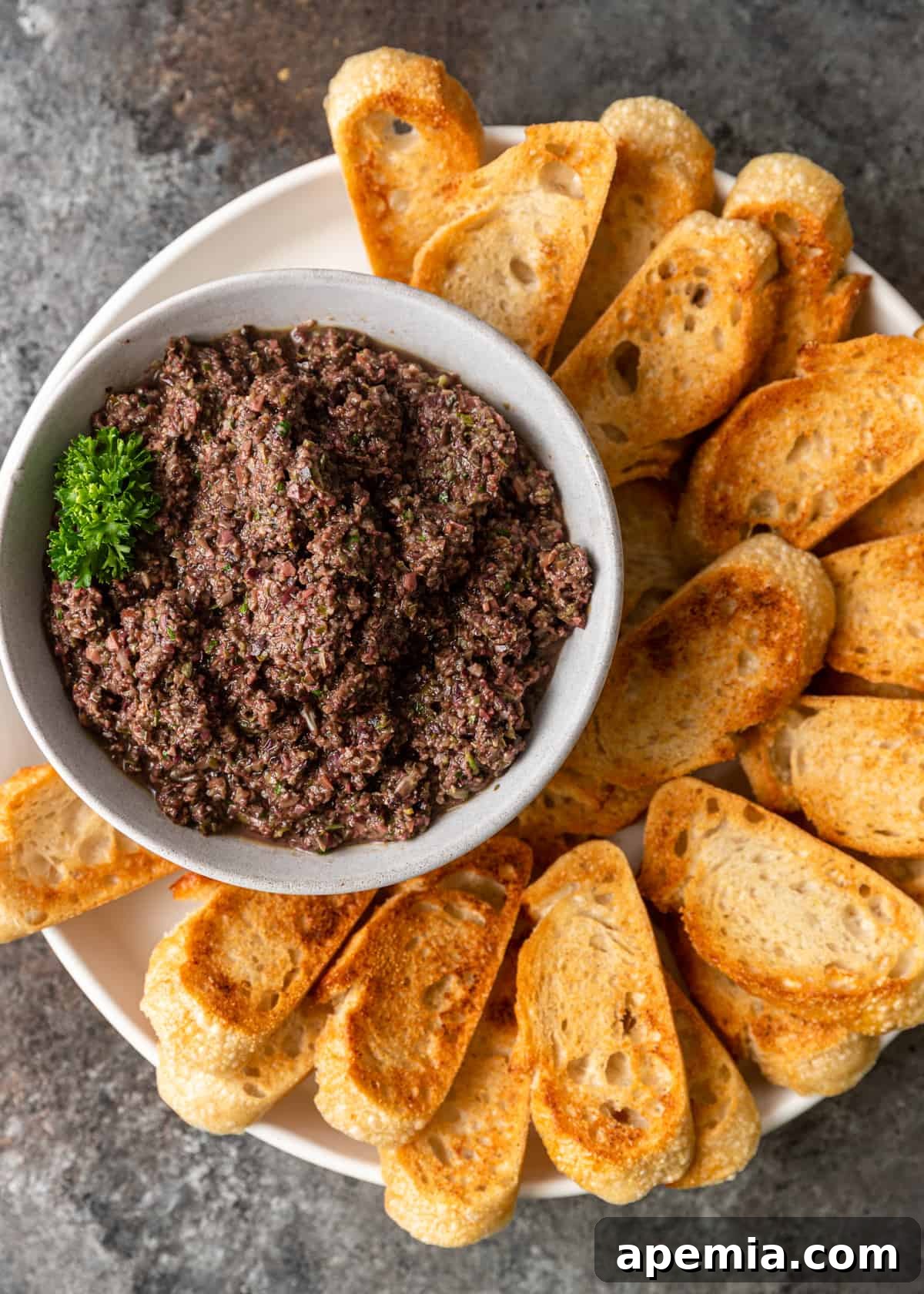
How to Make Authentic Olive Tapenade
Creating this delicious olive tapenade is surprisingly simple and requires minimal effort. Follow these easy steps to achieve a perfectly rustic and flavorful spread:
- Prepare & Blend the Core Ingredients. Begin by ensuring all your olives (both green and black) are thoroughly drained and pitted. You should aim for approximately 1.5 cups total. Transfer the drained olives to your food processor. Add the anchovy paste (or finely minced anchovy fillets), capers, fresh parsley, peeled garlic cloves, fresh lemon juice, and a dash of black pepper. Pulse the mixture several times. The goal here is a coarsely chopped texture, not a completely smooth paste. You want to retain some chunks for that authentic rustic feel.
- Achieve the Perfect Emulsion. After the initial pulsing, use a spatula to scrape down any bits that have stuck to the sides of the food processor bowl, pushing them towards the blades. Now, pour in the olive oil. Continue to pulse the mixture several more times until the ingredients fully emulsify and a chunky, spreadable paste forms. You might need to scrape down the sides one or two more times to ensure everything is evenly incorporated. Taste the tapenade and adjust seasoning if necessary; typically, no extra salt is needed due to the inherent saltiness of the olives, capers, and anchovies.
- Prepare Your Accompaniments. If you’re serving with toasted baguette slices, slice your baguette diagonally into ½-inch thick pieces. Arrange them in a single layer on a baking tray. Drizzle lightly with olive oil and sprinkle with a touch of seasoning salt (or simply a pinch of sea salt). Place the tray under a broiler set to medium-high heat and toast for several minutes, watching carefully, until the baguette slices turn golden brown and crispy. Let them cool slightly before serving alongside your freshly made olive tapenade.
Serve your tapenade at room temperature to allow its full array of flavors to shine. Enjoy the delightful taste of the Mediterranean!
Recommended Tools for Perfect Tapenade
While making tapenade is straightforward, having the right tools can make the process even smoother and ensure the best results:
- Food Processor – This is the most essential tool for creating olive tapenade. A food processor with a pulse setting is crucial. Pulsing allows you to control the consistency, incorporating air and achieving a creamy, well-blended mixture without over-processing it into a smooth puree. This preserves the desired rustic, coarse texture that defines traditional tapenade.
- Strainer – A fine-mesh strainer is necessary to thoroughly drain the olives and capers. Excess liquid can negatively affect the texture and shelf life of your dip, making it watery instead of thick and spreadable.
- Baking Sheet – If you plan on serving your tapenade with toasted bread, a baking sheet is indispensable for evenly toasting baguette slices or pita bread in the oven or under the broiler.
- Spatula – A sturdy spatula is handy for scraping down the sides of the food processor bowl during blending, ensuring all ingredients are evenly incorporated and no bits are left unchopped.
Storing & Extending the Life of Your Tapenade
One of the many great things about olive tapenade is how incredibly well it stores, often tasting even better the next day as the flavors meld. Proper storage is key to maximizing its freshness and longevity:
Refrigerator Storage: To store leftovers, transfer the tapenade to an airtight jar or container. Glass containers are preferable as they won’t absorb the strong odors of garlic and olives. Once transferred, use the back of a spoon to smooth out the top surface of the tapenade. Then, pour a thin layer of extra virgin olive oil over the top to create a seal, protecting it from air and preventing oxidation. Stored this way, your homemade olive tapenade will keep beautifully in the refrigerator for up to 2 weeks.
Freezer Storage: If you wish to store this flavorful dip for an extended period, freezing is an excellent option. Portion the tapenade into small, freezer-safe containers. For truly small, single-serving portions, an ice cube tray works perfectly. Once frozen solid, transfer the individual tapenade portions from the containers or ice cube tray into a freezer bag, ensuring to remove as much air as possible before sealing. It can be stored in the freezer for up to 3 months.
Thawing and Serving: When you’re ready to enjoy frozen tapenade, simply thaw it overnight in the refrigerator. Before serving, give it a good stir and incorporate a little fresh olive oil if needed to restore its original smooth and spreadable consistency. Always bring it to room temperature before serving for the best flavor.
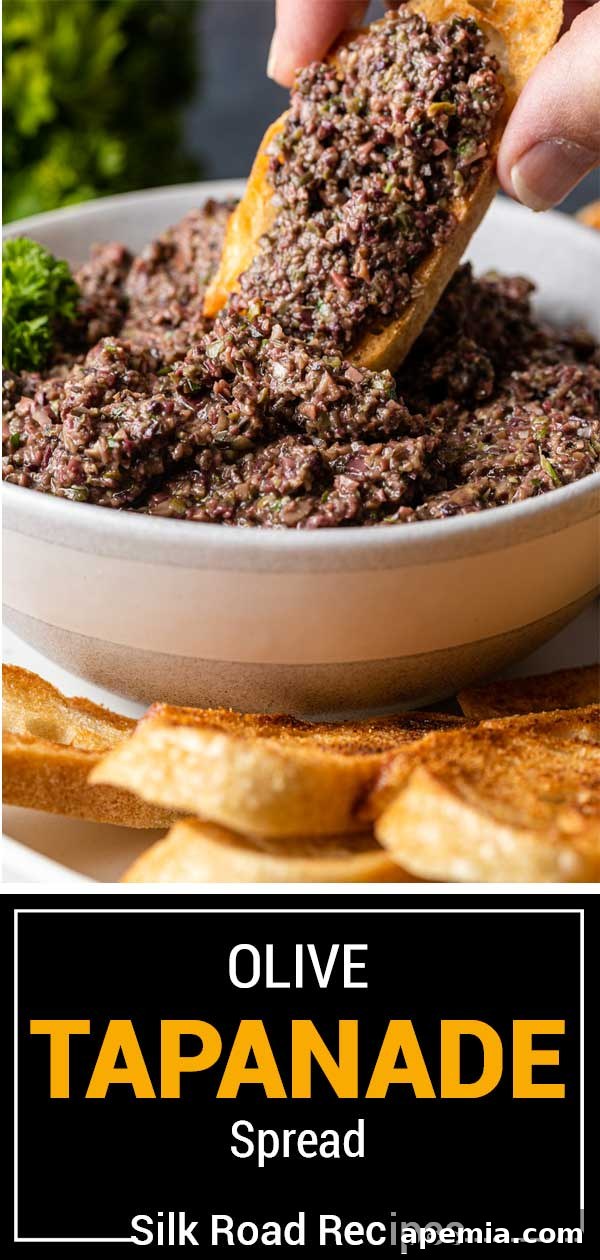
Share this recipe on Pinterest!
Love this recipe? Share it with the world on Pinterest.
Frequently Asked Questions About Tapenade
This recipe already includes fresh parsley, which offers a bright, herbaceous note. For additional flavor dimensions, fresh thyme or basil also work beautifully, complementing the rich and salty base of the tapenade. Rosemary can also be used sparingly for a more pungent, woodsy aroma. Always opt for fresh herbs over dried ones, as their vibrant flavors are essential to balance the dip’s intensity and saltiness. Dried herbs tend to lack the necessary “pop” to stand out.
Absolutely! If you’re not a fan of anchovies or are looking for a vegan alternative, you can certainly omit them. To replicate that deep, savory umami flavor that anchovies provide, try adding a spoonful of white miso paste to the mix. It offers a similar depth of flavor without any fish. Additionally, consider increasing the amount of capers slightly to compensate for the reduction in saltiness and briny notes from the absence of anchovies. A dash of Worcestershire sauce (check for vegan varieties if needed) can also add a complex savory note.
While I’ve suggested toasted baguette or pita chips, the truth is that olive tapenade is incredibly versatile and pairs wonderfully with almost anything! Beyond traditional breads and crackers, consider serving it with an assortment of fresh vegetable slices like cucumber, bell peppers, carrots, or celery for a lighter option. You can also get creative and use tapenade as a cooking ingredient: spread it on sandwiches or wraps, stir it into pasta sauce for an instant flavor boost, use it as a topping for grilled fish or chicken, or even dollop it onto scrambled eggs. It makes an excellent pizza topping or a flavorful stuffing for mushrooms or bell peppers. The possibilities are truly endless!
Yes, olive tapenade can be a very healthy addition to your diet! Olives and extra virgin olive oil are rich in monounsaturated fats, which are known to be heart-healthy. They also provide antioxidants and anti-inflammatory compounds. Capers and herbs add additional nutrients and flavor without excess calories. While tapenade is relatively high in sodium due to the brined ingredients, when consumed in moderation as part of a balanced diet, it offers significant nutritional benefits.
Absolutely! In fact, tapenade often tastes even better when made a day or two in advance. This allows all the distinct flavors from the olives, capers, anchovies, garlic, and lemon to meld together beautifully. Just follow the storage instructions mentioned above: transfer it to an airtight container, smooth the top, and cover with a thin layer of olive oil before refrigerating. Bring it to room temperature before serving for the best flavor and consistency.
Olive Tapenade (Mediterranean Olive Spread)
12
10
10
Print Recipe
Ingredients
- 6 ounces brine-cured olives pitted (e.g., Manzanillo, Mission – see Note 1)
- 6 ounces black olives pitted, drained (e.g., Kalamata)
- 1 teaspoon anchovy paste or 2 anchovy fillets, minced
- 1/4 cup capers drained
- 2 tablespoons fresh parsley chopped
- 3 cloves garlic minced
- 3 tablespoons fresh lemon juice
- 1/8 teaspoon ground black pepper
- 1/4 cup extra virgin olive oil
For Serving
- Toasted baguette slices
- Pita chips
Instructions
-
Ensure both the green and black olives are thoroughly drained and pitted. You should have approximately 1.5 cups total. Transfer the olives to a food processor along with the anchovy paste (or minced fillets), capers, fresh parsley, garlic cloves, fresh lemon juice, and ground black pepper. Pulse the mixture several times until it is coarsely chopped. Avoid over-processing; you want a rustic, chunky texture, not a smooth puree.
-
Using a spatula, scrape down any ingredients clinging to the sides of the food processor bowl. Add the extra virgin olive oil. Pulse several more times until the mixture emulsifies and a chunky, spreadable paste forms. Scrape down the sides as needed to ensure even blending. Taste the tapenade and adjust seasoning (e.g., more pepper or lemon juice) if desired. Typically, no additional salt is required. Serve at room temperature for optimal flavor.
-
To prepare toasted baguette slices: Slice a baguette (sourdough works wonderfully) into ½-inch thick rounds and arrange them on a baking tray. Drizzle lightly with olive oil and sprinkle with a pinch of seasoning salt or sea salt. Place the tray under a broiler on medium-high heat and toast for several minutes, watching closely, until the slices are golden brown and crispy. Remove from the broiler, let cool slightly, and serve alongside your homemade olive tapenade.
Notes
- Any variety of green or black cured, brined olives can be used. For a balanced and robust flavor, I recommend a mix of Manzanillo, Mission, and Kalamata olives. Ensure they are pitted and well-drained.
- For a vegan version, omit the anchovy paste and consider adding a teaspoon of white miso paste for an umami boost, along with a little extra capers.
- Tapenade can be stored in an airtight container in the refrigerator for up to 2 weeks. For longer storage, freeze in small portions for up to 3 months.
Nutrition
(Nutritional information is an estimate based on 12 servings)
Calories: 85kcal | Carbohydrates: 2g | Protein: 1g | Fat: 9g | Saturated Fat: 1g | Polyunsaturated Fat: 1g | Monounsaturated Fat: 7g | Cholesterol: 0.4mg | Sodium: 562mg | Potassium: 27mg | Fiber: 1g | Sugar: 0.3g | Vitamin A: 173IU | Vitamin C: 3mg | Calcium: 20mg | Iron: 0.3mg
The information shown is an estimate provided by an online nutrition calculator. It should not be considered a substitute for a professional nutritionist’s advice.
Appetizers, Dip, Spread
Mediterranean, French, Greek
Kevin
Have You Made This Recipe? Let Me Know on Instagram
Tag @keviniscooking or tag me #keviniscooking!
We hope you enjoy making and sharing this vibrant Mediterranean olive tapenade. Its robust flavors and simple preparation make it a perfect addition to any culinary repertoire. Happy cooking!