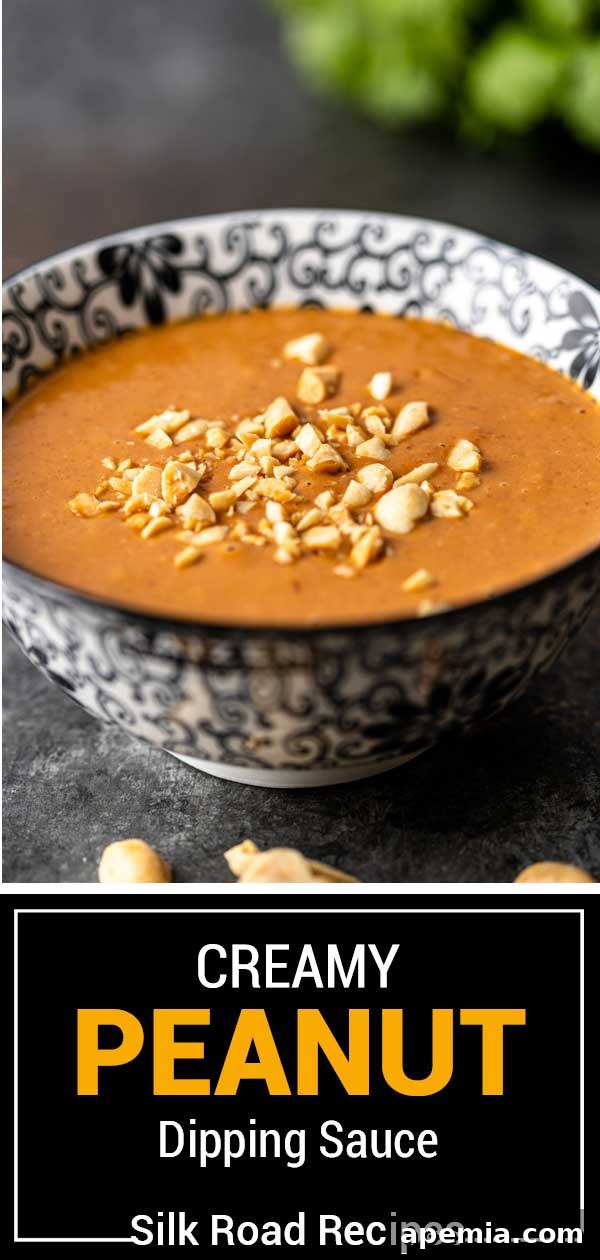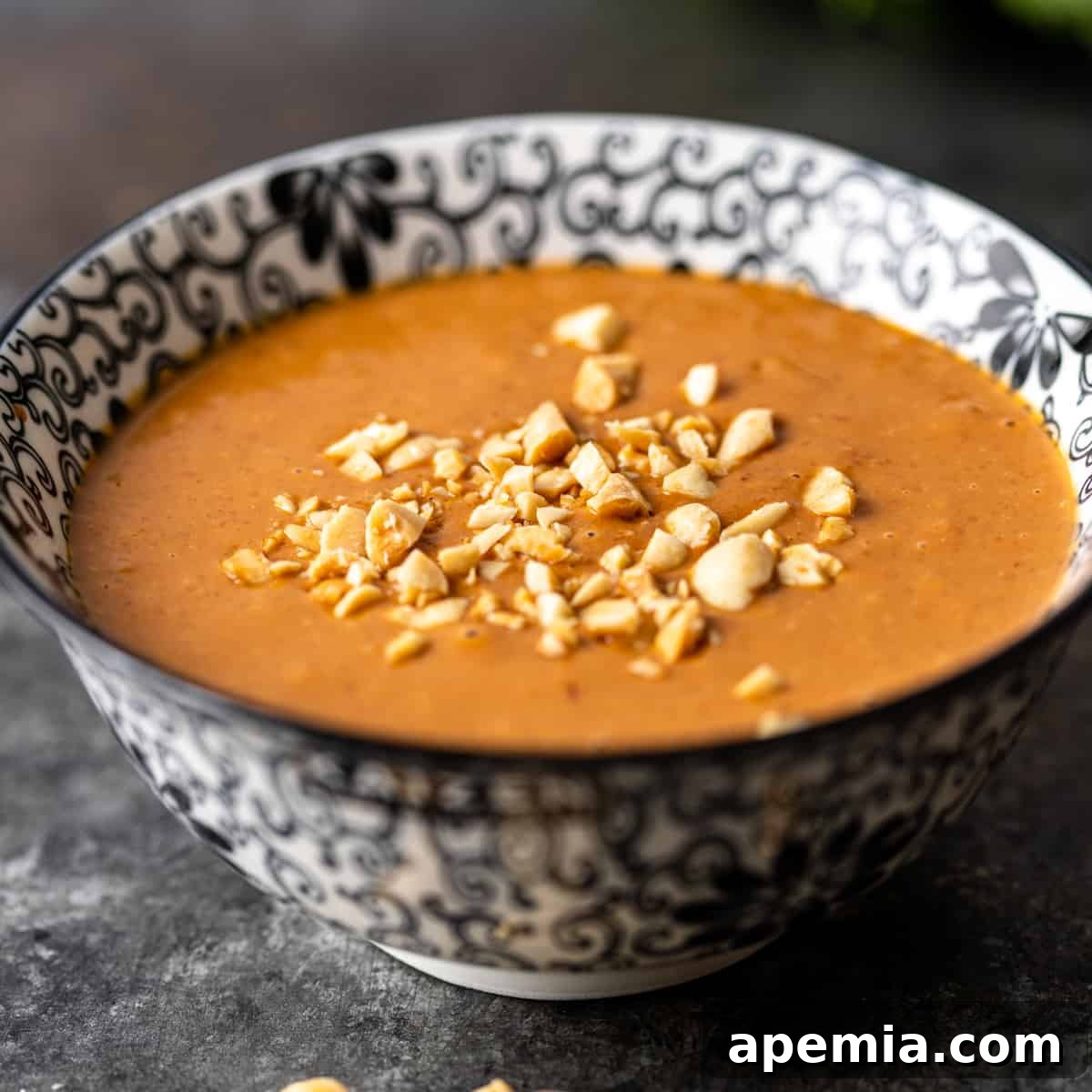
Looking for a quick, exceptionally delicious, and incredibly versatile dipping sauce that will elevate any meal? You’ve landed on the perfect recipe for homemade peanut sauce! This remarkable sauce offers a delightful symphony of flavors, blending the creamy richness of peanuts with the zesty kick of garlic, the warm spice of chilis, the savory depth of soy sauce, and a touch of tangy vinegar and sweetness. It’s truly a sauce that has something for everyone, making it the ideal accompaniment for fresh spring rolls, vibrant salads, comforting noodle dishes, grilled meats, and so much more. Get ready to transform your culinary creations with this easy-to-make, irresistible condiment.
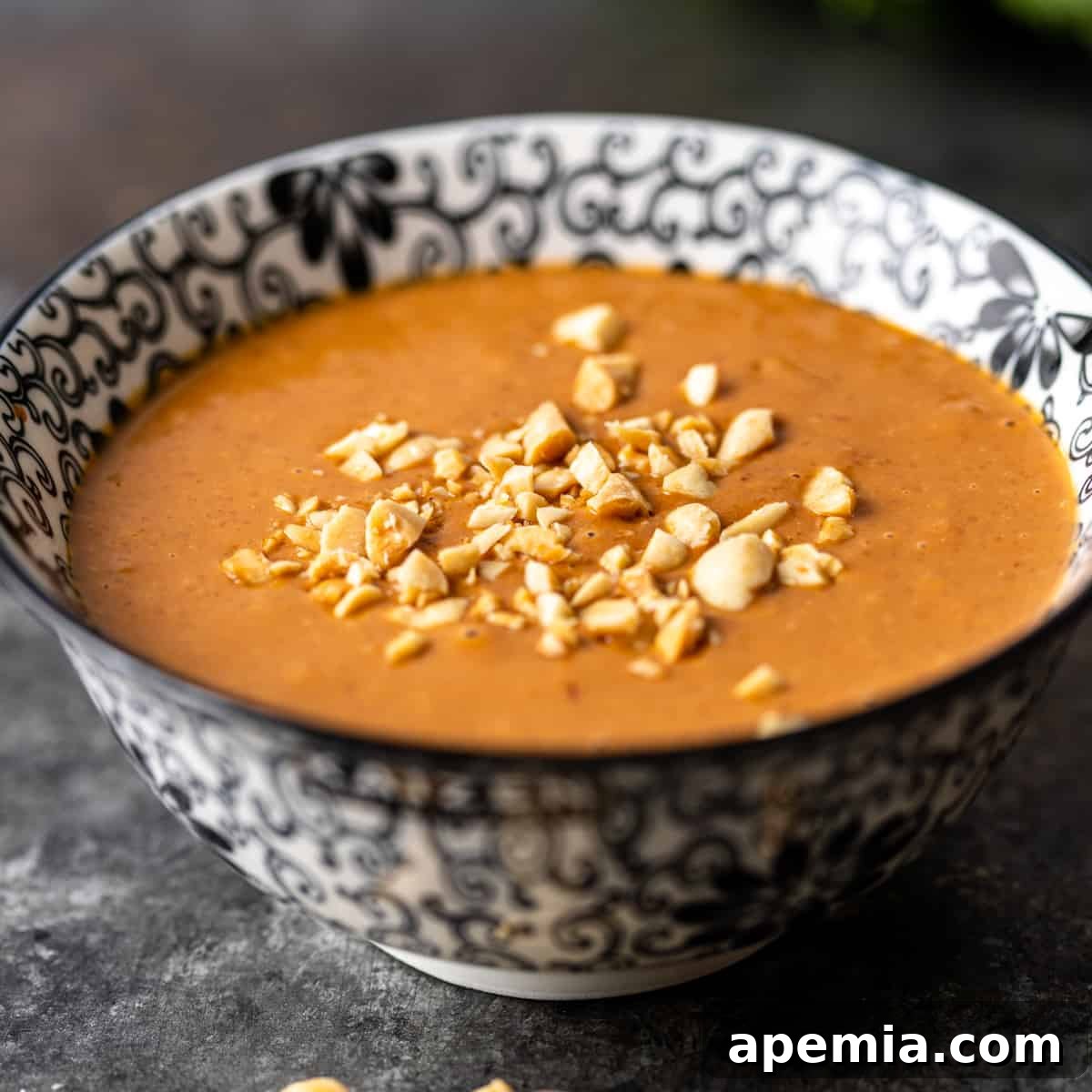
There’s a unique satisfaction that comes from crafting your own condiments and spice blends right in your own kitchen. It’s a feeling of empowerment, transforming simple, fresh ingredients into complex, flavorful staples that capture the essence of diverse culinary traditions. For me, exploring the rich tapestry of flavors along the historic Silk Road has been a particularly rewarding journey. What once felt like exotic, distant aromas and tastes are now familiar and accessible, proudly taking their place in my DIY pantry.
And the best part? Creating these incredible flavors is often far simpler than you might imagine! Today’s recipe for peanut sauce is a shining example of this simplicity. Forget store-bought versions filled with preservatives and artificial flavors. This homemade rendition is crafted with readily accessible ingredients that you likely already have on hand, or can easily find at any grocery store. Furthermore, it takes a mere 10 minutes from start to finish. All it requires is a quick toss of ingredients into a blender, a whir, and voilà – you have a fresh, flavorful, and truly authentic peanut sauce ready to impress.
If you enjoy the ease and flavor of homemade staples, be sure to explore my Pantry Staples Archives. There, you’ll discover other culinary treasures like this vibrant Lebanese Garlic Sauce (Toum), a fragrant Garam Masala Recipe, and an authentic Vietnamese Fish Sauce (Nuoc Chom). Each recipe is designed to bring global flavors into your home with minimal effort and maximum reward.
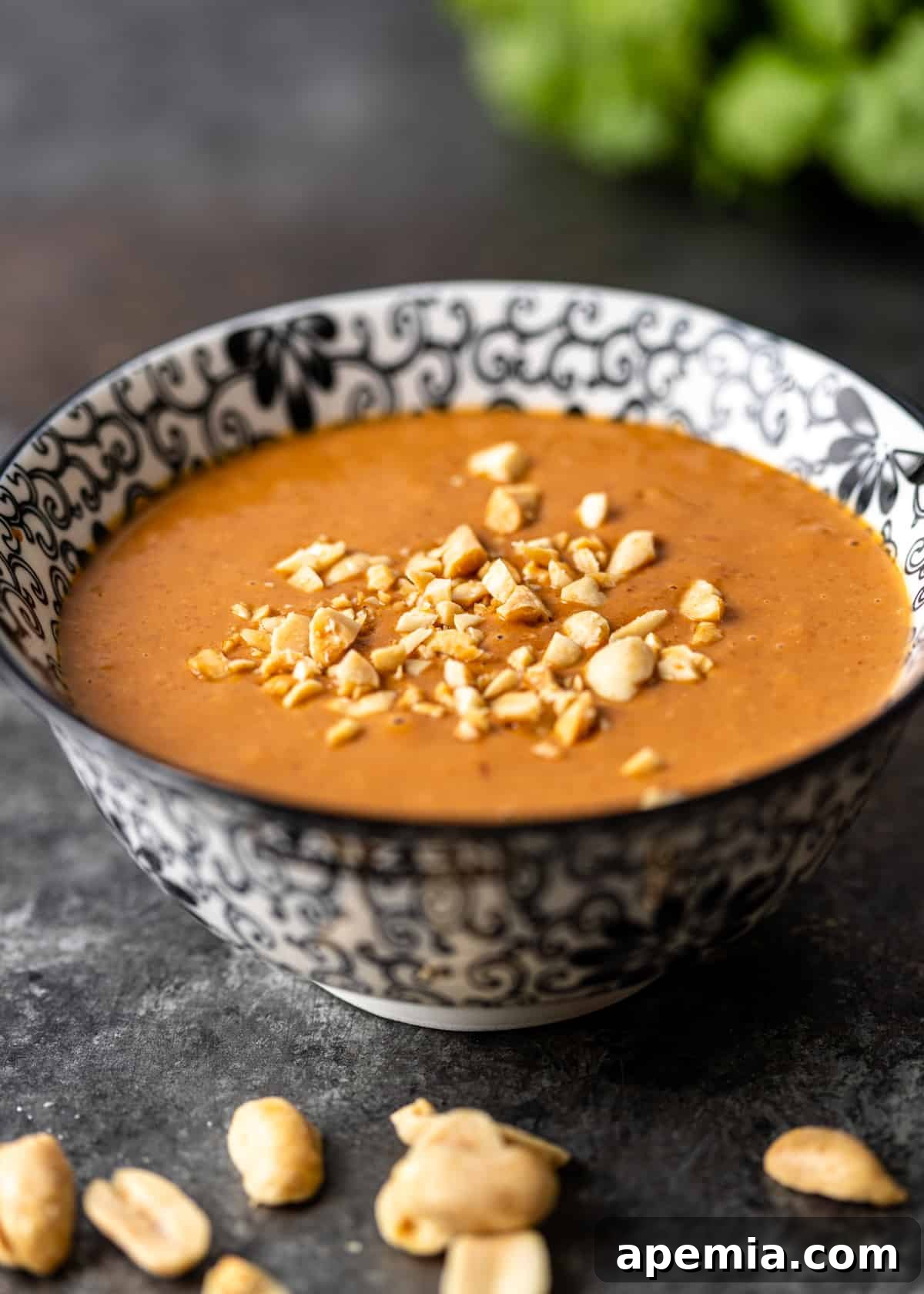
Essential Ingredients for Your Perfect Peanut Sauce
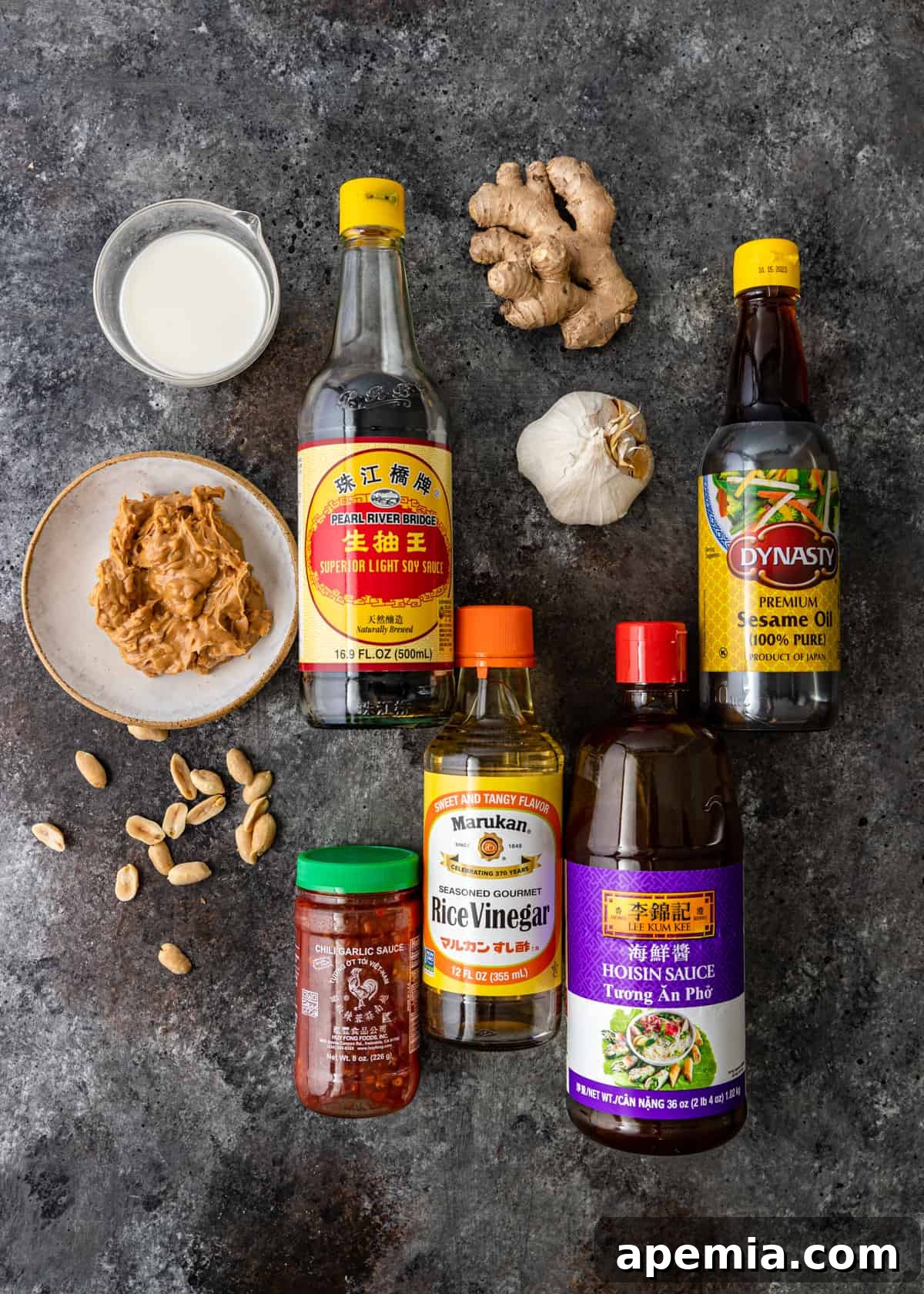
The magic of this peanut sauce lies in the harmonious blend of its core ingredients. Each component plays a crucial role in building the complex, irresistible flavor profile. Here’s a breakdown of what you’ll need and why each element is so important:
- Peanut Butter: The Heart of the Sauce – This is, undoubtedly, the MVP of our recipe. Peanut butter provides that signature rich, nutty, and earthy foundation that defines the sauce. Its natural sweetness and saltiness create an immediate depth of flavor. For the smoothest sauce, opt for creamy peanut butter, but if you enjoy extra texture, a natural or chunky variety can also work, especially if you plan to blend it thoroughly.
- Soy Sauce: Umami Depth – A good quality light soy sauce is essential for introducing a profound umami flavor without making the sauce overly salty or dark. It adds a crucial savory dimension that balances the sweetness and acidity. Always taste and adjust, as soy sauce brands can vary in saltiness.
- Milk: Achieving Creaminess and Harmony – Whether you choose regular dairy milk or creamy coconut milk, this ingredient is key to achieving a luscious, smooth consistency. It also acts as a brilliant harmonizer, mellowing and blending the various strong flavors into a cohesive, delicious whole. Coconut milk will lend a subtle tropical note, enhancing the Asian-inspired profile beautifully.
- Chili Paste: The Spicy Kick – For that delightful dose of spicy, salty, and vinegary heat, chili paste is indispensable. I highly recommend using sambal oelek chili paste for its vibrant flavor and texture, but feel free to use your preferred chili paste. Adjust the amount according to your desired level of spice – a little goes a long way!
- Toasted Sesame Oil: Aromatic Elegance – Just a small amount of toasted sesame oil contributes delicate, nutty, and wonderfully floral undertones. It adds an aromatic richness that is characteristic of many East Asian dishes and truly rounds out the sauce’s flavor. Ensure it’s toasted sesame oil for maximum aroma.
- Rice Vinegar: Bright Tanginess – To cut through the richness and add a refreshing zest, rice vinegar provides a dash of sour, tangy, and acidic brightness. It balances the sweetness and saltiness perfectly. If you don’t have rice vinegar on hand, apple cider vinegar, white vinegar, or even a squeeze of fresh lemon juice can be used as a suitable substitute in a pinch.
- Hoisin Sauce: Savory Sweetness – This thick, fragrant sauce is a secret weapon, offering a concentrated burst of savory umami, a hint of saltiness, and a delightful touch of sweetness. Hoisin sauce adds complexity and depth that makes the peanut sauce truly irresistible. You can typically find it in the international foods aisle of most major grocery stores.
- Sugar: The Balancing Act – A touch of sugar is crucial for achieving the perfect balance of flavors in this sauce. It tames the acidity, enhances the savory notes, and provides just the right amount of sweetness to make every spoonful a treat. Granulated sugar works perfectly here.
- Fresh Ginger: Zesty Warmth – Fresh ginger brings a vibrant, zesty, and slightly zingy flavor with a comforting sweet and spicy warmth. It’s a cornerstone of Asian cuisine and adds an invigorating layer to our peanut sauce. Always opt for fresh ginger over powdered for the best results.
- Fresh Garlic: Pungent Perfection – Garlic, a universal flavor enhancer, contributes a nice little kick of pungent, peppery sharpness. It adds a robust and aromatic dimension that complements the ginger and chilis beautifully.
- Roasted Peanuts (for garnish): Dynamic Crunch – While the peanut butter forms the base, a sprinkle of roasted and chopped peanuts on top provides a dynamically delicious crunch and texture. It also visually signals the star ingredient and enhances the overall experience.
Crafting Your Perfect Peanut Sauce: A Simple Guide
Making this peanut sauce is incredibly straightforward, requiring minimal effort for maximum flavor. Here’s how you can prepare this delicious condiment in just a few simple steps:
Step-by-Step Instructions
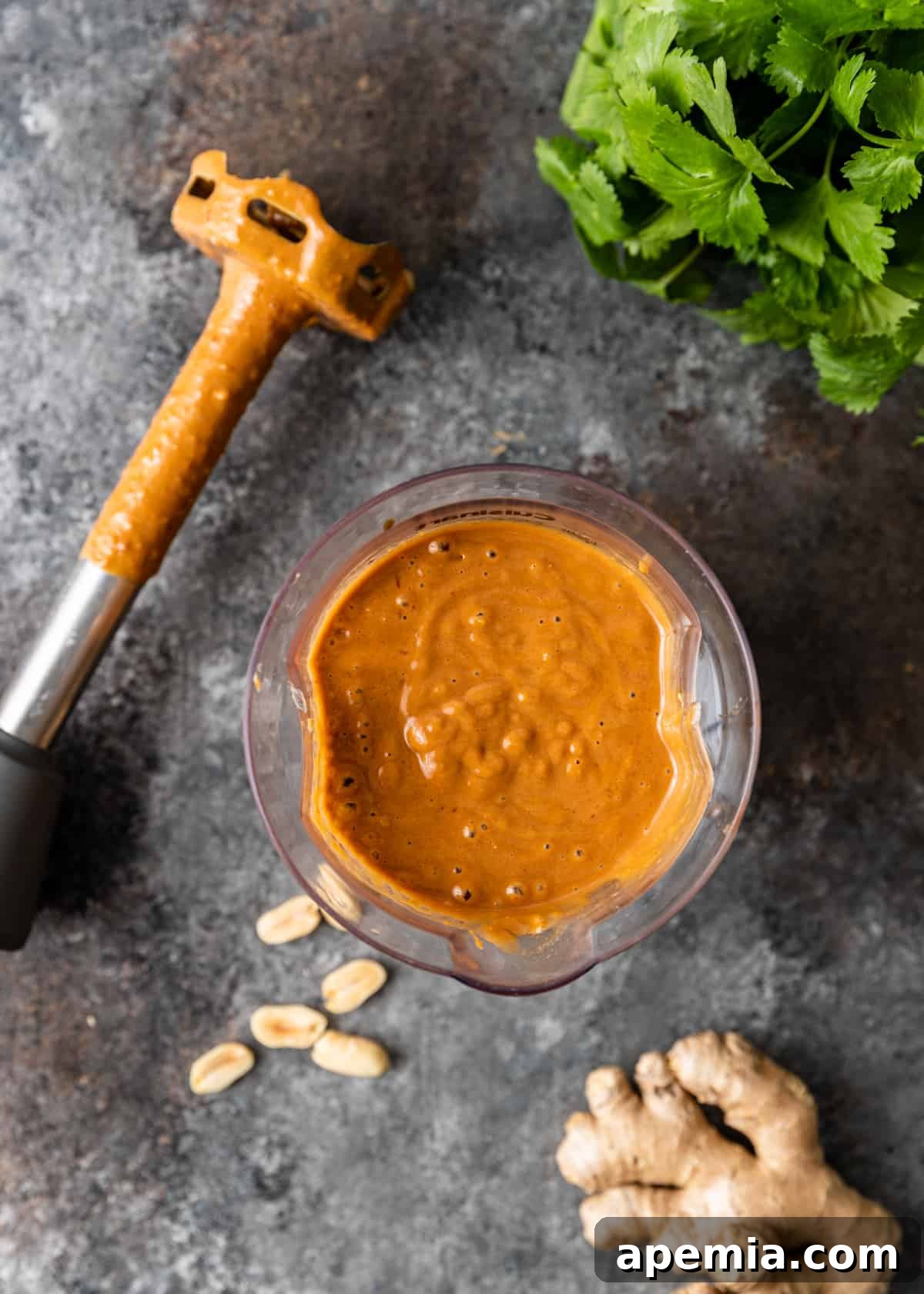
- Puree All Ingredients: Gather all your ingredients as listed in the recipe. Place the peanut butter, light soy sauce, milk (or coconut milk), chili paste, toasted sesame oil, rice vinegar, hoisin sauce, sugar, fresh ginger, and garlic cloves into a blender. Alternatively, if you have an immersion blender, you can combine all ingredients in a large, deep bowl. Blend or puree on high speed until the mixture is completely smooth and creamy. Make sure there are no lumps of peanut butter or large pieces of ginger and garlic remaining.
- Adjust Consistency and Flavor: After the initial blend, check the consistency of your sauce. If it appears too thick, slowly add a little more milk or water, one tablespoon at a time, blending after each addition, until you reach your desired pourable, yet rich, consistency. Now is also the time to taste the sauce and adjust the seasonings. You might find it needs a pinch more salt (add more soy sauce), a touch more sweetness (another tiny spoonful of sugar), or an extra kick of spice (a bit more chili paste). Continue to taste and adjust until the flavor profile perfectly suits your palate.
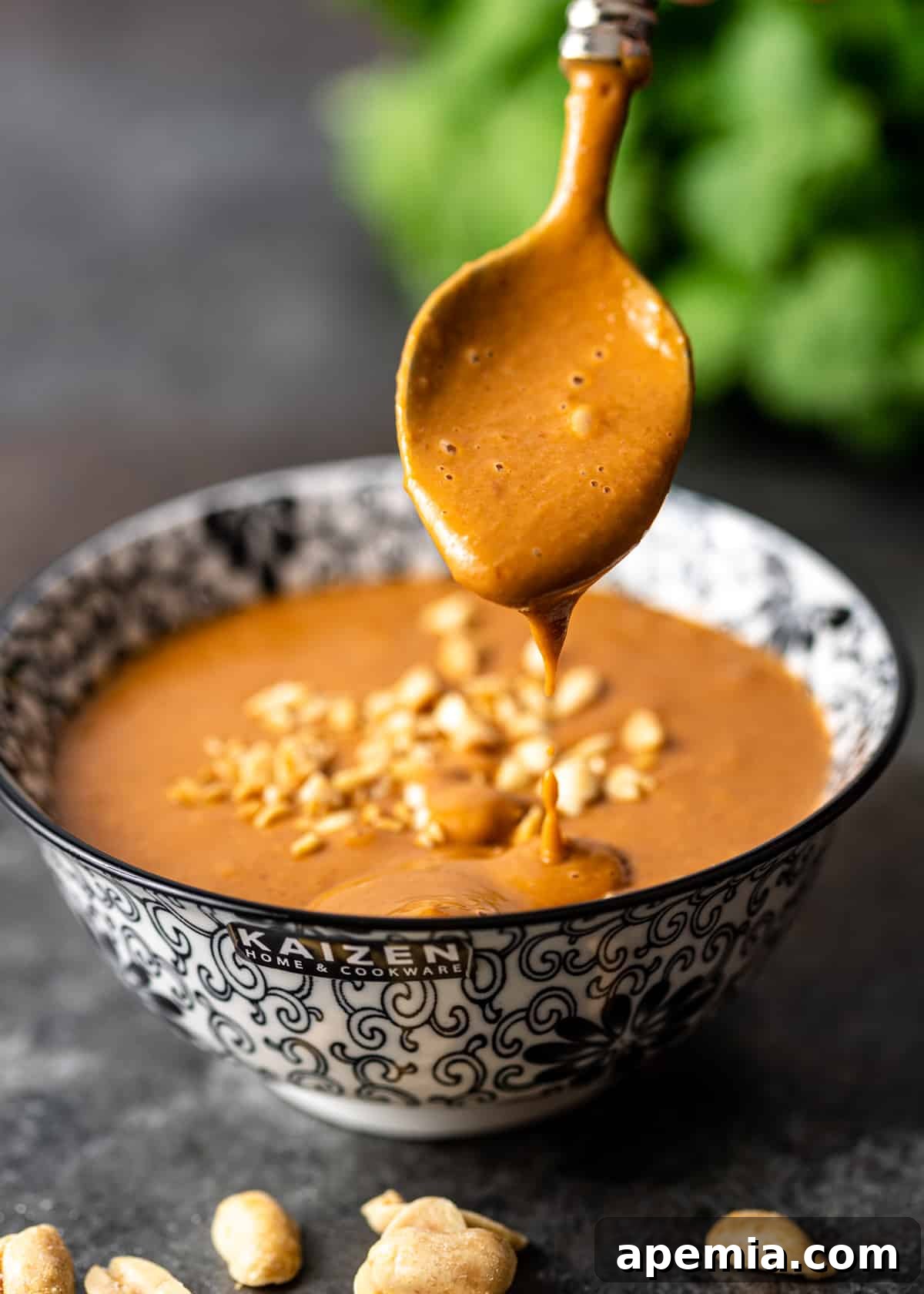
- Garnish and Serve: Once your peanut sauce has achieved its ideal consistency and flavor, transfer it to a serving bowl. Before serving, sprinkle the top generously with your chopped roasted peanuts. This not only adds a beautiful visual appeal but also provides a wonderful textural contrast. For the best flavor experience, serve the peanut sauce as close to room temperature as possible. This allows all the intricate flavors to shine through. Enjoy immediately with your favorite dishes!
Understanding the Difference: Satay Sauce vs. Peanut Sauce
While the terms satay sauce and peanut sauce are frequently used interchangeably, particularly in Western culinary contexts, there’s a nuanced distinction worth noting. Technically, satay originates from the Indonesian word sate, which specifically refers to “skewered meat.” Therefore, the term primarily describes the grilled meat dish itself, often found across Southeast Asian countries, and not all traditional satay preparations are exclusively served with peanut sauce. Different regions and cultures have their unique accompaniments.
However, what we commonly recognize as “satay sauce” in many parts of the world has its roots in Indonesia and was indeed one of the earliest forms of peanut-based sauces. Over centuries, as culinary traditions evolved and spread, numerous variations of peanut sauce emerged. This particular peanut sauce recipe is a vibrant, Thai-inspired version, reflecting the rich adaptation and evolution of this versatile condiment. The myriad versions of satay and peanut sauces found today are as dynamic and diverse as the cultures and communities across Southeast Asia, each offering a unique flavor profile and story.
Unleash the Flavor: What Does Peanut Sauce Go Well With?
This homemade peanut sauce is far more versatile than you might initially realize! Its complex and well-balanced flavor profile – with its creamy texture, savory depth, subtle sweetness, and spicy kick – makes it an exceptional addition to a wide variety of dishes. It has the power to transform simple ingredients into something extraordinary. Here are some of my favorite ideas to inspire you and get you started on your peanut sauce journey:
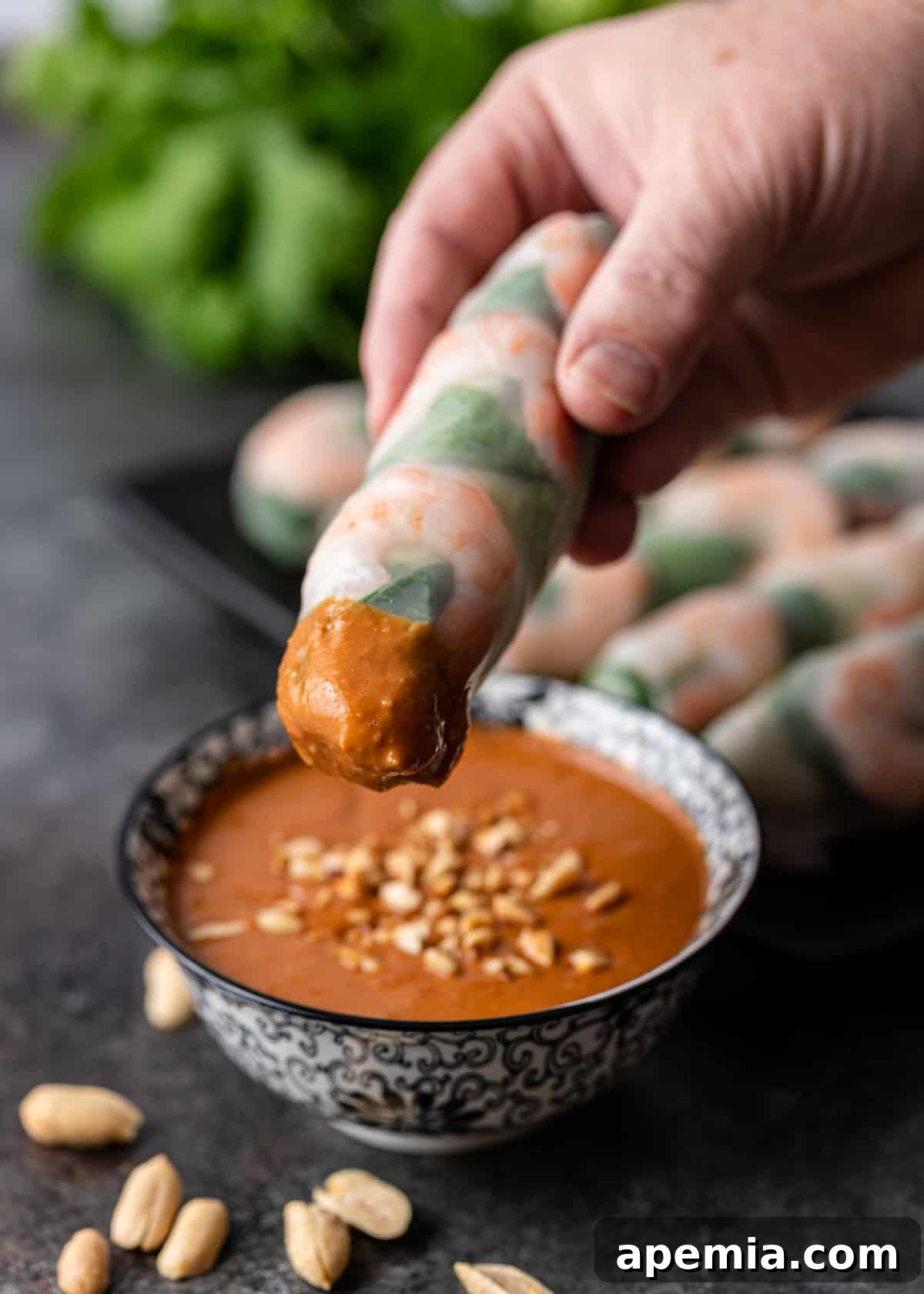
- Classic Dipping Companion: It’s the quintessential dipping sauce for fresh spring rolls or crispy egg rolls. The cool, fresh flavors of the rolls are perfectly complemented by the rich, warm notes of the peanut sauce.
- Elevate Skewered Meats: Drizzle or dip your favorite grilled or roasted skewered meats. It’s fantastic with poultry, pork, or beef. Try it with this flavorful Chicken Tikka Kebab or an aromatic Persian Chicken Kabob for a delightful cross-cultural fusion.
- Asian Appetizer Enhancer: Serve it alongside other popular Asian appetizers. It’s an excellent dip for savory pot stickers, crispy tempura vegetables or shrimp, and juicy steamed or fried shrimp.
- Fresh Vegetable Delight: Transform raw or lightly steamed vegetables into a delicious snack or side dish. Crisp slices of cucumber, crunchy carrots, vibrant red bell peppers, or blanched broccoli florets become irresistible when paired with this scrumptious sauce. It’s a fantastic way to encourage more vegetable consumption!
- Hearty Rice and Noodle Dishes: Mix a generous dollop of peanut sauce into your favorite rice or noodle dishes for an instant boost of rich, savory flavor. It adds body and complexity, turning a simple stir-fry or noodle bowl into a hearty and satisfying meal. Think peanut noodles or a peanut-infused rice bowl with grilled chicken or tofu.
- Salad Dressing Alternative: Thin it out slightly with a bit more milk or water and use it as a unique and flavorful dressing for green salads. It pairs particularly well with salads containing grilled chicken, shredded cabbage, or crunchy nuts.
- Marinade Magic: Believe it or not, this sauce can also double as a flavorful marinade for chicken, pork, or tofu before grilling or baking. The ingredients tenderize and infuse the protein with an incredible depth of flavor.
Storage and Longevity: Keeping Your Homemade Peanut Sauce Fresh
One of the many advantages of making your own peanut sauce is the ability to prepare a larger batch and store it for future use. This means you can always have a flavorful condiment ready to go, saving you time and effort on busy weeknights.
When properly stored in an airtight container, your homemade peanut sauce will keep beautifully for up to a week in the refrigerator. Ensure the container is sealed tightly to prevent any air from affecting its freshness and flavor. Before serving, give it a good stir, as some separation might occur naturally.
For even longer storage, this peanut sauce freezes exceptionally well. Pour it into freezer-safe containers or heavy-duty freezer bags, leaving a little headspace for expansion. It will last for approximately 4-6 months in the freezer without losing its quality. When you’re ready to enjoy it again, simply let it thaw gradually at room temperature for a few hours, or transfer it to the refrigerator overnight. Once thawed, stir it thoroughly, and if needed, you can slightly warm it or add a tiny splash of milk or water to restore its perfect consistency.
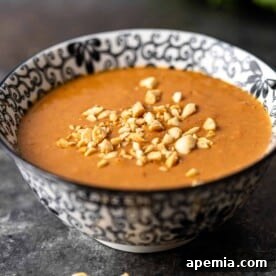
All-Purpose Peanut Sauce Recipe
8
10 mins
10 mins
Ingredients
- 1/2 cup peanut butter (See Note 1)
- 1/3 cup light soy sauce
- 3/4 cup milk or coconut milk
- 3 tablespoons sambal oelek chili paste or chili paste of choice
- 2 tablespoons toasted sesame oil
- 2 tablespoons rice vinegar
- 2 tablespoons hoisin sauce
- 1 tablespoon sugar
- 2 inch piece fresh ginger
- 2 cloves garlic
- 2 tablespoons peanuts chopped for garnish
Instructions
-
Place all of the ingredients in a blender or use an immersion blender in a container to puree until completely smooth. Add more milk or water to reach desired consistency if the mixture is too thick. Season to taste, adjusting any flavors as needed.
-
Serve at room temperature, garnished with chopped peanuts on top. This sauce keeps well for up to 7 days when stored in an airtight container in the refrigerator.
Notes
- You can use chunky peanut butter if preferred, but for a truly smooth sauce, creamy peanut butter is recommended. You can always add extra crunchy, chopped peanuts after blending for added texture.
Nutrition
| Carbohydrates: 11g
| Protein: 6g
| Fat: 15g
| Saturated Fat: 3g
| Polyunsaturated Fat: 5g
| Monounsaturated Fat: 7g
| Cholesterol: 1mg
| Sodium: 680mg
| Potassium: 183mg
| Fiber: 1g
| Sugar: 6g
| Vitamin A: 29IU
| Vitamin C: 1mg
| Calcium: 29mg
| Iron: 1mg
The information shown is an estimate provided by an online nutrition calculator. It should not be considered a substitute for a professional nutritionist’s advice.
condiments
Thai
Kevin
We hope you enjoy crafting and savoring this incredible homemade peanut sauce as much as we do. It’s a testament to how simple ingredients can create something truly extraordinary. Whether you’re serving it with spring rolls, grilled skewers, or a fresh salad, this sauce is sure to become a cherished staple in your kitchen. Don’t forget to share your delicious creations! We’d love to see how you use this versatile condiment. Tag @keviniscooking on Instagram or use the hashtag #keviniscooking so we can admire your culinary masterpieces!