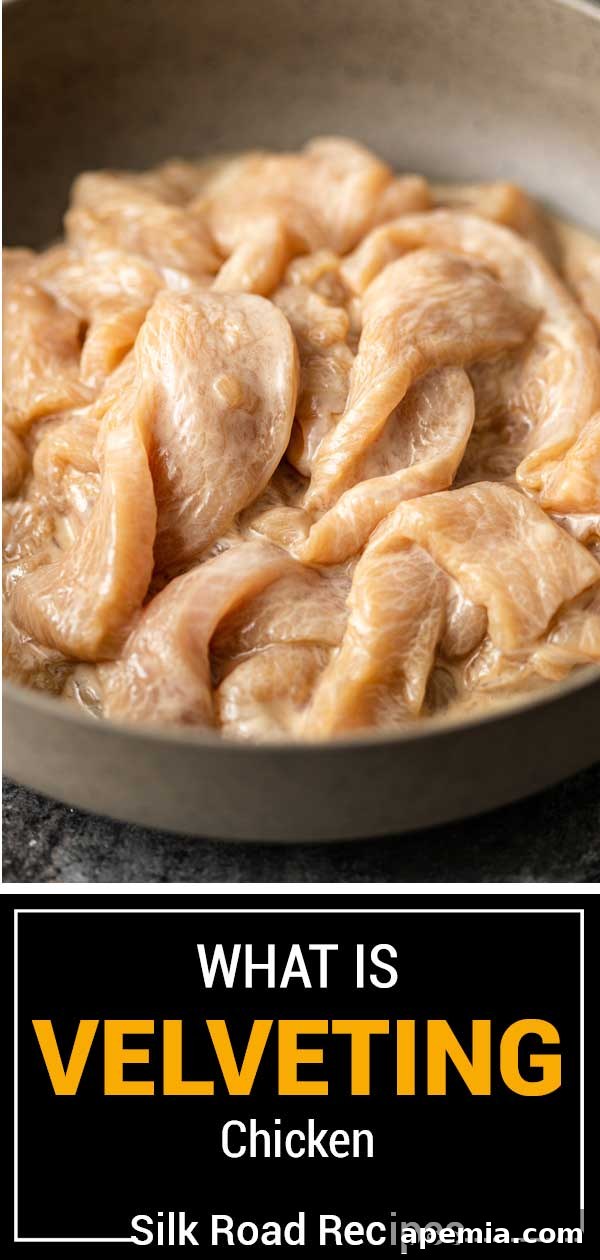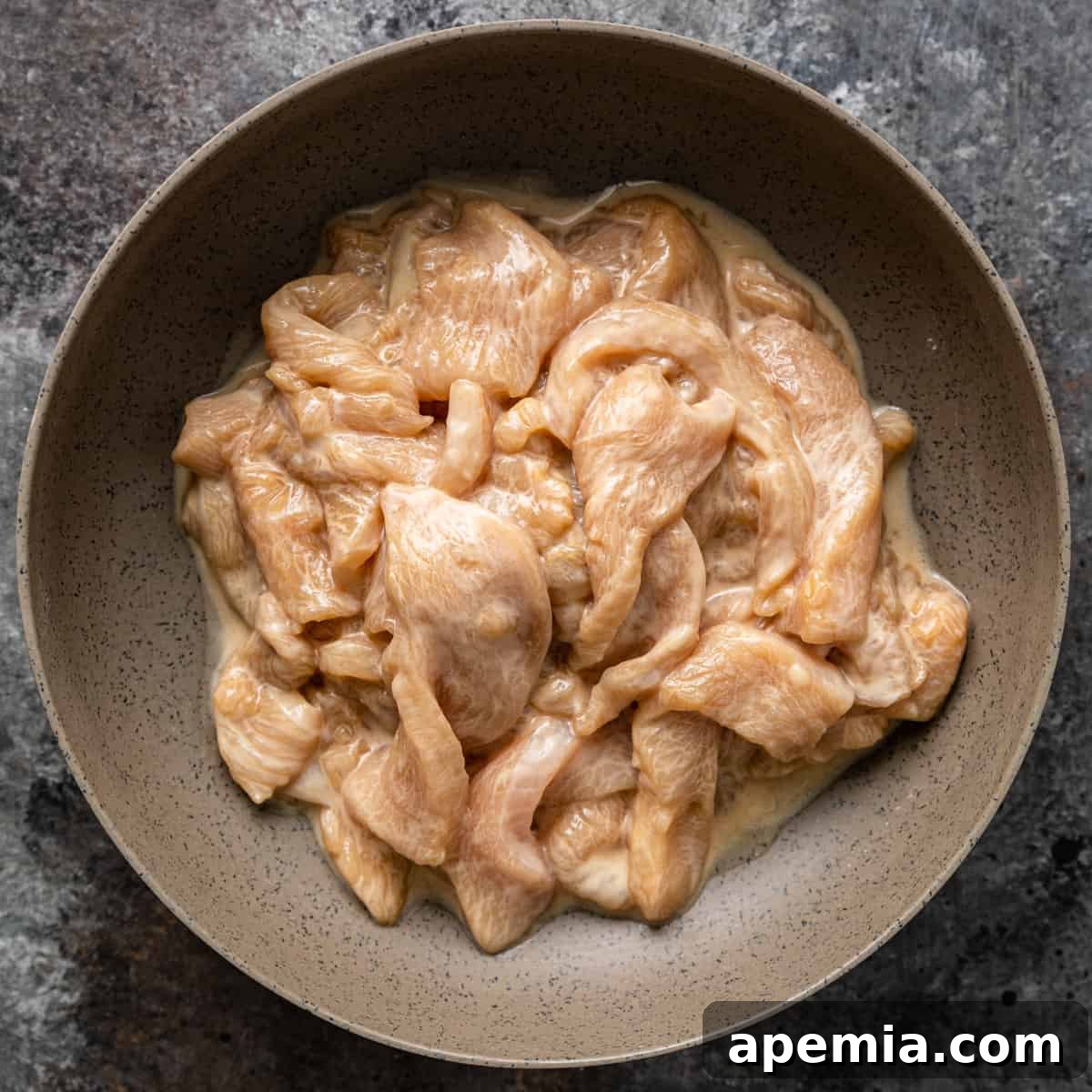
Unlock the secret to incredibly tender, juicy chicken, pork, beef, and seafood with velveting, a classic Chinese cooking technique. Say goodbye to dry, rubbery meat in your stir-fries and embrace a method that guarantees restaurant-quality results with just a few simple ingredients. This comprehensive guide will transform your cooking, making every bite of your favorite Asian dishes irresistibly succulent.
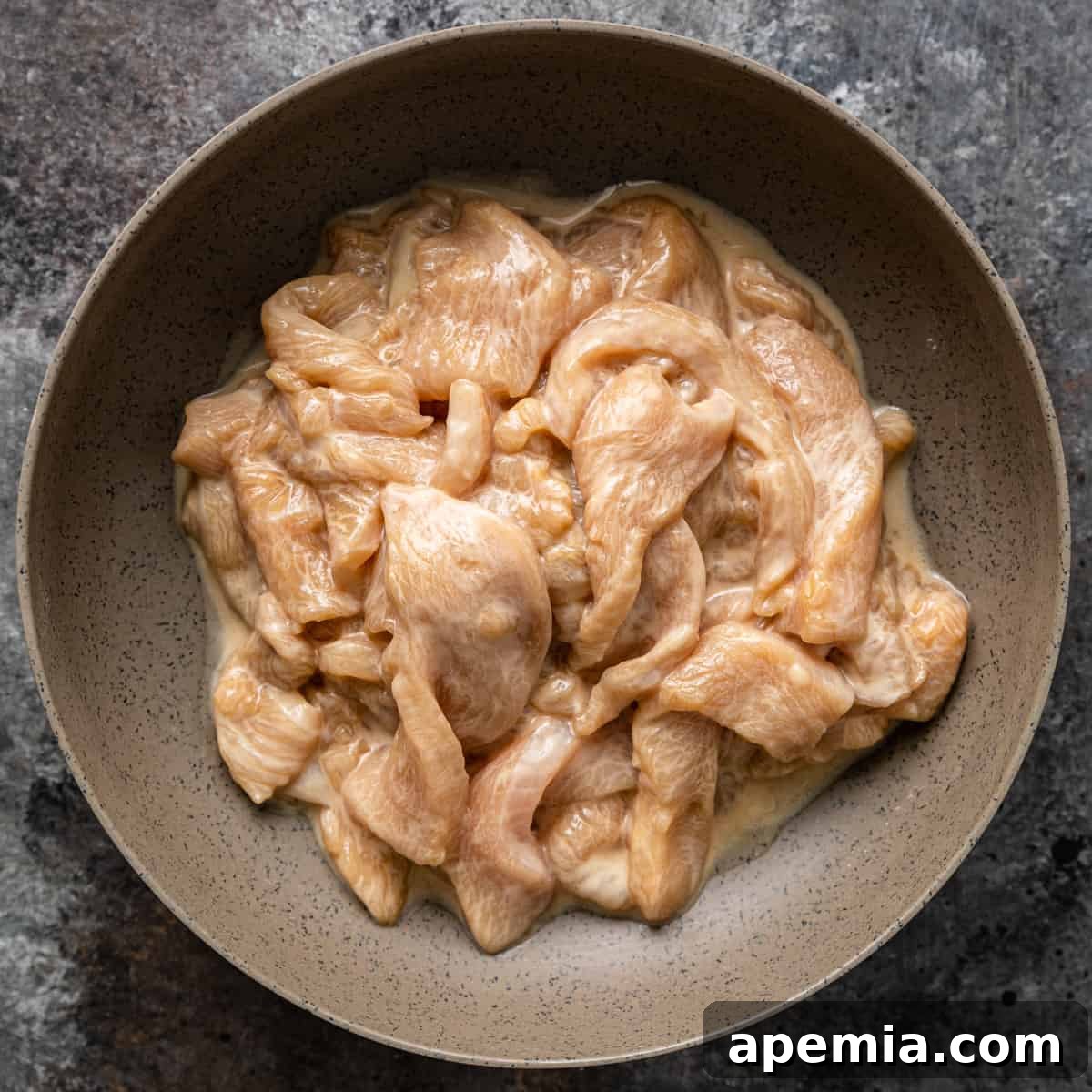
As a passionate home cook, I’ve spent countless hours exploring diverse chicken recipes, from my aromatic Chinese Steamed Chicken with zesty cilantro sauce to the delightful crunch of sticky Sweet Honey Chicken. Other cherished creations include the robust Hunan Chicken, the celebratory Chinese Roast Chicken, the unique Marinated Tahini Chicken, and even a Mediterranean twist with Greek Chicken Souvlaki. Chicken’s incredible adaptability makes it a culinary canvas, offering endless possibilities for delicious meals. Yet, even with such versatility, mastering its tenderness for dishes like stir-fries can be a challenge – a challenge perfectly addressed by the technique of velveting.
Mastering the Art of Tender Chicken for Stir-Fries and Beyond
My culinary journey is a continuous quest for techniques that elevate everyday ingredients into extraordinary dining experiences. This pursuit led me to discover velveting, a revered Chinese cooking method that ensures your chicken, and other proteins, achieve an unparalleled tenderness. It’s more than just a marinade; it’s a two-step process that involves preparing and partially pre-cooking your protein before its final incorporation into a dish, resulting in the silkiest, most flavorful texture imaginable. While velveting can be applied to seafood, pork, and beef, our focus today is entirely on answering one critical question for home cooks: “What exactly is velveting chicken and how can I achieve it?”
In this comprehensive guide, you’ll unlock the secrets to perfect velveted chicken, learning:
- Why velveting chicken breast is a game-changer for texture and flavor.
- An in-depth explanation of the water versus oil pre-cooking methods, helping you choose the best approach for your cooking style.
- A step-by-step breakdown of how to velvet chicken, ensuring flawless results every time.
Beyond the core techniques, we’ll also address the most frequently asked questions about velveting chicken, equipping you with all the knowledge needed to confidently transform your poultry from good to gourmet.
What is Velveting Chicken? Unveiling the Chinese Culinary Secret
Velveting chicken, known in Chinese as “滑炒” (huá chǎo) meaning “smooth stir-fry” or “上浆” (shàng jiāng) for “coating and marinating,” is a time-honored technique designed to tenderize chicken breast, transforming it into a remarkably succulent and juicy protein. This method is the cornerstone for achieving the melt-in-your-mouth texture found in authentic Chinese restaurant dishes. The beauty of velveting lies in its consistent ability to deliver perfectly tender, moist, and flavorful chicken, making it an essential skill for anyone looking to master Asian cuisine at home.
The velveting process is surprisingly straightforward, involving two distinct yet simple steps:
Step 1: The Marinade. This involves coating the chicken pieces in a carefully chosen mixture, typically containing cornstarch, liquid (water or Shaoxing wine), and sometimes egg white and oil. This marinade acts as a protective barrier, locking in moisture and preparing the chicken for its next stage.
Step 2: The Pre-Cooking. After marinating, the chicken is briefly cooked using either the water-blanching method or the oil-searing method. This partial cooking sets the marinade, seals in the juices, and ensures the chicken is tenderized without being fully cooked, allowing it to finish perfectly in your final dish, such as a stir-fry.
We’ll delve into the specifics of each step in greater detail below. But first, let’s explore the compelling reasons why velveting chicken breast should become an indispensable part of your cooking repertoire.
Why Velvet Chicken? The Science Behind Superior Tenderness
While chicken is celebrated for its versatility and widespread appeal, it often presents a challenge: how to cook it without it becoming dry, tough, or rubbery, especially lean cuts like chicken breast. This dilemma is particularly pronounced in high-heat, quick-cooking methods such as stir-frying, where chicken can easily lose its moisture and desirable texture. This is precisely where the velveting technique shines, acting as a culinary shield against these common pitfalls.
Velveting chicken breast ensures you achieve that coveted tender and juicy texture every single time. It’s not just a chef’s trick; there’s real culinary science at play. The cornstarch in the marinade creates a thin, protective coating around each piece of chicken. This coating locks in the natural moisture, preventing it from evaporating rapidly during cooking. Furthermore, cornstarch denatures the surface proteins of the chicken, essentially relaxing the muscle fibers and making the meat inherently more tender. When the chicken is briefly pre-cooked, this coating “sets,” forming a delicate barrier that further shields the meat from the harsh heat of subsequent cooking. This process helps the chicken absorb flavors more effectively and contributes to a silky-smooth mouthfeel, a hallmark of expertly prepared Chinese dishes.
Many professional chefs and high-end Chinese restaurants universally employ this technique. It’s often their “secret ingredient” for serving chicken that is consistently moist, succulent, and full of flavor. By learning to velvet chicken at home, you’re not just cooking; you’re elevating your dishes to a restaurant-quality standard, transforming humble ingredients into culinary masterpieces. Say goodbye to chewy chicken and hello to perfectly tender bites!
How To Velvet Chicken: A Step-by-Step Guide for Perfection
Now that you understand the compelling reasons behind velveting chicken and its incredible benefits, it’s time to roll up your sleeves and learn the practical steps. This section will walk you through everything you need to know, ensuring you can confidently execute this technique in your own kitchen. Remember, the process is streamlined into two core steps, designed to guarantee tender and juicy chicken for all your favorite stir-fry recipes and beyond.
Step 1: Preparing the Chicken and Crafting the Perfect Marinade
The foundation of perfectly velveted chicken begins with proper preparation and a well-balanced marinade.
Slicing the Chicken
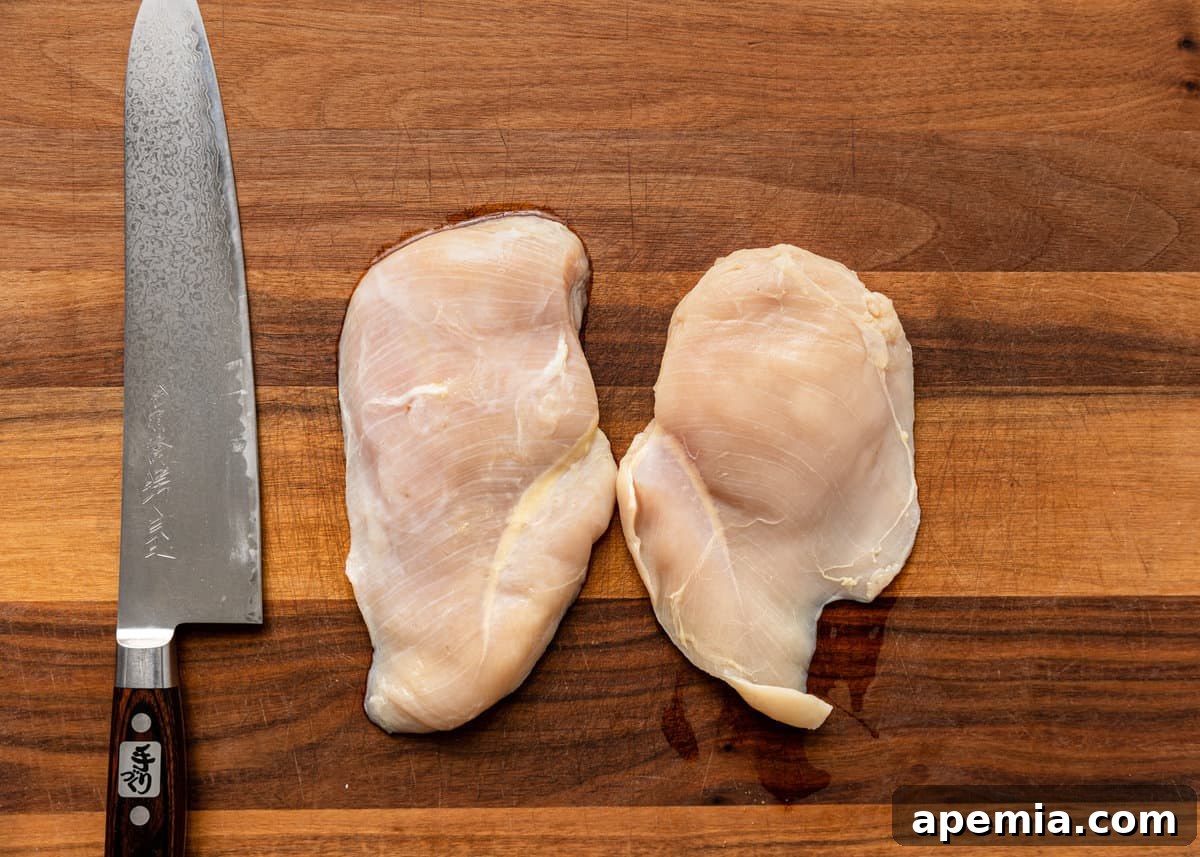
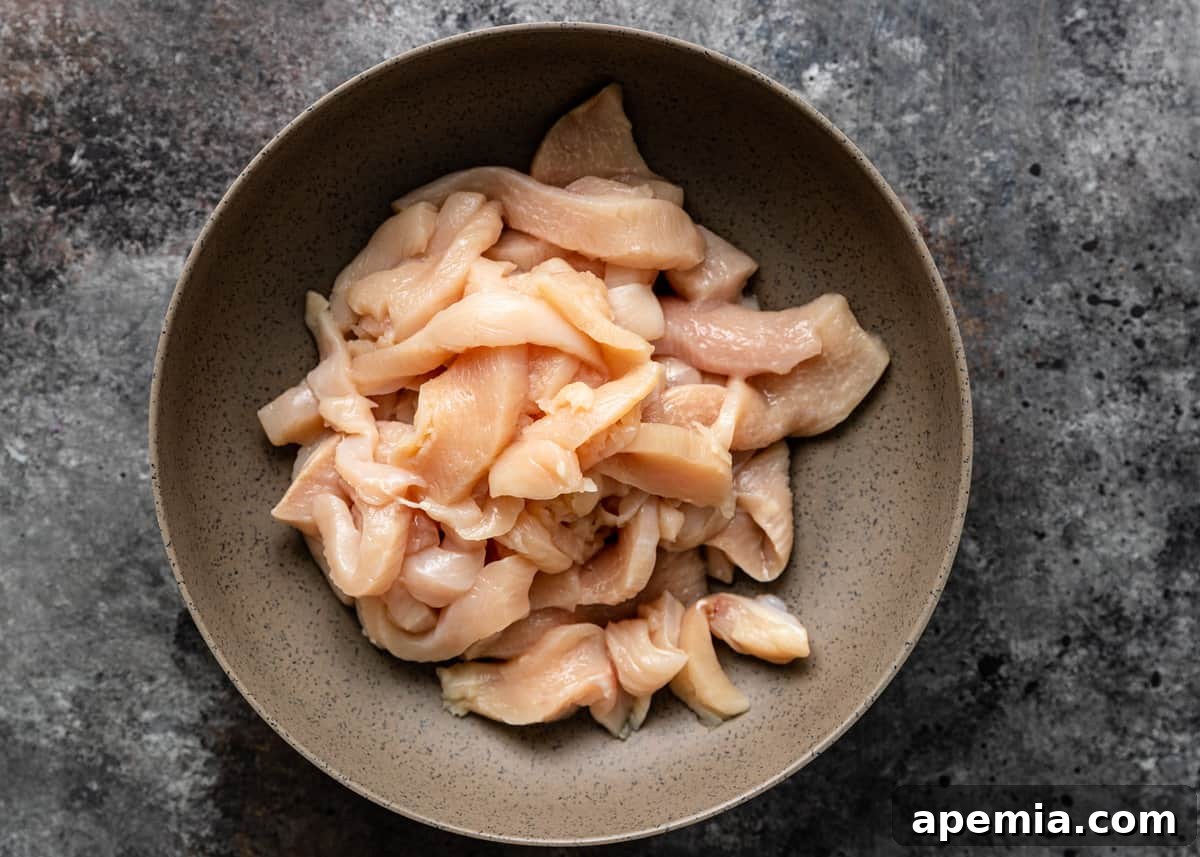
Start by slicing your boneless, skinless chicken breast into uniform strips or bite-sized pieces, typically about 1 ½ to 2 inches long and ¼ inch thick. Precision here helps with even cooking. A pro tip to make this task easier and safer: partially freeze the chicken for about 15-20 minutes. This firms up the meat, making it less slippery and allowing for cleaner, more consistent cuts across the grain. Cutting across the grain is crucial as it shortens the muscle fibers, contributing significantly to the chicken’s tenderness.
Choosing Your Marinade Method
There are a few popular approaches to the velveting marinade, each with its own advantages. My go-to is the cornstarch method, which reliably delivers exceptional tenderness and a silky texture.
- The Cornstarch Method: This classic marinade typically combines water (or Shaoxing wine for added depth), a neutral oil (like vegetable or canola), and cornstarch. For flavor enhancers, I often incorporate soy sauce, oyster sauce, or a touch of sesame oil, depending on the dish I’m preparing. The cornstarch creates a thin, protective barrier around the chicken, which is key to locking in moisture and achieving that characteristic velvety texture. The liquid rehydrates the meat, while the oil helps to separate the chicken pieces during cooking and contributes to a smooth mouthfeel. If I’m not making a stir-fry, I adapt the flavor enhancers to suit the recipe, but the base of water, oil, and cornstarch remains constant.
-
The Baking Soda Method: Some chefs advocate for using baking soda (sodium bicarbonate) as a tenderizer. Baking soda works by raising the pH level on the surface of the meat, which loosens the protein fibers and prevents them from tightening during cooking. While it’s effective for tenderization, care must be taken to rinse the chicken thoroughly after marinating to avoid any metallic or soapy aftertaste.
Here’s how to velvet chicken with baking soda: For every 8 ounces (about 225g) of chicken breast (sliced into strips or pieces), toss it with 1 teaspoon of baking soda. Allow it to marinate for no more than 20 minutes. Crucially, after marinating, rinse the chicken very well under cold running water using a sieve for several minutes until all baking soda residue is removed. Pat the chicken thoroughly dry with paper towels to eliminate excess water before proceeding to cook. - The Egg White Method: Another variation often includes egg whites in the marinade. Egg whites add an extra layer of protein that coats the chicken, contributing to an even silkier texture and helping to create a light, fluffy “velvet” coating. While highly effective, I personally prefer to keep my marinade as simple as possible. However, culinary exploration is always encouraged – feel free to experiment with egg whites to discover your perfect velveting marinade!
Step 2: Choosing Your Pre-Cooking Method – Water vs. Oil Velveting
After the chicken has absorbed its flavorful marinade, the next crucial step is the pre-cooking phase, which can be done in one of two primary ways: oil velveting or water velveting. Both methods effectively set the marinade and partially cook the chicken, preparing it for its final stir-fry, but they offer slightly different characteristics.
Oil Velveting (油滑 – Yóuhuá) – The Restaurant Favorite
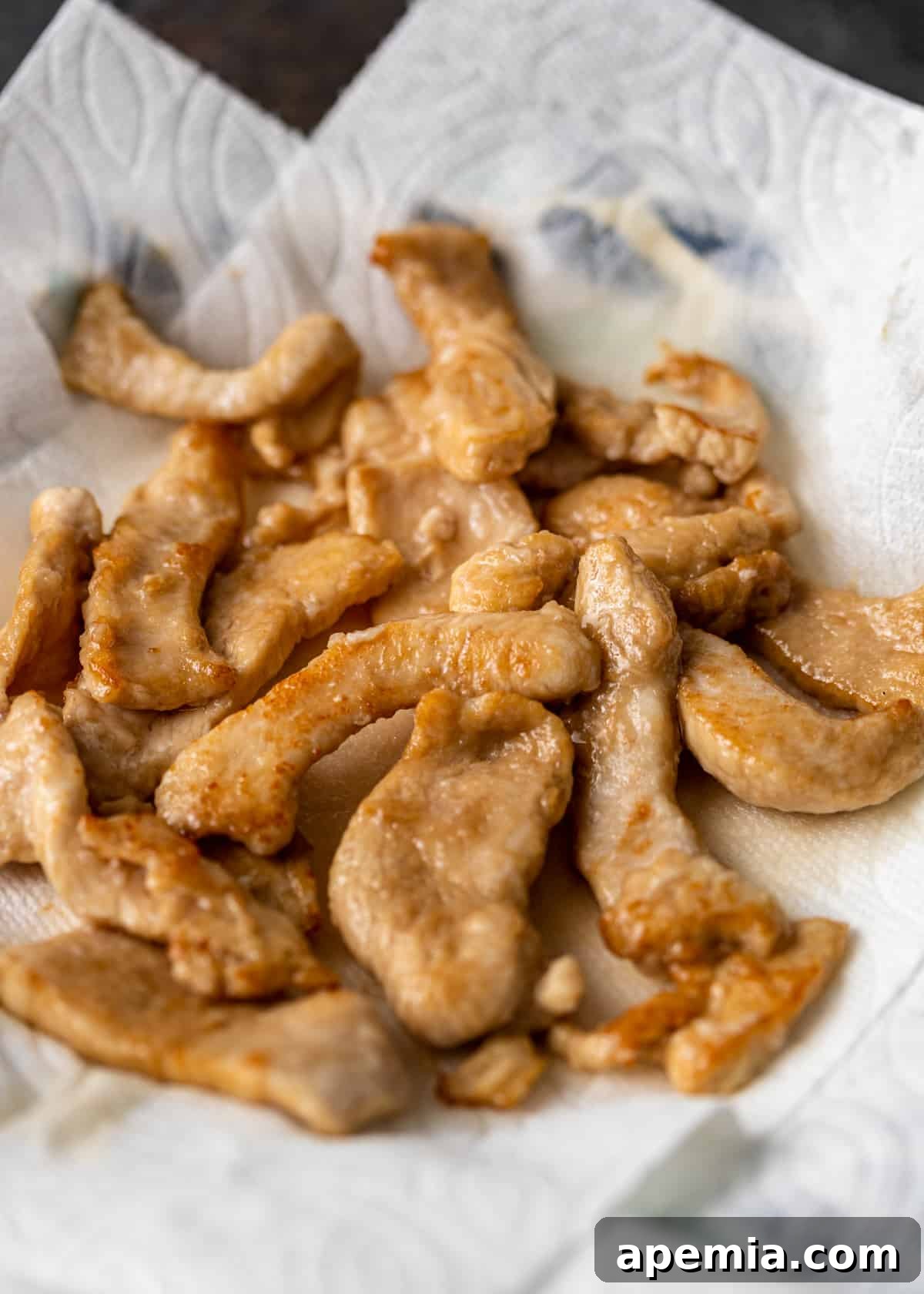
Oil velveting is widely favored in professional Chinese kitchens and is perhaps the most popular technique for good reason. It involves briefly searing the marinated chicken in a wok or a large frying pan with a moderate amount of hot oil.
- The Process: Heat your wok over high heat until it begins to lightly smoke. Add a few tablespoons of high-smoke-point vegetable oil (like canola or peanut oil) and swirl to coat the surface. Add the marinated chicken pieces in a single layer, ensuring not to overcrowd the pan. Sear for approximately 20-30 seconds, or until the exterior of the chicken changes color and is no longer raw, possibly even developing a light golden hue. Rapidly stir-fry for another moment or two, then quickly remove the chicken from the wok and drain it on a paper towel-lined plate.
- Benefits: This method not only helps to seal in the chicken’s juices but also creates a delicate, slightly crispy “crust” on the outside of each piece. This crust, along with the marinade, eventually melts into the sauce when the chicken is returned to the wok for the final stir-fry, contributing to a thicker, silkier sauce and an unparalleled velvety texture to the chicken. Oil velveting also imparts a subtle “wok hei” (breath of the wok) flavor, a highly prized characteristic in Cantonese cooking. It’s my personal preferred way to velvet chicken for its superior flavor and texture.
Water Velveting (上浆 – Shàngjiāng or 水滑 – Shuǐhuá) – The Lighter Alternative
Water velveting, or blanching, is an excellent alternative if you prefer a lighter dish with less added oil, or if you’re aiming for a very neutral base for your chicken.
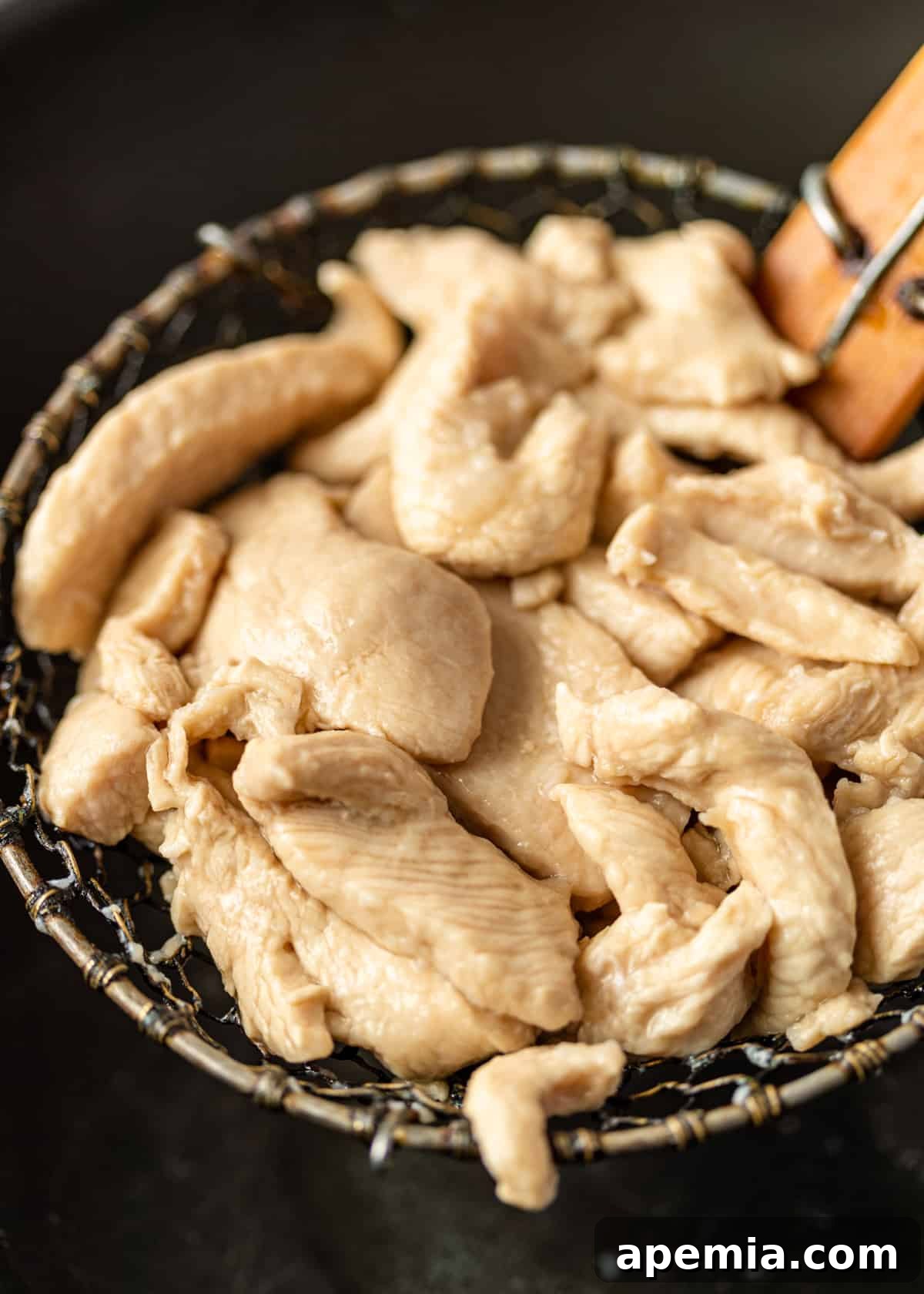
- The Process: Bring a pot or wok of water to a rolling boil. Gently add the marinated chicken pieces, stirring them carefully to prevent clumping. The chicken will cook very quickly. As soon as the chicken turns opaque and appears mostly cooked through (typically within 30-60 seconds, depending on the size of your pieces), remove it immediately from the boiling water using a slotted spoon or spider strainer. Drain well.
- Benefits: This method is incredibly quick and results in very tender, succulent chicken without adding significant fat. It’s ideal for those mindful of oil intake or for dishes where you want the chicken’s texture to be purely silken, without any fried elements. It also simplifies cleanup as there’s no hot oil to manage.
Regardless of which pre-cooking technique you choose, remember the golden rule: do not overcook the chicken during this velveting step. It will be cooked a second time when you incorporate it into your main stir-fry or other recipe. The goal here is just to set the marinade and partially tenderize, ensuring the chicken finishes cooking perfectly in the final dish.
Elevate Your Cooking: 5 Recipes Featuring Velveting Chicken
Armed with this newfound knowledge and technique, you are now perfectly equipped to start velveting chicken like a seasoned pro! Integrate this method into your favorite Asian-inspired recipes and prepare to be amazed by the difference in texture and flavor. Here are some fantastic recipe ideas, including some of my own creations and highlights from fellow food bloggers, to inspire your culinary adventures:
- Transform classic dishes: Try substituting velvet chicken for pork in this vibrant Szechuan Pork and Eggplant Stir Fry for a lighter, equally delicious option.
- A takeout favorite, perfected: Recreate the ultimate Chicken and Broccoli in Brown Sauce from Crafty Cookbook, featuring impossibly tender chicken.
- Spicy and succulent: Experience the tender chicken in this flavorful Kung Pao Chicken from Craving Something Healthy.
- Unexpected pairing: Incorporate juicy velvet chicken into this unique roasted mushrooms and bacon recipe for added protein and texture.
- A wholesome meal: Enjoy tender Velvet Chicken with Vegetables from A Family Feast, a perfect example of how this technique elevates simple ingredients.
Frequently Asked Questions About Velveting Chicken
Here are answers to some of the most common questions about the velveting technique, designed to help you confidently master this culinary art.
What Are the Essential Velveting Ingredients?
The core ingredients for a basic velveting marinade are simple: a liquid (typically water or Shaoxing wine), a neutral oil (like vegetable or canola), and cornstarch. Beyond these essentials, you can customize your marinade with flavor enhancers to suit your dish. For classic Chinese stir-fries, I highly recommend adding a touch of soy sauce, oyster sauce, and sesame oil for a truly authentic taste profile that penetrates the tenderized chicken.
What Does it Mean to Velvet Meat?
To “velvet meat” refers to a traditional Chinese cooking technique specifically designed to tenderize proteins before their final cooking. This two-step process involves first marinating the meat (chicken, pork, beef, or seafood) with ingredients like cornstarch and liquid, which create a protective coating and help relax muscle fibers. The second step involves briefly pre-cooking the marinated meat either by blanching in water or searing in oil. The result is consistently tender, juicy, and silky-smooth meat that is capable of absorbing flavors exceptionally well and stands up beautifully to high-heat cooking methods like stir-frying.
How Do Chinese Restaurants Achieve Such Tender Chicken?
The secret behind the unbelievably tender and moist chicken found in your favorite Chinese restaurant dishes is almost always the velveting technique! This professional method ensures that chicken breast, which can easily become dry, retains its moisture and develops that signature silky texture. By incorporating velveting into your home cooking, you’re adopting a culinary practice perfected by generations of Chinese chefs, allowing you to replicate those coveted restaurant-quality meals right in your own kitchen. It’s the ultimate hack for making lean chicken breast juicy and delicious.
Perfect Velveting Chicken Technique
Pin Recipe
PrintRecipe
Ingredients
- 1 lb chicken breast boneless skinless
- 3 tablespoons water
- 2 teaspoons soy sauce
- 2 teaspoons vegetable oil or sesame oil for aroma
- 2 1/2 teaspoons cornstarch
Instructions
-
To prepare the chicken, begin by slicing the boneless, skinless chicken breast across the grain into uniform 1 ½ to 2-inch pieces, approximately ¼-inch thick. For easier slicing, you can partially freeze the chicken for 15-20 minutes beforehand.
-
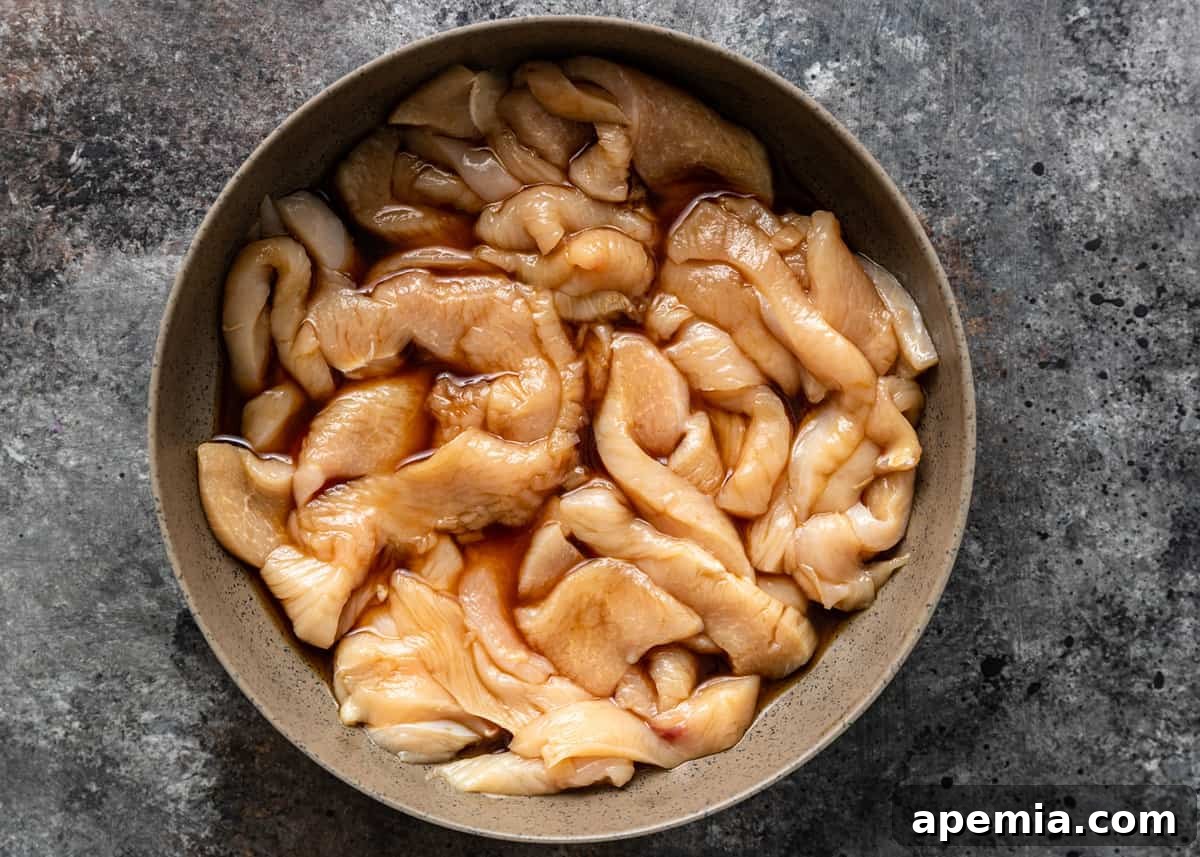
In a medium bowl, combine the sliced chicken with water and soy sauce. Mix thoroughly until all chicken pieces are well-coated. Allow this initial marinade to absorb for 5 minutes, which helps to rehydrate the chicken.
-
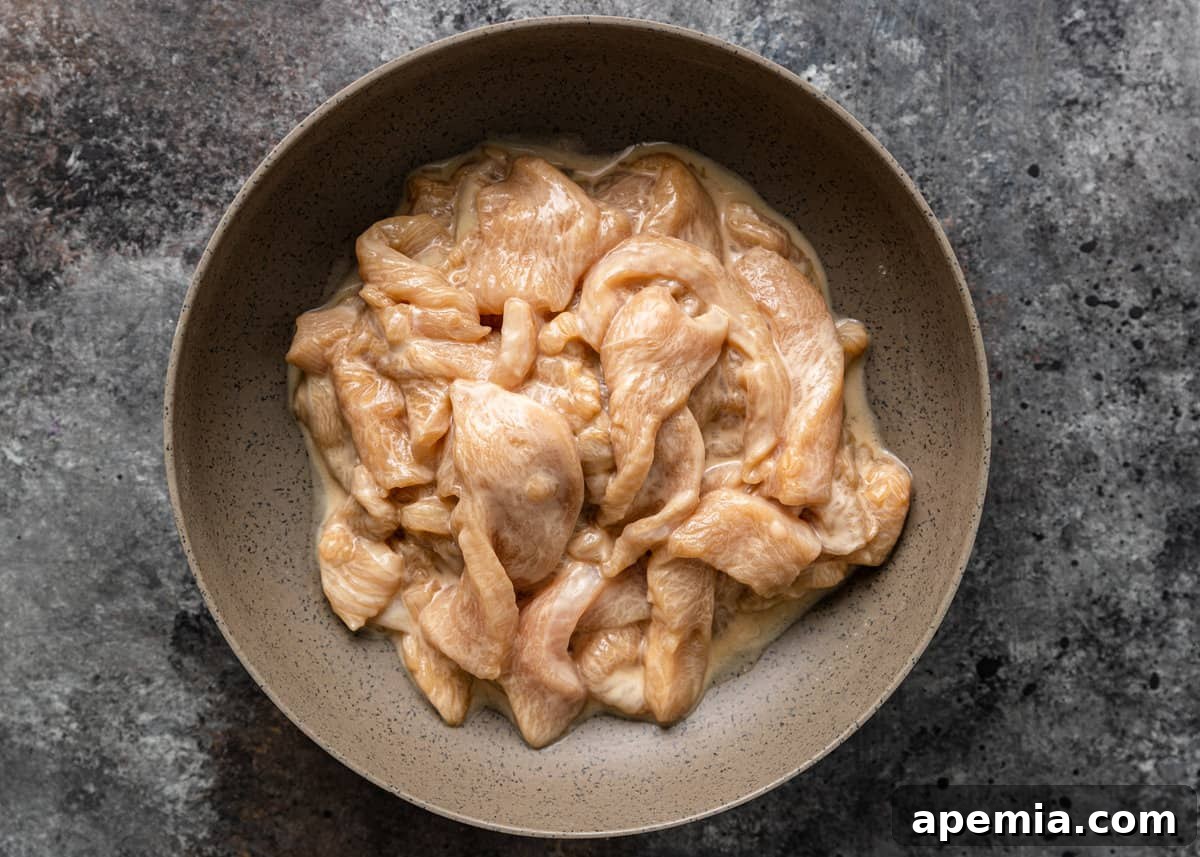
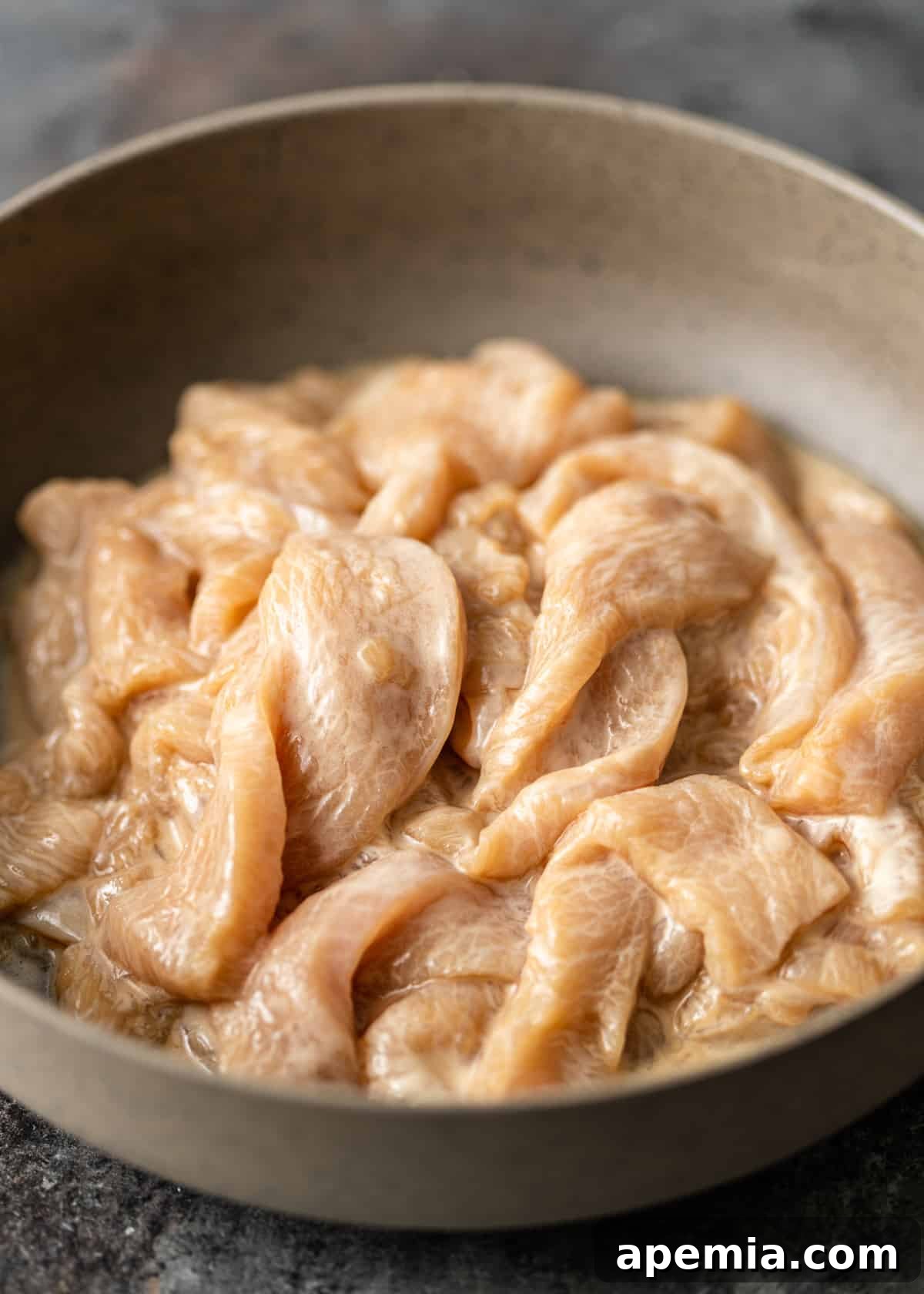
Next, add the vegetable or sesame oil and cornstarch to the chicken. Mix vigorously again until every piece is evenly and thoroughly coated with the velveting mixture. Let the chicken marinate for an additional 10-15 minutes at room temperature.
Method 1: Oil Velveting (Recommended for Best Flavor)
-
Heat your wok or a large frying pan over high heat until it just begins to lightly smoke. Add approximately 2 tablespoons of high-smoke-point vegetable oil (or preferred cooking oil), swirling it to coat the entire surface of the wok. Add the marinated chicken pieces in a single layer, making sure not to overcrowd the pan. Sear for about 20-30 seconds without stirring, then quickly stir-fry until the chicken turns opaque and is no longer raw on the exterior. Immediately remove the chicken from the wok and transfer it to a plate lined with paper towels to drain any excess oil.
-
Important: Avoid fully cooking the chicken during this velveting step, as it will be cooked again when incorporated into your final stir-fry or other dish. The goal is partial cooking to set the marinade and seal in juices.
Method 2: Water Velveting (Blanching – Lighter Option)
-
To blanch the chicken, bring a pot or wok of water to a rolling boil. Gently add the marinated chicken pieces, stirring carefully to prevent them from sticking together. Cook just until the chicken turns opaque throughout, typically about 30-60 seconds. Immediately remove the chicken from the boiling water using a slotted spoon or spider strainer and drain thoroughly.
-
Important: Similar to the oil method, do not overcook the chicken during blanching. It should still be slightly undercooked as it will finish cooking in your main recipe.
Nutrition
The information shown is an estimate provided by an online nutrition calculator. It should not be considered a substitute for a professional nutritionist’s advice.