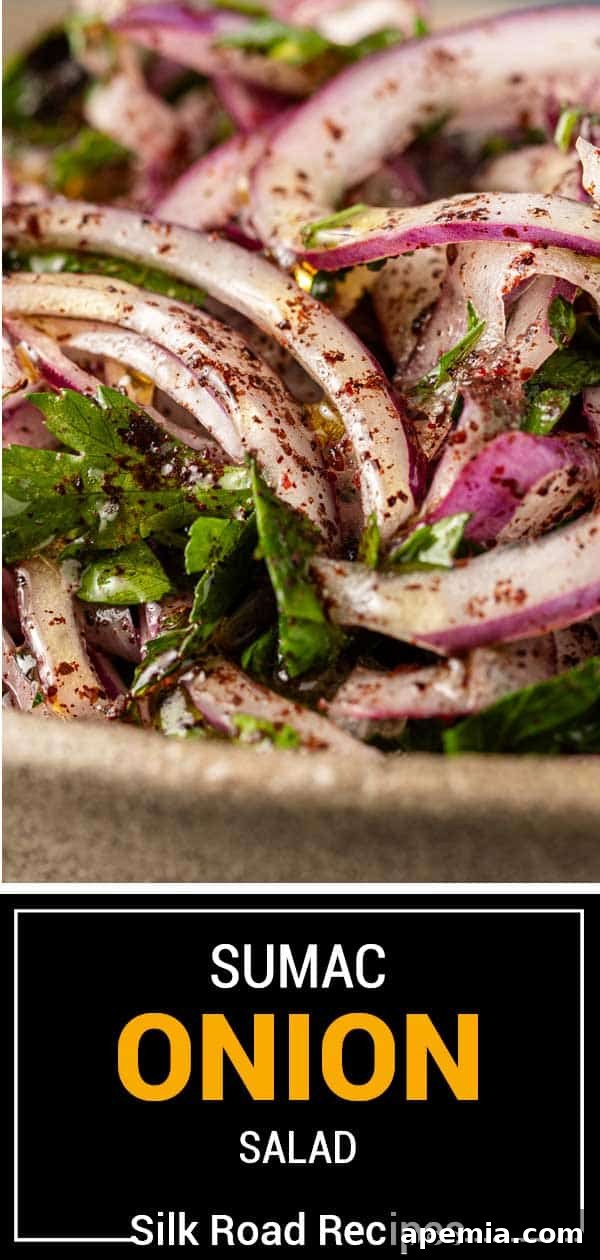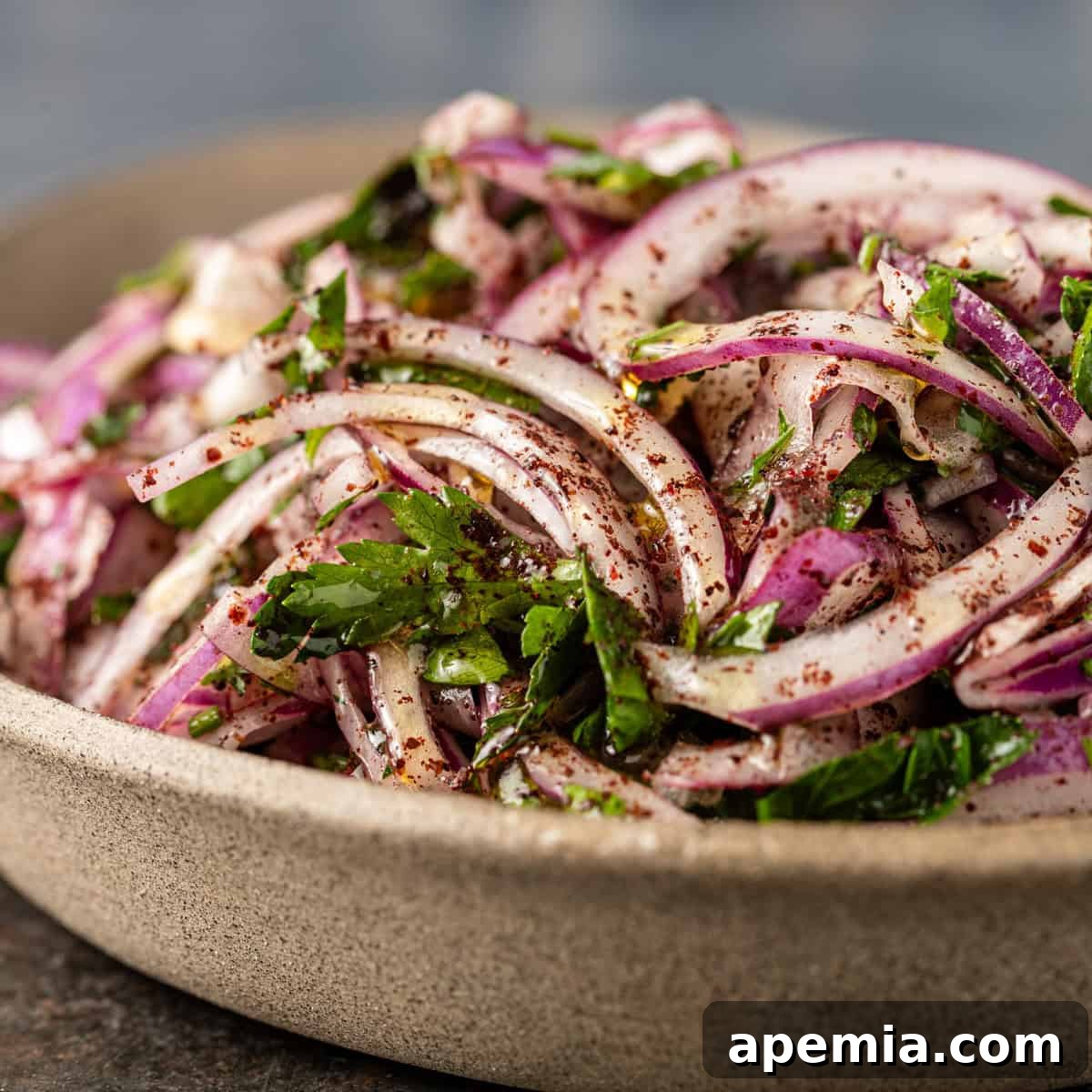
This recipe for sumac onions transforms a single, humble sliced vegetable into something remarkably bright, tangy, and bursting with flavor! Expertly tossed with fresh lemon juice, rich olive oil, and the signature sumac spice, this tried-and-true Turkish and Middle Eastern favorite is my absolute go-to side for grilled kebabs, hearty wraps, and aromatic rice dishes. It’s a culinary revelation that proves simplicity can be utterly sensational.
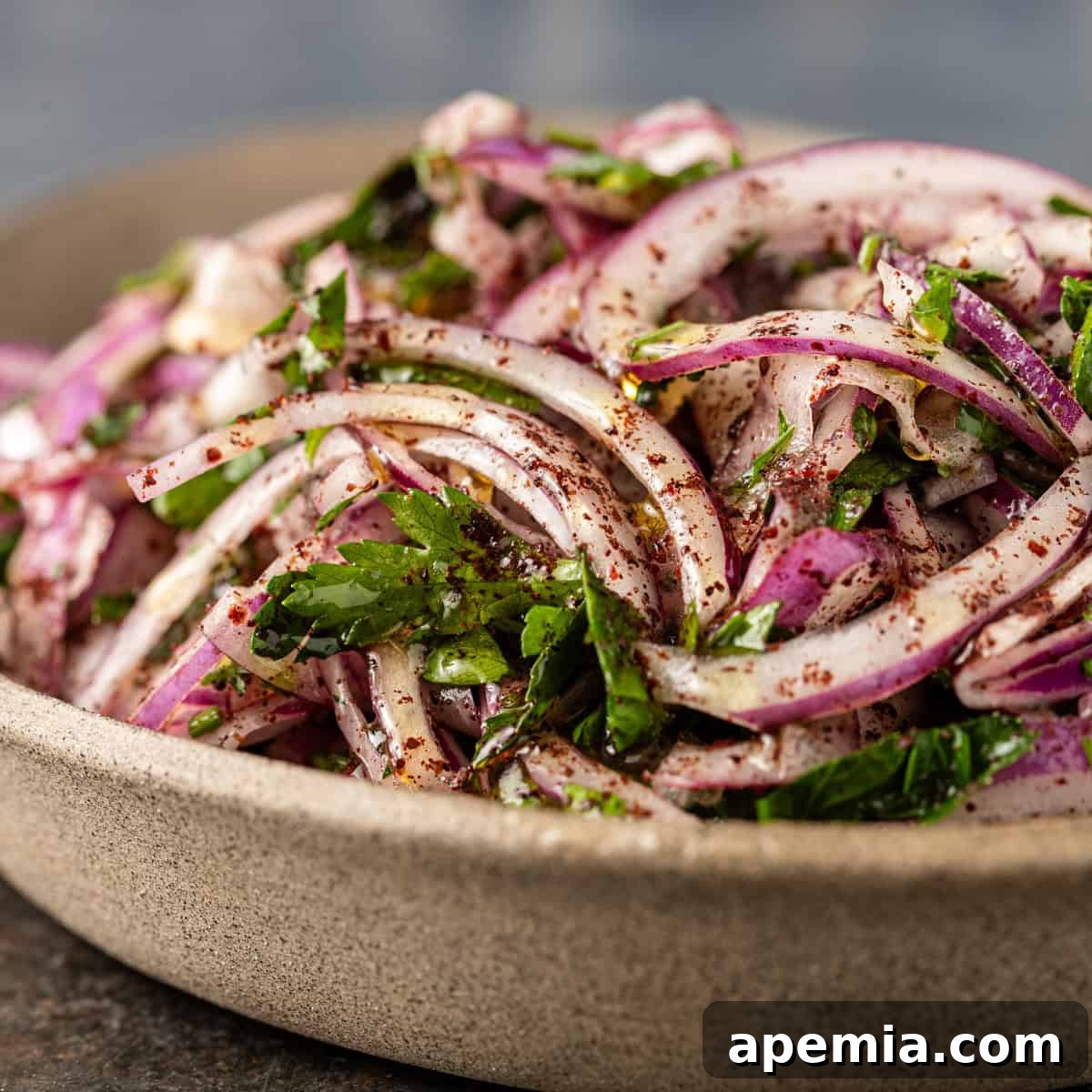
Picture this: your food arrives at the table, a magnificent spread, and nestled discreetly off to the side is a vibrant heap of thinly sliced red onions. You didn’t explicitly order them, but they’re almost always there, a staple accompaniment in Middle Eastern and Turkish cuisine. At first glance, these sumac onions might seem easy to overlook, perhaps just another garnish. But then you take that first bite. And oh, what a revelation it is!
For me, Middle Eastern and Turkish food ranks among my top culinary delights. Whenever I venture into a new restaurant, my rule of thumb is to sample nearly everything off the grill. My first unforgettable encounter with these zesty onions was during a trip to Istanbul. I savored a delicious plate of Chicken Shawarma, and these crimson-hued onions were generously mixed in. It was a match made in gastronomic heaven. Their sharp, tangy profile effortlessly cut through the richness of the chicken and spices, creating a perfect balance that left me craving more. After that initial taste, I found myself consistently reaching for extra portions, perhaps even more than my fair share!
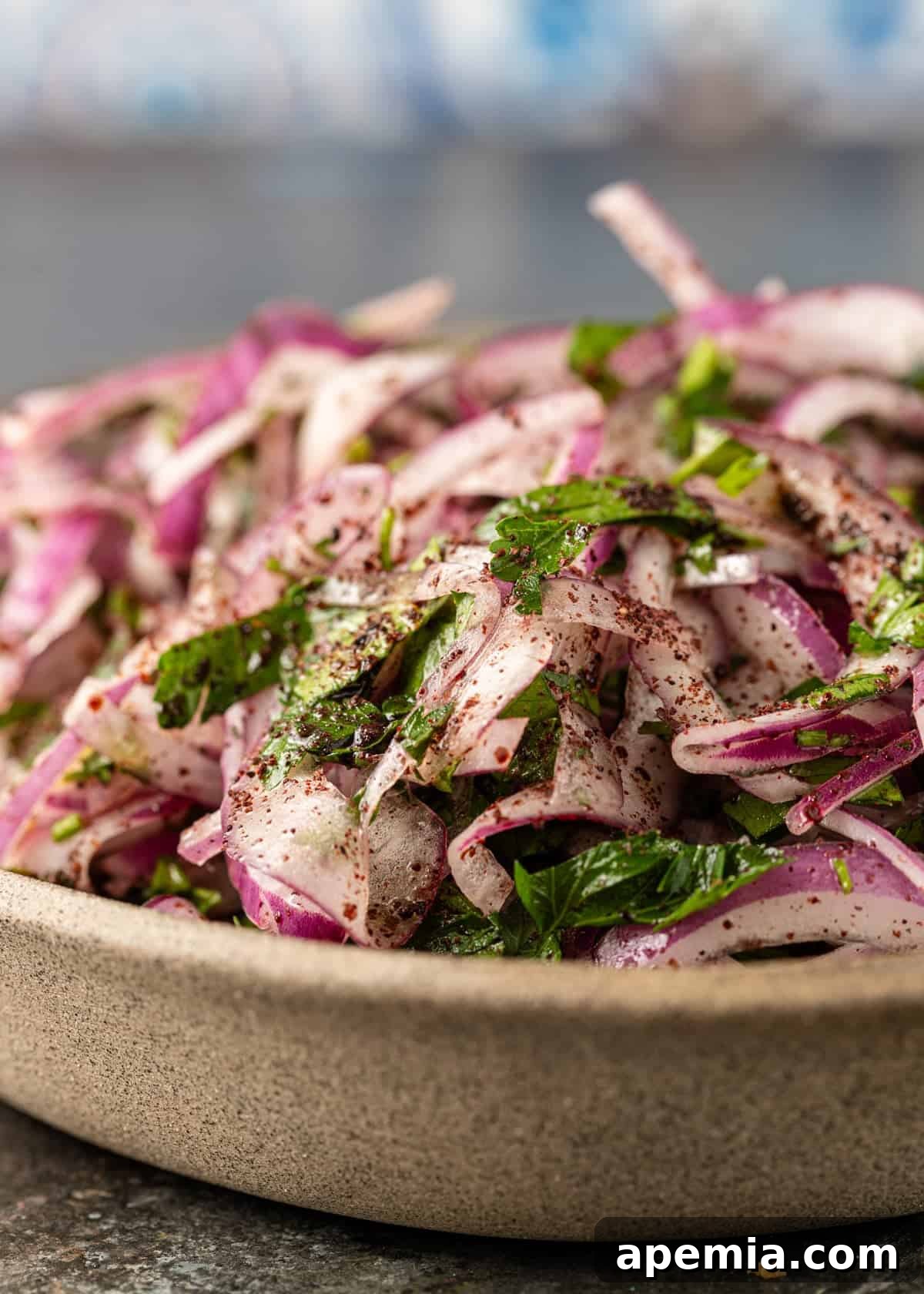
I quickly realized that the secret ingredient, the very heart of this flavor masterpiece, was sumac. This deep red spice, derived from dried berries, imparts an almost lemony zest to everything it touches. Unlike straight vinegar, sumac’s tang is more nuanced, a vibrant zip that lingers delightfully without overpowering. This unique acidity pairs incredibly well with the natural pungency of raw onions, transforming them into a lively, irresistible side dish.
Table of Contents
- The Onion Bath: Taming the Bite
- Essential Ingredients and Clever Substitutions
- Crafting Perfect Sumac Onions: A Step-by-Step Guide
- Tools for Success
- Beyond the Plate: Creative Serving Ideas
- Frequently Asked Questions
- Full Turkish Sumac Onion Salad Recipe
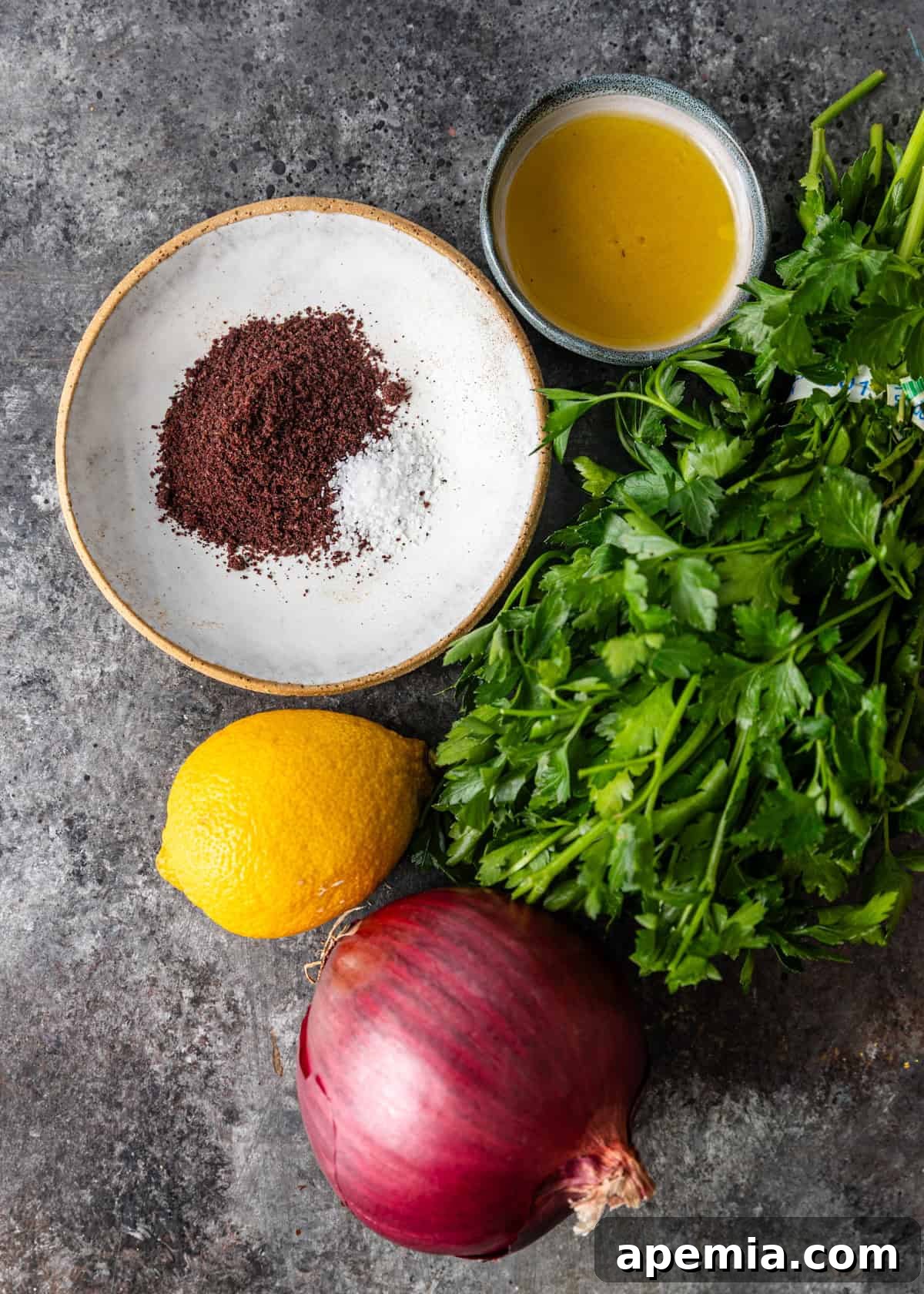
You’ll discover this delightful onion salad gracing tables across Turkey and its neighboring regions, especially wherever grilled meats are a culinary focal point. Whether it’s tucked into a warm flatbread, served alongside a juicy kebab, or added as a refreshing pinch with each forkful of a hearty meal, one taste is all it takes to understand why everyone, myself included, falls in love with them.
Tip From Kevin
The Onion Bath: Taming the Bite
Ever sliced into an onion and found yourself overwhelmed by its pungent aroma and intense bite? It’s a common experience! Some red onions can be particularly strong, bringing tears to your eyes and a powerful sharpness to your palate.
To mellow out the intensity and soften that aggressive bite, I highly recommend an “onion bath.” After thinly slicing your red onion – and perhaps wiping away a few tears – simply place the slices in a bowl of cold water. Let them soak for about 10 minutes. This quick soak helps to draw out some of the harsher compounds, leaving you with onions that are still wonderfully crisp but significantly less pungent and more palatable. After soaking, thoroughly drain the onions before proceeding with the recipe. This simple step makes a world of difference in achieving a perfectly balanced sumac onion salad.
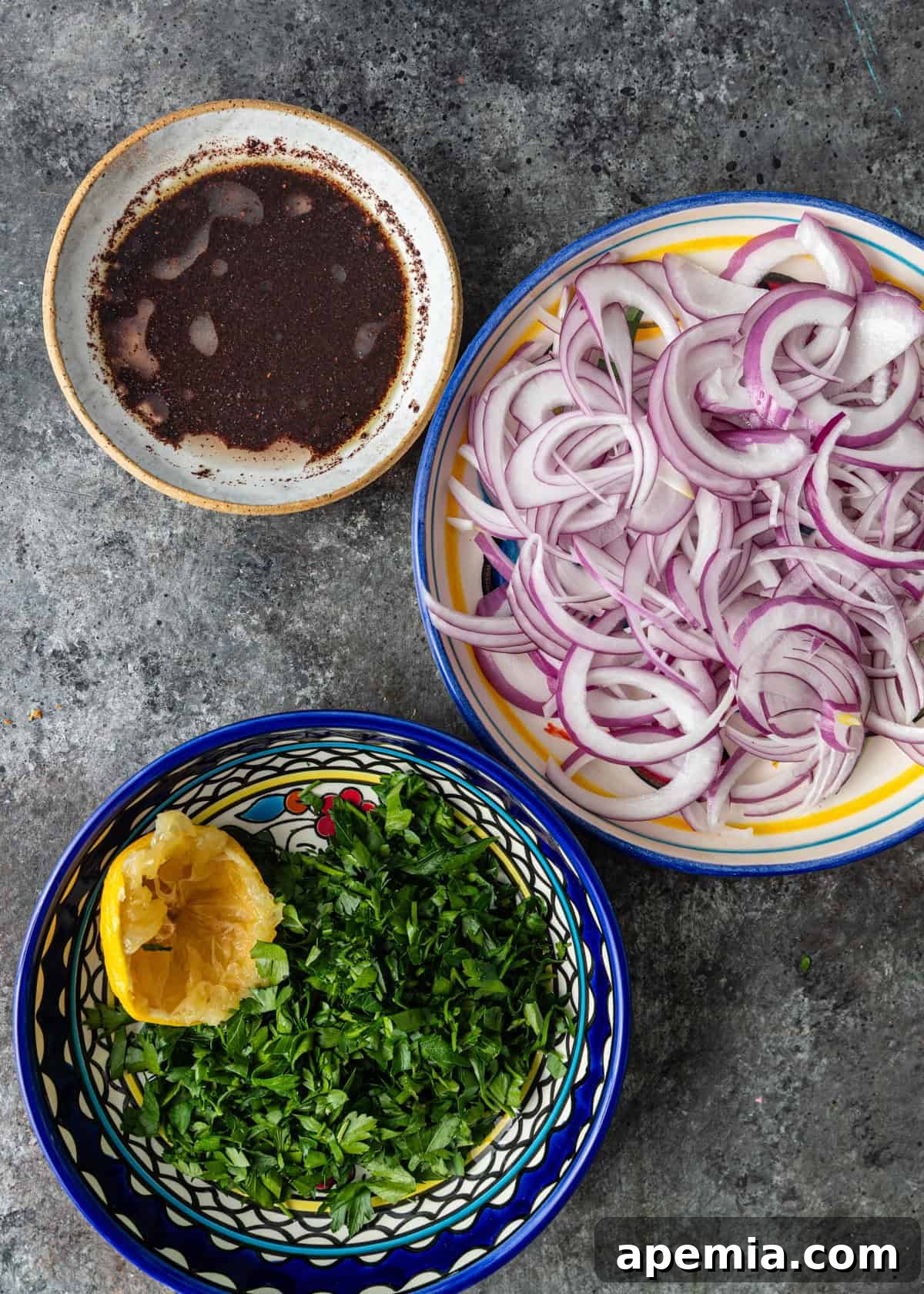
Essential Ingredients and Clever Substitutions
(For exact quantities, please refer to the full recipe card below)
- Red Onion: The star of our show! Thin slices are absolutely crucial here. They not only ensure a pleasant texture but also allow the onions to soften slightly and absorb the vibrant dressing flavors beautifully. While they’ll become tender, they should still retain a satisfying crunch. If red onions are too strong for your taste, white onions can be used, but the vibrant color will be lost.
- Sumac: This is the defining spice for this dish. You’ll typically find high-quality sumac in most Middle Eastern grocery stores or specialty spice shops. It boasts a distinctively sharp, tangy flavor with a delightful citrusy kick. Beyond its taste, sumac is responsible for giving these sumac onions their iconic, beautiful reddish-purple hue, making them as visually appealing as they are delicious.
- Fresh Lemon Juice: The acidity of fresh lemon juice is indispensable. It works synergistically with the sumac, amplifying the overall brightness and tanginess of the recipe. Furthermore, the lemon juice plays a vital role in helping to mellow the natural sharpness of the raw onions as they sit and marinate, creating a more harmonious flavor profile. Always opt for fresh juice over bottled for the best results.
- Extra Virgin Olive Oil: A good quality extra virgin olive oil provides a luxurious, smooth finish to the salad. It emulsifies with the lemon juice and sumac, creating a well-rounded dressing. The oil also prevents the flavors from feeling too sharp or abrasive, adding a necessary richness and depth that ties all the ingredients together.
- Fresh Parsley: Finely chopped fresh parsley is the traditional herb of choice, lending a refreshing, herbaceous note to the mix and a pop of green color. Its mild, clean flavor complements the vibrant onions perfectly. If you’re serving this salad alongside lamb dishes, fresh mint can be a truly wonderful and aromatic alternative, offering a different but equally delightful freshness.
- Salt: A pinch of kosher salt (or sea salt) is essential to enhance all the other flavors, bringing them into focus and balancing the tanginess. Start with a small amount and adjust to your preference.
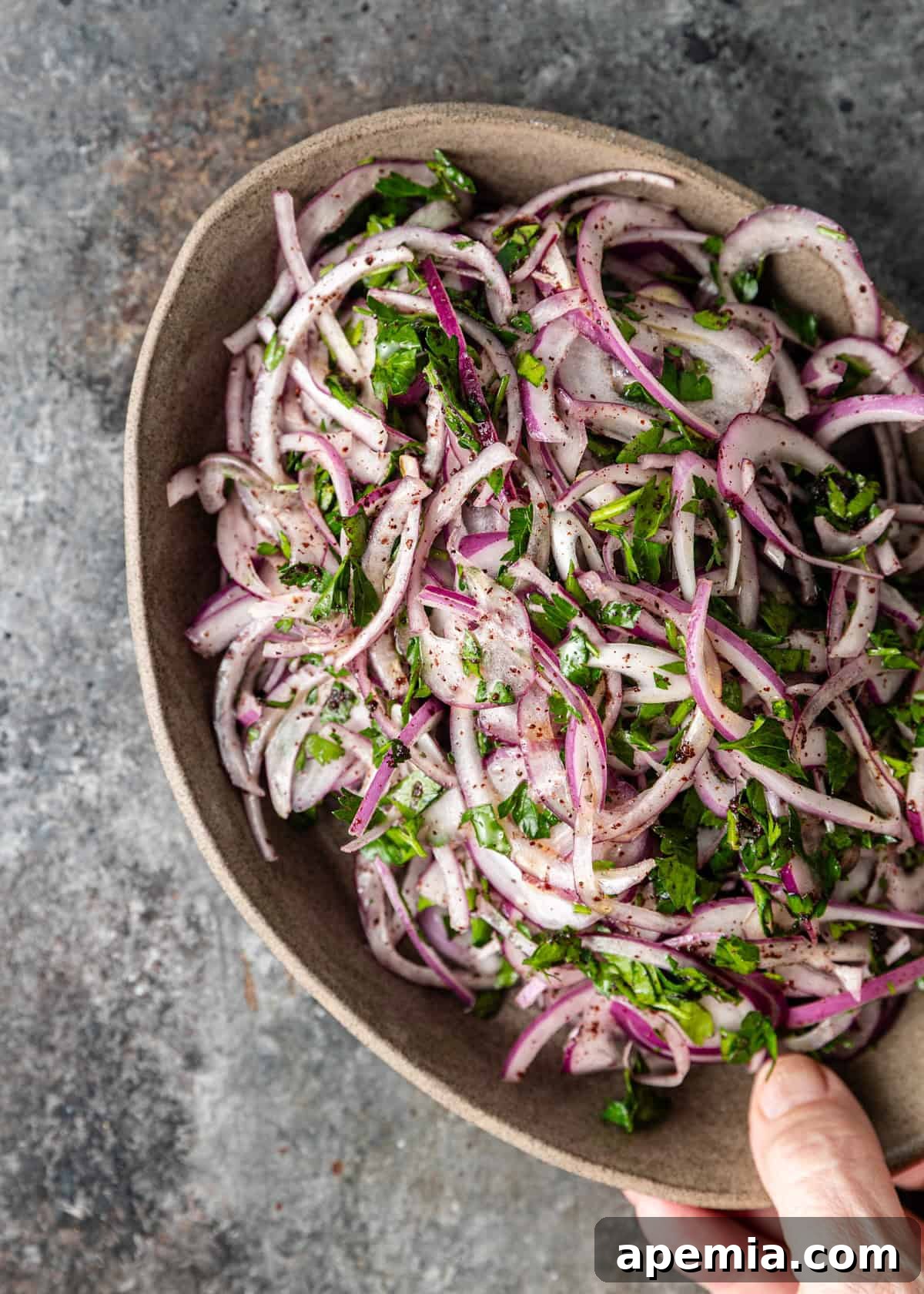
Crafting Perfect Sumac Onions: A Step-by-Step Guide
Creating this flavorful side dish is incredibly simple, requiring minimal effort for maximum impact. Follow these easy steps to achieve perfectly tangy and vibrant sumac onions every time:
- Prepare the Onion: Begin by thinly slicing your red onion. Aim for consistent, delicate pieces. For best results and to reduce pungency, consider giving them an “onion bath” as described in our tip above. After slicing, if soaking, drain them thoroughly.
- Whisk the Dressing: In a medium-sized mixing bowl, combine the fresh lemon juice, extra virgin olive oil, sumac spice, and a pinch of salt. Whisk these ingredients together vigorously until they are well combined and the dressing appears slightly emulsified. The sumac will lend a beautiful reddish tint to the mixture.
- Combine and Toss: Add the thinly sliced onions and the freshly chopped parsley to the bowl with your prepared dressing. Using clean hands or a pair of tongs, gently but thoroughly toss all the ingredients. Ensure that every single onion slice is evenly coated with the vibrant sumac dressing. This even coating is key to developing a consistent flavor.
- Allow to Marinate Briefly: Once tossed, set the salad aside for approximately 5 minutes. This brief resting period is crucial; it allows the onions to soften ever so slightly, allowing them to absorb the tangy flavors of the dressing without becoming mushy. The flavors will deepen and meld beautifully.
- Serve Immediately: This delightful sumac onion salad is best enjoyed fresh! Dish it up right away alongside your favorite grilled kebabs, tucked into warm pita bread with wraps, or as a bright counterpoint to any rich dish coming off the grill. Its crisp texture and zesty flavor are sure to impress.
Tools for Success
While this recipe is wonderfully simple and doesn’t require specialized equipment, a few tools can make the process even easier and more enjoyable, ensuring consistent results:
- Sharp Knife or Mandolin: A good quality, sharp chef’s knife will get the job done efficiently. However, if you desire perfectly uniform, paper-thin slices with minimal effort and bruising (which helps the onions absorb the dressing better), a mandoline slicer is an invaluable tool. Exercise caution when using a mandoline to prevent injury.
- Mixing Bowl: You’ll want a mixing bowl that provides ample space to comfortably toss all the ingredients without them spilling over the edges. A bowl that’s too small can make it difficult to evenly coat the onions.
- Citrus Reamer or Juicer: To extract the maximum amount of fresh lemon juice with minimal effort and to keep pesky seeds out of your dressing, a citrus reamer or a small hand juicer is incredibly helpful. Fresh juice is always superior for flavor.
Beyond the Plate: Creative Serving Ideas
This sumac onion recipe isn’t typically designed to be a standalone salad, but rather a dynamic condiment or a vibrant, flavorful accent. Its purpose is to be picked up, folded into, or served alongside other dishes, adding a burst of freshness and tang. Here are some of my favorite ways to enjoy these versatile onions:
- Grilled Skewers: The sharp, zesty flavor of sumac onions perfectly complements the rich, savory notes of grilled meats. Try them with Beef and Lamb Kabobs (Koobideh), chicken shish tawook, or any other grilled protein.
- Hearty Rice Dishes: Add a refreshing contrast to robust rice preparations. They are particularly fantastic with Arabic Chicken and Rice (Kabsa) or Middle Eastern Rice Pilaf, providing a much-needed sharpness that cuts through the richness and adds a textural element.
- Mezze Platters: No mezze spread is complete without them! Serve sumac onions alongside creamy hummus, smoky baba ghanoush, warm pita bread, olives, and perhaps some Toum (Lebanese Garlic Sauce) for a truly authentic experience.
- Wraps and Sandwiches: Elevate your wraps, gyros, or shawarma by tucking in a generous spoonful of these tangy onions. They add a fresh, zesty crunch that enhances the entire sandwich experience.
- Rich Stews and Tagines: To balance the deep, complex flavors of slow-cooked dishes like Lamb Tagine with Apricots, a spoonful of sumac onions provides a bright, acidic counterpoint, preventing the meal from feeling too heavy.
- Breakfast or Brunch: A surprising but delightful addition! Serve them alongside scrambled eggs, a savory frittata, or even on avocado toast for an unexpected flavor boost.
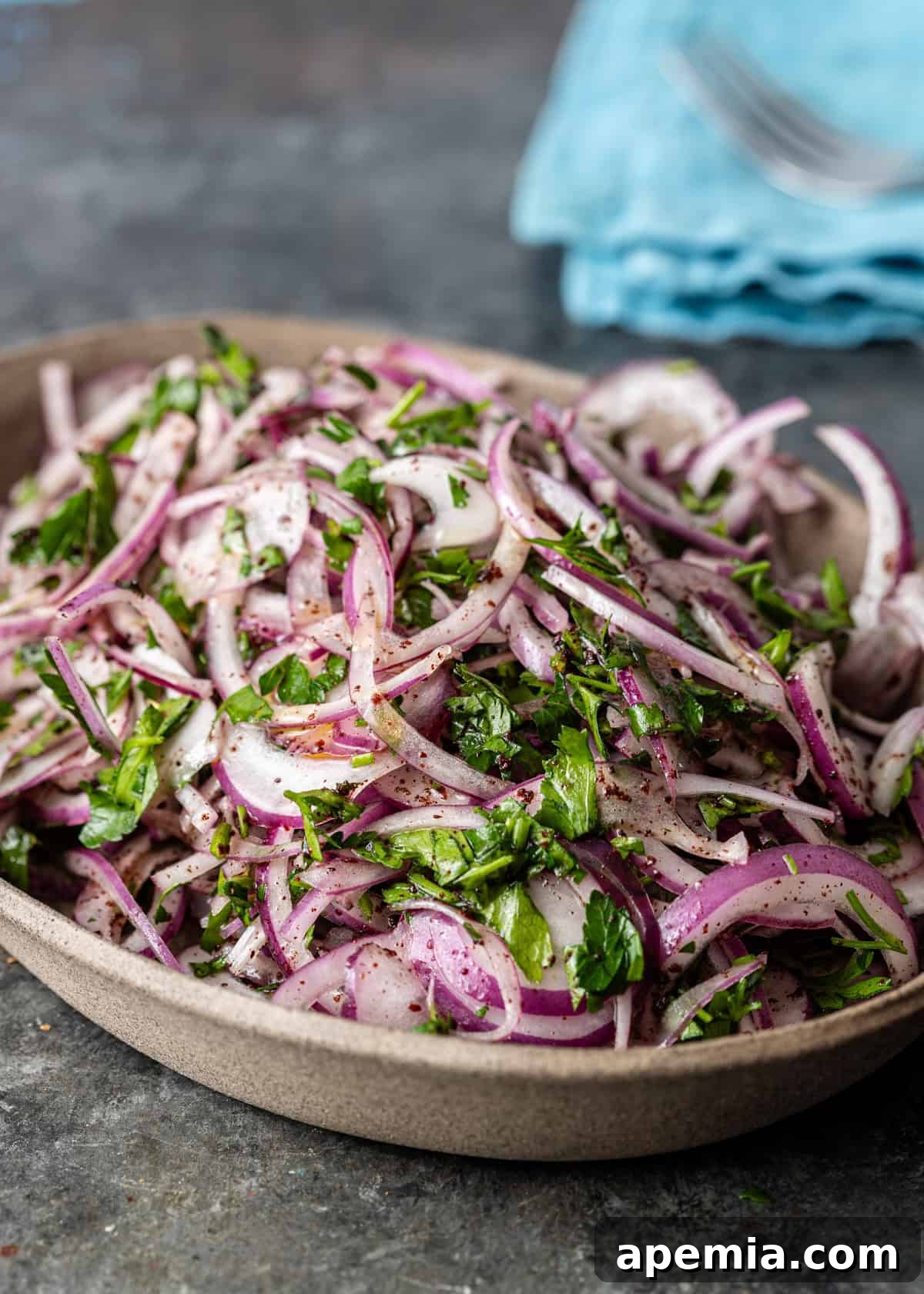
Share this recipe on Pinterest!
Love this vibrant recipe? Help others discover it by sharing it with your friends and followers on Pinterest.
Frequently Asked Questions About Sumac Onions
How can I make sumac onions less strong or pungent?
If you prefer a milder onion flavor, the “onion bath” technique is your best friend. After slicing the onions, soak them in a bowl of ice-cold water for 10-15 minutes. This helps to reduce their pungency significantly while keeping them crisp. Drain them thoroughly before tossing with the dressing.
Do sumac onions need to marinate longer than 5 minutes for the best flavor?
For this sumac onion recipe, 5 minutes of marinating is usually ample. This short rest allows the flavors to meld beautifully and the onions to soften just enough without losing their desirable crunch. If left much longer, the onions might become too soft, and the flavors could intensify to a point where they become overly sharp. They are truly best enjoyed relatively fresh after preparation.
Why aren’t my sumac onions turning that beautiful deep red color?
The intensity of the red color largely depends on the quality and freshness of your sumac. Some varieties are naturally darker and more vibrant than others. Using fresh, high-quality sumac will generally yield a deeper, more appealing reddish hue. Ensure your sumac isn’t old or stale, as this can diminish both color and flavor.
Can I prepare sumac onions in advance?
While best served fresh, you can prepare the sumac onions up to an hour in advance if stored in an airtight container in the refrigerator. Beyond that, the onions may start to lose their crispness and become overly soft from the acid. For optimal texture and flavor, I recommend making them just before serving.
Are there any other herbs I can add to sumac onions?
While parsley is traditional, finely chopped fresh mint is an excellent addition, especially if serving with lamb. Cilantro can also offer a different fresh note, though it’s less common in traditional Turkish preparations. Experiment to find your favorite combination!
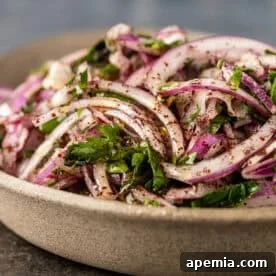
Turkish Sumac Onion Salad
Sumac onions are a deliciously tangy Turkish side recipe that comes together in mere minutes. Enjoy them as a vibrant accompaniment to meat dishes, tucked into warm pita, or as a fresh addition to any Middle Eastern meal!
Servings: 4
Prep Time: 10 mins
Total Time: 10 mins
Print Recipe
Ingredients
- 1 large red onion, thinly sliced
- 1 tablespoon fresh lemon juice
- 1 tablespoon extra virgin olive oil
- 2 teaspoons sumac
- 1/4 teaspoon kosher salt (or to taste)
- 1/4 cup fresh parsley leaves, chopped
Instructions
- Slice the red onion into very thin pieces using a sharp knife or a mandoline. For a milder flavor, soak the sliced onions in cold water for 10 minutes, then drain thoroughly.
- In a serving bowl, whisk together the fresh lemon juice, extra virgin olive oil, sumac, and kosher salt until well combined and slightly emulsified.
- Add the thinly sliced onions and the chopped fresh parsley to the bowl with the sumac dressing. Toss all ingredients well to ensure every onion slice is evenly coated.
- Let the salad marinate for about 5 minutes. This brief resting period allows the flavors to deepen and the onions to soften slightly, achieving the perfect texture.
- Serve immediately as a vibrant side dish for kebabs, wraps, grilled meats, rice dishes, or any of your favorite Middle Eastern inspired meals.
Nutrition
The information below is an estimate provided by an online nutrition calculator per serving. It should not be considered a substitute for advice from a professional nutritionist.
- Calories: 44 kcal
- Carbohydrates: 3 g
- Protein: 0.4 g
- Fat: 4 g
- Saturated Fat: 1 g
- Polyunsaturated Fat: 0.4 g
- Monounsaturated Fat: 3 g
- Sodium: 149 mg
- Potassium: 65 mg
- Fiber: 1 g
- Sugar: 1 g
- Vitamin A: 317 IU
- Vitamin C: 8 mg
- Calcium: 12 mg
- Iron: 0.3 mg
Course: Side Dishes, Salads, Condiments
Cuisine: Mediterranean, Middle Eastern, Turkish
Author: Kevin
Have You Made This Recipe? Let Me Know on Instagram!
Tag @keviniscooking or use the hashtag #keviniscooking!