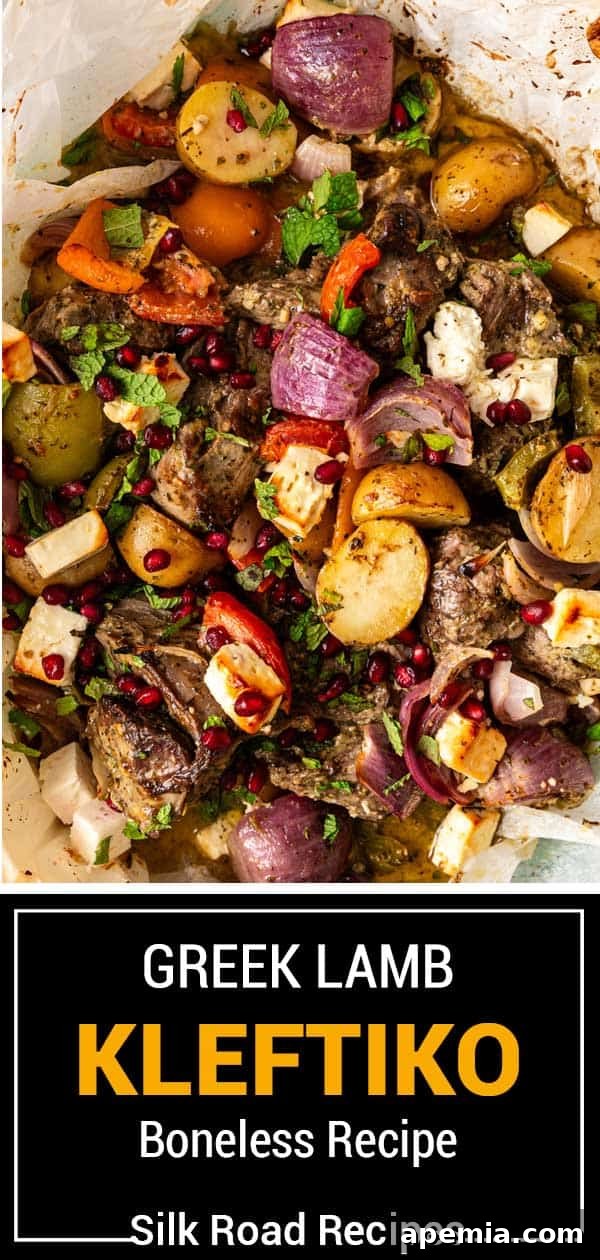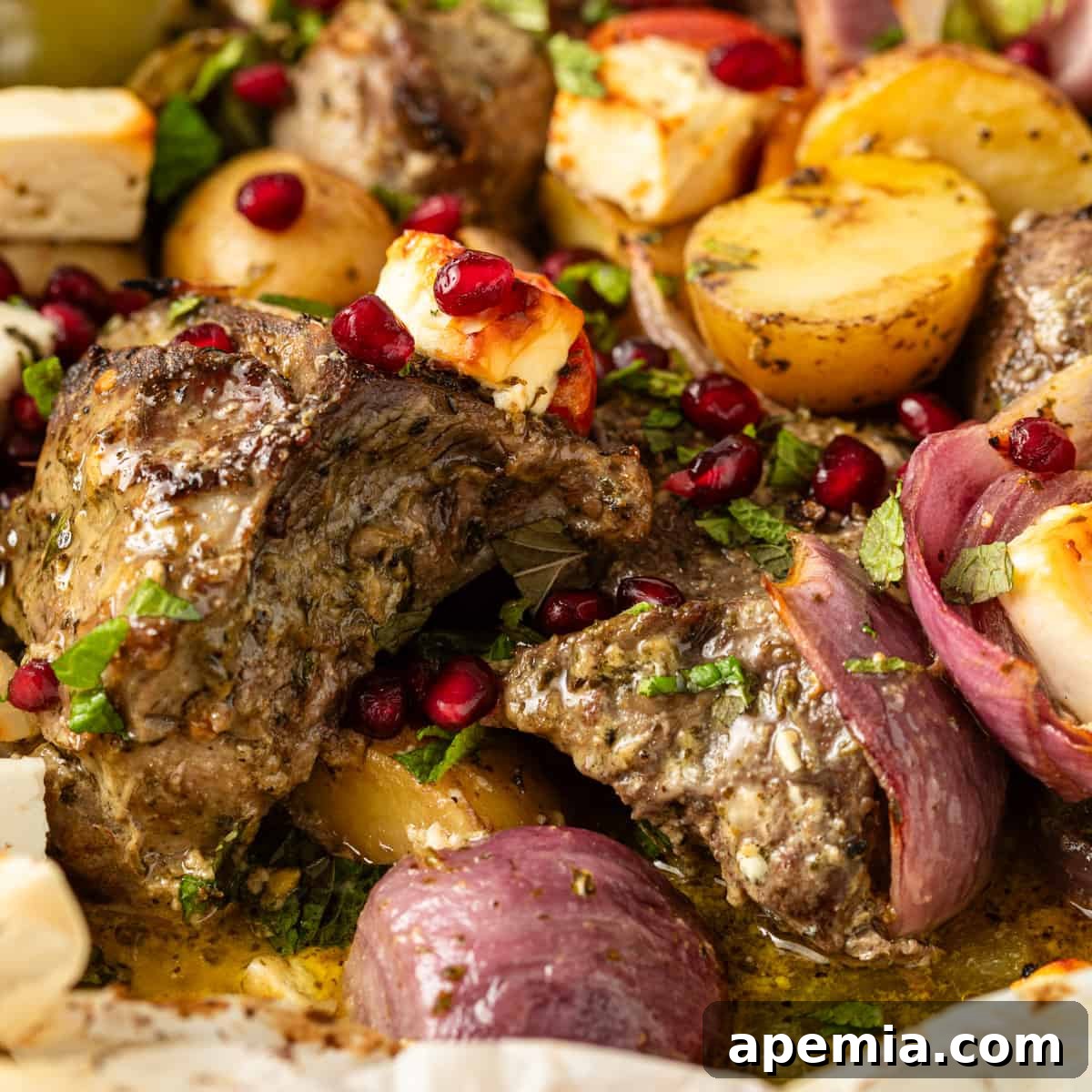
Welcome to the enchanting world of Greek cuisine, where simple, fresh ingredients transform into extraordinary flavors. Today, we delve into a culinary masterpiece: Greek Lamb Kleftiko. This beloved dish is a true testament to slow cooking, delivering lamb that is incredibly tender, succulent, and bursting with aromatic Mediterranean herbs and spices. Often called “lamb in parchment,” Kleftiko is traditionally roasted alongside a colorful array of potatoes and other vegetables, all sealed within a parchment paper parcel to lock in every precious drop of moisture and flavor. The journey begins with an overnight marinade, allowing the rich spices and zesty lemon to deeply infuse the meat, followed by a leisurely roast in the oven. The result is a hearty, comforting, and undeniably delicious meal that embodies the spirit of Greek hospitality. Prepare to fill your home with irresistible aromas and savor a dish that’s as delightful to make as it is to eat.
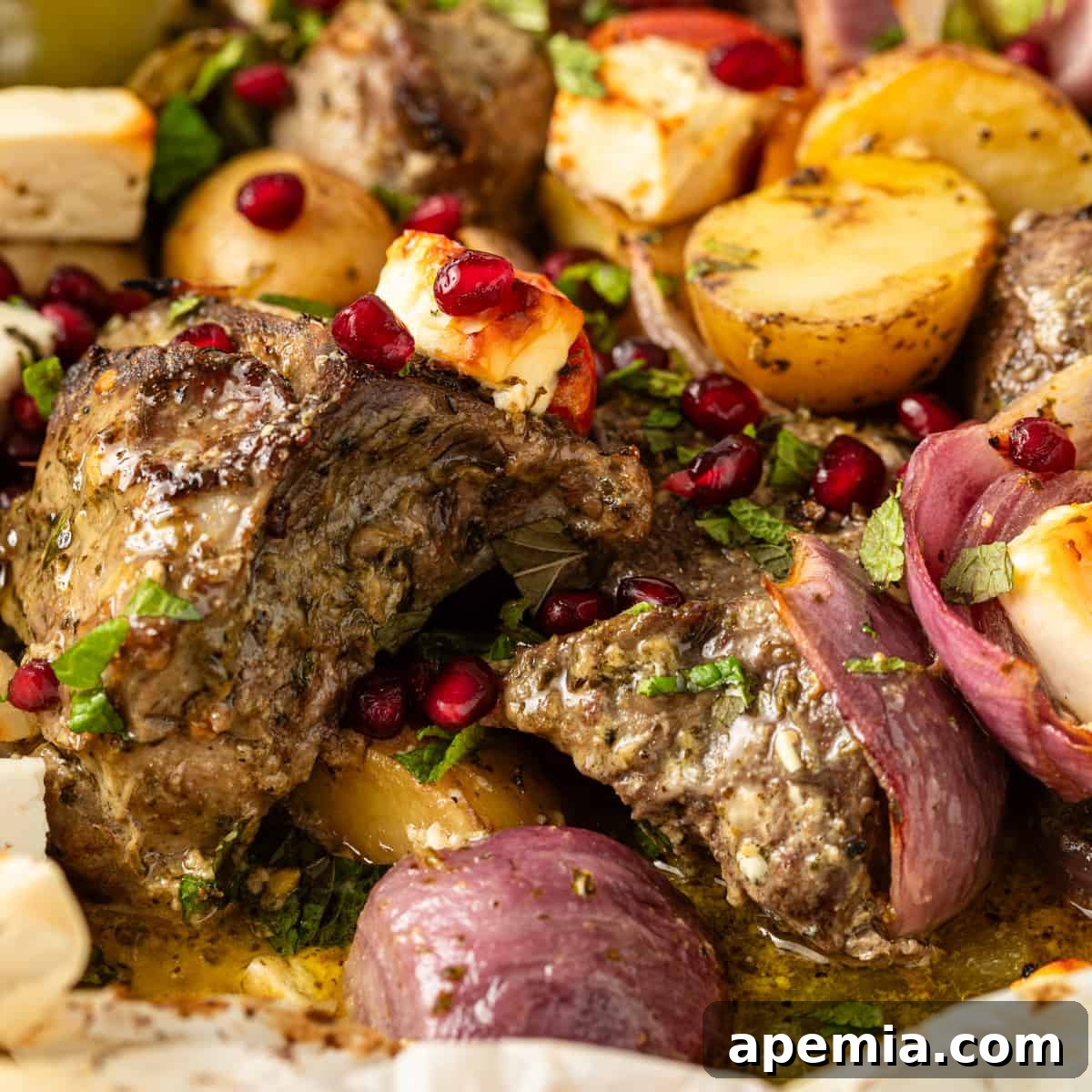
Mediterranean recipes, in my culinary experience, represent comfort food at its absolute finest. They are often crafted from wholesome, seasonal ingredients, requiring straightforward preparation yet yielding profoundly satisfying results. While some dishes may involve a few steps, the beauty lies in their simplicity and the incredible depth of flavor achieved with minimal fuss. My particular fondness for Greek food is no secret. While I appreciate the speed of quick meals like chicken souvlaki, there are times when I yearn for a dish that demands a bit more time and devotion. This, as I often say, is a true labor of love! However, in the case of Kleftiko, much of the “heavy lifting” is graciously handled by your oven, leaving you to anticipate the truly magnificent aromas that will soon permeate your kitchen.
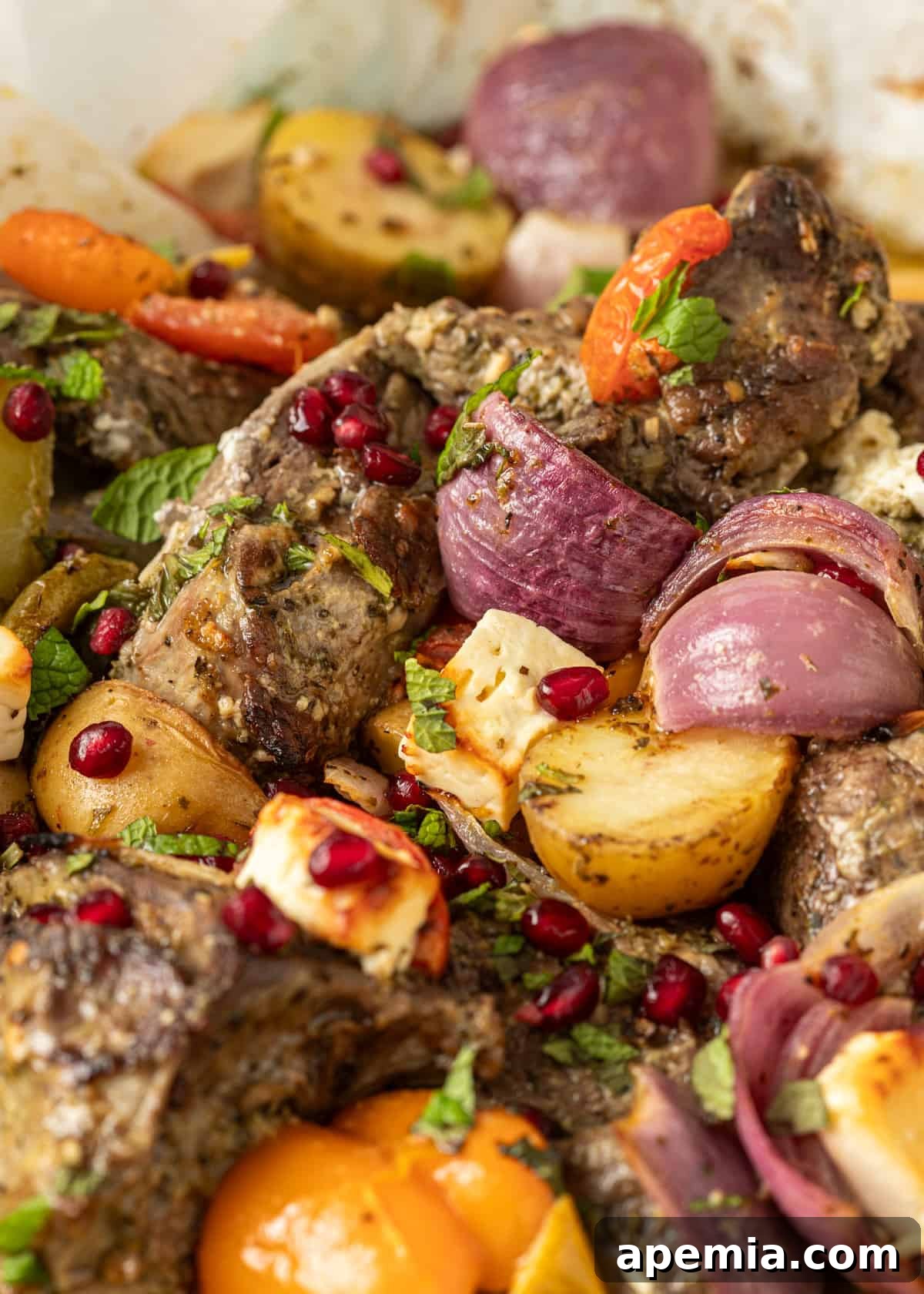
Table of Contents
- Introduction to Kleftiko
- Why You’ll Love This Recipe
- The Parchment Nest Technique
- Ingredient Deep Dive & Substitutions
- Step-by-Step: How to Make Greek Lamb Kleftiko
- Recommended Tools for Success
- Storing and Reheating Leftovers
- Frequently Asked Questions About Greek Lamb
- Printable Greek Lamb Kleftiko Recipe (Boneless)
Introduction to Greek Lamb Kleftiko: A Culinary Legend
This Greek lamb recipe is undoubtedly one of those special dishes that instantly elevates any meal. Roasting for approximately 3.5 to 4 hours, it fills your kitchen with the most enticing, savory aromas – a prelude to the deliciousness to come. Crafted with simple yet robust ingredients like potatoes, bell peppers, onions, and tomatoes, it truly is a “one-pan wonder” that I make as often as possible. Kleftiko’s origins trace back to the times of the Kleftes, guerrilla fighters who lived in the Greek mountains. They would steal lambs and cook them in underground pits, sealed with mud, to avoid detection. This slow, concealed cooking method ensured the meat was incredibly tender and flavorful. Our modern adaptation cleverly replicates this traditional approach by sealing the lamb and vegetables in parchment paper, delivering the same exquisite tenderness and deeply infused flavors without the need for an underground pit.
Why You’ll Love This Authentic Greek Lamb Kleftiko Recipe
Beyond its incredible flavor, there are so many reasons to fall in love with this Greek Lamb Kleftiko recipe. Firstly, it’s remarkably easy for a dish that tastes so impressive. The oven does almost all the work, making it perfect for entertaining or a relaxed Sunday supper. Secondly, the tender, fall-off-the-bone lamb combined with perfectly roasted vegetables creates a complete meal in one packet – minimal cleanup! The vibrant colors and rich aromas are an experience in themselves, promising a memorable dining experience. The marinade, a blend of fresh herbs, garlic, lemon, and olive oil, penetrates deep into the meat, ensuring every bite is packed with authentic Mediterranean goodness. This isn’t just a meal; it’s a culinary journey to the heart of Greece.
Expert Tip: Mastering the Parchment Paper “Nest” Technique
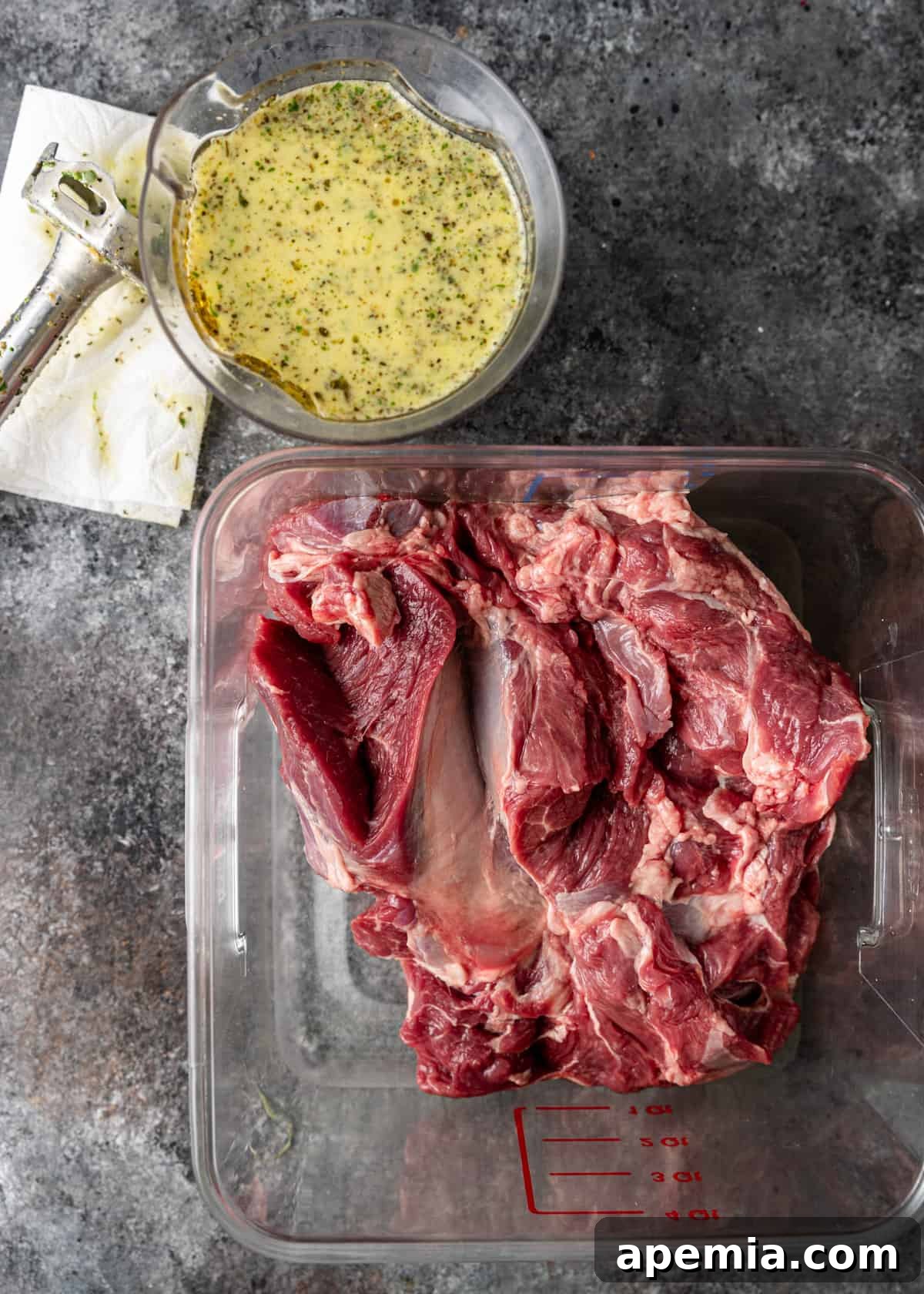
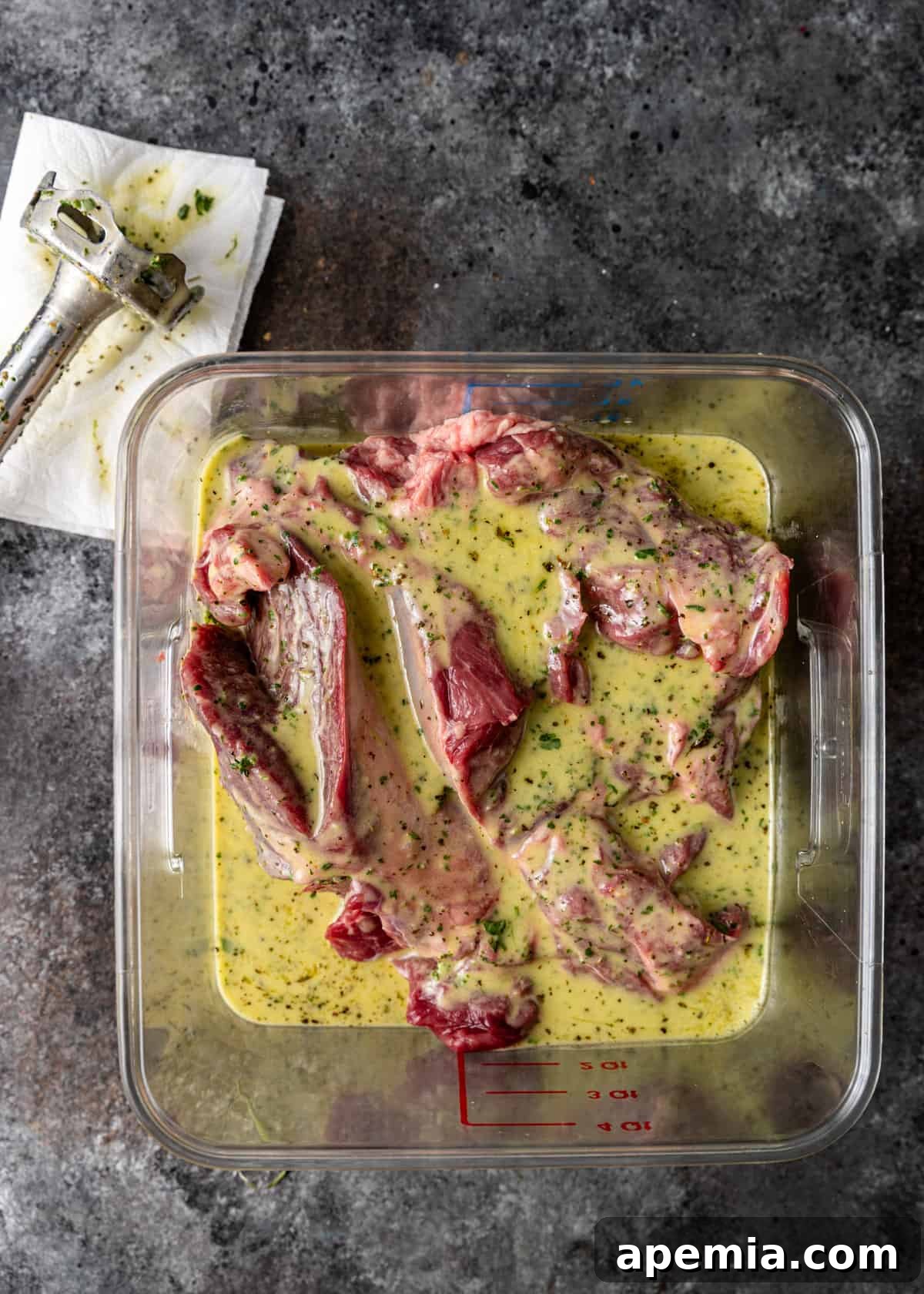
The secret to perfectly moist and flavorful Kleftiko lies in the parchment paper “nest.” This technique creates a sealed environment, much like the traditional underground pits, that steams the lamb and vegetables, locking in all the juices and aromatic flavors. To easily form this crucial packet, begin by crinkling up four individual half sheet-pan or cookie sheet-sized pieces of parchment paper. Crinkling them separately makes the paper much more pliable and manageable for shaping. Once gently unfolded, take two pieces and arrange them on your roasting pan or inside your stockpot to form a plus sign (“+”). Repeat this with the remaining two pieces, offsetting them slightly to ensure complete coverage. This overlapping arrangement creates a robust “nest” that will securely encase your lamb and vegetables, guaranteeing a tender, flavorful outcome.
Ingredient Deep Dive & Flavorful Substitutions
(For precise quantities, please refer to the detailed recipe card below.)
-
The Star: Boneless Leg of Lamb
A boneless leg of lamb is ideal for this recipe. Before marinating, take the time to trim any excess fat. While fat contributes flavor, too much can make the dish overly greasy. We aim for a hearty and satisfying meal, not one that feels heavy. This cut ensures uniform cooking and a beautifully tender result.
-
The Colorful Companions: Hearty Vegetables
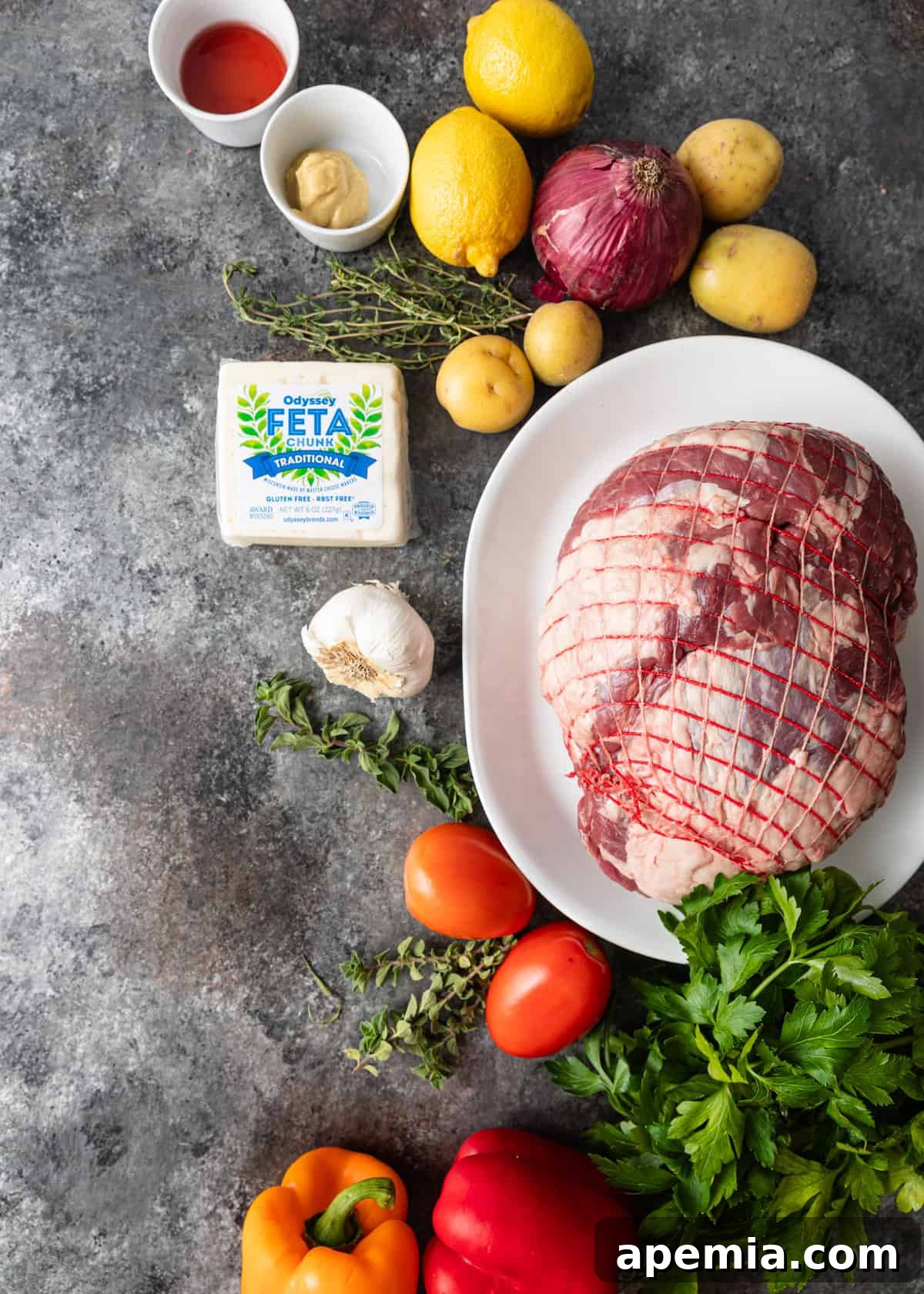
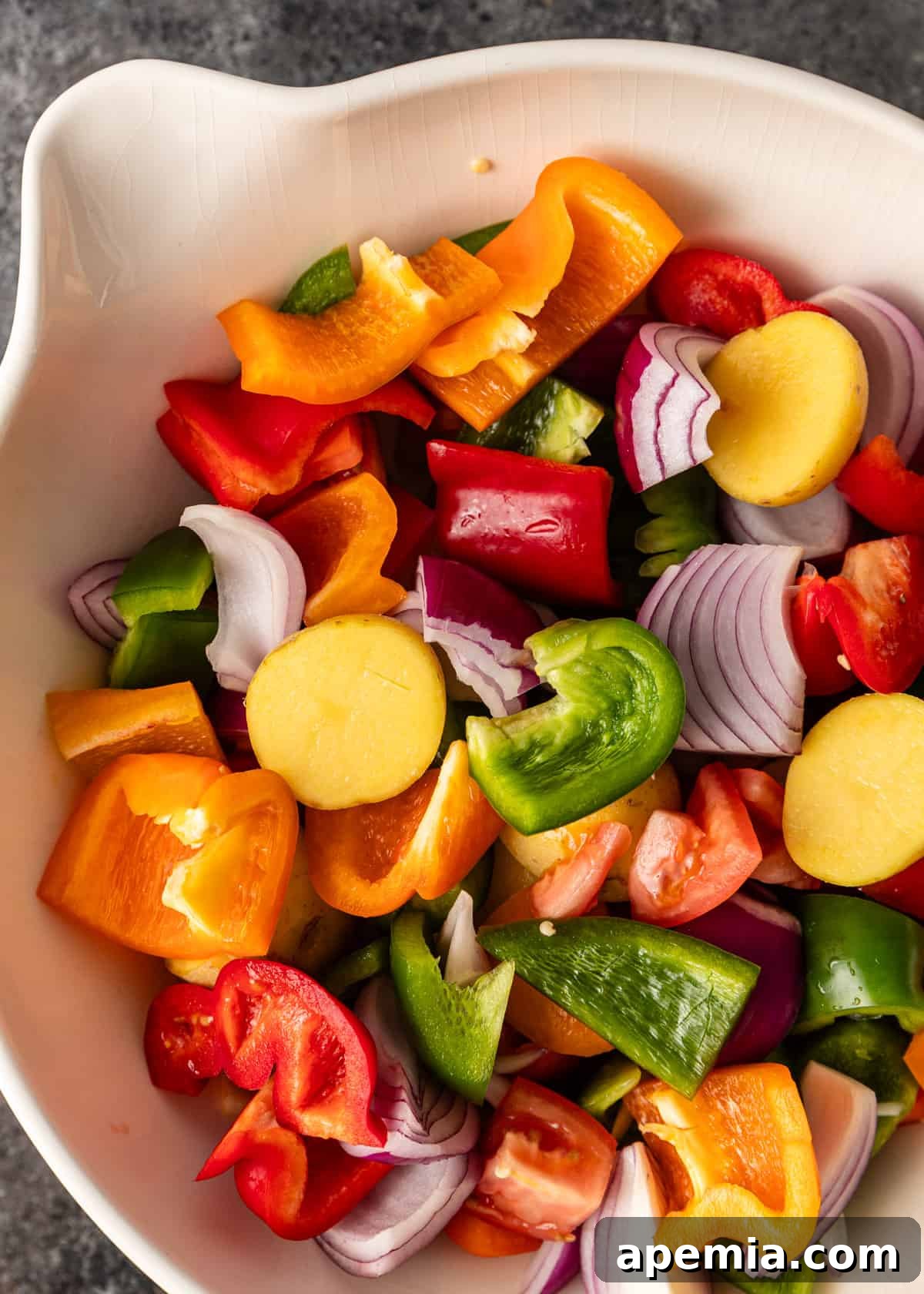
Our Greek lamb is roasted with a medley of vibrant vegetables that absorb the rich pan juices and become incredibly flavorful. We use small gold potatoes, halved, for their creamy texture and ability to soak up the savory goodness. A trio of green, red, and orange bell peppers, cut into 2-inch pieces, adds sweetness and a beautiful visual appeal. Red onions, peeled and quartered, contribute a pungent depth that mellows deliciously in the oven. Finally, Roma tomatoes, quartered, provide a lovely acidity and burst of fresh flavor, complementing the richness of the lamb.
-
The Tangy Finish: Cheese, Herbs, and Pomegranate
To finish the dish, a sprinkle of cheese adds a delightful salty tang. You can opt for traditional kefalotyri, a hard, salty Greek cheese, or easily find feta cheese, known for its creamy, briny notes. Both work wonderfully. For an optional but highly recommended fresh and herbaceous touch, add chopped mint leaves at the end. Their bright flavor beautifully cuts through the richness of the lamb. Finally, for a stunning presentation and a burst of sweet-tart flavor, sprinkle on fresh pomegranate arils (the juicy seeds inside a pomegranate). They add an unexpected, yet delightful, pop of color and taste.
-
The Soul of Kleftiko: The Aromatic Marinade
The marinade is where the magic truly happens, infusing the lamb with signature Mediterranean flavors. You’ll need:
- Olive Oil: A good quality olive oil forms the base, carrying the flavors deep into the meat.
- Dry White Wine: A splash of dry white wine adds complexity and helps tenderize the lamb. Don’t worry, the alcohol will cook off during roasting.
Substitution: Apple cider vinegar works just as well. - Garlic: Plenty of fresh garlic cloves are essential for that classic savory depth.
- Dijon Mustard: Dijon mustard acts as an emulsifier and adds a subtle tangy kick that complements the lamb.
- Lemon: Both fresh lemon juice and zest provide brightness and acidity, essential for balancing the rich flavors.
- Red Wine Vinegar: Red wine vinegar adds another layer of tangy depth.
Substitution: Balsamic vinegar or extra lemon juice can be used in a pinch. - Fresh Herbs: Chopped fresh parsley is a must; its vibrant flavor is superior to dried for this marinade.
- Dried Herbs: Dried oregano and rosemary infuse an earthy, rustic aroma that defines Greek cooking. Dried herbs work perfectly here.
- Seasoning: Essential kosher salt and freshly ground black pepper enhance all the other flavors.
Step-by-Step Guide: How to Make Authentic Greek Lamb Kleftiko
-
1. Prepare the Aromatic Marinade
Combine all the marinade ingredients (olive oil, white wine, garlic, Dijon mustard, lemon juice and zest, red wine vinegar, fresh parsley, dried oregano, dried rosemary, kosher salt, and black pepper) in a high-powered blender or food processor. Blend until the mixture is completely smooth and emulsified. This ensures all the flavors are evenly distributed and penetrate the lamb beautifully.
-
2. Marinate for Maximum Flavor
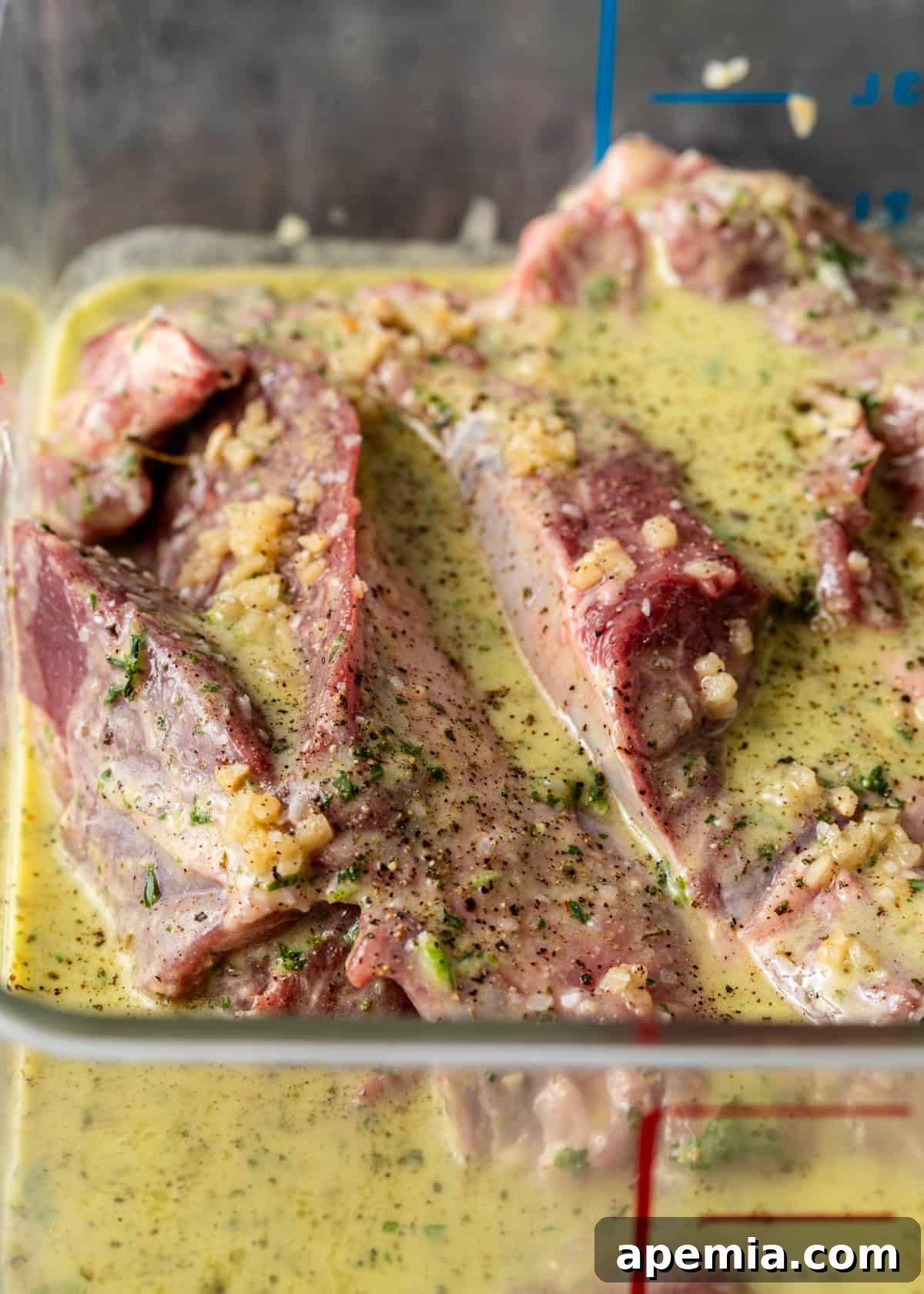
Carefully remove any netting from the boneless leg of lamb and transfer it to a large bowl or a sturdy zip-top bag. Pour the freshly prepared marinade over the lamb, thoroughly massaging it into the meat, ensuring every surface is coated. Cover the bowl or seal the bag and refrigerate overnight. This extended marination period is crucial for tenderizing the lamb and infusing it with deep, complex flavors.
-
3. Preheat & Prepare the Baking Vessel
Remove the marinated lamb from the refrigerator at least 30 minutes before you plan to roast it, allowing it to come closer to room temperature for more even cooking. Preheat your oven to 375°F (190°C).
-
4. Construct the Parchment Packet
Prepare your roasting pan or a large, oven-safe, heavy-lidded stockpot by creating the special parchment paper “nest.” As detailed in our expert tip above, gently crinkle four individual half sheet-pan sized pieces of parchment paper. Unfold them and arrange two pieces to form a plus sign (“+”) in the center of your pan. Layer the remaining two pieces slightly offset, ensuring a large, overlapping enclosure that will completely seal your lamb and vegetables.
-
5. Layer the Lamb and Vegetables
In a separate large bowl, toss together all your cut vegetables. Transfer half of the vegetable mixture onto the parchment paper in the roasting pan, forming a bed. Place the marinated lamb directly on top of this vegetable layer. Distribute the remaining vegetables over and around the lamb. Finally, pour any leftover marinade from the lamb’s bowl evenly over the entire assembly.
-
6. Seal and Slow Roast to Perfection
Carefully pull the sides of the parchment paper up and over the lamb and vegetables. Tightly crimp the edges together, ensuring the packet is completely sealed to trap all the steam and juices. Secure the parchment paper bundle with kitchen string to keep it closed during roasting. Place the roasting pan on the center rack of your preheated oven and roast for approximately 3.5 to 4 hours. The slow roasting process ensures incredibly tender meat.
-
7. The Final Flourish: Browning and Cheese
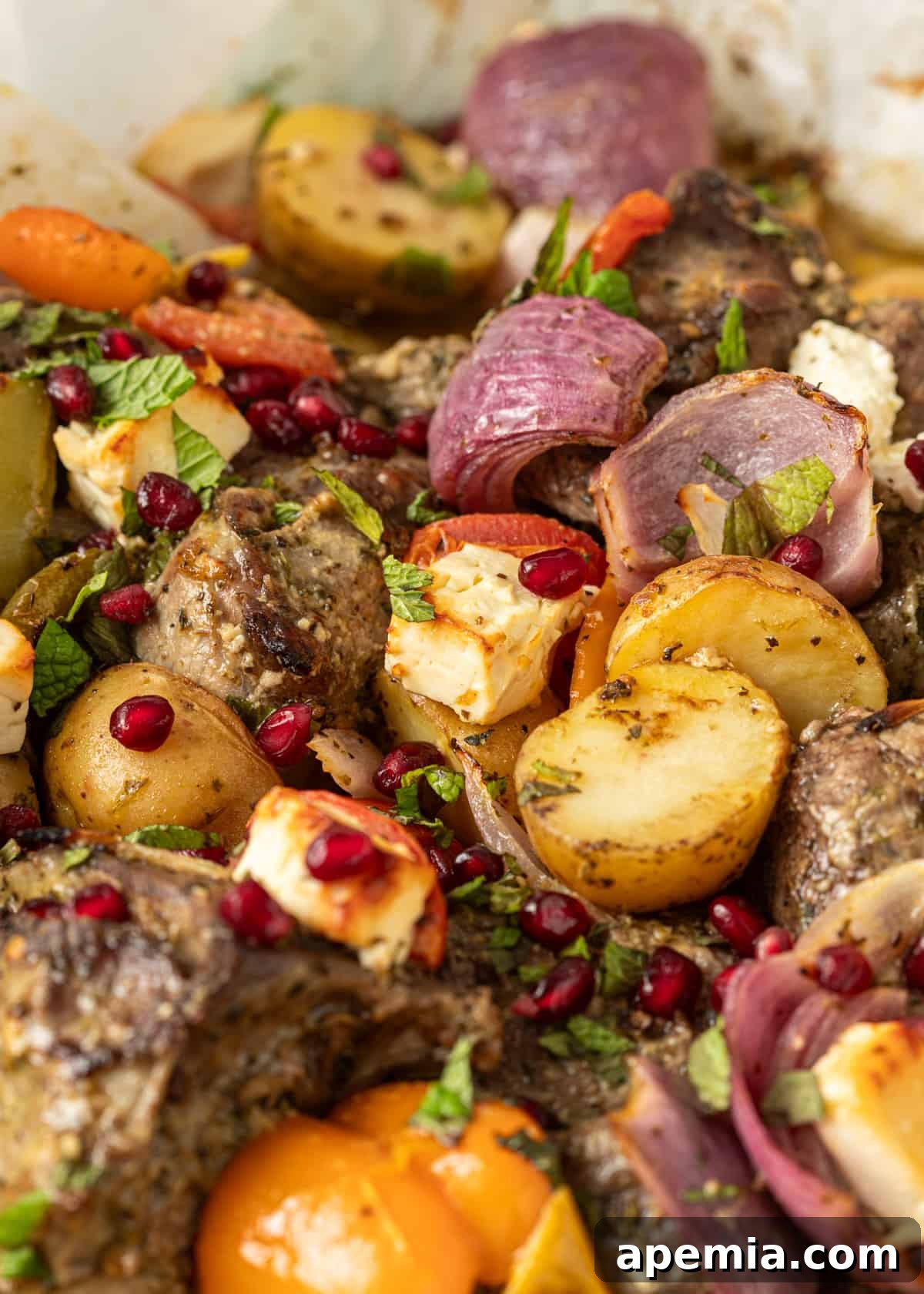
After the initial roasting period, carefully untie the parchment paper and gently fold the excess paper to the outside of the pan, exposing the lamb and vegetables. You can check the internal temperature of the lamb for your desired doneness: Medium Rare (145°F / 63°C), Medium (160°F / 71°C), and Well Done (170°F / 77°C). Baste the lamb and vegetables generously with the accumulated pan juices. At this point, scatter the cubed kefalotyri or feta cheese over the vegetables. Increase the oven temperature to 425°F (220°C). Return the uncovered pan to the oven and roast for an additional 15 minutes, or until the lamb and vegetables are beautifully browned and the cheese is melted and slightly golden. If the lamb is already at your desired doneness, you can remove it and keep it warm while the vegetables and cheese brown.
-
8. Rest, Garnish, and Serve
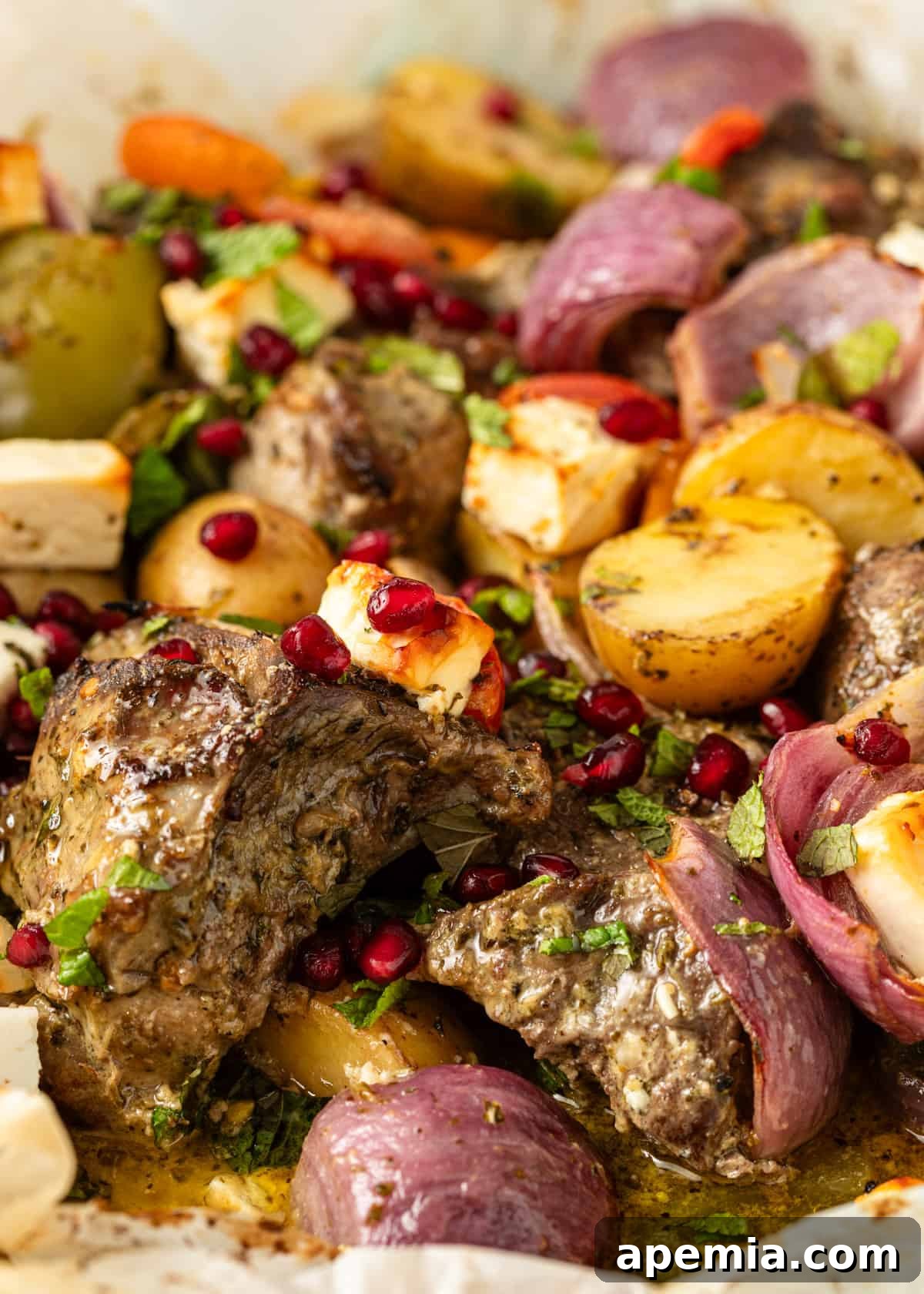
Once removed from the oven, baste the lamb one last time with the juices. Allow the entire dish to rest for 20 minutes before serving. Resting allows the juices to redistribute, ensuring the lamb remains moist and tender. Slice or shred the tender lamb and serve it alongside the roasted vegetables, drizzling generously with the flavorful pan juices. For an optional, refreshing touch, sprinkle with freshly chopped mint leaves and vibrant pomegranate arils just before serving. Enjoy your homemade Greek feast!
Recommended Tools for Success
Having the right tools can make preparing Greek Lamb Kleftiko even more enjoyable and efficient:
- High-Powered Blender or Food Processor: Essential for puréeing the marinade ingredients to a smooth consistency, ensuring maximum flavor infusion. An immersion blender also works perfectly.
- Roasting Pan or Large Heavy-Lidded Stock Pot: You’ll need an oven-safe vessel large enough to comfortably hold the lamb and vegetables. A heavy-lidded stockpot can mimic the sealed environment even more closely.
- Parchment Paper & Kitchen Twine: Crucial for creating the “nest” that seals in the moisture and flavors, allowing the lamb to slow-roast to perfection.
- Meat Thermometer: A reliable meat thermometer is indispensable for accurately checking the lamb’s internal temperature, ensuring it reaches your preferred level of doneness.
Storing and Reheating Leftovers
Greek Lamb Kleftiko makes wonderful leftovers, allowing you to enjoy the delicious flavors for days to come. After serving, allow any remaining lamb and vegetables to cool completely to room temperature. Transfer them to an airtight container and store in the refrigerator for up to 3-4 days. To reheat, the oven is the preferred method to maintain tenderness and prevent drying out. Gently warm the lamb and vegetables in an oven preheated to around 300°F (150°C) until heated through. For individual servings, the microwave can be used, warming in 30-second bursts until adequately heated, ensuring not to overcook.
Frequently Asked Questions About Greek Lamb Kleftiko
Common Questions About Kleftiko
For this specific Greek lamb Kleftiko recipe, searing the lamb beforehand is not a requirement. While searing can help to create a flavorful crust and lock moisture into some cuts of meat, the unique “lamb in parchment” method and our potent marinade effectively achieve tenderness and juiciness without this extra step. The sealed parchment packet creates a moist, steamy environment that prevents the lamb from drying out. However, if you prefer, you could sear the lamb for 2-3 minutes on each side before adding it to the roasting pan for an even deeper color on the exterior.
Traditional Kleftiko is fundamentally made from slow-roasted lamb, typically a leg, combined with potatoes and other robust vegetables. The hallmark of Kleftiko, as the legend suggests, is its method of cooking: sealed in a parcel to replicate the ancient technique of cooking in hidden, underground ovens. My recipe faithfully adheres to this traditional method, utilizing parchment paper to create the necessary sealed environment. This ensures the lamb is cooked to an exceptional tenderness, and all the flavors of the marinade and vegetables meld together beautifully, creating an authentic Greek experience.
The ideal cooking speed for lamb largely depends on the specific cut and desired outcome. Generally, leaner cuts of lamb, especially when you want a rosy medium-rare center, benefit from higher heat and shorter cooking times. This is why, in the final 15 minutes of this Kleftiko recipe, we increase the oven temperature to achieve a lovely browning on the lamb and vegetables, after the long, slow cook has done its tenderizing work. Conversely, fattier cuts or tougher cuts with more connective tissue, such as shoulder or a bone-in leg, truly shine when cooked low and slow. This extended, gentle heat allows the fat to render and connective tissues to break down, resulting in incredibly rich, fall-apart tender meat. For example, my Slow Roast Leg of Lamb on my other site, Kevin is Cooking, demonstrates this technique for a different style of lamb preparation.
Greek Lamb Kleftiko (Boneless) Recipe
Marinated Greek lamb is slow-roasted to perfection with potatoes and vibrant vegetables in a parchment parcel. Also known as kleftiko, it’s the ultimate comforting meal!
- Servings: 8
- Prep Time: 15 mins
- Cook Time: 4 hrs
- Marinate Time: 8 hrs
- Total Time: 12 hrs 15 mins
Ingredients
- 3-4 lb boneless leg of lamb (trim any excess fat)
- 1 1/2 lbs small gold potatoes (halved)
- 3 bell peppers (green, red, orange, cut into 2-inch pieces)
- 2 red onions (peeled and quartered)
- 2 Roma tomatoes (plum, quartered)
- 4 oz kefalotyri or feta cheese (cut into small cubes)
- 3 tbsp mint leaves (chopped, optional)
- 1/2 cup pomegranate arils (optional)
Marinade
- 1/2 cup olive oil
- 1/2 cup dry white wine
- 8 cloves garlic
- 2 tbsp Dijon mustard
- 3 tbsp lemon juice + zest
- 2 tbsp red wine vinegar
- 1/4 cup fresh parsley
- 1 tbsp dried oregano
- 1 tbsp dried rosemary
- 1 tsp kosher salt
- 1/2 tsp ground black pepper
Instructions
- Using a high-powered blender, food processor, or immersion blender, purée all the marinade ingredients until smooth.
- Remove any netting from the lamb and transfer it to a large bowl or a sealable zip-top bag. Pour the marinade over the lamb and massage it thoroughly into the meat. Cover or seal the container and marinate in the refrigerator overnight (for at least 8 hours).
- Take the lamb out of the refrigerator 30 minutes before roasting to allow it to come to room temperature. Preheat your oven to 375°F (190°C).
- Prepare your roasting pan or a large oven-safe, heavy-lidded stockpot with parchment paper. Crinkle up 4 half sheet-pan or cookie sheet sized pieces of parchment paper separately to make them easier to form. Unfold and lay 2 pieces to create a plus sign “+” in your pan. Then, layer the remaining 2 pieces slightly offset, creating an overlapping parchment paper “nest.”
- In a large bowl, toss together the cut vegetables. Transfer half of the vegetables onto the parchment paper in the pan. Place the marinated lamb on top of this vegetable layer. Pour the remaining vegetables over and around the lamb. Drizzle any remaining marinade from the lamb’s bowl over the entire assembly.
- Pull the sides of the parchment paper up and together. Tightly crimp the edges to fully encase the lamb and vegetables in the parchment packet. Tie securely with kitchen string.
- Place the roasting pan on the center rack of the preheated oven and roast for approximately 3 1/2 – 4 hours. Once cooked, untie the parchment, exposing the lamb and vegetables, and fold the excess parchment paper to the outside of the pan. Check for desired internal temperatures: Medium Rare (145°F / 63°C), Medium (160°F / 71°C), and Well Done (170°F / 77°C).
- Baste the lamb generously with the accumulated juices and toss the vegetables. Add the cubed kefalotyri or feta cheese at this point, scattering it over the vegetables. Raise the oven temperature to 425°F (220°C). Return the pan to the oven (uncovered) for 15 minutes, or until the lamb and vegetables are nicely browned and the cheese is melted and slightly golden. (If the lamb is already at your desired doneness, you can remove it and keep it warm while the vegetables and cheese brown).
- Baste the lamb one final time and let it rest for 20 minutes before serving. Slice or shred the tender meat and serve with the roasted vegetables, pouring the pan juices over everything. Optionally, sprinkle with fresh chopped mint leaves and pomegranate arils just before serving for an extra burst of flavor and color.
Nutrition
Calories: 419kcal | Carbohydrates: 26g | Protein: 27g | Fat: 22g | Saturated Fat: 6g | Polyunsaturated Fat: 2g | Monounsaturated Fat: 13g | Cholesterol: 81mg | Sodium: 573mg | Potassium: 941mg | Fiber: 5g | Sugar: 6g | Vitamin A: 1848IU | Vitamin C: 85mg | Calcium: 129mg | Iron: 4mg
The information shown is an estimate provided by an online nutrition calculator. It should not be considered a substitute for a professional nutritionist’s advice.
Course: main dishes
Cuisine: Greek
Author: Kevin
We hope you thoroughly enjoy creating and savoring this magnificent Greek Lamb Kleftiko. It’s a dish that truly transports you to the sun-drenched shores of Greece with every tender bite. Remember, the key to its success lies in patience – allowing the lamb to marinate properly and slow-roast to perfection. This recipe is a fantastic way to bring an authentic taste of Mediterranean comfort into your home. Share the joy of this incredible meal with your loved ones and make lasting culinary memories.
Love this recipe? Share it with the world on Pinterest! Pin This Recipe on Pinterest
Have you made this recipe? Let me know on Instagram! Tag @keviniscooking or use the hashtag #keviniscooking! I’d love to see your delicious creations.