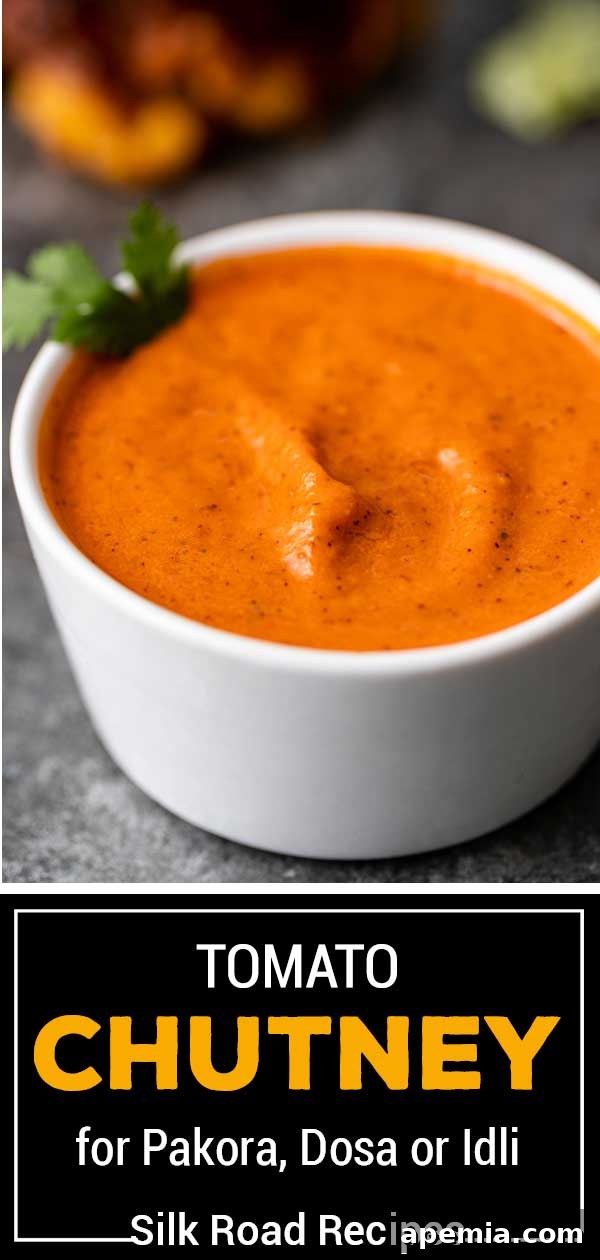
Authentic Tomato Pachadi: Your Ultimate Guide to Spicy South Indian Chutney
Dive into the vibrant flavors of South India with my authentic Tomato Pachadi. This spicy, tangy, and incredibly aromatic chutney is a staple in Indian households, offering a burst of flavor that elevates any meal. From crispy dosa to fluffy idli, learn how to create this irresistible condiment with ease, bringing a taste of tradition right to your kitchen.

In the expansive and diverse world of global cuisine, condiments often serve as the unsung heroes, holding the power to transform a simple dish into an extraordinary culinary experience. Whether it’s the creamy, rich labneh of the Middle East, the refreshing tzatziki of Greece, or the bold sauces found across the Americas, a perfect dip, spread, or relish holds a special place in my heart. As a passionate explorer of flavors, I find immense joy in discovering and recreating these local specialties.
When my culinary journey takes me to the heart of South India, that irreplaceable role is filled by the exquisite Tomato Pachadi. This delicious tomato chutney is far more than just a side dish; it’s a celebration of robust flavors – a harmony of spicy, sweet, and smoky notes that is utterly captivating. Its vibrant character and remarkable depth of taste make it a must-have accompaniment, whether you’re enjoying a traditional Indian breakfast, a light snack, or a hearty dinner. Once you taste it, you’ll understand why it’s so hard to resist!
The Secret to Unforgettable Flavor: Mastering the Tadka Technique
The profound depth, rich flavors, and aromatic warmth that define South Indian chutneys, including our beloved Tomato Pachadi, are largely attributed to a quintessential Indian cooking technique known as Tadka. Also referred to as “tempering” or “chhonk,” tadka is a quick yet crucial step that involves blooming whole or ground spices in hot oil or ghee. This process awakens their essential oils, intensifying their inherent fragrance and flavor before they are incorporated into a dish. It’s a truly sensory experience: you’ll hear the spices crackle, see them change color, and smell their enticing aromas filling your kitchen, all of which lay the aromatic foundation for an incredibly flavorful chutney.
Tadka is not merely a technique; it is a fundamental cornerstone of Indian cooking, a brief yet impactful moment that defines the character of countless dishes. From comforting dals and rich curries to humble vegetable preparations and, of course, vibrant chutneys, tadka imparts a distinctive taste and aroma that cannot be achieved by simply adding raw spices. While ‘tadka’ describes the method, the term also refers to the resulting spice-infused oil itself. Understanding and mastering this seemingly simple process is key to unlocking that authentic, complex South Indian taste in your homemade Tomato Pachadi. It’s a small step with a monumental culinary impact, transforming ordinary ingredients into an extraordinary experience. You can learn more about Indian tempering spices and the tadka process in depth here.

Table of Contents
- Why You’ll Love This Homemade Tomato Pachadi
- Serving Suggestions: More Than Just a Condiment
- Essential Ingredients and Smart Substitutions
- Step-by-Step: How to Make Tomato Pachadi
- Tips for Success in Making Tomato Pachadi
- Recommended Kitchen Tools for Chutney Making
- Storing and Reheating Your Tomato Pachadi
- Frequently Asked Questions About Tomato Pachadi
- Tomato Pachadi (Tomato Chutney for Dosa) Recipe
Why You’ll Love This Homemade Tomato Pachadi
Beyond its incredibly delicious flavor, there are countless reasons why this Tomato Pachadi recipe deserves a permanent spot in your culinary repertoire:
- Flavorful & Dynamic: This chutney strikes a perfect balance between the bright tang of ripe tomatoes, the fiery kick of red chilies, and the earthy warmth of traditional Indian spices. Every spoonful is an adventure for your taste buds, revealing layers of complex flavors.
- Surprisingly Simple: Despite its sophisticated taste, this tomato chutney is remarkably straightforward to prepare. It’s an accessible recipe for home cooks of all skill levels, allowing you to create an authentic South Indian delicacy without extensive effort.
- Incredibly Versatile: While it’s a perfect partner for traditional Indian dishes, its adaptability extends far beyond. It can elevate a variety of meals, from simple sandwiches to grilled proteins.
- Healthful Ingredients: Packed with fresh tomatoes, which are rich in antioxidants, and a blend of beneficial spices known for their digestive and anti-inflammatory properties, this pachadi is a flavorful way to nourish your body.
- Customizable Heat: The spice level can be easily adjusted to suit your personal preference. Whether you prefer a mild warmth or an exhilarating fiery kick, you have full control over the intensity.
- Economical & Fresh: Making chutney at home is not only cost-effective but also ensures you’re using fresh, high-quality ingredients without any artificial additives or preservatives.
Serving Suggestions: More Than Just a Condiment
In Indian cuisine, condiments are rarely relegated to a mere garnish. They often take center stage as a vital and integral component of the meal, contributing significantly to the overall flavor profile and dining experience. Tomato Pachadi is a prime example of this philosophy. Its robust and complex flavor profile makes it incredibly versatile, pairing beautifully with a wide array of dishes. Here are some of my favorite ways to enjoy this delicious chutney:
- The Classic South Indian Breakfast: Serve it generously alongside a stack of crispy dosa (savory crepes) or soft, fluffy idlis (steamed rice cakes). The tangy spice of the pachadi perfectly complements the mild, comforting flavors of these beloved South Indian staples, creating a harmonious and satisfying start to your day.
- Perfect with Pakora: It’s an ideal dipping sauce for crunchy, deep-fried snacks like crispy potato pakora or crispy corn pakora. The chutney’s bright tang and gentle heat cut through the richness of the fried fritters, creating a delightful contrast.
- Elevate Your Curry Experience: A generous dollop of Tomato Pachadi served alongside your favorite curry, be it a rich paneer makhani, a hearty chicken curry, or a simple dal, adds an extra layer of complexity, a spicy kick, and a refreshing counterpoint to the main dish.
- A Savory Spread: Don’t limit this chutney to Indian meals! It makes a fantastic and flavorful spread for sandwiches, wraps, or even as a unique base for homemade pizzas. Its bold taste can instantly upgrade your everyday lunch.
- Grilling Companion: Pair it with grilled chicken, fish, or paneer. The smoky notes of the pachadi complement the char of grilled foods beautifully, adding a zesty and spicy finish.
- Unique Breakfast Twist: Stir a spoonful or two into scrambled eggs or serve it on the side with an omelet for a vibrant and unexpected breakfast treat. It’s a delicious alternative to standard hot sauce or ketchup.

Tip From Kevin
Kashmiri Red Chilis
Kashmiri red chilies are prized for their vibrant color and moderate heat. If you can’t get your hands on whole dried Kashmiri chilies, 1 teaspoon of Kashmiri red chili powder is an excellent substitute. For a more accessible option, mix ¾ teaspoon of smoked paprika with ¼ teaspoon of cayenne pepper – this will give you a good balance of color and heat.
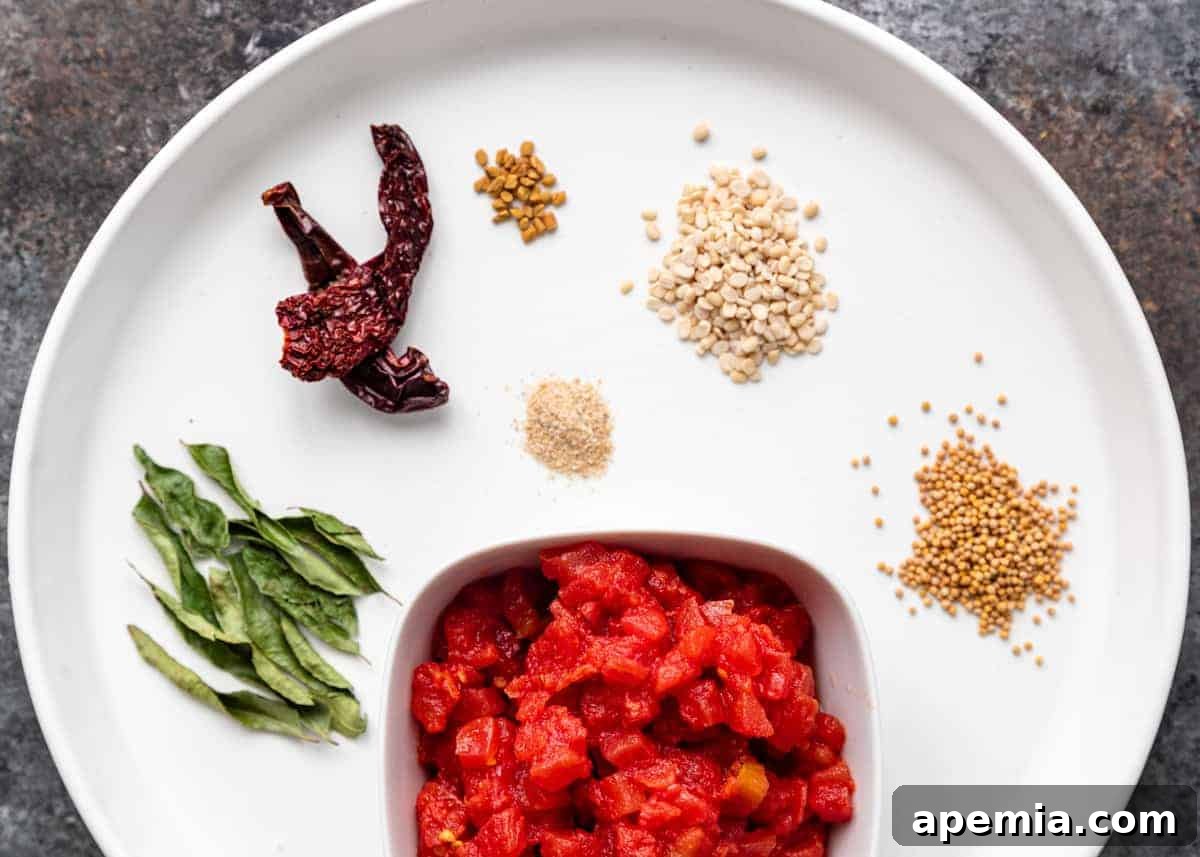
Essential Ingredients and Smart Substitutions
(For exact quantities, please refer to the comprehensive recipe card below)
- Ghee: This clarified butter is a cornerstone of Indian cooking, lending a rich, nutty flavor and a beautiful aroma to the tadka. It’s the traditional fat for Tomato Pachadi. To make this recipe vegan, simply substitute with an equal amount of vegetable ghee or any neutral cooking oil, such as canola, sunflower, or grapeseed oil.
- Mustard Seeds: A vital component of the tadka. When heated in oil, these tiny seeds pop and release a pungent, slightly bitter flavor that is distinctive and essential to the chutney’s character. Wait for them to crackle and pop before moving to the next step.
- Urad Dal (Black Gram): Also known as black lentils, when tempered in hot oil, urad dal turns golden brown and develops a wonderful roasted, nutty flavor and a slight crunch. This texture and taste beautifully complement the tang and spice of our tomato pachadi recipe.
- Fenugreek Seeds: Another regular feature in a traditional tadka, fenugreek seeds offer a unique, slightly bitter yet aromatic taste. This bitterness helps to nicely balance the other vibrant spices and the sweetness of the tomatoes.
- Kashmiri Red Chilis: These chilies are treasured in Indian cooking for their striking deep red color and relatively mild heat, which adds warmth without overwhelming the palate. If whole dried chilies are unavailable, you can use 1 teaspoon of Kashmiri red chili powder. Alternatively, a blend of ¾ teaspoon smoked paprika and ¼ teaspoon cayenne pepper provides a good substitute for both color and heat.
- Kosher Salt: Used to enhance and balance all the flavors in the chutney. Always adjust to taste.
- Asafoetida (Hing): This pungent spice, often called “hing,” is a secret weapon in Indian vegetarian cooking. When cooked in hot oil, it loses its strong raw aroma and develops a deliciously savory, umami-rich depth, often compared to garlic and onions. It’s also known for its digestive benefits.
- Chopped Tomatoes: Any good quality canned chopped tomatoes will work perfectly for this tomato pachadi recipe, providing consistent flavor and texture. If you prefer using fresh produce or growing your own, I recommend using meaty varieties like beef tomatoes or Roma tomatoes, which pack a lot of pulp and less water, resulting in a richer chutney.
- Fresh Curry Leaves: These fragrant leaves are indispensable for authentic South Indian flavor. Their unique herby aromas with subtle citrusy, nutty notes provide a beautiful balance to the richness of our tomatoes and spices. If fresh curry leaves are hard to find, dried curry leaves can be used as a passable alternative; just squeeze in a little fresh lime or lemon juice at the end to make up for that lost fresh zing.
- Tamarind Paste: This provides the signature tangy and sour notes that define many South Indian dishes. It adds a crucial layer of complexity to the chutney. If you can’t get your hands on ready-made tamarind paste, a mixture of 1 tablespoon lime juice and 1 tablespoon sugar can serve as a suitable substitute, though the flavor profile will be slightly different.
- Optional: Fresh Ginger and Garlic: For an added layer of aromatic depth, consider adding 1 teaspoon each of minced fresh ginger and garlic along with the other spices in the tadka step.
- Optional: Jaggery or Sugar: A small pinch (¼ to ½ teaspoon) of jaggery or brown sugar can be added along with the tomatoes if you prefer a slightly sweeter chutney or to balance the tartness of the tomatoes, especially if they are very sour.
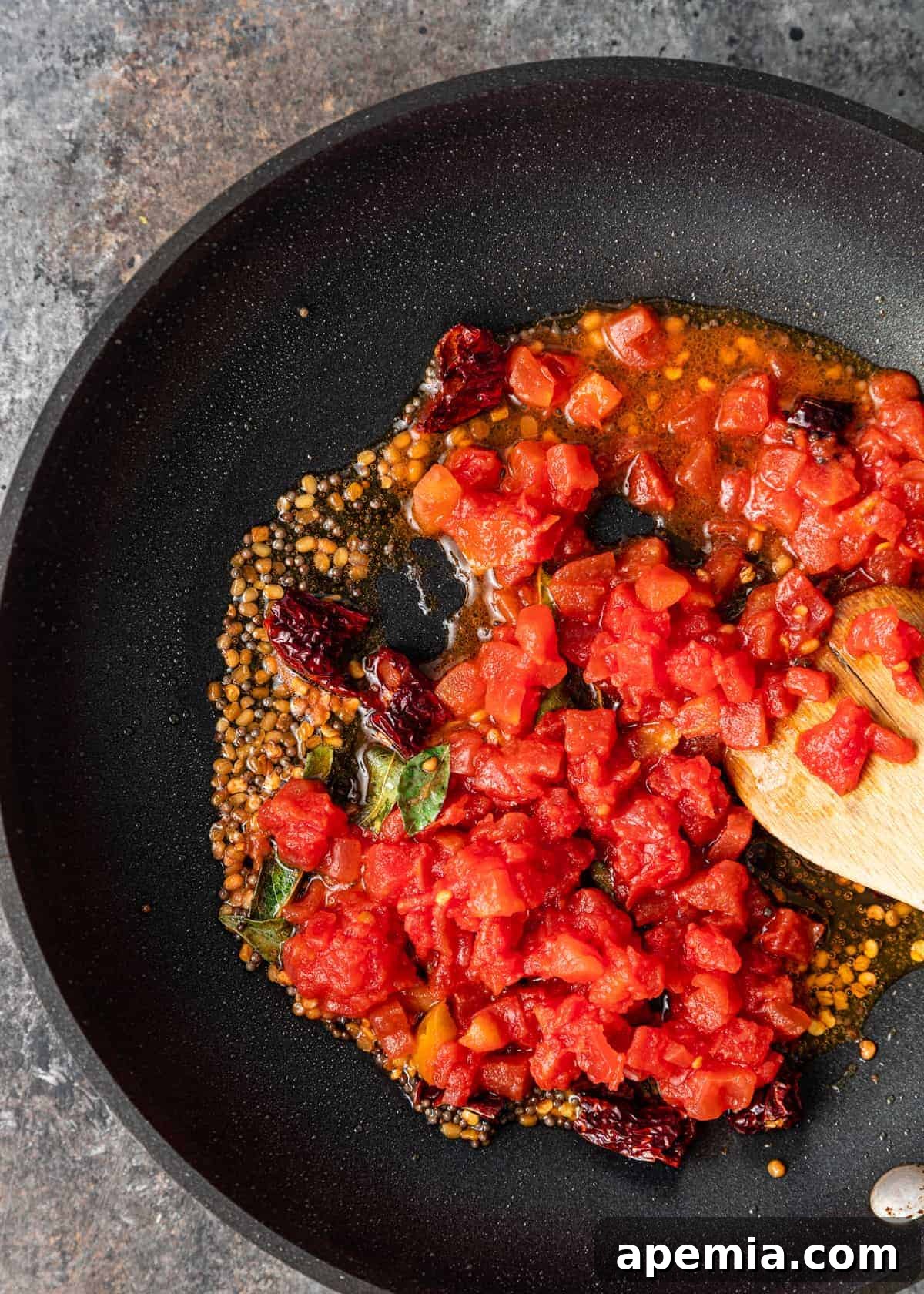
Step-by-Step: How to Make Tomato Pachadi
- Prepare the Perfect Tadka: Begin by heating your ghee or preferred oil in a sturdy skillet over medium-low heat. The goal is to get it sufficiently hot without smoking. Once the oil glistens, add the mustard seeds. Cook them until they start to audibly pop and crackle, indicating they are releasing their full flavor. Immediately after the mustard seeds pop, reduce the heat to low. Now, add the urad dal and continue to cook, stirring frequently, until the dal turns a beautiful golden brown. This roasting develops its nutty flavor.
- Infuse with Remaining Spices: Carefully break the dried red chilies into smaller pieces (removing seeds if you prefer less heat), then add them to the skillet along with the fenugreek seeds, a pinch of kosher salt, and the asafoetida. Stir these spices for about 30 seconds to a minute, allowing them to bloom in the hot oil. Watch closely to ensure the chilies darken slightly but do not burn, as burnt spices can impart a bitter taste.
- Cook Down the Tomatoes: It’s time to add the chopped tomatoes and the fresh curry leaves to the skillet. Increase the heat slightly to low-medium and cook for approximately 5 minutes, stirring regularly. The tomatoes should soften significantly and begin to break down into a mushy consistency, releasing their juices and concentrating their flavor. Once the tomatoes are tender, turn off the heat and stir in the tamarind paste. Allow the mixture to cool down for a bit before proceeding to the next step; this prevents splattering and makes blending safer.
- Blend to Your Desired Consistency: Using an immersion blender directly in the skillet is the easiest and tidiest method for achieving a super-smooth, velvety purée. Alternatively, carefully transfer the cooled mixture to a food processor or regular blender. Pulse the ingredients until you reach your desired consistency – some prefer it completely smooth, while others like a slightly chunkier texture. As you blend, slowly add a little water (up to 1/3 cup) as needed to achieve a flowing, dip-like consistency.
- Season and Serve with Flair: Taste your freshly made tomato pachadi and adjust the seasoning as necessary. You might want to add a little more salt, or a squeeze of fresh lime juice to enhance its tanginess. Once perfected, transfer it to a serving bowl and enjoy this flavorful South Indian chutney with your favorite dishes!
Tips for Success in Making Tomato Pachadi
Achieving the perfect Tomato Pachadi is simple with a few key considerations:
- Mastering the Tadka is Key: The tempering process is the heart of this recipe. Ensure your oil or ghee is at the right temperature for the mustard seeds to pop swiftly, but be vigilant not to let the other spices burn. Burnt spices will make your chutney bitter.
- Quality of Tomatoes: While canned tomatoes are convenient, using ripe, flavorful fresh tomatoes (like Roma or beefsteak) can elevate the taste. If using fresh, make sure they are very ripe for maximum sweetness and tang.
- Consistency Control: The amount of water added during blending is crucial. Add it gradually, a tablespoon at a time, until you reach your preferred consistency. Some like it thick, others a bit thinner.
- Taste and Adjust: Always taste the chutney before serving. It might need a little extra salt, a touch more tamarind for tang, or even a tiny pinch of sugar to balance the flavors, especially if your tomatoes are particularly tart.
- Fresh Curry Leaves are Best: While dried curry leaves can be substituted, fresh ones provide an unparalleled aroma and flavor. If using dried, slightly crush them before adding to release their essence.
Recommended Kitchen Tools for Chutney Making
Having the right kitchen tools can significantly streamline the process of preparing your Tomato Pachadi, making it both easier and more enjoyable:
- Immersion Blender: My top recommendation for achieving a super-smooth, velvety purée with minimal mess. It allows you to blend the chutney directly in the cooking pot, saving you from transferring hot ingredients and extra cleanup.
- Food Processor or Regular Blender: These are excellent alternatives if an immersion blender isn’t available. When using a standard blender for hot ingredients, remember to let the mixture cool slightly and blend in small batches to prevent pressure buildup and splatters. A food processor is great for a slightly chunkier texture.
- Heavy-Bottomed Skillet or Pan: Essential for even heat distribution during the crucial tadka tempering process and for slowly cooking down the tomatoes. A good quality pan will prevent sticking and burning.
- Spatula or Wooden Spoon: For constant stirring and scraping the bottom of the pan, ensuring even cooking and preventing ingredients from sticking.
- Airtight Storage Containers: Important for storing any leftover chutney in the refrigerator or freezer, preserving its freshness and flavor.
Storing and Reheating Your Tomato Pachadi
One of the many wonderful aspects of Tomato Pachadi is that its flavors often deepen and meld beautifully after a day or two, making it taste even better. Proper storage is key to enjoying your homemade chutney for an extended period:
- Refrigeration: Once your tomato pachadi has completely cooled to room temperature, transfer it into an airtight container. Stored properly, it will keep beautifully in the refrigerator for 3 to 4 days, making it perfect for meal prepping.
- Freezing: For longer storage, Tomato Pachadi freezes exceptionally well. Portion the chutney into freezer-safe containers, or for individual servings, consider using ice cube trays. Once frozen, you can transfer the chutney cubes to a freezer bag. It can be stored in the freezer for several months without losing its quality. To thaw, simply let it return to room temperature naturally on the kitchen counter for a few hours, or overnight in the refrigerator. Before serving, give it a good stir to ensure a uniform consistency after thawing.
- Canning: For those who enjoy preserving, canning your tomato chutney is a fantastic option that allows you to enjoy the fresh taste year-round. If done correctly, utilizing proper canning techniques (such as water bath canning for high-acid foods like tomatoes, following established food safety guidelines), canned pachadi can last for 6 months or even longer in a cool, dark pantry. This is a great way to prepare a large batch during peak tomato season.
- Reheating: If reheating from the refrigerator, gently warm the pachadi on the stovetop over low heat, stirring occasionally to prevent sticking. If it has thickened too much during storage, you can add a tiny splash of hot water to loosen it to your desired consistency. Avoid microwaving if possible, as it can sometimes alter the texture.

Share this recipe on Pinterest!
Love this recipe? Help spread the word by sharing it with your friends and followers on Pinterest!
Frequently Asked Questions About Tomato Pachadi
The timing is absolutely crucial for a successful tadka. You should add your whole spices, such as mustard seeds and urad dal, when the ghee or oil has reached a shimmering, hot temperature (typically around 300-375°F or 150-190°C). You’ll know it’s ready when a single mustard seed dropped in immediately sizzles. Once the mustard seeds start to pop vigorously, immediately reduce the heat to low before adding other spices like fenugreek and chilies, to prevent them from burning and turning bitter. A glossy surface on the oil is also a good visual indicator of the right temperature.
While both relish and chutney are flavorful condiments, their primary distinction lies in their texture and preparation. Chutneys, like our Tomato Pachadi, are typically cooked for a longer duration and often blended until they achieve a thicker, smoother, and more spreadable consistency. They focus on complex, melded flavors. Relishes, on the other hand, usually retain a more rustic, chunky texture with visibly distinct pieces of vegetables, as they are cooked for a shorter period and less often blended, emphasizing fresh, bright flavors.
This particular style of spicy tomato chutney, known as Tomato Pachadi, hails from Andhra Pradesh, a state located in Southern India. Andhra Pradesh is renowned for its vibrant cultural heritage and famously spicy culinary traditions, often featuring bold and fiery flavors. Andhra-style pachadis are distinct because they typically do not include yogurt, an ingredient sometimes found in pachadis from other regions, allowing the rich, vibrant tomato and spice flavors to truly shine.
Absolutely! The traditional recipe uses ghee (clarified butter), which can very easily be substituted with an equal amount of any neutral vegetable oil (like canola, sunflower, or grapeseed oil) or even a high-quality vegan ghee. This simple swap will make the delicious chutney entirely plant-based without compromising on its rich flavor and authentic taste.
The heat level of your Tomato Pachadi is entirely customizable! For a milder chutney, you can reduce the number of Kashmiri red chilies or opt for a less potent variety. If you desire more heat, feel free to add an extra chili or a small pinch of cayenne pepper. Remember that Kashmiri chilies primarily contribute a beautiful deep red color along with a moderate warmth.
For the best possible results, use ripe and juicy tomatoes. Canned chopped tomatoes are a convenient and reliable option that provide consistent flavor and texture year-round. If you’re using fresh tomatoes, look for meaty varieties like beefsteak or Roma tomatoes, which offer plenty of pulp and less water content, contributing to a richer and more flavorful chutney. If preferred, you can peel and deseed fresh tomatoes for an even smoother consistency.


Tomato Pachadi (Spicy Tomato Chutney for Dosa & Idli)
4
10 minutes
10 minutes
20 minutes
PrintRecipe
Ingredients
- 1 tbsp vegetable ghee , clarified butter or neutral vegetable oil
- 1 tsp mustard seeds
- 1 tsp urad dal
- 1/4 tsp fenugreek seeds
- 2 whole kashmiri red chilies , (See Note 1 for substitutes)
- 1/2 tsp kosher salt
- 1/8 tsp ground asafoetida (hing)
- 1 1/2 cups chopped tomatoes
- 12 fresh curry leaves
- 1 tbsp tamarind paste , (See Note 2 for substitutes)
Instructions
-
Make the Tadka: Heat ghee or oil in a skillet over medium-low heat. Add mustard seeds and cook until they start to pop. Once popping, turn heat to low and add the urad dal; cook until it turns golden brown.
-
Add fenugreek seeds, kashmiri red chilies (dried, broken into pieces), salt, and asafoetida. Stir for about 30-60 seconds until the chilies slightly darken. (Watch closely so they do not burn, as this can make the chutney bitter).
-
Add chopped tomatoes and fresh curry leaves; cook on low for 5 minutes, stirring often. The tomatoes should soften significantly and become mushy. Turn off the heat, stir in the tamarind paste, and allow the tomato pachadi mixture to cool slightly.
-
Using a stick (immersion) blender, food processor, or regular blender, pulse the ingredients to a smooth consistency. Slowly add up to 1/3 cup water as needed to reach your desired texture. Season to taste with additional salt or a squeeze of lime juice for brightness.
-
Serve this delicious South Indian chutney as a dipping sauce for vegetable pakora, dosa, idli, or alongside your favorite curry.
Notes
- You can substitute 1 teaspoon Kashmiri chili powder for the whole chilies. If Kashmiri red chili powder is unavailable, a good substitute is 3/4 tsp smoked paprika combined with 1/4 tsp cayenne powder for a balance of color and heat.
- You can substitute the tamarind paste with a mixture of 1 tablespoon lime juice and 1 tablespoon sugar for a similar tangy-sweet profile.
Nutrition
The information shown is an estimate provided by an online nutrition calculator. It should not be considered a substitute for a professional nutritionist’s advice.
Condiment
Asian, Indian
Kevin
Made This Delicious Chutney? Share Your Creation!
Tag @keviniscooking or use hashtag #keviniscooking on Instagram!