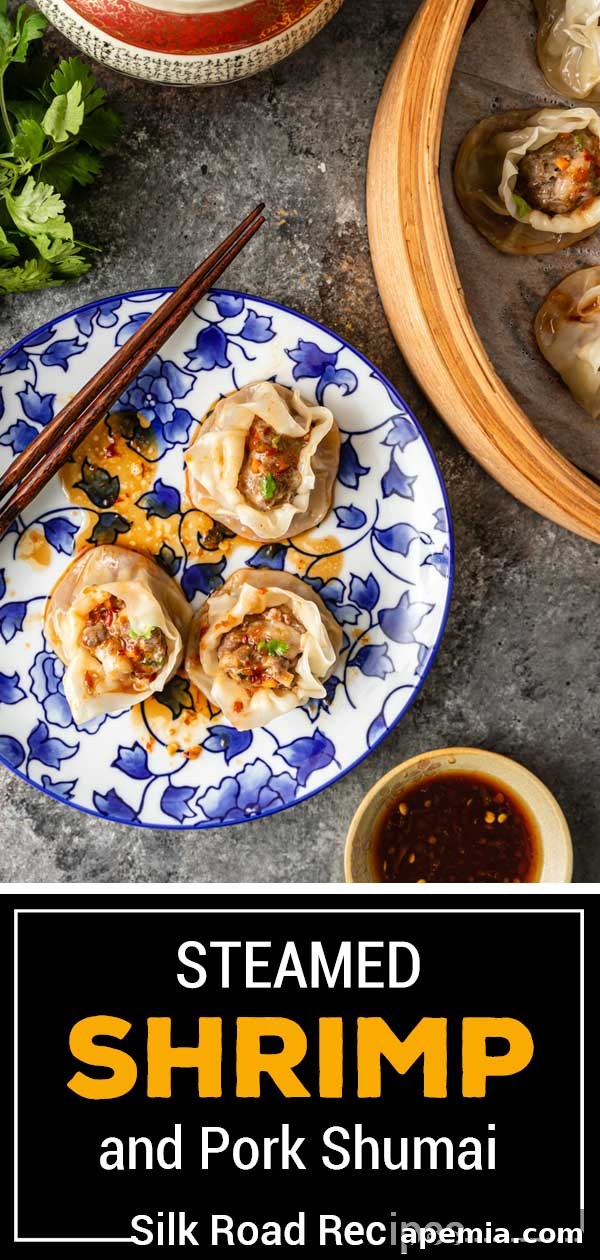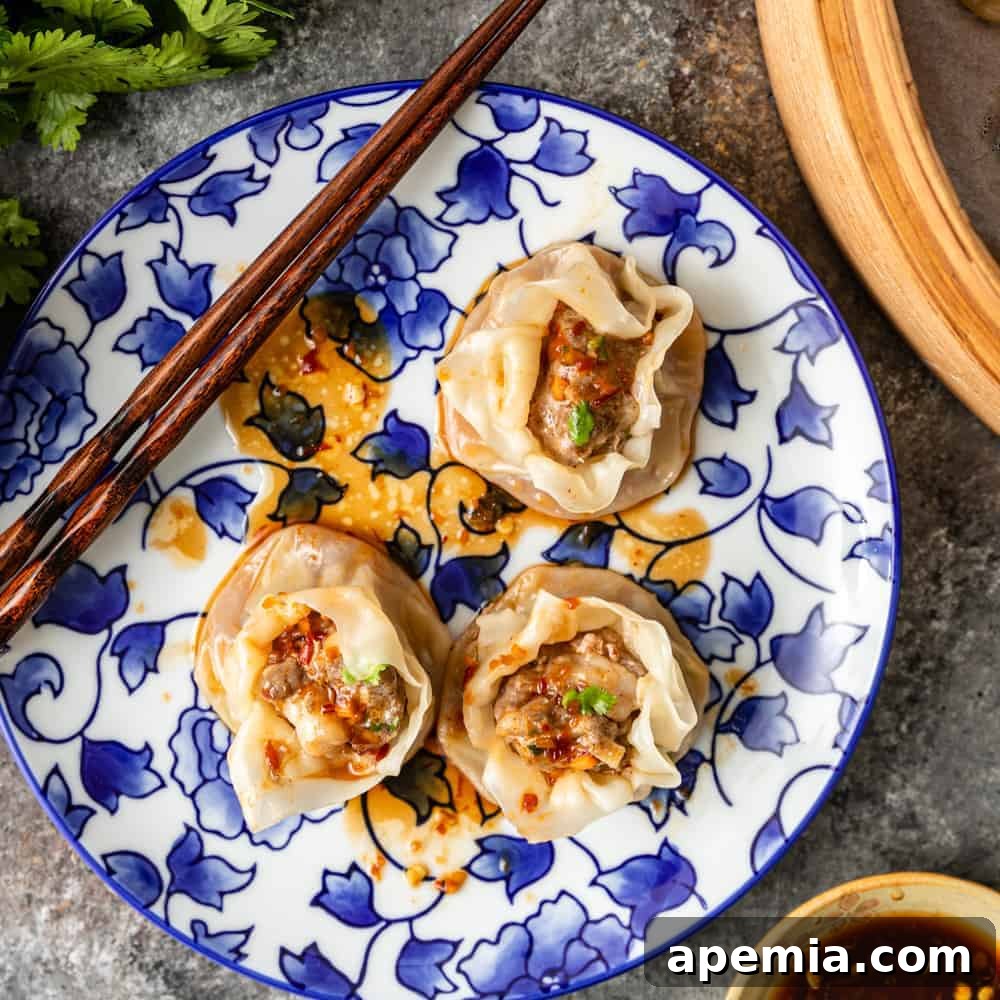
Shrimp and pork shumai, also widely known as siu mai, represents one of the most beloved and iconic dishes in the vibrant world of dim sum. These delectable steamed Chinese dumplings, with their signature open-top basket shape, offer a delightful blend of savory pork and succulent shrimp, creating a truly unforgettable culinary experience. Whether enjoyed as part of a traditional Asian breakfast spread, a leisurely brunch, or a light appetizer, homemade shumai promises a delicious and authentic taste of Chinese cuisine right in your kitchen.
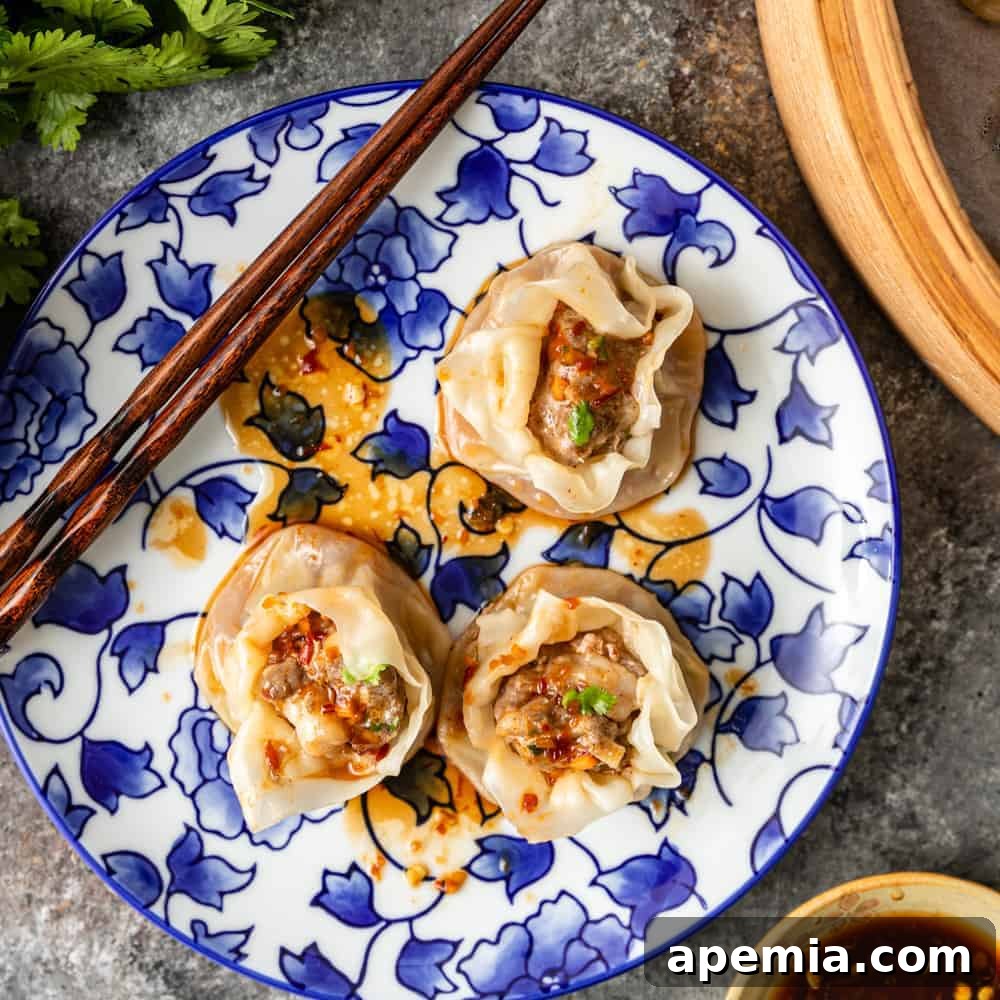
There’s nothing quite like a lazy weekend to unwind and recharge after a demanding week. And what better way to elevate your weekend than by indulging in a spread of exquisite, bite-sized culinary delights? While many cultures have their own version of such a meal – in the U.S., we often call it brunch; in Greece, it’s known as a mezze – Chinese cuisine offers the spectacular tradition of dim sum.
Dim sum, meaning “to touch the heart,” is more than just a meal; it’s a culinary journey and a social event, typically enjoyed with family and friends. Traditionally, dim sum platters are dominated by Cantonese dishes, featuring a diverse array of steamed, baked, and fried delicacies. However, contemporary dim sum spreads often embrace a broader spectrum of Asian culinary traditions, incorporating a variety of appetizers and breakfast items. From savory pork pot stickers and fluffy eggs to refreshing sunomono salad and, of course, the star of our discussion: siu mai.
The Art of Shrimp and Pork Shumai (Siu Mai)
Cuisine: Chinese / Asian
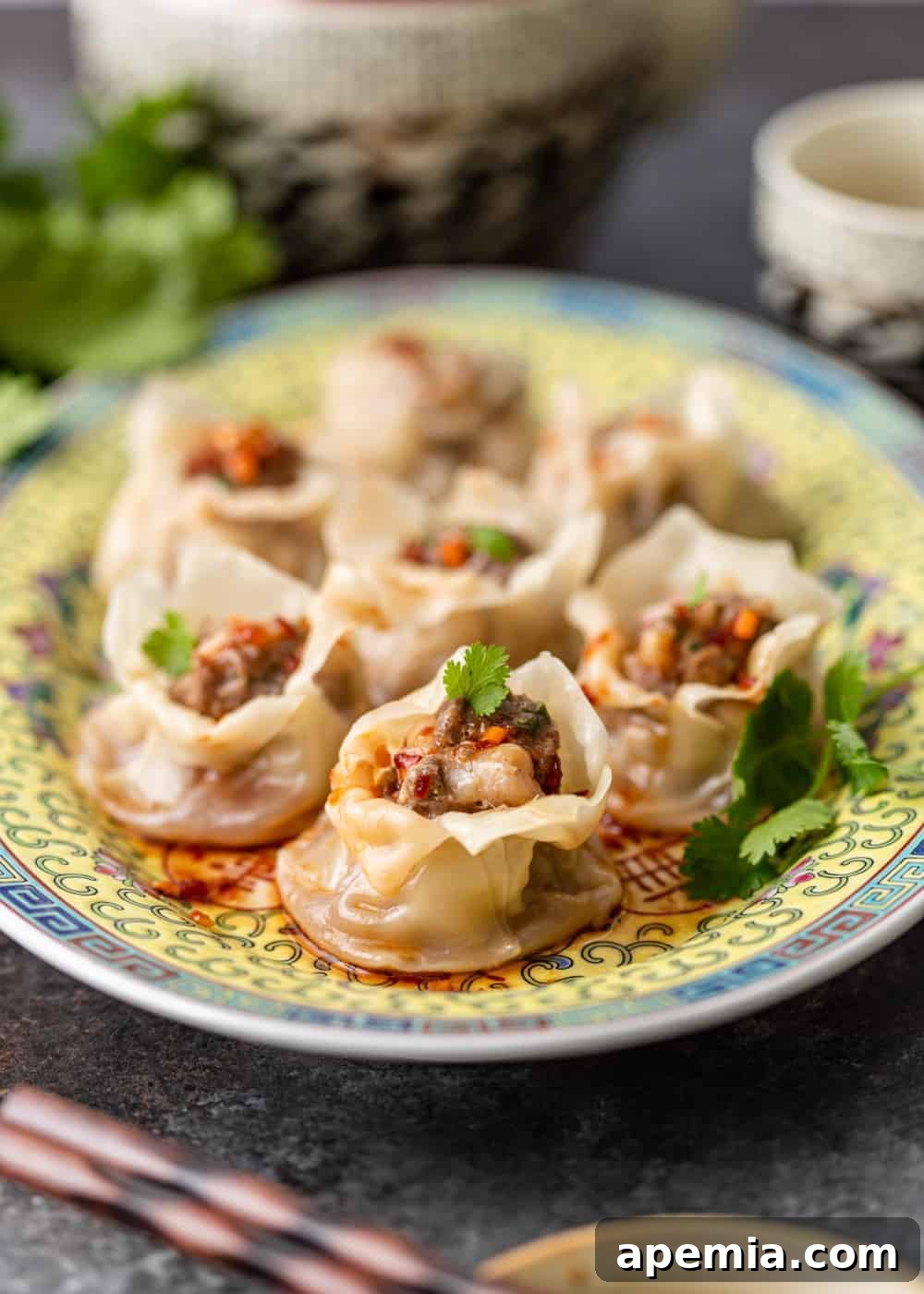
Shrimp and pork shumai is a quintessential Chinese dumpling, celebrated for its unique presentation and irresistible flavor. Unlike many other Asian dumplings that are typically sealed at the top, siu mai is distinguished by its open, basket-like shape, showcasing a vibrant and rich filling. The traditional filling for these delicious morsels consists of a harmonious blend of ground pork and finely diced shrimp, often seasoned with an aromatic mix of spices that tantalize the palate.
While various types of Asian dumplings like Jiaozi, gyoza, and pot stickers are often pan-fried or boiled, pork shumai is almost exclusively prepared by steaming. This cooking method ensures a delicate wrapper texture and a moist, tender filling, allowing the nuanced flavors of the ingredients to shine through beautifully. Mastering the art of making shumai at home can transform any meal into a special occasion, offering a delightful culinary adventure for both the cook and the diners.

Other names/spellings:
shu mai, siu mai, shao may
Pronunciation:
shoo mae
Course:
breakfast, dim sum, or appetizer
Preparation:
steamed
Difficulty: Medium 🥄🥄
Ingredient Insights and Smart Substitutions for Perfect Shumai
Crafting delicious shrimp and pork shumai begins with selecting the right ingredients. Here’s a detailed look at key components and how to make smart substitutions:
- Ground Pork – For this authentic shumai recipe, it is crucial to use plain ground pork. Avoid pre-seasoned varieties like Italian pork sausage, as their distinct spice blends will significantly alter the traditional flavor profile of these delicate Chinese dumplings. Look for pork with a good fat-to-lean ratio for optimal texture and juiciness.
- Shrimp – The shrimp in this recipe will be finely processed, making the size less critical. For maximum convenience and minimal preparation, opt for the smallest peeled and deveined shrimp available. Fresh or frozen (and properly thawed) shrimp will work beautifully, adding a burst of sweet, oceanic flavor that perfectly complements the pork.
- Chinese Five Spice – This aromatic blend is fundamental to the flavor of shumai. If you find yourself without it, a homemade Chinese five spice blend is surprisingly simple to prepare. It typically combines star anise, cloves, Chinese cinnamon, Szechuan peppercorns, and fennel seeds. A homemade blend can be stored in an airtight container for up to six months, ready to enhance a variety of other Asian-inspired dishes.
- Ginger and Lemongrass – Freshly grated ginger provides a warm, pungent zing, while lemongrass, though not a traditional Chinese ingredient, adds a bright, citrusy note that many find appealing. Both can be easily substituted with their paste forms, often found in tubes in the produce section of most grocery stores. If you prefer a strictly traditional Chinese flavor profile, feel free to omit the lemongrass altogether.
- Wonton Wrappers – While square wonton wrappers are excellent for creating decorative, pointed tops on the dumplings, siu mai are traditionally made with thin, round dumpling wrappers. Both options yield delicious results, so choose whichever is more readily available or suits your aesthetic preference. Ensure your wrappers are fresh to prevent cracking during assembly.
Visual Guide: Shrimp and Pork Shumai Recipe Video
Making and steaming dumplings might appear intimidating, but with a bit of guidance, it’s a surprisingly straightforward process. The core steps involve preparing a flavorful filling, carefully encasing it in wrappers, and then steaming them to perfection in a traditional bamboo steamer. For a comprehensive, step-by-step visual demonstration of how to master this exquisite Chinese dumpling recipe, be sure to watch the instructional video provided within the detailed recipe card at the bottom of this page. It simplifies the process, making it accessible for home cooks of all skill levels!
Crafting Your Homemade Shumai: A Step-by-Step Guide
Embark on the journey of making your own authentic shrimp and pork shumai with these easy-to-follow instructions:
1. Prepare the Exquisite Shumai Filling
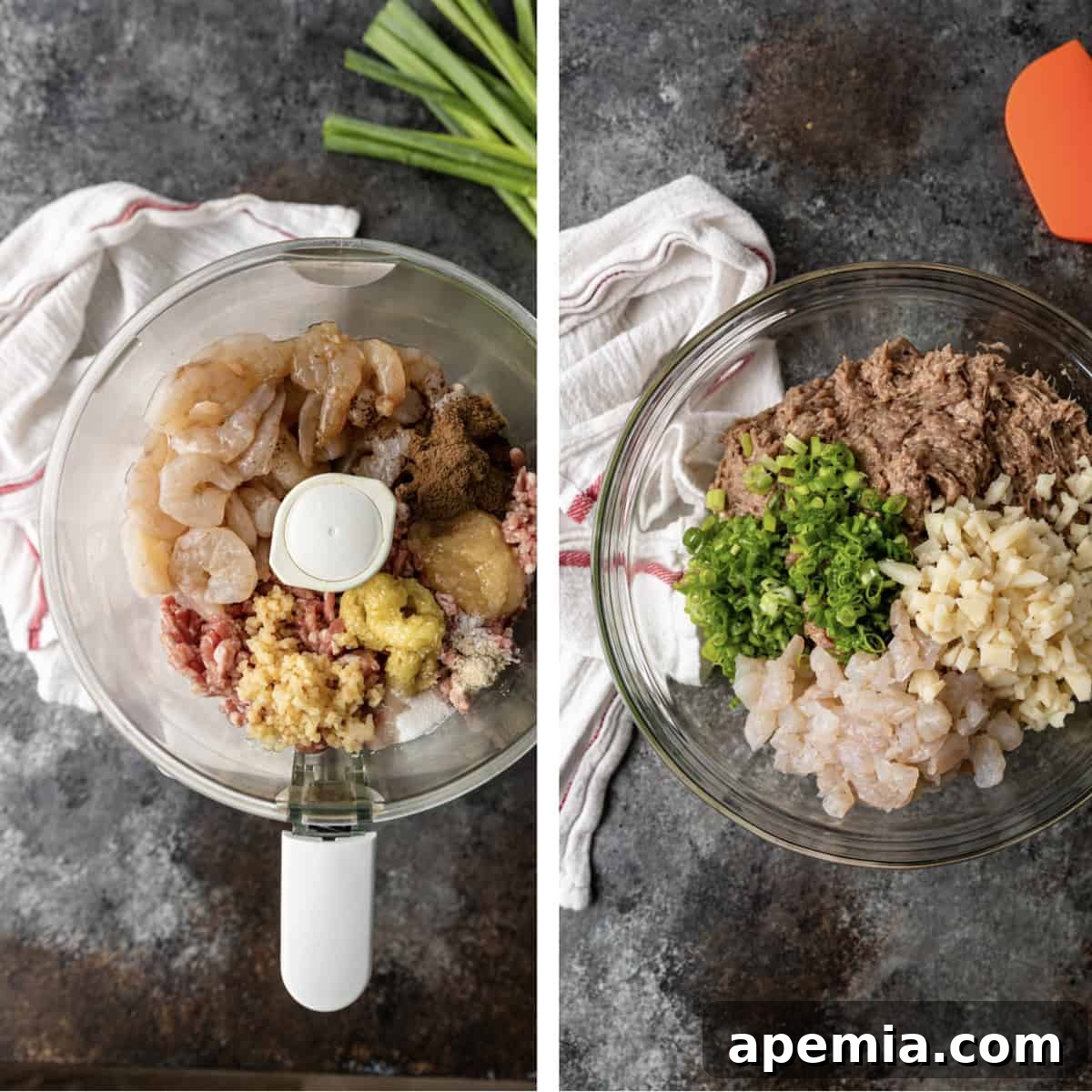
Begin by combining all the essential liquid ingredients, aromatic elements, vibrant spices, and a touch of sugar into a food processor. This initial blend ensures a harmonious base. Next, introduce the ground pork and precisely half of the fresh shrimp. Pulse these ingredients just a few times until they coalesce into a wonderfully smooth and cohesive paste. This technique creates a foundational texture for the dumpling.
Crucially, the remaining half of the shrimp is then folded into the filling mixture by hand. This deliberate step ensures that the filling retains delightful chunks of shrimp, providing a pleasant textural contrast and bursts of fresh seafood flavor that differentiate this shumai from other dumplings. Do not over-process the second batch of shrimp; they should remain visibly distinct.
2. Expertly Fill and Shape Your Dumplings
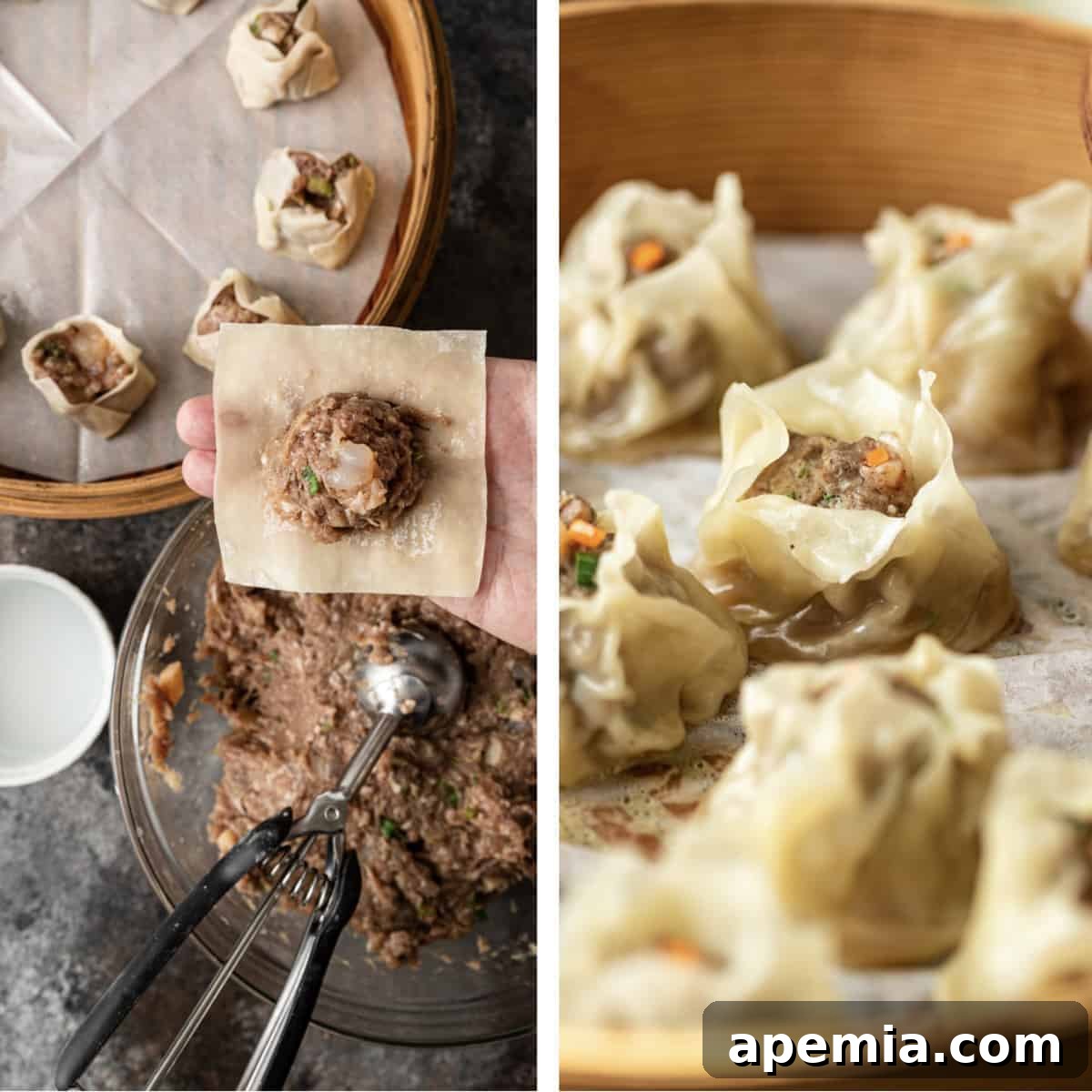
Lay a single wonton wrapper flat on a clean, dry counter surface. Place a generous scoop of the prepared shumai filling directly in the center of the wrapper. To aid in sealing, dip your finger lightly in water and moisten the entire perimeter of the wrapper’s edges.
Gently gather the sides of the wrapper upward and around the filling, allowing the dough to pleat naturally as you bring it together. Lightly squeeze the wrapper just below the filling to create a seal, forming the characteristic open-top basket shape of siu mai. To ensure stability, gently tap the bottom of the formed dumpling on the counter or lightly press down with your palm. This flattens the base, allowing it to stand upright for easy steaming and serving.
Continue this process until all the delectable shrimp and pork shumai have been meticulously formed. Once completed, arrange the assembled dumplings on a tray and place them in the refrigerator for approximately 30 minutes. This chilling period is vital as it helps the wrappers firm up and sets the shape, preventing them from losing their form during the steaming process.
Steaming Pork Shumai to Perfection
Steaming is the traditional and preferred method for cooking shumai, ensuring a tender wrapper and a perfectly cooked, juicy filling. Follow these steps for flawless results:
- Pour about 2 cups of water into a wok or a large pot, then line the bottom of your bamboo steamer basket with a circular piece of parchment paper. Alternatively, lightly grease the steamer bottom with cooking spray or oil to prevent sticking.
- Place the steamer basket securely over the wok, ensuring it sits above the waterline. Bring the water to a rolling boil over medium-high heat.
- Carefully arrange the prepared shumai inside the bamboo steamer, making sure to leave sufficient space between each dumpling (at least half an inch). This allows for even steam circulation and prevents them from sticking together as they expand.
- Cover the steamer with its lid and allow the dumplings to steam for approximately 8-10 minutes, or until the filling is thoroughly cooked through and the wrappers become translucent and tender. While your dumplings are steaming, seize the opportunity to quickly mix together a complementary dipping sauce. A classic choice, such as this flavorful dipping sauce recipe, enhances the entire experience.
Essential Shumai Recipe Notes and Expert Tips for Success
To ensure your homemade shrimp and pork shumai are consistently perfect, keep these valuable tips in mind:
- Storage Best Practices – Any leftover pork and shrimp dim sum should be transferred to an airtight container and stored in the refrigerator. They will remain fresh and delicious for 3 to 4 days, making them perfect for quick snacks or future meals.
- Reheating Leftovers – To best preserve their delicate texture and flavor, reheat your leftover shumai in a bamboo steamer for a few minutes until they are thoroughly warmed through. Alternatively, for a quicker method, place the shumai on a plate, cover it tightly with plastic wrap, and steam it in the microwave until hot.
- Effortless Filling Scooping – For consistent dumpling sizes and a cleaner preparation process, a small ice cream scoop is an invaluable tool. It not only simplifies measuring the filling but also guarantees that all your siu mai are uniformly sized, which contributes to even cooking and a beautiful presentation.
- “Make Ahead” Considerations – For the freshest and most satisfying results, it is highly recommended to cook the pork and shrimp dumplings just before you plan to serve them. This prevents the delicate wrappers from becoming soggy from prolonged contact with the moist filling. However, you can prepare the filling itself up to a full day in advance. Simply cover it tightly and store it in the refrigerator. Before assembling the siu mai, let the chilled filling sit on the counter for about 15 minutes to take off the chill, making it easier to work with.
- Freezing for Future Feasts – Shumai are excellent candidates for freezing. Once you have formed the uncooked siu mai, arrange them in a single layer on a baking sheet and place them in the freezer until they are completely firm. Once frozen solid, transfer them to an airtight container, using layers of parchment paper between the dumplings to prevent sticking. They can be stored in the freezer for up to one month. When ready to cook, steam them directly from frozen, increasing the steaming time to approximately 15 minutes to ensure they are cooked through.
What to Serve Alongside Your Delectable Siu Mai
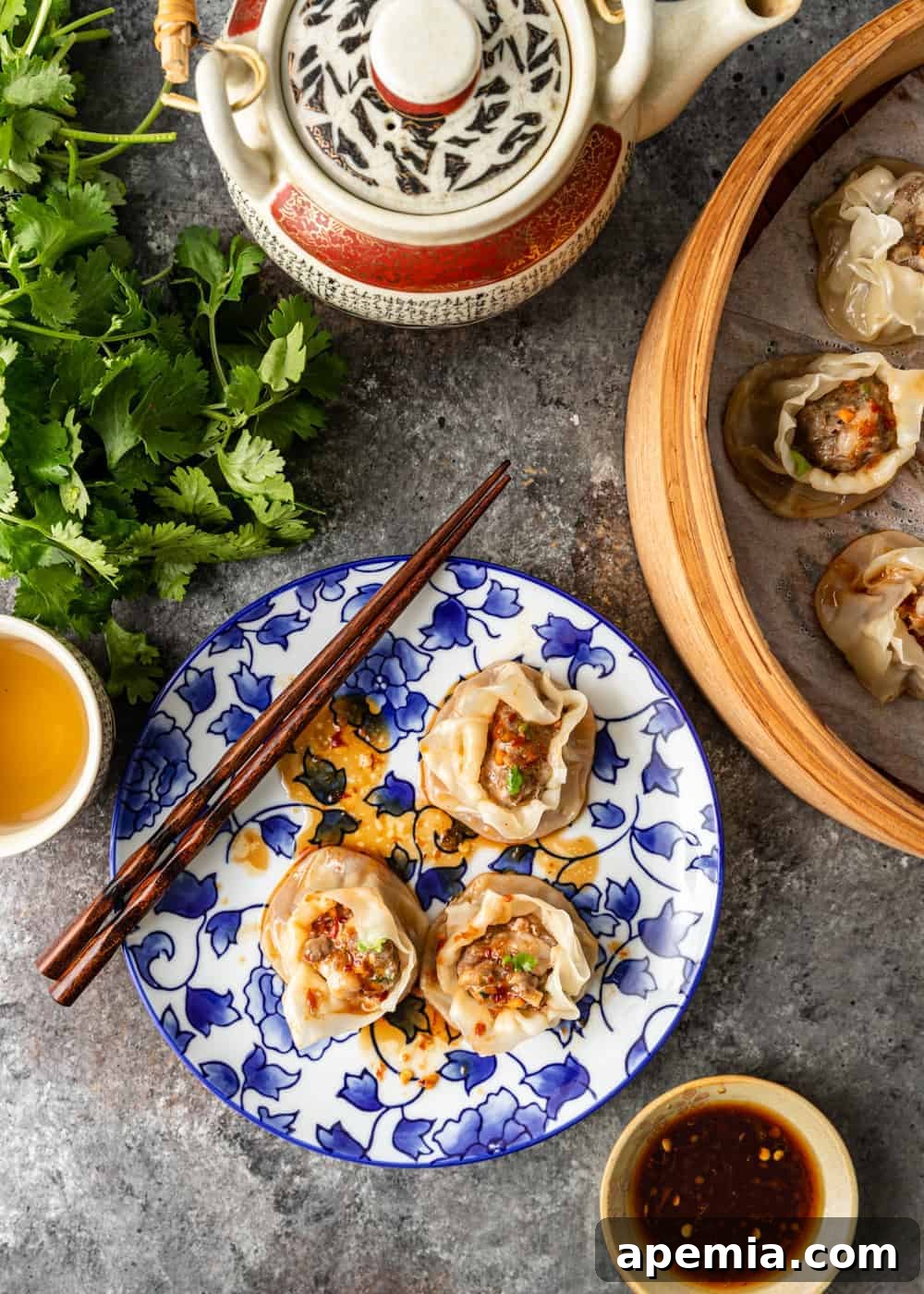
The shrimp and ground pork shumai are undoubtedly delicious as a stand-alone treat, offering a burst of flavor in every bite. However, to truly embrace the spirit of dim sum, consider pairing these steamed dumplings with a variety of other complementary dishes. This creates a balanced and diverse meal that’s perfect for sharing. Here are a few enticing ideas to complete your dim sum experience:
- Steamed Greens: Simple steamed bok choy or gai lan (Chinese broccoli) with a drizzle of oyster sauce or soy sauce provides a refreshing contrast to the richness of the dumplings.
- Fried Rice or Steamed Rice: A classic pairing, offering a satisfying base. Choose between fluffy white steamed rice or a savory fried rice for more flavor.
- Bok Choy Stir Fry: A quick and vibrant stir-fried bok choy salad adds crunch, freshness, and a medley of textures.
- Chinese BBQ Pork Buns (Char Siu Bao): These fluffy, steamed buns filled with sweet and savory barbecued pork are another dim sum staple that pairs wonderfully.
- Wonton Soup: A light yet flavorful broth with delicate wontons can be a comforting addition to your spread.
- Pan Fried Beef Noodles: For a heartier option, pan-fried noodles with tender beef and a rich sauce offer a satisfying savory element.
Elevate with Dipping Sauces
No dim sum experience is complete without an array of complementary dipping sauces. These small but mighty additions can dramatically enhance the flavors of your shumai:
- Pineapple Teriyaki Sauce: Offers a sweet and tangy profile, adding a tropical twist.
- Vietnamese Fish Sauce: Note that this refers to a prepared dipping sauce, often called Nuoc Cham, not simply the condiment. It’s typically a balance of sweet, sour, salty, and spicy.
- Crispy Chinese Chili Oil: (Recipe coming soon) Provides a fantastic kick of heat and a delightful textural crunch.
Don’t miss out on more delicious Asian-inspired recipes! Subscribe to my Newsletter for regular updates, and connect with me on Facebook, Pinterest, Instagram, and YouTube for all my latest culinary creations and video tutorials.
This post, originally published on Silk Road Recipes in July 2020, was updated on December 20, 2021, to provide more comprehensive details and improved readability.
Shrimp and Pork Shumai + Video
PrintRecipe
Video
Watch the step-by-step video tutorial to guide you through the process of making these delicious Shrimp and Pork Shumai. The video covers everything from preparing the filling to forming and steaming the dumplings, ensuring perfect results every time.
Ingredients
- 1 lb ground pork
- 1 lb medium shrimp divided
- 5 green onions
- 2 tbsp soy sauce
- 2 tbsp sherry wine
- 1 tbsp sesame oil
- 1 tbsp Grated fresh ginger (or paste)
- 1 tbsp freshly grated lemongrass (or paste, See Note 1)
- 4 cloves garlic minced
- 2 tsp sugar
- 1 1/2 tsp Chinese five spice
- 1/2 tsp salt
- 1/4 tsp white pepper
- 1 cup water chestnuts chopped
- 1 package wonton wrappers (See Note 2)
Dipping Sauce:
- 1/4 cup soy sauce
- 2 tbsp rice wine vinegar
- 1 tbsp ground chili paste
- 2 tsp sesame oil
Instructions
-
Trim green onions. Cut and separate white part from green. Finely chop the green part and set aside. Rough chop white ends.
-
Transfer the ground pork, half of the shrimp, white part of green onions, soy sauce, sherry, sesame oil, ginger, lemongrass, garlic, sugar, Chinese 5 Spice powder, salt and white pepper to a food processor and pulse several times until ground and well combined. Using a spatula scrape down sides of bowl and pulse again until a smooth paste forms.
-
Scoop the mixture into a medium bowl, and using a spatula, fold in remaining chopped shrimp, water chestnuts and chopped green onion tops.
-
Place a 2 tablespoon scoop of the mixture into the center of a wonton wrapper and wet the edges with your finger with water. With your hands gather the sides of the wrapper up and around the filling, letting the wrapper pleat, squeezing the wrapper gently to seal and tap the dumpling to flatten the bottom so that it can sit upright. Repeat until all the filling is used. This should make about 30 dumplings.
-
Place these on tray sprinkled with cornstarch to help them from sticking. Refrigerate uncovered for 30 minutes to firm up and make sure the wet wrapper pleats seal well and keep their shape (optional, see Note 2).
-
Fill your wok with 2 cups water. Set a bamboo steamer over wok lined with a circular cut piece of parchment paper or coat with cooking spray/oil. Bring water to a boil and place your Shumai in bamboo steamer about a half an inch apart. Cover with lid and steam until filling is cooked through, about 8-10 minutes. Serve immediately with dipping sauce.
Notes
- While not a traditional Chinese ingredient and found more in Thai cooking, I find the flavor a delicious addition. Feel free to omit if you prefer. Most markets now sell lemongrass paste in tubes in the vegetable section.
- I like to use these wrappers to form decorative looking points at the tops of the dumplings. However, siu mai are traditionally made with thin, round dumpling wrappers, so feel free to use those instead.
Nutrition
The information shown is an estimate provided by an online nutrition calculator. It should not be considered a substitute for a professional nutritionist’s advice.