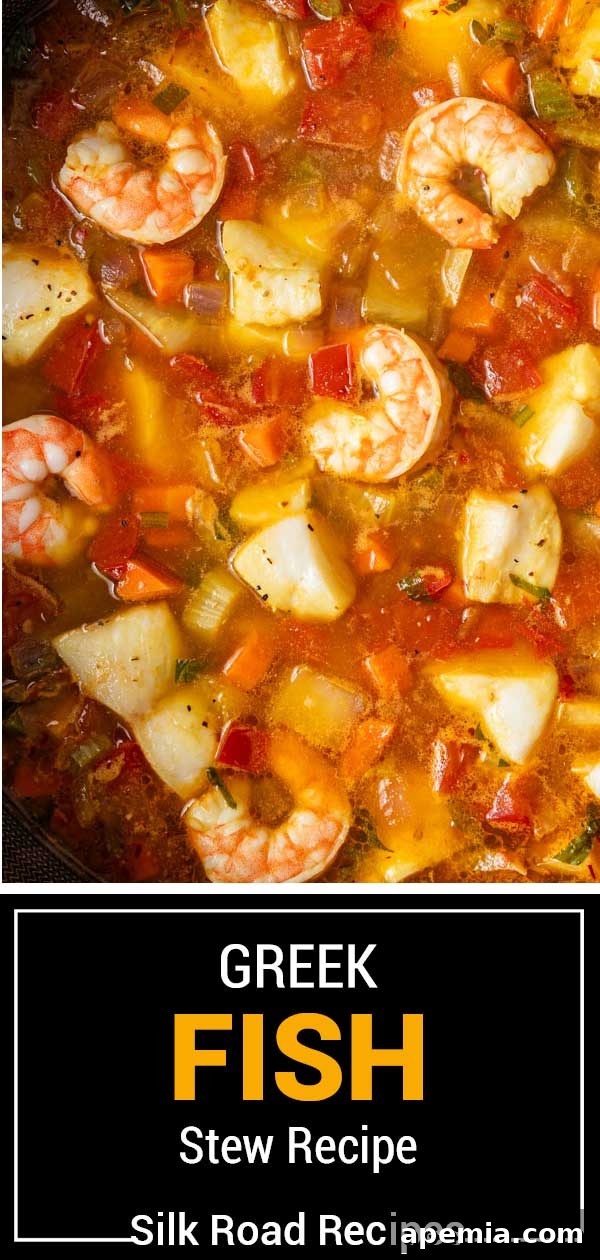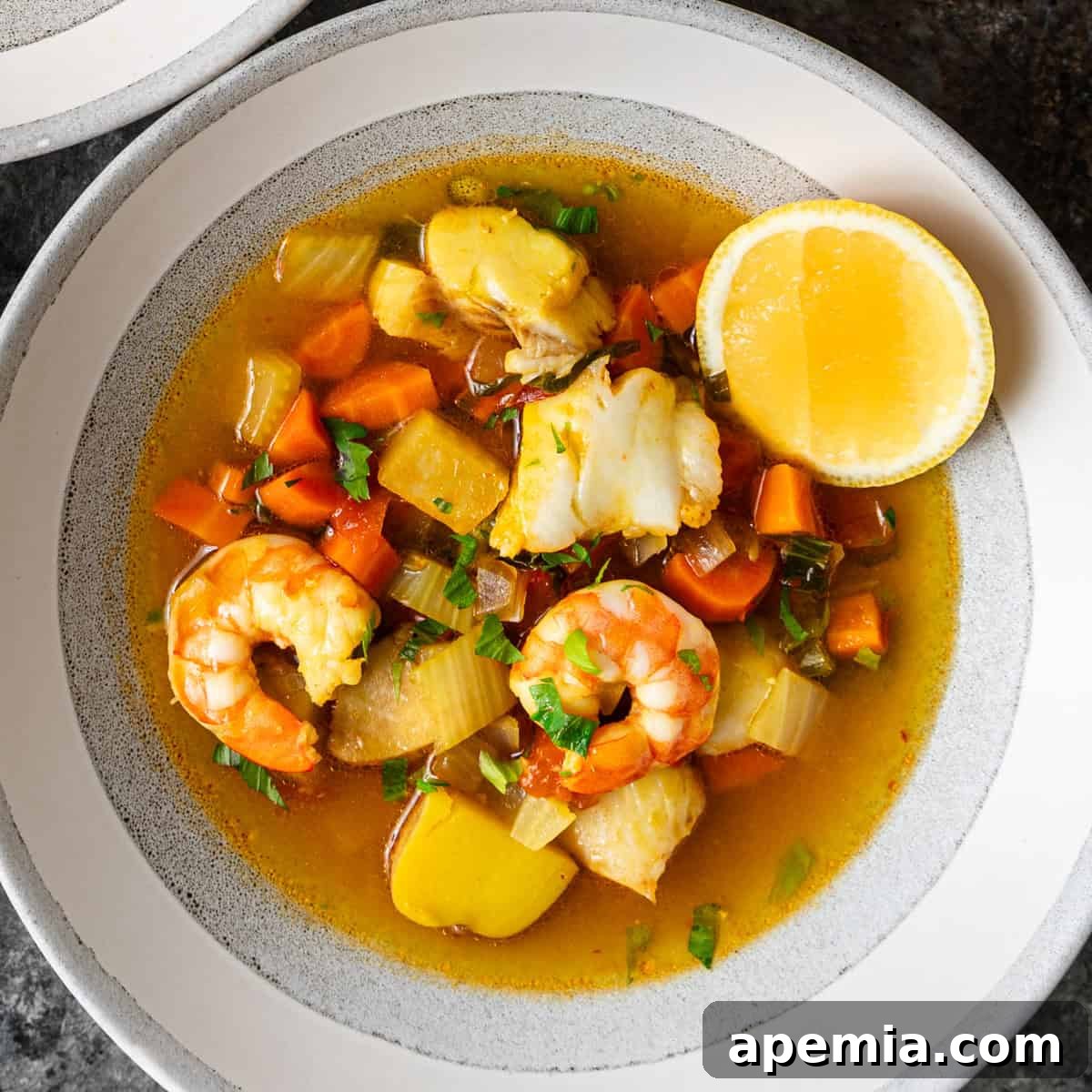
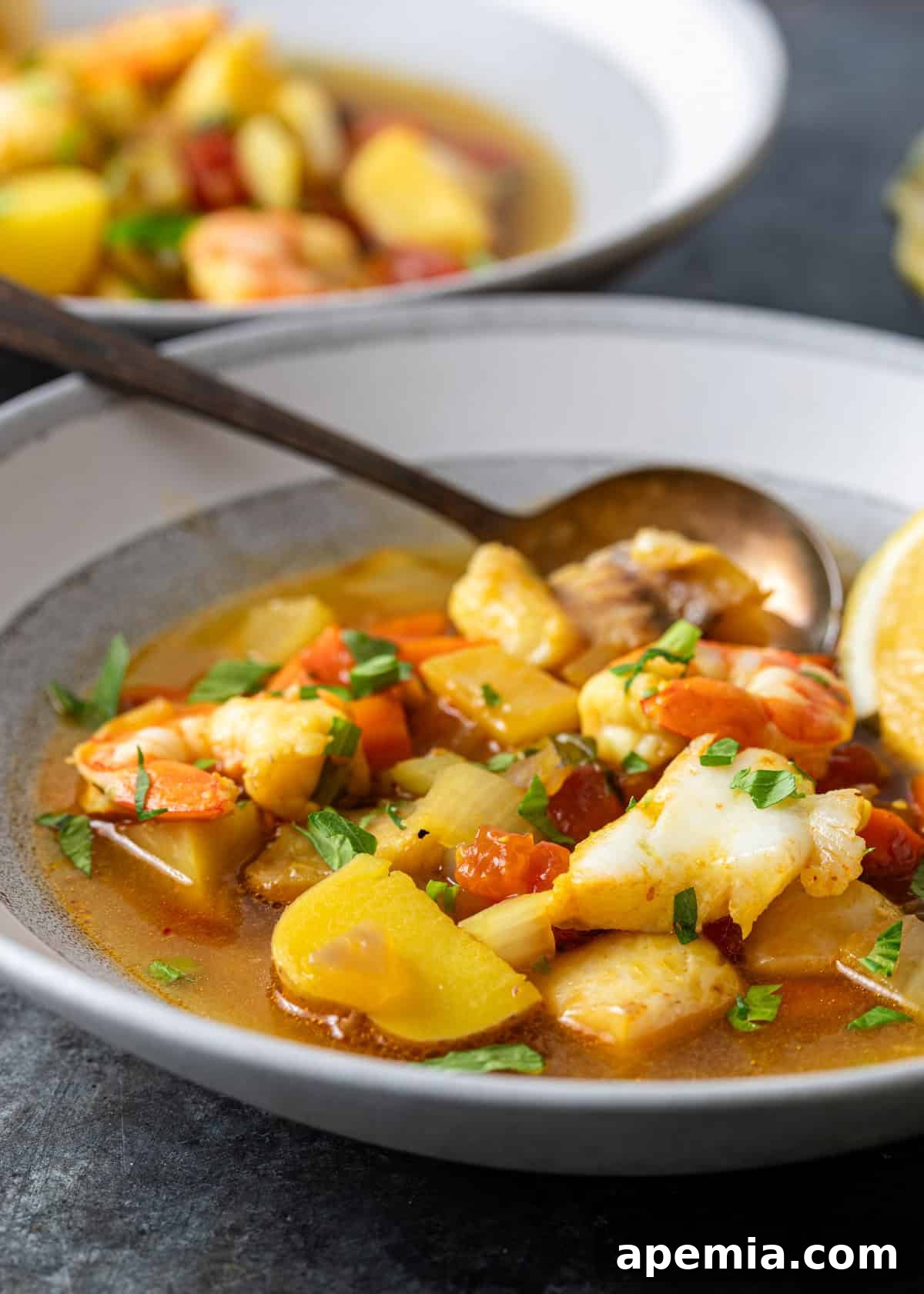
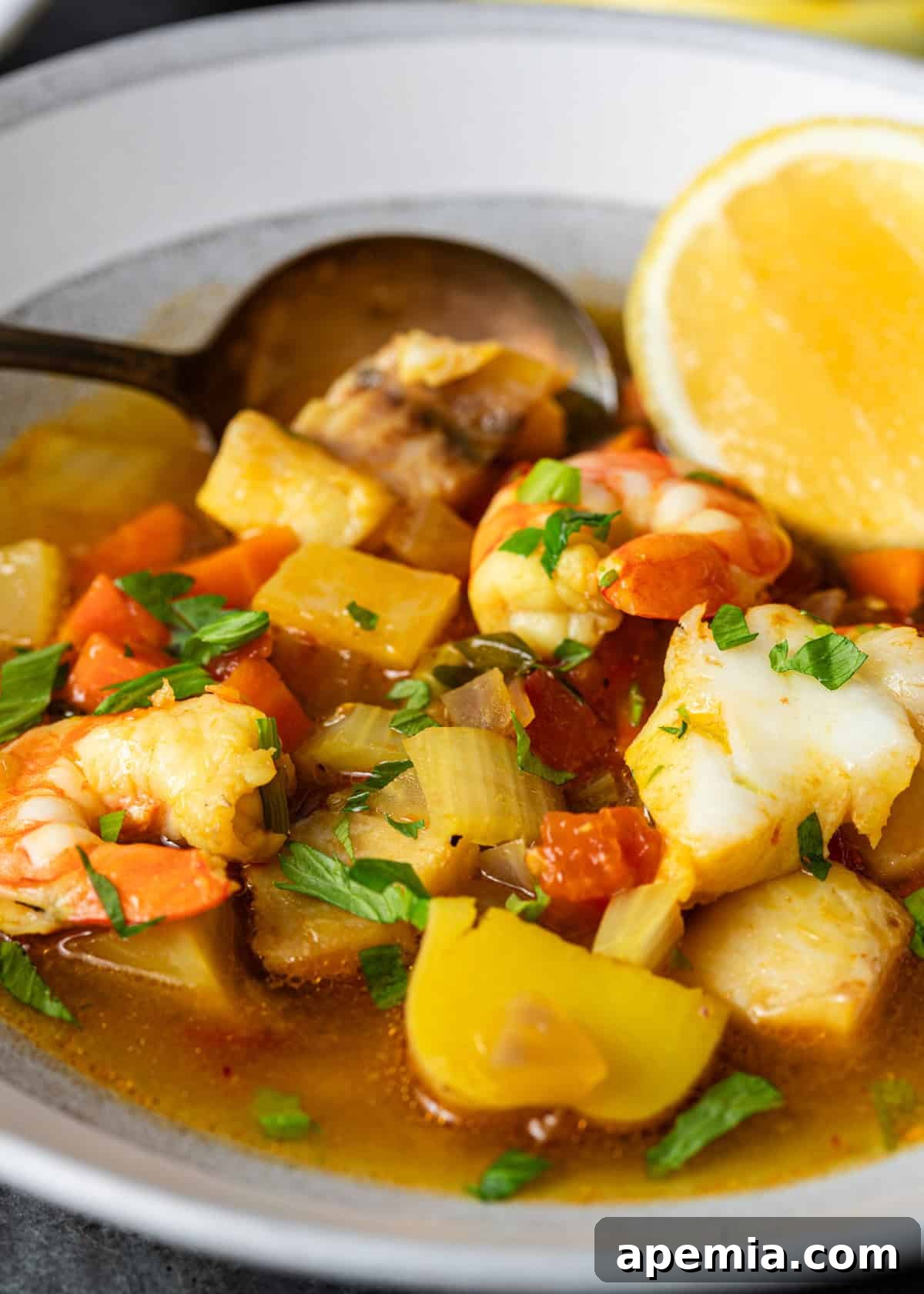
Embrace the vibrant flavors of the Mediterranean with this incredibly rich and satisfying Greek Fish Stew recipe. It’s a delightful culinary journey that combines tender white fish, succulent shrimp, and an abundance of fresh vegetables, all simmered in a savory fish stock with a unique splash of ouzo for an authentic touch. This stew offers a hearty and deeply flavorful experience, standing out as a refreshing alternative to your usual stews and chowders.
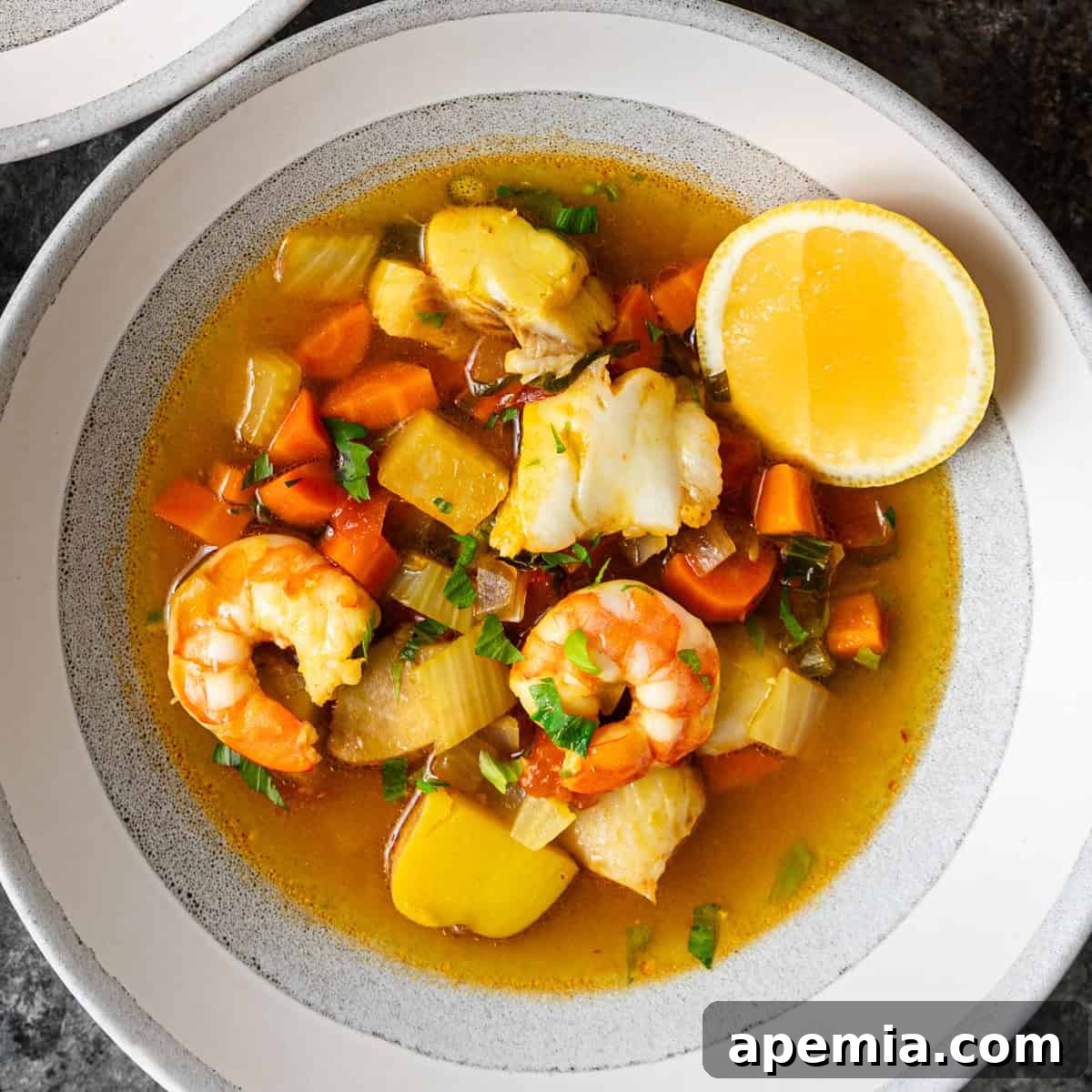
There’s nothing quite like a warm bowl of soup or stew to bring comfort to your day. While light options like miso soup and egg drop soup are perfect for a quick and easy takeout craving, heartier meals such as Italian wedding soup and a comforting Moroccan chicken stew truly hit the spot after a busy afternoon. My personal love for seafood soups, especially a classic New England clam chowder during summer, inspired me to create a distinctive fish stew.
The quest for this ultimate seafood stew began after being captivated by Rick Stein’s incredible culinary journey in his book, From Venice to Istanbul. I wanted to craft a recipe that truly captured the essence of Mediterranean flavors, resulting in this exquisite Greek fish stew.
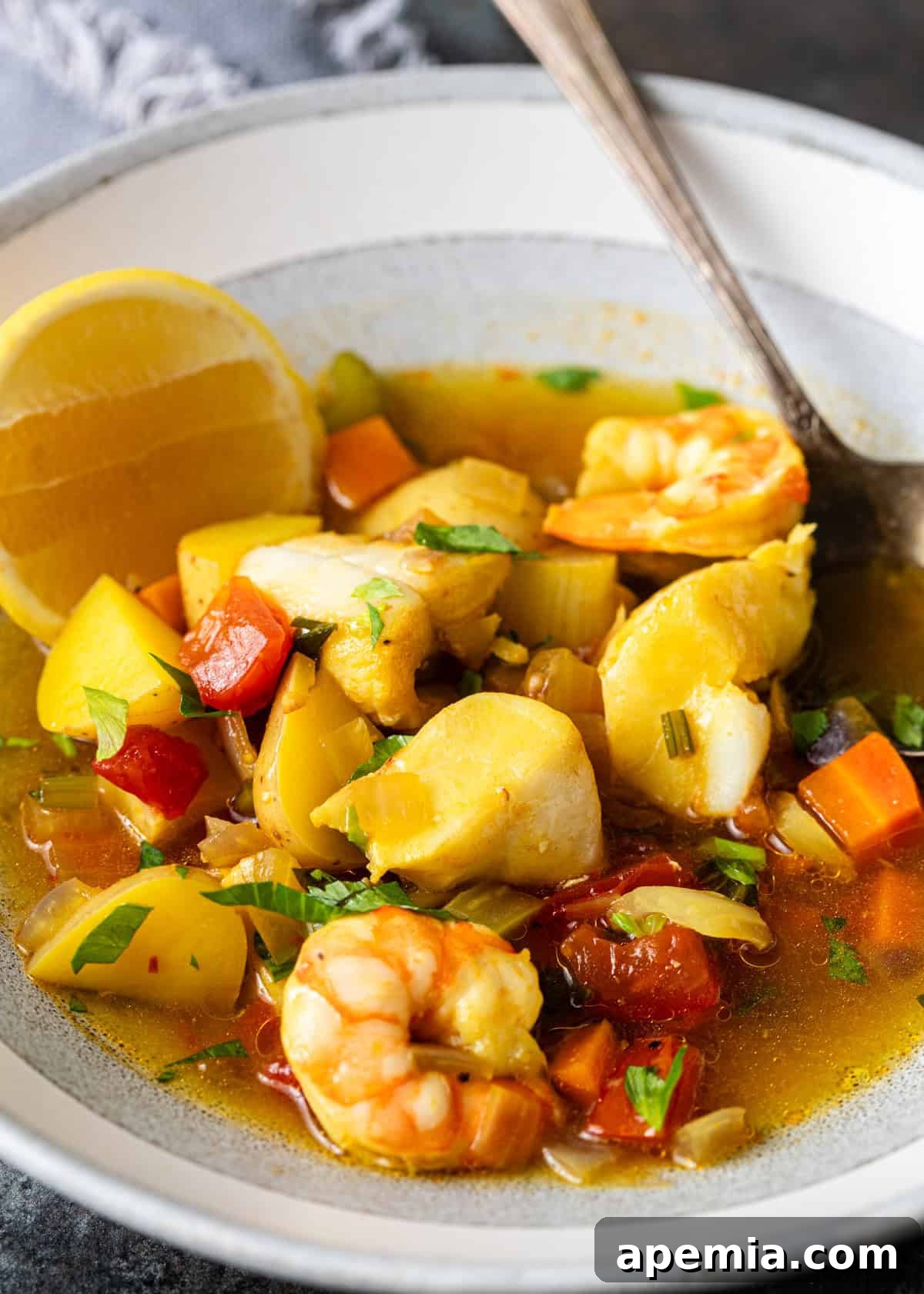
Table of Contents
- Soup or Stew? Understanding the Difference
- Essential Ingredients & Smart Substitutions
- Selecting the Best Firm White Fish for Stew
- Crafting Your Greek Fish Stew: A Step-by-Step Guide
- Recommended Kitchen Tools for Success
- Storing & Reheating Your Seafood Stew
- Frequently Asked Questions About Fish Stew
- Printable Greek Fish Stew Recipe Card
This Greek fish stew seamlessly blends some of my favorite Mediterranean elements: robust olive oil, aromatic fennel, bright lemon, and a special addition that truly elevates the flavor profile – ouzo. Don’t be deterred by the liquor; all alcohol content evaporates during cooking, leaving behind a subtle, herbaceous anise note that complements the seafood beautifully.

Chef’s Insight
Soup or Stew? Understanding the Difference
While often used interchangeably, there’s a subtle distinction between a soup and a stew, particularly relevant in culinary precision. A soup is characterized by a higher liquid-to-solid ratio, typically being more broth-based and thinner, with its ingredients often fully submerged. Stews, on the other hand, boast a thicker consistency, featuring larger, more substantial chunks of ingredients like meats and vegetables, enveloped by just enough liquid to coat them. This makes a stew a more “solid-based” and “chunkier” dish, offering a heartier and often more fulfilling experience. This Greek recipe, with its abundance of ingredients and rich, flavorful broth, firmly plants itself in the “stew” category, offering a satisfying and substantial meal.
Key Ingredients & Smart Substitutions
(For precise quantities, please refer to the comprehensive recipe card below)
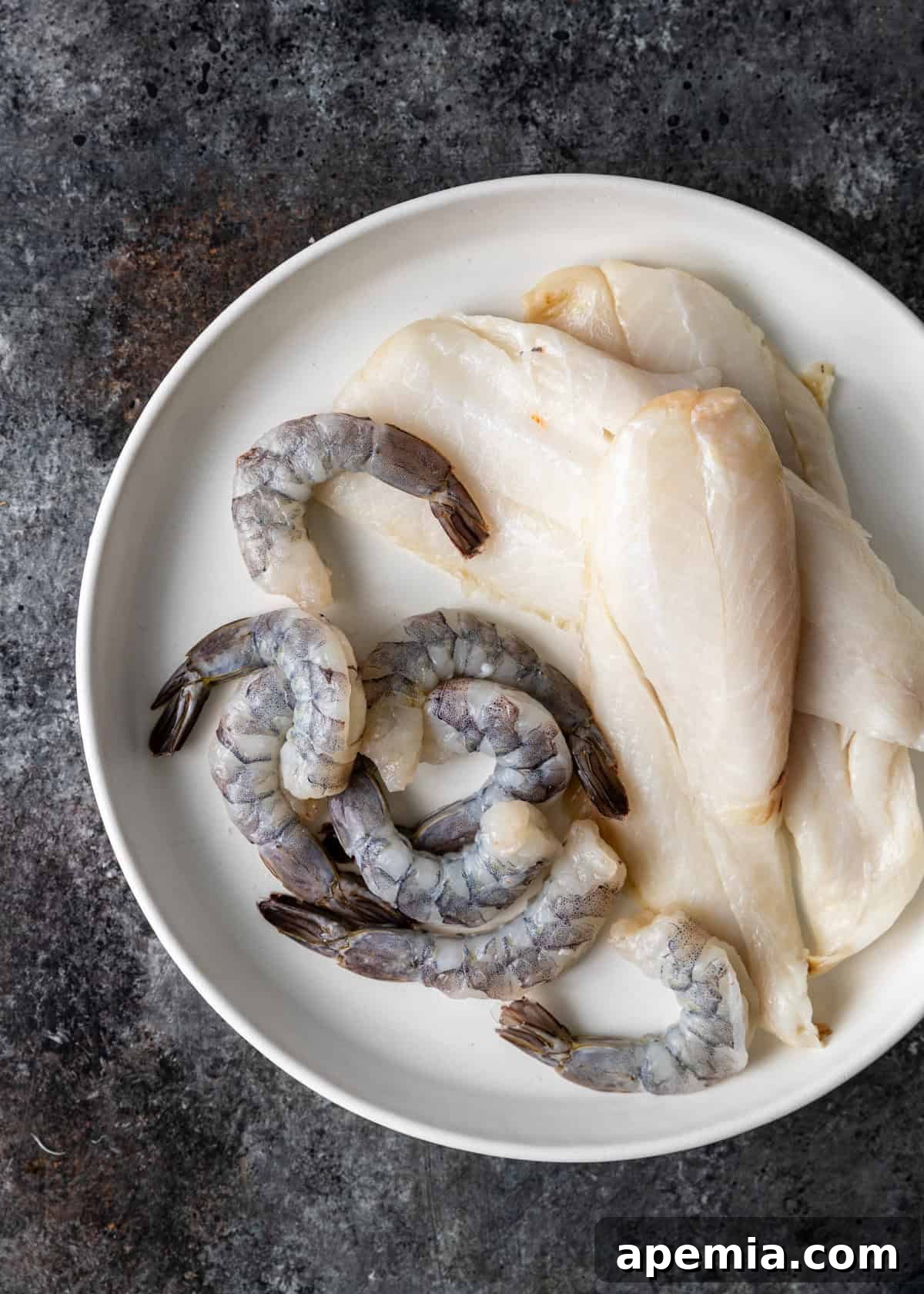
- Firm White Fish: The cornerstone of this stew! Choosing the right fish is crucial for its texture and ability to hold up during simmering. Options abound, from the delicate sweetness of sea bass to the robust flakes of cod. My specific recommendations are detailed in the “Firm White Fish Choices” section below.
- Large Shrimp: These beauties add another layer of exquisite seafood flavor and a touch of natural sweetness, enhancing the overall richness. Always opt for raw shrimp to cook directly in the stew.
- High-Quality Olive Oil: A fundamental ingredient in Mediterranean cooking, olive oil forms the aromatic base for sautéing our vibrant vegetables. Its rich, fruity notes infuse the stew with depth. If needed, grapeseed or avocado oil can serve as neutral alternatives.
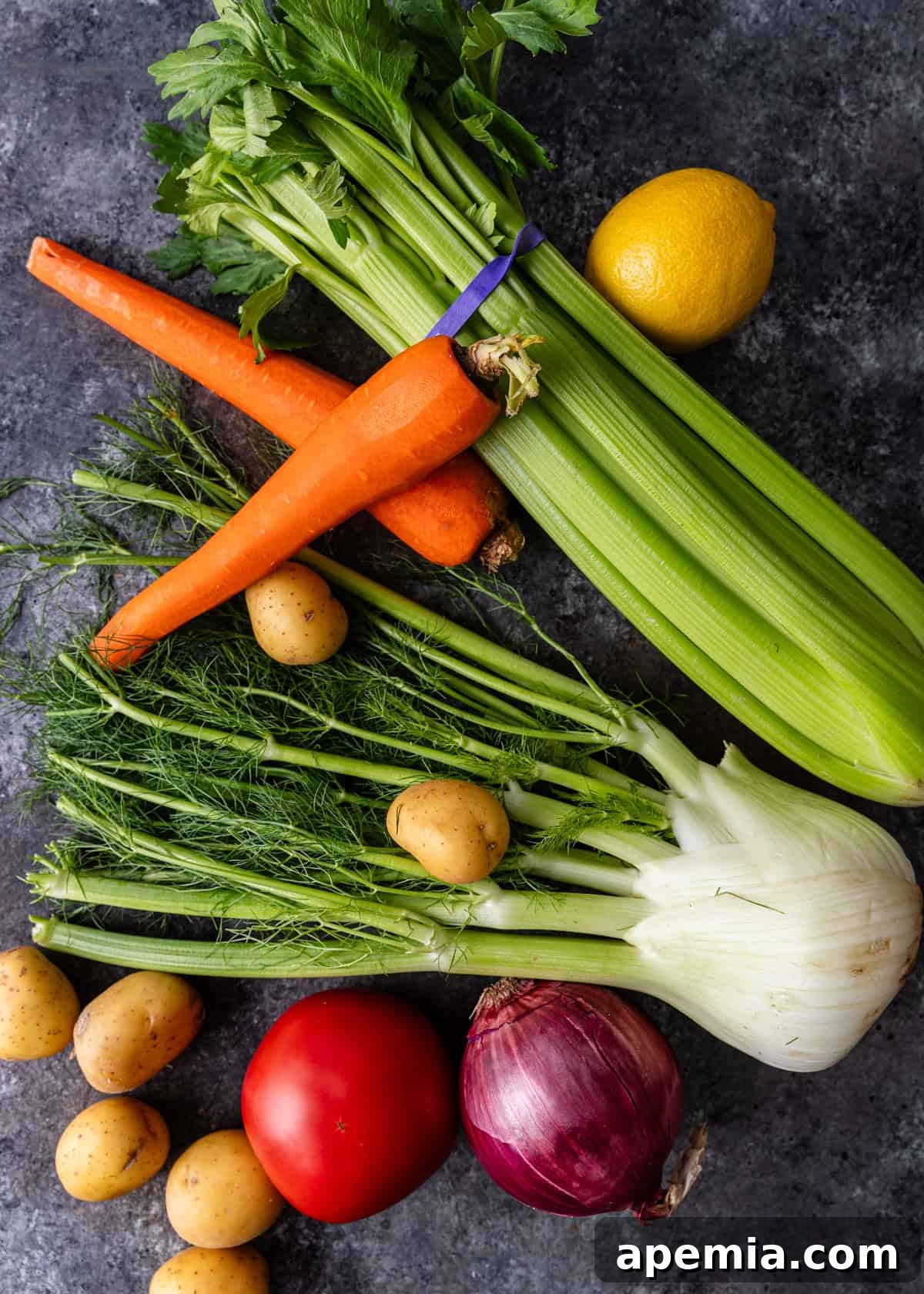
- An Array of Fresh Vegetables: This stew is brimming with a colorful and nutritious medley, each contributing unique flavors and textures. We use carrots, red onion, fragrant fennel, pungent garlic, tender potatoes, crisp celery (including the leaves for extra aroma!), and ripe tomatoes. Together, they create a balanced and deeply satisfying vegetable foundation.
- Flavorful Fish Stock: This is the liquid backbone of our stew. While fish or seafood stock is ideal for a truly authentic taste, a fantastic substitute can be made by combining 4 cups of vegetable stock with a ¼ cup of clam juice, which provides a similar briny depth.
- Ouzo – The Secret Ingredient: This anise-flavored Greek liquor might seem like an unusual choice for a fish stew, but it’s a game-changer! Just a ¼ cup works wonders, adding a complex, aromatic dimension that subtly enhances the seafood and ties all the Mediterranean flavors together. Rest assured, the alcohol cooks off entirely, leaving only its unique essence.
- Thoughtful Seasonings: These spices bring our stew to life:
- Saffron Threads: A touch of saffron imparts a beautiful golden hue and a luxurious, delicate flavor, characteristic of elevated Mediterranean dishes.
- Kosher Salt: Essential for balancing and enhancing all the flavors.
- Freshly Ground Black Pepper: Adds a sharp, piquant contrast.
- Red Pepper Flakes: For a subtle warmth and a gentle kick. Adjust the amount or omit entirely if you prefer a milder stew.
- Fresh Lemon: A generous squeeze of lemon juice over each serving is a must. It brightens every spoonful, cutting through the richness and adding a burst of fresh, tangy flavor right before serving.
Chef’s Choice
Selecting the Best Firm White Fish for Your Stew
The success of a great fish stew often hinges on the type of fish you choose. A firm white fish is paramount, as it needs to hold its structure and not flake apart too quickly during the simmering process, contributing to the stew’s hearty texture. Here are my top recommendations:
- Sea Bass: Prized for its sweet, mild flavor and firm texture, making it an excellent choice for stews.
- Cod: A popular option due to its mild flavor and flaky yet firm texture that consistently holds up well during cooking.
- Halibut: Offers a slightly sweet taste with a dense, meaty texture that absorbs flavors beautifully.
- Grouper: Known for its dense, mild-tasting flesh, which is superb in heartier dishes like chowders and stews.
- Haddock: A more delicate cousin to cod, but still maintains its integrity in simmering soups and stews.
- Snapper: Firm and flaky with a delightful sweet, mild flavor, perfect for soaking up the stew’s rich broth.
- Monkfish: Often referred to as “the poor man’s lobster” for its dense, meaty texture, it brings a luxurious feel to the stew.
- Mahi-Mahi: Its firm texture is ideal for robust broths, ensuring it doesn’t disintegrate.
- Pollock: A versatile option with a mild flavor and firm flesh, suitable for a wide range of seafood preparations.
- Tilefish: With its characteristically firm texture, it’s a favorite in many traditional Mediterranean seafood stews.
Crafting Your Greek Fish Stew: A Step-by-Step Guide
- Prepare the Seafood: Begin by rinsing your chosen firm white fish under cold water and patting it thoroughly dry with paper towels. Cut the fish into manageable 2-inch pieces. For the shrimp, wash them carefully, then peel and devein them as needed. Set both the fish and shrimp aside. Proper preparation ensures even cooking and optimal texture.
- Master the Vegetable Prep: This step is often the most time-consuming but crucial for developing the stew’s complex flavors. Peel and dice the carrots and red onion into ½-inch pieces. For the fennel bulb, trim off the root end and any tough outer layers, then cut it into 1-inch pieces. Mince the garlic finely. Cut the small gold potatoes in half and slice the celery into ½-inch pieces, making sure to reserve about ¼ cup of the delicate celery leaves for a garnish or to add in the final stages for extra freshness. Dice the large tomato into 1-inch chunks. Having all your vegetables prepped beforehand makes the cooking process smooth and enjoyable.
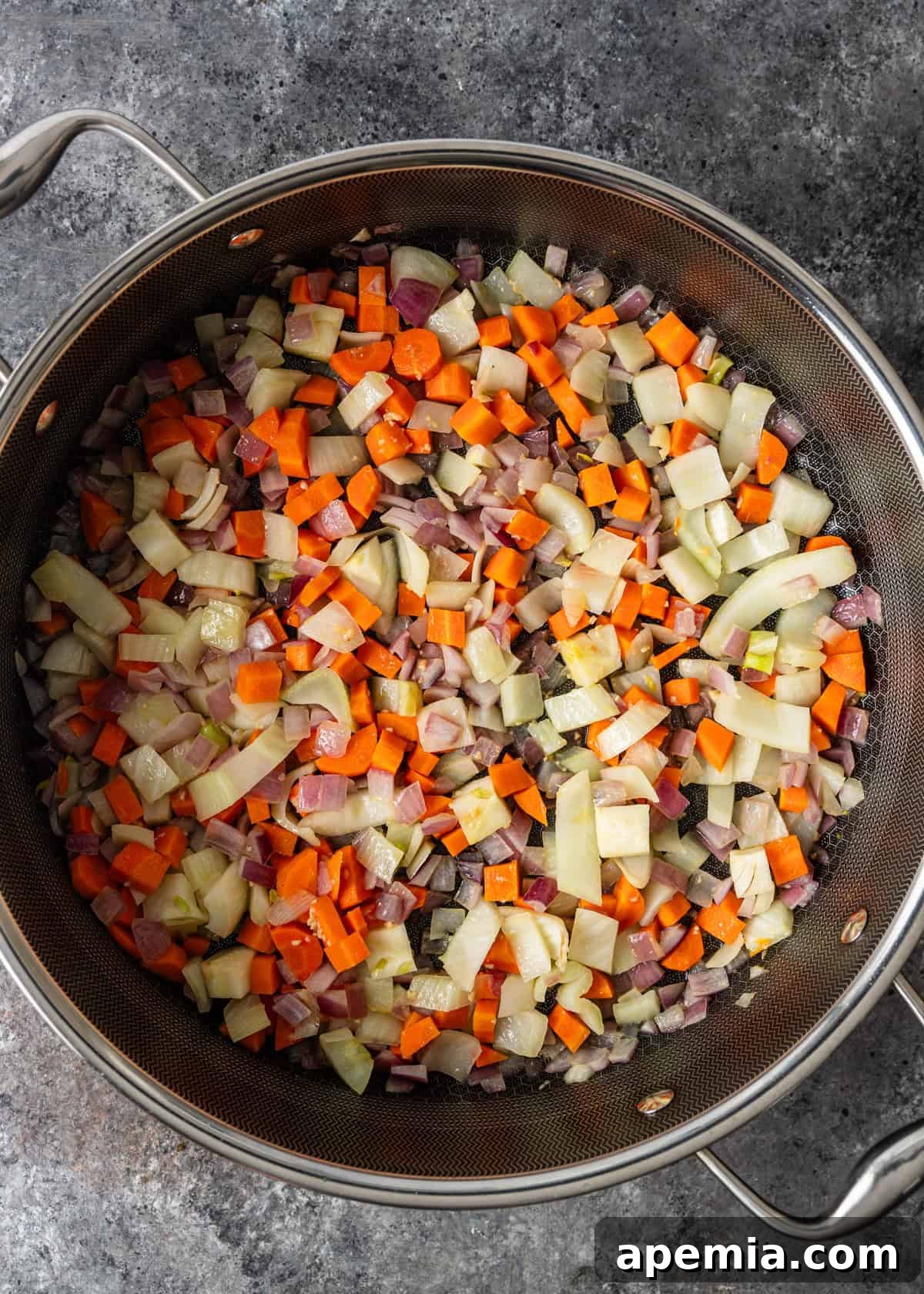
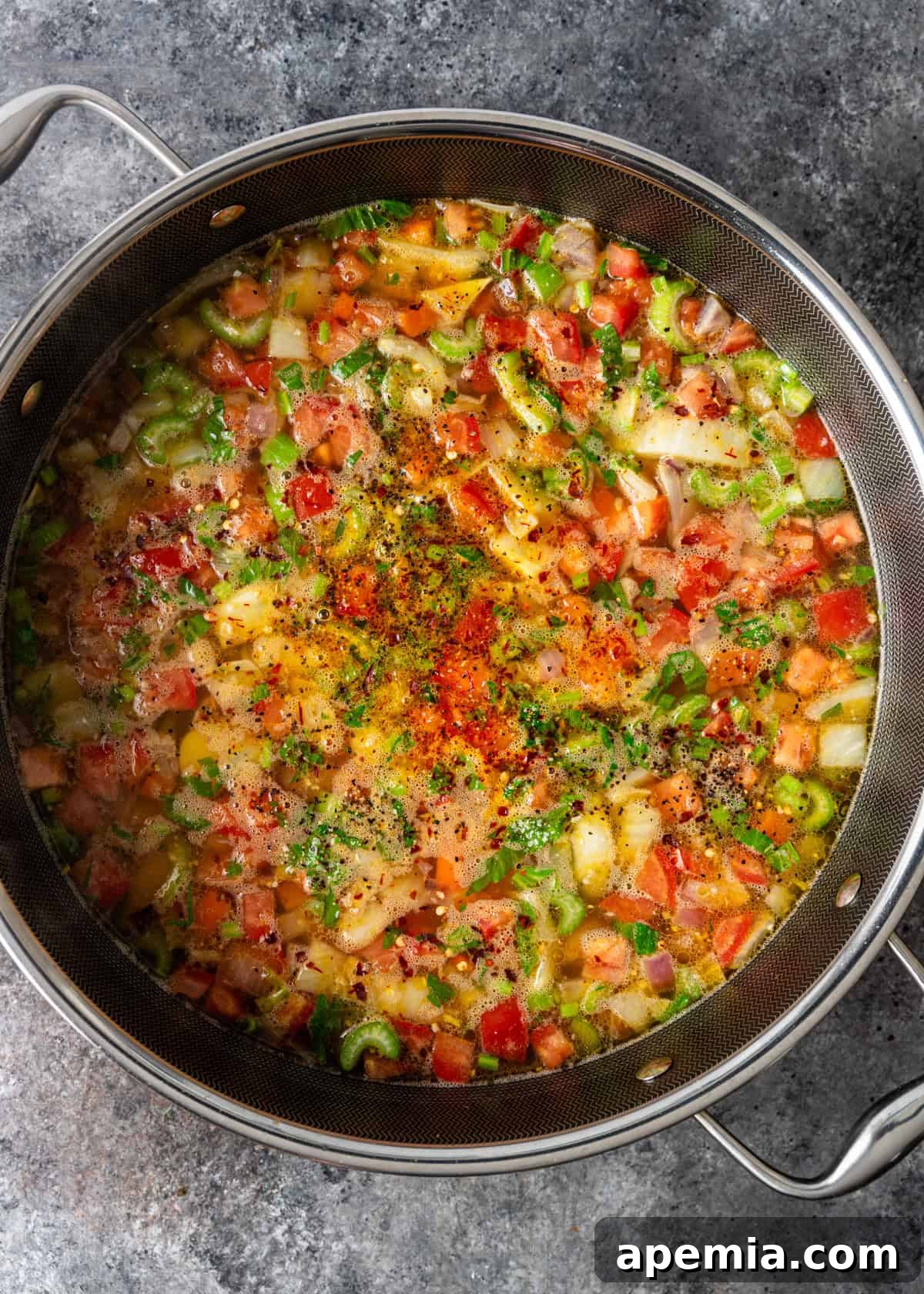
- Build the Aromatic Base: In a large, deep skillet or a sturdy soup pot (a Dutch oven works wonderfully here), heat the olive oil over medium heat until shimmering. Add the diced carrots, red onion, and fennel, cooking them gently for about 5 minutes, stirring frequently. This initial sautéing softens the vegetables and begins to release their sweet, aromatic compounds. Next, stir in the minced garlic and cook for just another minute until fragrant, being careful not to burn it.
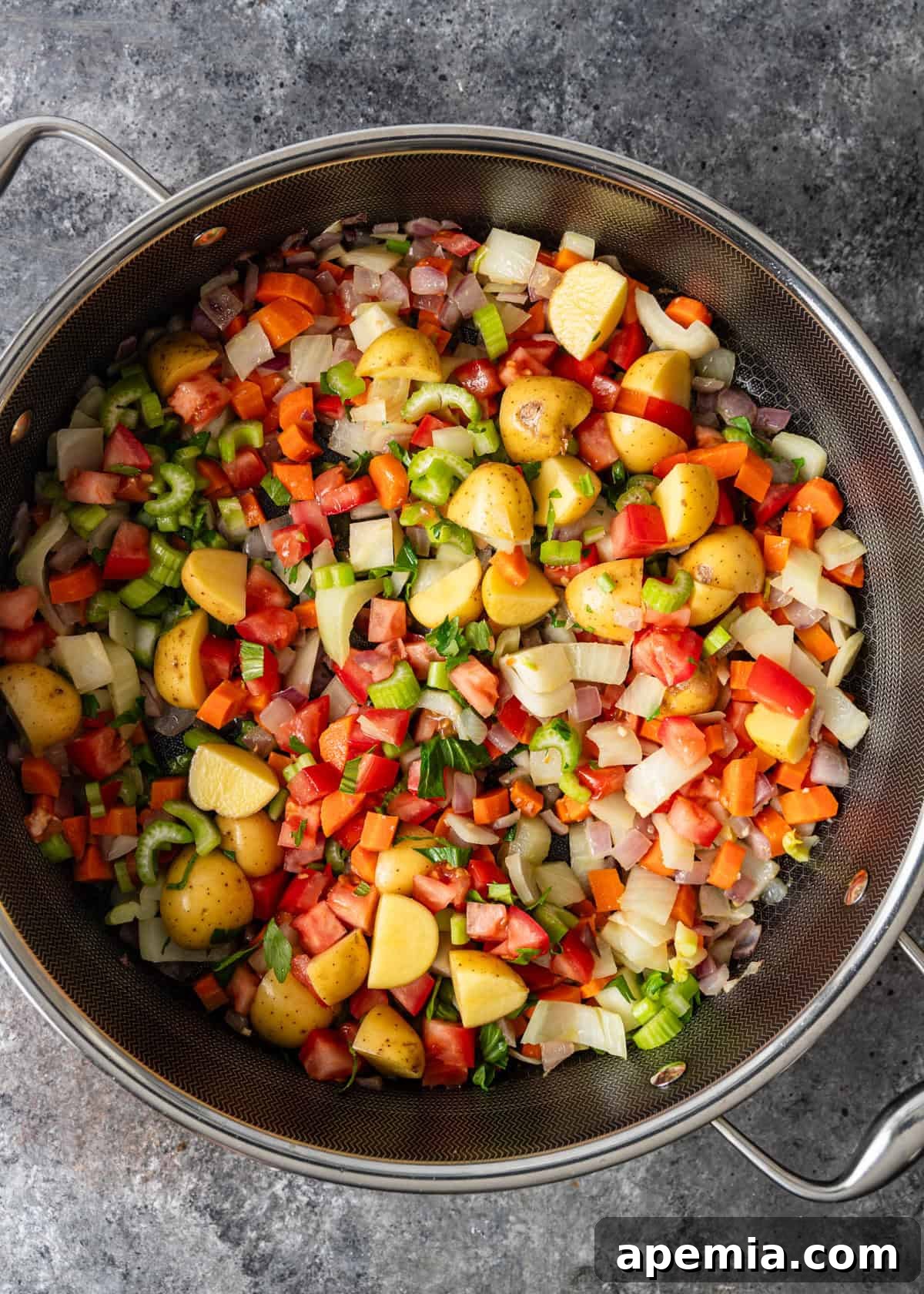
- Simmer and Infuse: Introduce the prepared potatoes, celery, and diced tomato into the pot. Pour in the fish stock (or your vegetable stock and clam juice mixture) and the ouzo. Bring the entire mixture to a gentle boil. Once boiling, reduce the heat to low, then add the delicate saffron threads, kosher salt, freshly ground black pepper, and red pepper flakes. Stir everything together to combine the seasonings thoroughly. Allow the stew to simmer gently for 10 minutes, stirring occasionally, to let the flavors meld and the vegetables begin to soften.
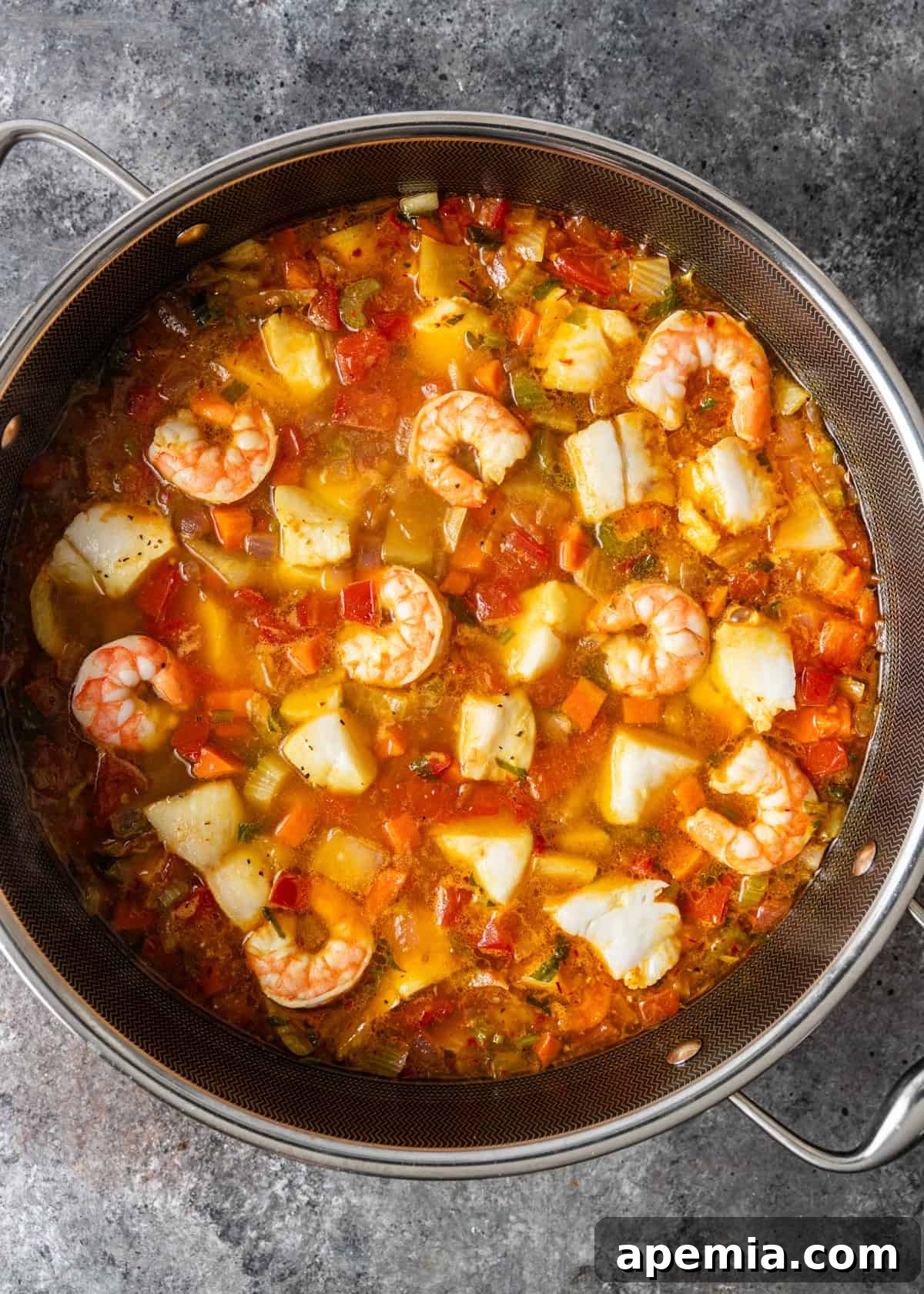
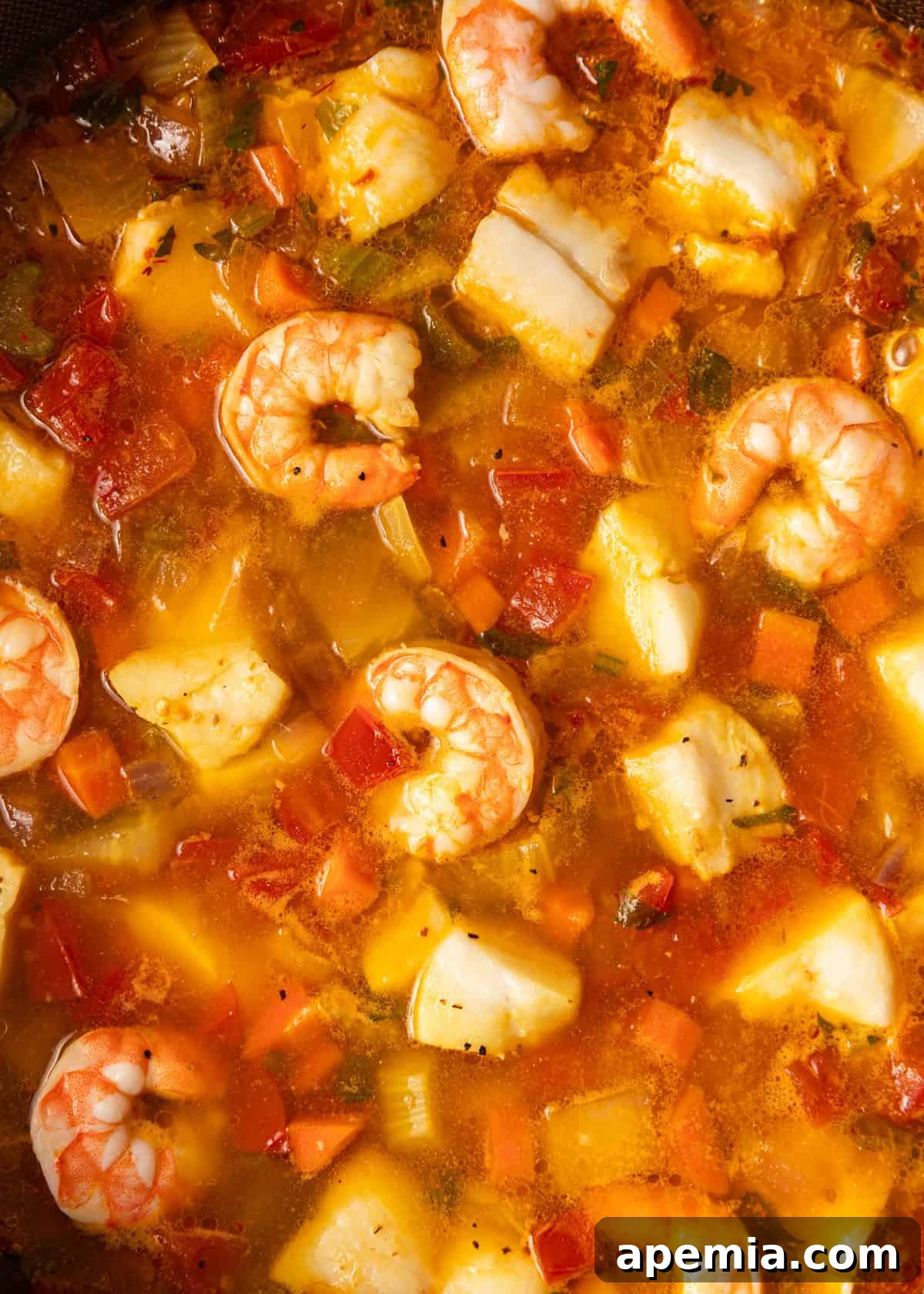
- Incorporate the Seafood: Now it’s time for the stars of the show! Carefully add your fish pieces to the simmering stew. If you’re using sea bass, place it skin-side up to help protect the flesh during cooking. Continue to simmer, uncovered, for another 10 minutes until the fish is opaque and cooked through. Finally, add the prepared shrimp to the pot. These cook quickly, so let them simmer for just 2 more minutes, or until they turn pink and opaque. Overcooking shrimp will make them rubbery, so watch them closely.
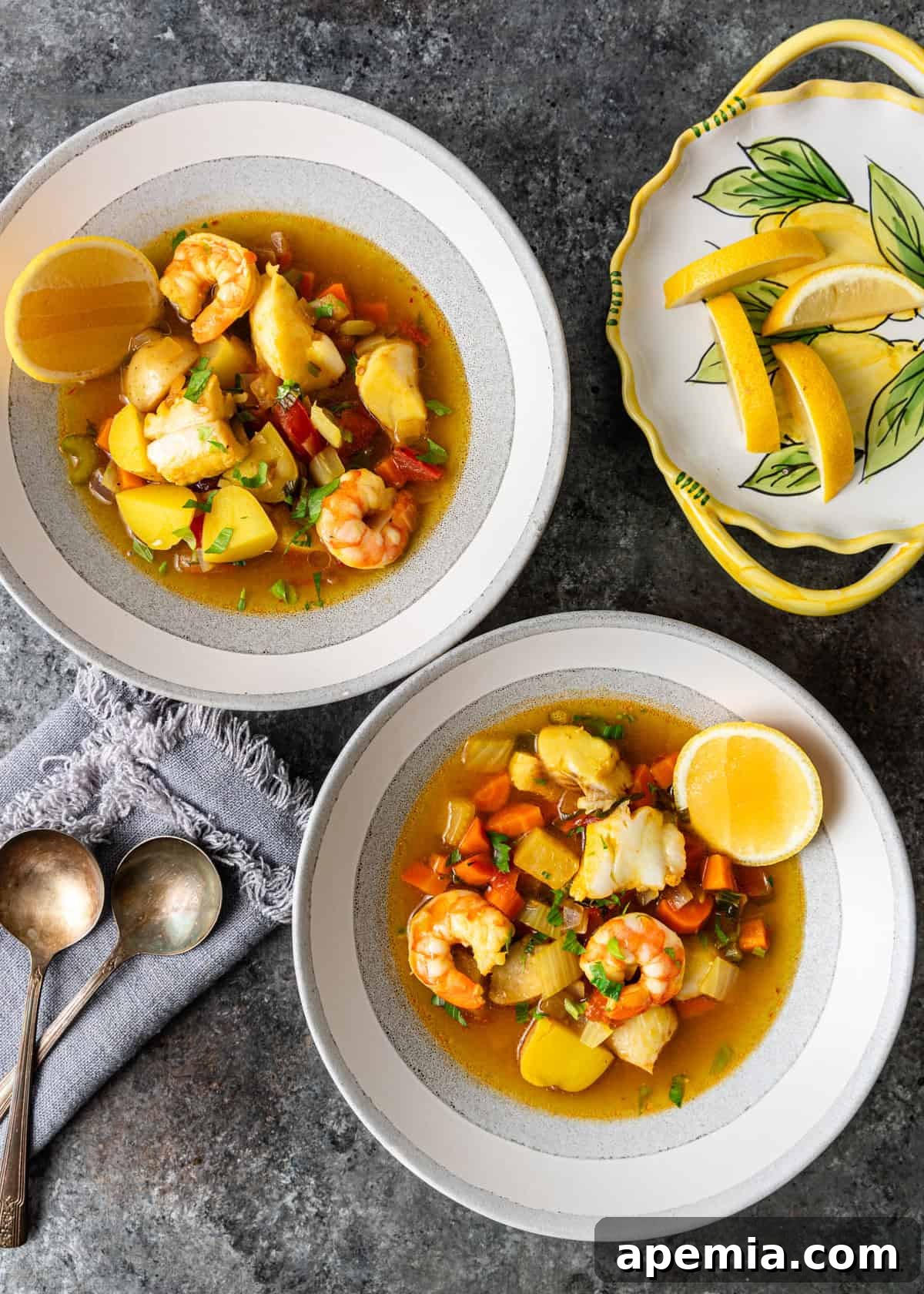
- Final Seasoning and Serve: Taste the stew and adjust the seasoning with additional salt or pepper if needed. Ladle the hot, fragrant stew into individual serving bowls. For a burst of freshness and a bright finish, top each bowl with a generous squeeze of fresh lemon juice and a sprinkle of the reserved celery leaves or fresh parsley. Serve immediately and enjoy this authentic Greek culinary masterpiece!
Recommended Kitchen Tools for Success
While this recipe is quite straightforward, having the right tools can make the process even smoother:
- Large, Deep Skillet or Dutch Oven: Beyond basic knives and cutting boards for prepping your ingredients, this Greek fish stew is essentially a one-pot wonder. I highly recommend using a spacious, deep skillet or a versatile Dutch oven. Its ample size allows for all ingredients to cook evenly and its heavy bottom helps maintain a consistent temperature, crucial for a perfectly simmered stew.
- Sharp Chef’s Knife: Essential for efficiently chopping all the various vegetables.
- Cutting Board: A sturdy surface for safe and effective ingredient preparation.
- Ladle: For easy serving of your delicious stew.
Storing & Reheating Your Mediterranean Seafood Stew
This Greek fish stew is undeniably at its best when enjoyed fresh, but leftovers can certainly be savored! To store any remaining stew, transfer it to an airtight container and refrigerate promptly. It will keep beautifully for up to 2-3 days.
When it comes to reheating, my preferred method is on the stovetop. Gently simmer the stew over low to medium heat for about 10-15 minutes, stirring occasionally, until it is thoroughly warmed through. If you’re in a hurry, single servings can be reheated in the microwave in 30-second bursts, stirring in between, until hot. Be careful not to overcook the seafood when reheating.
While technically you *can* freeze this fish stew (indeed, almost anything can be frozen with enough determination!), I generally advise against it. The delicate texture of the fish and shrimp, along with some vegetables like potatoes, can become altered upon thawing and reheating, often resulting in a less desirable consistency and diminished flavor. For the optimal experience, it’s always best to prepare this delightful Greek fish stew fresh when the craving strikes.
Share this recipe on Pinterest!
Love this recipe? Share it with the world on Pinterest to inspire others.
Frequently Asked Questions About Fish Stew
There are several effective ways to thicken your fish stew to achieve your desired consistency. One simple method is to gently mash a few of the cooked potatoes or other soft vegetables directly into the broth using a fork or an immersion blender. This releases their starch and naturally thickens the liquid. As a quick pantry hack, I sometimes keep a box of instant mashed potato flakes on hand; adding 1-3 tablespoons and stirring can instantly thicken your stew. Alternatively, you can create a slurry by mixing 1-2 teaspoons of cornstarch or flour with a small amount of cold water until smooth, then stirring this mixture into the simmering stew and allowing it to cook for a few minutes until thickened. For a richer consistency and flavor, you might also consider stirring in a splash of cream or coconut milk, which will not only thicken the stew but also add a wonderful creaminess. Experiment to find the method that best suits your taste!
As we touched upon earlier, the primary distinction between a fish stew and a fish soup lies in their liquid-to-solid ratio and overall consistency. Fish stew is typically cooked for a longer duration, resulting in a heartier, thicker, and chunkier dish with more substantial pieces of fish and vegetables. The liquid in a stew usually just coats the ingredients rather than fully submerging them. Fish soup, conversely, tends to be lighter, more broth-based, and thinner, with ingredients that might be smaller or more finely chopped. However, in everyday conversation and many culinary contexts, these terms are often used interchangeably, much like I have done throughout this recipe description.
For a robust and satisfying fish stew, a firm white fish is undoubtedly the best choice. Its sturdy flesh can withstand the simmering process without easily falling apart, ensuring that your stew has a pleasant texture with intact pieces of fish. Fish with delicate textures tend to disintegrate, making the stew mushy. My top recommendations for firm white fish, all of which are excellent for this Greek fish stew recipe, include sea bass, cod, halibut, grouper, haddock, snapper, monkfish, mahi-mahi, pollock, and tilefish. You can find a more detailed breakdown of these options in the “Selecting the Best Firm White Fish for Your Stew” section above, as well as in the notes section of the recipe card below.
Authentic Greek Fish Stew Recipe
4
15
32
47
Print Recipe
Ingredients
- 1 lb firm white fish (like seabass, see Note 2 below for more options)
- 8 raw large shrimp
- 1/3 cup olive oil
- 2 carrots, peeled and diced
- 1 red onion, diced
- 1 bulb fennel, trimmed and cut into 1-inch pieces
- 4 cloves garlic, minced
- 1/2 lb small gold potatoes, halved
- 2 ribs celery, sliced + 1/4 cup leaves
- 1 large tomato, diced
- 4 1/4 cups fish stock (See Note 1)
- 1/4 cup ouzo
- 1/8 tsp saffron threads
- 1 tsp kosher salt
- 1/2 tsp ground black pepper
- 1/2 tsp red pepper flakes (adjust to taste)
- 1 lemon, quartered, for serving
Instructions
Seafood Preparation
- Rinse the fish and pat it thoroughly dry. Cut into 2-inch pieces. Wash, peel, and clean the shrimp, then set aside both the fish and shrimp.
Vegetable Preparation
- Peel and dice the carrots and onion into ½-inch pieces. Trim the root and outer dirty parts of the fennel bulb, then cut into 1-inch pieces. Mince the garlic. Cut the small potatoes in half. Slice the celery into ½-inch pieces and finely chop ¼ cup of the celery leaves. Dice the tomato into 1-inch pieces.
Cooking the Stew
- In a large, deep skillet or soup pot, heat the olive oil over medium heat. Add the carrots, onion, and fennel, and cook for 5 minutes, stirring often until softened. Stir in the minced garlic and cook for another minute until fragrant.
- Add the prepared potatoes, sliced celery, diced tomato, fish stock (or 4 cups vegetable stock + ¼ cup clam juice), and the ouzo to the pot. Bring the mixture to a boil, then reduce the heat to low. Stir in the saffron threads, kosher salt, ground black pepper, and red pepper flakes. Simmer for 10 minutes, stirring occasionally.
- Carefully add the fish pieces to the pot. If using sea bass, place it skin-side up. Simmer uncovered for 10 minutes until the fish is cooked through. Then, add the shrimp and cook for an additional 2 minutes, until they turn pink and opaque. Taste and season with additional salt or pepper if needed.
- Ladle the hot stew into serving bowls, garnish with a squeeze of fresh lemon juice, and enjoy immediately!
Notes
- Fish Stock Substitute: If you find it challenging to locate fish stock, a fantastic substitute I recommend is using 4 cups of vegetable stock combined with ¼ cup of clam juice. This blend provides a similar briny depth that enhances the seafood flavor.
- Fish Placement: When adding sea bass to the soup, always place it skin-side up. This helps to protect the delicate flesh of the fish from overcooking and ensures it remains tender.
- Recipe Inspiration: This recipe is beautifully adapted from Rick Stein’s acclaimed cookbook, From Venice to Istanbul, drawing inspiration from his Mediterranean culinary adventures.
Recommended Choices for Firm White Fish:
- Sea Bass: Prized for its sweet, mild flavor and firm texture.
- Cod: A popular choice with a mild flavor and firm texture that holds well.
- Halibut: Slightly sweet with a firm, meaty texture.
- Grouper: Dense, mild-tasting flesh, excellent for heartier stews.
- Haddock: Slightly more delicate than cod but works well in stews.
- Snapper: Firm and flaky, offering a sweet, mild flavor.
- Monkfish: Dense and meaty, often likened to lobster in texture.
- Mahi-Mahi: Known for its firm texture that stands up well in broths.
- Pollock: Mild in flavor with a firm flesh, suitable for various broths.
- Tilefish: Offers a firm texture and is frequently used in traditional Mediterranean soups.
Nutrition
The information shown is an estimate provided by an online nutrition calculator. It should not be considered a substitute for a professional nutritionist’s advice.
Soups, Main Dish
Greek, Mediterranean
Kevin
Have You Made This Recipe? Let Me Know on Instagram!
Tag @keviniscooking or use the hashtag #keviniscooking!