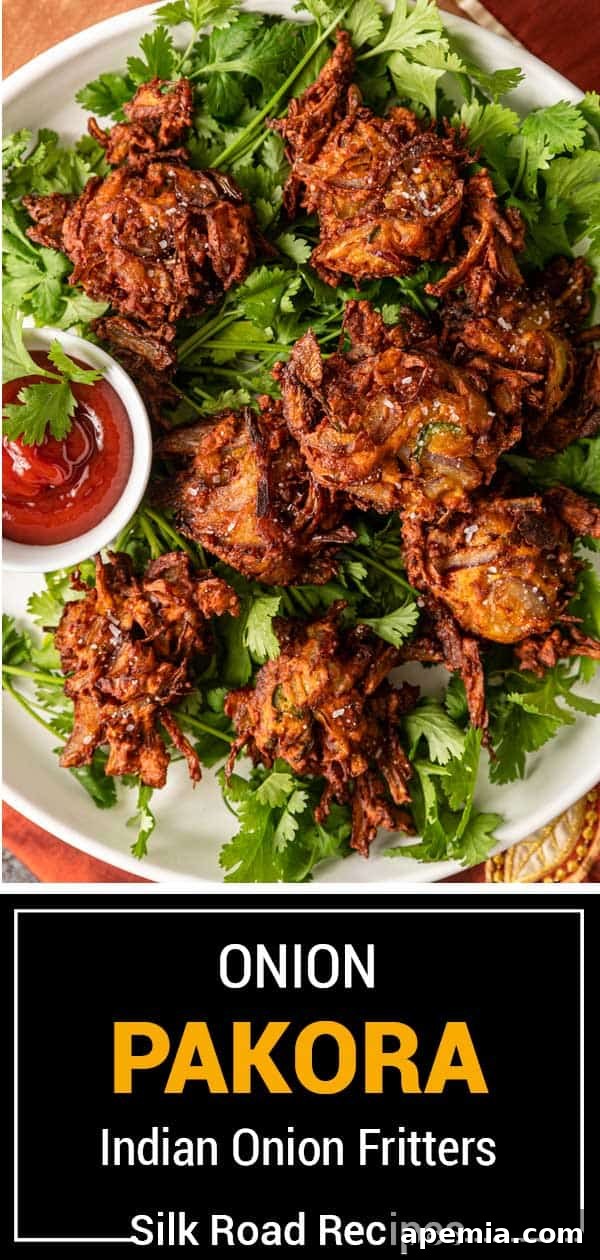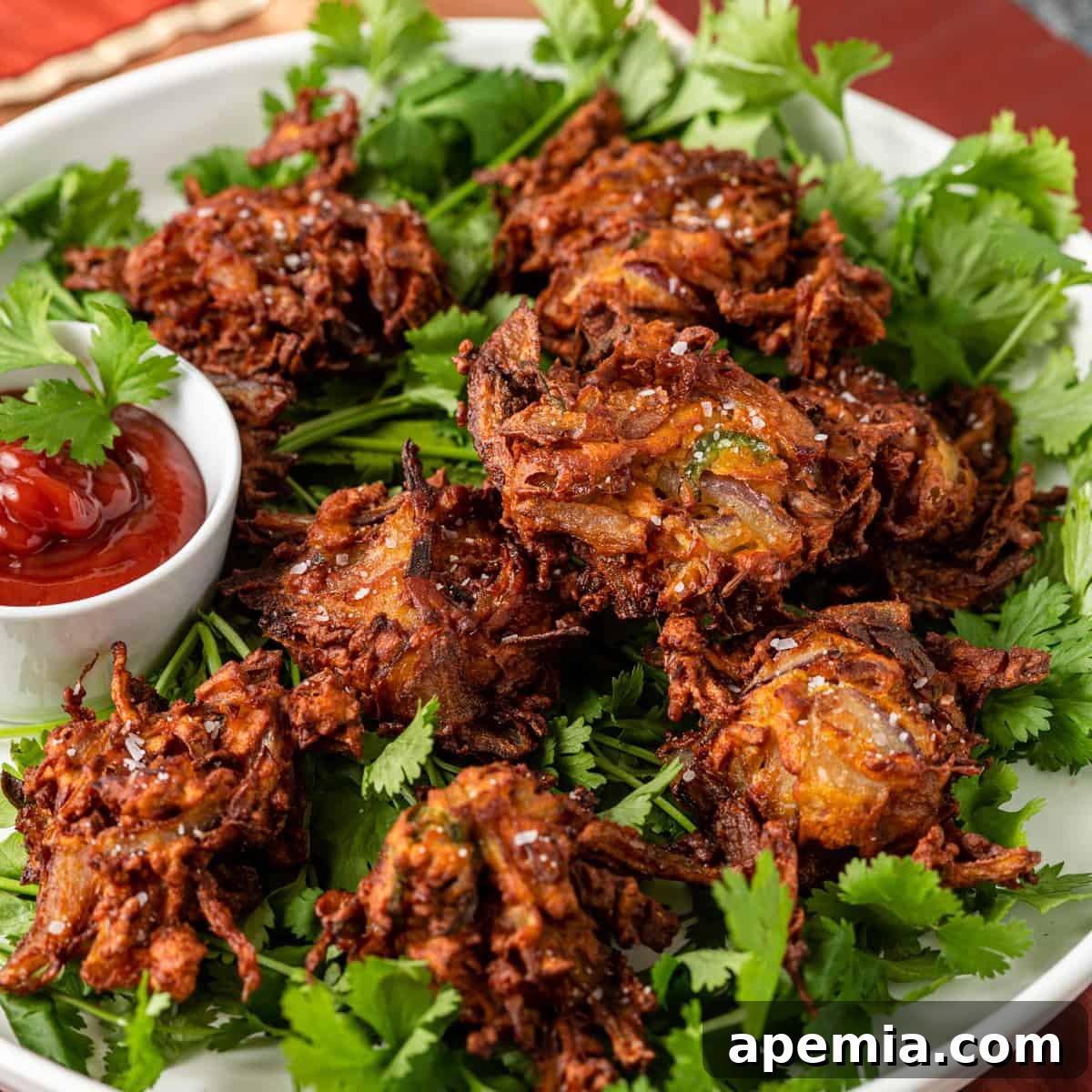
Craving an unforgettable snack that bursts with flavor and satisfies every crunch? Look no further than these incredible Onion Pakoras! Each golden-brown fritter is a masterpiece of textures and tastes, boasting a wonderfully crispy exterior that gives way to a tender, aromatic interior. Infused with a symphony of spices – from the earthy notes of caraway and the zesty kick of fresh ginger to the subtle warmth of dried curry leaves – these pakoras are designed to tantalize your taste buds. They’re so irresistible, you’ll find them disappearing from the plate almost as fast as you can fry them.
These traditional Indian onion fritters are more than just a snack; they’re a culinary experience. Their serious crunch, combined with a comforting heat from chili and ginger, and the earthy depth provided by caraway and fragrant curry leaves, creates a flavor profile that is both complex and incredibly satisfying. The best part? You can create this magic with just a few pantry staples: chickpea flour, a handful of vibrant spices, and a couple of humble red onions. Forget adding extra water; the secret lies in a simple squeeze and mash technique that coaxes out the natural juices from the onions, creating the perfect binder for your savory batter.
Dive into the delightful world of homemade pakoras and discover how effortlessly you can bring authentic Indian flavors into your kitchen. Whether you’re a seasoned cook or a kitchen novice, this recipe is straightforward, fun, and guarantees delicious results. Prepare to be amazed by the depth of flavor you can achieve with fresh ingredients and a little culinary passion. Serve them hot with your favorite cooling chutney, alongside a hearty Aloo Masala, or as a vibrant appetizer before a rich Indian Chicken Curry. This dish is a true crowd-pleaser that promises to elevate any meal or gathering!
Table of Contents: Your Guide to Perfect Onion Pakoras
- The Secret to Crispy Pakoras: Chickpea Flour
- Essential Ingredients and Clever Substitutions
- Mastering the Art of Making Onion Pakora
- Recommended Tools for Frying Success
- Storing and Reheating Tips for Leftovers
- Frequently Asked Questions About Onion Pakora
- Onion Pakora (Indian Onion Fritters) Full Recipe
Chef’s Tip for Authentic Flavor
The Secret to Crispy Pakoras: Chickpea Flour
At the heart of every great pakora lies chickpea flour, also widely known as gram flour or besan. This gluten-free flour is indispensable for achieving that signature crispy texture and delicate flavor. Its unique binding properties allow the onions to hold together beautifully without the need for additional water, resulting in fritters that are light and airy, not dense or greasy. While besan is truly ideal, if you’re looking for alternatives in other recipes, similar gluten-free flours like almond flour, rice flour, or millet flour can offer comparable textures and tastes, though for authentic pakora, besan is king.
Understanding the role of chickpea flour is crucial for pakora perfection. It absorbs moisture from the onions, creating a cohesive yet airy batter. This absorption is key to preventing soggy pakoras, ensuring each bite delivers that satisfying crunch we all crave. Beyond its functional benefits, besan also contributes a nutty, slightly earthy flavor that complements the robust spices beautifully, making it an irreplaceable component in this classic Indian snack. Don’t underestimate the power of this humble flour in transforming simple onions into an extraordinary treat!
Essential Ingredients and Clever Substitutions
For a complete list of ingredients and precise quantities, refer to the full recipe card below.
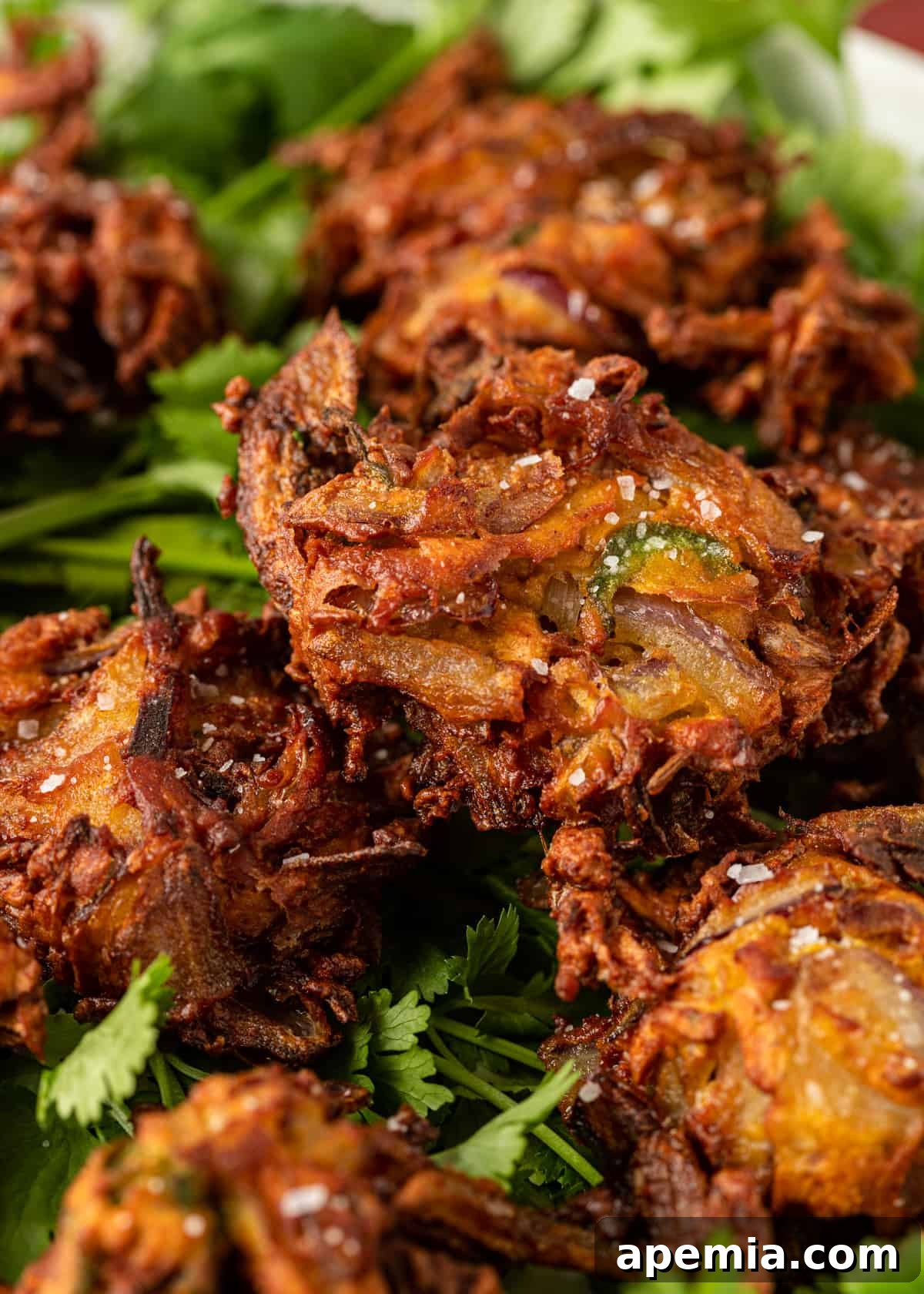
- Onions: The Star of the Show – For this specific onion pakora recipe, red onions are highly recommended. Their slightly sharper, less sweet flavor profile stands up perfectly to the robust spices, creating a more balanced and authentic taste compared to the sweeter white varieties. Thin, even slices are essential for consistent cooking and maximum crispiness.
- Birds Eye Chili: For a Fiery Kick – These small but mighty chiles deliver a sharp, invigorating heat. If Birds Eye chiles are unavailable or if you prefer a slightly milder yet still potent spice, Serrano chiles make an excellent substitute. Always mince them finely to distribute the heat evenly throughout the batter.
- Ginger Paste: A Burst of Zest – Fresh ginger paste provides a warm, pungent, and zesty undertone that brightens the entire flavor profile of the pakoras. If you don’t have fresh paste on hand, a good rule of thumb is to use 1 teaspoon of ground ginger for every tablespoon of fresh paste, adjusting to your taste preferences.
- Flour Power: Achieving the Ultimate Crisp – Just like many other fried delicacies, a combination of flours is key to achieving that desirable crispiness. These flours expertly absorb moisture and fat during frying, preventing a greasy result.
- Besan Flour (Gram Flour) – As mentioned, besan is the foundational flour. It’s derived from chana dal (split brown chickpeas) and has a finer texture than regular chickpea flour (ground white chickpeas). While chickpea flour can be used as a substitute, besan offers a slightly superior texture and authentic flavor.
- Rice Flour: The Crispy Secret Weapon – Adding a touch of rice flour is a fantastic trick for enhancing the crispiness of your pakoras. Its fine texture and low moisture content contribute to an extra-crunchy coating. You can typically find rice flour in the international or gluten-free section of most supermarkets.
- Aromatic Spices: The Soul of Indian Cuisine
- Kashmiri Red Chili Powder – This beautiful spice not only imparts a mild, pleasant heat but also gives the pakoras a vibrant, appealing color. If Kashmiri chili powder is hard to find, a combination of smoked paprika (for color and mild smokiness) and a pinch of cayenne pepper (for heat) makes an excellent substitute.
- Ground Caraway Seeds – These tiny seeds offer a unique, subtle earthy sweetness with a delicate hint of licorice. They add a layer of warmth and complexity that truly elevates the flavor profile of the onion pakoras.
- Ground Turmeric – Essential for both its beautiful golden color and its mild, warm, slightly bitter notes that are characteristic of Indian cooking. Turmeric also brings a host of health benefits.
- Kosher Salt – A fundamental seasoning that balances and enhances all the other wonderful spices, bringing out their full potential.
- Asafoetida (Hing) – This pungent spice is a secret weapon in Indian cooking, offering a savory, umami depth that mimics the flavors of onion and garlic. A small pinch can make a significant difference, adding a more complex and authentic taste, especially beneficial for those avoiding onion or garlic.
- Dried Curry Leaves – These aromatic leaves infuse the pakoras with a distinctive, warm, slightly citrusy fragrance that is uniquely Indian. Crush them lightly before adding to release their full aroma.
- Vegetable Oil: For Golden Frying – The choice of oil is crucial for perfectly fried pakoras. Canola oil or peanut oil are highly recommended due to their high smoke points and neutral flavors, ensuring your pakoras fry evenly to a beautiful golden brown without imparting unwanted tastes.
Mastering the Art of Making Onion Pakora
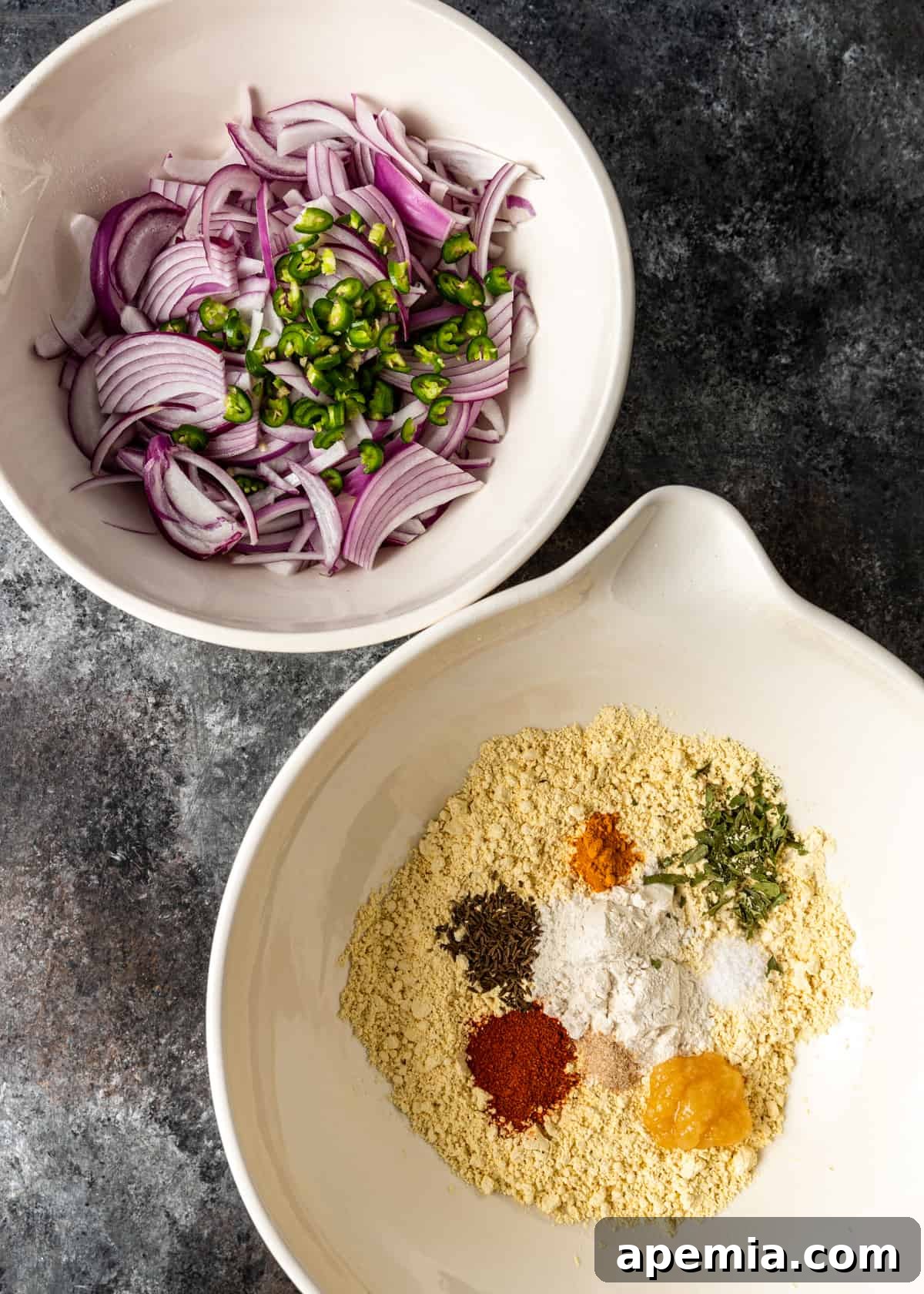
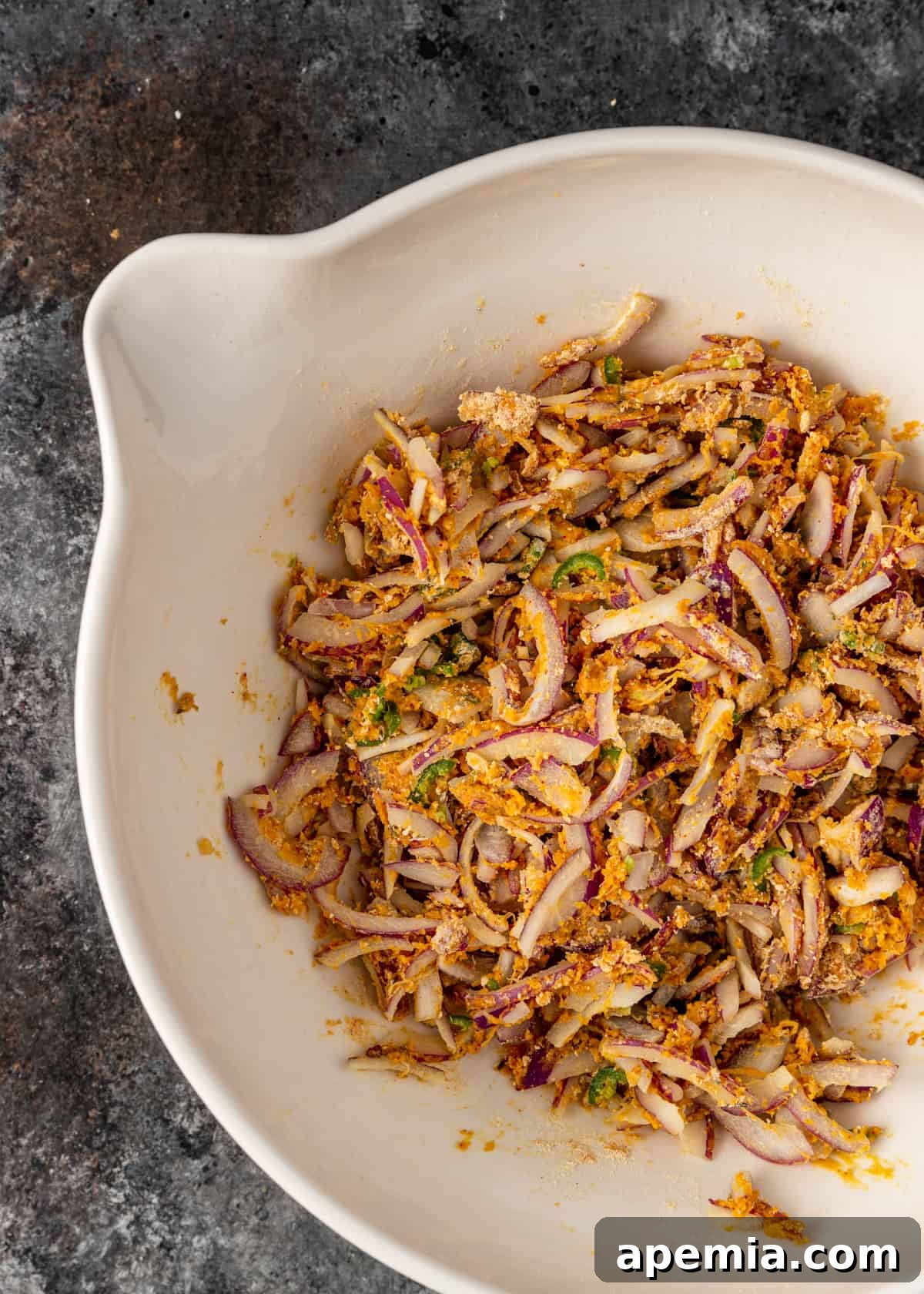
- Prepare Your Ingredients and Craft the Batter. Begin by thinly slicing your red onions. Precision here ensures even cooking. Next, finely mince the Birds Eye or Serrano chiles. In a spacious mixing bowl, combine the thinly sliced onions, minced chiles, fragrant ginger paste, both besan and rice flours, and all the aromatic spices. Now, for the critical step: using your hands, thoroughly squeeze and mash the ingredients together. This action is vital as it coaxes out the natural moisture from the onions, eliminating the need for any added water. Continue this process until a thick, clumpy batter forms that holds its shape. This technique guarantees a genuinely crispy pakora.
- Preheat the Frying Oil. Select a deep pan, a Dutch oven, or an electric deep fryer for this step. Pour in enough vegetable oil to ensure the pakoras will be fully submerged. Heat the oil steadily over medium heat until it reaches a temperature of 300 degrees F (approximately 150 degrees C). Using a deep-fry thermometer is highly recommended to maintain this precise temperature, which is crucial for perfect results.
- Fry in Perfectly Sized Batches. Once the oil is at the correct temperature, use a ¼ cup scoop or your hands to carefully drop portions of the pakora batter into the hot oil. Fry in small batches of 4 to 6 at a time to prevent overcrowding the pan, which can significantly drop the oil temperature and lead to soggy pakoras. Allow them to fry for several minutes on each side, turning occasionally, until they achieve a beautiful golden-brown color and a visibly crisp texture.
- Drain and Keep Warm. As each batch of onion pakora is perfectly golden and crisp, use a slotted spoon or spider strainer to carefully remove them from the hot oil. Transfer them immediately to a baking sheet lined with paper towels to drain any excess oil. To keep your freshly fried pakoras warm and crispy while you continue frying the remaining batches, place the baking sheet in a low oven set to around 250 degrees F (120 degrees C).
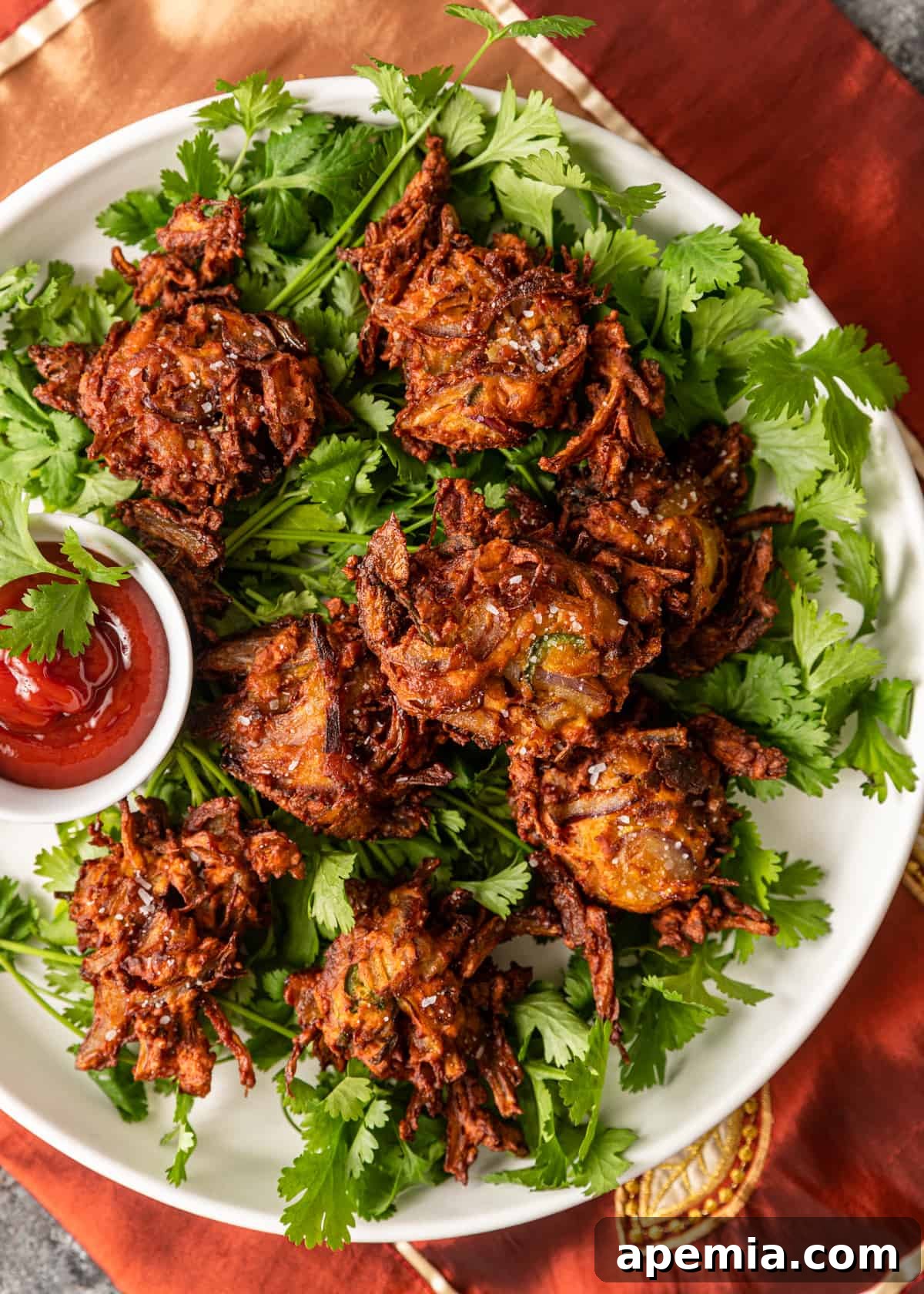
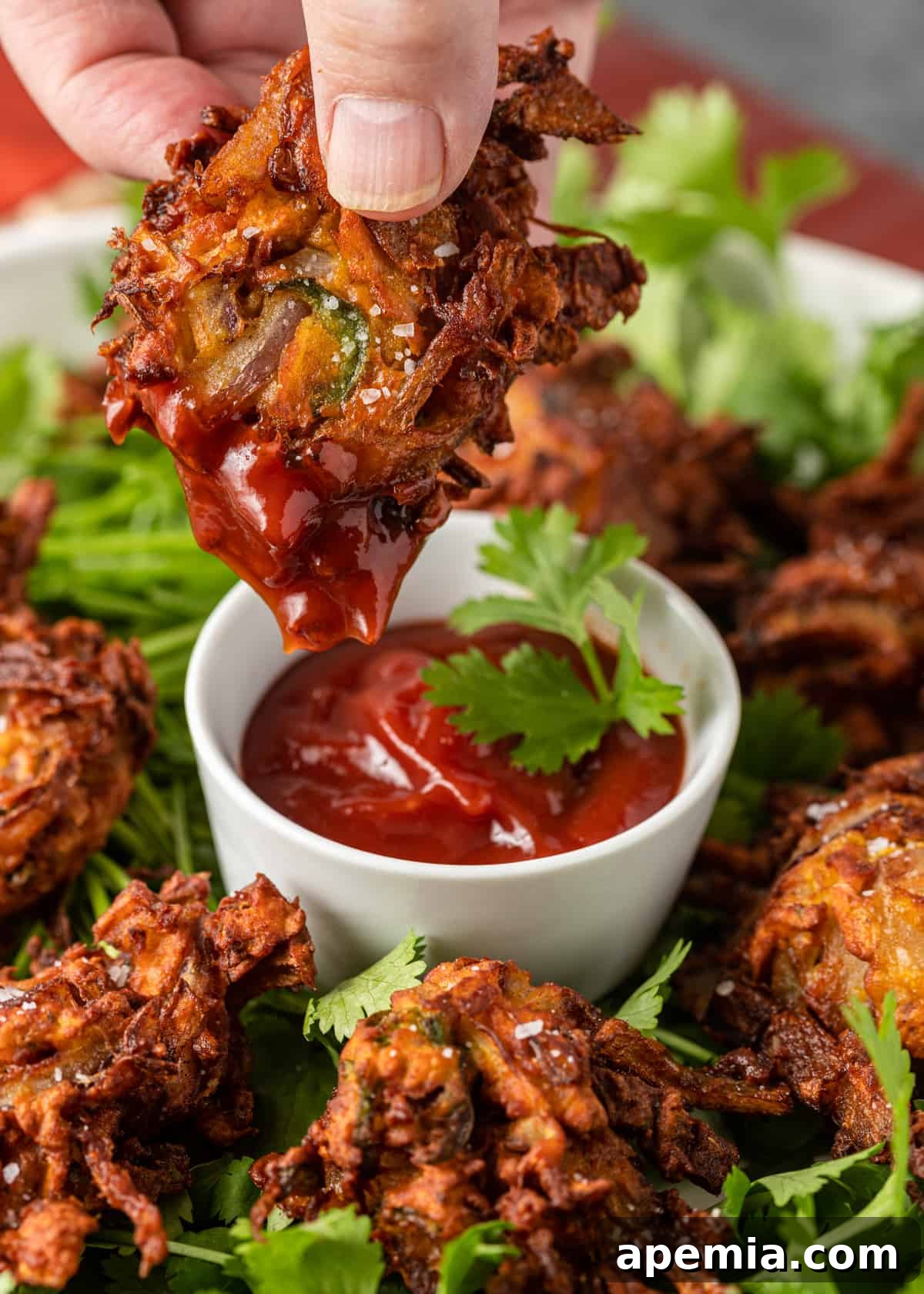
- Serve Hot with Your Favorite Dipping Sauce. Onion pakoras are best enjoyed immediately, served piping hot! They pair wonderfully with a variety of dipping sauces. Classic choices include a tangy Tomato Chutney, a refreshing Pudina Chutney (Mint Chutney), or even a simple ketchup. Feel free to experiment with other condiments like tamarind chutney, green chili sauce, or a cooling raita for an extra layer of flavor.
For an even crisper texture, consider a double-fry method. After the first fry at 300°F until light golden, remove and let them cool slightly. Then, increase the oil temperature to 350-375°F and fry them again for 1-2 minutes until deeply golden and extra crunchy. This is particularly effective if you’re making a large batch or preparing them in advance.
Recommended Tools for Frying Success
Having the right kitchen tools can make all the difference in achieving perfectly crispy pakoras with ease and safety:
- Deep Frying Pan or a Heavy-Bottomed Saucepan: A sturdy, heavy-bottomed pan, such as a cast iron Dutch oven or a large stainless steel pot, is ideal for deep frying. Its heavy construction helps maintain a consistent oil temperature, which is paramount for evenly cooked and crispy pakoras.
- Deep Fry Thermometer: This is a non-negotiable tool for deep frying. If you’re not using an electric deep fryer with built-in temperature control, a reliable thermometer allows you to accurately monitor and adjust the oil temperature. Maintaining the recommended 300°F (150°C) is crucial to prevent pakoras from becoming greasy (if the oil is too cool) or burning (if it’s too hot).
- Slotted Spoon or Spider Strainer: These utensils are designed for safely lowering food into hot oil and, more importantly, for easily and safely removing the fried pakoras. The perforations allow excess oil to drain away quickly, ensuring your pakoras stay crisp.
- Large Mixing Bowl: Essential for combining all your ingredients and giving you enough space to thoroughly squeeze and mash the onion mixture to release its natural moisture.
Storing and Reheating Tips for Leftovers
While onion pakoras are truly at their best when served fresh, hot, and crispy, you can certainly store and reheat leftovers to enjoy later. Proper storage and reheating techniques are key to preserving their deliciousness:
Storing in the Fridge: First, ensure your fried pakoras have cooled completely to room temperature. This prevents condensation, which can make them soggy. Transfer them to an airtight container. For best results and to absorb any residual moisture, place a paper towel at the bottom of the container and another on top of the pakoras before sealing. Stored this way, they will remain fresh for up to 2 days in the refrigerator.
Freezing for Longer Storage: If you’re planning to keep them for a longer period, freezing is a great option. Once completely cooled, arrange the pakoras in a single layer on a baking tray lined with parchment paper. Freeze until they are solid (this prevents them from sticking together). Once frozen, transfer them to a freezer-safe container or a heavy-duty freezer bag. They can be stored in the freezer for up to 1 month.
Reheating for Optimal Crispness: Avoid the microwave at all costs, as it will inevitably make your pakoras soft and rubbery. The best methods for reheating are:
- Oven Method: Preheat your oven to 350 degrees F (175 degrees C). Arrange the pakoras in a single layer on a baking sheet. Heat for 8-10 minutes, or until they are thoroughly warmed through and have regained their crisp texture.
- Air Fryer Method: For a quick and efficient reheat, place the pakoras in a single layer in your air fryer basket. Air fry at 350 degrees F (175 degrees C) for 4-6 minutes, or until they are hot and wonderfully crispy. This method is excellent for restoring that fresh-fried crunch.
No matter which method you choose, the goal is to bring back that delightful crispiness that makes onion pakoras so enjoyable.
Share this recipe on Pinterest!
Love this recipe? Share it with the world on Pinterest to inspire others.
Frequently Asked Questions About Onion Pakora
Yes, you can certainly make onion pakora without rice flour. However, be aware that they may not achieve the same level of crispiness. Rice flour is added specifically for that extra crunch. If you don’t have it, other gluten-free flours like cornstarch or arrowroot flour can be used in small quantities for a similar effect, or you can omit it entirely for a slightly softer texture that is still delicious.
Essentially, onion bhaji and pakora refer to the same type of fried fritter, particularly when made with onions. The dish is fundamentally the same, though its name can vary significantly depending on the region and province within India and South Asia. For instance, in the Indian state of Maharashtra, “bhaji” often means “dry vegetable preparation,” which is a very fitting description for these crispy fritters. That said, there can sometimes be subtle differences in the specific blend of spices used, or even the addition of other vegetables, depending on local culinary traditions, but for onion fritters, the terms are largely interchangeable.
There are a few key reasons why your pakoras might not be as crispy as desired:
- Oil Temperature: The most common issue is oil that isn’t hot enough. Fry your pakoras at a consistent medium heat (around 300°F or 150°C). If the oil is too cool, the pakoras will absorb too much oil and become greasy and soggy.
- Adding Water: This is a crucial mistake! Do not add any extra water to your batter. The moisture from the onions, when squeezed and mashed correctly, is sufficient to bind the flours and spices.
- Onion Slicing: Ensure your onions are sliced thinly and, crucially, evenly. Thick or uneven slices can lead to some parts cooking slower and becoming soft while others burn.
- Overcrowding the Pan: Frying too many pakoras at once will drastically lower the oil’s temperature, leading to a soggy outcome. Always fry in small batches.
- For Extra Crispiness (Double-Frying): For the ultimate crispy pakora, consider double-frying. First, fry them at the recommended medium heat (300°F) until they are light golden and cooked through. Remove them and let them rest briefly. Then, increase the oil temperature to high (at least 350-375°F or 175-190°C) and fry them again for a minute or two until they are deeply golden brown and incredibly crisp. This method works wonderfully for achieving maximum crunch, especially if you plan to make them ahead or have leftovers.
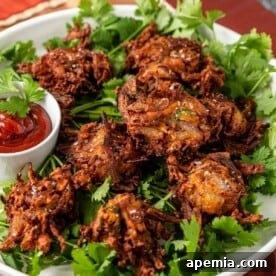
Onion Pakora (Indian Onion Fritters)
Pin Recipe
PrintRecipe
Ingredients
- 2 cups red onions thinly sliced
- 2 Birds Eye Chile or 1 Serrano chili, minced
- 1 tbsp ginger paste
- 1 cup besan flour or chickpea flour
- 2 tablespoon rice flour
- 1 teaspoon kashmiri red chili powder (See Note 1)
- ½ teaspoon ground caraway seeds
- ¼ teaspoon ground turmeric
- ¼ teaspoon kosher salt
- ⅛ teaspoon ground asafoetida hing
- 10 dried curry leaves crushed if dried
For Frying
- 1 ½ cups vegetable oil for deep frying
To Serve
- Tomato Chutney
- Pudina Chutney (Indian Mint Chutney)
- ketchup
Instructions
-
In a large bowl, combine all ingredients (except the frying oil). Use your hands to vigorously mix, squeeze, and mash the vegetables. It’s crucial not to add any water; continue squeezing the onions until their natural moisture is released, and a thick, clumpy, cohesive dough forms.
-
Heat the vegetable oil in a large frying pan or a heavy-bottomed saucepan over medium heat until it reaches precisely 300°F (150°C). A deep-fry thermometer is highly recommended for accuracy.
-
Using a ¼ cup scoop or forming small portions with your hands, carefully drop the pakora batter into the hot oil. Fry in batches of 4-6 to prevent overcrowding, which can lower the oil temperature and lead to soggy pakoras. Cook for several minutes per side, turning as needed, until they are beautifully golden brown and thoroughly crisp. Once fried, drain each fritter on a paper towel-lined baking sheet and keep them warm in a low oven (250°F / 120°C) while you finish frying the remaining batches. This recipe typically yields 12-14 pakoras.
-
Serve your onion pakoras immediately, while hot, with your preferred dipping sauce. Classic choices include ketchup, tangy tomato chutney, or a refreshing mint and coriander sauce (pudina chutney).
Notes
- If Kashmiri red chili powder is unavailable, a great substitute is ¾ teaspoon of smoked paprika combined with ¼ teaspoon of cayenne powder. This blend will provide both color and a balanced heat.
Nutrition
The information shown is an estimate provided by an online nutrition calculator. It should not be considered a substitute for a professional nutritionist’s advice.