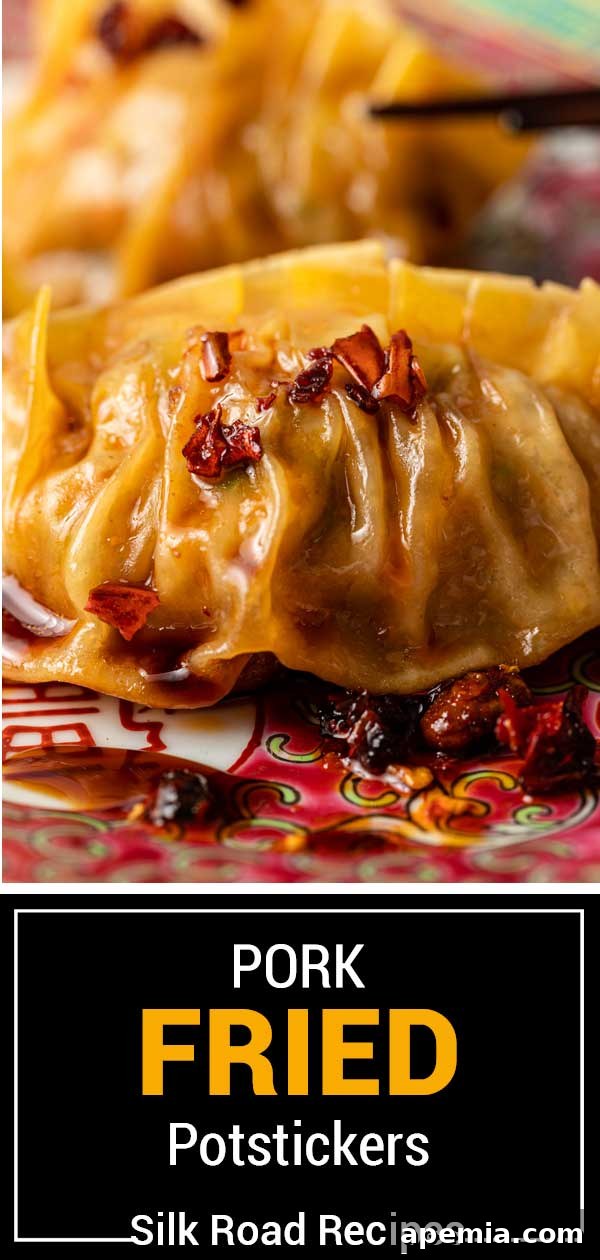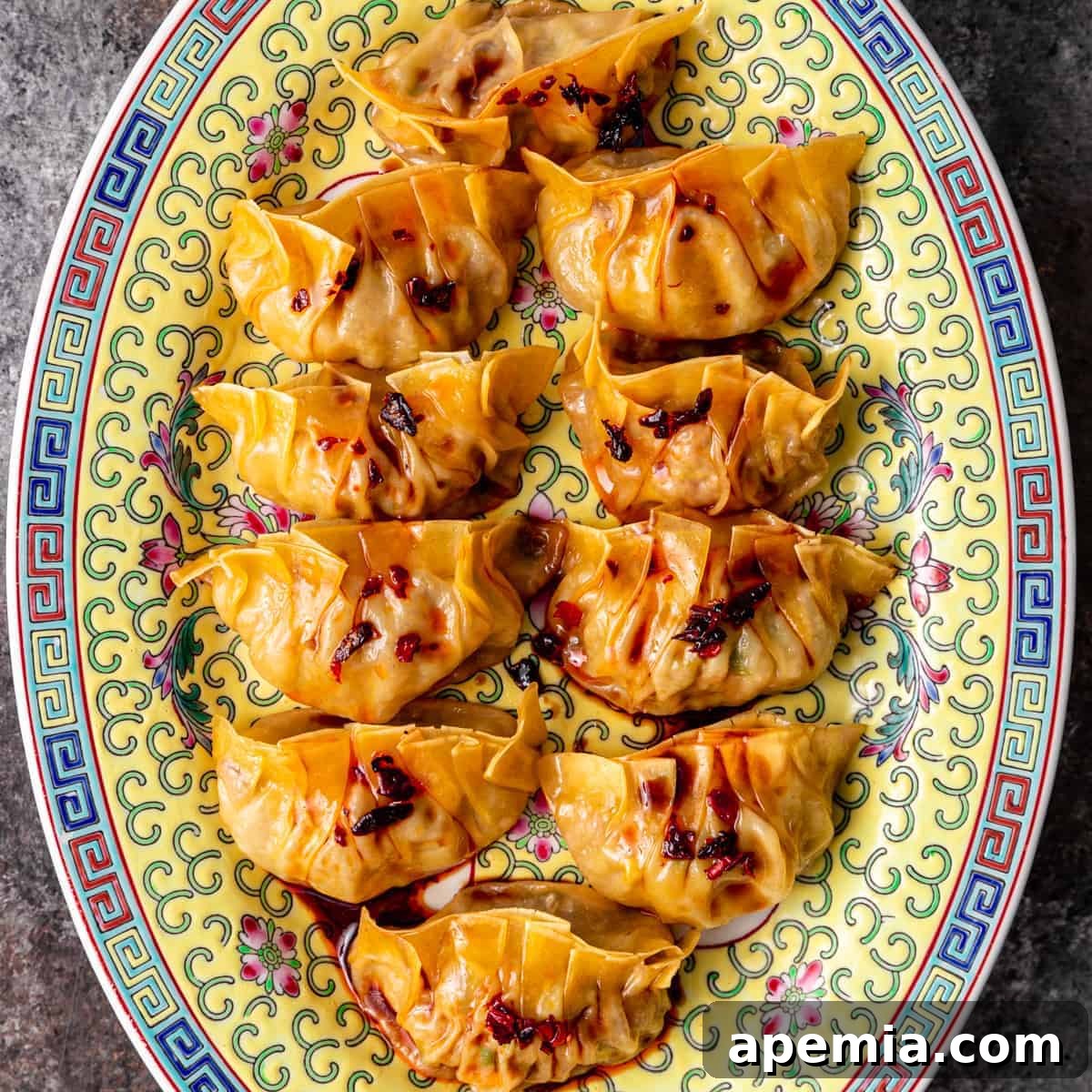
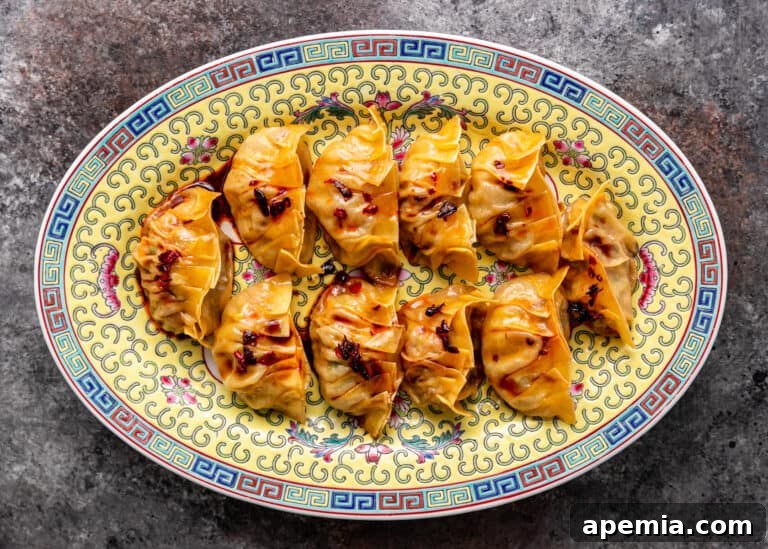
Embark on a culinary journey to create the most exquisite Pork Pot Stickers right in your own kitchen. This definitive recipe delivers tender, succulent dumplings, each encased in a delicate wrapper and boasting a gloriously crispy, golden-brown bottom. A quintessential Asian dim sum appetizer, these pot stickers are not only visually stunning but also undeniably delicious, making them the perfect choice for a festive breakfast, holiday gatherings, or any special occasion that calls for an extraordinary culinary treat.
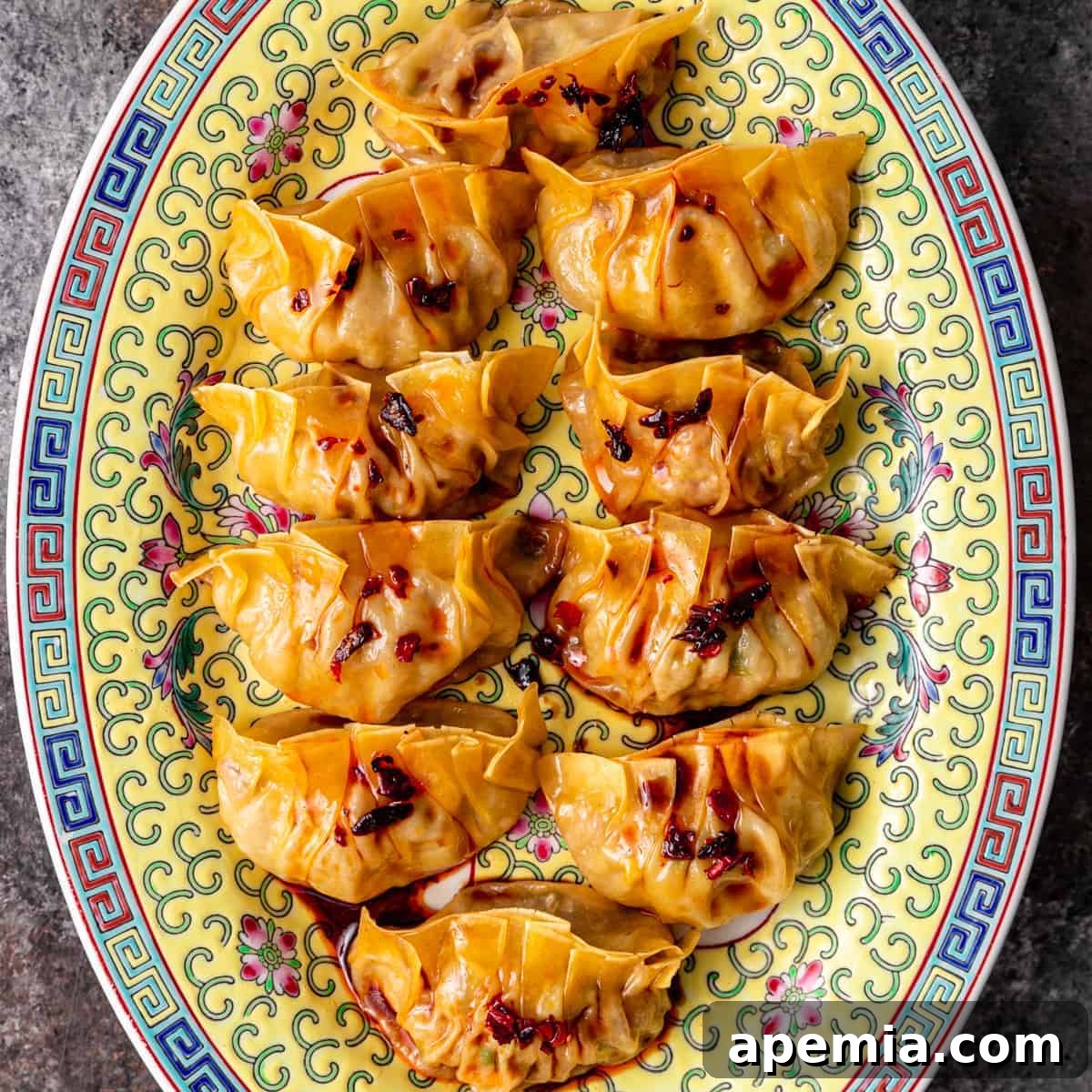
A Culinary Journey: My Love Affair with Dim Sum and Pot Stickers
My first unforgettable encounter with these delectable pork pot stickers was at the renowned Yet Wah restaurant in San Francisco, and from that moment, I was completely captivated. Years later, my travels took me to China, where I embarked on a mission to sample every type of dim sum imaginable across Beijing, Xi’an, Chongqing, and Shanghai. Each region offered its own unique twist, but the most memorable seafood dumplings hailed from a bustling dim sum house in Hong Kong – the freshness was simply unparalleled!
Dim sum, a beloved tradition of small, flavorful dishes, truly offers a world of culinary delights. From savory pork shumai and aromatic char siu bao to crispy egg rolls and comforting wontons, there’s a perfect bite for every palate and occasion. Whether you’re hosting a casual get-together with friends or a more formal cocktail party, dim sum provides an elegant yet approachable selection. Later, during my time living in San Diego, a visit to Jasmine on Convoy Street for their exquisite dim sum spread became a cherished ritual. I wholeheartedly recommend it if you ever find yourself in the area – it’s an authentic experience you won’t want to miss!
Unlock the Secrets: Watch the Step-by-Step Video!
Visual learners, rejoice! To truly master the art of making these beautiful dumplings, be sure to check out the detailed how-to video in the recipe card below. It covers all the essential techniques and tips to guide you through each stage of the process, ensuring your pot stickers turn out perfectly every time.
The Irresistible Allure of Pork Pot Stickers: A Taste of Tradition
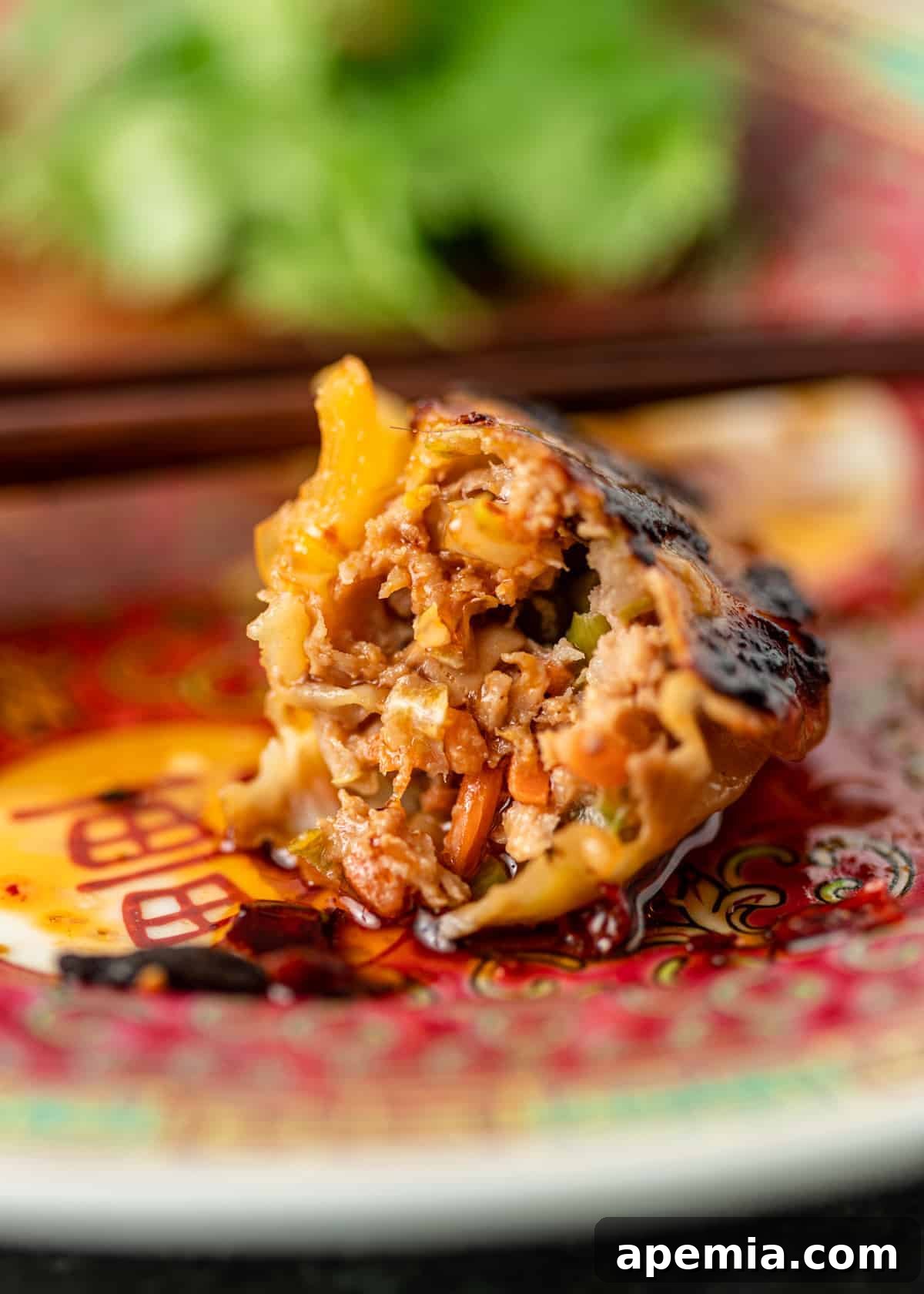
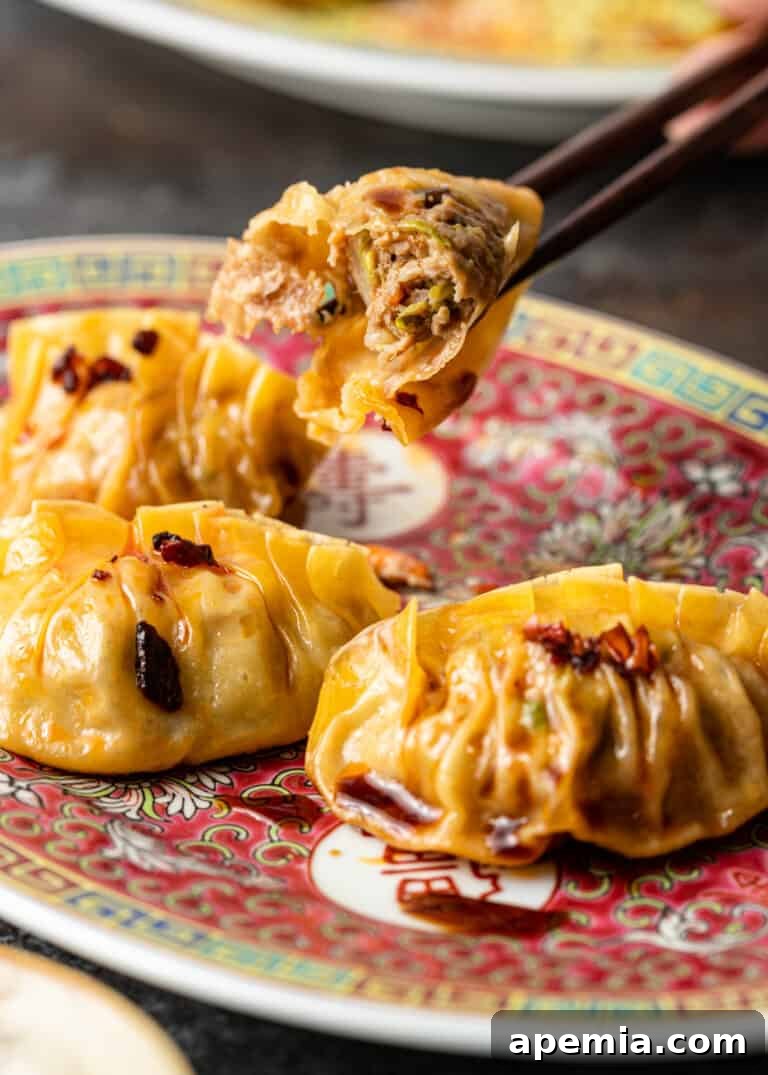
These savory pork pot stickers stand as a testament to traditional Chinese cuisine, boasting a culinary legacy with remarkable staying power. Prepare yourself for a symphony of textures and flavors: soft, delightfully chewy dumpling wrappers embrace a rich, mouthwatering filling of seasoned pork and fresh vegetables. The magic happens during the cooking process, where the bottoms are expertly pan-fried to achieve an irresistible crispy perfection before being steamed to ensure a tender, juicy interior. The result is a true work of edible art, offering a harmonious blend of textures that will tantalize your taste buds.
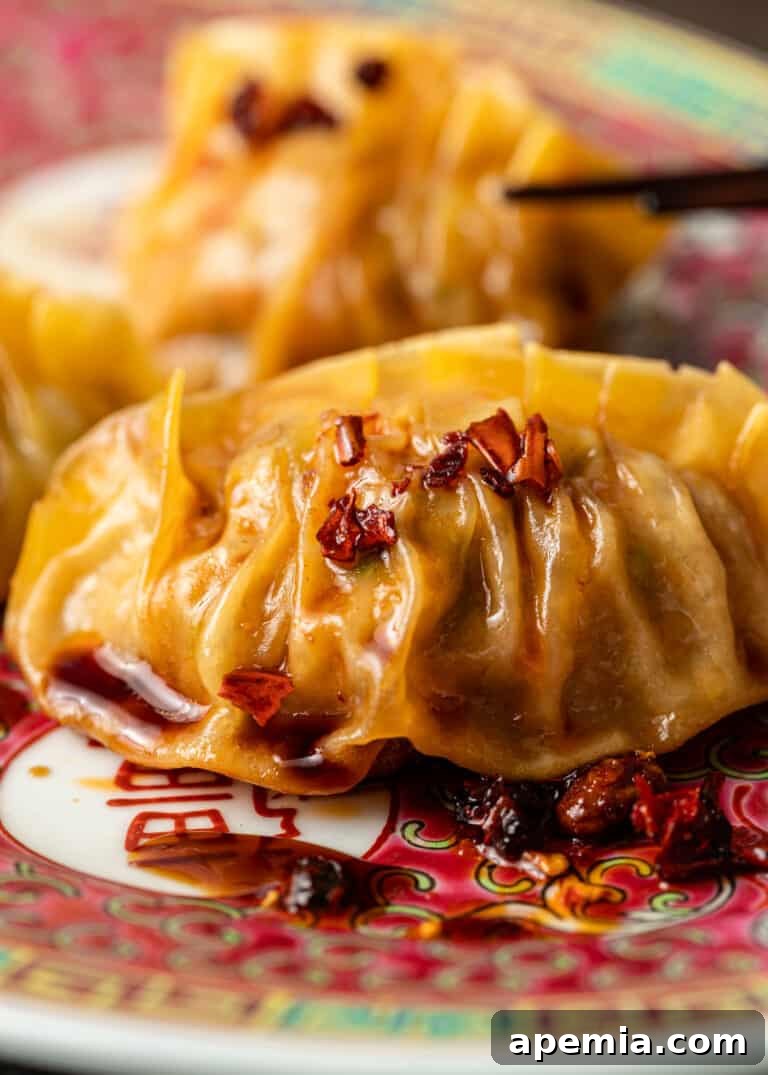
For an elevated experience, I absolutely love to anoint my freshly cooked pot stickers with a generous dollop of my homemade Ultimate Spicy Chili Crisp. The combination of savory pork, delicate wrapper, crispy bottom, and fiery chili crisp is simply divine – a bite that demands to be devoured!
A Culinary Legend: The Origin of Pot Stickers
While the precise origin of pot stickers remains shrouded in some mystery, historical records trace the earliest versions of these beloved dumplings all the way back to China’s illustrious Song Dynasty (960 – 1280 A.D.). The most enduring and widely circulated myth recounts a fortunate culinary accident. The story goes that a diligent chef in the Imperial court, momentarily distracted, stepped away from his wok for too long. Upon his return, he discovered that his dumplings had become “stuck to the pot,” their bottoms charred and adhered to the surface. Rather than discarding them, he ingeniously salvaged the dish by adding water and covering the wok, allowing them to steam. To his delightful surprise, these crispy-bottomed, steamed dumplings were an instant hit, transforming a near-disaster into a delicious innovation. What a truly tasty accident, giving birth to one of the world’s most cherished appetizers!

Table of Contents
- Watch the Step-by-Step Video!
- Ingredient Notes and Substitutions
- How to Make Pork Pot Stickers
- Expert Tips for Perfect Pot Stickers
- Frequently Asked Questions
- Pork Pot Stickers Recipe
If you’re eager to explore more Asian-inspired pork creations, be sure to check out my other delectable recipes, including Moo Shu Pork, a flavorful Pork and Eggplant Stir Fry, and the iconic Chinese BBQ Pork (Char Siu). Each offers a unique taste of Asian culinary excellence.
Ingredient Notes and Substitutions for Flavorful Pot Stickers
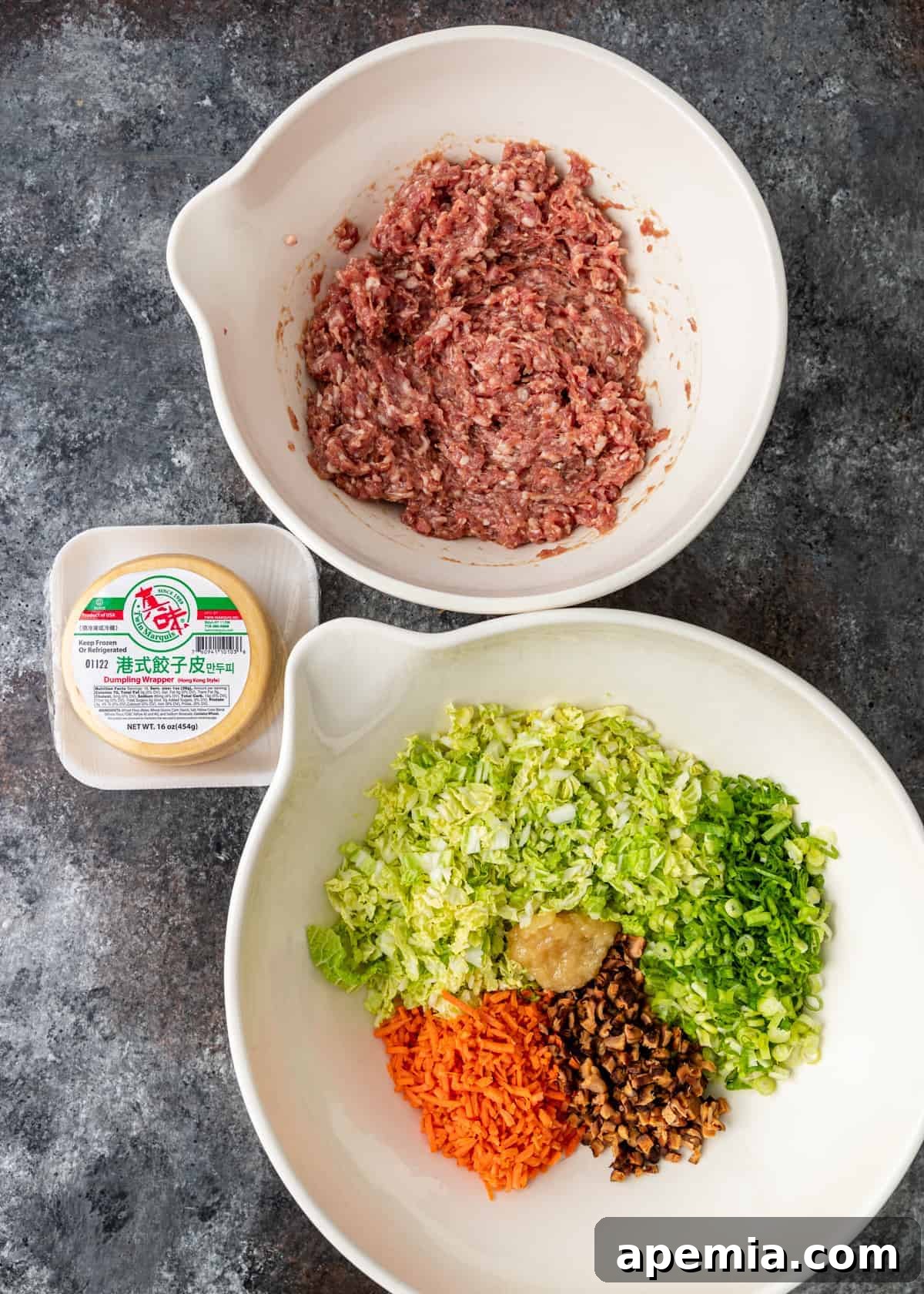
- Ground Pork – For the juiciest pot stickers, I recommend using ground pork that isn’t excessively lean. To ensure the pork remains tender and succulent throughout the cooking process, I always incorporate a tablespoon of peanut oil into the mixture. This adds moisture and a subtle nutty flavor. If you prefer, ground chicken or shrimp can also be used for a different flavor profile.
- The Heart of the Filling – My chosen classic filling combines tender Napa cabbage, sweet carrots, and earthy dried shiitake mushrooms. This trio provides a balanced texture and deep flavor. However, feel free to get creative and incorporate other vegetables you enjoy, such as water chestnuts for crunch, finely diced bamboo shoots, or even spinach. If dried mushrooms aren’t readily available, fresh shiitake or oyster mushrooms can be used; simply sauté them lightly before adding to the mix to remove excess moisture.
- Dumpling Wrappers – Unless you have an abundance of time and a passion for making dough from scratch, I wholeheartedly recommend opting for high-quality premade wrappers. Look for “potsticker dough” specifically, as these are typically thicker and more pliable than wonton wrappers, holding up better to the pan-frying and steaming method. You can find them fresh or frozen at your local Asian market. If using frozen, make sure to thaw them completely in the refrigerator before use.
How to Make Pork Pot Stickers: A Step-by-Step Guide
- Prepare the Shiitake Mushrooms: Begin by placing the dried shiitake mushrooms in a small heatproof bowl. Pour enough hot water over them to fully submerge, then place a small plate or lid on top to keep them immersed. Allow them to soak for approximately 20 minutes, or until they are completely softened. Once rehydrated, drain the mushrooms, rinse them thoroughly under cold water, and firmly squeeze out any excess liquid. Carefully remove and discard the tough stems. Finally, cut the mushroom caps into thin diagonal strips, then rotate them 90 degrees and chop finely into small, consistent bits.
- Combine Pork & Peanut Oil: In a large mixing bowl, add the ground pork. Drizzle one tablespoon of peanut oil over the pork. Using your hands or a sturdy spoon, mix the pork and oil thoroughly until evenly combined. This step is crucial for achieving a juicy and tender filling.
- Create the Flavorful Filling: To the pork mixture, add the rice wine (or dry sherry), water, cornstarch, sesame oil, soy sauce, kosher salt, and white pepper. Mix vigorously until all these seasonings are fully incorporated into the pork. Next, fold in the shredded Napa cabbage, finely chopped carrots, chopped green onions, prepared shiitake mushrooms, and fresh ginger paste. Continue to mix until all ingredients are evenly distributed throughout the filling, ensuring every bite will be bursting with flavor.
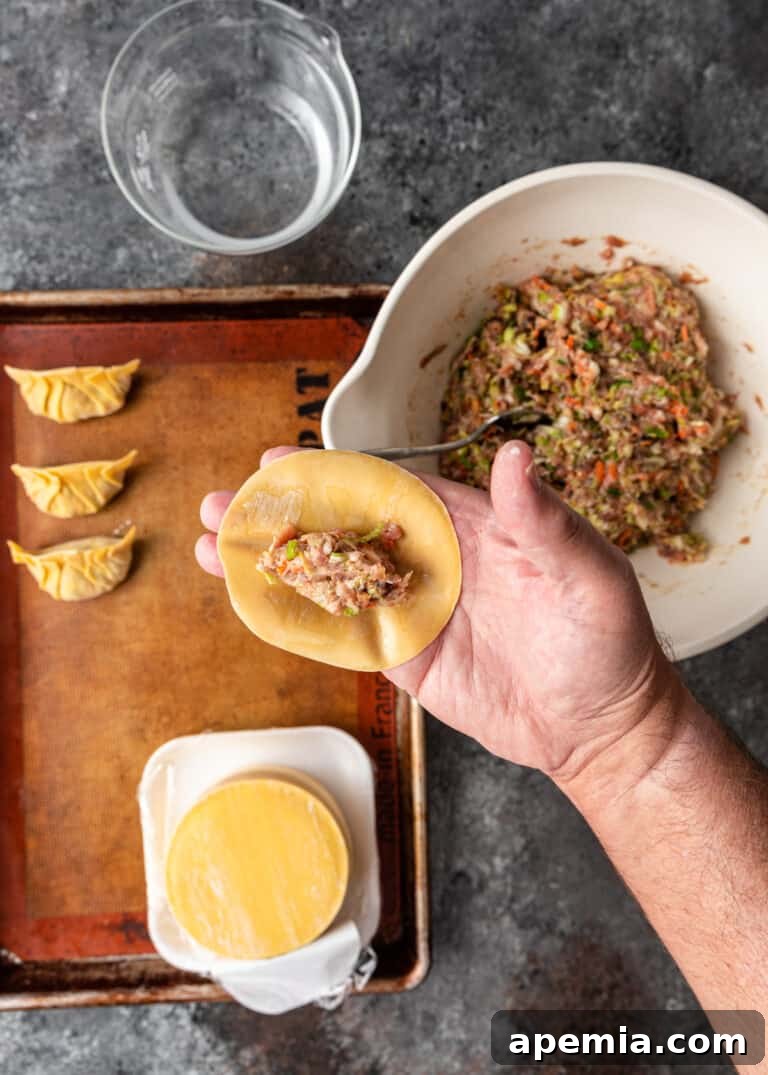
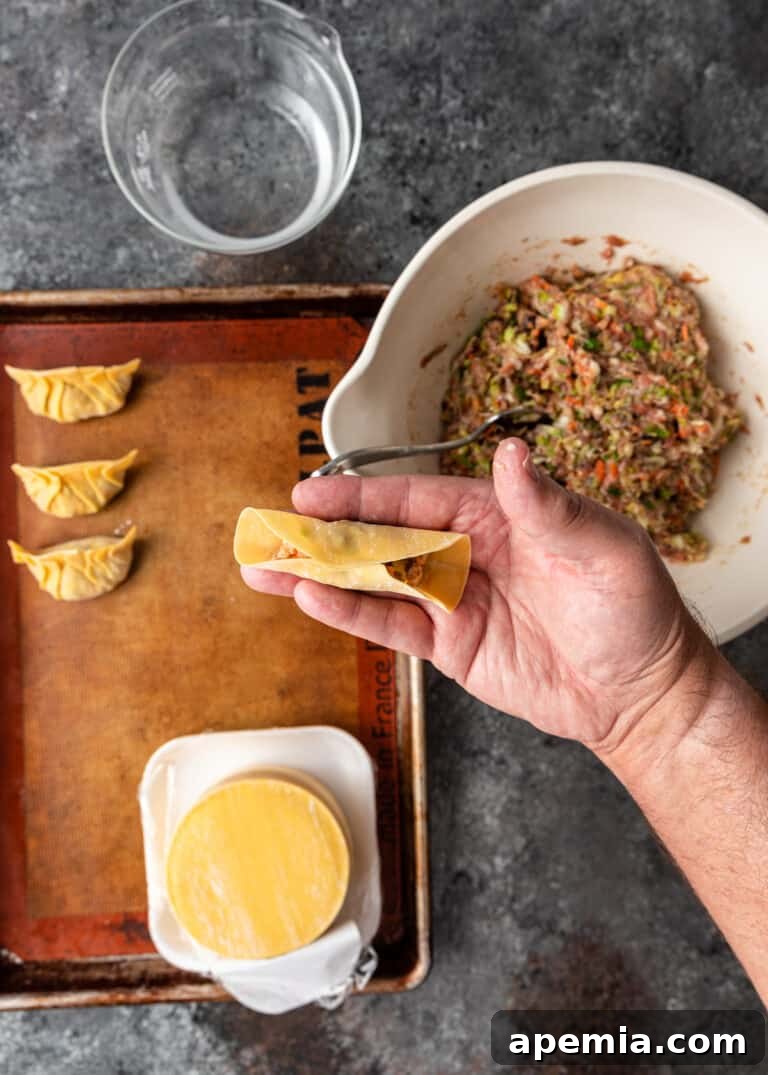
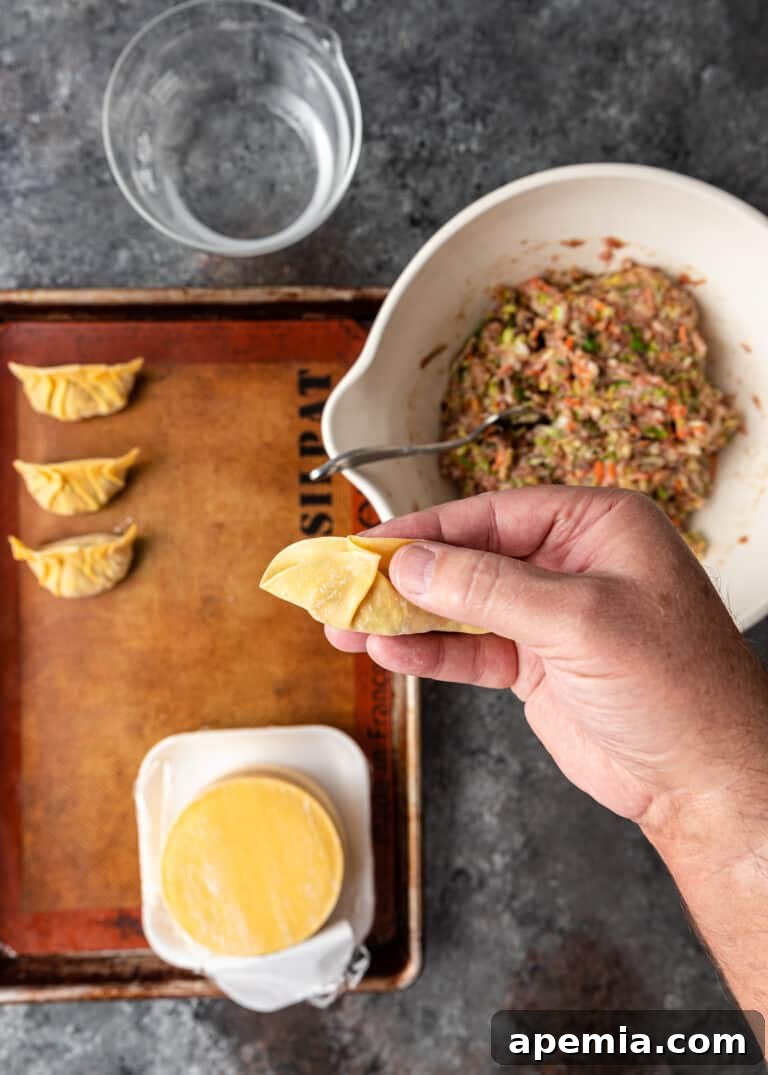
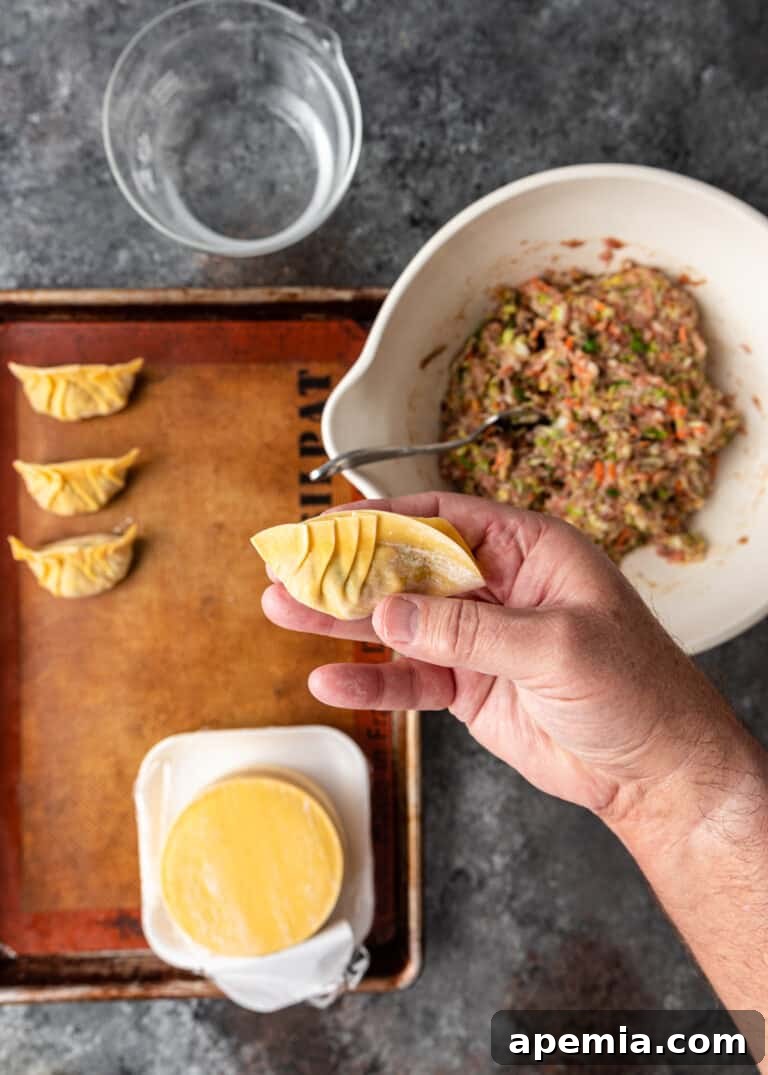
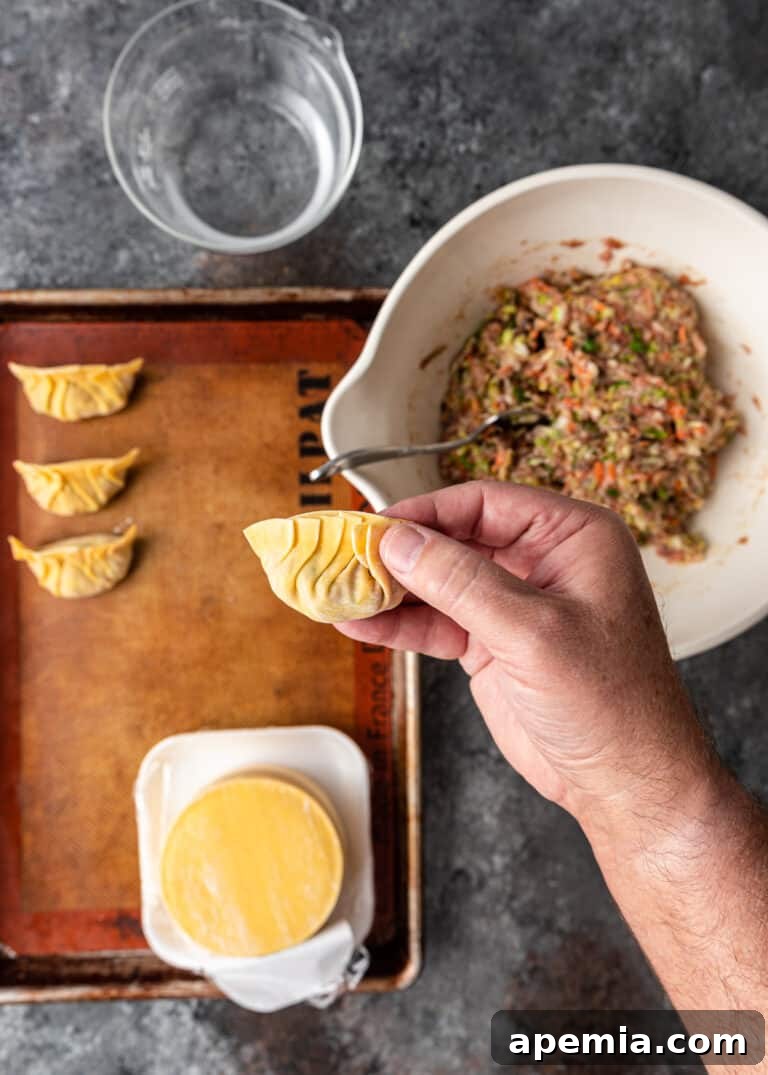
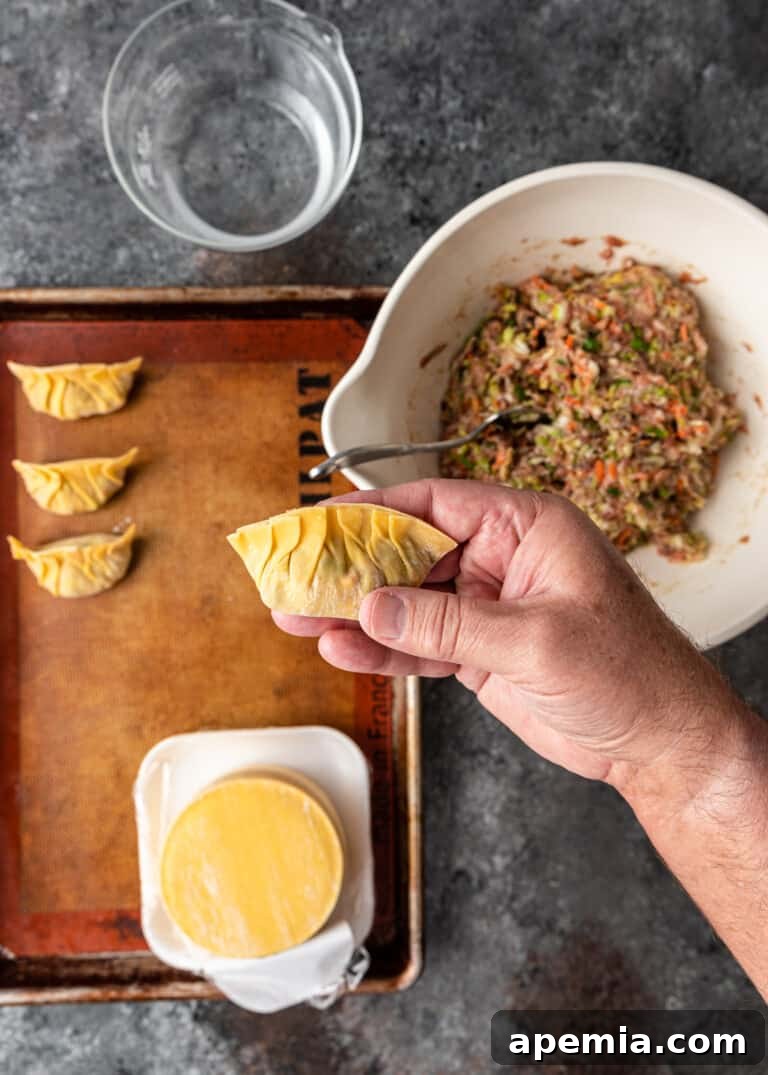
- Fill and Seal the Dough Rounds: If you’re using store-bought dough rounds, lightly moisten the outer edge of each wrapper with water using your finger. This helps with sealing. If you’re working with fresh, pliable wrappers, this step may not be necessary. Place approximately one generous tablespoon of the pork and vegetable mixture into the very center of each dough round. Gently fold the dough round in half, forming a taco-like shape. Pinch the center firmly to seal it, but leave the outside edges open for now – these are where the pleats will be formed.
- Master the Pleating Technique: This step gives pot stickers their distinctive beautiful shape. Focus on one side of the dumpling at a time. Hold the pinched center of the pot sticker with one hand. With your other hand, typically your left, gently pull a small section of the dough towards the center, creating a small fold or pleat. Pinch this pleat firmly against the sealed center edge. Repeat this action, creating about 3-4 pleats along the left side, each overlapping slightly and moving towards the center. Once the left side is done, switch hands or adjust your grip, and repeat the pleating process on the right side of the pot sticker, ensuring the pleats also move towards the center and seal securely. The goal is to create a crescent-shaped dumpling with a ruffled edge.
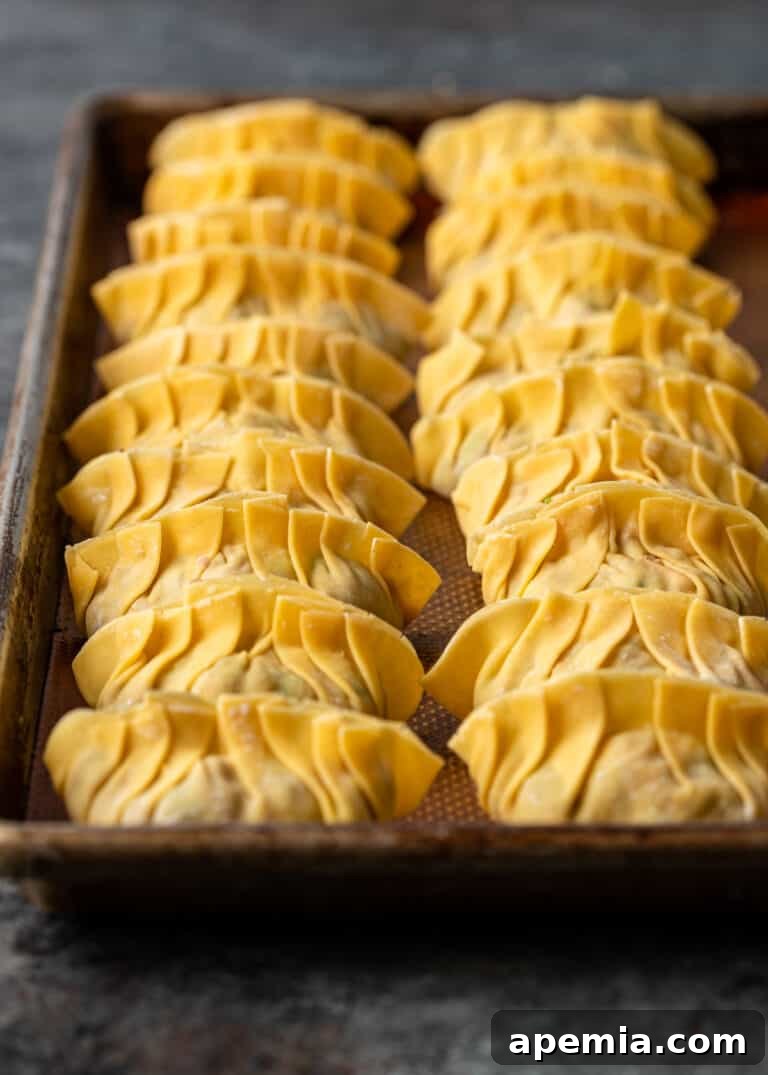
- Arrange and Prepare for Cooking: As you finish each dumpling, carefully transfer it to a baking sheet lined with parchment paper to prevent sticking. Gently press down on the bottom of each pot sticker to create a flat base; this is crucial for achieving that characteristic crispy bottom. Cover the entire pan with a clean kitchen towel to prevent the wrappers from drying out while you continue filling and pleating the remaining pot stickers.
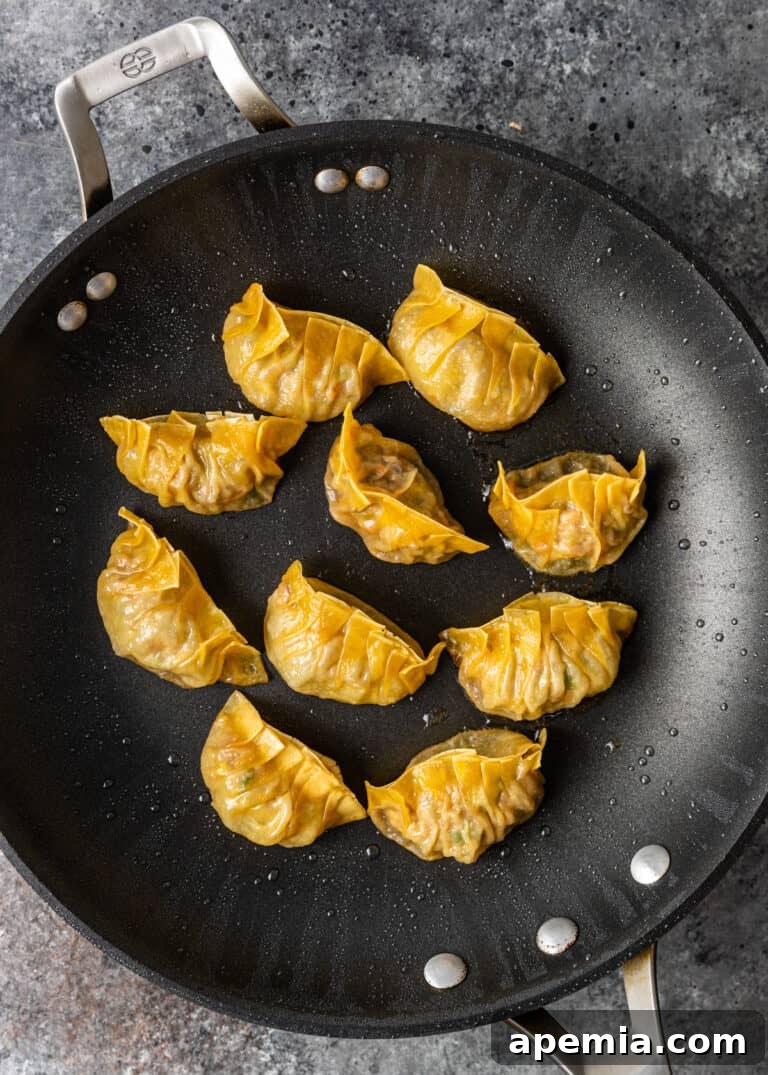
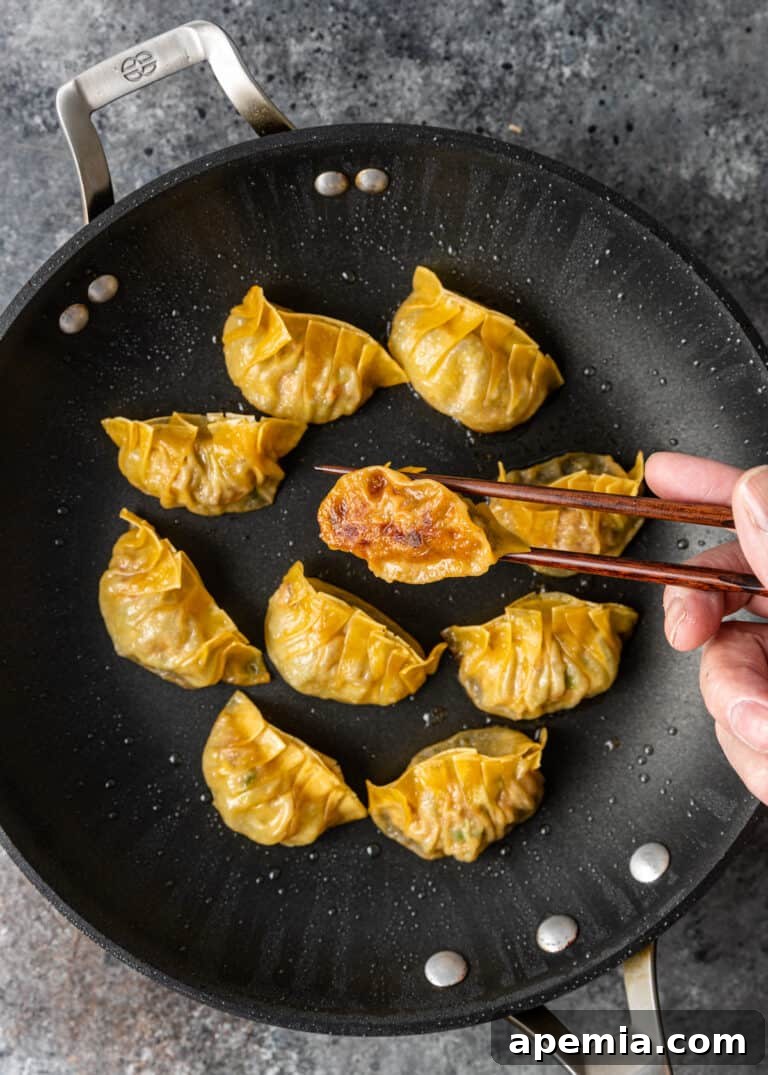
- Pan-Fry for Golden Crispy Bottoms: Heat a large, non-stick skillet or a well-seasoned wok over high heat until it’s very hot. Add about one tablespoon of peanut oil (per batch), tilting the pan to ensure the entire bottom surface is evenly coated. Carefully place approximately 12 pot stickers, in a single layer with their pleated edges facing upwards, into the hot pan. Fry for about 2-3 minutes, or until their bottoms turn a beautiful, deep golden-brown and are wonderfully crispy. This initial fry is key to their signature texture.
- Steam for a Tender Finish: With caution and speed, pour exactly ¼ cup of water into the hot pan around the pot stickers. Immediately cover the pan tightly with a lid. Reduce the heat to medium and allow the pot stickers to steam for about 5-6 minutes. The steam will cook the pork filling thoroughly and soften the upper part of the wrappers. After steaming, remove the lid and continue to cook for another minute or so, allowing any remaining water to evaporate completely. This final step helps re-crisp the bottoms. Remove the cooked pot stickers from the pan and transfer them to a serving platter. Repeat the frying and steaming process with the remaining batches, adding fresh peanut oil and water as needed for each new batch.
- Serve with Zest: Serve your warm, freshly made pot stickers immediately with a variety of complementary dipping sauces. My absolute favorite is my Ultimate Chili Crisp recipe, which adds a fantastic layer of spicy, crunchy flavor! You can also offer a simple mix of soy sauce, rice vinegar, and a dash of sesame oil.
Tip From Kevin
Expert Tips for Perfect Pot Stickers: Mastering the Art of Dumpling Making
- Potstickers vs. Other Dumplings: It’s helpful to understand the distinctions. Potstickers are uniquely pan-fried first to achieve a crispy bottom, then steamed to ensure a tender, juicy filling. This dual cooking method is their defining characteristic.
- Wontons Explained: Another popular Chinese dumpling, Wontons typically feature a much thinner wrapper and are almost always served in a flavorful broth or deep-fried until very crispy. Their delicate nature makes them unsuitable for the pan-fry-then-steam method of pot stickers.
- Gyoza – Japan’s Take: Gyoza are Japan’s delicious version of pot stickers. They also share the pan-fry-then-steam cooking method but generally use an even thinner wrapper than Chinese pot stickers and are often shaped longer and more slender, resulting in a slightly different texture and mouthfeel.
- Preventing Soggy Pot Stickers: The primary culprit for soggy pot stickers is excess moisture in the cabbage filling. To combat this, after finely shredding your Napa cabbage, lightly toss it with a pinch of salt. Transfer the salted cabbage to a colander and place it in your kitchen sink. Allow it to drain for at least 30 minutes (or even an hour) as the salt draws out significant amounts of water. Before mixing with the pork, squeeze the cabbage firmly with your hands to remove as much liquid as possible.
- Achieving the Perfect Crispy Bottom: Don’t overcrowd the pan! Cook pot stickers in batches to ensure even browning. Make sure your skillet is very hot before adding the oil and dumplings. The initial pan-frying should be quick and intense to achieve that beautiful golden crust.
- Freezing Pot Stickers for Later: Pot stickers freeze wonderfully! Arrange uncooked pot stickers in a single layer on a parchment-lined baking sheet and freeze until solid (about 1-2 hours). Once frozen, transfer them to an airtight freezer-safe bag or container. They can be stored for up to 2-3 months. When ready to cook, fry them directly from frozen, adding an extra 1-2 minutes to the steaming time.
- Dipping Sauce Variations: While the classic soy-sesame-vinegar-chili crisp is superb, feel free to experiment. Try adding minced garlic, a touch of sugar, or a squeeze of lime juice for different flavor profiles.
Frequently Asked Questions About Pork Pot Stickers
Yes and no, it’s a matter of categorization. All pot stickers are a type of dumpling, but not all dumplings are pot stickers. Think of it like squares and rectangles: all squares are rectangles, but not all rectangles are squares.
Specifically, pork pot stickers are a distinctive variety of Chinese dumpling characterized by their unique cooking method: they are pan-fried first until their bottoms are wonderfully crispy and golden brown, then steamed to ensure the filling is cooked through and tender. They are renowned for their delicate yet sturdy wrappers and the satisfying contrast of textures.
The term dumpling, on the other hand, is a much broader culinary category. It encompasses a vast array of stuffed, doughy delights found in cuisines worldwide. Depending on the culture and recipe, dumplings can be baked, boiled, steamed, deep-fried, or pan-fried, and their fillings can vary from savory meats and vegetables to sweet fruits and cheeses.
A common culprit for soggy pot sticker bottoms is excessive moisture in the filling, particularly from the cabbage. Napa cabbage, while delicious, contains a significant amount of water that can release during cooking, leading to a less-than-crispy result.
To effectively prevent this, I highly recommend a simple pre-treatment for your cabbage: after shredding it, gently toss the cabbage with a generous pinch of salt. Then, transfer the salted cabbage to a colander and let it sit in your sink for at least 30 minutes. This allows the salt to draw out and drain away much of the excess moisture. Before adding the cabbage to your pork mixture, make sure to squeeze it firmly with your hands to extract any remaining liquid.
Pork pot stickers are incredibly versatile! They make a fantastic standalone snack or appetizer, but they also integrate beautifully into a larger, Asian-themed meal. Here are some delightful pairing ideas to complement your homemade pot stickers:
- Soups: Begin your meal with a comforting bowl of Hot and Sour Soup, a classic Egg Drop Soup, or the wonderfully textural Sizzling Rice Soup.
- Fresh Salads: Balance the richness of the pot stickers with crisp, refreshing salads like the Japanese-inspired Sunomono Salad or a vibrant Chinese Cucumber Salad.
- Other Asian Appetizers: Create an appetizer feast by serving them alongside Crispy Egg Rolls, fresh Spring Rolls, savory Crab Rangoon, or fluffy Scallion Pancakes.
- Main Courses: For a complete meal, pair pot stickers with light yet flavorful main dishes such as Chinese Steamed Chicken, aromatic Lemon Cilantro Meatballs, or your favorite stir-fry.
Share this irresistible recipe on Pinterest!
Loved making these incredible pot stickers? Share the joy and inspire others by pinning this recipe to your favorite boards on Pinterest!
This recipe post, originally published on Silk Road Recipes in October 2021, has been thoroughly updated with fresh content, new photos, and a detailed video tutorial in October 2023 to bring you the best possible guide to making perfect pork pot stickers.
Pork Pot Stickers
48
40
15
55
PrintRecipe
Video Tutorial
Watch the detailed video tutorial for making these pork pot stickers:
Click to watch the full recipe video!
Ingredients
- 1 lb ground pork
- 1 tbsp peanut oil
- 6 dried black mushrooms (shiitake)
- 1 tbsp rice wine or dry sherry
- 1 tbsp water
- 2 tbsp soy sauce
- 1 tsp cornstarch
- 1 tsp sesame oil
- 1/2 tsp kosher salt
- 1/8 tsp white pepper
- 2 cups Napa cabbage (sliced thin, chopped and salted – see Note 2)
- 1 carrot (shredded, finely chopped)
- 4 green onions (finely chopped)
- 2 tbsp ginger paste
- 48 dumpling wrappers (fresh or frozen/thawed)
Cooking (per batch)
- 1 tbsp peanut oil
- 1/4 cup water
Dipping Sauce (per person)
- 1 tsp soy sauce
- 1 tsp sesame oil
- 1 tsp red wine vinegar
- 1 tsp chili crisp (or chili paste)
Instructions
-
In a small bowl, soak dried black mushrooms in hot water, ensuring they are submerged, for 20 minutes or until soft. Drain, rinse well, and squeeze out excess water. Remove and discard stems. Chop mushroom caps into thin diagonal strips, then rotate 90° and finely chop.
-
Thoroughly combine ground pork in a large bowl with 1 tablespoon of peanut oil. (See Note 1 for explanation)
-
Add rice wine, water, soy sauce, cornstarch, sesame oil, salt, and white pepper to the seasoned ground pork and mix thoroughly until well combined. Transfer the prepared cabbage, carrot, mushrooms, green onions, and ginger to the pork mixture. Mix all ingredients thoroughly to create a cohesive filling.
-
If using store-bought potsticker dough rounds, lightly wet the outer edge of each wrapper with water. This step is not necessary if using fresh, pliable wrappers. Place approximately 1 tablespoon of the pork mixture in the center of a potsticker dough round. Fold the dough round in half like a taco and firmly pinch the very center together, leaving the left and right sides open for pleating.
-
To create the pleats: Hold the pinched center of the dough with your right thumb. Using the thumb and index finger of your left hand, gently push the dough to create a small pleat to the left of the center, and seal it to the right, against the pinched center. Move your right thumb over the new pleat and continue using your left thumb and index finger to create additional pleats, pushing the dough from the left side towards the center and sealing them, until you reach the end of the left side (aim for about 4 pleats). Now, repeat the same pleating process for the right side of the pot sticker, ensuring all pleats move towards the center and are securely sealed.
-
Place each finished pot sticker, with its pleated edge facing up, on a parchment paper-lined cookie sheet to prevent sticking. Gently press down on the dumpling to flatten its bottom. Cover the cookie sheet with a clean towel to keep the wrappers from drying out while you continue filling and pleating the remaining dough rounds and filling.
-
Heat a large skillet (or wok) over high heat until it is very hot. Add about 2 tablespoons of peanut oil, tilting the skillet to thoroughly coat the bottom surface. Carefully place approximately 12 pot stickers in a single layer into the hot pan, ensuring their pleated sides are facing upwards. Fry for 2 to 3 minutes, or until the bottoms are beautifully golden brown and crispy.
-
Next, carefully but quickly pour about 1/4 cup of water into the pan. Immediately cover the pan tightly with a lid, reduce the heat to medium, and allow the pot stickers to steam for 5 to 6 minutes. This step cooks the filling. Remove the lid and continue to cook for another minute or so, allowing any remaining water to evaporate completely and ensuring the bottoms re-crisp. Transfer the cooked pot stickers to a plate and keep them warm. Repeat the cooking process with the remaining batches of pot stickers, adding fresh peanut oil and water as needed.
-
Serve your delicious pot stickers immediately with your chosen dipping sauce and a sprinkle of chopped cilantro as a fresh garnish. Enjoy!
Notes
- Ground pork typically has a fat content of about 90/10 (10% fat). To ensure your pork pot stickers remain incredibly juicy on the inside, I always recommend combining the meat with a tablespoon of peanut oil. This extra fat and moisture prevents the filling from drying out during cooking.
- Cabbage naturally contains a high amount of water, which, if not properly managed, can be released during cooking and lead to pot stickers with undesirable soggy bottoms. To prevent this issue, after finely shredding your Napa cabbage, lightly toss it with some salt. Place the salted cabbage into a colander set over your kitchen sink. Allow it to sit and drain for at least 30 minutes, or even up to an hour; the salt will effectively draw out the excess moisture. Before mixing it with the other filling ingredients, make sure to squeeze the cabbage firmly to extract any remaining liquid.
- NUTRITION INFORMATION: The nutritional data presented is an estimate calculated for a single pork pot sticker, including a typical serving of dipping sauce. Please note that a standard serving size for an appetizer is generally considered to be 3 to 4 dumplings. This information should be considered an estimate and not a substitute for professional nutritional advice.
Nutrition Information
Calories: 57kcal |
Carbohydrates: 5g |
Protein: 3g |
Fat: 3g |
Saturated Fat: 1g |
Cholesterol: 7mg |
Sodium: 123mg |
Potassium: 52mg |
Fiber: 1g |
Sugar: 1g |
Vitamin A: 234IU |
Vitamin C: 1mg |
Calcium: 9mg |
Iron: 1mg
The information shown is an estimate provided by an online nutrition calculator. It should not be considered a substitute for a professional nutritionist’s advice.
Appetizers, Main Course, Snack
Chinese, Asian
Kevin
Have You Made This Recipe? Let Me Know on Instagram
Tag @keviniscooking or tag me #keviniscooking!