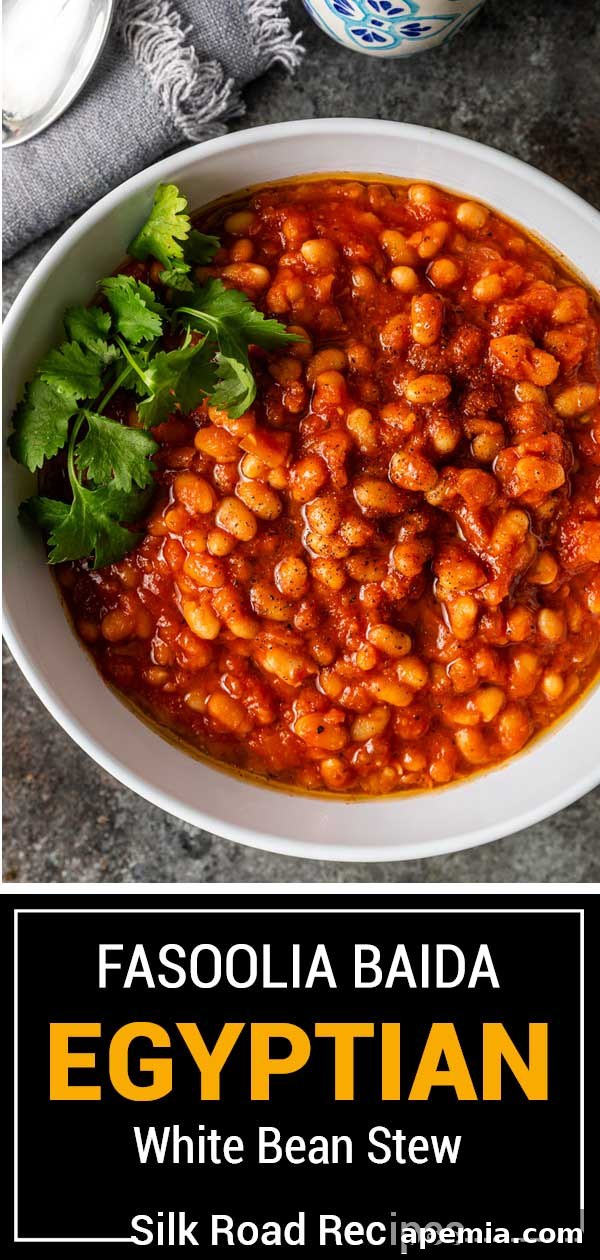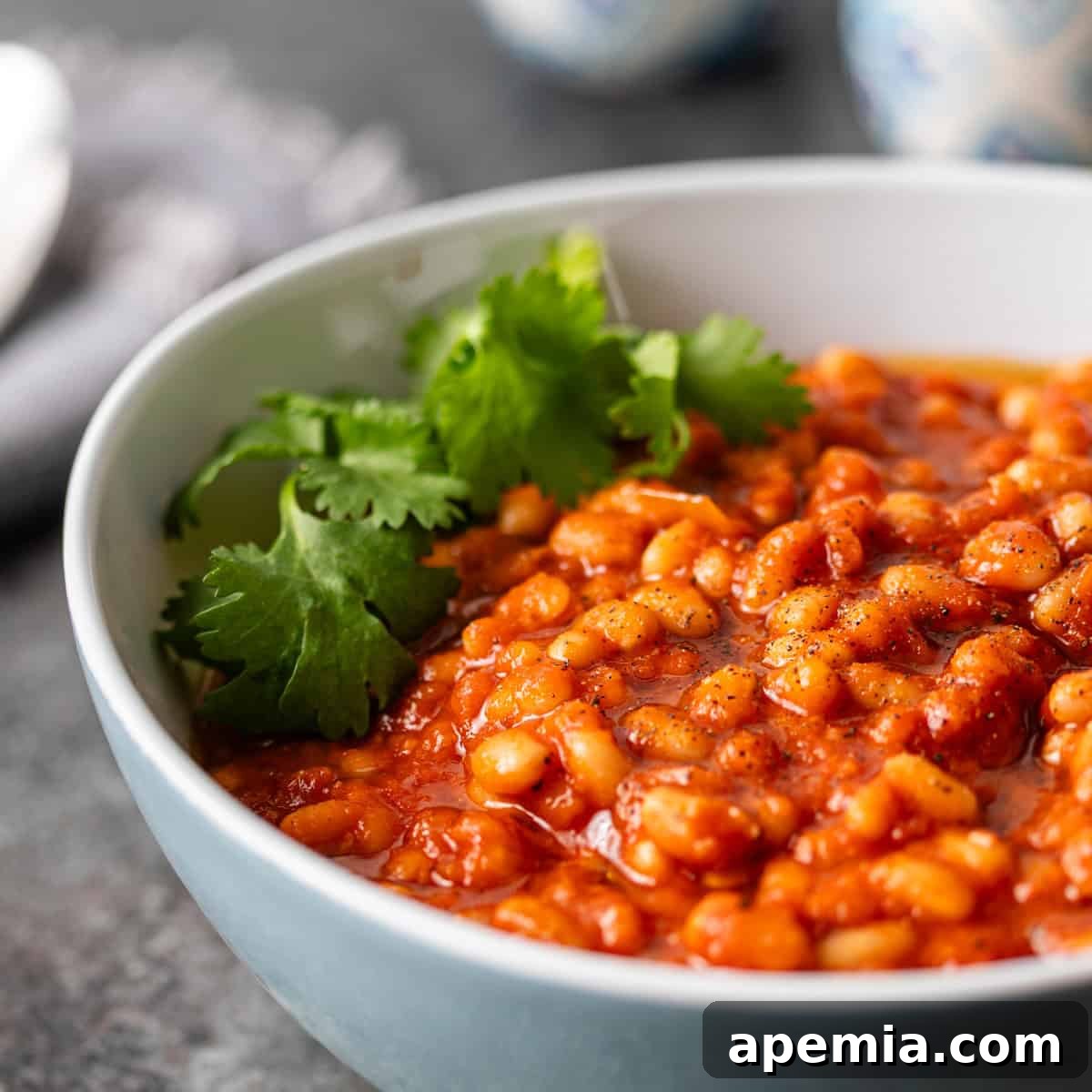
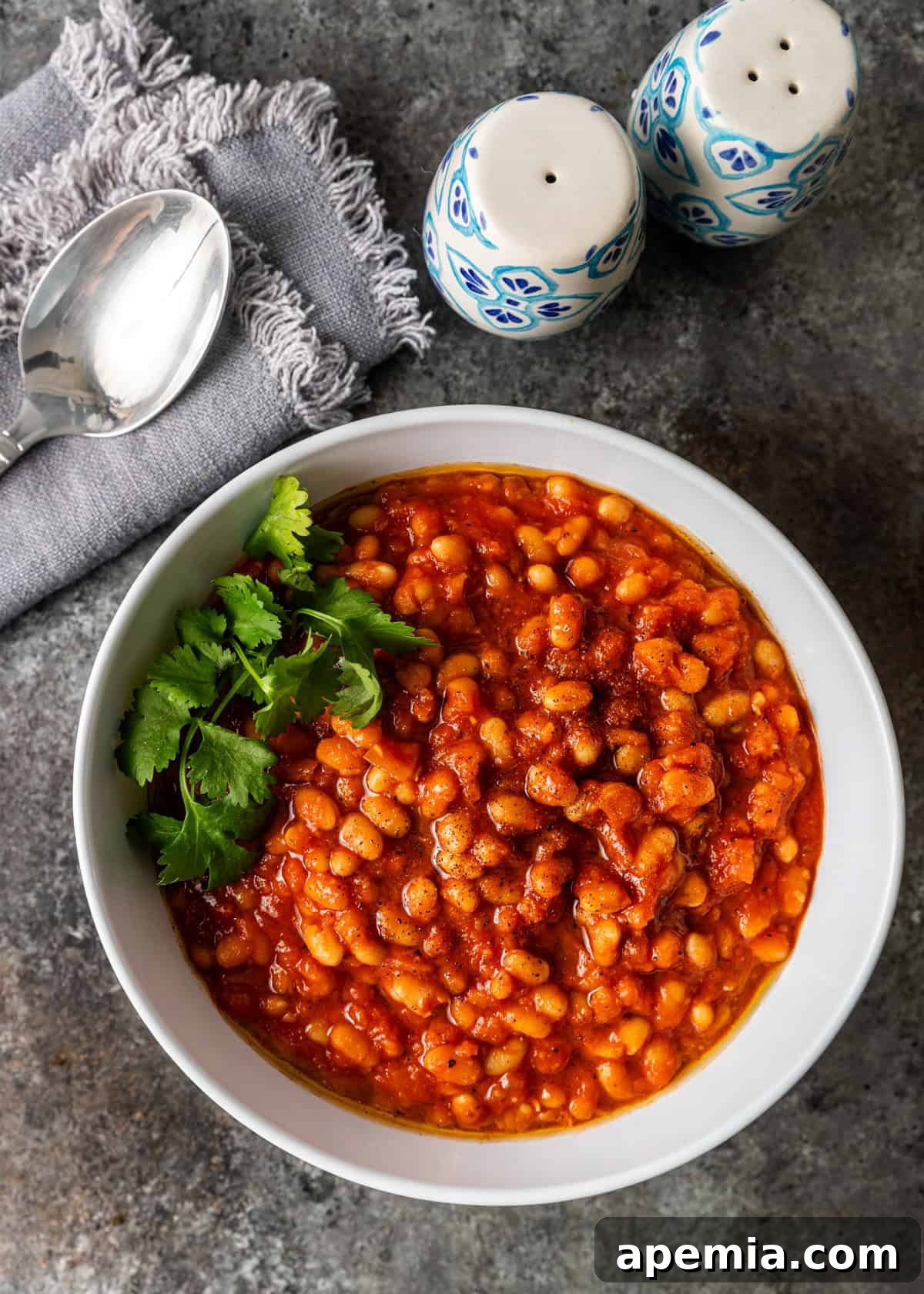
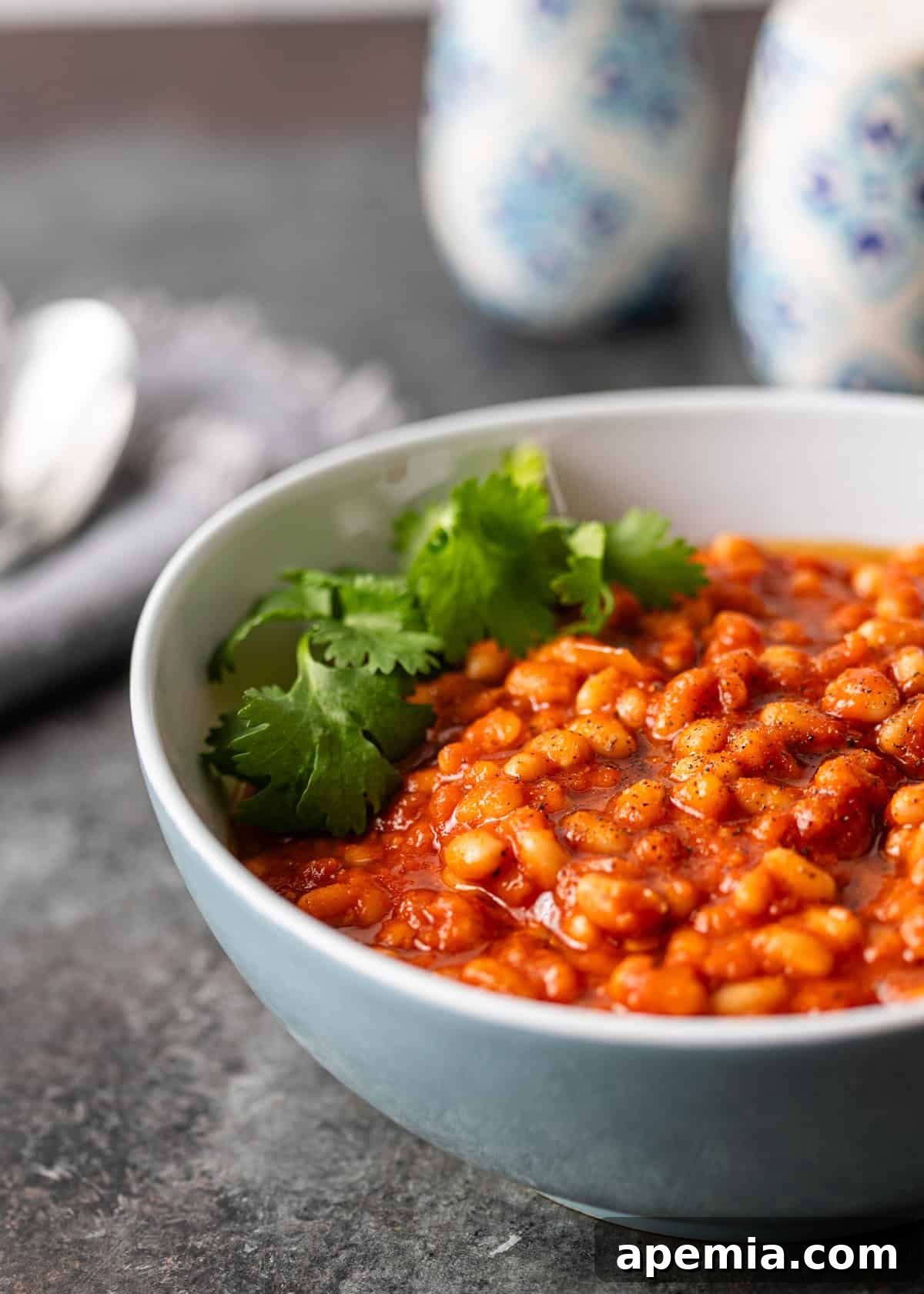
White bean stew, known in Egypt as Fasoolia Baida, is a culinary journey to the heart of Middle Eastern comfort food. This incredibly flavorful dish features tender, creamy white beans lovingly simmered in a robust, spiced tomato broth. Infused with aromatic coriander, earthy cumin, a touch of warming cinnamon, and the savory depth of Maggi seasoning, this stew delivers a rich taste experience. My generous recipe for this cozy Middle Eastern classic yields 6 wholesome servings, making it perfect for family meals or batch cooking.
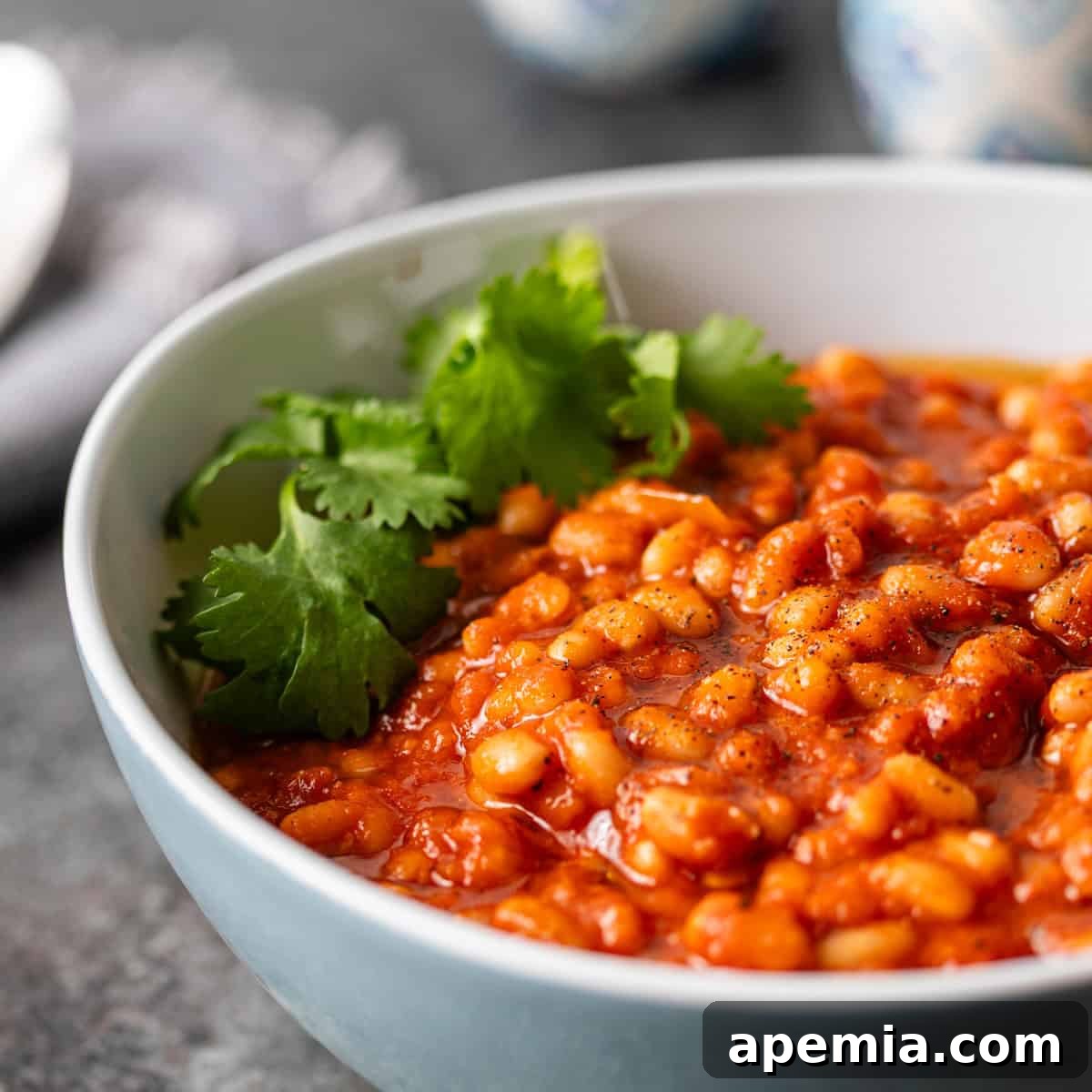
Fasoolia, a beloved staple across the Middle East, is more than just a stew; it’s a celebration of wholesome, delicious ingredients coming together to create a profoundly satisfying meal. Fasoolia baida, which translates directly to “white beans,” aptly names the star of this comforting show. This dish shines as the perfect antidote to chilly weather or a wonderful pick-me-up when you’re feeling under the weather, thanks to its nourishing and soul-warming qualities.
My first encounter with this exquisite stew was during a memorable trip to Egypt. I was immediately captivated by its unique blend of flavors and textures. This particular recipe is a cherished adaptation, generously shared by my talented Egyptian friend, Chef Ahmed Reda. From the very first spoonful, I knew this was a dish I had to share with my community. I’ve taken the liberty to enhance Chef Ahmed’s original with a hint of Baharat spice blend. I find that this versatile Arabic spice mixture elevates the stew’s aromatic profile, adding layers of complexity that truly make it sing. Occasionally, I also incorporate ground lamb or beef (details in the recipe below) to transform it into a more substantial, complete meal rather than just a delightful side dish.
While this recipe focuses on white beans, it’s worth noting that other variations of fasoolia exist, often featuring green beans. As you explore the vast culinary landscapes of Egyptian, Middle Eastern, and North African cuisines, you’ll discover a common thread: an abundance of legumes, fresh vegetables, and a rich tapestry of spices. These ingredients combine to create seriously hearty, filling, and often vegetarian-friendly meals that are both nutritious and incredibly satisfying.
If you’re eager to delve deeper into these vibrant culinary traditions, I highly recommend trying Koshari, Egypt’s national dish, or the comforting Basilla wa Roz (Egyptian Pea Stew with Rice) on your next exploration of Silk Road Recipes. They offer equally delightful and authentic tastes of the region.
Table of Contents
- The Art of Soaking Beans
- Ingredient Spotlight & Substitutions
- How to Make Egyptian White Bean Stew
- Pro Tips for a Perfect Fasoolia
- Recommended Kitchen Tools
- Storing and Reheating Your Stew
- Frequently Asked Questions
- Egyptian White Bean Stew (Fasoolia Baida) Recipe
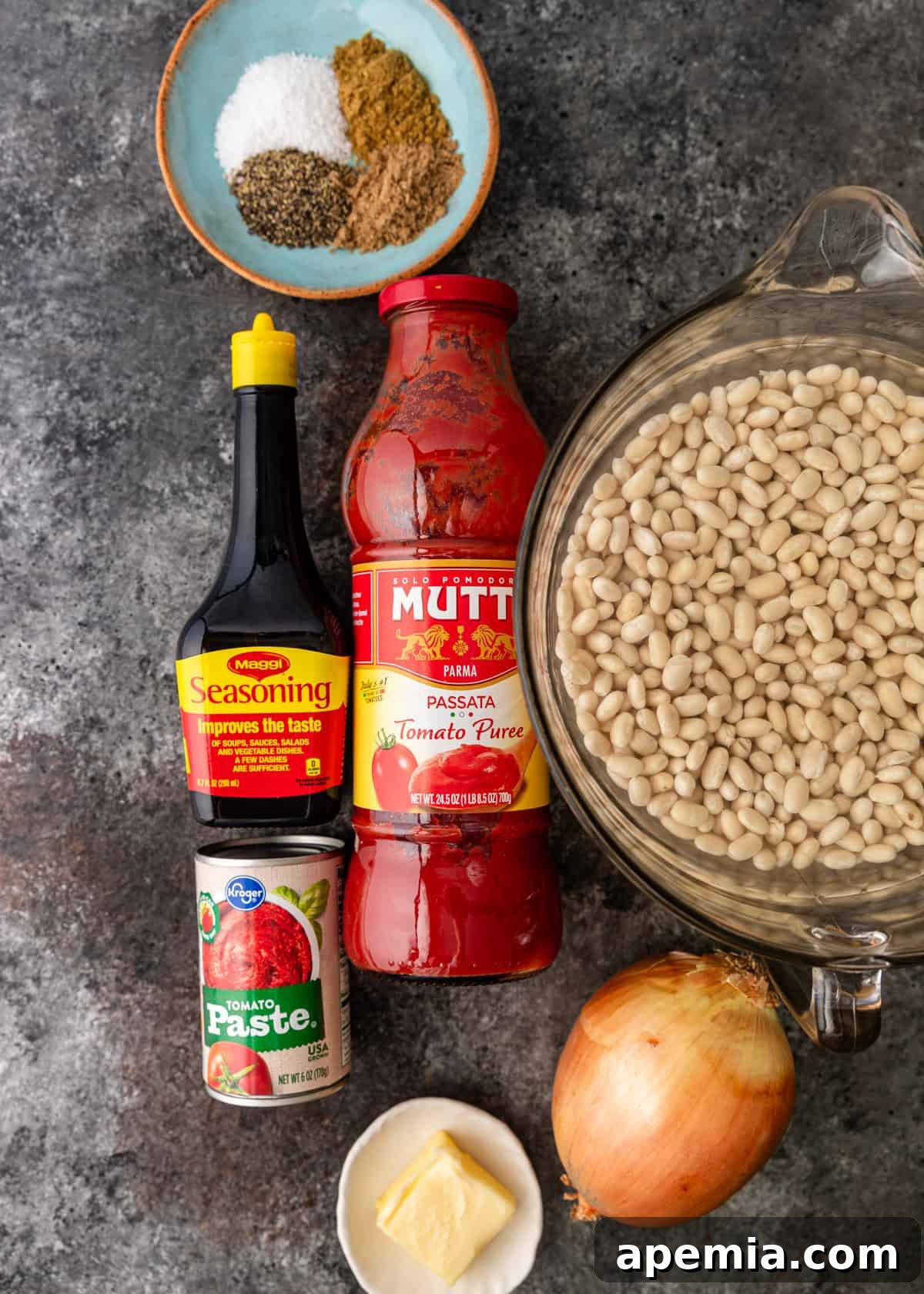
This white bean stew recipe is remarkably straightforward to prepare, making it accessible even for novice cooks. The most time-consuming step is simply waiting for the dry beans to properly soak. However, for those particularly rushed days, canned white beans can be used as a convenient shortcut, though I must emphasize that the texture achieved with freshly soaked and cooked beans is simply unparalleled and truly worth the extra planning.
Tip From Kevin
The Art of Soaking Beans: Keeping the Liquid Level Just Right
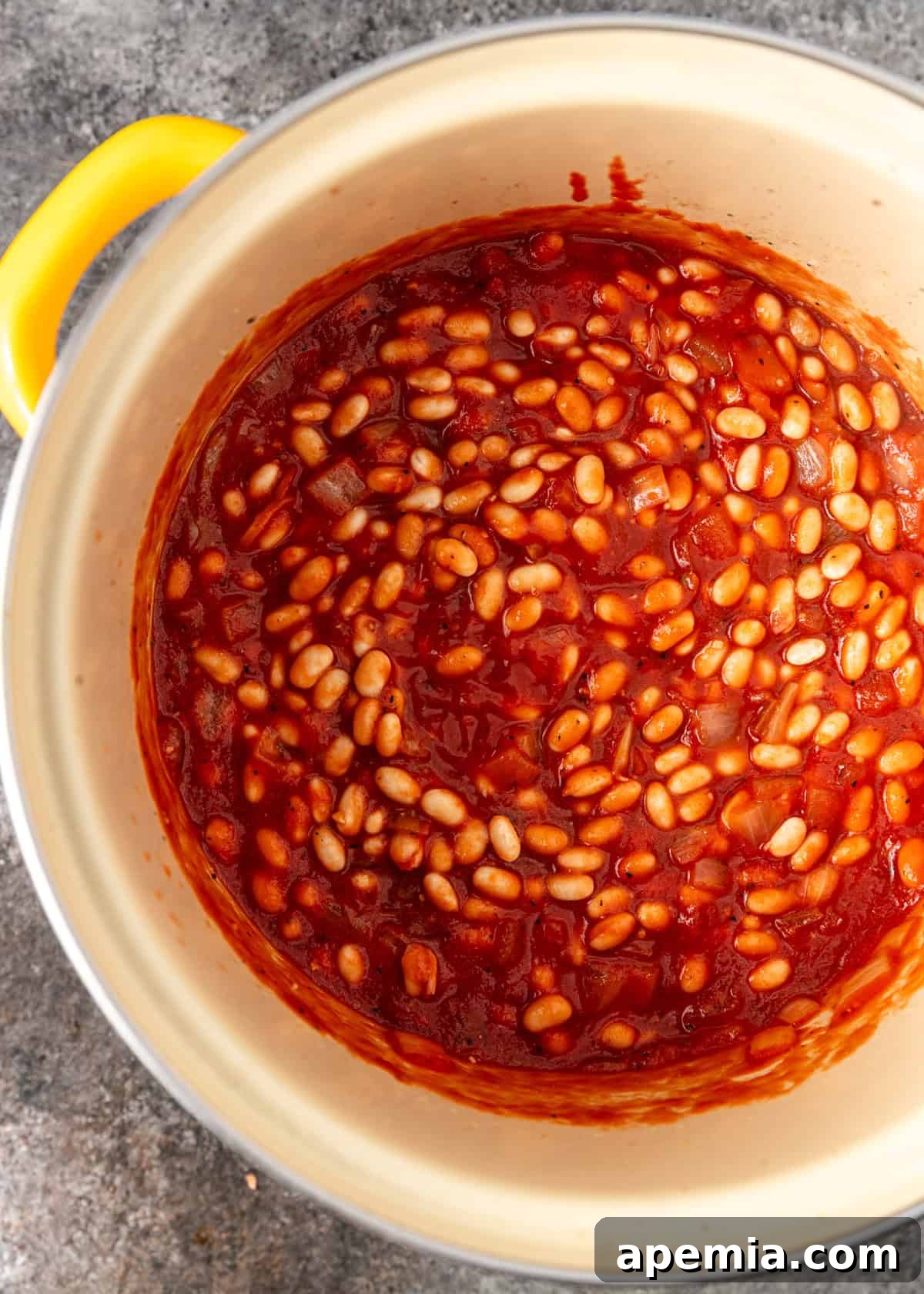
Beans are wonderfully thirsty little legumes! Even after an initial soak, they continue to absorb water throughout the cooking process. This means it’s crucial to check on your stew every now and then, giving it a good stir. Not only does this prevent scorching at the bottom of the pot, but it also ensures the beans evenly absorb the richly seasoned cooking liquid, becoming incredibly flavorful and tender. If your stew starts looking a little too thick or the beans aren’t fully submerged, simply add half a cup or more of water or broth, stir it through, and continue simmering. Maintaining adequate liquid is key to achieving that perfect, creamy consistency without the beans drying out.
Ingredient Spotlight & Substitutions
(For a complete list of ingredients and precise quantities, please refer to the recipe card below.)
- Dry White Beans: The foundation of our stew! Soaking dry beans for at least 4 hours, or ideally overnight, is essential for proper rehydration and even cooking. This step significantly reduces cooking time and ensures a consistently tender texture. While cannellini beans are a popular choice for their size and creamy texture, great northern or navy beans can also be used, offering slightly different firmness.
- Tomato Paste & Tomato Purée: This dynamic duo forms the heart of our stew’s rich broth. The tomato purée provides a foundational, fruity tomato flavor, while the concentrated tomato paste adds an intense, savory “oomph” and depth of color that elevates the entire dish. Don’t skip browning the paste as instructed; it unlocks its full flavor potential.
- Yellow Onion: My go-to onion for soups and stews due to its balanced sweetness when cooked. White onions are a perfectly acceptable alternative if that’s what you have on hand.
- Garlic: Aromatic and essential! I recommend three cloves for a well-rounded flavor, but always feel free to adjust to your personal preference – use as much or as little as your palate desires.
- Seasonings: These spices are the soul of Fasoolia Baida, creating its distinctive Middle Eastern profile. If you’re working with whole spices and need to convert to powdered, my Middle Eastern spice guide offers helpful conversions.
- Cumin & Coriander: This iconic duo provides a beautiful balance of earthy warmth and bright, citrusy notes. They play harmoniously with the robust tomato base, creating a truly authentic Middle Eastern flavor.
- Cinnamon: Adds a subtle, warm sweetness and aromatic depth that is characteristic of many Middle Eastern stews. For a twist, you can substitute with allspice, ground ginger, or a pinch of cardamom.
- Maggi Seasoning: This ingredient is a secret weapon, offering a unique smoky umami flavor that’s hard to precisely replicate. It’s available in powdered, cubed (like bouillon), or liquid forms. If you can’t find Maggi, a good quality soy sauce makes for a surprisingly effective substitute in this white bean stew, providing a similar savory depth.
- (Optional) Ground Lamb & Baharat Spice Blend: For a heartier, more protein-packed meal, I highly recommend adding ground lamb or even beef. Seasoning it with a versatile Middle Eastern Baharat spice blend will infuse the meat with authentic flavors that complement the stew beautifully.
How to Make Authentic Egyptian White Bean Stew (Fasoolia Baida)
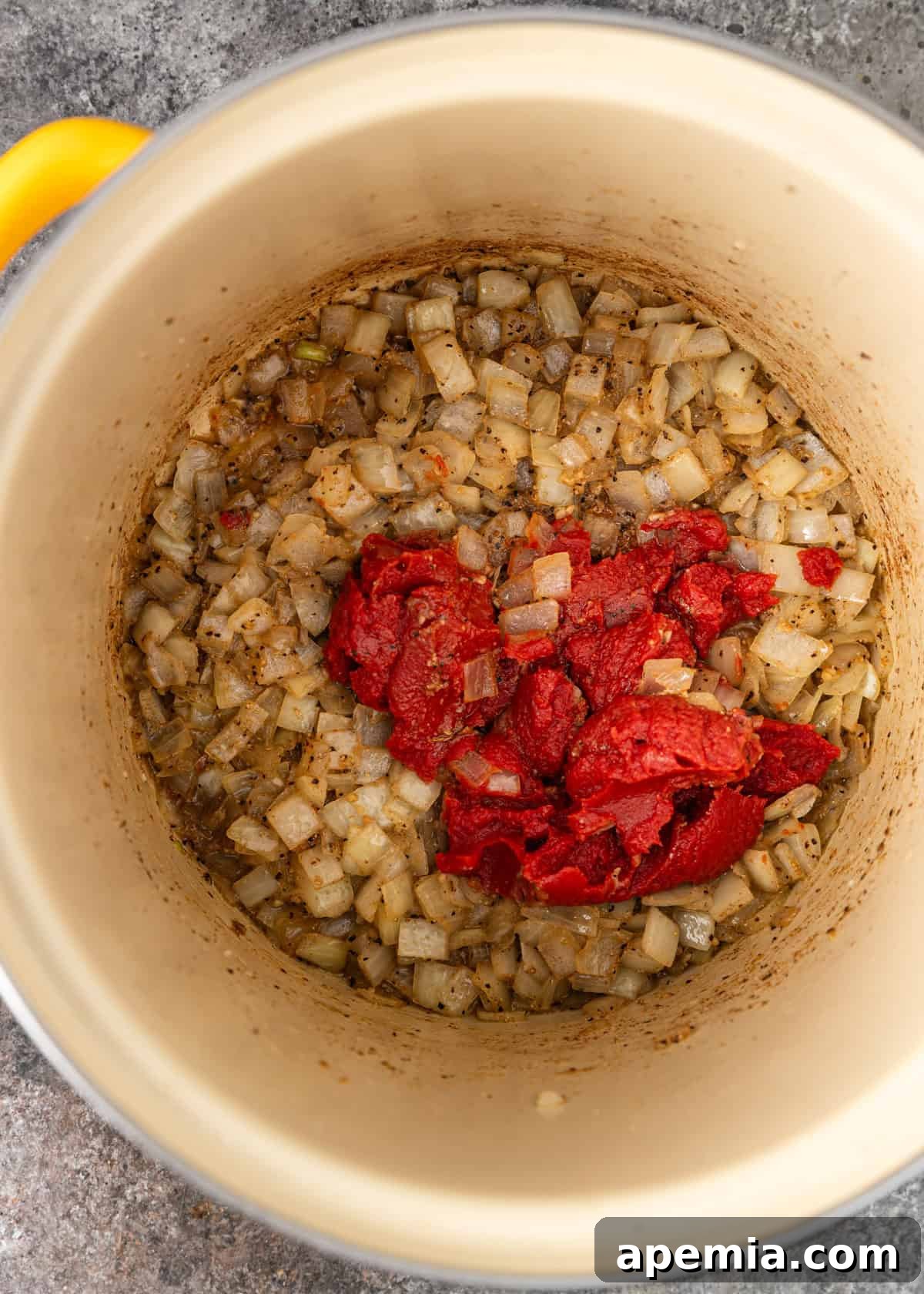
- Prepare the Aromatics and Build the Flavor Base: Begin by melting the butter in a heavy-bottomed Dutch oven or a large soup pot over medium heat. Add the diced yellow onions and sauté them gently for several minutes until they begin to soften and become translucent. Next, stir in the minced garlic and cook for just one minute more until fragrant – be careful not to burn it. At this point, sprinkle in the salt, cumin, coriander, black pepper, and cinnamon. Stir constantly for about 30 seconds to allow the spices to bloom in the hot butter, releasing their intense aromas. Finally, add the tomato paste, stirring it vigorously into the spice and onion mixture. Cook this aromatic base for about 3 minutes, stirring occasionally, allowing the tomato paste to caramelize slightly and deepen in flavor.
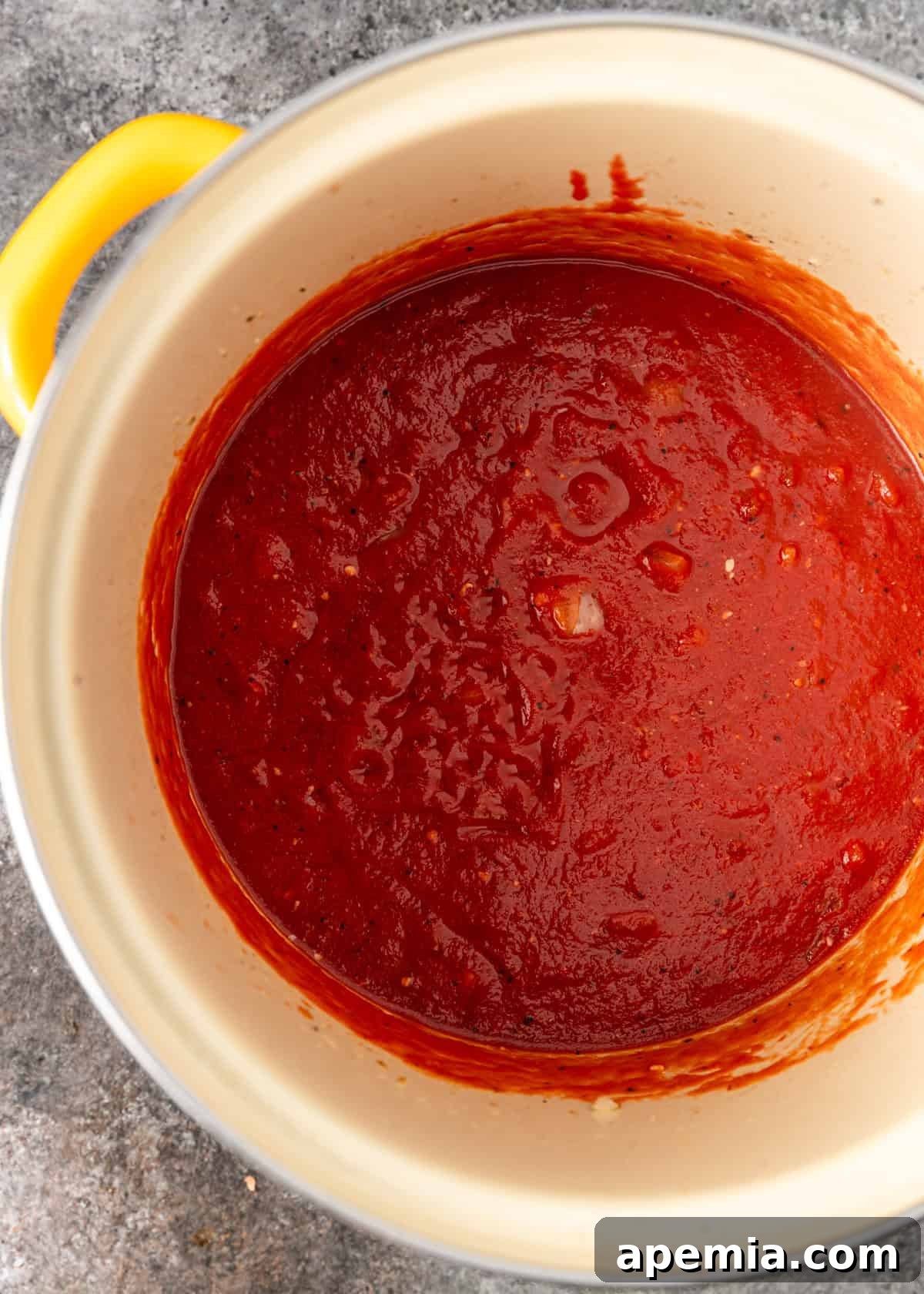
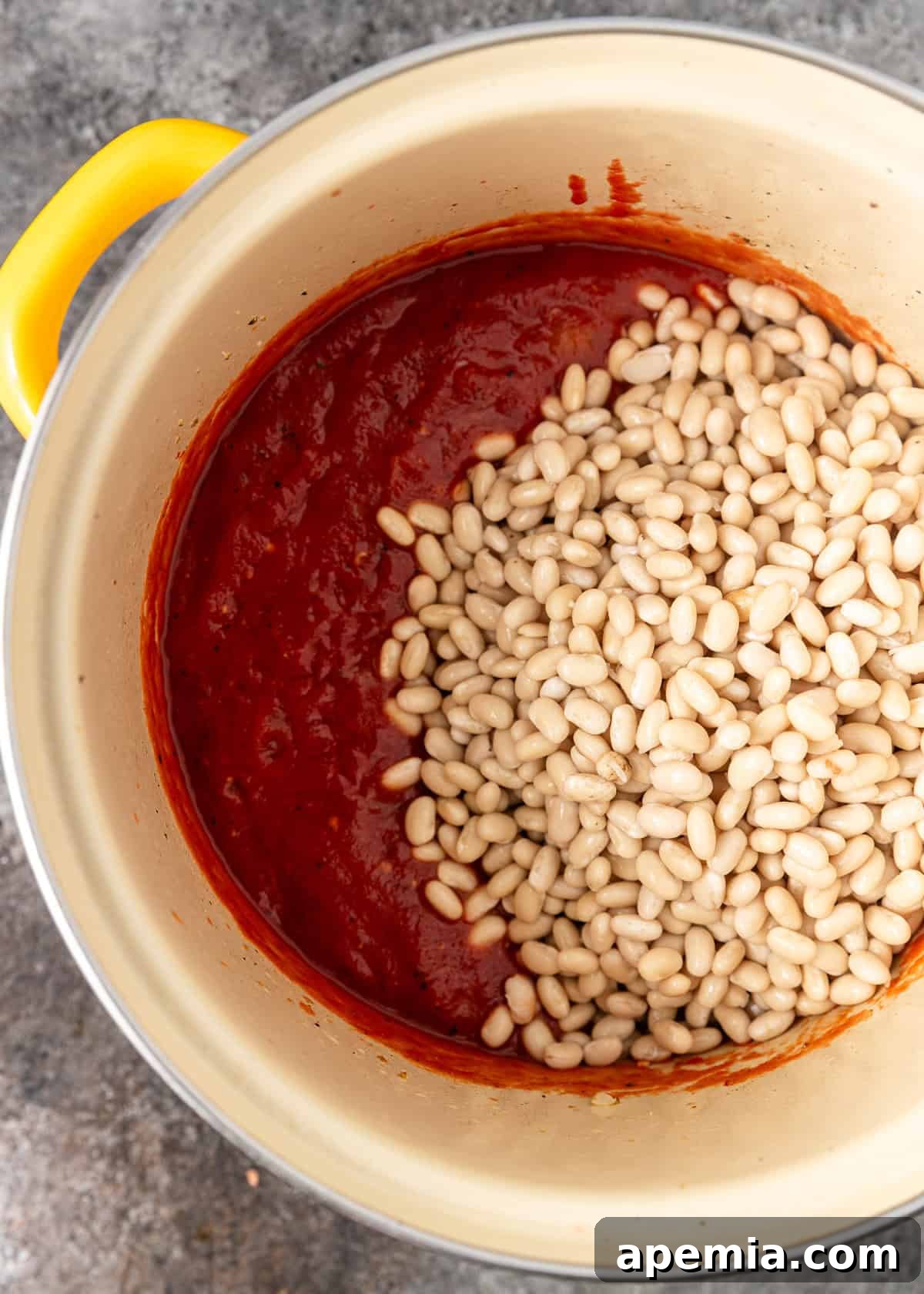
- Combine Remaining Ingredients & Bring to a Boil: Thoroughly drain and rinse your pre-soaked white beans. Add them to the pot with the aromatic tomato base. Pour in the tomato purée and the 2 ½ cups of water, then stir in the Maggi seasoning (or soy sauce). Give everything a good stir to ensure all ingredients are well combined. Increase the heat to bring the soup to a vigorous rolling boil.
- Simmer to Perfection: Once boiling, reduce the heat significantly to a low simmer. Cover the pot and let the stew cook gently for a full 90 minutes. During this simmering period, remember to uncover and stir the stew every 15-20 minutes. This prevents anything from sticking or scorching at the bottom of the pot and helps distribute the flavors. Crucially, check the liquid level each time you stir; if it appears too thick or the beans aren’t adequately submerged, add another half-cup or more of water or vegetable broth, stirring it in thoroughly. The beans will continue to absorb liquid and soften beautifully.
- (Optional) Brown the Meat: If you’re opting to add ground lamb or beef, now is the time to prepare it. In a separate skillet, brown the ground meat over medium-high heat. Season it with the Baharat spice blend as it cooks, breaking up any large chunks. Continue cooking until the meat is no longer pink. Drain any excess fat thoroughly before setting the browned meat aside.
- Serve and Savor: Once the beans are tender and the stew has thickened to your liking, taste and adjust the seasoning with additional salt or pepper if needed. If using the optional ground meat, stir it into the stew just before serving to allow it to warm through. Serve this hearty Fasoolia Baida hot, ideally alongside fluffy rice or warm pita bread, and perhaps a fresh green salad for a complete and utterly satisfying meal.
Recommended Kitchen Tools
To prepare this delightful white bean stew, you’ll need just a few basic kitchen essentials:
- Dutch Oven or Large Soup Pot: A heavy-bottomed pot is ideal for even heat distribution and prevents sticking during the long simmering process.
- Skillet: Only necessary if you plan on adding ground meat to your stew.
Storing and Reheating Your Stew
One of the best qualities of Fasoolia Baida is how well it stores, often tasting even better the next day as the flavors continue to meld. Leftover white bean stew can be safely refrigerated in an airtight container for up to 5 days. If you’ve included ground lamb or beef, it’s best to consume the stew within 3 to 4 days. Reheating is incredibly simple: just transfer the desired portion back into a pot and gently bring it to your preferred temperature over medium heat, adding a splash of water or broth if it has thickened too much.

Share this recipe on Pinterest!
Love this recipe? Help others discover it by sharing on Pinterest.
Frequently Asked Questions About Fasoolia Baida
Absolutely, unless you’re prepared for a significantly longer cooking time! Soaking dry beans is a critical step for several reasons. Firstly, it rehydrates them evenly, which helps them cook more consistently and reduces the overall simmering time. Secondly, it can also aid in digestibility by breaking down some of the complex sugars. I find that when I skip soaking and try to cook dried beans directly, they don’t always soften at the same rate, resulting in an uneven texture, and it truly takes an eternity. A minimum of 4 hours is recommended, but soaking them overnight is the easiest and most effective method.
Cannellini beans and butter beans are both types of white beans, but they have distinct characteristics. Cannellini beans are indeed a popular choice for white bean stew due to their large size, robust flavor, and tender, creamy flesh that holds up well during simmering. They offer a delightful bite without being overly firm. If you prefer a slightly firmer texture, Great Northern beans are an excellent alternative. Navy beans, also known as haricot beans, are smaller and tend to break down more, creating a thicker, creamier stew. Butter beans, or large lima beans, are typically very creamy and have a milder flavor. Each variety will lend a slightly different character to your stew, so feel free to experiment! For a more in-depth look at different white bean varieties, you can check out my white bean salad recipe, which offers more guidance on their uses.
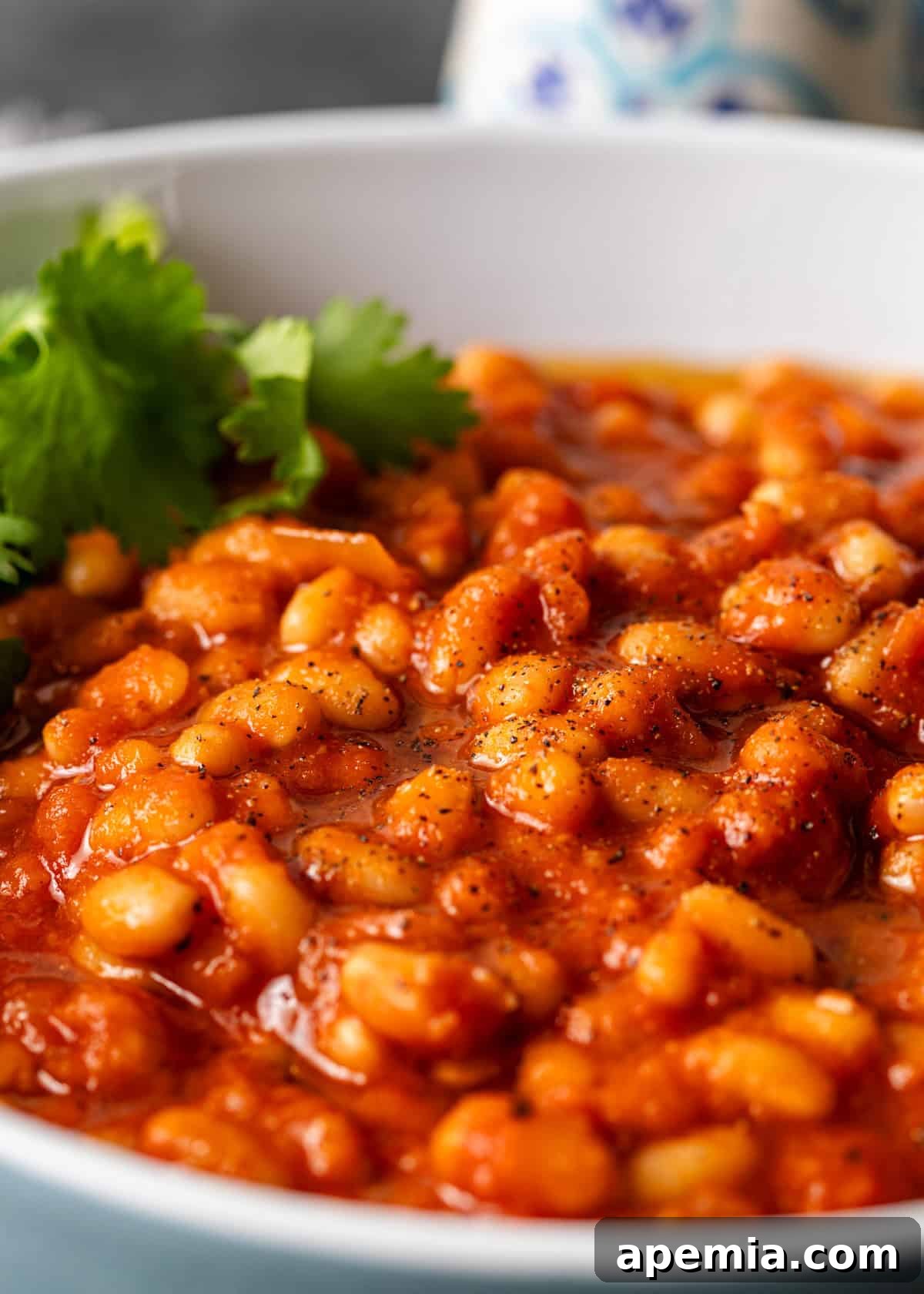
Traditionally, Fasoolia Baida isn’t meant to be a super thick, creamy soup; its charm lies in the tender, creamy beans suspended in a flavorful, savory broth. As the recipe is written, the seasoned tomato cooking liquid naturally condenses and thickens quite nicely during the long simmering process. However, if you desire a noticeably thicker consistency, there are a few simple tricks. You can’t go wrong with mashing some of the cooked beans directly against the side of the pot with the back of a spoon. This releases their starch and naturally thickens the stew. Alternatively, you can create a cornstarch slurry by whisking a tablespoon of cornstarch with two tablespoons of *cold* water until smooth, then stirring it into the simmering stew during the last 15-20 minutes of cooking. Potato starch is another effective thickener that works similarly.
Yes, you absolutely can use canned white beans if you’re short on time! While the texture from properly soaked and cooked dry beans is often superior, canned beans offer a convenient shortcut without compromising too much on flavor. If using canned beans, make sure to drain and rinse them thoroughly to remove excess sodium and any canning liquid. You can then add them to the stew in step 2 (after the aromatics and tomato paste have cooked down) and reduce the simmering time to about 30-45 minutes, or until the flavors have melded and the beans are heated through. Remember to adjust the liquid content as canned beans don’t absorb as much water during cooking as dry beans.
This recipe can easily be made both vegetarian and vegan! The core ingredients – white beans, tomatoes, onions, garlic, and spices – are all plant-based. To ensure it’s fully vegan, simply use olive oil instead of butter for sautéing the aromatics. If you’re making it vegetarian, butter is fine. As for the Maggi seasoning, check its ingredients as some varieties may contain animal-derived products; however, most liquid Maggi seasonings are vegan. If in doubt, soy sauce is a fantastic and readily available vegan substitute. If you’re adding optional ground meat, simply omit it for a delicious and wholesome plant-based meal. It’s incredibly flavorful either way!

Egyptian White Bean Stew (Fasoolia Baida)
Try white bean stew for a hearty, healthy one-pot meal! This gorgeous stew features tender white beans in a deliciously spiced tomato broth.
6
10 mins
1 hr 45 mins
4 hrs (minimum)
5 hrs 55 mins
Ingredients
- 1 lb dry white beans, soaked 4 hours minimum or overnight
- 1 tbsp butter (or olive oil for vegan option)
- 1 medium yellow onion, diced (link)
- 3 cloves garlic, minced (link)
- 2 tsp kosher salt (link)
- 2 tsp ground cumin (link)
- 2 tsp ground coriander (link)
- 2 tsp black pepper (link)
- 1 tsp ground cinnamon (link)
- 6 oz tomato paste (link)
- 8 oz tomato puree or passata
- 2 1/2 cups water (or vegetable broth)
- 1 tbsp Maggi Seasoning or soy sauce
Optional Ingredients
- 1 lb ground lamb (or beef)
- 1 tbsp Baharat spice blend
Instructions
- Soak the Beans: Cover the dry white beans with about 2-inches of water and let them soak for a minimum of 4 hours, or ideally, overnight. Drain and rinse thoroughly before use.
- Sauté Aromatics & Bloom Spices: In a large soup pot or Dutch oven, melt the butter (or heat olive oil) over medium heat. Add the diced yellow onion and sauté for 5-7 minutes until softened and translucent. Add the minced garlic and cook for another minute until fragrant. Sprinkle in the salt, cumin, coriander, black pepper, and cinnamon. Stir continuously for 30 seconds to toast the spices.
- Develop Tomato Flavor: Add the tomato paste to the pot. Stir it into the aromatics and spices, cooking for about 3 minutes, stirring occasionally, allowing it to slightly caramelize and deepen in flavor.
- Combine & Simmer: Transfer the drained and rinsed beans to the pot. Stir in the tomato purée, 2 1/2 cups of water (or broth), and Maggi seasoning (or soy sauce). Bring the mixture to a rolling boil over medium-high heat.
- Gentle Simmer: Reduce the heat to low, cover the pot, and let the stew simmer for 90 minutes. Stir occasionally (every 15-20 minutes), checking the liquid level. If the stew thickens too much or the beans aren’t fully submerged, add an additional half-cup of water or broth and stir. Ensure the bottom doesn’t scorch.
- (Optional) Prepare Lamb: While the stew simmers, if you’re adding lamb, brown 1 lb of ground lamb (or beef) in a separate skillet over medium-high heat, seasoning it with 1 tbsp of Baharat spice blend. Cook until no longer pink, then drain any excess fat and set aside.
- Serve: Taste the stew and adjust seasoning as needed. If using the browned lamb, stir it into the hot stew to warm through just before serving. Serve the Egyptian White Bean Stew hot, traditionally with rice or pita bread.
Notes
- This recipe is adapted from my Egyptian friend, Chef Ahmed Reda.
- For a vegan version, use olive oil instead of butter and ensure your Maggi seasoning (or soy sauce) is plant-based.
Nutrition
Calories: 393kcal |
Carbohydrates: 32g |
Protein: 22g |
Fat: 20g |
Saturated Fat: 9g |
Polyunsaturated Fat: 2g |
Monounsaturated Fat: 8g |
Trans Fat: 0.1g |
Cholesterol: 60mg |
Sodium: 1118mg |
Potassium: 1125mg |
Fiber: 8g |
Sugar: 7g |
Vitamin A: 701IU |
Vitamin C: 13mg |
Calcium: 123mg |
Iron: 6mg
The information shown is an estimate provided by an online nutrition calculator. It should not be considered a substitute for a professional nutritionist’s advice.
Main Course, Side Dish
Egyptian, Middle Eastern
Kevin
Have You Made This Recipe? Let Me Know on Instagram!
Tag @keviniscooking or tag me #keviniscooking!