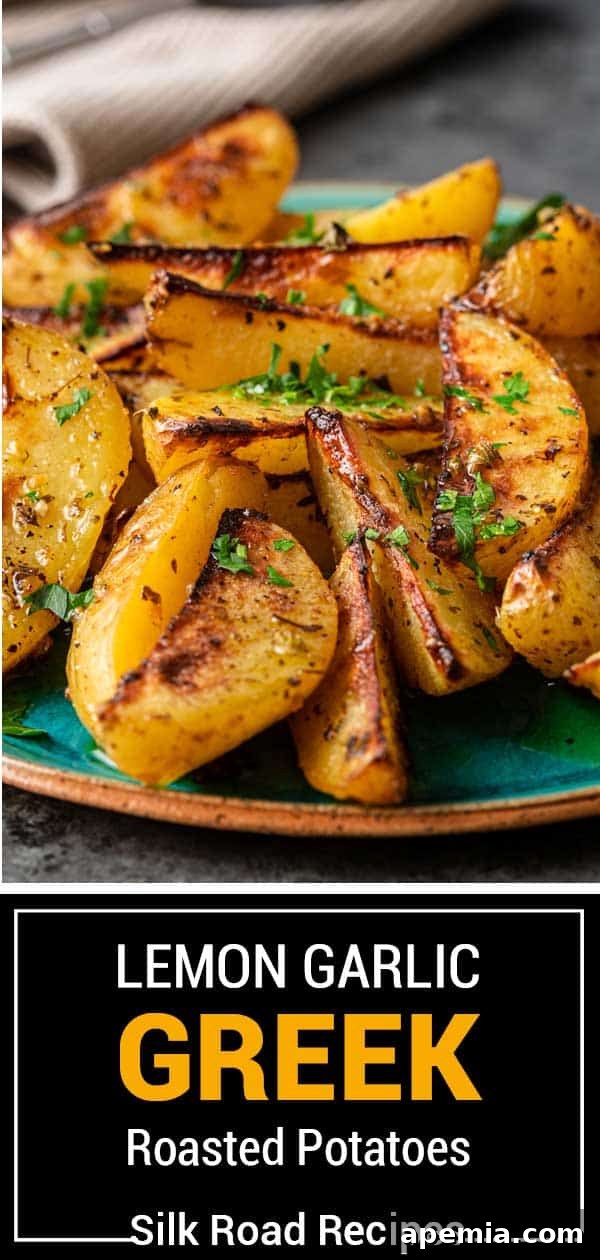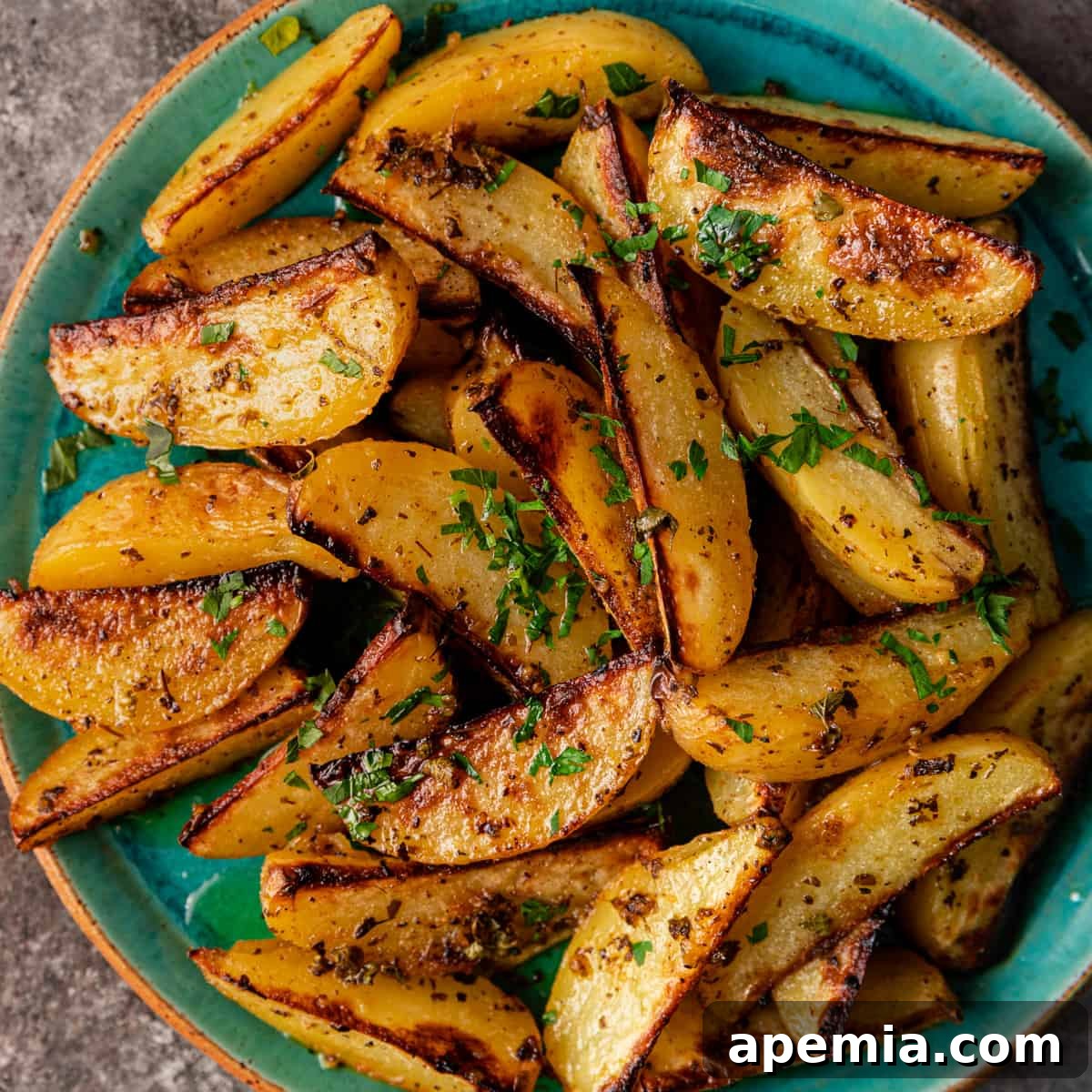
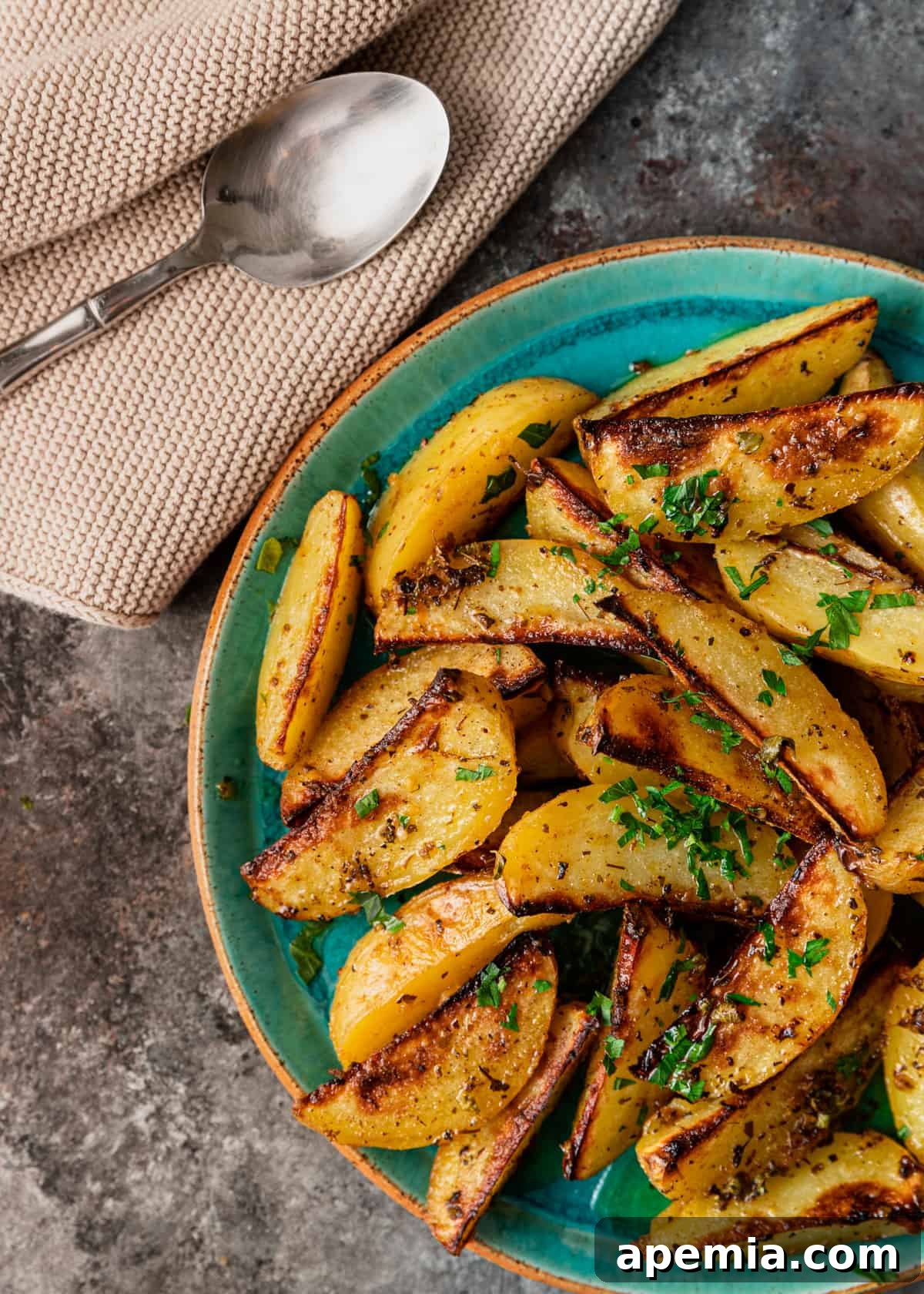
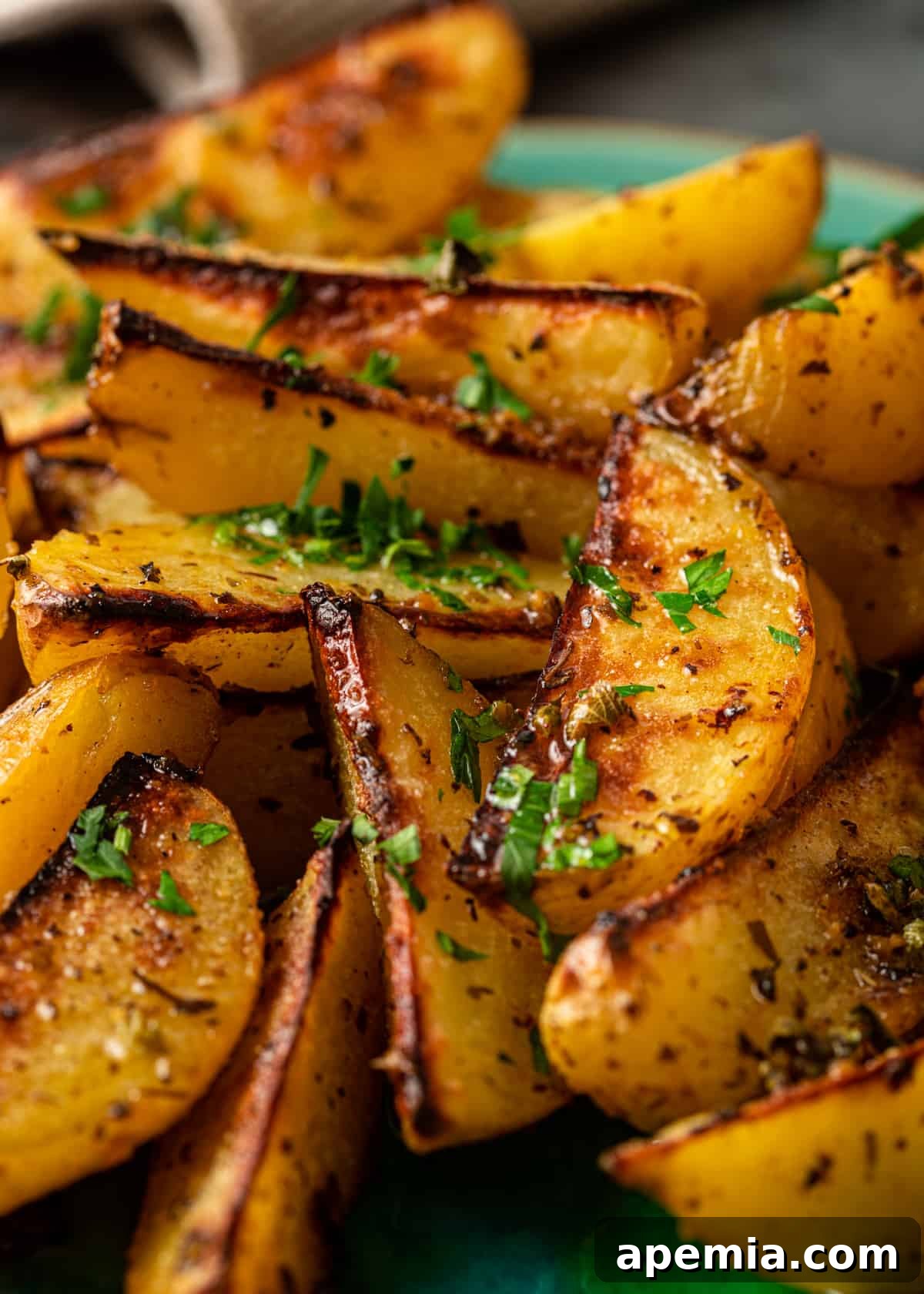
Greek roasted potatoes are a culinary delight, celebrated for their perfectly crispy exterior, incredibly fluffy interior, and a burst of savory, tangy flavor in every bite. This iconic side dish is a staple in Greek cuisine, traditionally prepared with a unique basting technique that infuses each potato wedge with zesty lemon, aromatic garlic, and earthy oregano, all while achieving that irresistible golden crust thanks to a hint of olive oil and semolina flour.
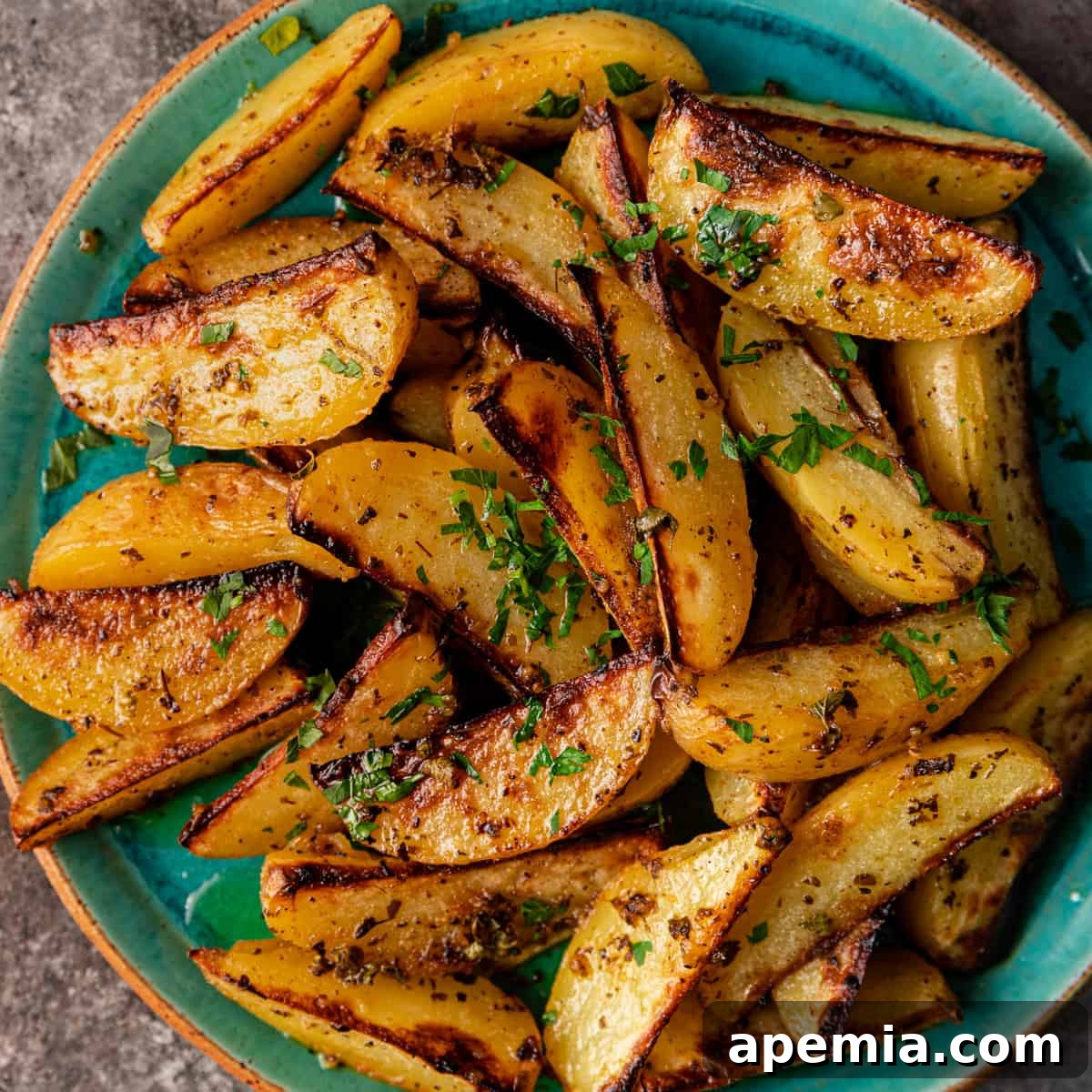
Who can resist the allure of a perfectly roasted potato? When you introduce the bright, herbaceous flavors of the Mediterranean, these humble spuds transform into something truly extraordinary. Prepare yourself for incredibly tasty lemon garlic potatoes that might just steal the show at your next dinner! This recipe isn’t just a side dish; it’s an experience, promising wedges so flavorful they’ll have everyone asking for seconds.
Crafted with freshly squeezed lemon juice, fragrant oregano, and a rich basting sauce featuring olive oil and semolina flour, these seemingly simple potato wedges are about to become the star of your dinner table. They embody the essence of Greek home cooking – simple ingredients yielding profound flavors and textures.
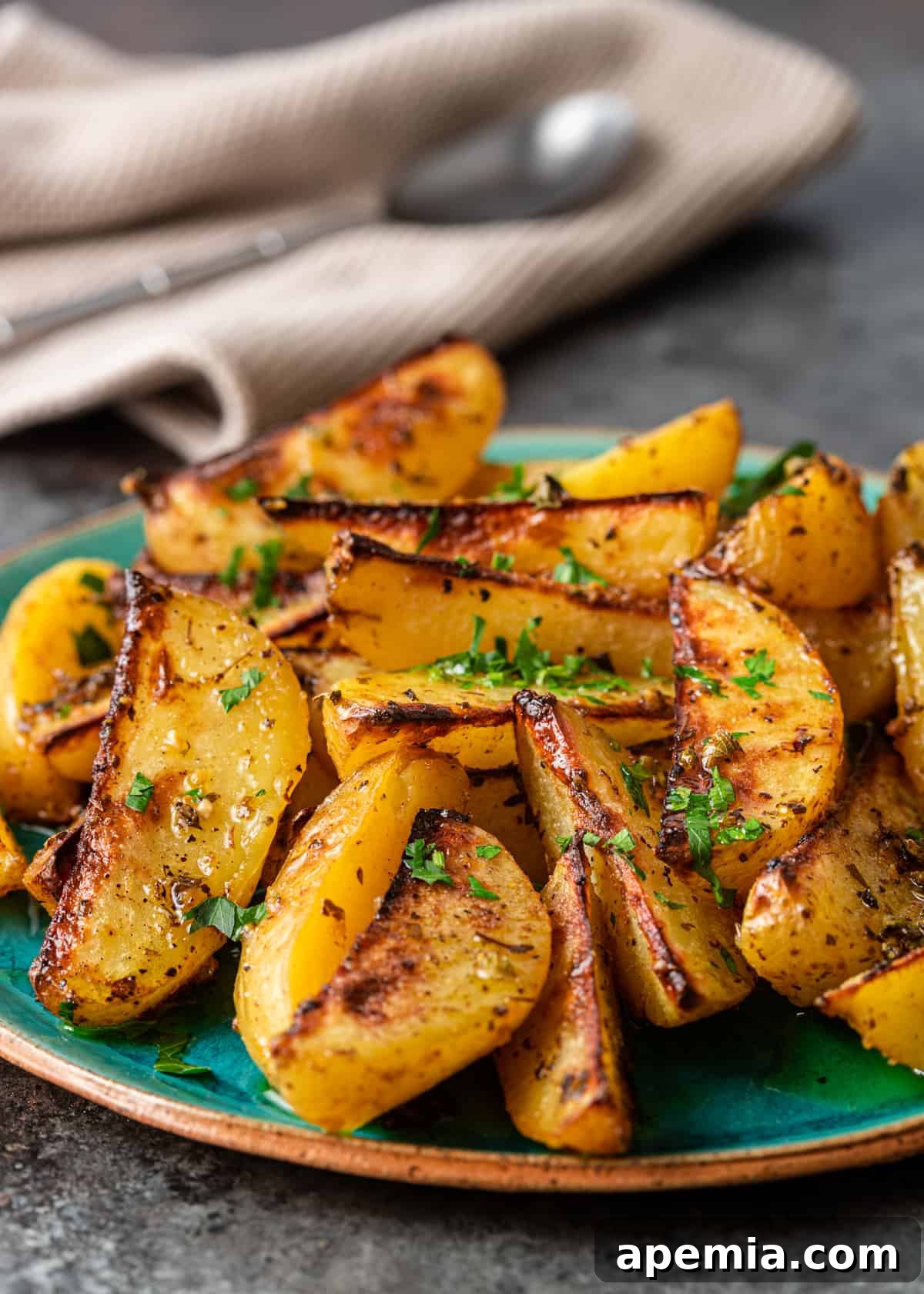
The secret to these truly authentic Greek roasted potatoes lies in a traditional basting method, which, while requiring a little patience, delivers results that are absolutely worth every minute. This technique is similar to marinating meat, but for potatoes. The potato flesh slowly soaks up the seasoned liquid, allowing the vibrant lemon and garlic flavors to penetrate deep into the wedges, flavoring them from the inside out. Simultaneously, the combination of olive oil and semolina flour creates a beautifully crisp, golden crust on the exterior, offering a delightful contrast to the creamy, tender interior.
Table of Contents
- The Secret to Ultimate Crispness
- Essential Ingredients & Smart Substitutions
- How to Make the Best Greek Roasted Potatoes
- Recommended Kitchen Tools
- Storing & Reheating for Best Results
- Frequently Asked Questions About Greek Potatoes
- Crispy Greek Roasted Potatoes Recipe Card
These versatile lemon garlic potatoes make an exquisite accompaniment to a wide range of Mediterranean dishes. Serve them alongside classic Greek souvlaki, perfectly seasoned baked chicken, or even a simple grilled fish. For a truly authentic Greek meal experience, pair them with a cool, refreshing dollop of homemade tzatziki. If you’re craving something a bit richer and earthier, a drizzle of creamy tahini yogurt sauce offers a delightful alternative that complements the zesty potatoes beautifully.
Expert Tip
The Secret to Ultimate Crispness: Semolina Flour
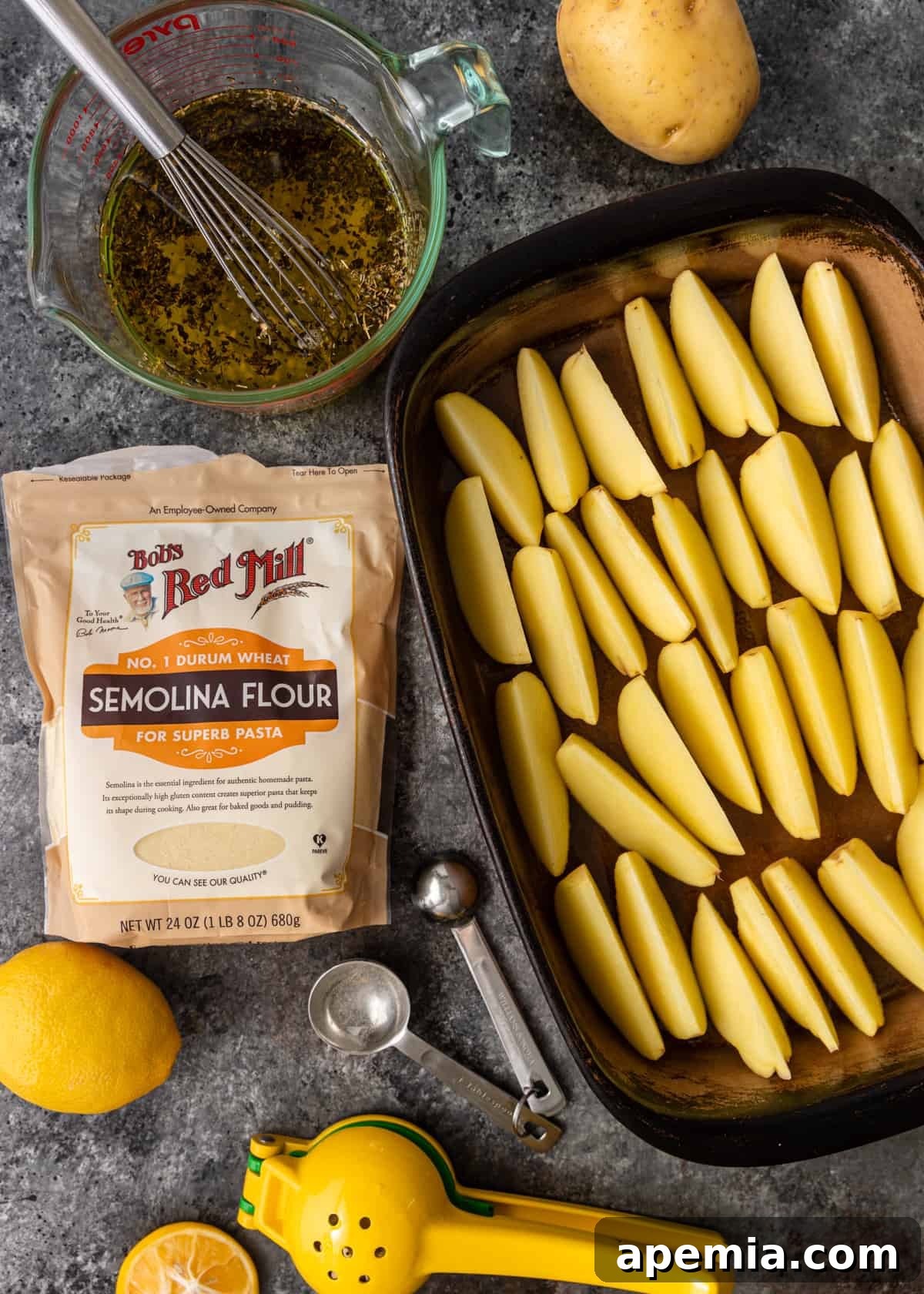
What gives these Greek roasted potatoes their signature crusty exterior? The answer lies in semolina flour! This golden, high-protein flour is a beloved ingredient in Mediterranean cooking, particularly known for its use in pasta. Its coarse texture is perfectly suited for coating potato wedges, where it browns beautifully and helps form that desirable, shatteringly crisp golden crust as the potatoes roast. If semolina is unavailable, a fine cornmeal makes for an excellent alternative, offering a similar texture and browning capability to achieve that delightful crunch.
Essential Ingredients & Smart Substitutions
- Potatoes: The foundation of this dish! For optimal cooking and seasoning penetration, it’s crucial to cut your potatoes into uniform wedges. This ensures they cook through quickly and evenly. While some recipes call for leaving the skin on, peeling the potatoes before roasting allows the seasonings to truly soak into the flesh and encourages proper browning, leading to a richer flavor and superior texture. Russets or Yukon Gold are excellent choices in the U.S.
- Water (or Broth): Our Greek roasted potatoes are braised in liquid, which is key to their tender, flavor-infused core. The potatoes literally drink up the seasonings from the liquid, making them incredibly delicious from the inside out. For an even deeper flavor profile, consider substituting water with chicken or vegetable broth – it adds another layer of savory richness without overpowering the Mediterranean notes.
- Olive Oil: This is a cornerstone of Mediterranean cooking. Always opt for extra virgin olive oil, which not only offers the most robust flavor but is also remarkably stable at the baking temperatures used in this recipe. Its fruity and peppery notes are essential for the authentic taste of these potatoes.
- Lemons: Freshly squeezed lemon juice is non-negotiable for the brightest, most authentic flavor. Bottled lemon juice simply doesn’t compare. For an even more intense lemony zing, you can zest the lemons and sprinkle the zest over the potatoes just before serving – the oils in the zest release incredible aroma and flavor.
- Garlic: Freshly minced garlic delivers the best flavor. If using jarred, pre-minced garlic, use about one tablespoon to get a comparable level of aromatic goodness. Garlic caramelizes beautifully, adding a sweet depth to the savory potatoes.
- Oregano: Dried oregano is the classic Greek herb for this dish, offering an earthy, slightly peppery flavor. However, feel free to experiment with other Mediterranean herbs. Thyme and fresh parsley are my top two recommendations for substitutions or additions – a combination of all three can create a wonderfully complex herbaceous profile.
- Semolina: As discussed, this golden, high-protein flour is key to achieving that desirable crust. Its slightly coarse texture adheres to the potatoes, ensuring a beautiful golden brown and crispy finish during roasting. If you can’t find semolina, a fine cornmeal is the best alternative to mimic its effects.
- Salt & Pepper: Simple but essential. Kosher salt and freshly ground black pepper enhance all the other flavors, bringing balance and depth to the dish. Adjust to your taste.
How to Make the Best Greek Roasted Potatoes
- Preheat Your Oven: Begin by preheating your oven to 400 degrees Fahrenheit (200 degrees Celsius). A hot oven is crucial for achieving that initial crispness.
- Prepare the Potato Wedges: Start by peeling your potatoes. Then, slice each potato lengthwise from end to end. Lay these halves flat on your cutting board and slice them lengthwise again. Take these new pieces, turn them over, and slice lengthwise once more. The goal is to create roughly 48 uniform wedges from about 6 medium Yukon Gold potatoes. Uniformity ensures even cooking! Place all the prepared wedges into a large roasting pan or a deep 9×13-inch baking dish.
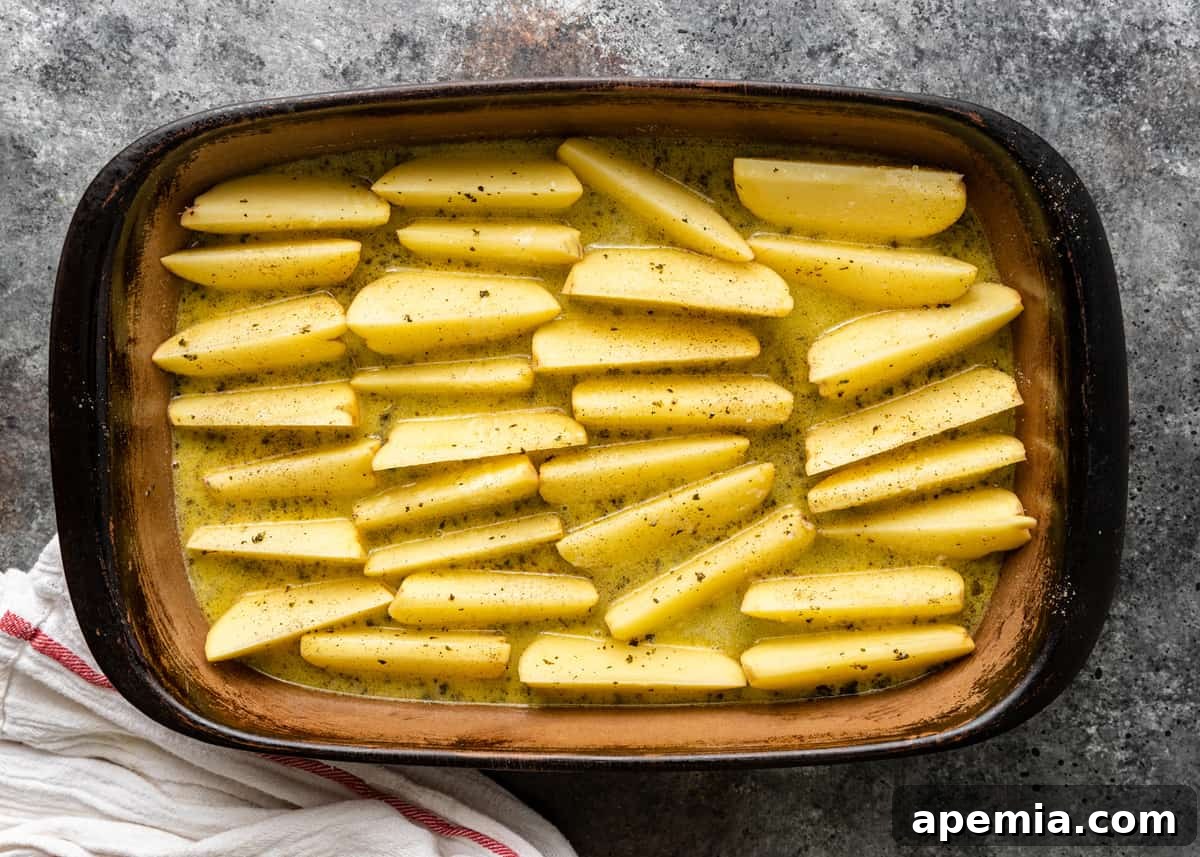
- Whisk the Flavorful Basting Sauce: In a separate bowl, combine the water (or broth), extra virgin olive oil, freshly squeezed lemon juice, minced garlic, dried oregano, and semolina flour. Whisk all these ingredients vigorously until they are well combined and the semolina is integrated.
- Pour, Season & Initial Bake: Carefully pour the whisked basting sauce over the potato wedges in the roasting pan. Ensure all the wedges are evenly covered and coated with the liquid. Season generously with kosher salt and freshly ground black pepper. Slide the pan into your preheated oven and bake uncovered for 40 minutes.
- First Basting & Continue Baking: After the initial 40 minutes, remove the pan from the oven. Using a baster or a large spoon, thoroughly coat the lemon garlic potatoes with the rich pan sauce that has accumulated at the bottom. This step is vital for building layers of flavor and ensuring moisture. Return the pan to the oven and bake for another 30 minutes.
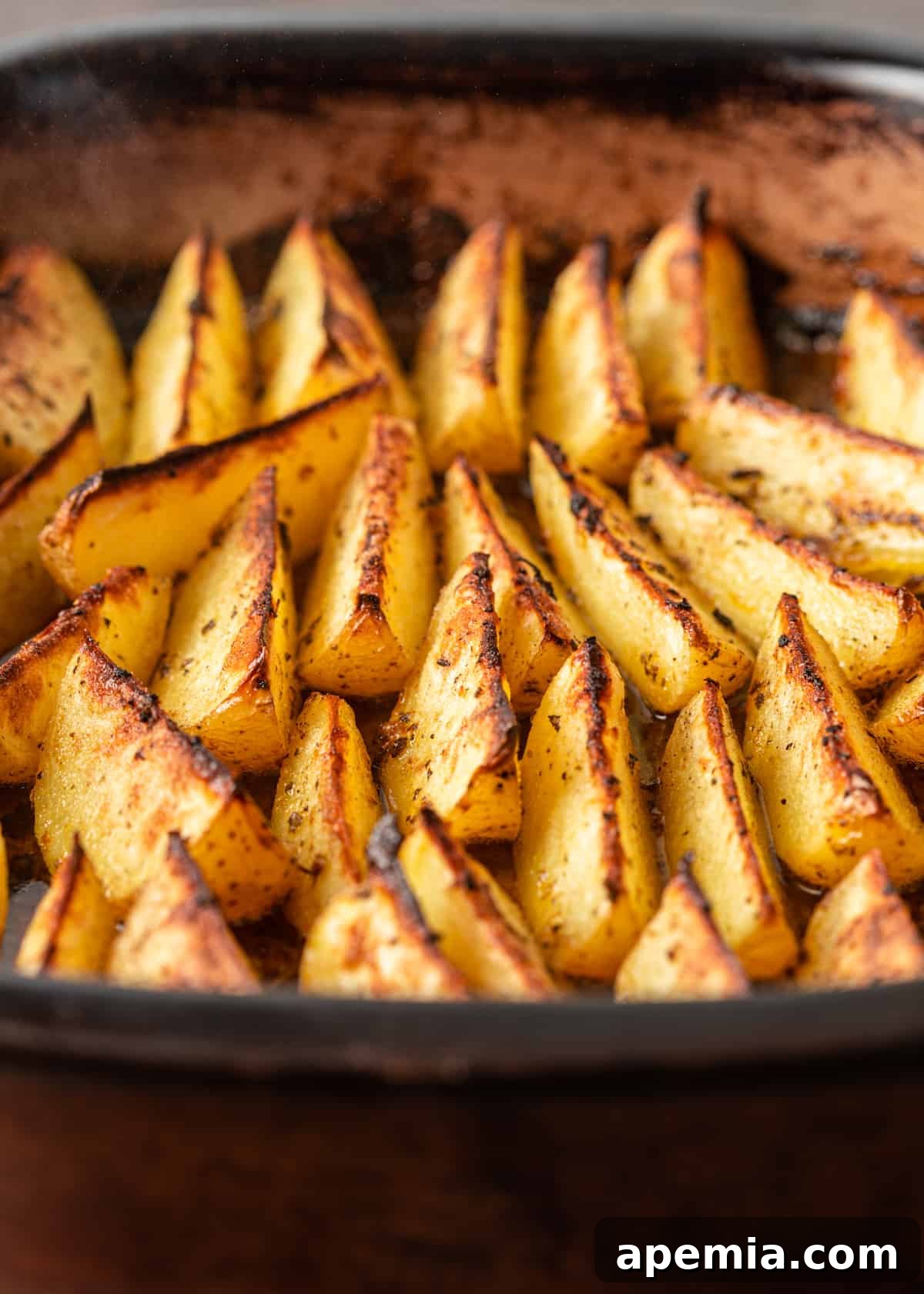
- Final Baste & Crisp Up: Remove the pan once more. Perform a final basting, ensuring every potato wedge is glistening with the savory sauce. Place the pan back in the oven for a final 10 minutes. During this last stretch, the semolina will truly work its magic, forming a beautiful golden and extra-crispy crust on the potatoes.
- Cool Slightly & Serve: Once the potatoes are perfectly golden and tender, remove them from the oven. Allow them to cool for just a few minutes before serving. This brief resting period allows the flavors to settle and the exterior to crisp up even further.
Recommended Kitchen Tools for Perfect Greek Potatoes
- Large Roasting Pan: Essential for this recipe, as you need a pan that can comfortably hold all the potato wedges and, crucially, the basting liquid without overflowing. A sturdy roasting pan allows for even heat distribution and provides enough surface area for the potatoes to brown beautifully. If you don’t have a dedicated roasting pan, a deep 9×13-inch baking dish with tall sides will work effectively.
- Whisk: For thoroughly combining the ingredients of your flavorful basting sauce.
- Baster or Large Spoon: Crucial for periodically coating the potatoes with the cooking liquid, ensuring they absorb maximum flavor and develop that signature crispy crust.
- Sharp Knife & Cutting Board: For safely and efficiently preparing your potato wedges.
Storing & Reheating for Best Results
While Greek roasted potatoes are undeniably at their absolute best served fresh, straight from the oven, any leftovers can be stored. Place cooled potatoes in an airtight container in the refrigerator for up to 4 days. The crispness will diminish upon cooling, but the delicious flavor remains.
To revive that desirable crunch, reheating in the oven is highly recommended. Preheat your oven to 400 degrees Fahrenheit (200 degrees Celsius). Spread the potato wedges in a single layer on a baking sheet and bake for about 10 minutes. Check if they are warmed through and tender; if not, continue baking for another 5 minutes. For an extra crispy finish, briefly broil the potatoes for 2-3 minutes, keeping a close eye on them to prevent burning. This method brings them remarkably close to their freshly baked glory!
Frequently Asked Questions About Greek Potatoes
While soaking or par-boiling potatoes can help remove excess starch and slightly soften the wedges, potentially reducing overall cooking time, it’s not strictly necessary for this Greek roasted potatoes recipe. These lemon garlic potatoes are specifically cut into relatively small, uniform wedges, allowing them to cook through quite quickly. Furthermore, the unique basting method ensures they become tender and flavorful without the need for pre-cooking steps. In many cases, the time spent boiling and then waiting for them to cool might negate any time saved in the oven! Focus on even cuts and thorough basting for the best results.
The absolute ideal potato for achieving both crispiness and a fluffy interior is the Maris Piper, widely available across the United Kingdom and Europe. Unfortunately, it’s difficult, if not impossible, to find in the United States due to import restrictions. For those of us in the U.S., the best choices are generally Yukon Gold or Russet potatoes. Yukon Golds are prized for their rich, buttery flavor and slightly less starchy texture, which allows them to roast to a beautiful dark, golden brown with a wonderfully creamy middle. Russet potatoes, being starchier, tend to develop an exceptionally crispy exterior and a super fluffy, almost cloud-like center, making them another fantastic option for this recipe.
Preventing sticking is key to those perfect, intact potato wedges. Firstly, a quick rinse of the cut potato wedges under cold water helps remove some of the surface starch, which can contribute to sticking. After rinsing and draining thoroughly, ensure they are well-coated in the basting liquid. This liquid is rich in olive oil, which acts as a natural non-stick barrier. Additionally, using a good quality, well-seasoned roasting pan or a non-stick baking dish can make a significant difference. If you find some wedges resisting when you try to lift them after cooking, give them a gentle nudge with a metal spatula. If they still don’t release easily, it often means they need a few more minutes to fully cook and crisp up; try roasting for another 5 minutes and then attempt to lift them again.
Share this delicious recipe on Pinterest!
Love these crispy Greek lemon garlic potatoes? Share the joy with your friends and followers on Pinterest.
Don’t miss out on more incredible recipes! Subscribe to my Newsletter, and follow me on Facebook, Pinterest, Instagram, and YouTube for all my latest culinary adventures, tips, and videos.
Crispy Greek Roasted Potatoes
8
14 minutes
1 hour 19 minutes
1 hour 33 minutes
Saved
Pin Recipe
PrintRecipe
Ingredients
- 2 lbs Yukon Gold potatoes (about 6) (See Note 1 for alternatives)
- 3/4 cup water (or chicken/vegetable broth for added flavor)
- 3/4 cup extra virgin olive oil
- 2 lemons freshly juiced
- 4 cloves garlic minced (or 1 tbsp jarred minced garlic)
- 1 tbsp dried oregano
- 1 tsp semolina (fine cornmeal can be substituted)
- 1 tsp kosher salt
- 1/2 tsp freshly ground black pepper
Instructions
-
Preheat your oven to 400°F (200°C).
-
Peel all the potatoes. For even wedges, slice each potato lengthwise (from end to end). Take each half, turn it flat side down, and cut it in half lengthwise again. Then, turn each of those pieces over and cut each into wedges lengthwise. You should aim for approximately 48 uniform potato wedges in total.
-
Place all the prepared potato wedges into a large roasting pan or a deep 9×13-inch baking dish with sides, ensuring they are spread in a relatively single layer for best roasting.
-
In a separate medium bowl, combine the water (or broth), olive oil, freshly squeezed lemon juice, minced garlic, dried oregano, and semolina. Whisk all the ingredients together until well blended. Pour this flavorful mixture evenly over the potatoes in the pan. Season the potatoes generously with salt and pepper.
-
Bake the potatoes uncovered in the preheated oven for 40 minutes. After 40 minutes, remove the pan from the oven. Using a baster or a large spoon, thoroughly coat all the potatoes with the rich pan sauce that has gathered. Return the pan to the oven and bake for another 30 minutes. Perform one more basting, ensuring the potatoes are well coated, and bake for a final 10 minutes. This last stage, especially with the semolina, helps form that beautiful, golden, and extra-crispy crust on the potatoes.
-
Remove the pan from the oven and let the Greek roasted potatoes cool for a few minutes before serving to allow them to crisp up further and flavors to meld.
Notes
- For the best texture, use starchy potatoes like “Maris Piper” if you are lucky enough to find them (primarily available in Ireland, the UK, and parts of Europe). Otherwise, for those in the U.S., I highly recommend using Russet or Yukon Gold potatoes for their excellent roasting qualities.
Nutrition
Carbohydrates: 52g |
Protein: 6g |
Fat: 21g |
Saturated Fat: 3g |
Sodium: 310mg |
Potassium: 1219mg |
Fiber: 7g |
Sugar: 3g |
Vitamin A: 23IU |
Vitamin C: 69mg |
Calcium: 55mg |
Iron: 3mg
The information shown is an estimate provided by an online nutrition calculator. It should not be considered a substitute for a professional nutritionist’s advice.
Side Dish
Greek, Mediterranean
Kevin
Have You Made This Recipe? Let Me Know on Instagram!Tag @keviniscooking or use the hashtag #keviniscooking!