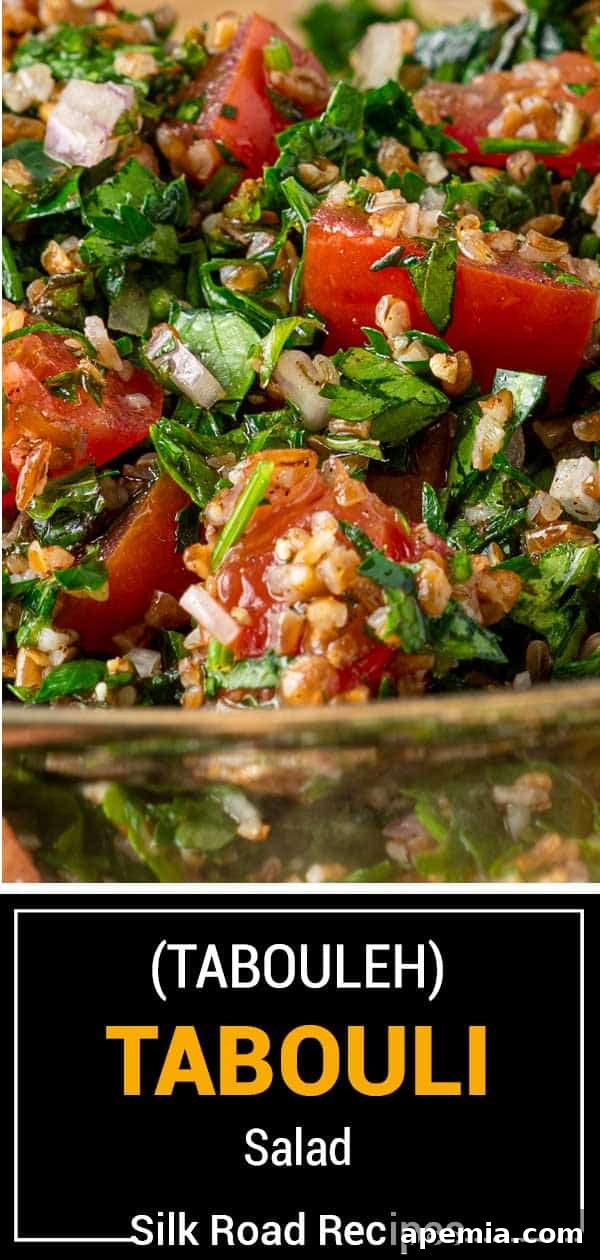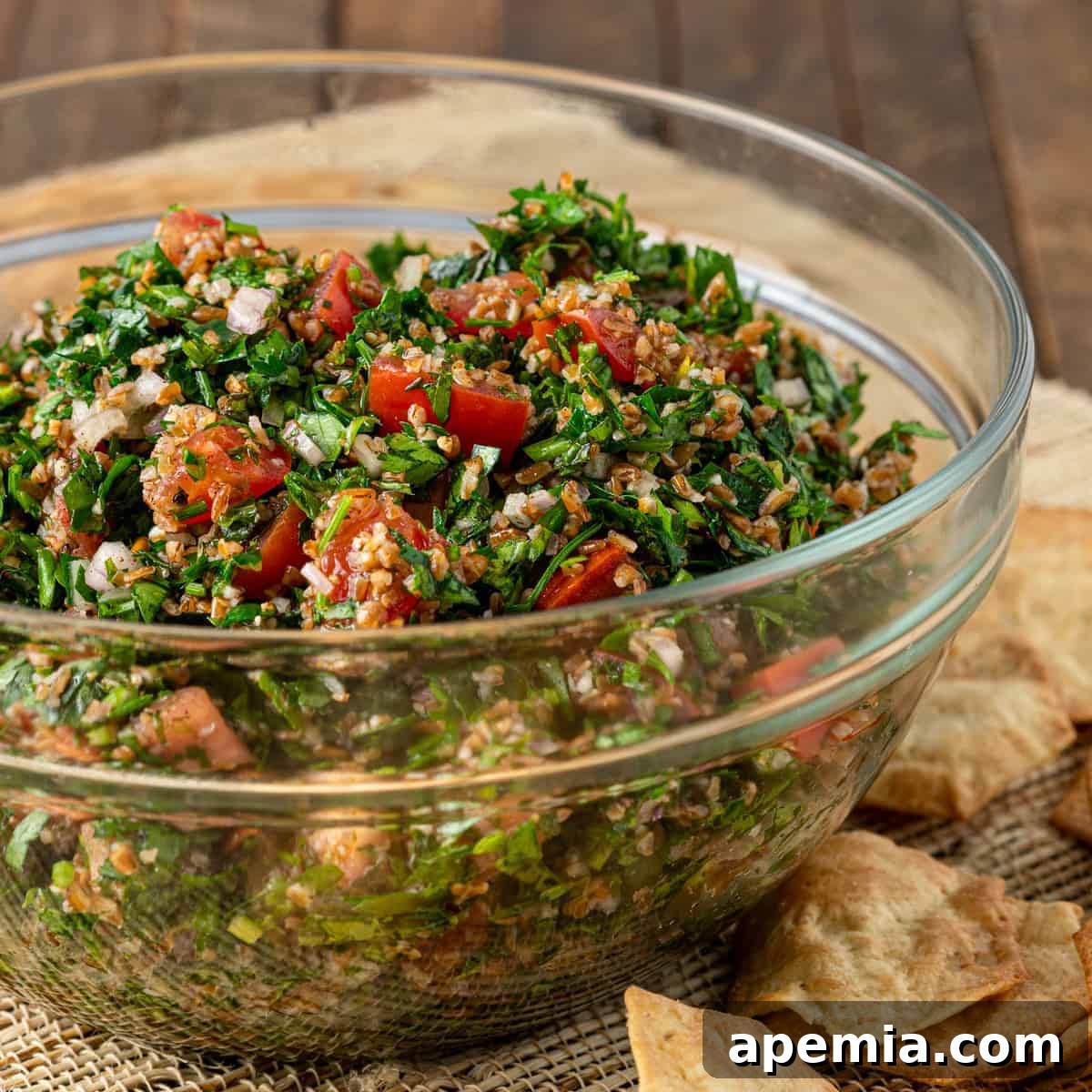
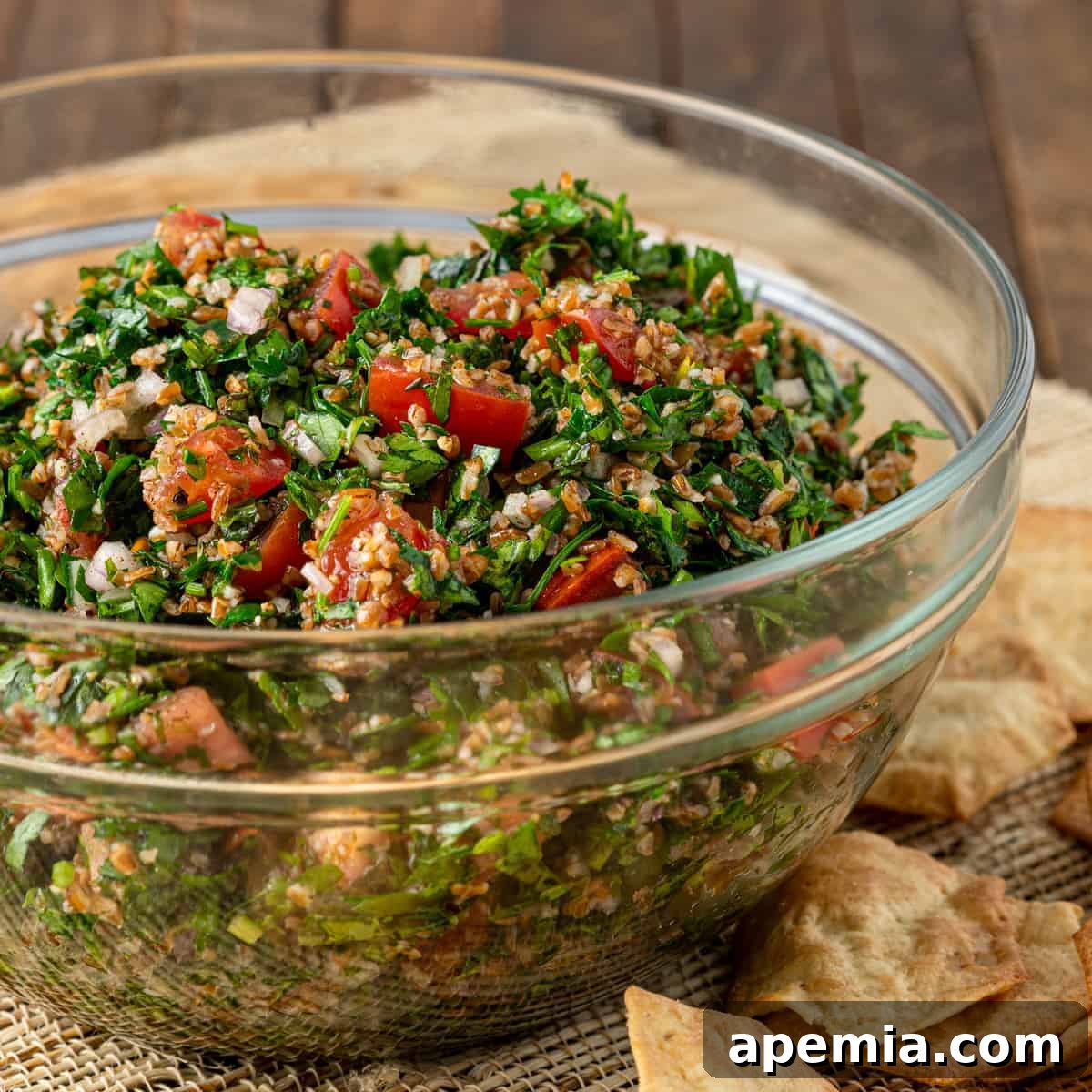
Prepare to embark on a culinary journey with this incredible recipe for Tabouli Salad – a dish that is as lively and refreshing as it is simple to master. This quintessential Mediterranean delight shines with its vibrant medley of freshly chopped parsley and mint, robust bulgur wheat, and crisp, juicy vegetables. Each ingredient is lovingly bathed in a perfect harmony of bright lemon juice, premium olive oil, and aromatic spices, culminating in a truly sensational and unforgettable dish.
Authentic Tabouli Salad: A Refreshing Mediterranean Masterpiece
Often spelled tabouleh or tabbouleh, tabouli salad is more than just a side dish; it’s a celebrated cornerstone of Middle Eastern cuisine. This iconic salad boasts an all-star cast of fresh, wholesome ingredients that deliver a delightful symphony of tastes and textures. From the verdant herbs to the tender bulgur and crunchy vegetables, every component is brought to life by a bright, zesty citrus vinaigrette, making it a beloved choice for any occasion.
The Ancient Roots of Tabouli: A Timeless Culinary Legacy
Tabouli is an undeniably delicious and enduring dish, a testament to its timeless appeal. Its origins can be traced back an astonishing 4,000 years to the mountainous regions of Lebanon and Syria. This rich history highlights tabouli’s deep cultural significance and its remarkable ability to remain a cherished staple across generations. It’s a dish that has truly stood the test of time, continuing to grace tables and delight palates around the globe.

For those eager to explore more incredible flavors from the region, be sure to check out my Mujadara Lentils and Rice, the delightful Persian Tahdig Crispy Rice, and this flavorful Persian Kuku.
Table of Contents
- The Essence of Tabouli
- Key Ingredients and Smart Substitutions
- Step-by-Step Guide to Making Tabouli Salad
- The Health Benefits of Tabouli
- Serving and Enjoying Tabouli
- Frequently Asked Questions
- Tabouli Salad (Tabouleh) Recipe
Tip From Kevin
The Essence of Tabouli
The name “tabbouleh” itself offers insight into this dish, deriving from the Arabic word “taabil”, which means “to season or spice”. This reflects how its fresh herbs and zesty dressing truly season and elevate the simple bulgur and vegetables into a vibrant, flavorful experience. While often considered a salad, tabouli, in its most traditional Lebanese form, is arguably more of an herb salad with bulgur as a delightful textural component rather than the main base.
Key Ingredients and Smart Substitutions for Perfect Tabouli
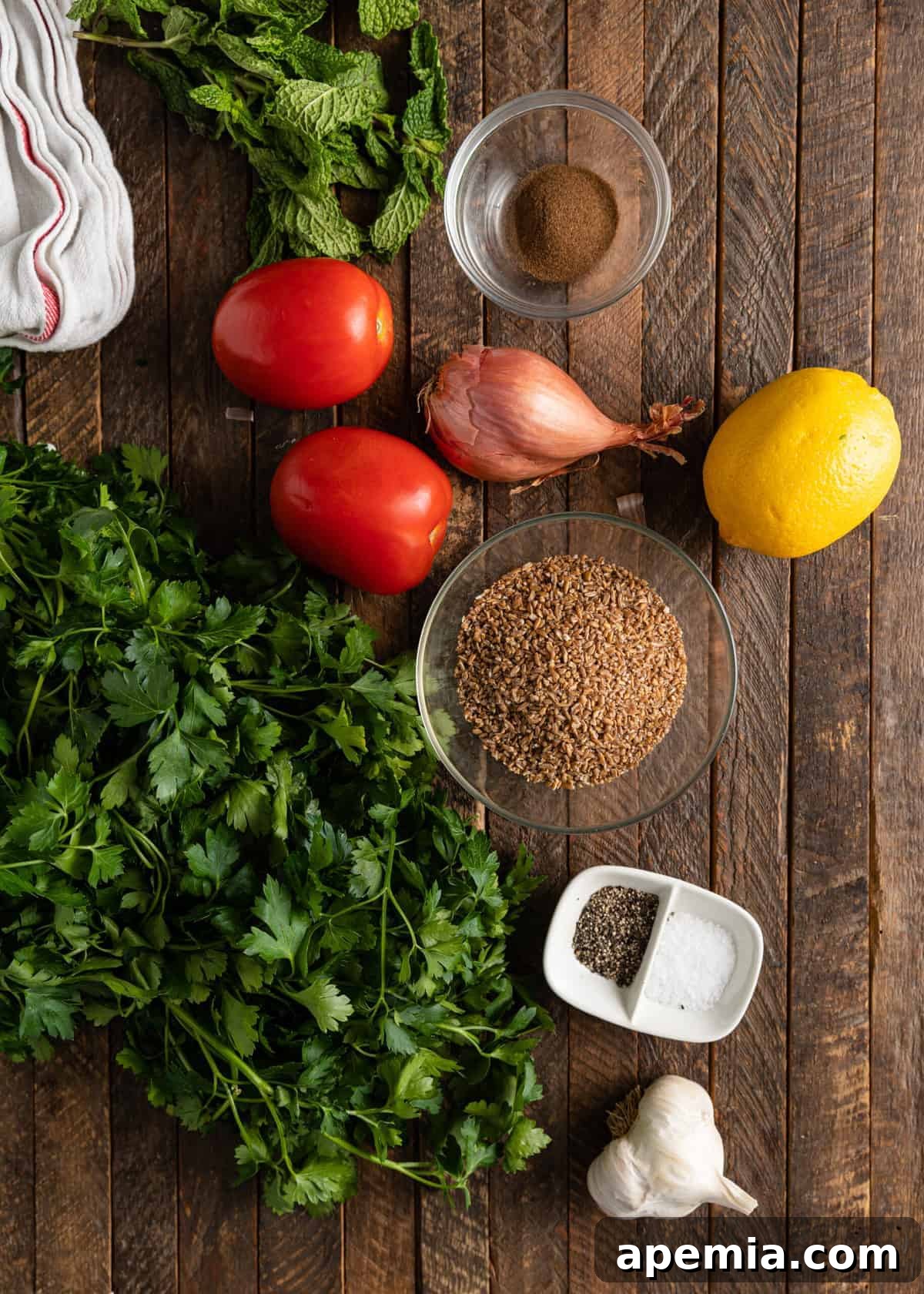
Achieving the authentic taste and texture of tabouli starts with selecting the freshest ingredients. Here’s a closer look at what you’ll need and how you can adapt the recipe to your pantry or preference:
- Bulgur Wheat: This ancient grain is the heart of tabouli, providing a delightful light, nutty flavor and a satisfyingly chewy texture. It’s crucial to use fine bulgur for traditional tabouli, as it only requires soaking, not cooking, which helps maintain its delicate structure. Remember to soak your grains thoroughly before use to ensure they are perfectly tender. For a gluten-free alternative, you can experiment with quinoa, ensuring it’s fully cooled before mixing.
- Tomatoes: Ripe, firm tomatoes are essential. Roma tomatoes are often preferred for their thin skins, meaty texture, and relatively low moisture content, which prevents the salad from becoming watery. However, feel free to substitute with other firm tomato varieties. For an extra burst of tart-sweet flavor and vibrant color, pomegranate seeds make a fantastic alternative or addition, especially when tomatoes are out of season.
- Shallots: Shallots impart a delicate crunch and a milder, sweeter onion flavor compared to their sharper onion counterparts. Their subtlety allows the fresh herbs to truly shine. If shallots are unavailable, a very finely diced red onion can be used, though it will give your salad a slightly bolder, sharper taste.
- Garlic: Just a touch of fresh garlic adds a bright, sharp, and zingy pungency that awakens the other flavors. Mince it very finely to ensure it disperses evenly throughout the salad without overpowering.
- Parsley (Flat-Leaf Italian): The true MVP of tabouli, fresh parsley provides a clean, peppery, and earthy foundation, along with its characteristic deep forest green color. Flat-leaf (Italian) parsley is typically preferred for its robust flavor and easier chopping, but curly parsley can be used if you maintain the critical 3:1 parsley-to-mint ratio. Abundance is key here!
- Mint Leaves: Fresh mint is indispensable, introducing a wonderfully sweet, cooling, and aromatic counterpoint to the parsley. It brightens the entire dish, making it incredibly refreshing. Use fresh mint, as dried mint will not deliver the same vibrant impact.
- Olive Oil: As with many Mediterranean dishes, the quality of your olive oil truly makes a difference. Opt for the highest quality extra virgin olive oil you can find for the best flavor. Its fruity notes and silky texture bind the ingredients beautifully. In a pinch, a good quality avocado oil can serve as a suitable substitute.
- Lemon Juice: Freshly squeezed lemon juice is the lifeblood of tabouli, infusing the salad with a vibrant blast of citrus flavor and acidity that perfectly balances the rich herbs and oil. Do not use bottled lemon juice; fresh is non-negotiable for this recipe.
- Spices: A simple yet effective blend of allspice, salt, and black pepper adds warmth, harmony, and depth. Allspice, with its complex notes resembling cloves, nutmeg, and cinnamon, is particularly characteristic of Middle Eastern flavors. Sumac is an optional but highly recommended addition, offering a deliciously sharp, tangy, and subtly floral tartness that elevates the dish to another level. Don’t skip it if you can find it!
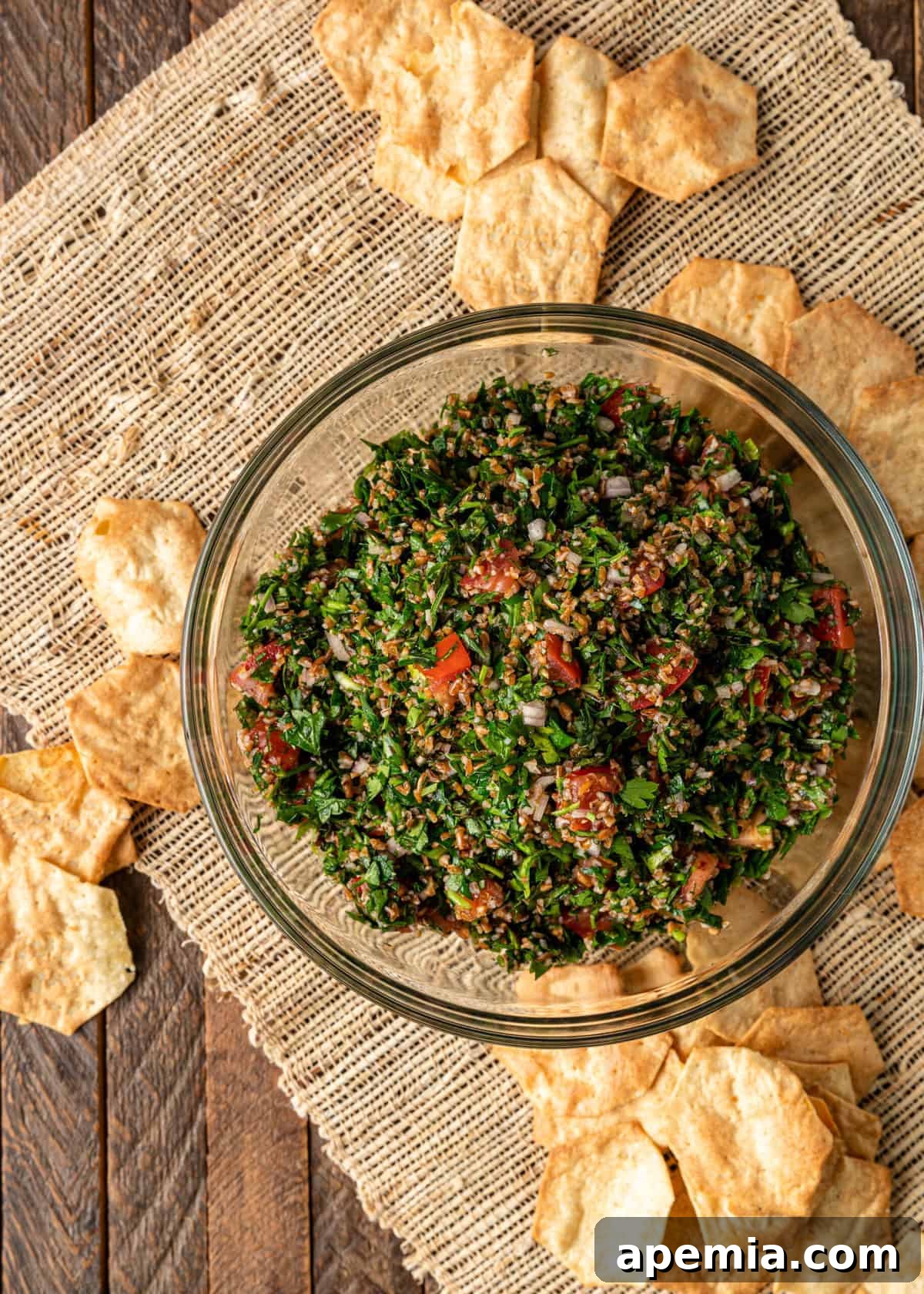
Step-by-Step Guide to Making the Perfect Tabouli Salad
Creating delicious tabouli at home is a straightforward process, but paying attention to a few key steps will ensure a perfect result every time. Here’s how to master this refreshing salad:
- Prepare the Bulgur Wheat: Begin by placing your fine bulgur wheat in a large bowl. You have two options for soaking: either cover it with cold water and let it soak for 60 minutes, or for a quicker method, pour boiling water over the bulgur and let it stand for 20 minutes. The goal is for the bulgur to become tender but still retain a slight chew. Once soaked, rinse the bulgur thoroughly in a fine-mesh sieve under cold running water until the water runs completely clear. This step is crucial to remove excess starch. Finally, shake the sieve vigorously to drain and remove as much excess water as possible before transferring the plumped grains to your main serving bowl.
- Dice the Vegetables: Using a very sharp knife, finely dice the tomatoes. The finer the dice, the better they will integrate into the salad. Add the diced tomatoes, along with any natural juices, to the bulgur wheat. Gently toss to combine and ensure the bulgur is lightly coated. Next, finely dice the shallots and mince the garlic. Add these aromatics to the bowl, tossing everything together.
- Process the Parsley: This is where patience pays off for truly authentic tabouli. Working with one bunch of parsley at a time, remove and discard about half of the thicker stems. Using an herb snipper or an extremely sharp knife, finely chop the parsley leaves and remaining tender stems. The finer, the better! Go over the chopped parsley once or twice more to achieve an almost uniform, minced consistency. Transfer the finely chopped parsley to the bowl with the other ingredients. Repeat this process with the remaining bunches of parsley.
- Chop the Mint: Separate the fresh mint leaves from their stems and discard the stems. Stack several mint leaves on top of each other and finely chop them, aiming for a similar consistency to your parsley. Add the chopped mint to the bowl, then repeat with the remaining mint leaves until all are incorporated.
- Dress and Season: To the bowl, add the fresh lemon juice, high-quality olive oil, ground allspice, salt, black pepper, and the optional (but recommended) sumac. Using two large spoons, gently toss all the ingredients together until everything is well combined and coated in the vibrant dressing.
- Taste and Chill: Give the tabouli a taste test. Adjust seasonings as needed, adding more salt, pepper, or lemon juice to suit your preference. Once seasoned to perfection, cover the bowl tightly with plastic wrap and transfer it to the refrigerator for at least 30 minutes. This chilling time allows the flavors to meld beautifully and intensify.
- Stir and Serve: Before serving, give the tabouli a good stir to redistribute the ingredients and dressing. Traditionally, tabouli can be served at room temperature or chilled, depending on your preference. Transfer it to a beautiful serving plate and enjoy it alongside pita bread, pita chips, or as a vibrant accompaniment to your favorite Middle Eastern dishes.
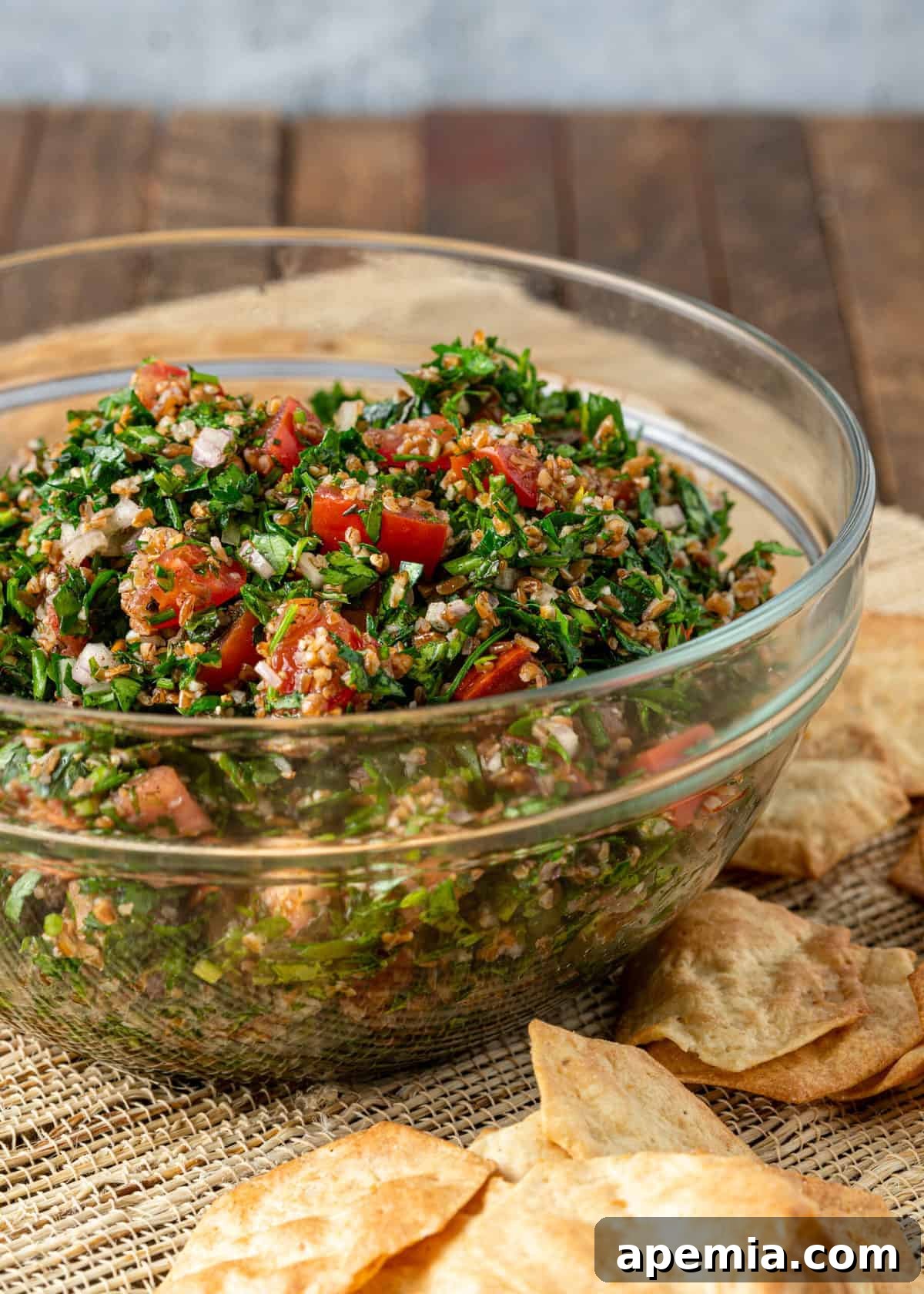
Share this recipe on Pinterest!
Love this recipe? Share it with the world on Pinterest.
The Health Benefits of Tabouli Salad
Beyond its incredible taste, tabouli salad is a nutritional powerhouse. It’s packed with fresh ingredients that offer a wealth of health benefits, making it an excellent choice for a healthy lifestyle:
- Rich in Vitamins and Minerals: Parsley and mint are brimming with vitamins K, C, and A, as well as iron and antioxidants. These nutrients are vital for bone health, immune function, and protecting cells from damage.
- High in Fiber: Bulgur wheat is a whole grain, providing a significant amount of dietary fiber. Fiber is essential for digestive health, helps regulate blood sugar levels, and contributes to a feeling of fullness, which can aid in weight management.
- Heart-Healthy Fats: Extra virgin olive oil, a cornerstone of the Mediterranean diet, provides monounsaturated fats that are known to support cardiovascular health.
- Low in Calories and Fat (naturally): Tabouli is inherently a light and refreshing dish, making it a great option for those watching their calorie or fat intake, especially when enjoyed as a main course or a substantial side.
- Antioxidant Boost: The combination of fresh herbs, tomatoes, and lemon juice delivers a potent dose of antioxidants, which help combat inflammation and support overall well-being.
Serving and Enjoying Tabouli: Versatility at its Best
Tabouli’s versatility is one of its most appealing qualities. It seamlessly fits into various meals and dining occasions. Here are some fantastic ways to enjoy this delectable dish:
- As an Appetizer or Mezze Item: Serve it traditionally as part of a vibrant mezze platter alongside a bowl of creamy Mediterranean Hummus, warm Pita Bread, and olives. Its refreshing profile makes it a perfect palate cleanser.
- A Dynamic Side Dish: Tabouli is an excellent companion to grilled meats like Lamb Shawarma or Marinated Tahini Chicken. It also pairs wonderfully with vegetarian options such as crispy Falafel.
- Light and Healthy Meal: Enjoy tabouli on its own as a light, satisfying, and healthy lunch or dinner. The bulgur provides enough substance to make it a fulfilling meal.
- In Sandwiches and Wraps: Add a spoonful of tabouli to your favorite sandwiches, wraps, or even in a Greek Chicken Souvlaki for an extra burst of freshness and texture.
- Potlucks and Picnics: Tabouli holds up well and travels beautifully, making it an ideal dish for gatherings, potlucks, and outdoor picnics.
Frequently Asked Questions About Tabouli Salad
For optimal freshness and flavor, store your leftover tabouli salad in an airtight container in the refrigerator for up to 3-4 days. While it’s best enjoyed fresh, the flavors can sometimes deepen on the second day. Give it a good stir before enjoying leftovers. If it appears a bit dry or less vibrant, a fresh squeeze of lemon juice and a light drizzle of high-quality olive oil will quickly revitalize it.
The two most common complaints home cooks encounter when making tabouli salad are bitterness and sogginess. Luckily, both issues are easily preventable with a few simple pointers:
- Avoiding Bitterness: Tabouli can turn bitter if the parsley isn’t chopped finely enough or if too much tough stem is included. Ensure you chop the parsley as finely as humanly possible, almost to a mince. This releases its oils evenly and prevents large pieces from tasting overly herbaceous or bitter. Also, make sure to mix your salad thoroughly and evenly so all flavors are well distributed.
- Preventing Sogginess: Sogginess usually stems from either excess moisture from your vegetables or bruised herbs.
- For a dryer consistency, especially if your tomatoes are very juicy, chop them about 30 minutes in advance, sprinkle them with a pinch of salt, and place them in a colander to drain. This draws out excess liquid before they are added to the salad.
- When chopping herbs, avoid using food processors or dull knives. While convenient, these tools tend to bruise the delicate herbs, releasing their moisture and leading to a mushy, wet salad. Instead, use an herb snipper or the sharpest knife available, employing a gentle rocking motion for a clean cut.
While tabouli is best enjoyed within a day of preparation, you can certainly do some prep work in advance. Chop your vegetables and herbs and store them separately in airtight containers in the refrigerator. Soak your bulgur and drain it well, storing it separately too. Combine all ingredients with the dressing about 1-2 hours before serving to allow flavors to meld without the salad becoming too watery or the herbs losing their vibrant texture.
For authentic tabouli, fine-grain bulgur wheat (also known as #1 fine bulgur) is highly recommended. Its delicate texture softens beautifully with just soaking, requiring no cooking. Medium or coarse bulgur varieties require longer soaking or even a brief boil, which can alter the desired texture of the salad. Always check the package for the specific grind size.
Tabouli Salad (Tabouleh)
5 Stars from 1 vote
Tabouli salad is a lively combination of tender bulgur wheat, fresh herbs like parsley and mint, juicy tomatoes, aromatic garlic, and crisp shallots, all brought together with a lightly spiced, zesty lemon-olive oil vinaigrette. This refreshing dish is a staple of Middle Eastern cuisine and perfect for any meal.
8
20 mins
20-60 mins
40 mins – 1 hour 20 mins
Print Recipe
Ingredients
- 3.5 oz dry fine bulgur wheat
- 1 lb ripe tomatoes (Roma or similar firm variety)
- 1 large shallot
- 3 bunches Italian (flat leaf) parsley
- 1 bunch fresh mint leaves
- 1/2 cup extra virgin olive oil
- 4 tbsp fresh lemon juice
- 1 clove garlic, minced
- 1 tsp ground allspice
- 1/2 tsp small grind sea salt or kosher salt
- 1/2 tsp black pepper (or red pepper flakes for a kick)
- 1/2 tsp sumac (optional, but highly recommended)
Instructions
- Soak Bulgur: In a medium bowl, soak the bulgur wheat. For a faster method, pour boiling water over the bulgur and let it sit for 20 minutes. Alternatively, use cold water and soak for 60 minutes. Once tender, rinse the bulgur in a fine-mesh sieve under cold running water until the water runs clear. Press out as much excess water as possible and transfer the bulgur to a large serving bowl.
- Prepare Vegetables: Using a very sharp knife, finely dice the tomatoes. Add the diced tomatoes, along with any juices, to the bulgur wheat and toss to coat. Finely dice the shallot and mince the garlic, then add them to the bowl and mix well.
- Chop Parsley: Take half a bunch of parsley at a time. Remove and discard the thicker stems. Finely chop the parsley leaves and tender stems with an herb snipper or sharp knife until it’s as minced as possible. Add to the bowl. Repeat with the remaining parsley until all is finely chopped and added.
- Chop Mint: Remove mint leaves from their stems and discard the stems. Stack several mint leaves together and finely chop them, aiming for a similar fine consistency as the parsley. Add to the bowl and repeat with all remaining mint leaves.
- Dress the Salad: To the bowl, add the lemon juice, olive oil, allspice, salt, black pepper, and optional sumac. Using two large spoons, gently toss all ingredients until thoroughly combined and coated with the dressing.
- Chill and Season: Taste the salad and adjust seasonings as needed, adding more salt, pepper, or lemon juice to your preference. Cover the bowl with plastic wrap and refrigerate for at least 30 minutes to allow the flavors to meld.
- Serve: Before serving, stir the tabouli well. Serve traditionally at room temperature or chilled, accompanied by pita chips, fresh pita bread, or as a vibrant side to your favorite Middle Eastern main courses.
Notes
- Tomato Choice: Roma (plum) tomatoes are excellent for tabouli due to their firm flesh and low moisture, making them easier to dice finely. However, any firm, ripe tomato will work. For a unique twist or if tomatoes are out of season, consider substituting with pomegranate arils for a delightful tart-sweet crunch.
- Parsley Variety: While flat-leaf (Italian) parsley is preferred for its robust flavor and ease of chopping, curly parsley can be used. Just ensure you maintain the crucial 3:1 ratio of parsley to mint for the classic flavor balance.
- Pepper Preference: If you enjoy a bit of heat, feel free to substitute red pepper flakes for the black pepper to add a subtle kick.
- Herb Chopping Technique: The key to perfect tabouli is finely chopped herbs without bruising. Avoid food processors or dull knives, as they tend to crush the herbs, leading to a mushy, watery, and potentially bitter salad. An herb snipper or a very sharp chef’s knife is your best friend here, ensuring clean, precise cuts.
Nutrition
The information shown is an estimate provided by an online nutrition calculator. It should not be considered a substitute for a professional nutritionist’s advice.
Salad
Lebanese, Middle Eastern
Kevin
Have You Made This Recipe? Let Me Know on Instagram!
Tag @keviniscooking or use the hashtag #keviniscooking!