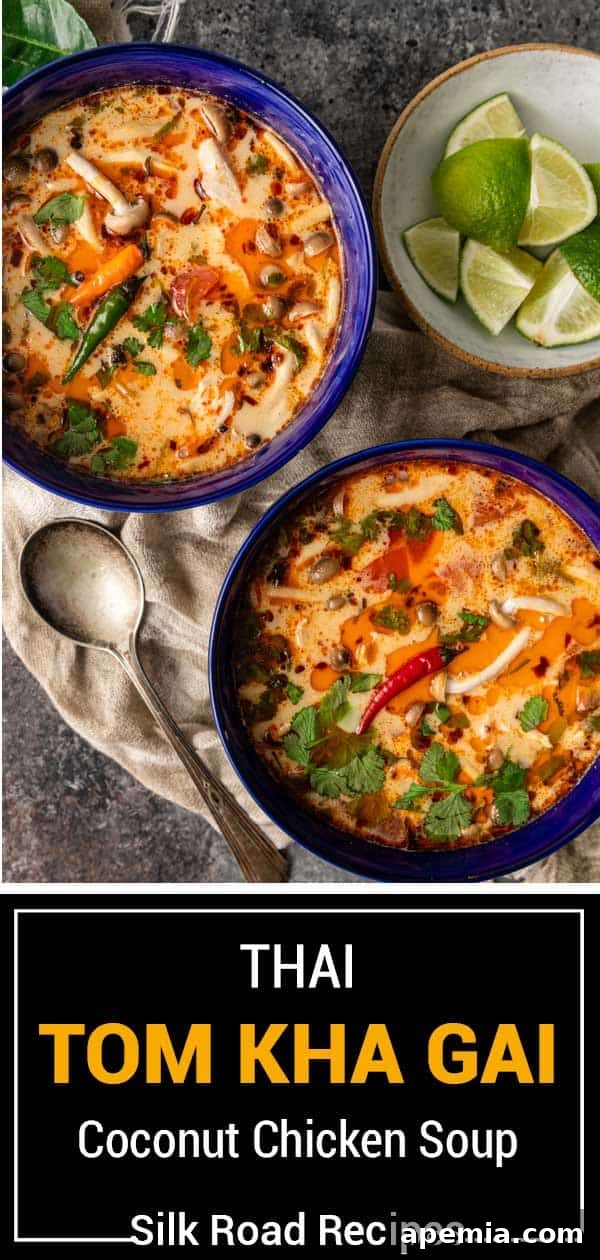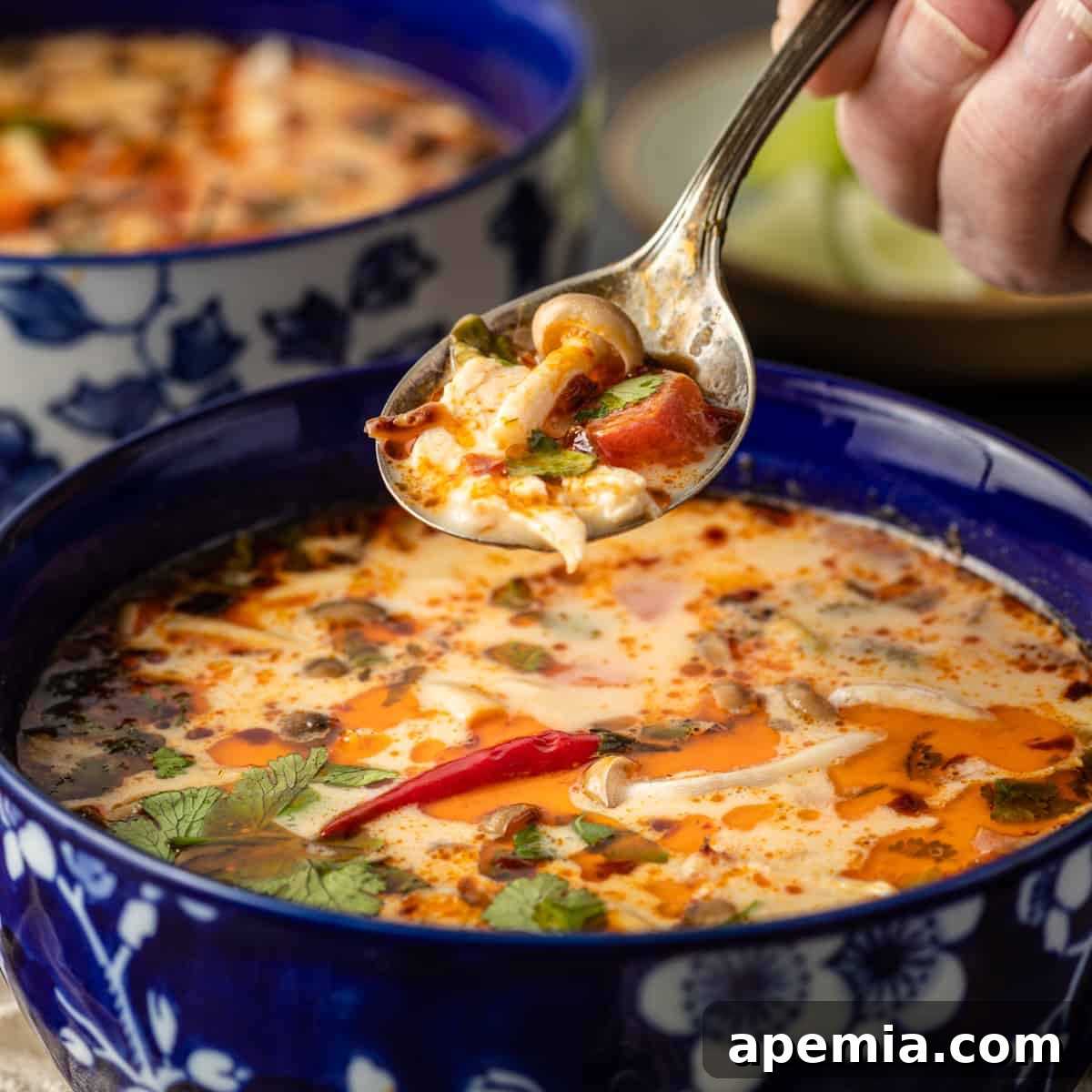
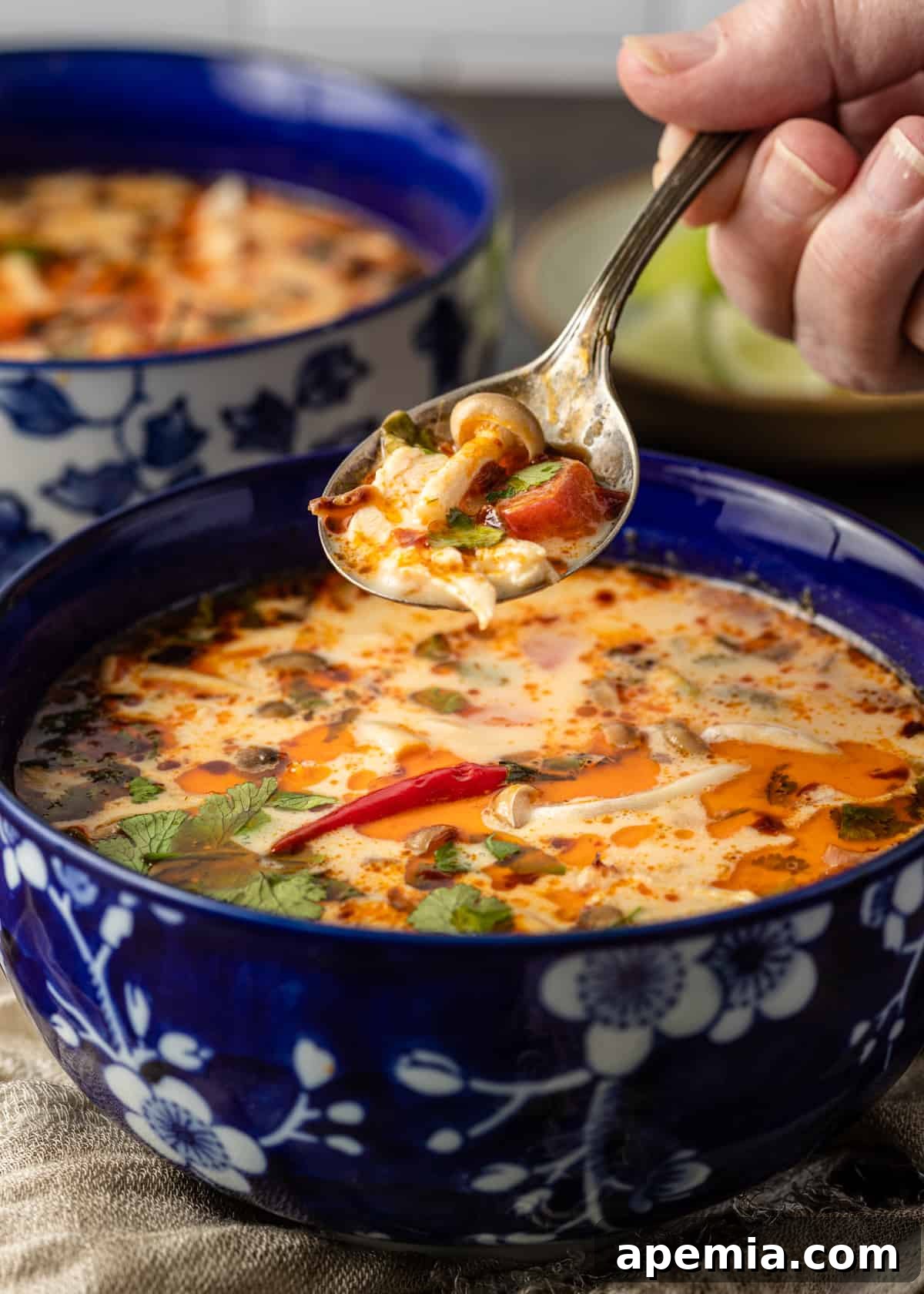
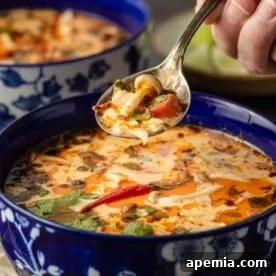
Experience the vibrant flavors of Thailand with this incredible Tom Kha Soup recipe! A harmonious blend of spicy, sour, fresh, and tangy notes, this iconic Thai coconut chicken soup is a feast for the senses. The rich, velvety coconut milk perfectly balances the heat from the chilis, creating a comforting yet exhilarating culinary adventure. Customize it with your favorite proteins and a generous array of vegetables for a truly hearty and satisfying Thai meal that will transport your taste buds straight to Southeast Asia.
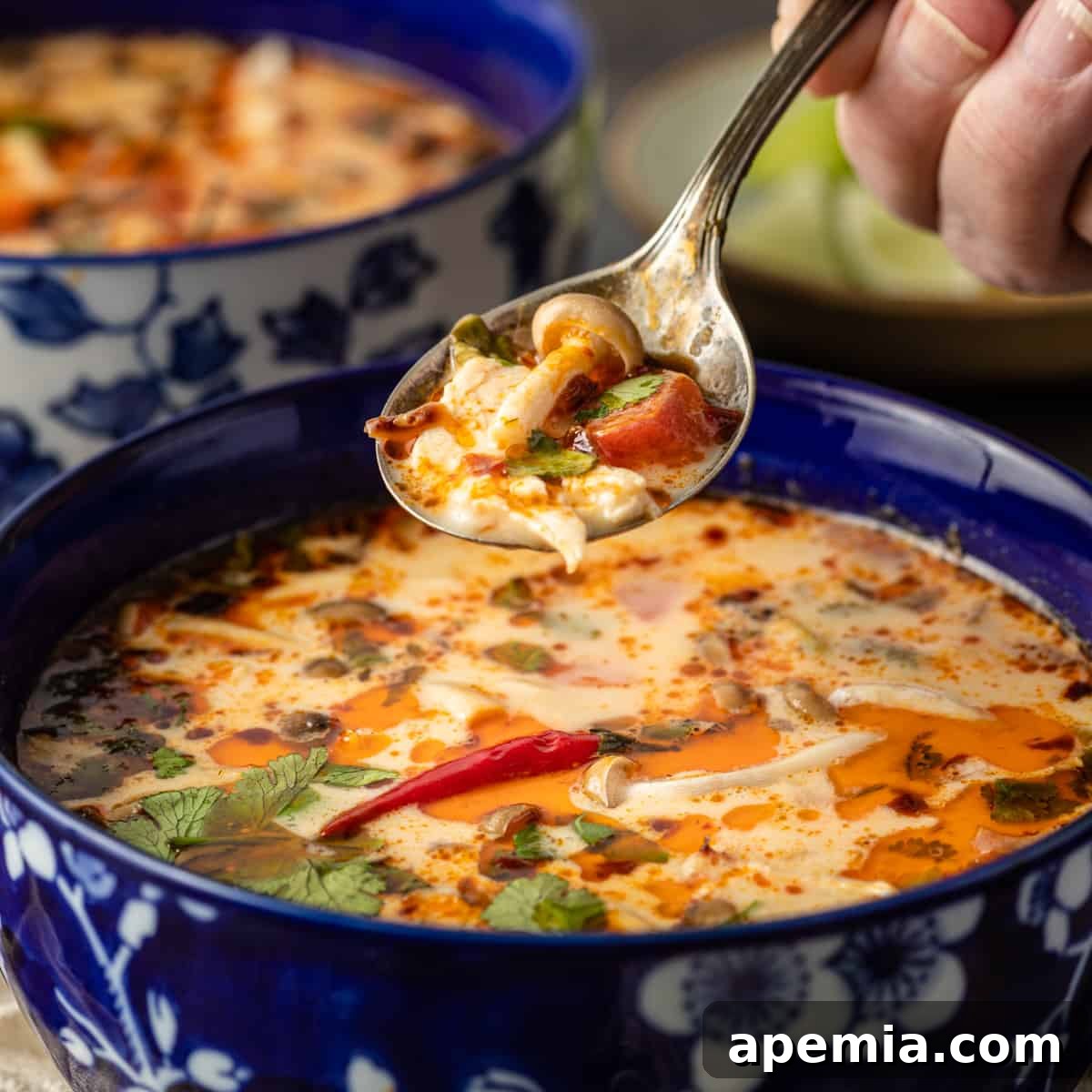
Tom Kha Gai, often simply called Tom Kha soup, holds a special place in my kitchen. It’s a dish that beautifully showcases the incredible diversity of Southeast Asian herbs and spices, many of which are already staples in my pantry. Beyond its exotic flavors, this soup is wonderfully wholesome, brimming with tender chicken and an abundance of fresh vegetables, making it a truly fresh, filling, and utterly delicious meal.
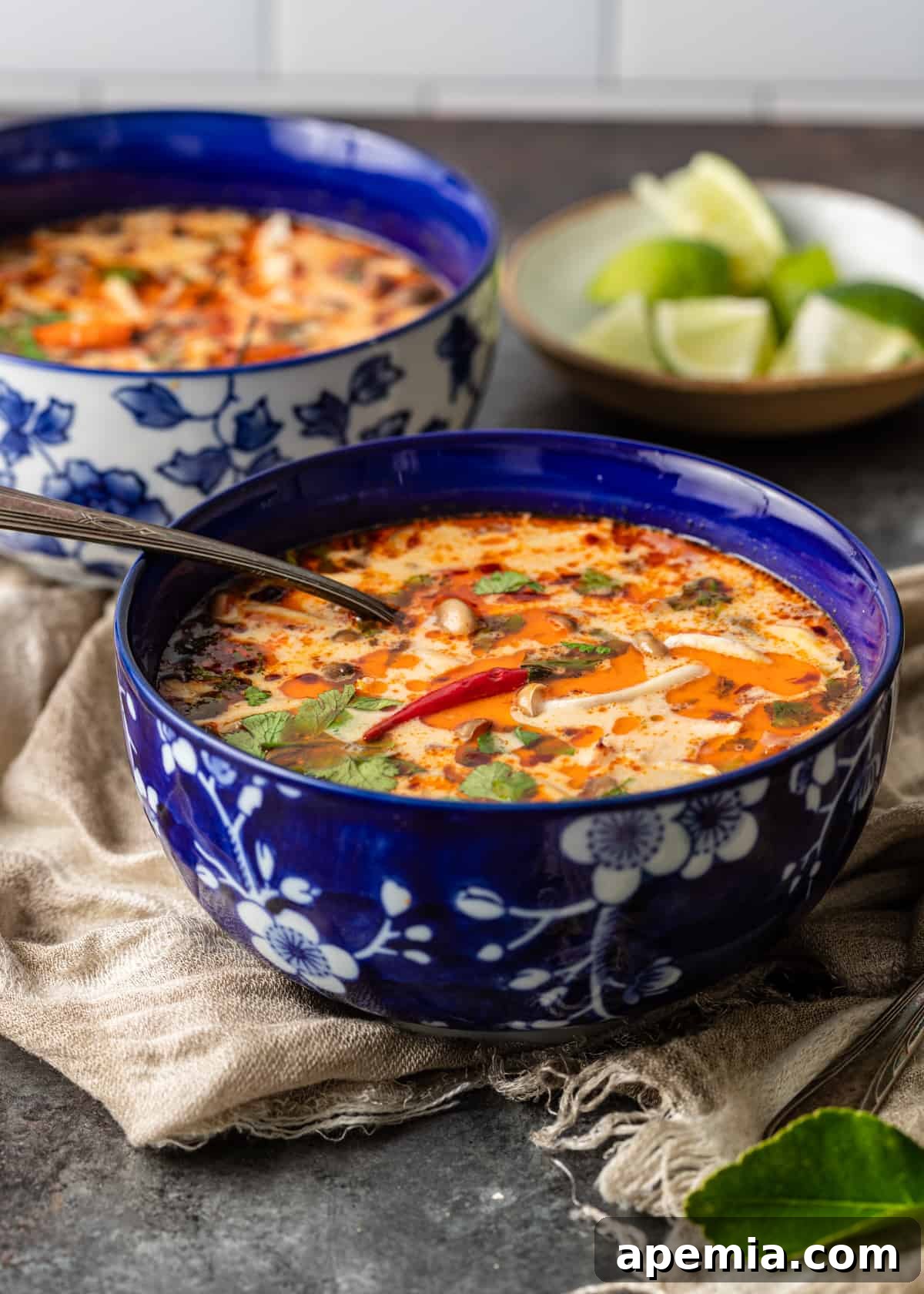
The magic of this chicken soup lies in its thick, aromatic broth. Infused with the slightly sweet richness of coconut milk, it forms a creamy base that cradles bold chili heat and bright, citrusy herbs. The addition of fresh lime juice, a cornerstone of Thai cuisine, introduces a zesty tang that, when combined with a touch of saltiness from the fish sauce, creates an unforgettable flavor profile. Every spoonful is a complex symphony of sweet, sour, salty, and spicy – a hallmark of authentic Thai cooking.
Table of Contents
- What is Tom Kha Gai?
- The Secret Ingredient: Galangal
- Essential Ingredients & Smart Substitutions
- Crafting Your Perfect Tom Kha Soup: Step-by-Step
- Recommended Kitchen Tools
- Storing and Reheating Tips
- Frequently Asked Questions
- Authentic Tom Kha Soup Recipe Card
When I prepare this delightful soup, I almost always serve it alongside a generous portion of fluffy jasmine rice. The rice acts as a perfect sponge, soaking up every last drop of the creamy, hot, and sour broth, ensuring no flavor goes to waste. This pairing is a tradition I follow for many of my favorite Asian soups and curries, whether it’s a rich Panang curry, a comforting coconut crab soup, or a fiery spicy red curry. Pairing them with rice or even some warm flatbread truly elevates the dining experience, making each meal profoundly satisfying.
What is Tom Kha Gai? Unveiling a Thai Classic
Tom Kha Gai translates literally to “galangal chicken soup,” highlighting one of its signature ingredients. While often overshadowed by its more famous cousin, Tom Yum, Tom Kha offers a distinctively creamy and aromatic profile that has earned it a beloved status worldwide. Originating from Laos and Thailand, this soup is celebrated for its delicate balance of flavors—creamy from coconut milk, spicy from chilies, sour from lime and lemongrass, and deeply aromatic from galangal and kaffir lime leaves. It’s a comfort food that doesn’t compromise on complexity, offering a soothing yet invigorating experience with every spoonful. This dish is not just food; it’s a cultural staple, reflecting the rich culinary heritage of Southeast Asia.
Tip From Kevin
The Secret Ingredient: Galangal
Galangal is a pungent, aromatic root closely related to ginger, yet possessing its own unique character. A cornerstone of Southeast Asian cuisine, particularly in Thai, Indonesian, and Malaysian dishes, it offers a distinct citrusy, pine-like, and peppery flavor that is sharper and more assertive than regular ginger. Often referred to as Thai ginger, galangal is crucial for achieving the authentic taste of Tom Kha soup. While its flavor is unique, if fresh galangal is unavailable, you can substitute it with a slightly larger quantity of fresh ginger, though the final taste will be milder and less complex.
Essential Ingredients & Smart Substitutions
For precise quantities, please refer to the complete recipe card below.
- Chicken & Chicken Stock – Chicken breast is traditionally used for its lean texture, making it the most common protein in Tom Kha Gai. However, feel free to experiment! Shrimp, firm tofu, or even sliced pork can make excellent alternatives. If using seafood, add it towards the end to prevent overcooking.
- Full-Fat Coconut Milk – This is the cornerstone of Tom Kha’s signature creaminess and rich flavor. Opt for full-fat varieties for the most luxurious texture and depth. Lite coconut milk can be used for a lighter version, but it will significantly alter the soup’s richness.
- Kaffir Lime Leaves – These fragrant leaves are indispensable for their bright, citrusy aroma and taste. They impart a unique floral note that’s hard to replicate. If fresh leaves are unavailable, you can substitute by zesting an extra lime, though the flavor won’t be as profound. Look for them in Asian grocery stores, usually in the produce or freezer section.
- Lemongrass – Use only the pale, tender inner stalk for its incredible lemony, subtly sweet, and floral aroma. Bruising the stalk before adding it to the soup helps release its essential oils. Lemongrass paste can be a convenient substitute, but fresh stalks offer superior fragrance.
- Galangal – As discussed, this root is crucial for authentic Tom Kha flavor. Its sharp, citrusy-pine notes set it apart from ginger. If fresh galangal is hard to find, regular ginger can be used in a pinch, but anticipate a different, milder flavor profile.
- Cilantro – Fresh cilantro, roughly chopped, adds a burst of freshness and vibrant color to the finished soup. It’s best added at the very end to preserve its delicate flavor. If you’re not a fan of cilantro, fresh Thai basil makes a wonderful, aromatic alternative.
- Fish Sauce – This savory condiment is essential for adding a deep, umami richness that defines Thai cuisine. Don’t skip it! If you don’t have fish sauce, a good quality oyster sauce can provide a similar depth in a pinch.
- Sugar – While the quantity might seem significant, sugar plays a vital role in balancing the intensely sour, salty, and spicy notes, creating the characteristic harmony of Thai flavors. It’s not just for sweetness; it’s for balance.
- Limes – Freshly squeezed lime juice (approximately ¼ cup from 2 limes) adds the crucial sour element. It’s best to add this at the end to preserve its bright flavor. Lemon juice can be used as an alternative, but limes offer a more authentic Thai tang.
- Thai Bird’s Eye Chilis – These small but mighty chilis provide the signature heat of Tom Kha. Adjust the quantity to your preference, from a subtle warmth to a fiery kick. For alternatives, consider cayenne pepper, chili powder, chile de arbol, or a spoonful of your favorite chili paste.
- Vegetables – This tom kha soup recipe is incredibly versatile and welcomes a variety of vegetables. Feel free to bulk it up with your favorites! My preferred additions include:
- Green Onions: For a mild oniony bite and fresh green color.
- Roma Tomato: These tomatoes are less watery than other varieties, making them ideal for soups where you want flavor without excess liquid.
- Oyster Mushrooms : Their delicate texture and earthy flavor are a perfect complement. Other excellent mushroom choices include shiitake, enoki, or cremini.
Crafting Your Perfect Tom Kha Soup: Step-by-Step
- Prepare Herbs & Vegetables. Begin by thinly slicing the lemongrass stalk, roughly chopping your cilantro (leaves and a bit of stem for flavor), slicing the green onions, and breaking apart the oyster mushrooms. Give them a quick rinse and set aside, ready to be incorporated into your exquisite soup.
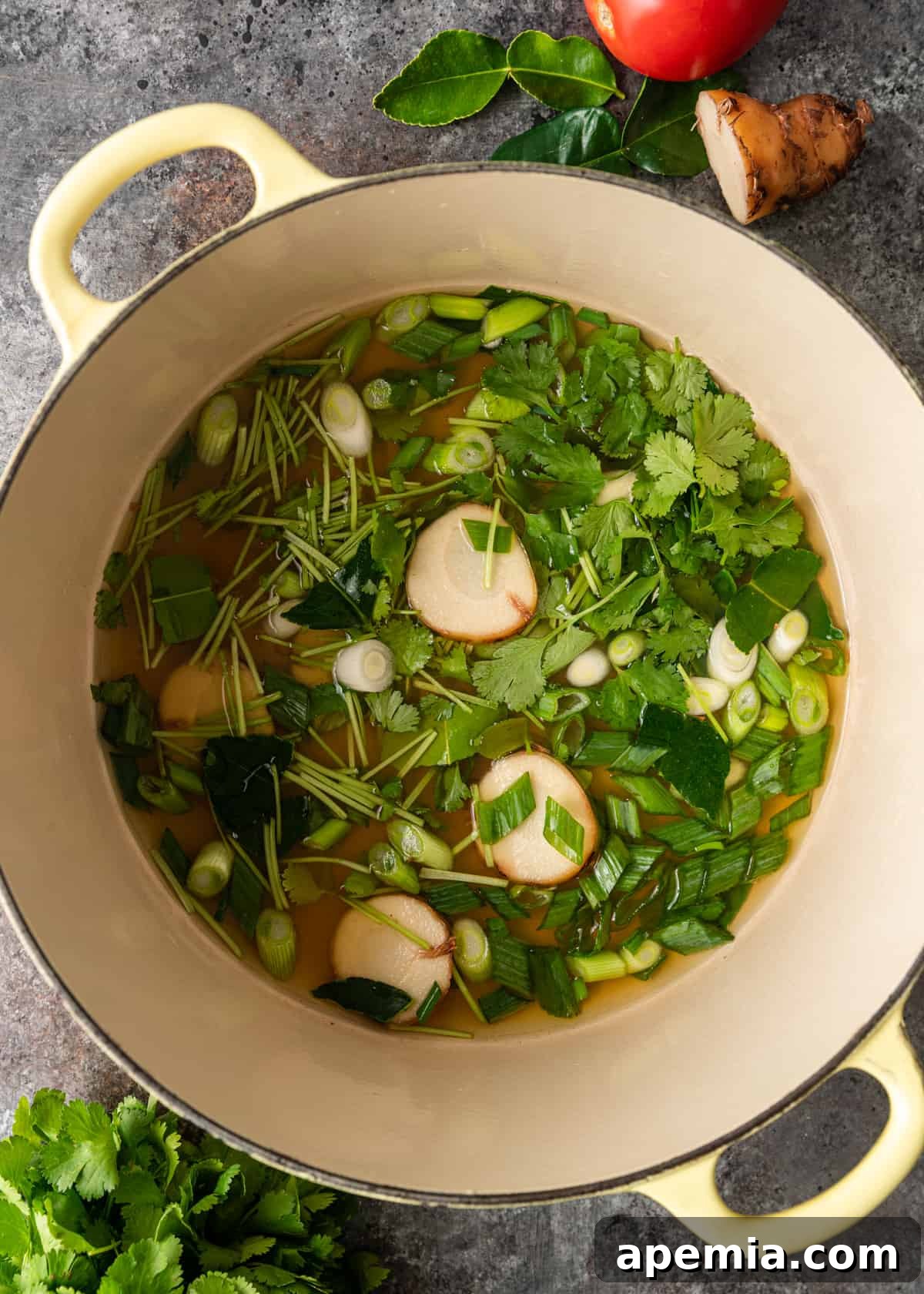
- Initiate the Aromatic Broth. In a large Dutch oven or heavy-bottomed soup pot, combine the chicken stock, torn kaffir lime leaves, sliced lemongrass, half of the prepared green onions and cilantro, and galangal slices. Bring this fragrant mixture to a gentle boil over medium-high heat. Allow it to simmer for about 5 minutes, letting the herbs infuse the stock deeply.
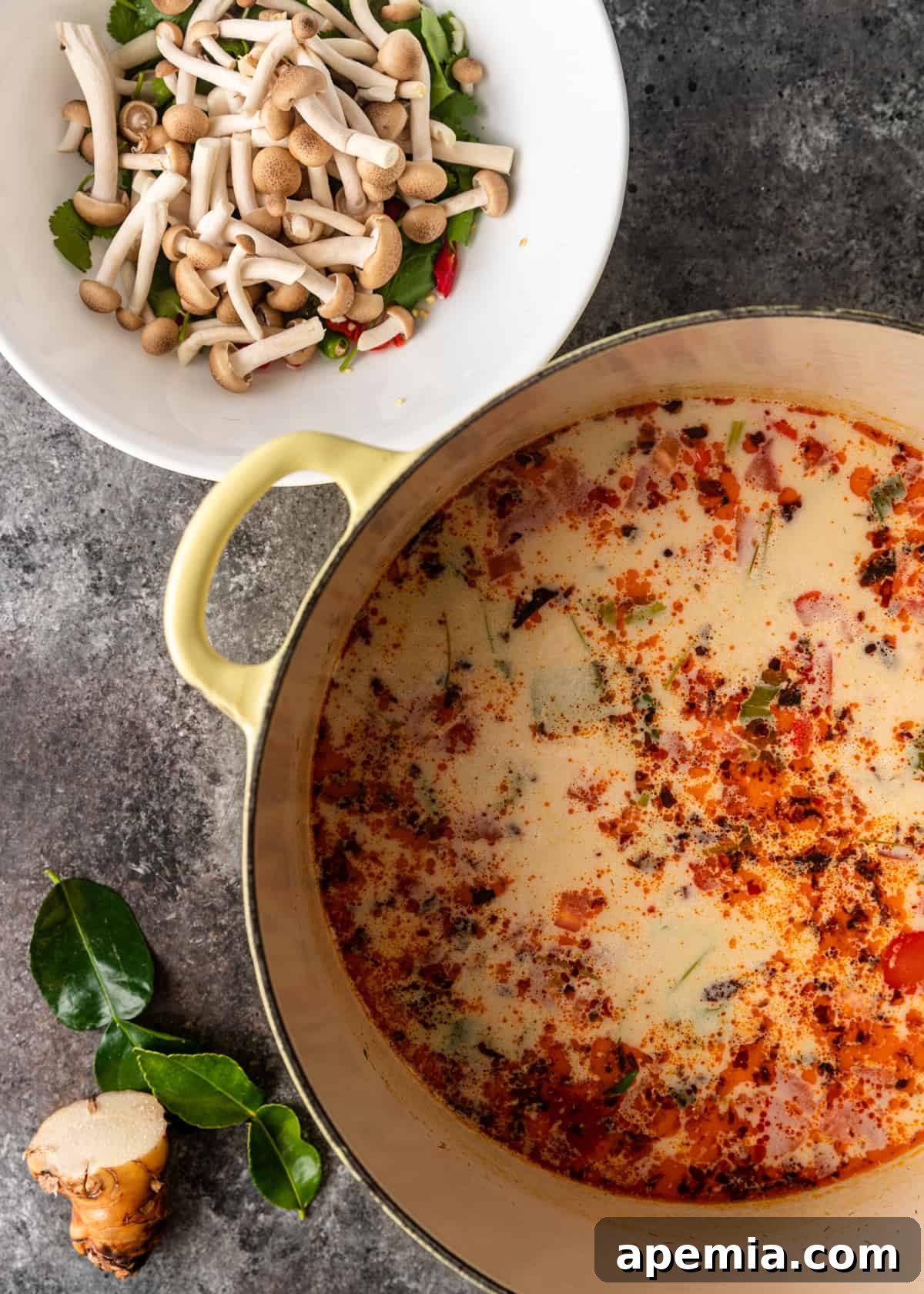
- Enrich the Broth with Creaminess. Carefully pour in the full-fat coconut milk, then stir in the sugar and fish sauce. Continue to cook for another 5 minutes, allowing all the flavors to meld beautifully and the broth to thicken slightly, taking on its characteristic creamy texture.
- Remove Flavoring Solids. Using a slotted spoon or a fine-mesh spider strainer, meticulously remove and discard all the solid aromatics such as lemongrass stalks, kaffir lime leaves, and galangal slices. These ingredients have already imparted their essence and are not meant to be eaten.
- Incorporate the Chicken. Add your bite-sized sliced chicken breast to the simmering broth. Stir gently to ensure the chicken is submerged, and cook for an additional 5 minutes, or until the chicken is thoroughly cooked through and tender.
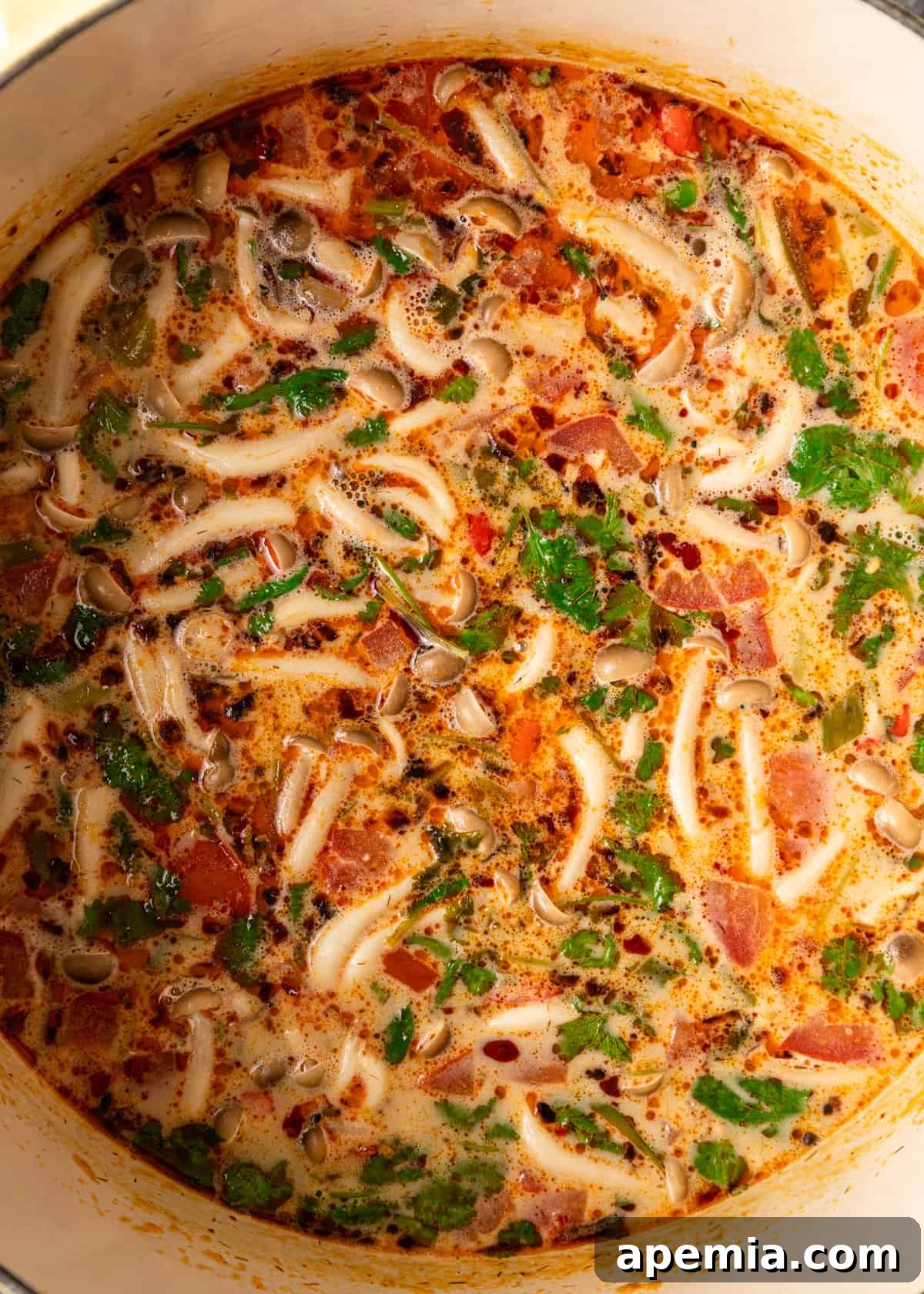
- Add Final Ingredients & Serve. Finally, stir in the remaining fresh cilantro and green onions, the diced Roma tomato, oyster mushrooms, freshly squeezed lime juice, chili oil, and the smashed Thai Bird’s Eye chilis. Cook for just 5 more minutes to warm through the fresh ingredients without overcooking them. Serve your steaming hot Tom Kha soup immediately, perhaps garnished with extra cilantro and lime wedges!
Recommended Kitchen Tools for Thai Cooking
- Dutch Oven – A heavy-bottomed Dutch oven or any large, sturdy soup pot is ideal for even heat distribution and sufficient capacity for simmering your flavorful broth.
- Slotted Spoon or Spider Strainer – These are indispensable for easily removing the initial solid aromatics (lemongrass, galangal, kaffir lime leaves) from the broth without losing any of the precious liquid. A fine-mesh strainer also works wonders.
Storing and Reheating Your Delicious Leftovers
Should you find yourself with the delightful problem of leftover Tom Kha soup, it can be safely stored in an airtight container in the refrigerator for up to 4 days. The flavors often deepen overnight, making it even more delicious the next day.
Reheating creamy soups, however, requires a bit of care to maintain their smooth texture. To prevent the coconut milk from separating and giving the broth an undesirable grainy or oily consistency, it’s crucial to reheat the soup low and slow on the stovetop. Gently warm it over low heat, stirring occasionally, until it reaches your desired temperature. Avoid high heat or vigorous boiling.
Unfortunately, freezing Tom Kha soup is not recommended for the same reason. The delicate emulsion of the coconut milk tends to break down upon freezing and thawing, resulting in a less creamy, often separated texture that diminishes the soup’s appeal. It’s best enjoyed fresh or within a few days from the refrigerator.

Share this recipe on Pinterest!
Love this recipe? Help others discover it by sharing it with the world on Pinterest.
Frequently Asked Questions
Tom Yum and Tom Kha are both celebrated Thai soups, sharing common elements like their spicy, sour profile, fresh herbs, and various proteins and vegetables. However, their fundamental distinction lies in the inclusion of coconut milk in Tom Kha soup. Tom Yum is typically a clear broth, bright and intensely spicy, while Tom Kha incorporates creamy coconut milk, which mellows the heat and adds a luxurious richness and a subtle sweetness. This creamy base makes Tom Kha a fantastic choice for those who appreciate Thai flavors but prefer a less fiery experience.
It’s a common misconception that Tom Kha soup has an overpowering coconut flavor, which can sometimes deter people from trying Thai cuisine. However, in an authentic Tom Kha Gai, the full-fat coconut milk contributes more of a creamy texture and a faint, subtly nutty aroma rather than a dominant coconut taste. Its role is to enrich the broth and harmonize the other bold flavors—spicy, sour, and savory—creating a beautifully balanced and complex profile that is far more than just “coconutty.”
Absolutely! This Tom Kha soup recipe is highly adaptable for a vegan diet. Simply substitute the chicken stock with a rich vegetable or mushroom broth. For the protein, replace chicken with firm tofu, tempeh, or an assortment of extra vegetables like carrots, bell peppers, or bok choy to make it more substantial. To replace the fish sauce and maintain the crucial umami depth, use a good quality dark soy sauce or a specialized vegan fish sauce. These adjustments will allow you to enjoy all the wonderful flavors of Tom Kha in a plant-based version.
While traditionally served with jasmine rice to soak up every last drop of the delicious broth, Tom Kha soup is versatile. You can enjoy it as a light yet satisfying meal on its own, or as an appetizer before a larger Thai feast. For an even more filling option, consider adding rice noodles to the soup. A garnish of fresh cilantro, extra lime wedges, and a sprinkle of chopped roasted peanuts can enhance both the flavor and presentation, offering a delightful crunch and extra zest.
Authentic Tom Kha Soup Recipe
4
10 minutes
22 minutes
32 minutes
PrintRecipe
Video
Ingredients
- 8 ounces chicken breast sliced bite size
- 4 cups chicken stock
- 6 kaffir lime leaves break each in half
- 2 lemongrass stalk (or 2 tablespoon paste)
- 1 3-inch galangal root (cut into 6 oval slices)
- 4 green onions chopped (divided)
- 1/2 cup cilantro rough chopped
- 1/3 cup fish sauce
- 1/4 cup sugar
- 15 ounces coconut milk (full fat)
- 4 ounces oyster mushrooms
- 1 roma tomato diced
- 2 limes juiced (1/4 cup total)
- 2 tablespoons chili oil (or chili crisp)
- 4 Thai Birds Eye chilis smashed
Garnish (optional)
- cilantro leaves rough chopped
- limes quartered
Instructions
-
Slice the lemongrass into 1/2-inch pieces. Trim the stems from the cilantro and roughly chop the leaves. Remove the tough root bases from the oyster mushrooms, discard them, and gently break apart the mushroom clusters.
-
In a Dutch oven or a large soup pot, combine the chicken stock, kaffir lime leaves (broken in half), sliced lemongrass, galangal, half of the chopped green onions, and half of the chopped cilantro leaves and stems. Bring this mixture to a boil over medium-high heat and cook for 5 minutes to infuse the broth with these essential aromatics.
-
Next, stir in the fish sauce, sugar, and coconut milk. Continue to cook for another 5 minutes, allowing the flavors to deepen and the broth to become rich and creamy.
-
Carefully use a spider strainer or a slotted spoon to remove and discard all the solid aromatics (lemongrass, kaffir lime leaves, galangal). These have already served their purpose in flavoring the broth. Then, add the sliced chicken to the broth and cook for an additional 5 minutes, uncovered, until the chicken is tender and cooked through.
-
Finally, incorporate the remaining cilantro leaves, green onions, oyster mushrooms, diced Roma tomato, fresh lime juice, chili oil, and the smashed Thai Bird’s Eye chilis. Cook for a final 5 minutes, uncovered, to warm the vegetables and allow their fresh flavors to meld. Serve your flavorful Tom Kha soup immediately while it’s piping hot!
Nutrition
Carbohydrates: 35g |
Protein: 23g |
Fat: 34g |
Saturated Fat: 22g |
Trans Fat: 1g |
Cholesterol: 43mg |
Sodium: 1949mg |
Potassium: 991mg |
Fiber: 2g |
Sugar: 19g |
Vitamin A: 379IU |
Vitamin C: 23mg |
Calcium: 60mg |
Iron: 5mg
The information shown is an estimate provided by an online nutrition calculator. It should not be considered a substitute for a professional nutritionist’s advice.
soups
Thai
Kevin
Have You Made This Recipe? Let Me Know on Instagram
Tag @keviniscooking or tag me #keviniscooking!