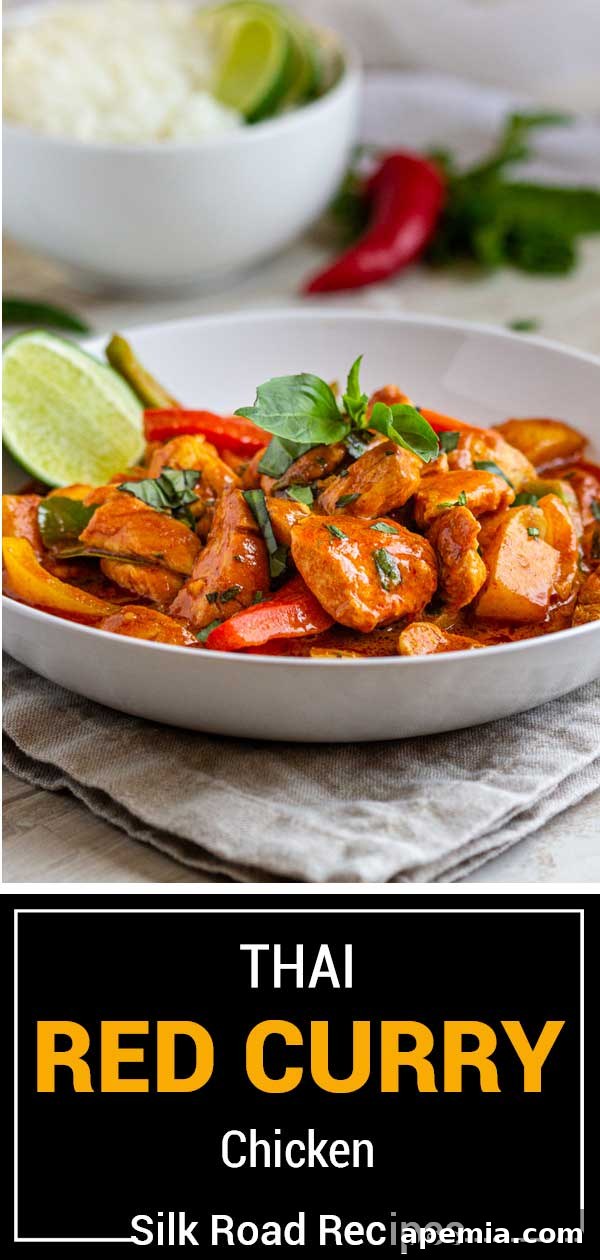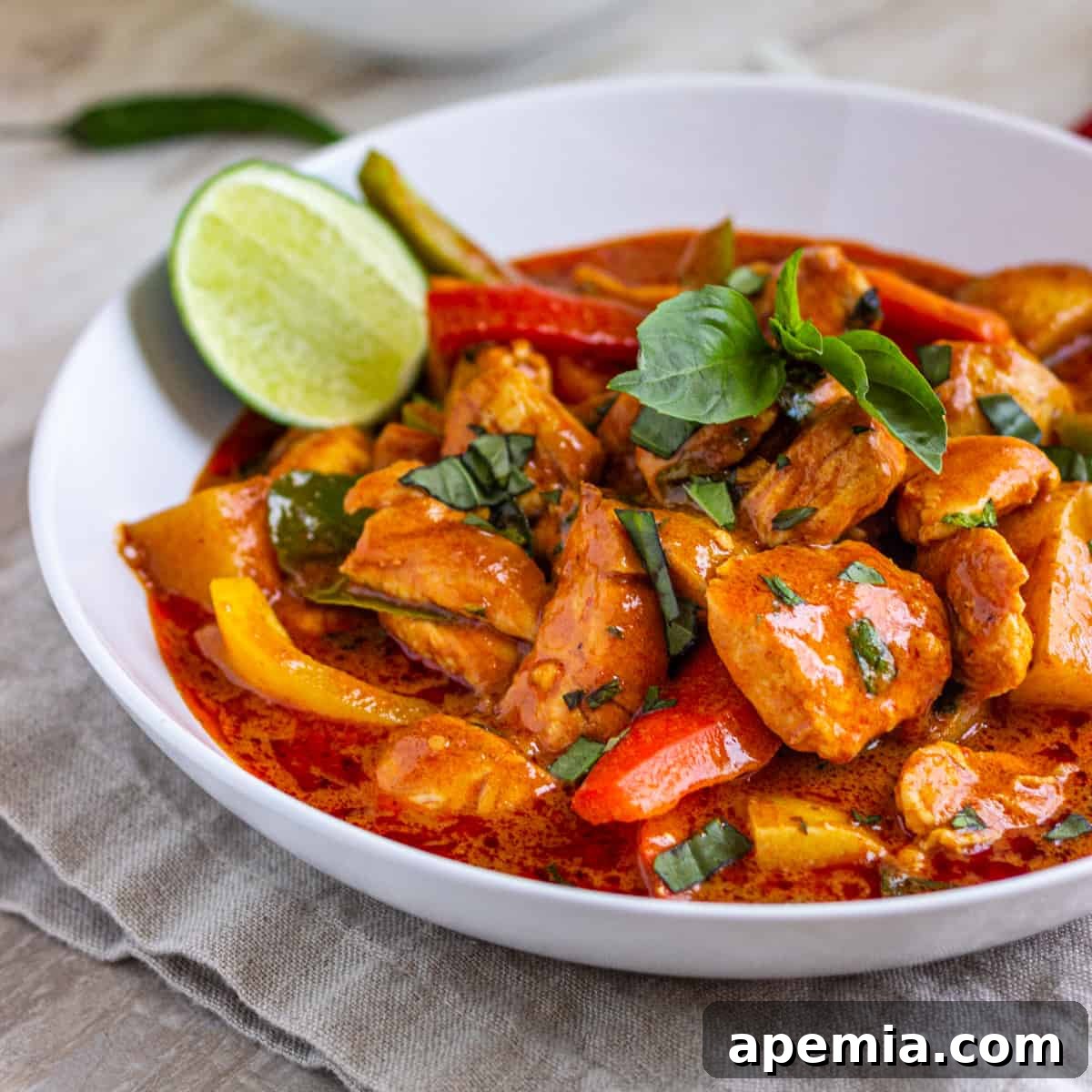
Dive into the vibrant and aromatic world of Thai cuisine with this incredible Thai Red Curry Chicken recipe. This dish is a harmonious blend of spicy, sweet, and savory notes, loaded with tender chicken, colorful vegetables, and iconic Thai ingredients that will transport your taste buds straight to Southeast Asia. What’s even better? It comes together in under 40 minutes, making it a perfect solution for a flavorful weeknight meal that’s both quick and satisfying.
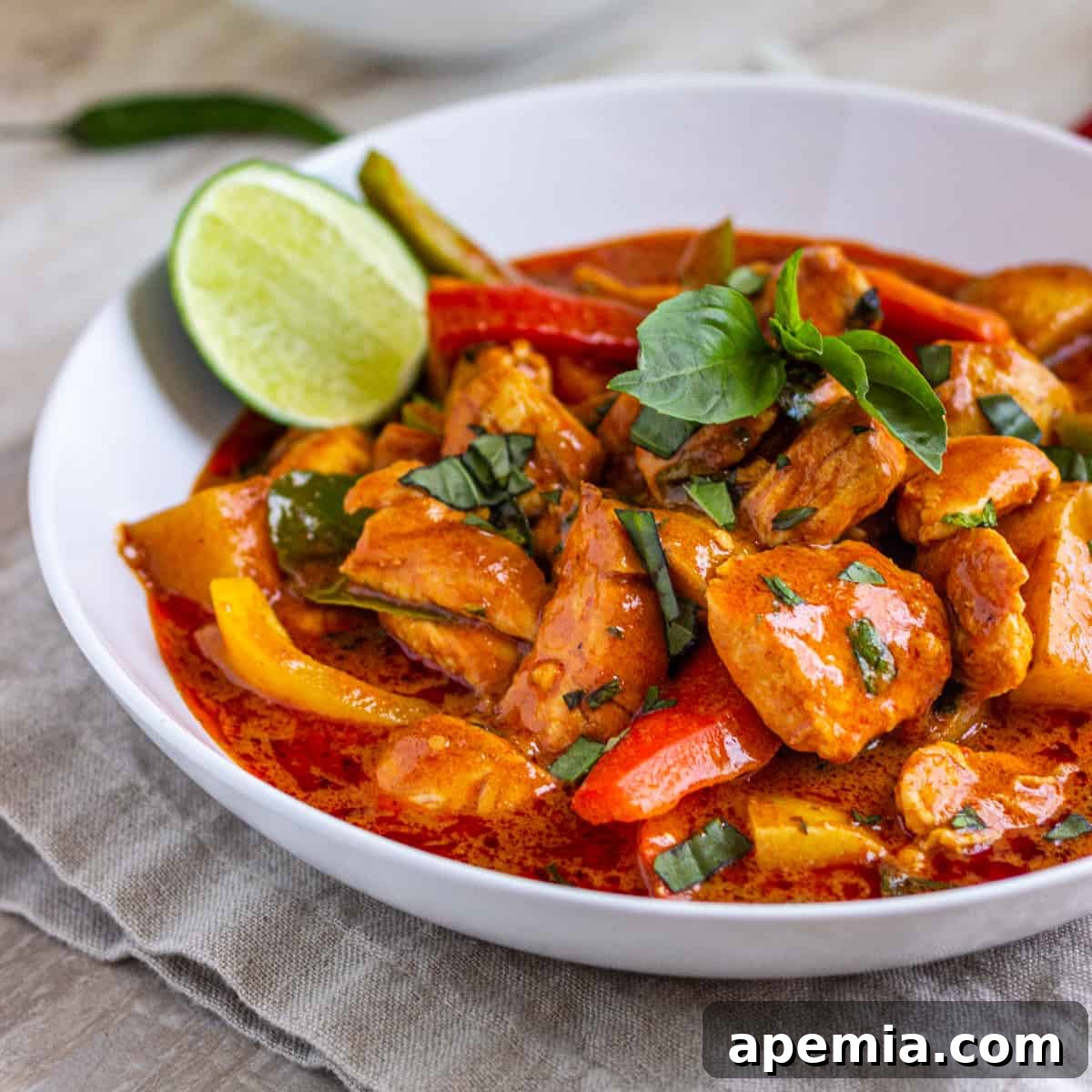
Creating authentic-tasting curries at home might seem daunting, but this recipe simplifies the process, proving that delicious, restaurant-quality Thai food is well within your reach. Homemade curries offer several advantages: they are significantly more budget-friendly than takeout, easy to prepare in larger batches for meal prep, and surprisingly simple to cook, requiring minimal cleanup. Consider this your go-to “easy button” for a deeply flavorful and satisfying dinner!
At the heart of this sensational dish lies Thai red curry paste. This potent blend of chilies, lemongrass, galangal, and other aromatic spices provides the fundamental heat, citrusy zing, and savory depth that defines authentic red curry. While quality store-bought versions offer convenience, knowing how to choose a premium paste or even making your own from scratch can elevate your curry to an unforgettable experience. Combined with creamy coconut milk, rich peanut butter, and a touch of fish sauce, this paste creates a complex flavor profile that is truly mind-blowing and utterly addictive.
Table of Contents
- Why You’ll Love This Recipe
- Essential Ingredients and Smart Substitutions
- The Secret to Authentic Thai Flavors: Fresh Herbs
- How to Make Thai Red Curry Chicken: Step-by-Step
- Serving Suggestions and Perfect Pairings
- Recommended Kitchen Tools
- Storage and Reheating Tips
- Frequently Asked Questions
- Thai Red Curry Chicken Recipe Card
Why You’ll Love This Recipe
This Thai Red Curry Chicken recipe isn’t just about quick preparation; it’s also incredibly versatile and deeply satisfying. While our recipe features succulent chicken, tender potatoes, and vibrant bell peppers, the beauty of curry lies in its adaptability. You have the freedom to customize it with virtually any protein you prefer—from beef and pork to shrimp, or even plant-based options like tofu and chickpeas. It’s an excellent way to incorporate seasonal vegetables or utilize whatever ingredients you have on hand, transforming them into a spectacular meal that caters to your family’s tastes or dietary needs.
Every spoonful of this curry is an experience. It skillfully balances the fiery kick of chilies with the soothing richness of coconut milk and the subtle sweetness of sugar, creating a complex yet harmonious sauce. The thinly sliced chicken and soft, waxy potatoes generously soak up these incredible flavors, while the vibrant bell peppers add a delightful crunch and a pop of color. It’s a dish that feels both comforting and exotic, perfect for a cozy night in or for impressing guests with an extraordinary home-cooked meal that tastes like it came from a high-end Thai restaurant.
Serving Suggestions and Perfect Pairings
The traditional and arguably best accompaniment for this rich and spicy red curry is plain steamed rice. Varieties like fragrant jasmine rice or fluffy basmati rice are perfect for soaking up every drop of the luscious sauce, ensuring a complete and satisfying meal. For those who appreciate a heartier accompaniment or enjoy a different texture, warm, soft naan bread or traditional roti makes an excellent choice for dipping. This ensures no delicious curry sauce goes to waste!
To provide a refreshing contrast and balance the curry’s inherent spice, consider serving a light and cool side dish. A crisp cucumber salad, a simple green salad with a zesty lime vinaigrette, or even just some fresh sliced cucumber and tomatoes can cut through the richness beautifully. A final sprinkle of fresh cilantro or extra Thai basil just before serving not only adds a burst of freshness but also enhances the dish’s aromatic complexity, making each bite even more enjoyable.
The Secret to Authentic Thai Flavors: Fresh Herbs
Achieving truly authentic and vibrant Thai flavors in your homemade curry hinges on the inclusion of a few key fresh ingredients. Among the most impactful are Thai basil and Kaffir lime leaves. These herbs introduce distinctive aromas and tastes that elevate the dish far beyond what dried alternatives or mere substitutions can offer. You can typically find both Thai basil and fresh Kaffir lime leaves in the produce section of most well-stocked Asian grocery stores.
Kaffir lime leaves, with their unique, intense floral and bright lime-like aroma and flavor, are particularly crucial. They impart a fresh, zesty note that is indispensable to classic Thai curries. While a teaspoon of fresh lime zest can act as a rudimentary substitute in a pinch, I cannot stress enough how much seeking out fresh Kaffir lime leaves will improve your dish. The depth and authenticity of flavor they contribute are truly unparalleled and will transform your red curry into a truly memorable culinary experience.
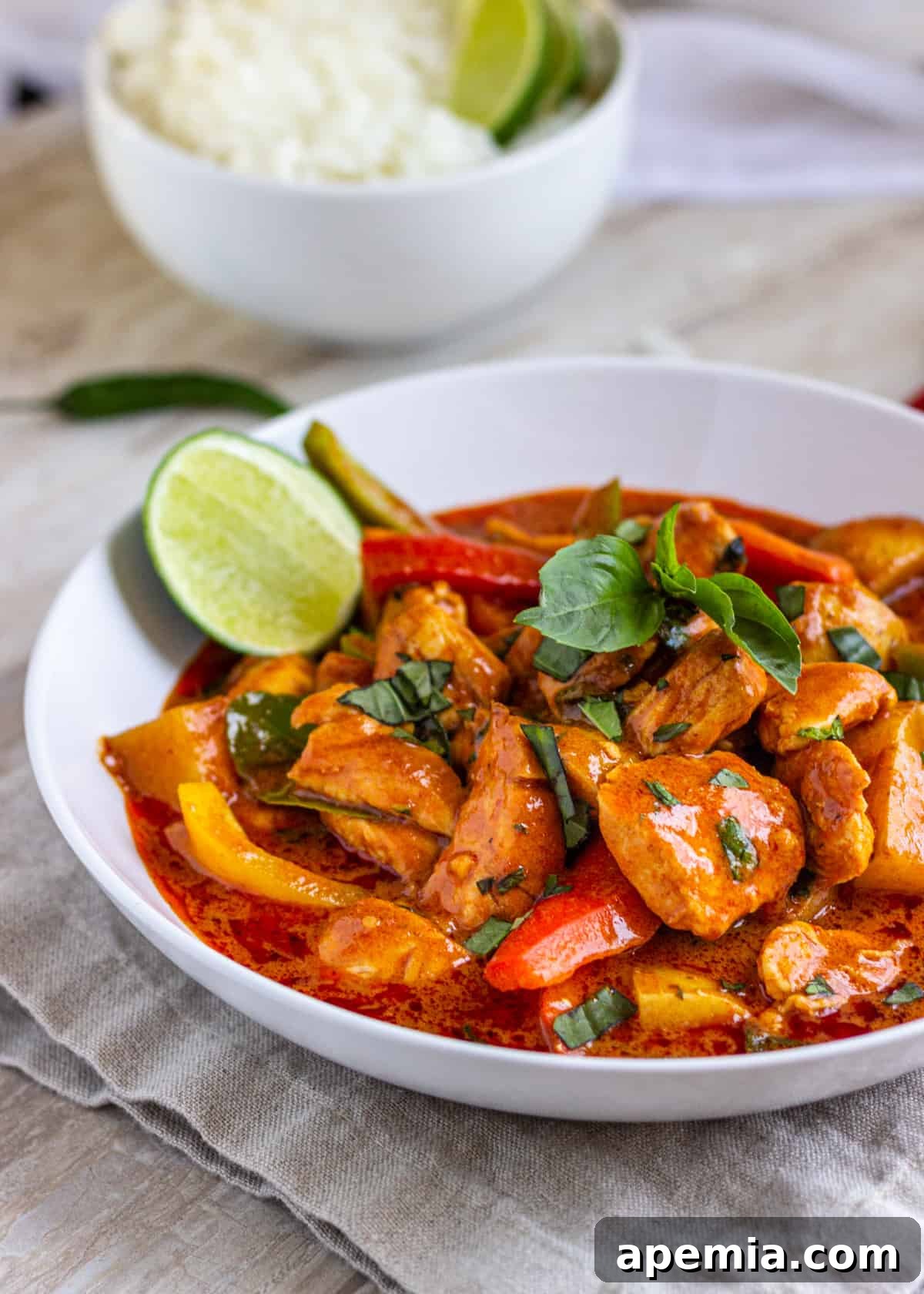
Essential Ingredients and Smart Substitutions
Understanding the role of each ingredient and knowing suitable alternatives can empower you to tailor this red curry to your taste preferences and what’s available in your pantry. (A full list of ingredients and quantities can be found in the comprehensive recipe card below.)
- Chicken: For this recipe, you have the flexibility to use either boneless, skinless chicken breast for a leaner option or boneless, skinless chicken thigh for a richer, more succulent texture. Slicing the chicken thinly ensures it cooks quickly and uniformly, allowing it to absorb the aromatic flavors of the curry sauce more effectively. Feel free to use a combination of both for a varied texture.
- Thai Red Curry Paste: This vibrant paste is the very soul of your curry, delivering its foundational heat, complex aromatics, and signature flavor profile. It’s typically made from a powerful blend of red chilies, garlic, shallots, galangal, lemongrass, Kaffir lime zest, and other spices. High-quality ready-made pastes are widely available at most major grocery stores and especially in Asian markets. However, for an unparalleled depth of flavor and freshness, I highly recommend making your own from scratch if you have the time and ingredients. The quality of your paste directly correlates with the deliciousness of your final dish.
- Yellow Potatoes: Waxy potato varieties, such as yellow potatoes or Yukon golds, are ideal for simmering in curries. Their firm texture helps them maintain their shape beautifully during cooking, preventing them from becoming mushy, while still allowing them to absorb the rich, spicy sauce. Other firm boiling potatoes like red potatoes can also be successfully used.
- Peanut Butter: Incorporating peanut butter adds a wonderful creamy consistency, a subtle nutty depth, and helps to beautifully balance the heat from the chilies. It also acts as a natural thickener, contributing to the luxurious texture of the sauce. For those with peanut allergies, almond butter or tahini can serve as suitable alternatives, or you can simply omit it and thicken the sauce slightly with a cornstarch slurry at the end. Opt for a smooth, unsweetened variety for the best results.
- Fish Sauce: While its aroma might be pungent straight from the bottle, fish sauce is an absolutely fundamental and indispensable ingredient in Thai cuisine. It provides an irreplaceable salty, savory, and umami-rich depth that masterfully rounds out the curry’s complex flavors. Rest assured, it will not make your curry taste “fishy” but instead adds a layer of savory complexity. If truly unavailable, a good quality soy sauce can be used as a substitute, though the authentic flavor profile will differ slightly.
- Coconut Milk: This creamy liquid forms the luxurious base of your curry sauce. Full-fat coconut milk is highly recommended for achieving the richest flavor and the silkiest, most authentic texture. For an extra-thick and decadent curry, you might consider using coconut cream, or simply allow the sauce to simmer longer to naturally reduce and concentrate. While light coconut milk can be used for a lower-calorie option, be prepared for a thinner sauce and a less rich mouthfeel.
- Red Fresno Chile: These vibrant red peppers offer a delightful pop of color and a moderate level of heat, similar to a milder jalapeño. They visually resemble red jalapeños. For a less spicy dish, feel free to substitute with a red bell pepper or a regular jalapeño (removing the seeds will further reduce the heat). If you’re a true spice enthusiast and crave an authentic Thai level of heat, a fiery Bird’s Eye Chile will deliver the intense kick you’re looking for.
- Bell Peppers: I enjoy using a colorful medley of bell peppers—red, yellow, and orange—for their visual appeal, varied textures, and subtly different sweet notes they bring to the dish. However, using just one type of bell pepper is perfectly acceptable and convenient if that’s what you have. They add a fresh crispness and natural sweetness that complements the rich sauce beautifully.
- Thai Basil & Kaffir Lime Leaves: As highlighted earlier, these fresh herbs are paramount for an authentic aromatic and flavorful Thai curry. Thai basil possesses a distinctive anise-like or licorice-like flavor that sets it apart from common sweet basil. Kaffir lime leaves, on the other hand, offer an unmistakable intense citrusy, floral note. Both are best sourced fresh from Asian markets. If fresh Kaffir lime leaves are absolutely unobtainable, a teaspoon of fresh lime zest can provide a hint of citrus. Similarly, regular sweet basil can substitute for Thai basil, though be aware the overall flavor profile will be less authentically Thai.
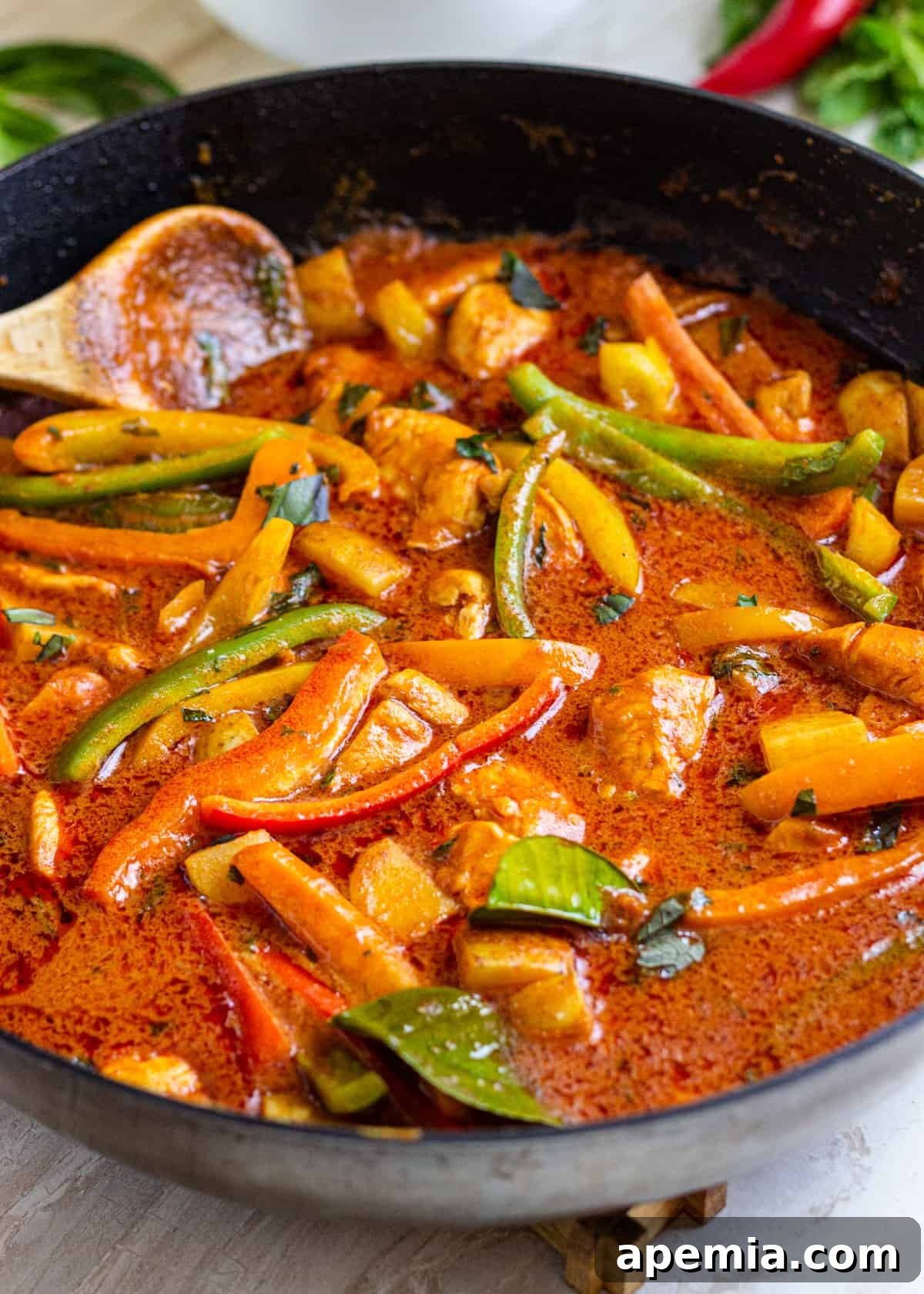
How to Make Thai Red Curry Chicken: Step-by-Step
Preparing this flavorful Thai Red Curry Chicken is a rewarding and relatively quick process. Follow these detailed steps to ensure a perfect, aromatic curry every time:
- Prepare the Potatoes: Begin by cooking the peeled and uniformly cubed yellow potatoes in a pot of generously salted boiling water. Boil them until they are just fork-tender, which typically takes about 10 minutes depending on their size. This pre-cooking step is crucial to ensure the potatoes are perfectly cooked without overcooking the other ingredients later in the curry. Once tender, carefully drain the water, cover the potatoes, and set them aside.
- Bloom the Curry Paste: In a large wok or a heavy-bottomed skillet, add the vegetable oil and heat it over medium heat. Once the oil is shimmering and hot, add the Thai red curry paste. Stir the paste constantly for about 2 minutes. This crucial step, known as “blooming,” allows the paste to gently fry in the oil, releasing its intense aromatics and deepening its complex flavors, which forms the vibrant base of your curry.
- Cook the Chicken: Add the thinly sliced chicken pieces to the wok with the fragrant, bloomed curry paste. Stir-fry the chicken for approximately 6 minutes, ensuring it’s mostly cooked through and lightly browned on the edges. The chicken will continue to cook and tenderize as it simmers in the sauce, so it doesn’t need to be fully cooked at this stage.
- Build the Flavorful Sauce: Now, it’s time to create the rich and creamy curry sauce. Pour in the fish sauce, stir in the creamy peanut butter, the sugar, the aromatic kaffir lime leaves, the sliced chile (Fresno or your chosen substitute), and finally, the luscious coconut milk. Stir all the ingredients together thoroughly until they are well combined and the chicken pieces are fully coated in the developing curry sauce. Bring the mixture to a gentle simmer and let it cook for about 3 minutes, allowing all the wonderful flavors to meld and the sauce to begin thickening slightly.
- Incorporate Vegetables and Finish: Gently add the pre-cooked potatoes and the colorful sliced bell peppers to the simmering curry in the wok. Continue to cook for another 3 minutes. During this final cooking phase, the bell peppers will soften slightly while still retaining a pleasant bite, the chicken will finish cooking through completely, and the sauce will further reduce and thicken to your desired consistency. Taste the curry and adjust the seasoning if necessary, adding more fish sauce for saltiness or sugar for sweetness if desired.
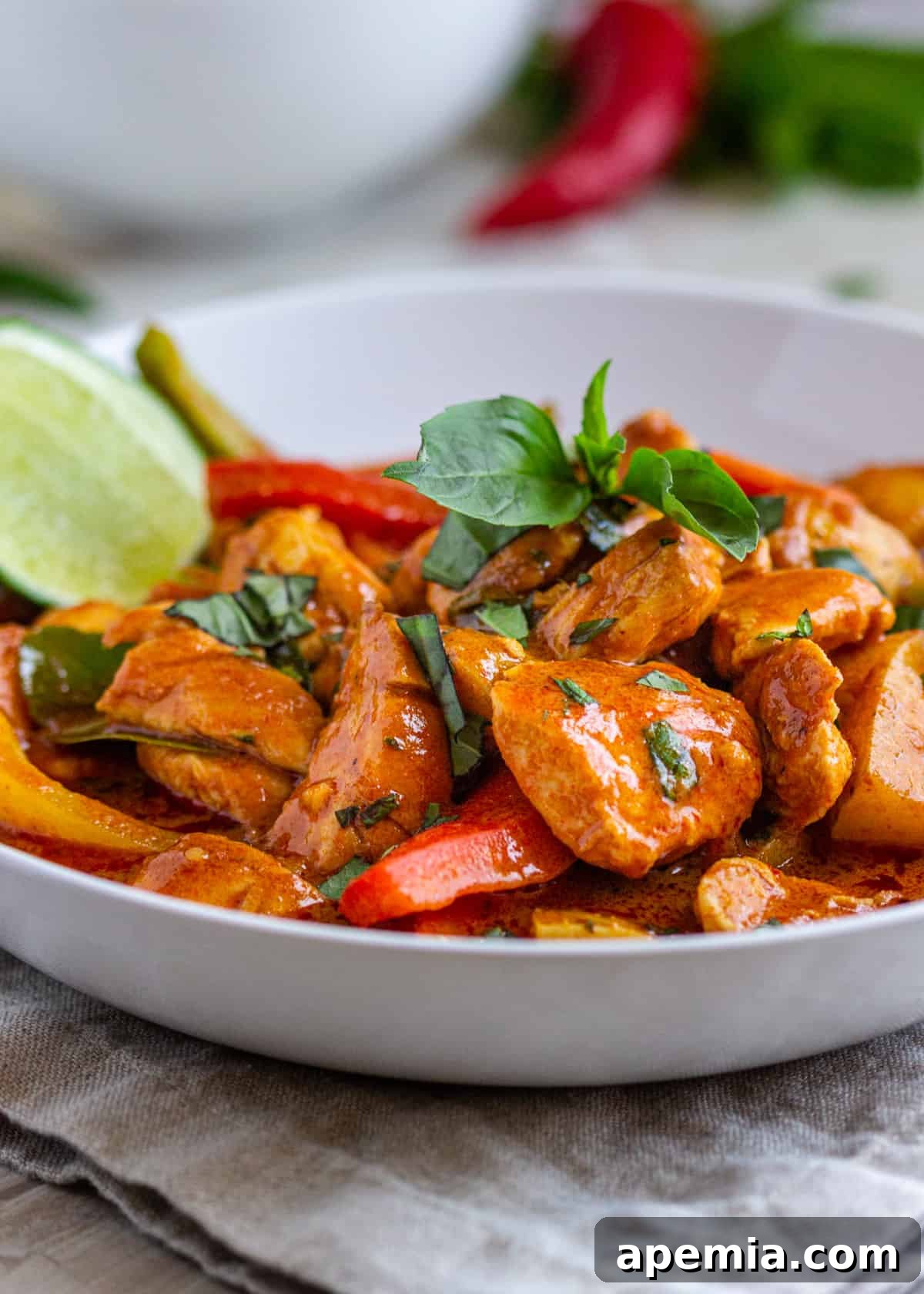
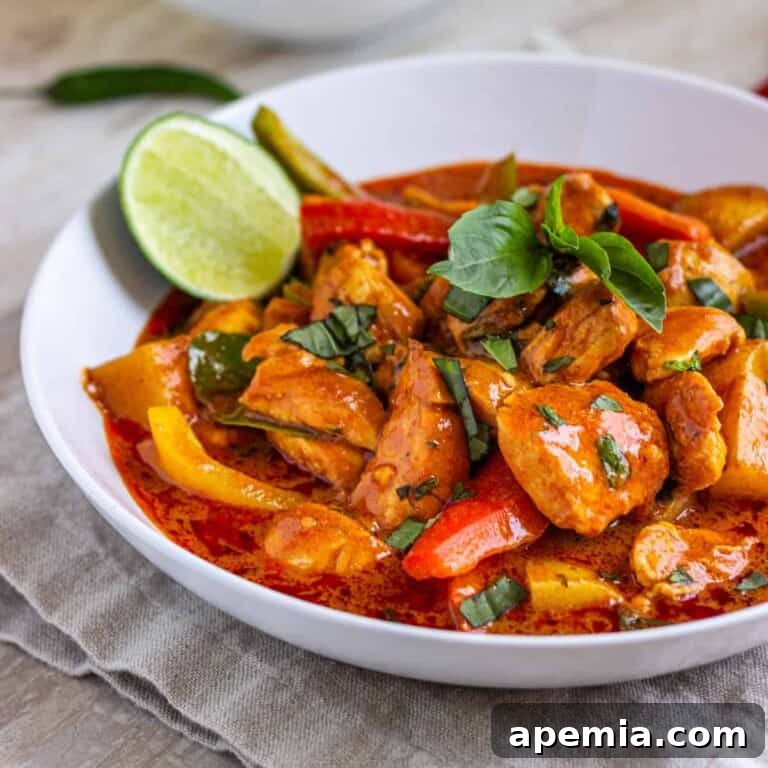
- Serve and Garnish: Ladle the steaming hot, aromatic red curry chicken generously over a bed of fluffy steamed rice. For a burst of freshness and a beautiful finish, garnish the dish with a sprinkle of freshly chopped mint and Thai basil. Serve immediately with fresh lime slices on the side for squeezing over the curry, adding a bright, zesty counterpoint to the rich flavors. Enjoy your homemade Thai masterpiece!
Recommended Kitchen Tools
While you don’t necessarily need highly specialized equipment to make this delicious Thai Red Curry Chicken, having the right tools can make the cooking process significantly smoother, more efficient, and ultimately, more enjoyable:
- Large Skillet or Wok: A large, deep skillet (preferably non-stick or cast iron) or a traditional wok is ideal for this recipe. Its generous surface area allows for even cooking and browning of the chicken and vegetables, while its depth helps to contain the simmering curry sauce and prevent splatters. Any large pan that can comfortably hold all the ingredients and distribute heat evenly will work well.
- Sturdy Spatula or Wooden Spoon: An essential tool for effectively stirring the thick curry paste, tossing the chicken, and ensuring all ingredients are well combined without scratching the surface of your cookware.
- Sharp Chef’s Knife and Cutting Board: For efficiently and safely preparing the chicken, peeling and cubing the potatoes, and slicing the various other vegetables. A sharp knife makes prep work much quicker and safer.
- Large Pot with Lid: You’ll need a separate large pot for boiling the potatoes until tender before they are added to the curry. A lid helps bring the water to a boil more quickly.
Storage and Reheating Tips
This Thai Red Curry Chicken often tastes even better the next day, making it a fantastic dish for meal prepping or enjoying as leftovers. To store, transfer any uneaten portions into an airtight container and refrigerate promptly. It will keep beautifully in the refrigerator for up to 3 to 4 days, allowing you to enjoy delicious, convenient meals throughout the week.
When it comes to reheating, the best method to preserve the sauce’s creamy consistency and prevent the chicken from drying out is to gently warm it in a skillet over medium heat on the stovetop. Stir occasionally until the curry is heated through. While you can also reheat it in the microwave, doing so in short bursts and stirring frequently will help ensure even heating and maintain a good texture.
However, I generally wouldn’t recommend freezing this particular red curry recipe. The coconut milk, which is a key component of its rich, smooth sauce, tends to separate or become grainy and curdled once frozen and then thawed. This can significantly alter the desirable creamy texture of the curry, making for a less enjoyable eating experience. For the best quality and flavor, it’s always best to enjoy this dish fresh or within a few days from the refrigerator.
📌
Share this recipe on Pinterest!
Love this recipe? Help others discover it by sharing it with the world on Pinterest.
Frequently Asked Questions
Absolutely! This versatile red curry sauce is incredibly adaptable and pairs wonderfully with a variety of proteins. Beef and pork, particularly cuts suitable for simmering, are equally delicious options, absorbing the rich flavors beautifully. For seafood lovers, shrimp, firm white fish, or even scallops can be excellent choices, though with more delicate ingredients like seafood, some prefer a slightly milder curry to let the natural flavors of the seafood shine through. For instance, you might consider a yellow curry, as showcased in my Thai Yellow Shrimp Curry. For a fantastic plant-based option, chickpeas, firm tofu (pressed and pan-fried for texture), or a medley of extra vegetables are equally delicious and make this recipe easily vegan-friendly.
Thai red curry typically carries a moderate to high level of spice, deriving its heat primarily from the chilies in the Thai red curry paste and any additional fresh chilies you choose to add. However, the inherent richness of the peanut butter and the creamy coconut milk significantly mellow the heat, creating a beautifully balanced flavor rather than overwhelming spiciness. If you are particularly sensitive to heat, you can easily adjust the spice level by using a less potent pepper (like a regular jalapeño with seeds removed for milder flavor) or by slightly reducing the amount of curry paste you use. It’s important to remember that the curry paste is essential for the dish’s flavor, so don’t omit it entirely! For an even milder curry experience, you might explore other Thai curry variations, such as those made with green curry paste, as featured in my Thai Baked Halibut.
Yes, if you find your red curry sauce isn’t quite as thick as you’d prefer, you can certainly use a cornstarch slurry. To prepare this, mix equal parts *cold* water and cornstarch until a smooth paste forms. Then, slowly whisk this slurry into the simmering curry sauce, allowing it to cook for an additional minute or two until it reaches your desired thickness. However, I often suggest first attempting to thicken the sauce using the flavorful ingredients already present in this red curry chicken recipe! Both the peanut butter and full-fat coconut milk are excellent natural thickeners. For an extra-rich and wonderfully thick curry, you could even opt to use coconut *cream* instead of coconut milk, or simply allow the sauce to simmer a bit longer, uncovered, to naturally reduce and concentrate to your preferred consistency.
Thai Red Curry Chicken Recipe
Thai Red Curry Chicken
This Red Curry Chicken is a spicy, creamy dish full of intoxicating Thai herbs and spices that you can make at home in 40 minutes—or less!
Yields: 6 servings | Prep time: 25 mins | Cook time: 14 mins | Total time: 39 mins
Ingredients
- 2 cups yellow potato, peeled and cubed
- 1 lb chicken thigh or breast meat, sliced thin
- 1/4 cup vegetable oil
- 2/3 cup Thai Red Curry Paste
- 1/4 cup fish sauce
- 1/4 cup peanut butter
- 1 tbsp sugar
- 4 kaffir lime leaves (optional, see Note 1 below)
- 1 cup coconut milk
- 1 red fresno chile or jalapeño, sliced (see Note 2 below)
- 2 cups mixed bell peppers, sliced into thin strips
Garnish
- 1 tbsp fresh mint, chopped (see Note 3 below)
- 1 tbsp fresh Thai basil, chopped (see Note 3 below)
Instructions
- Cook Potatoes: Cook the peeled and cubed yellow potatoes in salted boiling water until they are fork-tender (this usually takes about 10 minutes). Once cooked, drain the water completely, cover the potatoes, and set them aside.
- Bloom Curry Paste: In a large wok or a heavy-bottomed skillet, add the vegetable oil and heat it over medium heat. Once hot, add the Thai red curry paste and stir it constantly for 2 minutes to allow its aromatics to fully release and deepen in flavor.
- Sear Chicken: Place the thinly sliced chicken pieces into the pan with the curry paste. Cook for approximately 6 minutes, stirring occasionally, until the chicken is mostly cooked through and slightly browned.
- Simmer Sauce: Add the fish sauce, peanut butter, sugar, kaffir lime leaves, sliced chile, and coconut milk to the wok. Stir all the ingredients well to combine and coat the chicken evenly. Bring the mixture to a gentle simmer and let it cook for 3 minutes, allowing the flavors to meld beautifully.
- Add Vegetables & Finish: Transfer the pre-cooked potatoes and the sliced bell peppers to the wok. Continue to cook for another 3 minutes, or until the chicken is fully cooked through and the sauce has thickened to your desired consistency.
- Serve: Dish out the delicious red curry chicken over a generous portion of steamed rice. Garnish with a sprinkle of freshly chopped mint and Thai basil. Serve with fresh lime slices on the side for squeezing over the dish to add a bright, zesty finish. Enjoy your homemade Thai masterpiece!
Notes
- Thai basil and Kaffir lime leaves are crucial for authentic flavor and can be found in most Asian markets in the vegetable section. Kaffir lime leaves provide a wonderful floral, lime-type aroma and flavor. A teaspoon of lime zest can be a substitute, but fresh leaves are highly recommended.
- The Fresno chile resembles a red jalapeño pepper and offers a moderate heat. For a milder dish, you can substitute with a regular jalapeño (remove seeds for less heat), or for those who love intense spice, opt for a fiery Bird’s Eye Chile.
- This recipe uses fresh Thai basil for its distinctive flavor. However, if fresh Thai basil is unavailable, regular sweet basil can be used as a substitute, though the flavor profile will be slightly different.
Nutrition (per serving, estimated)
- Calories:
- 343 kcal
- Carbohydrates:
- 25g
- Protein:
- 23g
- Fat:
- 18g
- Saturated Fat:
- 10g
- Trans Fat:
- 1g
- Cholesterol:
- 48mg
- Sodium:
- 909mg
- Potassium:
- 910mg
- Fiber:
- 5g
- Sugar:
- 8g
- Vitamin A:
- 5796 IU
- Vitamin C:
- 86mg
- Calcium:
- 72mg
- Iron:
- 3mg
The information shown is an estimate provided by an online nutrition calculator. It should not be considered a substitute for a professional nutritionist’s advice.
Recipe Details
- Course: Main Dishes
- Cuisine: Thai
- Author: Kevin
📸 Have You Made This Recipe? Share Your Creation on Instagram!
Tag @keviniscooking or use the hashtag #keviniscooking!